
Category: Date

  • Will I Outlast My Money?

    With Hawai‘i’s aging population and the majority living longer, we all start to worry about our financial security. How will I pay for my future expenses on a fixed income after retirement? Who will support me when I run out of money? What can I do to prepare myself? Educating yourself is the key to being prepared. Here are a few financial tips to point you in the right direction:

    • Deciding when to sign-up for Social Security can play a big role in how much you receive for the rest of your life.
    • Keeping up to date on new laws and changes in government programs for seniors.
    • Consult your Realtor, accountant and attorney to evaluate your real estate and investments.
    • Educate yourself on 1031 exchanges, reverse mortgages, medicare, medicaid, taxes and estate planning.
    • Come up with a financial plan that will help your money outlast you!

    These are all important things to consider, and List Sotheby’s Senior Concierge hosts free seminars on senior related topics year-round. Here are two upcoming events:

    January 31, 2015 — Financial Considerations Workshop covers financial tips listed here.

    March 14, 2015 — Legal Considerations Attorney Scott C. Suzuki, AAL, will cover trusts, estates and taxes.

    For more information, registration (seating is limited) and a 2015 schedule of free seminars, please call 808-282-1399.


    List Sotheby’s International Realty
    808-282-1399 | Seniors@LaneyRE.com
    www.laneyre.com.

    With Hawai‘i’s aging population and the majority living longer, we all start to worry about our financial security. How will I pay for my future expenses on a fixed income after retirement? Who will support me when I run out of money? What can I do to prepare myself? Educating yourself is the key to…

  • What Is Ai Chi?

    If starting a new exercise routine is part of your self-improvement plan this year, you may want to consider Ai Chi.

    Ai (meaning “love”) Chi (“breath/essence/ being”) is a graceful form of aquatic exercise that involves a series of movements performed in a slow, focused manner using deep breathing and accompanied by relaxing music and low lighting. It combines Tai Chi and Qi Gong concepts of positioning and controlled motion, carried out while standing in shoulder-deep warm water. Ai Chi is an efficient program that:

    • Increases oxygen and caloric consumption through correct positioning in the water
    • Relaxes tension
    • Relieves stress
    • Improves mobility, strength and balance
    • Boosts mental alertness

    Suzanne Whitehead, a certified Ai Chi instructor since 2011, teaches one day a week at Moon Physical Therapy. She says the body is often thrown into a fight-or-flight response, which, over time, may become toxic to the body, mind and spirit. Combining correct breathing with the slow, soft movements of Ai Chi can restore the being to its full potential. Her clients’ comments include, “a soothing experience,” “mind and body relaxation,” and “a symphony for my body.”

    So try Ai Chi as part of your wellness program this New Year. Improve physical and mental health, and minimize the effects of stress.


    Moon Physical Therapy, LLC
    320 Ward Avenue, Suite 107, Honolulu, HI 96814
    Aquatic, Land-based and Manual Therapy and
    Cardiopulmonary Rehab Programs
    808-597-1005 | www.moonpt.com

    If starting a new exercise routine is part of your self-improvement plan this year, you may want to consider Ai Chi. Ai (meaning “love”) Chi (“breath/essence/ being”) is a graceful form of aquatic exercise that involves a series of movements performed in a slow, focused manner using deep breathing and accompanied by relaxing music and…

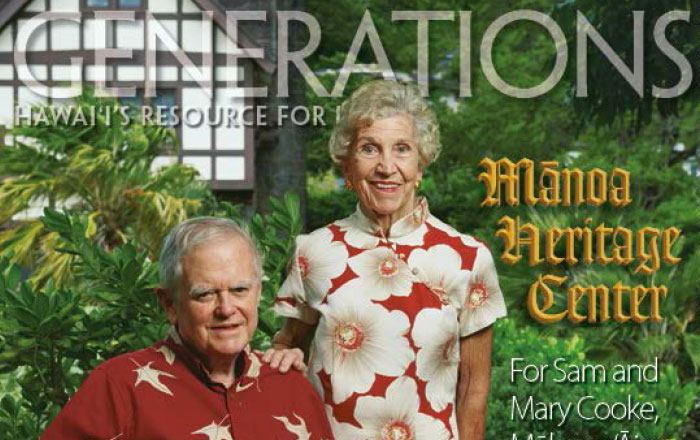
  • Manoa Heritage Center: For Sam and Mary Cooke, Malama ‘Aina is the “Right Thing To Do.”

    Manoa Heritage Center: For Sam and Mary Cooke, Malama ‘Aina is the “Right Thing To Do.”


    Generations Magazine - Manoa Heritage Center For Sam and Mary Cooke, Malama ‘Aina is the “Right Thing To Do.”- Image 01
    “ I can only say that we restored this place out of our love for the Hawaiian culture.” –Mary Cooke
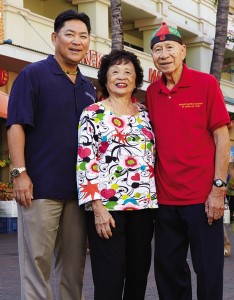
    Sam and Mary Cooke stand at the entrance of Kuka‘o‘o heiau. And just above, in the background ridge, is the silhouette of Kauhi, the sleeping giant.

    Manoa Heritage Center in Manoa Valley is a non-profit organization founded by Sam and Mary Cooke to preserve and share with our community an ancient Hawaiian worshipping site that is located on their property. We were invited to visit the center and meet these gracious people who have devoted much of their lives to preserving a Hawaiian historical landmark.

    The Hawaiian Dictionary defines heiau as “pre-Christian place of worship, shrine.” Nothing spooky about it — Hawaiian families had personal shrines, and high chiefs built communal shrines to meet guests, say farewell to the departed, heal disputes and observe special monthly and seasonal rites connected to farming and fishing. All life was connected to sky, land and sea. Of fourteen heiau in the Ahupua‘a of Waikiki, only one agricultural temple remains intact — Kuka‘o‘o Heiau in Manoa Valley.

    The Ahupua‘a of Waikiki is a triangular land division that starts at the Ko‘olau Mountain Range and extends to the sea. Its boundaries embrace Makiki, Manoa and Palolo Valleys and the fishing grounds beyond Waikiki beach. This land sustained ancient O‘ahu kings and chiefs of the past.

    We drove a short distance up Manoa Road from Punahou School, to Manoa Heritage Center (MHC) to visit Kuka‘o‘o Heiau and meet MHC founders, Sam and Mary Cooke. They are the third generation of Cookes to steward this site, and are busy raising funds to construct a modest new Visitor Education Center. The center will allow for a wider variety of educational activities, meeting rooms, and more visitor amenities for students and the community.

    A Place-Based Learning Journey in Manoa

    Connecting story to place is what teachers call “place-based education.” It turns a visit to MHC into not only a historical, cultural experience, but also a spiritual encounter with the skies, winds, rains and landmarks of Manoa Valley.

    Generations Magazine - Manoa Heritage Center For Sam and Mary Cooke, Malama ‘Aina is the “Right Thing To Do.”- Image 02Manoa Heritage Center sits on the western slopes of Manoa where the old ali‘i resided. We looked out across the eastern half of the valley, where taro farmers once maintained an expanse of taro patches. We located legendary landmarks, such as Kauhi the sleeping giant (shown on the opening spread) and watched dazzling Manoa rainbows dance on the famous Tuahine mist.

    MHC Education Director Margo Vitarelli guided us through the gardens and explained how Hawaiians ingeniously used the endemic, indigenous and Polynesian canoe plants growing all around us. Some, like the endangered Monroidendron tree from Kaua‘i, are rare species not often seen on the island of O‘ahu. Other native varieties are elegantly landscaped in large beds to reveal their beautiful textures and foliage colors: ‘akia, shrubs with bright orange berries and tough, gray-green round leaves stacked like pennies; rubbery, light green naupaka hedges; and proud koki‘o ke‘oke‘o bushes covered with fragrant white hibiscus. These plants and many others were used to catch fish and make rope, tools and weapons and compound medicines — to sustain life in the ahupua‘a. “Learning plants by their use is meaningful to kids,” said Vitarelli.

    The Only Intact Heiau in Waikiki Ahupua‘a

    Margo explained that the Hawaiian name, Kuka‘o‘o, actually means “standing digging stick” or “god of the digging stick.” The ‘o‘o is an indispensible digging and planting tool still used by farmers today. Archaeologists estimate that Kuka‘o‘o is 800 years old, based on carbon dating and oral history. It is interpreted as a mapele agricultural temple, to celebrate and benefit growth, harvest and a harmonious life.

    Flanking the stone path leading to Kuka‘o‘o is a section of the dry-stack wall said to be built by the ancient people and expert stone masons — the Menehune. Walls like this once meandered across Manoa Valley. At the lower heiau path we looked up to see the neatly constructed stones sloping upward, rising over our heads about 15 feet. Different layers of masonry styles observed during restoration and legends associated with Kuka‘o‘o suggest that perhaps this ancient heiau was rebuilt several times in antiquity, most likely when power shifted from one chief to another. After walking up to the top of the site, we beheld the entrance to a beautifully restored heiau. The backdrop of the Ko‘olau Mountains and majestic aura of the huge sky was breathtaking.

    Generations Magazine - Manoa Heritage Center For Sam and Mary Cooke, Malama ‘Aina is the “Right Thing To Do.”- Image 03
    In ancient Hawai‘I the ahupua‘a of Waikiki started in the Ko‘olau Mountains and extended to Waikiki Beach.

    Caring People Doing the Right Thing

    After touring this fabulous site, we were eager to meet the people who generously opened their gardens to the community. Back at the center, Sam and Mary Cooke greeted us warmly. As we sat on the porch and enjoyed glasses of red hibiscus tea, I asked them how they came to restore Kuka‘o‘o. As a fine cooling mist blew in from the valley, Mary reminisced, “I can only say that we restored this place out of our love for the Hawaiian culture. I have always been involved in protecting heritage places.” Mary grew up on Kaua‘I with a deep reverence for Hawaiian ways and their history. Sam descends from Wilcox missionaries who serviced Waioli Mission and later built Grove Farm in Lihue. For nine years Mary served on the board of the National Trust for Historic Preservation, advocating the registry of many important Hawai‘i sites.

    Sam’s ancestors were collectors and preservationists. Sam’s great-grandmother, Anna Rice Cooke, provided land, capital and art to begin what is now known as the Honolulu Museum of Art. His great grandfather Charles Montague Cooke Sr., provided land for the University of Hawai‘i, started Bank of Hawai‘i and funded The Honolulu Aquarium. Sam’s grandfather, Dr. Charles Montague Cooke Jr., was a distinguished scientist (malacologist) at the Bishop Museum for over 40 years, and at one time bred dairy cattle at his Ka ‘Imi Dairy in Manoa Valley.

    Despite this rich legacy, Sam described his own motivation to restore Kuka‘o‘o very simply: “It was the right thing to do.” Sam grew up on Moloka‘i and O‘ahu, where accepting kuleana (responsibilities) with gratitude, and doing what’s pono (righteous) goes without saying. He admits that restoring a cultural site without public funding turned out to be a very complicated and expensive proposition. “It cost so much that we had to take it in steps. First we did archaeological studies. Then we hired an expert Hawaiian stone mason, Billy Fields, from Hawai‘i Island — he’s the best — to restore the walls of the heiau that had deteriorated over the years. Cultural expert Nathan Napoka, then with Hawaii State Department of Land and Natural Resources (DLNR) Historic Preservation Division, coordinated the process with the proper Hawaiian protocol.”

    The heiau stands directly behind Kuali‘i, the home Charles Montague “Monty” Cooke Jr., Built in 1911, on land given him by his father, Charles Montague Cooke Sr.. Sam and Mary purchased it 1970, restored it to its original English Tudor style splendor and listed it on the National Register of Historic Places. It is named after a famous O‘ahu king credited in oral history with driving the Menehune from Manoa Valley and Kuka‘o‘o. At one point, the heiau land was passed on to another Cooke relative. In 1993, when Sam and Mary heard that the heiau parcel was for sale, they intervened and bought it to save the heiau from destruction. The rest is redemption.

    “Having a restored heiau in your backyard does draw some attention,” said Sam, referring to the many historians, Hawaiians, students and visitors who came to inquire. “We saw a need to open it to the public, so we started the Manoa Heritage Center 501(c)(3) in 1996,” said Mary, who has considerable experience as a board member of National Trust for Historic Preservation, “I observed that heritage sites with no endowment do not make it, financially. So one of our goals is to raise funds for an endowment.” Donations from the public have helped MHC commission Historian and Playwright, Victoria Kneubuhl, to conduct research and create an Interpretive Plan. This comprehensive document guides MHC as it presents the history and culture of this hisoric site and Manoa Valley to students and visitor tours in an educational and entertaining way.

    Education Director, Margo Vitarelli, Pacific Island specialist, museum educator and artist coordinates center activities. She designs tours and activities for visiting schools and adults, produces a bi-annual newsletter, and conducts training classes for docent guides. Aloha McGuffie donates her expert talents in event organizing, report writing, scheduling and data collection. The Center welcomes over 2,000 visitors a year. Thanks to one thoughtful donor, MHC is able to offer a generous bus subsidy to schools that need transportation to the site. This allows all students the opportunity to visit for free.

    What Hawaiians Taught the Missionaries

    Sam’s ancestors, Amos and Juliet Montague Cooke educated the children of Hawaiian high chiefs at the Royal School. They and their children learned Hawaiian culture and values from their students. Hawai‘i became their home.

    A kahuna la‘au lapa‘au (traditional healer) called Ka‘aha‘aina Naihe from Hawai‘i Island saved the life of Amos’ grandson, Charles “Monty” Montague Cooke Jr., who was born prematurely. Ka‘aha‘aina brought her Hawaiian medicinal knowledge to Manoa. Her lasting influence in Monty’s life may have been the reason he protected and saved the heiau site.

    Manoa Heritage Center In The Future

    Generations Magazine - Manoa Heritage Center For Sam and Mary Cooke, Malama ‘Aina is the “Right Thing To Do.”- Image 04
    Adult tours led by docent guide, Karen Borg. Inset photos courtesy of the Manoa Heritage Center.

    As stewards, Sam and Mary make decisions for future generations. The “right thing to do” now is to continue preservation, expand the gardens and increase learning opportunities for youth. Architectural plans show a modest Visitor Education Center that will allow for expanded of educational activities, exhibits and basic facilities with visitor comforts in mind. Included are expanded gardens, places for hands-on cultural activities and restroom facilities. A new driveway and parking lot will include a turnaround for school buses.

    Sam and Mary are donating their home, Kuali‘i, so that it will eventually become a valued addition to MHC— open to the community, along with displays of historical Hawaiian art dating from western contact through the 20th century.

    As we said good-bye to Sam and Mary, we understood the huge amount of time, energy and resources they personally have devoted to Manoa Heritage Center. I asked Mary if the work seems burdensome. “A burden? No, we never feel that way. The challenges keep us busy and on the go — we love it.” Her smile conveyed the joy with which the Cookes carry out their kuleana. Anyone who visits Manoa Heritage Center will feel this joy. It is a truly remarkable place and treasured gift to the community.

    Sam and Mary invite you to bring your family to see Kuka‘o‘o Heiau and the native Hawaiian gardens Monday through Friday from 8:30 am to 3 pm. By advance appointment, visitors and school children may arrange intimate small-group guided tours by calling the office, 808-988-1287. Trained volunteer docent guides lead the tours. To keep this wonderful enterprise thriving, it is important that the communities not only enjoy it but also support it — so that MHC and its mission continue to inspire generations to come.

    Donations to Manoa Heritage Center may be made at www.Manoaheritagecenter.org or by contacting Manoa Heritage Center: 808-988-1287 or manoaheritagecenter@hawaiianlet.net.

    Generations Magazine - Manoa Heritage Center For Sam and Mary Cooke, Malama ‘Aina is the “Right Thing To Do.”- Image 05
    Margo Vitarelli, Education Director, leading students to view all 4 sides of Kuka‘o‘o heiau.


      Manoa Heritage Center in Manoa Valley is a non-profit organization founded by Sam and Mary Cooke to preserve and share with our community an ancient Hawaiian worshipping site that is located on their property. We were invited to visit the center and meet these gracious people who have devoted much of their lives to…

  • The Gift Of Daniel Palmer’s Hobby

    Generations Magazine - The Gift Of Daniel Palmer’s Hobby - Image 01“Everyone should have a hobby when they retire” — that’s what the retired Honolulu dermatologist and part-time Michigan tree farmer Dr. Daniel Palmer says. “I didn’t know anything about ferns, but I had some friends who were preeminent fern researchers and I needed a hobby, so I just took it on and developed some skills.” And so it took root.

    “Some skills” is an understatement. Over the past two to three decades, Dr. Palmer has become one the foremost experts in Hawai‘i’s ferns. His highly respected book Hawai‘i’s Ferns and Fern Allies, published by the UH Press in 2003 describes 222 species. It was the first comprehensive survey of Hawai‘i’s ferns to be published since the 1880s.

    “I started collecting ferns as an amateur. I was able to go almost everywhere — all these mountain tops on O‘ahu as well as Maui, Kaua‘i and Moloka‘i — picking up fern specimens along the way that I used for illustrations in my book.”

    Over the years Dr. Palmer’s specimen collection of pressed dried ferns grew, as did his extensive collection of books that includes rare, 1830 portfolios from British expeditions to the islands. Illustrations in these portfolios are accepted as type specimens for particular species. In defining new species, type specimens are the original specimens from which a formal description is made. Identifying and naming type specimens was not common practice until later in the 20th century.

    In addition to collecting ferns and books to “develop some skill,” Dr. Palmer turned his vacations into sleuthing expeditions. He searched the backrooms of botanical archives and museums around the world, including then-Leningrad’s Komarov Institute, London’s Royal Botanic Garden at Kew, Tokyo University and Paris’s Jardin de Platz. Slowly, he tracked down the botanical collections from early explorers to Hawai‘i and examined the type specimens to correct or clarify the nomenclature of different Hawai‘i fern species. “I found that based on the written description, we were calling several ferns by the wrong name; but when you looked at the type specimen, you realized it was something else.” His detective work elevated the quality of his fern specimen collection and resulting book.

    When asked how he benefitted from his hobby, he said, “If you don’t exercise your body, it goes to pot, and the same is true of your mind. It was fun hiking around here and worthwhile. I enjoyed it. Since nobody had ever gone back to look at the type specimens, it was fun for me to get back into the back rooms of these special places. Ordinarily, I couldn’t have done it. I didn’t have any reputation then. The herbaria staffs were just nice to let this guy in.”

    In recent years, Dr. Palmer turned his attention to the ferns of Michigan, his other home. That focus has produced a book as well. University of Michigan Press will be publishing his book, “Michigan’s Ferns and Lycophytes,” hopefully this summer.

    Unable to hike as he used to, Dr. Palmer said, “Now it’s time to rest.”

    In the fall of 2013, he decided to donate his more than 2,700 fern specimens to the Joseph F. Rock Herbarium, the UH botanical specimen repository. Since he lives near the UH Manoa campus, he’ll still be able to visit his specimens in the laboratory to conduct additional research when he wants to. In addition, herbarium staff plan to digitally photograph the specimens and create a database that will make them available to everyone on the Internet.

    Generations Magazine - The Gift Of Daniel Palmer’s Hobby - Image 02Dr. Palmer could not have done this work without his wife’s help. She tolerated his use of her stove and kitchen for drying the specimens, and helped mount them — disrupting household cleanliness and order. In addition, she had to see Paris, London, Berlin and Leningrad alone while he was doing herbarium work. But a previously unrecognized native hapu‘u tree fern carries her name–Helen’s hapu‘u (Cibotium xheleniae).

    “For the next year, the botany department’s dozen herbarium staff members will be carefully counting, cataloging, curating and geo-referencing Dr. Palmer’s specimens, and their data will be incorporated into the Consortium of Pacific Herbaria project,” said Dr. Michael Thomas, manager of the university’s Joseph F. Rock Herbarium. The regional network of 22 botanical repositories is currently funded through a $1.4 million collaborative grant from the National Science Foundation.

    “This generous donation will broaden our knowledge of Hawai‘i’s ferns,” said Fern Specialist Dr. Tom Ranker.

    “Dr. Palmer has also released the copyright of his out-of-print fern book to EVols online library, for noncommercial purposes. This unique, natural science collection will benefit students, researchers and the general public.

    Hawai‘i residents are fortunate that Dr. Daniel Palmer began a hobby in his retirement and chose to share his research with future generations.

    “Everyone should have a hobby when they retire” — that’s what the retired Honolulu dermatologist and part-time Michigan tree farmer Dr. Daniel Palmer says. “I didn’t know anything about ferns, but I had some friends who were preeminent fern researchers and I needed a hobby, so I just took it on and developed some skills.”…

  • Life In Focus

    This article will start with the ending results … “everything is so beautiful.” I recently underwent cataract, astigmatism and lasik eye surgeries. I never realized that what I was seeing was not how things actually appear to others. My eye doctor has been monitoring me for a few years and told me when it was time for eye surgery.It was a given that my surgeon had to be experienced, reputable and highly recommended by people I know. I put my trust in a doctor who was a pioneer in lasik surgery, and I’m glad I did.

    Preparing for the surgery was very easy, except I could not wear mascara from three days before surgery and four weeks after. The only no-no for the day of surgery for each eye was “no driving and no making any decisions.” That was hard to do because my eyesight was so clear, crisp and 20/20 on the day of my second eye surgery. The only treatment I had after the surgery was eyedrops. I received a chart that I taped to my bathroom wall to check-off which eye drop was put in which eye… and the color of the eye drop cap matched the color on the chart. That was helpful.

    I appreciated the staff’s attention and thoroughness. They walked me through the whole process, saying, “Sherry, you’ll see a great light show.” I was never in any pain, I was awake, it took only about 15 minutes and I saw “life in focus” as soon as I walked out the surgery room.

    Generations Magazine- Life In Focus - Image 01
    Dr. Jenkins, Sherry and Mimi

    This article will start with the ending results … “everything is so beautiful.” I recently underwent cataract, astigmatism and lasik eye surgeries. I never realized that what I was seeing was not how things actually appear to others. My eye doctor has been monitoring me for a few years and told me when it was…

  • Gum Disease In Seniors

    Periodontitis is a serious gum disease that damages soft tissue and destroys the bone that supports the teeth. Periodontitis is the primary cause of tooth loss in seniors, often leading to a need for dentures. It also increases a person’s risk for heart attack or stroke. Many seniors may have gingivitis, which is a common and mild form of gum disease that causes irritation, redness and swelling of the gums.

    Generations Magazine - Gum Disease In Seniors - Image 01What causes periodontitis?

    Poor dental care leads to plaque and tartar buildup at the base of the teeth. Inflammation from this buildup causes an empty pocket to form between the gums and the teeth that fills with plaque and tartar. Soft tissue swelling traps the plaque in the pocket. Continued inflammation damages the tissues and bone surrounding the tooth. The plaque contains bacteria; hence, infection is likely. Infection only increases the rate of bone destruction.

    What are the symptoms?

    • Bad breath
    • Gums that bleed easily
    • Loose teeth
    • Swelling of the gums
    • What is the treatment?

    What is the treatment?

    Dental cleaning to remove plaque and tartar from teeth will remove pockets in the gums. This reduces inflammation. Sometimes surgery may be necessary to treat deep pockets in the gums and loose teeth may need to be supported. Severe periodontitis leads to tooth loss and extraction; often, seniors may need to use dentures.

    What is the best way to care for removable dentures?

    • Remove and rinse dentures after eating
    • Clean the mouth after removing dentures
    • Brush dentures daily
    • Soak dentures overnight
    • Rinse dentures before putting them back into the mouth

    Is periodontitis preventable?

    The good news is that periodontitis is preventable. Regular brushing, flossing and dental cleaning will reduce a person’s chance of developing periodontitis, and increase the chance of keeping his or her teeth for an entire lifetime.

    Periodontitis is a serious gum disease that damages soft tissue and destroys the bone that supports the teeth. Periodontitis is the primary cause of tooth loss in seniors, often leading to a need for dentures. It also increases a person’s risk for heart attack or stroke. Many seniors may have gingivitis, which is a common…

  • Getting Ready For 2015 And My Medicare

    The holidays are quickly coming. We hope that you have all looked at your Medicare options for 2015. If your plan won’t be available, we urge you take action and make the changes that are best for you. If you have not yet made your decision and need help comparing the many plans available, please contact the Hawaii SHIP (State Health Insurance Assistance Program) as soon as possible for assistance.

    After any change, study your plan material and answer some questions:

    Are my medications covered and at what tier?

    If my name brand or generic drug is tier 2/4 (preferred) and medically necessary; and if I cannot tolerate the comparable drug at a lower level — I can ask for an exception.

    Are my providers in the network?

    If my current provider is not in my new HMO network, I will need to look for a new provider using my recently received provider directory.

    Have I provided my new plan card to my doctor’s office?

    Please do this on your first visit so that your providers will request payment from the correct insurance company.

    Every January, even if you are happy and healthy, it’s good to schedule an “annual wellness visit” with your primary care doctor. Sit down and discuss your health goals for the year and schedule any needed preventive benefits. Your doctor will ask you to fill out a questionnaire called a “health risk assessment;” this will help them to develop a Personalized Prevention Plan just for you. If your doctor is in the network or accepts assignment, then you pay nothing for the wellness visit. If the healthcare provider performs additional tests or services during the same visit (tests that are not covered under this preventive benefit), you may have to pay a coinsurance or deductible. Besides the Personalized Prevention Plan, your annual wellness visit also includes: a review of your medical and family history; making a list of current providers and prescriptions; routine measurements, including height, weight, blood pressure; testing for any cognitive impairment; personalized health advice; a list of health risk factors and treatment options for you; and a screening schedule for appropriate preventive services. Eleven months must have passed since your last visit for your annual wellness visit to be a covered service. To make sure it is covered, make it part of your regular annual January routine.

    Have a safe and healthy holiday season — if you have extra time, consider volunteering with Hawaii SHIP. There is no better way to help your community. Give us a call or visit us online for more information.


    Hawaii SHIP (State Health Insurance Assistance Program)
    1-888-875-9229 | 808-586-7299
    help@hawaiiship.org | www.hawaiiship.org
    For 2014 Medicare updates: www.medicare.gov

    The holidays are quickly coming. We hope that you have all looked at your Medicare options for 2015. If your plan won’t be available, we urge you take action and make the changes that are best for you. If you have not yet made your decision and need help comparing the many plans available, please…

  • Preserving Dignity and Happiness

    Dignity is vital to self worth throughout our lifetime; in the later stages of life, preserving a sense of respect and honoring the individual is especially important. Rarely will anyone argue this point. However, unless careful planning and clear communication is established early on, issues with regard to health, living situation and end of life decisions can often result in family arguments — that could have been avoided.

    It is crucial that we take the time to think about what is truly important to us concerning our health, where we want to live and how we want to die — some simple, straight-forward tips:

    • Family: it’s our greatest asset but their love for us can be the biggest roadblock when it comes to discussing our wishes with them. When facing chronic illness or cancer, it is important that your family thoroughly understand your illness and how it is affecting your well-being. Always allow your family to express their fears, but be firm with your decisions and take the time to explain your decisions and why they’re important to you.
    • Advance Directive: having it is strongly recommended and should be discussed with your doctor. The Advance Directive is a simple form that must be signed by you and your physician. Once established, it provides clear instruction for your doctor should you be unable to speak for yourself during a health crisis. It also removes the pressure for your family on making critical decisions.

    So remember, don’t worry about the things you cannot change, make changes that are needed, then live life to its fullest!


    HiHomeCare, 745 Fort Street, Honolulu, HI 96813
    808-356-HELP (4357) | info@hihealthcarehawaii.com
    hihealthcarehawaii.com

    Dignity is vital to self worth throughout our lifetime; in the later stages of life, preserving a sense of respect and honoring the individual is especially important. Rarely will anyone argue this point. However, unless careful planning and clear communication is established early on, issues with regard to health, living situation and end of life…

  • Sleep Well Tonight, Live Better Tomorrow

    Nearly 50 percent of Americans today suffer from the effects of disruptive snoring or sleep apnea.

    This very common condition causes you to stop breathing for 10 seconds or more, many times during the night. During these periods, your body compensates for lack of oxygen with a quickening pulse, by raising blood pressure and even waking you up. Untreated, it can lead to brain fog, irritability and serious health problems, including:

    • Stroke
    • Heart Attack
    • Diabetes
    • Obesity
    • Hypertension
    • Fibromyalgia
    • Acid Reflux
    • Loss of Libido
    • Impotence
    • Short-term Memory Loss

    Generations Magazine - Sleep Well Tonight, Live Better Tomorrow  - Image 01

    Generations Magazine - Sleep Well Tonight, Live Better Tomorrow  - Image 02

    Standard treatment is Continuous positive airway pressure (CPAP) machines, which keep the airway open with mild air pressure delivered through a face mask. Patients unable to tolerate (CPAP) now have the option of dental devices using Continuously Open Airway Therapy (COAT), that reposition the tongue and jaw to open the airway during sleep. Mandibular advancement devices (MAD) stabilize the jaw and give many patients relief.

    If you suffer from sleep apnea and are intolerant of CPAP, contact a qualified sleep apnea specialist. A dentist specializing in MAD can recommend and fit a dental device to help you sleep soundly, so you’ll wake up feeling refreshed every day.

    Nearly 50 percent of Americans today suffer from the effects of disruptive snoring or sleep apnea. This very common condition causes you to stop breathing for 10 seconds or more, many times during the night. During these periods, your body compensates for lack of oxygen with a quickening pulse, by raising blood pressure and even…

  • Southeast Asian Chicken & Corn Soup

    Generation Magazine-on2014j-1Even in the Islands it can get chilly during the winter months and on those days there’s nothing more satisfying or easy to prepare as a home-made soup. This soup provides a good dose of protein from the chicken breast, lots of fresh ingredients that pack on the flavor and a creamy broth of limey coconut.

    Ingredients:

    • 1 15-oz. can of unsweetened coconut milk
    • 2 15-oz. cans of low-sodium chicken broth
    • 1 can of sweet corn, reserve liquid
      1 cup water
    • 1-1/2 lb. boneless skinless chicken breast, sliced thinly into strips
    • 4 scallions, sliced thin
    • 1/2 cup thinly sliced white onion
    • 1 Tbsp. minced fresh ginger root
    • 2 Tbsp. sweet chili sauce
      (eg. Mae Ploy spring roll dipping sauce)
    • 2 Tbsp. fish sauce
    • 2 Tbsp. fresh lime juice
    • 4 kafir lime leaves, sliced thing
      (substitute the zest from the lime)
    • 1 handful rice noodles
      (find these in your Asian section)
    • 1 cup rough chopped cilantro
      (stems and leaves)

    Directions:

    Soak your rice noodles in a bowl of water as you prep the soup base. In a medium saucepan, combine the first four ingredients and bring to a gentle boil. Add the scallion, onion, ginger and chicken and continue cooking until the chicken is cooked through. Add the noodles, sweet chili sauce, fish sauce, sliced kafir and lime juice. Ladle soup into bowls and top with fresh cilantro.

    Serves: 4 | Time: 20 minutes

    Wine pairing: Sauvignon blanc


    Chef Michi’s Cooking FRESH
    www.cookingfreshforyou.com
    808-286-6484 | cookingfreshforyou@gmail.com
    Kona Bean Cafe’ at Hilo Hattie – 700 Nimitz Hwy.
    Queens POB I – 1380 Lusitana St.
    Queens POB II – 550 S. Beretania St.
    Cooking FRESH Food Truck:
    Follow us on Twitter, michi@cookingfresh4U

    Even in the Islands it can get chilly during the winter months and on those days there’s nothing more satisfying or easy to prepare as a home-made soup. This soup provides a good dose of protein from the chicken breast, lots of fresh ingredients that pack on the flavor and a creamy broth of limey…

  • Aging In Place Workshop Bigger Than Ever

    Generations Magazine- Aging In Place Workshop Bigger Than Ever- Image 01The 8th Annual Aging in Place Workshop at the Ala Moana Hotel on August 23rd had attendees waiting to go into the exhibit area by 7:30 am. They could see 60 agencies and companies busily setting up their displays and were anxious to visit them. Workshop sessions were “standing room only” and organizers were very pleased with the response throughout the entire day.

    “So many seniors want to stay in their homes as long as possible, and every day more services and great strategies become available to help them do just that,” said Michael Yee, an O’ahu financial planner and contributing author for Generations Magazine. Yee and 20 other experts presented ‘aging in place’ strategies, and made themselves available for questions at the workshop sessions.

    More seniors need to hear this information. Even though an estimated 1200 seniors attended the Aging in Place workshops, more seniors need to come next year. Attorney Stephen Yim said in his workshop that only 30% of seniors have done adequate financial and health planning. Fall prevention expert David Nakamaejo of Comforting Hands Senior Care said that even though falling is a major cause for seniors to lose their independence — most falls are still preventable. Tell your friends and neighbors to attend next year.

    Generations Magazine- Aging In Place Workshop Bigger Than Ever- Image 15 Generations Magazine- Aging In Place Workshop Bigger Than Ever- Image 16

    The 8th Annual Aging in Place Workshop at the Ala Moana Hotel on August 23rd had attendees waiting to go into the exhibit area by 7:30 am. They could see 60 agencies and companies busily setting up their displays and were anxious to visit them. Workshop sessions were “standing room only” and organizers were very…

  • Identifying Needs of Older Residents

    Generations Magazine-  Identifying Needs of Older Residents-Image 01A survey of 45-64 year-old adults on O‘ahu ranks affordable home health care and housing the greatest needs facing Honolulu seniors. The 2014 AARP Livable Communities Survey in Honolulu, Hawaii of Adults Age 45+ identifies needs of older residents as well as gaps in community services.

    Of all environmental, economic and social factors in eight key areas or domains, survey respondents rated community and health services most important. They gave reliable emergency ambulance service, well-maintained hospitals and health care facilities, and affordable health services the highest priority. Affordable home health was the greatest gap in community services.

    This survey offers the latest evidence that residents are troubled by the high cost of nursing care. As adult children assume responsibility for the care of their older loved ones, many prefer to care for them at home. This places a greater burden on family caregivers, who look for help from paid home health aides, a workforce in seriously short supply. That’s why 9 in 10 respondents say that affordable home health care is either not available or they don’t know where to find help.

    Most survey respondents are home owners who say they would prefer to age-in-place, so top housing issues relate to home repairs that would allow them stay in the home. Nearly all said affordable home repair and having many home contractors to choose from are extremely or very important. Over four in five residents say affordable assisted living is important — another indication that caregiving and long-term care are key concerns.

    The survey also identifies housing as the greatest need facing Honolulu’s older residents — with affordable home prices rated highest. Other in-home needs include various aging-in-place options, like a no-step entrance, wider doorways, grab bars in bathrooms, and first floor bedrooms and bathrooms. Well-maintained, low-income housing also came up as a community need.

    These survey findings will be used as a baseline to help city policymakers and planners develop an action plan for the Age-Friendly City initiative, a partnership between the City and County of Honolulu, AARP Hawai‘i, and the World Health Organization’s Global Network of Age-Friendly Cities and Communities. Announced by city officials in March 2014, this initiative is intended to promote health, encourage civic engagement, and sustain economic growth in Honolulu, as our population grows older.


    AARP Hawai‘i state office:
    808-545-6024 | Toll-Free: 866-295-7282
    www.aarp.org/hi | facebook.com/AARPHawaii
    twitter.com/AARPHawaii

    A survey of 45-64 year-old adults on O‘ahu ranks affordable home health care and housing the greatest needs facing Honolulu seniors. The 2014 AARP Livable Communities Survey in Honolulu, Hawaii of Adults Age 45+ identifies needs of older residents as well as gaps in community services. Of all environmental, economic and social factors in eight…