Harry Hoo (he says, pronounced “who”) has a very strong lineage of family members living long and healthy lives. His mother passed away at 98, but his brother still lives in Hong Kong at 101. In celebration of Harry’s 100th birthday, the Pa¯lolo Senior Club had a party at its Tuesday meeting, with Chinese food and birthday cake, courtesy of his family.
Harry tells me that his grandparents came to Hawai‘i to work on the plantations. His father was born in Hawai‘i, but went to China to find a wife and start a family. Harry was born March 6, 1916, and after high school, he came to Hawai‘i and attended night school. Although he doesn’t remember when he started his many jobs, Harry told me he worked for the Army. After that, he joined the Navy at Pearl Harbor. Because he had a driver’s license, he was able to work in transportation department. After he married and had two children, he worked other jobs and retired in 1981 as a parking supervisor at The Queen’s Medical Center.
As Harry tells me about his two children and two grandchildren, his memory astounds me. He remembers where they graduated from college, all the positions they have held and what they are doing today. He is very proud of his family and also appreciates the care he receives from his son-in-law.
Memories Still Flow by Sherry Goya from the June-May 2016 issue of Generations Magazine, Hawai‘i’s Resource for Life
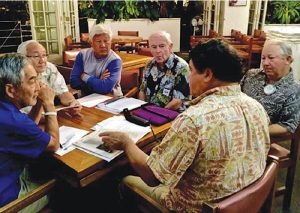
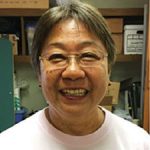
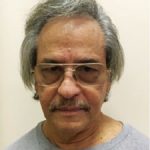
L–R: Justin Wong, Jean Dobashi, Senator Maizie Hirono, Al Hamai.
The Hawaii Alliance for Retired Americans (HARA) is our state affiliate of the Alliance for Retired Americans (ARA), which serves as a national umbrella organization for advocacy organizations interested in working together on aging, retirees and community issues.
Founded in 2001, HARA is comprised of eight affiliate organizations in Hawai‘i totaling more than 21,000 members, including AFT Retirees, HGEA Retirees, HSTA-Retired, Hawaii Family Caregiver Coalition, ILWU Retirees, Kokua Council, Machinist Union Retirees and UPW Retirees.
HARA works with the Legislative Kupuna Caucus and other senior/aging advocacy organizations to support legislative measures and to provide public input on issues that affect seniors. Some important examples are the Kupuna Care Program (state funds to enable the elderly and people with disabilities to remain at home) and a state-administered long-term care program. We also endorse measures to reduce the cost of prescription drugs, create permanent absentee registration and voting, and develop one-stop Aging and Disability Resource Centers (ADRC). HARA urges support for family caregivers, affordable housing and assistance for the homeless. Besides our biennial conventions, HARA members get together with the Kokua Council to meet with members of the Hawai‘i State Legislature every May. The recent legislative session was very productive because we are in an election cycle.
HARA is part of ARA, a national grassroots movement for seniors/retirees, in which we join with 49 other independent state organizations. Our four million members work together to make our voices heard in shaping federal laws, policies, politics and institutions that affect our lives. The national ARA mission is to ensure social and economic justice and full civil rights for all citizens, so they may enjoy lives of dignity, personal and family fulfillment and security. The 2016 Legislative Session was evaluated in late May at a Legislative Review sponsored by HARA and Kokua Council.
For more information or to get involved helping other retirees, visit www.retiredamericans.org. Those who join ARA online automatically become members of HARA. Annual dues are $10. If you belong to a group of retirees who would like to align with HARA, contact President Justin Wong.
HARA officers serving Hawai‘i retirees include President Wong, Vice President Elmer Yuen, Secretary Carol Noland, Treasurer Phyllis Hiramatsu and Past President Al Hamai.
Making A Difference for Retirees in Hawai‘i by Justin Wong, President of Hawaii Alliance for Retired Americans from the June-May 2016 issue of Generations Magazine, Hawai‘i’s Resource for Life
Caregiving is an act of love. Balancing the needs and safety of a kūpuna with his or her desire to be as independent as possible requires a sensitive conversation with the senior and the entire family. When talking is avoided or discussions break down, conflicts may erupt and the role of the caregiver can become overwhelmingly painful.
To help families engage in difficult exchanges regarding the needs, desires, care and support of an elderly family member, the Mediation Center of the Pacific created the Kūpuna Pono Program (KPP). Through KPP, mediation and conferencing help families talk through issues to reach an agreement that supports the elder family member.
Family conferences are facilitated discussions that bring together the kūpuna and the entire family in order to talk about his or her needs and develop a plan to meet them. The conference begins with an assessment of the family’s strengths, and the desires and values of the kūpuna. Then, the current and future needs of the elder person are discussed, including what resources are available to support his or her needs and who will assist in their coordination.
With two impartial facilitators guiding the discussion, family members talk about medication management, safety, living arrangements, meal preparation, personal assistance, finances, end-of-life plans and more. Then, the action steps and plans that are agreed upon during the conference are incorporated into a plan that is provided to every family member. The plan serves as a guide to help the family support their elder member and share in caregiving responsibilities.
If conflicts have already erupted between family members, the mediation process helps them talk about the specific issues at the heart of the dispute. Working in private and joint sessions with the family members who are in conflict, two impartial mediators help them understand each other’s perspectives and negotiate solutions.
Caregiving can be stressful, leading to conflicts that may tear a family apart at a time when their unification is most needed. The Kūpuna Pono Program helps restore harmony among them. Visit the mediation center online for more information.
THE MEDIATION CENTER OF THE PACIFIC, Inc. 245 N. Kukui Street, Suite 206, Honolulu, HI 96817 Monday – Friday, 8:30 – 4pm | 808-521-6767 | Fax: 808-538-1454 | www.mediatehawaii.org
Preventing & Resolving Family Conflicts by Tracey S. Wiltgen, Executive Director, The Mediation Center of the Pacific from the June-May 2016 issue of Generations Magazine, Hawai‘i’s Resource for Life
In 1945, Doris Day sang, “Gonna take a sentimental journey. Gonna set my heart at ease. Gonna make a sentimental journey, to renew old memories.” This popular song became an unofficial homecoming greeting for returning veterans at end of WWII. Couples probably slow-danced and swayed to it, cheek-to-cheek. Elders sing it today, recalling exactly where they were at the end of the war.
Do you know the songs your parents sang; their first kiss; snacks they loved to eat? Did their dreams come true or pass by? Have you heard their “pearls of wisdom” or “pet peeves?” Is it too late to ask?
Legendary Wisdoms journals are the perfect way to drill deep into your elders’ memories and discover their bucket list, how they tick and their “forgitaboutits.” Visit www.annettepang.com and download a complimentary copy of Legendary Wisdoms, and help fill the pages with your elders’ memories for you and your family to savor for generations to come.
Journaling is an excellent way to spark lively conversations and harvest stories your kūpuna have locked inside. The pages progress from trivia to introspection of precious memories. As a loved one, you can help by listening or by writing down their thoughts and memories; you will share amazing revelations, giggles, laughter, tears and enjoy closer connections. Don’t miss a richly rewarding and priceless “word and time” gift. Take a sentimental journey to renew memories with your loved one before it’s too late.
LIFE COACH VILLAGE, LLC Annette Pang is a relationship coach for family caregivers and their elders. 808-372-3478 | www.annettepang.com
Sentimental Journals by Annette Pang, Relationship Life Coach from the June-May 2016 issue of Generations Magazine, Hawai‘i’s Resource for Life
That’s how members of the 115-year-old Honolulu Lodge 616 of the Benevolent and Protective Order of Elks describe charitable work. Lodge members helped the community from the beginning, raising funds for charities through minstrel shows, baseball games, carnivals, circuses, dances, rodeos and boxing matches. From 1946, Ladies of the Elks, and after 1962, the Emblem Club, raised money with fashion shows, bingo and rummage sales.
From the 1930s, Elks funded lunchtime milk for schools. In the 1950s, Elks funding came from managing the Hula Bowl; “Termite Palace” football games featured milking competitions and Milk Queen contests. In 1951, Honolulu Rapid Transit and Art Rutledge’s striking Teamsters provided Hula Bowl busing. Members have also distributed Thanksgiving food baskets, children’s Christmas gifts, and hosted Kalihi Orphanage outings at Hanauma Bay and Christmas parties at children’s hospitals. They entertained students and teachers from Waimano and Diamond Head schools. A successful 1949 community toy-and-book drive filled donation barrels with Christmas gifts for children in hospitals and orphanages.
Elks Care, Elks Share by Anita Manning, Honolulu Elks Lodge 616 Historian from the June-May 2016 issue of Generations Magazine, Hawai‘i’s Resource for Life
According to doctors and research groups from Mayo Clinic, Harvard Medical School, Centers for Disease Control and the University of Michigan Medical School, signs of aging and chronic disease have one thing in common—inflammation. A recent Time Magazine article also points to inflammation as the root cause of “old-age” aches, pains, fatigue and aging skin.
Merriam-Webster.com defines inflammation as “a local response to cellular injury that is marked by… redness, heat, pain, swelling, and often, loss of function and that serves as a mechanism initiating the elimination of noxious agents and of damaged tissue.” It is a natural reaction related to our immune response that helps us heal. When we get an infection, we want inflammation to kill bacteria and viruses.
Broad symptoms like arthritic joints and sore muscles are easy to relate to, but inflammation can occurs in the cells of the heart, arteries, nerves, kidneys, pancreas, stomach, lungs and liver if stressed or attacked by disease.
Today, scientists are studying the natural response of inflammation in individual cells. Why does inflammation sometimes fight infection and heal wounds — but run out of control with allergies and chronic diseases like arthritis? Why does our immune system use inflammation to kill off some “bugs,” but let some cancer cells sneak by and grow into tumors?
All cells are bathed in some kind of fluid: lymph, blood plasma, saliva, urine or spinal fluid. Our bodies are 60 percent water. Heart and brain tissue are 73 percent water; lungs, 83; blood and lymph, over 90. Now, researchers are looking at how pathways of enzymes, and interacting proteins and gases move in and out of our cells, flowing from one fluid system to another. Maintaining normal amounts of water in your body allows complex pathways of intercellular reactions to function normally.
Science may not yet know all answers to aging and chronic diseases, but one thing is certain—maintaining proper hydration is critical to good health. And now we know that water is important at a cellular level, too. Besides excercise, reduced stress and a low-fat, fiber-rich, whole-food diet, water is essential for digestion, regularity, and maintaining a healthy heart, blood system and brain.
Dr. Hiomi Shinya, author of The Enzyme Factor, developer of modern colonoscopy and director of the endoscopy center at Beth Israel Medical Center in New York City, puts his patients on vegetarian diets and ionized alkaline water to reverse all kinds of colonic disease. From his vast experience, he concludes that diet and drinking large amounts of pure, ionized water are important to staying healthy and keeping the body hydrated.
While scientists are finding cures for chronic diseases that all seniors face, the least we can do is to stay well hydrated. Drinking 2 to 3 liters (1 liter=1.06 quarts) of water every day takes some discipline; before starting, ask your doctor if you can tolerate increased fluid intake. If you can, you may find that some of your aches and pains were just a result of being “a quart or two low.”
ENAGIC USA Independent Distributor Alan Matsushima, Health and Wellness Consultant | 808-384-7354 | trader_808@yahoo.com
Inflammation & Aging: Fluid Problems by Alan Matsushima, Kangen ENAGIC USA from the June-May 2016 issue of Generations Magazine, Hawai‘i’s Resource for Life
The most important part of your retirement plan is the monthly income you set aside for essential and lifestyle expenses. More retirees — especially those who don’t have a pension — will have to rely on a combination of income sources. Here are some tips to consider as you design your plan.
Create a plan
A recent Ameriprise Financial study found that more than half of the country’s pre-retirees feel overwhelmed and anxious about their impending retirement, and worry that they will run out of money. However, pre-retirees with a retirement income plan are more likely to feel confident about their financial future. You, too, can take action to help lessen fears about the unknown.
Project your expenses
Cut yourself a “reality check” that covers your monthly bills. Tally your expected retirement expenses. Next, consider extras in your retirement lifestyle, including travel, visiting grandkids, starting a small business and community charity work. Expenses after retirement are personalized and may vary over time; make sure your budget supports your goals.
Make a list and check it twice
Will you have multiple potential sources of income available in retirement? List all your assets and income streams, such as Social Security, stocks, bonds, Certificates of Deposit (CDs) or annuity income. Round up your IRAs or 401(k)s and potentially consolidate accounts if it makes sense.
Understand the impact of taxes
Once you hit retirement, taxes may impact you differently. To avoid surprises, ensure that taxes are a part of your retirement income plan. To avoid tax penalties, calculate Required Minimum Distributions (RMDs) — the minimum amount of money you must withdraw from your retirement accounts each year after age 70½. Talk to your tax advisor about RMDs and other strategies to help minimize your retirement tax bill.
Give yourself flexibility
Ensure you have a diversified, balanced portfolio to weather unexpected events that may occur in retirement. Gear some investments for generating stable income — those less likely to change in value–and others for easy conversion to emergency cash. For maximum flexibility, identify the assets that you plan to draw down first.
Time is on your side
The sooner you start thinking about how to pay yourself in retirement, the better off you’ll be. Tackle tasks one at a time and allow yourself the luxury of being able to carefully think through your retirement goals and financial scenarios.
Work with a professional
Consult a financial professional with experience creating reliable, lasting income strategies in retirement.
MICHAEL W. K. YEE, CFP 1585 Kapiolani Blvd., Ste. 1100, Honolulu 808-952-1222 ext. 1240 | michael.w.yee@ampf.com
Michael W. K. Yee, CFP®, CFS®, CLTC, CRPC®, is a Financial Advisor, Certified Financial Planner ™ practitioner with Ameriprise Financial Services, Inc. in Honolulu, Hawai‘i, with Na Ho’okele Financial Advisory Team, a financial advisory practice of Ameriprise Financial Services, Inc. He offers fee-based financial planning and asset management strategies and has been in practice for 29 years.
The Pay Yourself in Retirement study was created by Ameriprise Financial utilizing survey responses from 1,305 Americans ages 55 to 75 with investable assets of at least $100,000. The online survey was commissioned by Ameriprise Financial, Inc., and conducted by Artemis Strategy Group from November 16–22, 2015. Investment advisory products and services are made available through Ameriprise Financial Services, Inc., a registered investment adviser. Ameriprise Financial Services, Inc. Member FINRA and SIPC
Paying Yourself in Retirement by Michael W. K. Yee, Financial Advisor and Certified Financial Planner from the June-May 2016 issue of Generations Magazine, Hawai‘i’s Resource for Life
Giving is a tradition in Hawai‘i, extending as far back as the original ancestors and including the many people and cultures that have since arrived on our shores. Chances are, you or someone you know has been a beneficiary of the generosity of others; chances are you also have given to people and causes that are important to you. And because of giving, our community thrives, lives are made better and a sense of ‘ohana is nurtured.
A legacy is a special form of giving, usually created as part of the estate planning process when wills and trusts are used. A legacy can also be beneficiary designations for retirement plans, life insurance and similar financial tools. A legacy is a way of leaving a footprint on your world for the betterment of those who will follow.
Examples of famous legacies in Hawai‘i include the Kapi‘olani Medical Center for Women and Children, founded by Queen Kapi‘olani, and the Honolulu Museum of Art, founded by Anna Rice Cooke.
The mission of the National Kidney Foundation of Hawaii is to fight chronic kidney disease in Hawai‘i through many innovative programs and services. The foundation is pleased to join with the Hawai‘i Community Foundation to encourage all of us to make our own legacies. Find more information at www.hawaiicommunityfoundation.org or www.kidneyhi.org and select the “Gift Planning” button.
Will You Leave a Legacy by Jeffrey B. Sisemoore, JD, National Kidney Foundation of Hawaii from the June-May 2016 issue of Generations Magazine, Hawai‘i’s Resource for Life
Lately, I have received dozens of Medicare questions from individuals throughout the country who graduated from high school in 1965. What do they all have in common? All are over 65. While most still work and have health coverage through an employer or as a dependent spouse, some enroll in traditional Medicare Part A & Part B. Medicare may be primary or act as the secondary payer for covered services after a group health plan pays its portion. Recently, a news story reported that a person was hospitalized while traveling outside his home state. After recovering, the individual returned home to over $23,000 in medical bills. A call to the individual’s health plan was futile. Soon, “past due” notices arrived, and bill collectors were threatening seizure of assets and court action. It seems that in the hospital, the sick person could not provide a health plan card. A well-meaning friend gave the hospital a health membership card from the ill person’s wallet. Unfortunately, it was an expired card from a former employer. The hospital’s claim based on that incorrect information was rejected. Once the correct health plan card was provided along with information that showed Medicare was the secondary payer, benefits were coordinated and the final bill was correctly reduced from $23,000 to less than $70. Lesson learned: Whether you are traveling or just being at home, make sure your loved ones, close friends and care partners know how to reach the person you have designated to provide all of your current insurance claim membership cards.
808-230-3379 | getmartha@aol.com | www.Get2insurance.com MORNING DRIVE WITH MARTHA — A radio program with Martha Khlopin KNDI-1270AM: Weekdays, 4:30 am – 6 am
Medicare: Don’t Leave Home Without It! by Martha Khlopin, Radio Host of “Morning Drive With Martha” from the June-May 2016 issue of Generations Magazine, Hawai‘i’s Resource for Life
Boost your brain by joining the Hawai‘i State Public Library System’s 2016 Adult Summer Reading Program from June 5 to July 16. Build your brainpower and commit to deep reading 20 minutes daily. Studies have shown that reading reduces stress, makes you a better speaker and keeps your thinking sharp.
How to Participate
• Visit any of the 50 public librariesto sign up and receive a program guide.
• Read at least 20 minutes daily — books, magazines, e-books, e-magazines — to exercise your brain and earn free incentives.
• Complete four out of six weeks and receive a free puzzle or adult coloring book.
• Enter lucky prize drawings.
Disconnect to Reconnect
Beverly C. Wong, a retired secretary with 40 years of combined public service on O‘ahu, loves the Salt Lake-Moanalua Public Library and reading, which both help to keep her brain fit. Photo by Paul Mark
Take up the challenge and turn off the television, video games and other electronic devices. Make reading a family affair and bring your grandchildren to the library each week. Everyone from keiki to ku¯puna can join the Summer Reading Program. Entertaining and educational programs will be held throughout the summer.
Visit online for updates and information about the HSPLS Summer Reading Program.
Public libraries statewide provide free multicultural, year-round programs that encourage reading and lifelong learning for all ages. Contact the hosting library for more information.
Mahalo to the Friends of the Library of Hawai‘i and the 2016 Summer Reading Sponsors!
HAWAI‘I STATE PUBLIC LIBRARIES SYSTEM BRANCHES Locations, Contact Information and Hours of Operation: www.librarieshawaii.org
Exercise Your Reading Muscles This Summer by HSPLS Library Development Services Staff from the June-May 2016 issue of Generations Magazine, Hawai‘i’s Resource for Life
Whether singing, producing CDs, acting, developing Kamehameha School alumni or leading community organizations, Marlene Sai does everything from the heart. Judy Garland onced asked, “When do the words come true?” Marlene turns her love songs into reality by the sheer will of her aloha and proven business savvy. We joined Marlene on the site of her latest project, renovating a 114-year-old building to house a senior center.
The Ka‘akako “pump house” looks so out of place in a forest of towering modern high-rises. For decades, rumors spread that it would be turned into a museum, a restaurant, fine shops or even a car dealership. Now, for the first time in 66 years, Pacific Gateway Center will put this historic industrial building back into use as a community center. This $2.5 million renovation project is supported by an HCDA grant-in-aid and additional funding by the legislature. Remediation of the interior is in progress under the direction of Project Coordinator Marlene Sai, a woman with a reputation for energy, grace, aloha and a remarkable ability to get things done.
PBS documentary “Betrayal”
Marlene Sai, an actress, vocalist and music executive, is popularly known as a grand dame of Hawaiian music, whose signature songs “Kainoa” and “Waikīkī,” and portrayal of Lili‘uokalani in the PBS documentary “Betrayal” won her fame and many awards. What many may not know is that Marlene also worked in administration at Kamehameha Schools and built its alumni department, while continuing to perform select “gigs.”
Before balancing work and family was ever mentioned, she was raising her two daughters and in the mainstream of two careers. “I have always been in entertainment and always worked every day in an office — even when I was performing nightly in Waikīkī,” said Marlene. Today, she is driving the Pacific Gateway Center project, Nā Kūpuna Makamae Center, and also leading important community projects, such as Kūpuna Power and the Prince Kuhio Hawaiian Civic Club. She created the Kūpuna Power event with Sen. Brickwood Galuteria in 2012 to educate elders about aging issues and to enrich their lives.
Renovate
Now officially called “Nā Kūpuna Makamae Senior Center,” the pump house was designed in 1900 by Oliver G. Traphagen (the architect for the main building of the Moana Surf Westin Resort & Spa). The pump station was part of a larger sanitation system engineered for Honolulu by Rudolph Hering from New York City. The tall stack exhausted a huge steam-driven pump housed here. Traphagen balanced the Romanesque exterior of this 1,500-square-foot fortress with large arched windows and a green tile roof that survived well in our climate. This government facility ceased operations in 1949, when all pumping was taken over by the Ala Moana station. In 1978, the old pump station was registered as a historic building; the current construction will not change any of the building’s exterior design features.
One might say that the pump station has been waiting for Nā Kūpuna Makama — The Beloved Seniors. It is a place all seniors recognize and can find their way to on TheBus. Because it is a historic building, it will always be an oasis of open sky and green lawn in Kaka‘ako — a legacy of the past. Later this year, Pacific Gateway Center will open its doors as a community haven for activities that initiate fun: hula, music lessons and performance, yoga, tai chi and movie matinée day, to name a few. Marlene and Marketing Coordinator Valery O’Brien are creating meaningful cultural and educational events that will tell the stories of Hawai‘i, and all her people groups and programs that support and grow our community values.
Follow Your Star
People in Kamehameha Schools at the same time as Marlene said that her music career came up fast. She is from the musical ‘Ikuwā family. In her early teens, her uncle, Andy Cummings, a Hawaiian musician and composer, taught Marlene some of his songs. One was “Kainoa,” a melody he was scoring for his dear friend, Jimmy Lono Tako, a slack key artist on Hawai‘i Island. Her perfect pronunciation of Hawaiian came from her parents and grandparents. If singing with “Uncle” conjurs visions of fancy music studios with monitors, headsets and hanging mics, Marlene will be quick to describe sitting on the front porch after school, with Uncle Andy teaching her his songs, maybe an hour or two every day. He never told her why he was mentoring her; it was just fun — and Marlene loved to sing.
“Our family always had gatherings at our home in Kaimukī, where we would come together to enjoy music — playing instruments, singing and dancing. While I attended Kamehameha Schools, the music influence and structuring with a variety of music was plentiful.”
The key to Marlene is practical grounding. When she graduated from Kamehameha, she got a job working in travel during the summer — earning a living was her priority. “I was on the bottom rung at the agency and pulled Saturday and Sunday shifts. It was OK because I was single. In fact, there were several of us who worked in town on the weekends. Pau hana, we would meet at Joe’s at Waikīkī, near the old Biltmore Hotel, for a snack. We were all just starting out.”
Don Ho at Honeyʻs.
Marlene was a good paddler and knew many of the Waikīkī beach boys. One day, a surfer asked if she and her girlfriends would like to take a ride out to a Kāne‘ohe to a place with good music — Honey’s, a restaurant-bar. “My friend plays good music and manages the place for his mom,” he said. So the next Sunday, they drove over the pali, playing ‘ukulele, singing and laughing the whole way. The 27-year-old entertainer was a fellow named Don Ho. “He was terrific! During the introductions, one of the fellows told Don he should call me up to do a number because ‘this wahine can sing.’ In his kolohe way, Ho said, ‘Yeh — she can sing.’” He did call her to the stage. Marlene sang “Kainoa,” the song her uncle taught her. Ho immediately offered Marlene a part-time job singing at Honey’s — never guessing that she was only 17. She gave him her family’s phone number.
Marlene said Ho never called her, but a few weeks later, he flagged her over as she drove down Kalākaua Avenue. “I lost the number and been looking for you,” he called from his Thunderbird convertible. He asked her to Honey’s the next night — which turned into the start of her recording career. She remembers casually rehearsing with the band — Sonny Chillingworth, Gary ‘Aiko, Tony Bee and Mike Garcia. She did not know that dignitaries of Hawai‘i ’s entertainment industry were in the audience — Bill Murata, George Chun, Herb Ono and Jack deMello — to hear Chillingworth play.
Above is a rare shot of Marlene recording “Kainoa” in 1960. Above is Don Ho in the early days. Her family and Ho opened Marlene to Hawaiian songs and Kamehameha Schools taught her an appreciation for all kinds of music.
“After I started at Honey’s, my career took off and I decided not to go on to the University of Hawai‘i. When my “Kainoa” album took off, comedian Lucky Luck, disc jockey J. Akuhead Pupule and Jimmy Walker asked me to be on their radio and TV shows… soon I was playing at Duke Kahanamoku’s Supper Club in Waikīkī.”
Put Your Talent to Work
The hit album “Kainoa” wasn’t recorded track by track in a studio. “Sounds of Hawai‘i label was just building a new studio, so we recorded in the Honolulu Rapid Transit bus barn on King Street, where the police department is now. The acoustics were good late at night, when all the traffic died down and the planes stopped flying overhead,” she said. A live performance “air mix” is a desirable sound, but exceedingly difficult to achieve — the whole number must be performed perfectly. Amid all the parked buses, with the help of some of Hawai‘i’s finest musicians — Chillingworth on straight guitar and slack key, Ho on the organ and Alex Among on vibes — Marlene was able to pull it off.
Always the quintessential professional, Marlene said, “It‘s a great story, but I still want to digitize the “Kainoa” project to improve the sound.”
“Kainoa” and “Waikīkī” became her signature songs, later joined by “I Love You,” composed for her by her friend, Teddy Randazzo, an international recording star. In addition to cutting more than 20 albums, she entranced audiences at the biggest Waikīkī hotels — Hilton Hawaiian Village, The Royal Hawaiian Monarch Room, Moana Surf Rider — and supper clubs, such as Don the Beach Comber and Duke Kahanamoku’s.
Marlene said she still misses Ho. They often reminisced about their little-kid days — when everything was fun and exciting. She affectionately called him “Quack,” (relating to Donald Duck) and Marlene’s nickname was “Goofy” because she sometimes likes to joke and act crazy. “We were young and the industry was so big. I had no plan; I was young and fearless and wanted to explore as far as I could go. I was a baby performer working among greats like Genoa Keawe, Haunani Kahalewai, Alfred Apaka, Maddie Lam, Vicky I‘i Rodrigues and Johnny Almeida, to name a few. I was so blessed.”
Marlene Sai has a big following in Japan. Since 1962, she has been performing for Japanese audiences. Here she performs in 2010 with Japanese musicians who specialize in Hawaiian music.
In contrast to the glamor and glitz of stardom, Marlene was wise and eager to learn the gritty entertainment business. She learned as she went, always tackling projects and getting them done. “Donald helped me negotiate a contract at Duke Kahanamoku’s Supper Club with Kimo McVay. After I had recorded with Sounds of Hawaii, I started Makaha Records with friends George Chun and Tom Moffatt. Later on, I got involved with Hawai‘i Academy of Recording Arts as an active board member — I’ve been president three times, treasurer, chair of Nā Hōkū Hanohano Awards a few times — and eventually we took it to the Hawai‘i Convention Center.”
“Respect your gift,” Marlene tells the young entertainers. “The fun comes, but first, you have to treat your business seriously.”
A sober reality of a singing career is meeting your audience where they are. In 1962, Marlene took her first road trip to Japan, where she is still a star. Every spring, she travels west to perform for her fans, backed up by Japanese musicians and hula dancers who specialize in popular Hawaiian music.
Some Recognition and awards
• 1986 The Hawai’i Academy of Recording Arts (HARA) Nā Hōkū Hanohano Award for “Best Female Vocalist” • 1987 Hawai‘i State Theatre Council Po‘okela Award for her portrayal of Queen Lili‘uokalani in “Hear Me, O My People” • 1999 Kamehameha Schools Alumni Gallery Award • 2004, HARA Nā Hōkū Hanohano Lifetime Achievement Award in music and recording, 2007 Hawaiian Music Foundation Hawaiian Music Hall of Fame Inductee • Her first LP release, “Kainoa,” was voted “The 50 Greatest Hawai‘i Albums”
Use Your Talent in New Ways
Besides a buttery contralto voice, Marlene has the heart of an actor — an ability to express deep emotions. After her fabulous singing and recording success in the ’60s, acting became one of her most rewarding endeavors. In music, she always asked her composers what inspired their songs and then interpreted that emotion. Her nightly showroom productions always engaged a meaningful storyline. As an actress, she studies her character carefully and “lives” the emotions as they would.
In 1986, she appeared with Tom Selleck as Wahine Luka on “Magnum PI,” and in the next year at Castle Theater, she starred in the Don Berrigan production of “Hear Me O My People,” a one-character play about Queen Lili‘uokalani. So compelling was her portrayal of the queen that Marlene was invited to perform before members of Congress at Folger Shakespeare Theatre in Washington, D.C.
PBS documentary “Betrayal”
“I was fascinated by the history of the overthrow. In late 1990 or early 1991, Ellen Pelissero, Ted Jung, Edwin Ebisui and I partnered to form Kukui Foundation, a 501(c)(3). Ellen, a professional writer, began researching the historical documents and wrote the original script for a feature documentary. She and I were co-executive producers. Tremaine Tamyose did some script rewrites. He and Joy Chong were co-directors for the production. Shooting was at KHET Manoa Studios. I portrayed Queen Lili‘uokalani. The PBS-Hawaii docudrama “Betrayal” premiered in Hawai‘i on Jan. 17, 1993, on the 100th anniversary of the overthrow of the monarchy.”
Marlene‘s interpretation of the warm-hearted monarch with ali‘i dignity and the humility of a servant of Ke Akua won her a PBS award. According to Television Histories: Shaping Collective Memory in the Media Age, “Betrayal” brought the historical record to the attention of the general public and forever changed popular opinion about Hawaiian sovereignty. Marlene was forever changed, too. “I learned so much I never knew about our Hawaiian history and Lili‘uokalani; for the Kukui Foundation team, the experience was a humbling honor.”
Marlene had fun bringing Bloody Mary, the sassy, comical and oh-so-lovable matchmaker, to life in “South Pacific.”
Readers will also remember the 2007 Hawaii Opera Theatre production of “South Pacific,” in which Marlene played the heady Bloody Mary, counseling young lovers to talk “Happy Talk.” She surprised audiences by bringing her keen sense of comedy to the stage, a trait familiar only to family and close friends. The following year, she was back onstage at the Hale Koa Hotel with a review called “This is Hawai‘i.”
Share What You Love
When asked by Leslie Wilcox on KHET’s “Long Story Short” how she views her legacy, Marlene joked, “Legacy? Well, it looks like I’ve been around a long time.” Joking is her way of deflecting praise, but no one can look at her life and fail to recognize the lasting contributions she has made to her extended community. At age 74, she still loves adventure. Whether discovering the business of entertainment and recording, reinventing herself as an actress, developing the alumni department at her alma mater or building a senior center — Marlene has always honored the gifts she was given by using them and exploring ways to put them to good use.
Marlene raised her family with the same discipline that her parents exercised — focusing on the importance of being grounded, earning a living, being fearless and learning all you can. Marlene lives by this rule, researching everything she does and considering all her commitments before she signs a contract. Finding a project worthy of her effort, she forges ahead fearlessly. It is a foundational lesson for her grandchildren. “When my granddaughter was very young, I told her not to be afraid when she performs her hula. Just get up there and share what you love. Speak to the audience through your kuhi and your body.”
Marlene succeeded in raising her family and creating a legacy by building on what she knows, and inventing a future based on her strengths. In a musical family, her talent wasn’t that unusual. When she took it outside, she soon realized she was different. She never gave up her office work, but developed it to the highest level. Today, she is a seasoned administrator in charge of multimillion-dollar project budgets. Her children grew up in the music industry and Marlene recalls her daughter once asking, “Mom, we’re not like other people, are we?” For a seven-year-old, the answer “We are different” might have been dis-appointing, but her mother knew that training in independence and embracing “different” frees the spirit to be creative.
A Walk Down Memory Lane From Marlene Sai’s simple sing-along with her uncle, Andy Cummings, and first vocalist job at Honey’s, came exciting gigs at the old Biltmore Hotel and hit LPs. Later, she began acting but continued to sing, record and serve in trade and community organizations. She still misses Don Ho, cherishes her many friends and associates, and mentors young talented performers.
Invent Your Future
In 2014, Pacific Gateway Center broke ground on the renovation of Nā Kūpuna Makamae Center, at the corner of Keawe Street and Ala Moana Boulevard. The senior center that serves the Kaka‘ako area, will provide innovative services and programs to empower, educate, enlighten and entertain our cherished seniors and their families.
Building a legacy is inventing your future. Marlene loves what she does, and when she finds a project that speaks to her, she commits her time and energy with gusto. And so it is with Nā Kāpuna Makamae. On prime real estate, in an area where elders are underserved, Marlene is helping this nonprofit renovate a historic blue rock building that would cost a fortune to design and build out today. The sewage pump house will be reinvented into an education and creative center where the people of Kaka‘ako can congregate, learn and be inspired to shape their own futures, and follow new dreams.
And even though she loves her challenging “day job” as project and program coordinator, this year, Marlene will also be following the muse she adores — acting in a new Brian Kohne film project called “Kuleana.” This high-concept, feature-length historical drama takes place on Maui in 1971. The film explores a consciousness that preceded the Hawaiian cultural renaissance of the mid-seventies.
Let’s all take a lesson from Marlene Sai and put some thought and energy into inventing the future of our dreams.
Mahalo Nui Loa e Marlene! We love you too!
“It is by looking into the window of your heart that you will find the details of your life.” — Marlene Sai
Aloha iā ‘oe: A Marlene Sai Legacy by Katherine Kama‘ema‘e Smith, Cover & Feature Story Photography by Brian Suda from the June-July 2016 issue of Generations Magazine, Hawai‘iʻs Resource For Life
The more we learn, the smarter our ancestors seem to be. If you are Filipino, your family probably uses annatto or achuete to cook traditional foods. The seed is used throughout Latin America, the Caribbean and places around the world where the Spaniards sailed, such as the Philippines and the Marianas Islands. Today, annatto food coloring is used worldwide.
Bright red annatto seeds have a very hard core, so they must either be soaked in water, or warmed in oil or lard to extract the color. Then the hard seeds are carefully sieved out. The orange-colored oil is used to prepare arroz con pollo, red pork adobo and many other dishes. In ancient times, red-orange annatto dye was used in spiritual rites and handicrafts, as well.
Scientists now know that annatto seed oil also contains tocotrienols — active molecules of the vitamin E family. The benefits of vitamin E have been investigated extensively, but recent research has focused on tocotrienol because it can lower cholesterol and act as an antioxidant. Although rice and palm also yield tocotrienols (mixed with less active forms of vitamin E), annatto seed yields nearly pure tocotrienol that is rich in the kind of molecules that appear to carry the most health benefits.
Our ancient ancestors added vitamins to their diets as a part of their traditions; science is proving just how smart our ancestors were!