WANT THIS ISSUE?
Download your own personal copy of this issue in PDF format. Click the button below:


WANT THIS ISSUE?
Download your own personal copy of this issue in PDF format. Click the button below:
he December 2020-January 2021 issue of Generations Magazine explores Chinese-American soldiers who served the United States with dignity during World War II but have never received their medals. Kathlyn Clore brings the issue and several soldiers’ stories to light. You’ll also read about age-related muscle loss, Covid testing, safe family activities for the holidays as…

[et_pb_section fb_built=”1″ custom_padding_last_edited=”on|desktop” _builder_version=”3.22.3″ background_color=”#f2f2f2″ custom_padding_tablet=”50px|0|50px|0″ custom_padding_phone=”” transparent_background=”off” padding_mobile=”off”][et_pb_row padding_mobile=”on” column_padding_mobile=”on” module_class=” et_pb_row_fullwidth” _builder_version=”3.25″ background_size=”initial” background_position=”top_left” background_repeat=”repeat” width=”89%” width_tablet=”80%” width_phone=”” width_last_edited=”on|desktop” max_width=”89%” max_width_tablet=”80%” max_width_phone=”” max_width_last_edited=”on|desktop” make_fullwidth=”on”][et_pb_column type=”4_4″ _builder_version=”3.25″ custom_padding=”|||” custom_padding__hover=”|||”][et_pb_image src=”https://generations808.com/wp-content/uploads/2020/10/GMweb_OctNov2020-Cvr_Kalani_rgb-scaled.jpg” alt=”Cover for October-November 2017 Issue” title_text=”GMweb_OctNov2020-Cvr_Kalani_rgb” url=”https://generations808.com/october-november-2020/” url_new_window=”on” align=”center” align_tablet=”center” align_phone=”” align_last_edited=”on|desktop” admin_label=”Image – Issue Cover October-November 2020″ _builder_version=”4.6.5″ z_index_tablet=”500″ use_border_color=”off”]
[/et_pb_image][et_pb_cta title=”Want this issue?” button_url=”https://generations808.com/wp-content/uploads/2020/10/2020_OctNov-KalaniPea_ALLsprds.pdf” url_new_window=”on” button_text=”Download it now!” admin_label=”Call To Action – Download this issue” _builder_version=”4.6.5″ background_size=”initial” background_position=”top_left” background_repeat=”repeat” button_icon=”%%98%%” button_on_hover=”off” use_border_color=”off” button_text_size__hover_enabled=”off” button_text_size__hover=”null” button_one_text_size__hover_enabled=”off” button_one_text_size__hover=”null” button_two_text_size__hover_enabled=”off” button_two_text_size__hover=”null” button_text_color__hover_enabled=”off” button_text_color__hover=”null” button_one_text_color__hover_enabled=”off” button_one_text_color__hover=”null” button_two_text_color__hover_enabled=”off” button_two_text_color__hover=”null” button_border_width__hover_enabled=”off” button_border_width__hover=”null” button_one_border_width__hover_enabled=”off” button_one_border_width__hover=”null” button_two_border_width__hover_enabled=”off” button_two_border_width__hover=”null” button_border_color__hover_enabled=”off” button_border_color__hover=”null” button_one_border_color__hover_enabled=”off” button_one_border_color__hover=”null” button_two_border_color__hover_enabled=”off” button_two_border_color__hover=”null” button_border_radius__hover_enabled=”on” button_border_radius__hover=”0″ button_one_border_radius__hover_enabled=”off” button_one_border_radius__hover=”null” button_two_border_radius__hover_enabled=”off” button_two_border_radius__hover=”null” button_letter_spacing__hover_enabled=”on” button_letter_spacing__hover=”0″ button_one_letter_spacing__hover_enabled=”off” button_one_letter_spacing__hover=”null” button_two_letter_spacing__hover_enabled=”off” button_two_letter_spacing__hover=”null” button_bg_color__hover_enabled=”on” button_bg_color__hover=”#72c9db” button_one_bg_color__hover_enabled=”off” button_one_bg_color__hover=”null” button_two_bg_color__hover_enabled=”off” button_two_bg_color__hover=”null”]
Download your own personal copy of this issue.
Just click the button below.
[/et_pb_cta][/et_pb_column][/et_pb_row][/et_pb_section][et_pb_section fb_built=”1″ admin_label=”section” _builder_version=”3.22.3″ collapsed=”on”][et_pb_row admin_label=”row” _builder_version=”3.25″ background_size=”initial” background_position=”top_left” background_repeat=”repeat”][/et_pb_row][/et_pb_section][et_pb_section fb_built=”1″ admin_label=”section” _builder_version=”3.22.3″ collapsed=”on”][et_pb_row admin_label=”row” _builder_version=”3.25″ background_size=”initial” background_position=”top_left” background_repeat=”repeat”][/et_pb_row][/et_pb_section]
The October-November issue of Generations Magazine features the heartwarming story of popular Hawaii performer Kalani Pe’a’s grandmother and her progression into dementia from Alzheimerʻs. You’ll also read about help that’s available to kūpuna during the pandemic; a story on how the power of music helps those with dementia; we have some hearing tips for the…
 An increasing number of family caregivers are performing more complex medical care for their family members at home. According to Home Alone Revisited: Family Caregivers Providing Complex Care, a report prepared jointly by AARP and the United Hospital Fund, there is an increase in the number of family caregivers performing tasks that would, in the past, have been provided under the direct supervision of a medical professional. The report concludes that “… it is presumed that every home is a potential hospital and every service the person needs is provided by an unpaid family member…”
Advanced home care ranges from managing complex medication routines, injections, tube feedings, peritoneal dialysis, wound care, incontinence care and using specialized medical equipment. When families are faced with bringing their loved one home from the hospital after a devastating health event, they are expected to learn and perform these kinds of tasks in addition to providing basic care.
The reasons why family caregivers might feel obligated to take on this additional care include:
■ It allows them to feel like they are fully contributing to their loved one’s care.
■ A promise is made not to put their loved one in a nursing facility.
■ There was no other choice given at the time of discharge and insurance doesn’t cover the kind of care needed.
Imagine providing complicated wound care for a loved one with the teaching provided to you on the day of discharge. Would you feel prepared to manage it all when you are alone at home? Would you have concerns about making a mistake and causing your loved one pain or even more complications? How can family caregivers make sure they are ready and have the support after discharge? Here are some findings that came out of the AARP report which you may want to consider:
■ Demand to be part of the care planning process and discharge meetings. This will ensure the discharge team understands your ability to manage the kind of care expected.
■ Ask the planning team what kind of support you will have at home in case you have questions or find yourself unsure of the procedures.
■ Ask for the instructions in writing.
■ Do not allow the team to assume you can manage the tasks at hand. Advise them that you are anxious about doing the care and ask for a referral for in-home support resources.
When considering home care support, family members should make sure the provider is licensed to provide more complex care. Also, oversight by a licensed medical professional such as a registered nurse, will give family caregivers additional reassurance that care tasks are performed safely and with enough hands-on practice to prevent another hospitalization. With an increasing number of families facing this type of situation, there is a growing need for periodic — and sometimes ongoing — home care support.
ATTENTION PLUS CARE HOME HEALTHCARE
Accredited by The Joint Commission
1580 Makaloa St., Ste. 1060, Honolulu, HI 96814
808-739-2811 | www.attentionplus.com
AGING IN HAWAII EDUCATIONAL OUTREACH PROGRAM
by Attention Plus Care — a program providing resources for seniors and their families, covering different aging topics each month. For class information and upcoming topics, call 808-440-9356.
An increasing number of family caregivers are performing more complex medical care for their family members at home. According to Home Alone Revisited: Family Caregivers Providing Complex Care, a report prepared jointly by AARP and the United Hospital Fund, there is an increase in the number of family caregivers performing tasks that would, in the…
 I recently received a call from a concerned parent of an adult special needs child. Her son was recently diagnosed with schizophrenia, refuses to take his medication and has been living on the street. Unable to physically care for her child and experiencing a health scare of her own, she decided it was time to get “her ducks in order” and contacted our office. Her main wish is to continue to provide financially for her son’s present and future care without disrupting his governmental disability benefits. My client’s situation is not unique. According to the CDC, a total of “61 million adults in the US live with a disability;” that’s 26 percent or one in four adults.
Life during a pandemic is difficult enough. It forces us to look at our mortality as well as the mortality of our loved ones. The good news is that for families who have a disabled child or loved one who is receiving or qualifies to receive governmental benefits, it is an opportune time to plan. The SECURE Act recently adopted considerable changes regarding Inherited Retirement Accounts or IRAs. Those who wish to leave their IRAs to a disabled family member or loved one may chose to preserve the IRA for their benefit and stretch its distributions throughout the disabled loved one’s life.
STEPHEN B. YIM, ATTORNEY AT LAW
2054 S. Beretania St., Honolulu, HI 96826
808-524-0251 | www.stephenyimestateplanning.com
For more information online about the CDC and disability, go to https://www.cdc.gov/ncbddd/disabilityandhealth/infographic-disability-impacts-all.html
I recently received a call from a concerned parent of an adult special needs child. Her son was recently diagnosed with schizophrenia, refuses to take his medication and has been living on the street. Unable to physically care for her child and experiencing a health scare of her own, she decided it was time to…
One of the most common problem I encounter investigating a cybercrime is that the reporting person and/or victim fail to provide any records and/or documentation to support their claim that they had been victimized — more so in cases involving online fraud.
One of the simplest and quickest methods of documentation is printing out the webpage offer, sale or service. The URL (or webpage address) and the date and time the printout was made will usually be found at the bottom of the page.
 Another good practice is to print out any confirmation of sale, receipt of funds and delivery notices, etc. Bookmarking the webpage is also a good record-keeping method.
Solicitations and purchases done via email should follow the same practice. Print out the emails offering the sale of items and/or services. Likewise, print emails reflecting the receipt of funds and delivery notices, etc.
In addition, all emails involving the transaction should not be deleted, but saved in a separate folder.
And finally, obtaining any bank or credit card statements reflecting the transactions would greatly assist in the investigation.
Again, prevention is the key. “If it’s too good to be true…”
THE DEPARTMENT OF THE PROSECUTING ATTORNEY
1060 Richards St., Honolulu, HI 96813
808-768-7400 | Office hrs: Mon – Fri, 7:45 am – 4:30 pm
www.honoluluprosecutor.org/contact-us/
One of the most common problem I encounter investigating a cybercrime is that the reporting person and/or victim fail to provide any records and/or documentation to support their claim that they had been victimized — more so in cases involving online fraud. One of the simplest and quickest methods of documentation is printing out the…
You may be tempted to treat a caregiver as a “private contractor” in order to avoid the humbug of tax withholding and buying the right insurance policies. You would do so at your peril. The IRS and the state will take the position that the caregiver is an employee, that you are an employer and that all of the legal obligations that attach to those labels apply to your situation.
 IRS Publication 926 gives outstanding guidance about employment issues. One of the points raised is the need to verify and document that your prospective caregiver can legally work in the US. On that subject, you can find all of the information and forms you will need on the US Citizenship and Immigration Services website (www.uscis.gov). Or, it may make sense to avoid becoming an employer by working with an agency, which will be the caregiver’s employer and will deal with all of the legalities. What you pay for this kind of service may make the extra cost a bargain. Note that even if you work with an agency that carries worker’s compensation insurance, you should still ask your personal insurance professional whether there is anything else you should do to protect yourself through your homeowner’s and umbrella policies.
Ask your trusted advisors for guidance and check out resources. You will be glad you did.
SCOTT MAKUAKANE, Counselor at Law
Focusing exclusively on estate planning and trust law.
www.est8planning.com
808-587-8227 | maku@est8planning.com
You may be tempted to treat a caregiver as a “private contractor” in order to avoid the humbug of tax withholding and buying the right insurance policies. You would do so at your peril. The IRS and the state will take the position that the caregiver is an employee, that you are an employer and…
In the last couple of months, I have had two people come to my office because they were not millionaires yet. You see, they each had won the Publishers Clearing House sweepstakes (PCH) and had not received their monies yet.
 The first case was a gentleman named “Clyde” (not his real name) who was notified by telephone that he won $2.2 million. All he had to do was pay taxes on this amount and the prize money would follow. He was instructed to purchase gift cards and also send cash. Clyde maxed out all his credit cards to purchase the gift cards and cleaned out his life savings to mail the cash. In total, he was out $64,000. He came to my office when the credit card companies started harassing him and wanting payments from him.
The second case involved “Mary” (again, not her name), a retired school teacher who supposedly won $5 million (and two new cars) from PCH. Over the course of a year, with almost daily phone calls from strangers representing themselves as PCH employees, she gave them over $300,000 in cash and gift card numbers. When she was brought into my office by her son, she was still of the belief that she was a legitimate winner. Unfortunately, I had to break the news: My job was to educate her that she was not.
It should first be noted that PCH is legitimate company that was founded in 1953 to sell magazines. In 1967, the company started its sweepstakes to garner publicity and now is known worldwide for its prize giveaways. Because PCH is so recognized for giving away money, many scams have used this company’s name and reputation and fooled thousands of people into believing they won the sweepstakes.
If you have been told you have won, verify with PCH. Do not use the telephone number or email of the person who told you that you won, but speak directly to PCH at 1-800-392-4190. They will confirm if you won or if someone is lying to you.
Lastly, never send money to collect prize money if it is for fees or taxes. It is illegal for any legitimate lottery or sweepstakes company to demand payments for prizes before the money has been given personally to the winner.
If you suspect elder abuse, call these numbers:
– Police: 911
– Adult Protective Services: 808-832-5115
– Elder Abuse Unit: 808-768-7536
If you have questions about elder abuse, call or email:
808-768-7536 | ElderAbuse@honolulu.gov
In the last couple of months, I have had two people come to my office because they were not millionaires yet. You see, they each had won the Publishers Clearing House sweepstakes (PCH) and had not received their monies yet.
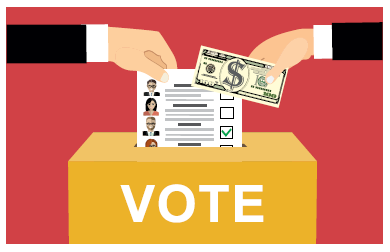 Investors are understandably wondering — and maybe even anxious — about how the US presidential election will affect the stock market. Election years often come with increased market uncertainty. And this year, COVID-19 and a fragile economy have added new dimensions to what may be a landmark US election cycle.
Regardless of who wins in November, the election will likely play a factor in the markets. Here are a few things investors should consider:
Dealing with uncertainty
This year’s election season has been marked by unusual circumstances. Republican incumbent Donald Trump is running for a second term as president after a surprise victory in 2016. Former Vice President Joe Biden began the campaign season competing against 25 candidates for the Democratic presidential nomination before emerging as the party’s nominee after a rocky start.
There are many important issues at stake, including trade, healthcare, tax policies, social justice and our relationship with China. How well the economy is doing is also a significant influence on the election outcome, especially for an incumbent or incumbent party. But that calculus suddenly became clouded by the onset of the COVID-19 pandemic. How long the virus will persist and how significant the impact on economic growth will be remains unclear at the moment.
Even without these unusual circumstances created by the pandemic, it isn’t uncommon for the stock market to exhibit a degree of volatility in the run-up to an election. This can be particularly true in the final weeks leading up to the election and if the race is neck and neck. Investors should be prepared for circumstances where the “noise” generated by the campaign contributes to overall market fluctuations.
It’s not just about the president
It’s true that our president has tremendous influence in the direction our country takes. However, it is important to keep in mind that regardless of who is successful in winning the White House, there is a significant difference between proposals and policy. How much any administration can accomplish is influenced quite heavily by the makeup of the House of Representatives, Senate, local and state legislatures, federal regulators, as well as circumstances in the economy and the country at large.
In addition to electing a president this fall, voters will also be electing 35 senators; there are now 23 Republicans and 12 Democrats. Currently, the Republican Party has a three-seat majority in the Senate. And as happens every two years, the entire House, where the Democratic party currently controls a 35-seat majority, is up for reelection.\
Is history a guide?
While no two election years offer the same set of economic or political circumstances, it may be instructive to take a look back to see how markets have performed in the past as a means of providing some context for the present.
• Historically, market volatility begins to rise about 45 days ahead (about three weeks into September) before peaking one week before the election.¹
• When control of the White House changes parties, stock market volatility tends to increase.²
• During an election year, US stocks and bonds tend to perform better compared to the year after.³
• Interestingly, there has been very little difference in the performance of the economy under Democratic and Republican presidents since 1977. According to recent analysis by Deutsche Bank, “The average growth rate for a Democrat president is 2.9 percent compared to 2.7 percent for a Republican president.[4] However, the economic performance during a president’s term isn’t necessarily a direct result of the actions of their administration, as presidents ultimately inherit an economy shaped by their predecessor’s actions, as well as other structural factors.
What may be a more important consideration for investors than who is elected president are the longer-term drivers of economic growth and corporate profits, which are shaped by policy, but also other factors outside Washington.
The impact on specific market sectors
Although it’s speculative to try and predict the outcome of the election and all of the policy implications each party would impose, the result of the election is likely to influence key industries, such as healthcare, energy and technology.
What this means for your finances
Keep your long-term goals in mind. Review your portfolio diversification and risk tolerance with a financial advisor for an objective perspective on your financial situation.
MICHAEL W. K. YEE, CFP,® CFS,® CLTC, CRPC®
1585 Kapiolani Blvd., Ste. 1100, Honolulu, HI 96814
808-952-1222, ext. 1240 | michael.w.yee@ampf.com
Michael W. K. Yee, CFP®, CFS®, CLTC, CRPC®, is a Private Wealth Advisor, Certified Financial Planner™ practitioner with Ameriprise Financial Services LLC in Honolulu, HI. He specializes in fee-based financial planning and asset management strategies and has been in practice for 36 years. Investment advisory products and services are made available through Ameriprise Financial Services LLC, a registered investment adviser.
Ameriprise Financial Services LLC. Member FINRA and SIPC.
1– David Joy, Ameriprise Chief Market Strategist. Aug. 2020.
2– Ameriprise Financial: “Committee Perspectives: U.S. Election Guide.” Aug. 2020.
Compiled by Ameriprise Global Asset Allocation Committee.
3– “Report: Stock Market Performance By President,” Darrow Wealth Management.
4– Deutsche Bank Economic Analysis, 2020.
Investors are understandably wondering — and maybe even anxious — about how the US presidential election will affect the stock market. Election years often come with increased market uncertainty. And this year, COVID-19 and a fragile economy have added new dimensions to what may be a landmark US election cycle.
 Change happens. We get it. The most convenient way to change your direct deposit information with us is by creating a my Social Security account online at www.ssa.gov/myaccount. Once you create your account, you can update your bank information without leaving the comfort of your home.
Because we are committed to protecting your personal information, we need some form of identification to verify who you are. If you already have an account, we verified your identity when you initially created your personal my Social Security account. All you need to do is log in at www.ssa.gov/myaccount to access or change your information. We highly recommend that you do not close your old bank account until you have seen your Social Security deposit show up in the new bank account.
We always strive to put you in control by providing the best experience and service no matter where or how you decide to do business with us. Remember, you can do much of your business with us online at www.ssa.gov/onlineservices.
Call SSA at 800-772-1213 (TTY 800-325-0778)
Mon–Fri, 8:30am–3:30pm. Use the SSA Office Locator to find your local office at www.socialsecurity.gov
Change happens. We get it. The most convenient way to change your direct deposit information with us is by creating a my Social Security account online at www.ssa.gov/myaccount. Once you create your account, you can update your bank information without leaving the comfort of your home.
Medicare’s Open Enrollment Period (OEP) occurs every Oct. 15 to Dec. 7. Beneficiaries may enroll in, switch to or disenroll from Original Medicare, Medicare Advantage (MA) or Part D prescription (PDP) drug coverage. Changes made during OEP take effect on Jan. 1 of the following year.
Health insurance companies promote their plans during OEP, making the decision to stay with or change plans overwhelming. Fortunately, resources are available. “Medicare & You” handbooks contain costs and benefits offered by MA and PDP plans in Hawai‘i. Medicare.gov has created the Medicare Plan Finder, a tool assisting beneficiaries in making informed choices by comparing health and drug plans.
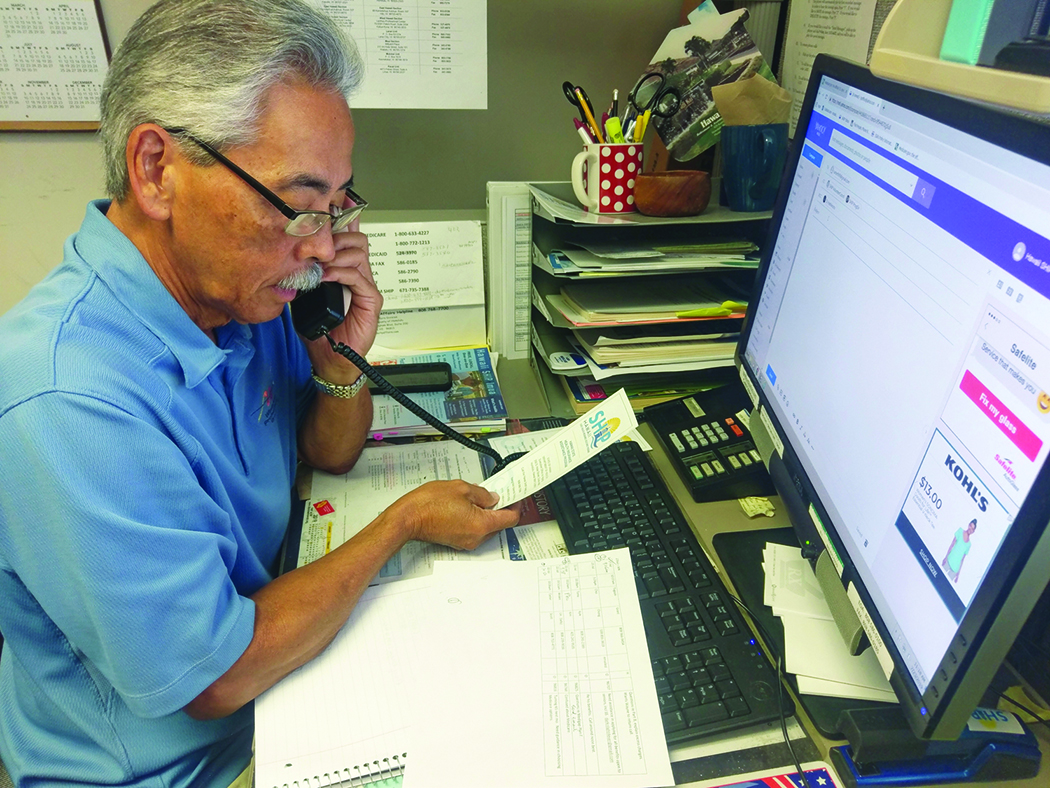 Administered by the Department of Health’s Executive Office on Aging, Hawaii SHIP is a federal, volunteer-based program serving beneficiaries, their families, caregivers and soon-to-be retirees. Certified counselors provide information and plan comparisons, helping beneficiaries decide which coverage is right for them. The service is free, confidential and unbiased.
For more information about program services or volunteering, call Hawaii SHIP.
HAWAII SHIP
Free, local, one-on-one Medicare counseling provided by the Hawai‘i State Health Insurance Assistance Program.
250 South Hotel St., Ste. 406, Honolulu, HI 96813
Oahu: 808-586-7299 | Toll free: 888-875-9229
www.hawaiiship.org
Medicare’s Open Enrollment Period (OEP) occurs every Oct. 15 to Dec. 7. Beneficiaries may enroll in, switch to or disenroll from Original Medicare, Medicare Advantage (MA) or Part D prescription (PDP) drug coverage. Changes made during OEP take effect on Jan. 1 of the following year.
The Assistance League of Hawaii (ALH) is an all-volunteer, nonprofit organization with 100-plus members and volunteers who strive to make a difference to the people of Hawai‘i.
The ALH Thrift Shop in Honolulu continues to be the primary source of funding for its philanthropic programs. The shop is staffed and managed entirely by member volunteers. All monetary donations and thrift shop profits stay in Hawai‘i.
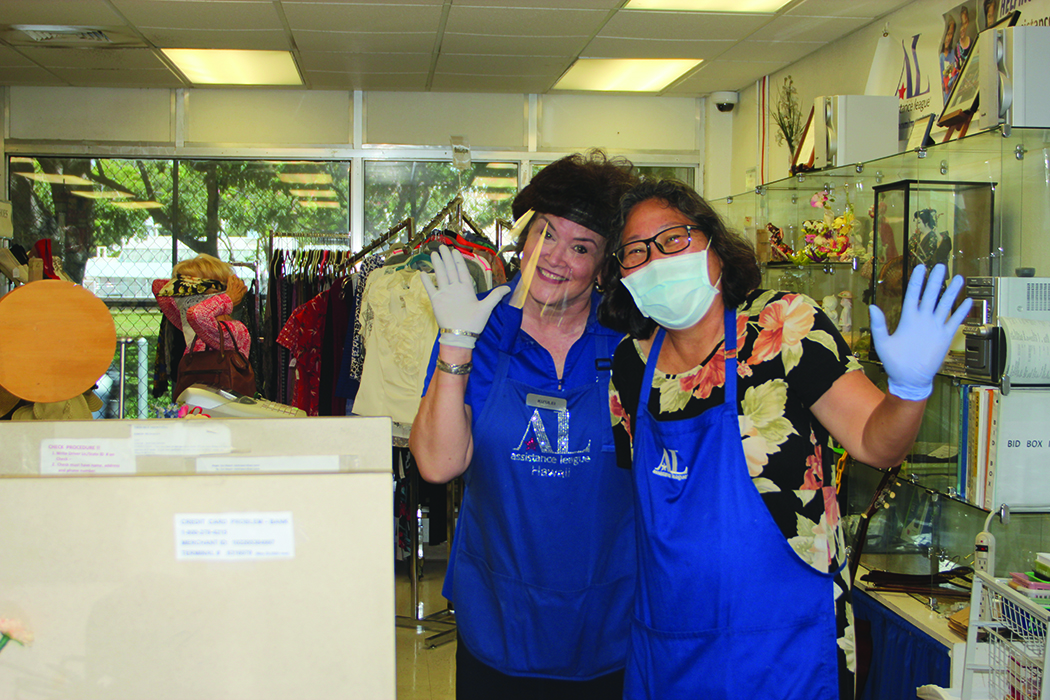 “We are proud of our reputation as one of the best and friendliest thrift shops in Honolulu,” says ALH President Mary Monohon.
ALH delivers programs to schools, shelters and hospitals. The Share Program distributes donated items that are unsellable in the Thrift Shop to other nonprofits. Programs for keiki include Operation School Bell, which provides new school clothing to Title I students. ALH volunteers teach fourth grade students about endangered species in Operation Wildlife. The We Care Program provides teddy bears to organizations that give them to children in hospitals and hospice centers. And when an emergency strikes, outreach volunteers help other organizations post-crisis.
Although COVID has changed some of the nonprofit’s practices, ALH’s programs continue to support the keiki and families of our community.
ASSISTANCE LEAGUE OF HAWAII (501(c) 3 nonprofit)
1505 Young St., Honolulu, HI 96826
808-946-1505 | althrift281@gmail.com
www.assistanceleague.org/hawaii
ALH, a local chapter of National Assistance League, collaborates with over 120 similar chapters across the US. Photo Courtesy by Assistance League of Hawaii / Melvin Ah Ching
The Assistance League of Hawaii (ALH) is an all-volunteer, nonprofit organization with 100-plus members and volunteers who strive to make a difference to the people of Hawai‘i. The ALH Thrift Shop in Honolulu continues to be the primary source of funding for its philanthropic programs. The shop is staffed and managed entirely by member volunteers.…

Have you found the right Medicare plan yet? If so, stay with it. If not, you can enroll, disenroll, or change plans from Oct. 15 to Dec. 7 during the Medicare Annual Election Period. Every year, plan features and prescription coverage change, so you should practice due diligence to discover what fits your current needs best.
Plans differ widely in cost, coverage, provider networks, care coordination and additional benefits. Since each person has unique medical conditions, no one plan fits all.
For instance, can you afford the monthly premiums? What are the deductibles, copays and other out-of-pocket costs? Are all your Part D prescriptions covered and on what tier? Is your doctor in-network or are there additional costs to see out-of-network providers? Are dental, vision, hearing, gym memberships or flex-cards offered?
One way to start evaluating options is to open your “Medicare and You” book that is mailed each October. In the back, you will find quick comparison charts of every Medicare Advantage plan in Hawai‘i.
Remember, you may make more than one enrollment choice during the Annual Election Period, but the last one you chose will be the plan that becomes effective Jan. 1, 2021.
FINANCIAL BENEFITS INSURANCE INC.
1311 Kapiolani Blvd., Ste. 504, Honolulu, HI 96814
808-792-5194 | emotosue@fbihi.com
www.fbihi.com
Facebook: Financial Benefits Insurance
Have you found the right Medicare plan yet? If so, stay with it. If not, you can enroll, disenroll, or change plans from Oct. 15 to Dec. 7 during the Medicare Annual Election Period. Every year, plan features and prescription coverage change, so you should practice due diligence to discover what fits your current needs…