WANT THIS ISSUE?
Download your own personal copy of this issue in PDF format. Click the button below:


WANT THIS ISSUE?
Download your own personal copy of this issue in PDF format. Click the button below:
The October-November 2019 Issue features Anona and Joseph “Nappy” Napoleon and their love of the sea, “Kō ā Moana: Those of the Ocean.” Youʻll also see stories about our long journey on Earth, a local prostate cancer support group, how to handle your aging parentsʻ finances and much, much more.
 When purchasing items with a credit or debit card online – or over the counter – there are precautions you need to take.
● Use a credit card rather than a debit card. Under federal law, your personal liability for fraudulent charges on a credit card can’t exceed $50. But if a fraudster uses your debit card, you could be liable for $500 or more.
● Use a prepaid gift card if you don’t have a credit card. But be extra vigilant of emails requesting payment be made in gift cards. It’s ok if you are the one initiating the purchase. ● Keep the line of credit low for all cards.
● Do not use cards that are linked to an autopay billing account or accounts that receive scheduled payments or benefits, such as your retirement pension, investment dividends and social security benefits.
● Keep records of all your online transactions, including emails and delivery notifications.
● Check your financial statements weekly for unauthorized transactions; report them to your financial institution and law enforcement.
● Do not use your mobile phone to conduct financial transactions, such as checking your financial statements. Use your home computer and check to make sure your Wi-Fi is secured.
● Use the card’s chip technology instead of swiping. The chip makes it harder for the scammer to access account information compared to the data on the card’s magnetic strip.
THE DEPARTMENT OF THE PROSECUTING ATTORNEY
1060 Richards St., Honolulu, HI 96813
808-768-7400 | Office hrs: Mon – Fri, 7:45 am – 4:30 pm
www.honoluluprosecutor.org/contact-us/
When purchasing items with a credit or debit card online or over the counter, there are precautions you need to take.
In the last year, Americans received about 5 billion robocalls per month, up from the 2 billion a month just two years ago. Robocalls are automated calls made by a computer program, enabling the telemarketer or scammer on the other end to call multitudes of phone numbers in a short span of time.
It took me under five minutes of “Googling” to find a website and fill out a form to order robocalling software that I could use to dial hundreds of telephone numbers an hour.
These calls are often from unfamiliar phone numbers. Answering the phone will let robocallers know that there is a person associated with this number as opposed to an automated system.
 Ignoring unfamiliar phone numbers, however, might not be enough to counter this problem, as robocallers have begun using technology that enables them to “spoof” or fake an incoming phone number that may appear to be more familiar. In other words, your caller ID device will indicate that the call is coming from an 808 area code when in actuality it could be from anywhere.
Robocalls are very prevalent today. Nearly 50% of all mobile phone calls are spam. Many of these calls are telemarketers hoping to sell a product, but some of these calls intend to scam money or personal information from the call recipient.
There are ways to reduce robocalls.
Android and iPhone users might find success with applications and services such as Robokiller or Nomorobo. Additionally, Google and Apple have been working on implementing anti-robocall features into their software.
Asking one’s cell phone carrier to block particular numbers is also a good strategy (a monthly fee may be charged).
Major carriers such as Sprint, T-Mobile, Verizon and AT&T all have features that might block or reduce robocalls.
Joining the National Do Not Call registry (DoNotCall.gov) may also reduce robocalls and also lets you file a formal complaint with the Federal Trade Commission.
But the most effective way to reduce robocalls is to never answer the phone. Let all phone calls go to voicemail, then assess them before returning the call, if appropriate.
This may not give you the satisfaction of yelling at the robocaller, but the number of unwanted calls you receive will decline.
If you have questions about elder abuse, call or email:
808-768-7536 | ElderAbuse@honolulu.gov
In the last year, Americans received about 5 billion robocalls per month, up from the 2 billion a month just two years ago. Robocalls are automated calls made by a computer program, enabling the telemarketer or scammer on the other end to call multitudes of phone numbers in a short span of time. It took…
A frantic mother once called me after her daughter was injured in a ski accident. When she called the hospital to find out the status of her daughter, hospital personnel would’t release any information and didn’t allow her make decisions on her child’s behalf. Just imagine the stress this caused!
This situation is all too common. When a child leave for college, for example, in the eyes of the law, he or she is now an adult and parental rights cease. This fact is often overlooked.
 Once individuals reach the age of majority — 18 in most states — parents are no longer entitled to see their child’s medical and financial records, or make decisions on their behalf. The law classifies them as adults with a legal right to privacy and to govern their own lives. As a result, it is important to help your children or grandchildren set up an estate plan. Few 18-year-olds consider the
need for an estate plan because most have little in the way of property.
But if a child were to lose the ability to make or communicate decisions, medical professionals and financial institutions may refuse to consult with or release information to the parents. An estate plan appoints trusted individuals to make decisions in the event the child becomes unable to do so.
STEPHEN B. YIM, ATTORNEY AT LAW
2054 S. Beretania St., Honolulu, HI 96826
808-524-0251 | www.stephenyimestateplanning.com
A frantic mother once called me after her daughter was injured in a ski accident. When she called the hospital to find out the status of her daughter, hospital personnel would’t release any information and didn’t allow her make decisions on her child’s behalf. Just imagine the stress this caused! This situation is all too…
 The people of Hawai‘i are generous with public charities. On the other hand, most of us do not have money to burn. The following are some good ideas about choosing where and how to give.
♦ DO YOUR HOMEWORK – The good works that charities do often overlap, and some charities are more effective than others. Websites like charitynavigator.org and charitywatch.org can help you compare established charities to find out, for example, how much of your gift will go to charitable work versus administrative and fundraising overhead. While it costs money to run a charity and it also costs money to raise money, if expenses exceed 25-percent of a charity’s revenue, ask why. If the charity cannot give you a good answer, you should consider giving elsewhere.
♦ DON’T SELL AN APPRECIATED ASSET TO MAKE A CASH – GIFT If you own Apple stock that you bought in 2000 for $2 per share, don’t sell it now at $200 per share to raise the cash to make a charitable gift. Although you will get a deduction for your cash gift, you will also be liable for capital gains tax on the difference between the $200 sale price of the stock and the $2 purchase price. You will have less after-tax cash to give the charity and your deduction will be limited to the amount of your gift. Instead, make a bigger gift and get a bigger deduction by giving the stock to the charity. The charity can then sell the stock without having to pay capital gains tax and you will get a deduction for the full fair market value of the stock at the time of the gift.
♦ MAKE GIFTS FROM YOUR IRAs – If you make your loved ones the beneficiaries of your traditional IRAs after you die, they may have to pay income tax on most of what they receive. However, if you make charities your beneficiaries, there will be no income tax. So to the extent you can, name charities as beneficiaries of your retirement plans and use your non-taxable assets for making gifts to loved ones.
If you have begun taking required minimum distributions (RMDs) from your traditional IRA, you can give up to $100,000 of your annual RMD to charity. Although these gifts are not deductible, you will end up paying less tax because the gifted portion of your RMD is not taxable.
As always, talk with your trusted advisors to find out how to make charitable giving a win-win for you and the charities you support.
SCOTT MAKUAKANE, Counselor at Law
Focusing exclusively on estate planning and trust law.
www.est8planning.com
808-587-8227 | maku@est8planning.com
The people of Hawai‘i are generous with public charities. On the other hand, most of us do not have money to burn. The following are some good ideas about choosing where and how to give.
Making financial decisions takes time, attention and energy at any age. In the case of elderly adults, it can become increasingly difficult to manage daily finances, particularly if their health is declining or they’re experiencing cognitive issues. If you’re providing support to aging parents — or plan to in the future — here is some advice on how to handle the situation and prepare for what’s to come.
Don’t wait to start talking about finances. While it may be uncomfortable to ask your parents about their finances, it’s essential you are familiar with their plans for care. Initially, emphasize that you are only looking for an overview. This first conversation can help set the groundwork for future discussions.
Create a contact list. If your parents have a sudden change in health that affects their ability to manage their own affairs, it’s important to have a plan. If you anticipate stepping in to handle bills, insurance claims or other financial tasks, start by asking your parents for a list of the professionals they work with and where their accounts are held. You may need to be an authorized user or power of attorney to be allowed access to certain accounts. Consult a lawyer to discuss what permissions may be necessary to enable you step in if the need arises.
 Build a support network. Talk with siblings or other trusted family members about what a care plan could look like. While this conversation can be tough to initiate, it’s often easier to bring everyone together while your parents are still healthy and mentally competent. Discuss who can realistically provide support — in what way and at what cost. Proactively deciding who can drive your parents to doctor appointments, manage financial affairs, care for their home and handle other tasks can help reduce or avoid a strain on your time and energy down the road.
Know what choices exist. Even if they aren’t yet needed, explore the options and costs of various assisted living and memory care services. Check insurance policies to see if and how services might be covered. Determine whether their home or yours could be modified to provide amenities such as wheelchair access.
Know your rights at work. The Federal Family and Medical Leave Act of 1993 (FMLA) allows covered employees up to 12 weeks of unpaid leave to provide care for a family member with a serious health condition.1 Consult your human resources department to learn about policies for employees who are caring for a parent and how to initiate a claim. Many employers have access to resources and support groups to help you manage your responsibilities at home and at work.
Maintain momentum on your own financial goals. It’s prudent to look at your finances to see how much support you could provide (if it’s needed) without jeopardizing your own retirement and future healthcare needs.
For additional support, contact your financial advisor and lawyer.
MICHAEL W. K. YEE, CFP
1585 Kapiolani Blvd., Ste. 1100, Honolulu, HI 96814
808-952-1222, ext. 1240 | michael.w.yee@ampf.com
Making financial decisions takes time, attention and energy at any age. In the case of elderly adults, it can become increasingly difficult to manage daily finances, particularly if their health is declining or they’re experiencing cognitive issues. If you’re providing support to aging parents — or plan to in the future — here is some…
 Q
Q
I’m trying to figure out how much to save for my retirement. Does the government offer any help with financial education?
A
Yes. For starters, you may want to find out what you can expect from Social Security with a visit to Social Security’s Retirement Estimator at www.socialsecurity.gov/estimator. The Financial Literacy and Education Commission has a website that can help you with the basics of financial education: www.mymoney.gov. Finally, you’ll want to check out the Consumer Financial Protection Bureau, which offers educational information on a number of financial matters, including mortgages, credit cards, retirement and other big decisions. Visit the Consumer Financial Protection Bureau at www.consumerfinance.gov.
Q
Will my son be eligible to receive benefits on his retired father’s record while going to college?
A
No. At one time, Social Security did pay benefits to eligible college students. But the law changed in 1981. We now pay benefits only to students taking courses in grade 12 or below. Normally, benefits stop when children reach age 18, unless they are disabled. However, if children are still full-time students at a secondary (or elementary) school at age 18, benefits generally can continue until they graduate or until two months after they reach age 19, whichever comes first.
For questions, online applications or to make an appointment to visit a SSA office, call from 7am–5pm, Mon–Fri: 1-800-772-1213 (toll free) | www.socialsecurity.gov
I’m trying to figure out how much to save for my retirement. Does the government offer any help with financial education? Will my son be eligible to receive benefits on his retired father’s record while going to college?
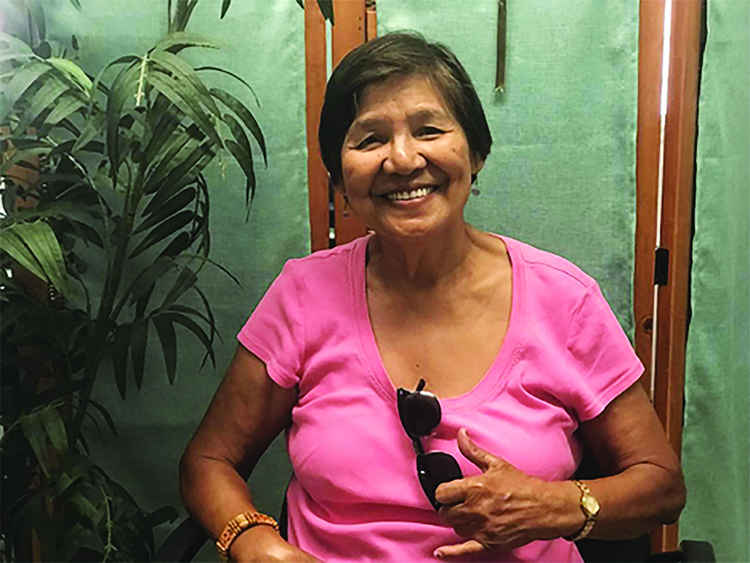
Meaningful employment is one of the best ways to keep fit in every way as we age — socially, mentally and even physically. But some of Waikīkī Community Center’s clients had difficulty finding employment. Retirees also found that the way people look for work has changed significantly. Others felt employers didn’t want to hire them due to their age. Many wanted to change career paths entirely. Therefore, WCC started Back-to-Work Force, a free service employment program focused on adults 50 and over.

The program helps match older workers with employment by updating their skills and by working with employers. The program provides a range of services for older workers — creating and updating resumes, online job search and application assistance, interview preparation and training referral. The program then matches clients with one or more of its 25-plus employer partners.
WAIKĪKĪ COMMUNITY CENTER (501(c) 3 nonprofits)
310 Paoakalani Ave., Honolulu, HI 96815
Jill Okimura, Projects Manager: 808-923-1802
jokimura@waikikicommunitycenter.org
www.waikikicommunitycenter.org
FaceBook & Instagram: @waikikicommunitycenter
Meaningful employment is one of the best ways to keep fit in every way as we age — socially, mentally and even physically. But some of Waikīkī Community Center’s clients had difficulty finding employment. Retirees also found that the way people look for work has changed significantly. Others felt employers didn’t want to hire them…
 Assistance is available for some people with limited income and assets who may be eligible for a program called “Extra Help.” It’s a Medicare health plan that assists in paying costs related to a Medicare prescription drug plan. This can include monthly premiums, annual deductibles and prescription co-payments. Extra Help is estimated to be worth about $4,900 per year. Many people qualify and don’t even know it.
You may qualify for this Low-Income Subsidy program available under Medicare Part D if:
• Your annual income and assets are below the eligibility thresholds, which may fluctuate from year to year. For the most up-to-date levels, visit www.Medicare.gov.
• Your annual income is higher than the limit, but you support family members who live in your home, or, if you live in Hawai‘i or Alaska.
Applying is easy:
• Call Social Security at 1-800-771-1213 (TTY 1-800-325-0778) and request an application via mail or apply over the phone. Or apply online at www.socialsecurity.gov/extrahelp.
• Social Security will mail you a notification if you are eligible. If you qualify for Extra Help but are not yet enrolled in Medicare Part D, you can enroll in a plan at that time. Call your licensed insurance agent to select the plan that best suits your needs.
COPELAND INSURANCE
1360 S. Beretania St., Ste. 209, Honolulu, HI 96814
808-591-4877 | www.copelandgroupusa.com
Assistance is available for some people with limited income and assets who may be eligible for a program called “Extra Help.” It’s a Medicare health plan that assists in paying costs related to a Medicare prescription drug plan. This can include monthly premiums, annual deductibles and prescription co-payments. Extra Help is estimated to be worth…
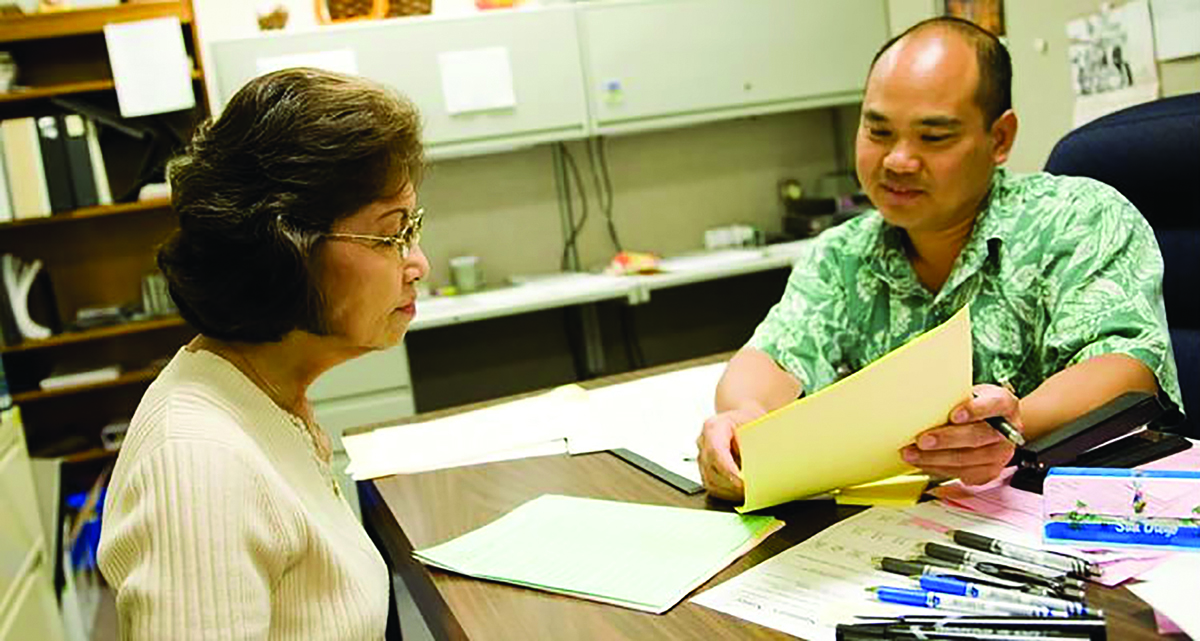 Many seniors approaching retirement age have not built up adequate savings in their Social Security accounts. By finding employment before taking SS withdrawals, seniors can build up accounts and ensure a healthier retirement payments when the time comes.
The Honolulu Community Action Program Inc. (HCAP) administers the Senior Community Service Employment Program (SCSEP) for low-income seniors who meet the program’s eligibility requirements: 55 or older, unemployed, resident of O‘ahu, with an income at 125% of the federal poverty guideline. It’s a federally-funded program under Title V of the Older Americans Act.
The primary focus and goal of SCSEP is to provide the participant the opportunity to gain employment skills through part-time, subsidized, hands-on training and transition them into regular unsubsidized, full-time employment.
Program participants are also eligible for a subsidized medical examination (up to $50 per year) and can earn Social Security credits during their placement in a job in thier community.
Contact HCAP for more details.
HONOLULU COMMUNITY ACTION PROGRAM (501(c) 3 nonprofits)
Senior Communty Service Employment Program
1132 Bishop St., Ste. 100, Honolulu, HI 96813
808-521-4531 | franky@hcapweb.org
www.hcapweb.org | www.hcapweb.org/senior-employment-program/
Many seniors approaching retirement age have not built up adequate savings in their Social Security accounts. By finding employment before taking SS withdrawals, seniors can build up accounts and ensure a healthier retirement payments when the time comes. The Honolulu Community Action Program Inc. administers the Senior Community Service Employment Program for low-income seniors who…
Are you caring for someone over 60 who is living at home? Then, Project Dana has a special program just for you, called the “Caring Giver Support Group” or CGSG.
Using education and group training sessions, CGSG helps caregivers to better understand their loved ones while learning to care for themselves, as well. Group sessions are also a safe place to connect and talk story about the joys and frustrations of being a caregiver.
Two consecutive monthly sessions:

❶ Honpa Hongwanji Hawaii Betsuin Social Hall 1727 Pali Highway, Honolulu 2nd & 3rd Wednesday each month 9:30am – 12:30pm *Parking is available (Photo by Alan Kubota of Lenscapes Photography)

❷ Waipahu Hongwanji Buddhist Temple 94-821 Kuhaulua St.,Waipahu 2nd Saturday each month 10am – noon *Parking is available
For caregivers who are looking for additional assistance, one-on-one counseling may be arranged to provide a sympathetic ear and guidance, and to also address individual stresses and special needs.
Contact Project Dana to learn more or to support its caregiver programs.
PROJECT DANA (501(c) 3 nonprofit)
2720 Nako‘oko‘o St., Honolulu, HI 96826
Maria Morales, Project Dana’s CGSG Coordinator
808-945-3736 | cgsg@projectdana.org
www.projectdana.org
Are you caring for someone over 60 who is living at home? Then, Project Dana has a special program just for you, called the “Caring Giver Support Group” or CGSG. Using education and group training sessions, CGSG helps caregivers to better understand their loved ones while learning to care for themselves, as well. Group sessions…
 With National Caregivers Month quickly approaching, let’s remember former First Lady Rosalynn Carter, who said it best in 2012—“There are only four kinds of people in the world: those who have been caregivers, those who are currently caregivers, those who will be caregivers and those who will need caregivers.”
As a caregiver, what questions should I ask to help me assess the best Medicare Advantage (health plan) possible?
n Is the plan comprehensive? Does it include prescription drug coverage? Does it have those extra benefits that are important for the person I am caring for? Hearing aid coverage? Prescription glasses? A gym membership?
∗ Are there social workers to help me navigate the system to ensure that the person I am caring for receives the care and services they need? Is there a cost for those services to understand and navigate the systems?
∗ Is the plan an integrated health program? Can my physician see the notes from other physicians? Are they able to see when I last filled a prescription for my loved one? If I need a new prescription, can the pharmacy notify the physician directly and in a timely manner so there isn’t a delay in medication coverage? Can the physician email an order for an X-ray, so that it’s waiting for me when I arrive for services?
∗ What is the Medicare Star Rating? The Centers for Medicare & Medicaid Services (CMS) uses a Five-Star Quality Rating System to track every health and drug plan very closely each year. Measures include various health plan screenings, care for older adults, member satisfaction and complaints, medication adherence and more. In mid-October each year, CMS reports the Star Ratings to the Medicare Health and Drug plans for the next calendar year.
› If a plan receives one or two stars, it means, on average, the plan’s scores declined (got worse).
› If a plan receives three stars, it means, on average, the plan’s scores stayed about the same.
› If a plan receives four or five stars, it means, on average, the plan’s scores improved.
These are just some of the questions to consider asking your current health plan provider or if you are researching other options in preparation for the Medicare Advantage Annual Enrollment Period this fall, which spans Oct. 15 to Dec. 7 in 2019.
KAISER FOUNDATION HEALTH PLAN — HAWAII
Medicare Sales Info: 808-432-5915 | www.kp.org
Information provided by the Hawaii Kaiser Permanente Medicare Team as an educational resource.
With National Caregivers Month quickly approaching, let’s remember former First Lady Rosalynn Carter, who said it best in 2012—“There are only four kinds of people in the world: those who have been caregivers, those who are currently caregivers, those who will be caregivers and those who will need caregivers.” As a caregiver, what questions should…