Adult day care services offer professional care for seniors and adults living with dementia and other disabilities. They receive therapeutic, social and health services during the day. Adult day care is also a great solution if the senior needs supervision for safety reasons, is expressing depression or isolation, needs socialization and engaging activities, or if the caregiver simply needs respite. Adult day care gives caregivers the opportunity to work while their loved one is safe.
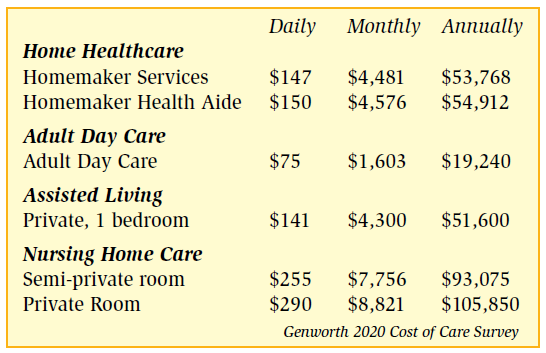
If Mom and Dad want to age in place at home, adult day care offers an affordable solution for working caregivers (see table). The figures are based on national averages — Hawai‘i’s figures are generally higher.
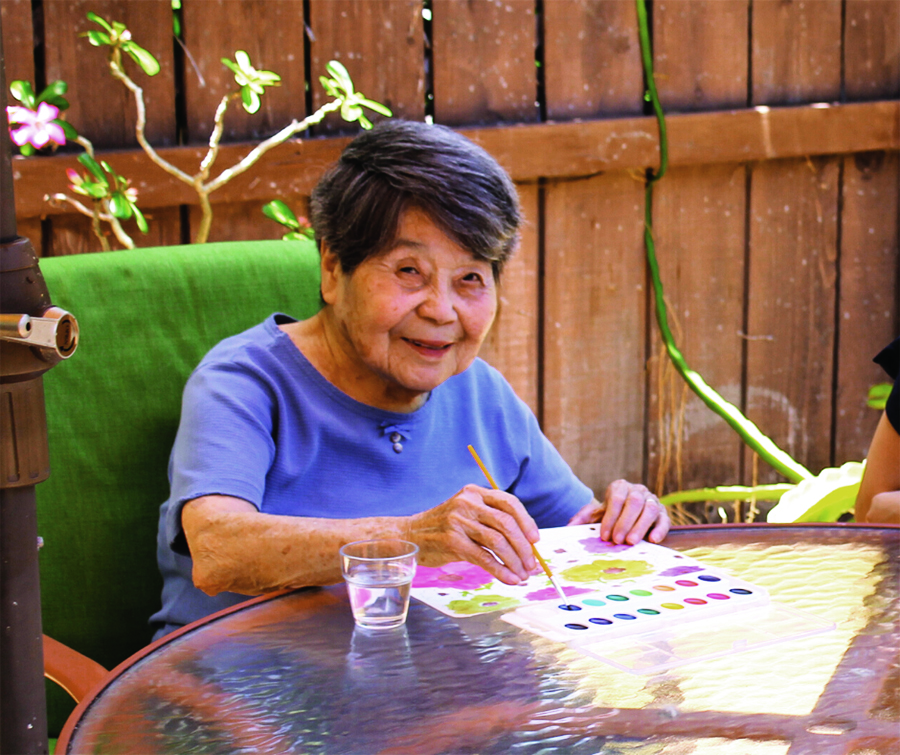
Providing meaningful activities for your loved one with dementia is very possible. Activities can add meaning, boost quality of life, and provide beautiful opportunities for connection.
Here are some tips:
• Consider past interests:Activities that bring up memories and past skills are more likely to be successful and meaningful. So try choosing an activity that is familiar and provides opportunities to reminiscence.
• Approach with ease: Make your loved one feel safe — speak in a calm tone of voice and explain in simple words what is happening before you begin the activity together.
• Sneak in physical activity: Gardening, assisting with dishes and going shopping all involve being active, and may be able to fit more naturally into the day than formal exercise.
• Engage the senses:Your loved one may not be able to “do” an activity but can still “experience” an activity. Things like light-touch massage, music and sitting outdoors can provide calm engagement.
• Share love: Emotion still holds meaning for those with dementia, and sharing kind or loving words can bring joy.
Caregiving for someone with dementia is challenging. Keep in mind that your loved one lives in moments, so aim to provide moments of joy throughout the day to boost their quality of life.
Providing meaningful activities for your loved one with dementia is very possible. Activities can add meaning, boost quality of life, and provide beautiful opportunities for connection. Here are some tips…
A valuable resource to help us cope effectively during our most trying times is available through Kōkua Mau. Hawaiian for “continuous care,” the statewide network supports and assists people who may be facing serious illness, as well as their loved ones.
Kōkua Mau provides information that helps to relieve the symptoms and stress of illness. It also includes information about hospice care, in order to provide the best care possible at the end of life.
A set of five, 20-page booklets developed by the Center on Aging at the University of Hawai‘i are practical, pragmatic and easy-to-use guides available at no charge from Kōkua Mau’s website.
Booklet 1: Advance Care Planning — Making Choices Known is a workbook for documenting the kind of care you want if you are unable to make decisions for yourself. Knowing your wishes will help your family and loved ones if they have to make medical decisions on your behalf. In this booklet, you will learn about the types of decisions you can make ahead of time and how to let others know what you want.
Booklet 2: Planning Ahead — Funeral and Memorial Services offers options for funerals, memorials and burial. Which plans should you make now? Making plans ahead of time will help reduce the stress on surviving family members and loved ones when death occurs. Planning your funeral or memorial service with mindfulness is a gift you share with those you love. This booklet will help you make and document those decisions for the events following your death.
Booklet 3: Preparing To Say Good-Bye — Care for the Dying describes common symptoms experienced by dying people and how to best provide comfort. Those with a terminal illness will show a steady decline. Those with a serious chronic illness may have peaks and valleys. Learn to anticipate and manage changes that may occur.
Booklet 4: When Death Occurs — What to Do When a Loved One Dies is a guide to help you immediately following the death of a loved one. Honoring family and cultural rituals allows you to acknowledge the reality of the death and begin the healing journey. At the same time, you have much to do after a loved one passes. The document includes a checklist and practical help.
Booklet 5: Help For The Bereaved — The Healing Journey outlines what experts feel is normal grieving and what is abnormal or complicated grieving. Expressions of grief are as individual as fingerprints. There is no “right” way or specific length of time required.
A valuable resource to help us cope effectively during our most trying times is available through Kōkua Mau. Hawaiian for “continuous care,” the statewide network supports and assists people who may be facing serious illness, as well as their loved ones.
What do you think of when you hear the word ARCH? A vertical, curved structure or perhaps those golden ones that McDonald’s is famous for? Or do you think of a cathedral arch typically used in bridge architecture? Did you know that in senior care, the acronym “ARCH” means adult residential care home?
ARCHs are homes that are licensed and regulated by the Hawai‘i State Department of Health, Office of Health Care Assurance. They provide room and board, as well as 24-hour oversight by a licensed nurse for anywhere from five to 45 kūpuna. They focus on socialization, nutrition and healthcare. Much like your own home, residents can either share a room or have their own, but they partake in meals and activities together as a group. Residents are rarely just sitting in their room!
ARCHS also can take you to doctor appointments or bring in specialists, such as podiatrists, or physical/occupational therapists.
Hawai‘i has over 200 of them! So, if you are looking for residential care, but are not quite ready for a nursing home, an ARCH may work best for you.
LUNALILO HOME
Adult Residential Care Home located in Hawaii Kai
501 Kekauluohi St., Honolulu, HI 96825 808-395-1000 | www.Lunalilo.org
What do you think of when you hear the word ARCH? A vertical, curved structure or perhaps those golden ones that McDonald’s is famous for? Or do you think of a cathedral arch typically used in bridge architecture? Did you know that in senior care, the acronym “ARCH” means adult residential care home?
When our loved one with dementia cannot clearly express their own wishes, it becomes a guessing game. When you stumble across an unanswered question in your role as caregiver, just think of the difference guidance from your loved one would have made! So it is clearly important that we do our own preparation for our own potential caregiving needs. Documenting your wishes for your future will be a much-appreciated tool for your own loved ones.
A Personal Care Planning Notebook can be an invaluable tool. It should include:
• A Physicians Orders for Life Sustaining Treatment (POLST) form (update it regularly)
• An Advanced Health Care Directive
• A Power of Attorney document that goes into effect only when you become incapacitated
• A copy of your birth certificate, wedding certificate and the birth certificates of your children
• A will including a nomination for personal representative
• Location of your trust document
• Your health insurance, dental insurance and Medicare cards
• A list of the doctors you normally see
• A Quality of Life Statement
A Quality of Life Statementis a document for your family that describes the care you want:
• Where would you like to receive that care? Get as specific as you like.
• Who would you permit to bathe you, etc.?
• If your finances are depleted, what are other finance options for your continued care?
• Include details about life support or physical conditions you would find acceptable.
• What treatment or loss of physical ability would you not accept?
• A topic that also needs to be addressed is what you consider to be a “good death.” Do you want to be left alone or be surrounded by family? You will lessen stress for your loved ones by providing this important information in advance.
Start on your Personal Care Planning Notebook today and update it at least once a year — your
family will be eternally grateful to you.
When our loved one with dementia cannot clearly express their own wishes, it becomes a guessing game. When you stumble across an unanswered question in your role as caregiver, just think of the difference guidance from your loved one would have made!
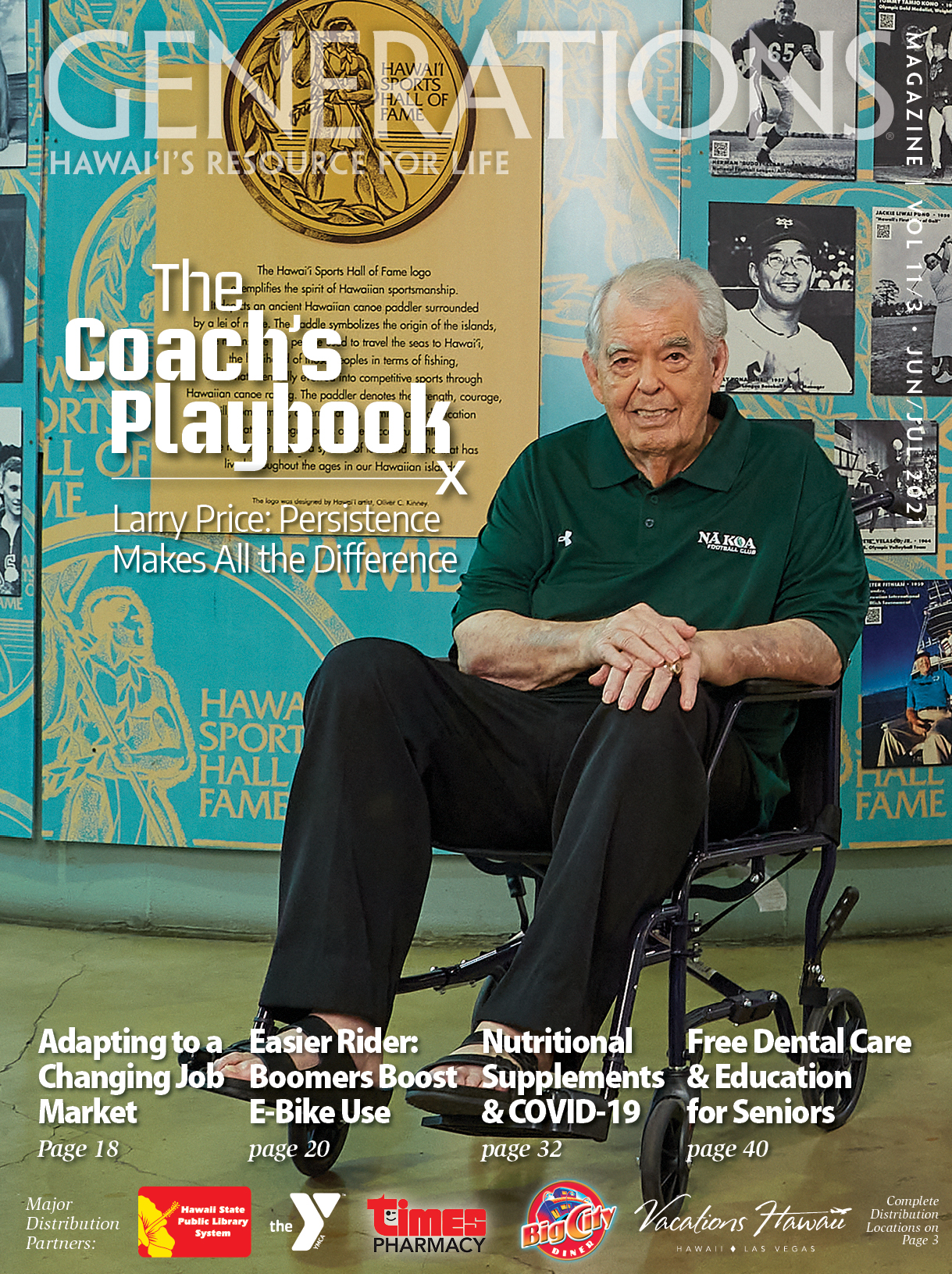
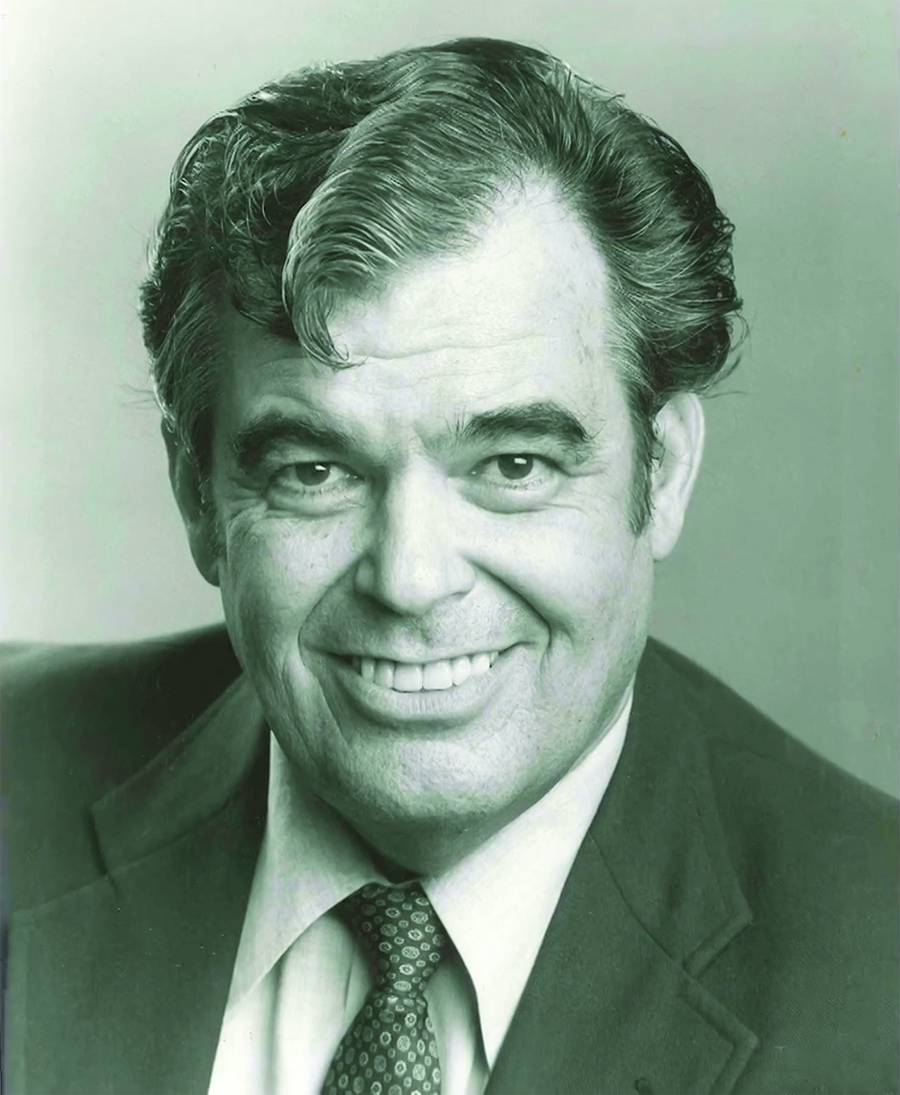
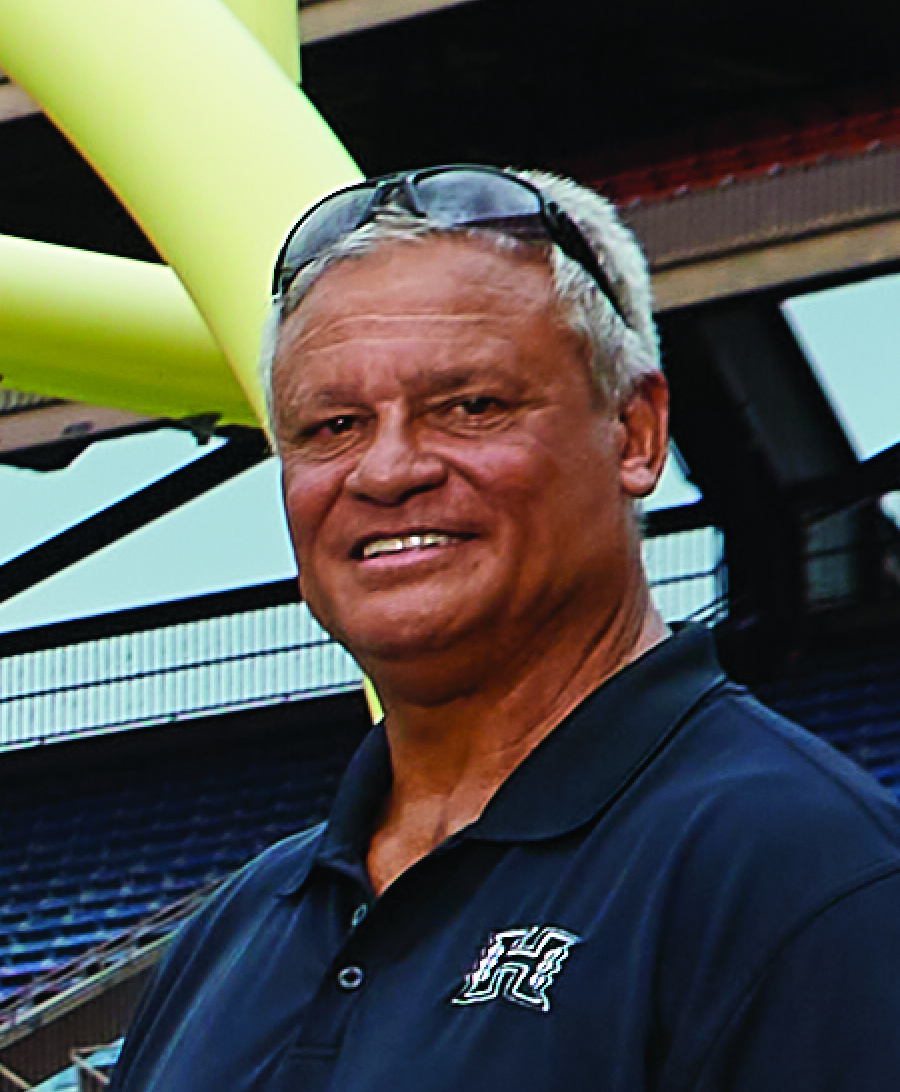
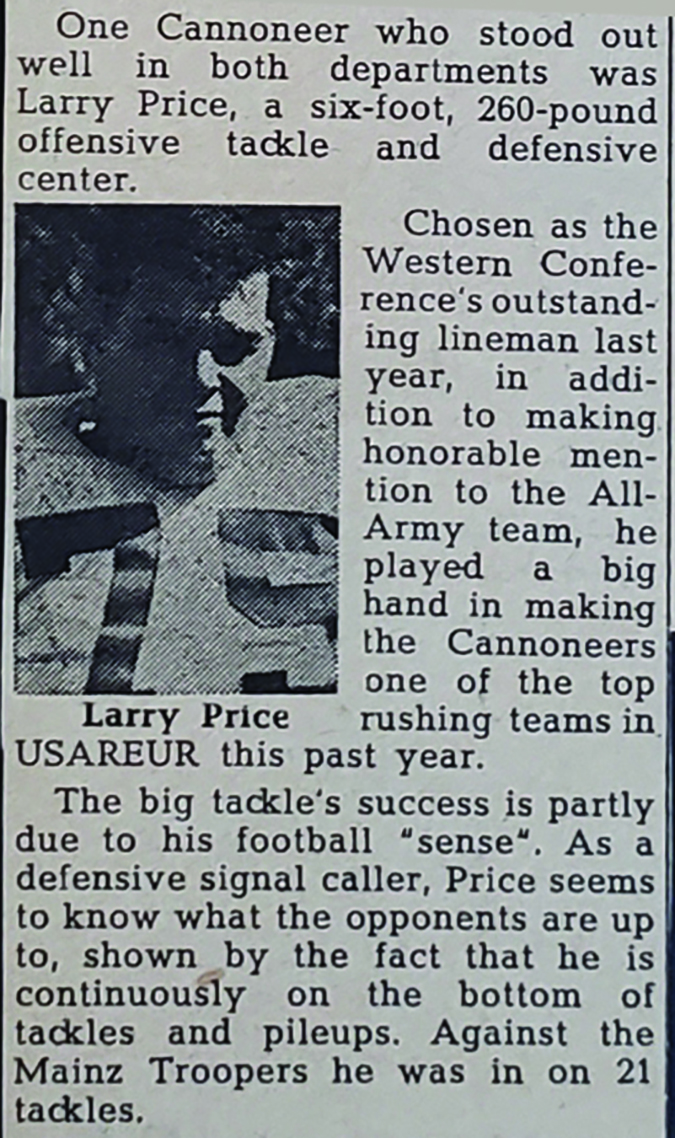
His handsome face and brilliant smile are instantly recognizable. Larry Price, Hawai‘i’s longtime radio and TV personality, and celebrated scholar-athlete, is a legendary icon — one of the islands’ treasured human resources. He is a quiet man who means what he says and says what he means — a multidimensional man with a passion for encouraging others to find their power and attain success through education and hard work.
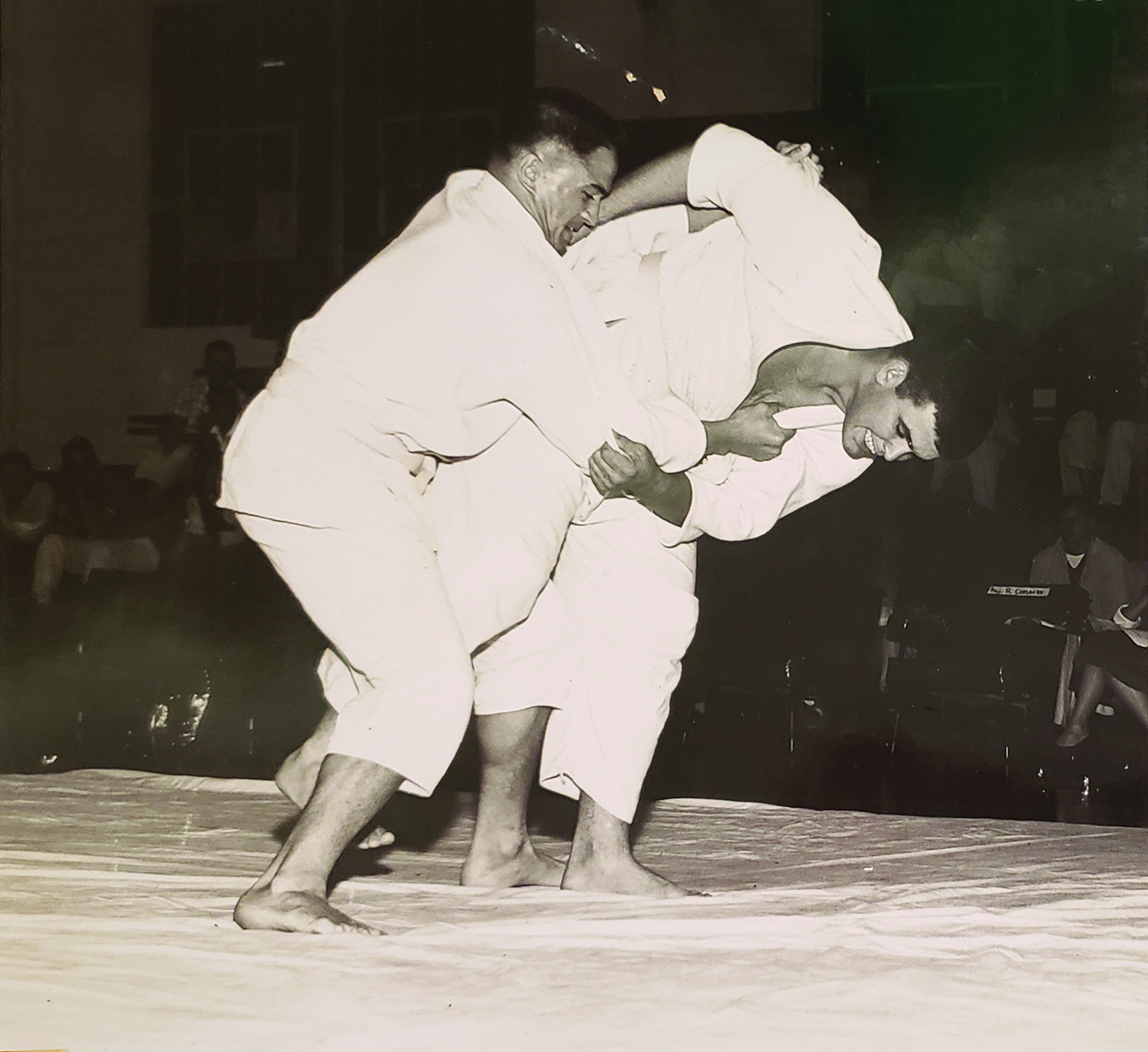
He has earned multiple advanced degrees. He also found success in many sports, as a player, coach, mentor and advocate. He studied martial arts, earning black belts in a number of disciplines. He was also an award-winning boxer during his eight-year stint in the Army. But his vast oeuvre includes much more than sports. He is also an accomplished musician, published author, college professor, political columnist, government administrator, small business management program director, sought-after motivational speaker, generous philanthropist and valued advisor.
But without hesitation, Coach Price says his most beloved career was coaching football at the University of Hawai‘i, first as a defensive coordinator and then as head coach of the Rainbow Warriors from 1974 to ’76.
Although the popular Hawai‘i broadcaster may be best known to many as a media personality, the depths of his knowledge, experience and many talents warrant exposition. A cursory internet search will reveal a vast amount of information about his many achievements. But what his former players and assistant coaches say about him here may give us more insight into his character. The mere mention of his name opened a floodgate of memories from the players and coaches who will forever hold him in high esteem.
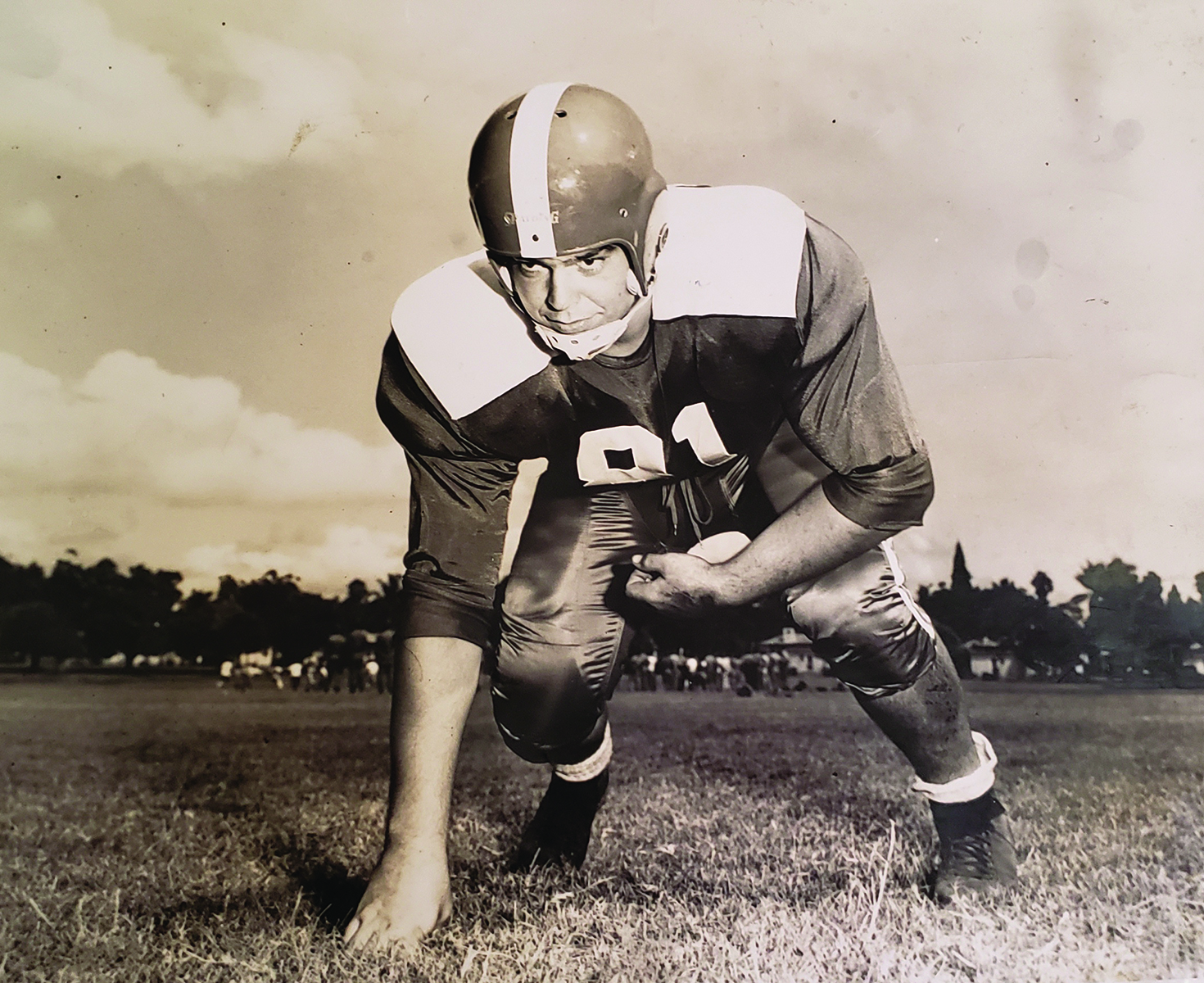
Larry Price was an All Army Judo Champion, an outstanding player for the Army’s Cacti football team, the winner of the All Army Talent Contest on ‘ukulele…
‘Many are called; few are chosen.’
If diamonds are made by applying pressure to coal, Coach Price’s football players are the crown jewels of UH football. Coach whipped his players into top shape each week with a brutal training regime, leading his aggressive Warriors onto the gridiron each weekend.
“It’s important for a coach to select the right guy to perform certain tasks,” says Coach. Coach Price used his own innate abilities to recognize and identify each player’s gifts, potential, possibilities and contributions, enabling them to tap into their own personal driving force that came from their hearts. His strong leadership pulled players toward a deep belief in themselves.
His team was a meritocracy, where meeting high standards with hard work paid off. Although Coach Price’s expectations were high, the rewards were great, both on and off the field.
“Saying the right thing at the right time is an art,” said Coach Price, who often used idioms and proverbs to motivate his team. For those who responded both physically, mentally and spiritually, “Many are called; few are chosen” had a life-changing impact. They were members of the traveling team — the chosen.
‘We’re going to battle tonight.’
Coach Price says he viewed the football field as a battlefield. His Warriors prided themselves on winning the physical side of the game.
Cliff LaBoy, a Farrington High School graduate, played football at Washington State for one year before returning to Hawai‘i. Coach Price called him “out of the blue.” Cliff became the left defensive end from 1972 to ’75, when Coach Price was a defensive line coach, then head coach.
“Coach was very straightforward and serious — a no-nonsense kind of guy,” says Cliff. “You either listened or you paid for it. He made sure we focused on our grades and he worked us very hard to get us to be the best we could be. His style of play was speed, physical and being technically sound at all positions. Back in the day, UH had the best defensive team than you can imagine. We beat a lot of big schools because of the strength of our defense.”
Even if they lost, UH prided themselves on winning the physical side of the game. “We worked so hard and we were in such great shape that we wouldn’t even be tired at the end of the game. Coach Price made sure of that.”
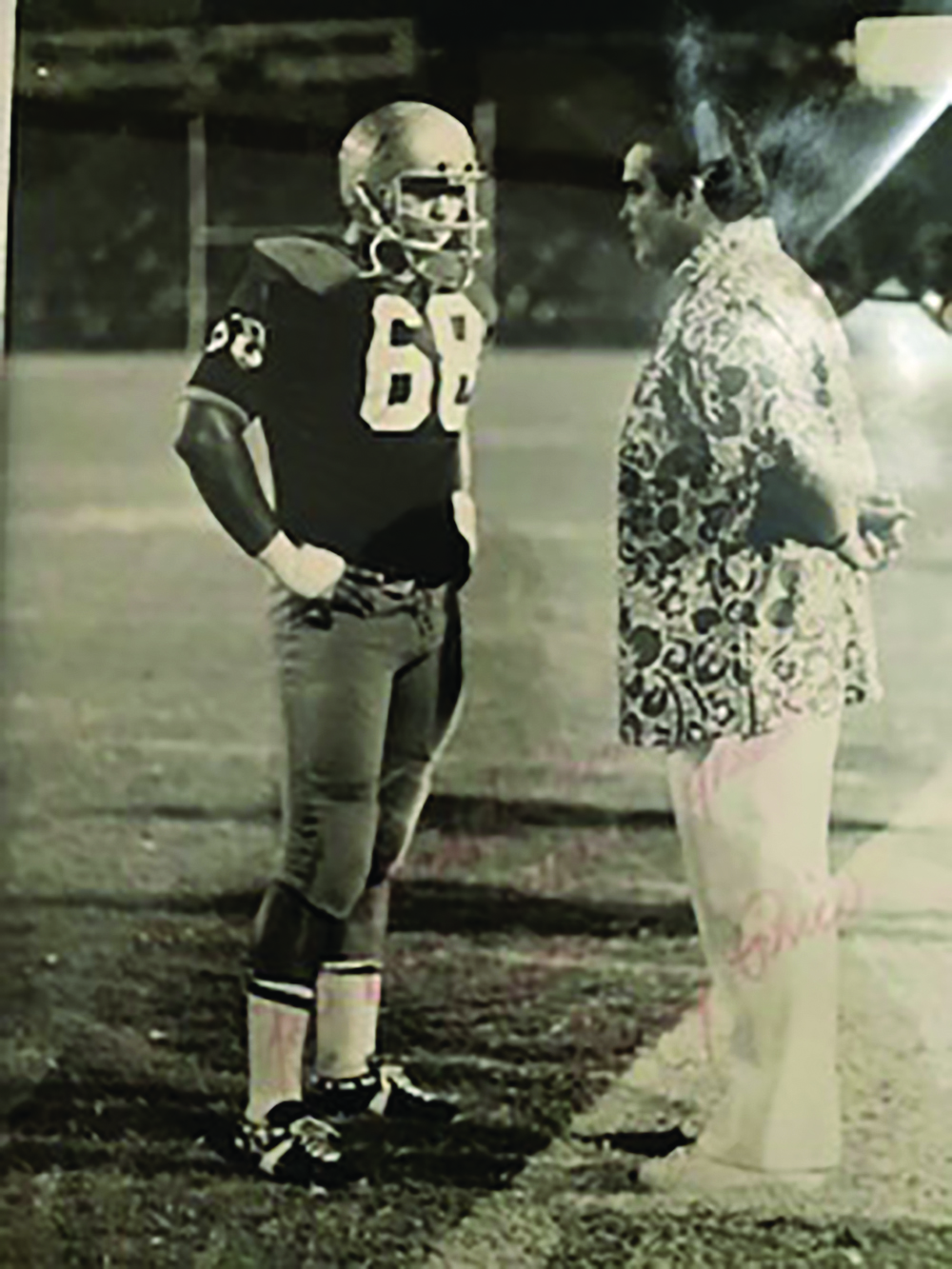
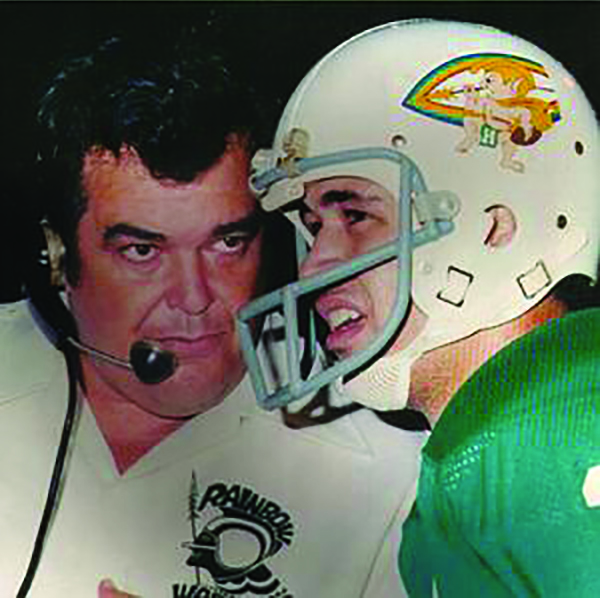
Coach Price and Dexter Gomes discuss defensive strategies on the sideline
“He was an excellent defensive coach. He could take an ordinary player and get him to play at a higher level. He gets so deep inside of your head, that he can tell you what’s in there. He could see the potential in us all even though we were so kolohe.”
“But when he started chewing on that cigar tip, with that big smile of his… you knew you were in trouble. ‘OK, today Richardson and LaBoy are going to donate their bodies for the team.’ We had to do 1,000-yard bear crawls. It was an impossible task, but we always finished.”
There were a lot of Richardsons and LaBoys on the team. “But he knew when Saturday night came, all he had to do was turn us loose and we would perform for him.”
“‘We’re going to battle tonight. We take no prisoners. Whatever is in front of you, destroy it on your way to the ball,’ Coach would say. He would get you so pumped. We loved it.”
“He taught us to be strong and positive, and never give up. He taught us to work hard toward our goals and everything will fall in place. The things he instilled in us really helped me in my life. He changed us kolohe players into good human beings who contribute to our communities. We all respect that man so much.”
‘I will take you to a place where you’ve never been before.’
Practice and play with Coach Price included the whole player — body, mind and spirit — as he propelled them to “a place where they had never been before.”
Coach was the head coach when Mike Perkins started as a free safety in 1974. “I was only 5-foot-8 and 150 pounds. Coach Price gave me the opportunity to play for UH and prove to him and myself that I belonged on the field. I was never going to disappoint him,” says Mike.
Coach Price’s own coach at Roosevelt High School, Kato Chung, also gave Larry “a place in the game,” despite his small size at that time. Coach passed that forward, giving players with identifiable potential the opportunity to prove themselves.
“I will always remember Coach Price saying, ‘I will take you to a place where you’ve never been before.’ I didn’t understand that until I started playing for him,” says Mike. “‘There is no way I can do this,’ I used to think. But when you are going through the grueling drills he made us do, he would take you to a place where you had never been before. It made all of us physically and mentally tough.”
“Although he recruited mainland players, he wanted the local boys to do well. He would have high expectations of you. And nobody wanted to disappoint Coach Price. He was a guy that you sometimes hated, because he put you through so much. But you couldn’t play for anybody better. He got us to believe in ourselves and what we could do. I would go to war for the guy. That’s the kind of impact he had on his players. To this day, we would do anything for him.”
“I took those lessons and applied them in life after football. They are things I will never forget — the harder you work, the greater your success and the greater the benefits.”
‘The greatest motivational factors are love and fear.’
Coach Price had a gift for motivating his players, driving them to exceed normal expectations both on the field and off.
Dexter Gomes played for Coach Price as a middle linebacker between 1970 and ’75.
“What I remember best is when he said, ‘The greatest motivational factors are love and fear,’” a phrase he adopted from the Bible. “If you could scare your players into playing for you, you might be able to motivate them, but it worked the other way, too. We gave the last drop of our blood to perform for him because we loved him that much — for all he did for us,” says Dexter.
“Back in the old days, coaches used to berate their players. They all thought they had to be so hard. The greatest thing I learned from Coach Price is that all you have to do is treat people with respect to get them to want to perform for you. It doesn’t just apply to coaching; it applies to everyday life. It all boils down to respect and treating people how you want them to treat you.”
Larry Price became a member of the Cacti football coaching staff in 1959, after a stellar performance as a lineman for the All Army team
“Back in the days when we played, it wasn’t like today. It was physical. Everything back then was three yards and a cloud of dust — everything was done in the trenches. When you got into the third and fourth quarter, if you weren’t in shape, the other team could take advantage.” Coach Price made sure the team could go the distance… and then some.
“He had a saying, especially when we didn’t live up to his expectations: ‘Today you are going to run to the horizon. The horizon is as far as you can see, but you will never reach it. Get on the line!’ We ran until guys were falling on the ground. ‘Jump over them!’ Coach Price ordered.
It was not punishment; it was for the betterment of each of us and for the team.” “But I’ll tell you this, when the offense across from us was sucking wind, that’s when we knocked them out and dragged them into the deeper waters. When we pulled off some big games, we’d see that everything Coach Price said worked. We believed and trusted him.”
“There were a lot of life lessons. That is what he was all about. A lot of times I reflect on what he used to say and do.”
‘Don’t you ever quit on me.’
Coach Price kept his players in line by making football fun, using his dry wit to “keep it interesting.”
Former UH defensive end Pat Richardson was a member of the 1973 Rainbow Warriors team that beat Washington 10-7 in an epic competition.
“Coach Price made football fun. He made practice fun. You would never know what he was going to say. He made everything interesting. He would give you that look of death, but he’d be smiling at the same time with his nice bright white smile and stogie in his teeth,” says Pat. “He did things that would make everybody laugh.
“I motivated the players by putting everything in the form of a challenge,” says Coach.
“The better shape you are in, the less your chance of getting seriously injured,” Pat says about the coach’s rigorous practices.
Disciplinary action also involved conditioning. When Pat accidentally stepped on Coach’s stogie that he had put on the ground for safe keeping, Coach said, ‘Run.’ “How long?” Pat asked. “Until I tell you to stop,” Coach replied. “Although I was suffering, Coach would say, ‘Don’t you ever quit on me.’ And we never would.”
“Local boys from Waianae, Makaha, Nanakuli, Aiea and Farrington played for him… they didn’t have a lot of money, but they gave us a good education, took us to the mainland, gave us good uniforms and a beautiful stadium — and all because of him — because Coach Price had a dream about Rainbow football.”
“He took all us local boys to another level. When we would mess around, we would pay the price more than the mainland players, because we should know better,” Pat says. “He expected more from his local players. He was hard on us when we deserved it — hard and fair.”
“If you did your job and came to practice in shape with a good attitude, you had no problem with him. But he would take nonsense from nobody. I knew I was one of his favorites because he was always getting after me. So I always tried to do better for him. The time went by so fast under him because he made it so much fun. I’ll always remember that guy.”
‘Physical superiority cancels out all theories.’
Practices with Coach Price were so hard and so brutal that the games were easy by comparison.
Simeon Alo, a Kamehameha Schools graduate, anchored the Hawai‘i defensive line as a defensive end from 1969 to ’70 and 1972 to ’73.
He got a scholarship through Coach Price to play football at UH in 1969, and as a freshman rookie, made the travel squad as a versatile player on a variety of vital defensive teams.
“Levi Stanley, a Waianae High School graduate, and I made every mainland trip,” says Simeon. “It was an honor because we were only freshmen.” Simeon and Levi were unable to play in 1971, but returned in 1972.
“Levi and I really enjoyed ourselves out there. What we managed to accomplish is a tribute to Coach Price. He really got us in shape.”
“Among Coach Price’s many pearls of wisdom, I remember he used to say, ‘Physical superiority cancels out all theory.’ In other words, if you are physically and mentally superior to who you are playing against, the game became easy,” says Simeon. “He made practices so hard that the games seemed easy!”
“Before you can play Division I, you’ve got to think Division I,” Coach explains. “In the early days, prior to Division I taking hold, the majority of the people we played were physically superior. UH was viewed as inferior to Division I opponents. Sports writers and newscasters used to laugh at us. So when people tell you that you are inferior, you got to prove them wrong. The first order of business was to convince them we were not inferior to anybody. This equated to hard practices.” The strategy paid off, making Price the UH’s first NCAA Division I head coach.
“I’ll never forget playing Grambling State University [La.]. The whole team was huge,” says Simeon. “The left tackle was 8 inches taller and weighed over 100 pounds more than I did,” recalls Simeon. Although the Warriors lost, Simeon’s opponent shook his hand after the game and said, “Bro, good game!” “It was out of respect. ‘Ask no quarter, none given.’ That’s how we played.”
“I will be forever grateful to Coach for giving me the opportunity to play Division 1 football,” says Simeon. “He helped shape me into the man I am today.” “And I wouldn’t be here if it wasn’t for Coach Price,” Levi added. “I owe him my life.”
‘Come out and prove yourself.’
Coach Price’s influence and support indirectly impacted the course of Hawai‘i politics.
In 1965, Rick Blangiardi wrote a letter to UH inquiring if it had a football program. His father was being transferred to Pearl Harbor and he wanted to ensure he could play college football.
“If you want a scholarship to play football here, you are going to have to come out and prove yourself,” said Coach.
“My relationship with him started with that challenge,” says Rick. “The day that I met Coach Price was the day that changed my life forever. He had just finished playing football. He was a physical force of nature and a fearsome creature.”
Although Rick did prove himself, he returned to Massachusetts in 1966 when his mother became ill. He stayed, graduated and started his coaching career at the University of Connecticut. Then he got a letter from Coach offering him the opportunity to coach varsity linebackers .
“I made the decision to return to UH predicated on Coach Price, my relationship with him and my complete confidence and respect for him.”
After Rick got his master’s degree, he was offered a full-time job by Coach Dave Holmes. When Larry became head coach, he promoted Rick to associate head coach and defensive coordinator — Larry’s former job.
“Him influencing me to come back to Hawai‘i and giving me the opportunity, promotions and titles all tremendously shaped my life.”
Married and with a baby on the way, Rick’s coaching salary didn’t go far. At age 30, with Coach’s counsel, instead of accepting a higher-paying coaching position on the mainland, he accepted a sales position at KGMB TV. Ultimately, his love of Hawai‘i kept him here. “I knew I would never coach with anybody better than Coach Price, which lessened the pain of leaving coaching.”
“It all goes back to how Coach perceived, supported and believed in me. That has continued throughout my entire career. He is a powerful force; he was my mentor. I have a reverence for him. I learned so much from him that has served as guiding principles in business and in life. He helped me lock in my belief systems that have carried forward throughout my life. To this day, I can’t call him Larry… it’s always Coach Price.”
Now 74, Rick is the current mayor of the City and County of Honolulu. “I wouldn’t be here today if it wasn’t for him,” says the mayor.
‘If you cut me, I bleed green and white.’
Coach attained an amazing level of excellence at everything he did. From the outside, it did not look like a pursuit — it was simply an acquisition.
George Lumpkin was a defensive back in 1970 and ’71, when Coach was the defensive coordinator. After his player eligibility came to an end, George became a graduate assistant. When Coach became head coach in 1974, he made George a full-time coach.
“He was a great disciplinarian, but at the same time, he had a soft heart. The players just loved him because of who he was as a person. The harder he disciplined them, the more they loved him. They knew the drills were for their own good. They loved him because they knew that he cared about them as people, not just players. He was an outstanding coach, but probably an even better person. If a player needed help outside of football, he was there for them. He would give you the shirt off his back.”
“He was very good at everything he touched — chess, martial arts, slack key guitar and much more — not only football. He seemed just naturally exceptional at it all. But he has always been a humble guy, not talking about himself or patting himself on the back.”
“He was always moving forward — always thinking outside the box. ‘Nothing is as dead as yesterday’s football hero,’ he said. ‘You have to always stay on top of your game. People are quick to forget what you have accomplished.’”
“He’s an amazing person. The players are also really great people with good hearts who ended up doing good things. I think Coach Price had a lot to do with that. Many of his former players credit him for their successes in life.”
“We would do anything for Coach and he would do anything for us. We knew that without a doubt. ‘If you cut me, I bleed green and white,’ he used to say.”
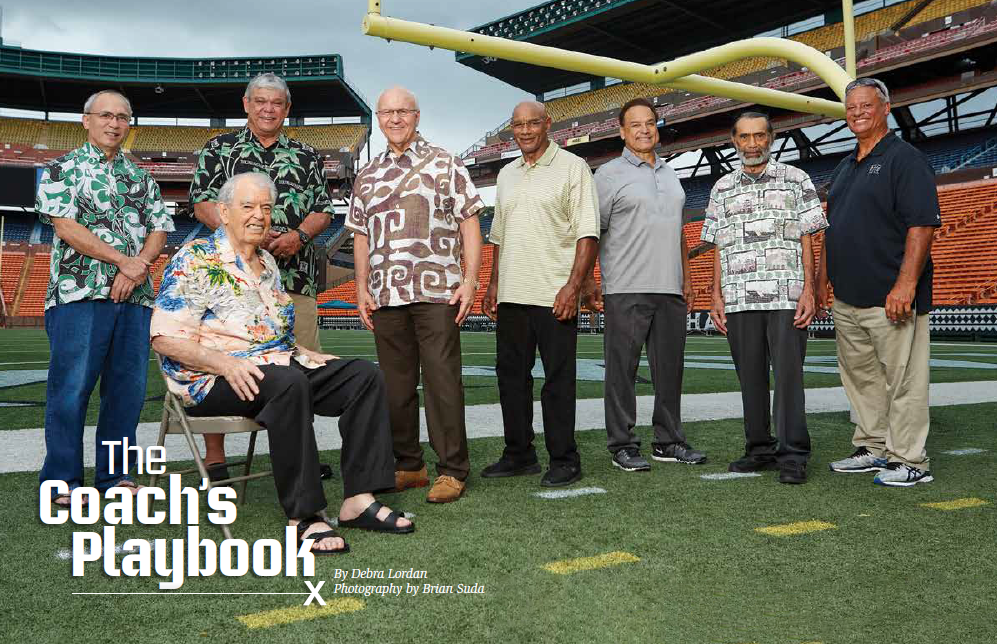
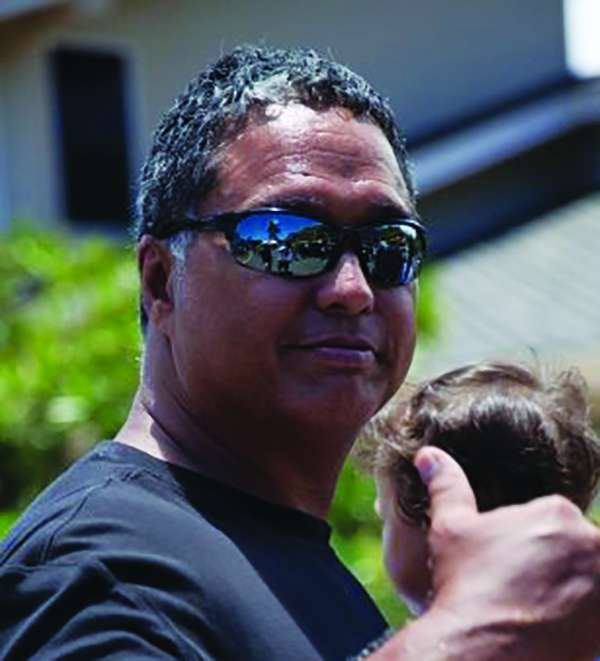
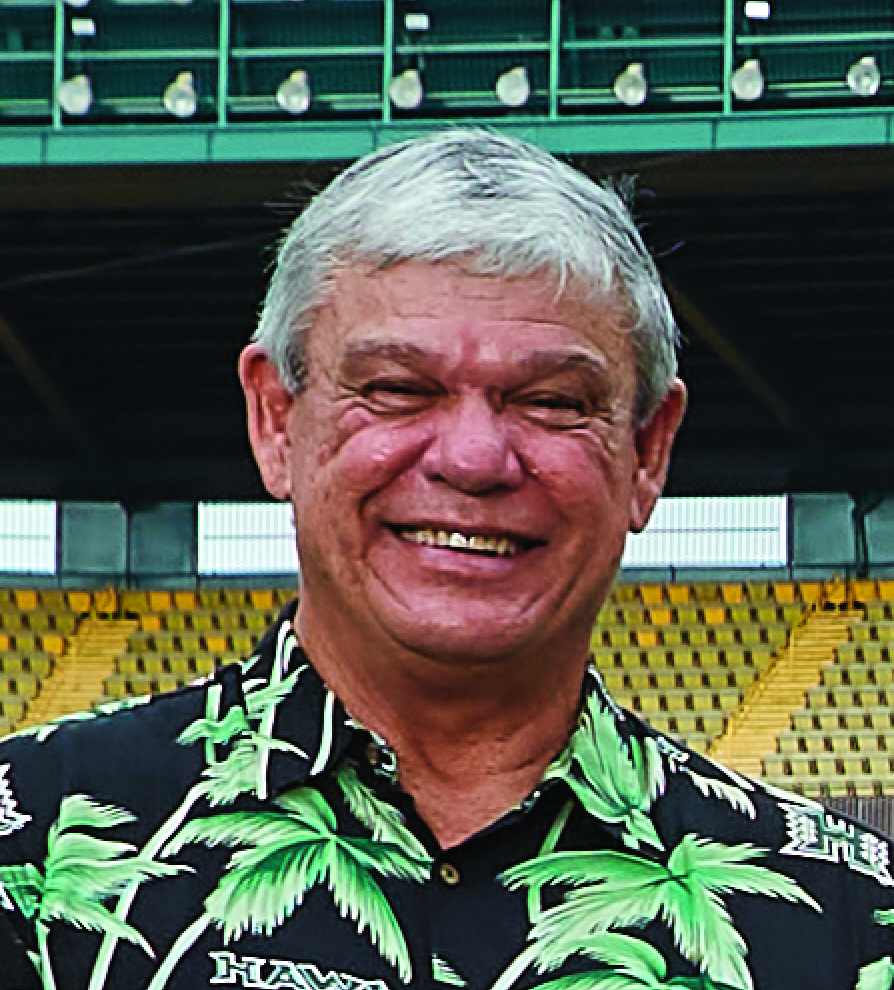
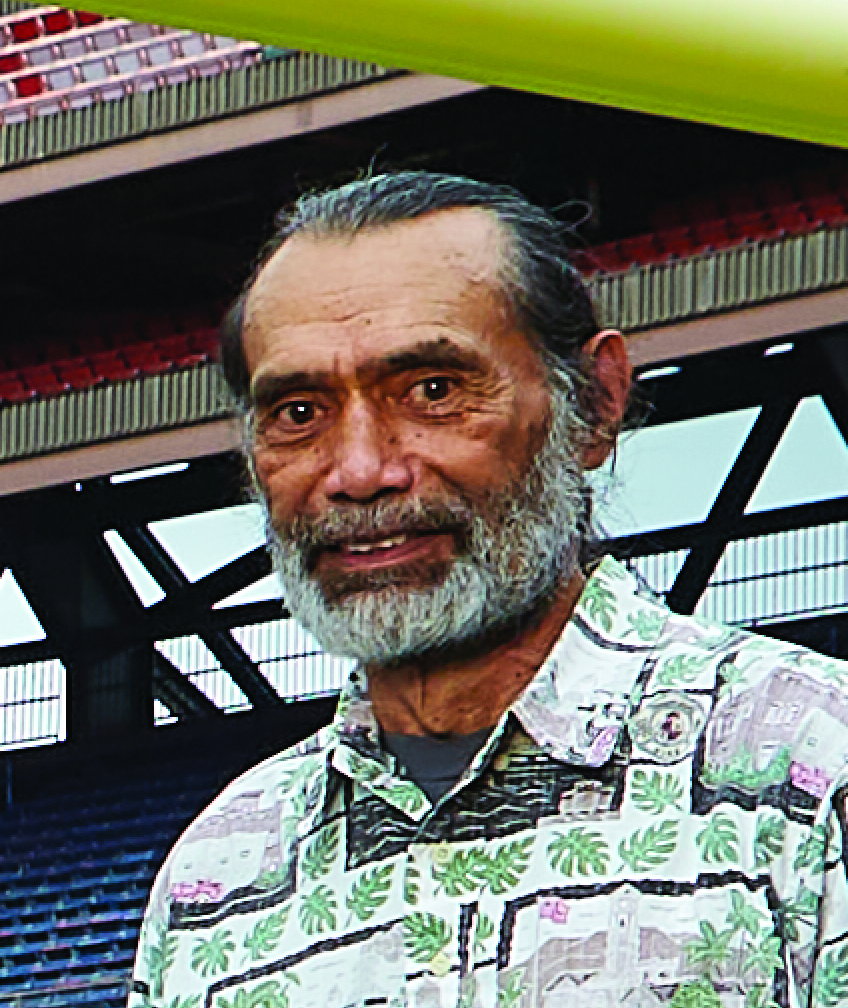
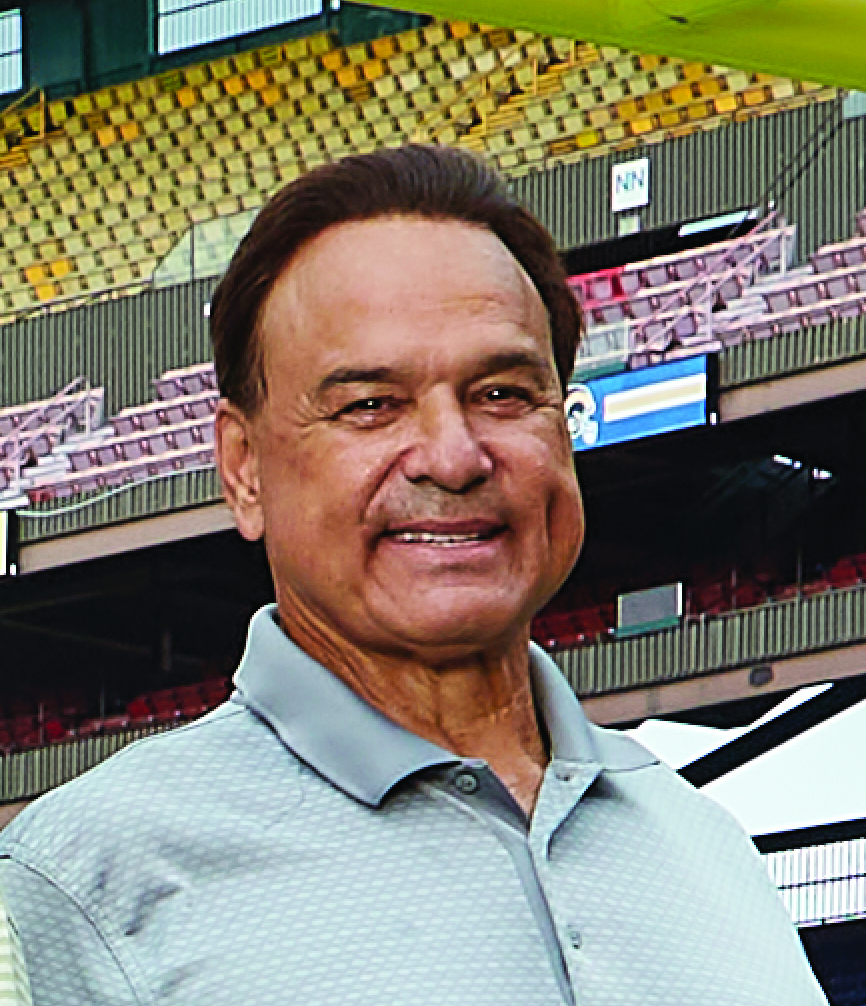
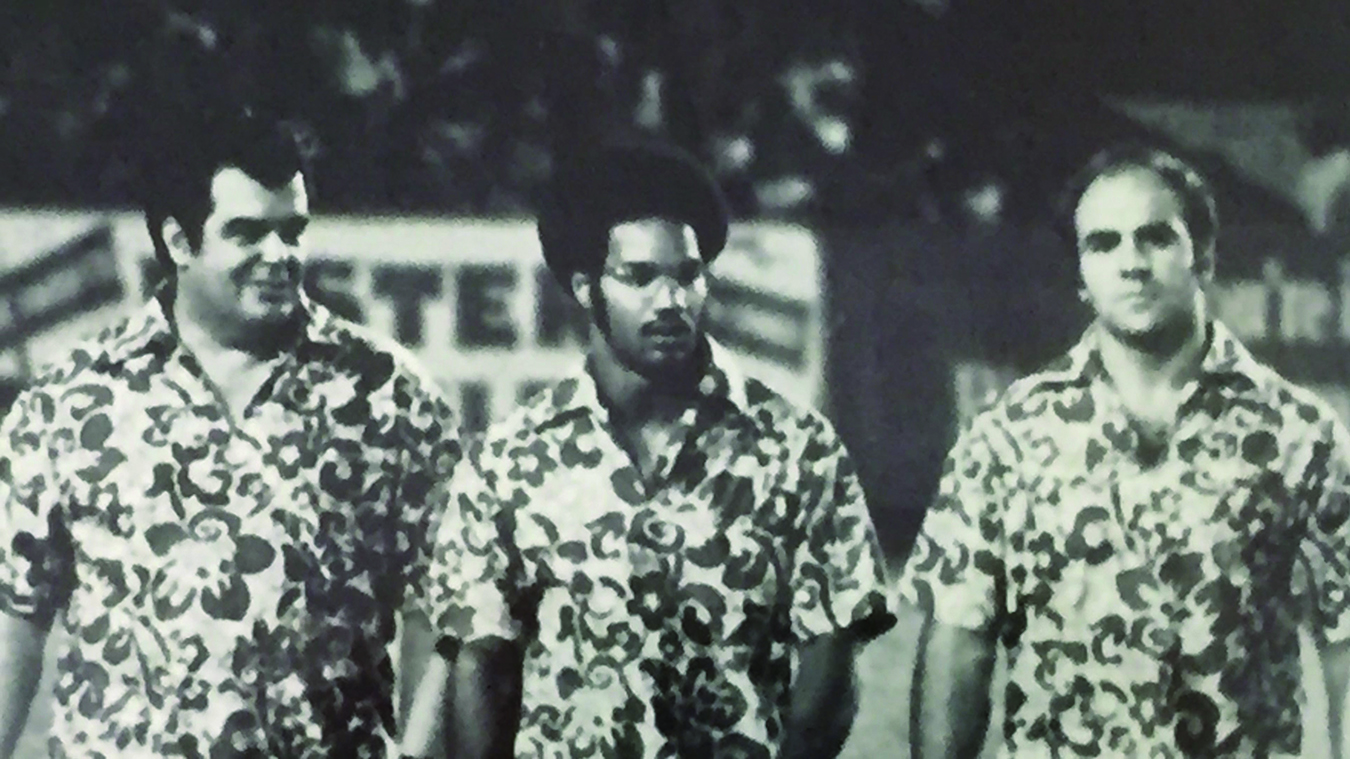
(Above, L–R) Coaches Larry Price, George Lumpkin and Rick Blangiardi provided a framework that guided their players along the path to success — both on and off the football field
The Coach’s Playbook
A good coach tells you what you don’t want to hear and shows you what you don’t want to see, so you can be who you have always known you could be. A great coach makes you do what you don’t want to do — what you think is impossible — and makes you into someone better than you ever dreamt you could be.
Coach Price, who extolled the virtues of hard work and its rewards, influenced others through the example of his own hard work. He loved and respected his players and coaches. “They all worked hard and were willing to put in what was needed to accomplish the mission,” says Coach.
“Knowing I played for Los Angeles Rams must have helped convince them they could get to that level, too.” After completing two degrees, Coach became a free agent, multi-position player for the team. He was also sought-after as a coach, but Coach Price would not leave his beloved Hawai‘i.
He has left an indelible mark on the hearts, minds and lives of those who knew him. As Dexter said, Coach Price and Assistant Coach Rick Blangiardi provided his players with “a book of everything we needed to be successful in life.” Coach’s former football players and staff will continue to turn to the pages of his playbook for success for the rest of their lives.
Coach enjoys an occasional round of golf at Waialae Country Club, where many of his former players meet with him.
Coach Price continues to champion up-and-coming athletes to “give them a place in the game” through the Oahu Interscholastic Association, and brings revitalized recognition to the state’s accomplished athletes through the Hawai‘i Sports Hall of Fame.
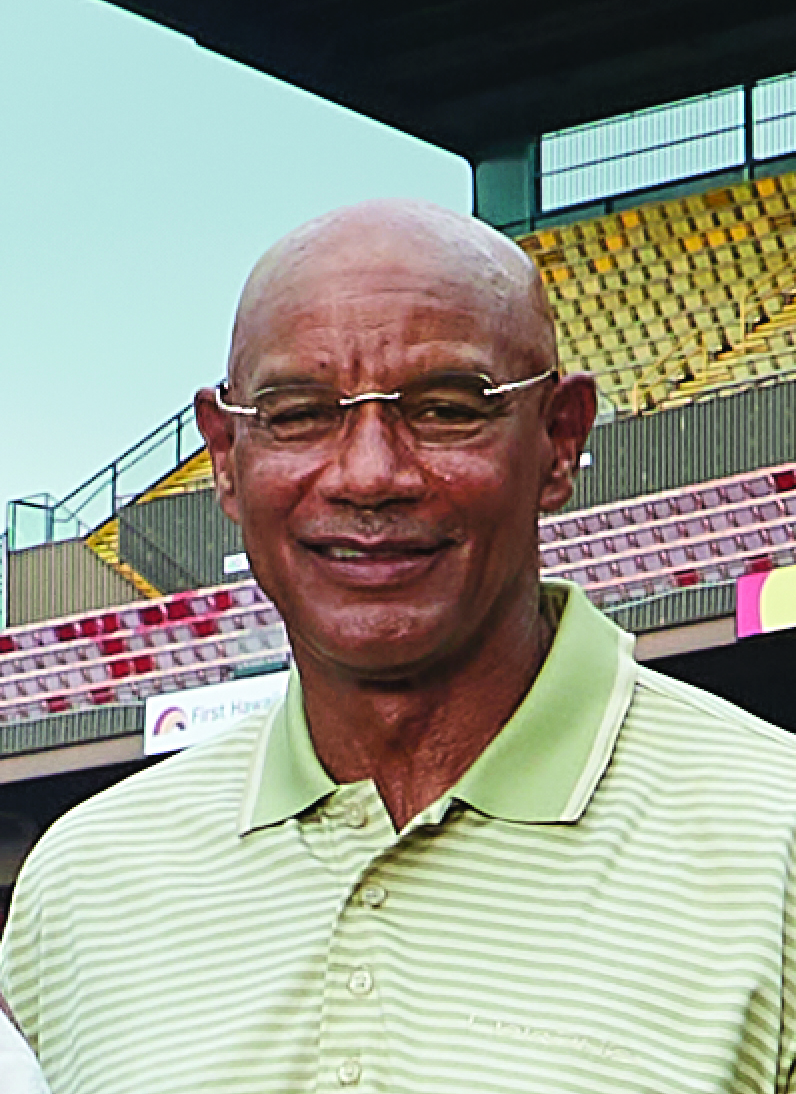
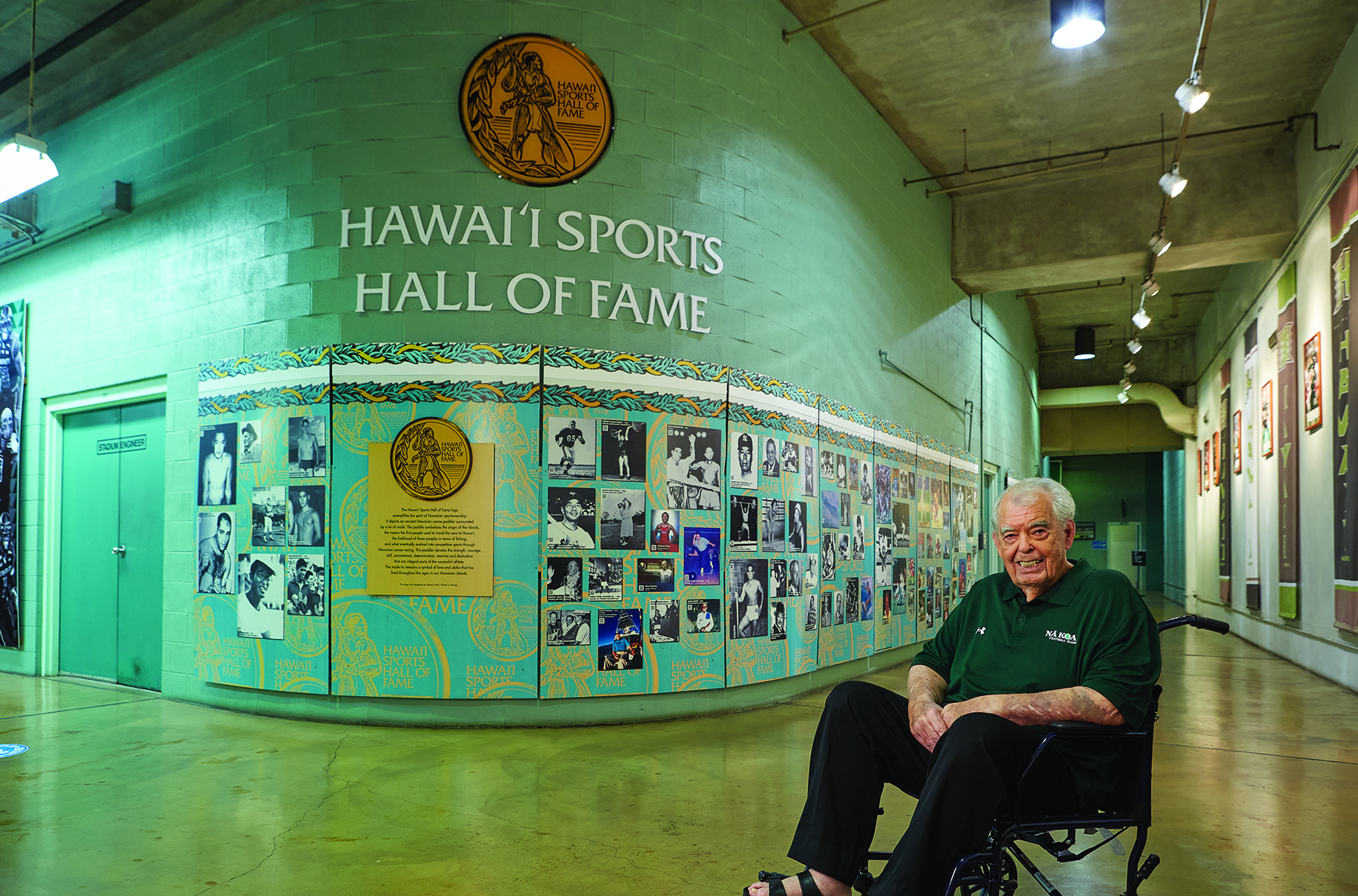
Larry Price at the Hawaii Sports Hall of Fame at Aloha Stadium
HAWAII SPORTS HALL OF FAME
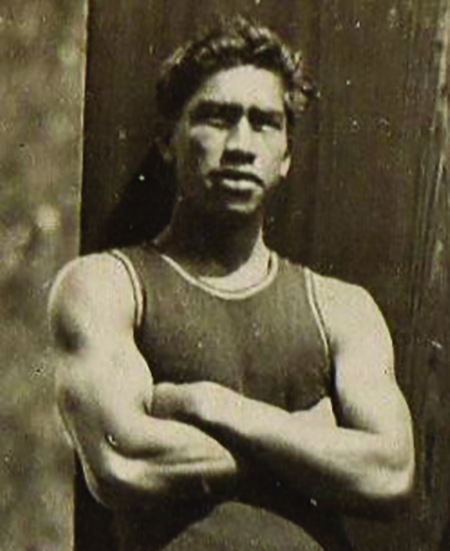
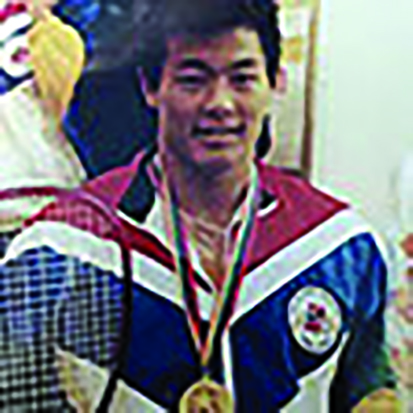
The first HSHOF inductee was swimmer and surfer Duke Kahanamoku. Class of 2020 inductees (below) include Ben Aipa, surfing; Egan Inoue, racquetball; and Roland Leong, auto racing.
As with his football meritocracy, Coach Price felt meeting high standards with hard work, excellence and integrity should be rewarded and recognized, so he set out to rejuvenate the Hawai‘i Sports Hall of Fame.
“Because Hawai‘i is so remote, our athletes had not gotten the attention they deserve,” says Coach. “Hawai‘i has produced many young talented athletes and Olympian-level athletes who have gotten no recognition,” Coach said to the group. “We have enough to warrant honoring them and holding them up as role models for future generations of athletes.”
Although a hall of fame was already in place, it was not being used to its full potential. Coach breathed life back into the HSHOF, which now serves as “an educational repository to honor athletes, pioneers and contributors of Hawai‘i’s rich sports history and to serve as role models for our youth, encouraging them to emulate the same characteristics of devotion, dedication, pursuit of athletic excellence, steadfast and moral character.”
The first year was spent catching up by adding about 30 athletes who should have been included, starting with Duke Kahanamoku. A huge banquet was held to honor the overdue inductees. After the first five catch-up years, three or four athletes have been inducted per year.
Those inducted last year bring the total number of Hawai‘i Sports Hall of Fame members to 158. Coach says, “The 2020 inductees span a wide variety of pursuits, exemplifying Hawai‘i’s unique and profound impact on the sports world. It is no small thing to be accepted into this elite group. Criteria for induction is strictly adhered to.” Selection is made with due process — a what-you-do process. The selection committee is made up of sports media members. “They write stories about these athletes, so they know who is who,” says Coach.
“My message to young athletes is just to keep on going,” says Coach. “If you come up against a hurdle, overcome it and go on to the next hurdle until you don’t have any hurdles left.”
Coach Price, a constant presence as chairman of the board, is transitioning the management of the organization to new leadership who will continue to solicit new inductees and ensure they meet the HSHOF’s stringent qualifications. Hawai‘i’s world-class Aloha Stadium houses a public displays of Inductee photographs and profiles. The Bernice Pauahi Bishop Museum is home to the flagship exhibition for the hall, and includes inductee photographs, profiles and memorabilia.
In addition to the permanent display venues, the HSHOF also maintains portable display screens with a full complement of the inductee photographs and profiles. This “traveling” hall of fame is used at events such as the Annual Induction Banquet and the Hall of Fame Golf Tournament. Arrange a tour of the HSHOF by calling the Aloha Stadium Office.
Larry David Price prefers to be known as a coach and educator, rather than a media personality. Although those who know of his many accomplishments, talents, awards and accolades may entertain the descriptor Renaissance man, he’ll always be remembered simply and reverently as “Coach” to those whose hearts and lives he has touched.
Caring for a loved one can be stressful, even for the most resilient people. Over time, this can harm your health. Consider these four caregiver tips to help preserve your health and well-being:
■ Accept your limitations. It’s normal to feel guilty sometimes, but understand that no one is a perfect caregiver. Believe that you are doing the best you can at any given time.
■ Seek help. Be prepared with a list of ways others can help you. Let friends and family members choose what they would like to do. Some may offer to take your loved one on a walk a couple of times a week. Others may be able to run an errand or cook for you.
■ Set personal health goals. For example, set goals to establish a good sleep routine, find time to be physically active on most days of the week, eat a healthy diet and drink plenty of water.
■ Get connected.
Find out about caregiving resources in your community. St. Francis Healthcare System has free caregiver education and wellness classes that offer practical tips to help you avoid burnout. Connecting with other caregivers can be a source of inspiration and a reminder that you aren’t alone.
Caring for a loved one can be stressful, even for the most resilient people. Over time, this can harm your health. Consider these four caregiver tips to help preserve your health and well-being.
Facing the potential that the COVID-19 variants may keep this virus around, it makes sense that practitioners are looking for other treatments to slow the spread of the disease. The results of a clinical trial in India using two natural supplements to treat COVID-infected individuals showed that these herbal products can speed up recovery time from the disease. On average, after five days, 88 percent of those treated tested negative for the virus, compared with 72 percent of those receiving hospital-standard anti-viral medications. By day 10, the ratios rose to 100 percent versus 88 percent. This begs the question, how can nutritional supplements assist the body in fighting the virus?
When considering specific supplements such as vitamins, it should be noted that the real issue is not the amount of vitamin that is ingested, since the body can only utilize so much of it before expelling it. A person’s “nutritional profile” is what really matters. Someone who lacks vitamins and minerals needed for proper immune system function will benefit from adding certain supplements to their diet. A German study indicates that vitamins D, K and A could bind to the viral spike protein of the COVID-19 virus and reduce its effect. This is already being used in hospitals as part of an integrative approach to COVID-19.
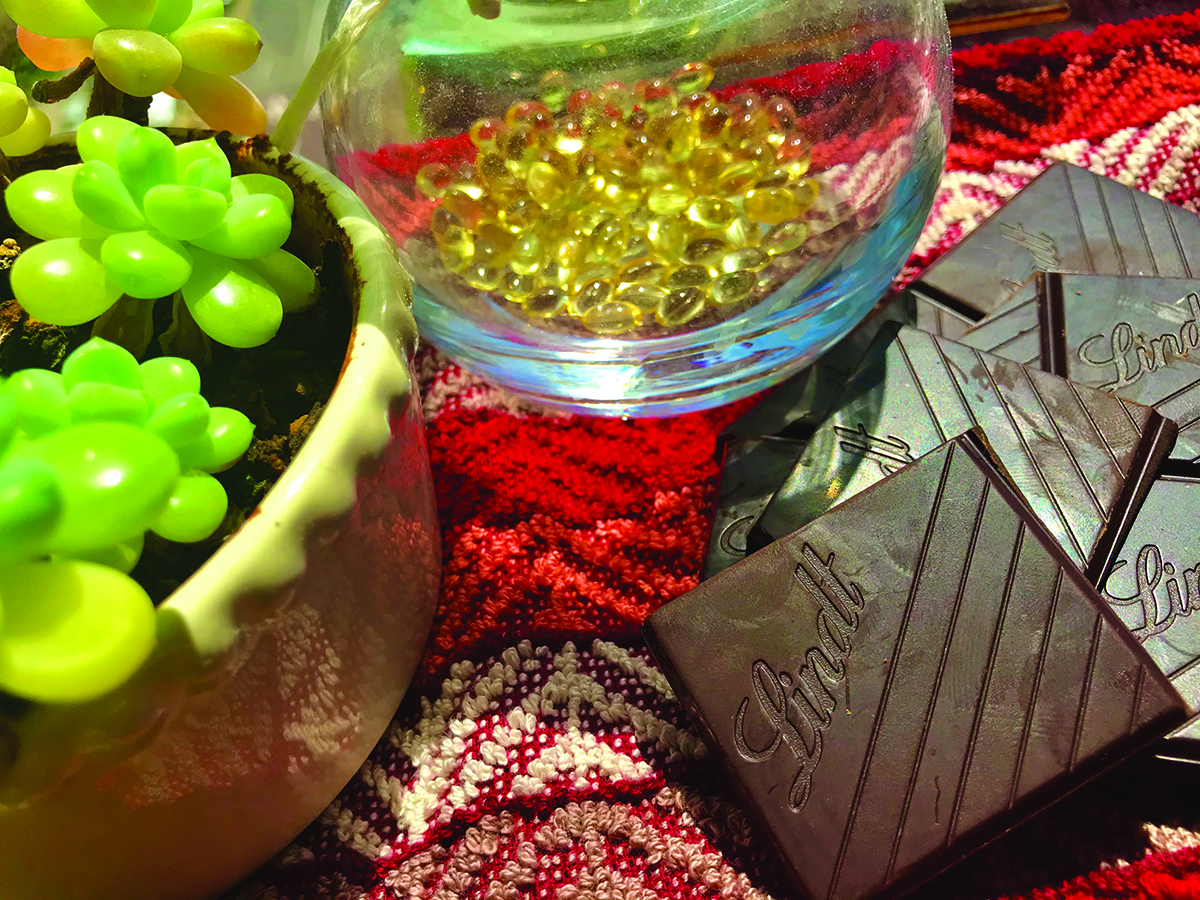
Other individuals have a lack of vitamins and nutrients because of poor nutrition, and will need to develop healthier eating habits before any boost from supplements will help. Adopting a healthier nutritional attitude can be as easy as adding specific foods to your diet. Another study found the natural compounds in green tea, muscadine grapes, cacao and dark chocolate interact with the COVID virus to make it harder for it to propagate in humans. On the other hand, cholesterol was found to have the opposite effect, making COVID-19 more severe by interacting with the spike to increase concentrations of the virus. This supports evidence of more severe cases of the disease among overweight individuals.
This confirms what we have known all along — the overall quality and balance of nutrition has a strong influence on our immune system’s ability to fight infection. Once the system is out of balance, it is vulnerable and more likely to result in a longer, more severe illness from the disease. Making up for lack of nutrition by taking lots of vitamins does little to restore the needed nutritional balance. It comes down to these basics:
❶ Eat a variety of fresh, raw produce
❷ Strictly limit processed foods and sugar
❸ Get regular exercise, preferably outdoors
❹ Maintain a healthy physical and mental equilibrium in your daily routine
The goal here is not to load up on 1,000 percent of any particular supplement, most of which will be flushed out of the system, but to establish a good nutritional foundation, eat regular meals of the right size, and build on this base with natural supplements as recommended by your physician or naturopath.
And of course, COVID-19 vaccines are now available to all age groups to give your immune system a head start in warding off the virus.
ATTENTION PLUS CARE HOME HEALTHCARE
Accredited by The Joint Commission
1580 Makaloa St., Ste. 1060, Honolulu, HI 96814 808-739-2811 | www.attentionplus.com AGING IN HAWAII EDUCATIONAL OUTREACH PROGRAM by Attention Plus Care — a program providing resources for seniors and their families, covering different aging topics each month. For class information and upcoming topics, call 808-440-9356.
Facing the potential that the COVID-19 variants may keep this virus around, it makes sense that practitioners are looking for other treatments to slow the spread of the disease. The results of a clinical trial in India using two natural supplements to treat COVID-infected individuals showed that these herbal products can speed up recovery time…
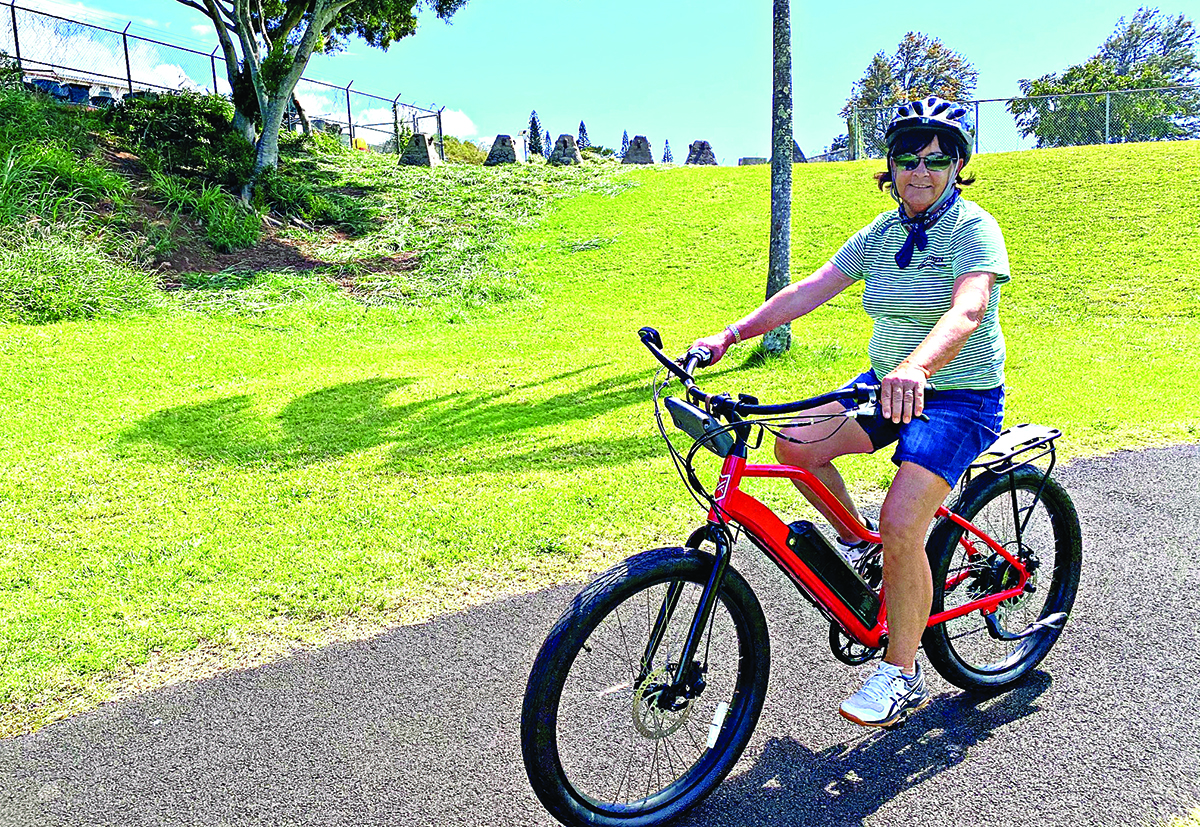
Fueled by the pandemic, bicycling in general has experienced a boom. Biking is an ideal way to exercise while socially distancing.
Electric bicycles (e-bikes), much like toilet paper, face masks and hand sanitizer, are another pandemic success story. As Americans emerged from lockdowns, most e-bike companies saw sales skyrocket. While people of all ages buy e-bikes as an eco-friendly, alternative means of transportation, seniors are the largest target market.
E-bikes are revolutionizing cycling for senior adults, allowing us to ride longer, faster and with little or no pain. The low-impact exercise is simply easier on an aging body. With an e-bike, “over-the-hill” boomers can get a little help getting over that hill without injuring muscles and joints.
Recently retired Maui schoolteacher Sharon Heinzman loves her new e-bike. “Its all the fun of a bike ride without all of the work battling Upcountry’s hilly terrain.”
Health Benefits
Cycling improves cardiovascular health while pumping more blood to the brain, contributing to improved mood. Medical researchers have even discovered that cycling helps alleviate the symptoms of Parkinson’s and Alzheimer’s diseases.
Seniors who bike together also reap social benefits in the safety of the great outdoors. Seniors who live in bike-friendly communities can use e-bikes as regular means of transportation to do shopping and errands.
While riding an e-bike may not be as intense a workout as riding a regular bike, users are much more likely to ride longer and more often, because the e-bike experience is more enjoyable.
How an E-bike Works
E-bikes are conventional bicycles with assistive superpowers. Riders use gears and pedals most of the time, just like with a traditional bike, but have the option to give themselves a boost, thanks to a rechargeable lithium-ion battery-powered motor. The small motor can be engaged to help you whiz up hills and battle head winds more easily.
Buying an E-Bike
Just like traditional bikes, different models of e-bikes are available depending on the rider’s needs. The most popular styles for seniors are cruiser bikes, trikes and recumbents. E-bikes are more complicated and expensive than conventional bicycles, so you need to do your research.
There are three classes of e-bikes: Pedal-assist electric bikes provide assistance only when the rider is pedaling and only up to 20 mph. Throttle-assist e-bikes let you use the motor without pedaling, also up to 20 mph. Speed pedal-assist e-bikes are similar to pedal-assist bikes, except the motor will assist with speeds of up to 28 mph.
The average e-bike weighs about 50-plus pounds. Prices vary widely, starting at about $1,000 and going as high as $12,000.
Find a bike shop in your area so you can test-ride a few and begin rolling back the years!
E-bikes are revolutionizing cycling for senior adults, allowing us to ride longer, faster and with little or no pain. The low-impact exercise is simply easier on an aging body. With an e-bike, “over-the-hill” boomers can get a little help getting over that hill without injuring muscles and joints.
In Hawai‘i, residents were asked to obtain a REAL ID-compliant Hawai‘i driver’s license or state identification card with the star in a gold circle marking by Oct. 1, 2020. But due to the COVID-19 pandemic, the Department of Homeland Security has extended the REAL ID enforcement deadline to Oct. 1, 2021.
After Oct. 1, 2021, only federal-compliant REAL ID driver licenses and state ID cards will be accepted to get on domestic airline flights and to enter certain federal buildings and military bases. A US passport or military ID can be used as an alternate identification.
When acquiring or renewing a driver license or state ID card, residents must indicate on the application whether the card will be federal-compliant REAL ID. There is no additional fee for the star.
Having a state ID is voluntary, not required, and typically used only by those who don’t have a driver license. You may hold a REAL ID-compliant driver license or state ID, not both.
There is no rush to acquire one if your state ID is not nearing expiration. Valid Hawai‘i state ID cards are compliant with Department of Homeland Security standards until Oct. 1, 2021.
A state ID costs $40 and is good for eight years. It can take six weeks for your permanent card.
In Hawai‘i, residents were asked to obtain a REAL ID-compliant Hawai‘i driver’s license or state identification card with the star in a gold circle marking by Oct. 1, 2020. But due to the COVID-19 pandemic, the Department of Homeland Security has extended the REAL ID enforcement deadline to Oct. 1, 2021.
This past year has has served as a glaring stoplight for many people who assessed their slim chances of ever working again. The truth is that the changes we have experienced — those due to COVID-19 and more — have opportunities embedded within their threats. As previously promised, here is a straightforward, basic planning model for future work. It’s a guiding light to follow as you plan to continue to work in one of several ways in the foreseeable future.
Forget endless chronology and look instead at your unique interests, gifts and verifiable accomplishments. Write them down. What do you want to highlight in any work you do in the future? For example, you may have been working in a company full-time as an accountant. You loved some — but not all — of the work. The work you loved are the highlights you are selling to a future employer, client or customer. Ask former teammates for their strongest impressions regarding your contributions. Think about new areas of interest and how your strengths might be an asset. Ask yourself how the work you will do in your older years will contribute to achieving your goal of living a purposeful and even longer life?
Keeping your interests in the forefront of your mind as you check the market. Where are the strongest opportunities that meet your interests? Be sure to check options beyond the fulltime job market because you may find that one of the strongest opportunities for mature workers is in the flexible workforce.
The flexible workforce option is growing at warp-speed and is a treasured opportunity for many of us facing the need to continue to earn, learn and to be a part of a larger community.
Yes, you may need to enhance your skills by learning how to use a laptop, the internet and social media. Fear alone, not competency, makes this hard for many seniors. Be aware that the answers to most of your questions about your future work are at your fingertips.
Put this in perspective! Do you still drive in the crazy traffic on most of our islands? If so, learning to use the basic technology at your fingertips will seem simple by comparison.
Where might you learn and/or improve your knowledge? Any adult school, the community colleges, the universities and vocational schools across all islands are here to help now.
Finally, for today, ask yourself life’s central questions — “Am I creating the meaningful, longer lifetime I desire and deserve? What form of work, beyond the old-world of jobs, will help me achieve this goal?”
In the next issue, I will address flexible opportunities in the field of health and wellness; options that are exploding for older workers.
This past year has has served as a glaring stoplight for many people who assessed their slim chances of ever working again. The truth is that the changes we have experienced — those due to COVID-19 and more — have opportunities embedded within their threats. As previously promised, here is a straightforward, basic planning model…
Have you ever examined your bedtime routine? You probably take care of basic bodily needs like brushing your teeth, but what about the rest of you? Where does your mind go? What about the stress and tension you’ve carried all day? Do you do anything to show your body and brain you really care about them?
If you want to age well, getting proper rest is essential for your health, happiness and relationships. Quality of sleep is just as important as quantity when it comes to focusing and functioning well during the day. If you go to bed with stressful thoughts, you will probably not sleep well. If you do manage some shut eye, you may end up feeling tired in the morning.
So how can you help yourself find better rest? Start by turning off the TV and putting your phone out of reach when you get in bed. Then, raise your feet and do some ankle rotations. Use your arms and hands to gently stretch your legs, hips and lower back as you inhale through your nose, and exhale long, slow breaths through your mouth.
Say, “Thank you, body. Today has ended. Anything unfinished will still be there tomorrow. Rest now.” Release your thoughts and reassure your mind and body that all is well. Try it for a week. Your body and mind will thank you.
Have you ever examined your bedtime routine? You probably take care of basic bodily needs like brushing your teeth, but what about the rest of you? Where does your mind go? What about the stress and tension you’ve carried all day?

 Adult day care services offer professional care for seniors and adults living with dementia and other disabilities. They receive therapeutic, social and health services during the day. Adult day care is also a great solution if the senior needs supervision for safety reasons, is expressing depression or isolation, needs socialization and engaging activities, or if the caregiver simply needs respite. Adult day care gives caregivers the opportunity to work while their loved one is safe.