Question: Should I write instructions regarding my jewelry and other personal assets in my will?
Answer: The best method for passing on keepsakes is to use a Personal Property Memorandum.
The State of Hawai‘i allows you to make your own list of beneficiaries of tangible personal property. Just hand-write the list of property and the beneficiary, sign it and date it.
What are the Benefits of Creating a Personal Property Memorandum?
Passing on keepsakes to those we care about and who we know will cherish them can be a meaningful experience. We hope that the recipient of these items will continue to find value and meaning in the keepsake long after we are gone.
• It can help reduce any conflict that might occur between siblings after parents die. A parent’s death can be a very stressful time as people are asked to deal with assets while they are grieving. This can strain relationships. A parent making the decision rather than leaving it up to the children to decide can greatly reduce conflict.
• It can reduce legal fees. A Personal Property Memorandum does not require the assistance of an attorney, thus eliminating attorney costs.
• Enrich your relationships by fostering communication now. It can bring relationships closer when you engage in a conversation with each beneficiary, in person, to tell the story and value of the item you intend to leave for him or her.
Passing on keepsakes to those we care about and who we know will cherish them can be a meaningful experience. We hope that the recipient of these items will continue to find value and meaning in the keepsake long after we are gone.
The clock will wind down on all of us some day, and most of us are going to need some level of long-term care before it does.
Winning the game of life — and death — depends on having an effective plan in place before the inevitable happens.
If you do not have a will or a trust to pass your assets to your chosen receivers, not only might your estate be intercepted by the wrong team, it may also be sacked by creditors, or disgruntled family members and their lawyers.
Think of your trusted advisors as your coaches. They have playbooks filled with strategies to overcome every opponent. Think of yourself as your estate’s quarterback. If you listen to your coaches and execute the right plays, your loved ones will eventually be wearing championship rings.
Where will your loved ones be when the final gunshot sounds and the lights go out? It’s up to you. Nobody plans to fail, but too many of us fail to plan.
Winning the game of life — and death — depends on having an effective plan in place before the inevitable happens. If you do not have an advance healthcare directive, your loved ones may find themselves blindsided and sidelined at the precise moment you need them to step in and make medical decisions for you.
If a person close to you has been diagnosed with Alzheimer’s disease, it may be time to address some serious financial questions. It is wise to get financial matters in order as soon as possible due to the debilitating nature of Alzheimer’s and other forms of dementia that affect your loved one’s ability to make sound decisions.
Here are four important steps to take:
1) Look for signs of unusual financial activity
Discrepancies involving money can often be among the early signs of cognitive challenges for an individual. Red flags may include difficulty paying a proper amount for an item, leaving bills unpaid or making out-of-the-ordinary purchases. If you observe signs of a loss in judgment related to financial matters, additional action may be required.
2) Identify and designate a power of attorney
Many people are reluctant to hand over control of their personal finances. It’s important to have an honest discussion with your loved one and help them appreciate the importance of having someone look out for their interests.
It is important to identify a trusted surrogate to help manage day-to-day money matters when that becomes necessary. The individual should be designated as the financial power-of-attorney, authorized to sign checks, pay bills and help keep an eye on the affected person’s finances. The power-of-attorney designee can ease into the role, only assuming full control when it becomes absolutely necessary as the person receiving the diagnosis loses capacity to make rational decisions.
3) Make sure proper documentation is in place
An individual needs to be considered competent to complete or update legal paperwork such as wills, trusts and other estate planning documents. This should include an advanced health care directive that will indicate the levels of care that should be provided if health deteriorates. Also check beneficiary designations on any retirement and financial accounts, as well as life insurance policies. With all relevant documentation, be sure the information and named beneficiaries are up to date and that proper processes are followed. Check with an estate planning attorney for help.
4) Assess costs of care and how it will be covered
A top priority is to determine a strategy for how your loved one will be cared for, particularly if his or her cognitive abilities should deteriorate over time. Will specialized care be required, either in the home, or in a nursing or assisted living facility? If so, are there resources or long-term care insurance policies in place to help deal with those costs? This will greatly affect any decisions regarding a care strategy. Talk to an elder law attorney about trusts that can be established to provide for care for the disabled individual while still protecting the family’s assets.
Be proactive in your approach
Waiting too long to address financial considerations after an Alzheimer’s diagnosis can exacerbate an already stressful and emotional time. Take steps to get on top of the situation as soon as you become aware of an impending problem. Keep in mind that establishing a plan for addressing these issues even before a form of dementia is firmly diagnosed also makes sense.
Consult with your financial advisor for guidance on how to manage these challenging times.
MICHAEL W. K. YEE, CFP,® CFS,® CLTC, CRPC®
1585 Kapiolani Blvd., Ste. 1100, Honolulu, HI 96814 808-952-1222, ext. 1240 | michael.w.yee@ampf.com
Michael W. K. Yee, CFP,® CFS,® CLTC, CRPC,® is a Private Wealth Advisor, Certified Financial Planner™ practitioner with Ameriprise Financial Services Inc. in Honolulu, Hawai‘i. He specializes in fee-based financial planning and asset management strategies, and has been in practice for 36 years.
Investment products are not federally or FDIC-insured, are not deposits or obligations of, or guaranteed by any financial institution, and involve investment risks including possible loss of principal and fluctuation in value. Investment advisory products and services are made available through Ameriprise Financial Services LLC., a registered investment advisor.
If a person close to you has been diagnosed with Alzheimer’s disease, it may be time to address some serious financial questions. It is wise to get financial matters in order as soon as possible due to the debilitating nature of Alzheimer’s and other forms of dementia that affect your loved one’s ability to make…
If you’re a small business owner or you work for one, we can help make your life easier with our suite of services. Our business services allow you to file W-2/W-2Cs online and verify your employees’ names and Social Security numbers against our records.
If you run a business, make us your first stop at www.ssa.gov/employer. It will save you valuable time when you need information on W-2s, electronic filing and verifying Social Security numbers. Small business owners can also take advantage of our Business Services Online at www.ssa.gov/bso/bsowelcome.htm. You must register to use this free service, which also offers fast and secure online W-2 filing options to Certified Public Accountants, enrolled agents and individuals who process W-2s and W-2Cs.
According to the US Small Business Administration, about 30 million small businesses in the United States employ tens of millions of people. Running a small business can be a 24-7 endeavor managing employees, inventory, scheduling, services and marketing at a small business can be very challenging.
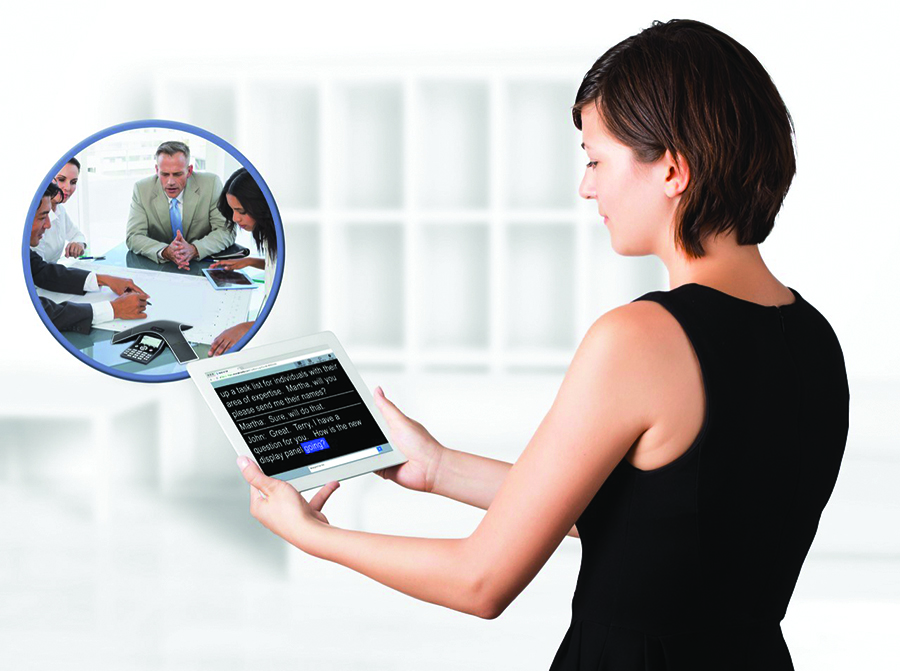
Communication access is critical to stay connected for our health and overall quality of life. As we age, hearing loss may affect our lives, making it more difficult to understand what is happening during in-person meetings, community services, safety workshops and many other events. Struggling to hear and understand what is being said in our daily activities may cause us to feel a loss of independence and dignity, and may even cause us to withdraw socially.
There’s a service available that can help you feel empowered and stay engaged with individuals or co-workers. Relay Conference Captioning (RCC) is a service available at no cost* to Hawai‘i residents who are deaf or hard of hearing that enables them to actively participate in multiparty teleconference calls or web conferences. The service enables you to participate in teleconference calls or webinars by reading live captions through a web browser on your computer or mobile device. Saving a copy of the RCC transcript is one of the available options.
If you or someone you know is challenged by group online discussions or meetings, encourage them to check out this innovative solution and help regain their confidence and independence.
As we age, hearing loss may affect our lives, making it more difficult to understand what is happening during in-person meetings, community services, safety workshops and many other events. Struggling to hear and understand what is being said in our daily activities may cause us to feel a loss of independence and dignity, and may…
While choosing the most valuable plan for you, make sure your prescriptions and providers are covered and in the network. Consider the specific benefits that are most advantageous to you and what is personally important to you.
There are two times per year that most members can change plans; however, very often, there are additional windows that allow Medicare beneficiaries to make changes mid-year. These windows may be available to you.
While the employees of each carrier are trained about the specific plans they represent, they can be examples of “If the only tool you have is a hammer, everything looks like a nail.”
To get the most unbiased advice, I suggest you find a local, independent insurance agent who specializes in Medicare and represents multiple plans.
Medicare can be confusing, but with a bit of help from experts, it doesn’t have to be intimidating or overwhelming.
There’s been a lot of buzz about the extra benefits that come with Medicare Advantage plans. I’m asked everyday, “What’s the best plan?” There really isn’t a one-size-fits-all best plan — but chances are, there could be a better plan out there for you than what you have.
Despite the ongoing pandemic, Hawai‘i continues to attract scores of visitors lured by the promise of pristine beaches, picture-perfect scenery and a balmy, tropical climate. Yet, the fact remains that while our state continues to be one of the safest destinations in the world, it is not unlike anywhere else. The islands still can be a place where unfortunate circumstances may befall just about anyone.
Of course, no person goes on vacation expecting the worst. Many are even prone to letting their guard down — which is when Visitor Aloha Society of Hawai‘i (VASH) steps in.
Established in 1997 by the Rotary Club of Honolulu, with the cooperation of the Honolulu Police Department, VASH serves as a temporary lifeline from which US mainland and international travelers may receive free moral support, translation services, and help with funeral arrangements and other emergency assistance.
Although there are VASH branches throughout the state, all operate independently of each other. Those found on Maui and Kaua‘i, for example, work in conjunction with Maui Visitors Bureau and Kaua‘i Visitors Bureau, respectively, while VASH on the Big Island and here on O‘ahu operate as nonprofit organizations.
How Can VASH Help?
The way it works is simple: When a visitor files a police report, encounters a social worker in the hospital or requires emergency medical services, VASH may be called upon to assist.
Be it car break-ins at popular lookout points; incidents of theft, domestic violence or injury — or even the unexpected passing of a loved one — our team of carefully trained volunteers intervenes with empathy and guidance to help vacationers in need find solace and move forward.
In some instances, guests on cruise ships that dock in Honolulu, particularly the elderly, slip and fall, sustaining an injury, while others simply become ill. Whatever the case, they may find themselves in a local hospital, separated from loved ones in unfamiliar territory. That’s when a VASH volunteer steps in to let them know they are not alone.
In another case not long ago, The Queen’s Medical Center–West O‘ahu reached out after treating a domestic abuse victim on vacation with her family. Every step of the way — from keeping her and her three children safe at their hotel to seeing them through TSA at the airport — VASH was right there, even following up with her after she returned home.
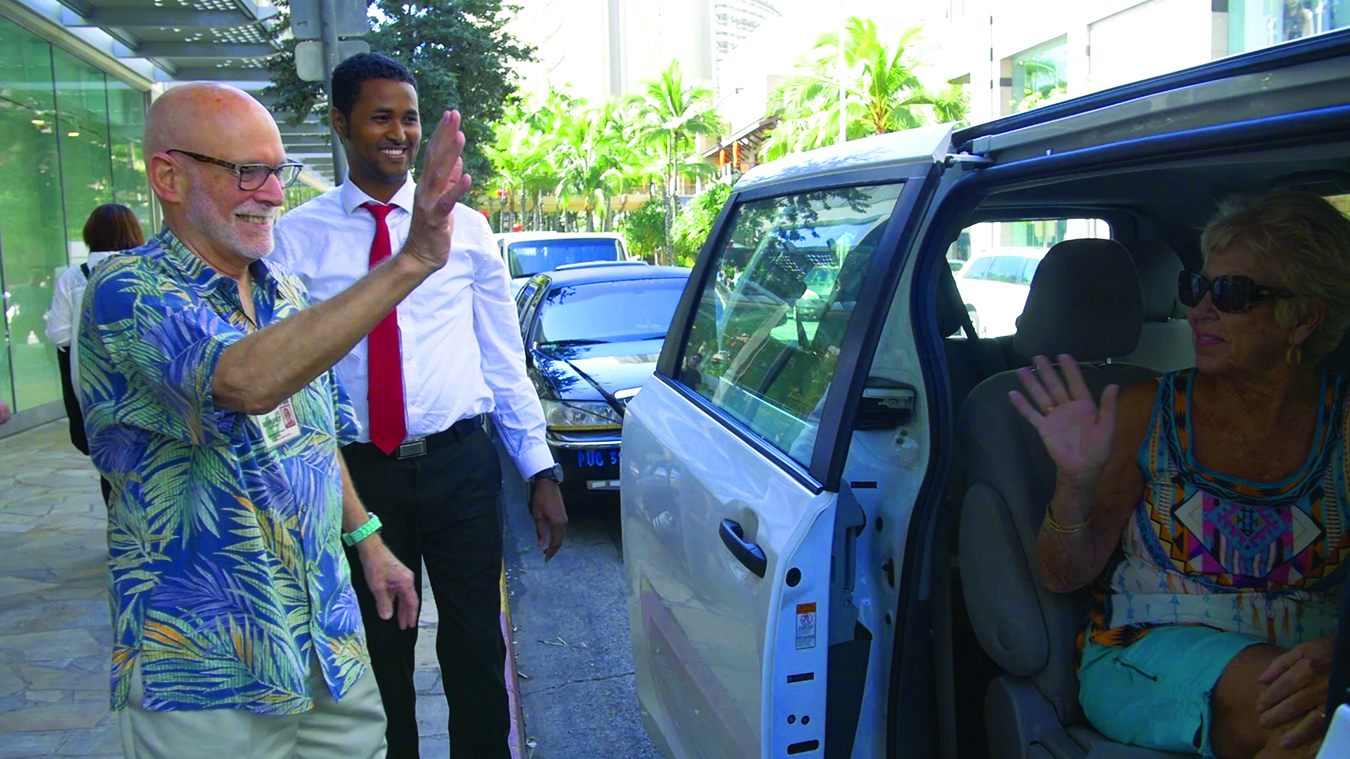
Robert Gentry, 83, a former mayor of Laguna Beach, Calif., has been with VASH for almost 13 years.
Unsurprisingly, our focus within the past year has expanded to include protecting Hawai‘i from the possible spread of COVID-19. Last year, for example, in partnership with the Hawai‘i Tourism Authority, we introduced the COVID-19 Flight Assistance Program, helping to monitor visitors who violate the state’s mandatory quarantine. In some of these instances, VASH has helped violators find discounted plane fares. In others, particularly when an offender has been arrested and is found to be without any money, we have donated return flights. VASH is funded by the Hawai‘i Tourism Authority. VASH is very grateful for this support.
But none of these efforts would be possible without the contributions of our dedicated volunteers, many of whom are Hawai‘i seniors. With only one other full-time staffer and five part-timers, volunteers are what keep VASH running full speed ahead.
With the islands reopening to visitors from all over the world, who continue to arrive en masse, VASH welcomes anyone interested in lending their time to our organization.
The Role of VASH Volunteers
The most common role our volunteers take on is that of friend and confidante, connecting with distressed visitors over the phone from the comfort of their own home. It is through these conversations that, with a friendly, understanding attitude, VASH volunteers offer hope and compassion. More often than not — particularly for those visitors who find themselves alone, far from family and friends in other parts of the country or world — all they are looking for is a sympathetic ear.
Volunteer opportunities abound: Some prefer to spend their time helping out in our office. One woman designs floral arrangements for visitors who find themselves in the hospital. Whatever their interest, there is something for everyone.
There are no extraordinary qualifications required of potential volunteers. However, those hoping to serve as liaisons for agitated visitors should possess excellent listening skills to best determine their needs.
Everyone must undergo a mandatory four-hour training session before being put to work. All we ask for is a mere three hours of their time each month — and it isn’t uncommon for an initial commitment to turn into a lifelong passion.
While going on vacation certainly is a time to have fun, it doesn’t mean throwing caution to the wind. It’s all about finding a balance between leaving with both a memorable experience and everything intact. Seniors in particular should heed these simple safety tips:
• Upon arriving at your destination, take your luggage to your hotel. Even if your room isn’t ready, hotels will typically store luggage, ensuring it doesn’t have to sit in your car.
• Instead of traveling with all of your cash, credit cards and other valuables, use the safe in your hotel room to store personal items. Hopping out of the car just for a minute to snap a photo or grab a bite to eat? Take everything with you. On that note, don’t arrive at a destination and then store something in your trunk before embarking on an activity. You can never be sure of who’s watching. Never leave items unattended, as well.
• Pack a photocopy of your passport or driver’s license just in case the original is ever lost or stolen. Be sure to store them separately.
• Keep your hotel door locked at all times and use the peephole if anyone knocks.
• Look and listen. Be aware of your surroundings and trust your instincts. If something doesn’t feel right, leave or get help.
Despite the ongoing pandemic, Hawai‘i continues to attract scores of visitors lured by the promise of pristine beaches, picture-perfect scenery and a balmy, tropical climate. Yet, the fact remains that while our state continues to be one of the safest destinations in the world, it is not unlike anywhere else. The islands still can be…
Any combination of the following factors can lead to CVS: uncorrected refractive errors (nearsightedness, farsightedness and astigmatism), poor lighting, screen glare, and poor workstation setup for posture and viewing.
Many experts believe that daily computer use may be a contributing factor to the rise in nearsightedness and dry eye disease.
How you can help protect yourself from CVS:
• Make sure your prescriptions are correct.
• Make sure you blink regularly to rehydrate your eyes.
• Use Dr. Rhee’s 20-20-20 rule. Look up from your screen every 20 minutes at something at least 20 feet away for at least 20 seconds.
• Make sure the the center of your screen is just below eye level and around 20 to 28 inches away from your eyes. Make screen brightness similar to your surroundings.
• Visit an eyecare professional to find out if you need special computer glasses or treatment for dry eyes.
If you spend your working day behind a computer screen, you are at risk of experiencing digital eye strain, or Computer Vision Syndrome (CVS). Symptoms of this include dry eyes, blurred vision, headaches, and neck and shoulder pain.
Does your mouth often feel dry and uncomfortable? Does it make eating, speaking or swallowing difficult?
Dry mouth can cause oral health issues that can affect your smile and overall quality of life. Persistent dry mouth is not a normal sign of aging and may be a possible side effect of many common medications, a symptom of certain diseases or health conditions, or a side effect of substance abuse or cancer treatment.
This uncomfortable condition can lead to tooth decay, gum disease, mouth sores, cracked lips, bad breath and may affect your ability to eat and speak. It’s important to see a dentist and physician if you suffer from persistent dry mouth, so they can determine the cause and offer solutions to alleviate symptoms and stimulate saliva flow. Solutions may include drinking more water, limiting caffeine, avoiding tobacco and alcohol, rinsing with an alcohol-free mouthwash or using an over-the-counter saliva substitute.
In addition to seeing your dentist regularly, be sure to brush twice a day and floss daily. These are small, but essential steps you can take every day to live well and smile more.
Does your mouth often feel dry and uncomfortable? Does it make eating, speaking or swallowing difficult? Dry mouth can cause oral health issues that can affect your smile and overall quality of life.
Imagine being suddenly weak or paralyzed, unable to move your leg, arm, see normally or feel your face. These are some of the symptoms of a stroke — 911 should be called immediately!
What is a stroke? A stroke or “brain attack” occurs when the brain does not get enough oxygen from the blood, causing death of brain cells. It is easier to prevent a stroke than to recover from stroke disability.
PREVENTION IS KEY
Is smoking ok? No! Smoking is the leading cause of preventable death in the United States. Try smoking one less cigarette each day to achieve the bigger goal of quitting smoking altogether.
Does diet matter? A diet such as Mediterranean diet will reduce inflammatory plaques in your blood vessels, reducing the risk of heart attack and stroke. Numerous studies have proven its effectiveness in preventing stroke and heart attacks.
Will exercise help? A brisk walk 30 minutes per day has been shown to have many benefits. If you are unable to walk, many exercises can be conducted from home while seated in a chair.
Ask your doctor what can be done to prevent a stroke if you ever been diagnosed with high blood pressure, high blood sugar or high cholesterol — or if you smoke.
Imagine being suddenly weak or paralyzed, unable to move your leg, arm, see normally or feel your face. These are some of the symptoms of a stroke — 911 should be called immediately!
Since 1995, the Aloha Medical Mission (AMM) Dental Clinic has provided basic dental care at no cost for adults who are unable to afford it.
AMM Dental Clinic is a secular, nonprofit organization supported by government grants, independent donors and private foundations. Our independence and dedication to our mission has allowed AMM Dental Clinic to thrive, even during the COVID-19 pandemic, while other health centers closed. In 2020 between the months of April and June, the clinic experienced a 267 percent increase in patient visits.
AMM Dental Clinic continues to be a dental health “safety net,” providing care at no cost for the homeless, immigrants, abused women, the elderly, and those with financial limitations, or limited or no dental insurance.
We support the local dental community by referring patients to participating providers. As a no-cost dental clinic, care is limited to dental examinations, cleanings, X-rays, fillings, extractions, limited dentures (for abused women) and limited root canals, with the goal of treating acute dental disease and preventing systemic health problems.
AMM Dental Clinic is grateful to the local dental community for volunteering their expertise and skills and providing pro bono dental care. Each month, five to 12 dentists step up to offer pro bono care. These volunteers allow AMM Dental Clinic to be a “safety net” at no-cost to those in need.
HOW CAN SENIORS BENEFIT?
Tooth decay is common among older adults. Nearly 50 percent of adults 65 years and older have untreated dental conditions, including tooth decay, gum problems and missing teeth.
A virtual educational format called “Kupuna Smiles” has been designed by the HDS Foundation to provide training to nursing home staff and caregivers to obtain certification for oral health care. Expansion through outreach with community partners is on the horizon. The primary goal of this initiative is to improve the oral health of senior citizens in Hawai‘i through community-oriented projects.
The truth of the matter is that seniors are at increased risk for dental problems that affect their overall health and quality of life. Dental disease is a common cause of medical and emergency room visits. AMM Dental Clinic is here to help.
ALOHA MEDICAL MISSION DENTAL CLINIC
(501(c) 3 nonprofit)
200 N. Vineyard Blvd., Unit B-120, Honolulu 96817
Clinic hours: M–F, 8am–5pm 808-847-3400 | www.alohamedicalmission.org
Since 1995, the Aloha Medical Mission (AMM) Dental Clinic has provided basic dental care at no cost for adults who are unable to afford it. AMM Dental Clinic is a secular, nonprofit organization supported by government grants, independent donors and private foundations.
When building a house, having a solid foundation is key to its stability. The feet and ankles are the foundations for your body, and are critical for stability and balance while standing and walking. Yet how often do we think of exercising these muscles to keep them strong and flexible.
The intrinsic muscles of the feet (contained within the foot) and extrinsic muscles (originating outside of the foot and attached to the foot by tendons) contribute significantly to what happens at the ankles and joints above. As ground forces hit our feet, how the feet react affects our posture — the ability to keep our center of mass solidly in line over our hips, knees and ankles — and most importantly, our balance.
To test your strength, mobility and coordination, try the following (these can be done seated):
• Keeping your foot flat on the floor, alternate lifting your toes starting with the the big toe, then the other toes.
• To strengthen your feet and ankles, put your foot on a towel. Then contract your toes and relax them.
Practicing these exercises can improve the health of your feet and ankles, and ensure that they give you the best support possible.
When building a house, having a solid foundation is key to its stability. The feet and ankles are the foundations for your body, and are critical for stability and balance while standing and walking. Yet how often do we think of exercising these muscles to keep them strong and flexible.

 Question: Should I write instructions regarding my jewelry and other personal assets in my will?