Category: June-July 2020

  • An Interview with Leslie Wilcox

    An Interview with Leslie Wilcox

    Our “can do!” island culture values resourcefulness and cooperation when faced with challenges. “We know a guy” and where to get things, and have honed skills tūtū taught us. We don’t expect anything in return for helping out. “If can, can; if no can, no can.” We put ourselves to the task.

    PBS Hawai‘i (KHET or KMEB call letters in your guide) is our TV station. Our donations built it and it serves us. But don’t take it for granted. Paula Kerger, president of the Corporation of Public Broadcasting national nonprofit, recently applauded our “can do!” public television station: “This is truly, I would say, the most exceptional station in our country…
    it understands what it means to be a part of the fabric of our community.”

    “NOVA,” “Get Caught Reading,” “HIKI NŌ,” “PBS News Hour,” “Long Story Short with Leslie Wilcox”— we are fans! But how much do we know about our TV station?

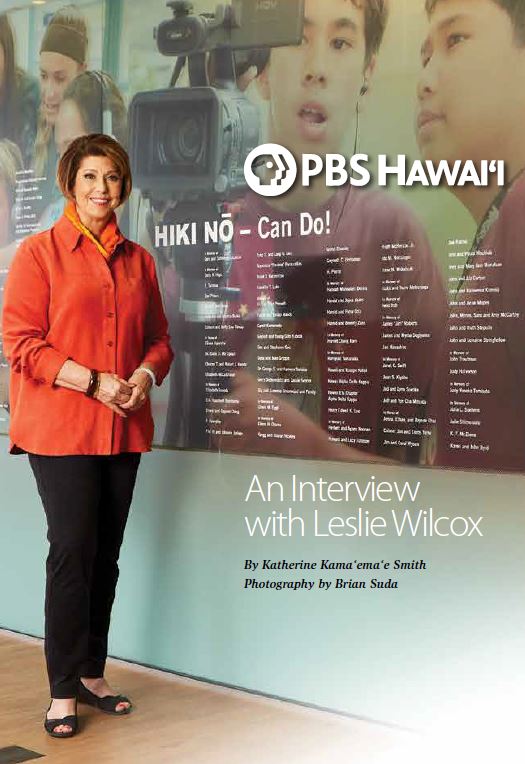
    Snuggle up. We turned the tables and interviewed PBS Hawai‘i President and CEO Leslie Wilcox. Be prepared for some learning moments! And into the bargain, Leslie shares memories about growing up on O‘ahu — another reason PBS Hawai‘i expresses the heart and soul of our islands.

    Generations Magazine readers watch PBS, but they may not understand how it got started.

    LW: Well, Hawai‘i public television goes back to 1965, when a University of Hawai‘i professor set up closed-circuit instruction on campus. With the Public Broadcasting Act of 1967, the UH initiative became a member of the new Public Broadcasting Service [PBS]. In 1969, they introduced “Sesame Street.” It was controversial in some states, but Hawai‘i welcomed the educational program.

    We were first located in a vacant lower Mānoa corner of UH near some Quonset huts. Back then, the TV station was part of the state government. Later, in 1972, the State Legislature funded a two-story building on the site. From the start, our public television station racked up a number of Hawai‘i firsts — including the first local station to provide live satellite broadcasts.

    Can everyone can get PBS on an HDTV?

    LW: Yes, plus via cable, satellite or online. We serve most of the Hawai‘i community free via our KHET and KMEB over-the-air broadcast signals — including financially disadvantaged communities where it’s not profitable for commercial TV stations to direct their signal. For example, we recently strengthened free service to the under-resourced, rural southern end of the Big Island. Many people do not have digital access and we care about them. That’s why we broadcast  educational programming 24 hours a day on two channels — our main channel and PBS KIDS 24/7.

    When state funding ended in 2000 and we became a private, nonprofit, community-supported organization, we began leasing the space we had long occupied at UH Mānoa. I joined in 2007. Years later, due to UH space needs, we lost our lease and had to move all of our operations.
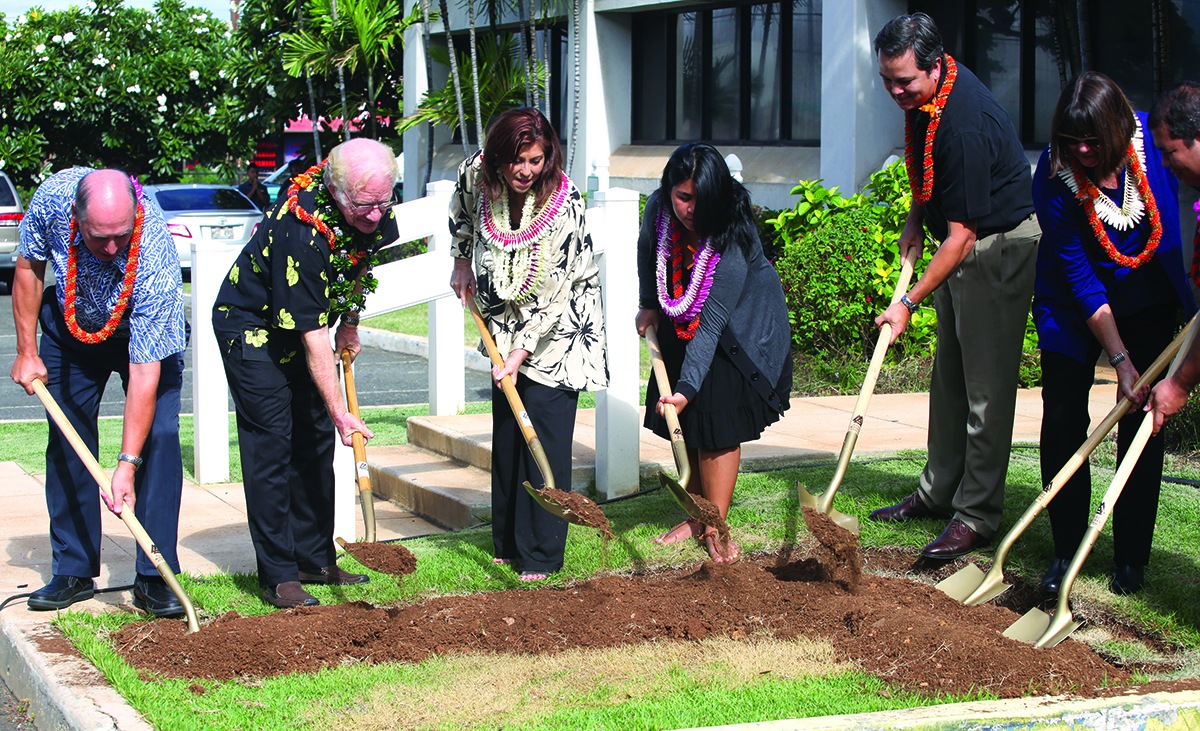
    From the old to the new, groundbreaking in Nov. 2014: (LR) Neil Hannahs, former PBSH board chair; Robbie Alm, then-board chair of PBSH; Leslie Wilcox, president and CEO of PBSH; Victoria Cuba, student engineer at PBSH; Cameron Nekota, PBSH board member; Sheryl Seaman, architect, G70; and Justin Izumi, VP, Allied Builders System.
    From the old to the new, groundbreaking in Nov. 2014: (LR) Neil Hannahs, former PBSH board chair; Robbie Alm, then-board chair of PBSH; Leslie Wilcox, president and CEO of PBSH; Victoria Cuba, student engineer at PBSH; Cameron Nekota, PBSH board member; Sheryl Seaman, architect, G70; and Justin Izumi, VP, Allied Builders System.

    When did PBS Hawai‘i make the big move?

    LW: We moved in 2016, but before that, we raised $30 million to build a big new facility across town. Relocation at first seemed like bad news and a tough blow, but like many changes, it worked out for the better. We had hopes, dreams, hard work and a “can do!” attitude. As always, “the village” of Hawai‘i nei offered support. And we had a strong staff committee headed by Karen Yamamoto managing the move.

    In May 2016, we settled into our beautiful, future-facing multimedia building at the corner of Nimitz Highway and Sand Island Access Road in Kalihi Kai — the PBS Hawai‘i Clarence T.C. Ching Campus. It’s the best work environment I’ve ever had — open, cheerful, welcoming, functional to the max. Thanks to our terrific unpaid board of directors and funding  by Hawai‘i individuals, businesses and charitable foundations, the facility and land are debt-free .

    We’re delighted to be owners, not renters of the only locally-owned, statewide broadcasting company. All others are commercial businesses owned by large companies based elsewhere.

    PBS consistently provides content and services to inform, educate and enlighten our fellow islanders. We gather  feedback from stakeholders, viewers and our statewide independent community advisory board.

    New building in Kalihi Kai

    We want to inspire lifelong learning from childhood through active retirement and elder years. The PBS Hawai‘i mission, with its pillars of education and journalism, is a great fit with my personal philosophy. Education certainly lifted my prospects in life. And journalism increases a flow of new information. For more than three decades in journalism, I felt like I was being paid to learn.

    At PBS Hawai‘i, our traditional values of integrity and fairness endure, but our methods and approaches have changed repeatedly over time with waves of new technology and with shifts in societal perspectives. Sometimes, even media professionals have difficulty dealing with change. As former Sony CEO Howard Stringer said, “We all have to remember not to hang on to the status quo long after the status has lost its quo.”

    Also, PBS values adaptability and versatility. Our lean, dedicated staff has the energy, creativity and know-how to produce a significant amount of local content — weekly TV programs and frequent online offerings. We are “can do!”  people.

    Is it true that you are not funded by the state?

    LW: Yes. We’re Hawai‘i’s sole member of the trusted private nonprofit Public Broadcasting Service. A related national entity is the private nonprofit Corporation for Public Broadcasting. It distributes federal funding to some 350 public TV and radio stations. These funds only make up 15 percent of our annual budget. We leverage PBS federal grant monies into many more private dollars, thanks to generous individual, business and foundation donors. For a number of reasons, it’s good to have different kinds of revenue streams. For example, if a funder seeks to control our editorial content, we need to stand strong — and we can, with other sources of funding.

    We remember you reporting news on the air at KGMB-TV and KHON2. Did journalism bring you to Hawai‘i?

    LW: Actually, I was born and raised on O‘ahu. My Portuguese forebears, Joao and Faustina Fraga Silveira, sailed here while Hawai‘i was still a monarchy. They had actually met on the ship, settled in Kalihi and had 16 children, 13 of whom survived childhood. One of the grandchildren was my mother, Blanche. During World War II, she met Paul Wilcox, a soldier stationed here. He fell in love with my mother and Hawai‘i. Dad had a great broadcast voice and became one of Hawai‘i’s early radio disc jockeys with a late-night show called the “Midnight Owl.” He later worked in radio sales. I’m in the middle of five siblings. I attended Holy Nativity School, Āina Haina Elementary, Niu Valley Intermediate and Kalani High before going to college.
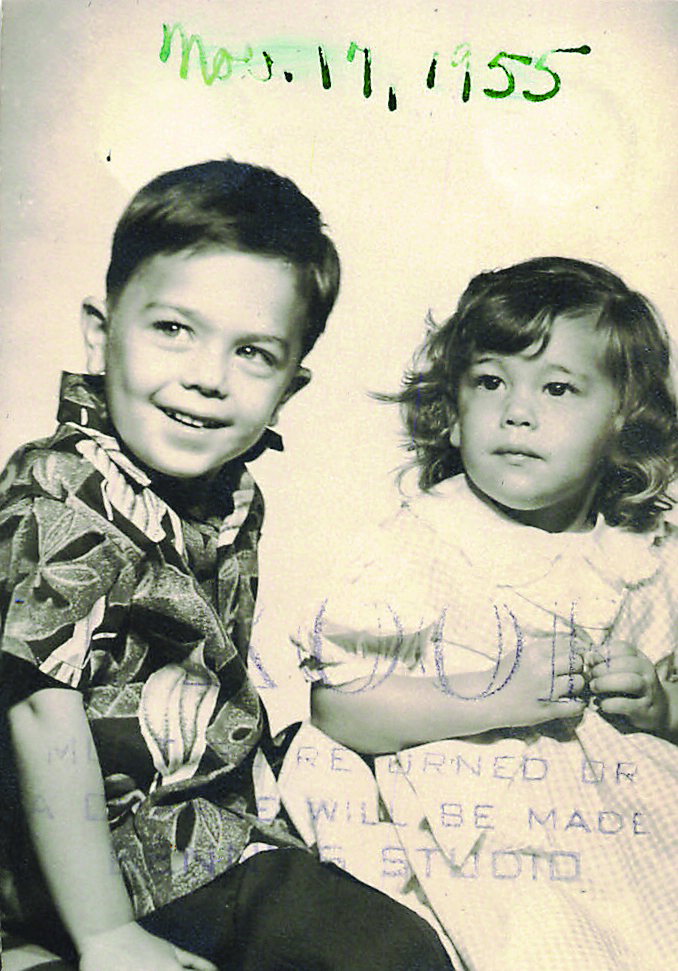
    Small-kid times were spent in what were once jokingly called “the boonies,” meaning Kuli‘ou‘ou Valley, with Quonset huts here and there, a farm market, and backyards where families grew veggies and flowers. Kuli‘ou‘ou was the last  residential valley in East Honolulu. As a kid, I remember pink bulldozers tracking down Kalanianaole Highway to build Henry Kaiser’s huge new Hawaii Kai marina community around the ancient Hawaiian fishpond, Kuapā. Pink was Mrs. Kaiser’s favorite color. I can still remember the sparsely settled lands, dotted here and there with small farms.

    My older brother Pat and I would walk across the highway, wade out to a little islet and pretend to be island castaways.
    When fishermen abandoned fresh aku heads there, we’d stage aku-head swordfights. And we played with sea cucumbers, which squirted seawater. Dumb kids. I wouldn’t do this today.

    In high surf, waves rolled across the road into the fishpond. The backwash left mullet stranded on the land. We kids were there to pick them up and proudly take a “fresh catch” home for dinner!

    Freedom and make-believe are treasures of a post-war Hawai‘i childhood.

    LW: The world was certainly a safer place; baby boom children kept themselves occupied and were allowed to roam. On Saturdays, our mothers might say, “Just make sure you come home before dark. And don’t bother anyone or get into trouble.” No cellphones or bottles of water required.

    When I was still in grade school, my family moved into the new Niu Valley subdivision, then considered a middle-class community. I was older and now our keiki explorations involved crawling around in mountain lava tubes, reef diving to look for eel holes and lots of skateboarding down steep streets. I have the scars to prove it.

    I learned to surf with my friend David’s old homemade board and reveled in the freedom. We also surfed Kawaikui Beach. When we got thirsty, we dove down and drank fresh water flowing through pockets in the sand. Highway work
    stopped the flow of artesian water. Niu pier is long gone, too. Great memories.

    What was your first job after high school?

    LW: Waitressing at the old Snack Shop on the grounds of the Royal Hawaiian Hotel. My pink uniform had a big bow in the back ironed with starch from Chinatown; it was hard as a board.

    I won a journalism scholarship to USC, but just before high school graduation, my parents divorced and bankruptcy followed. I stayed home to help support the family. Fortunately, I was able to pay for and attend UH Mānoa after the Honolulu Star-Bulletin, then the largest newspaper in Hawai‘i, gave me an errand-person job. Amazingly, it turned into a full-time reporting position when I was barely 19. I’m forever grateful to my former Star-Bull colleagues, who at times teased but also generously helped an awkward rookie.

    Were there other mentors along the way?

    LW: I’ve had too many guides and mentors to mention, and they remain in my heart. Some offered guidance, others taught by example in a critical moment. I learned from “the village” that I came to know as a journalist — at many locations across the state and under stressful, sorrowful or even dangerous circumstances.

    Also I learned from reading. Books open up history, context, new ideas, other worlds, flights of fancy and knowledge of how things work. I didn’t travel outside Hawai‘i until I was 16 (for a journalism competition), but through reading, I had already crossed continents, gone back in time and seen the future. Reading continues to inform my writing and expand my understanding.

    Also, my extended family members are observant and curious. “I wonder why…” was a common beginning to a sentence. It wasn’t a gossipy or nosy interest. The question connects things to history, science or community. This curiosity cultivated my sense of wonder, too. When I was 15, I researched the purchase of a big parcel of land in our neighborhood — I wondered who bought it and how it might affect life in the area. Come to think of it, that was pretty niele [nosy]!
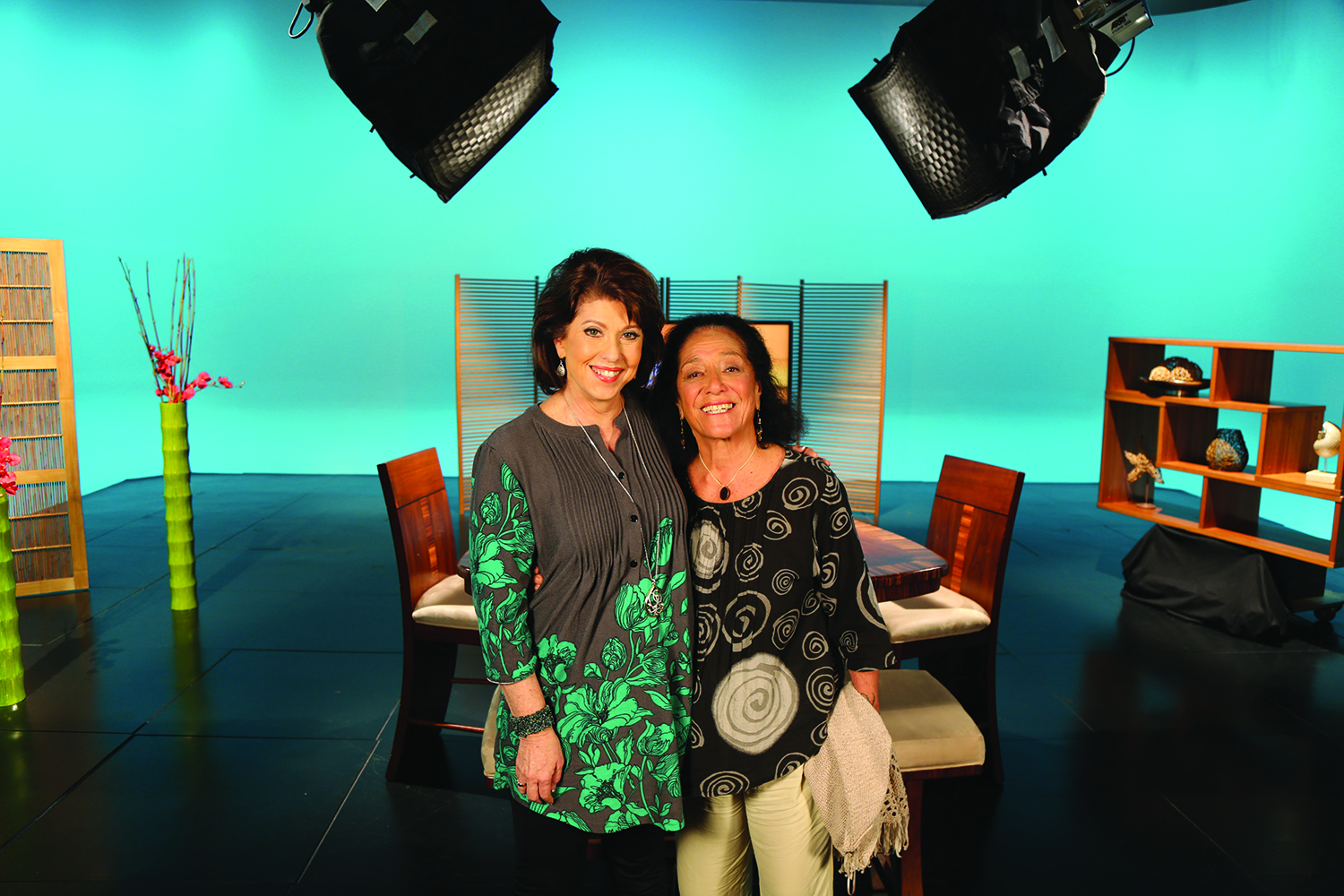
    Sounds like you were cut out to be a reporter. How was the transition to television?

    LW: The first thing I learned in TV is that perception is reality. My newspaper background taught me how to gather and write news. But I was pitiful presenting news on camera. If you report with a quivering voice, your viewers are going to think something is shaky about your report, too!

    KGMB-TV news director and icon Bob Sevey had recruited me, knowing I had no television experience. I told him that my own mother thought I looked and sounded goofy and unsure, and asked him for his professional advice. His candid,
    old-school response: “Wilcox, you’ll get there. You’d better — this is a sink-or-swim business.”

    I didn’t grow up watching women role models on television news. Men dominated the business. Fortunately, three talented women were successfully navigating the newsroom — Linda Coble, Bambi Weil (who later became Judge Eden Hifo) and Carolyn Tanaka. Finally, I got it together by deciding simply to be myself. I pictured my dear no-nonsense auntie and my favorite math teacher, Mr. Charles Hirashiki, watching at home — and I delivered the news to them. It worked.

    After mastering broadcasting, what spurred you to take the helm of PBS in 2007?

    LW: The magnetic pull of PBS Hawai‘i was and is still this: it is locally owned and locally managed to serve fellow islanders. We enrich others by telling authentic Pacific stories and opening windows to the world. I wanted to be a part of this mission.

    One misconception about public media is that the “public” stands for government. It actually stands for you and me, and our whole community. After 13 years, still I am amazed and inspired by people who send us money to keep doing what we’re doing.
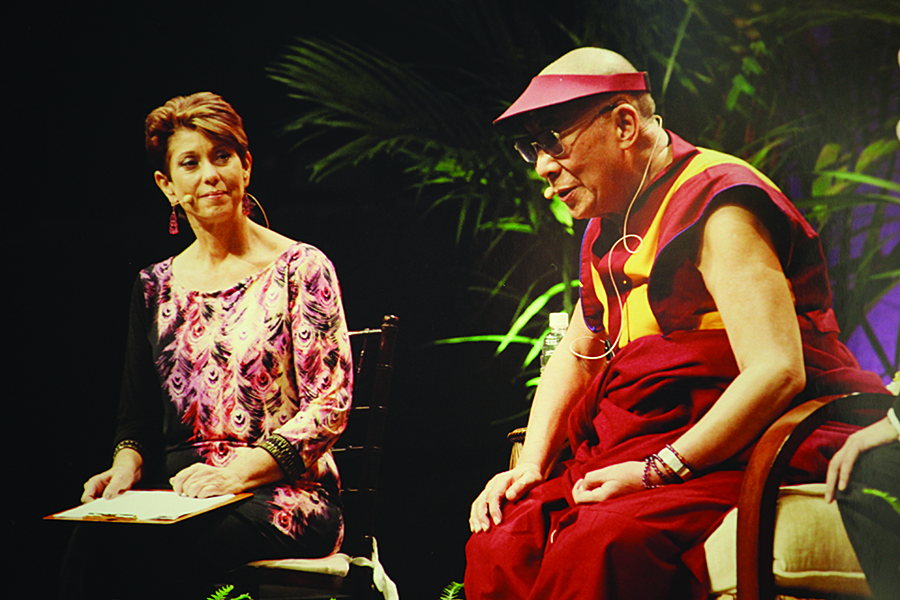
    I like working for a local organization with strong national and international alliances through public broadcasting. Yet, our volunteer board members and professional staff live in the islands. We are approachable and accountable.

    Some of our sponsors choose to share with others something they deeply value. Your readers may not know that Maui grandparents Jim and Susan Bendon of Sprecklesville sponsor the lessons of Daniel Tiger [“Daniel Tiger’s Neighborhood”] for all of Hawai‘i’s children. Retired UH professor Belinda Aquino still provides education for all of us by underwriting broadcasts of “Nature” and “NOVA.” Rick Nakashima of Ruby Tuesday restaurants supports the “Get Caught Reading” literacy initiative. I can’t imagine a better job.

    What were the most important changes you brought to PBS when you started?

    LW: I came with a deep respect for what this station had already achieved, but media technology and capabilities were changing rapidly, so I encouraged a corporate culture that welcomed new skill sets. Then you need to react and respond quickly in these fast-changing times, so I adopted a “flat” organizational structure that allows information from different sources to move quickly through the organization.

    That brings us to “Long Story Short with Leslie Wilcox.” How do you get your guests to reveal so much new information?
    PBS creative media executive Robert Pennybacker developed “HIKI NO¯ ,” and “Hawai‘i’s New Wave Storytellers.” He began reaching out to teachers in public, private and charter schools, and mentoring them in journalism and video production. The teachers ably train their students to write and produce their own stories. The skills will be used again in school, life and work — from oral and written communication, media technology and critical thinking to teamwork, collaboration and perseverance. “HIKI NO¯ ,” video magazine presents student perspectives, conveyed through responsible and creative storytelling. “HIKI NO¯ ,” airs at 7:30 pm Thursdays. During the COVID-19 school closures. students pivoted and continued reporting from home with stories about life in the shadow of the pandemic. Every story is conceived, written, reported, taped, edited and produced by students.
    PBS creative media executive Robert Pennybacker developed “HIKI NŌ,” and “Hawai‘i’s New Wave Storytellers.” He began reaching out to teachers in public, private and charter schools, and mentoring them in journalism and video production. The teachers ably train their students to write and produce their own stories. The skills will be used again in school, life and work — from oral and written communication, media technology and critical thinking to teamwork, collaboration and perseverance. “HIKI NŌ,” video magazine presents student perspectives, conveyed through responsible and creative storytelling. “HIKI NŌ ,” airs at 7:30 pm Thursdays. During the COVID-19 school closures. students pivoted and continued reporting from home with stories about life in the shadow of the pandemic. Every story is conceived, written, reported, taped, edited and produced by students.

    LW: When people know that you earnestly want to know them and their views, it’s usually easier for them to relax and express themselves. In my gut is always the “I wonder why or how” question, but active listening is what I mainly do I’m not thinking of my next question while the guest is answering the current question.

    How about the wonderful forums and discussions? That’s more than listening.

    LW: We’re here to ask the questions that people at home want answered. PBS Hawai‘i takes a “can do!” approach to convening diverse voices and maintaining a respectful discussion. We offer a safe, trusted space where community members with opposing opinions may be heard. “Insights on PBS Hawai‘i,” “KĀKOU: Hawai‘i’s Town Hall” and “What’s It Going to Take?” are discussion forums. Our moderators, Daryl Huff, Yunji DeNies and Lara Yamada, are comfortable being around people with conflicting opinions, and they know that if conversations can be kept civil and even respectful, there’s a better chance of people really hearing each other and finding common ground.

    Shouting over others, name-calling and public shaming run counter to island values. At PBS Hawai‘i, we want to keep things real and at the same time respectful, non-partisan and fair.

    * * *

    Leslie, we thank you, your dedicated board of directors and the entire PBS Hawai‘i family for sharing this inside look — and we are so very grateful for all they do. I learned a lot more about PBS Hawai‘i — and all the work that goes into creating and delivering us wonderful, high-quality programs. Going forward, I encourage our readers to join me and support PBS Hawai‘i however we can. After all, it’s our TV station! “Can do!”

    To learn more about PBS Hawai‘i, visit www.PBSHawaii.org and www.wikipedia.org. We don’t have to wait to donate — online we can give a one-time gift or subscribe to make monthly donations all year long.


    Photography by Brian Suda

    Our “can do!” island culture values resourcefulness and cooperation when faced with challenges. “We know a guy” and where to get things, and have honed skills tūtū taught us. We don’t expect anything in return for helping out. “If can, can; if no can, no can.” We put ourselves to the task. PBS Hawai‘i (KHET…

  • How to Avoid Charity Fraud

    It may be hard to believe, but during natural disasters such as hurricanes and earthquakes — and even the current COVID-19 pandemic — unscrupulous scammers set up fraudulent fundraising operations to take advantage of Good Samaritans who want to help.

    Charity fraud is committed when a perpetrator creates a bogus fundraising operation, aiming to take advantage of our sympathies, goodwill and generosity. Charity fraud may also occur when a legitimate charity represents that funds will be used for one particular purpose, but the money is used for other purposes. There are many worthy causes, so don’t let the possibility of fraud dissuade you from donating. Here are tips to help ensure your donations are put to good use.

    • Ask how your donation will be used. Make the caller be specific. If the answer is vague, be wary.
    • Check registration. Every charity that solicits contribution in Hawai‘i must register with the Tax and Charities Division of the Department of the Attorney General. Search the AG registered charities database at www.ag.hawaii.gov/tax.
    • Check the IRS website EO Select Check at www.irs.gov/charities-&-non-profits/exempt-organizations-select-check. Type in the charity name to see if its federal tax standing is valid.
    • You may also check other charity watchdogs, such as Charity Watch (www.charitywatch.org), Better the Business Bureau’s Wise Giving Alliance (www.give.org), Charity Navigator (www.charitynavigator.org) or GuideStar www.guidestar.org).An internet search is also advised.
    • Make sure you understand which organization is requesting your money. Some scammers use names that sound similar to legitimate charities.
    • Ask what percentage of your donation goes toward admini {Play}strative costs versus the program itself. The acceptable percentage is up to you. To check the charity’s financial reports, go to www.ag.hawaii.gov/tax.
    • Do not pay over the phone and scrutinize written material sent to you.
    • Pay by check or credit card; never cash.
    • Note that scammers can change their caller ID to make it appear as a local number.
    • Call the organization to verify the caller’s name and request. Despite these safeguards, if you feel that you have been the victim of a scam:
    • Call 9-1-1.
    • Call the Department of the Attorney General, Tax and Charities Division, at 808-586-1480 or email ATGCharities@hawaii.gov.
    • Call the Federal Bureau of Investigation at 808-566-4300.
    • File a report on the Federal Trade Commission website: www.ftc.gov/complaint.

    Follow these tips to help ensure your money is going to a worthwhile program.


    STATE OF HAWAI‘I DEPARTMENT OF THE ATTORNEY GENERAL, TAX AND CHARITIES DIVISION
    425 Queen St., Honolulu, HI 96813
    808-586-1480 | ATGCharities@hawaii.gov
    www.ag.ehawaii.gov

    It may be hard to believe, but during natural disasters such as hurricanes and earthquakes — and even the current COVID-19 pandemic — unscrupulous scammers set up fraudulent fundraising operations to take advantage of Good Samaritans who want to help.

  • Timeshares Pt. 2: Scam or Investment?

    It’s not uncommon to see advertisements promoting timeshares, as well as promotions for timeshare cancellation programs. The contradictory nature of these ads begs certain questions:

    What is a timeshare?

    Timeshares grant percentage ownership of a vacation unit for periods of time during the year. The ownership is shared with other clients who use the unit. Another way to stake an interest in a timeshare property is through the “lease” option, where the developer holds the title to the deed and the owner holds a leased interest in the property.

    How does it work?

    The way that a timeshare is sold in promotional campaigns makes it seem like a great investment. They have nice kiosks at Ala Moana Center and various exhibition halls. There are promises of cheaper vacations along with graphs seemingly showing a cost analysis of how it pays for itself and will only appreciate in value. Realize, however, that all the caveats, fees and associated, ongoing, allowable fee increase percentages will be in the middle of the dense, ironclad contract. By not mentioning these added costs with the same enthusiasm as they do the great views, the message to any prospective consumer is that this investment is doable and affordable.

    Why is there a market for timeshare cancellation programs?

    It is important to remember that there is no federal body of law or agency regulating the timeshare industry. The rule of law with regard to timeshares varies upon the location where a particular timeshare is purchased. Therefore, it cannot be stressed enough that those interested in purchasing a timeshare need to study and completely understand the sales contract before it is signed. The contract should state the withdrawal period of the purchase.

    In Hawai’i, this period is seven days. Getting out of a timeshare after the rescission period has passed can be extremely difficult and payment will still be required. However, if it is suggested that you stop making payments for the timeshare, it is important to know this will limit potential timeshare exit options.

    In the next issue, we will explore options for exiting your timeshare.


    If you suspect elder abuse, call these numbers:
    – Police: 911
    – Adult Protective Services: 808-832-5115
    – Elder Abuse Unit: 808-768-7536
    If you have questions about elder abuse, call or email:
    808-768-7536 | ElderAbuse@honolulu.gov

    It’s not uncommon to see advertisements promoting timeshares, as well as promotions for timeshare cancellation programs. The contradictory nature of these ads begs certain questions:..

  • Meaningful Estate Planning

    As with many issues, to those who know, no explanation is necessary. To those who don’t know, no explanation is sufficient.

    In medicine, there is cure and care; in finance, there is worth and value. In estate planning, there is wealth and meaning. Most people see the estate planner’s role as writing a document that transfers wealth at death. Just as significant is our role to communicate our client’s meaning clearly. This meaning is the foundation for estate planning.

    The vast majority of estate plan failures occur because there was not a clear transfer of meaning. Clients who know that meaning serves as the foundation of the plan need no explanation; but there is no sufficient explanation for those who view the plan merely as transferring of property. And that is OK, if that is truly what they want.

    Clients sometimes think that they start estate planning when they see the lawyer. But the estate planning process starts long before that as each person begins to fashion a life of meaning and accumulate wealth. The result of one’s life is revealed at death. If one dies well, they lived well, with meaning, and passed meaning on as the underlying foundation for wealth. This challenging time offers an opportunity for us to choose what matters to us — what is meaningful; what is not.


    STEPHEN B. YIM, ATTORNEY AT LAW
    2054 S. Beretania St., Honolulu, HI 96826
    808-524-0251 | www.stephenyimestateplanning.com

    In medicine, there is cure and care; in finance, there is worth and value. In estate planning, there is wealth and meaning. Most people see the estate planner’s role as writing a document that transfers wealth at death. Just as significant is our role to communicate our client’s meaning clearly. This meaning is the foundation…

  • Preparing for Death… Now

    If nothing else, recent events have brought us face-to-face with mortality. Although none of us knows when death will overtake us or a loved one, we know that someday it is going to do exactly that. We can deny the inevitable, or we can prepare for it. By preparing for death, we can make that transition much easier on ourselves and our loved ones.

    Talk with your family members about what you want done with your body after you pass, and find out what their wishes are for theirs. Keep notes of those conversations, since “the dullest pencil is sharper than the sharpest memory.”

    If you have specific wishes about who will be in charge of your funeral arrangements and what will be done, you can put these directives into a legally enforceable document. As long as the document is notarized, your wishes are lawful and your estate can pay the bill, your instructions will be carried out. Most estate planning attorneys can advise you about preparing your written “Directions for Disposition of Remains.” Let your loved ones know about your directions and keep a copy with your estate planning documents.

    Review your estate planning documents to make sure they reflect your current wishes. Your Advance Health-Care Directive sets out who can make what kinds of medical decisions (including end-of-life decisions) for you if you cannot speak for yourself, so it is particularly valuable for your peace of mind and your family’s harmony. Having a clear line of authority and clear instructions can alleviate family stress and conflict.

    You also need to make sure that the documents that dispose of your assets are clear and state your precise wishes. If there is a conflict between your documents and the words you say to your loved ones, the documents will control what happens. So it is important for you to understand what your documents say and update them if your wishes have changed.

    Doing these things can be uncomfortable, but they can also go a long way toward giving you peace of mind and helping your loved ones move forward in harmony and with sweet memories of you and your life.


    SCOTT MAKUAKANE, Counselor at Law
    Focusing exclusively on estate planning and trust law.
    www.est8planning.com
    808-587-8227 | maku@est8planning.com

    If nothing else, recent events have brought us face-to-face with mortality. Although none of us knows when death will overtake us or a loved one, we know that someday it is going to do exactly that. We can deny the inevitable, or we can prepare for it. By preparing for death, we can make that…

  • COVID-19 and The Market

    Historic market volatility has washed over the globe in recent weeks. The spread of COVID-19 (the disease caused by coronavirus) has precipitated a record drop in the stock market and a sharp plunge in bond yields, sending the U.S. into its first bear market in over a decade. People around the world are facing a health crisis that’s driving an economic crisis, which are leading to high levels of anxiety for families and individuals regarding their well-being and financial situation. Unfortunately, it’s too soon to tell just how long this environment will last. So, what can you do to cope with market volatility in the meantime? And what can we learn from past global pandemics?

    Virus Outbreaks and Stock Market Performance

    There is no doubt that this pandemic is different and has caused a larger dislocation than past virus outbreaks. However, it’s still encouraging to note how financial markets have historically rallied following major health crises. The S&P 500® Index reveals that markets have generally delivered positive returns in the six to 12 months following the peak of a virus outbreak.

    This isn’t to say that investors should stick their heads in the sand and pretend the downturn isn’t happening — this is a very serious and difficult situation. Eventually though, markets should return to some level of normal and slowly, the economy will come back to life. Of course, the past is no guarantee of future results, but historically, even the worst markets have been temporary dips in a general march higher for stocks.

    What you can do during this time of volatility:

    Remember the power of diversification:
    Instead of selling your stocks in an attempt to cut losses, review your portfolio to see if it is properly balanced between stocks, bonds and cash that align with your goals, time horizon and ability to manage risk. While a diversified portfolio can’t guarantee profits or protect against all losses, it can greatly reduce the impact of volatility.

    Stay focused on your long-term goals:
    Remember, your investment strategy is based on your goals, not headlines. While it’s important to be aware of the news related to COVID-19, particularly from a health perspective, don’t let your emotions affect your investing. Keep your  portfolio on a steady course. Volatile periods in the market can create good opportunities to either invest more or to adjust your portfolio. Ensure that any investment decisions you make are in line with your long-term interests and financial objectives.

    Revisit your views on risk:
    A significant market downturn serves to remind you that investing involves risk. Market swings provide an opportunity to reassess your portfolio’s risk level and determine whether that amount is appropriate for your circumstances. The level of comfort (or discomfort) you feel when the market fluctuates substantially is a good way to assess whether your portfolio reflects your current risk profile.

    Meet with a financial professional:
    If you are concerned about the recent performance of the markets, contact your financial advisor. Together, you can talk about your financial goals for the future and what steps you can take next to start on the path to achieving them.


    MICHAEL W. K. YEE, CFP
    1585 Kapiolani Blvd., Ste. 1100, Honolulu, HI 96814
    808-952-1222, ext. 1240 | michael.w.yee@ampf.com
    Michael W. K. Yee, CFP®, CFS®, CLTC, CRPC ® is a Private Wealth Advisor, Certified Financial Planner ™ practitioner with Ameriprise Financial Services Inc. in Honolulu, Hawai‘i. He specializes in fee-based financial planning and asset management strategies and has been in practice for 35 years. Investment advisory products and services are made available through Ameriprise

    Financial Services Inc., a registered investment advisor.
    Ameriprise Financial Services Inc. Member FINRA and SIPC.
    © 2020 Ameriprise Financial Inc. All rights reserved.

    Historic market volatility has washed over the globe in recent weeks. The spread of COVID-19 (the disease caused by coronavirus) has precipitated a record drop in the stock market and a sharp plunge in bond yields, sending the U.S. into its first bear market in over a decade. People around the world are facing a…

  • Using Hawaii Relay Conference Captioning

    Communication access is critical to stay connected for our health and overall quality of life. As we age, hearing loss may affect our lives, making it more difficult to understand what is happening during in-person meetings, community services, safety workshops and many other events. Struggling to hear and understand what is being said in our daily activities may cause us to feel a loss of independence and dignity, and may even cause us to withdraw socially.

    There’s a service available that can help you feel empowered and stay engaged with individuals or co-workers. Relay Conference Captioning (RCC) is a free* service available to Hawai‘i residents who are deaf or hard of hearing that enables them to actively participate in multiparty teleconference calls or web conferences. The service enables you to participate in teleconference calls or webinars by reading live captions through a web browser on your computer or mobile device. Saving a copy of the RCC transcript is one of the available options.

    If you or someone you know is challenged by group online discussions or meetings, encourage them to check out this innovative solution and help regain their confidence and independence.


    HAWAII CAPTEL®
    1-877-805-5845 (toll-free) | info@captel.com
    www.hawaiicaptel.com
    Relay Hawaii
    844-882-3160 | relayhawaii@sprint.com
    www.relayhawaii.com/rcc
    * Relay Hawaii Equipment Program (RHEP) provides equal access to all of Relay Hawaii’s services. RHEP provides specialized equipment to the deaf, hard of hearing or speech-disabled individuals who are unable to use a standard telephone at no cost.

    There’s a service available that can help you feel empowered and stay engaged with individuals or co-workers. Relay Conference Captioning (RCC) is a free* service available to Hawai‘i residents who are deaf or hard of hearing that enables them to actively participate in multiparty teleconference calls or web conferences. The service enables you to participate…

  • Solution for Loneliness & Housing Shortage

    Ironically, while it seems that our response to the COVID-19 pandemic is continuing to emphasize mandated self-quarantine and social distancing, it may also give many of us a greater awareness of what it is like to live in chronic isolation and what we can do to make our island population healthier when we come out of it.

    At no time in human history have so many people lived alone. Recent studies show that there are significant negative health effects from social isolation and loneliness. Data also shows that there are positive health outcomes for those who share their homes and major economic benefits to home share homeowners and home share seekers (renters) alike.

    Vivek Murthy, the surgeon general of the United States under Barack Obama, has been sounding the alarm for several years prior to the COVID-19 virus that the most prevalent health issue in the country is isolation. Studies of 3.4 million participants cited in the December AARP The Magazine concluded that people who live alone face an early death. An array of studies have also found that “loneliness is a killer.” It leaves us more likely to die from heart disease and makes us more vulnerable to Alzheimer’s disease, high blood pressure and suicide. It’s more dangerous to our health than obesity. It’s the equivalent of smoking 15 cigarettes a day. The impact on people living in isolation adds almost $7 billion a year to the cost of Medicare.

    In America, people are living longer and healthier lives, resulting in a growing older population in need of new models of housing arrangements. In Hawai‘i, it is common to find an elderly person who lives alone in their own home trying to maintain their independence, while at the same time, adjusting to abilities that are declining. No one wants to live in an institution. They want to live out their lives comfortably in their own homes. In Honolulu, there are approximately 67,000 seniors aged 60 years or older living alone. Over time, they tend to become more isolated, which results in a growing, serious negative impact on their mental and physical health.

    In response to this epidemic of isolation, a strategy called “home sharing” has been implemented in many U.S. cities for over 40 years. Recently, the nonprofit Hawaii Intergenerational Network (HIN), with funding from the HMSA, Kaiser and Atherton Family foundations, began a project called “Homesharing Hawaii” to offer a similar program in the state that will help seniors safely age in place and secure very affordable housing for low- and moderate-income renters. It is also a cost effective program because it doesn’t require building new housing or providing ongoing rental subsidies.

    Home sharing is a simple idea — two or more people share a home to their mutual benefit. Basically, home sharing is about two pools of people: those with an extra bedroom in their home and those needing an affordable place to live. Homesharing Hawaii brings both groups together through a proven matching process.

    The home can be an apartment, condominium or a traditional, single-family house. A homeowner offers a private bedroom, access to a bathroom and shared common area in exchange for rent, help around the house or both. There is usually an agreement outlining the expectations of both parties.

    Homesharing Hawaii staff generally provide support to help match a homeowner and renter. They conduct background checks, screening and interviews to help ensure the safety of both parties. Each home-sharing arrangement is tailored to the unique needs and interests of the people involved, but it is up to the participants to decide who they want to live with.

    Matches can include a wide variety of combinations. Many matches are intergenerational, such as college students and seniors living together  A perfect example is an intergenerational match between an older person who owned a car she couldn’t drive and a college student who could drive but didn’t have a car. As a result, the student drove the senior to appointments and grocery stores, and also had use of the car on his own. The home-sharing relationship lasted until the student graduated from Chaminade University.

    Matches may also be of the “Golden Girls” variety,in which two or more older persons live their lives together. The Homesharing Hawaii project is benefiting from guidance and support from the National Shared Housing Resource Center (NSHRC), and two home-sharing programs with over 30 years of experience in Vermont and Oregon. Using collective experience gathered from the many mainland projects, the NSHRC developed a resource guide for establishing new home-sharing projects.

    That guide has provided Homesharing Hawaii with comprehensive, detailed information that is specific to starting the state’s own home-sharing project. HIN didn’t need to invent anything. The guide includes setting goals, marketing, building trust, outreach and addressing difficult and important liability and compliance issues.

    The guide also cautions that making matches is difficult. Although home-sharing match programs are deceptively simple in concept, they are incredibly difficult to accomplish. Not everyone is a good home-sharing candidate; it requires compatibility and flexibility.

    The cumulative experiences of home-sharing projects has shown that most senior homeowners living alone are reluctant to get a housemate because they are afraid of being harmed physically or of being the victim of theft.

    To help ameliorate that fear, Homesharing Hawaii has developed an enrollment process that includes interviews, acquiring multiple references, conducting extensive background checks on both parties, as well a trial period of living together. HIN’s thorough matching process is designed to support participation and address any concerns.

    To be successful, this project needs a large pool of applicants. For that reason, Homesharing Hawaii is continuously recruiting new candidates through a strong outreach program. Most referrals for homeowners will come from family members and friends who are concerned about the well-being of their kūpuna who lives alone.

    Participating in this project can increase health and wellness for the homeowner. It can also provide additional income to help fund home maintenance and reduce financial stress. For the home seeker, there is the financial benefit of having an affordable place to live.

    Homesharing Hawaii is currently looking for potential homeowners and home seekers. It is also requesting volunteers to assist with outreach.

    During this unprecedented pandemic period, HIN Homesharing Hawaii will be adjusting its policies, protocols and operations.

    However, interested persons are still welcome to email or call the Homesharing Hawaii staff just to talk about options for the future.


    HOMESHARING HAWAII
    A project of Hawaii Intergenerational Network
    1300 Kailua Road, Kailua, HI 96734
    808-308-5291 | homesharinghawaii@gmail.com
    www.homesharinghawaii.org
    HIN is a nonprofit organization founded in 1996.

    In response to this epidemic of isolation, a strategy called “home sharing” has been implemented in many U.S. cities for over 40 years. Recently, the nonprofit Hawaii Intergenerational Network (HIN), with funding from the HMSA, Kaiser and Atherton Family foundations, began a project called “Homesharing Hawaii” to offer a similar program in the state that…

  • Skilled Nursing Care After a Hospital Stay

    Seniors who experience a fall or stroke, or undergo surgery may be surprised they can be discharged from the hospital fairly quickly. That’s good and bad news. Seniors may be happy to leave the hospital but may then be disappointed to learn they cannot return home.

    They often must first receive ongoing, skilled nursing care and rehabilitation services, such as physical, occupational or speech therapy. Depending on their condition and other various factors, this could be a short-term stay or a longer stay.

    Family caregivers may want their loved one at home, but may not have the capability to provide the specialized care their loved one needs.

    Seniors and their caregivers must make decisions quickly regarding finding a skilled nursing facility. Many may not know where to turn.

    Since each of us will likely need long-term care at some point in our lives, we should identify potential facilities we prefer well before our actual time of need.

    It is wise to do this homework in advance to help alleviate undue stress at an already stressful time.


    KALĀKAUA GARDENS
    1723 Kalakaua Ave., Honolulu, HI 96826
    808-518-2273 | Ruth.Kawano@kalakauagardens.com
    www.kalakauagardens.com

    Seniors who experience a fall or stroke, or undergo surgery may be surprised they can be discharged from the hospital fairly quickly. That’s good and bad news. Seniors may be happy to leave the hospital but may then be disappointed to learn they cannot return home.

  • It’s Time to Hear Life

    Hearing loss can have a huge impact on your overall health and well-being. It is just as important to take care of your hearing health as the rest of your body. Studies link untreated hearing loss to both depression and mental decline.

    How can a hearing aid help?

    A hearing aid will bring back the sounds you have been missing, putting you back into conversations and improving your  relationships. It clarifies speech by boosting the sounds you need to hear so you are able to understand more easily. Conversation will go from muffled to sounding clear. Hearing aids enhance your quality of life by reducing the stress and frustration of hearing loss so you can be the sharpest version of yourself.

    What if I have learned to live with my hearing loss?

    Hearing loss is not just about you. If you have a hearing problem, those around you will also experience problems. In addition, those who have hearing difficulties may avoid social situations that they once enjoyed because of difficulty hearing. They may feel tired or stressed from straining to hear conversation and become annoyed or frustrated with others because they just can’t understand what they are trying to communicate.

    Find out how a hearing aid may help you.

    Hearing loss can have a huge impact on your overall health and well-being. It is just as important to take care of your hearing health as the rest of your body. Studies link untreated hearing loss to both depression and mental decline.

  • Exercise: A Panacea for Heart Disease

    Exercise is the closest thing to a complete remedy — a panacea — for heart disease. The heart fuels the entire body. If the heart gets too weak, it cannot sufficiently provide nutrients to organs and the body slowly deteriorates. Unfortunately, this is quite common for people in hospice care. Thankfully, prevention is readily available.

    Note that effective exercise may be tiring and straining.* The harsh reality is that the body — especially the heart — will not get stronger if not pushed past its comfort zone. Use it or lose it is one of the most universal laws of the body. Therefore, finding at least one enjoyable aspect is key. If the pros outweigh the cons, continued performance is more likely.

    • Prevention of slowly starving the body and the variety of ailments/diseases that come with it is essential.
    • Make it enjoyable! Play with the grandkids, make it social or involve one of your passions.
    • Even the frail and elderly body is highly adaptable. It will respond to hard work and reach a point where strenuous exercise becomes the norm. It can and will become “a piece of cake” with no strain.


    PRIME PHYSICAL THERAPY
    600 Queen St., C-2, Honolulu, HI 96813
    808-286-0194 | www.primepthawaii.com
    * Please do not overdo any exercise. Exercise should be increased gradually, in moderation and not cause discomfort.

    Exercise is the closest thing to a complete remedy — a panacea — for heart disease. The heart fuels the entire body. If the heart gets too weak, it cannot sufficiently provide nutrients to organs and the body slowly deteriorates. Unfortunately, this is quite common for people in hospice care. Thankfully, prevention is readily available.

  • Going to the Dentist After COVID-19

    Hopefully, the COVID-19 virus is now under control and life is back to normal. Regardless, one of the lessons we learned through this pandemic is better personal hygiene.

    Dentists were asked to help contain the spread if the virus by limiting their care to only emergency visits. The main concern was patients spreading it to each other while in the office. Just as concerning was the direct exposure of the virus to dentists and their staff — and possible spread to their families.

    Once this crisis is over, it should be very safe to visit your dentist again. Dental offices have high infection control standards. Many place disposable plastic barriers on dental chairs and equipment that are used during treatment and are changed between patients. Surfaces are wiped down with disinfectant solutions. Gloves are changed after each patient and masks are worn during procedures.

    Rest assured that dentists have been and will continue to ensure your safety at their offices.


    DR. PAUL K. TANAKA, DDS
    4747 Kilauea Ave., Ste. 113, Honolulu, HI 96816
    808-737-6229 | office@paultanakadds.com
    www.paultanakadds.com

    Hopefully, the COVID-19 virus is now under control and life is back to normal. Regardless, one of the lessons we learned through this pandemic is better personal hygiene. Dentists were asked to help contain the spread if the virus by limiting their care to only emergency visits. The main concern was patients spreading it to…