Category: June – July 2012

  • Go Now, No Ifs, Ands or Buts

    If you’re reading this magazine, it means you want more information about the world around you. That’s a good thing. Sometimes, though the information we need is inside us … way inside us.

    I had my first colonoscopy a few weeks back. I put it off as long as I could until my primary care physician said, “Go now, no ifs, ands or buts.”

    I had to have a brief counseling session with the doctor who would perform the “procedure.” That’s what we’ll call it from now on. He told me there were two approaches to the 25-minute procedure. One, I could be conscious but somewhat sleepy the entire time or I could be put under with anesthesia. I opted for door number two.

    A couple of days leading up to the procedure, you have to begin a special diet and the day before, you have to drink volumes of water with some kind of medicine in it that “cleanses” your system. Don’t make plans to be far from home during this time. You’ll thank me later.

    I had asked the doctor during our counseling session about something called a virtual “procedure.” He acknowledged that there is such a thing, but if the doctor finds a problem, there is no way to take care of it without starting all over from the beginning.

    I don’t like to make broad generalizations, but, in general, men don’t go to the doctor unless there’s something wrong. As far as I knew, there was nothing wrong. So you can understand my reluctance. But, I followed my doctor’s orders to go and just before I got to make my first joke about my situation, the lights went out.

    I woke about a half hour later and the doctor came in to see me. There had been something of concern, and he had taken care of it. I don’t have to see him again for another three years. Next time, I won’t be as reluctant. Doctors tell us, after the age of 50, we should have the procedure. And in the end, it’s a good idea.
    If you’re reading this magazine, it means you want more information about the world around you. That’s a good thing. Sometimes, though the information we need is inside us … way inside us. I had my first colonoscopy a few weeks back. I put it off as long as I could until my primary care…

  • Back Pain Due to Injury

    Using acupressure and ice

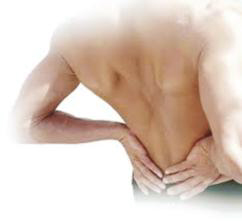
    Back Pain - Generations Magazine - June - July 2012When I have back pain, its usually due to strain and injury due to lifting. This often results in pain hours later, due to the inflammation. In addition to using acupressure points, locally as well as above and below the painful area, I apply ice packs every two hours (for about 15 minutes) to reduce the inflammation and pain.
    Holistic Medical Advice: I rarely see my Western medical doctor, but he taught me something valuable. As a preventive medical care physician, he taught me that icing your lower back 30 nights, before retiring to bed, can be remarkably healing. It also works for injuries and pain in your ankles, including sprained ankles and for knee pain, and sciatica.

    How Ice Works to Heal an Injury: Simply ice the area for 15 to 20 minutes before you go to sleep, 30 nights in a row. When you’re asleep, your body weight is supported, and thus there’s no pressure on your spine. As ice reduces the inflammation, blood and energy can freely flow to heal your injury during the time you’re asleep. Give yourself gentle acupressure for 5 to 10 minutes to increase the energy flow is especially healing.

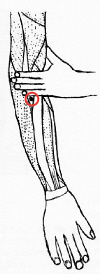
    Arm Diagram - Generations Magazine - June - July 2012Using acupressure for lower back pains: There is a special point on the arm for relieving aches and pain in the lower back. This point requires strong, firm stimulation. In order to effectively relieve an ache or pain in the lower back this point should be pressed hard enough to be momentarily painful.

    This point is located four finger widths below the elbow crease of the forearm. Place all four fingers together (as a measure) with your index finger against the elbow crease. The point will be on the middle of your forearm, just outside your little finger. You will feel a muscular band or cord. The point is directly under this muscle.

    To make sure you have the muscle, wiggle the middle finger of the arm on which you are searching. Press directly onto the muscle that “pops out” and hold firmly for five seconds; it will be momentarily painful. Stimulate this special point on both arms to relieve pain in the lower back.

    For more acupressure back care, visit www.acupressure.com/acupressure_books.htm.

    _______________________________________________________

    Michael Reed Gach, Ph.D., Acupressure Institute founder, is a foremost acupressure expert. Gach’s seven acupressure books and instructional self-healing programs have sold one-half million copies on how to relieve stress, headaches, backaches, chronic fatigue, and sleep better. Gach’s best selling book Acupressure’s Potent Points book contains 400 illustrations showing how to relieve 40 common complaints from A to Z.

    Using acupressure and ice When I have back pain, its usually due to strain and injury due to lifting. This often results in pain hours later, due to the inflammation. In addition to using acupressure points, locally as well as above and below the painful area, I apply ice packs every two hours (for about…

  • What’s Your Secret?

    Fevelyn is a senior at Moanalua High School who is currently taking a Senior Project class where students learn about a topic of their choice – she chose the topic of longevity. She’s been interested in learning about the elderly and the things they do to stay healthy and to live longer. She has done a research paper for her topic and her product is a booklet containing questions about what makes people live longer.


    Kathleen Kawaihao - Generations Magazine - June - July 2012Kathleen Kawaihao, 62
    Q: What do you do to keep your mind active?
    A: I volunteer to keep my mind active. I read the bible and inspirational books.


    Veronica Edwards - Generations Magazine - June - July 2012Veronica Edwards, 72
    Q: What would you recommend others in order for them to live healthily?
    A: Take care of yourself, your body, mind, and spirit. Because if you take care of those things, you’re taking care of everything you need.

    Fevelyn is a senior at Moanalua High School who is currently taking a Senior Project class where students learn about a topic of their choice – she chose the topic of longevity. She’s been interested in learning about the elderly and the things they do to stay healthy and to live longer. She has done…

  • Big Plans for Small Businesses

    How to plan for retirement as a small business owner

    If you’re a small-business owner, protecting yourself and your business goes beyond securing proper insurance agreements and building an emergency financial cushion — it also means ensuring that your savings will sustain you throughout retirement.

    Most people have retirement savings plans sponsored by their company, however, in the absence of such a plan, the process may be more complex. You must determine how to keep your income flowing after retirement or how to capitalize by selling your business and creating a nest egg.

    It’s never too early to begin planning for retirement and there are several things you can do as a small-business owner to prepare.

    Make saving a priority. As other financial goals or needs arise, saving for retirement may get overlooked. It’s tempting to re-invest a large portion of your profit into your business, but you may regret not socking away more savings for your personal financial security, especially if retirement comes along faster than you expected. If you don’t have a retirement savings plan, consider contributing to an IRA or other qualified investment plan. It’s less tempting to pull money from accounts that are earmarked for a specific goal.

    Develop a succession plan. It’s important to think about how to protect the resources you’ve invested into your company and plan for its future. Research the legal procedures for transferring ownership (to a family member or employee). Document in writing who you intend to take over your business after you’ve retired. There may be tax ramifications when you sell or transfer your business, so be aware of these so you can prepare for the financial impact.

    Prepare to sell. If you intend to sell your business, be realistic about its value. It’s difficult to consider accepting less than you believe it’s worth, but if you retire in a down market or sooner than you planned, you may need to compromise on an offer. Keep in mind that selling your business may be emotional. Learning about the selling process before you consider offers may make it less stressful and ensure the decisions you make are financially sound.

    Retirement can be especially confusing and complicated for small-business owners, so consider working with a professional financial advisor who can help you balance your business needs with your personal ones. Everyone has different priorities and values, but it is up to each individual to prepare for his/her own retirement. The earlier you begin planning, the easier it will be to fulfill your long-term financial goals and avoid difficult trade-offs.


    For more information, please contact Michael W. K. Yee at (808) 952-1240.

    Advisor is licensed/registered to do business with U.S. residents only in the states of Hawaii. Brokerage, investment and financial advisory services are made available through Ameriprise Financial Services, Inc. Member FINRA and SIPC. Some products and services may not be available in all jurisdictions or to all clients. ©2010 Ameriprise Financial, Inc. All rights reserved.

    How to plan for retirement as a small business owner If you’re a small-business owner, protecting yourself and your business goes beyond securing proper insurance agreements and building an emergency financial cushion — it also means ensuring that your savings will sustain you throughout retirement. Most people have retirement savings plans sponsored by their company, however, in…

  • Estate Plans Explained

    How Can I Be Sure My Family Won’t Fight After I’m Gone?

    Unfortunately, there is nothing you can do to guarantee that there will be no fighting among your loved ones after you are gone. There are plenty of difficult emotions to deal with after the passing of a loved one, and conflict can easily make matters much worse. Here are some steps you can take if you are concerned about whether you’ll be able to rest in peace.

    Encourage family to sit down and talk out their differences. This is central to the Hawaiian practice of ho‘oponopono. Very often, small offenses grow into large offenses if they are not resolved. Families are sometimes torn apart because problems fester, and then get aggravated by various tensions, and then hit the boiling point when a senior family member dies and is no longer there to keep the peace. Most of the estate-related litigation we see has nothing to do with the estate per se, yet it becomes the focus of battles. If you are aware of conflicts between your children, encourage resolution and forgiveness during your lifetime.

    Explain your estate plan. Include explanations for any gifts that may be misinterpreted or resented. Most of the time, we want to treat our children equally, but that does not necessarily mean giving each of them the same amount of assets when we die. If you helped one child buy a house and helped another put his children through expensive private schools, you may want to give your other children bigger shares upon your death. Providing some kind of explanation for this can head off hard feelings.

    Ask your estate planning attorney to include an in “terrorem” clause in your will and trust. As you might guess from the name, it is intended to strike terror into the heart of anyone who might be inclined to contest your estate plan. The clause can be as detailed as you like, but at a minimum, you might want to say that if anyone questions your competency or the validity of your estate plan after you are gone, they had better prove their case in court, because otherwise they will receive nothing from your estate. This kind of language can discourage many problems, but it still does not guarantee that no one will call your bluff.

    Acquaint your children with your estate plan. Make sure they understand that you are not giving up your right to change your plan in the future, but are simply giving them an idea of how your estate plan may look upon your death. Whatever you do, don’t use the explanation as an opportunity for manipulation. You may have heard the story about the lady who privately told each of her children, “When I’m gone, you’re going to get the house.” She hoped to assure that her children would treat her well during her lifetime. You can imagine what happened when she died and her children found out that the house went to Mom’s favorite charity. The biggest beneficiaries of that estate plan were the lawyers who represented the charity and each of the children.

    Most of the time, estates pass from generation to generation without conflict or hard feelings, but the subject deserves some thought if you have reason to believe that your loved ones will not see eye to eye.


    SCOTT MAKUAKANE, Attorney at Law of Est8Planning Counsel LLLC, specializing in estate planning and trust law.

    Honolulu: (808) 587-8227 | Maui: (808) 891-8881 | Email: maku@est8planning.com

    www.est8planning.com

    How Can I Be Sure My Family Won’t Fight After I’m Gone? Unfortunately, there is nothing you can do to guarantee that there will be no fighting among your loved ones after you are gone. There are plenty of difficult emotions to deal with after the passing of a loved one, and conflict can easily…

  • Nothing Beats a Good Friend

    Research shows that the happiest people have deep friendships

    Friends - Generations Magazine - June - July 2012The private school graduate is no happier than the high school dropout! Can you believe that? Private school graduates tend to make more money, but income doesn’t raise happiness levels. Third, your IQ has no affect on your level of happiness. The genius is no happier than the average Joe. So, what makes a person happy?

    The researchers concluded that the No. 1 predictor of happiness is the quality of your friendships. The happiest people have the deepest friendships. That’s what the Bible has continually proclaimed. Friendship with God and friendship with one another is the key to happiness.

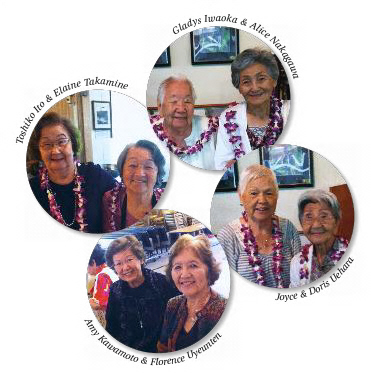
    At our church we focus on enjoying friendships. Following any get together, our Senior Fellowship Group always leaves feeling uplifted, lighthearted and joyful. Mostly in their 70s or 80s and some even 90+ years young, this amazing group of seniors gets together every week for their Sunday school class. They come to learn, laugh and enjoy coffee and snacks together. They also meet in a small group of 20 twice a month. During the meetings, they share lives, caring hearts and delicious lunches. On a recent excursion about 35 people went by charter bus to visit the Arizona Memorial and then enjoyed a lunch at Zippy’s. It seems that they always enjoy eating together. As I’ve personally interacted with our Senior Fellowship Group, I wholeheartedly agree with the researchers that say friendship is the key to happiness.

    So don’t neglect your friends, as they will bring you much joy. If you’d like to make more friends, check out community churches, as many have fellowship groups. Ralph Waldo Emerson once said, “God evidently does not intend us all to be rich, or powerful or great, but He does intend us all to be friends.” So take time to enjoy your friendships. They will bring you more joy than watching Korean shows on TV.


    Honolulu Christian Church, 2207 O‘ahu Avenue, Honolulu
    808-973-4345
    English Sunday services: 7:45am & 10:45am
    Sunday School (all ages): 9:30am
    Japanese Sunday services: 8:00am & 9:20am

    We have a wonderful Senior Fellowship group, come and visit with us!

    Research shows that the happiest people have deep friendships The private school graduate is no happier than the high school dropout! Can you believe that? Private school graduates tend to make more money, but income doesn’t raise happiness levels. Third, your IQ has no affect on your level of happiness. The genius is no happier…

  • The City’s Complete Streets

    New law paves way for safer streets for pedestrians, cyclists and the disabled

    Pedestrian and bicycle safety advocates celebrated in May as the Honolulu City Council unanimously passed an ordinance that paves the way for the development of a multi-modal mobility infrastructure, making it safer and easier for residents of all ages and physical abilities to get around.

    The passage of Bill 26 is the culmination of nearly six years of work at the state and county levels of government by advocates concerned that Honolulu’s roadways are predominantly designed for use by automobiles and provide dangerous conditions for those who don’t drive. Bill 26 requires that Honolulu’s roadways accommodate access and mobility for all users of public highways, including pedestrians, bicyclists, transit users, motorists and persons of all abilities. The new law is a significant milestone in the fight to ensure that city transportation planning and design takes into account Hawai‘i’s aging population.

    “This law is the beginning of a culture shift in Honolulu transportation planning,” said AARP Hawai‘i Director of Community Outreach Jackie Boland. “Hawai‘i has the highest fatality rate in the country among pedestrians age 60 and older, and that has to change. Our city streets belong to everyone — pedestrians, bicyclists, drivers, young and old, the able and the disabled.”

    Bill 26 sets the stage for the implementation of Complete Streets in Honolulu. It describes Complete Streets features and principles, provides for the interdepartmental coordination and transparency necessary to ensure that city streets are made more accessible for all users.

    Examples of Complete Streets features include such things as sidewalks, crosswalks, accessible curb ramps, curb extensions, raised medians, refuge islands, roundabouts or mini-circles, traffic signals and accessible pedestrian signals, shared-use paths, bicycle lanes, paved shoulders, street trees, planting strips, signs, multi-modal pavement marking and striping, street furniture, bicycle parking facilities, public transportation stops and facilities, including streetscapes, dedicated transit lanes, and transit priority signalization.

    AARP is a membership organization for people age 50 and older with nearly 150,000 members in Hawai‘i. We champion access to affordable, quality health care for all generations, provide the tools needed to save for retirement, and serve as a reliable information source on issues critical to older Americans.

    For more information, please visit www.aarp.org/hi, www.facebook.com/AARPHawaii or www.twitter.com/AARPHawaii.

    New law paves way for safer streets for pedestrians, cyclists and the disabled Pedestrian and bicycle safety advocates celebrated in May as the Honolulu City Council unanimously passed an ordinance that paves the way for the development of a multi-modal mobility infrastructure, making it safer and easier for residents of all ages and physical abilities…

  • Your Mind & Body: Sleepless Seniors

    Insomnia is defined as having trouble falling or staying asleep. Insomnia affects 1 in 3 adults every year in the United States. Fifty percent of people over 65 years have various sleeping disorders. It can be transient, acute or chronic. Acute insomnia is brought on by situations such as stress at work, family pressures or a traumatic event. Chronic insomnia lasts for a month or longer and is the symptom or side effect of some other problem. Individuals with insomnia and short sleep duration are at increased risk for developing a number of health issues, including diabetes and hypertension.

    Insomnia - Generations Magazine - June - July 2012Adults need 7½ to 8 hours of sleep each night. As we age our need for sleep decreases slightly to 6½ to 7 hours at night. Normal aging includes a general trend toward more time in bed but the same or less time asleep. Older people tend to go to sleep earlier in the evening and wake up for the day earlier in the morning. Compared with young adults, the elderly tend to have delayed sleep onset, fragmented sleep, early morning awakening and decreased time in deepest stages of sleep.
    Causes of insomnia:

    • Changes in sleep patterns because of different work hours or travel
    • Acute stress, such as hospitalization or illness of a relative
    • Behavior-related problems, such as anxiety or depression
    • Medical problems, such as sleep apnea or hyperthyroidism
    • Use of alcohol or caffeine
    • Medicines, such as those used to treat heart problems and cancer
    • Pain, shortness of breath and other discomfort

    How is insomnia diagnosed?

    The health care provider will take an interview, perform a physical exam and take a blood sample for laboratory tests. A person may be asked to keep a sleep diary. The provider may order a sleep study that involves sleeping overnight in a sleep center.

    How is it treated?

    Avoid daily use of sleep medications as they can become addictive. Cognitive behavioral therapy encourages good sleep habits and uses several methods to relieve sleep anxiety. Techniques such as relaxation exercises sleep, restriction therapy and reconditioning may be useful.

    Chronic insomnia involves treatment of the underlying disorder. For example, if insomnia is caused by depression, the medicine used to treat depression should help insomnia. In some situations, a medication may be prescribed to aid sleep. Ambien (zolpidem), Sonata (zaleplon), Lunesta (eszopiclone) are some of the newer drugs on the market replacing benzodiazepines as sleeping pills. Herbal supplements such as Melatonin, L-tryptophan or Valerian tea are also used to treat insomnia.

    What lifestyle changes are recommended?

    Good sleep habits include:

    • Stick to a schedule of sleeping time and waking time
    • Get regular exercise
    • Avoid or limit caffeine or alcohol, especially after lunch
    • Stop smoking
    • Drink less liquids after dinner to avoid going to the toilet at night
    • Don’t eat a heavy meal late in the day
    • Finds way to relax before the bedtime, such as reading, warm bath, massage
    • Avoid or limit naps during the day
    • Do not read or watch television in bed

    Minimize sleep interruption by closing the bedroom door to avoid noise and keeping the bedroom temperature comfortable
    __________________________________________________

    Dr. Ritabelle Fernandes, MD, MPH, FACP is Clinical Associate Professor at the Geriatric Medicine Department of the John A. Burns School of Medicine, University of Hawai‘i. She is board certified in Geriatric medicine, Hospice and Palliative Medicine, Internal Medicine and Home Care. She is a practicing physician at the Kokua Kalihi Valley and Kalihi-Palama Health Center.

    Insomnia is defined as having trouble falling or staying asleep. Insomnia affects 1 in 3 adults every year in the United States. Fifty percent of people over 65 years have various sleeping disorders. It can be transient, acute or chronic. Acute insomnia is brought on by situations such as stress at work, family pressures or…

  • Genealogy is for Generations

    Why is a hobby that revolves around dead people so popular?

    Genealogy is derived from the Greek word genea, “generation” and “knowledge.” It is the study of families and the tracing of their lineages and history.

    Oftentimes, family histories are passed down in the desire to preserve the past for future generations.

    Hobbyist genealogists try to understand not just where and when people lived, but also their lifestyles, biographies and motivations. This often requires - or leads to – knowledge of antiquated laws, political boundaries, migration trends and socioeconomic or religious conditions.

    Generations come and go. Who will know them? Who will keep track? Oftentimes, the sense of responsibility falls on the “senior generation,” as they hold most of the information, photos and papers. However, regardless of your age or generation, getting involved in your family genealogy and watching your tree grow with new an old faces can take you to unexpected places.

    Genealogy - Generations Magazine - June - July 2012Genealogy and You

    Who do you think you are? Your lineage? Do you want to know?

    Apparently Americans do want to know who they are. Millions tune in each week to watch the T.V shows, Who Do You Think You Are? and Finding Your Roots. Shows that deal with investigating the genealogy of celebrities.

    These shows, each in their own compelling way, take a different celebrity on a journey into his or her family history. Viewers are taken on an emotional, personal and often mysterious quest as these celebrities discover their ancestors - many of whom had to overcome huge obstacles while struggling for freedom and opportunity.

    Why is a hobby that revolves around dead people so popular? Genealogy has become the fastest growing hobby in North America. It has even surpassed scrap booking and gardening in popularity. According to Kim Farah, spokesperson for the Family History Library (LDS), it is because genealogy touches on a fundamental need. “It’s universal; it crosses all faiths and cultures. The benefits of knowing our heritage, of the sacrifices others have made for us, give us a sense of responsibility and self-esteem.”

    Genealogy has also taken a giant scientific step forward. DNA can now to be organized into haplogroups that give insight into the broader scopes of racial makeup and ancestral migration patterns.

    Most people know little of their ancestry. So, who were they – our unknown ancestors? Will we find pirates, smugglers, criminals? Perhaps we’ll discover we are descendents of queens, kings and noblemen? We each have our own stories: the black sheep, the Civil War hero, the ancestors who fled to the United States, or the lost family fortune. Now is the time to get out your faded pictures, start asking your oldest relations about what they know, and discover your own family history.

    Local Genealogical Society

    Honolulu County Genealogical Society meets on the second Saturday of each month. You may find more information online at www.honolulu-countygenealogicalsociety.blogspot.com. Or at www.rootsweb.ancestry.com/~hihcgs.

    Other resources are www.ancestry.comwww.rootsweb.ancestry.com, and .

    Why is a hobby that revolves around dead people so popular? Genealogy is derived from the Greek word genea, “generation” and “knowledge.” It is the study of families and the tracing of their lineages and history. Oftentimes, family histories are passed down in the desire to preserve the past for future generations. Hobbyist genealogists try…

  • Time for Thanks!

    Join in on healthy, summer events

    Every once in a while an opportunity comes along to say, Thank you. We never grow too old to express our thanks, and we should graciously receive thanks from others. In truth, being thankful should be woven into the fabric of life. This is true for individuals and it is true for community organizations, such as the National Kidney Foundation of Hawai‘i (NKFH).

    This summer, with a weeklong series of free concerts, fairs and events, the NKFH would like to thank the community for its year-round support in the fight against kidney disease.

    The signature event occurs in late June when NKFH hosts the XVI International Congress on Nutrition and Metabolism in Renal Disease and First World Renal Nutrition Week, from June 26 – 30, 2012. The congress is a biannual gathering of doctors, nutritionists and medical researchers in renal disease and nutrition from around the world.


    Sixth Annual Peace on Earth Concert

    Hawai‘i Theatre – June 27, 6:45 p.m.

    Free admission; open to public

    This concert event, with Al Waterson as emcee, will feature some of Hawai‘i’s best performing artists from a variety of music genres. Among the performing artists is Ginai performing with Pierre Grill, the Thursday Night Jazz Band, the a cappella choral group known as the Samoan Gospel Heralds, Haw’n Boy Mike Ka‘awa and his band, and The Carmen Haugen Quartet.


    National Kidney Foundation of Hawai‘i Health and Craft Fair

    Hilton Hawaiian Village Hotel, Tapa Lounge – June 28, 10 a.m.– 2 p.m.

    Free admission; open to public

    The National Kidney Foundation of Hawai‘i Health and Craft Fair has two components, separately staged. The first component of the event is a craft fair featuring Hawaiian crafts made by local artisans.

    The second component is a health fair that will offer various health screenings sponsored by WE, a “hui for health” program that provides health screenings throughout Hawai‘i in conjunction with other healthcare organizations. Screenings include spirometry, glucose, kidney, hepatitis and hearing tests. While anyone can contract kidney disease, people with high blood pressure and diabetes, as well as certain ethnic groups such as Filipinos, Native Hawaiians, Japanese and others of Asian background are most at risk. A free screening can lead to early detection and treatment.


    Quilted Memories Tour

    Hilton Hawaiian Village Hotel, Tapa Lounge – June 26–  30

    Free admission; open to public

    The Quilted Memories Tour will be on display throughout the week in the Tapa Ballroom area. This tour features quilts made by families of organ donors. Each 7 x 7-inch square fabric swatch includes a “life vignette” that portrays a part of a donor’s life. Once the swatches are sewn together into a quilt, it is a powerful testimony of the ultimate gift of life. The Quilted Memories Tour is an outgrowth of the bereavement support group of the Hawai‘i Donor Family Council and is supported by the NKFH.

    If you are a medical professional and want to attend the XVI International Congress on Nutrition and Metabolism in Renal Disease, or if you would like to attend the gala and silent auction on Friday evening, June 29, please contact jeff@kidneyhi.org.


    National Kidney Foundation of Hawai‘i

    589-5976 | www.kidneyhawaii.org

    Join in on healthy, summer events Every once in a while an opportunity comes along to say, Thank you. We never grow too old to express our thanks, and we should graciously receive thanks from others. In truth, being thankful should be woven into the fabric of life. This is true for individuals and it…

  • June – July 2012

    June – July 2012

    WANT THIS ISSUE?

    Download your own personal copy of this issue in PDF format. Click the button below:

    DOWNLOAD IT NOW

    Kimokeo Kapahulehua: A Modern Hawaiian