Category: February – March 2017

  • A Better Reason to Eat More

    eat

    I have said for years that eating more may be better for weight loss than eating less. At first, people are a bit shocked to hear this until they realize that I mean eating more food — but still eating fewer calories. How is this possible? Here is a simple example. If you eat an average-sized apple, it would be about 90 calories. If you eat a muffin that is the same size (a large muffin), it could contain as many as 550 calories.

    Because of this vast difference in the concentration of calories, you would be better off eating three apples — which would be much more food but still less than half the calories (270 calories). The wide difference in calorie concentration, of course, is because muffins are made of processed food products such as flour, sugar and oil.

    Easier Weight Control
    The result of eating whole, unprocessed foods such as the apple is that you will feel full faster and remain full longer than if you eat a lot of processed food. This is important because it is much easier to control your weight when you become satisfied longer with fewer calories. A full explanation and table of foods that fit this description are included in The Peace Diet.

    eat

    Health Benefits
    Eating in this way carries a number of health benefits. Of course, we all know that controlling weight helps to reduce the risk of many diseases, such as diabetes, high blood pressure, arthritis, alzheimers disease and even cancer. It is also important to know that one of the most wellestablished ways to longevity is to restrict calories. By using this approach, controlling calories doesn’t have to feel like the deprivation of eating less food.

    New Findings
    Eating in this way is beneficial for possibly another very good reason, according to recent scientific research. Hundreds of new research projects are now finding that gut flora, i.e., the microorganisms that live in your intestinal tract, can affect your health dramatically. Research shows that gut flora from a rat that lost weight through a gastric bypass and implanted into an obese rat can cause weight loss in the obese rat without the bypass. This is a possible indication that the change in gut flora is what causes weight loss.

    Additional research suggests that even diabetes may be controlled by changing gut flora. In fact, the reason that participants in my health programs lose weight and find their diabetes disappearing may be a result of a change in gut flora induced by a change in diet. This may be the reason why eating more — that is, more whole, unprocessed foods such as apples, vegetables, beans and whole unprocessed grains — is better for you by providing the right fiber and nutrients for healthier gut flora.


    WELLNESS CENTER Complimentary & Alternative Medicine
    600 Queen St., Ste. C2, Honolulu HI 96813
    808-628-8784 | www.drshintani.com
    The Peace Diet book, available at www.PeaceDiet.org

    I have said for years that eating more may be better for weight loss than eating less. At first, people are a bit shocked to hear this until they realize that I mean eating more food — but still eating fewer calories. How is this possible? Here is a simple example. If you eat an…

  • Gold Standard for Safe & Quality Care

    The Joint Commission’s Home Care Accreditation program provides certification for more than 6,000 programs that provide home healthcare services directly or through contracted individuals or
    organizations.

    An independent, not-for-profit organization, The Joint Commission accredits and certifies nearly 21,000 healthcare organizations and programs in the United States.

    Joint Commission standards address the performance of home care organizations in specific areas, and specify requirements to ensure that patient care and services are provided in a safe
    manner.

    “When individuals engage a home care provider, they want to be sure that provider is capable of supplying safe, quality care,” said Margherita Labson, RN, M.S., executive director of The Joint Commission’s Home Care Accreditation program.

    “Through The Joint Commission accreditation process, health experts look for an organization to deliver continuous improvement on patient safety and high-quality care,” said Honolulu Physician Dr. Stephen Lin, MD.

    When you see The Joint Commission’s Gold Seal, be assured that the provider has met a higher standard for quality and safety and has been recognized as an organization “committed to quality.” That is good news for our ku¯ puna.


    ATTENTION PLUS CARE
    Accredited by The Joint Commission
    1580 Makaloa St., Ste. 1060, Honolulu HI 96814
    808-739-2811 | www.attentionplus.com
    AGING IN HAWAII EDUCATIONAL OUTREACH PROGRAM:
    a monthly program to provide resources for seniors and
    their families, instructed by a registered nurse, who covers
    a different aging topic each month.
    For class information on fall prevention and upcoming
    topics, call 808-440-9356.

    The Joint Commission’s Home Care Accreditation program provides certification for more than 6,000 programs that provide home healthcare services directly or through contracted individuals or organizations. An independent, not-for-profit organization, The Joint Commission accredits and certifies nearly 21,000 healthcare organizations and programs in the United States. Joint Commission standards address the performance of home care…

  • Strategies to Ease Morning Stiffness

    Strategies
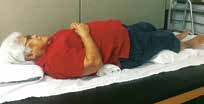
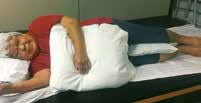
    Try using additional pillows for proper body alignment in bed.

    Difficulty getting out of bed in the morning? Or taking longer for joints and muscles to loosen due to stiffness?

    The basic causes of morning stiffness are lack of physical activity, not sleeping properly and chronic conditions like arthritis. Try these strategies to loosen up:

    Five minutes of movement in bed can ease discomfort. Performing simple and controlled stretches for 30 seconds before bed and after waking up is especially important. Anything less than 20 seconds will not allow the muscle fibers and tissues to lengthen.

    StrategiesHeat therapy. Use a heating pad while stretching in bed or perform a range-of-motion exercises in a warm shower.

    Additional pillows ensure proper alignment. Lay on your back or side with a pillow between your knees or in front to prevent rounding. The fetal position causes excessive spine curvature. Lying on your stomach stresses the neck.

    Use a proper pillow: Pillows piled too high push your chin into your chest; too low elevates your chin, compressing your upper spine. Place a towel roll under your lower back for support. Good night… and sweet dreams.


    MOON PHYSICAL THERAPY, LLC
    320 Ward Ave., Ste. 107, Honolulu HI 96814
    Aquatic, Land-based and Manual Therapy and
    Cardiopulmonary Rehab Programs
    808-597-1005 | www.moonpt.com

    Difficulty getting out of bed in the morning? Or taking longer for joints and muscles to loosen due to stiffness? The basic causes of morning stiffness are lack of physical activity, not sleeping properly and chronic conditions like arthritis. Try these strategies to loosen up: • Five minutes of movement in bed can ease discomfort.…

  • Time to Spring Into Action!

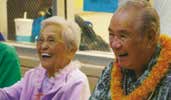
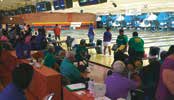
    The City and County of Honolulu Department of Parks and Recreation (DPR) is now accepting registration for spring 2017. Fun and affordable classes, such as ceramics, painting, ‘ukulele, aerobics, yoga, tai chi, swimming and more are offered. Or, if you’re looking for an opportunity to make new friends or reconnect with old ones, join one of DPR’s senior citizens clubs. Clubs meet weekly, have guest speakers, participate in service projects, go on outings and socialize.

    img_1807

    img_1807img_1746

    SPECIAL EVENTS FOR 2017 SPRING PROGRAM


    2017 SENIOR VALENTINE DANCE
    Feb. 7, 9 am – 12 pm
    Neal S. Blaisdell Center Exhibition Hall
    Free Admission; Parking $6
    Come join us for a morning of fun and
    line dancing. Dance to your favorite songs—
    past and present.


    SENIOR FUN WALK
    April 7, 9 am
    Patsy T. Mink Central O‘ahu Regional Park
    This noncompetitive event promotes
    health and wellness to the senior population.
    Registration and walk information
    will be out shortly.


    2017 SENIOR CLASSIC GAMES
    March 23, 9 am – noon
    Halawa District Park
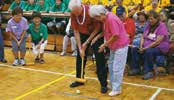
    DPR Senior Clubs enter teams to participate in
    this annual event. Participants may enter events
    such as “nine gates,” “tunnel vision,” “peg ball”
    and “pin ball.” This activity was created with
    seniors in mind. It keeps them active and
    healthy. Call 808-973-7258 for information
    regarding joining a club in your community.


    MEMORIAL DAY LEI SEWING
    May 26, 9 am
    Sewing Sites: City Hall, Makua Ali‘i Senior
    Center, Waipahu District Park, Kailua District
    Park The Mayor’s Memorial Day Ceremony
    takes place on Monday, May 29, 2017. To prepare
    for the ceremony, 35,000 lei are sewn to honor
    those who served our country. If you would like
    to contribute flowers or assist in sewing lei,
    visit one of the sewing sites above.


    For more information regarding any of our activities and events, or to find a senior club in your community, call 808-973-7258 for assistance.

    The City and County of Honolulu Department of Parks and Recreation (DPR) is now accepting registration for spring 2017. Fun and affordable classes, such as ceramics, painting, ‘ukulele, aerobics, yoga, tai chi, swimming and more are offered. Or, if you’re looking for an opportunity to make new friends or reconnect with old ones, join one…

  • ‘Super’ Seniors Head to Tennis Nationals

    tennis

    tennis
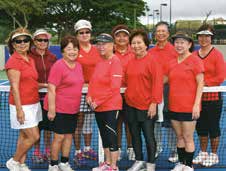
    O‘ahu’s Na Kolohe 6.0 women

    Like the challenges of aging well, playing tennis at a mature age provides its own set of character trials and physical tests.

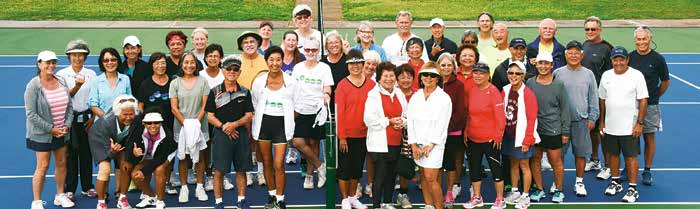
    Of the almost one million tennis players in the U.S., about 2,000 compete annually in the USTA League 65 and Over Tennis National Championships. In December, over 100 “super seniors” from Hawai‘i Island, Maui and O‘ahu met at the Patsy T. Mink Central Oahu Regional Park in Waipio to compete in the 65 and over section championship playoffs. Ten teams competed at 6.0, 7.0 and 8.0 skill levels.

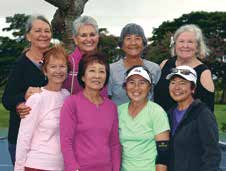
    Of the 10, four teams claimed championship bragging rights, earning them elite berths on the grand stage — the USTA National League Tennis Championships in Surprise, Arizona, in May 2017: O‘ahu’s Na Kolohe 6.0 women, O‘ahu’s Cataract and Vision Center’s 7.0 men, Maui Magic’s 7.0 women and East Hawai‘i’s Tennisanity 8.0 women.

    tennis
    Maui Magic’s 7.0 women

    Ask any of one of these players, who range in age between 65 and 90, and you’ll hear how tennis keeps them fit and happy.

    “Tennis keeps us alive,” said Maui Magic Captain Jane Sakakihara, who also serves as a Maui tennis league coordinator. “It keeps us active and around friends.” She plays tennis three to four times a week with friends she’s been playing with for, well, years and years.

    tennis
    East Hawai‘i’s Tennisanity 8.0 women

    Many intergenerational sports provide excellent health benefits, and some provide mental and emotional growth. But no other sport has ever been acclaimed for all age groups as one that develops great physical, mental and emotional benefits.

    Tennis is a low-impact game that can be played at all levels and ages at every stage of life.

    It’s never too late to take up the game. The adaptable human body can be trained and improved at any stage of life.

    “You gotta be brave to face the challenges of aging and playing tennis well,” Sakakihara said “Just step up, take deep breath and swing.”


    To learn more about the USTA, visit
    www.USTA.com

    Like the challenges of aging well, playing tennis at a mature age provides its own set of character trials and physical tests. Of the almost one million tennis players in the U.S., about 2,000 compete annually in the USTA League 65 and Over Tennis National Championships. In December, over 100 “super seniors” from Hawai‘i Island,…

  • Partnering for Seniors

    partner
    GM Publisher Percy Ihara and Moani Nabarro, KITV’s “Aging Well Newscaster.”

    Generations Magazine has partnered with local news station KITV and its “Aging Well” weekend segments. As a resource magazine, Generations is happy and very fortunate to have local TV station KITV Channel 4 to step up to the plate and support our aging population— one of the fastest-growing segments of our community. During each weekend morning news segment, Newscaster Moani Nabarro will interview professionals, agencies and services in our community that provide a valuable resources in support our aging population.

    Having choices for our parents’ future care will be determined by the decisions and plans we make with them now. Planning ahead and having a strong support system in place will often make the difference between allowing a loved one to remain at home or needing to be relocated to a nursing facility.

    When assuming the responsibility of being a family caregiver, it is important to enlist the help of outside professionals:

    • A financial planner or reverse mortgage specialist may find funds to pay for professional inhome care services.
    • An attorney specializing in elders can help stave off future legal issues.
    • A home care professional can be a guide through the maze of long-term issues.
    • A daycare agency can provide services that will allow the primary caregiver to take a muchneeded break.

    Family caregivers need the support of family, friends and professionals. At some point in time, we will all find ourselves in the position of being a family caregiver for a loved one. Taking the necessary steps now will determine the ability to choose the quality of life for both you and your loved one in the future.

    Tune in each Saturday morning to KITV Channel 4’s “Aging Well” segments with Newscaster Moani Nabarro and her guests, professionals in our aging community, or go to www.KITV.com.


    KITV4’S AGING WELL IN GOOD MORNING HAWAII
    Host: Moani Nabarro, every Saturday at 6 – 8 am
    You can view all past Aging Well segments online:
    www.kitv.com | www.tinyurl.com/KITVAgingWell

    Generations Magazine has partnered with local news station KITV and its “Aging Well” weekend segments. As a resource magazine, Generations is happy and very fortunate to have local TV station KITV Channel 4 to step up to the plate and support our aging population— one of the fastest-growing segments of our community. During each weekend…

  • Aloha & Mahalo

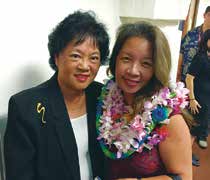
    Those who know retired Sen. Susie Chun Oakland are well aware of her passion for Hawai‘i’s ku¯ puna. As an original co-founder of the Ku¯ puna Caucus in early 2016, she served as lead facilitator of caucus meetings held at the State Capitol on the first Friday of every month. Participants in the caucus include legislators, and groups and individuals who are concerned about protecting Hawai‘i’s ku¯ puna.

    Susie was honored after the Jan. 6 Ku¯ puna Caucus meeting. The room was packed with many well-wishers from government agencies and nonprofits, as well as individuals who appreciate her many years of service.

    “She has always been and will always be remembered for her compassion and commitment to those that she gets engaged with,” said Gov. Ige, as he presented her with a commendation.

    img-18In Susie’s 22 years chairing the House or Senate Human Services Committee, she accomplished much—acquiring funding for the Ku¯ puna Care Program, the Aging & Disability Resource Center, senior centers and higher care payments for adult residential care homes; establishing the Joint Legislative Committee on Aging in Place that conducted needs assessments for family caregivers and the Long-Term Care Commission that identified long-term care policy goals and needed reforms; and protecting seniors through the adult protective services law, increasing penalties for financial abuse, requiring reports by financial institutions and requiring criminal background checks for services provided to vulnerable seniors.


    img-19

    Those who know retired Sen. Susie Chun Oakland are well aware of her passion for Hawai‘i’s ku¯ puna. As an original co-founder of the Ku¯ puna Caucus in early 2016, she served as lead facilitator of caucus meetings held at the State Capitol on the first Friday of every month. Participants in the caucus include…

  • Yay for Online Religion!

    Sometimes as people age, their routines limit their physical ability to attend worship services. This is a significant transition in life for those who have formed their religious practice and social connections at a particular place. The look and sound of one’s house of worship, and the rituals and people encountered in that spiritual setting shape an individual in deep and healing ways.

    As caregivers, or as we contemplate our own limitations, we may have to admit that it is time to forego regular attendance at worship services. Acoustics can play havoc with hearing aids. Walkways and stairs can be difficult to maneuver with a walker or with diminished eyesight. Real life sometimes encumbers us with incontinence, or the need to wait until medication “kicks in.”

    Here are some tips regarding how to keep your spiritual life perking if you can no longer get to your house of worship.

    First, don’t just disappear!

    Talk to your spiritual leader or a staff member and let them know about your situation. Perhaps there are ways the church or temple will be able to assist. Some offer transportation, others might arrange a way to share the weekly message or bulletin through visits, or through the mail or email.

    online-religionCreate a small space in your home for an altar or worship center. Include symbols from your tradition. Add a piece of wisdom to ponder and perhaps a flameless candle. If you have visitors, ask them to bring you a little something from nature.

    You might not think of worship on the internet, but it’s there and going strong! You can find everything from images for meditation, live-stream worship services and sacred texts.

    If you don’t feel confident that you can find what you need online, make a date with a friend or family member and ask them to help you set up an easy way for you to navigate to favorite spots.


    WINDWARD UNITED CHURCH OF CHRIST
    38 Kaneohe Bay Drive, Kailua HI 96734
    Rev. Jayne Ryan Kuroiwa
    808-254-3802 | windwardpastor@hawaii.rr.com
    www.windwarducc.org

    Sometimes as people age, their routines limit their physical ability to attend worship services. This is a significant transition in life for those who have formed their religious practice and social connections at a particular place. The look and sound of one’s house of worship, and the rituals and people encountered in that spiritual setting…

  • Long-Term Care: Where is it Heading?

    The future of long-term care in Hawai‘i has long been the focus of my attention. The problems facing us and suggested reforms were carefully assessed by the Hawai‘i Long-Term Care Commission five years ago.

    The 2012 “Long-Term Care Reform in Hawai‘i” report gives a good overview of what we all face:

    “The long-term care system in Hawai‘i is broken. Long-term care is expensive and beyond the financial reach of most people. Medicare and private health insurance do not cover long-term care, and few people have private long-term care insurance. As a result, if they need extensive long-term care, they must pay out of pocket…
    “Most importantly, the aging of the population guarantees that there will be a much greater need for long-term care in the future than there is now. Between 2007 and 2030, the population aged 85 and older, which has the greatest need for longterm care, will increase by almost two-thirds. There is no way to provide services for this population without additional sources.”

    — sourced from the “Long-Term Care Reform in Hawaii,” Report of the Hawaii Long-Term Care Commission, Final Report, Jan. 18, 2012.

    This month, we bring together Barbara Kim Stanton from AARP, Terri Byers from the Executive Office of Aging for Hawai‘i and myself to discuss the enormous issues facing our elders.

    First, what are the most pressing issues facing our senior community today?

    Stanton: Hawai‘i’s biggest challenges are the unmet needs in healthcare and financial security for our rapidly growing ku¯ puna population. Soon, one out of every four Hawai‘i residents will be over age 60.

    People overwhelmingly tell us that they want to live independently in their own home or in the setting of their choice for as long as possible. But without an adequate caregiver support system, accessible, affordable and quality healthcare, and the means to pay for necessities while on a fixed income, it is difficult for ku¯ puna to enjoy the retirement they aspire to and deserve.

    We must also protect and strengthen Medicare and Social Security and ensure that the parts of the Affordable Care Act that help those aged 50 and older are preserved.

    Byers: Perhaps No. 1 is demographics — the fact that we are living longer. Aging adults face financial insecurity — housing, healthcare and prescription drugs, social security, employment — loneliness and loss of independence.

    • In advanced age, financial resources may run out if income is inadequate.
    • Health deteriorates as we age, which raises costs and leads to loss of independence.

    Many of our ku¯ puna live below the poverty line. We know that poverty does not affect senior men and women equally. Women are more likely than men to face poverty as they age. Women may have worked at lower-earning jobs. They may have been absent from the labor market due to childbirth and caregiving, or had jobs that were less likely to have employer-sponsored retirement plans. Couple the lower level of retirement savings and benefits with the fact that women outlive men by five to 10 years. Divorced, widowed and never-married women are especially at risk for poverty. We see particularly high poverty rates in people of color, those in rural areas, as well as lesbian, gay, bisexual and transgender older adults.

    There’s another hidden cost to long-term care as working adults who provide intensive caregiving are forced to retire early, work part-time or quit their job to become a caregiver.

    In the big picture, a very pressing issue is our Inadequate supply of clinicians and paraprofessionals who are trained to meet the demands of the aging baby boomer population.

    Ihara: As publisher of Generations Magazine, I am in the community every day and have access to a lot of information. I speak to seniors daily and they tell me the most pressing issues are the demands of caregiving. Families today are quietly taking care of their loved ones from three to four hours, up to 12 to 18 hours a day and still working full time jobs. So it’s the baby boomers who are providing most long-term care and most of them are mature women caring for their parents or spouse. This critical caregiving may continue for several years or more and all families have to plan for the financial and logistical pressures of caregiving. Rosalind Carter is quoted as saying, “There are only four kinds of people in the world — those who have been caregivers, those who are caregivers, those who will be caregivers and those who will need caregivers.”

    “ … without an adequate caregiver support system, it is difficult for kuˉ puna to enjoy the retirement they aspire to and deserve.”
    — Barbara Stanton, AARP

    What caregiver resources are available out there now for families?

    Stanton: In Hawai‘i, each county has an Aging and Disability Resource Center (ADRC). There is one toll-free number to get in contact with your county office. It’s 643-ADRC (2372). AARP also offers educational articles and information to help caregivers at www.aarp.org.

    If someone you care for is hospitalized, a new law that AARP Hawaii helped get passed — Hawaii’s CARE Act — requires hospitals to give caregivers instructions on how to take care of the patient when he or she is discharged. When a patient is admitted, he or she can designate a family caregiver, who must be notified before they are discharged or transferred to another facility.

    Byers: Family caregivers are the core of our longterm care system. November was National Family Caregivers Month and this year’s theme was especially poignant: “Take Care to Give Care.” The golden rule of taking care of others is to take care of yourself first. Family caregivers must be encouraged and supported to ensure they are taking care of themselves, physically, emotionally and spiritually. ADRC provides help for caregivers.

    Options for caregivers can range from informal supports to formal public and private services and supports. In Hawai‘i, family and close friends provide the majority of long-term care. Many people receive care at home from a combination of family, friends, volunteers and paid caregivers. However, some family caregivers may become excessively stretched to the point of burnout or may not have the necessary nursing skills required to care for a family member. When they are unable to provide care, you can count on local community- based programs through your local ADRC, which can assist families by helping them look at various options based on their needs.

    Ihara: ADRC helps families navigate the many caregiving options available; however, a new caregiver may not know what resources they will need or when to ask agencies for help. My first suggestion is to attend caregiver support meetings offered by the Alzheimer’s Association (www. alz.org), The Caregiver Foundation of America (www.thecaregiverfoundation.org). I also recommend The Senior Handbook available at America Savings Bank and ADRC (www.ADRC.org). Our magazine has many caregiving articles and resources listed in each printed issue and past issues at our website, www.Generations808.com.

    What can families do today to assist their parents as they age?

    Stanton: Families need to talk and plan before there is a health crisis. Don’t wait until a fall, accident or bad news from a doctor. Other family members need to know about a loved one’s values and preferences, finances and wishes for care. Putting together a family caregiving plan early can avoid fights and guessing what a loved one wants.

    For tips on how to start a conversation and a checklist for your caregiving plan check out the AARP “Prepare to Care” planning guide aarp.org.

    Byers: Another strategy is to encourage active and healthy aging, which can improve the physical and mental health of older adults, improve quality of life and maximize independence. Some of the most important behaviors to encourage are: physical activity, a healthy diet, proper hydration, chronic disease self-management and cessation of tobacco/substance abuse.

    “ Family caregivers must be encouraged and supported to ensure they are taking care of themselves, physically, emotionally and spiritually.”
    — Terri Byers, Executive Office on Aging

    Ihara: My best advice to anyone taking care of a loved now is to seek out services immediately. The unfortunate truth is that most chronic health issues progress and get worse. Whether it’s Alzheimer’s disease, a stroke, arthritis or cancer, the family needs to get together with their loved one and plan for long-term care, aging in place, financial burdens and end-of-life options. Planning avoids surprises and problems later on.

    How much does a long-term care facility cost?

    Stanton: The high cost of long-term care is out of reach for the vast majority of Hawai‘i residents. The median annual care-cost in a nursing home in 2016 was $141,310 for a private room and $129,575 in a semi-private room. Who can afford this?

    Further, Medicare does not cover the cost of long-term care beyond 100 days and Medicaid‘s low income eligibility is not easy to qualify for.

    What can people do to personally to prepare for long-term care?

    Byers: My husband and I anticipated being caregivers for my parents so our family home was built to be completely ADA compliant, with widened doorways, safety features and easy-to-operate faucets, door handles, etc. We also purchased long-term care insurance to offset the cost of daily care. If people think they may need a long-term care policy, they should not wait too long to buy one. Premiums and qualifications are steeper the older you get. In Hawai‘i, only 12 percent of our population has long-term care insurance.

    How big of a problem is long-term care really going to be?

    Ihara: As publisher and editor of Generations, I have access to a wealth of information. I am always researching aging issues and looking down the road. For many years, I have mentioned my discovery over 10 years ago that the affects of long-term care in Hawai‘i and the mainland will grow to a national crisis. Financing care and the impact of caregiving on families will be one of the major problems we will face in this century. We all know someone taking care of a loved one right now. That person may be us. Tomorrow, we may be the person requiring care and losing our independence. Everyone must personally own this issue and plan ahead for long-term care. Do not expect our government to provide care because as we see now, there are limits to what government can provide today.

    The future is often what we make it. Knowing that problems may come up in the future is not a reason to worry, but a motivation to take action. Making a plan with our families and our loved ones is the first step. Later, when illness or frailty catch up with our loved one or us, we will be comforted by knowing what comes next, who to call on and how to proceed. In this case, living well means preparing for the future so we can Live Healthy, Live Life and Live Well!



    no-imageBARBARA KIM STANTON, AARP Hawaii State Director, overseeing the operations of this advocacy organization for the elderly that has over 150,000 members in Hawai’i. Her experience in executive and fiscal management, government and community relations, and strategic planning and community building — especially in diverse populations — include recovery and reopening of the island of Kaua’i after Hurricane Iniki, a revitalization of Waiki¯ki¯, and development of the Hawai’i Convention Center. She has served Hawai’i and City governments in many cabinet-level positions.

    no-imageTERRI BYERS, Director of the Executive Office on Aging (EOA) for the State of Hawai’i was vice president of the Healthcare Association of Hawai’i, a nonprofit organization representing Hawaii’s healthcare providers including acute care hospitals, long term care facilities, and home care agencies and hospices. and previously served in various capacities in the State Department of Health, State Department of Health including the Maternal and Child Health Branch, Office of Health Care Assurance, Office of Rural Health, and Planning Office. She was caregiver for her late mom.


    The future of long-term care in Hawai‘i has long been the focus of my attention. The problems facing us and suggested reforms were carefully assessed by the Hawai‘i Long-Term Care Commission five years ago. The 2012 “Long-Term Care Reform in Hawai‘i” report gives a good overview of what we all face: “The long-term care system…

  • February – March 2017

    WANT THIS ISSUE?

    Download your own personal copy of this issue in PDF format. Click the button below:

    DOWNLOAD IT NOW

    Jeff Apaka: Compassion in Action