Category: February – March 2017

  • Memorializing Can Lift the Burden of Regret

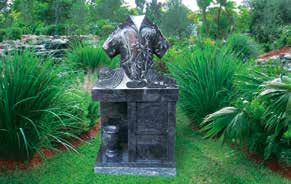
    regretMany families in Hawai‘i now choose cremation and scattering their loved one’s ashes into nature. Scattering can be a profoundly moving experience, but it’s also a decision that should be considered very carefully — because once it’s done, it can’t be undone.

    Without a plan in place, families may experience heartbreaks. Often, in times of sorrow, family members having to make quick, gut-wrenching decisions about what to do with their loved one’s remains later feel regret.

    Months or even years later, with the clarity that comes with time, families realize that they wish they’d kept a portion of their loved one’s remains in a spot where they could visit, reflect and feel close. The regret over not having a permanent memorial can linger indefinitely.

    It is natural to want to remember those who have touched our lives in a tangible way, and it’s important for those left behind to visit a place where the name of their loved one is still present. Consider a permanent memorial. It’s a wonderful way to honor a life and inspire future generations.


    VALLEY OF THE TEMPLES
    47-200 Kahekili Highway, Kaneohe HI 96744
    808-824-3427 | www.valley-of-the-temples.com

    Many families in Hawai‘i now choose cremation and scattering their loved one’s ashes into nature. Scattering can be a profoundly moving experience, but it’s also a decision that should be considered very carefully — because once it’s done, it can’t be undone. Without a plan in place, families may experience heartbreaks. Often, in times of…

  • Get the Inside Sports Scoop

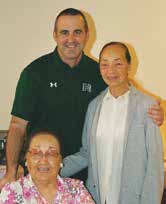
    Nick Rolovich, head coach for UH-Ma¯noa, with club members of over 20 yrs., Liz Rathburn (sitting) and her sister Lydia Lake.

    The Honolulu Quarterback Club (HQC), one of the nation’s oldest sports clubs, began in 1947 and is still going strong. There, you can hear little-known and personal stories from past and present sports greats. “You won’t find these sports stories on the front page of the newspapers,” said one long-time, regular attendee.

    From the early days, legendary speakers came to share their remarkable stories and accolades from their respective sports. Some from the good ole days were KGU Radio’s Chuck Leahey, reporter Bill Kwon, swimmer Keo Nakama, surfer George Downey, golfers Ted Makalena and Jackie Pung, baseball pioneer and UH-famed Coach Les Murakami, and football greats “Squirmin’” Herman Wedemeyer and Rockne Freitas.

    Some of the recent guest speakers have included UH coaches: Nick Rolovich, Bob Coolen, Dave Shoji, Mike Trapasso, Charlie Wade, Laura Beeman and Eran Ganot. Athletes from all islands and all sports have been guest speakers, as well as writer Dave Reardon, Star Advertiser writer Bob Sigall and broadcast personality Don Robbs.

    If you are an avid sports enthusiast, sports nut or just love University of Hawai‘i sports, come on down to our Monday meetings and enjoy a wonderful Chinese luncheon buffet at a reasonable price ($15). Contact HQC for more information and upcoming speakers.


    HONOLULU QUARTERBACK CLUB
    Meeting: Every Monday, 11:30 am –1pm
    Location: Maple Garden, 909 Isenberg St., Honolulu HI
    808-220-6454 | HermanHStern@msn.com

    The Honolulu Quarterback Club (HQC), one of the nation’s oldest sports clubs, began in 1947 and is still going strong. There, you can hear little-known and personal stories from past and present sports greats. “You won’t find these sports stories on the front page of the newspapers,” said one long-time, regular attendee. From the early…

  • Paintings, Prints & Drawings of Hawai‘i

    paintingHot off the press, Paintings, Prints and Drawings of Hawai‘i from the Sam and Mary Cooke Collection presents for the first time the private collection of Mary and the late Sam Cooke. Published by the Ma¯noa Heritage Center, this lavishly illustrated volume by David W. Forbes traces the history of Hawai‘i as seen through the eyes of western artists, from the arrival of Capt. James Cook to modern landscapes.

    On the cover of the book is Hanalei Valley by D. Howard Hitchcock. It is a remarkable work— the taro fields in the center seem to glow with a spotlight of sun, echoing the luminosity of epic, 19th-century Manifest Destiny paintings by American landscape superstars Albert Bierstadt and Thomas Moran. It is just a taste of what’s to come between the covers.

    painting
    On the book cover is Hanalei Valley by D. Howard Hitchcock. Top-R.: Yellow Ginger – Koolau Cliffs by Lloyd Sexton; Bottom-R: Haleiwa Net Fisherman by Lionel Walden.

    David W. Forbes said, “It’s an amazing collection. A remarkable man put together a remarkable collection, and he put it together because he had a love of this land and every work in this book shows that.”

    The book is a preview of a private collection that the public will be able to see when Mary Cooke’s residence, Ku¯ ali‘i, eventually opens to the public as part of the Ma¯noa Heritage Center.

    Ma¯noa Heritage Center is a 3.5-acre living classroom centered around Ku¯ ka‘o¯‘o¯, the last intact heiau in the greater ahupua‘a of Waiki¯ki¯, Native Hawaiian gardens and Ku¯ ali‘i, the Cooke’s 1911 Tudor-style home. Both Ku¯ ka‘o¯‘o¯ and Ku¯ ali‘i are listed on the National Register of Historic Places. The new 4,125-square-foot, LEED-certified Visitor Education Hale is scheduled to open this summer. Garden and heiau tours will be offered Monday through Friday by appointment.

    img_1807img_1746


    Only 3,000 copies of the 252-page book have been printed
    to date. Designed by Barbara Pope, it contains 155 stunning
    images from the collection. Books are available at
    the following locations:
    MA¯NOA HERITAGE CENTER
    Cost: $100 (Case pricing is also available)
    808-988-1287 | www.manoaheritagcenter.org
    HONOLULU MUSEUM OF ART
    808-532-870 | www.honolulumuseum.org
    LYON ARBORETUM
    808-988-0456 | www.manoa.hawaii.edu/lyonarboretum
    NA MEA HAWAI‘I
    800-887-7751 | www.nameahawaii.com
    NOHEA GALLERY
    808-596-0074 | www.noheagallery.com
    MA¯NOA GALLERY
    808-468-2428 | www.manoagallery.com
    All proceeds benefit Ma¯noa Heritage Center’s educational
    mission, promoting the understanding and appreciation of
    Hawai‘i’s natural and cultural heritage.

    Hot off the press, Paintings, Prints and Drawings of Hawai‘i from the Sam and Mary Cooke Collection presents for the first time the private collection of Mary and the late Sam Cooke. Published by the Ma¯noa Heritage Center, this lavishly illustrated volume by David W. Forbes traces the history of Hawai‘i as seen through the…

  • Crossing Bridges: A Photography Exhibit

    a-triple-force-for-hawaiis-seniors-1
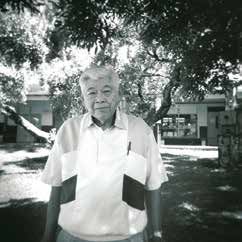
    Edward Chun

    From ProjectFocus Hawai‘i and the Wahiawa Community Based Development Organization (WCBDO) comes a visual storytelling, from both ends of life — as partners — Crossing Bridges.

    On a sunny Saturday morning, students from Leilehua High School, Wahiawa Middle School, Island Pacific Academy and George Washington University sat down with 24 of Wahiawa’s most cherished ku¯ puna, who shared their stories of growing up and living in this former plantation town located in Central O‘ahu.

    Life in Wahiawa has changed since its plantation days and it is for that reason Crossing Bridges was selected as Project- Focus Hawai‘i’s latest exhibit, so these memories could be captured and shared with the broader community. The exhibit title represents both a literal and figurative expression of this project. Not only does it signify the connection of bridges that bring residents and visitors into Wahiawa, it also reflects the importance of bridging generations through the sharing of oral histories.

    a-triple-force-for-hawaiis-seniors-1
    Shaianna “Shai” Niccole Llarinas

    While life in Wahiawa was economically difficult, it was also culturally rich. The ku¯ puna shared their childhood memories about Wahiawa with their assigned student. Their stories revealed a simpler time, when kids could entertain themselves without the benefit of technology — or television, for that matter. These ku¯ puna shared stories from their “small kid days”— picking pineapple in the middle of a red dirt field, making their own toys or seeing the Japanese planes flying overhead as they attacked Pearl Harbor on Dec. 7, 1941.

    As with all ProjectFocus Hawai‘i programs, photography is an integral part of the storytelling process. As the students documented the oral history, they also captured visual portraits of these elders. The photos and stories, along with the photos taken of the students by ProjectFocus Hawai’i co-founders Callies and Lisa Uesugi, were paired to form the basis for the exhibit.

    Crossing Bridges made its community debut on Dec. 10, 2016, at a reception at the Wahiawa Hongwanji Church.

    “We were very pleased to have this opportunity to highlight our outstanding seniors and their contributions to our community,” said Darin Uesugi, president of WCBDO. “Wahiawa is a hidden gem with much to offer by way of history, culture and business. We look forward to sharing these wonderful stories with the broader community.”

    Crossing Bridges is currently on display at the Davies Pacific Center Mezzanine until Feb. 3, 2017. The exhibit will be displayed at various venues on O‘ahu throughout the year.

    For current information about Crossing Bridges, go to www.projectfocushawaii.com.


    PROJECTFOCUS HAWAI‘I INC.
    A nonprofit organization established in 2005 as a means
    of giving at-risk children and others with challenges, including
    our aging population, a healing voice through the
    medium of photography.
    For information and to view our gallery of images, go to
    www.projectfocushawaii.com.

    From ProjectFocus Hawai‘i and the Wahiawa Community Based Development Organization (WCBDO) comes a visual storytelling, from both ends of life — as partners — Crossing Bridges. On a sunny Saturday morning, students from Leilehua High School, Wahiawa Middle School, Island Pacific Academy and George Washington University sat down with 24 of Wahiawa’s most cherished ku¯…

  • Can We Afford to Retire in Paradise?

    group-bowlThere’s no escaping the fact that people in Hawai‘i pay the price of living in paradise. The cost of living is about 60 percent higher than in most states, while wages are among the lowest when adjusted for Hawai‘i’s high cost of living.

    Housing is particularly expensive. The Honolulu Board of Realtors reported that the median sales price of a single-family home was $750,000 in November. Meanwhile, the 2015 median monthly rental costs of a home was $1,500 (U.S. Census, American Community Survey).

    It is difficult enough for working families to make ends meet with a regular paycheck, but it’s even harder when people retire and live on a fixed income that doesn’t keep pace with rising costs. And unfortunately, many residents are not saving enough for retirement.

    The National Institute on Retirement Security reports that the average working household in the U.S. has virtually no retirement savings. When all households are included — not just households with retirement accounts — the median retirement account balance is $2,500 for all workingage households and $14,500 for near-retirement households. And, the growing dependence on Social Security poses an additional challenge. The program was never meant to provide more than one-third of retirement income. But in 2016, nearly 26 percent of Hawai‘i retirees relied completely on Social Security and 50 percent depended on it for half of their retirement income. The average monthly Social Security benefit of $1,408 is not enough to live on in Hawai‘i without government help or continuing to work full- or part-time.

    People living only on Social Security are more likely to need taxpayer-subsidized food, medical insurance and housing.

    A new AARP Hawaii survey of registered voters ages 35 to 64 found that:

    • 49 percent feel behind in saving for retirement;
    • 56 percent feel anxious about having enough money saved for retirement;
    • 79 percent are concerned as taxpayers that those who are not able to save for retirement will end up on public assistance.

    Heavier reliance on our social safety net programs imposes an increased tax burden for all Hawai‘i residents unless we can figure out real ways to help more workers save for retirement.

    Roughly half of Hawai‘i’s workforce doesn’t have a way to save for retirement at work, even though we know that a retirement plan that lets workers save out of their regular paycheck makes them 15 times more likely to save for retirement than those without that access.

    There are 216,000 private sector workers in Hawai‘i who don’t have access to retirement savings at work, even though it’s the most important factor in a person’s ability to save for retirement.

    So what can Hawai‘i do to help these workers?

    Eight states (California, Illinois, Oregon, Maryland, Connecticut, Massachusetts, Washington and New Jersey) have passed legislation that offers workers access to a retirement savings program. Hawai‘i is among two dozen other states considering similar steps to help future retirees.

    A resolution to address this issue is before the 2017 Legislature. If passed, a work group of business and community stakeholders will study and recommend strategies to help more people save and enjoy a retirement with real possibilities in Hawai‘i Nei.


    AARP HAWAI‘I
    State Office: 808-545-6024 | Toll-Free: 866-295-7282
    www.aarp.org/states/hi | hiaarp@aarp.org

    There’s no escaping the fact that people in Hawai‘i pay the price of living in paradise. The cost of living is about 60 percent higher than in most states, while wages are among the lowest when adjusted for Hawai‘i’s high cost of living. Housing is particularly expensive. The Honolulu Board of Realtors reported that the…

  • New Senior Center Focuses on Active Aging

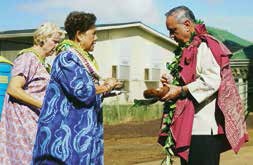
    The day was filled with reverence and joy towards the center’s mission to serve our senior community. In the Hawaiian language, “Nā Kūpuna Makamae” means “the beloved seniors.”
    A group of dignitaries and staffs gathered and shared their aloha on the grand opening.

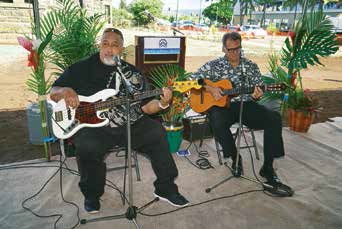
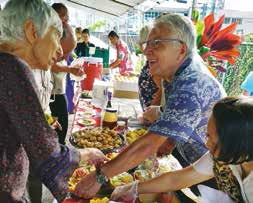
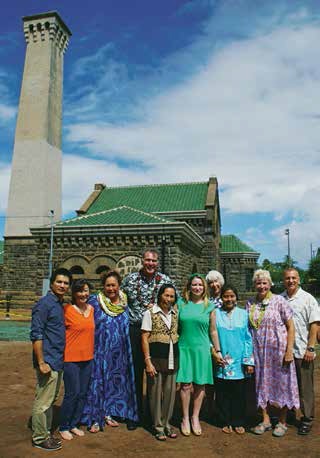
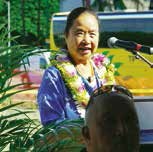
    Nā Kūpuna Makamae Center opened its doors on Thursday, Sept. 9, 2016, after 12 months of restoration of the 116-year-old pump station in Kaka‘ako on Ala Moana Boulevard. Over 100 invitees were welcomed by Pacific Gateway Center Executive Director Dr. Tin Myaing Thein (right photo), who manages the new senior center. Kahu Wendell Silva began with an aloha chant followed by music and hula by the Hiwa class of Halau Ika Wekiu. A traditional Hawaiian blessing of the historic landmark led attendees into the building, where photos from before and after, stories from kūpuna, and music by Sen. Brickwood Galuteria and Mike Seda were enjoyed by all (above).

    bowling

    The center’s list of program activities promote: active aging with various stay-well exercises, nutrition, music, dance and art; a focus on inter generational training, in which youth exchange and learn from elders, and educate seniors through “Kūpuna Power;” a platform that seeks to educate and empower Hawai‘i’s elderly.

    bowling

    Program Coordinator Marlene Sai and Marketing Coordinator Valery O’Brien invite you to visit and become a member of Nā Kūpuna Makamae Center. The free-parking entrance is off of Keawe Street; TheBus bus stop is conveniently located just out front on Ala Moana Boulevard.


    Nā Kūpuna Makamae Center
    653 Ala Moana Boulevard, Honolulu HI
    (corner of Keawe Street & Ala Moana Boulevard)
    808-773-7047 | nakupunamakamae.org

    Nā Kūpuna Makamae Center opened its doors on Thursday, Sept. 9, 2016, after 12 months of restoration of the 116-year-old pump station in Kaka‘ako on Ala Moana Boulevard. Over 100 invitees were welcomed by Pacific Gateway Center Executive Director Dr. Tin Myaing Thein (right photo), who manages the new senior center. Kahu Wendell Silva began…

  • ‘Rocks in a Box’ & Other Crimes

    Over the years, we’ve covered the devastating effects of fake lotteries that have resulted in Hawai‘i seniors losing millions of dollars (even their homes); the distressed relative scam (more commonly referred to as the “Grandma Scam”); sweetheart swindles/sham marriages; and the actions of adult children and caregivers who have stolen not only the life savings of their parents and patients, but also the trust of someone that never believed a loved one would steal from them. People should also be made aware of the following lesser-known scams.

    With internet sites such as Craigslist and Letgo, one needs to be careful of an item advertised as new and “still in its original packaging.” The seller will say the item (usually a television or other electronic device, like an iPad) has never been opened and was purchased recently. When you go to buy it, the seller doesn’t want you to inspect it because “it will lose value if the box is opened.” Therefore, one may pay for a sealed box that may contain nicely wrapped rocks inside.

    Another crime that uses deceit is the “diversion burglary.” When a homeowner responds to a knock on the door, he or she will be greeted by a friendly stranger with a story of need. Maybe their child needs to use the restroom, their car broke down and they need to go inside and use the phone or they may claim to be a long-lost relative who has been searching for them. These scam artists simply want to make it into the home, distract the victim and commit theft.

    The “missed doctor’s appointment” scam surfaced again in Hawai‘i last year. A pleasantsounding lady called the victims and related that either they missed a doctor’s appointment made for them by their doctor or that their adult child missed their appointment. While they have the victim on the phone, they will ask for personal information “needed to update their medical records”— but in reality, to steal their identity.

    Seniors who drive need to be cautious of scams. A friendly stranger may say he saw some type of mechanical problem with the elder’s car that the scammer just so happens to know how to fix. After some phony fiddling under the hood, the stranger will demand payment for his time.

    Con artists rely on seniors to be trusting, willing to provide information and not question a too-good-to-be-true deal.

    Don’t be afraid to say “no.” It is not being rude—it’s for your own protection.


    To report suspected elder abuse, contact the Elder Abuse
    Unit at 808-768-7536 | ElderAbuse@honolulu.gov

    Over the years, we’ve covered the devastating effects of fake lotteries that have resulted in Hawai‘i seniors losing millions of dollars (even their homes); the distressed relative scam (more commonly referred to as the “Grandma Scam”); sweetheart swindles/sham marriages; and the actions of adult children and caregivers who have stolen not only the life savings…

  • Capturing the Heart of an Estate Plan

    The usual response I receive when I ask, “What brings you here?” during an initial meeting with clients, is, “To avoid probate and minimize taxes.” Avoiding probate and taxes are good goals, and easy to resolve.

    The much more difficult — and much more meaningful work — is all relational. When we delve further into clients’ goals for estate planning, I have found that they want much more, especially concerning family. They want their children to get along, want them to know that they were loved, and they want their hard-earned wealth to be utilized appropriately and wisely.

    Relational goals are long-lasting. By engaging the client in these kinds of discussions, we can make the estate planning experience so much more significant. Not addressing these concerns could result in long-term, negative effects on the client and the client’s family.

    It is difficult for clients and their attorneys to get below the surface to address relational and emotional concerns. Staying above the surface with financial, legal and tax matters seems safer.

    Discussions about relationships are risky and may elicit feelings of vulnerability. Avoiding them is easier but can leave devastating deep-rooted negative effects — sometimes for decades.

    As attorneys, we are professional counselors. I believe we can not only help our clients by serving as catalysts for these types of conversations, but also feel that it is our duty to do so.

    We need to reach beyond the superficial nature of taxes, probate and finances to capture and include the heart of an estate plan.


    STEPHEN B. YIM, ATTORNEY AT LAW
    2054 S. Beretania St., Honolulu HI 96826
    808-524-0251 | stephenyimestateplanning.com

    The usual response I receive when I ask, “What brings you here?” during an initial meeting with clients, is, “To avoid probate and minimize taxes.” Avoiding probate and taxes are good goals, and easy to resolve. The much more difficult — and much more meaningful work — is all relational. When we delve further into…

  • Make Your Giving Go Further

    Technology has made all of our lives easier. Just by using a smartphone, you can talk to people all over the world, check the weather forecast or reserve a seat on a plane. The true power of the smartphone is how it combines a myriad of tools into a single, sleek device.

    As you support your favorite charity, you might be interested in ways to increase your impact. By combining different giving tools together, you can multiply the difference you make when you give to a 501(c)(3) nonprofit charity. You may already be making annual gifts, but here are some ways your annual gifts may be combined with other opportunities to make your support go even further:

    • You can endow your annual gifts in your will to ensure that your legacy of support continues.
    • In addition to annual gifts, you can make a single gift to fund a charitable gift annuity. You will receive lifetime fixed payments and tax savings.
    • Another way to help beyond your regular annual giving is with a charitable life estate. You can convey your home to your favorite charity, remain living there and receive tax benefits.

    When you think about all of the tools available to you, you can do more than you might have thought possible. By adding an estate or life income gift to your annual giving, you can benefit from lifetime payments and tax savings.

    If you would like to know more, call or email us to learn how we can help you combine your giving in a way that benefits you and supports your cause.


    NATIONAL KIDNEY FOUNDATION OF HAWAII
    808-589-5961 | diana@kidneyhi.org
    For Planned Giving: www.kidneyhawaii.org
    Main: www.kidneyhi.org | www.kidney.org

    Technology has made all of our lives easier. Just by using a smartphone, you can talk to people all over the world, check the weather forecast or reserve a seat on a plane. The true power of the smartphone is how it combines a myriad of tools into a single, sleek device. As you support…

  • ‘Test Drive’ Your Estate Plan

    test-drive1Kingdom Advisors founder Ron Blue takes an interesting approach to estate planning. He advocates lifetime giving as a way to assure that the objects of your bounty are worthy recipients of your wealth. This could play out a couple of different ways.

    As Blue points out, there are three places your “stuff” can go after you die:

    • Government, attorneys and other professional advisors by way of taxes and administration expenses;
    • Loved ones
    • Charity

    A good estate plan will minimize the amount that is bled away in the first category. A really good estate plan will help to make sure that your intentions regarding your loved ones and your favorite charities are carried out, as well.

    test-drive2Giving assets outright to your loved ones is a way to give them full control over and responsibility for those assets. However, one of your intended beneficiaries could easily lose his or her inheritance as a result of a divorce, vehicle accident or bad business deal. And this could happen due to no personal fault of the beneficiary. For this reason, many estate plans include ongoing trusts that allow the beneficiaries to have as much control as they are able to handle, while at the same time insulating the trust assets from creditors and predators who might try to take those assets away.

    test-drive3The thing about leaving assets to your loved ones after you are gone is that you will have no idea how each of them will handle his or her inheritance. Your best guess during your lifetime could turn out to be wrong. So what about making gifts during your lifetime that will enable you to see how your intended beneficiaries handle their new-found wealth? This could be a great way to “test drive” your estate plan and determine how well it works while you are still able to make adjustments to it. If one beneficiary turns out to be a poor steward of your wealth, you can always redirect assets in your final estate plan to other beneficiaries, or provide greater restrictions on a spendthrift beneficiary’s control over your wealth.

    test-drive4The same principles apply to charitable gifts. Your favorite charity could turn out to be a poor manager of donated assets. It would be far better to find that out during your lifetime than to leave your loved ones regretting your philanthropic choices. If a charity does what you hope it will do with your gift, you can add to it upon your death. Not only that, but your gift may have far greater impact the earlier you make it. If, for example, you want to provide funding for scholarships so underprivileged children can go to college, the sooner you make your gift, the sooner a scholarship recipient will graduate from college, get launched in a career and turn around and “pay it forward,” as you have done.

    test-drive5As Ron Blue would say, you should consider “giving while you’re living so you’re knowing where it’s going.” It’s sound advice for anyone who prefers to test the water before diving in head first.


    SCOTT MAKUAKANE, Counselor at Law
    Focusing exclusively on estate planning and trust law.
    Watch Scott’s TV show, Malama Kupuna
    Sundays at 8:30 pm on KWHE, Oceanic Channel 11
    www.est8planning.com
    O‘ahu: 808-587-8227 | maku@est8planning.com

    Kingdom Advisors founder Ron Blue takes an interesting approach to estate planning. He advocates lifetime giving as a way to assure that the objects of your bounty are worthy recipients of your wealth. This could play out a couple of different ways. As Blue points out, there are three places your “stuff” can go after…

  • Control Healthcare Costs in Retirement

    It’s no secret that healthcare becomes a bigger concern for most of us as we grow older. More ailments are likely to develop, which means more money is spent to visit health professionals and purchase medications. Even if you remain healthy through your later years, the costs of preventative care and preparing for potential, unexpected health challenges continue to rise.

    Health-related expenses will likely be one of the biggest components of your retirement budget. You need to be prepared to pay for comprehensive insurance coverage and potential out-ofpocket costs. Here are three strategies to help you manage these critical expenses during retirement.

    Understand How Medicare Works

    The good news for Americans ages 65 and older is that you qualify for Medicare. That makes increased dependence on healthcare services more affordable. At age 65, most people automatically qualify for Medicare Part A at no cost, which primarily provides coverage for hospital stays and skilled nursing care. Medicare Part B must be purchased (approximately $109 per month in 2017 for most retirees). Part B covers the costs of visiting a physician — but with some deductibles. Many people purchase additional coverage to use for outof- pocket expenses, such as a Part D prescription drug plan or a Medicare supplemental policy.

    Timing is important. Signing up when you first qualify for Medicare coverage will keep costs at their lowest level. If you maintain insurance through your employer after age 65, you can delay Medicare enrollment with no risk of penalties.

    If you retire prior to age 65, you will need to purchase insurance on the open market to cover health-related expenses until you become eligible for Medicare. Individual coverage tends to get more expensive as you age, so work the cost into your retirement budget. Some employers offer retiree health insurance as a benefit. Check with your human resources department.

    Allocate Sufficient Funds for Healthcare Costs

    As you develop your retirement income strategy, make sure you have money set aside for health expenses that will be your responsibility. By one estimate, the average 66-year-old couple will need to tap more than half of their lifetime pre-tax Social Security benefits to pay for healthcare expenses throughout retirement. Most people will likely have to rely, in part, on their own savings to help offset some medical expenses.

    Along with other retirement savings, you may want to establish a health savings account (HSA) during your working years. HSAs are designed to help build tax-advantaged savings to pay for outof- pocket medical expenses you incur during your working years. However, any leftover funds can be applied to health expenses later in life, including premiums for Medicare and long-term care insurance. Keep in mind that you must be enrolled in a high-deductible health plan to open an HSA.

    Focus on Your Own Health

    Keep healthcare costs under control in retirement by creating or maintaining a healthy lifestyle. Small changes you make today, such as being physically active and eating right, could reduce the likelihood of medical issues. According to the American Heart Association, healthy changes could help you save $500 a year!

    Having a plan doesn’t guarantee that you will avoid heath issues, but you may find it comforting to know about the most cost-effective ways to tackle healthcare expenses in retirement.


    MICHAEL W. K. YEE, CFP
    1585 Kapiolani Blvd., Ste. 1100, Honolulu HI 96814
    808-952-1222, ext. 1240 | michael.w.yee@ampf.com

    It’s no secret that healthcare becomes a bigger concern for most of us as we grow older. More ailments are likely to develop, which means more money is spent to visit health professionals and purchase medications. Even if you remain healthy through your later years, the costs of preventative care and preparing for potential, unexpected…

  • Make a Retirement Resolution

    It’s 2017 and one year closer to retirement. Whether you’re at your very first job or wrapping up a successful career, there are always new things to learn when it comes to saving for the future. So why not make retirement planning part of your New Year’s resolution?

    Putting money in a high-yield savings account (if you can find one) is always smart, but you can do even more. The U.S. Department of the Treasury now offers a retirement savings option called “myRA.” There’s no minimum to open the account, you can contribute what you can afford and you can withdraw funds with ease. To learn more about myRA, visit www.myra.gov.

    Hopefully, your employer chips in a little. An employer-sponsored retirement plan or 401(k) can be a useful way to set aside funds for retirement, especially if your employer offers to match what you invest. If you don’t work for an employer who offers this type of plan, there are many other plans designed to help you save for retirement.

    From solo 401(k)s to traditional and Roth IRAs, there are programs designed to fit a multitude of budgets.

    Social Security is funded by taxes you pay while you work. To get estimates of future benefits and check your earnings record for accuracy, you can create a “my Social Security” account at www.socialsecurity.gov/myaccount.

    Along with giving up bad habits in this New Year, start a good one that can make a lasting, positive difference.


    For questions, online applications or to make an appointment
    to visit a SSA office, call from 7am–7pm, Mon–Fri:
    1-800-772-1213 (toll free) | 1-800-325-0778 (TTY)
    www.socialsecurity.gov

    It’s 2017 and one year closer to retirement. Whether you’re at your very first job or wrapping up a successful career, there are always new things to learn when it comes to saving for the future. So why not make retirement planning part of your New Year’s resolution? Putting money in a high-yield savings account…