
Category: February – March 2014

  • Mirror, Mirror on the Wall: A Tale About Medicare Eligibility

    The Hawaii SHIP office recently received a call from a woman who left the message, “I looked in the mirror this morning and this young 50 year old was looking back at me. Then my high school classmate called and asked if I had enrolled in Medicare yet? I realized I will be 65 this year, how the time has flown by.”

    Our caller wasn’t sure where to start and these were some of her questions, along with our answers that you may find helpful.

    How do I sign up for Medicare?

    If you are currently receiving a benefit (check) from the Social Security Administration then you will be automatically enrolled in Medicare Part A & Part B. Otherwise, you will need to enroll at www.socialsecurity.gov/medicareonly.

    Can I sign up at anytime?

    Medicare has several enrollment periods. But be aware. If you miss enrolling when you are first eligible, you may not be able to enroll when you need the coverage and you could face a penalty.

    • Initial Enrollment Period (IEP). This is the first enrollment period and it has a seven-month window around the month of eligibility (which for most is when they turn 65 years old).
    • General Enrollment Period (GEP). This is for those who did not sign up for Part B (or Part A if it includes a premium). The GEP annually is from Jan. 1 – Mar. 31. Coverage begins July 1.
    • Annual Enrollment Period (AEP). This is the next regular enrollment period which is also called Open Enrollment. This is each year from October 15 — December 7 with the change in coverage taking affect January 1.

    There are also Special Enrollment Periods (SEPs), which are due to special circumstances and the enrollment period will depend on what the special circumstance is.

    What does Medicare cover?

    Part A covers inpatient hospital care, skilled nursing care, home health services (on a medically necessary basis), hospice care and blood.

    Part B covers physician services, labs and x-rays, durable medical equipment and preventive services.

    Part C plans are also called Medicare Advantage Plans (managed care). These plans contract with Medicare to provide all your Part A & Part B services and can include additional benefits.

    Part D is prescription drug coverage and is sold by private companies that contract with Medicare or by the Medicare Part C companies. Medicare Part B and Part D have different special enrollment periods so make sure you ask about both.

    Enrolling in Medicare is a very timely issue. The state-certified Hawaii SHIP volunteers can assist you in navigating the Medicare maze.


    Hawaii SHIP (State Health Insurance Assistance Program):
    1-888-875-9229 | help@hawaiiship.org
    www.hawaiiship.org
    For 2014 Medicare updates: www.medicare.gov
    The Hawaii SHIP office recently received a call from a woman who left the message, “I looked in the mirror this morning and this young 50 year old was looking back at me. Then my high school classmate called and asked if I had enrolled in Medicare yet? I realized I will be 65 this…

  • Benefits of Cardiac Rehab

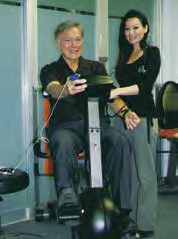
    Cardiac rehabilitation, as defined by the American Heart Association, is a medically supervised program to help patients who have sustained a heart attack, undergone heart surgery (bypass) or those with identified risk factors (coronary artery disease or angina). Cardiac rehab is used to stabilize, slow or even reverse the progression of cardiovascular disease, ultimately reducing the risk of heart disease, another heart attack or even death.

    Generations Magazine - Benefits of Cardiac Rehab - Image 01A physical therapist specializing in cardiac rehab will perform an evaluation and develop a plan consisting of patient education on diet, relaxation techniques, aerobic training and strengthening exercises. The therapist will closely monitor vital signs, such as blood pressure, heart rhythm and rate, and oxygen saturation levels. The therapist should also prescribe a safe exercise program, with appropriate duration, frequency and intensity. While everyone can exercise at a gym or at their home after a cardiac event, a rehab program offers a safe and effective en- vironment to improve your heart health with the supervision of a medical professional.
    The benefits of cardiac rehab are well documented. Studies show that there is a 95 percent three-year survival rate for those who attend rehab, versus a 64 percent survival rate for those who do not.

    A great rehab program can help people make life changes and achieve a level of health that may even be better than it was before the cardiac event.


    Moon Physical Therapy’s Cardiac Rehab Program
    320 Ward Avenue, Suite 107, Honolulu, HI 96814| 808-597-1005 | www.moonpt.com

    Cardiac rehabilitation, as defined by the American Heart Association, is a medically supervised program to help patients who have sustained a heart attack, undergone heart surgery (bypass) or those with identified risk factors (coronary artery disease or angina). Cardiac rehab is used to stabilize, slow or even reverse the progression of cardiovascular disease, ultimately reducing…

  • Social Security: Ring in the New Year With a COLA

    May people ring in the new year with champagne. People who receive Social Security or Supplemental Security Income (SSI) got to ring it in with a COLA. This year, more than 60 million Americans are receiving a 1.5 percent cost of living adjustment (COLA) in their monthly benefit payment.

    The 1.5 percent COLA began with increased benefits for Social Security beneficiaries in January 2014, and payments to SSI recipients started in late December 2013.

    The estimated average monthly Social Security payment to a retired worker is $1,294 (in 2014), up from $1,275 (in 2013). The average monthly SSI payment is $1,148 (in 2014), up from $1,131 (in 2013).

    The basic monthly federal payment for SSI is $721 (in 2014), up from $710 (in 2013).

    Some other changes that take effect in January of each year are based on the increase in average wages. For example, the maximum amount of earnings subject to the Social Security payroll tax (taxable maximum) will increase to $117,000, up from $113,700. Of the estimated 165 million workers who will pay Social Security taxes in 2014, about 10 million will pay higher taxes as a result of the increase in the taxable maximum.

    The amount of earnings needed for one credit of Social Security coverage has gone up as well, but all workers can still earn up to four credits in a year. In 2014, a worker earns a credit after earning $1,200 ($1,160 in 2013). It takes 40 credits to be fully insured for retirement benefits.


    For 2014 updates, other information and locations:
    1-800-772-1213 (toll free) | 1-800-325-0778 (TTY)
    www.socialsecurity.gov
    For more on COLA: www.socialsecurity.gov/pressoffice

    May people ring in the new year with champagne. People who receive Social Security or Supplemental Security Income (SSI) got to ring it in with a COLA. This year, more than 60 million Americans are receiving a 1.5 percent cost of living adjustment (COLA) in their monthly benefit payment. The 1.5 percent COLA began with…

  • Tips for Senior Skin Care

    Skin is our body’s largest organ, and it’s exposed to all the elements of our environment and lifestyles. As we age, our skin becomes dryer and thinner, which can lead to skin breakdown, especially with an immobilized person.

    Skin breakdown occurs when there is unrelieved pressure to an area on the body. This pressure impedes the circulation to the skin and causes an ulcer to form. Other factors that can contribute to skin breakdown are poor hydration, poor nutrition and maceration caused by prolonged exposure to wetness.

    Many families with an elderly person at home may rely on a home care agency to provide appropriate care. But here are 5 tips to keep seniors as comfortable as possible throughout the day, whether or not you have a caregiver’s helping hand:

    • Turn and reposition the person at least every 2 hours. Massage pressure points with each turn.
    • If they are incontinent, change the diaper when soiled to prevent maceration of the skin.
    • Clean skin well and use barrier creams with each diaper change.
    • Check all areas of the body daily for early signs of skin breakdown. Early signs include discoloration and redness that doesn’t go away with massage or pressure relief.
    • Offer plenty of fluids and meals with protein.

    Caregivers are trained to observe their clients for skin issues and to report changes to the family and to their agency’s nursing supervisor. The supervisor should assist the family in determining the best plan of action for future care.


    HiHealthCare, 745 Fort Street, Honolulu, HI 96813 | 808-534-7815 | info@hihealthcarehawaii.com | hihealthcarehawaii.com

    Skin is our body’s largest organ, and it’s exposed to all the elements of our environment and lifestyles. As we age, our skin becomes dryer and thinner, which can lead to skin breakdown, especially with an immobilized person. Skin breakdown occurs when there is unrelieved pressure to an area on the body. This pressure impedes…

  • Legal: Do You Have Four-Legged Children?

    Generations - 2014-02 - Four Legged Children - Image 01While I was growing up, we almost always had a dog (or two) in the house, and they always became treasured family members. You may have had the same experience, and you would not be alone if you have pets today that you consider to be your “children.” I know people who claim to prefer their kitties over their kiddies.

    So what happens to your four-legged family members if you become incapacitated, or if you die? Are you comfortable leaving their fate to chance, or do you want to take steps to provide for their well-being for the rest of their natural lives? Believe it or not, Hawai‘i law allows you to create trusts for your hairy household members.

    Generations - 2014-02 - Four Legged Children - Image 02Section 560:7-501 of the Hawai‘i Revised Statutes specifically allows you to create trusts “for the care of one or more domestic or pet animals.” You can even designate a human watchdog who will make sure that your intentions are carried out. In theory, there would be nothing to prevent your terrier’s trustee from making a quick stop at the local dog pound and then pocketing the trust assets that you had intended to be used for your poor pet. However, your Generations - 2014-02 - Four Legged Children - Image 03watchdog could whisk the trustee in front of a judge and make sure the trustee is held accountable for failing to honor your wishes. Of course, if you choose the right caretaker in the first place, none of this will be an issue.


    Generations - 2014-02 - Four Legged Children - Image 04But what if your two-legged children get jealous of your basset hound’s bequest? Is there a way for them to attack your trust? The short answer is “yes,” and if they can convince a judge that you have left “too much” for your toucan, the judge can reduce the amount in the trust to whatever amount is “enough” to provide adequately for the care, maintenance, health and appearance of the designated critter. In any event, if there is anything left when your pooch passes the pearly gates, you get to say where it goes.

    Generations - 2014-02 - Four Legged Children - Image 04Some pets have very long lifespans, such as certain birds, reptiles and fish. Your pet trust will not be subject to the rules that limit the lifespans of conventional trusts, so you can be sure that, as long as the trust assets hold out, there will be provisions for your pet.


    Another consideration that should go into your zoological estate plan is choosing who will provide the day-to-day care for your pets. Some animals bond closely with one human and are extremely persnickety about whose company they keep. When you are gone, someone could end up with a very irritable iguana. Hopefully, you have someone waiting in the wings to become the manager of your menagerie. Your passing is not a matter of “if” but “when,” and you should be brutally honest with yourself when choosing to bring a pet into your home and evaluating the future implications of that choice.


    Scott Makuakane, Counselor at Law
    Focusing exclusively on estate planning and trust law.
    Watch Scott’s TV show, Malama Kupuna
    Sundays at 8:30 p.m. on KWHE, Oceanic channel 11
    www.est8planning.com
    O‘ahu: 808-587-8227
    Email: maku@est8planning.com

    While I was growing up, we almost always had a dog (or two) in the house, and they always became treasured family members. You may have had the same experience, and you would not be alone if you have pets today that you consider to be your “children.” I know people who claim to prefer…

  • Vegas Celebrations

    Many milestones are celebrated in Las Vegas. At least that was the reason my husband and I started going to Vegas — from celebrating our 40th birthdays to this past October when we celebrated our 60th. When we started going to Vegas, we went with another couple, Sharon and Steven

    Generations Magazine - Vegas Celebrations - Image 01
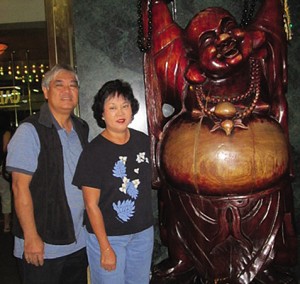
    Clifford, Sherry & the Buddah statue at the California Hotel & Casino. Rub his tummy for some good luck!

    Wong of Mililani (a little later, we convinced Nelson Lara, the best man at our wedding 37 years ago, to join us). We’ve celebrated birthdays, anniversaries — and even took our children for their 21st birthdays. And every time we go to Vegas, we travel with Vacations Hawaii.

    The Vacations Hawaii packages are great because we don’t have to worry about transportation to and from the Vegas airport; and we can eat breakfast, lunch and dinner with our free coupons (including swapping our lunch coupons for midnight steak and eggs at the California Hotel & Casino).

    When we first started going to Vegas, we rode on the city’s bus system. It wasn’t bad, but we didn’t go too far from downtown Vegas. Now, Nelson drives us around like a “local,” taking us to shopping centers, casinos and shows on the Strip, plus to Trader Joe’s.

    The weather seems to be the best for our trips in October because Vegas is still a little warm (in the 80s during the third week of this past October) and the nights are in the 50s. We usually wear shorts and T-shirts during the days and jeans or slacks at night. Since Vegas is the 9th Hawaiian Island, we always see people from “home” walking around downtown or at The Cal. The hotel is a home away from home for us, and holds so many good memories.

    Many milestones are celebrated in Las Vegas. At least that was the reason my husband and I started going to Vegas — from celebrating our 40th birthdays to this past October when we celebrated our 60th. When we started going to Vegas, we went with another couple, Sharon and Steven Wong of Mililani (a little…

  • Introducing the Hawai’i Neurotrauma Registry

    Generations - 2014-02 - Neurotrama Registry - Image 01
    Nearly 800,000 Americans have a stroke each year, according to the CDC.

    We probably all know someone who has experienced a stroke, spinal cord injury, concussion or traumatic brain injury. You may be the one this has happened to. These are called neurotraumatic injuries. Whatever the cause — a fall, burst blood vessel, car accident, sports injury, being hit by an object — the results can be devastating. They may be life-changing for the survivor and those around her or him.

    What happens to people who have had one of these neurotraumatic injuries once they leave the hospital or rehabilitation clinic? Do they return home to live? Are they able to keep a job? Can they drive anymore? Will they have to take medication for the rest of their lives? Do they need help to go to the grocery store or clean the house? Will they need assistance later down the line? Might they need a cane, walker or a wheelchair? What happens to their appetite and sleep? Why do they seem to get upset more often?

    Medical professionals know about their patients’ needs while they’re still in the hospital, clinic or other facility. However, we don’t know much about what happens to people once they leave a medical center. The Hawai‘i Neurotrauma Registry (NT Registry) wants to find out. The NT Registry is administered by the Hawai‘I Department of Health, Developmental Disabilities Division. It is managed by project staff at the Pacific Basin Rehabilitation Research and Training Center (PBRRTC).

    Help Others & Join The Registry

    The NT Registry is a voluntary, statewide effort to gather information about people of all ages who have experienced one or more neurotraumatic injury. This information helps us better understand the needs of survivors and their families. The knowledge may help develop a system of support, educate service providers and justify the need to fund services.

    The NT Registry looks to you, our kupuna, and your families and friends for assistance. If you have experienced a neurotraumatic injury, please consider becoming a part of the NT Registry. If you know of others who have had injuries, let them know about us. Every individual who becomes a part of the NT Registry has the power to help shape the future of care for people with neurotraumatic injuries.

    You may fill out the confidential survey online at http://svy.mk//1a5Ya5m. We can schedule an appointment with you in person or over the phone to help you fill out the survey if you do not have Internet access, have difficulty seeing, etc. Only with your help can the NT Registry be a success.

    __________________________________

    University of Hawaii at Manoa
    John A. Burns School of Medicine, Pacific Basin RRTC
    677 Ala Moana, Suite 202, Honolulu, HI 96813-5417
    808-692-1375/1372 | 1-866-447-9023
    HawaiiNT@hawaii.edu

    We probably all know someone who has experienced a stroke, spinal cord injury, concussion or traumatic brain injury. You may be the one this has happened to. These are called neurotraumatic injuries. Whatever the cause — a fall, burst blood vessel, car accident, sports injury, being hit by an object — the results can be…

  • Legal: The Family Meeting

    Clients often ask me, “Do you do like they do in the movies, where the attorney sits with the family and reads the will after someone dies?” I tell them that I never do that after someone dies. Most clients then respond, looking puzzled, “You don’t?” I then explain that while I never do the “reading of the will,” I do suggest to every client that they consider, when appropriate, to engage in a meaningful discussion about the estate plan while everyone is alive and well.

    I feel that clients are not only asking me to help them to prepare a Will or Trust and leave a legacy, they are asking me to help speak for them when they no longer can. I hold this as a serious responsibility, as conversations can be difficult enough when everyone is here.

    Who should attend an estate planning meeting? You; the people you appointed to carry out your wishes; when appropriate, the beneficiaries; and your professional advisors, such as the financial advisor, estate planning attorney and accountant.

    What should be talked about during this meeting? First, you will want to explain your intent and meaning in establishing this plan. In other words, the “why” of the plan. Second, you should talk about how you would like to be cared for during periods of incapacity. And third, you will want to express your wishes for care should you find yourself in an end of life situation.

    Don’t believe everything you see in the movies. Even death takes planning.


    Stephen B. Yim, Attorney at Law
    2054 S. Beretania St., Hon.
    (808) 524-0251
    stephenyimestateplanning.com

    Clients often ask me, “Do you do like they do in the movies, where the attorney sits with the family and reads the will after someone dies?” I tell them that I never do that after someone dies. Most clients then respond, looking puzzled, “You don’t?” I then explain that while I never do the…

  • New Memoir: The Society of Seven

    For five decades — from their early years in Hong Kong as the Fabulous Echoes to standing-room-only performances in clubs and concert halls around the world — the saga of the Society of Seven has been one of the most enduring success stories in show business. Now the band’s colorful history has been captured with the release of The Society of Seven: Last of the Great Show Bands, authored by the group’s longtime manager, Frances Kirk. In her lively 362-page memoir, Kirk recounts the wild ride of a revolving cast of world-class entertainers, who overcame personal tragedy to build a legacy in the roughand-tumble world of showbiz.

    Generations Magazine - New Memoir: The Society of Seven - Image 01“Simply put,” entertainment writer Wayne Harada notes in the book’s foreword, “the SOS wouldn’t have been able to succeed without Frances, and vice versa.” In the book, Kirk recounts their journey through many shining moments, including performances on The Ed Sullivan Show, headlining for more than 40 years at the Outrigger Waikiki hotel and a series of regional hit records. It is a legacy that lives on, as the Society of Seven continues to perform today.

    Intertwined with the band’s history is Kirk’s own life story. A savvy businesswoman born and raised in Hong Kong, she joined the family business, Diamond Music Company, in 1960 when her father fell gravely ill. She established the company’s recording department and concert promotion arm, building the company into a major player in the Asian entertainment industry.

    Legacy Isle Publishing. Softcover, $19.95, available at bookstores. Call 866-900-BOOK or visit www.legacyislepublishing.net.

    For five decades — from their early years in Hong Kong as the Fabulous Echoes to standing-room-only performances in clubs and concert halls around the world — the saga of the Society of Seven has been one of the most enduring success stories in show business. Now the band’s colorful history has been captured with…

  • Playing Hard

    Each year, more than a dozen teams play in the softball Hinohara Cup Tournament in Japan. The tournament is named after Dr. Hinohara who is 102 years old and still goes to work every day. He believes in an active lifestyle, as well as working in an occupation for which you are passionate. With that passion, work becomes play.

    In 2010, Hawai‘i was invited to participate in the tournament for the first time. Thirteen of Hawai‘i’s top senior softball players swept the competition, winning the Tokyo All Japan Cup, the Hinohara Cup, the Meya Makule Cup and the Grand Trophy. Although the team was invited back to play in 2011 and 2012, the To¯hoku earthquake and tsunami made it unfavorable to accept the invitation.

    Generations Magazine - Playing Hard - Image 01
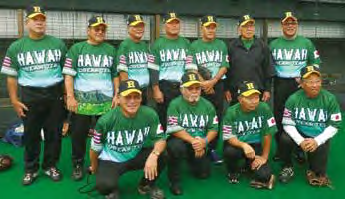
    2013 Hawaii Dream Team (top row, lt.–rt.): Robert
    Oshiro, Gary Yamaguchi, Robert Kunimitsu, Gordon
    Okuhara, James Koishigawa, Gerard Takiguchi, and
    Bobby Chinen. Kneeling (lt.–rt.): Coach Wayne Shibata,
    Clinton Tanimoto, Jeffery Kamiya and Melvin Aoki.

    In 2013, 22 teams from Japan, Taiwan and Hawai‘i participated in the Hinohara Cup Tournament. Taiwan and Hawai‘i are the only outside teams that are invited to play annually. The first day of the tournament was rained out. On the second day, the Dream Team won its first game but lost the second and was thereby eliminated. However, the nine-day whirlwind trip through Japan was an experience of a lifetime, and the team thanks Bobby Chinen Tours for the excellent escort services.

    The team looks forward to the 2015 tournament. It will visit Hokkaido and travel to Akita to play the local team, then travel to Tokyo to play in the Hinohara Cup again.

    Each year, more than a dozen teams play in the softball Hinohara Cup Tournament in Japan. The tournament is named after Dr. Hinohara who is 102 years old and still goes to work every day. He believes in an active lifestyle, as well as working in an occupation for which you are passionate. With that…

  • Braised Chicken Thighs With Tomatoes & Olives

    Featuring olive oil and herbs, this one-dish dinner cooks for less than a half an hour, yet has the satisfying, melded flavor of a long-simmered stew.

    Ingredients:

    • 1 Tbsp. olive oil
    • 8 chicken thighs (about 3 lbs.), with skin on
    • Salt and fresh ground pepper
    • 1 medium onion, chopped
    • 4-5 garlic cloves, sliced paper thin
    • 2 tsp. fresh rosemary, chopped (or 1 tsp. dry)
    • 1 14-oz. can of diced tomatoes
    • 3/4 cup black olives, sliced in half
    • 3/4 cup low-sodium chicken stock
    • 2 Tbsp. tomato paste
    • Fresh basil or green onion, thinly sliced

    Directions:

    Generations Magazine - Braised Chicken Thighs With Tomatoes & Olives - Image 01In a large pan with a lid, heat the olive oil on medium heat. Season both sides of the chicken with salt and pepper, and brown well on both sides. Remove chicken from the pan. Drain off some of the oil, leaving about 1 tablespoon.

    Add the onion, garlic and rosemary and stir for about 3 minutes, then add the chicken stock. Bring to a boil and scrap off any brown bits from the bottom of the pan. Let the liquid reduce by half. Add the tomatoes, olives and tomato paste and stir to blend. Add the chicken, skin side up, cover and simmer gently for 25 minutes.

    Before serving, top with fresh basil or green onion.
    Serves: 4 | Time: About 35 minutes


    For more of Chef Michi’s fresh recipes, visit www.cookingfreshforyou.com | 808-286-6484 | cookingfreshforyou@gmail.com Also, visit her Cooking FRESH locations: 909 Kapahulu Ave. Queens POB I – 1329 Lusitana St., Queens POB II – 550 S. Beretania St. Lunch Truck – UH Manoa on East West Road by Kennedy Theatre.

    Featuring olive oil and herbs, this one-dish dinner cooks for less than a half an hour, yet has the satisfying, melded flavor of a long-simmered stew. Ingredients: 1 Tbsp. olive oil 8 chicken thighs (about 3 lbs.), with skin on Salt and fresh ground pepper 1 medium onion, chopped 4-5 garlic cloves, sliced paper thin…

  • One-Mile Project; One Planet Community

    My passion for kupuna has grown tremendously over the past months since I first enrolled in ‘Iolani School’s “One Mile Project” class. This semester elective course is a new offering in the state-of-the-art Sullivan Center for Innovation and Leadership. The course was geared toward giving students a greater appreciation for older adults in our community (within a one-mile radius of our Moili‘ili/Kapahulu campus).

    Generations Magazine - One-Mile Project; One Planet Community - Image 01
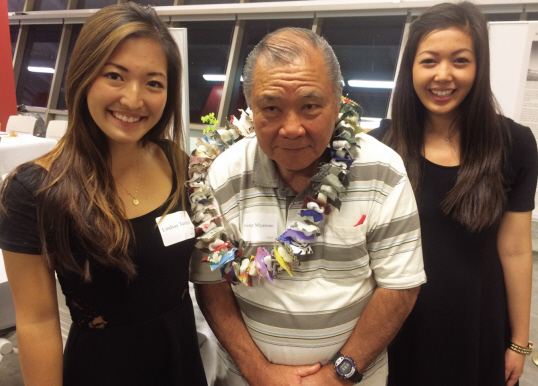
    ‘Iolani students, Lindsay Teruya (lt.) and Taylor Hamai (rt.) with a senior participant, George Miyamoto.

    Although I would love to say that I have always been this excited to help older adults, my feelings weren’t always this strong. During our first One Mile gathering, we were given an exercise to express our thoughts on kupuna. There were many negative words thrown out such as “old, slow and grumpy.” These downbeat impressions, however, slowly changed to thoughtful and respectful ideas as my class worked with nearby organizations, such as the University of Hawai‘i Center on Aging, Moili‘ili Community Center, Palolo Chinese Home, Nu‘uanu Hale, AARP and the Project Dana. With these partners, we completed walkability audits, proposed solutions to the problems in our streets, conducted interviews, learned vocabulary terms, took excursions to a Good Life Expo and nursing homes, interviewed a caretaker, conducted an empathy challenge, and reached out to a hospice patient. Thanks to these activities, we gained a better understanding of the elderly and made connections to our own lives. With a newfound love of older adults, my class has spent the past couple months putting together a project proposal that we recently presented to 60 school and community leaders in a special January 10 event.

    Our proposed “One Mile, One Planet Community Center” hopes to:

    • provide services to the elderly & our community
    • educate for the future
    • provide a new experience for all generations

    As our vision statement reads, “This Center will bring independent older adults and ‘Iolani students together through intergenerational programs that promote active aging, sharing of knowledge and service to the community.”

    We hope to improve the daily life and satisfaction of the elderly in our community. We want to work together as a school to create a thriving, age-friendly city. As thousands of Baby Boomers approach retirement each day, we hope to instill the importance of caring for our kupuna. We want to stress healthy living, so that future elderly generations may live independently and freely. It is our mission to reach out and better prepare our parents and grandparents for the upcoming stages of their lives while offering students the unique opportunity to learn from, work with, and serve our kupuna.

    Although the One Mile, One Planet Community Center is hypothetical at this point, we are confident that our project proposal can serve as a starting point for ‘Iolani and its students to be a part of helping older adults maintain active, independent, healthy lives.

    Generations Magazine - One-Mile Project; One Planet Community - Image 02
    The Sullivan Center for Innovation and
    Leadership at ‘Iolani School.
    David Franzen, photographer for Iolani. Courtesy of WSP.


    My passion for kupuna has grown tremendously over the past months since I first enrolled in ‘Iolani School’s “One Mile Project” class. This semester elective course is a new offering in the state-of-the-art Sullivan Center for Innovation and Leadership. The course was geared toward giving students a greater appreciation for older adults in our community…