Category: August – September 2021

  • August – September 2021

    [et_pb_section fb_built=”1″ custom_padding_last_edited=”on|desktop” _builder_version=”3.22.3″ background_color=”#f2f2f2″ custom_padding_tablet=”50px|0|50px|0″ custom_padding_phone=”” transparent_background=”off” padding_mobile=”off”][et_pb_row padding_mobile=”on” column_padding_mobile=”on” module_class=” et_pb_row_fullwidth” _builder_version=”3.25″ background_size=”initial” background_position=”top_left” background_repeat=”repeat” width=”89%” width_tablet=”80%” width_phone=”” width_last_edited=”on|desktop” max_width=”89%” max_width_tablet=”80%” max_width_phone=”” max_width_last_edited=”on|desktop” make_fullwidth=”on”][et_pb_column type=”4_4″ _builder_version=”3.25″ custom_padding=”|||” custom_padding__hover=”|||”][et_pb_image src=”https://generations808.com/wp-content/uploads/2021/07/GMweb_AugSept2021-Cvr_Diabetes_rgb.jpg” alt=”Cover for October-November 2017 Issue” title_text=”GMweb_AugSept2021-Cvr_Diabetes_rgb” url=”https://generations808.com/aug-sept-2021/” align=”center” align_tablet=”center” align_phone=”” align_last_edited=”on|desktop” admin_label=”Image – Issue Cover for August-Sept 2021″ _builder_version=”4.9.10″ z_index_tablet=”500″ use_border_color=”off”]


    [/et_pb_image][et_pb_cta title=”Want this issue?” button_url=”https://generations808.com/wp-content/uploads/2021/07/2021_AugSept-Diabetes_ALLsprds.pdf” url_new_window=”on” button_text=”Download it now!” admin_label=”Call To Action – Download this issue” _builder_version=”4.9.10″ background_size=”initial” background_position=”top_left” background_repeat=”repeat” button_icon=”%%98%%” button_on_hover=”off” use_border_color=”off” button_text_size__hover_enabled=”off” button_text_size__hover=”null” button_one_text_size__hover_enabled=”off” button_one_text_size__hover=”null” button_two_text_size__hover_enabled=”off” button_two_text_size__hover=”null” button_text_color__hover_enabled=”off” button_text_color__hover=”null” button_one_text_color__hover_enabled=”off” button_one_text_color__hover=”null” button_two_text_color__hover_enabled=”off” button_two_text_color__hover=”null” button_border_width__hover_enabled=”off” button_border_width__hover=”null” button_one_border_width__hover_enabled=”off” button_one_border_width__hover=”null” button_two_border_width__hover_enabled=”off” button_two_border_width__hover=”null” button_border_color__hover_enabled=”off” button_border_color__hover=”null” button_one_border_color__hover_enabled=”off” button_one_border_color__hover=”null” button_two_border_color__hover_enabled=”off” button_two_border_color__hover=”null” button_border_radius__hover_enabled=”on” button_border_radius__hover=”0″ button_one_border_radius__hover_enabled=”off” button_one_border_radius__hover=”null” button_two_border_radius__hover_enabled=”off” button_two_border_radius__hover=”null” button_letter_spacing__hover_enabled=”on” button_letter_spacing__hover=”0″ button_one_letter_spacing__hover_enabled=”off” button_one_letter_spacing__hover=”null” button_two_letter_spacing__hover_enabled=”off” button_two_letter_spacing__hover=”null” button_bg_color__hover_enabled=”on” button_bg_color__hover=”#72c9db” button_one_bg_color__hover_enabled=”off” button_one_bg_color__hover=”null” button_two_bg_color__hover_enabled=”off” button_two_bg_color__hover=”null”]

    Download your own personal copy of this issue.
    Just click the button below.

    [/et_pb_cta][/et_pb_column][/et_pb_row][/et_pb_section][et_pb_section fb_built=”1″ admin_label=”section” _builder_version=”3.22.3″ collapsed=”on”][et_pb_row admin_label=”row” _builder_version=”3.25″ background_size=”initial” background_position=”top_left” background_repeat=”repeat”][/et_pb_row][/et_pb_section][et_pb_section fb_built=”1″ admin_label=”section” _builder_version=”3.22.3″ collapsed=”on”][et_pb_row admin_label=”row” _builder_version=”3.25″ background_size=”initial” background_position=”top_left” background_repeat=”repeat”][/et_pb_row][/et_pb_section]

    The August – September 2021 issue of GM has a wealth of knowledge about topics that are relevant to today’s kūpuna – starting with our cover story on how families deal with diabetes when one or more of them suffers from the all-too-common illness. Weʻll also help you better understand life insurance and what kind…

  • Define Your Legacy’s Intentions

    According to the book, Preparing Heirs: Five Steps to a Successful Transition of Family Wealth and Values, “60 percent of transition failures were caused by a breakdown of communication and trust within the family unit.” With the aging demographic of baby boomers, the high cost of living in Hawai‘i and the increase in multigenerational homes, the potential influx in trust litigation is foreseeable. Where it is appropriate, I believe that encouraging clients to partake in difficult and potentially messy family discussions about their legacy and explaining “the why” behind their intentions is an integral part of preventing unwanted litigation. It may protect the overall health of the family. When willing clients feel the need for assistance in engaging in family discussions, a mediator may be effective in resolving any family disputes.

    I also recommend that clients further solidify their intentions by writing them down as the foundation of their estate plan. Those creating a trust should prepare written guidance as to its underlying intentions. Having a well-defined estate plan will help give you and your family more peace of mind and promote harmony. But please make sure that when you are working with your estate planning attorney that your intentions are clearly defined. It can make all the difference.


    STEPHEN B. YIM, ATTORNEY AT LAW
    2054 S. Beretania St., Honolulu, HI 96826
    808-524-0251 | www.stephenyimestateplanning.com

    According to the book, Preparing Heirs: Five Steps to a Successful Transition of Family Wealth and Values, “60 percent of transition failures were caused by a breakdown of communication and trust within the family unit.” With the aging demographic of baby boomers, the high cost of living in Hawai‘i and the increase in multigenerational homes,…

  • Ingredients for Cooking Up a Scam

    In the dozen-plus years I have specialized in prosecuting elder financial fraud cases at the Prosecutor’s Office, it has become pretty easy for me to spot and disassemble how the majority of scams work. Like how a master chef can  taste a dish and tell you the ingredients he tastes, I can smell a “business opportunity” or a get rich quick scheme and identify the individual parts of it that will reveal it to be an actual scam.

    There are always certain ingredients present in a successful con. These elements, or red flags, of a scam can include anything from creating a sense of urgency in the victim, to playing on strong emotions, like fear or joy. The more of these elements present in the con, the more likely the con will be successful.

    For example, the lottery scam (where you are told you won a prize but have to pay a fee to collect it or lose it) has a lot of these scam components. First, you are told you won a prize (getting something for nothing and the strong emotion of joy created). You have to keep the winning of the lottery a secret because of “reasons” (secrecy and isolating the victim from seeking advice). You have to pay taxes or a fee very soon before you collect your winnings (create a sense of urgency and the strong emotion of fear of losing your prize). You make a payment, only to be told there are more unexpected payments to be made (fear of losing out on your initial investment — you start chasing your money).

    photo of grandmaOnce you recognize individual components of a deal, it becomes easier to realize when something may be actually a scam as opposed to a deal of a lifetime. The IRS is calling to say you are going to be arrested unless you pay them with a gift card immediately, or you receive a message from someone claiming to be a family member in peril in need of money, aka, the Grandma Scam (sense of urgency, creation of fear and isolating the victim from seeking good advice).

    The one main ingredient that all cons seem to share is that the scam artist wants a person to make an emotional decision about money. If you find yourself about to take any action where you are about to give up anything of value and you are doing it in response to a strong emotion, stop, take a breath and see if you can smell any scam ingredients that may be present.


    If you suspect elder abuse, call these numbers:
    Police: 911 | Adult Protective Services: 808-832-5115
    Elder Abuse Unit: 808-768-7536
    For questions, email ElderAbuse@honolulu.gov

    In the dozen-plus years I have specialized in prosecuting elder financial fraud cases at the Prosecutor’s Office, it has become pretty easy for me to spot and disassemble how the majority of scams work. Like how a master chef can taste a dish and tell you the ingredients he tastes, I can smell a “business…

  • Give While You Live

    Kingdom Advisors founder Ron Blue takes an interesting approach to estate planning. He advocates lifetime giving as a way to assure that the objects of your bounty are worthy recipients of your wealth. This could play out in a couple of different ways.

    Making gifts to your loved ones during your lifetime will enable you to see how your beneficiaries handle newfound wealth. This could be a great way to “test drive” your estate plan and determine how well it works while you are still able to make adjustments. If one beneficiary turns out to be a poor steward of your wealth, you can always direct assets to other beneficiaries upon your death.

    The same principles apply to charitable gifts. Your favorite charity could turn out to be a poor manager of donated assets. It would be far better to find that out during your lifetime than to leave your loved ones regretting your philanthropic choices. If a charity does what you hope it will do with your gift, you can add to it upon your death. Not only that, but your gift may have far greater impact the sooner you make it.

    As Ron Blue says, you should consider “giving while you’re living so you’re knowing where it’s going.” It’s sound advice for anyone who prefers to test the water before diving in head first.


    SCOTT MAKUAKANE, Counselor at Law
    Focusing exclusively on estate planning and trust law.
    www.est8planning.com
    808-587-8227 | maku@est8planning.com

    Making gifts to your loved ones during your lifetime will enable you to see how your beneficiaries handle newfound wealth. This could be a great way to “test drive” your estate plan and determine how well it works while you are still able to make adjustments. If one beneficiary turns out to be a poor…

  • Demystifying Life Insurance

    The COVID-19 pandemic reminded Americans how fragile life is. Applications for life insurance policies in the United States increased 4 percent in 2020, according to the MIB Life Index. If you’re thinking about purchasing life insurance coverage, here’s some basic information to help you make an informed decision.

    Why you need it

    Death can occur when we least expect it. Life insurance provides financial support for loved ones left behind after a death from illness, accident or natural causes. Dependents or other named beneficiaries receive the proceeds of the policy, which are intended to compensate for lost income.

    Clearly, breadwinners should have life insurance to protect those who depend upon their income. But life insurance is also appropriate for others. A child with a life insurance policy is guaranteed coverage into adulthood, regardless of pre-existing health conditions. For families with young children, if a non-income-earning spouse pre-deceases the working spouse, life insurance proceeds can help cover the cost of childcare. Single people without dependents should consider purchasing a policy that covers funeral costs and any outstanding debts, so these responsibilities are not left to family members.

    Types of life insurance

    There are two main types of life insurance:

    Term life insurance — Term life insurance covers a set period of time, such as 10, 20 or 30 years. If the policyholder dies during the term of the policy, the named beneficiaries receive the death benefit. There is no residual benefit to this type of policy if the term expires and the policyholder is still living. All the money paid over the years of the term belongs to the life insurance company. On the plus side, term policies are less expensive than whole policies. Many workers choose a term policy during their working years to provide income protection to their dependents.

    Whole life insurance — Whole life insurance offers permanent, lifelong coverage. It does not end at a certain age. Once you have a whole life policy, the state of your health does not impact what you pay (whereas with a term policy, if you want to extend your coverage, your health and age determine how much more you pay each month and whether you even qualify for continued coverage). A portion of your whole life premium is invested and grows in a tax-deferred account, managed by the life insurance company, and accumulates what is called “cash value.”

    Whole life is more expensive than a term life policy, but the policyholder retains the option to borrow money against the cash value or cash in the policy. High net worth individuals sometimes use this type of policy to offset estate taxes for their heirs. Families with a special needs child may prefer this type of policy for the guaranteed income it can provide. Others simply prefer whole life for the flexibility it offers as both an investment and life insurance product.

    Get covered

    Life insurance is an important aspect of a comprehensive overall financial plan. Your financial advisor can help you review your life insurance options and select a suitable level of coverage. Buying while you are young and healthy can help you lock in a more affordable rate.


    MICHAEL W. K. YEE, CFP,® CFS,® CLTC, CRPC®
    1585 Kapiolani Blvd., Ste. 1100, Honolulu, HI 96814
    808-952-1222, ext. 1240 | michael.w.yee@ampf.com
    https://www.ameripriseadvisors.com/michael.w.yee
    Michael W. K. Yee, CFP,® CFS,® CLTC, CRPC,® is a Private Wealth Advisor, Certified Financial Planner™ practitioner with Ameriprise Financial Services Inc. in Honolulu, Hawai‘i. He specializes in fee-based financial planning and asset management strategies, and has been in practice for 36 years. Investment products are not federally or FDIC-insured, are not deposits or obligations of, or guaranteed by any financial institution, and involve  investment risks including possible loss of principal and fluctuation in value. Investment advisory products and services are made available through Ameriprise Financial Services LLC., a registered investment advisor.

    Ameriprise Financial Services LLC. Member FINRA and SIPC.
    © 2021 Ameriprise Financial Inc. All rights reserved.

    The COVID-19 pandemic reminded Americans how fragile life is. Applications for life insurance policies in the United States increased 4 percent in 2020, according to the MIB Life Index. If you’re thinking about purchasing life insurance coverage, here’s some basic information to help you make an informed decision.

  • Are You Ready for Medicare?

    Turning 65? Congratulations! You  are now eligible for Medicare! But what do you do next? Firstly, it’s important to know that your Initial Enrollment Period or IEP begins three months before you turn 65 and ends three months after your 65th birthday. Secondly, you aren’t required to sign up for Medicare. However, if you enroll after your IEP, a Late Enrollment Penalty will be added to your monthly premiums for life. Lastly, you must sign up for Medicare with the Social Security Administration (SSA), a Hawaii SHIP (State Health Insurance Assistance Program) partner. SSA.gov provides instructions on how to enroll online for Original Medicare Part A (hospital  insurance) and Part B (medical insurance). {Play}

    Once you’ve enrolled, contact the Department of Health, Hawaii SHIP to schedule a one-on-one counseling session to find the best plan option that meets your healthcare needs. Our Medicare-certified counselors will walk you through your IEP. They will explain Parts A through D, the  differences between Original Medicare and Medicare Advantage and how to avoid late enrollment penalties. You may also learn that you qualify for financial assistance to pay prescription drug costs, premiums, co-payments and coinsurances. Best of all, the service is free, unbiased and confidential.


    HAWAII SHIP
    Free, local, one-on-one Medicare counseling provided by the Hawai‘i State Health Insurance Assistance Program.
    250 South Hotel St., Ste. 406, Honolulu, HI 96813
    Oahu: 808-586-7299 | Toll free: 888-875-9229
    www.hawaiiship.org

    Turning 65? Congratulations! You  are now eligible for Medicare! But what do you do next? Firstly, it’s important to know that your Initial Enrollment Period or IEP begins three months before you turn 65 and ends three months after your 65th birthday. Secondly, you aren’t required to sign up for Medicare.

  • Advance Designation

    The Social Security Administration’s Advance Designation program allows you to pre-select a trusted individual if a time comes when you need a representative payee to help manage your money. Advance Designation enables you to identify up to three people, in priority order, who you would like to serve as your potential representative payee.

    SSA recently celebrated the one-year anniversary of its Advanced Designation program. Since its launch in March 2020, more than one million eligible individuals have opted to participate.

    You may choose an Advance Designation if you are capable of making your own decisions and are:

    • An adult or emancipated minor applying for benefits and do not have a representative payee.
    • An adult or emancipated minor beneficiary/recipient and do not have a representative payee.

    You can submit your Advance Designation information when you:

    • File a claim for benefits online at www.ssa.gov/benefits.
    • Use the application available in your personal my SSA account at www.ssa.gov/myaccount.
    • Call SSA directly.

    In the event that you can no longer make your own decisions, you and your family will have peace of mind knowing you already chose someone you trust to manage your benefits.


    800-772-1213 (TTY 800-325-0778) M–F, 8:30am–3:30pm
    SSA Office Locator: www.socialsecurity.gov
    Advance Designation FAQ: www.ssa.gov/faq (Other Topics)
    Representative Payees Information: blog.ssa.gov

    The Social Security Administration’s Advance Designation program allows you to pre-select a trusted individual if a time comes when you need a representative payee to help manage your money. Advance Designation enables you to identify up to three people, in priority order, who you would like to serve as your potential representative payee.

  • Benefits Enrollment Center

    The Benefits Enrollment Center program helps low-income kūpuna 65-plus and disabled Medicare beneficiaries to access food benefits.

    At the onset of the COVID-19 pandemic, kūpuna were encouraged to stay home and self-isolate. Dining in restaurants or grocery shopping became difficult for all of us, but particularly for seniors who were most vulnerable. The Kupuna Food Security Coalition was formed to address the nutritional needs of seniors. Community organizations stepped up to provide emergency meals and grocery buying assistance.

    Over a year later, some of the temporary emergency meal  programs have ended and the focus has turned to long-term food security solutions. The Supplemental Nutrition Assistance Program (SNAP) can help seniors stretch their dollars and give them access to nutritious food.

    The Benefits Enrollment Center (BEC) assists Medicare recipients in applying for SNAP and other benefits. The BEC team can help with eligibility guidelines, applications, information gathering and follow-up services to ensure that they have access to the benefits they are eligible for.


    CATHOLIC CHARITIES HAWAI‘I (501(c) 3 nonprofit)
    1822 Keeaumoku St., Honolulu, HI 96822
    808-527-4777 | peter.reyes@catholiccharitieshawaii.org
    www.CatholicCharitiesHawaii.org
    The Benefits Enrollment Center program of Catholic Charities Hawai‘i is made possible through grants from the National Council on Aging (NCOA) and the Walmart Foundation. Medicare recipients can contact the Benefit Enrollment Center at 808-527-4777 to learn more.

    The Benefits Enrollment Center program helps low-income kūpuna 65-plus and disabled Medicare beneficiaries to access food benefits. At the onset of the COVID-19 pandemic, kūpuna were encouraged to stay home and self-isolate. Dining in restaurants or grocery shopping became difficult for all of us, but particularly for seniors who were most vulnerable.

  • ATRC Links People With Assistive Technology

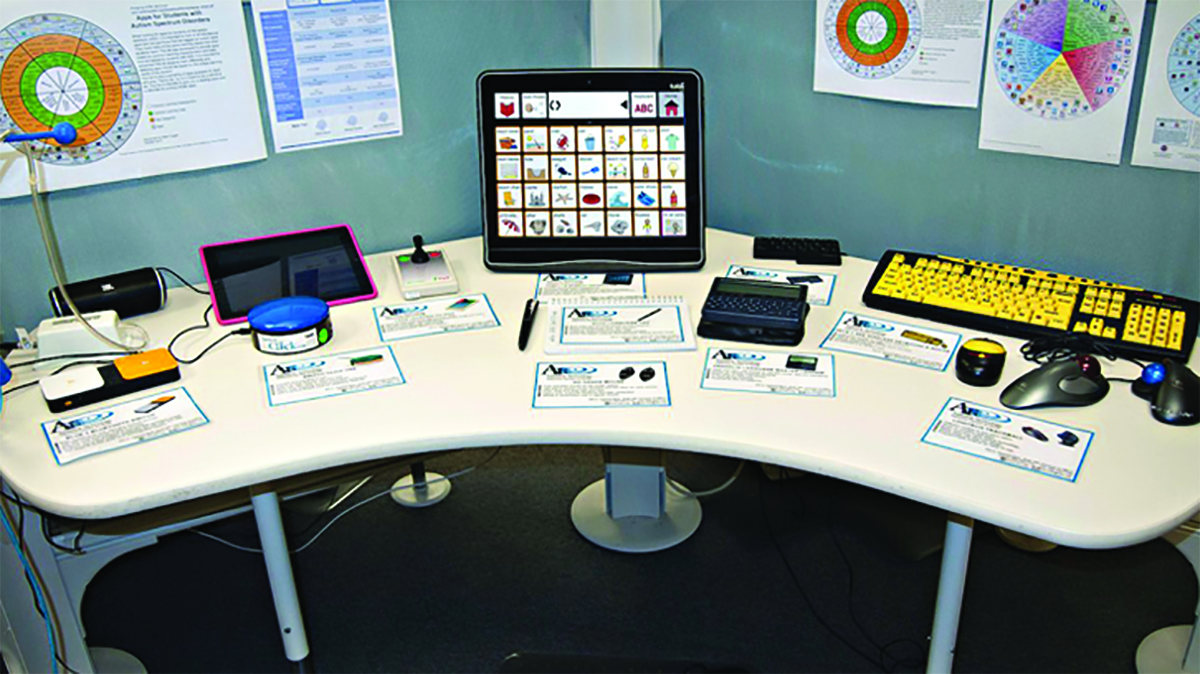
    Assistive Technology Resource Centers of Hawai‘i (ATRC) is a nonprofit resource center that provides information about assistive technology (AT) to persons with disabilities, as well as their family members, employers and educators. Its mission is to link people with AT and empower individuals through its use.

    As Hawai‘i’s designated Assistive Technology Act agency since 1991, ATRC provides technical assistance throughout the state to ensure persons with disabilities can get what they need. ATRC services include assessment, training, program information, public awareness programs, technical assistance, rehabilitation technology services, financial loans and more. ATRC reps also speak to organizations and demonstrate technology.

    ATRC is providing limited access during the pandemic. Remote assessment, training, learning groups (peer), professional learning opportunities, information and referrals are still available.


    ASSISTIVE TECHNOLOGY RESOURCE CENTERS OF HAWAII (501(c) 3 nonprofit)
    808-532-7110 | barbara@atrc.org
    www.atrc.org
    ATRC does not sell products, but recommends vendors. Device demonstration and lending  programs give individuals and groups the opportunity to make an informed choice about an AT device prior to acquiring one.

    Assistive Technology Resource Centers of Hawai‘i (ATRC) is a nonprofit resource center that provides information about assistive technology (AT) to persons with disabilities, as well as their family members, employers and educators. Its mission is to link people with AT and empower individuals through its use.

  • Caregivers Can Help Seniors Downsize

    Portrait of Young caregiver in uniform hugging smiling elderly man or patient in wheelchair during a home visit and spending time together. Love, Family or Assistant or elderly caregiver conceptWhen the time comes for Mom and Dad to move or downsize for safety reasons, they may find it difficult to decide what to do with what they consider to be their precious heirlooms. Designating items to friends, family or charities in a will or trust will ensure their destination, while passing on these items before the inevitable occurs can give both the giver and the receiver tangible pleasure in the here and now. Whether it is decided to gift now or designate items to friends, family or  charities later, the task can be a daunting one. Where to begin?

    But the first steps to giving the control of what happens to these items can be facilitated by someone close to the loved one, like a son or a daughter who is also a caregiver. That is where their role as caregiver can expand in order to help parents decide what they want to do with their prized possessions (or clutter). The intimate relationship and conversations between a caregiving relative and a loved one can help retrieve memories that can help determine what may be most valued by who.

    A caregiver can also invite family members to talk to Mom and Dad about items they would love to have someday. These conversations can move the senior to a comfortable mindset for getting rid of years of both trash and treasures, helping to spark the process of downsizing and decluttering.


    SENIOR MOVE MANAGERS/DE-CLUTTER HAWAII
    808-779-6224 | info@smmhawaii.com
    www.smmhawaii.com

    When the time comes for Mom and Dad to move or downsize for safety reasons, they may find it difficult to decide what to do with what they consider to be their precious heirlooms. Designating items to friends, family or charities in a will or trust will ensure their destination, while passing on these items…

  • Should I Become a Full-Time Caregiver?

    photo of elderly woman relaxing on wheelchair in backyard with daughterEvery year, an increasing number of seniors are needing 24/7 care, whether it is due to a fall, heart condition or old age. Some have prepared for this, determining in advance who will be their power of attorney and who will care for them at home. Others may have already decided to go to a care home or nursing home when they can no longer care for themselves.

    Often, seniors automatically think that their son or daughter will take care of them when they are old. Some children do want to become caregiver’s  for their parents. Adult children may feel the need to give back to their parents as repayment for a good upbringing. And there is also that group who knows for certain that they’d rather hire a professional to care for their loved one.

    The idea of becoming a caregiver can be daunting. Consider answering these questions before going all in on caregiving.

    Do I have the necessary skills?

    Remember, at this stage in life your loved one may need help with tasks such as toileting,  showering, dressing, feeding, transferring and medication management. Using the right techniques ensures the comfort and safety of both the loved one and the caregiver.

    Will this hurt me financially?

    Caregivers may be required to stay home fulltime, sacrifice their careers and receive little to no income every month.

    Where do I go from here?

    After weighing out the pros and cons of caregiving, research what long-term care options are  available in the community. There are residential care homes, assisted living communities, nursing homes and private duty home care companies whose staff is trained to care for seniors. Find out what options are affordable for your kupuna. If the final decision entails you staying home and caring for your parent or parents, get as much caregiver training as you can. People can have the best intentions when it comes to caregiving, but it is always best to prepare yourself.


    CAREGIVER’S HEART HAWAII
    91-1121 Keaunui Dr., Ste. 108, PMB 193, Ewa Beach
    808-425-5101 | kuunani@caregivershearthawaii.com
    www.caregivershearthawaii.com

    Every year, an increasing number of seniors are needing 24/7 care, whether it is due to a fall, heart condition or old age. Some have prepared for this, determining in advance who will be their power of attorney and who will care for them at home. Others may have already decided to go to a…

  • Senior Well-Being Amidst the Pandemic

    Our kūpuna need our attention now more than ever. The  pandemic hinders not only casual gatherings but also activities that contribute to the happiness of our elderly. This is especially hard for them, since they eagerly look forward to family time, when they get to truly enjoy our undivided attention and company.

    Physical Distancing Not Isolation

    Dr. Alicia Arbaje, an associate professor of Medicine at the Johns Hopkins University School of Medicine, says physical distancing should not be confused with social isolation. More than a year of social distancing could easily be misconstrued as a no-contact situation. Visits with our elderly, especially those in facilities, may have been affected because of this, but there are several ways to make them feel loved and cherished. Innovations such as video calling and virtual conferences are great, temporary alternatives to visitations. Families can set up video calls through their parents’ caregivers or facility management. Or we can teach our elderly to use gadgets for video  conferencing. For example, I taught my 85-year-old grandfather to use Skype!

    We should not forget, however, that being with them in person, face to face, is very important to their overall well-being.


    MALAMA NUI HOME CARE LLC
    500 Ala Moana Blvd., Bldg. 7, Honolulu, HI 96813
    808-439-4058 | malamanuillc@gmail.com
    www.malamanui.com

    Our kūpuna need our attention now more than ever. The pandemic hinders not only casual gatherings but also activities that contribute to the happiness of our elderly. This is especially hard for them, since they eagerly look forward to family time, when they get to truly enjoy our undivided attention and company.