Purchasing medication and even filling prescriptions online can be a risky process, but the chances of being victimized can be greatly reduced by taking a few necessary precautions.
Avoid email scams
Try not to respond to email “spam.” But if you are inclined to do so, do your research to see how reputable the company is and make sure the email address is legitimate. Also check where the company is based and where the products are being shipped from. Steer clear of foreign-based companies.
Save all email correspondence until you have received your product and are satisfied.
Be website-wary
If you are dealing with a vendor on a website, look closely at the URL to check that it’s not a slight misspelling of a trusted company, created to fool you. Also, check that it starts with “https:” and has a padlock icon on the left.
It is also good practice to take a screencap of the webpage listing the product you’re buying. Press Help if you are unsure how to do this.
Minimize credit card risk
If you are using a credit card, use one with a low line of credit but enough to make the purchase.
If a purchase was made by mistake, contact your credit card company’s fraud and security department immediately. They will flag any unauthorized billings from that company.
And finally, review your credit card statements regularly to detect any inconsistencies.
Purchasing medication and even filling prescriptions online can be a risky process, but the chances of being victimized can be greatly reduced by taking a few necessary precautions. Avoid email scams Try not to respond to email “spam.” But if you are inclined to do so, do your research to see how reputable the company…
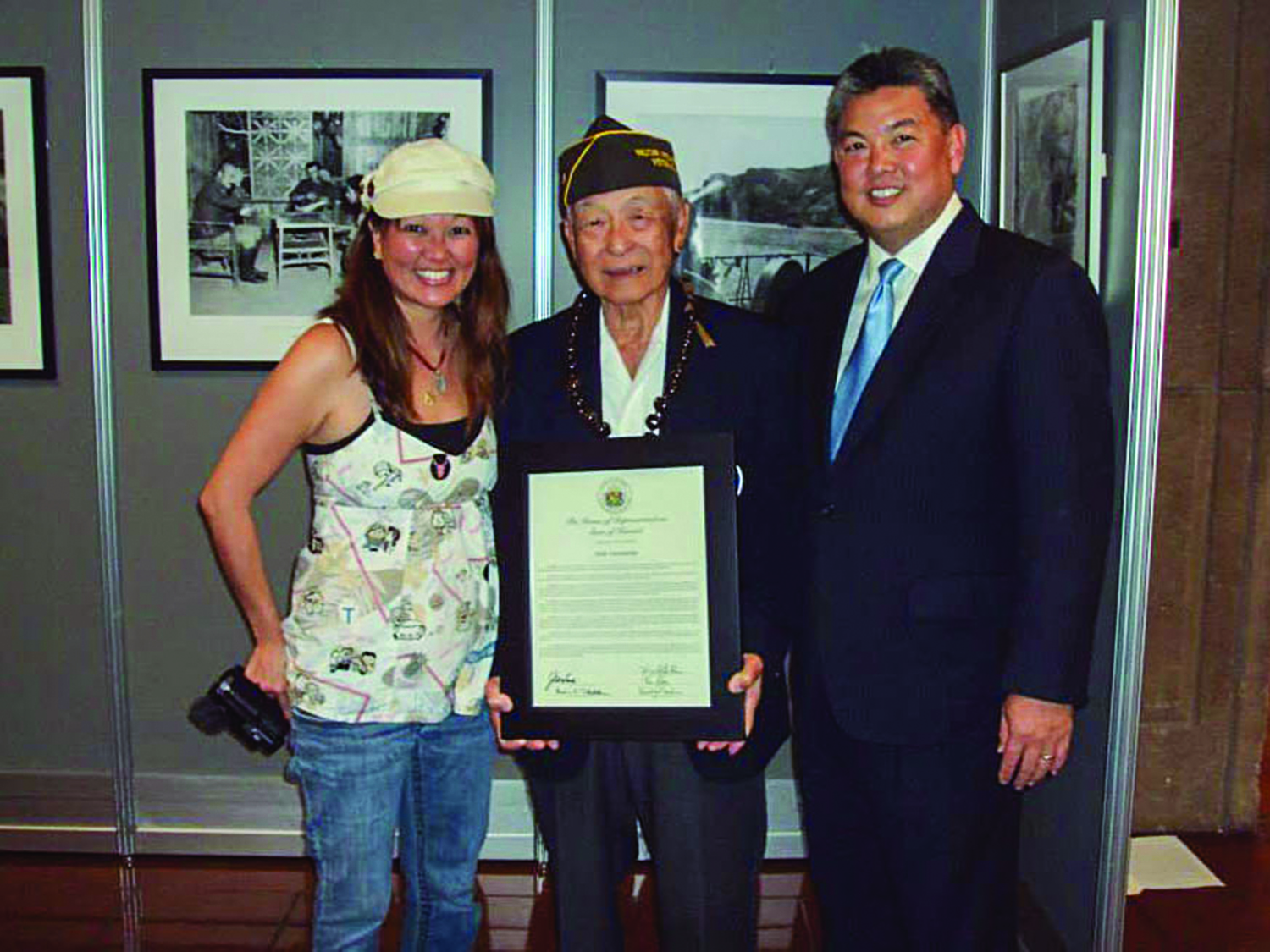
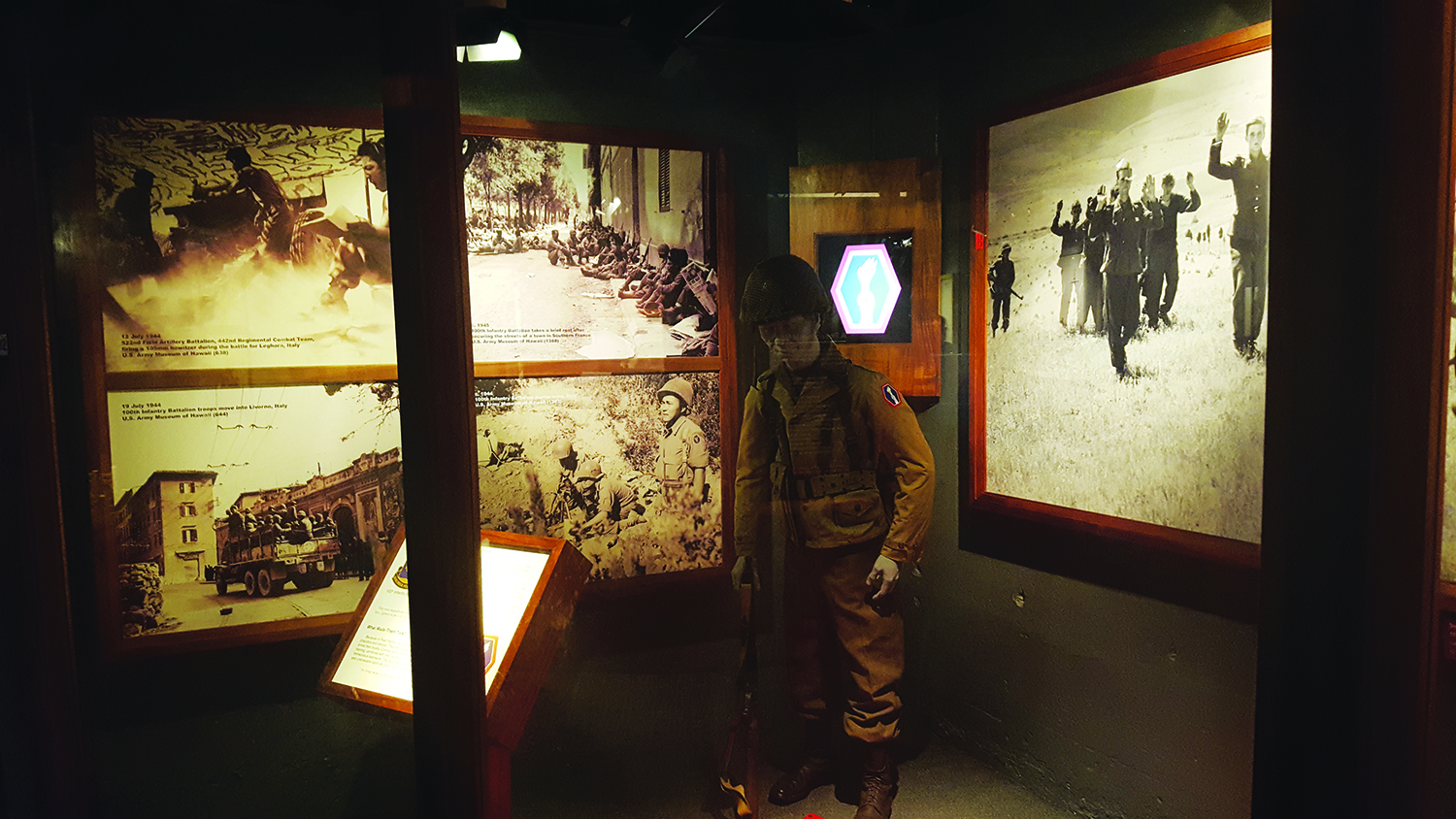
Right here in Waikīkī there is more to learn about our famous nisei “Go For Broke” 442nd Infantry Regiment — at the U.S. Army Museum of Hawaii. It’s on the corner of Kalia and Saratoga Roads inside Fort DeRussy Military Reservation park.
During World War II, U.S. Army Artillery “Battery Randolph” was located on the point. Coastal batteries were fortifications of cannon, tanks and ammunition, and bunkers strategically positioned for battle or defense. In modern warfare, batteries also facilitate battlefield communications, command operations and disbursement of artillery materials to gunnery crews.
Courtesy of U.S. Army Museum of Hawaii
Battery Randolph’s main guns were removed before the museum began, but today, its holdings include choppers, tanks, cannon, and light weaponry as well as military photos from the Vietnam, Korea and WWII Pacific Theater eras. The exhibit represents the entire post-annexation military history of the U.S. Army in Hawai‘i, including key projects of U.S. Army Corps of Engineers throughout Hawai‘i.
Of unique interest is the museum’s “Gallery of Heroes,” which displays commendations, Medals of Honor and Distinguished Service Crosses awarded to Hawai‘i veterans. It is a permanent tribute to our heroes, including the 442nd Infantry Regiment and nisei Military Intelligence Service during WWII.
Leave plenty of time to see all the vintage U.S. Army photos and identify your family members who fought for freedom. The end of summer is a great time to take your grandchildren to the museum for a powerful educational adventure.
Remember when you meet a veteran to thank them for their service.
U.S. ARMY MUSEUM OF HAWAII
2131 Kalia Road, (nr. Hale Koa Hotel) Honolulu HI 96815 808-955-9552 | www.hiarmymuseumsoc.org
Open 10 am – 5 pm, Tues.– Sat.
Audio tours: $5.00 per person
Parking: $3.50 for the first hour, $2.00 for additional hrs.
Driving directions: see their website
Bus routes to the museum: www.moovit.com
Right here in Waikīkī there is more to learn about our famous nisei “Go For Broke” 442nd Infantry Regiment — at the U.S. Army Museum of Hawaii. It’s on the corner of Kalia and Saratoga Roads inside Fort DeRussy Military Reservation park.
The measures that came into effect in wartime Hawai‘i were described by one man who helped create them, Maj. Gen. Thomas H. Green, as “a new experiment in government — a joint operation of the military, civilian business and the general public.”
Bella Fernandez. Photo courtesy UH Archives
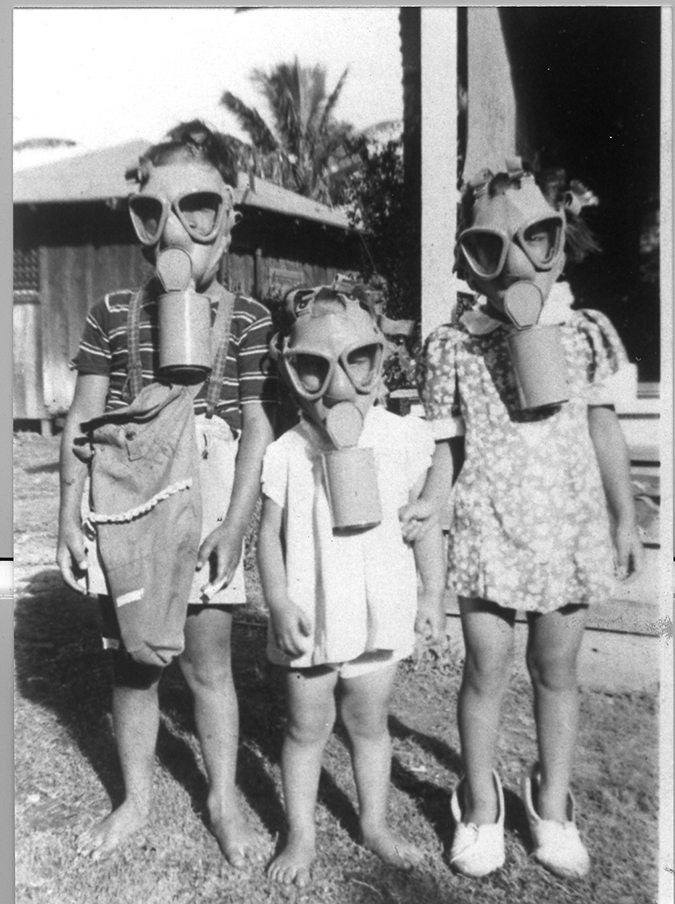
A great number of the general public were, of course, women and they played many roles on the home front. Bella Fernandez is noted as a “rated woman boat builder at the Pearl Harbor Navy Yard” on the back of a U.S. Navy photograph in the University of Hawai‘i Archives. Others did piecework at home for the armed services, some creating the camouflage netting that was put over the helmets U.S. soldiers wore, as Rosaline Ventura did. Her oral history in the UH Center for Oral History’s project “An Era of Change” also tells of day-to-day life under martial law for this mother of three young children — including toting a heavy gas mask with her wherever she went and making sure the keiki had theirs.
Many women already worked in professions that could immediately make a useful contribution to the war effort. In the immediate aftermath of the bombing, all schools were closed for a time, but teachers were reassigned to assist in registering the entire population for ID cards. For public health reasons, everyone had to be immunized against typhoid, and nurses played their part in getting that done. Office workers formed a Women’s Volunteer Army Corps, many of its members working long hours in the offices of military staff.
Children in gas masks. Photo courtesy of the Japanese Cultural Center of Hawai‘i
“Society women,” whose household and family obligations were taken care of by paid staff, volunteered for a myriad of roles. The Red Cross Motor Corps, composed of a group of about 38 women, operated a 24-hour ambulance service as part of Civil Defense. Others volunteered their time on the many committees that gave support to agencies created to deal with specific wartime needs, including the Evacuee Assignment Office.
In total, 13,000 women and children were evacuated to the mainland, most of them dependents of military personnel. Hawai‘i’s Military Governor, Lt. Gen. Delos C. Emmons, resisted any mass evacuation of civilians of Japanese ancestry believing it would be illegal and would adversely affect the war effort. The military did, however, force many families from their homes and land. In her oral history, Ruth Yamaguchi tells how their home at Pu‘uloa was commandeered to house soldiers. Her father found work at Pearl Harbor and she herself left school before graduation to work at the Hawaiian Army Exchange.
The measures that came into effect in wartime Hawai‘i were described by one man who helped create them, Maj. Gen. Thomas H. Green, as “a new experiment in government — a joint operation of the military, civilian business and the general public.” A great number of the general public were, of course, women and they played many…
What do singer Cyndi Lauper, comedian Tim Allen, wrestler Hulk Hogan, attorney Marcia Clark and politician Jeb Bush have in common? They were born in 1953 and are turning 65 this year, along with many others who may not enjoy fortune or fame. Celebrity or not, if you share their birth year and you or a spouse/partner worked and paid Medicare taxes, you may qualify for valuable Medicare insurance benefits.
Being unaware of the specific time periods to enroll in Original Medicare and Prescription Drug Plans, along with additional options that may be available in your region, can result in gaps in coverage or late enrollment penalties. In some cases, you may not be required to enroll at 65, or may have the option of a former employer’s retiree insurance coverage. You may also qualify at any age, if you are receiving Social Security Disability benefits and meet additional eligibility requirements.
Celebrities may give a personal assistant or trusted advisor prior written authorization to contact Social Security on their behalf, but you may need to figure things out on your own. Start learning the basics by reading: www.ssa.gov/pubs/EN-05-10043.pdf
When Singer Billy Joel was recently asked on his 69th birthday what it’s like to get older, he replied: “My best is yet to come!” So, figure out your Medicare insurance and prepare for your best!
MEDICARE MOMENT WITH MARTHA A radio program with Martha Khlopin
KHNR-690AM: Sat., 2 pm–2:30 pm, Sun., 9:30 am–10 am 808-230-3379 | getmartha@aol.com
What do singer Cyndi Lauper, comedian Tim Allen, wrestler Hulk Hogan, attorney Marcia Clark and politician Jeb Bush have in common? They were born in 1953 and are turning 65 this year, along with many others who may not enjoy fortune or fame. Celebrity or not, if you share their birth year and you or…
Momentia (rhymes with dementia) is an arts-based movement targeting persons with dementia and their care partners
that “celebrates life in the moment.” It is a strengths-based grassroots movement to empower and energize those impacted by memory loss to remain connected and active in the community. It encourages them to take the lead in organizing a wide variety of dementia-friendly recreational activities that typically take place in “age neutral” public venues. Such activities include art classes, music, folk dance, improv, community gardening and walking groups, or simply hanging out at a Memory Cafe. Being involved in selecting and creating these activities enables persons with dementia to develop and participate in dementia-friendly communities, as they would like them to be.
While not minimizing the challenges that accompany this disease, the movement encourages a positive, strengths-based stance that focuses on remaining abilities of persons with dementia to engage in and enjoy activities they find meaningful and to engage in and give back to the community. Momentia endorses the “new dementia story,” which proposes a radical rethinking of dementia life experiences: “(1) There is life beyond a diagnosis — a life that includes the possibility for joy in the midst of challenge. (2) Persons living with dementia remain a vital part of the community and deserve the opportunity to stay connected and engaged. (3) Persons living with dementia are the experts on their own experience and their valuable perspectives must be recognized. (4) By working together we can transform what it means to live with dementia in the community, changing the story from one of despair to one of hope.” (www.momentiaseattle.org/new-page-4).
Local Momentia organizers work in teams of 8–12 community members and organizations and include persons with dementia, care partners, and persons working in dementia-friendly programs. Team members meet quarterly, maintain the website, mentor program development, and orchestrate events. The “Guiding Principles” of the movement require that any Momentia event: (1) Celebrates the strengths of persons living with dementia and includes their voices in decision-making and implementing programs; (2) Is open to the public and publicized to include both persons with dementia and all other members of the community, and takes place in a community setting; and (3) Involves an opportunity for engagement and empowerment in the community, a chance to connect with others and to make a difference.
Momentia has the potential to impact those without dementia, as well. Momentia events are inclusive; anyone in the community can join them and are encouraged to do so. This level of participation requires that community members be “dementia aware,” i.e., informed about dementia, committed to principles of inclusion, respectful and lending support as needed.
Hawai‘i is taking a big step toward developing dementia awareness through the Dementia Friends initiative, which is a partnership between Age-Friendly Honolulu, the Hawaii Alzheimer’s Disease Initiative at UH, and the State Alzheimer’s Disease and Related Dementias taskforce. It offers brief seminars on the basics of dementia to community groups and encourages participants to then use that knowledge to engage in positive interactions of some kind. For information, go to: www.agefriendlyhonolulu.com/dementia-friends/.
Momentia (rhymes with dementia) is an arts-based movement targeting persons with dementia and their care partners that “celebrates life in the moment.” It is a strengths-based grassroots movement to empower and energize those impacted by memory loss to remain connected and active in the community.
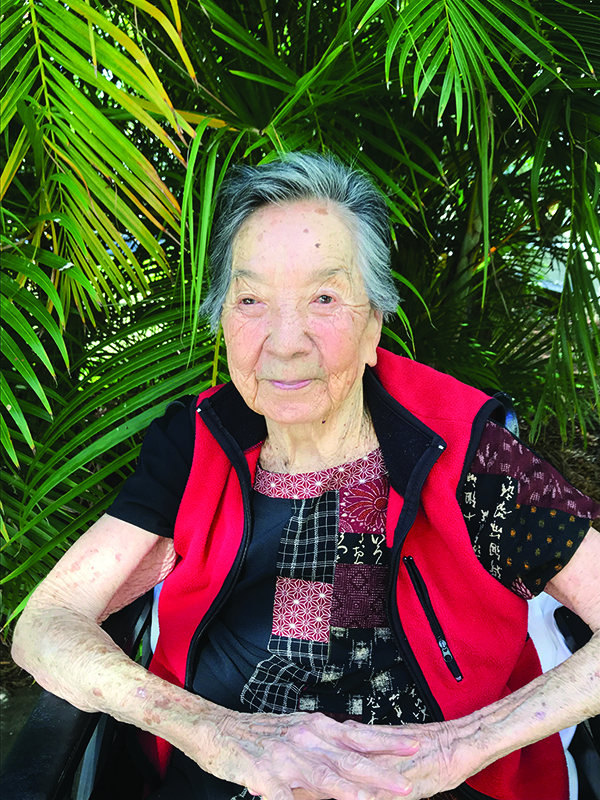
Born in ‘Ewa to plantation workers, Sadie (Yasui) Kaya had the best childhood ever. Her memory of growing up there is so strong today, at the age of 103, that she sang a childhood song to me: “Ewa is our happy home. Yes, yes, oh yes. Never from her shall we roam. No, no, oh no. Oh how happy now are we, when we see the DPD. Soon the waters we shall see. Sing, children, sing.”
Sadie, her four brothers and a sister enjoyed ‘Ewa’s playgrounds, gyms and baseball fields. Like her brothers, Sadie was quite an athlete. Her sister Lorraine owned the Ewa Tavern with husband Eddie, who Sadie said was a great cook. This well-known restaurant had patrons coming from as far as Barbers Point for delicious meals and pies.
Sadie married and worked at the Ewa School’s cafeteria on Renton Road. She told me that the “Lincoln, the Frontiersman” statue was donated by Katherine Burke. My research showed Katherine McIntosh Burke was a teacher and principal there from 1919 to 1927. The statue was unveiled on February 12, 1944 and a celebration is held every year on Lincoln’s birthday in front of it.
Her great memories of ‘Ewa make Sadie very happy. She is called the “Ewa Queen” by her friends and the staff of the Care Center of Honolulu. I thanked her for sharing those memories, which she said “many Ewa people will remember too.”
Stories for and about seniors and their caregivers are always worth sharing, such as 100th birthday announcements. Send stories and photos to Sherry Goya.
808-722-8487 | sgoyallc@aol.com
Born in ‘Ewa to plantation workers, Sadie Kaya had the best childhood ever. Her memory of growing up there is so strong today, at the age of 103, that she sang a childhood song to me: “Ewa is our happy home. Yes, yes, oh yes. Never from her shall we roam. No, no, oh no.…
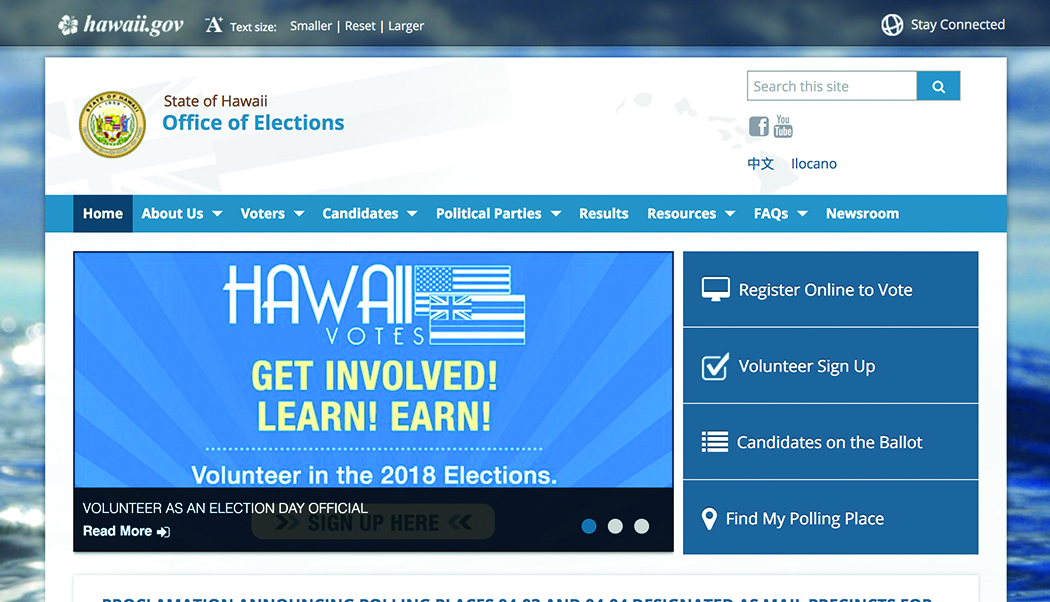
The Office of Elections and county clerks of Hawai’i are looking for volunteers to help conduct the 2018 General Election on Tuesday, November 6.
More than 4,000 volunteers are needed to fill various positions on Election Day which include assisting voters at the polling place, transporting election materials and supplies, and resolving inquiries from the control center.
It is a great opportunity to get involved and contribute to the community. Many volunteers choose to work at their local polling place where they can help their fellow neighbors cast their ballot. Volunteers receive a stipend ranging from $85 to $175, depending on the position. Organizations looking for fundraising opportunities can also participate as a group and donate their stipends directly to their own project.
Qualifications to volunteer:
✓ 16 years old by June 30, 2018
✓ Registered to vote in Hawai‘i
✓ Able to read and write English
The Office of Elections and county clerks of Hawai’i are looking for volunteers to help conduct the 2018 General Election on Tuesday, November 6. More than 4,000 volunteers are needed to fill various positions on Election Day which include assisting voters at the polling place, transporting election materials and supplies, and resolving inquiries from the…
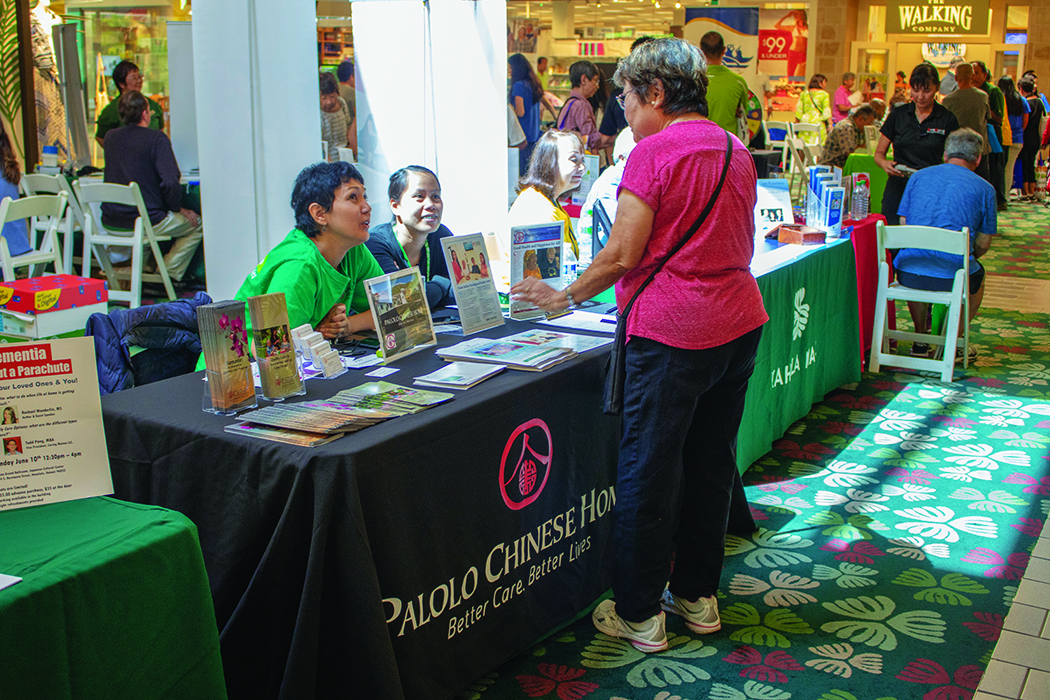
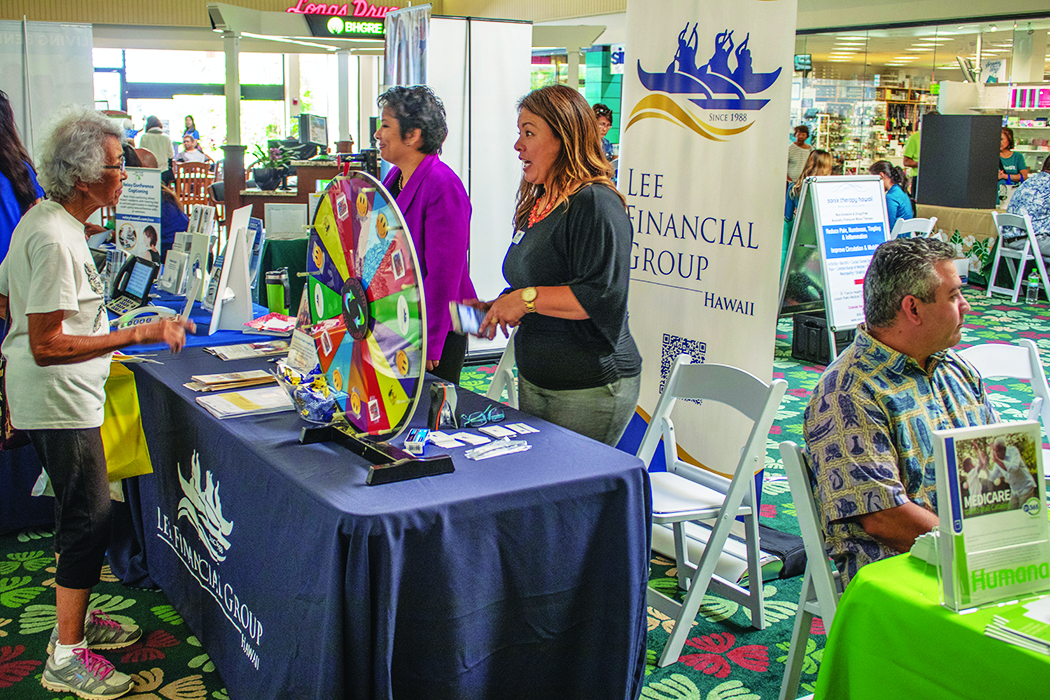
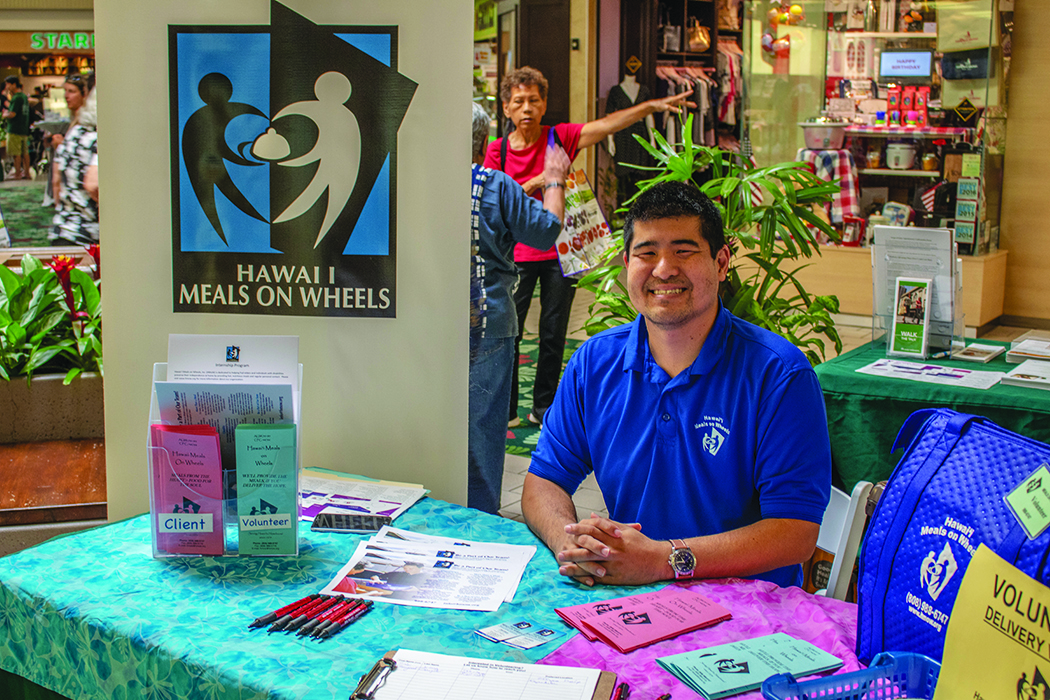
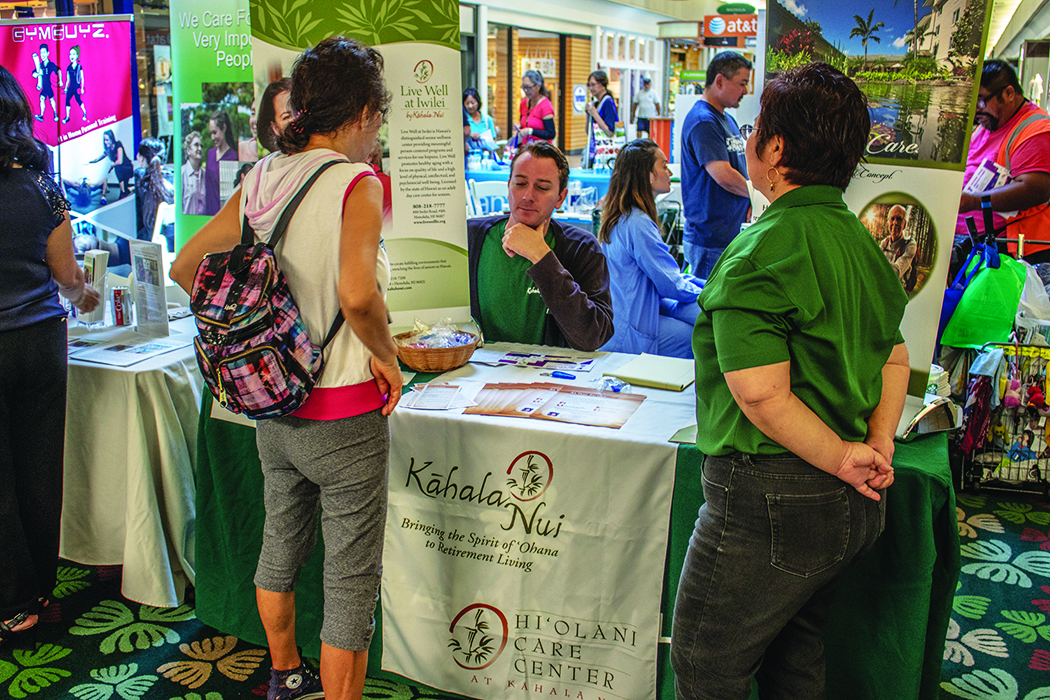
The YMCA’s National Senior Health & Fitness Day was enjoyed by many on Wednesday, May 30th, at the Kahala Mall. The YMCA thanked the Kahala Mall and Generations Magazine for their co-sponsorship of the day. A number of nonprofit organizations participated, as well as more than 30 Generations partners, who offered valuable information to seniors and their families. Demonstrations were held throughout the day, closing with a Vacations Hawaii drawing.
The YMCA’s National Senior Health & Fitness Day was enjoyed by many on Wednesday, May 30th, at the Kahala Mall. The YMCA thanked the Kahala Mall and Generations Magazine for their co-sponsorship of the day. A number of nonprofit organizations participated, as well as more than 30 Generations partners, who offered valuable information to seniors…
As morning dawned on December 5, 1941, a fisherman cast his net along O‘ahu’s north shore. A college student helped his father open a new business. A volunteer took kids to the beach in Waimānalo. Two University of Hawai‘i students, watching soldiers running drills nearby, talked about war preparations while they checked out the surf. It was pretty much like most other days, for most people.
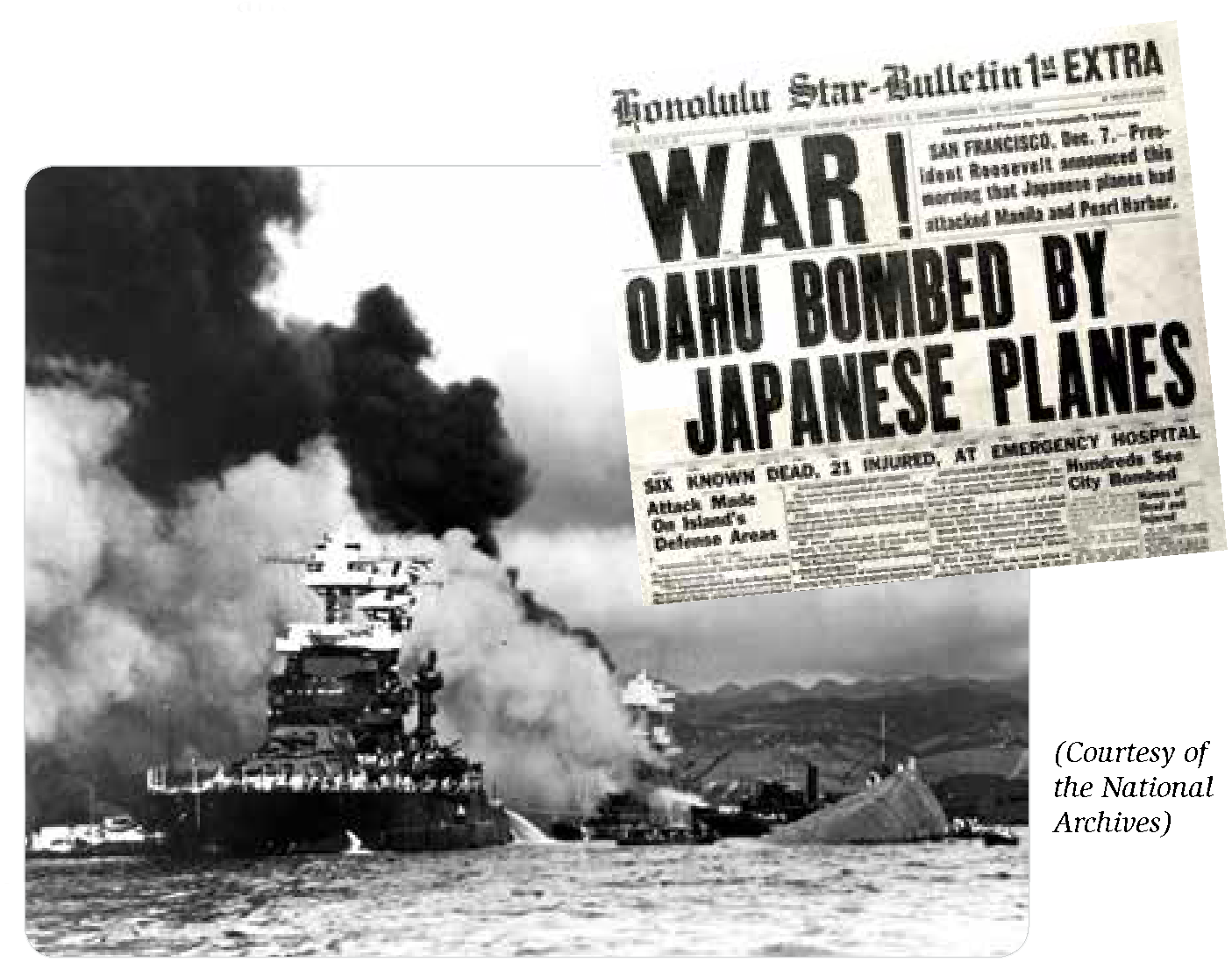
But Sunday, December 7, 1941, would become known as “a date which will live in infamy” and President Franklin D. Roosevelt would announce to the nation the next day that, early on Sunday morning, “the United States of America was suddenly and deliberately attacked by naval and air forces of the Empire of Japan.”
The impact of that attack led to events that would change the life of every person in the U.S.— especially those living in Hawai‘i — and especially those of Japanese descent.
The bombs that dropped on Pearl Harbor exposed fears, suspicions, and distrust toward Japanese immigrants (issei) and their American-born children (nisei).
The days leading up to December 7 were idyllic for many, including Japanese American youth, most of whom had never been to Japan and whose patriotism for America ran deep.
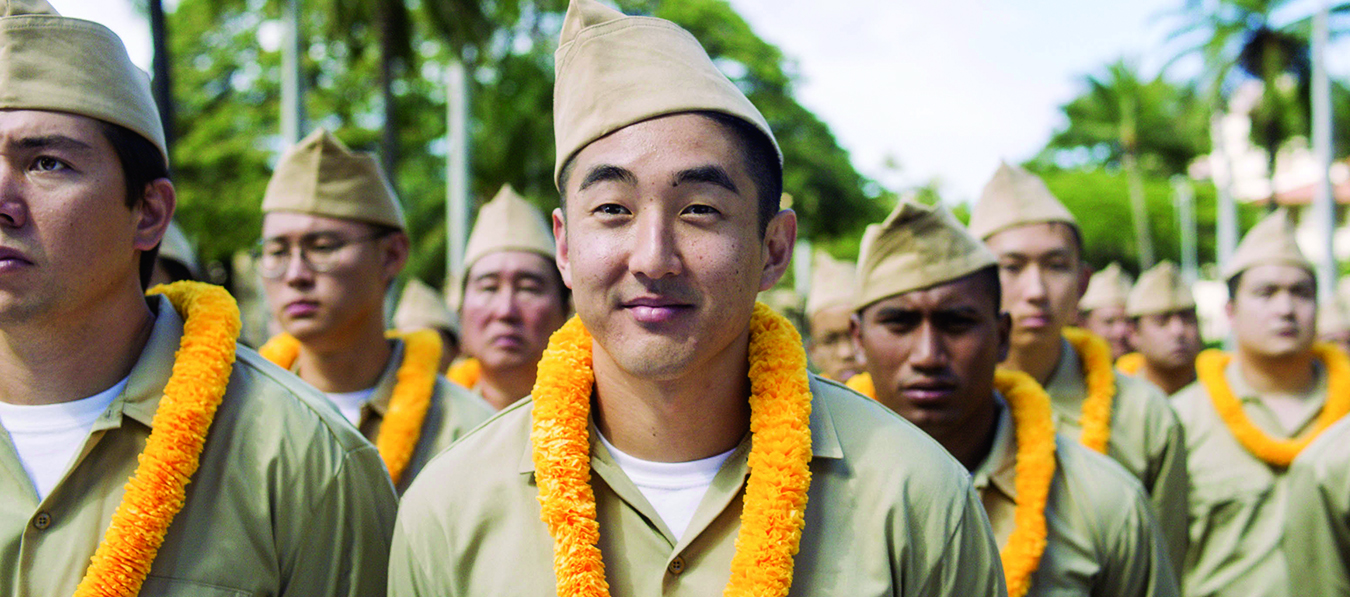
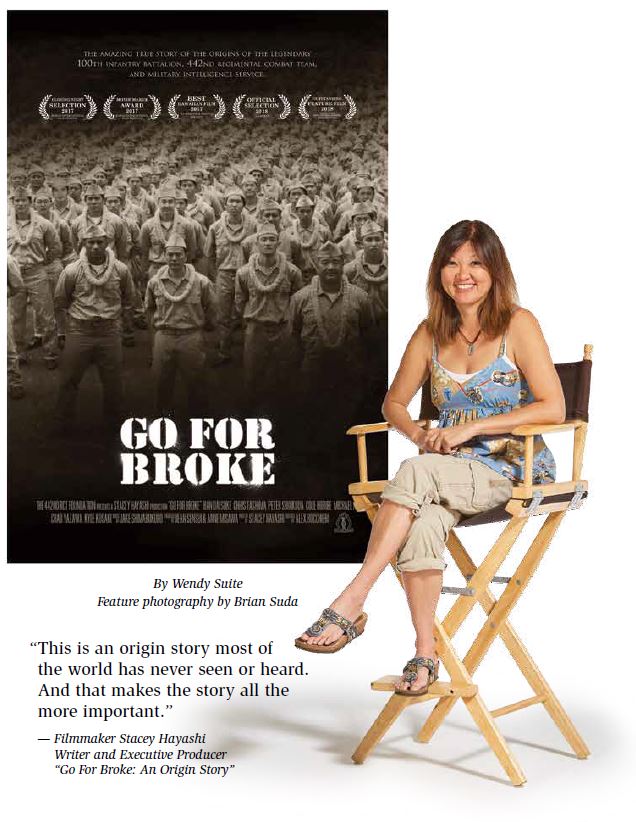
It’s against this backdrop that a new, locally produced film, “Go For Broke: An Origin Story”—written and produced by Stacey Hayashi — tells the true story of the origins of the all-Japanese American military units: the 100th Infantry
Battalion, 442nd Regimental Combat Team, and Military Intelligence Service (MIS) during World War II.
A bow-on view of the lightly damaged battleship USS Maryland with the burning USS West Virginia behind her and the capsized USS Oklahoma beside her, Pearl Harbor, US Territory of Hawaii, 7 Dec 1941.
True, untold stories
Like today, most people of Japanese descent born in Hawai‘i in the early 1900s felt fully American. It was the only country they knew.
Why, then, did Japanese Americans feel a need to prove their loyalty to their country?
Why did the 442nd adopt the motto: “Go For Broke,” meaning ‘risk it all’ or ‘shoot the works’?
What compelled them to show such selfless courage on the battlefield that theirs would become the most decorated combat unit for its size and length of service in American history?
The answers to these questions can be found in the untold stories of these humble, loyal, and in many ways, ordinary Americans whose actions proved their loyalty to their country.
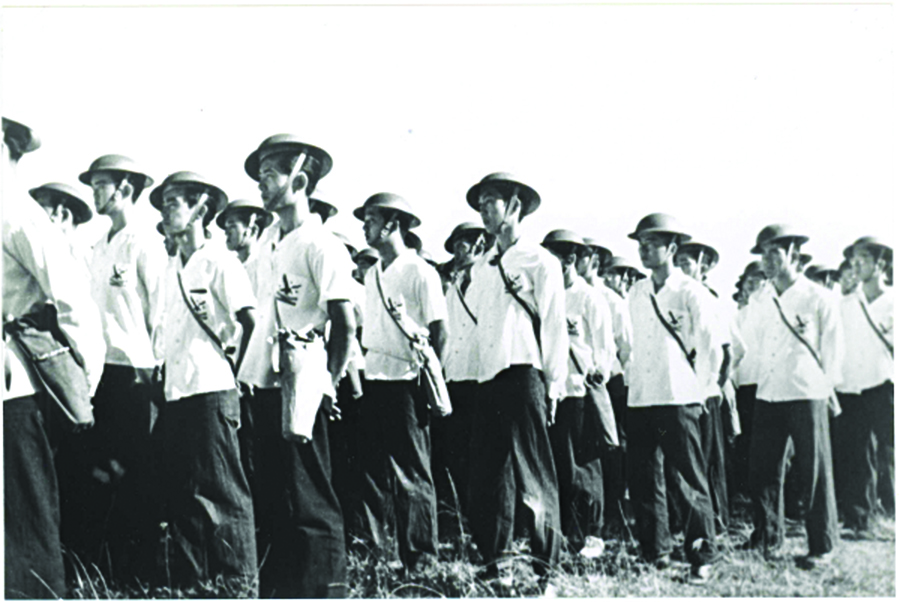
Above: Varsity Victory Volunteers at work building field ice boxes in Hawai‘i. Below: VVV assembled in formal dress with gas masks. Identifiable men are Harry Sato, Yoshiyuki Hirano, Yasuhiro Fujita, James Okuda, David Fujita, Thomas Shintani, Masato Yoshimasu, Minoru Ikehara, and James Oka. [Courtesy of Ted Tsukiyama]
The fight to fight
The first of these untold stories was the fight for the right to fight for their country. Before the nisei soldiers could display extraordinary valor against the Nazis in Europe, they faced tremendous adversity on the home front.
Few people were aware then, or even now, that 4,000 Japanese Americans were already serving in the U.S. armed forces at the time of the attack on Pearl Harbor, most of whom were in Hawai‘i, serving draft time.
Soon after the Japanese attack, Americans of Japanese Ancestry (AJAs) were reclassified 4-C: “enemy aliens,” ineligible to serve in the U.S. military — despite being U.S. citizens. AJAs already in the military were discharged and stripped of their weapons, simply because of their race.
Other AJAs, who wanted nothing more than to fight for the country of their birth, were denied that opportunity, simply because of their race.
Few people are aware that the 442nd Regimental Combat Team wasn’t organized until more than a year after the start of the war—a critical period of time when Japanese in America faced racism, discrimination, arrests by the FBI, and mass incarceration on the U.S. West Coast. Even fewer people are aware of the circumstances and actions which led to its formation—stories which form the heart of the movie “Go For Broke: An Origin Story.”
On December 7, members of the university ROTC were activated into service as the Hawai‘i Territorial Guard (HTG). They were assigned to protect ‘Iolani Palace, other government buildings, and utility and military installations — proud to serve their country and trusted to repel the impending invasion. But then the soldiers became highly discouraged when their own government called them: enemy aliens.
That’s when a little-known hero stepped into the story. A community leader and Executive Secretary of the Atherton YMCA, Hung Wai Ching empathized with the dejected college students and listened as they said they wanted to prove their loyalty to their country by fighting for it.
Ching encouraged them to volunteer their service as non-combat civilian laborers.
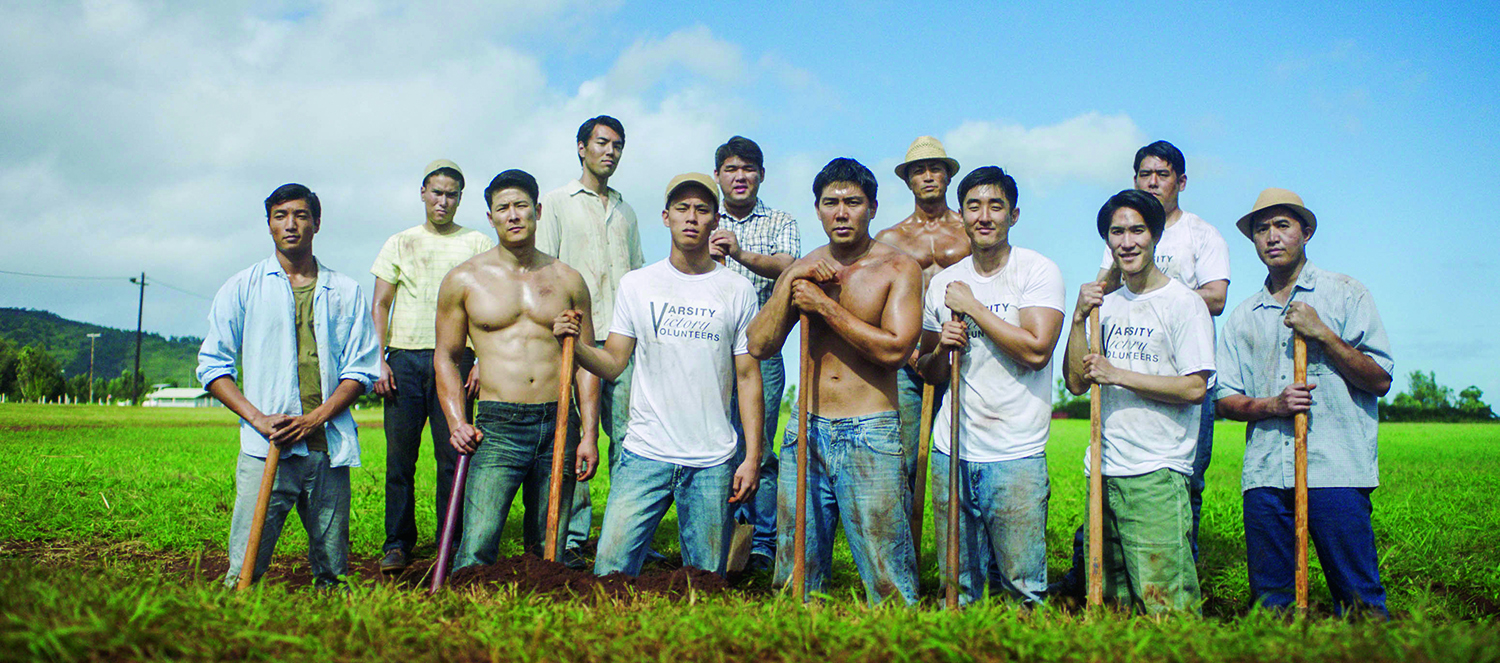
“If they don’t trust you with a gun, maybe they’ll trust you with a pick and shovel,” he said. And so began nearly a year of service for 169 university students, assisting the war effort in a military labor battalion. The former university ROTC students called themselves the Varsity Victory Volunteers (the VVV, or Triple V), and they built roads and buildings, and broke rocks — armed, not with rifles, but with picks and shovels, hammers and saws, crowbars, and sledgehammers.
In June 1942, the AJA soldiers of the 298th and 299th Infantry were segregated into the Hawai‘i Provisional Battalion, and sent out of Hawai‘i to basic training in secret. They became the 100th Infantry Battalion (Separate), an orphan unit which no one wanted, at first. But their record-breaking performance in basic training proved that AJAs would be outstanding American soldiers.
Meanwhile, at home in Hawai‘i, the dedicated and loyal VVV impressed military officials, which helped change the minds of military and political leaders — paving the way for the formation of an all-Japanese-American unit: the 442nd RCT.
The legendary 442nd RCT
In February 1943, the War Department called for 1,500 AJA recruits for the 442nd. Because of their role in effecting the creation of the 442, members of the VVV were the first to hear the news and they voted to disband so they could join the unit.
On the U.S. mainland, 1,208 recruits volunteered from inside concentration camps, where their families would remain incarcerated by President Roosevelt’s Executive Order 9066.
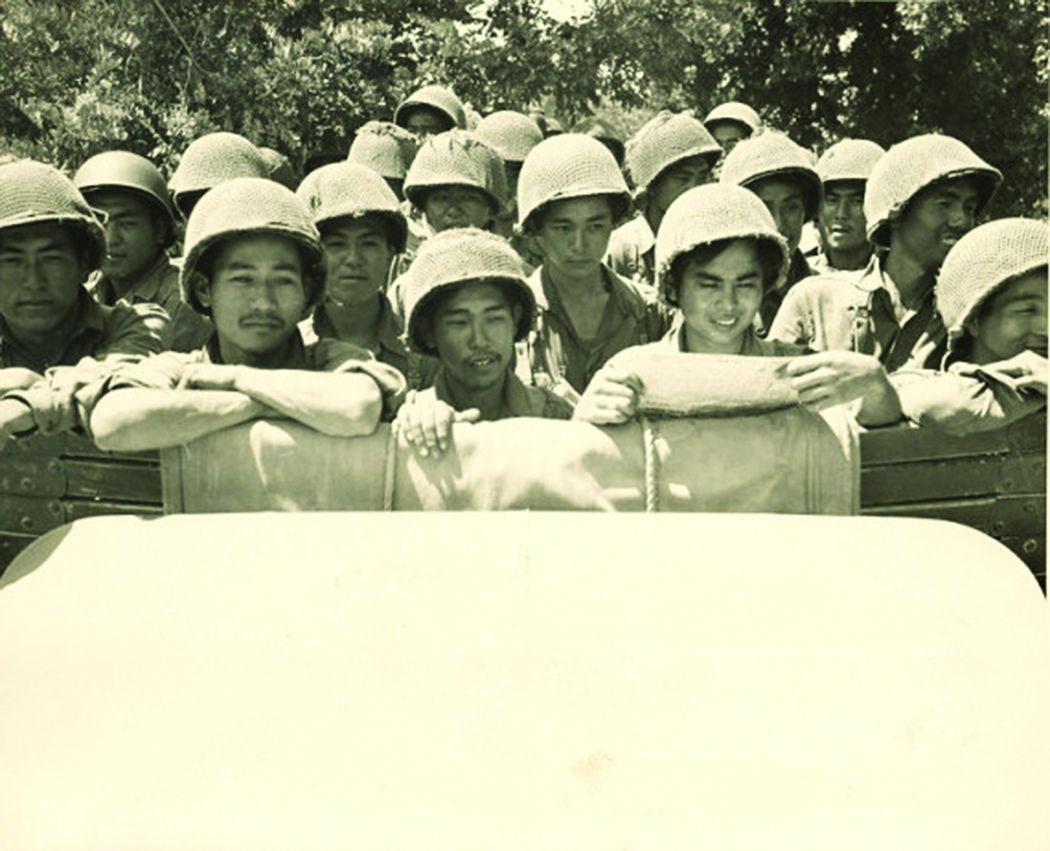
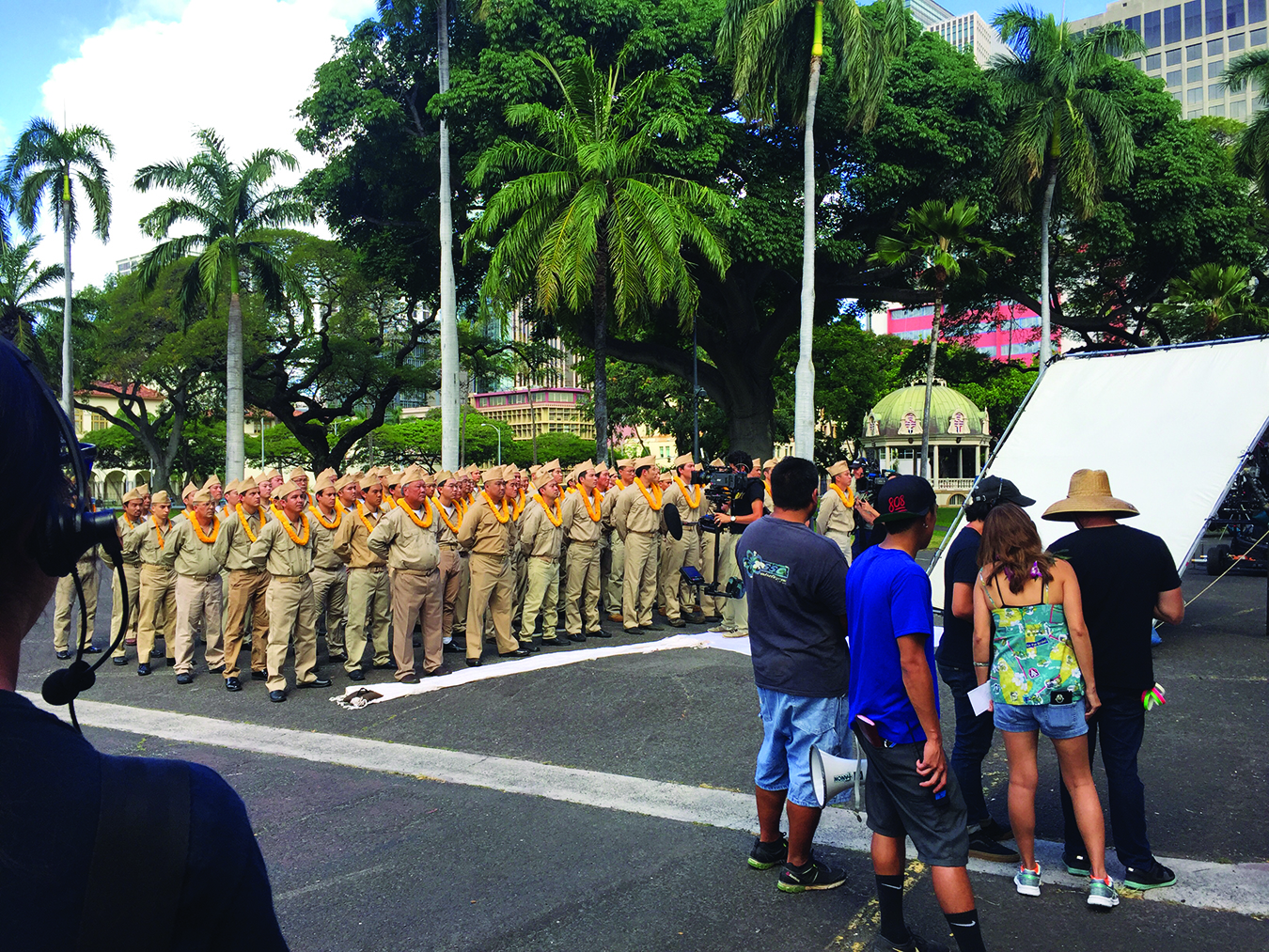
In Hawai‘i, almost 10,000 volunteered. And on March 28, 1943, 2,686 members of the newly-formed 442nd Regimental Combat Team marched down King Street, lined up at ‘Iolani Palace, and then headed off to basic training on the U.S. mainland and onward to European battlefields.
In just two years of combat, 14,000 men served in the 442nd, with a well-documented record of bravery that is unequaled to this day.
Much less is known about the vital roles and great danger faced by thousands of nisei linguists who served in the Military Intelligence Service (MIS). Their work as interpreters, interrogators, and translators was strictly classified during the war and for decades beyond.
A record of heroism and sacrifice
The 100th/442nd RCT is the most highly decorated unit in U.S. military history for its size and time in combat. Its 18,143 individual and unit decorations include: 9,486 Purple Hearts, eight Presidential Unit Citations, 21 Medals of Honor, 33 Distinguished Service Crosses, one Distinguished Service Medal, 559 Silver Stars, 22 Legion of Merit Medals, 4,000 Bronze Stars, 15 Soldier’s Medals, 12 French Croix de Guerre, two Italian Medals for Military Valor, and a great many more.
In 2010, the Congressional Gold Medal was awarded to members of the 100th/442nd and MIS. And surviving 442nd members have been honored with France’s highest and oldest award, created by Napoleon himself: “Chevalier dans l’Ordre National de la Légion d’Honneur” (Knight in the National Order of the French Legion of Honor) for their key participation in the liberation of France during WWII.
On July 15, 1946, President Harry S. Truman welcomed members of the 442nd to the White House. Acknowledging the challenges they faced at home and abroad, he said: “You fought not only the enemy but you fought prejudice, and you have won.”
Top: Japanese-American troops of 100th / 442nd Regimental Combat Team leaving for regimental reserve after 16 days of fighting, Castellina Sector, near Livorno, Italy, July 1944. Center: Japanese-American soldiers of the U.S. 100th Infantry Battalion marching in the Valletri area of Italy, May 1944. Above: Nisei linguists S. Phil Ishio and Arthur K. Ushiro helped interrogate a Japanese prisoner in Papua New Guinea, 1943. (Photos courtesy of the National Archives)
A local girl needing to tell a local story
“The untold story is the adversity these young men faced, the character they showed, for the 442 to be created in the first place.”
— Stacey Hayashi
It’s taken local girl Stacey Hayashi more than 15 years to bring this story of the 100th/442nd and MIS to the big screen. Her dream — to perpetuate stories like this for today’s youth and for future generations — took perseverance and sacrifice, like that of the veterans she passionately honors with this film.
To make her dream come true, the software engineer had to become a filmmaker. She had to become a fundraiser. She had to gather resources, conduct interviews, and write the screenplay. There was a lot to learn. But the resourceful serial entrepreneur, writer, and designer was determined that somehow, the stories of veterans who became her dear friends and family would be told.
“People know about the 100th/442 and the bravery they showed, fighting the enemy in Europe, liberating towns in Italy and France,” she said. “But most people don’t know what had to happen for the 100th or 442nd to even be formed,” she added, referring to the racial discrimination faced by Japanese in Hawai‘i and the U.S. West Coast before and after December 7.
Stacey believes that “films can be powerful tools in bringing stories to light and keeping them alive, as well as a source of healing.”
“Sharing stories or seeing them told can be cathartic for survivors. Hopefully, it will also open up dialogue between survivors and their families,” she said. “Though we couldn’t tell every story, I tried to include as many as we could. I hoped to capture the spirit of who they were and are, their happy-go-lucky attitudes and kolohe natures, even in the face of such great adversity.”
She wished all her veteran friends would see the film and know that they were remembered and appreciated. Sadly, Assoc. Producer Eddie Yamasaki of the 442nd RCT I Company, who helped champion the movie for 15 years, died a few months before its release. Also, Congressman K. Mark Takai, a steadfast advocate, succumbed to cancer in 2016. The film is dedicated to his memory.
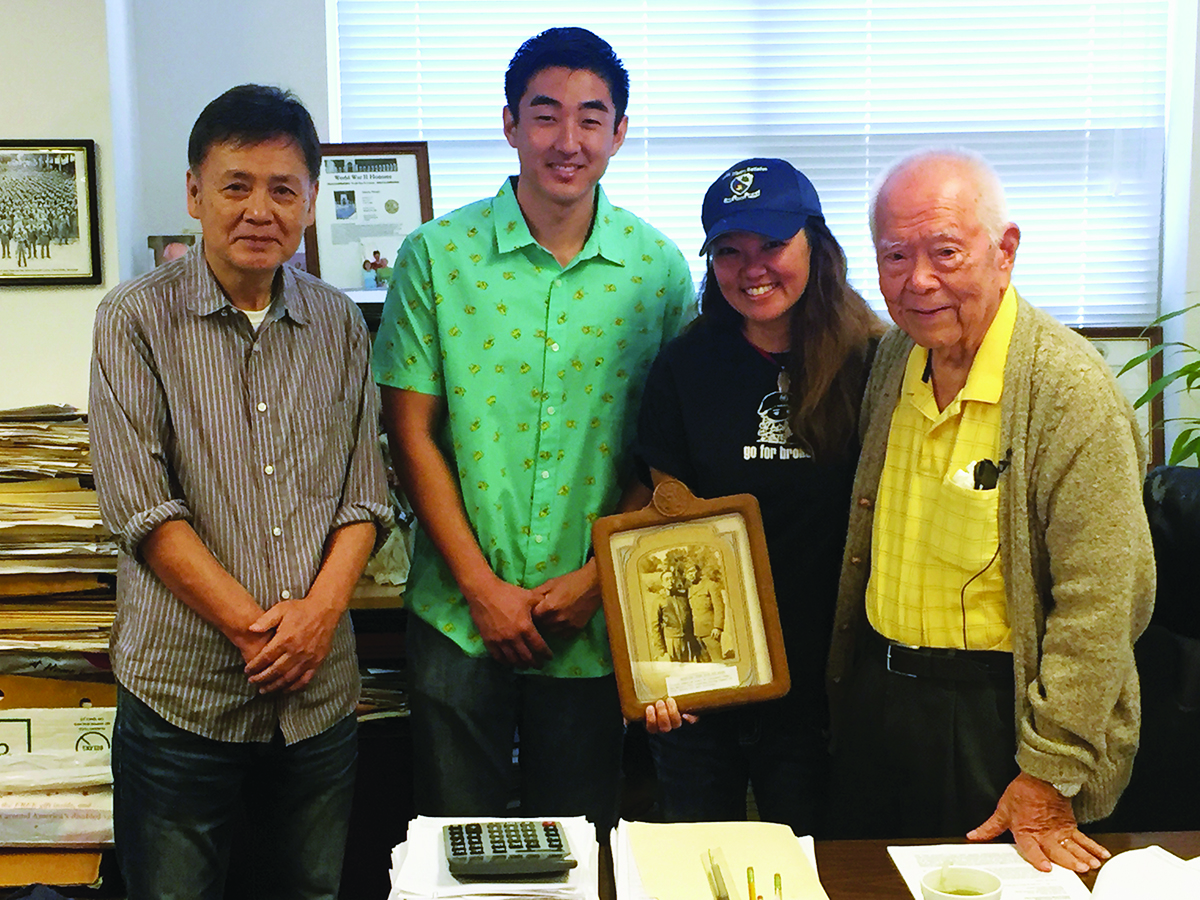
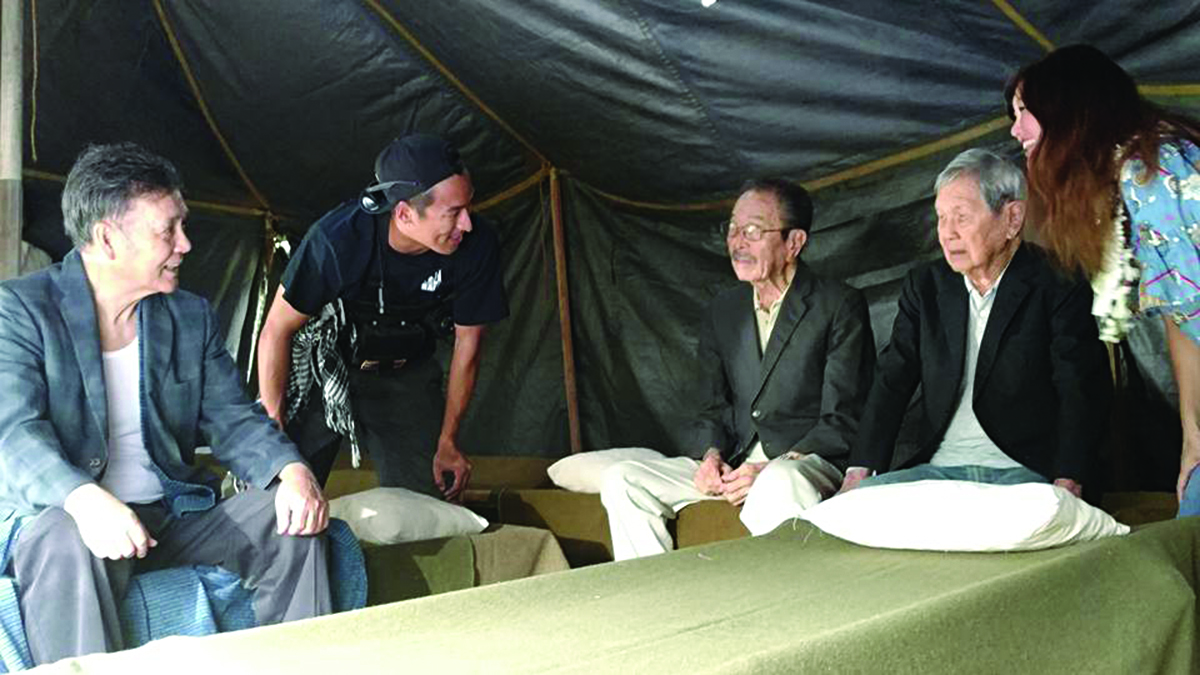
Akira Otani (portrayed by Chad Yazawa) watched as the FBI arrested his father at gunpoint. Yet, he was among the very first to volunteer for the 442nd RCT.Akira Otani, real-life 442 veteran (right) met Chad Yazawa, the actor who portrayed him (green shirt) and Ban Daisuke, who portrayed his father (left).Many scenes were filmed at the actual locations where the real events took place. Here, the Varsity Victory Volunteers (VVV) stand with picks and shovels.The assistant director and executive producer chatted with veteran actor Ban Daisuke and real-life veterans, Yoshiaki “Sharkey” Fujitani and Ted Tsukiyama.
Journey of Heroes
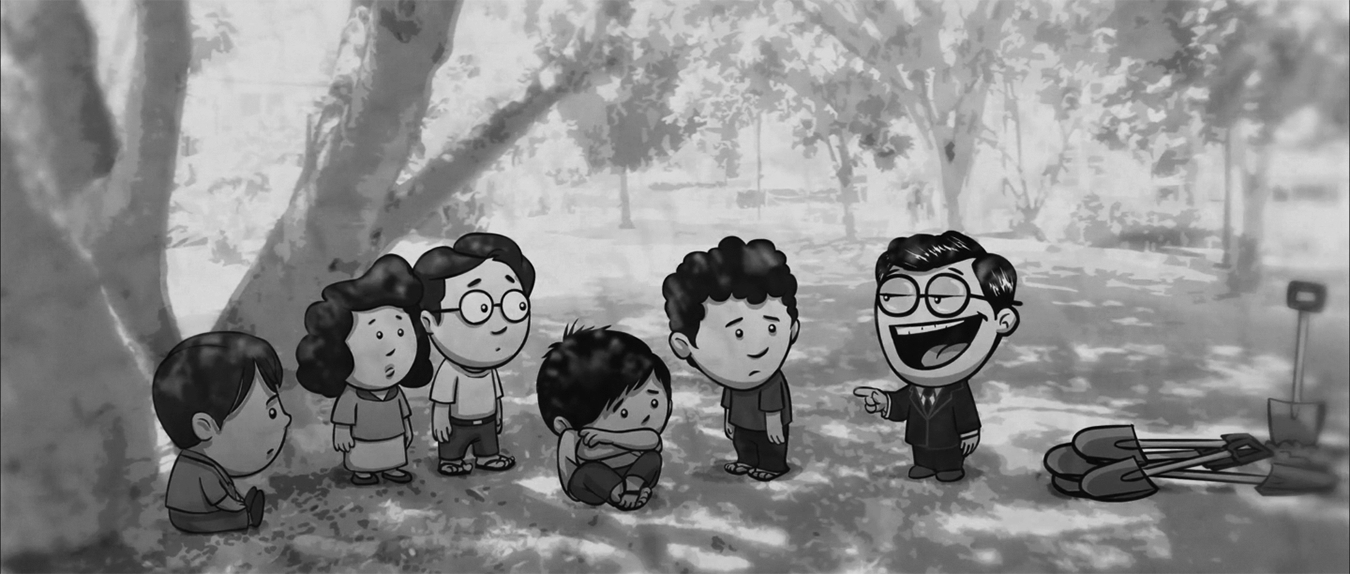
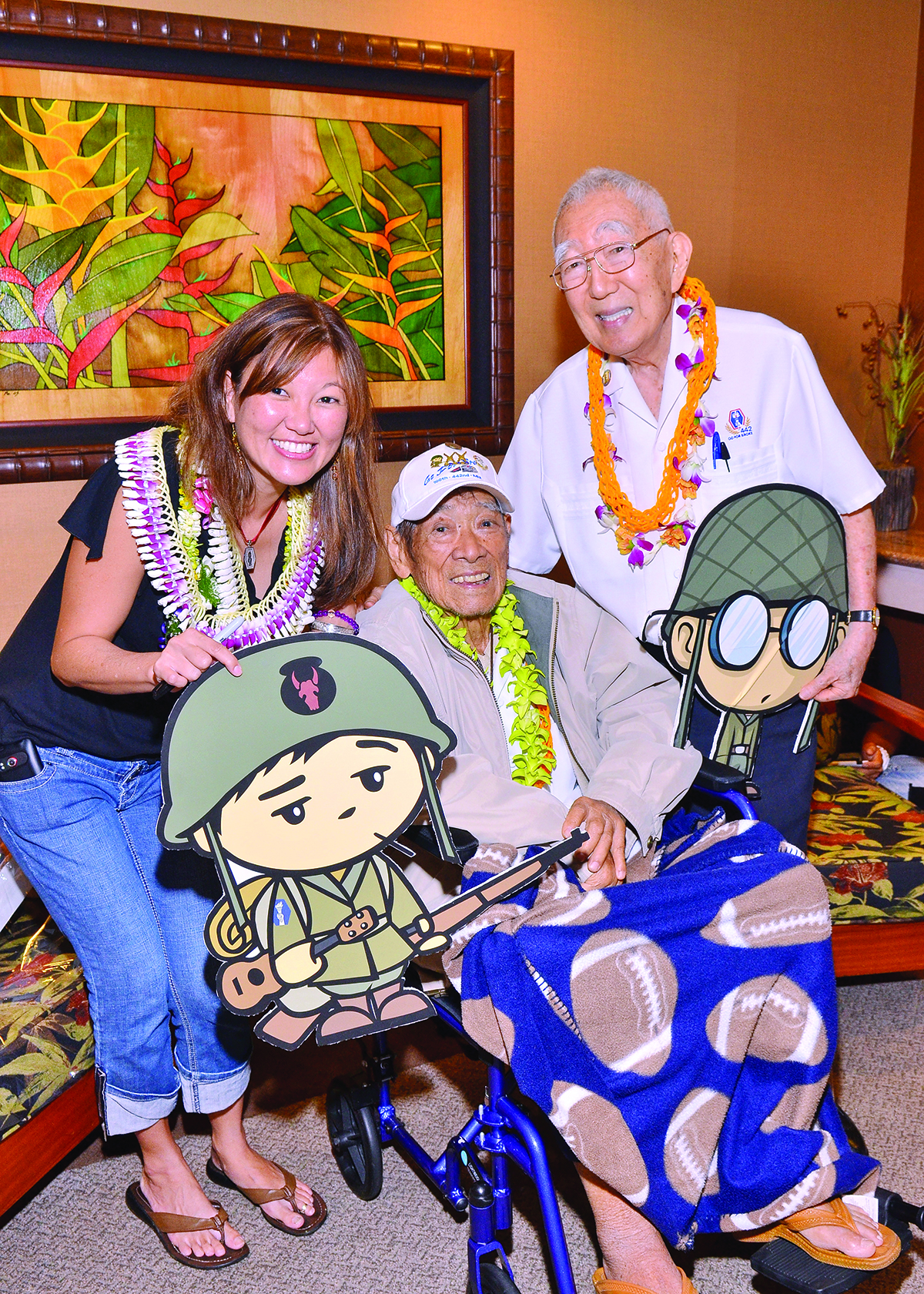
Stacey didn’t just become a filmmaker in her quest to share what she calls “the inspiring true story you’ve never heard, about heroes you didn’t know existed.” She also became a rising star in the world of comic books and Japanese anime and manga, writing and self-publishing a comic book, “Journey of Heroes: The Story of the 100th Infantry Battalion and 442nd Regimental Combat Team.” The historically accurate graphic novel, illustrated by Damon Wong, features cute characters that look a lot like the veterans they represent.
Thousands of the comic books have been donated to schools across Hawai‘i and the United States, introducing real-life heroes and perpetuating their stories for today’s youth and generations to come.
The great legacy of the greatest generation
Almost all of our WWII veterans are gone now, including Stacey’s great-uncles who served in the original 100th Battalion and the 442.
And through this film, Stacey is doing her part to keep alive the great legacy of the nisei veterans — a small part of the greatest generation.
Director Alexander Bocchieri and producer Dean Sensui combined meticulous planning and creative shotmaking to portray King Street, circa 1943.More than just a comic book —“Journey of Heroes” combines historically accurate text and Japanese manga-style drawings that appeal to readers of all ages.Stacey Hayashi and Rep. K. Mark Takai flank MIS linguist Herbert K. Yanamura, who saved 1,500 civilians in the 1945 Battle of Okinawa.Stacey Hayashi with 100th veteran Goro Sumida and 442nd veteran Eddie Yamasaki — two of the nisei whose stories inspired Hayashi to write the film.
“Fear and racism are not good for anyone or any country, especially America, a nation of immigrants.” — Stacey Hayashi
Timeline: 1940 – 1946
100th Battalion/442nd RCT Oct. 15, 1940 :: 298th and 299th Infantry Regiments of the Hawai‘i National Guard (HNG) are activated and integrated into the U.S. Army.
[In the 12 months preceding the attack on Pearl Harbor, approximately half of the 3,000 men in Hawai‘i who are either drafted or volunteer for service in the U.S. Army are Americans of Japanese Ancestry (AJA). Most are assigned to the 298th or 299th with some assigned to engineer units. Basic training is at Schofield Barracks on O‘ahu.] Dec. 7, 1941 :: Japan launches a surprise attack on the Pearl Harbor naval base, home of the U.S. Pacific Fleet. Members of the 2nd Battalion of the 298th guard the windward coastline of O‘ahu, while the 1st Battalion is stationed at Schofield Barracks. Martial law is declared. Dec. 8, 1941 :: United States declares war on Japan. FBI agents and police begin arresting Japanese community leaders in Hawai‘i, eventually detaining about 1,400 individuals who are classified as “dangerous enemy aliens.” Dec. 11, 1941 :: U.S. declares war on Germany and Italy. Jan. 5, 1942 :: War Department classifies AJA men of draft
age 4-C, “enemy aliens,” ineligible for military service. Jan. 19, 1942 :: 317 AJA reservists with the Hawai’i Territorial Guard (HTG) — many had been members of the University ROTC — are classified 4-C and discharged without explanation. Feb. 9, 1942 :: War Department orders General Delos C.
Emmons, Commanding General of the Army Air Force in Hawai‘i, to suspend employment of all ethnic Japanese
civilians in the Army. Feb. 19, 1942 :: President Franklin D. Roosevelt signs Executive Order 9066, leading to the incarceration of more than 110,000 residents of Japanese ancestry in internment camps throughout the United States. Feb. 23, 1942 :: Having been discharged from the HTG, AJA men band together to form the Varsity Victory Volunteers (VVV), a labor unit under the U.S. Army Corps of Engineers. May 26, 1942 :: General George C. Marshall, Army Chief of Staff, establishes the Hawaiian Provisional Infantry Battalion, to be made up of AJAs from the Hawai‘i National Guard’s 298th and 299th Infantry and other units. May 28, 1942 :: 1,432 men gather at Schofield Barracks to join the new Hawaiian Provisional Infantry Battalion. The unit is led by Lieutenant Colonel Farrant Turner; second in command is executive officer James Lovell. Jun. 5, 1942 :: Hawaiian Provisional Infantry Battalion boards the transport ship, S.S. Maui, and departs Honolulu. Jun. 12, 1942 :: Battalion arrives in Oakland and is officially activated as the 100th Infantry Battalion (Separate). The “Separate” status indicates the battalion is not assigned to a parent unit. Soldiers start calling their battalion One Puka Puka (Hawaiian word meaning hole). Jun. 16, 1942 :: 100th arrives at Camp McCoy, Wisconsin, where they undergo training until the end of Dec. The battalion quickly earns a reputation for superior performance in the field. Jun. 26, 1942 :: Army Chief of Staff recommends the formation of a Board of Military Utilization of U.S. Citizens of Japanese Ancestry to determine whether a Japanese American unit should be sent to fight in Europe. Oct. 2, 1942 :: Elmer Davis, Director of the Office of War Information, recommends to President Roosevelt that Japanese Americans be allowed to enlist for military service. Nov. 3, 1942 :: Twenty-five men from the 100th (Company B, Third Platoon) plus three officers and a cook depart Camp McCoy for Ship and Cat Islands off the Mississippi Gulf Coast where they will be used to train dogs to recognize and attack Japanese soldiers based on their supposedly unique scent. Nov.– Dec. 1942 :: Sixty-seven men from the 100th are recruited for the Military Intelligence Service (MIS) because they had gone to school in Japan or were familiar with the Japanese language. They are sent to Camp Savage, Minnesota, for training. Jan. 6, 1943 :: 100th leaves Camp McCoy for further training at Camp Shelby, Mississippi; then four months later, to Camp Claiborne in Louisiana for field maneuvers until June. Jan. 28, 1943 :: Impressed by the outstanding performance of the 100th, the War Dept. announces plans to organize an all-Japanese American combat unit. The call goes out for 1,500 volunteers from Hawai‘i; nearly 10,000 respond. A quota of 3,000 is established on the mainland, but the response is 1,200 — mostly from internment camps. Jan. 31, 1943 :: Varsity Victory Volunteers in Hawai‘i request the deactivation of their unit so its members can enlist in the new 442nd Regimental Combat Team. Feb. 1, 1943 :: 442nd Regimental Combat Team is activated by President Roosevelt. Mar. 28, 1943 :: Honolulu Chamber of Commerce sponsors
a farewell ceremony at ‘Iolani Palace for the initial 2,686 AJA volunteers of the 442nd RCT. May 1943 :: 442nd RCT begins training at Camp Shelby, Mississippi, where they’ll meet up with the 100th for the first time in June after the 100th returns from maneuvers in Louisiana. Jul. 20, 1943 :: 100th receives its battalion colors and motto, “Remember Pearl Harbor,” as requested by the unit. The battalion leaves Camp Shelby on Aug. 11 for Camp Kilmer, New Jersey; then to Staten Island and they board the SS James Parker, departing on August 21. Sept. 2, 1943 :: Battalion lands at Oran, Algeria in North
Africa. Fifth Army command wants the 100th to guard supply trains, but Colonel Turner insists they be committed to combat duty. The 100th is assigned to 34th “Red Bull” Division, which has more battle experience than any other American Army unit at that time. Sept. 19 – 22, 1943 :: 100th ships out with the 133rd Infantry Regiment, 34th Infantry Division. They land on the beaches at Salerno, Italy on September 22. Sept. 29, 1943 :: On the first day of combat, Shigeo “Joe” Takata is the first member of the 100th to be killed in action and the first to receive the Distinguished Service Cross. Oct.– Nov. 1943 :: 133rd Infantry Regiment, including 100th, fights a series of battles in several Italian towns and launches attacks on German forces, crossing the Volturno River three times. Major James L. Gillespie replaces Lt. Col. Turner. Mid Jan. 1944 :: Battle of Monte Cassino begins. It takes four major assaults and four months to defeat German forces. By some estimates, the battle leaves 250,000 people dead or wounded. The 100th fights in the first two assaults before it is relieved on Feb. 15. Having suffered heavy casualties during its months in combat, the unit becomes known as “The Purple Heart Battalion.” After Cassino, the first group of officers and enlisted men from the 442nd arrives to replenish the depleted battalion. Jan. 29, 1944 :: Major James Lovell assumes command of the battalion after being released from the hospital, replacing Major Caspar Clough. He is soon badly wounded and does not return to combat. By the end of war, the 100th has 13 changes of battalion commanders. Mar. 26, 1944 :: 100th lands at Anzio, the second front between the German’s Gustav Line of defense and Rome and is assigned a section in the Anzio beachhead in April. May 1, 1944 :: 442nd RCT leaves Virginia for Europe. May 11, 1944 :: British, French and U.S. forces push to Rome. Jun. 2, 1944 :: 100th participates in the breakout to Rome by attacking and capturing Lanuvio. Rome falls three days later. Jun. 11, 1944 :: 100th meets up with 442nd Regimental Combat Team in Civitavecchia, northwest of Rome. At this time, the Regiment consists of the 3rd Battalion, 522nd Field Artillery Battalion and 232nd Engineer Company. The 2nd Battalion will arrive six days later. The 1st Battalion, which has been depleted from sending replacements to the 100th, is left at Camp Shelby to train new arrivals. Jun. 22, 1944 :: President Roosevelt signs into law the Service members’ Readjustment Act of 1944, commonly known as the G.I. Bill of Rights. By the time the original G.I. Bill ends in July 1956, 7.8 million World War II veterans will have participated in an education or training program and 2.4 million veterans will have home loans backed by the Veterans Administration. Jun. 26, 1944 :: 442nd RCT is assigned to the Fifth Army and, in turn, is attached to the 34th “Red Bull” Division. The battle-tested 100th Infantry Battalion is attached to the 442nd RCT, becoming the 1st Battalion of 442nd, but retains its name, 100th Infantry Battalion, because of its outstanding combat record. By this time,
the battalion of 1,300 has suffered more than 900 casualties. The 100th/442nd RCT goes into combat near Belvedere, Italy. Jul. 7, 1944 :: 100th/442nd RCT takes Hill 140 in Italy after a bitter battle. Jul. 9, 1944 :: 100th occupies Leghorn (Livorno) and is directly under the command of Fifth Army in Rome. Jul. 27, 1944 :: General Mark Clark presents the Presidential Unit Citation, the highest honor in the Army for a military unit, to the 100th at Vada, Italy, for action at Belvedere. By this time, soldiers of the battalion have been awarded 9 Distinguished Service Crosses, 44 Silver Stars, 31 Bronze Stars, 3 Legion of Merits, 15 battlefield commissions, and more than 1,000 Purple Hearts. Aug. 14, 1944 :: 100th is formally attached to the 442nd RCT. Aug. 31, 1944 :: 442nd, minus the 100th, reaches the Arno River near Florence, Italy. The 100th spearheads the crossing of the Arno River and captures Pisa. Sept. 1944 :: While the 100th waits in Naples for the movement into France, representatives from each company meet to approve a set of bylaws for Club 100. They elect Katsumi “Doc” Kometani
as president, Sakae Takahashi as vice president, Andrew Okamura
as secretary, and Hideo Yamashita as treasurer. Leslie Deacon, Joseph Farrington, and Charles Hemenway are named honorary members. Sept. 27, 1944 :: 100th/442nd RCT leaves Naples for France. Sept. 30, 1944 :: 100th/442nd RCT is attached to the 36th Division, also known as the Texas Division, of the Seventh Army. Oct. 15, 1944 :: 100th/442nd RCT enters the battle of Bruyeres in the Vosges Mountains, located in northeast France. After three days of fighting, the 100th takes Hill A and the 2nd Battalion takes Hill B and enters the town. Two days later, the 100th captures Hill C. Oct. 25, 1944 :: 100th/442nd RCT captures Biffontaine. Oct. 26 – 31, 1944 :: After five days of fighting, the100th/442nd RCT rescues 211 members of the Texas “Lost Battalion,” 141st Regiment, 36th Infantry Division, which was cut off and surrounded by Germans. The 100th/442nd suffers more than 800 casualties, including 184 killed in action. 100th earns its second Presidential Unit Citation for actions at Biffontaine and Lost Battalion rescue. Presidential Unit Citations are also awarded to the 2nd and 3rd Battalions, the 232nd Engineer Combat Company, and F and L Companies of the 442nd. Nov. 13, 1944 – Mar. 1945 :: Soldiers of the 100th/442nd RCT head south to the French Riviera, where so many were lost that it can’t be used as a regiment-sized force. Nearly 2,000 are wounded and in hospitals in Italy, France, England and the United States. The unit guards a 12-mile stretch of the French-Italian border. The men call this time “the Champagne Campaign.” Mar. 20, 1945 :: The 100th /442nd RCT, minus the 522nd Field Artillery Battalion, leaves to join the African-American 92nd Infantry Division. Apr. 5 – 6, 1945 :: 100th/442nd RCT makes a surprise attack on Nazi mountainside positions in Italy, breaking through the German Gothic Line in one day. The regiment receives the Presidential Unit Citation. Apr. 6 – 30, 1945 :: 100th/442nd RCT drives the enemy up the Italian coast to Genoa and Turin. May 2, 1945 :: German army surrenders. The war in Italy is over. Six days later, on May 8, with Germany’s unconditional surrender, the war in Europe is officially over. Aug. 6, 1945 :: U.S. drops atomic bomb on Hiroshima, Japan. Three days later, an atomic bomb is dropped on Nagasaki. Aug. 15, 1945 :: Victory in Japan Day, signaling end of WWII. Sept. 2, 1945 :: Japan signs the formal Instrument of Surrender. Jul. 4, 1946 :: Members of the 100th /442nd RCT sail into New York Harbor aboard the SS Wilson Victory and are greeted by cheering crowds. Jul. 15, 1946 :: A parade and review is held in Washington, D.C. President Harry Truman pins the Presidential Unit Citation on the 100th/442nd RCT colors. “You fought not only the enemy,” he says, “but you fought prejudice — and you have won.” Aug. 15, 1946 :: The colors of the 100th Infantry Battalion are officially turned over to the Territory of Hawai‘i during a ceremony in Honolulu for returning war veterans. With that act, the battalion is deactivated.
Content used by permission of the 100th Infantry Battalion Veterans Education Center 808-946-0272 | www.100thbattalion.org
It’s taken local girl Stacey Hayashi more than 15 years to bring this story of the 100th/442nd and MIS to the big screen. Her dream — to perpetuate stories like this for today’s youth and for future generations — took perseverance and sacrifice, like that of the veterans she passionately honors with this film.








![Above: Varsity Victory Volunteers at work building field ice boxes in Hawai‘i. Below: VVV assembled in formal dress with gas masks. Identifiable men are Harry Sato, Yoshiyuki Hirano, Yasuhiro Fujita, James Okuda, David Fujita, Thomas Shintani, Masato Yoshimasu, Minoru Ikehara, and James Oka. [Courtesy of Ted Tsukiyama]](https://generations808.com/wp-content/uploads/2018/07/snapshot-25-vvv.jpg)