Category: April – May 2019

  • Senior Day Care Offers Valuable Benefits

    As our parents or loved one get older, they may need help or supervision during the day while caregivers are at work, school or other activities. Sending seniors for care during the day may be a difficult decision due to the cost and concern that they may not have “fun” or may be neglected.

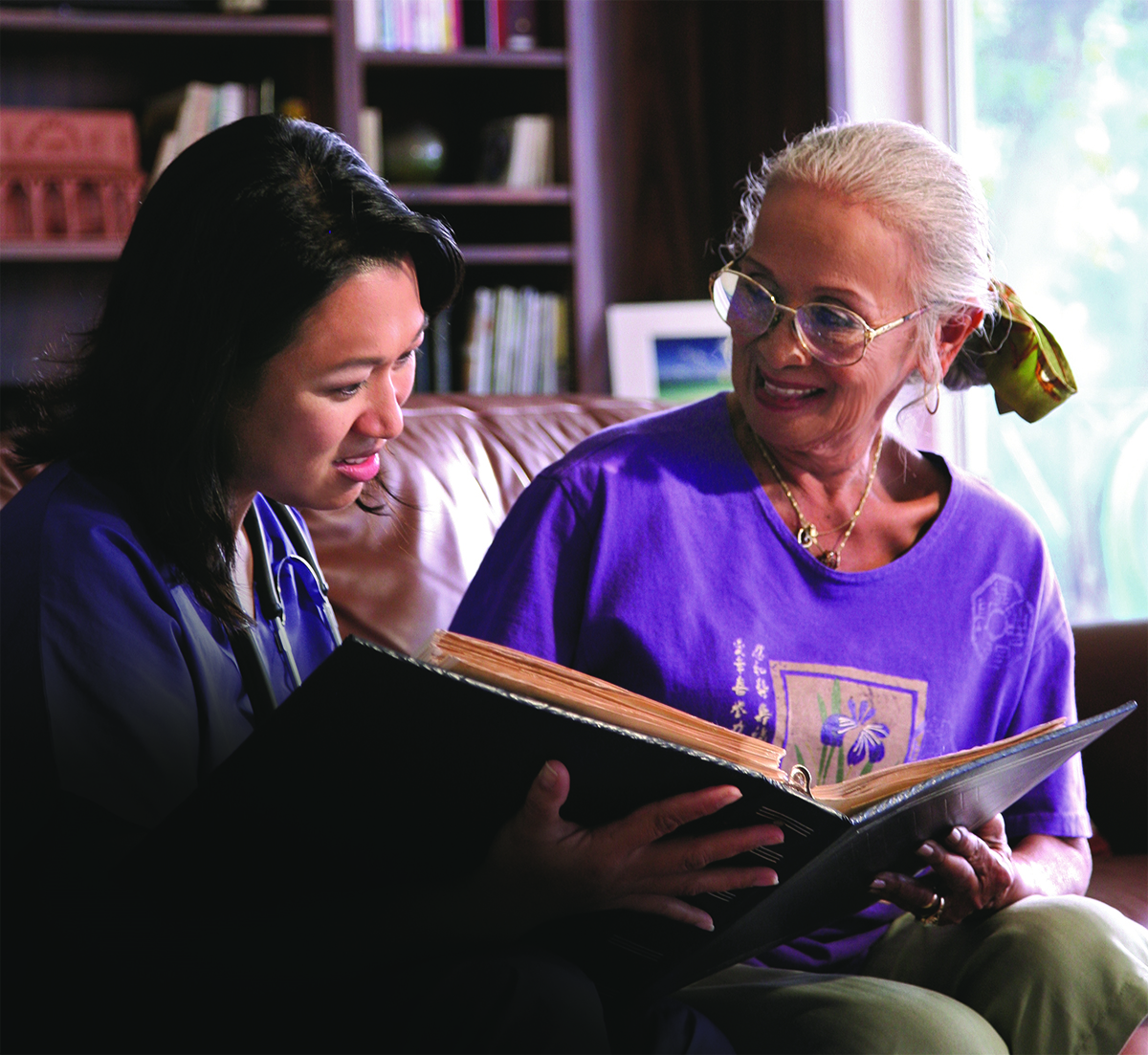
    A senior day care center is an ideal solution because it helps keep seniors healthy to live at home for as long as possible. Participants feel welcomed by senior day care staff, who provide individualized care. Each participant engages in enjoyable but therapeutic activities to foster greater functional independence.

    Games and other activities such as tai chi, field trips, crafts and entertainment sharpen their minds. Exercise keeps them flexible and strong to prevent falls. Participants find they have a better appetite, especially if they are enjoying good food in the company of new friends. These activities can also help slow the progress of Alzheimer’s and other related dementias and may result in better sleep.

    Family caregivers also sleep better. They have peace of mind, are less stressed, and have more time for respite or other responsibilities, knowing their parents or loved one are in good hands.


    PALOLO CHINESE HOME
    2459 10th Avenue, Honolulu HI 96816
    808-748-4904 | dnakayama@palolohome.org
    www.palolohome.org

    As our parents or loved one get older, they may need help or supervision during the day while caregivers are at work, school or other activities. Sending seniors for care during the day may be a difficult decision due to the cost and concern that they may not have “fun” or may be neglected.

  • Support and Resources for Family Caregivers

    Because of the often debilitating nature of heart disease or stroke, the effects of those diseases often impact not just the patient, but family members who are placed in the role as caregivers.

    In addition to their new family role and the hours required to perform support functions, costs of caregiving can also mount. In an analysis released in 2018, the American Heart Association (AHA) projected that the cost of informal caregiving for Americans with heart disease and stroke will more than double from $61 billion in 2015 to $128 billion by 2035. The AHA defines informal caregiving as the home care provided by family members or friends for loved ones with no compensation.

    The vital role of informal caregivers

    “Informal caregivers are indispensable assets to our health care system and often play a significant role in the recovery and well-being of heart disease and stroke survivors,” said American Heart Association CEO Nancy Brown. “By 2035, the number of Americans living with heart disease and stroke will rise to 131.2 million — 45 percent of the total U.S. population. Understanding the escalating burden this will place on the family members and friends who care for these individuals is essential if we are to address this looming crisis.”

    The lead author of a research study published by the AHA, Sandra Dunbar, RN, PhD, FAHA, of Emory University School of Nursing, concurs: “The dramatic rise in the prevalence of cardiovascular disease in the next two decades will place an intense strain on caregivers, putting their own health at risk from the ongoing distress, physical demands and costs. Our nation will ultimately bear the financial impact of this situation, especially as the caregiver pool shrinks.”

    Where to find support and guidance

    To address demands on caregivers, the AHA offers tips to family members that can help to ease or handle the burden. Its web page helps caregivers and patients connect through support groups and offers tips and resources to caregivers to help them take care of themselves as well as their loved one.

    The resources include guidance on how to stay healthy and active yourself, healthy eating recipes and tips, ideas on how to effectively communicate with your family member, and how to deal with the emotional upheaval that can come with being thrust into a caregiver role.

    The site also offers Answers by Heart, a series of downloadable patient information sheets presented in a Q&A format that’s brief, easy to follow and easy to read. They also provide room for you to write down questions to ask your doctor. Whether you or a loved one just had an acute event or procedure, have been diagnosed with cardiovascular disease or have had an event before or are at high risk for cardiovascular disease, the sheets will help you start to reduce your risk.

    The main thing is to remember you’re not alone. Others have been down this same path — and many are willing to share their experience and insights with you.


    AMERICAN HEART ASSOCIATION HAWAII DIVISION
    677 Ala Moana Blvd, Suite 600, Honolulu HI 96813
    808-377-6630 | www.heart.org/Hawaii

    Caregiver resources:
    www.heart.org/en/health-topics/caregiver-support
    Facebook & Instagram: HeartHawaii

    Because of the often debilitating nature of heart disease or stroke, the effects of those diseases often impact not just the patient, but family members who are placed in the role as caregivers.

  • Redirection Using Humor

    Do you know a Person Living With Dementia (PLWD) who repeatedly asks the same question? Does your loved one obsess about leaving the house so that they can go home? Maybe you know of a grandmother who blames everyone in sight for stealing her items. Challenging behaviors are common among PLWD and care partners are burning out trying to address these problems.

    In professional care settings where activities are offered, employees are trained to combat these “annoying” behaviors using a technique called redirection. Redirection is the art of directing a PLWD’s attention away from a frustrating situation and into a meaningful activity. It takes a lot of detective work to understand the PLWDs history, preferences, dislikes and triggers. The more you know, the more you’re able to help.

    The first rule to redirection is to become a listener. Avoid arguing at all costs! Instead of reorienting the person to what is logically happening, go along with their story and enter their reality. This concept of going with the flow with outrageous stories will be difficult at first. The idea behind losing your sanity and throwing logic out the window will enable you to help your PLWD feel comforted and you will be seen as trustworthy. You will be surprised at the smallest details that surface after the 15th time the same story has been told. Look at this as conducting research on the individual. By listening to their story, you are helping them feel like they have a teammate and you learn where they are in their mind. This is key detective work so that you can meet them where they are rather than trying to bring them into your reality.

    What to say to redirect. You’ll want to reflect everything the PLWD says and follow their physical actions. Literally repeat what the person has said and match their facial expressions, hand gestures, posture and tone of voice. This shows the PLWD that you understand their current emotion. For example, if your PLWD is upset and says “I want to go home!” you would mimic their gestures and repeat “You want to go home!” In the next few sentences you’ll try to change the subject by saying something like “You want to go home! Tell me about your home, where is it?” This will start a conversation and you’ll soon be able to redirect them by changing the subject completely.

    How do you know what to redirect someone’s attention to? Think about what your person likes, what brings them joy and how can we provide that right now? Maybe your PLWD loves chocolate. Sweet treats like chocolate, ice cream and cookies are easy snacks that could be kept around the house. Fishing, crocheting, gardening and building activities could be modified to provide enjoyment. Coloring a picture of a fish, reading a crochet book, watering the garden and children’s tool sets are viable options as your PLWD goes through the various stages.

    Tapping into your PLWD’s history and preferences is key! Remember to keep things simple and be creative. Sometimes laughing at your own silliness can diffuse the anxiety. Giving care for someone with dementia is a series of trials and errors; don’t get down on yourself when something doesn’t work!


    PAC HUI HAWAII
    808-469-5330 | PAChawaii4@gmail.com
    www.PacHuiHawaii.com

    PAC Hui Hawaii is a caregiver training organization utilizing the Positive Approach™ to Care philosophy developed by Teepa Snow. To know more of the organization and current workshops and events, please visit us online.

    Do you know a Person Living With Dementia (PLWD) who repeatedly asks the same question? Does your loved one obsess about leaving the house so that they can go home? Maybe you know of a grandmother who blames everyone in sight for stealing her items. Challenging behaviors are common among PLWD and care partners are…

  • Does Mom Need More Help?

    How do family members prepare for the day their senior needs more help? The kind of help that requires loved ones to re-prioritize their lives. If only there were a date set aside for this change in everybody’s life. Planning on change at this level has never been easy because a plan may not be in place. A sudden fall, or illness could change everything and it could happen at any time.

    Our seniors can have active lives up until the day they don’t. Family members may have to change directions, suddenly. This may involve taking time off work and moving other commitments to the back burner. There are some signs that show us our senior may be needing a bit more help. Here are a few to look out for:

    • AGE — The older your senior is, the closer they will be to needing help, especially if they are slowing down physically.

    • MEMORY — Forgetfulness could be a sign of illness affecting the brain or other systems, but it generates worry for family members who leave their senior alone for long periods of time.

    • DRIVING — If your senior is not driving anymore, because it is not “safe” due to visual problems, mobility issues, or cognitive concerns, this may be a sign that other tasks may not be as easy for them as well.

    • WEIGHT LOSS OR DEHYDRATION — These are real concerns that indicate they are not eating or drinking enough. Frequent urinary tract infections may indicate not enough fluid intake or poor personal hygiene in the bathroom.

    • UNPAID BILLS/UNOPENED MAIL — Seniors like to have control over their finances until there comes a day when they stop opening their mail. This is a clue they are either forgetting or it’s not a priority for them anymore.

    FREQUENT PHONE CALLS AT WORK — If family members are receiving frequent calls during the day from their senior, it may mean things are about to change. This can indicate loneliness, forgetting that they just called, or anxiety about something they cannot control.

    • FALLS — This could be the “last straw,” especially if there is an injury. Family members may have to find outside help, to monitor their senior for safe mobility while they are away at work.

    Just like planning ahead for disasters, planning for the day your senior needs help should be a priority. Life can be busy and noticing some of the scenarios listed above should be on your radar. Of course, your senior will deny they need help, and may say something like, “I don’t want you to worry about me, I can take care of myself.” If you feel that twinge in your gut telling you that what you are seeing is not consistent with what they are saying, don’t ignore it! Now may be the time to move into a different role for your senior, or ask for help.


    ATTENTION PLUS CARE HOME HEALTHCARE
    Accredited by The Joint Commission
    1580 Makaloa St., Ste. 1060, Honolulu HI 96814
    808-739-2811 | www.attentionplus.com

    AGING IN HAWAII EDUCATIONAL OUTREACH PROGRAM
    by Attention Plus Care — a program providing resources for seniors and their families, covering different aging topics each month. For class information and upcoming topics, call 808-440-9356.

    How do family members prepare for the day their senior needs more help? The kind of help that requires loved ones to re-prioritize their lives. If only there were a date set aside for this change in everybody’s life. Planning on change at this level has never been easy because a plan may not be…

  • Military Service and Social Security

    Q: I’m planning to retire next year. I served in the Navy back in the 1960s and need to make sure I get credit for my military service. What do I need to do?

    A: You don’t need to do anything to apply for the special credit for your military service — it is added automatically. For service between 1957 and 1967, we will add the extra credits to your record at the time you apply for Social Security benefits. For service between 1968 and 2001, those extra military service credits have already been added to your record. So you can rest assured we have you covered. You can read the Military Service and Social Security booklet at www.socialsecurity.gov/pubs/10017.html.

    Q: I served in the military, and I’ll receive a military pension when I retire. Will that affect my Social Security benefits?

    A: You can get both Social Security retirement benefits and military retirement at the same time. Generally, we don’t reduce your Social Security benefits because of your military benefits. When you’re ready to apply for Social Security retirement benefits, go to www.socialsecurity.gov/ applyonline. This is the fastest and easiest way to apply. For your convenience, you can always save your progress during your application and complete it later. And thank you for your military service!


    For questions, online applications or to make an appointment to visit a SSA office, call from 7am–5pm, Mon–Fri:

    1-800-772-1213 (toll free) | www.socialsecurity.gov

    I’m planning to retire next year. I served in the Navy back in the 1960s and need to make sure I get credit for my military service. What do I need to do?

  • Heads up! It’s Upgrade Time!

    Most people use new or upgraded versions of cars, phones, appliances and all sorts of gadgets to manage their daily lives. Yet, they seem surprised to learn of a loved one’s, a friend’s or their own need for a medical procedure to maintain or improve functional capabilities. The need for a knee or hip replacement or cataract surgery comes as a shock or a hardship.

    While individuals routinely replace cars on average every 7 years, cellphones whenever a new model is launched and appliances every 3–10 years, few expect their bodies to break down after six or seven decades of service. Without insurance coverage, a full hip or knee replacement can cost about $39,000 per knee or hip — the price of a new car! Cataract surgery can run about $7,000 for both eyes. That brand new kitchen suite with refrigerator, dishwasher and matching microwave would cost about the same.

    So schedule your free annual wellness visit with your physician. The examination and preventive screenings may be able to determine if any upgrades are needed. Any time is a good time to develop a realistic understanding and approach for caring for the physical body that supports you daily. Accepting the upgrades and replacements that may be needed after decades of daily use can create a “new” you!


    MEDICARE MOMENT WITH MARTHA
    A radio program with Martha Khlopin
    KHNR-690AM: Sundays 9:30am–10am
    808-230-3379 | getmartha@aol.com

    Most people use new or upgraded versions of cars, phones, appliances and all sorts of gadgets to manage their daily lives. Yet, they seem surprised to learn of a loved one’s, a friend’s or their own need for a medical procedure to maintain or improve functional capabilities. The need for a knee or hip replacement…

  • Creating Secured Passwords

    You generally want to set the minimum password length to at least eight characters, but a minimum length of 14 characters is better. If it’s a single word, I recommend using a non-English word. Or you could use a phrase like “the cow jumped over the moon” without spaces between the words in the phrase.

    • One or more characters should be upper case.
    • One or more of the letters should be transposed as a numeral. For example, “i” or “l” can be the number 1. And “E” could be 3.
    • If permitted, include a control character such as “*” (shift-8) or “^” (shift-6).

    That is the core password, which is the base from which you create the password for the account you are using it for. For example, if your core password is “theC0wjumped^0verthem00n” you can add an “F” at the beginning and a “B” at the end for your Facebook account. For your Gmail, you can add “GM” at either end.

    How to remember passwords

    • Write them down in a notebook kept in a locked desk or file cabinet. Note what account it is for and the date it was created.
    • Do not keep them on your cellphone, tablet, computer or in your wallet or handbag.
    • When you’re done using the password, make sure to destroy the paper and discard it. Passwords ARE the “Keys to the Kingdom”.

    ——————-

    THE DEPARTMENT OF THE PROSECUTING ATTORNEY
    1060 Richards St., Honolulu HI 96813
    808-768-7400 | Office hrs: Mon – Fri, 7:45 am – 4:30 pm
    www.honoluluprosecutor.org/contact-us/

    To create secure passwords, you generally want to set the minimum password length to at least eight characters, but a minimum length of 14 characters is better.

  • High Cost of Saving Money

    It’s expensive living in paradise. It’s really expensive aging in paradise. Many seniors have had to resort to relying on the “cash economy” to help them out. “Cash economy” is the term used to refer to hiring or purchasing things“ under the table” or with cash so that there is no paper trail and therefore no taxes have to be paid. These workers usually are unlicensed, carry no insurance in case they get injured on your property or damage something when doing their job, and have no office you can go to if there is a problem with non-performance or faulty construction.

    It is a very common practice in Hawai‘i to hire people in this manner for yard work, car repairs or construction projects. And it is very common for the police or me to receive calls from victims of scams who tried to save money in this manner only to receive little or nothing in return. In fact, our office is prosecuting one person who defrauded over 24 people by simply representing himself as a licensed landscaper and taking their money and disappearing. When arrested, it was revealed that he not only didn’t have a license, but also had a criminal record for doing this crime before. If you have questions about elder abuse, call or email: 808-768-7536 | ElderAbuse@honolulu.gov

    To check if the person you are hiring has a license or complaints from previous clients, use the Department of Commerce and Consumer Affairs (DCCA) website, which is an easy and free tool to use.

     On your computer, type in the website: http://cca.hawaii.gov/

     Click on the blue box that says “Check A Business or License”.

     On the left-hand side of the new page, choose the type of search you want: business complaint history, business name, professional and vocational license, or licensee complaint history.

     Follow the directions on the next new page.

     If you have any questions you can call DCCA during business hours at 808-587-4272.

    Another good site is the Better Business Bureau. It displays information and reviews/complaints about local businesses, and scorecards.

     On your computer or device, type in the website: https://www.bbb.org/en/us/hi/honolulu

     Type the business name and location in the search bar and click on it in the list that appears.

    If you don’t have access to the internet there are public services at the library. ——-


    If you have questions about elder abuse, call or email: 808-768-7536 | ElderAbuse@honolulu.gov

    It’s expensive living in paradise. It’s really expensive aging in paradise. Many seniors have had to resort to relying on the “cash economy” to help them out. “Cash economy” is the term used to refer to hiring or purchasing things“ under the table” or with cash so that there is no paper trail and therefore…

  • Adequate, Equal, Equitable, or Fair?

    We often struggle with the concepts of equal, equitable, fair, and adequate when it comes to the distribution of our assets among our children. Understanding the meaning of each term helps us make the decision that most closely reflects our intention.

    Adequate: the minimum level of money for children to survive. Raising our children to be independent and reasonably assured their situation will not turn to dependency meets the definition of adequacy.

    Equal: the same amount of financial value to each child. Our focus as parents changes from meeting the needs of our children to simply dividing our assets equally, regardless of each child’s station in life.

    Equitable: receiving the same financial opportunity to reach a specific objective considering current personal conditions, but without regard to how those happened.

    Fair: morally equal — a non-discriminatory attitude regardless of personal conditions, but with regard to how it happened. If one child chooses not to work and is still living at home, and one child works and is living independently, leaving the house for the non-working child to live in may be equitable (each having a place to live) but not fair (in a way, penalizing the working child).


    STEPHEN B. YIM, ATTORNEY AT LAW
    2054 S. Beretania St., Honolulu HI 96826
    808-524-0251 | www.stephenyimestateplanning.com

    We often struggle with the concepts of equal, equitable, fair, and adequate when it comes to the distribution of our assets among our children. Understanding the meaning of each term helps us make the decision that most closely reflects our intention.

  • Managing Risk at Retirement

    We encounter risk in all facets of our life. Why do we take risk if we have a choice? Simply put: We take on risk in exchange for some kind of return.

    Generally, the potential for higher returns from investments comes with greater risks. One philosophy to keep in mind, especially for those approaching retirement, is that Losses Hurt More than Equivalent Gains Help®. In other words, if you have $100,000 in a portfolio and it goes down 50 percent in a year, a 50 percent gain in the following year would result in your portfolio being valued at only $75,000. Keeping this in mind reminds you to seriously weigh any risks against potential returns.

    It is especially imperative to consider the balance of risk and potential return as investors approach retirement as they have less time to recover their losses if their portfolio declines in value. A financial professional can help you assess your personal risk parameters for your investment portfolio.


    LEE FINANCIAL GROUP HAWAII, INC.
    808-988-8088 | info@leehawaii.com
    www.leehawaii.com

    We encounter risk in all facets of our life. Why do we take risk if we have a choice? Simply put: We take on risk in exchange for some kind of return. Generally, the potential for higher returns from investments comes with greater risks.

  • Blessing or Curse?

    Receiving an inheritance is like winning the lottery. What could possibly be wrong with that?

    Callie Rogers, age 16, won $3.1 million in a British lottery. By the  age of 22 she was broke, living with her mother, and working three cleaning jobs. William Post won $16.2 million in the Pennsylvania Lottery in 1988. By the time he died in 2006, Post had gone from scooping up annual lottery payments of $497,953.47 to scraping by on $450 per month in disability compensation. Jack Whittaker won what was then the largest Powerball payout in history. It took him four years to blow through $113,386,407.77 of his winnings. The impact on himself and his family was catastrophic.

    These examples show how a sudden windfall can turn from a blessing into a curse. The lesson applies to all of us. Instead of giving your loved ones direct access to what you leave behind, consider protecting any intended beneficiaries whose youth, bad habits, or bad friends might turn your gift into dust and destruction. By placing their inheritance in trusts, administered by people or institutions who will provide good judgment and wise guidance, you can protect your legacy with wise planning.


    SCOTT MAKUAKANE, Counselor at Law
    Focusing exclusively on estate planning and trust law.
    www.est8planning.com
    808-587-8227 | maku@est8planning.com

    Receiving an inheritance is like winning the lottery. What could possibly be wrong with that? Callie Rogers, age 16, won $3.1 million in a British lottery. By the  age of 22 she was broke, living with her mother, and working three cleaning jobs. William Post won $16.2 million in the Pennsylvania Lottery in 1988…

  • Making a Smart Move in Retirement

    Searching for warmer weather, moving closer to adult children and grandkids or pursuing a change in scenery are just a few reasons why many Americans choose to move in retirement. These retirees often relocate for emotional reasons, but it’s important to consider the financial impacts, too. If you have a desire to pull up roots in retirement, pause to think about the following financial items.

    Consider the costs to sell your home. Even if you’re downsizing, trading spaces comes with a price tag. Staging, finding a realtor, hiring a moving company and cleaning services are all expenses that may be key to putting your home on the market. You may need to be prepared to manage two mortgages for some time or be ready for a quick closing time frame depending on the housing market in your area.

    Be strategic about the long-term financial effects. If you make a profit on the sale of your current home, use the money to fund one of your financial goals. Adding it to your retirement fund, investing it to pay for your grandkids’ college education, or putting it into a trust are some of the many ways the windfall can accelerate achieving a financial milestone. If you acquire a higher mortgage to purchase your new home, map out how the additional debt impacts your retirement long-term. Ideally, you’ll be able to absorb the increased cost without compromising your retirement lifestyle.

    Know the potential tax impacts. Moving across state lines can change how much you pay in taxes. This is particularly true for retirees because there’s wide variation in whether and how much states tax retirement income. Property and income taxes can also vary, which may be important if you plan to work or own a business in retirement. Check with your tax professional to assess the tax impact of your new locale. If you sell your current home and it has appreciated in value, discuss whether you owe a capital gains tax.

    Research health care services in your new location. Ask your medical insurance provider if your plan covers the services, specialists, prescription drugs and medical clinics that you need near your new home. The quality of care and cost may be different than what you’re used to, so it’s important to do your research. Additionally, it’s worth thinking about the long-term care and assisted living facilities that are nearby. Even if you hope to age in your new home, knowing your options can be crucial in case you or your spouse experience an unexpected medical event.

    Account for your retirement lifestyle. The reason many retirees move in retirement is to live out a lifestyle they have dreamed about for years. As you decide whether you want to move, be prepared for additional expenses to travel, invest in a hobby or start a business. Your food and entertainment spending may also increase as you fill your newfound time and explore your new city.

    Moving to pursue your retirement dreams is exciting, but there can be a lot of factors to consider in deciding when and where to purchase your new home. For expert help reviewing your options, connect with a realtor, financial advisor and tax professional.


    MICHAEL W. K. YEE, CFP
    1585 Kapiolani Blvd., Suite 1100, Honolulu HI 96814
    808-952-1222, ext. 1240 | michael.w.yee@ampf.com
    Michael W. K. Yee, CFP®, CFS®, CLTC, CRPC ®, is a Private Wealth Advisor, Certified Financial Planner ™ practitioner with Ameriprise Financial Services, Inc. in Honolulu, HI. He specializes in fee-based financial planning and asset management strategies and has been in practice for 31 years. Investment advisory products and services are made available through Ameriprise Financial Services, Inc., a registered investment adviser. Ameriprise Financial Services, Inc. Member FINRA and SIPC.©2018 Ameriprise Financial, Inc. All rights reserved. File #2251865

    Searching for warmer weather, moving closer to adult children and grandkids or pursuing a change in scenery are just a few reasons why many Americans choose to move in retirement. These retirees often relocate for emotional reasons, but it’s important to consider the financial impacts, too.