WANT THIS ISSUE?
Download your own personal copy of this issue in PDF format. Click the button below:

WANT THIS ISSUE?
Download your own personal copy of this issue in PDF format. Click the button below:
Excerpt from April – May 2019 Issue
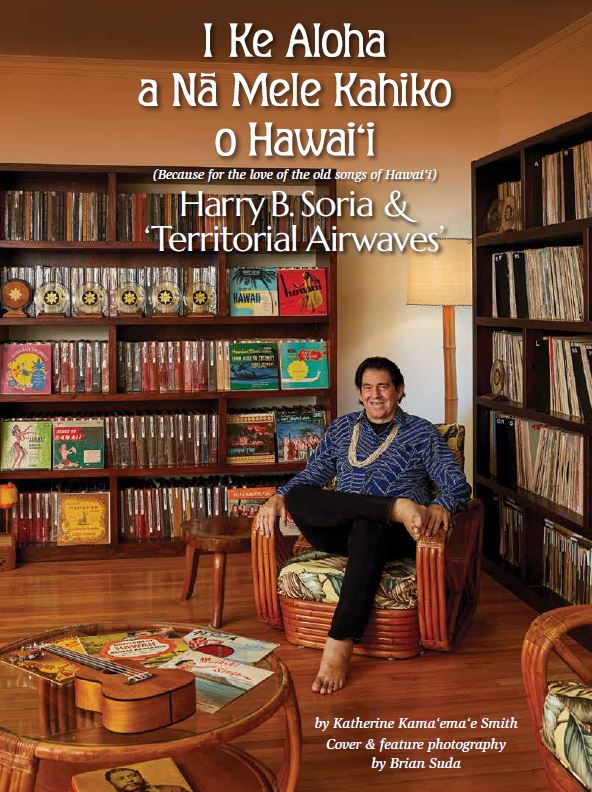
It’s Sunday afternoon! “Welcome to ‘Territorial Airwaves,’” echoes the AM940 Hawai‘i announcer, followed by a long steamy blast of a cruise ship’s horn. And then, like a playful ocean breeze, the cadence of Harry B. Soria’s happy voice bids us e komo mai and stay awhile. Gently, he calls us back to simpler days with the hapa-haole and not-so-haole music of old Hawai‘i — passed down in families and among Hawai‘i musicians for a hundred years. Listeners who grew up in the heyday of radio may have danced to these tunes or seen live performances; for the younger audience, Harry B. is the guardian, guru and guide back to Hawai‘i’s best music — from monarchy to statehood and beyond to the 60s, 70s and 80s.
 If you are thinking that “Territorial Airwaves” weekly broadcasts are small potatoes, think again. Passengers on Hawaiian Airlines tap their feet to the “Territorial Airwaves” in-flight audio selection. Harry B. and his radio show have earned nine Nā Hōkū Hanohano awards, including the 2017 Krash Kealoha Industry Award for lifetime achievement. For nearly 40 years, Harry B. has been entertaining and educating audiences with the backstory of Hawai‘i’s most celebrated composers, musicians and performers — collapsing the time between us and the free-wheeling innocence and excitement of Hawai‘i’s past.
Music evokes our emotions and memories, but here we have a profound and enduring connection to the sky, land, sea and people of Hawai‘i. We are a chop suey people with a broad taste for jazz, salsa, swing, romantic “pili mai” love songs and tender family ballads; but we also adore paniolo cut-time, sassy ‘okole hao tavern songs, ‘auana hula and hukilau ditties. ‘Auwe! We cope with sad goodbyes by singing songs about waves lapping at the shore, pikake-scented tradewinds brushing by palms and moonlight sparkling on the ocean. Territorial music is not a collection of tunes, but our heritage — fused to our fondest memories
 Celebrating 40 Years of Broadcasts
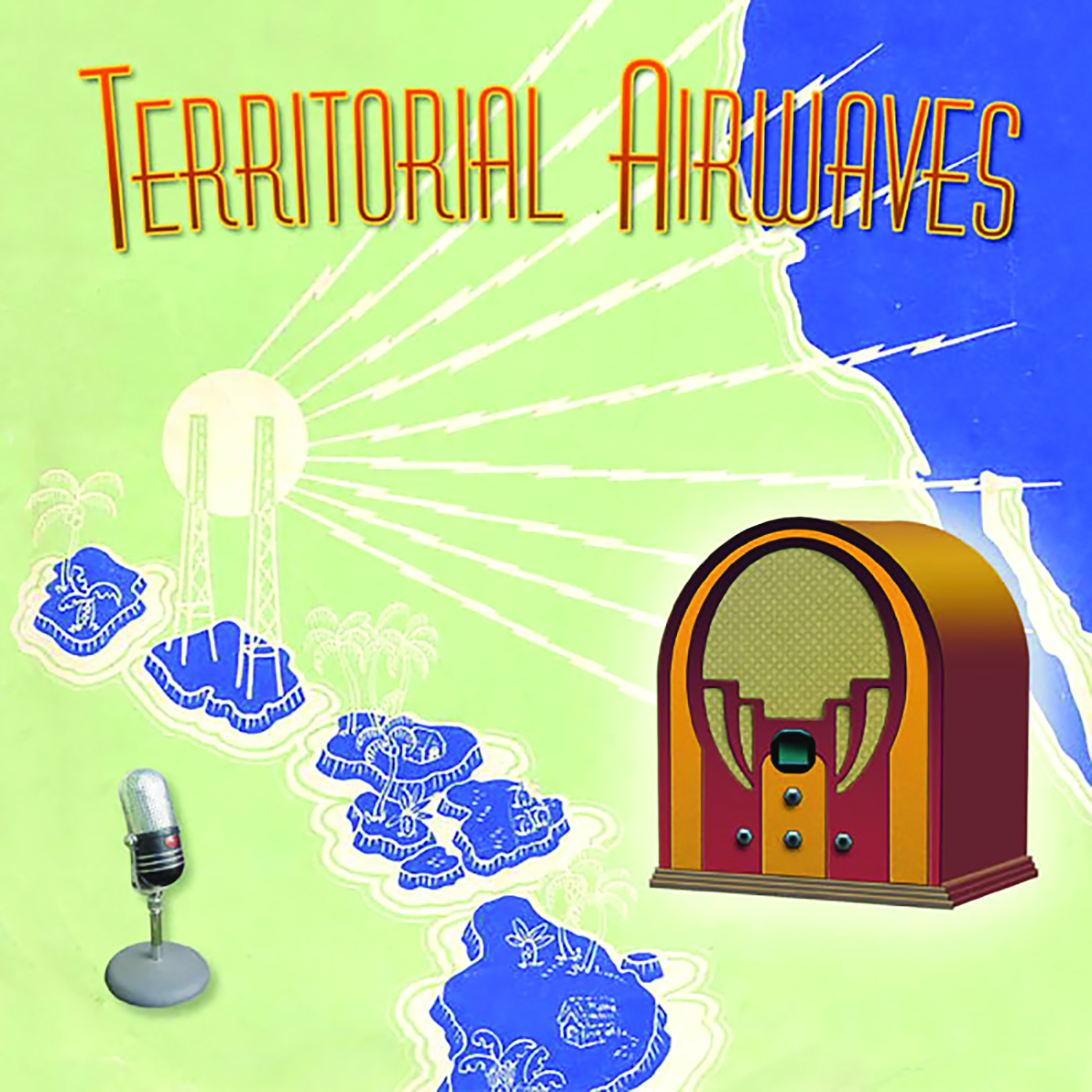
“Territorial Airwaves” will celebrate its 40th anniversary of broadcasting Friday, June 14, at the Monarch Room of the Royal Hawaiian Hotel, where Harry B. used to broadcast live. He and his wife, Kumu Hula Kilohana Silve, are planning a massive ho‘olaule‘a with a traditional buffet dinner, a broad array of fantastic Hawaiian entertainment and a huge silent auction. Funds from this celebration will support the preservation of Hawai‘i music through The Hawaiian Music Archives Foundation. Tickets to this splendid event cost $150 per person and are now available at www.TerritorialAirwaves.com.
Over the last 40 years, Harry B. has collected and cataloged over 70,000 recordings and 10,000 vinyl and acetate records, as well as thousands of liner notes, photographs and memorabilia.
The foundation will create a public repository where this music history of Hawai‘i may be safely preserved and made available to the public.
“The Hawaiian Music Archives Foundation will prepare a user-friendly digital archive system so young musicians and the public may easily access this wonderful music resource,” says Harry B.
Kilohana says that two hālau will be assisting at the event. “Harry is too ha‘aha‘a to say this but preserving recorded and notated Hawaiian music is an important worldwide legacy project. The international live broadcast of ‘Hawaii Calls’ planted cultural seeds in many countries; fans of Hawaiian culture, dance and music literally cover the globe. Those who listened to Hawaiian music as kids now stream ‘Territorial Airwaves’ broadcast online. They pass on to their families the dream that ‘Someday, I’m going to get to Hawai‘i.’”
Harry smiles. “Dad always wanted me to make a trans-Pacific broadcast of ‘Territorial Airwaves’ like he did with his ‘Voice of Hawaii’ show on KGU and NBC in the 1930s. Fortunately, technology caught up with us and live streaming allows music lovers from every country to listen. The foundation will make digital recordings and image files available in perpetuity to everyone.”
 100 Years of the Soria Family in Hawai‘i
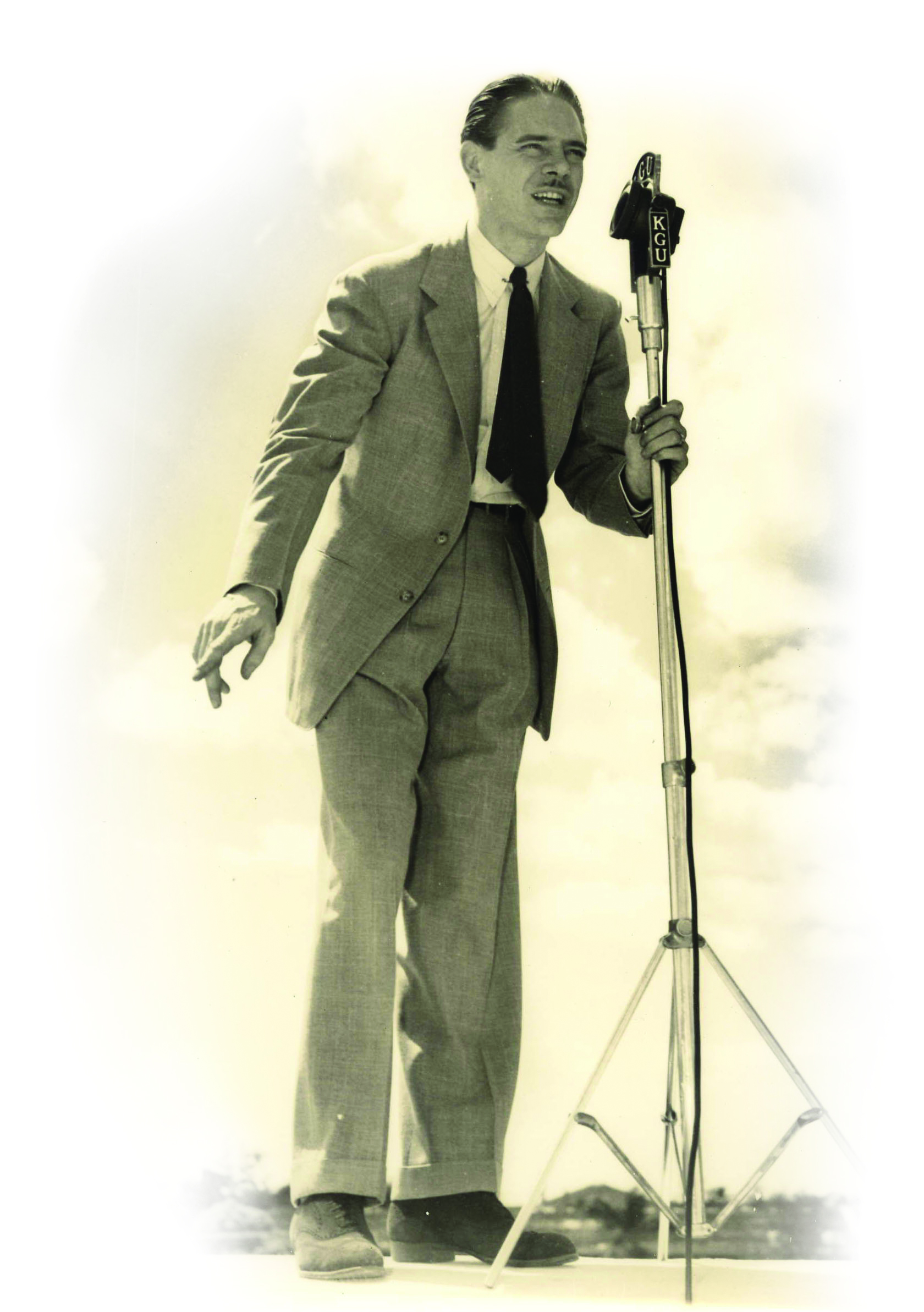
This year also marks 100 years in Hawai‘i for the Soria family, called “the first family of Hawai‘i Radio.” In the 20s, Harry B.’s grandfather, Harry G. Soria, was friends with Marion Mulroney, who operated KGU radio, the station affiliated with the Honolulu Advertiser. He sold airtime and commercial spots for them. In 1934, his son Harry B. Soria (Harry B.’s father), got a job at the Star Bulletin’s rival radio station, KGMB, where he pioneered remote broadcasting — by laying a wire from the old Star Bulletin building across Bishop Street and down Alakea to do a promotion at the famous Radio Repair company. He booked the Bright Brothers to perform and it was a hit. Soon, Harry G. recruited his son to KGU to host an on-location traveling show called “Going To Town with Harry Soria,” which drew attention to Honolulu shops, events and community gatherings. Listeners from O‘ahu and Neighbor Island plantation communities tuned in and flocked to enjoy Honolulu’s growing urban scene.
Harry B. Soria Sr.’s remarkable career in announcing, marketing and record production earned him the moniker, “The Voice of Hawaii.”

1935–1975: 40 Years of “Hawai‘i Calls” Radio
A year later in 1935, Webley Edwards had an idea to do an on-location dance party show at the Moana Hotel at Waikīkī with a shortwave radio hookup to NBC in San Francisco and a connection to the Mutual Broadcasting Network of local stations across the U.S.
Harry B. tells us that the first time Webley tested the hookup, the telephone operator said “Hawai‘i calling…,” so Edwards named his new show “Hawaii Calls.” Edwards directed and produced the show, which always started with the live sound of waves coming in at Waikīkī Beach and Edwards’ lilting voice reading his script. Harry Owens and the Royal Hawaiian Orchestra set the mood and featured all the best musicians in Hawai‘i.
Besides dance numbers, “Hawaii Calls” showcased the biggest singing stars like Alfred Apaka, Johnny Almeida, Ray Andrade, Marlene Sai, Ray Kinney, Dave McIntyre and Don Ho, all under the musical direction of Al Kealoha Perry. Performers and songs heard on “Hawaii Calls” became so popular on the mainland that the Lexington Hotel in New York City presented a live Hawaiian show every night; Hawai‘i big bands and vocal stars flew to New York for gigs that would last three months or longer. Hawai‘i music and hula was the rage.
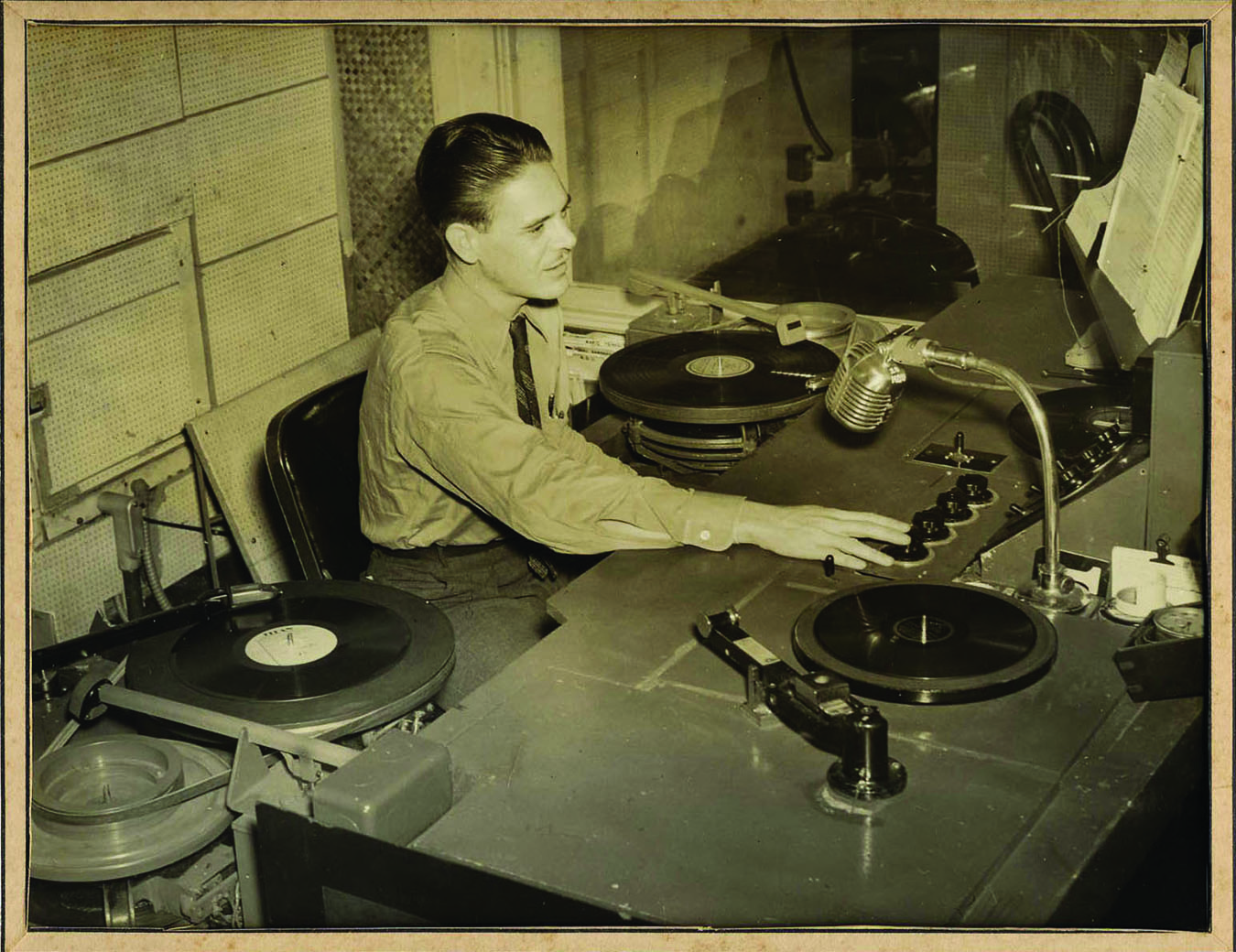
Radio was big entertainment in the 30s and big business on the weekends. At KGU studios on the third floor of the Honolulu Advertiser building, Harry B. Soria Sr. ran his own live-audience radio shows —with Charles E. King, Johnny Almeida, the Bina Mossman Glee Club and the trans-Pacific NBC broadcast of “The Voice of Hawaii.” The audience was separated from bands and performers by a plate glass screen; broadcast mics were “inside the booth.” Audience response was piped in and controlled with a switch by the program director.
Harry Sr. also broadcast his own shows that featured the most popular recorded
music of the day, live interviews and called-in listener requests that he personally announced.
When commercial air travel to Hawai‘i began after WWII, mainlanders who had grown up on tunes from the Land of Aloha could not wait to visit Honolulu; innovative radio had created a national market for Hawaiian culture. After 40 years, “Hawaii Calls” signed off the air in 1975, a year which was also the flash-point for a Hawaiian cultural renaissance. Television was the new darling, and after a few more years, Harry Sr. retired.

Hawai‘i Music History — The Trunk of Destiny
One weekend in 1976, 28-year-old Harry B. Soria Jr., asked his dad if he had saved any 78 rpm vinyl records from the “old days.” Harry Jr. remembered singers, musicians and composers coming to their home in ‘Āina Haina when
he was a kid. His father never encouraged him to take up a career in radio, so he was happily working in the private sector doing accounting and financial services. But he was fascinated by Honolulu Skylark’s KCCN 1420 AM radio show, where she played old 78s from pre-statehood days. Harry Jr. had a heart
for Hawaiian culture and knew that these old Hawaiian recordings were an important connection to the past.
Harry Sr. led him to a dusty steamer trunk in their garage filled with the contents of his desk from Monday night, Dec. 8, 1941— his last radio broadcasting day after the attack on Pearl Harbor. The Japanese had used the “Voice Of Hawaii” trans-Pacific broadcast frequency to navigate their bombers to the Hawaiian Islands.
Hawai‘i’s business community anticipated that the Japanese might attack the Territory of Hawai‘i and put a disaster plan in place in 1941. Harry Sr. was charged with screening all long-distance calls to and from Hawai‘i, so that no classified information would be available to foreign forces. On Sunday, Dec. 7, he listened to a conversation between President Franklin D. Roosevelt and governor of the territory, Joseph Poindexter. On Monday, he cleared out all the records from his office. Announcers like Webley Edwards became war correspondents, and Harry Sr. became a lead radio and long-distance telephone censor for U.S. Navy Intelligence, assigned to Midway Island until 1946.
A Passion for Authentic Hawaiian Music
The trunk held plenty of 78 records, acetate records, tape recordings, lead sheets for live musicians, broadcast playlists, contracts and memos. This valuable cache of Hawaiian music history began Harry Jr.’s quest to learn about and preserve as much old Hawaiian recorded music as he could. Until his death in 1990, Harry Sr. mentored Harry Jr., sharing the history of authentic Hawai‘i music.
Harry Jr. was catching Skylark’s show one day when she posed a rhetorical question about a strange shuffling noise in the background of “Hawaiian Vamp” by Johnny Noble, recorded live at the Moana Hotel.
“I asked Dad about the background noise and he explained that the ballroom floor was open to the shore, and sand would blow in or get tracked in. As couples danced, the sand underfoot made a shuffling noise on the wood floor that the live mics picked up. When I told Skylark, she wanted me to do my own show. But Dad counseled me to keep my day job and pursue radio as a hobby.”
In June 1979, Harry Jr. became the third generation of Soria men in radio as “Harry B.” with his weekly broadcast of “Territorial Airwaves” on KCCN 1420 AM. His “history of Hawaiian music” theme was well-received by the audience
for this hugely popular AM station that outperformed most of the FM channels. So, Harry B. began living his dream, doing one show a week, fulfilling his passion and kuleana to preserve Hawaiian recorded music.
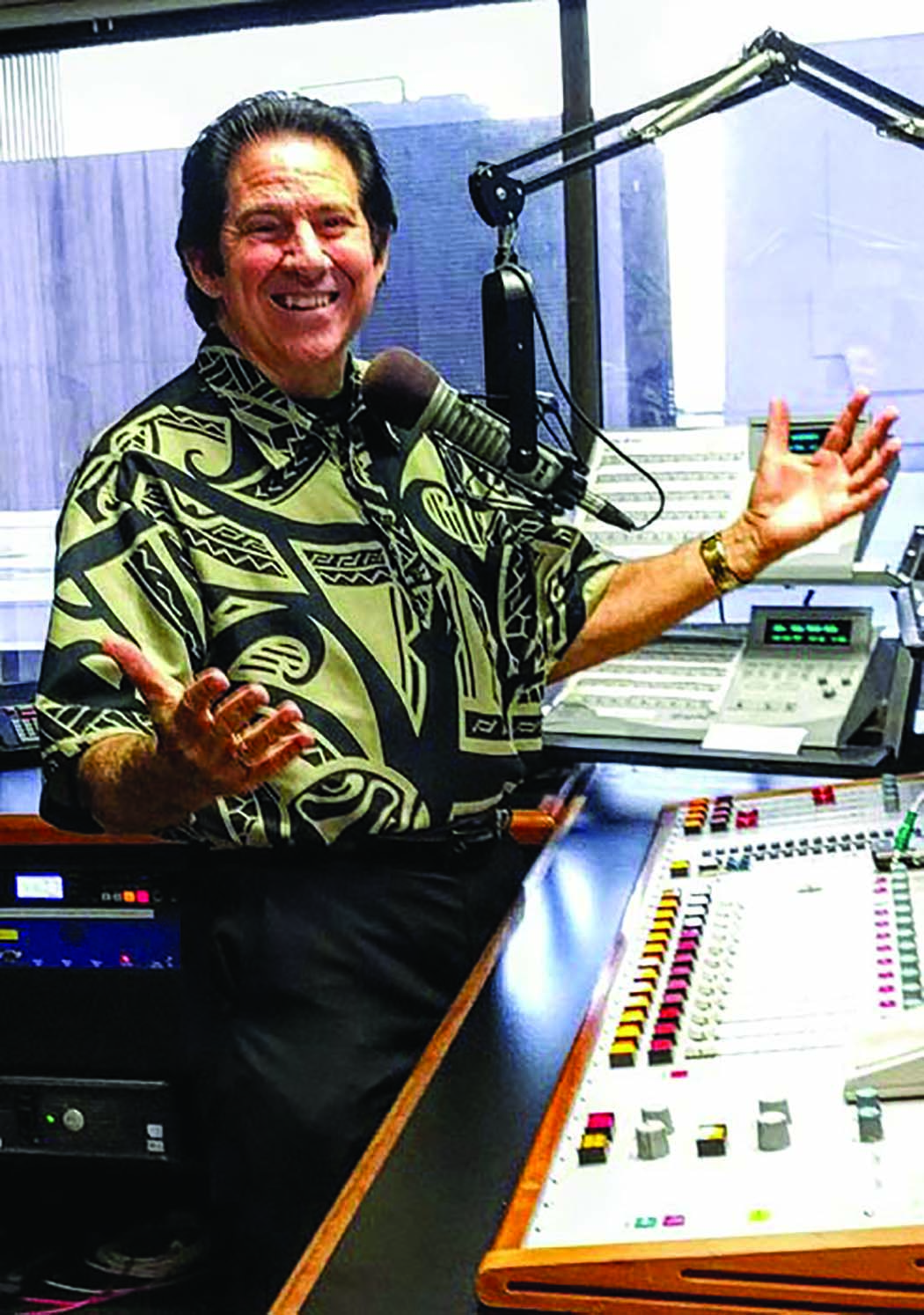
Guardian, Guru and Guide of Hawaii Music
“I felt a deep responsibility as a Hawai‘i boy and the son of radio greats to preserve traditional Hawai‘i recordings and broadcasts of the era between the monarchy and statehood — all the music that traveled through the ‘ether,’” says
Harry B. “Dad lived to 85 and he was my consultant for almost 11 years. I realized that music is an expression of the the times. Driving through town, he would tell me things like, ‘That medical complex on the corner of Ke‘eaumoku and Beretania used to be Dairyman’s Purity Inn ice cream parlor,’ or ‘This is the tune that made the Manhattan Cake Walk dance all the rage!’ I would just listen and write down all he shared. Soon, I patched together a slice of time that I felt I knew and understood. The more I learned, the more comfortable I became with ideas, motivations and limitations of life in the Territorial era.
“Dad always encouraged me and listened to every show. As soon as I got home, the phone would ring. He would say, ‘Great broadcast. You know, I was thinking about what you said and that song was actually…’ That was how I learned so much! I worked for several firms and finally retired from Sony Corporation in 2014, but never missed a show. Radio, nostalgia and history were my passion.
“Some folks said my gig would never last, but it’s about to outrun ‘Hawaii Calls’ as the longest regular Hawai‘i music broadcast. When I started, there was negative sentiment about the whole territorial period after the fall of the monarchy, including the popular music and shows of Waikīkī. Since the cultural renewal has taken root, young musicians want to learn the musical stylings and lyrics that are preserved in our early recordings,” says Harry B.

Harry B.: Music Historian and Curator
Today, Harry B. is the nexus of Hawai‘i music history, the guardian of a vast amount of information about the works and cultural impact of composers, musicians, producers and broadcasters who pioneered the Hawai‘i radio and music industry. Harry B. has grown a large fan base that includes young musicians who want to follow the traditions of territorial steel guitar and slack key
guitar, big band arrangements and swing style. Readers 50 years old and older have been listening to “Territorial Airwaves” and learning about old Hawaiian music their whole lives.
Also to his credit are some 30 albums of authentic Hawaiian music recordings that he produced on the Cord International label.
Considering the magnitude of his legacy — over 70,000 archived song recordings, 10,000-plus vintage vinyl records and thousands of photos, liner notes, original album covers and memorabilia — we asked Harry B. what advice he gives to seniors and retirees. He says that he and his wife, Kilohana, have a family mantra, which is to approach every day with the intention to “stay relevant.”
Harry B.’s Advice: Follow Your Passion and Remain Relevant
Like all of us, Harry B.’s life turned up and down. He encourages other seniors to
pursue their passions.
“In the private sector, companies go through business cycles and hard times,” says Harry. “My jobs have been downsized and outsourced; companies have been sold or closed. I went through a divorce. But my mission to preserve the music was a constant. The satisfaction of moving forward on my mission always kept me going. I knew I was on track because young musicians and vocalists were taking an interest in traditional tunes. They were coming to me for songs that had been forgotten. They wanted original recordings of the pioneers and experts of steel guitar and original arrangements and phrasing of classics. I was privileged to help artists like Nā Hoa and Raiatea Helm find their music heritage.”
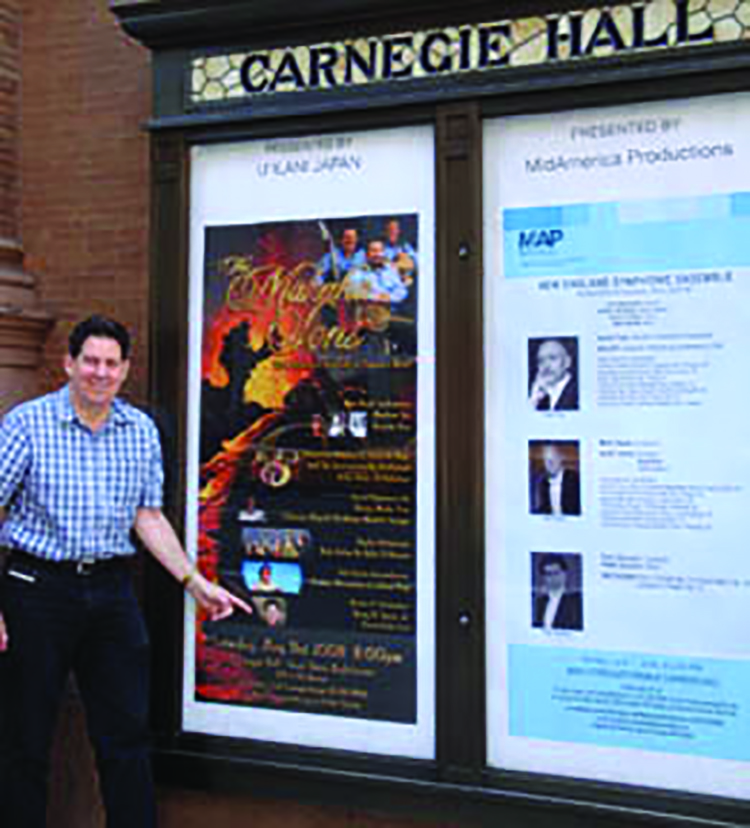
Even though Harry B. Soria is a public figure, at one point he found himself alone in his private life.
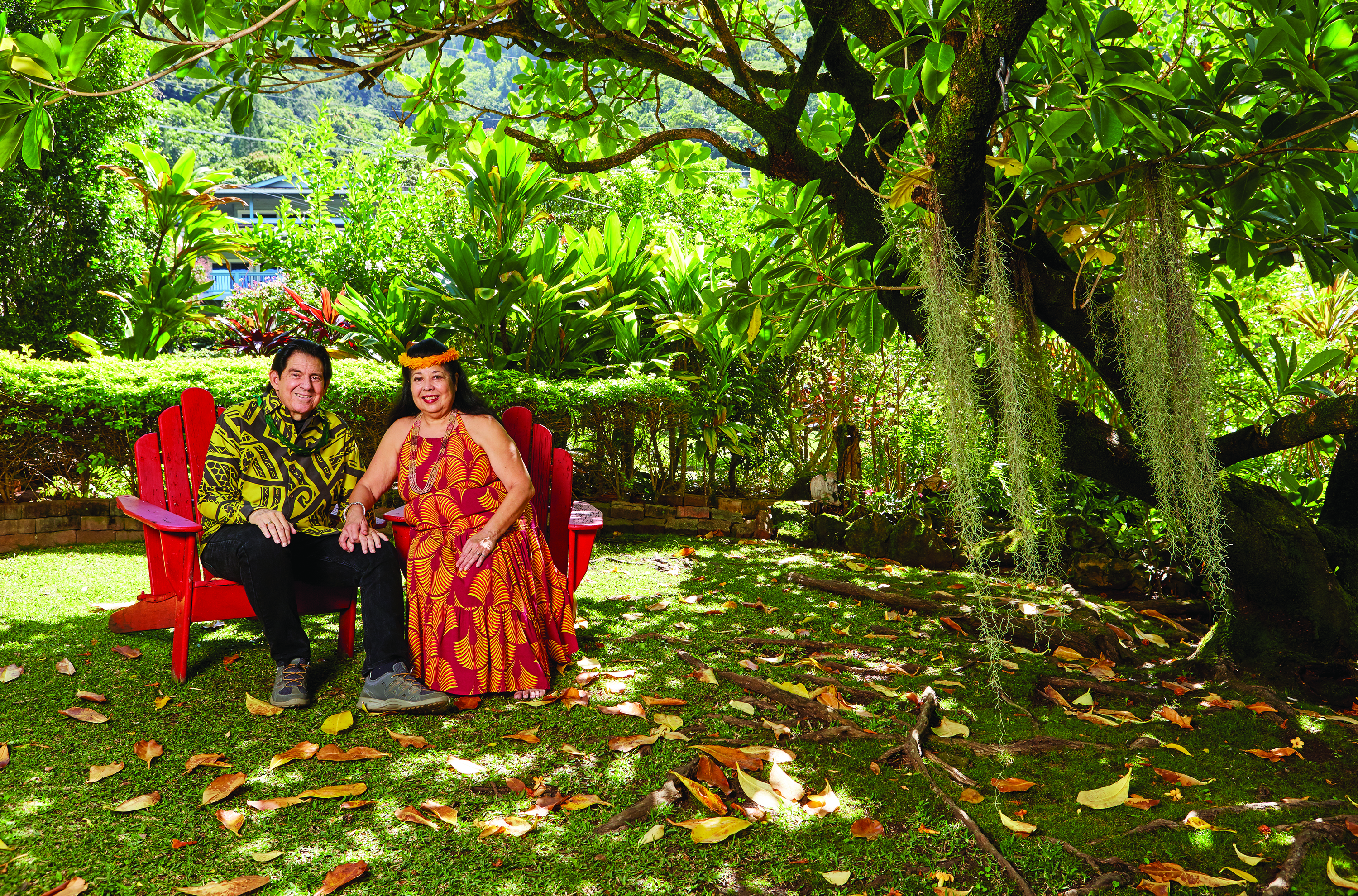
“At age 60 and approaching retirement, I felt disappointed. I had no grandchildren and after my divorce, I could not believe I would be living out my life as a single man,” he says.
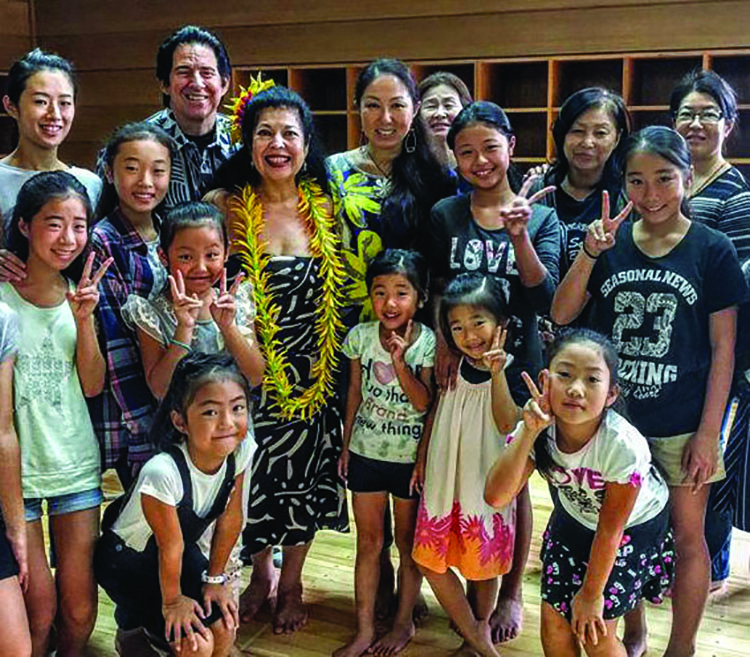
But as we say in Hawai‘i, “‘A‘ale pohō.” In 2015, Harry met Kumu Hula Sandra Kilohana Silve of Hālau Hula o Mānoa and president of L’Association France-Hawai‘i in Paris. After graduating from the University of Hawai‘i in 1972, Kilohana studied art history and French language in Paris. She became a teacher of art history, worked as an art critic and shared her culture. She married and raised her daughter in France.
Kumu Hula Kilohana trained with Kumu Hula Emma Bishop, Ellen Castillo, George Holokai and Kimo Alama Keaulana, and studies chant under Kumu Sam ‘Ohu Gon of Hālau Mele. In Paris, Kilohana developed a hula hālau that expanded to Rome through one of her students. Another student choreographed a hula to Edith Piaf’s “La Vie En Rose,” translated into Hawaiian by Sam Gon. Besides starting an international hula festival in France, she aided the Chigasaki Makana Hula Festival in Japan. A Juneau, Alaska, branch of her hālau performed for the annual Alaska Folk Festival.
Kilohana was widowed and returned in 2005 to live in Mānoa, where she became a docent at Mānoa Heritage Center and continues to teach and choreograph hula for haumana in Europe, Asia, Alaska and Greenland. With decades of success behind them and the support of long-standing audiences, Harry B. and Kilohana understand the dichotomy between art and the business of performance. Each has respect for the other’s cultural kuleana and talent. In 2017, they married.
Passing On a Legacy to the Community
“We fell in love and never looked back,” says Harry. “We never argue and our daughter is a joy. I have two very French grandsons with Hawaiian names. It’s amazing, but our public and private lives are compatible on both sides of the world. We are blessed to find love late in life.”
Harry B, offers us the last seven years of his weekly broadcasts free-for-the-clicking on his interactive, fun website, www.TerritorialAirwaves.com. He also posted a big photo gallery of radio, recording and television stars going back to the 20s. Dubbed “The Encyclopedia of Hawai‘i music,” Harry B.’s website is a treasure trove of historical notes on performances, venues, studios and music producers.
Says Harry, “We aspire to remain as relevant as we possibly can. As I reach
70 and ‘Territorial Airwaves’ turns 40, the Hawaiian Music Archives Foundation will preserve and make public my personal recording collection and the collections of other Hawai‘i music enthusiasts wherever they live. All these precious materials have been given to me by my father and Hawai‘i music lovers. But we are the stewards — they belong to Hawai‘i.
We Want More Hawaiian Music!
If we had to say goodbye to steel guitar slides, ‘ukulele chalanglang, honky-tonk piano vamps or resonant slack key, would aloha die? Of course not. Lapping waves and swaying palms would inspire composers to new musical creations, but we might miss the textures and tunes of Hawai‘i that the kūpuna used to tell our story of aloha. Thanks to the kuleana and vision of the Soria family, authentic Hawaiian recordings of the past will be preserved. Tomorrow’s musicians will have the opportunity to hear the sounds and language of the kūpuna and weave their flowers into the golden lei of Hawaiian music.
Join Us in Support of the Hawai‘i Music Archives Foundation
At Generations Magazine we cherish and promote the benefits of “legacy”— passing on traditions, achievements and wisdom to the next generation. We encourage our readers who love the music of Hawai‘i to support the Hawaiian Music Archives Foundation in any way you can. Perhaps your hula class or choir can donate a small gift or do a benefit performance. Get a group of friends to buy a gala ticket for a promising musician or broadcaster who loves old Hawaiian tunes. Or just go to the “Territorial Airwaves” website and make a donation. If you’ve enjoyed listening to “Territorial Airwaves” over the last 40 years, maybe this is the time to say “mahalo” and help Harry B. make all this music available to your grandchildren.
If you are descended from the great families of Hawaiian music of the 40s 50s and 60s, supporting the archives honors the talent of your kūpuna. There is nothing more important to an artist than to be remembered in the public space of a museum. These music archives are a beautiful digital museum of territorial Hawaiian music and beyond to the 80s.
 “Territorial Airwaves” Radio Show
KKNE Traditional Hawaiian 940 AM
Airs at 12 Noon Fridays and Sundays at 5 pm
Listen online at www.TerritorialAirwaves.com
40th Anniversary Celebration!
Friday, June 14, 2019
Monarch Room, Royal Hawaiian Hotel
Tickets: www.TerritorialAirwaves.com
It’s Sunday afternoon! “Welcome to ‘Territorial Airwaves,’” echoes the AM940 Hawai‘i announcer, followed by a long steamy blast of a cruise ship’s horn. And then, like a playful ocean breeze, the cadence of Harry B. Soria’s happy voice bids us e komo mai and stay awhile. Gently, he calls us back to simpler days with…
Last school year I fell down half a flight of stairs, bruising my left hip. It was an accident where I was just happy I didn’t break anything. At age 63, I should have been more careful! X-rays indicated the need for a hip replacement but, since I’d been practicing self-care for the past fifteen years by using wellness products, I thought I already had everything needed for my body to heal itself.
I first started seeking healthcare solutions when my daughter injured her neck during gymnastics training. We went to numerous specialty doctors who recommended a variety of treatments but we saw no sustained progress for her pain management. I quit teaching to find a solution and discovered natural healing products that help the body function as designed. My daughter went through a healing crisis where she felt worse before she felt better but then she had less pain and then no pain. When her brothers saw the value, they also wanted these products. They experienced better alertness in school, speedy recovery from sports injuries, less sickness and permanent allergy relief. Amazingly, however, sharing our story has not attracted followers because of the “ask your doctor” mentality in our culture.
 Part of my self-care includes hydrating with purified alkaline water, eating a plant-based diet, supplementing to build bones (prevent osteoporosis), getting deep sleep and exercising regularly. All this helped tremendously until I hit the floor again by horse playing students near the end of the school year. I could hardly walk due to the repeat impact to my hip. Chiropractic and massage worked wonders but were needed more often than insurance allowed.
We can’t repeat the same actions expecting different results, so I went to see a naturopathic doctor for cannabis. With a medical cannabis card, I made my own tincture, teas and biscotti. After two weeks on cannabis I could lift my leg
up to ride my bike when I couldn’t prior to the fall. I can’t recommend anyone make their own medicine due to the problems of pure sourcing, processing and dosing. I recommend using CBD transdermal patches because it has better bioavailability than when ingested. It also bypasses first pass metabolism in the liver, making it gentle for ages 2 and up according to the Natural Medicines
Database. It’s like a Band-Aid that dispenses a sustained dosage for 24 hours with no bad taste!
I love my retirement lifestyle of self-care. It provides daily motivation to be physically active and the mental challenge of choosing what to put into or expose my body to, as well as the “can do” spirit to help others do the same.
Last school year I fell down half a flight of stairs, bruising my left hip. It was an accident where I was just happy I didn’t break anything. At age 63, I should have been more careful! X-rays indicated the need for a hip replacement but, since I’d been practicing self-care for the past fifteen…
I have been a social worker, with a varied practice, for over 40 years. Suffice it to say that I am somewhat of an extrovert, with a love for meeting, relating and living with family, friends, colleagues and even casual acquaintances. As a social worker, I developed a skill set and method to connect with individuals and to help them connect with each other. My passion, which I try to live out daily, is to allow people to come up with solutions to problems that disallow them from living a what I call a “full life.”
You know, the profession of social work’s claim to fame is the theory “Person-in-Environment” or PIE. Not only does the social worker relate and deal with the person but also the environment and relationships he or she lives with; those intimate realities of life that affect the “personhood.” Once, I was trying to explain this to a client when we were sitting next to a pond and talking story. So, I took a stone and threw it in the water. As it landed and made concentric circles in the water, I said, “This is what you and I do when we meet. We make these concentric circles.” He understood right away. We must have thrown at least 30 stones in the pond, between the two of us!

So my passion, still, even after years of social work, is to “make and eat PIE” with folk. Three years ago, after a period of theological and faith formation, I was ordained a priest in the Episcopal Church. I found that my passion for God and Faith was combined and integrated with my passion for people and life. In my way of living a “full life,” I find that my priesthood allows me to practice a kind of “divine” social work, in that I am connecting people with each other and with God. The PIE I now “make and eat” becomes pastoral and sacramental with and for others.
Not long ago, I was at a meeting of social workers, and a couple of colleagues asked for my opinion as a priest. Naturally, we started getting into the PIE of the issue and I focused on the stone thrown in the pond as a metaphor. Then I asked my colleagues to consider what would happen when the stone is thrown in the water vigorously — with verve and gusto! Ah, then our discussion took on dimensions that heard us talking about water “leaping up” and stones “coming out” and concentric circles becoming “irregular and converging.” There we were, professionals, discussing very secular things and mixing it up with somewhat theological and numinous realities.
Yes, my “life is full.” It is full for the people, in relationship with each other, that I know and meet. Yes, I “make and eat PIE” whenever I can.
The profession of social work’s claim to fame is the theory “Person-in-Environment” or PIE. Not only does the social worker relate and deal with the person but also the environment and relationships he or she lives with; those intimate realities of life that affect the “personhood.”
 Welcome to CREATIVE new ways of working throughout our ever-lengthening lifetimes.
Let go of the past. You are both the author and central character of your Third Act. Let your imagination wander as you read about new ways people over 50, 60, 70 and beyond are having fun, making money and devoting their creativity and energy to all the areas of their jam-packed lives.
Cruise line opportunities All types of workers fill short-term, fun positions that allow them to contribute their knowledge on board. Google “cruise line opportunities” and you will be surprised by the available options. Don’t Google? Ask your keiki or grandchildren to teach you.
 Ensemble collaborators The single voice is a song. The collective voice is the Hallelujah Chorus. It is in “teaming” where fun and profit meet. Often labeled as “shared sourcing,” services are provided through the unique efforts of individual contributors from a co-committed group.
In one local group, team collaborators help people optimize future health, well-being and financial security. Team members enjoy their work and refer opportunities to one another. The result? They are busy, productive and socially connected.
 Interim professionals Interim professionals are the leaders of change during various periods of organizations’ life cycles. Increasingly, interims are hired during rapid expansion and not for their ability to handle past crises. Most are subject-matter experts whose knowledge is critical to effect desired results in this fast-evolving world of ours.
Get-paid networks Get paid for taking part in research studies, opinion surveys, clinical research, focus groups, passing out free samples in grocery stores… even standing in line for others. Google various areas of interest such as “Get paid to write” or “Get paid to…” (fill in the blank).
Internet opportunities Examples of internet based opportunities include affiliate marketing, where you get paid a commission for generating clicks on another company’s website from your own. You could sell your own stuff online, or help local businesses draw customers into their store or restaurant. The internet provides the perfect opportunity to start a side business that can be operated by working a few hours a week.
Go ahead — explore!
NEW WORKFORCE HAWAII
Carleen MacKay
916-316-0143 | carleenmackayhi@gmail.com
www.newworkforcehawaii.com
Contact Carleen via her website and receive a free pdf book called New Ways to Work, co-written with Phyllis Horner.
Let go of the past. You are both the author and central character of your Third Act. Let your imagination wander as you read about new ways people over 50, 60, 70 and beyond are having fun, making money and devoting their creativity and energy to all the areas of their jam-packed lives.
Is your home too large now that the kids are gone? Maybe you have a 3-, 4-, or 5-bedroom home and you’ve realized that your kids aren’t coming back home. Maybe it’s time to downsize to a condo, townhouse or retirement community.
Does your home have too many stairs? Over time the stairs could be a challenge as you get older. Do you want to plan ahead before you have to react to an unfortunate accident? Maybe it’s time to seek out a single level home or one with no stairs.
 When you start to feel concerned about your security then it’s probably a good time to look for other options that will make you feel safe.
If you’re thinking of downsizing to a smaller house or condo, a realtor specializing in that field can guide you to options that could work for you.
Perhaps you’re thinking of a retirement community or care home. They can share different options their other clients have chosen and even introduce you to some who have made the move. Some realtors can even set up tours for you at any of the retirement communities on the island and on the mainland. So call the folks who help older adults make this huge transition.
THE IHARA TEAM — The Complete Solution™
Keller Williams Honolulu RB-21303
4747 Kilauea Ave., Suite 201, Honolulu HI 96816
Dan Ihara (RA), CAPS, CLHMS, SRES RS-65892
808-256-7873
Julie Ihara (RA), SRES RS- 67440
808-754-2225 | ihara@iharateam.com
www.julie.iharateamhawaii.com
Is your home too large now that the kids are gone? Maybe you have a 3-, 4-, or 5-bedroom home and you’ve realized that your kids aren’t coming back home. Maybe it’s time to downsize to a condo, townhouse or retirement community.
Many agree that those reaching the twilight years would be entitled to coast for the remainder, but the stark reality facing most seniors includes declining health, social and financial challenges, and a feeling of insecurity.
Men’s Shed began in Australia over 11 years ago and is thriving, with evidenced growth to 1,200 Sheds today, especially in rural communities. Studies have shown that participants experienced marked improvement in their health and social skills. In December 2015, fellow Rotarians began the discussion on chartering Hawaii Men’s Shed, a social organization focused on improving the lives of senior men through social interaction and work-related programs.
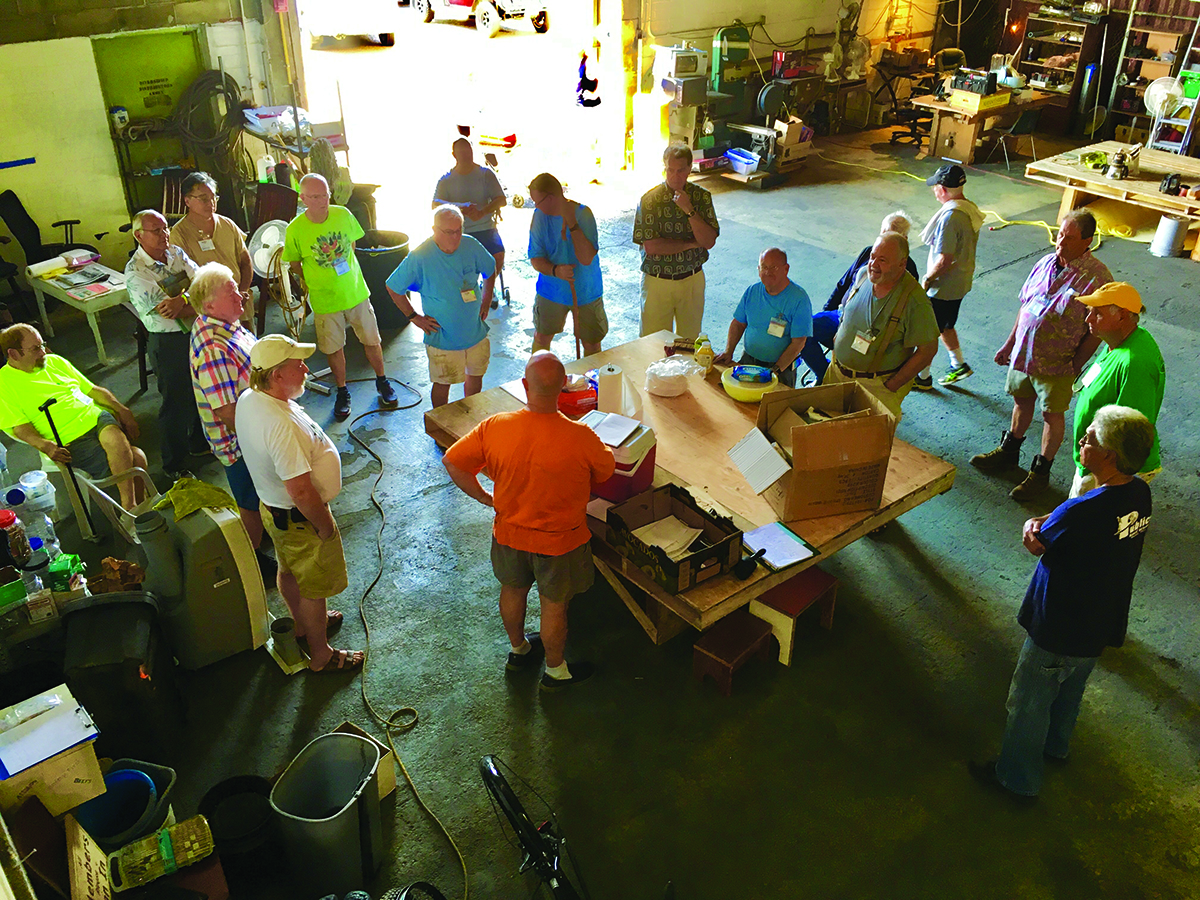 Hawaii Men’s Shed can fulfill what our growing senior population needs — a place to work and play. In just our third year, membership has grown to 95 members (91 men, 4 women). Shed members come from all vocations and backgrounds, including from the building and related industries. We operate temporarily out of a warehouse near Pier 19.
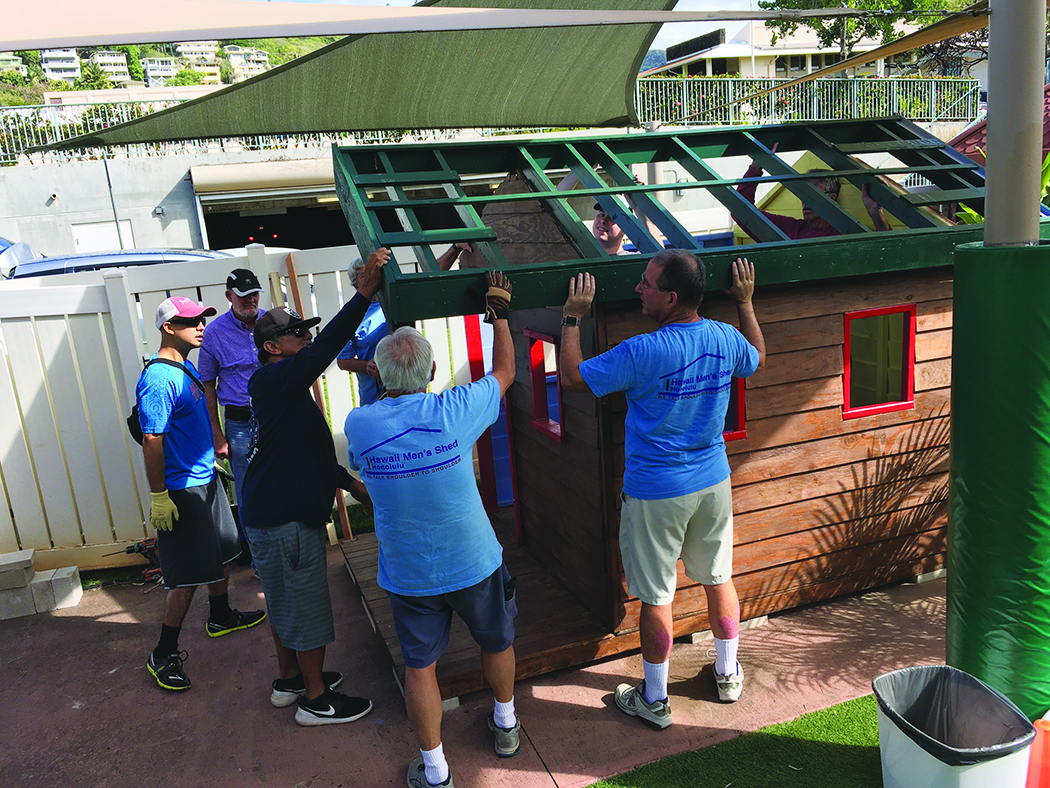
Recently, our Men’s Shed assembled a wood playhouse that we designed, built and later donated to the Star of the Sea Preschool. It is a great example of what our Shed members can accomplish using our planning, design and woodworking skills. Preschool director Lisa Foster notes the important life-play experiences that the new structure is providing for their more than 220 young students.
 Last year, we donated two picnic tables to the Jefferson Elementary School, refurbished 15 bicycles and finished 100 orchid baskets for a Leeward O‘ahu orchid club. Since our inception, we have accepted donations of materials and tools to fill the specific needs of our many projects.
We focus on building sustainability through Shed’s programs on safety, financial well-being, and developing great projects. Our funding comes from members’ dues to cover insurance and administrative costs), donations and grants.
Members can avail themselves of Shed tools and materials, and also contribute by serving on our board and in key technical positions. Our vision is to grow Men’s Sheds statewide. So far we are working with interested groups in Hawai’i Kai, Lanakila, Kaua‘i and the Big Island.
We encourage all to go to our website or call to check out our Men’s Shed.
HAWAII MEN’S SHED
619 Kukahi St., Honolulu HI 96817
808 286 3743 | www.hawaiimensshed.org
Many agree that those reaching the twilight years would be entitled to coast for the remainder, but the stark reality facing most seniors includes declining health, social and financial challenges, and a feeling of insecurity.
Ever wondered if the first Filipino American Governor in the United States, Ben Cayetano, got up to mischief in his youth? Or what it was like to be sent to Kalaupapa, as Makia Malo was? Or maybe you fancy going for a hike and are wondering which ones you can do. If so, read these!
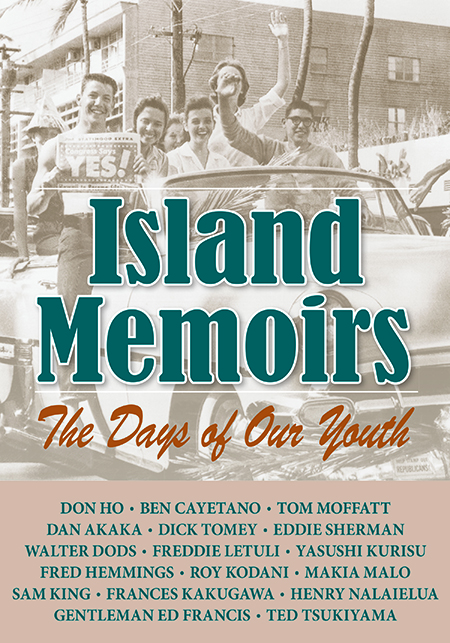 An anthology of excerpts from previously published memoirs, Island Memoirs: The Days of Our Youth highlights the special experience of coming of age in Hawai’i as seen through the eyes of native born and new transplants alike.
The tales of childhood, early education and budding careers span time from pre-statehood to the new millennium, offering wonderful glimpses of Hawaii’s social and natural environment over the years.
Frances Kakugawa’s descriptions of being determined to replace pidgin with standard English in order to become a published author and of the destruction of Kapoho in the 1960 Kilauea lava event are but one example.
All 17 lives leading to careers in sports, show business, the boardroom and even the Governor’s Office are recounted with compelling honesty.
WATERMARK PUBLISHING
808-587-7766 | www.bookshawaii.net
Island Memoirs: The Days of Our Youth (2018)
Hard cover. Also available at all HI State Public Libraries
 Author Stuart M. Ball, Jr. has expanded and updated The Hikers Guide to the Hawaiian Islands to include 13 hikes each on Hawai‘i, Kaua‘i, Maui and O‘ahu.
The hikes are graded as Novice, Intermediate and Experienced and a handy index in the front of the book lets you see which suits your fitness level. That index also includes the hike’s length and elevation gain, as well as whether there are views, swimming, native plants/birds, historical sites and volcanic features.
The trail descriptions themselves are extremely detailed and each has trailhead directions (including GPS coordinates), a topographical map, and brief highlights. Many have notes about the best time of day to take the hike, what you can expect to see and the area’s history.
The appendix lists trail and camping contacts. Always call ahead to learn of current conditions!
UNIVERSITY OF HAWAI‘I PRESS
808-956-8255 | www.uhpress.hawaii.edu
The Hikers Guide to the Hawaiian Islands (2018)
Soft cover. Also available at all HI State Public Libraries.
Ever wondered if the first Filipino American Governor in the United States, Ben Cayetano, got up to mischief in his youth? Or what it was like to be sent to Kalaupapa, as Makia Malo was? Or maybe you fancy going for a hike and are wondering which ones you can do. If so, read these!…
Drawing the human form has been done since early man lived in caves. Today, artists still use bits of charcoal to make marks on a page that transform into a likeness of a person.
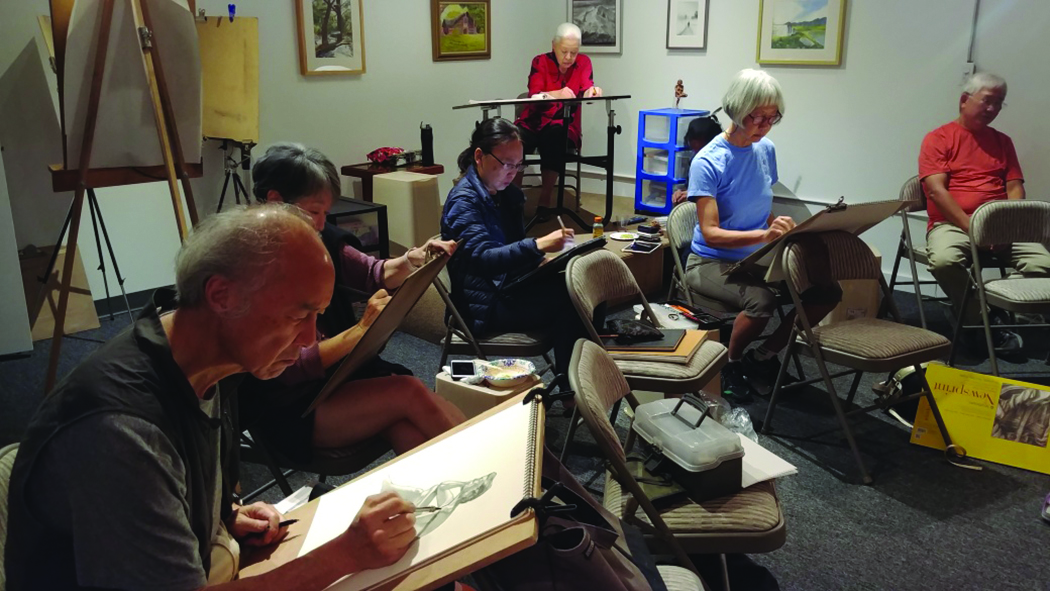 What makes figure drawing so alluring is to somehow capture the form of a live model and imbue it with a life of its own. What makes it so challenging is that people know too well the shape of a human body and mistakes are easily spotted.
Studied in art schools and ateliers, life drawing can also be done by anyone who has the interest at open studios that are available to the public for a small fee. Models hold poses from 2 to 20 minutes — the challenge is to complete a sketch in the allotted time before the pose changes. Generally, there is no instruction. The 2- to 3-hour sessions are simply a chance to hone one’s drawing skills.
Sometimes artists form their own drawing groups. One such group has been meeting regularly at a private studio for over three years. We gather every other Wednesday for 3-hour sessions of sketching, fellowship and encouragement.
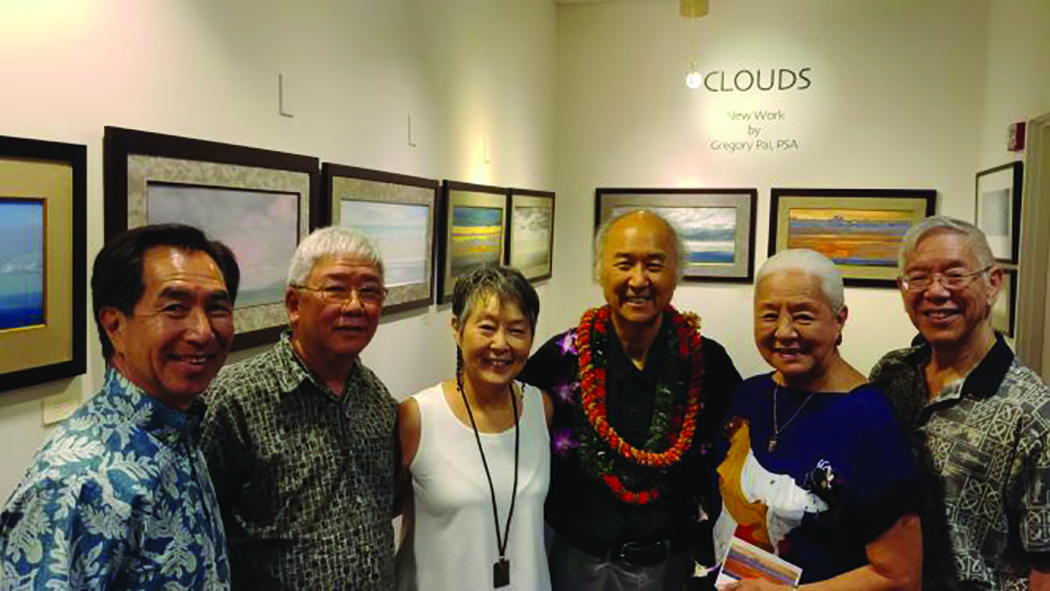 The group is primarily comprised of retired and working professionals. Herb is a real estate investor, Greg Pai a retired economist, Frances Wong a retired hotel executive, Beatrice Ku an architect, Ken Okuno a retired IT professional, Joan Shigemoto a retired speech pathologist, Flora Ling a retired financial writer and me, a financial professional.
Most in the group started drawing as they approached their senior years. Herb was inspired by the book Drawing on the Right Side of the Brain by Betty Edwards and happily discovered that he could draw. Greg is now a highly regarded professional artist who exhibits at Manoa Gallery and Nohea Gallery. Everyone’s sketches vary wildly, but each of us appreciates the deep satisfaction of drawing and how it can be a lifelong endeavor.
Check out your island’s local community bulletins, community colleges, or www.meetup.com. O‘ahu also has these life drawing open studios:
Honolulu Museum of Art — Linekona Art Center:
Monday evenings — contact Jared Wickware, jwickware@icloud.com
UH Manoa:
Sunday mornings — contact Scott Goto, gotoart@hawaiiantel.com
It’s refreshing to explore new creative outlets or reconnect to youthful talents. In the deep focus of drawing and the stillness of the studio environment you might even discover a new you.
Drawing the human form has been done since early man lived in caves. Today, artists still use bits of charcoal to make marks on a page that transform into a likeness of a person.
The opening lines of an ancient mele (chant) describes Lāna‘i with the following line — “Hanohano Lāna‘i i ke kauna‘oa, koku kapa ‘ahu‘ula kau po‘ohiwi…” Lāna‘i is distinguished by the lei of kauna‘oa (Cuscuta sandwichiana), which looks like a feather cloak set upon its shoulders.
The island of Lāna‘i is sixth in size of the major islands in the archipelago, and in many ways, it is a reminder of earlier times in Hawai‘i. Prior to western contact, it was home to some 6,000 native residents. Today it is host to around 3,200 residents. The honua ola (bio-cultural landscape) of Lāna‘i is richly storied, largely untouched, and little known.
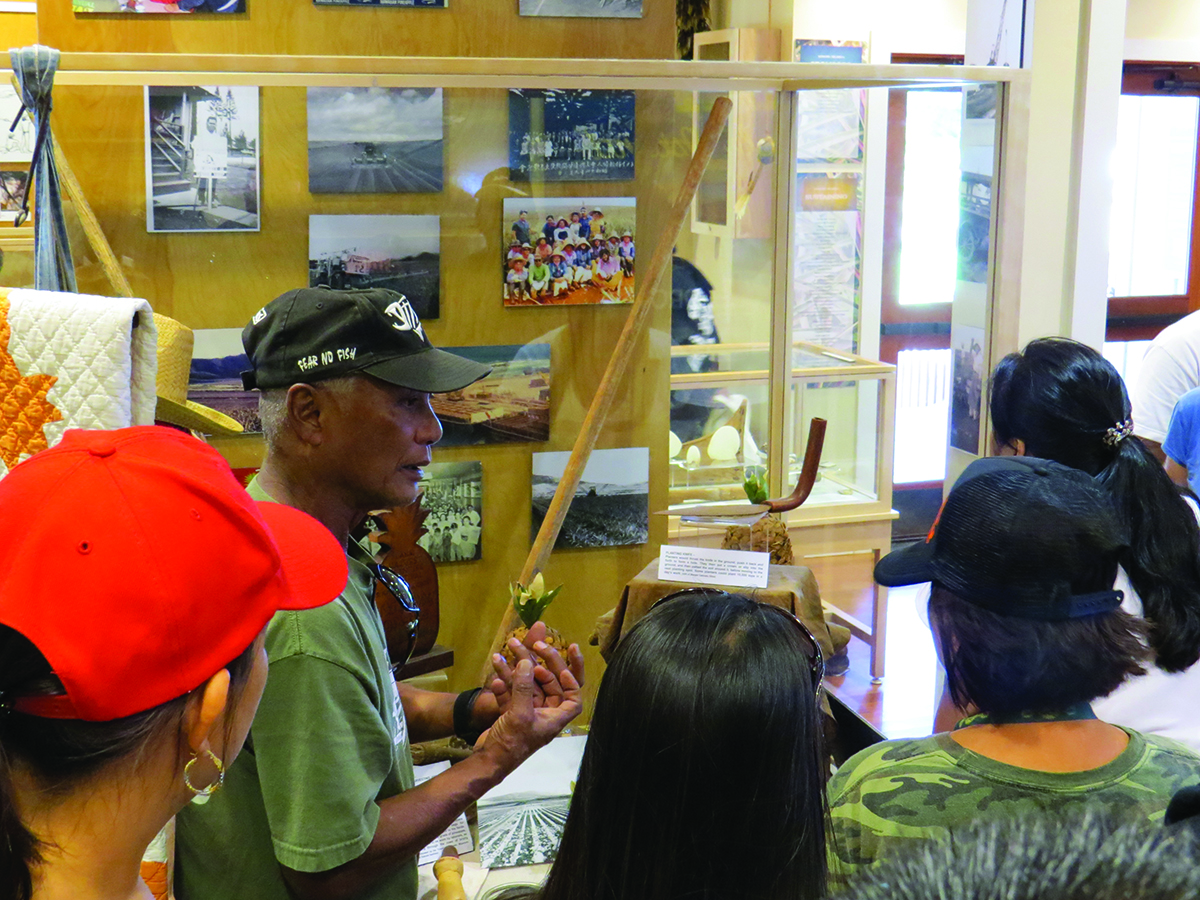
The Lāna‘i Culture & Heritage Center (Lāna‘i CHC) is a community-based charitable organization that strives to provide opportunities for students, community members and visitors to learn more about the island’s unique history. We have been privileged to partner with many organizations on both the local and national level and been the recipient of several significant grants.
Since opening in 2007, Lāna‘i CHC has served nearly 100,000 guests and residents through programs which include visiting a small museum and outdoor experiences. Among the notable programs for residents are the curation of indigenous artifacts, plantation era records and memorabilia representative of the cultural groups who have made Lāna‘i home. The collection includes thousands of records, artifacts, photos, oral history interviews, maps and more — many of which cannot be found in other collections.

While artifacts and the material culture of place are fragile and in need of protection, even more fragile facets of history are the knowledge and recollections of elder kama‘āina (people of the land). Since starting Lāna‘i CHC, we have conducted nearly 150 oral history interviews with elder kama‘āina of Lāna‘i, aged 60s to 102. Many have since passed away. The interviews have been recorded in both audio and video format, include multicultural backgrounds, and share the experiences of life that have made the community what it is today.
The 100 years of life on Lāna‘i, described by those who lived through and made the history of the island make the story of Lāna‘i more than just items displayed in glass cases. The voices and faces of the interviewees ground us in our community legacy, remind us of long-held values and inspire us.
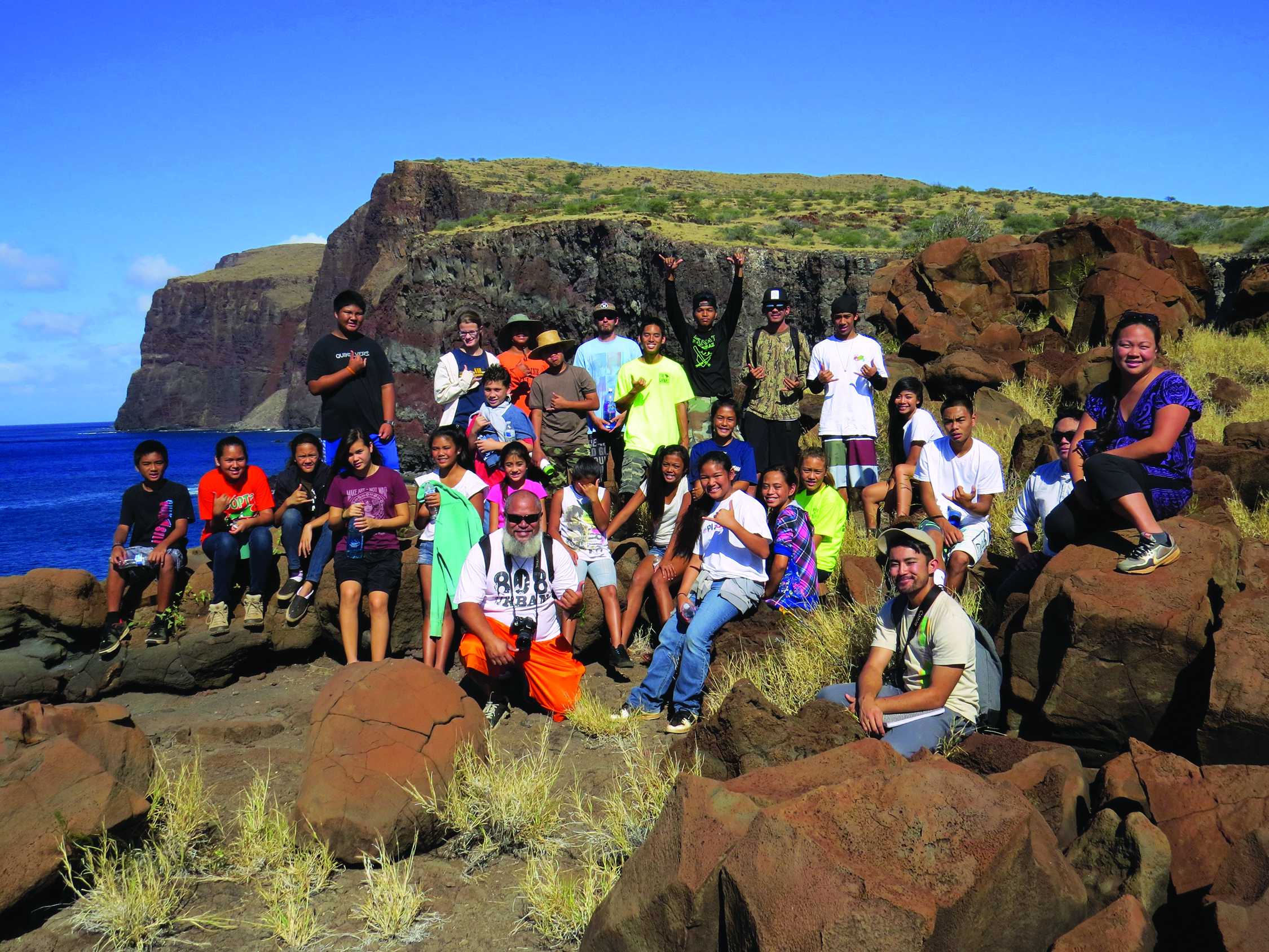
We’ve also developed curricula and engaged Lāna‘i students in cultural literacy/place-based education programs and partnered with the majority landowner, Pūlama Lāna‘i, in access and protection of sites across the island. The access is more than a just “go see.” Through field programs, we engage residents, students (on island, from across the state and from abroad) in stewardship programs from the mountains to the reefs to build a new generation of resource managers and interpreters to lead the future in care for the honua ola.
 One of the tools available to residents and visitor alike is the Lāna‘i Guide, a GPS web-enabled app (free at Google Play or the Apple store) that was designed as an interactive tool to engage users in the spirit and history of place. Because the information can also be accessed remotely from anywhere on earth (www.lanaiguideapp.org), visitors, students and researchers may also plan ahead for their time on Lāna‘i. The live GPS-enabled app directs the traveler (be it by vehicle, foot or bike) on the ground in real time. Travelers will find locations on the map and have access to various levels of information depending on their own interests. The content also includes links to other resource sites, photos and maps, audio files with narrations, songs or chants of old, and interesting video clips.
LĀNA‘I CULTURE & HERITAGE CENTER
730 Lanai Ave., Lanai City HI 96763
808-565-7177 | info@lanaichc.org
www.lanaichc.org
The opening lines of an ancient mele (chant) describes Lāna‘i with the following line — “Hanohano Lāna‘i i ke kauna‘oa, koku kapa ‘ahu‘ula kau po‘ohiwi…” Lāna‘i is distinguished by the lei of kauna‘oa (Cuscuta sandwichiana), which looks like a feather cloak set upon its shoulders. The island of Lāna‘i is sixth in size of the…
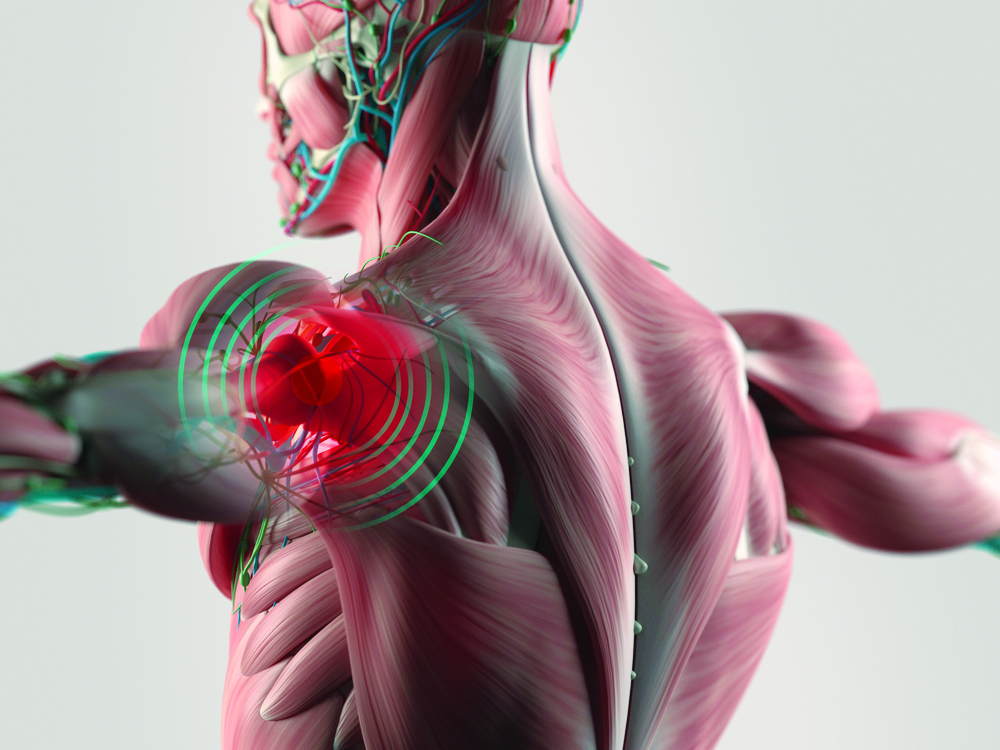 A healthy joint is like two smooth pieces of paper sliding against each other. Arthritis, joint damage, is like adding crinkles to the papers, with the friction causing pain and problems. However, in severe cases, and even with bone-on-bone degeneration, having no pain with “activities of daily living” is easily obtainable with a lot of hard work and the right treatments. If exercising on your own, consistency and diligence are the most important factors, so do something fun, like group classes/events, dancing, or play dates with grandchildren.
The key is dynamic muscle protection
Muscles are about 80 percent of the body’s support and protection; bones, ligaments, and padding are only about 20 percent.
It is very common to have strong and healthy muscles that lack the coordination to protect joints.
Certain exercises astronomically increase muscle protection.
Any exercise helps build some protection, but most have minuscule levels of protection, necessitating high volume to feel any benefit. An optimized exercise should allow for significant and immediate improvements.
Consider working with a physical therapist to create an optimized exercise plan that brings about those improvements.
PRIME PHYSICAL THERAPY
600 Queen St., C-2, Honolulu HI 96813
808-286-0194 | www.primepthawaii.com
A healthy joint is like two smooth pieces of paper sliding against each other. Arthritis, joint damage, is like adding crinkles to the papers, with the friction causing pain and problems. However, in severe cases, and even with bone-on-bone degeneration, having no pain with “activities of daily living” is easily obtainable with a lot of…
Our fast-paced lifestyles have caused many of us to lose the ability to use our main respiratory muscle, the large dome-shaped diaphragm, to breathe. Instead, we use our shoulders, upper chest, neck and back muscles, causing rapid, shallow breaths.
Diaphragmatic breathing is beneficial for your physical and mental health as it reduces stress, lowers heart rate and blood pressure. For those with pulmonary disease, such as COPD, the diaphragm often becomes weakened causing it to work less efficiently. A physical therapist experienced in pulmonary rehab can teach proper breathing to reduce anxiety, slow breathing rate, increase full oxygen exchange, and improve physical activity. Because part of the core is the diaphragm, in physical therapy, breathing is also essential to proper posture and core stability.
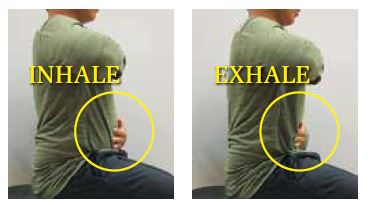 Diaphragmatic breathing is one of simplest things you can do to improve your overall health and well-being.
MOON PHYSICAL THERAPY, LLC
320 Ward Ave., Ste. 107, Honolulu HI 96814
95-1057 Ainamakua Dr., F-11, Mililani HI 96789
808-597-1005 | www.moonpt.com
Diaphragmatic breathing is beneficial for your physical and mental health as it reduces stress, lowers heart rate and blood pressure. For those with pulmonary disease, such as COPD, the diaphragm often becomes weakened causing it to work less efficiently. A physical therapist experienced in pulmonary rehab can teach proper breathing to reduce anxiety, slow breathing…