Category: April – May 2018

  • Don’t Give Wrongdoers a Free Pass

    Recently, I took my youngest daughter to the Punahou Carnival, where waiting in line for the adult rides she has now graduated to is sometimes 40 minutes. As we were getting close to the front, I noticed four young adults walk several feet in front of us and stand in line. It took me a moment to realize these people were cutting in. I approached and politely informed them where the end of the line was. One of the group replied that they had been standing in line all along. Unsure of myself now, I asked the man in front of me if this were true, to which he replied, “It’s only four people.” I looked back at the group and told them to get in the back of the line. After a moment, they went to some place that wasn’t near me. The man in front of me looked down and didn’t say anything to me or his two kids.

    In handling hundreds of elder abuse cases over the years, I have heard excuses being made all the time as to why someone should not be held accountable for bad behavior. For a variety of reasons, people allow wrongdoers and criminals to get away with their actions without incurring any consequences. The excuses range from “it’s not a big deal now” to “I am sure it won’t happen again” to “I don’t want to upset anyone.” Invariably, however, the unchecked misdeeds don’t stop and, in fact, get worse.

    The biggest excuse-makers for people behaving badly are parents. Countless times I have seen a mom or dad turn a blind eye to their adult child’s misconduct, only to suffer worse later on. For instance, the father who refused to have his son arrested for stealing $12,000 by forging his name on checks he stole from him. The father convinced himself — without any evidence to support this belief — that the son wouldn’t do it again. Two months later, he called the police. This time he wanted his son arrested for new charges — the son took $20,000 from his aunt, the father’s sister.

    Door-to-door con men, who convince a senior that yard work or construction needs to be done, then take an upfront payment and disappear, get away with their crimes multiple times because their victims feel it is only a “minor” crime, or that it is too much hassle to report it to the police. One of the first such con men the Elder Abuse Unit prosecuted was arrested for deceiving six people by claiming he would do tree trimming then disappearing after receiving the money upfront. After his arrest, eight more victims were discovered who initially didn’t want to call the police. When the story made the news, 20 more people called our offices saying they were also victims but never reported their crimes for a variety of reasons.

    Crime, like a cancer, doesn’t disappear when it is ignored. It often spreads and becomes more serious in the long run. If someone has committed a wrongdoing against you, hold that person accountable for their actions. It will save you or someone else more suffering in the future.


    To report suspected elder abuse, contact the Elder Abuse Unit at 808-768-7536 | ElderAbuse@honolulu.gov

    Recently, I took my youngest daughter to the Punahou Carnival, where waiting in line for the adult rides she has now graduated to is sometimes 40 minutes. As we were getting close to the front, I noticed four young adults walk several feet in front of us and stand in line. It took me a…

  • Distributions – Consider Two Standards

    As an estate planning attorney, I have the privilege of observing how families decide how to distribute their assets between and among their children. I have come to understand that there are two distinct standards that parents use to determine the gift.

    First, there is the standard of meeting needs. As parents, we observe the needs and wants of our children and do our best to meet both. One child might need or want a musical instrument because of their interest in music, and another child may need volleyball shoes as her interest is in volleyball. While the dollar worth of the musical instrument may not match the dollar worth of the volleyball shoes, we meet each child’s needs and wants equally. This standard parent is alive.

    It becomes difficult and near impossible to meet needs and wants once the parent dies, as they are no longer around to make those observations. At best, they can make an educated guess based on prior experience. However, situations change dramatically during the course of life, and what one needs or wants today could be entirely different tomorrow. Because of this uncertainty, many parents shift the standard from “needs and wants” to “equal worth” after they die.

    Often, parents think of their Last Will and Testament or Living Trust as the last letter to their children, and many children receive these as a statement of how much their parent loves them. And most parents want their children to know that they are loved equally.


    Stephen B. Yim, Attorney at Law
    2054 S. Beretania St., Honolulu HI 96826
    808-524-0251 | www.stephenyimestateplanning.com

    As an estate planning attorney, I have the privilege of observing how families decide how to distribute their assets between and among their children. I have come to understand that there are two distinct standards that parents use to determine the gift. First, there is the standard of meeting needs. As parents, we observe the…

  • Irrevocable Life Insurance Trust Benefits

    Including a trust that owns life insurance in your estate planning strategy can have the following benefits:

    MANAGEMENT. If you have a large estate and plan to pass a significant inheritance to children, an Irrevocable Life Insurance Trust (ILIT) enables you to appoint someone to manage the trust’s assets. The trustee you select could be an individual, such as one of your adult children, or a financial institution. Be sure to select someone qualified to manage significant assets.

    INCOME RATHER THAN PRINCIPAL. Many times, parents have one or more children who will not act responsibly if they receive a substantial or lump-sum inheritance, so they designate an insurance trust to receive the insurance proceeds. The trust holds and invests the trust assets and then pays income to the children, either for a specified number of years, with a lump-sum payout of the trust balance at the end of such term, or for the lives of the children. The trustee may also be given the discretion to distribute principal to the beneficiaries to cover education expenses or unanticipated healthcare or other needs.

    TAX SAVINGS. If your estate is more than the federal exemption, it may be subject to taxes at a very high rate. An ILIT is an attractive planning tool for individuals with taxable estates. The trust can be used to leave an inheritance to family that is exempt from federal estate and income taxes. For this reason, many people like to combine a charitable remainder trust (CRT) with an insurance trust. With the CRT, parents can fund a trust, tax-free, that pays them income for life and the ILIT will provide their children with an inheritance.


    National Kidney Foundation of Hawaii
    808-593-1515 | www.kidneyhi.org | www.kidney.org

    Including a trust that owns life insurance in your estate planning strategy can have the following benefits: MANAGEMENT. If you have a large estate and plan to pass a significant inheritance to children, an Irrevocable Life Insurance Trust (ILIT) enables you to appoint someone to manage the trust’s assets. The trustee you select could be…

  • Hawaiian-Style Estate Planning

    Estate planning is the process of protecting that which is important (far beyond simply financial or physical assets) and then passing those important things on to our loved ones and future generations. Many concepts that are central to Hawaiian culture are particularly applicable to estate planning. Starting with the concept of ‘ohana (a very inclusive notion of family) all the way through lōkahi (a sense of unity — especially appropriate at the passing of a loved one), estate planning and the culture of our Islands interweave to form a rich tapestry of aloha.

    The term ha‘aha‘a describes an attitude of humility, which promotes family harmony at stressful times. Stress may arise in dealing with the emotions associated with illness and death, and it may arise in dealing with the distribution of the assets of the deceased. It takes a measure of humility for family members to form closer bonds in light of these trials.

    Sometimes, dealing with issues surrounding the disposition of a loved one’s remains, much less the disposition of assets, requires family members to talk out differences and come to consensus regarding what is the right, or pono, thing to do, as well as respecting the wishes of the deceased and the living. It is not uncommon for different family members to have different views of what a deceased person’s wishes were in various contexts. This may result in disagreements that can be both heated and destructive.

    A complicating factor is that all of the disputing parties may be right, on some level. The deceased may have had many conversations with different members of the ‘ohana over the course of many years. It is easy to see how one family member could remember instructions given on one date that conflict with instructions given to another family member on another date. If both family members can come together through the process of ho‘oponopono, or making things right through talking out differences, a consensus may be reached that is healing and positive for all involved.

    Ho‘oponopono is a delicate process, and a successful conclusion may depend on the leadership of an experienced individual who can help family members clearly express their views and then validate those views so that all involved can both understand and respect the feelings and positions being communicated. Although ho‘oponopono may be employed after the fact in resolving disputes, it can also be used while the senior family member is still alive to head off disputes and instill unity in the family, who will hopefully have a clear memory of what was communicated during the ho‘oponopono process.

    Finally, the concept of mālama, or caring for and perpetuating one’s legacy, infuses and motivates Hawaiian-style estate planning. This extends from caring for one’s family to caring for one’s community through charitable giving. People from Hawai‘i tend to be generous when it comes to giving back to organizations that have benefited their families, such as hospice providers, hospitals, and church-related organizations.

    Remembering our root values helps to ensure that we are leaving a legacy of aloha.


    SCOTT MAKUAKANE, Counselor at Law
    Focusing exclusively on estate planning and trust law.
    www.est8planning.com
    808-587-8227 | maku@est8planning.com

    Estate planning is the process of protecting that which is important (far beyond simply financial or physical assets) and then passing those important things on to our loved ones and future generations. Many concepts that are central to Hawaiian culture are particularly applicable to estate planning. Starting with the concept of ‘ohana (a very inclusive…

  • Working Part-Time in Retirement

    Traditionally, retirement means leaving the workforce to pursue decades of relaxation. However, today’s retirees and pre-retirees are reshaping what it means to leave the workforce. Retirement may be an opportunity to pursue a small business, start consulting or land a side job that explores your passions. If your next phase includes earning an income, there are some financial considerations to keep in mind:

    Social Security could be reduced

    If you haven’t yet reached full retirement age (65 or older) and already collect benefits, the wages you earn through continued work could result in reduced Social Security payments. In 2017, an individual earning more than $16,920 who hasn’t reached full retirement age will see a $1 reduction in Social Security benefits for every $2 earned above that level. The earnings limit is higher in the year you reach full retirement age, and no longer applies after you reach full retirement age. If you haven’t already claimed Social Security, you may wish to delay your benefits to earn a higher amount later in life.

    Prepare for higher taxes

    If you are taking income from retirement accounts or generating earnings from your savings or investments, at least some of that money is subject to tax. Earning income from work may move you into a higher marginal tax bracket, meaning those distributions and investment earnings could be taxed at a higher rate. Be prepared for a potential bump in your tax bill.

    Keep saving money

    Ongoing work may allow you to preserve your retirement savings for later in life and even continue to build those savings. As long as you have earned income, you can put money away in tax-advantaged retirement plans. This includes an employer-sponsored plan, if it is available to you, a traditional IRA, or a Roth IRA. Contributions to traditional IRAs can only continue up to the year in which you turn 70-1/2. If you earn income past that point, you may be able to continue making contributions to a Roth IRA indefinitely, based on your income level.

    Pay attention to health insurance

    Even if you retain health care coverage from an employer, you should consider signing up for Medicare Part A at age 65. There is generally no cost, and it provides coverage for care in hospitals and other institutions. Talk to your employer about whether you should sign up for Medicare Part B (a monthly premium applies). You may be able to delay doing so if you are covered by your employer’s plan without being subject to a 10 percent annual penalty for delaying enrollment in Part B. Check the rules carefully before you turn 65.

    Whatever your motivation for continuing to earn a paycheck, the income you earn could impact several aspects of your financial life. Evaluating and planning for the effects working will have on your finances may help you feel more confident about living decades in retirement.


    MICHAEL W. K. YEE, CFP
    1585 Kapiolani Blvd., Ste. 1100, Honolulu HI 96814
    808-952-1222, ext. 1240 | michael.w.yee@ampf.com

    Michael W. K. Yee, CFP®, CFS®, CLTC, CRPC ®, is a Financial Advisor, Certified Financial Planner ™ practitioner with Ameriprise Financial Services, Inc.

    Ameriprise Financial, Inc. and its affiliates do not offer tax or legal advice. Consumers should consult with their tax advisor or attorney regarding their specific situation. Investment advisory products and services are made available through Ameriprise Financial Services, Inc., a registered investment adviser.

    Ameriprise Financial Services, Inc. Member FINRA and SIPC.
    © 2017 Ameriprise Financial, Inc. All rights reserved. File #1909079

    Traditionally, retirement means leaving the workforce to pursue decades of relaxation. However, today’s retirees and pre-retirees are reshaping what it means to leave the workforce. Retirement may be an opportunity to pursue a small business, start consulting or land a side job that explores your passions. If your next phase includes earning an income, there…

  • When Grandparents Become Parents Again

    What would you do if your daughter or son was suddenly unable to take care of their keiki? Have you ever thought about becoming a parent after retirement? This decision for families is often unexpected and comes under very difficult circumstances. About three million children in the U.S. are being raised by a grandparent. The term “grandfamily” refers to families where grandparents (or other aunties and uncles) take on the full-time responsibility of raising children in the family who are not their own. There are many reasons why this occurs: the child’s parents may be deceased, in jail, suffering from addiction or deployed for work. Every grandfamily is unique in its strengths and challenges. The common thread is that children being raised by a grandparent, instead of entering the foster care system, have been proven to do better in school. Grandfamilies are prevalent in our communities, our culture and across the country, but often need support.

    Hand of an elderly holding hand of younger

    What is the GRANDcares program?

    GRANDcares began on Maui and Big Island in 2015. The program is an educational intervention for grandfamilies that is rooted in family resiliency. GRANDcares program is implemented in three phases: strengthening self-care for grandparents, developing communication and leadership skills in grandchildren, and trainings for service providers who work specifically with grandfamilies. The program will launch the second phase called “GRANDcares Youth Club”. This is an interactive seven-week program for keiki ages 8–12 years old being raised by a grandparent. Additionally, the first phase of the program is ongoing and classes for grandparents will run simultaneously. There is no cost to join, but space is limited. For more information or to register email grandcaresmaui@gmail.com.

    “One challenge that many local grandfamilies face is that although they have sole re-sponsibility for the children, they often do not have legal guardianship. This can make
    it difficult for the grandparents to advocate for the children,” says Heather Greenwood-Junkermeier, UH Mānoa, GRANDcares Program Director.

    When a child needs urgent medical attention or needs to be registered for school and their legal guardian isn’t in the picture, Hawaiian law allows a grandparent (or other relative) caregiver to authorize medical or dental care or enroll the child in school, if the child has lived with them for at least six months. Affidavit consent forms are available from your medical office or the DOE, respectively.


    GRANDcares HAWAII — UH Mānoa
    808-244-3242, Ext 226 | grandcaresmaui@gmail.com
    www.grandcares.colostate.edu
    Facebook: grandcareshawaii

    What would you do if your daughter or son was suddenly unable to take care of their keiki? Have you ever thought about becoming a parent after retirement? This decision for families is often unexpected and comes under very difficult circumstances. About three million children in the U.S. are being raised by a grandparent. The…

  • How May We Help You?

    Social Security has a toolbox full of resources on its website, www.socialsecurity.gov, to help you with your financial planning. With so many resources, maybe it’s easier if we highlight one of our “best.”

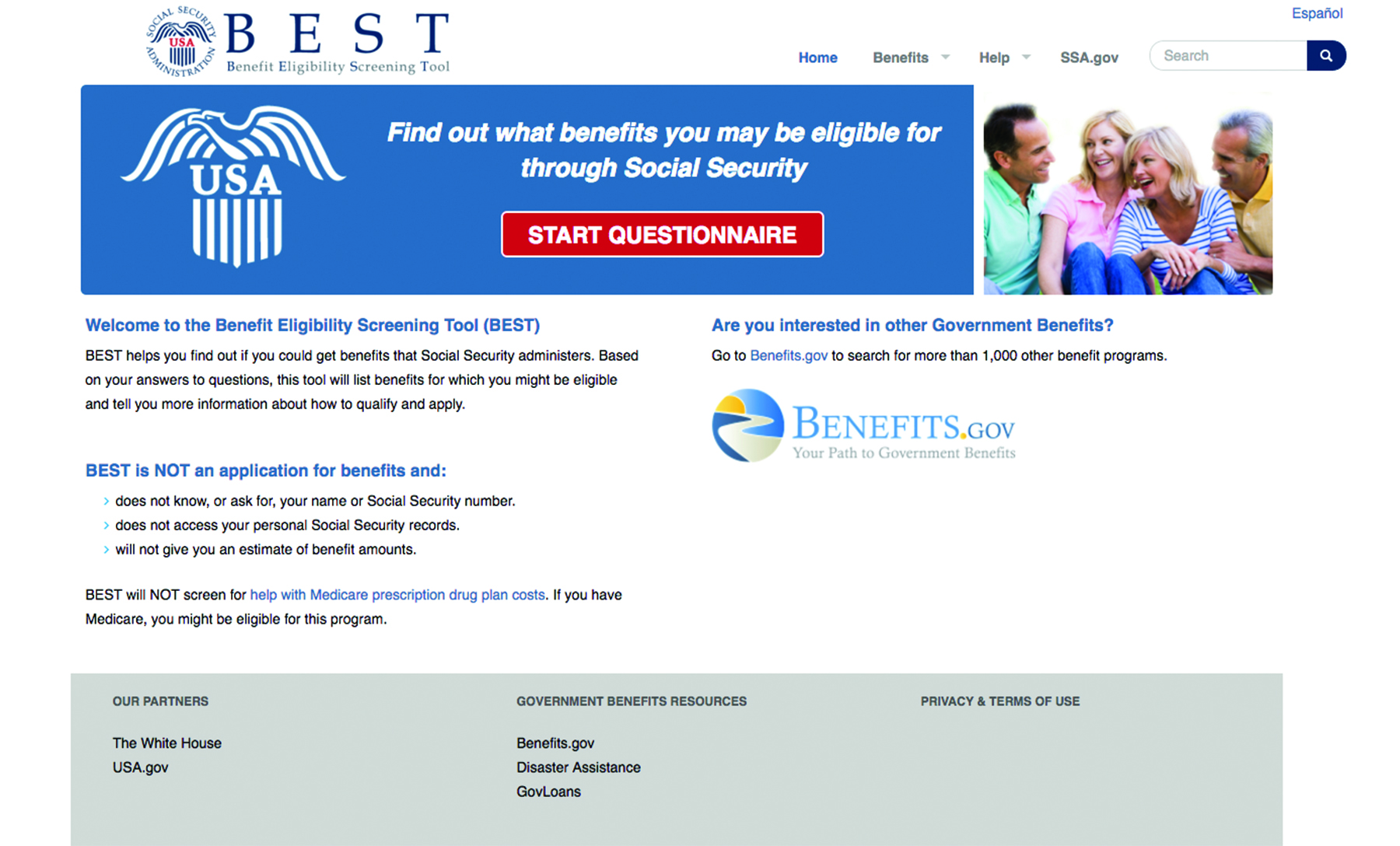
    BEST is the Benefit Eligibility Screening Tool, available at www.ssabest.benefits.gov. It can help you find out if you might be eligible for retirement, disability, survivors, Supplemental Security Income, or Medicare benefits. Although BEST asks you a series of questions to determine your eligibility, they are not personal in nature and the answers are not stored.

    On average, it takes only about 10 minutes to complete the BEST questionnaire. First, it guides you through the questions needed to find out if you could qualify for benefits. Just to the right of each question is an information icon (a white “i” in a blue circle) that gives you tips on how to answer each question.


    The “results” section appears automatically after you have completed some basic questions. BEST lists each program for which you might qualify. By clicking on the “read more” tab, you’ll find a description of the benefits program, its requirements, and what your next steps should be. If you are eligible for benefits, you must file an application for benefits with Social Security because BEST is not an application. The best way to do this is by visiting www.socialsecurity.gov.

    You can go back and narrow your resource responses by answering additional questions. After you have reviewed the results, you can print a copy for your records or email yourself a copy.

    BEST doesn’t screen for the Extra Help program, which helps with Medicare Part D prescription drug plan costs. But see if you qualify at www.ssa.gov/benefits/medicare/prescriptionhelp/.

    The results couldn’t be clearer — investing just ten minutes can yield all the possible resources available to you from Social Security. Now, that’s a tool worth using.


    For questions, online applications or to make an appointment to visit a SSA office, call from 7am–5pm, Mon–Fri:
    1-800-772-1213 (toll free) | www.socialsecurity.gov

    Social Security has a toolbox full of resources on its website, www.socialsecurity.gov, to help you with your financial planning. With so many resources, maybe it’s easier if we highlight one of our “best.” BEST is the Benefit Eligibility Screening Tool, available at www.ssabest.benefits.gov. It can help you find out if you might be eligible for…

  • GrandGrace: Multigenerational Support

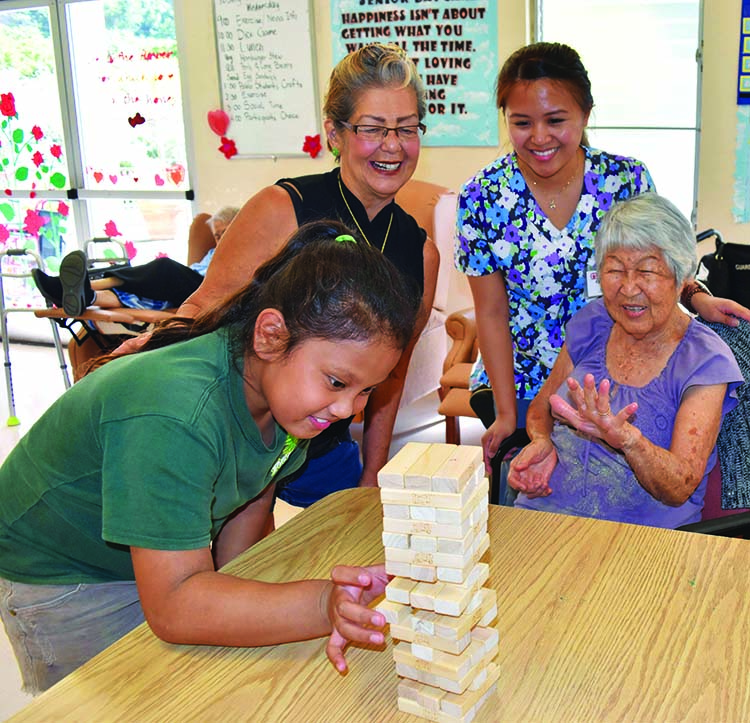
    Providing seniors care for their body, mind and spirit is critically important. Simply spending time with seniors can improve their emotional well-being and outlook. Palolo Chinese Home, in partnership with Common Grace, a nonprofit organization, recently launched a new program called GrandGrace to address these needs of residents and senior day care participants.

    In the GrandGrace program, keiki share their skills with seniors.
    In the GrandGrace program, keiki share their skills with seniors.

    The multi generational program gives adult or teen mentors and their child mentees opportunities to participate in fun activities with Palolo Chinese Home’s seniors for a time of mutual companionship and support. It’s a win-win situation. Seniors, who may sometimes feel lonely or forgotten, welcome the gift of time with those with youthful energy, and the youth and adult GrandGrace volunteers are enriched by the experience.

    Over the past 15 years, Common Grace has paired more than 2,000 mentors with children from over 60 churches and schools.

    For more information about the GrandGrace program or to sign up for Common Grace mentorship, call 808-783-1097 or email commongraceofhawaii@gmail.com. Support by generation.


    PALOLO CHINESE HOME
    2458 10th Avenue, Honolulu HI 96816
    808-737-2555 | www.palolohome.org

    Providing seniors care for their body, mind and spirit is critically important. Simply spending time with seniors can improve their emotional well-being and outlook. Palolo Chinese Home, in partnership with Common Grace, a nonprofit organization, recently launched a new program called GrandGrace to address these needs of residents and senior day care participants. The multi…

  • Respiratory Care: A Specialty Service

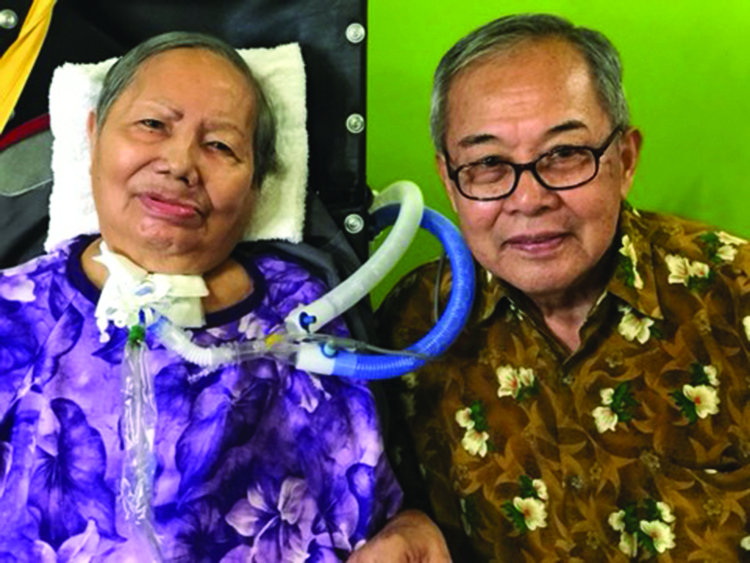
    Being unable to breathe on our own is very scary. Spinal cord injuries, pneumonia, stroke, injury to the chest, muscular dystrophy and chronic obstructive pulmonary disease (COPD) can all bring on respiratory failure. Spinal cord injuries often happen when we least expect it — a surfing accident, a fall or a car accident — and may require you to be on a ventilator to breathe.

    Photo courtesy of Care Center of Honolulu
    Photo courtesy of Care Center of Honolulu

    Persons diagnosed with chronic respiratory failure are at a higher risk for infection, and most patients require frequent tracheal suctioning, around-the-clock monitoring and are ventilator-dependent. When a loved one suffers from these complexities, it can be very heartbreaking and stressful, but knowing that a specialized team is providing the care needed for the best chance of recovery can ease that stress.

    Skilled Nursing Facilities are medically licensed 24-hr care communities that can provide this specialty care. It’s important to learn about care options, so do your homework by inquiring with the right questions:

    • Do they have state-of-the-art equipment?
    • How long have they been providing respiratory care to ventilator-dependent individuals?
    • Can they provide frequent tracheal suctioning and round-the-clock monitoring?
    • Do they staff enough respiratory therapists and have a respiratory therapist director?
    • Do they have a pulmonologist on board?


    CARE CENTER OF HONOLULU
    1900 Bachelot Street, Honolulu HI 96817
    808-531-5302 | www.ccoh.us

    Being unable to breathe on our own is very scary. Spinal cord injuries, pneumonia, stroke, injury to the chest, muscular dystrophy and chronic obstructive pulmonary disease (COPD) can all bring on respiratory failure. Spinal cord injuries often happen when we least expect it — a surfing accident, a fall or a car accident — and may require you to…

  • My Memory Box

    Memory boxes can help seniors, especially those with Alzheimer’s or with dementia, recall events and people from the past. The contents represent a life they once knew and now have difficulty remembering or have forgotten entirely. Memory boxes help stimulate their memory and link loved ones and moments of their lives to their identity.

    How to create a memory box

    Find a shoe box, bin, plastic container or anything with a lid. It should be something that is easy to access and can fit and store items of reasonable shapes and sizes. Have fun decorating the memory box with your loved one!

    Keep in mind…

    Focus on items that are positive memories. They should also be easy for them to handle —
    avoid heavy or sharp objects.

    Choosing items to go into their box

    Choose items that:

    • are personal (postcards, letters, trinkets, pictures, etc.),
    • reflect their interests, or
    • have meaning to your loved one in any way.

    It might take time for them to recognize or understand these items, so you may want to label each one to help jog their memory. Making memory boxes can be a fun way to spend some time together with your loved one. They can also be made during anyone’s lifetime.


    KINOLAU HOME MALAMA, LLC
    15-1735 19th St., Kea‘au, HI 96749
    808-982-5415 | Facebook: Kinolau Home Malama, LLC

    Memory boxes can help seniors, especially those with Alzheimer’s or with dementia, recall events and people from the past. The contents represent a life they once knew and now have difficulty remembering or have forgotten entirely. Memory boxes help stimulate their memory and link loved ones and moments of their lives to their identity. How…

  • Essential Support for Family Caregivers

    Every morning, 85-year-old Thomas puts on his aloha shirt and heads to “work” at an adult day care center located near downtown Honolulu. Going there gives him a sense of purpose to get up every morning. His family needs to remind him each day where he is going since he has dementia, but once he is at the center, he is actively engaged in physical exercise, recreational activities and socializing with his friends.

    Activities promote socialization and cognitive stimulation.  Photo courtesy Kāhala Nui
    Activities promote socialization and cognitive stimulation. Photo courtesy Kāhala Nui

    More importantly, Thomas’s daily routine gives his wife the several hours of respite that she needs from taking care of him, which is a 24/7 responsibility. It also provides his children peace of mind that dad is safe and happy so that they can continue to work and not worry about their mother burning out from the stress of caregiving. Thomas’s older brother recently joined the center, so now they get to see each other more often and both families feel reassured that the two siblings are in good hands.

    Attending an adult day care center has been a welcome solutio

    Photo courtesy Kāhala Nui
    Photo courtesy Kāhala Nui

    n for Thomas and his family. Adult day care centers are licensed by the State Department of Health, and typically open from Mondays to Fridays (some open on weekends) with convenient hours to accommodate the working caregivers. They offer a full day of exercise, recreational activities, arts and crafts, music and socialization. At least one meal and snacks are provided, and center participants are carefully supervised by trained staff. Day care centers’ fees range from $60 to $100/day for a full 8 to 10 hours, making it one of the most cost-effective types of care.

    Attendees like Thomas enjoy day care, where they can mingle with their peers, exercise and participate in the variety of activities such as Xbox games, ping pong and karaoke singing. The center that Thomas attends provides a continental breakfast and hot lunch served on china, with tablecloths and linen napkins. The center’s director believes food tastes better and people enjoy each other’s company as they savor their coffee and dessert when they are served in this restaurant-style manner


    For more info about adult day care centers in your area, go to www.HawaiiADRC.org or call 643-2372, a statewide toll-free number.

    LIVE WELL AT IWILEI BY KĀHALA NUI
    888 Iwilei Road #105, Honolulu HI 96817
    808.218.7777 | www.livewellhi.org

    Live Well at Iwilei is operated by Kāhala Nui and is one of the awarded adult day care contractors for the new State Kupuna Caregiver Assistance Program providing up to $70/day for respite services to help working caregivers.

    Every morning, 85-year-old Thomas puts on his aloha shirt and heads to “work” at an adult day care center located near downtown Honolulu. Going there gives him a sense of purpose to get up every morning. His family needs to remind him each day where he is going since he has dementia, but once he…

  • Self-Care Tips for Caregivers on GTV

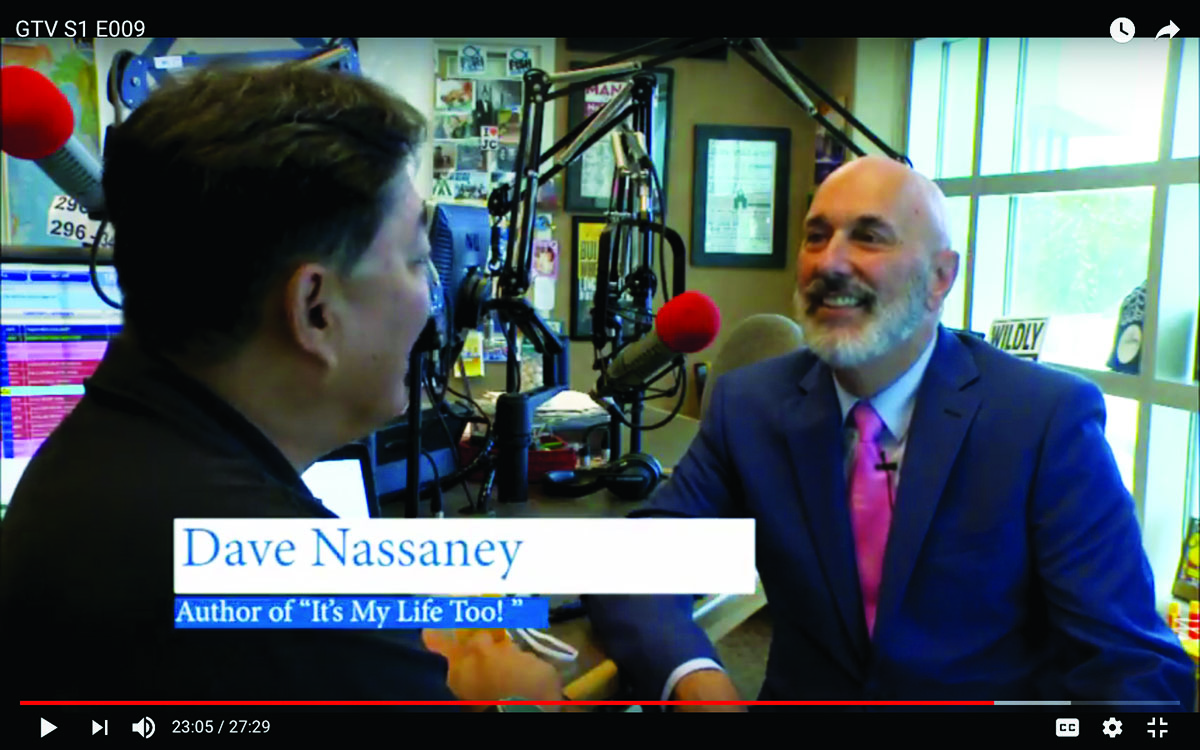
    Earlier this year, Generations Magazine publisher Percy Ihara interviewed a national speaker on caregiving, Dave Nassaney, for the Generations Radio Show. This is an edited transcript of the short Generations TV interview Percy did after the radio show aired.

    GTV: Can you briefly tell your story?

    DN: For the last 21 years, I’ve been a caregiver to my beautiful wife Charlene. She suffered a massive stroke that left her severely speech impaired and paralyzed on the right side. Now I travel all across the country sharing my message: How to prevent your loved one’s illness and disease from actually killing you.

    GTV: What are the three biggest mistakes that caregivers make?

    DN: The first biggest mistake that caregivers make is they don’t know how to put their needs first. The airlines tell us in the event of an emergency, to put your oxygen mask on first before you help your loved ones with their mask. What an amazing metaphor for all of life — take care of you first. Not out of selfishness, but out of survival.

    The second biggest mistake that caregivers make is that they don’t know how to ask for help. Call your brother, call your sister, call your wife’s ex-husband, call anybody. Just get over that silly notion that caregivers have to do it all themselves or they’re going to be a failure as a caregiver.

    The third biggest mistake is allowing undeserved guilt to affect your decision-making process. It’s kind of like being handcuffed to your loved one and feeling like you’re a prisoner. That kind of attitude, that kind of guilt, will kill you.

    GTV: So, what’s a caregiver to do?

    DN: CARE, right? Communicate with your friends. Don’t isolate yourself. Caregivers need to have a life outside of caregiving. Ask for help. Be specific. And when help is offered, don’t turn it down. Rest. Caregivers need eight hours of rest every single night. Eat healthy, nutritious foods. Don’t eat junk food. Junk food’s got chemicals and sugar and processed ingredients that’ll kill you.

    I like to say there’s three kinds of people in the world. There’s caregivers, those who are going to become caregivers, those who are going to need a caregiver. There’s no escaping it. Caregiving is going to touch you at one point or another. Now’s the time to learn how to be a caregiver — not after tragedy strikes and your loved one becomes disabled.


    For more information on Dave Nassaney, go to www.CaregiversCaregiver.com.

    Click here to watch the entire interview and episode featuring Dave Nassaney online

    Earlier this year, Generations Magazine publisher Percy Ihara interviewed a national speaker on caregiving, Dave Nassaney, for the Generations Radio Show. This is an edited transcript of the short Generations TV interview Percy did after the radio show aired. GTV: Can you briefly tell your story? DN: For the last 21 years, I’ve been a…