Category: April – May 2015

  • Never Ever …

    Retired. No gold watch. No pension. Just — retired. Now what? Since I have been retired, I realize there is really no such thing.

    Life goes on. You may spend a little time watching “Family Feud.” You may spend more time working on your golf swing or with friends and relatives you haven’t seen for a while.

    But sooner or later, you realize … retired or not …you still have something to share. You have spent 40 plus years working at your craft or skill. You had a passion for it then. That passion doesn’t disappear overnight. I am determined to use those talents as long as I am able to make my community a better place.

    You will have more time to spend with your significant other. Stay close. Take advantage of this added dimension. The relationship may change, but that can be a good thing if you have the right attitude.

    You may find yourself looking at price tags a bit closer. I’m told this is normal. Still, it could be difficult to get used to since you have more time to go to the store.

    Jim Valvano, the late great coach of North Carolina State’s basketball team said, “Never give up. Never, ever give up.”

    I am using that as my mantra:

    Never give up . . . Never give up.

    There will be more challenges and opportunities in the future, and I welcome them with open arms and an open mind.

    Imua, retirees, imua.


    KHON2 TV personality and journalist Kirk Matthews, a boomer, who speaks from the heart on issues concerning seniors and soon-to-be seniors. Post your questions or comments to Kirk at his column on Generations808.com.

    Retired. No gold watch. No pension. Just — retired. Now what? Since I have been retired, I realize there is really no such thing. Life goes on. You may spend a little time watching “Family Feud.” You may spend more time working on your golf swing or with friends and relatives you haven’t seen for…

  • Social Security Brain Teasers

    Test your knowledge or learn a few things today — with this in mind, tease your brain with these bits of Social Security trivia:

    When was the Social Security Act signed into law, and who signed it?

    When did Social Security begin paying disability benefits?

    Is there any significance to the digits in your Social Security number — or are they just random?

    Answers: The Social Security Act was signed into law on Aug. 14, 1935, by President Franklin D. Roosevelt. Check out a picture of it at: www.socialsecurity.gov/history/fdrsign.html.

    Although Congress and the White House discussed Social Security disability benefits as early as 1936, they did not enact a law until 1956. Learn more about disability benefits at: www.socialsecurity.gov/disability.

    If your Social Security number was first issued to you before June 2011, the first three digits indicate the geographical region where you resided. Generally, numbers were assigned beginning in the northeast and moving westward — people on the east coast got the lowest numbers; west coast got the highest numbers. The remaining six digits just aided SSA’s early manual bookkeeping operations. As of June 2011, all numbers are randomly assigned without regard to region.

    There’s more history to enjoy on Social Security’s history page. Tease your brain at: www.socialsecurity.gov/history.


    Questions, online applications, or to make an appointment to visit a Social Security office, contact:
    1-800-772-1213 (toll free) | 1-800-325-0778 (TTY)
    www.socialsecurity.gov

    Generations Magazine - Social Security Brain Teasers - Image 01

    Test your knowledge or learn a few things today — with this in mind, tease your brain with these bits of Social Security trivia: When was the Social Security Act signed into law, and who signed it? When did Social Security begin paying disability benefits? Is there any significance to the digits in your Social…

  • For Love … of Money: Sham Marriages

    When it comes to love and relationships, we are particularly protective of our elders. We scrutinize new companions who come into their lives; when our kupuna decide to marry, we get concerned about the new partner’s intentions.

    Stephanie (not her real name) called my office, she was panicked. She just discovered a life her father had kept secret from her; he married a woman 30 years his junior recently; did not live with her; paid her rent and car payments; and that they met at a bar she worked. This upset Stephanie so much that she could only envision her father as being a helpless victim to a predatory vixen, she was calling to see if this new wife could be arrested for financial exploitation.

    Stephanie did not initially see the fact that her father was a competent, lonely, older man who lost his wife a couple of years ago and liked the attention given him by this bar hostess. Although this May/December relationship greatly benefited the wife financially, Stephanie’s father consciously knew the true nature of the relationship, and was more than willing to continue this marriage. After speaking to Stephanie, she understood that because her father wanted the marriage as it was, a crime did not occur, and there were no grounds for prosecution.

    Our office has been receiving more calls like this from family members or friends who are worried that a senior — seemingly competent in all other aspects of their life — are now an unwitting dupes for a gold digger.

    Although these relationships have the telltale signs of financial abuse, if one were to ask the “victims” if they feel exploited — many would reply just the opposite.

    Having said this, however, does not mean that all such unions should be viewed as a mutually-benefiting relationship for both spouses. There are, in fact relationships where these sham marriages can turn into abuse, harming the older spouse not only financially, but physically if the senior suffers from disabilities that are not being addressed by the spouse.

    In trying to determine whether or not a marriage is a case of love or is harmful to the older partner, one should be aware of the following warning signs:

    • Isolation: When someone is attempting to execute a scam, the less people involved the better. It is common for predators to isolate their victims from their families and loved ones. Be involved in the lives of your Kupuna and check in often.
    • Loneliness: Those who are potential victims of sham marriages are often lonely and seeking companionship. This makes them increasingly vulnerable. Stay involved and help your Kupuna to find healthy companionship. Help them to get involved in community activities, take classes, or find a new hobby.
    • Ulterior Motives: Be cautious when the individual you are seeing has a little too much to gain through this marriage. Are they non-residents? Are they in need of a green card? Are they financially unstable?

    Marriage should be a sacred bond built upon love and friendship. Unfortunately to some, marriage transforms into a dollar sign, a green card, or even a benefits package. Stay involved in your parent’s lives. The best way to protect your parents from sham marriages is to prevent them from loneliness and isolation — feeling the need to seek companionship from others that may not have their best interests at heart.


    To report suspected elder abuse, contact the Elder Abuse Unit at: 808-768-7536 | ElderAbuse@honolulu.gov

    www.ElderJusticeHonolulu.com

    When it comes to love and relationships, we are particularly protective of our elders. We scrutinize new companions who come into their lives; when our kupuna decide to marry, we get concerned about the new partner’s intentions. Stephanie (not her real name) called my office, she was panicked. She just discovered a life her father…

  • Message from The Editor

    “Volunteerism, the heart of community” weaves through our April/May issue. Family, neighbors, places of worship, civic and social clubs, public events and government programs all depend on the generosity of volunteers. Thank you for your service.

    Highlights

    An editorial featured here by Dr. Christy Nishita, at UH Center on Aging and the Hawaii Pacific Gerontological Society, discussing how the “the sandwich generation”— baby boomers with college-age children and dependent parents — impacts community health services. Next issue, a boomer you all know will tell his story from the heart.

    Our cover story interview with Red Cross Hawaii CEO Coralie Chun Matayoshi will open your eyes to the largest volunteer operation in Hawai‘i. Click here and you won’t have to endure a disaster to get to know this wonderful humanitarian organization.

    Click here to read about how UH sorority Beta Beta Gamma alumnae and the BBG Foundation give tribute to the late Dennis Taira, a mortgage broker and Phi Kappa Pi fraternity alumnus, supported 15 BBG Annual Golf Tournament fundraisers. Our Publisher, Percy Ihara, is a frat brother of Dennis and a fellow mortgage professional.

    If you want to help your community, see our “Senior Volunteer Opportunities” Resource Guide by clicking here. Take the first step — call an organization and give a little of your time.

    Click here to explore the healthy activities of Hiking and click here for Line Dancing. Click here for a fun column on “Helpful Tips.” Call, mail, email or submit online — your tips that will save readers time or effort. You send ‘em, we print ‘em.

    Condolences to the Miyahira Family

    Generations Magazine - Message from The Editor - Image 01
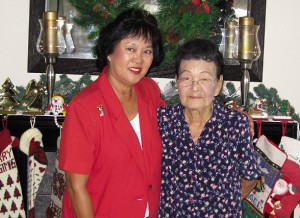
    Centenarian Kameko Miyahira passed away on Feb. 1. Her family wrote: “We are still incredulous that fate would take her from us so suddenly despite her vitality, vigor, and apparent good health.” Like all who came to love Kameko, author Sherry Goya was deeply saddened by this news. Our sympathy and sincere condolences go out to Kameko’s many friends and family.


    Generations Magazine - Message from The Editor - Image 02Every Day is Brand New!

    Katherine Kama‘ema‘e Smith, Associate Editor

    “Volunteerism, the heart of community” weaves through our April/May issue. Family, neighbors, places of worship, civic and social clubs, public events and government programs all depend on the generosity of volunteers. Thank you for your service. Highlights An editorial featured here by Dr. Christy Nishita, at UH Center on Aging and the Hawaii Pacific Gerontological…

  • “I Want to Die Comfortably – at Home”

    Generations Magazine - “I Want to Die Comfortably - at Home” - Image 01National surveys say 80 percent of people want to “die in the comfort of their home,” but in Hawai‘i, only 22 percent of families use hospice services. Hawaii also ranks high (number 2 in the U.S.) in emergency room deaths. Are we getting what we want?

    Dr. Angelo Volandes from Harvard Medical School recently spoke to health care professionals in Hawai‘i about ways to find out what terminal patients really want. “We don’t live in a patient-centered health care system,” says Volandes.“ As patients, we need to take control and become the center of our care team’s attention.”

    Under-utilization of hospice services is a national problem, but worse in Hawai‘i. According to a 2007 study of over four thousand terminal patients, those on hospice lived longer than patients in hospitals who opted for complex procedures to “fight for longer life.”* Obviously, being kept alive in an intensive care unit is not the same as recovering enough to go home — but by the time families figure out their loved one is not coming home, it’s too late. For ten years Dr. Volandes taught doctors how to find out their patients’ end-of-life intentions. Now he is helping educate families to start the conversation early, and to tell their doctors — if they want to die comfortably at home.

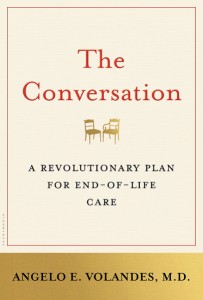
    Dr. Volandes’ new book, “The Conversation,” tracks seven patients at the end of life. He says that if patients knew that surgical procedures and resuscitation at end of life often do little good, they might turn them down. Such procedures may even increase their loved one’s pain and decrease the comfort of their last days.

    HMSA (Hawai‘i Medical Service Association), Dr. Volandes, and Dr. Rae Seitz from John A. Burns Medical School collaborated to make a series of videos on advanced care planning. Videos are available to Hawai‘i hospitals and health care providers in all local languages so they can open the “Conversation” about end of life care and clearly plan for the patient’s true wishes and intentions.

    Dr. Volandes urges elders to take the first step — have a conversation with your loved ones — to be sure everyone in the family knows what you want. If you want to die in familiar surroundings at home, pick the person who will honor your wishes when you are no longer able to make your own decisions. For further information contact your health care provider. “The Conversation” is available in bookstores and on Amazon.com.


    Theconversationbook.org
    * Journal of Pain and Symptom Management
    Vol. 33 No. 3 March 2007, pp.238-245

    National surveys say 80 percent of people want to “die in the comfort of their home,” but in Hawai‘i, only 22 percent of families use hospice services. Hawaii also ranks high (number 2 in the U.S.) in emergency room deaths. Are we getting what we want? Dr. Angelo Volandes from Harvard Medical School recently spoke…

  • Hawaiian Pie Company Honors Great-Grandfather’s Baking Legacy

    Generations Magazine -Hawaiian Pie Company Honors Great-Grandfather’s Baking Legacy - Image 01In the mid-1930s, Yoshio Hori opened a bakery in Kohala on Hawai‘i Island, selling pastries, breads, cookies and pies. He meant to name the bakery after himself, but it became a westernized version of the Japanese name due to a packaging order miscommunication.
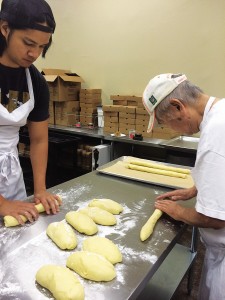
    His son, Richard Sr., recalls, “My father told (the salesman) the name was Hori. He heard ‘Holy.’ So that’s why the bakery is Holy’s Bakery.” Holy’s Bakery became famous throughout the state as the place to get buttery, melt-in-your-mouth pies.

    Today, the baking tradition still runs strong in the Hori family. Every generation has produced bakers with the legacy continuing at The Hawaiian Pie Company.

    Generations Magazine -Hawaiian Pie Company Honors Great-Grandfather’s Baking Legacy - Image 02
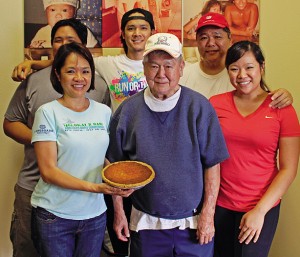
    (back row) Matthew Chun-Hori, Andrew Chun-Hori, Joel Hori (front row) Jan Hori, Grandpa Richard “Yasu” Hori Sr., Lindsey Chun-Hori. Photography by Grant Shindo.

    In December of 2014, Yoshio’s grandson Joel Hori and his children, Matthew, Lindsey, and Andrew Chun-Hori, opened their doors in Kalihi. The new bakery is not affiliated with Holy’s Bakery, but it does honor Grandpa Yoshio by offering a line of traditional flavors that include the famous Butter Apple and Peach pies. Along with these delicious traditional pies, they have introduced new flavors that were created in their kitchen at home in Manoa Valley.

    Generations Magazine -Hawaiian Pie Company Honors Great-Grandfather’s Baking Legacy - Image 03“The next generation of flavors features the same buttery crust with tropical flavors like Passion Fruit, Pear and Strawberry Guava,” said Matthew. “We also have a cool specialty Hawaiian topping that accompanies some of our flavors, which is a great addition to our pies.”
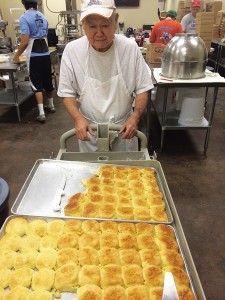
    Joel’s children were a major part in the revival of the family business. “We grew up with the stories Dad and Grandpa used to tell of growing up in the bakery and the magic that was Grandpa Holy’s Bakery (Yoshio),” said Lindsey. “Family is why we do what we do.”

    Generations Magazine -Hawaiian Pie Company Honors Great-Grandfather’s Baking Legacy - Image 04Youngest brother Andrew adds, “I’m bringing this part of the family into me and looking up to my Grandpa, Dad and Uncle; it’s cool to be able to follow in their footsteps.”

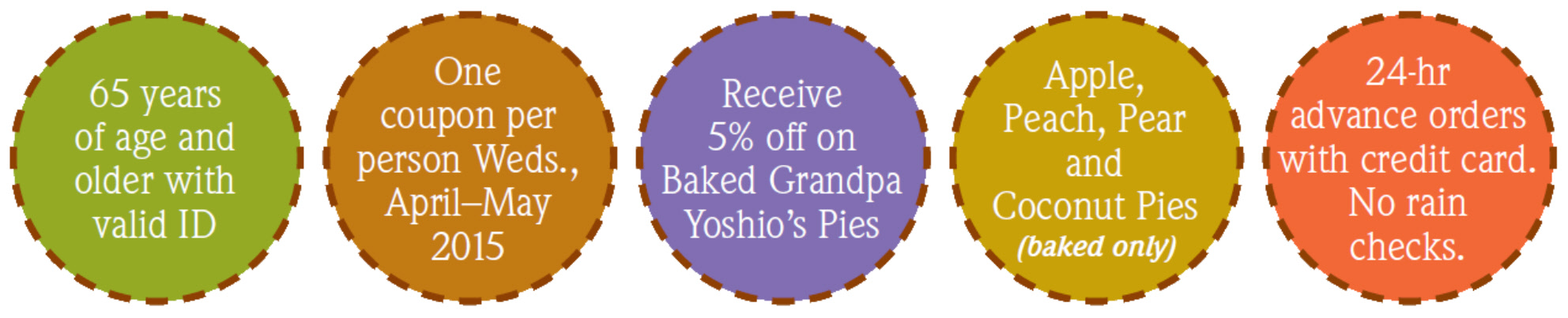
    Richard Sr.’s face radiates with contentment as he hears the respect and love his grandchildren have for the family. “If my father is looking down from heaven, he’s surely smiling.”


    Generations Magazine -Hawaiian Pie Company Honors Great-Grandfather’s Baking Legacy - Image 05


    508 Waiakamilo Rd., Honolulu
    808-988-7828 | www.hawaiianpieco.com

    Generations Magazine -Hawaiian Pie Company Honors Great-Grandfather’s Baking Legacy - Image 06

    In the mid-1930s, Yoshio Hori opened a bakery in Kohala on Hawai‘i Island, selling pastries, breads, cookies and pies. He meant to name the bakery after himself, but it became a westernized version of the Japanese name due to a packaging order miscommunication. His son, Richard Sr., recalls, “My father told (the salesman) the name…

  • To Buy or Not to Buy a Vacation Home?

    You finally feel ready to make that dream purchase. Before you put an offer in for a getaway on a neighbor island or a city lights apartment, consider the realities of owning a second property.

    Can you afford it?

    Owning a second home entails additional expenses such as:

    • Furniture or other household items
    • Air fare or wear and tear on your vehicle
    • Annual repairs or improvements
    • Recreational equipment such as a boat
    • Utilities: heat, air-con, water, internet and cable
    • A security system for when you’re away

    If you plan to rent your vacation home, you may need to hire a property manager.

    Is the location right?

    Homes in areas where temperatures dip below freezing need to be winterized and monitored to avoid frozen pipes. Where there’s snowfall, there’s shoveling and plowing to manage. Distance is also a key consideration, and the relative ease of getting there. Have you chosen a location and property that will grow in value or will it be hard to sell when the time comes?

    Would renting be a better option?

    Short-term property rental can provide the comforts of a home without the obligations of ownership. Rather than be tied to one place, you can explore new locations when you take a vacation. Alternately, if you do purchase a vacation home, you may want to list your property as a rental when it’s not in use. If your vacation home is in a high demand area, you might be able to generate an income stream—but don’t forget the costs of managing the property from afar.

    How will your taxes be affected?

    Different tax rules apply to owning a second home, which can be somewhat complex. Rental income and expenses, property taxes and mortgage interest are a few items that could impact your tax return. You’ll want to consult with a tax advisor to sort out the details and discuss how your taxes will be affected.

    There are a lot of factors to think about before purchasing a vacation home. Consider working with a financial professional to determine how buying a second home will affect your long-term financial plan.


    Michael W. K. Yee, CFP
    1585 Kapiolani Blvd., Suite 1100, Honolulu
    808-952-1222 ext. 1240 | michael.w.yee@ampf.com

    Michael W K Yee, CFP®, CFS®, CRPC®, is a Financial Advisor and CERTIFIED FINANCIAL PLANNER practitioner™ with Ameriprise Financial Services, Inc. in Honolulu, HI. He specializes in fee-based financial planning and asset management strategies and has been in practice for 30 years.
    Ameriprise Financial, Inc. and its affiliates do not offer tax or legal advice. Consumers should consult with their tax advisor or attorney regarding theirspecific situation.
    Investment advisory products and services are made available through Ameriprise Financial Services, Inc., a registered investment adviser. Ameriprise Financial Services, Inc. Member FINRA and SIPC.
    © 2015 Ameriprise Financial, Inc. All rights reserved. File # 1106728

    You finally feel ready to make that dream purchase. Before you put an offer in for a getaway on a neighbor island or a city lights apartment, consider the realities of owning a second property. Can you afford it? Owning a second home entails additional expenses such as: Furniture or other household items Air fare…