Kingdom Advisors founder Ron Blue takes an interesting approach to estate planning. He advocates lifetime giving as a way to assure that the objects of your bounty are worthy recipients of your wealth. This could play out a couple of different ways.
As Blue points out, there are three places your “stuff” can go after you die: to charity, to your loved ones, or to the government, attorneys, and other professional advisors by way of taxes and administration expenses. A good estate plan will minimize the amount that is bled away in the last category. A really good estate plan will help to make sure that your intentions regarding your loved ones and your favorite charities are carried out just as you intend.
Giving assets outright to your loved ones is a way to give them full control over and responsibility for those assets. However, one of your intended beneficiaries could easily lose his or her inheritance as a result of a divorce, car accident, or bad business deal. Life is unpredictable, and your beneficiaries may have no experience manageing or protecting assets. For this reason, many estate plans include ongoing trusts that allow the beneficiaries to have as much control as they are able to handle, while at the same time insulating the trust assets from creditors and predators who might try to take advantage of your beneficiaries and take those assets away.
The thing about leaving assets to your loved ones after you are gone is that you will have no idea how each loved one will handle his or her Inheritance. Your best guess during your lifetime could turn out to be wrong. So what about making gifts during your lifetime, so that you can see how your intended beneficiaries handle newfound wealth? Gifts allow beneficiaries to learn how to manage money. Gifting could also be a great way for you to “test drive” your estate plan and determine how well it works while you are still able to make adjustments to it. If one beneficiary turns out to be a poor steward of your wealth, you can always redirect assets in your final estate plan to other beneficiaries, or provide greater restrictions on a spendthrift beneficiary’s control over your hard-earned and carefully invested wealth.
The same principles apply to charitable gifts. Your favorite charity could turn out to be a poor manager of donated assets. It would be far better to find that out during your lifetime than to leave your loved ones regretting your philanthropic choices, especially if your family name will be memorialized and forever connected with your charitable gift. Knowing what happens now gives you assurance about how things will go later on. If your charity performs well now, you may add to your gift, upon your death. Not only that, but your gift may have far greater impact because you made it earlier. If, for example, you want to provide funding for scholarships so underprivileged children can go to college, the sooner you make your gift, the sooner a scholarship recipient will graduate from college, get launched in a career, and turn around and “pay it forward,” as you have done. Giving now also allows you to join other donors, to create large charitable projects.
As Ron Blue would say, you should consider “giving while you’re living so you’re knowing where it’s going.” This is simple but sound advice for anyone who prefers to test the water before diving in headfirst.
Scott Makuakane, Counselor at Law Focusing exclusively on estate planning and trust law.
Watch Scott’s TV show, Malama Kupuna Sundays at 8:30 p.m. on KWHE, Oceanic channel 11
Kingdom Advisors founder Ron Blue takes an interesting approach to estate planning. He advocates lifetime giving as a way to assure that the objects of your bounty are worthy recipients of your wealth. This could play out a couple of different ways. As Blue points out, there are three places your “stuff” can go after…
April is recognized as National Volunteer Appreciation Month. Then May is Older Americans Month and the theme this year is “Get into the Act.” Our SHIP volunteers have been getting into the act through delivering community presentations, providing information at health fairs, counseling individuals on their options and benefits, and assisting beneficiaries with appeals for denied benefits.
SHIP: New name; still the same
At this point you’re thinking to yourself, “there is another program in Hawaii called the Sage PLUS Program and they do the exact same thing?” We are one in the same — we have just transitioned and are using our national network name to hopefully make things a bit less confusing (in the 2015 Medicare & You hand book it mentions the SHIP program approximately 20 times).
Get Into the Act as a SHIP Volunteer
State Health Insurance Assistance Program volunteers are our most valuable assets. They are the friendly voices that return your calls to our hotline; they provide outreach services on a regular basis at many of our Social Security Offices statewide. To meet the needs of our beneficiaries, volunteers have even provided a health insurance presentation at 6 am in the morning! You may interact with our volunteers at health fairs or in our office, discussing options or counseling on benefits. But there are many others that you may never see, playing very important roles behind the scene to support our programs. These volunteers enter data, put together presentations and health fair packets. They tirelessly and joyfully provide clerical assistance. Customer service specialists look up and gather information for the volunteer who will be assigned to assist you. We also have volunteers who work on special assignments such as Secret/Mystery Shopping, or testing of new materials and other short-term projects. We are now looking for volunteers who are interested in social media and would like to help us keep the online conversation about health insurance going!
Volunteers must be at least 18 years of age (for some special projects we will at times accept persons below 18, with parental permission) and have an interest in helping their community. We do not accept volunteers who hold an active health insurance license. SHIP is statewide, so tell your friends we are currently looking for volunteers on all islands. Don’t hesitate “Get into the Act” and become a SHIP volunteer!
To all our current and future SHIP volunteers — Mahalo Nui Loa. To contact us for more information visit our website or love us on Facebook!!!
Hawaii SHIP (State Health Insurance Assistance Program) 1-888-875-9229 | 808-586-7299 help@hawaiiship.org | www.hawaiiship.org facebook.com: Hawaii SHIP- Sage PLUS Program
April is recognized as National Volunteer Appreciation Month. Then May is Older Americans Month and the theme this year is “Get into the Act.” Our SHIP volunteers have been getting into the act through delivering community presentations, providing information at health fairs, counseling individuals on their options and benefits, and assisting beneficiaries with appeals for…
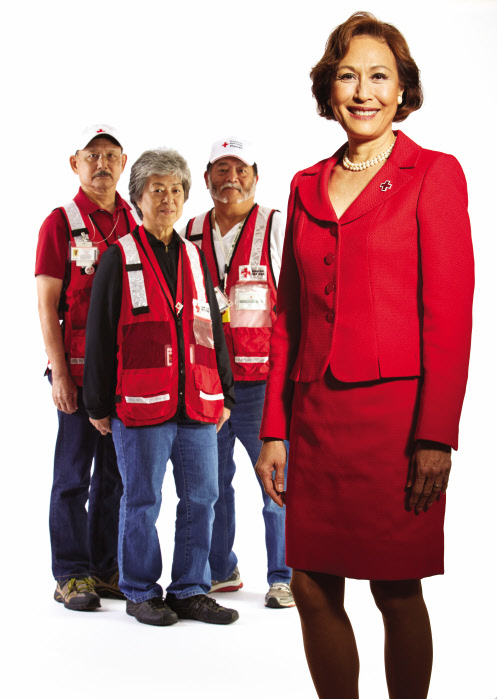
Red Cross volunteers (l–r): Sai Ching, Ruth Takanishi & Kenneth Aoki
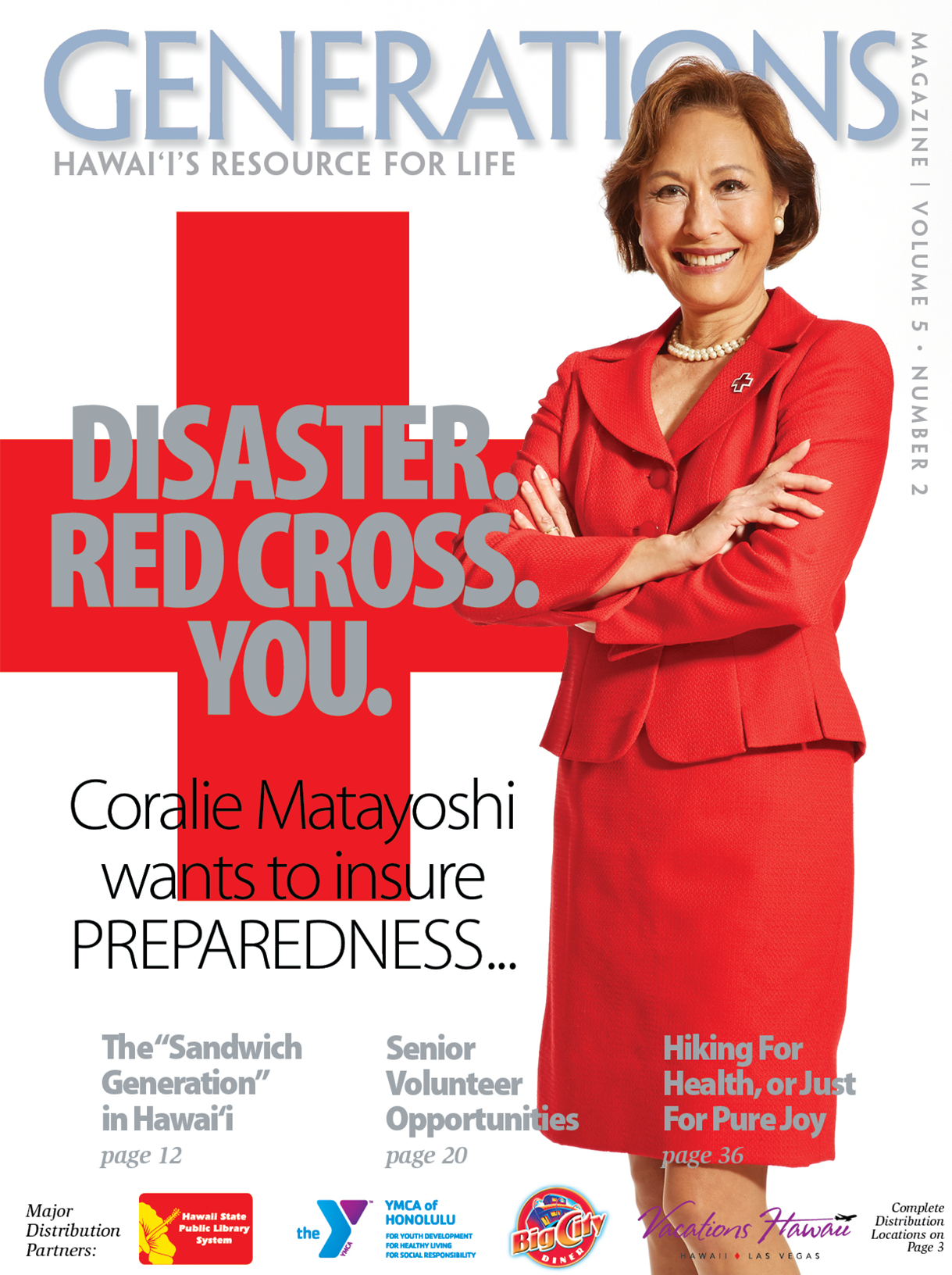
The face of the Hawaii Red Cross is its CEO, Coralie Chun Matayoshi. Like Red Cross founder, Clara Barton, Coralie can’t do everything by herself. She must inspire and lead thousands of volunteers to deliver humanitarian aid to all of us—whenever disaster strikes.
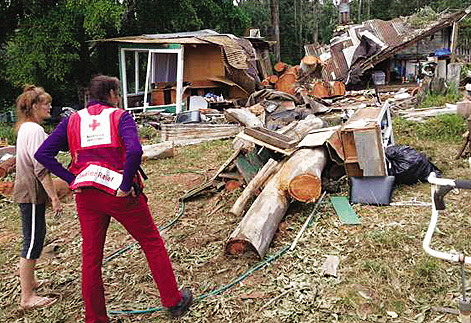
At the same time that police and fire first responders are called to the scene of a disaster, Red Cross disaster relief volunteers are deployed to assess damage, counsel victims, administer immediate aid and start planning longer-term assistance. Volunteers on Red Cross Disaster Action Teams are on duty 24/7 and average one response every four days. This is humanitarianism at its best: orderly aid, comfort and logistics delivered to disaster victims, behind the scenes. Volunteers are ordinary citizens, just like you and me —with a will to help and skills learned at Red Cross. Most people have no idea how many services Hawaii Red Cross provides to our communities. Veterans and families of active military know Red Cross volunteers who aid service members at Tripler, Schofield, Pearl Harbor and Kaneohe. Some deployed soldiers have even had the Red Cross track them down in the field to deliver news of a family emergency at home — or arrange to get them home for a funeral. Lifeguards and moms may not know about how Red Cross helps our military personnel, but they do know about Red Cross swim instruction classes and certification programs. Business owners send their employees to Red Cross first aid and CPR training. Puna residents affected by Hurricane Iselle received aid. Recently, Red Cross volunteers had a shelter on standby for residents needing to evacuate their homes due to the threat of the Puna lava flow. In fact, at every flash flood, tsunami, earthquake, or house fire across our state, Red Cross volunteers are providing disaster relief to people in need. Every day, they are prepared to scale up and to deliver the amount and kind of aid required — exactly when it is needed. Volunteers from Hawai‘i deploy to other states — Hurricane Sandy in New Jersey, Hurricane Katrina in New Orleans . It’s how they train for large disasters at home. When Hawai‘i gets hit, American Red Cross volunteers from the mainland will deploy here to help us.
The American Red Cross Mission Statement:
To prevent and alleviate human suffering in the face of emergencies, by mobilizing the power of volunteers and the generosity of donors.
The American Red Cross Mission Statement: To prevent and alleviate human suffering in the face of emergencies, by mobilizing the power of volunteers and the generosity of donors.
At the head of this volunteer humanitarian organization is a woman with a heart for people. Nearly twelve years ago, Coralie Matayoshi and her husband moved back to Hawai‘i from Washington, DC, where Coralie was engaged in antitrust litigation at the U.S. Department of Justice. “I wanted to raise my children in Hawai‘i, but I never thought I would end up at Red Cross.” She went into a law practice in Honolulu, and served as the Executive Director of the Hawaii State Bar Association for 13 years. Later, in 2004, when the Red Cross CEO position came up, she put all that aside to follow a deep concern for people in need. “… It was their mission that got my attention,” she says, with a smile.
A WAY OF BEING
What drew this highly skilled attorney away from the law? Was it something inside Coralie — a deep yearning that desired a bigger reward than stature and big money?
At the core of all humanitarian organizations is something called altruism, defined as: “unselfish regard for or devotion to the welfare of others.” Even if you never heard this word before, you may recognize the feeling — a desire to help others that goes beyond family ties and friendships — an inborn will to help anyone in need.” It is the stuff that drives career firefighters, police, EMTs, lifeguards, nurses and ER physicians. It causes strangers to jump into the sea to help a drowning person. Although the law helps people, Coralie saw in Red Cross a direct way to help thousands of people in need and to lead an organization of like-minded humanitarians. At Red Cross, nobody actually talks about this — they all get it. That’s because they are a band of altruistic people.
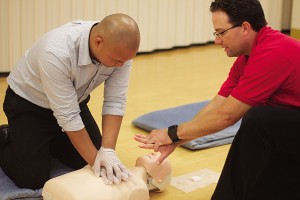
When Coralie talks about her volunteers, she smiles. She shares their unique motivation and understands how volunteers “designate themselves to the job,” as she says. People who call to inquire or walk in to sign up at Red Cross really want to help people. They are responding to their altruistic feelings, and Coralie says her job is to find them the right job for their skills or to teach them new skills so they can effectively provide humanitarian aid. Some will become case workers. Others will become instructors who teach the public to save themselves in future disasters. We decided to let Coralie tell you first hand what Red Cross does, and to take a look at the many volunteer training opportunities at Red Cross.
GM: What do you want our readers to know about Red Cross?
CM: “Most people only know a little of what Red Cross does. Besides having volunteers on call 24/7 to respond to disasters like home fires, we train the public for disaster preparedness. We manage evacuation shelters and provide services such as bulk distribution of first aid supplies, water and food. We provide meal service to those in need during the aftermath of major disasters. These are big operations, and our many volunteers must be trained in advance. We also train the public in first aid and cardiopulmonary resuscitation (CPR). We teach swimming, and certify swimming instructors. Although we are not part of the military, we provide humanitarian aid to military families and patients at military hospitals, like Tripler Army Medical Center. Our volunteers deliver more disaster mental health counseling than any other organization. We are mental health counseling experts.
In addition to big disasters throughout Hawaii, on-call Red Cross Disaster Action Teams assist 90 O‘ahu families every year.
GM: So Red Cross needs a lot of volunteers?
CM:“Hawai‘i is the most isolated population on the face of the Earth,” says Matayoshi. “My goal is to increase our volunteer base, so we are prepared for epidemics, large storms and tsunami that can strike statewide. We have been fortunate in recent years that tsunami did not hit Hawai‘i directly, but it is just a matter of time. We have many jobs, and volunteers can pick what they feel most motivated to assist in. If they want to learn new skills, we can train them. Many of our volunteers are retired, so their schedules easily accommodate training programs and round-the-clock duty shifts as caseworkers, drivers, damage assessors, team leaders or telephone dispatchers in big disasters. I think it’s important for your readers to know that we do not receive any federal or state funding for disaster operations. We ask for donations from the community — like every other non-profit. We also leverage donor dollars wisely through the work of our dedicated volunteers.
GM: What is involved in managing a disaster shelter?
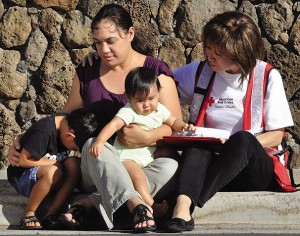
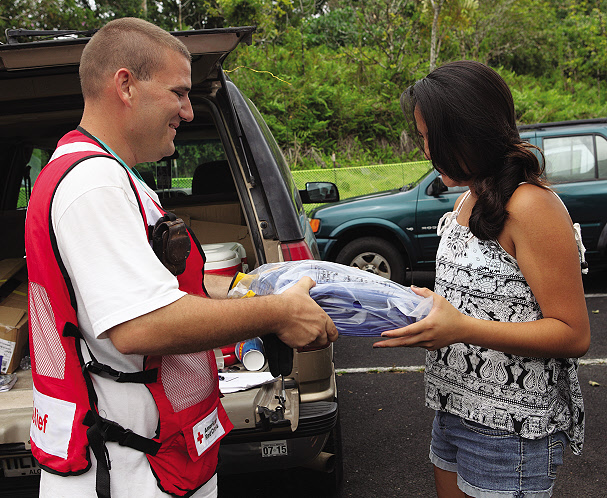
CM:During Iselle, 32 evacuation shelters housed 2,041 people in one night. In the aftermath, two hundred Red Cross workers (188 volunteers) provided meals, cots, shower facilities and cell phone charging stations to displaced Puna residents. They distributed comfort kits, cleanup kits, coolers of ice, flashlights, trash bags, tarps and batteries to those in need. Damage to homes was assessed and those who could not return home received help to find alternative housing after the storm. Volunteer nurses did health assessments and trained mental health workers provided crisis counseling for 950 persons during the nine days that shelters were open.
GM: You said “home fires.” How do you aid victims of a home fire?
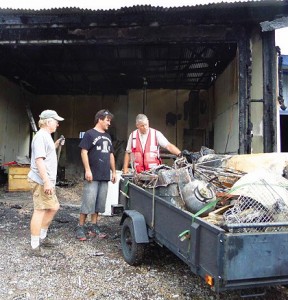
CM:Our disaster team recently followed the fire department into a home that had burned to the ground. Red Cross caseworkers are trained to assess damage to help victims communicate with their insurance carrier. They also help arrange temporary housing, food and clothing. Red Cross volunteers are trained to expertly assist victims of disasters to think through the next steps for them and their family, to provide comfort and to connect families to other agencies who can provide long-term aid. After the fire trucks left, the victims were not alone. Red Cross was there.
The Red Cross offers instructor-led programs for children, adults, businesses and our community organizations. To schedule a class, you may reach them at the number listed at the end of this article.
GM: We understand that Red Cross manages the volunteer program at Tripler Army Medical Center.
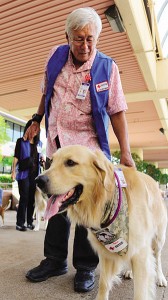
CM: Red Cross volunteers work in 46 different departments and wards at Tripler. Some are professional volunteer nurses, doctors, pharmacists and office workers. Some even bring their pet “therapy dogs” to visit patients and service members. Red Cross hospital volunteers are bringing comfort and aid to patients and their families every day. Together with volunteers at Schofield, Pearl Harbor, and Kaneohe, Red Cross volunteers donate 35,000 hours per year.
GM: Is community disaster preparedness a big part of your operation?
CM: Every year Red Cross teaches 20,000 people courses in first aid, nurse aid, family caregiving, babysitting, water safety, lifeguard and pet first aid training. Now many of these lifesaving tips are available as apps for your smart phone, so that your first aid or CPR facts are a touch away all times.
At the core of all humanitarian organizations is something called altruism, defined as: “unselfish regard for or devotion to the welfare of others.”
GM: Tell us more about Disaster Mental Health Counseling.
CM: For almost every major disaster in Hawai‘i, Red Cross volunteers have been counseling families who have lost loved ones, helping people deal with trauma, fear, anger and melancholy so they can then move on with their lives. At Pearl Harbor, Hilo tsunami, New Year’s and Manoa floods, Sacred Falls landslide, Ehime Maru, Hawai‘i Island earthquake, Kaloko dam burst — Red Cross was there. Hawaii Red Cross volunteers were in American Samoa, traveling from village to village, helping survivors of the 2009 tsunami. I was deployed to New Orleans in 2005 for Hurricane Katrina. Deploying our volunteers brings back priceless experience and training that one day will help us right here in Hawai‘i.
BECOMING A RED CROSS VOLUNTEER
Do you have what it takes? This interview gave us a very different view of the American Red Cross in Hawai‘i. The message is pretty clear: we need to prepare for disasters. When trouble hits, trained volunteers have to swing into action to help the victims. If this story speaks to you — you may have the heart of a Red Cross volunteer. Or maybe now you understand the benefits of investing in the future of Red Cross. When we help Red Cross Hawaii meet their mission, we help ourselves and our families.
To donate or for more information on volunteer opportunities, visit their website or visit their Headquarters in Diamond Head.
The face of the Hawaii Red Cross is its CEO, Coralie Chun Matayoshi. Like Red Cross founder, Clara Barton, Coralie can’t do everything by herself. She must inspire and lead thousands of volunteers to deliver humanitarian aid to all of us—whenever disaster strikes. At the same time that police and fire first responders are…
Nothing can start your day off better than seeing a beautiful, genuine smile in your mirror. Have you ever thought, “I don’t like my smile?” With today’s dental advancements you can significantly improve your smile.
You may consider smile rejuvenation if you have any of the following:
crooked teeth
missing teeth
misaligned teeth
stained teeth
gapped teeth
uneven length teeth
gums that are too noticeable
After
There are many ways to make your teeth straight, fill in gaps and improve their overall appearance. Orthodontics such as clear aligner therapy align teeth for health, function and beauty. Porcelain veneers can help to enhance your smile. You may have a tooth missing — a dental implant topped with a crown, may resolve that problem.
A person with a malocclusion or “bad bite,” prematurely wears down the teeth. Severe wear collapses the space between the chin and nose, creating a very aged facial appearance. Correcting the bite gives the patient an “instant face-lift”.
Whether you want to change the shape, color or alignment of your teeth, consult a dentist who specializes in smile rejuvenation to discuss the best option for you.
Nothing can start your day off better than seeing a beautiful, genuine smile in your mirror. Have you ever thought, “I don’t like my smile?” With today’s dental advancements you can significantly improve your smile. You may consider smile rejuvenation if you have any of the following: crooked teeth missing teeth misaligned teeth stained teeth…
Alzheimer’s Association Aloha Chapter Kauai Program Office
Humberto Blanco | 808-245-3200 | HBlanco@alz.org
Help as an administrative/program organizer at a dementia clinic; support grant procurement, help in health fair booths, general administration, office support and data entry.
Alzheimer’s Association Oahu
Pamela Scott, Program Director | 808-591-2785 | pscott@alz.org
Enjoy a team purpose: assist with office work, community outreach services and local health fairs.
Arthritis Foundation – Hawaii Branch
Maile Kawamura, Executive Director | 808-596-2900 | mkawamura@arthritis.org
Various clerical and administrative positions.
Catholic Charities Hawaii (Honolulu)
Maureen Caracciolo | 808-527-4780
Be a friend: visits, companionship and escort services to homebound and elders.
Common Grace (Honolulu)
808-342-8326 | commongraceofhawaii@gmail.com
Share your company and friendship with a child in public school for one hour a week.
Hawaii SHIP (formerly the Sage PLUS Program) (Honolulu)
1-888-875-9229 | help@hawaiiship.org
Everyone needs guidance. Available statewide are Medicare counseling and assistance, customer service specialists, community outreach specialists and special project assistants.
Honolulu Theatre for Youth
808-839-9885 ext. 711 | outreach@htyweb.org | www.htyweb.org
Let yourself shine by ushering, assisting with special events and general office work.
Kuakini Health System (Honolulu)
Brian Nagamine | 808-547-9184 | b.nagamine@kuakini.org
Assist with acute care, geriatric care services, clerical duties, information desk services, hospital tours, and gift shop/snack shop operations.
Lanakila Meals on Wheels
Ben Brown or Lenny Fabro | 808-356-8519 | bbrown@lanakilapacific.org
Provide a link to the outside world. Become a shuttle driver and deliver meals to hubs across the island or serve as an on-call deliverer.
Leahi Hospital Thrift Shop (Honolulu)
Dianne Krajci | 808-225-6165 or 808-733-8091
Multi-talented? Help needed: sorting, pricing, displays, cashiering, and researching donated items.
Lunalilo Home (Honolulu)
808-395-1000 | admin@lunalilo.org
Kupuna wisdom needed in all areas: Hawaiian culture, gardening, arts-and-crafts, hairstyling, administration. Learn to deliver “Namaste” and dementia care by “talking story” or just being a companion.
Manoa Cottage (Kaimuki)
Calvin M. Hara | 808-426-7852
Share your gift of friendship: one-on-one visits, arts and crafts, entertainment: music and programs.
Na Hoaloha (Maui)
808-249-2545 | www.nahoaloha.org
Looking for angels for homebound seniors to do transportation services, grocery and medical appointments; walks, talk story, light housekeeping and gardening. Be a visiting friend; give caregiver relief.
Palolo Chinese Home (Honolulu)
808-748-4911
Get involved in senior day care, nursing home and care home activities and planned events. Help with fundraising, in-home companionship and chore services or delivering meals to seniors at home.
Project Dana (Honolulu)
808-945-3736 | www.projectdana.org
Giving your heart can mean a lot, provide services to frail seniors in Honolulu.
Seagull Schools, Inc. (Honolulu)
808-261-8534 | www.seagullschools.com
Lend a friendly hand as a teaching or staff assistant in classrooms, adult day center, the food service kitchen; light groundskeeping and/or cleaning tasks.
Senior Companion Program (Honolulu)
808-832-0342 | shull@dhs.hawaii.gov
Dynamic? Have a big heart? Share it with like-minded seniors, age 55 years and older. We match you with homebound seniors to provide companionship and emotional support. We believe in “home.”
St. Francis Healthcare System (Honolulu)
Maylynn Wong | 808-547-8138 | mwong@stfrancishawaii.org
Be the comfort of companionship: hold a hand, use a computer, address envelopes, teach a craft, deliver medical supplies, make phone calls, sing & play music, record their memoirs, lend an ear and touch a heart.
The American National Red Cross, Hawaii Chapter (Honolulu)
808-734-2101 | www.redcross.org/volunteer/
Ready to jump into the action? We can use your vitality. Log on for complete volunteer job descriptions and volunteer training opportunities.
Alzheimer’s Association Aloha Chapter Kauai Program Office Humberto Blanco | 808-245-3200 | HBlanco@alz.org Help as an administrative/program organizer at a dementia clinic; support grant procurement, help in health fair booths, general administration, office support and data entry. Alzheimer’s Association Oahu Pamela Scott, Program Director | 808-591-2785 | pscott@alz.org Enjoy a team purpose: assist with office…
According to the U.S. Centers for Disease Control and Prevention, approximately 33 percent of adults 65 and older suffer from osteoarthritis (OA). Mayo Clinic reports that OA is the most common form of arthritis, when protective cartilage wears down, creating “wear-and- tear” pain, discomfort and fatigue.
Aquatic therapy is an effective treatment for OA, giving patients improved mobility, reduced pain and greater flexibility. You might think exercise at a high intensity level would exacerbate the pain. Not so. A recent groundbreaking study published in The Journal of Strength and Conditioning Research, demonstrated the benefits of high-intensity interval training (HIIT) on an underwater treadmill. For six weeks, subjects with OA walked in water, against alternating high and low resistance. Training resulted in significantly less joint pain, improved balance, better mobility. Walking speed was nearly as fast as control subjects without arthritis. Aquatic exercise gave benefits and relief that individuals with OA would not be able to achieve on land.
A growing body of clinical research proves aquatic therapy for osteoarthritis may be more effective than alternative land-based exercise.
Moon Physical Therapy, LLC 320 Ward Avenue, Ste. 107, Honolulu, HI 96814 Aquatic, Land-based and Manual Therapy and Cardiopulmonary Rehab Programs 808-597-1005 | www.moonpt.com
According to the U.S. Centers for Disease Control and Prevention, approximately 33 percent of adults 65 and older suffer from osteoarthritis (OA). Mayo Clinic reports that OA is the most common form of arthritis, when protective cartilage wears down, creating “wear-and- tear” pain, discomfort and fatigue. Aquatic therapy is an effective treatment for OA, giving…
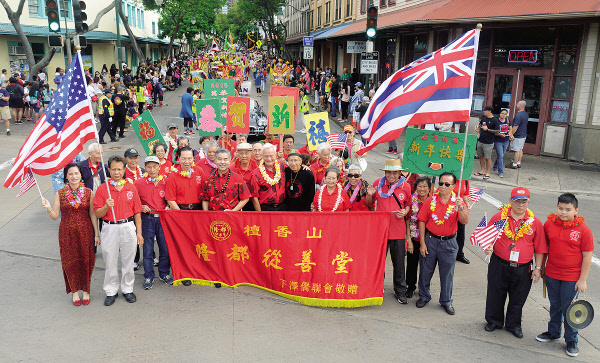
Governor David Ige, Mayor Kirk Caldwell, Honorary Mayor Joseph Young and the entire community celebrate at Night in Chinatown Parade and Festival.
At the full moon in March, a two-week long Chinese New Year celebration officially ended with a festival of lanterns. Earlier, at the new moon on Feb. 19, Chinatown welcomed thousands of residents and visitors with a huge parade, fireworks and Night in Chinatown street festival. Behind the scenes, families gathered for traditional meals, and parents gave their children red envelopes of money — an ancient tradition.
One of Chinatown’s many proud community groups
Many Chinese clubs and societies throughout the Hawaiian Islands gathered to practice cultural and spiritual traditions. Members of Chinatown’s Lung Doo Benevolent Society all speak a dialect that originates from Lung Doo village in the province of Zhongshan, China. Besides camaraderie and mentoring youth in Honolulu, they also helped build a school for kids in China.
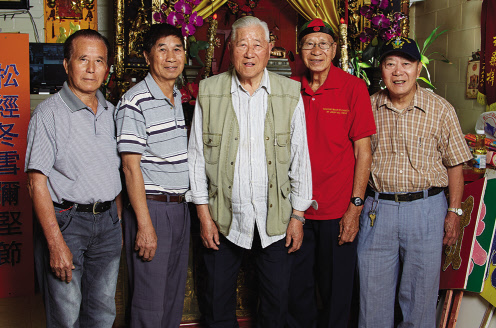
Wei Yu, Liang , Miao Cai Ruan , Ame Lin , Joseph Young , Yai Sum Ng
At the full moon in March, a two-week long Chinese New Year celebration officially ended with a festival of lanterns. Earlier, at the new moon on Feb. 19, Chinatown welcomed thousands of residents and visitors with a huge parade, fireworks and Night in Chinatown street festival. Behind the scenes, families gathered for traditional meals, and…
The American Red Cross, featured in this issue of Generations Magazine, is a historic organization that has served our country for more than 134 years. Not only does Red Cross provide assistance during crises, but it also educates the public on disaster preparedness. The question is: are you, as an older individual or as a caregiver to an elderly relative, prepared for an extended emergency?
If you share your home with an elderly family member, disaster preparedness is paramount. Here are six ways you can prepare your home and your family for emergencies:
Take a moment to look up your local shelter: where it is located, what services does it provide.
Are home emergency kit batteries sufficient for a disaster? If electricity is critical to the care of your elderly family member, be prepared to transport your loved one to an acute care facility.
Put together a “To-Go Bag” with basic care items for your family member. Include extra clothing, diapers, baby wipes, water and medications.
Ensure your family member’s medication will last several days. Have at least one refill available.
Keep medications in a small cooler filled with reusable ice packs.
Plan ahead for civil emergencies, because your home services may be temporarily unavailable.
Natural disasters and other emergencies are incredibly stressful; add caregiving and meeting the medical needs of loved ones on top, and you can be overwhelmed. But if you are prepared for crisis, you can keep your family protected! Aloha.
The American Red Cross, featured in this issue of Generations Magazine, is a historic organization that has served our country for more than 134 years. Not only does Red Cross provide assistance during crises, but it also educates the public on disaster preparedness. The question is: are you, as an older individual or as a…
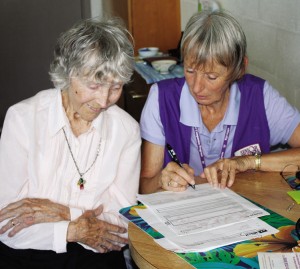
The importance of independence is ever apparent especially as we age. The Senior Companion Program is a vital community-based support service that enables frail kupuna to remain independent and live in their homes. The Senior Companion Program is under the Department of Human Services and sponsored by the Corporation for National and Community Service. The Program recruits and trains senior volunteers to provide families and caregivers much needed time off. The companions also accompany kupuna to medical appointments and grocery shopping, provide light meal preparation and assist with other needs.
Ellen helps Gerrine look over papers.
The Senior Companion Program hopes to extend its reach on all islands by recruiting kupuna 55 years and older on limited income, who are interested in providing supportive services to lonely, isolated and/or homebound seniors in our communities. Recruits who meet the income eligibility guidelines and other requirements receive a nontaxable stipend, meal allowance and reimbursement for transportation costs. The program is also seeks to partner with nonprofit agencies that provide services to kupuna living in our communities. Be a part of helping our kupuna age in place.
The importance of independence is ever apparent especially as we age. The Senior Companion Program is a vital community-based support service that enables frail kupuna to remain independent and live in their homes. The Senior Companion Program is under the Department of Human Services and sponsored by the Corporation for National and Community Service. The…
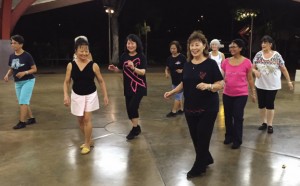
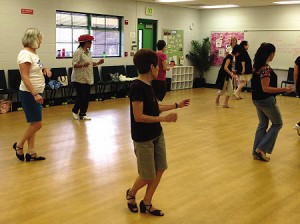
Line Dancing — it’s not just country, or confined to local Honky Tonk. Heck! Seniors are line dancing to all their favorite tunes!
A number of studies extoll the benefits of line dancing for seniors: low impact exercise that can improve cardio-vascular health, muscle tone and strength is one. I just learned that it also lowers risk of osteoporosis!
Dancing also exercises our minds. Learning new dance steps, patterns and musical rhythms keep our brains and attention sharp — to ward off dementia. It also provides essential social benefits: meeting new people, sharing common interests. We see dancing seniors building new confidence and self-expression. Line dancing is a wonder drug for seniors! And FUN!
West Maui Seniors have fun at Kaunoa Center.
On O‘ahu, Palama Settlement offers a variety of line dance programs for the first-timers and intermediate level dancers. Kick up your heels with us at Ward Warehouse on Tuesday nights. Many County Department of Parks and Recreation senior clubs have open classes. Our annual Senior Line Dance Round-up is O‘ahu June 4 and 5.
For more information about the Senior Line Dance Round-up or line dance classes and programs on all islands, call 808-228-0390 on O‘ahu, or email AlohaLinedancer@outlook.com.
The counties of Honolulu and Maui present THE ANNUAL SENIOR LINE DANCE ROUND-UP hosted by the West Oahu Line Dancers and the Aloha Line Dancers Association June 4–5, 2015 Ala Wai Golf Course Clubhouse, Waikiki 2 days of workshops, dancing and exhibitions. Costs only $5 per person.
Line Dancing — it’s not just country, or confined to local Honky Tonk. Heck! Seniors are line dancing to all their favorite tunes! A number of studies extoll the benefits of line dancing for seniors: low impact exercise that can improve cardio-vascular health, muscle tone and strength is one. I just learned that it also…
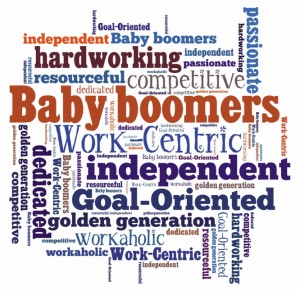
The term “sandwich generation”has come to describe boomers — who find themselves supporting adult children and elderly parents at the same time. Possibly more visible in Hawai‘i, as costs of living rise, millennials are challenged to emerge into adulthood with financial independence. At the same time, our parents are living longer, and as they age we’re taking on caregiving tasks, with rising costs of longterm care looming in the background. How these physical, emotional and financial challenges are met calls for creative solutions. Our homes, families and communities are changing, with conventional homes now consisting of multiple and interdependent generations. Millennials are involved in caring for their grandparents, who in return, are more intimately involved in helping raise our families.
These family relationships have a direct impact on how the community and our systems of care evolve. Opportunities for families to be involved in strengthening their community and care systems are increasingly visible. Mayor Kirk Caldwell’s ongoing Honolulu as an Age Friendly City Initiative, for example, envisions inter-connected communities that will embrace older adults who want to remain socially involved and physically active, a city infrastructure that will remain responsive to the capabilities and safety of our people, equitable services, robust opportunities for intergenerational exchanges, and thriving quality of life among all residents. Active community and family participation will be vital to the success of the Honolulu as an Age Friendly City Initiative. Information on the initiative will be continually updated on the following website: www.kupunatokeiki.com/.
Family involvement in developing health services and community supports is also crucial. Historically, care provided in the community was designed to provide services solely to the person with functional or cognitive limitations. In addition, Community services were limited, directed by the organization, and often times did not meet the individual needs of the person seeking help. More recently, recognition of individuals and families as essential partners in the care planning process has transformed the way we deliver care. We now see programs designed specifically for caregivers, such as the new T-CARE pilot project, available through the Maui County Aging and Disability Resource Center. Working together, care manager and caregiver create a personalized plan for the caregiver to better manage their responsibilities, while ensuring their own health and wellness. Caregiver feedback throughout the pilot project will be important, helping to determine whether or not T-CARE can be adopted and made available to all caregivers throughout Hawai‘i. For more information on this project, call the University of Hawai‘i Center on Aging at 808-956-5001 or at uhcoa@hawaii.edu.
Reinventing the role of family in healthcare, social services, and community initiatives will not only better support caregivers as they care for their parents and children, but will have a profound impact on the efficiency of care in our community. From hospital discharge planning to the development of new programs and community planning, as the two examples above highlight, there are a variety of vital roles for individuals and families that will ensure Hawai‘i’s communities are livable for all.
The term “sandwich generation”has come to describe boomers — who find themselves supporting adult children and elderly parents at the same time. Possibly more visible in Hawai‘i, as costs of living rise, millennials are challenged to emerge into adulthood with financial independence. At the same time, our parents are living longer, and as they age…
As Realtors, Certified Aging in Place Specialists and Senior Real Estate Specialists, we help our clients connect with professionals who can help them downsize to a more manageable home. Often clients in large homes want to simplify their lifestyle. But one look at accumulated belongings in every closet, drawer and cubby hole makes it clear that they cannot make the move on their own. Left unattended, clutter continues to grow, and can become a fire hazard or home for pests.
You can learn do-it-yourself methods to systematically purge your clutter, at your own pace. Or, you can hire professionals to help you. Either way, decluttering your home gives you the freedom and ease to move to smaller, more manageable accommodations: a smaller house without stairs, a condominium where you don’t have yard work or perhaps a full-service retirement community.
To learn more about decluttering and other topics related to seniors and real estate, consider attending a free seminar hosted by LIST Sotheby’s Senior Concierge:
May 2, 2015 — Decluttering, Downsizing And Selling Your Current Home
Presenter:Christina & Yumi Laney
They will cover downsizing your home.
June 27, 2015 — Aging-In-Place, Caregivers & Fall Prevention
Preparing your home for Independent Living.
For more information, registration (seating is limited) and a 2015 schedule of free seminars, please call 808-282-1399.
As Realtors, Certified Aging in Place Specialists and Senior Real Estate Specialists, we help our clients connect with professionals who can help them downsize to a more manageable home. Often clients in large homes want to simplify their lifestyle. But one look at accumulated belongings in every closet, drawer and cubby hole makes it clear…

 At the same time that police and fire first responders are called to the scene of a disaster, Red Cross disaster relief volunteers are deployed to assess damage, counsel victims, administer immediate aid and start planning longer-term assistance. Volunteers on Red Cross Disaster Action Teams are on duty 24/7 and average one response every four days. This is humanitarianism at its best: orderly aid, comfort and logistics delivered to disaster victims, behind the scenes. Volunteers are ordinary citizens, just like you and me —with a will to help and skills learned at Red Cross. Most people have no idea how many services Hawaii Red Cross provides to our communities. Veterans and families of active military know Red Cross volunteers who aid service members at Tripler, Schofield, Pearl Harbor and Kaneohe. Some deployed soldiers have even had the Red Cross track them down in the field to deliver news of a family emergency at home — or arrange to get them home for a funeral. Lifeguards and moms may not know about how Red Cross helps our military personnel, but they do know about Red Cross swim instruction classes and certification programs. Business owners send their employees to Red Cross first aid and CPR training. Puna residents affected by Hurricane Iselle received aid. Recently, Red Cross volunteers had a shelter on standby for residents needing to evacuate their homes due to the threat of the Puna lava flow. In fact, at every flash flood, tsunami, earthquake, or house fire across our state, Red Cross volunteers are providing disaster relief to people in need. Every day, they are prepared to scale up and to deliver the amount and kind of aid required — exactly when it is needed. Volunteers from Hawai‘i deploy to other states — Hurricane Sandy in New Jersey, Hurricane Katrina in New Orleans . It’s how they train for large disasters at home. When Hawai‘i gets hit, American Red Cross volunteers from the mainland will deploy here to help us.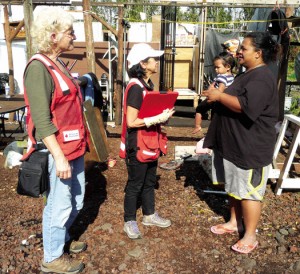
 When Coralie talks about her volunteers, she smiles. She shares their unique motivation and understands how volunteers “designate themselves to the job,” as she says. People who call to inquire or walk in to sign up at Red Cross really want to help people. They are responding to their altruistic feelings, and Coralie says her job is to find them the right job for their skills or to teach them new skills so they can effectively provide humanitarian aid. Some will become case workers. Others will become instructors who teach the public to save themselves in future disasters. We decided to let Coralie tell you first hand what Red Cross does, and to take a look at the many volunteer training opportunities at Red Cross.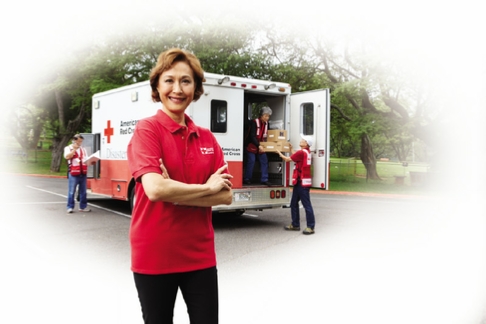
 GM: What is involved in managing a disaster shelter?
 GM: You said “home fires.” How do you aid victims of a home fire?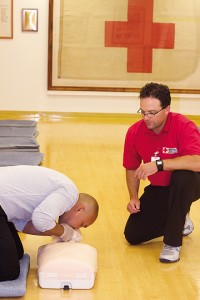
 Do you have what it takes? This interview gave us a very different view of the American Red Cross in Hawai‘i. The message is pretty clear: we need to prepare for disasters. When trouble hits, trained volunteers have to swing into action to help the victims. If this story speaks to you — you may have the heart of a Red Cross volunteer. Or maybe now you understand the benefits of investing in the future of Red Cross. When we help Red Cross Hawaii meet their mission, we help ourselves and our families.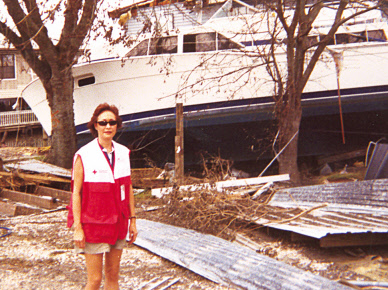
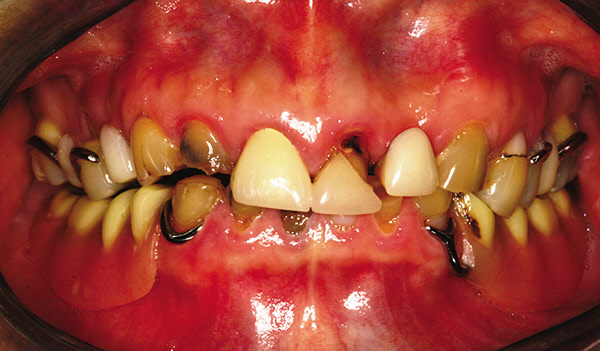
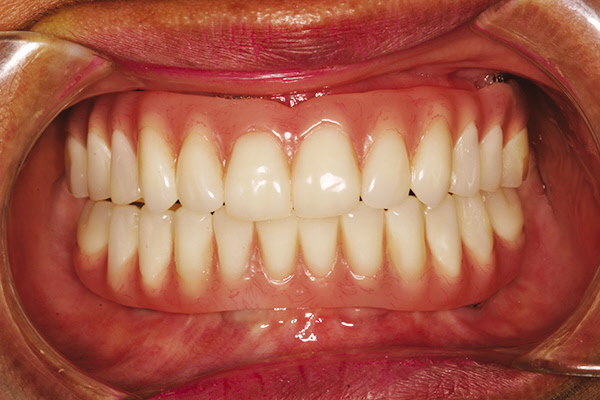
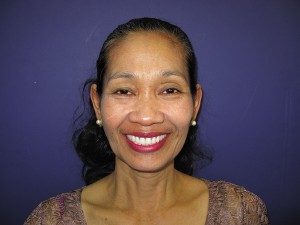 A person with a malocclusion or “bad bite,” prematurely wears down the teeth. Severe wear collapses the space between the chin and nose, creating a very aged facial appearance. Correcting the bite gives the patient an “instant face-lift”.
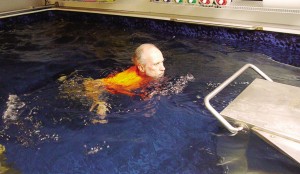 Aquatic therapy is an effective treatment for OA, giving patients improved mobility, reduced pain and greater flexibility. You might think exercise at a high intensity level would exacerbate the pain. Not so. A recent groundbreaking study published in The Journal of Strength and Conditioning Research, demonstrated the benefits of high-intensity interval training (HIIT) on an underwater treadmill. For six weeks, subjects with OA walked in water, against alternating high and low resistance. Training resulted in significantly less joint pain, improved balance, better mobility. Walking speed was nearly as fast as control subjects without arthritis. Aquatic exercise gave benefits and relief that individuals with OA would not be able to achieve on land.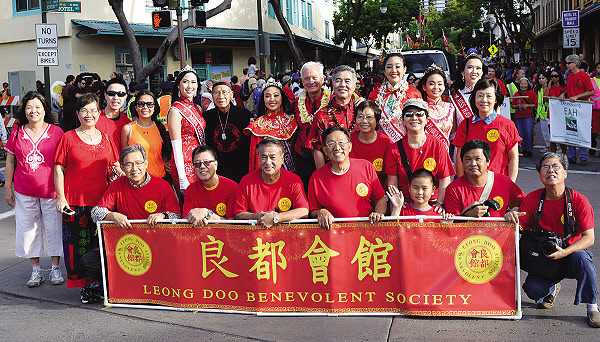
 Family involvement in developing health services and community supports is also crucial. Historically, care provided in the community was designed to provide services solely to the person with functional or cognitive limitations. In addition, Community services were limited, directed by the organization, and often times did not meet the individual needs of the person seeking help. More recently, recognition of individuals and families as essential partners in the care planning process has transformed the way we deliver care. We now see programs designed specifically for caregivers, such as the new T-CARE pilot project, available through the Maui County Aging and Disability Resource Center. Working together, care manager and caregiver create a personalized plan for the caregiver to better manage their responsibilities, while ensuring their own health and wellness. Caregiver feedback throughout the pilot project will be important, helping to determine whether or not T-CARE can be adopted and made available to all caregivers throughout Hawai‘i. For more information on this project, call the University of Hawai‘i Center on Aging at 808-956-5001 or at