Category: Date

  • Retirement: A Shifting Concept

    Retirement: A Shifting Concept

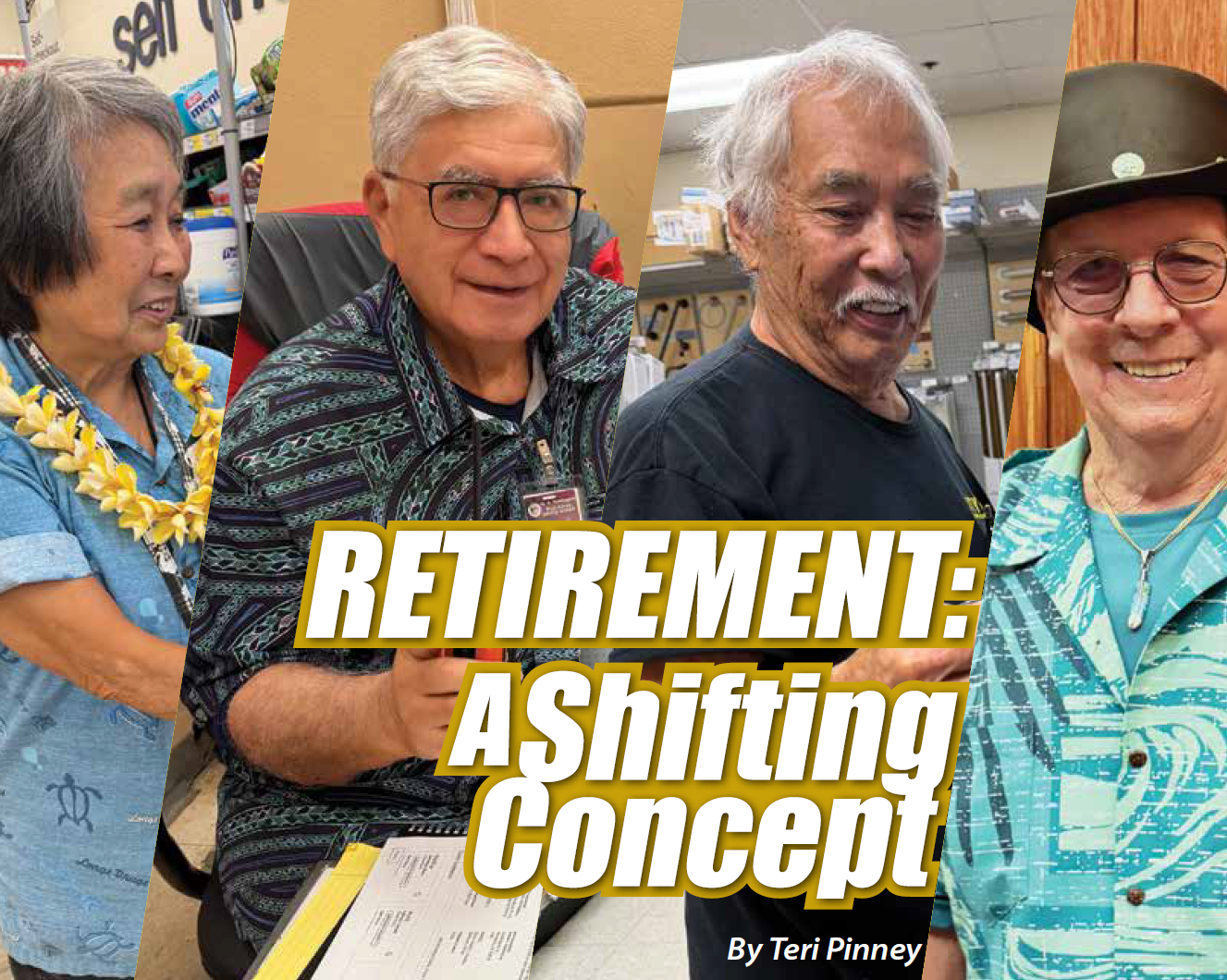
    Across Hawai‘i, kūpuna are continuing to work — or returning to work — well beyond what previous generations considered retirement age. Their roles span a wide range of occupations, from educators and healthcare professionals to retail workers and security personnel. For many, retirement no longer means stepping away from work entirely. Instead, it has become a more flexible stage of life — one that allows for continued contribution, engagement and purpose.

    Hawai‘i’s population is aging at a pace that is reshaping both its workforce and its economy. Today, nearly one in five residents in the state is age 65 or older. Projections indicate that this share will continue to rise steadily over the next decade as life expectancy increases and younger populations grow more slowly.

    At the same time, older adults in Hawai‘i are remaining in the workforce at notably high rates. Approximately 28% of Hawai‘i residents age 65 and older are still employed — well above the national average of about 22%. In fact, Hawai‘i consistently ranks among the top states in the nation for workforce participation among seniors.

    Several factors drive this shift. Hawai‘i has one of the highest costs of living in the country, prompting many older adults to continue earning income beyond traditional retirement age.

    At the same time, longer life expectancy and better overall health mean that many kūpuna are both willing and able to remain active in the workforce. Employers are increasingly recognizing the value of experienced, reliable workers who bring stability, institutional knowledge and strong work ethics.

    This is more than a passing trend. It reflects a fundamental shift in how work and retirement intersect in modern life — where retirement is no longer a fixed endpoint, but a flexible stage shaped by financial realities, personal fulfillment and the desire to remain engaged in the community.

    A Second Chapter

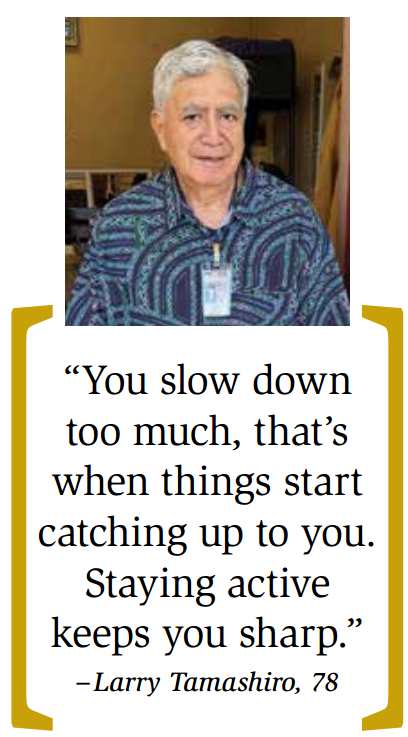
    On a large campus just after sunrise, 78-year-old Larry Tamashiro, a retired Honolulu Police Department homicide detective sergeant, directs a team of security personnel, overseeing safety operations with the same steady authority and presence that defined his years in law enforcement.

    “I thought I was done when I retired,” Larry says. “But this work I do — it matters. You’re protecting students. You’re helping create a safe place for them to learn.”

    His law enforcement background brings a level of experience that cannot be quickly taught. He’s seen a lot over the years. From managing campus protocols to responding to incidents, Larry’s presence offers reassurance to staff, students and parents alike.

    “You learn how to stay calm; how to read situations,” says Larry. “That doesn’t go away just because you retire.”

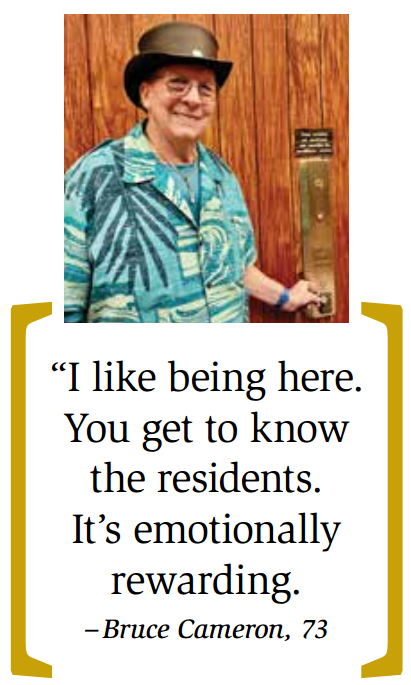
    In a condominium lobby, Bruce Cameron, 73, stands at his post — greeting residents by name, managing deliveries and keeping a watchful eye on the steady flow of visitors. A quiet but constant presence, he has become part of the daily rhythm of the building, offering both familiarity and reassurance to those who pass through.

    “You get to know the residents,” he says. “I’m helping people as young as 5 to as old as 100. “I like being here. It’s emotionally rewarding.”

    But his role extends well beyond opening doors. Bruce is often the first to notice when something is out of place, the person to whom residents will turn for help and the consistent presence who brings a sense of order to the day. For him, the work provides structure, connection and a continued sense of purpose.

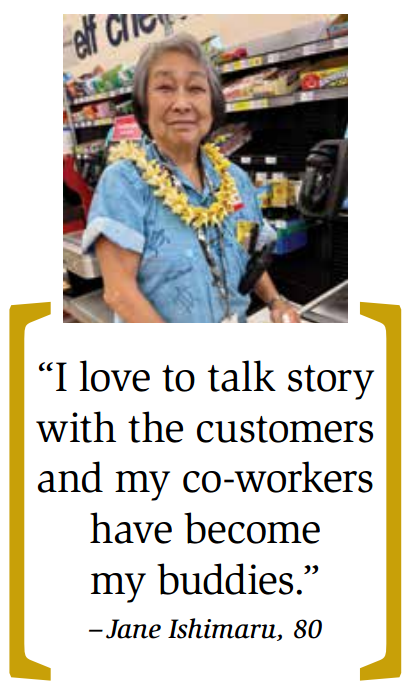
    At an East O‘ahu drug store, 80-year-old cashier Jane Ishimaru provides a unwavering and familiar presence. She greets customers, assists at the self-service registers, helps shoppers locate items, restocks shelves and steps in to check out purchases when needed. She continues to work in part to help pay for a substantial mortgage, a responsibility that keeps her financially engaged.

    “But it also keeps me active and I enjoy it,” she says. She encourages others her age to consider staying in the workforce, noting that even parttime work can bring both purpose and stability.
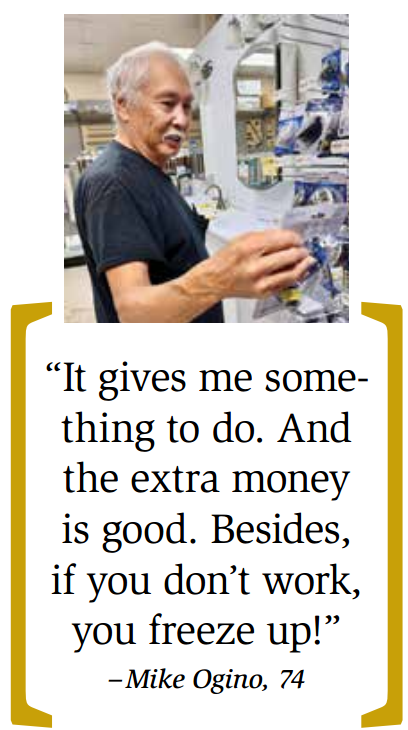
    Mike Ogino, age 74, a custodian at a busy home supply retail store, says, “It gives me something to do. And the extra money is good. Besides, if you don’t work, you freeze up!”

    These individual stories reflect a broader reality. For many older adults, work is not simply about supplementing retirement income or Social Security — it is about remaining connected, contributing in meaningful ways and continuing to show up where they are needed most.

    While their roles differ, a common thread runs through each of their stories. These are not jobs taken on out of necessity alone. They reflect a desire to remain engaged, to contribute and to continue being a useful part of something larger than themselves.

    Rethinking Retirement

    For much of the 20th century, retirement followed a predictable path. Individuals stepped away from the workforce in their early to mid-60s, supported by pensions, personal savings and Social Security. Retirement offered leisure — travel, hobbies, time with family. It marked a clear transition — a well-earned chapter defined by rest and reward. But that model was built for a different time.

    For many, retirement is no longer a fixed destination but a shifting concept. Financial realities, longer life expectancy and changing priorities have altered what it means to step away from work. In Hawai‘i, where the cost of living is among the highest in the nation, many seniors find that full retirement is not practical. Many discover that they do not want to fully disengage. Nowhere is this shift more visible than in the education industry.

    Back to School

    In workplaces across the islands, the line between “retired” and “working” has blurred. Nowhere is that more evident than in Hawai‘i’s schools, where kūpuna continue to show up day after day because the work still matters to them. Across the state, schools have become one of the most common and appealing places for older adults to continue working or to re-enter the workforce after retirement. Classrooms, campuses and training programs offer something many other industries cannot: a sense of purpose that feels immediate and tangible.

    Whether working a few days a week as a substitute teacher or maintaining a full-time teaching role, many seniors find that education allows them to contribute in meaningful ways without the pressures often found in other professions. Substitute teaching has become a natural entry point. It offers flexibility, familiar routines and the opportunity to remain engaged without long-term commitments. For retired professionals — from former teachers to military personnel, business leaders and public servants — the classroom provides a space where life experience translates into real world value for students. Schools, in turn, benefit from dependable individuals who bring maturity, patience and a stable presence.

    Some do choose to remain in education full time. Veteran teachers continue well into later stages of their careers, often serving as anchors within their schools. Their experiences become a resource for students and younger educators navigating the early years of teaching. Mentorship, both formal and informal, is a quiet but powerful contribution of these seasoned professionals.

    At the post-secondary level, the pattern continues. Community colleges and universities
    frequently rely on adjunct instructors and lecturers — many of whom are retired or semi-retired professionals. These individuals bring real-world experience into the classroom, bridging theory with practice. In fields such as business, healthcare and education, their insights can resonate strongly with students preparing to enter the workforce.

    There are practical reasons why education has emerged as such a strong post-retirement pathway. The structure of the academic calendar, opportunities for part-time work and the ability to scale involvement up or down all make the field accessible. Just as important, however, is the cultural aspect. Teaching has long been viewed as a profession grounded in service, mentorship and community — values that align closely with what many older adults seek in this stage of life.
    The demand for substitute teachers has increased over the past decade, driven by teacher shortages, rising enrollment pressures and the need for classroom continuity. Older adults have stepped into that gap. Substitute teachers who are retired professionals bring a unique level of classroom management. Their life experience has prepared them to handle unexpected situations.

    Many retired educators return to the classroom not out of necessity, but because they miss it.

    “There’s something about teaching that stays with you,” one long-time substitute shares. “You don’t forget what it feels like to help someone understand something for the first time.”

    For others, working in education represents a new chapter entirely. Individuals who spent careers in business, military service or public administration are finding second careers bringing real-world experience directly into learning environments.

    In this way, education has become more than a workplace for kūpuna. It has become a bridge between generations.

    Why Continue to Work?

    Research increasingly points to health as a key component of why older adults continue to work.

    Studies suggest that remaining active — both mentally and physically — can contribute to overall well-being in later life. Continued engagement through work has been associated with lower rates of depression, improved cognitive function and a stronger sense of identity. Older adults who maintain regular routines and social interaction often report higher levels of life satisfaction. Work, even on a part-time basis, can provide both.

    In Hawai‘i, where community and connection are deeply rooted in culture, these benefits are particularly meaningful. For many kūpuna, work is not simply about staying busy—it is about remaining an essential thread in the tapestry of daily life.

     Hawai‘i’s high cost of living: This issue remains a driving force behind why many ku¯puna continue to work. Housing costs can be especially burdensome, while food, healthcare and transportation expenses continue to climb. For those on fixed incomes, even careful budgeting may fall short. Social Security alone is rarely sufficient. As a result, continued employment becomes less about choice and more about maintaining financial stability and independence as expenses increase.

     Financial security: Not all workers have had access to pensions or long-term retirement savings. Continued employment provides stability and peace of mind. Full-time roles often include additional medical coverage, life and disability insurance, paid time off and access to wellness/employee assistance programs that support overall well-being.

     Supporting family: Kūpuna often contribute to multigenerational households. Many kūpuna provide financial back-up and everyday stability for children and grandchildren. Their continued income can ease household burdens, strengthen family resilience and help bridge gaps that might otherwise strain the entire family unit. In many cases, their presence also allows younger family members to pursue work or education with greater flexibility, knowing support at home is steady and dependable.

     Purpose and routine: Work provides structure and a sense of purpose. For many, it offers a reason to get up in the morning and stay engaged. Bruce puts it simply: “You don’t just sit around. You stay moving. You stay part of things.” That daily rhythm brings a sense of normalcy and momentum, reinforcing both physical activity and mental sharpness. It also creates a continued connection to the outside world — something that becomes more valuable, not less, with time.
     Social connection: Workplaces provide daily interaction and connection — something that becomes increasingly important with age. Jane says, “I love to talk story with the customers and my co-workers have become my buddies.” These relationships add a sense of camaraderie and belonging that extends well beyond the job itself.

     Staying active: Remaining mentally and physically active is another key motivator. Larry reflects: “You slow down too much, that’s when things start catching up to you. Staying active keeps you sharp.” The routine of showing up, moving through tasks and engaging with others helps maintain both physical mobility and cognitive strength. It’s not about pushing limits. It’s about keeping the engine running. That steady level of activity can make the difference between simply getting by and continuing to feel capable and independent.

     Because they can: Many kūpuna continue working simply because they are able to do so. They’re physically capable, mentally sharp and still willing to contribute. Today’s older adults are healthier, more active and living longer than previous generations. Stepping away isn’t always necessary or desirable — it’s a choice, not a requirement. As long as they have the ability, many see no reason to step aside when they still have something to offer.

    The Value of Experience

    Doubts about kūpuna’s declining ability or resistance to change are at odds with reality, as older employees increasingly demonstrate adaptability. Employers are increasingly recognizing the advantages of older workers. Seniors bring reliability and a strong work ethic. They possess deep institutional knowledge and time-honed judgement that only seasoned workers can bring. They often require less supervision. Intuition and initiative are prevalent, as well as a high level of professionalism developed over decades.

    In roles like Bruce’s, consistency builds trust. In positions like Larry’s, experience can be critical in high-stakes situations. For Jane and Mike, it’s about staying engaged and the social fulfillment that comes from being part of the daily rhythm of human contact.

    Seniors also tend to have lower turnover rates, often serving as mentors to younger employees.

    Challenges and Adjustments

    Age discrimination remains one of the most persistent and often unspoken barriers facing older workers, particularly when it comes to hiring and advancement. Despite their contributions, working later in life comes with challenges. Physical demands may require adjustments. Employers may need to provide flexible schedules or modified duties. And technology continues to evolve, requiring ongoing learning and adaptation.

    In many cases, even small accommodations — ergonomic workspaces or adjusted hours — can make a significant difference in sustaining long-term participation. Navigating new systems or workplace expectations can be frustrating, but many seniors persist with determination and a willingness to learn. These adjustments are not signs of limitation, but practical steps that allow experienced workers to continue contributing effectively.

    Although the assumption that age equates to decline has proven to be a false one, there are still lingering stereotypes about older workers. These stereotypes will continue to be challenged as more kūpuna remain active in the workforce. However, age bias remains one of the most persistent barriers facing older employees, particularly when it comes to hiring and advancement.

    Looking Ahead

    As Hawai‘i’s population continues to age, the presence of ku¯puna in the workforce is expected to grow. What was once considered the exception is quickly becoming the norm. Organizations such as AARP Hawai‘i and the University of Hawai‘i Center on Aging are actively studying this shift.

    For employers, it signals the need to rethink long-standing workforce models. Those who
    adapt will benefit. Rather than asking how long older adults should remain in the workforce, the better question may be how to fully leverage what they bring. In many cases, experience and consistency are exactly what are needed. As this demographic grows, so does the opportunity to redefine a productive, multigenerational workforce.
    Economic Contributions

    The continued participation of older adults in Hawai‘i’s workforce carries broader economic implications. Working kūpuna contribute to consumer spending, tax revenues and overall economic stability. Their earnings circulate through local economies, supporting the communities in which they live. Their presence helps address workforce shortages and dependable staffing. In Hawai‘i, where geographic isolation and workforce limitations present unique challenges, the contributions of older workers are particularly significant. Across Hawai‘i, the image of retirement is evolving.

    In office buildings, classrooms, storefronts and community spaces, older adults continue to show up — not because they must, but because they can and because they want to. Their presence challenges long-held assumptions about aging. It also offers something increasingly valuable in today’s fast-changing world: stability, perspective and lived experience.

    Retired, Rewired, Rehired

    In a society that often moves quickly toward what is new, kūpuna in the workforce serve as a reminder that experience still matters — and that some of the most valuable contributions come well into the later chapters of a career.

    Kūpuna are redefining what it means to retire. They are not stepping away from life’s responsibilities or contributions. Instead, they are adapting — finding new roles, continuing old ones and remaining active members of their communities.

    Bruce continues to stand at his post, greeting residents by name. Larry walks the school’s campus, ensuring safety and order among the student population. Jane moves between the self-service registers, helping customers and keeping the front-end running smoothly. Mike, the retail store custodian, takes ownership of his work — keeping the floors spotless, the aisles clear and the store ready for the next wave of customers, carrying out each task with care, consistency and a quiet determination to do the job right every time.

    Different roles, different settings — but the same steady and intrepid presence. They show up, they contribute and they keep things moving. In a time when retirement once meant stepping aside, they offer a different picture — one where experience still matters, work still has value and purpose doesn’t fade with age.

    For this writer, a 76-year-old woman balancing a full-time job alongside part-time magazine feature writing, retirement was never a finish line — it was a shift in direction.

    The work looks different, but the drive remains the same. Purpose doesn’t taper off with age and neither does the willingness to contribute.

    Across Hawai‘i, kūpuna are continuing to work — or returning to work — well beyond what previous generations considered retirement age. Their roles span a wide range of occupations, from educators and healthcare professionals to retail workers and security personnel. For many, retirement no longer means stepping away from work entirely. Instead, it has become…

  • Why Medicare Costs Increase

    You get a lab test done only to find out that the cost has increased from previous years. As confusing as the Medicare program is, it is equally perplexing as to why costs continue to increase.

    Medicare is funded by payroll and income taxes, Medicare premiums and congressional funds. Based on the accumulated funds and factors like inflation, the provisions of the Social Security Act determine Medicare premiums and cost of services. If taxes and congressional funds are not enough and inflation is trending upwards, Medicare premiums will increase as a result.

    In addition, over 10,000 people turn 65 every day in the US, which means that more people rely on Medicare to cover their healthcare needs. More beneficiaries lead to increased spending on physician-administered drugs. Healthcare services costs increase to keep up with demand.

    You can reduce your healthcare costs by reviewing your Medicare plans and comparing them to other plans. If you only have Original Medicare (Parts A and B), see if you can benefit from Medigap or a Medicare Advantage Plan.

    COPELAND INSURANCE GROUP
    1360 South Beretania St., Ste. #209, Honolulu, HI 96814
    O: 808-591-4877 | F: 808-354-0512
    josie@copelandgroupusa.com
    PlanEnroll: planenroll.com/?purl=Josie-Banasihan
    copelandgroupusa.com

    You get a lab test done only to find out that the cost has increased from previous years. As confusing as the Medicare program is, it is equally perplexing as to why costs continue to increase. Medicare is funded by payroll and income taxes, Medicare premiums and congressional funds. Based on the accumulated funds and…

  • Advance Directives Are Limited

    The death of a parent can profoundly affect sibling relationships. Research suggests that a parent’s death removes a central emotional link between siblings, reactivates unresolved childhood rivalries and intensifies longstanding family tensions. Differences in grieving styles, disagreements over final arrangements and the distribution of parental property can further strain relationships. End-of-life healthcare decision-making may become another arena in which these earlier conflicts resurface.

    Although advance directives are intended to clarify a parent’s wishes, they do not always function as expected in real-world medical settings. When a patient is admitted to an ICU and determined to be near death, the instructions contained in an advance directive may not guide care as clearly as families anticipate. In practice, health care professionals often turn to family members and ask them to decide whether life-sustaining treatments should continue or be withdrawn. In addition, these decisions that are typically framed as urgent place families under extraordinary emotional pressure and can intensify sibling conflict. Being asked to make a life-ordeath decision for a loved one frequently results in profound and enduring guilt — an emotional burden that can shape individual grief and alter long-term family relationships.

    YIM & YEMPUKU, LLLC – Estate Planning Attorneys
    2054 S. Beretania St., Honolulu, HI 96826
    808-524-0251 | yimandyempukulaw.com

    The death of a parent can profoundly affect sibling relationships. Research suggests that a parent’s death removes a central emotional link between siblings, reactivates unresolved childhood rivalries and intensifies longstanding family tensions. Differences in grieving styles, disagreements over final arrangements and the distribution of parental property can further strain relationships. End-of-life healthcare decision-making may become…

  • Retirement Dreams, Travel Realities

    One of the most rewarding aspects of retirement is the opportunity to reclaim your time and invest it in pursuits that bring joy, fulfillment and personal growth. For many retirees, travel is not just a leisure activity but a long-held aspiration and a central part of their vision for this next chapter of life. If traveling in retirement is on your to-do list, the following considerations can help you evaluate your options and build a strategy that supports your desire to explore the world on your financial terms.

     Be strategic about timing. When it comes to retirement travel, timing matters. Many retirees choose to embark on their most ambitious trips during the early years of retirement, when physical and mental health are often at their peak. These initial years may involve longer or more frequent journeys, which can result in higher travel expenses. If this aligns with your personal goals, consider front-loading your travel budget to accommodate a more active lifestyle early on in retirement. Adjusting your financial plan to reflect this pattern can help you enjoy your adventures while maintaining long-term financial stability.

     Define your travel style and preferences. Understanding your travel preferences is key to estimating costs and planning effectively. Are you envisioning short road trips to nearby destinations, extended RV road trips or regular international travel? Each approach comes with its own financial implications. For example, domestic travel by car may be relatively affordable, while overseas trips can involve higher costs for airfare, lodging and insurance. By clarifying the type and frequency of travel you envision, you can tailor your retirement plan to reflect realistic spending expectations and avoid surprises.

     Look for ways to reduce travel expenses. Travel doesn’t have to break the bank. There are many ways to reduce costs without sacrificing enjoyment. Consider renting a home or apartment if you plan to stay in one location for an extended period, which can be more economical than staying in hotels. Take advantage of your flexibility as a retiree by traveling during off-peak seasons, when prices for flights and accommodations are often lower. With a little research and planning, you can stretch your travel dollars further and make each trip more affordable without sacrificing the experience.

     Review your insurance coverage. Insurance is an often-overlooked aspect of travel planning, but it can be crucial, especially in retirement. Travel insurance can provide peace of mind by covering unexpected events such as illness, trip cancellations or lost luggage. It’s also important to understand the limitations of your health insurance coverage. Medicare, for example, does not provide coverage outside the United States and even domestic travel may require supplemental insurance depending on your provider. Reviewing your insurance needs before you travel ensures you’re adequately protected wherever your journey takes you.

    Retirement is a time to embrace new adventures and travel can be one of the most fulfilling ways to do so. Consider connecting with a financial advisor to create a well-crafted financial strategy that supports your lifestyle and brings your retirement vision to life without compromising your long-term goals.

    MICHAEL W. K. YEE, CFP,® CFS,® CLTC, CRPC®
    1585 Kapiolani Blvd., Ste. 1100, Honolulu, HI 96814
    808-952-1240 | michael.w.yee@ampf.com
    ameripriseadvisors.com/michael.w.yee
    Michael W. K. Yee, CFP®, CFS®, CLTC®, CRPCTM, is a Private Wealth Advisor/Financial Advisor with Ameriprise Financial Services LLC in Honolulu, Hawai‘i. He specializes in fee-based financial planning and asset management strategies and has been in practice for 42 years.

    Certified Financial Planner Board of Standards Center for Financial Planning, Inc. owns and licenses the certification marks CFP®, CERTIFIED FINANCIAL PLANNER ®, and CFP® (with plaque design) in the United States to Certified Financial Planner Board of Standards, Inc., which authorizes individuals who successfully complete the organization’s initial and ongoing certification requirements to use the certification marks.

    Ameriprise Financial Inc. and its affiliates do not offer tax or legal advice. Consumers should consult with their tax advisor or attorney regarding their specific situation. Ameriprise Financial cannot guarantee future financial results. Investment products are not insured by the FDIC, NCUA or any federal agency, are not deposits or obligations of or guaranteed by any financial institution, and involve investment risks including possible loss of principal and fluctuation in value. Securities offered by Ameriprise Financial Services, LLC. Member FINRA and SIPC. ©2026 Ameriprise Financial, Inc. All rights reserved.

    One of the most rewarding aspects of retirement is the opportunity to reclaim your time and invest it in pursuits that bring joy, fulfillment and personal growth. For many retirees, travel is not just a leisure activity but a long-held aspiration and a central part of their vision for this next chapter of life. If…

  • Nourishing Meals and Mele for Shirley

    Shirley’s life has long been guided by music and movement. Raised in Kalihi in a family rooted in hula, she began dancing as a child and later performed across Hawai‘i, the continent and abroad. Recognized as a top Tahitian dancer in the 1950s, she spent decades sharing her artistry while also supporting her family as a nurse aide.

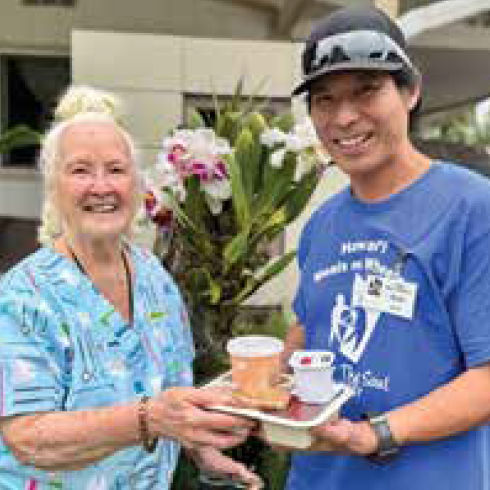
    Now 88, Shirley remains sharp and spirited, though chronic pain and limited mobility make daily tasks such as cooking difficult. Before receiving support from Hawai‘i Meals on Wheels (HMoW), her simple meals did not meet her nutritional needs. Today, home-delivered meals help sustain her independence while ensuring she remains safe and well-nourished at home.

    “I’m so thankful for the meals,” Shirley shared. “I love the beef stew, and they bring milk, pudding and cookies. The meals are a big help for me.” Through HMoW’s new Mele Meals Program, musician/meal delivery drivers brought live music to her doorstep. Shirley danced hula to her favorite, “Hanalei Moon.”

    To learn more about home-delivered meals, contact Hawai‘i Meals on Wheels using the information provided below.

    HAWAI‘I MEALS ON WHEELS (nonprofit)
    PO Box 236099, Honolulu, HI 96823
    808-988-6747 | hmow.org

    Shirley’s life has long been guided by music and movement. Raised in Kalihi in a family rooted in hula, she began dancing as a child and later performed across Hawai‘i, the continent and abroad. Recognized as a top Tahitian dancer in the 1950s, she spent decades sharing her artistry while also supporting her family as…

  • Project Maka‘ala Helps Kūpuna Avoid Fraud

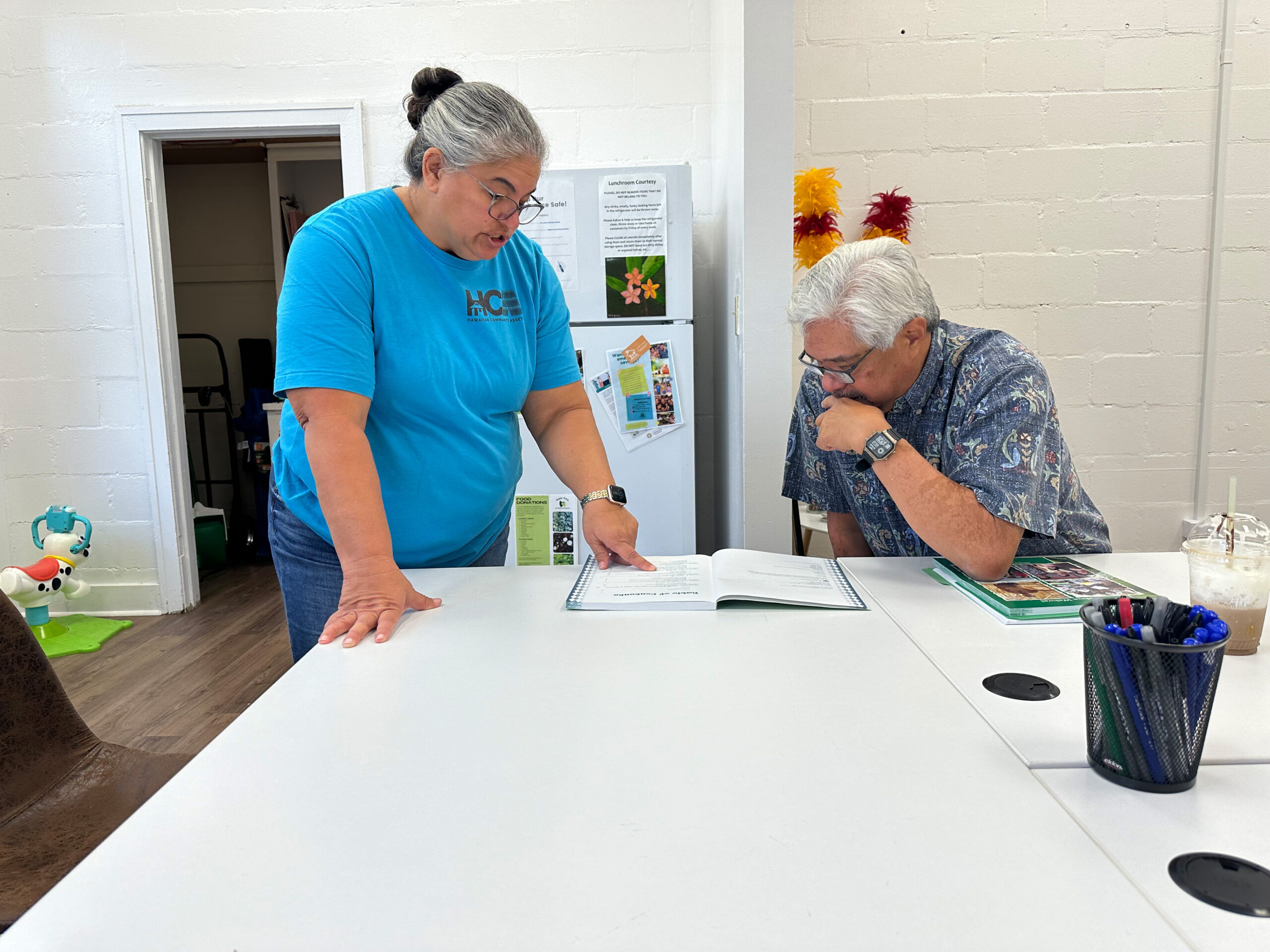
    Hawaiian Community Assets (HCA), a statewide nonprofit dedicated to building economic self-sufficiency and housing stability for low- and moderate-income communities, recently launched Project Maka‘ala (to be alert, vigilant and aware), a culturally grounded community initiative designed to help kūpuna recognize, avoid and respond to financial scams and fraud. The program is rooted in Hawaiian values: When something feels wrong — pause, kāhea (reach out), then decide. Kūpuna are encouraged to kāhea to a trusted person/resource before acting, to enhance clarity, protection and support.

    This spring, kūpuna gathered for a lunch-and learn event, fraud/scam awareness and protection seminar, community resource fairs, a film event and a workshop. Participants learned valuable skills, such as how to recognize, avoid and report potential fraud and scams. Guests shared real world mo‘olelo (stories) about how they identified and avoided fraud.

    Project Maka‘ala works with numerous community partners, including local law enforcement, the Kualoa-He‘eia Ecumenical Youth (KEY) Project and the multi-agency Kūpuna Alert Partners (KAP) program. The program provides free presentations on fraud, scams and prescription drug misuse to communities statewide. Project Maka‘ala also collaborates with Windward O‘ahu communities and Hawaiian Homestead residents.

    To protect yourself and your loved ones from an “under-the-radar” fraud epidemic, refer to the Consumer Financial Protection Bureau’s free “Smart Money for Older Adults” resource guide. If you suspect you may be a victim of fraud, contact the State of Hawai‘i’s Adult Protective and Community Services Branch Statewide Reporting Line: 808-832-5115.

    Help protect yourself by:

    • Identifying a trusted contact
    • Reviewing your accounts regularly
    • Securing personal information
    • Planning for financial, legal or medical decisions

    Stay tuned for future Project Maka‘ala events to
    learn more.

    HAWAIIAN COMMUNITY ASSETS (nonprofit)
    310 Paoakalani Ave., #204e, Honolulu, HI 96815
    808-587-7886 | oahufoc@hawaiiancommunity.net
    hawaiiancommunity.net

    Hawaiian Community Assets (HCA), a statewide nonprofit dedicated to building economic self-sufficiency and housing stability for low- and moderate-income communities, recently launched Project Maka‘ala (to be alert, vigilant and aware), a culturally grounded community initiative designed to help kūpuna recognize, avoid and respond to financial scams and fraud. The program is rooted in Hawaiian values:…

  • Assistive Technology: Help for Caregivers

    Caregiving can be overwhelming. Assistive technology (AT) offers meaningful support by increasing independence for care recipients and reducing the physical and mental strain placed on caregivers.

    AT tools, devices and systems are designed to help individuals maintain or improve functional abilities. These technologies support mobility, communication, cognition, vision, hearing and daily self-care. Seniors may experience physical or cognitive challenges that make everyday tasks increasingly difficult. AT helps bridge these gaps, allowing individuals to remain safer while easing the caregiving burden.

    AT devices include mobility aids (walkers, canes or bed rails), daily living aids (adapted utensils and automatic medication dispensers) and dementia-support tools (fidget blankets, therapeutic pets or smart home controls). These tools reduce the need for constant supervision.

    Caregivers also benefit directly from AT. Scheduling apps help manage appointments, transfer aids protect against injury and doorbell cameras allow caregivers to monitor visitors and deliveries. Together, AT can support well-being, safety and quality of life for families.

    ASSISTIVE TECHNOLOGY RESOURCE CENTERS OF HAWAII (nonprofit)
    200 N. Vineyard Blvd., Ste. 430, Honolulu, HI 96817
    808-532-7110 | info@atrc.org | atrc.org
    ATRC does not sell products, but recommends vendors. Device demonstration and lending programs give individuals and groups the opportunity to make an informed choice about an AT device prior to acquiring one.

    Caregiving can be overwhelming. Assistive technology (AT) offers meaningful support by increasing independence for care recipients and reducing the physical and mental strain placed on caregivers. AT tools, devices and systems are designed to help individuals maintain or improve functional abilities. These technologies support mobility, communication, cognition, vision, hearing and daily self-care. Seniors may experience…

  • Finding Joy in the Final Chapter

    Aging and serious illness are often framed as loss — loss of independence, routine or health. Yet many kūpuna and families discover that this stage of life can also be a time of meaning, connection and even joy.

    Experts describe this as “meaning-making,” a natural process of reflecting on life experiences, relationships and values. Simple conversations, sharing memories, retelling family stories or expressing gratitude can bring a sense of peace and fulfillment. These moments often become some of the most treasured for both individuals and their loved ones.

    Creating a legacy can also be deeply meaningful. This may include writing letters to family members, recording stories, organizing photographs or passing down traditions such as recipes, songs or cultural practices. These acts no bonds across generations.

    Joy in this stage does not need to be grand. It can be found in small, everyday moments like watching the sunset, listening to music, enjoying favorite foods or spending time with ‘ohana. Reconnecting with friends or revisiting meaningful places can also bring comfort and happiness.

    Focusing on what matters most helps shift the experience from one of loss to one of presence. Even in life’s later chapters, there remains space for purpose, connection and moments of joy.

    NAVIAN HAWAII
    Jody Shiroma, Chief Growth Officer
    808-302-4144 | jshiroma@navianhawaii.org
    NavianHawaii.org

    Aging and serious illness are often framed as loss — loss of independence, routine or health. Yet many kūpuna and families discover that this stage of life can also be a time of meaning, connection and even joy. Experts describe this as “meaning-making,” a natural process of reflecting on life experiences, relationships and values. Simple…

  • How to Safely Buy Medicine Online

    Not all online medicine retailers operate with the safety standards consumers expect. Reports shared with Better Business Bureau (BBB) detail how consumers have been impacted by issues such as missing prescriptions, incorrect orders, subscription traps and poor follow-through when problems arise. This is bad for any business, but in the supplement and medication business, the results can be catastrophic.

    A legitimate pharmacy will always require a valid prescription, provide access to a licensed pharmacist, and clearly list its address and contact details. It will also be properly licensed in the states in which it operates (look up online).

    Consumers should also be cautious with supplements. Unlike prescription drugs, supplements are not as regulated. Look for clear labeling and proof of third-party testing, and always ask your doctor before starting a new supplement.

    So be cautious and do your research before buying from a new online pharmacy or supplement store. Check reviews and ratings at BBB.org. Taking a few minutes to research your provider pays big time when your health is on the line!

    BETTER BUSINESS BUREAU GREAT WEST + PACIFIC (nonprofit)
    800-460-0910 | info@thebbb.org | thebbb.org
    Ad or company clarification: bbb.org
    Report a scam: bbb.org/scamtracker
    File a complaint: bbb.org/file-a-complaint

    Not all online medicine retailers operate with the safety standards consumers expect. Reports shared with Better Business Bureau (BBB) detail how consumers have been impacted by issues such as missing prescriptions, incorrect orders, subscription traps and poor follow-through when problems arise. This is bad for any business, but in the supplement and medication business, the…

  • Glaucoma Risk Increases as Our Eyes Age

    It is often referred to as the “silent thief of sight.” Glaucoma is one of the leading causes of irreversible blindness in the US, posing a serious risk to older adults. It’s especially dangerous because it often has no noticeable symptoms in its early stages.

    Glaucoma is a group of eye diseases that damage the optic nerve, often due to increased fluid pressure inside the eye, leading to gradual peripheral vision loss and potential blindness. Common types include open-angle (gradual) and angle-closure (sudden, severe pain).

    Over 4 million Americans have glaucoma. Over 3% of adults over 40 are diagnosed with glaucoma nationally — approximately 2% across Hawai‘i. The best protection against glaucoma-related blindness is routine, comprehensive eye exams that enable eye doctors to detect glaucoma early — before significant vision loss occurs — and begin treatment to help preserve and protect sight.

    The difference between good vision and poor vision is early detection. Vision loss from glaucoma can happen slowly and painlessly, so many people do not realize they have the disease until their eyesight has been permanently affected.

    It is never too early to protect and prioritize your vision. Routine eye exams can help support your eyes as they age — protecting your eyesight, and ensuring a better life for years to come.

    HAWAIIAN EYE CENTER
    1441 Kapiolani Blvd., Honolulu, HI 96814
    808-621-8448 | Hawaiianeye.com

    It is often referred to as the “silent thief of sight.” Glaucoma is one of the leading causes of irreversible blindness in the US, posing a serious risk to older adults. It’s especially dangerous because it often has no noticeable symptoms in its early stages. Glaucoma is a group of eye diseases that damage the…

  • Anatomy of a Prescription Label

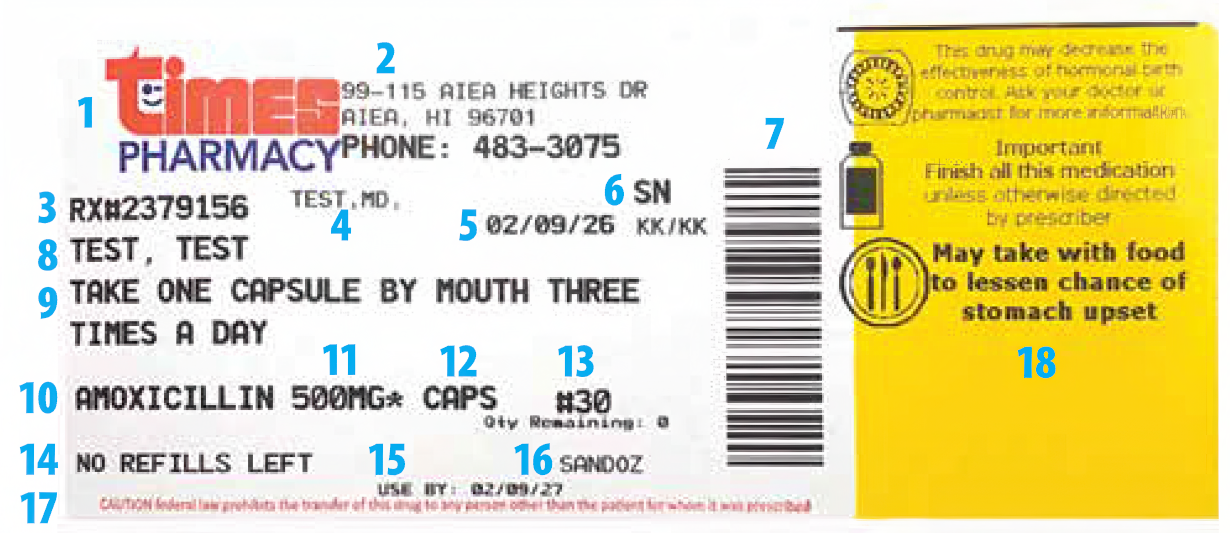
    The information printed on prescription medication labels is critical for your safety. The Drug Enforcement Administration mandates that consumers receive sufficient information to be able to independently take their medications and contact their pharmacy/physician if questions or issues arise.

    Reading from top of above label, left to right:

    1) Pharmacy name

    2) Pharmacy address and phone number

    3) The pharmacy gives each prescription an identifier called an “Rx number.” If you call the pharmacy to request a refill or have questions about a specific medication, this number can be used in lieu of difficult-to-pronounce names. Each time your physician sends in a refill request, the Rx number will change.

    4) Your physician’s name (in example: TEST, MD)

    5) Date when the prescription was filled

    6) To the right of the fill date is SN where the “S” stands for safety cap (child-resistant). If there is an “E” in the “S” position, it is an easy-open cap, so it is not child-resistant. The “N” in the SN combination stands for new prescription. An “R” in place of the “N” means it is a refill.

    7) When scanned, the bar code reveals the National Drug Code (NDC) number, which pharmacy staff scan to verify they are dispensing the correct medication/dosage to the correct patient.

    8) Your first and last name (in example: TEST, TEST) appears on the label above the instructions.

    9) Instructions regarding how, when and how much of the medication should be taken

    10) Name of medication

    11) Strength of the medication in the form of a numeral and unit of measurement: e.g.
    milligram, milliliter, etc.

    12) Form of your medication: e.g. tablet, capsule, suppository, ointment, patch, etc.

    13) Quantity of medication you receive

    14) Number of refills you have left: Refills are valid one-year from the initial date you received the prescription.

    15) Expiration date (in sample: use-by date) is on the bottom middle edge in small text

    16) Manufacturing company (in sample: SANDOZ) that made the medication

    17) Note that all prescriptions carry a warning (in sample: “CAUTION federal law prohibits the transfer of this drug to any person other than the patient for whom it was prescribed.”

    18) The warning/precaution area (usually in a colored box) of the label alerts consumers and healthcare providers to serious side effects associated with the medication, even when used correctly.

    Keep in mind that the label may not be a full reflection of all possible side effects. Ask your pharmacy for a medication guide with the complete list of possible side effects.

    Remember, taking medications exactly as prescribed — correct dosage, time and duration — is essential for achieving the intended therapeutic effect, preventing treatment failure and managing chronic conditions.

    Disclaimer: Be aware that there is no nationwide standard for prescription medication labels. The FDA requires the patient’s name and dosage instructions, but other details vary by state. Each state’s board of pharmacy is responsible for what goes on the Rx labels.

    The information printed on prescription medication labels is critical for your safety. The Drug Enforcement Administration mandates that consumers receive sufficient information to be able to independently take their medications and contact their pharmacy/physician if questions or issues arise. Reading from top of above label, left to right: 1) Pharmacy name 2) Pharmacy address and…

  • Protect Your Smile from Periodontitis

    Tender, swollen or bleeding gums could be early signs of periodontitis, a serious form of gum disease that damages the bone and soft tissue supporting your teeth. And it’s more common than you might think! About 42% of US adults over 30 have some form of periodontitis.

    Periodontitis begins when plaque builds up from inadequate brushing and flossing, triggering gum inflammation known as gingivitis. Over time, gingivitis can progress into periodontitis, forming deep pockets between your gums and teeth that destroy supporting tissue and bone and may eventually cause tooth loss.

    If caught too late, surgery may be needed to repair the damage. Knowing your risk factors is key. These include poor oral hygiene, smoking, aging (most cases develop after age 35), diabetes, poor diet, teeth grinding, stress and genetics.

    The good news? Periodontitis is largely preventable! Brush twice a day, floss daily and see your dentist regularly. If you suspect gum disease, schedule a dentist appointment so your dentist can help create a long-term plan to keep your smile healthy. Taking care of your gums today means fewer costly and uncomfortable problems down the road!

    HAWAII DENTAL SERVICE
    Kahala Howser Pimentel, Wellness Manager
    808-529-9391 | Kahala.Pimentel@HawaiiDentalService.com
    HawaiiDentalService.com

    Tender, swollen or bleeding gums could be early signs of periodontitis, a serious form of gum disease that damages the bone and soft tissue supporting your teeth. And it’s more common than you might think! About 42% of US adults over 30 have some form of periodontitis. Periodontitis begins when plaque builds up from inadequate…