Category: Senior News

  • DANA is a Joy!

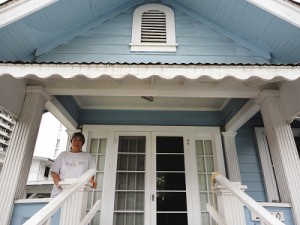
    Osajima at the front porch of Project Dana office and doing an orientation inside with volunteer Ashley.
    Osajima at the front porch of Project Dana office and doing an orientation inside with volunteer Ashley.

    Welcome to Project Dana. Its headquarters is nestled in Moili‘ili in a little blue house, which was donated to Moili‘ili Hongwanji Mission by a long-time dedicated member.

    In recognition of the great and growing need of in-home assistance for Hawai‘i’s frail elderly, Project Dana was launched in 1989 by the Moili‘ili Hongwanji Mission with the wise leadership and foresight of founder Mrs. Shimeji Kanazawa and founding administrator Rose Nakamura. Project Dana is an interfaith volunteer caregiving program that provides a variety of supGenerations Magazine- DANA is a Joy! - Image 02portive services to the elderly, disabled persons and family caregivers to ensure their well-being, independence and dignity in an environment of their choice. Support comes through a corps of trained volunteers from a coalition of churches/temples and community organizations that demonstrate the universal principle of DANA, a Sanskrit word that means “selfless giving without the desire for recognition or reward.”
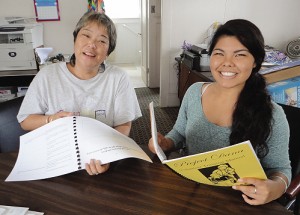
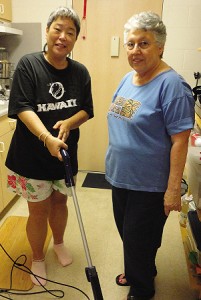
    Generations Magazine- DANA is a Joy! - Image 03Volunteer project coordinator Cyndi Osajima is one of the staff members who works out of the “office.” She has been with Project Dana since 1993 and considers this her dream job. “I am honored and consider it a privilege to be with Project Dana, working with the devoted staff, site leaders and volunteers. I learn so much from the elderly as they share their life experiences” she says.

    Part of Osajima’s job includes conducting orientations for new volunteers, matching volunteers to the requests of the elders, providing information and referrals, and giving presentations to organizations, agencies, workshops, senior fairs and groups about Project Dana.

    “I am grateful to work in a field where I can utilize my academic knowledge and put my faith into action as a Buddhist,” she says.
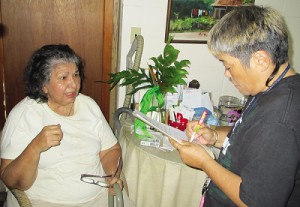
    Osajima working with seniors.
    Osajima working with seniors.

    With an increasing number of elderly in Hawai‘I and greater demands put on social support services, Project Dana fills important service gaps by providing respite, in-person visits or telephone calls, transportation to medical appointments, grocery shopping assistance, caregiver support groups and home safety assessments/education. Working with more than 200 public and private agencies, organizations and individuals, Project Dana provides compassionate and loving care to help advance the well-being of Hawai‘i’s elders as they age in place.

    As the volunteers are the “heart” of The Project, on Sept. 20, 2014, Project Dana will be honoring and thanking all volunteers throughout the state with a 25th Anniversary Celebration.

    Anyone needing services or interested in becoming a volunteer, please contact Project Dana.
    Generations Magazine- DANA is a Joy! - Image 05

    Welcome to Project Dana. Its headquarters is nestled in Moili‘ili in a little blue house, which was donated to Moili‘ili Hongwanji Mission by a long-time dedicated member. In recognition of the great and growing need of in-home assistance for Hawai‘i’s frail elderly, Project Dana was launched in 1989 by the Moili‘ili Hongwanji Mission with the…

  • Tony Lenzer Recognized With 2013 Andrus Award for Community Service

    Dr. Anthony (Tony) Lenzer was recently selected as the Hawai‘i recipient of the 2013 Andrus Award for Community Service—AARP’s most prestigious volunteer recognition. He accepted the award from AARP national president Rob Romasco at a volunteer recognition luncheon in November. The Andrus Award is an annual award for exemplary volunteer leadership named after AARP’s founder Ethel Percy Andrus (1884-1967) who exemplified AARP’s motto: “To serve, not to be served.”

    Lenzer’s distinguished career in gerontology began in Ann Arbor, Michigan, as executive secretary of a legislative council on aging. He held that job for four years, while doing doctoral work, then taught seven years at the University of Michigan’s School of Public Health where he helped set up a Chronic Disease and Aging Program.

    He came to Hawai‘i in 1969 with his wife and five children to help the University of Hawai‘i develop its gerontology program, teaching the first course on aging in 1970.

    In ensuing years he helped to establish key aging-related organizations. Among them: Hospice Hawai‘i, the Hawai‘i Pacific Gerontological Socie- ty and the Hawai‘i Family Caregiver Coalition, of which he is president. He also chairs the legislative committee for the Policy Advisory Board for Elder Affairs in the Executive Office on Aging.

    Lenzer has been volunteering with AARP and other organizations since retiring from the UH Center in 1994. He’s a volunteer board member for five organizations that advocate for aging, caregiving and disability policies at the Legislature. He helped create the annual “Aging and Disability Issues” report and is working with AARP now to help people understand the complex Affordable Care Act.

    In the words of AARP Hawai‘i state director Barbara Kim Stanton: “No one has done more to advance our understanding of what it means to grow older in Hawai‘i and prepare a generation of state policymakers to begin addressing the challenges and opportunities of our aging population.”

    Generations Magazine - Tony Lenzer Recognized With 2013 Andrus Award for Community Service - Image 01
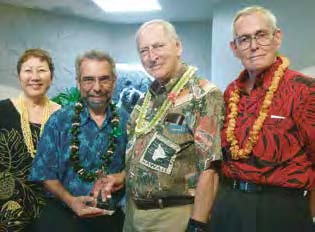
    Left to right: AARP state director Barbara Kim
    Stanton, AARP volunteer national president Rob
    Romasco, 2013 Andrus Volunteer Award Winner
    Tony Lenzer and volunteer Hawai‘i state president
    Gerry Silva.

    Dr. Anthony (Tony) Lenzer was recently selected as the Hawai‘i recipient of the 2013 Andrus Award for Community Service—AARP’s most prestigious volunteer recognition. He accepted the award from AARP national president Rob Romasco at a volunteer recognition luncheon in November. The Andrus Award is an annual award for exemplary volunteer leadership named after AARP’s founder…

  • 101 Years . . . And Still Cookin’!

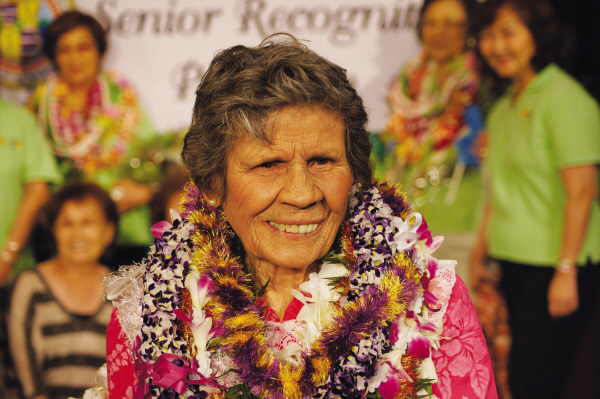
    Ida 100 Years - Generations Magazine - April-May 2013Turning 101 is no small feat. Yet, Aunty Ida still rises before dawn to pray the rosary, attend daily mass at Carmelite Convent Chapel and decorate with flowers. For more than a century, the warm-hearted Ida has touched people’s daily lives in countless ways — including President Obama.
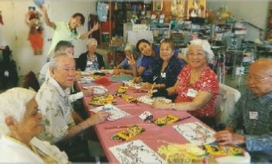
    On one of Obama’s vacation trips back to Hawai‘i, the president was looking for some locally made jellies he remembered from his small-kid days in Hawai‘i. Ida’s niece, Charlene, who happened to be working at the vacation home said, “My Aunty Ida makes the best jams and jellies in Hawai‘i.” Ida gave Obama jars of liliko‘i, strawberry-guava jelly, papaya-pineapple and guava jam, guava chutney, liliko‘i butter and mango chutney. Once he and his family indulged themselves, he ordered more for the White House.

    Born Adelaide “Ida” Barboza Freitas on April 8, 1912 in Spreckelsville, Maui, Ida grew up in Nahiku near Ha¯na and then on Ka‘eleku Sugar Plantation on Maui. The family did much for themselves by planting gardens and raising chickens and pigs. Much of their resources came from the mountains around them — wild bamboo shoots and coffee, the grasses that stuffed the mattresses, the pulu (soft wool on tree-fern leaf stalks) that stuffed their pillows and the coconut husks that were used as brushes to scrub floors. Growing up in the country meant washing clothes in the stream, walking three miles to school and working in the cane fields during the summer.

    As a teen, Ida was sent to Honolulu to work. She became the housekeeper for Dr. Gaspar. At 17, Ida met and married Alfred Freitas and they raised three boys. After putting the boys thru St. Louis University and Alfred retiring after 40 years as a machinist, they became caretakers at the Catholic Youth Organization camp in Hau‘ula. Later, Ida moved to her current residence at the St. Stephen Diocesan Center.

    Today, Ida still is active with her church and socializes once a week at the Ko‘olau Senior Hui in Kane‘ohe. She still cooks meals for family gatherings. And she continues the tradition of making malasadas before lent and baking sweet bread for the holidays, calling family members to come and pick up their shares. She attributes her long life to prayer and hard work.

    Generations Magazine wishes Happy Birthday to Aunty Ida!

    Turning 101 is no small feat. Yet, Aunty Ida still rises before dawn to pray the rosary, attend daily mass at Carmelite Convent Chapel and decorate with flowers. For more than a century, the warm-hearted Ida has touched people’s daily lives in countless ways — including President Obama. On one of Obama’s vacation trips back to Hawai‘i,…

  • Call for Seniors at Elementary School

    Fellows Seniors - Generations Magazine - April - May 2012
    FELLOWS staff (L–R): Ruth Yonamine, Ruth Hamada, Harriet Rechnitz, Esther Yokoyama

    The FELLOWS (Fellowship, Education, Lifelong Learning Opportunities With Seniors) Program at Wai‘alae School was launched in the 1998-1999 school year and was based on a senior-center-within-a-school model. A demonstration project of the Hawai‘i Intergenerational Network, the program aimed to bring adult volunteers (age 55 or older) into Wai‘alae School to support the students’ academic and social growth, while providing a social setting for the volunteers.

    Nearly 15 years later, the FELLOWS Program is an active and important part of Wai‘alae School. There are about 20 volunteers whose experiences as FELLOWS range from a few weeks to more than 13 years. They are in the classroom, in the library and at schoolwide activities, such as our recent Fun Fair.

    Here are a few comments from Wai‘alae School teachers and their FELLOWS.

    This relationship is beneficial for all of us. I rely on volunteers to support my literacy program, the children enjoy their company and I know Grandma Esther and Miss Ginny walk away from C-3 with a happy heart. We have developed a close relationship and I look forward to seeing both of them every week!

    ~Mrs. Gracie, Teacher


    Having FELLOWS in my classroom is very important to the students and me. They provide emotional support, like having a grandparent to talk to.

    ~Mrs. Wakata, Teacher


    I’ve always marveled at how the volunteers spend so much unhurried time with the students. I’m always in a rush, trying to reach each child and teach every piece of the curriculum. The volunteers have no such constraints and I love how that immediately puts the students at ease.

    ~Mrs. Ching, Teacher


    When I saw an article about FELLOWS in the paper, I found the idea of working with students very appealing, something where I could contribute. So now, in my eleventh year of volunteering, I am a much happier and more fulfilled retiree.

    ~Barney, volunteer since 2001


    It feels good to be useful. Added benefits are lots of hugs.

    ~Harriet, volunteer since 2000


    The most rewarding experience I’ve had with this program are the unsolicited hugs I receive from students at the end of each day!

    ~Maedene, volunteer since 2003


    Let’s just say that it’s the leg hugs that are the most important. Nobody else in my life gives me leg hugs.

    ~Jeanne, volunteer since 2002


    Off campus, when you hear a “little voice” calling your name just to say ‘hi’ and perhaps introduce you to their parents — it’s very rewarding.

    ~Jackie, volunteer since 2005


    The FELLOWS Program allows me to give back to the students and help the teachers. I can share with the school some of my working skills.

    ~Bob, volunteer since 2008

    For more information, please email melanie@waialae.edu or call 733-4880, extension 236.

    The FELLOWS (Fellowship, Education, Lifelong Learning Opportunities With Seniors) Program at Wai‘alae School was launched in the 1998-1999 school year and was based on a senior-center-within-a-school model. A demonstration project of the Hawai‘i Intergenerational Network, the program aimed to bring adult volunteers (age 55 or older) into Wai‘alae School to support the students’ academic and…

  • Sharing Smiles with Seniors

    Sakura House Volunteers - Generations Magazine - April - May 2012“Wow! Time flies! We will already have our third anniversary soon!?” Sakura House, which opened in 2009, is the only adult day care program that provides Japanese-English bilingual services in Hawai‘i.

    As I get know Hawai‘i local people better, I noticed that they value ohana and respect kupuna like we, Japanese, do. It is natural for us to take care of our kupuna when they get older. When I discovered this cultural similarity, I was so happy and felt comfortable to be here in Hawai‘i.

    My caregiving experience includes taking care of my parents, both of whom had terminal cancer. There was no doubt that I would take care of them. I felt happy to do so. It was an opportunity to show my gratitude to my parents who had raised me with their love. However, as the level of care got more demanding, I asked myself, Why can’t I do this for Dad with a smile? or How can I do this without scolding Mom? Eventually, I admitted, Oh no! This is much more difficult than I thought!

    Taking care of loved ones … I still believe that it is a chance to repay them for caring for us. However, if you’re working, raising children or babysitting grandchildren, it can become an emotional, physical and financial burden. When you are unhappy, you’re unable to provide meaningful, quality care to others. I know this very well through my experience. We are human and nobody is perfect. It is very normal in these circumstances to need help. In the beginning, you or your loved may resist help from others. However, once you accept it, you will surely see and feel the rewards.

    At the Sakura House, I ask my staff to be mindful of our purpose, remembering that it is our mission to take care of senior participants on behalf of their ohana. As such, we treat our seniors and their caregivers like an extended family.

    We respect our seniors and offer culturally sensitive care. Perhaps even more importantly, we become friends with our participants and share good times and smiles.

    For more information, please call 536-1112 or visit www.sakurahousehawaii.com.

    “Wow! Time flies! We will already have our third anniversary soon!?” Sakura House, which opened in 2009, is the only adult day care program that provides Japanese-English bilingual services in Hawai‘i. As I get know Hawai‘i local people better, I noticed that they value ohana and respect kupuna like we, Japanese, do. It is natural…

  • Lanakila: March For Meals Campaign

    Lanakila March for Meals - Generations Magazine - February - March 2012On March 1, 2012, hundreds of concerned citizens will join Lanakila Meals on Wheels in the March for Meals to raise awareness of the need to fund the Kupuna Care Program and combat senior hunger. Marchers from around the island, including seniors, elected officials, and Kupuna Care service participants, will gather at the State Capitol Rotunda at 10 a.m.
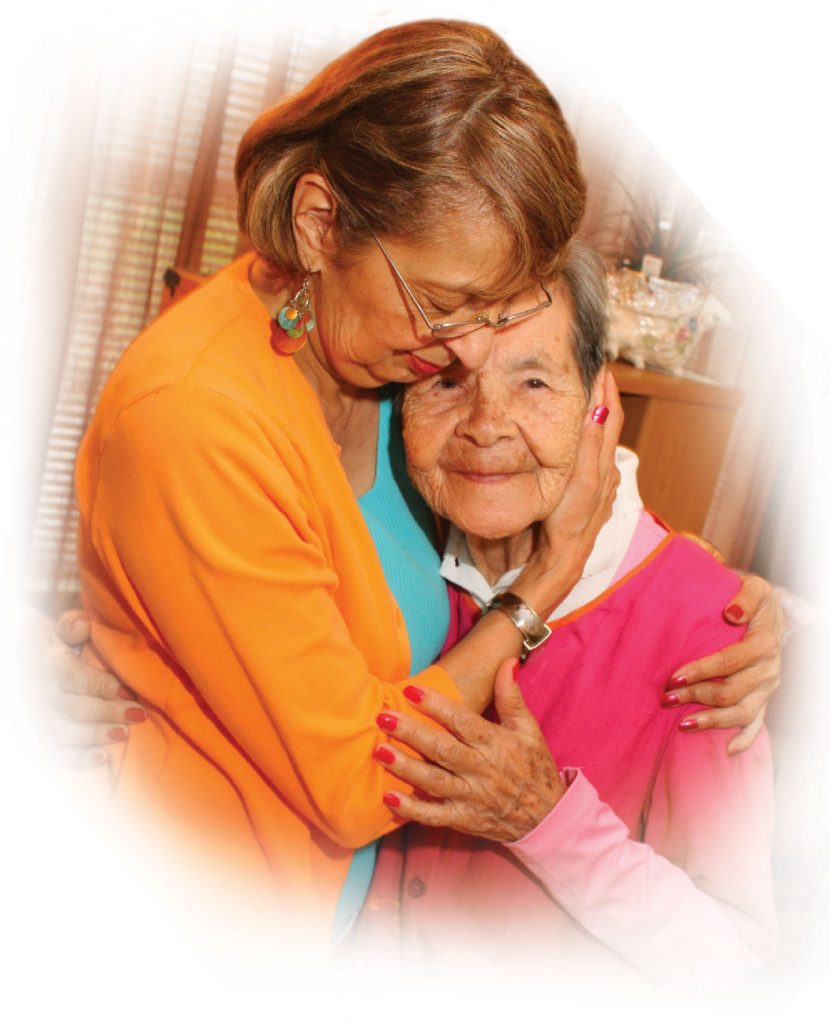
    March for Meals is an annual national campaign, held in March of every year, and designed to increase public awareness for local senior nutrition programs. The campaign takes place in the month of March because it was during this month that the law was enacted that included Senior Nutrition Programs in the Older Americans Act.

    Kupuna Care is a state-funded, county administered program that provides basic services to frail older adults who can’t live at home without assistance. Services include home-delivered meals, personal care, help with chores and transportation assistance. These services provide an important safety net that can help low and middle-income adults avoid going into poverty and being forced into more costly care settings.

    The public is encouraged to attend. For information, please visit lanakilapacific.org or call 531-0555.

    On March 1, 2012, hundreds of concerned citizens will join Lanakila Meals on Wheels in the March for Meals to raise awareness of the need to fund the Kupuna Care Program and combat senior hunger. Marchers from around the island, including seniors, elected officials, and Kupuna Care service participants, will gather at the State Capitol…

  • Walk Wise Hawai`i Keeps Seniors Safe

    Walk Wise Hawai‘i (WWH) is celebrating its ninth year of bringing important safety tips to Hawai‘i’s senior pedestrians. This statewide pedestrian safety campaign, led by the State Dept. of Transportation and championed by Walk Wise Hawai‘i’s Lance Rae, is revving up 2012 with expanded community outreach programs.

    The rate of pedestrian fatalities among Hawai‘i’s elderly has steady declined thanks in large part to WWH’s expanded programming. Last year, nearly 7,000 seniors took the Pedestrians Pledged to “walk wise,” which is to always look left-right-left before crossing and make eye contact with drivers when crossing.

    This coming August, WWH will celebrate its Third Annual Pedestrian Safety Month. This month-long campaign is recognized by Lt. Gov. Brian Schatz as “the only statewide pedestrian safety month in the nation.” Look for more information on the Pedestrian Safety Month this summer to learn about how to be both a safe pedestrian and driver.

    Throughout the year, WWH’s Speakers Bureau reach out to seniors through the Honolulu Police Dept.’s Aloha No Na Kupuna program on O‘ahu and with Neighbor Island police departments. If you have senior citizens in your community, you can contact WWH to schedule a guest speaker who can share information about pedestrian safety and provide safe road-crossing tips. The WWH Speakers Bureau provides reflective lights to carry during the early morning and evening hours and yellow tote bags to all seniors who take the WWH Pedestrian Pledge.

    This year, WWH invites all Generations Magazine readers and their families to take the Walk Wise Hawai‘i Pedestrian Pledge and make walking safe in Hawai‘i.

    For more information on Walk Wise Hawai‘i, please contact Lance Rae at 535-9099.

    Walk Wise Hawaii

    Walk Wise Hawai‘i (WWH) is celebrating its ninth year of bringing important safety tips to Hawai‘i’s senior pedestrians. This statewide pedestrian safety campaign, led by the State Dept. of Transportation and championed by Walk Wise Hawai‘i’s Lance Rae, is revving up 2012 with expanded community outreach programs. The rate of pedestrian fatalities among Hawai‘i’s elderly…

  • RSVP Goes to the City

    The Retired and Senior Volunteer Program Changes Lives

    PROGRAMS-SERVICES-RSVP-Goes-to-the-City_image1The Retired Senior Volunteer Program (RSVP) has a new family. We are now under the Information and Assistance (I&A) Section of the Elderly Affairs Division (EAD), Department of Community Services (DCS). We also proudly welcome and congratulate Ashley Muraoka as the newly hired director for this great new program. We previously knew her as the coordinator for the Medicare for Participants and Providers Act.
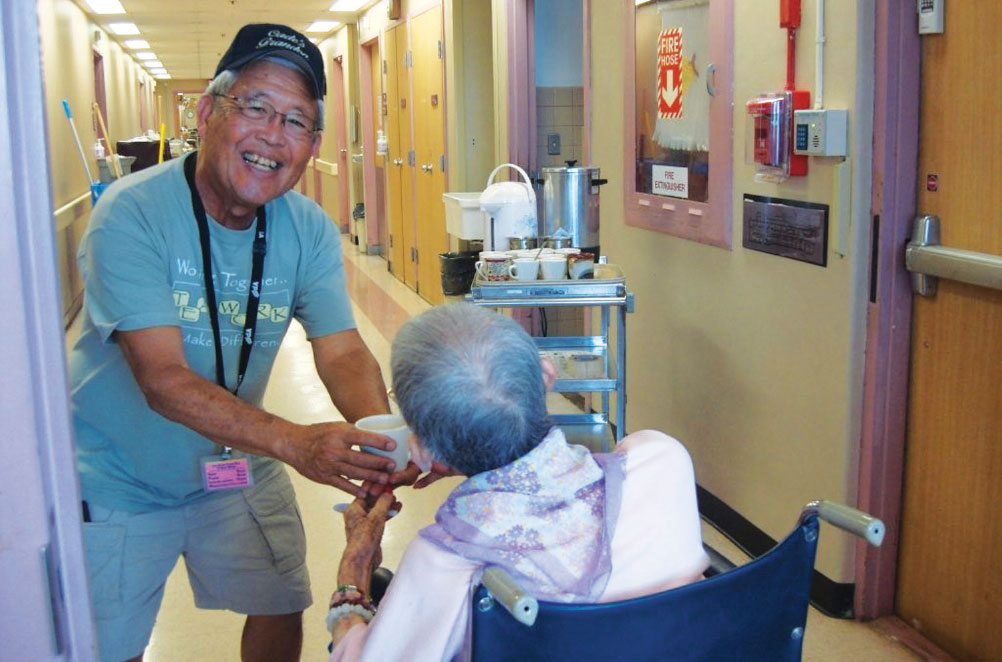
    With the support of the Elderly Affairs Division and under Muraoka’s direction, RSVP will focus on enhancing the lives of older adults. RSVP recruits and matches adults, age 55 and better, with community volunteer opportunities that capitalize on their wisdom, skills and experience. There are more than 450 active volunteers on O‘ahu serving in more than 50 non-profit organizations and public agencies. In 2010, they contributed more than 85,000 hours of service to the community, which amounts to $1.5 million in service. These volunteers vary greatly in age, background, status, ability, interests, ethnicity, and professional and educational level.

    RSVP is currently recruiting volunteers to help meet the most critical needs in our communities. With Hawai‘i having one of the fastest growing elder populations in the nation, we have many seniors who need help and many seniors who can help. RSVP keeps seniors healthy in their own homes with services, such as telephone reassurance, grocery shopping, light housekeeping, meal preparations, respite, transportation, health promotion, and information and assistance outreach. RSVP hopes to make a huge impact in increasing the health, well-being and quality of life of O‘ahu’s seniors.

    PROGRAMS-SERVICES-RSVP-Goes-to-the-City_image2RSVP is also in the process of creating a Senior University. At the university, volunteers will be able to conduct a class or take a class. This will give our volunteers the opportunity to share their knowledge, skills and talents with all generations. We will capture historical and institutional knowledge to enhance our community planning, growth and services.
    The ultimate goal of RSVP is to build capacity in communities across O‘ahu.

    Elite Membership Eligibility:

    • You must be 55 years or better
    • Interested in learning new skills
    • Eager to make a difference in a person’s life

    For information, call 768-7700 or 643-2732.

    The Retired and Senior Volunteer Program Changes Lives The Retired Senior Volunteer Program (RSVP) has a new family. We are now under the Information and Assistance (I&A) Section of the Elderly Affairs Division (EAD), Department of Community Services (DCS). We also proudly welcome and congratulate Ashley Muraoka as the newly hired director for this great…

  • Action Line Serves & Recruits Seniors

    PROGRAMS-SERVICES-Action-Line_image1
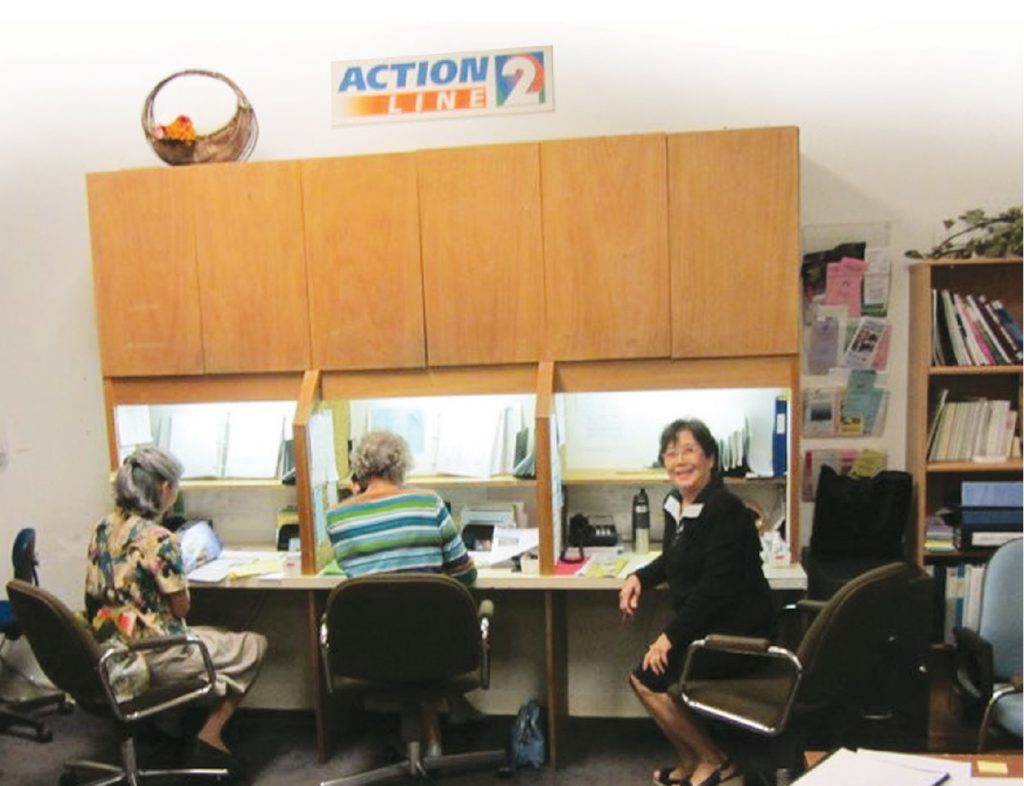
    Volunteers at work (L–R): Anni Suzuki, Jeanne McNeil, and Melba Kop

    2012 marks the 25th year of KHON2’s Action Line program. Over the years, the program has fielded thousands of calls, and we all owe many thanks to this valuable community service.

    Action Line is a consumer referral service that assists people in solving a wide variety of problems they have encountered with businesses, service providers and government agencies. It also uses KHON’s resources to inform the community-at-large of relevant consumer issues.

    Staffing is entirely by a dedicated team of volunteers. Volunteers are predominately seniors with a wide diversity of backgrounds and life experiences. Volunteers typically work one day a week from 9 a.m. to 1:30 p.m.

    What they don’t do - they don’t intervene directly on the behalf of consumers. They also do not handle anonymous or third-party complaints.

    How to contact Action Line: Phone lines (591-0222) are open weekdays between 11 a.m. and 1 p.m. Alternatively, consumers can email actionline@khon2.com.

    The Action Line Web site tab is located at KHON2.com, which provides consumers with links that can be used to investigate businesses, file complaints and to gather information on a wide range of topics. Consumer Alerts and links to recent news stories can also be found on the site.

    During 2011, Action Line received two huge awards – the Better Business Bureau’s Ka Mea o Kako‘o Award and the Hawai‘i State Bar Association’s Young Lawyers’ Division Liberty Bell Award.

    Volunteer Solicitation: Action Line is always looking for new phone and office volunteers. Training is provided. For more information, please visit the Action Line tab at KHON2.com or email at Actionline@khon2.com.

    2012 marks the 25th year of KHON2’s Action Line program. Over the years, the program has fielded thousands of calls, and we all owe many thanks to this valuable community service. Action Line is a consumer referral service that assists people in solving a wide variety of problems they have encountered with businesses, service providers…