Category: Senior News

  • Nā Tūtū – Grandparents Raising Grandchildren

    For generations grandparents in Hawai‘i have helped raise their grandchildren while the parents worked the farms or harvested the crops. While things changed in modern Hawai‘i, the tradition continued as busy parents headed off to work, grandparents often took the grandchildren to school or after school activities. And, by the late ’90s, many grandparents found themselves caring for their grandchildren on a full time, 24/7 basis. Yet, a myriad of Hawai‘i laws prevented them from fully caring for their grandkids. For example, grandparents couldn’t enroll the children in school or take them to the doctor. What happened to ‘‘ohana” and “hānai”? These cultural traditions of family caring for other family members, especially the keiki, were no longer recognized in our very own Hawai‘i.

    In response, the Windward O‘ahu Family and Community Education Council (WOFCE) appointed a small, yet passionate, committee called Nā Tūtū. Its mission is to seek necessary legislation, which will allow grandparents and care-givers over the age of 18, to provide a safe, loving and secure home for the children in their care.

    At the time Nā Tūtū was established, if parents were unavailable, the child was deemed a ward of the state and farmed out to a foster home. In order for grandparents, or other relatives, to be caretakers they had to be legal guardians.

    Nā Tūtū set out to change the laws. It researched other states’ “consent” laws, some of which allowed grandparents to enroll their grandchildren in school and allowed medical services for the minors, and selected the legislation that it felt best suited Hawai‘i.

    On Na¯ Tu¯tu¯’s behalf, the Human Resources Committee Chairs of both the Senate and House introduced education and medical consent laws into the legislature. To raise awareness, Nā Tūtū
    made Tūtū/Keiki dolls and distributed them to all legislators; gathered more than 1,000 signatures throughout the state; followed by support letters, and after three years of testifying before  committees of both Houses. The legislation for Consent for Education became law in 2003, followed by the Consent for Medical Services in 2005. By law, every school in the state must have the Consent for Education affidavit form available to all grandparents or relatives who are the primary caregivers of a minor child.

    Later, the Nā Tūtū Coalition supported legislation that required the state to place a minor child with a grandparent or relative before permanent placement in a foster home. The Coalition was also instrumental in changing the policy of public housing for senior citizens facing eviction because they had suddenly found themselves caring for grandchildren in crisis. Eviction will no longer be an intimidation.

    Nā Tūtū is comprised of grandparents, relatives, organizations and agencies concerned with issues facing the caregiving of minor children. Nā Tūtū is currently a state project of the Family and Community Education, University of Hawai‘i, Cooperative Extension Services. The Coalition is active in informing the general public of the concerns and activities for grandparents raising grandchildren.


    For more information and to get involved, call (808) 239-8908 n

    For generations grandparents in Hawai‘i have helped raise their grandchildren while the parents worked the farms or harvested the crops. While things changed in modern Hawai‘i, the tradition continued as busy parents headed off to work, grandparents often took the grandchildren to school or after school activities. And, by the late ’90s, many grandparents found…

  • Lanakila, a Place to Thrive

    Given the rapidly growing senior populace, Catholic Charities Hawai‘i remains dedicated to creating and providing services that keep seniors engaged and independent. Services include case management, transportation, chore and housekeeping, affordable housing, respite for caregivers, socialization and volunteer opportunities. In addition, the organization manages the popular Lanakila Multi-Purpose Senior Center, which offers individuals supportive services that help them maintain independence in the community.

    The Center serves as a gathering place for seniors in the Fort Shafter to Ward area, providing more than 40 monthly programs. The schedule includes exercise classes and activities, arts and crafts, singing and musical instrument instruction, as well as dance classes in hula, tap, and ethnic Japanese, Korean and Portuguese. Special workshops include tax preparation, stress management, health maintenance and defensive driving.

    Seniors also have the opportunity to participate in the Center’s many cultural clubs. For example, the Okinawa Nenchosha Club, the Center’s largest group, recently observed birthdays for more than 40 members who are 90 years or older, including two who are over 100 years young. The celebration included traditional entertainment by Toguchi-Nakasone Sensei.

    “We have seen the tremendous difference our program makes in this community,” says Diane Terada, division administrator at Catholic Charities Hawai‘i. “Not only are members living to celebrate their 90- and 100-year birthdays, they are living a very active lifestyle where they are engaged and enjoying every day, meeting new people and trying different activities. At Lanakila, we know seniors thrive in a vibrant environment and we’re looking forward to continue supporting this community.”


    For more information on Lanakila Multi-purpose Senior Center or other senior services provided by Catholic Charities Hawai‘i, please call (808) 847-1322 or visit online at www.catholiccharitieshawaii.org.

    Given the rapidly growing senior populace, Catholic Charities Hawai‘i remains dedicated to creating and providing services that keep seniors engaged and independent. Services include case management, transportation, chore and housekeeping, affordable housing, respite for caregivers, socialization and volunteer opportunities.

  • Senior Tuition

    Adult Day Care services are available at SECOH’s Founder Center in Kāhala and Central O‘ahu Community Center in Wahiawaˉ. Services are provided and supervised by highly competent and trusted staff with specific experience working with people who have Alzheimer’s, dementia, and multiple physical and cognitive disabilities. Service tuition includes activity supplies, community event admission fees, and nutritional snacks and meals.

    Serving people with disabilities since 1965, SECOH first began serving the elderly population in 1999 with the licensure of the Founder’s Center in East Honolulu to providing Adult Day Care service for people with age-related disabilities. In 2008, the agency licensed its Wahiawaˉ facility and it plans to license three more facilities in Pearl City, Waipahu and ‘Ewa Beach by 2012 to meet the ever growing service demands of O‘ahu’s aging population.

    SECOH is committed to its mission of provide people with disabilities personalized services in the spirit of enriching lives. The agency looks forward to the opportunity to serve even more of our aging population through our Adult Day Dare tuition assistance program.


    Services are available:
    Mon.– Sat. from 8a.m.–5p.m. in Kāhala
    Mon.– Fri. from 8a.m.–4p.m. in Wahiawā
    For more information about Adult Day Care services and tuition assistance, please contact Crystal at 739-2745 or ccosta@secoh.org.
    To learn more about SECOH’s history, mission, and other services, please visit www.secoh.org.

    SECOH, a private, not-for-profit provider of adult day care services, is offering tuition assistance to individuals 65 and older who are in need of but can’t afford out-of-home Adult Day Care services. The tuition assistance is made possible by a generous grant from the May Templeton Hopper Fund administered by the Hawai‘i Community Foundation.

  • Homeowners’ Real Property Tax Credit

    The annual application filing period for the Real Property Tax Credit for Homeowners to help you reduce your real property taxes is just around the corner — July 1. You may receive a tax credit if you meet the following three requirements:

     You have a home exemption on your property.
     None of the titleholders owns other property anywhere.
     The combined gross income of all titleholders does not exceed $60,000.

    The amount of the credit you will receive, if you qualify, is based on your income along with your current property tax amount.

    Those who applied for this credit last year and are receiving this credit for the 2020–21 tax year should receive an application in early July. New applicants should contact the Tax Relief Office. We will mail you an application or you can download the application from the city website (see below) beginning on July 1, 2020. Click on the “Tax Billing and Collections Forms & Information” tab to find a link to the application and information brochure.


    TAX RELIEF OFFICE
    For more information or questions, call 808-768-3205
    www.honolulupropertytax.com
    Information furnished is subject to change without notice.

    The annual application filing period for the Real Property Tax Credit for Homeowners to help you reduce your real property taxes is just around the corner — July 1.

  • Attention: Hawai‘i Votes by Mail!

    Am I registered to vote? When will I receive my ballot? As the 2020 elections approach, more and more Hawai’i voters will prepare to cast their ballot on these dates:

    Primary Election
    Saturday, Aug. 8
    General Election
    Tuesday, Nov. 3

    The 2020 elections will be the first time elections will be conducted entirely by mail, statewide, and no traditional polling places will be established. Instead, all registered voters will automatically receive a ballot in the mail.

    Over the past year, election officials have sent out a series of election mailings to each registered voter. These mailings have served a dual purpose of announcing the transition to elections by mail and confirming every voter’s registration. If there is an issue delivering a voter’s election mailing, the voter must update his or her registration to be mailed a ballot to ensure the security and integrity of the elections.

    To be sure you will receive your ballot in the mail, check your voter registration status by contacting the Office of Elections. By law, ballots cannot be forwarded through the mail to a new address. If you have moved to a new residence, changed your mailing address or your name, you must update your voter registration record by submitting an application to your County Elections Division or using the online voter registration system with a Hawai‘i driver license or state ID. Similarly, if you will be away from the islands for an upcoming election, you can request an absentee ballot be sent to an alternate address.

    Mail Ballot Packet Send-Out Dates:
    July 21: Primary Election
    Oct. 16: General Election

    This mail ballot packet will include a pre-addressed postage-paid return envelope, ballot secrecy sleeve and ballot. Voters mark their ballot, place it in the return envelope and sign the envelope. Voted ballots must be received by the County Elections Division by 7 pm on Election Day. For more details or information, contact the Office of Elections by phone or go online.


    OFFICE OF ELECTIONS
    802 Lehua Ave., Pearl City, HI 96782
    808-453-VOTE (8683) | elections@hawaii.gov
    elections.hawaii.gov
    The Office of Elections’ mission is to provide secure, accessible, and convenient elections to all citizens statewide.

    Am I registered to vote? When will I receive my ballot? As the 2020 elections approach, more and more Hawai’i voters will prepare to cast their ballot on these dates: Primary Election – Saturday, Aug. 8; General Election – Tuesday, Nov. 3.

  • Walk and Run With Us!

    The Walk and Run Club, powered by Phiten Hawaii, a health and performance product retailer, is a co-sponsor of the nonprofit Hawaii Running Project, a new, free activity for seniors and their families. Walkers and joggers are encouraged to join the healthy fun that starts every Wednesday morning at 9 am. Fun, fitness and camaraderie are open to everyone!

    Gather your friends and family and join the club in front of the ‘Ohana Hale Marketplace Phiten Hawaii store at 333 Ward Ave. (the former Sports Authority location). Groups are created based on who shows up each week. There is plenty of free parking available.

    The walk and run start with a warm-up, a led workout and healthy stretching. Wear sunscreen and sunglasses, and carry your water bottle whenever you exercise. Come prepared for windy and rainy days. After the walk and run, club members have plenty of post-exercise drink and food choices in the marketplace, which opens at 10 am. There may be discounts on shop products or drawings for door prizes. The fun starts every  Wednesday morning and is even more fun with friends!

    For additional details regarding The Walk and Run Club, call Coach Kawika at 808-462-1313 or visit the Hawaii Running Project at www.hawaiirunningproject.com.


    PHITEN HAWAII / WAVES OF ALOHA LLC
    Ohana Hale Marketplace (former Sports Authority)
    333 Ward Ave., Stall 144, Honolulu, HI 96814
    Mon-Sat: 10 am–8 pm | Sun: 10 am–5 pm
    808-888-9639 | www.PhitenHawaii.com

    The Walk and Run Club, powered by Phiten Hawaii, a health and performance product retailer, is a co-sponsor of the nonprofit Hawaii Running Project, a new, free activity for seniors and their families. Walkers and joggers are encouraged to join the healthy fun that starts every Wednesday morning at 9 am. Fun, fitness and camaraderie…

  • Survey Winner Will Celebrate in Las Vegas!

    Pearl Hakulani Robins filled out her Generations Magazine reader survey, hoping she’d win. Soon she’s headed to Las Vegas on a Vacations Hawai‘i deluxe package — no taxis, no lugging suitcases, plenty of legroom on the plane — and four nights at the newly renovated California Hotel. Congratulations Pearl!

    GM reader surveys help us make your senior magazine better. Our target has always been seniors 50 years of age and beyond. Most readers are retired and live independently. Our topics focus on how to retire happily and how to stay happy. Thanks to you, we’ve been able to focus on even more topics of interest to our readers.

    As our ability to live longer lives increases, we are more aware that its what we do with those years that matters. It’s a chance to add new life chapters in health, finances, social activities, spiritual wellness, and of course, caregiving.

    Through our surveys, we are hearing what you’re hungry for — we get it, you’re active! Well, no point in slowing down, right? We aim to be in step with you in order to keep up with you! Who’s idea was it to slow down anyway?

    For a chance to win next time, CLICK HERE and enter now! First prize is a one-year membership to Body & Brain Yoga Tai Chi on O‘ahu. The membership will be good at Kaimuki, Honolulu or Mānoa locations for a full year of exercise, meditation and classes that improve your health. Five others will win a one-year subscription to Generations Magazine.

    Pearl Hakulani Robins filled out her Generations Magazine reader survey, hoping she’d win. Soon she’s headed to Las Vegas on a Vacations Hawai‘i deluxe package — no taxis, no lugging suitcases, plenty of legroom on the plane — and four nights at the newly renovated California Hotel. Congratulations Pearl!

  • A Senior Fair for Oahu’s Windward Side

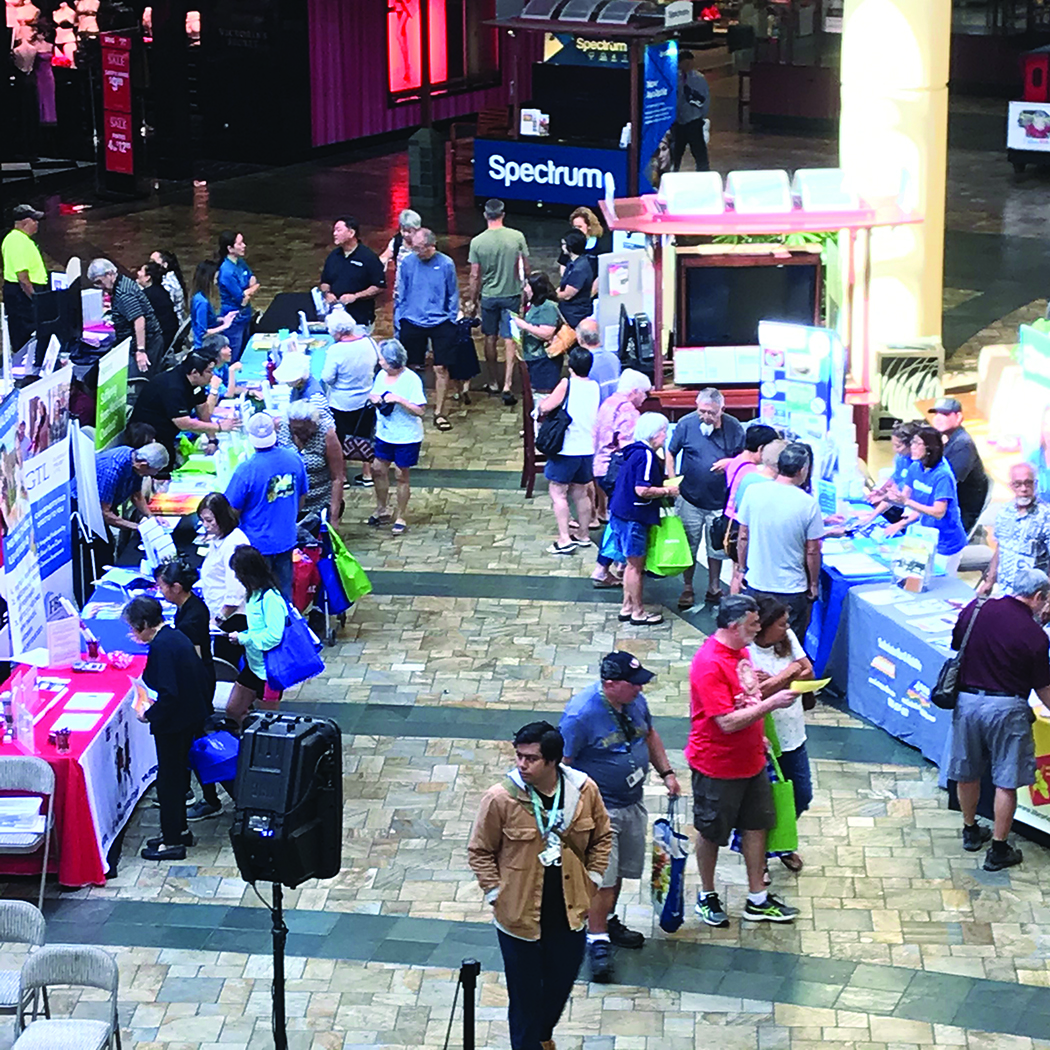
    The 2nd Annual Generations Magazine Senior Fair at Windward Mall was held on Saturday, Jan. 18. There were many visitors who received valuable information from 44 Generations Magazine partners as well as the opportunity to visit “stamp-card” participants who provided 24 door prizes worth $50 each and a Las Vegas trip from Vacations Hawaii. (Click on image for full size)


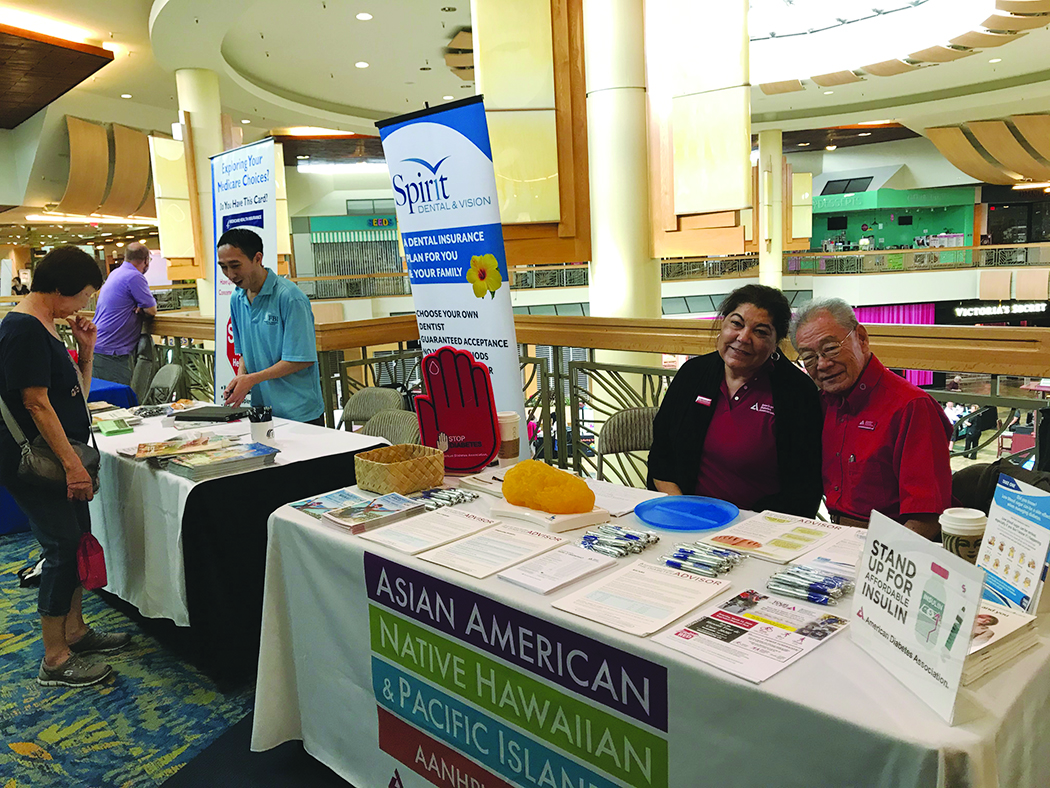
    Windward Mall provided a great venue, with tables also on the second floor overlooking Center Court.
    Windward Mall provided a great venue, with tables also on the second floor overlooking Center Court.
    Generations partners offered a wealth of information to seniors and their families.
    Generations partners offered a wealth of information to seniors and their families.
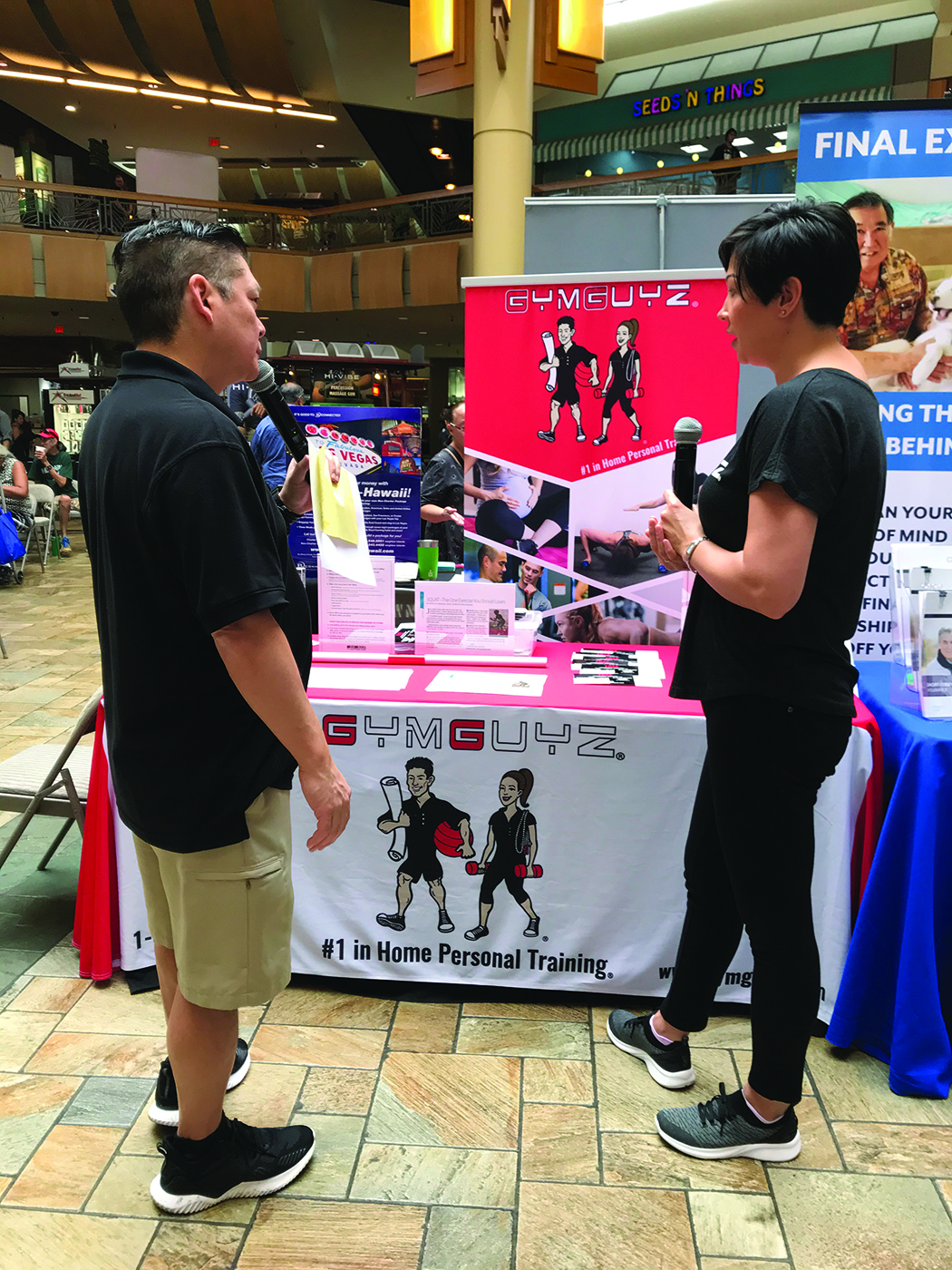
    KUMU radio DJ Devon Nekoba talks with GYMGUYZ Urban Honolulu.
    KUMU radio DJ Devon Nekoba talks with GYMGUYZ Urban Honolulu.
    Promotion of this event was supported by Windward Mall.
    Promotion of this event was supported by Windward Mall.
    Hawaii SHIP provided information about its free medicare program.
    Hawaii SHIP provided information about its free medicare program.

    The 2nd Annual Generations Magazine Senior Fair at Windward Mall was held on Saturday, Jan. 18. There were many visitors who received valuable information from 44 Generations Magazine partners as well as the opportunity to visit “stamp-card” participants who provided 24 door prizes worth $50 each and a Las Vegas trip from Vacations Hawaii.

  • US Commissaries Open to 3M More Vets

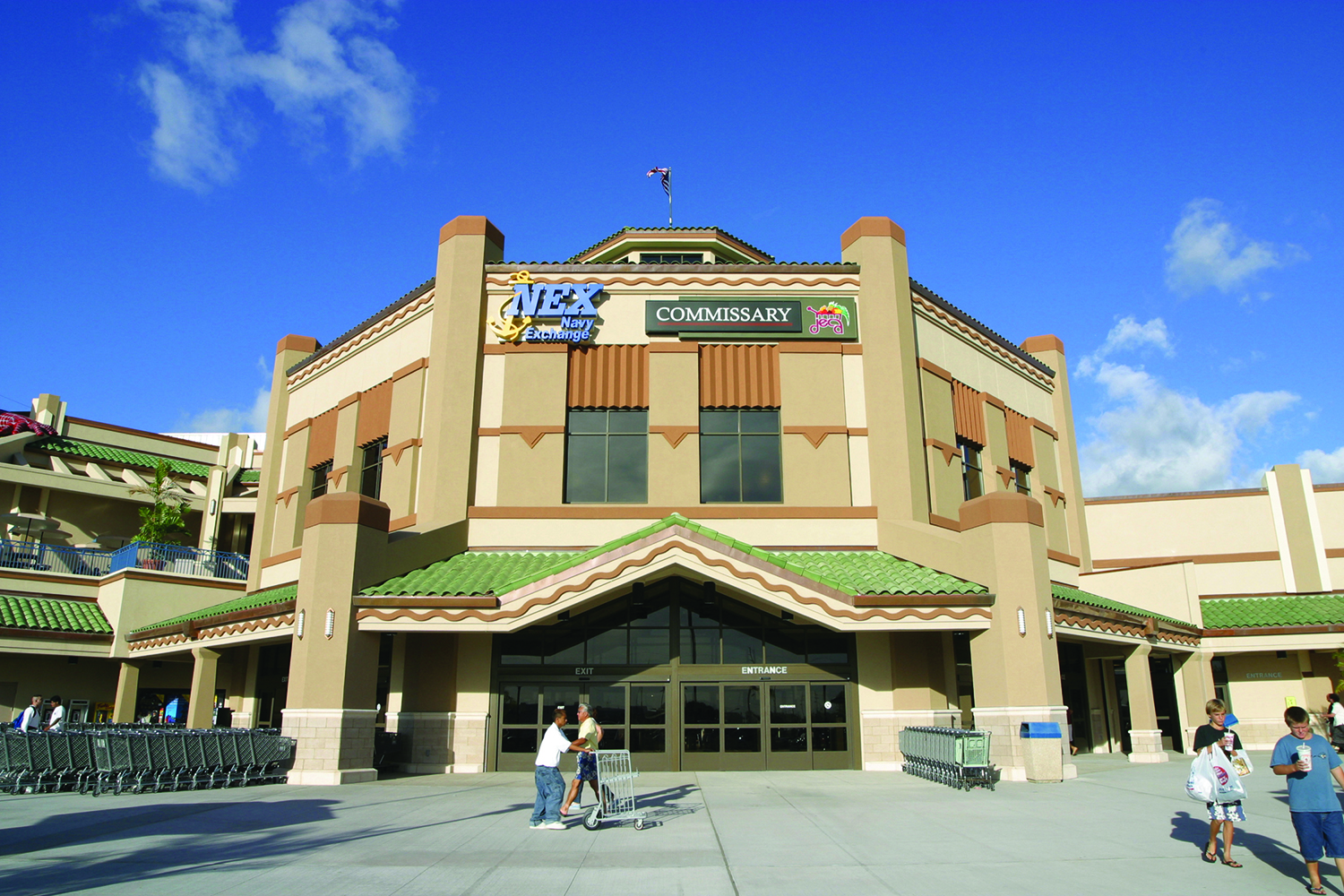
    Customers and employees move about in front of the new “Mall at Pearl Harbor.” The 350,000 square foot mall houses the largest Navy Exchange in the world, the largest Department of Defense Commissary in Hawaii, and was designed based on recommendations from customers through surveys and focus groups. U.S. Navy photo by Photographer's Mate 1st Class William R. Goodwin.

    On Jan. 1, 2020, 15,000-plus veterans in Hawai‘i — a “high cost area”— became eligible to shop in military stores. Commissaries have low prices and no state tax. Commissaries are like big box stores — some brands may be missing, but they carry almost everything you need. (Note that you will pay an additional fee if you use a credit card, so use cash if you can.)

    How do I receive this benefit?

    • Disabled and other eligible veterans can just use their veteran health card to get in. The commissaries scan your card and they are gearing up inventory for the influx of new customers.
    • Caregivers who are primary caregivers for a wounded/injured veteran and are registered with the Department of Veterans Affairs caregiver program. You will see a memo posted to VA.gov for use to access front gates.

    You will also have to show your driver’s license. In the near future, the VA will transition all to a caregivers ID card for base access.

    How do I receive a veteran health card?

    Call 1–877–222–8387 before 4 pm Hawai‘i time. They can access your DD 214 (discharge papers). You will then be asked numerous questions, but because you called them, the information is secure.

    If your records were destroyed in the 1973 fire in St. Louis, it will take longer. A form will be sent to you to have Archives assist.

    In person, you can visit either of two locations:

    • 459 Patterson Road, Spark Matsunaga VA Medical Center at Tripler. Call 800–214–1306 for information/directions/room number.
    • 91-2135 Ft. Weaver Road, Leeward Community Based Outpatient Clinic in room 501. 808–312–6800

    Enjoy all the commissary has to offer; shopping with Veteran Health Card is just one more opportunity your VA card gives you.

    On Jan. 1, 2020, 15,000-plus veterans in Hawai‘i — a “high cost area”— became eligible to shop in military stores. Commissaries have low prices and no state tax. Commissaries are like big box stores — some brands may be missing, but they carry almost everything you need. (Note that you will pay an additional fee…

  • Honorees Take a Stand Against Falls

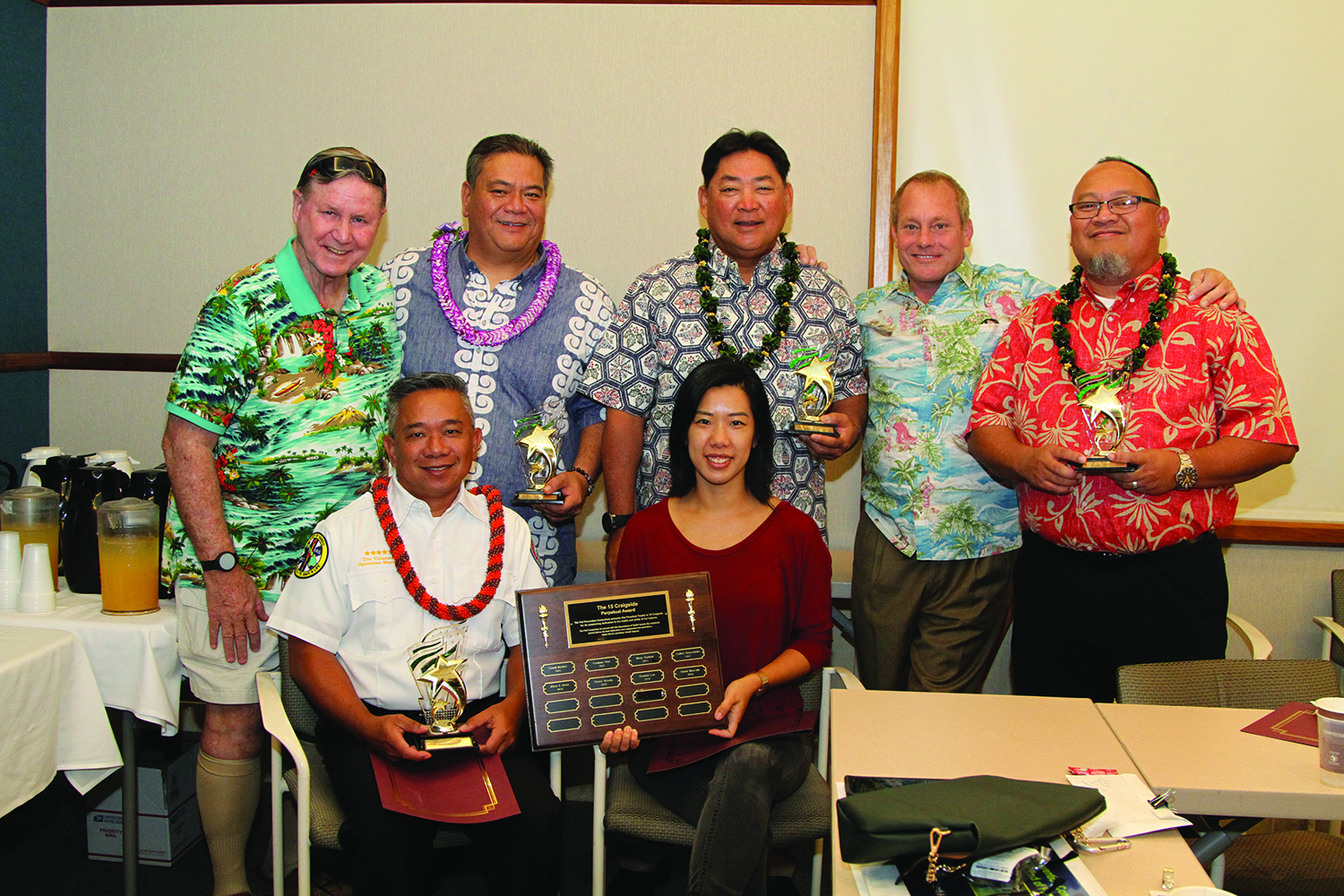
    (L–R, standing) Stan Michaels, Chris Pa, Percy Ihara, Michael Dowell, Peter Reyes, (seated) Tito Villanueva and Phoebe Hwang (DrPH, owner-operator, Omniworks).
    (L–R, standing) Stan Michaels, Chris Pa, Percy Ihara, Michael Dowell, Peter Reyes, (seated) Tito Villanueva and Phoebe Hwang (DrPH, owner-operator, Omniworks).

    More than 9,950 injuries from falls occur annually among seniors statewide. Each year, the Hawai‘i Fall Prevention Consortium (HFPC) identifies individuals with passionate dedication to reducing the number and severity of injuries from falls among seniors and honors their efforts to promote fall prevention initiatives in the state.

    The HFPC presented its Annual Fall Prevention Awards for Outstanding Community Service at the end of 2019 to: Chris Pa, activities director at Leeward YMCA; Peter Reyes, program director at Catholic Charities Hawai‘i (CCH); Percy Ihara, owner/publisher of Generations Magazine (GM); and Tito Villanueva, Kauai Operations Manager for American Medical Response (AMR).

    Chris Pa’s leadership has enabled many kūpuna to actively attend tai chi classes and events at Leeward YMCA. “Chris is truly a community treasure,” said Ileina Ferrier, master trainer for the Tai Chi for Health Institute.

    Peter Reyes became a master trainer for Matter of Balance at CCH. “Peter is a great trainer who truly believes in the importance of reducing the fear of falling and of preventing falls,” said Diane Terada, division administrator at CHC Community & Senior Services.

    Percy Ihara is one of the great forces in senior well-being and understanding through GM, said Michael Dowell, chair of the HFPC and owner of Ohana Stairlifts. “Percy is amazing in his continual energy and drive to improve the lives of all of Hawai‘i’s kūpuna.”

    Tito Villanueva is the inspiration and driving force behind the growth and success of Kauai’s Home Safety Program for Seniors and has also provided mentoring and support for other programs as the AMR operations manager. “His dedication is astounding,” said Stanley Michaels, senior fall prevention coordinator at the DOH.

    In addition, Phoebe Hwang, DrPH, was honored for her outstanding contract work for the HFPC. “Phoebe is truly amazing,” said Michaels.


    EMERGENCY MEDICAL SERVICES & INJURY PREVENTION PROGRAM
    808-733-9202 | stanley.michaels@doh.hawaii.gov
    www.health.hawaii.gov/injuryprevention

    A complete summary of the fall prevention campaign, special videos for seniors and/or their care-givers, and a recap of accomplishments is online at www.nogethurt.hawaii.gov.

    More than 9,950 injuries from falls occur annually among seniors statewide. Each year, the Hawai‘i Fall Prevention Consortium (HFPC) identifies individuals with passionate dedication to reducing the number and severity of injuries from falls among seniors and honors their efforts to promote fall prevention initiatives in the state.

  • 2020 Census Forms Will Be Available Online

    Every 10 years, the U.S. government embarks on the herculean task of counting every person in the country. An accurate decennial census count is important in order to allocate more than $675 billion in federal  funds annually for community programs and services, such as healthcare services for the elderly, education programs, housing and community development, and job training. For example, in federal Fiscal Year 2016, Hawai‘i received over $3.6 billion from 55 different federal programs, including nearly $1.5 billion in Medicaid funding.

    Starting in March 2020, people will receive postcards alerting them that the census will begin on April 1, Census Day. Unlike past census events, the 2020 census may be completed online. Between March 12 and 20, the majority of people will receive a letter advising them that they may complete the census survey online. However, about 20 to 25 percent of the population will still receive a paper survey due to demographic characteristics and internet connectivity in their area.

    The 2020 census general questions will be:

    How many people were living or staying in this house, apartment or mobile home on April 1, 2020?

    Were there any additional people staying here on April 1, 2020 that you did not include in Question 1?

    Is this a house, apartment or mobile home?

    What is your telephone number?

    Please provide information for each person living here. If there is someone living here who pays the rent or owns this residence, start by listing him or her as Person 1. If the owner or the person who pays the rent does not live here, start by listing any adult living here as Person 1.

      • Name, Sex, Age
      • Is Person 1 of Hispanic, Latino, or Spanish origin?
      • What is Person 1’s race?

    It will not contain a citizenship question.

    If you are not able to complete the census by April 1, you will get several reminder mailings through April. Thereafter, through August, census enumerators will conduct door-todoor interviews to collect information from those who have not completed the questionnaire.


    COMMON CAUSE HAWAII
    P.O. Box 2240, Honoulu, HI 96804
    808-275-6275 | www.commoncause.org

    The decennial census is a huge endeavor to ensure a fair, accurate and complete count. The U.S. Census Bureau is looking to hire enumerators and other positions throughout Hawai‘i. Consider being a census worker. Applicants must: 1) have a valid email address; 2) be a U.S. citizen; 3) be 18 years of age or older. Apply now at www.2020census.gov/jobs.

    Every 10 years, the U.S. government embarks on the herculean task of counting every person in the country. An accurate decennial census count is important in order to allocate more than $675 billion in federal  funds annually for community programs and services, such as healthcare services for the elderly, education programs, housing and community development,…

  • Elder Abuse: Senior Advocates & Your Rights

    Senior advocates understand personal rights, elder abuse, consumer rights, the legislative process and how programs are funded. They also see that agencies correctly implement laws and draw attention to the ones needing changes. This article focuses on personal rights and elder abuse law. Effective advocates begin by reading the laws and understanding what rights they protect. Hawai‘i law defines six kinds of abuse: physical, psychological, sexual, caregiver neglect, financial exploitation and self-neglect.

    • “Capacity” means the ability to understand and appreciate the nature and consequences of making decisions concerning one’s person or to communicate these decisions.
    • “Caregiver” means any person who has knowingly and willingly assumed the care, supervision or physical control of, or who has a legal or contractual duty to care for the health, safety and welfare of a vulnerable adult.
    • Caregiver neglect” means the failure of a caregiver to exercise that degree of care for a vulnerable adult that a reasonable person with the responsibility of a caregiver would exercise within the scope of assumed, legal or contractual duties:

    (1) Assist with personal hygiene

    (2) Protect the vulnerable adult from abandonment

    (3) Provide, in a timely manner, necessary food, shelter or clothing

    (4) Provide, in a timely manner, necessary healthcare, access to healthcare, medication, psychological and physical care, or supervision

    (5) Protect the vulnerable adult from dangerous, harmful or detrimental drugs, except those provided to the vulnerable adult pursuant to the direction or prescription of a practitioner

    (6) Protect the vulnerable adult from health and safety hazards

    (7) Protect the vulnerable adult from abuse by third parties

    • “Financial exploitation” means the wrongful taking, withholding, appropriation or use of a vulnerable adult’s money, real property or personal property, including but not limited to:

    (1) The breach of a fiduciary duty, such as the misuse of a power of attorney or guardianship privileges, resulting in the unauthorized appropriation, sale, or transfer of property

    (2) The unauthorized taking of personal assets

    (3) The misappropriation or misuse of moneys belonging to the vulnerable adult

    (4) Failure to effectively use a vulnerable adult’s income and assets for the necessities required for his or her support and maintenance It’s the government’s job to ensure that these kinds of abuse do not happen.


    KOKUA COUNCIL
    20 S. Vineyard Blvd., Honolulu, HI 96813
    facebook.com/KokuaCouncil/

    Senior advocates understand personal rights, elder abuse, consumer rights, the legislative process and how programs are funded. They also see that agencies correctly implement laws and draw attention to the ones needing changes. This article focuses on personal rights and elder abuse law.