Category: Programs & Services

  • What is a Case Manager?

    Most travelers will tell you that having a guide when exploring new places can be very helpful. A case manager can be that guide as we begin to explore the options available to us as we age.

    Case management is a holistic, comprehensive, multi-disciplinary approach to the planning and delivery of care and services to meet the needs of individuals in a cost-effective manner.

    Currently in Hawai‘i, there are no regulations or licensure regarding case managers. Social workers provide case management under their licensure’s scope of service. Social workers, nurses and others can be certified through a number of certifying organizations such as the Commission for Case Manager Certification®, the American Case Management Association, Case Management Society of America and the American Nurses Credentialing Center.

    Case management incorporates assessment; identification of needs; care and service plan development; advocacy; coordination and provision of necessary services; and referral linkages. The process includes monitoring, evaluating and documenting care and services. Participation by and education of the individual and/or representative is central to the provision of individualized case management services.

    Some case managers focus on a particular population such as mental health or dialysis, while others are more general. Case managers can work alone or as part of an organization. Some provide only short term services. This is usually determined by the service plan and the client is discharged upon completion of the plan.

    Other case managers provide ongoing case management. They are available as needed over a long period of time, often monitoring for potential problems or providing a safety net should a crisis arise. It is important to ask questions in order to be sure you are working with someone who can assist you.

    It is important that you find a case manager that shares your philosophy and needs. The assessment and service plan are the most important tools a case manager uses. The assessment helps identify resources and needs so that together the case manager and individual can develop the map to explore the options available. Together, the exploration of this new territory can be less
    confusing and more positive.

    Some questions include:

    • How many years have you been providing case management services?
    • What is your certification or training? Are you licensed in your profession?
    • Do you belong to any professional organizations?
    • Are references available upon request?
    • Tell me about the process you follow.
    • Do you provide ongoing case management or are your services time limited?
    • Are you knowledgeable about dementia and associated care needs?
    • What is your philosophy on aging in place or need for placement?
    • Are you available for emergencies? Can I reach you easily?
    • How much do you charge for services? Will you provide me with a detailed list of charges?

    Most travelers will tell you that having a guide when exploring new places can be very helpful. A case manager can be that guide as we begin to explore the options available to us as we age. Case management is a holistic, comprehensive, multi-disciplinary approach to the planning and delivery of care and services to…

  • Good News for Homeowners

    The City & County of Honolulu offers a home rehabilitation loan program to owner-occupant homeowners on Oahu, whose incomes do not exceed 80% of the area median income. The loans can be used to repair and correct deteriorated and hazardous conditions on the property, such as damage caused by termites, leaky roof, faulty electrical wiring and plumbing. Loans may cover accessibility improvements to assist family members with disabilities and the installation of solar water heating and photovoltaic electric generation systems.

    The City is aware many homeowners are unfamiliar with monitoring construction and therefore assists its clients by having inspectors oversee the project to ensure the work meets industry standard levels of quality and workmanship. All work on the project must be performed by a licensed contractor selected by the homeowner.

    The loan limit is $75,000; however, loans over $75,000 will be considered on a case-by-case basis. The loan amount will also be subject to the available equity value in the property. Loans are currently offered with a zero percent interest rate and are based on a 15 or 20 year maturity. The City is able to taylor repayments to fit homeowners with a limited budget with a larger final \payment due at the end of the loan term. Qualified homeowner’s income levels are:

    Household Member(s) / 2012 Income Limit

    • 1 / 57700
    • 2 / 65950
    • 3 / 74200
    • 4 / 82400

    For information and an application, homeowners may call the Kapolei office at 808-768-3240 or the Honolulu office at 808-768-7076.

    The City & County of Honolulu offers a home rehabilitation loan program to owner-occupant homeowners on Oahu, whose incomes do not exceed 80% of the area median income. The loans can be used to repair and correct deteriorated and hazardous conditions on the property, such as damage caused by termites, leaky roof, faulty electrical wiring…

  • Social Security: Report Your Name Change

    If you need to change your name due to marriage, divorce, or any other reason, you will want to report the change to Social Security.

    There are several reasons to report the change. One, is that the IRS and Social Security match computer records. If your name on your Social Security number and tax return do not match, it could delay the processing of your return as well as any tax refund you might be due.

    It is important to make sure your Social Security records are up-to-date because your potential benefits are based almost entirely on the earnings maintained for you. If your employer reports earnings to the government under your new name, and your record still shows your old name, those earnings may not get credited to your Social Security earnings record. Missing earnings can lead to lower future Social Security benefits.

    To change your name in Social Security’s records, you must apply for a new Social Security card. To apply, go to www.socialsecurity.gov/ssnumber/ and print out the form “Application Form SS-5”. That’s also the form you need if you want to apply for a replacement card. It also tells you what evidence you will need to submit.

    Mail or take in your completed form to your local Social Security office with proper documentation. They must be originals or certified copies that clearly identifies you with your date and place of birth. The application includes information on what types of identity and documentation are needed for specific cases, and what sorts of documents can be accepted.

    The application process is easy and is well described, along with other related information, at www.socialsecurity.gov/ssnumber.

    Social Security Administration - Generations Magazine - June-July 2013

    If you need to change your name due to marriage, divorce, or any other reason, you will want to report the change to Social Security. There are several reasons to report the change. One, is that the IRS and Social Security match computer records. If your name on your Social Security number and tax return…

  • Benefits Enrollment Center: Can Help You

    EAD Meeting - Generations Magazine - February-March 2013The Elderly Affairs Division (EAD) was recently awarded one of 20 Benefits Enrollment Center (BEC) Grants nationwide from the National Council on Aging. The BEC grant supports the development of person-centered, community-based system to provide outreach, and to help seniors and younger adults with disabilities with limited means to enroll in public and private programs that help pay for prescription drugs, medical care, food and utilities. These programs include:


    • Low Income Subsidy for Medicare Part D
    • Medicare Savings Program
    • Medicaid
    • Supplemental Nutrition Assistance Program
    • Low Income Home Energy Assistance Program

    EAD is an active participant in identifying and enrolling eligible persons into these programs. While most individuals are already enrolled, there are still many who do not know about these programs or may need assistance in applying.

    For more information, please call the Senior Helpline at 808-768-7700.

    The Elderly Affairs Division (EAD) was recently awarded one of 20 Benefits Enrollment Center (BEC) Grants nationwide from the National Council on Aging. The BEC grant supports the development of person-centered, community-based system to provide outreach, and to help seniors and younger adults with disabilities with limited means to enroll in public and private programs…

  • AARP: Long-Term Care Awareness

    AARP Hawai’i’s Top Legislative Priority in 2013

    In a state with a high cost of living — where one in five residents will be 65 or older by 2032 — island residents are worried about paying for long-term care. In Hawai‘i, costs range from $17,500 for one year of adult day care to about $126,000 for private nursing home care — more than twice the median household income.

    In a recent AARP survey, most members expressed little confidence they could afford the cost of nursing home care, and half doubted they could even afford less expensive care in their own homes. That could mean additional pressure on family caregivers in the future, the number of whom is projected to decline as the number of residents requiring some form of care increases over the next 20 years.

    To address these concerns, AARP Hawai‘i is making long-term care a priority issue in the 2013 legislative session. Our goals include:

    • Support for Kupuna Care — AARP supports an appropriation of $9 million for Kupuna Care from the base budget. Kupuna Care is a state-funded program designed to meet the needs of frail older adults who cannot live at home without help from family or formal services.
    • Support for the Aging and Disability Resource Center (ADRC) — AARP supports an appropriation of $1.8 million for continued implementation and state-wide expansion of ADRCs. ADRCs are designed to help eliminate confusion by providing a “one-stop shop” for residents looking for long-term care services. A recent AARP report ranked Hawai‘i 41st in the nation in the ability to access long-term care through an ADRC.
    • Investigate the Cost of a Public Long-Term Care Insurance Program — AARP supports the study of the cost and feasibility of a limited mandatory public long-term care program, as recommended by the Hawai‘i Long-Term Care Commission. The study would identify eligibility requirements, benefit amounts, benefit period, and premium payments.

    To find out more about the long-term care challenges facing Hawai‘i, or to get involved as a volunteer advocate, call 808-545-6005.

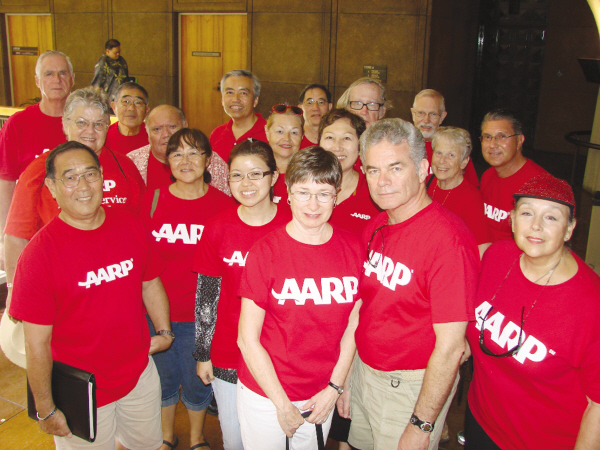
    AARP Pension Tax Posse - Generations Magazine - February-March 2013
    Pension Tax Posse II

    AARP Hawai’i’s Top Legislative Priority in 2013 In a state with a high cost of living — where one in five residents will be 65 or older by 2032 — island residents are worried about paying for long-term care. In Hawai‘i, costs range from $17,500 for one year of adult day care to about $126,000 for private nursing home…

  • Insecure? Secure It . . . Online

    Question: I’m doing more things online, including shopping and paying bills. What are some things I can do at www.socialsecurity.gov?

    Answer: Perhaps the most important thing you can do is to take a look at your Social Security Statement, which allows you to check your earnings record and get an estimate of your future benefits. Revisit your statement annually. If you’re ready to apply for benefits, you can do that online as well. Applying for Social Security retirement benefits online can take as little as 15 minutes. Once you’ve submitted your electronic applications, in most cases, you’re done! Also online, you can find more than 100 publications with information about Social Security and its programs. You also can estimate your future retirement benefit using our Retirement Estimator, which allows you to get personalized estimates based on different retirement ages and scenarios.

    Question: I usually get my benefit payment on the third of the month. But what if the third falls on a Saturday, Sunday, or holiday? Will my payment be late?

    Answer: Just the opposite. Your payment should arrive early. For example, if you usually get your payment on the third of a month, but it falls on a Saturday like it does this November, we will make payments on Friday, November 2. Find more information on payment schedules for 2012 at www.socialsecurity.gov/pubs/calendar.htm. If you do ever miss a payment, be sure to wait three days before calling to report it missing. Of course, if you get your payments electronically, you’ll get your payment without having to wait for the mail. Find out more about electronic payments at www.godirect.org.

    Social Security Administration - Generations Magazine - June-July 2013

    Question: I’m doing more things online, including shopping and paying bills. What are some things I can do at www.socialsecurity.gov? Answer: Perhaps the most important thing you can do is to take a look at your Social Security Statement, which allows you to check your earnings record and get an estimate of your future benefits.…

  • AARP: Voter Resources

    Straight Talk: Social Security & Medicare

    How long will Hawai‘i residents be able to work as they age? How much should seniors pay for health care? What will future retirees need, and what as a nation can we afford? These are some of the issues at stake this election season as the future of Social Security and Medicare becomes the focus of campaign ads on TV, radio, in print and online.

    But confusion is running high among Hawai‘i residents, as are concerns over the future of programs vital to many seniors and their families. In response, AARP Hawai‘i is offering information about the challenges facing Social Security and Medicare so that everyone can have a voice in the debate over their future.

    “You’ve Earned a Say” (www.earnedasay.org) offers Hawai‘I residents a one-stop resource with straight talk about key election issues. The website outlines the positions of candidates in the presidential, U.S. Senate and House races — in their own words — on Social Security, Medicare and financial security. The site also provides the views of Hawai‘i candidates for the state legislature on issues related to health care, long-term care, the state budget and tax reform — areas of particular concern to older voters heading to the polls in 2012.

    AARP You've Earned a Say - Generations Magazine - October-November 2012

    The “You’ve Earned a Say” website provides voters with balanced information about Medicare and Social Security proposals that are being debated on the campaign trail— the pros and cons— so they can have a voice in the future of these program. In addition, “You’ve Earned a Say” events are being scheduled at locations across the state.

    AARP is a nonpartisan organization for people age 50 and older with nearly 150,000 members in Hawai‘i. It does not support or oppose political candidates, nor contribute money to political action committees, campaigns or super PACs. AARP champions access to affordable, quality health care for all generations, provides the tools needed to save for retirement, and serves as a reliable information source on issues critical to older Americans.

    For details and information on “You’ve Earned a Say” events, please call 808-545-6005 or visit www.earnedasay.org.

    Straight Talk: Social Security & Medicare How long will Hawai‘i residents be able to work as they age? How much should seniors pay for health care? What will future retirees need, and what as a nation can we afford? These are some of the issues at stake this election season as the future of Social…

  • Kokua Council

    Kokua Council Logo - Generations Magazine - October-November 2012The Kokua Council is one of Hawai‘i’s oldest advocacy groups. Kokua Council empowers seniors and other concerned citizens to be effective advocates in shaping the future and well-being of our community. The Council encourages those needing help in advocating for themselves.

    Kokua Council embraces diversity and extends a special invitation to any senior or intergenerational-minded person interested in advocating for these important issues in Hawai‘i. Its monthly meetings include performances by community groups, visits by political candidates and discussions on local and national issues.

    • Kokua Council Speaker - Generations Magazine - October-November 2012Annual membership is $10.
    • The public is welcome to join monthly meetings:
    • Date: The fourth Monday of each month
    • Time: 11:30 a.m. to 1 p.m.
    • Location: Miyama Main Hall, Harris United Methodist Church at Nu‘uanu Ave. and South Vineyard Blvd. There is ample parking.
    • Lunch: Optional, with a donation of $5.

    For more information, please call President of Kokua Council Larry Geller at (808) 540-1928 or visit KokuaCouncil.org.

    Kokua Council Banner - Generations Magazine - October-November 2012

    The Kokua Council is one of Hawai‘i’s oldest advocacy groups. Kokua Council empowers seniors and other concerned citizens to be effective advocates in shaping the future and well-being of our community. The Council encourages those needing help in advocating for themselves. Kokua Council embraces diversity and extends a special invitation to any senior or intergenerational-minded…

  • Understanding Medicare & Medicaid

    Navigating the health care system can be challenging, but for more than 9 million people who are eligible for both Medicare and Medicaid, it can be especially difficult.

    Medicare and Medicaid have similar names but they are very different programs. People who are eligible for both — known as dual eligible — must understand the requirements and coverage details of each program in order to access the health care services that are available to them. This is especially important for the 60 percent of dual eligibles who suffer from multiple chronic conditions, such as diabetes and heart disease. Getting the health care coverage they need to manage their conditions is critical to their well-being.

    Here are a few resources to help dual eligible beneficiaries and their caregivers learn about health care options:

    For more Medicare information, contact 1-800-MEDICARE (TTY users should call 1-877-486-2048, 24 hours a day, 7 days a week) or visit Medicare.gov

    For simple, easy-to-understand Medicare information, visit UnitedHealthcare’s site at MedicareMadeClear.com

    For more information about Hawai‘i’s Medicaid program, call 1-800-316-8005

    For free counseling and support on both Medicaid and Medicare, contact Hawai‘i’s State Health Insurance Assistance Program (SHIP) at 1-888-875-9229.

    _______________________________

    Gary Asato, UnitedHealthcare Medicare Sales Director; David Heywood, Vice President.

    UnitedHealthcare (Hawai‘i) Medicare Advantage and QUEST (Medicaid) main office: 808-536-8531

    Navigating the health care system can be challenging, but for more than 9 million people who are eligible for both Medicare and Medicaid, it can be especially difficult. Medicare and Medicaid have similar names but they are very different programs. People who are eligible for both — known as dual eligible — must understand the…

  • Don’t Fall Behind!

    It is that magical time of the year. The pumpkins are at the open markets, the air is a bit cooler and it’s time for your Medicare Check-Up. You don’t need to see your doctor for this checkup, just sit down and reflect back on the past year.

    Questions to ask yourself:

    • Have my medical needs changed?
    • Am I taking more medicine than I did in 2012?
    • Have I experienced an ambulance ride, emergency room or hospital stay?
    • Am I in the best plan for my circumstances?
    • Do I have the coverage that I need and is it affordable?
    • Is there anything new in the market?
    • Do I need to change plans?

    Open Enrollment begins October 15, 2012 and ends December 7, 2012.

    This is an opportunity to change, drop or add a plan that will begin on January 1, 2013. Plans may begin marketing their 2013 products on October 1, 2012, and at that time we will know whether or not plans will leave Hawaii or if new plans will be available.

    Some changes to expect with Medicare Part D – the drug plan, include:

    • Those who reach the coverage gap will continue to see discounts on certain drugs. While in the gap, patients will receive a 21% discount on all generics and a 52.5% discount on all brand-name drugs covered by the plan. These discounts are automatically applied at the pharmacy.
    • Starting in 2013, Part D plans are allowed to cover benzodiazepines and certain barbiturates, such as those used in the treatment of epilepsy, cancer or a chronic mental disorder. With barbiturates, plans may require “prior authorization” (meaning the plan will not provide coverage until the doctor submits a request to the plan and receives approval) to verify treatment. Previously, “benzos” and “barbs” were previously excluded drugs from Part D coverage lists.

    Enrollment changes for Medicare Health and Drug plans are as follows:

    • New special enrollment period for People in Certain Low-Performing Plans: In an effort to promote better plan quality and better choice, Medicare will be sending notices to those who are in a Part D drug plan or Medicare Advantage health plan that fail to get at least a 3-star quality rating for three straight years. The notice lets them know about a Special Enrollment Period to enroll in a 4- or 5-star plan. For more information, visit www.medicare.gov or call 1-800-633-4227 after October 15, 2012.
    • Low-Performing Plans and the Medicare Plan Finder: In order to promote high-performing plans, Medicare is disabling the online enrollment feature in the Medicare Plan Finder (MPF) tool for low-performing plans (3 or fewer stars for three consecutive years). These plans will have a low-performing icon, along with a message warning consumers of the plan’s poorly rated performance. Individuals still interested in enrolling will get another message letting them know they will need to call the plan directly to enroll.

    Now, the great news … you are not alone and we will not let you fall behind. The Sage PLUS Program/Hawaii SHIP is the Medicare Counseling Program for the State of Hawaii. Our certified volunteers can walk you through the Medicare Check-Up and assist you in understanding your options. Contact SHIP at 1-888-875-9229 (toll free). Leave your name, phone number and your zip code so that we can connect you with a certified volunteer in your area. Or, e-mail help@hawaiiship.org or visit www.hawaiiship.org.

    Sage PLUS - Generations Magazine - June-July 2013

    It is that magical time of the year. The pumpkins are at the open markets, the air is a bit cooler and it’s time for your Medicare Check-Up. You don’t need to see your doctor for this checkup, just sit down and reflect back on the past year. Questions to ask yourself: Have my medical…

  • Social Security Goes for the Gold!

    Millions of Americans are following the 2012 Summer Olympic Games in London. And just months before, Michael J. Astrue, Commissioner of Social Security, announced that in less than two months’ time, 1 million people have gone online, created a My Social Security account and viewed their Social Security Statement.

    If there was an Olympics for customer services available online, the services at www.socialsecurity.gov would be the Phelps of that competition. Over the years, Social Security’s online services have been rated the best in government and in all other industries.

    “The online Social Security Statement is a huge success,” Commissioner Astrue said. “The online Statement meets our commitment to provide Americans with an easy, efficient process to obtain an estimate of their potential Social Security benefits. I recommend that everyone get in the habit of checking their online Statement each year, around their birthday, for example.”

    The online Statement provides estimates for retirement, disability and survivors benefits. It also provides workers as young as 18 a convenient year-round way to determine whether their earnings are accurately posted to their Social Security records, which was not possible when the agency mailed paper Statements only to those 25 and older.

    On May 1, Social Security unveiled this new addition to its popular suite of electronic services at www.socialsecurity.gov/mystatement, which allows people to access their Social Security earnings and benefit information securely and conveniently.

    To access your online Statement, you must be at least 18 years old, have a Social Security number, have a valid email address and have a U.S. mailing address.

    According to the American Customer Satisfaction Index (ACSI), users are giving the online Statement a score of 89 — making it competitive with Social Security’s other top-rated, best-in-government online services, such as the Retirement Estimator and online retirement application. The ACSI tracks trends in customer’s satisfaction and provides valuable benchmarking insights for companies and government agencies.

    Whether you want to plan for or apply for your retirement, look into other benefits or learn about the history of the program, you can take a break from the Summer Olympics, visit the Olympian of online services at www.socialsecurity.gov.

    Social Security Administration - Generations Magazine - June-July 2013

    Millions of Americans are following the 2012 Summer Olympic Games in London. And just months before, Michael J. Astrue, Commissioner of Social Security, announced that in less than two months’ time, 1 million people have gone online, created a My Social Security account and viewed their Social Security Statement. If there was an Olympics for…

  • Medicare: What’s What and Who Pays For It?

    We at Sage PLUS Program/Hawaii SHIP (State Health Insurance Assistance Program) often get calls on our hotline from individuals who are confused about “who pays for what,” especially when it comes to care facilities (nursing homes, care homes, assisted living facilities and foster family homes). Let’s take a look at each care facility option, and the payment resources.

    Long-term care is often thought of to refer to all kinds of assistance to the the elderly or the disabled, whether that care is given in a patient’s home, a community care home or nursing home. This is a common mistake.

    Long-term care includes a wide range of support services for patients with a degenerative condition, prolonged illness or cognitive disorder. Also known as “custodial care,” long-term care primarily involves assistance with the activities of daily living (walking, personal hygiene, dressing, eating, etc.) or supervision of someone who is cognitively impaired.

    Common Payment Sources:

    • Medicare (federal health insurance for those 65 years and older or with certain disabilities who qualify through Social Security Administration). Medicare does not pay for “custodial” care.
    • Medicare may pay for “Skilled Nursing Facility Care”- the individual has to meet the guidelines for coverage. Medicare will only cover inpatient care in a certified Medicare Facility.

    There is also a “home health care” benefit that may cover for a short period of time, again if the person meets the guidelines for coverage. For more information you can check the Medicare & You handbook, go to www.medicare.gov or call the Hawaii SHIP.

    Medicaid (Hawaii’s Medical Assistance Program)

    Individuals qualify based on income and assets. They have a program for long-term care and also for medical coverage (coverage for someone living at home who needs help paying for doctor’s visits, x-rays, lab tests). In Hawaii the program
    is administered by the Department of Human Services. Programs are currently provided by QUEST Expanded Access Plans.

    If a person qualifies for long-term coverage, Medicaid may pay for a skilled nursing facility, community care home and foster family home. In some cases if the person chooses to stay at home Medicaid may pay for services to be delivered there.

    TriCare for Life (military benefit for those with 20 years of service or other eligibility).

    May pay for skilled nursing care in a Medicare certified facility or home health care, but it does not pay for custodial care.

    Veteran’s Administration Benefits (VA)

    VA may provide coverage in certain approved facilities. You may have to qualify to be eligible for these benefits. Call your local VA office for more information.

    Long-Term Care Insurance

    Depending on the plan purchased, insurance may provide coverage in skilled nursing facilities, assisted living facilities, foster and community care facilities or for services brought into the person’s home. Each plan is very individual, and coverage and price vary.

    For more information on coverage for individuals with Medicare, call the Hawaii SHIP/Sage PLUS Program at 1-888-875-9229 or go to the National Clearinghouse for Long Term Care Information at www.longtermcare.gov.

    Sage PLUS - Generations Magazine - June-July 2013

    We at Sage PLUS Program/Hawaii SHIP (State Health Insurance Assistance Program) often get calls on our hotline from individuals who are confused about “who pays for what,” especially when it comes to care facilities (nursing homes, care homes, assisted living facilities and foster family homes). Let’s take a look at each care facility option, and…