Category: Programs & Services

  • ADRC Hawaii : Aging and Disability Resource Center

    Access for Information on Aging, Health and Disability Resources

    The Hawaii Aging and Disability Resource Center (ADRC) includes a website and statewide single access phone number designed to make comprehensive information on aging, health and disability services readily available to seniors and disabled adults, as well as their caregivers. The State Executive Office on Aging has partnered with the Hawaii County Office of Aging, City and County of Honolulu Elderly Affairs Division, Maui County Office on Aging, County of Kauai Agency on Elderly Affairs, Hawaii Centers for Independent Living and the State Disability and Communication Access Board to establish the HawaiiADRC.org website and phone line at 643-2372 to offer comprehensive information to residents on every island.

    Made possible through a grant from the U.S. Department of Health and Human Services, Administration on Aging and the Centers for Medicare and Medicaid Services, plus state and county funds, the ADRC can simplify the way Hawaii’s seniors, disabled adults and caregivers learn about and access information and services to improve their daily lives.

    “These days many people are caring for their parents or loved ones while juggling work and family. We want to make a difference for Hawaii’s residents,” said Noemi Pendleton, Director of the State Executive Office on Aging. “Seniors, other adults with disabilities and those taking care of them are often frustrated by confusion and lack of information when they are making decisions about healthcare or other quality of life issues. Hawaii ADRC is unique in that it provides a central source for information and resources that can be trusted.”

    The site connects each visitor to the resources specific to the county of their interest. Perhaps someone is inquiring about services in their own community, or needs help for a loved one who lives on another island. The ADRC provides a variety of resources such as frequently asked questions, “Browse our Library” pages, a list of agencies that can help, a community events calendar, guidance on how to apply for several kinds of assistance that may benefit seniors, adults with disabilities and their family caregivers, and more.

    The statewide access phone line at 643-ADRC connects each caller to the ADRC’s operating agency in their own county. The TTY line is 643-0889.


    For more information on the Hawaii Aging and Disability Resource Center call 643-ADRC (643-2372) or go to www.HawaiiADRC.org.

    The Hawaii Aging and Disability Resource Center (ADRC) includes a website and statewide single access phone number designed to make comprehensive information on aging, health and disability services readily available to seniors and disabled adults, as well as their caregivers.

  • Elder Affairs Division, City and County of Honolulu

    The Elderly Affairs Division (EAD) is the designated Area Agency on Aging (AAA) and serves as the City and County of Honolulu’s focal point for older adults. The agency is part of a national network of 56 state units on aging created by the Older Americans Act of 1965. Each of Hawaii’s counties has a designated area agency on aging. All four agencies work closely with the State Executive Office on Aging, the State’s link to the federal Administration on Aging in the U.S Department of Health and Human Services.

    Serving Oahu, EAD’s mission is to develop systems of home and community based services that assist older persons in leading independent, meaningful, and dignified lives. These services enable older persons, who may be frail or have limited economic or social support systems, to live independently in the community for as long as possible. The division carries out a number of functions to accomplish its mission. These activities include:

    • Planning
    • Service development
    • Community education
    • Advocacy, coordination
    • Contracting for gap filling services
    • Senior volunteer recognition

    The Elderly Affairs Division provides a wide range of services to adults 60 years and older and to family caregivers. Delivery of services is made possible by leveraging federal, state, county, foundation and other private funds, and participant and volunteer contributions. Partnerships, utilization of local resources, and bottoms-up planning processes are important components of program development.

    EAD works in close collaboration with the State Executive Office on Aging and county Area Agencies on Aging in the development of strategies to implement the Administration on Aging’s national initiative to establish Aging and Disability Resource Centers in every state. EAD recently launched its “virtual” Aging and Disability Resource Center in the form of a website, allowing further expansion of information and assistance services to older adults, persons with disabilities 18 years and older and their caregivers.

    The ability to access information and services for older adults continues to be extremely critical as more family caregivers of all ages are called upon to provide care, both locally and long-distance.

    Kupuna Care Program

    The Kupuna Care Program, a collaboration of the State Executive Office on Aging and the county Area Agencies on Aging, provides assistance to frail older adults who cannot live at home without adequate help from family and/or formal services. Seven state-funded long-term care services were available in 2009 to help older adults avoid premature institutionalization. They include;

    • Information and Assistance
    • Attendant Care
    • Chore
    • Home Delivered Meals
    • Homemaker
    • Personal Care
    • Transportation

    To be eligible for Kupuna Care services, an older adult must: be a U.S. citizen or legal alien be 60 years of age or older not be covered by any comparable government or private home and community based services not reside in an institution such as an intermediate care facility (ICF), skilled nursing facility (SNF), adult residential care home (ARCH), hospital or foster family home have two or more ADLs or IADLs or significantly reduced mental capacity have at least one unmet need in performing an ADL or IADL


    For more information on any of these programs, please call the Elderly Affairs Division’s senior hotline at 768-7700

    The Elderly Affairs Division (EAD) is the designated Area Agency on Aging (AAA) and serves as the City and County of Honolulu’s focal point for older adults. The agency is part of a national network of 56 state units on aging created by the Older Americans Act of 1965.

  • Technology is Transforming Eldercare

    Technology has transformed our daily lives in so many ways — from the way we get our news, to the way we seek entertainment. Can technology also transform the way we take care of our elder loved ones? Here’s just a few ways technology is already doing so:

    ■ I’m worried I’m going to fall and won’t be found for hours :: Motion sensor systems placed in the home can discretely monitor activities without video and can detect when activities seem amiss and alert families via text, email or phone call. Accelerometer technology can be worn to detect a fall when a rapid change in positioning occurs and inform families without the senior needing to press any buttons.

    ■ Mom doesn’t remember to take her medications :: Medication management devices can dispense the correct medication at the correct dose at the correct time and even sound a reminder.

    ■ Dad doesn’t answer his phone because of his hearing :: Touchscreen technology specifically for seniors can make it easy to stay connected with family members without a senior needing to know how to use a computer. Phones can adjust to very high volumes; slow down messages and even light up when ringing.

    ■ Grandpa’s doctor wants him to watch his weight because of his heart condition :: Bluetooth monitoring devices like weight scales and blood pressure are used in the home and connect to databases to allow remote monitoring a senior from anywhere — work, the Mainland, while traveling, etc.

    New technology is emerging every day to help cope with the aging tsunami. Many will improve quality and reduce the cost of caregiving for families and those who love them. Stay tuned.

    Ho’okele Health Navigators — helping families navigate the complex health system including finding the right technology to meet your needs.

    Technology has transformed our daily lives in so many ways — from the way we get our news, to the way we seek entertainment. Can technology also transform the way we take care of our elder loved ones?

  • The Donut Hole

    On May 29, 2010 my husband and I were enjoying a vacation in the Pacific Northwest when we received a “frantic” call from my sister-in-law who was staying with my 92-year-old mother-in-law. We had ordered a refill of Mom’s medication through her Medicare Part D plan. The plan called to see if it was okay to put a $1,200 charge on my credit card. “But I thought Mom has Medicare Part D prescription drug coverage” my sister-in-law exclaimed.

    Mom does have a Part D plan but she had reached the “donut hole” or coverage gap in the plan. How did this happen?

    Under the basic plan (like the one Mom has), this year there is a $310 deductible, after that there is a $310–$2,830 co-share. The plan pays 75% and Mom pays 25% of the cost of the medication. Then, once she and the plan TOGETHER have paid $2,830, the Medicare plan stops paying for the next $3,610.

    In November Mom will reach “catastrophic coverage” where she will have spent a total of $4,550 out of pocket for her medications ($310 deductible, $630 co-share (her 25%) and the $3,610 during the donut hole or coverage gap). At this point the Medicare plan will pay 95% of the costs for the rest of the year.

    Anyone who reaches the “donut hole” will receive a $250 rebate check from Medicare approximately 2 months after hitting the donut hole. This check will automatically come to the address that Medicare and Social Security have on file. The Medicare beneficiary does not have to do anything to receive the payment. It is important that the Medicare community be aware of the potential for fraudulent scams to get personal information. They should be aware that neither Medicare nor Social Security will ask for personal information (like your bank account number) by phone and that the rebate is automatic.

    Is there relief in sight? Yes, eventually, by 2020 the donut hole will completely disappear and Medicare Part D plans will have continuous coverage. In 2011, when Mom once again will probably hit the donut hole, she will have a 50% savings on her name brand drugs.

    If you need more information on Medicare or Medicare Part D, you can call 1-800-Medicare (1-800-633-4227) or access their website at www.medicare.gov or you can call the Hawaii State Health Insurance Assistance Program (SHIP) — locally known as the Sage PLUS Program. It is a certified volunteer based program that provides unbiased counseling to individuals, their caregivers and family members on Medicare topics. Sage PLUS can be reached at 586-7299 and 1-888-875-9229, or online at www.hawaiiship.org. ■


    About the writer: Pamela Cunningham is coordinator for Hawaii SHIP (Sage Plus Program), and may be reached at the links above.

    On May 29, 2010 my husband and I were enjoying a vacation in the Pacific Northwest when we received a “frantic” call from my sister-in-law who was staying with my 92-year-old mother-in-law. We had ordered a refill of Mom’s medication through her Medicare Part D plan. The plan called to see if it was okay…

  • Social Security Q&A: Ask and Get it Clear

    Social Security can get a bit tricky, so we’ve brought in some help — Jane Yamamoto-Burigsay, a Social Security Public Affairs Specialist in Hawaii. Below are answers to a few FAQs:

    Q: When will I get my automatic Social Security Statement?

    A: If you are at least 25 years old and not yet receiving benefits, you should receive your annual Social Security Statement about three months before your birthday. If your automatic Statement has not arrived and you are within one month before the month of your birth or if you need a Statement sooner, you can request one at any time by going to www.socialsecurity.gov/statement. You can learn more about the Social Security Statement and how to use it at www.socialsecurity.gov/mystatement.

    Q: My neighbor, who is retired, told me that the income he receives from his part-time job at the local nursery gives him an increase in his Social Security benefits. If I go back to work will my benefits increase?

    A: If you return to work after you start receiving benefits, you may be able to receive a higher benefit based on those earnings. This is because Social Security automatically recomputes the benefit after crediting the additional earnings to the individual’s earnings record. If those earnings are higher than one of the years of earnings we used to compute your current benefit, your benefit may be increased. Learn more about how we calculate your retirement benefit by reading the publication Your Retirement Benefit: How It Is Figured, available at www.socialsecurity.gov/pubs/10070.html. If you are not already receiving benefits, you also may want to test out how changes in wages and retirement ages will affect your future benefit by using the Retirement Estimator at www.socialsecurity.gov/estimator.

    Q: Can I get both Supplemental Security Income (SSI) benefits and Social Security benefits at the same time?

    A: Many people eligible for SSI may also be entitled to Social Security benefits. In fact, the application for SSI also is an application for Social Security benefits. Eligibility for SSI depends on your income and resources, so if you receive a large Social Security check, you won’t be eligible for SSI. However, if your Social Security payment is low and your overall income and resources are low, you might be eligible to receive an SSI payment to supplement your Social Security benefits. To learn more about SSI, read the publication You May Be Able To Receive SSI at www.socialsecurity.gov/pubs/11069.html.

    Q: I lost my Social Security card, but I remember my number and I don’t plan to change careers anytime soon. Do I really need a new card?

    A: The only time you may need the card is when you apply for a job and your prospective employer asks to see it. If you do decide to get a new card or your old one turns up, don’t carry it with you. Keep your card somewhere safe, with your other important papers. You are limited to three replacement cards in a year and 10 during your lifetime. Legal name changes and other exceptions do not count toward these limits. For example, changes in marital status that might require card updates do not count toward these limits. Also, you may not be affected by these limits if you can prove you need the card to prevent a significant hardship. Learn more at www.socialsecurity.gov/ssnumber.

    Q: Why is there a five-month waiting period for Social Security disability benefits?

    A: By law, Social Security disability benefits can be paid only after a worker has been disabled continuously throughout a period of five full calendar months. The first benefit paid is for the sixth month of disability and is paid in the seventh month. This waiting period ensures that we pay benefits only to persons with long-term disabilities and avoid duplicating other income protection plans (such as employer sick-pay plans) during the early months of disability. To learn more, read our online publication, Disability Benefits at www.socialsecurity.gov/pubs/10029.html.

    Social Security can get a bit tricky, so we’ve brought in some help — Jane Yamamoto-Burigsay, a Social Security Public Affairs Specialist in Hawaii. Here are her answers to a few Frequently Asked Questions.

  • Divorced? Youʻre not separated from Social Security

    If you are divorced, there are several things you should know about Social Security. A divorced spouse may be eligible for benefits on more than one work record—such as one’s own record and an ex-spouse’s record. This applies to both divorced men and women. If you’ve never asked Social Security about receiving benefits based on your ex-spouse’s work, you should consider it. Some divorced people may get a higher benefit based on their ex’s work.

    If your ex-spouse is living, you can receive benefits based on his or her work if:

    • Your marriage lasted 10 years or longer;
    • You are unmarried;
    • You are age 62 or older;
    • The benefit you are entitled to receive based on your own work is less than the benefits you would receive on your ex’s work; and
    • Your ex is entitled to Social Security retirement or disability benefits.

    If your ex-spouse is deceased, you can receive benefits:
    • At age 60, or age 50 if you are disabled, if your marriage lasted at least 10 years, and you are not entitled to a higher benefit on your own record; or
    • At any age if you are caring for your ex-spouse’s child who also is your natural or legally adopted child and is younger than 16 or disabled and entitled to benefits. Your benefits will continue until the child reaches age 16 or is no longer disabled. In this case, you can receive this benefit even though you were not married to your ex-spouse for 10 years.

    When you apply, you will need to give your ex’s Social Security number. If you do not know his or her number, you will need to provide your ex’s date and place of birth, and parents’ names.
    When you apply for benefits, Social Security can figure out if you are due a higher amount based on your ex-spouse’s record. Once again, these same rules apply for both ex-husbands and ex-wives.


    For more information, please visit www.socialsecurity.gov. You may also want to take a look at Social Security’s online Retirement Planner at www.socialsecurity.gov/retire2

    If you are divorced, there are several things you should know about Social Security. A divorced spouse may be eligible for benefits on more than one work record—such as one’s own record and an ex-spouse’s record. This applies to both divorced men and women. If you’ve never asked Social Security about receiving benefits based on…

  • Using Hawaii Relay Conference Captioning

    Communication access is critical to stay connected for our health and overall quality of life. As we age, hearing loss may affect our lives, making it more difficult to understand what is happening during in-person meetings, community services, safety workshops and many other events. Struggling to hear and understand what is being said in our daily activities may cause us to feel a loss of independence and dignity, and may even cause us to withdraw socially.

    There’s a service available that can help you feel empowered and stay engaged with individuals or co-workers. Relay Conference Captioning (RCC) is a free* service available to Hawai‘i residents who are deaf or hard of hearing that enables them to actively participate in multiparty teleconference calls or web conferences. The service enables you to participate in teleconference calls or webinars by reading live captions through a web browser on your computer or mobile device. Saving a copy of the RCC transcript is one of the available options.

    If you or someone you know is challenged by group online discussions or meetings, encourage them to check out this innovative solution and help regain their confidence and independence.


    HAWAII CAPTEL®
    1-877-805-5845 (toll-free) | info@captel.com
    www.hawaiicaptel.com
    Relay Hawaii
    844-882-3160 | relayhawaii@sprint.com
    www.relayhawaii.com/rcc
    * Relay Hawaii Equipment Program (RHEP) provides equal access to all of Relay Hawaii’s services. RHEP provides specialized equipment to the deaf, hard of hearing or speech-disabled individuals who are unable to use a standard telephone at no cost.

    There’s a service available that can help you feel empowered and stay engaged with individuals or co-workers. Relay Conference Captioning (RCC) is a free* service available to Hawai‘i residents who are deaf or hard of hearing that enables them to actively participate in multiparty teleconference calls or web conferences. The service enables you to participate…

  • Solution for Loneliness & Housing Shortage

    Ironically, while it seems that our response to the COVID-19 pandemic is continuing to emphasize mandated self-quarantine and social distancing, it may also give many of us a greater awareness of what it is like to live in chronic isolation and what we can do to make our island population healthier when we come out of it.

    At no time in human history have so many people lived alone. Recent studies show that there are significant negative health effects from social isolation and loneliness. Data also shows that there are positive health outcomes for those who share their homes and major economic benefits to home share homeowners and home share seekers (renters) alike.
    Vivek Murthy, the surgeon general of the United States under Barack Obama, has been sounding the alarm for several years prior to the COVID-19 virus that the most prevalent health issue in the country is isolation. Studies of 3.4 million participants cited in the December AARP The Magazine concluded that people who live alone face an early death. An array of studies have also found that “loneliness is a killer.” It leaves us more likely to die from heart disease and makes us more vulnerable to Alzheimer’s disease, high blood pressure and suicide. It’s more dangerous to our health than obesity. It’s the equivalent of smoking 15 cigarettes a day. The impact on people living in isolation adds almost $7 billion a year to the cost of Medicare.

    In America, people are living longer and healthier lives, resulting in a growing older population in need of new models of housing arrangements. In Hawai‘i, it is common to find an elderly person who lives alone in their own home trying to maintain their independence, while at the same time, adjusting to abilities that are declining. No one wants to live in an institution. They want to live out their lives comfortably in their own homes. In Honolulu, there are approximately 67,000 seniors aged 60 years or older living alone. Over time, they tend to become more isolated, which results in a growing, serious negative impact on their mental and physical health.

    In response to this epidemic of isolation, a strategy called “home sharing” has been implemented in many U.S. cities for over 40 years. Recently, the nonprofit Hawaii Intergenerational Network (HIN), with funding from the HMSA, Kaiser and Atherton Family foundations, began a project called “Homesharing Hawaii” to offer a similar program in the state that will help seniors safely age in place and secure very affordable housing for low- and moderate-income renters. It is also a cost effective program because it doesn’t require building new housing or providing ongoing rental subsidies.

    Home sharing is a simple idea — two or more people share a home to their mutual benefit. Basically, home sharing is about two pools of people: those with an extra bedroom in their home and those needing an affordable place to live. Homesharing Hawaii brings both groups together through a proven matching process.

    The home can be an apartment, condominium or a traditional, single-family house. A homeowner offers a private bedroom, access to a bathroom and shared common area in exchange for rent, help around the house or both. There is usually an agreement outlining the expectations of both parties.

    Homesharing Hawaii staff generally provide support to help match a homeowner and renter. They conduct background checks, screening and interviews to help ensure the safety of both parties. Each home-sharing arrangement is tailored to the unique needs and interests of the people involved, but it is up to the participants to decide who they want to live with.

    Matches can include a wide variety of combinations. Many matches are intergenerational, such as college students and seniors living together  A perfect example is an intergenerational match between an older person who owned a car she couldn’t drive and a college student who could drive but didn’t have a car. As a result, the student drove the senior to appointments and grocery stores, and also had use of the car on his own. The home-sharing relationship lasted until the student graduated from Chaminade University.
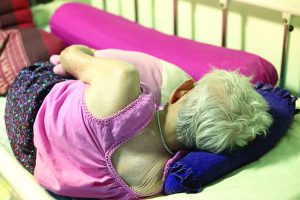
    Matches may also be of the “Golden Girls” variety,in which two or more older persons live their lives together. The Homesharing Hawaii project is benefiting from guidance and support from the National Shared Housing Resource Center (NSHRC), and two home-sharing programs with over 30 years of experience in Vermont and Oregon. Using collective experience gathered from the many mainland projects, the NSHRC developed a resource guide for establishing new home-sharing projects.

    That guide has provided Homesharing Hawaii with comprehensive, detailed information that is specific to starting the state’s own home-sharing project. HIN didn’t need to invent anything. The guide includes setting goals, marketing, building trust, outreach and addressing difficult and important liability and compliance issues.

    The guide also cautions that making matches is difficult. Although home-sharing match programs are deceptively simple in concept, they are incredibly difficult to accomplish. Not everyone is a good home-sharing candidate; it requires compatibility and flexibility.

    The cumulative experiences of home-sharing projects has shown that most senior homeowners living alone are reluctant to get a housemate because they are afraid of being harmed physically or of being the victim of theft.

    To help ameliorate that fear, Homesharing Hawaii has developed an enrollment process that includes interviews, acquiring multiple references, conducting extensive background checks on both parties, as well a trial period of living together. HIN’s thorough matching process is designed to support participation and address any concerns.

    To be successful, this project needs a large pool of applicants. For that reason, Homesharing Hawaii is continuously recruiting new candidates through a strong outreach program. Most referrals for homeowners will come from family members and friends who are concerned about the well-being of their kūpuna who lives alone.

    Participating in this project can increase health and wellness for the homeowner. It can also provide additional income to help fund home maintenance and reduce financial stress. For the home seeker, there is the financial benefit of having an affordable place to live.

    Homesharing Hawaii is currently looking for potential homeowners and home seekers. It is also requesting volunteers to assist with outreach.

    During this unprecedented pandemic period, HIN Homesharing Hawaii will be adjusting its policies, protocols and operations.

    However, interested persons are still welcome to email or call the Homesharing Hawaii staff just to talk about options for the future.


    HOMESHARING HAWAII
    A project of Hawaii Intergenerational Network
    1300 Kailua Road, Kailua, HI 96734
    808-308-5291 | homesharinghawaii@gmail.com
    www.homesharinghawaii.org
    HIN is a nonprofit organization founded in 1996.

    In response to this epidemic of isolation, a strategy called “home sharing” has been implemented in many U.S. cities for over 40 years. Recently, the nonprofit Hawaii Intergenerational Network (HIN), with funding from the HMSA, Kaiser and Atherton Family foundations, began a project called “Homesharing Hawaii” to offer a similar program in the state that…

  • Leadership is Fun at RYLA

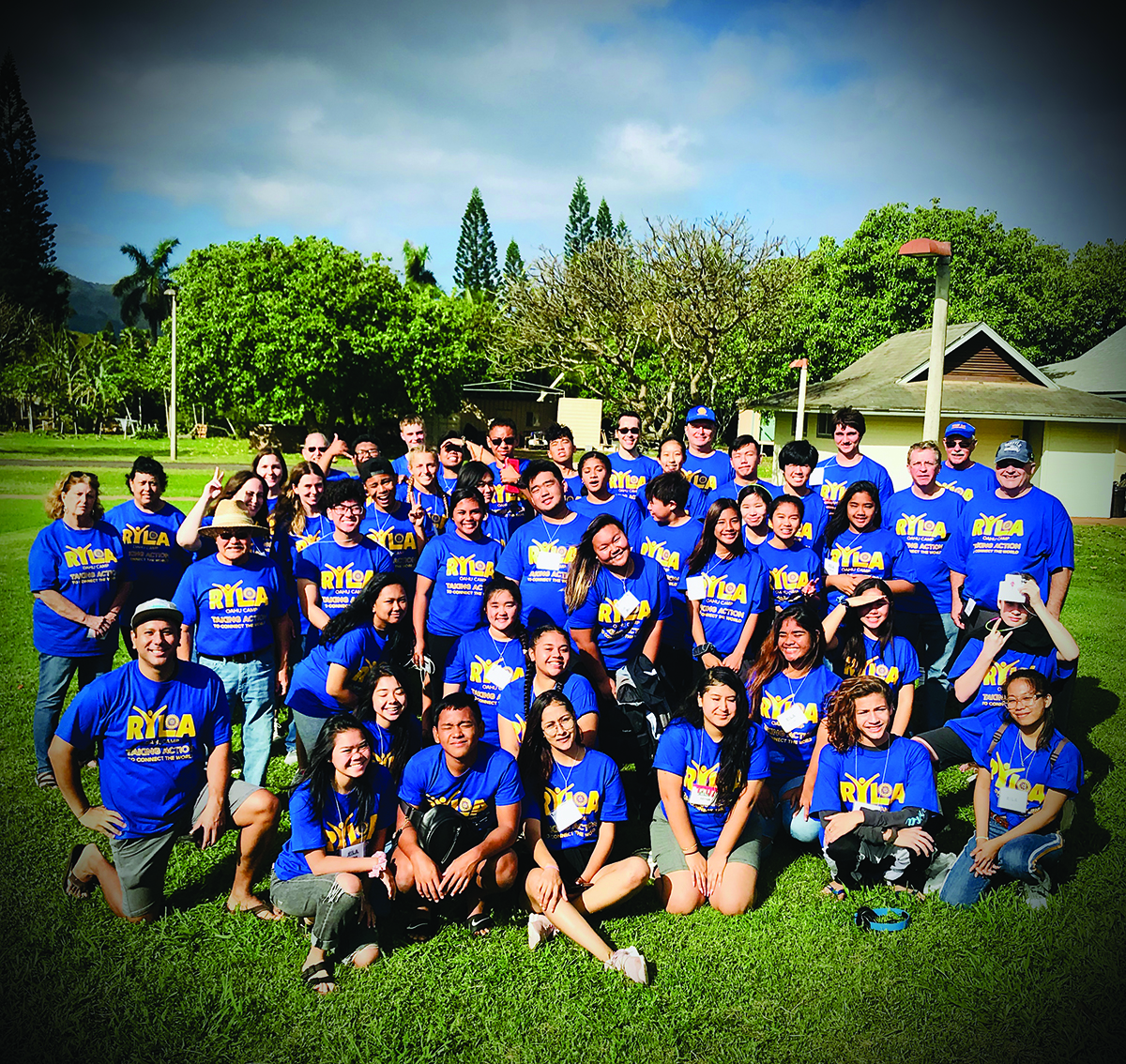
    Participants and camp staff of the 2020 Rotary Youth Leadership Awards camp.
    Participants and camp staff of the 2020 Rotary Youth Leadership Awards camp.

    On Feb. 14, Hawai‘i District 5000 Rotary Clubs sponsored 42 island high school student (ages 14 to 17) for the Rotary Youth Leadership Awards camp (RYLA) at Salvation Army’s Camp Homelani in Waialua.

    RYLA activities encourage leadership, citizenship and personal growth. Evidence-based, fun-filled experiences promote community service above self and develop youth empowerment for students who demonstrate potential leadership skills.

    RYLA is a rewarding, foundational weekend experience. This year’s camper comments tell the story: “I learned how to be a better person, while making friends. I had a lot of fun. I hope I’m selected to attend camp RYLA again next year.”

    Participants go through orientation and lectures.
    Participants go through orientation and lectures.

    Parents remarks support the outcomes: “After graduating from Camp RYLA, our daughter gained self-confidence and a focus with positive skills that I think we parents should also learn — being proactive and being willing to face life’s challenges challenges with a can-do attitude.”

    “Thank you, RYLA!”

    Schools, parents and youth organizations are encouraged to identify and sponsor students for RYLA’s next weekend event, which will be held next spring. Registration will begin in July.


    ROTARY DISTRICT 5000
    P.O. Box 3325, Honolulu, HI 96801
    808-536-8778 | www.rotaryd5000.org
    For details, to nominate a youth or donate to the program,
    contact Rick Tabor: 808-285-5936, rtabor12@twc.com.
    Neighbor Island residents, contact your local Rotary Club.

    On Feb. 14, Hawai‘i District 5000 Rotary Clubs sponsored 42 island high school students for the Rotary Youth Leadership Awards camp at Salvation Army’s Camp Homelani in Waialua. Activities encourage leadership, citizenship and personal growth. Evidence-based, fun-filled experiences promote community service above self and develop youth empowerment for students who demonstrate potential leadership skills.

  • How to Get or Replace a SS Card

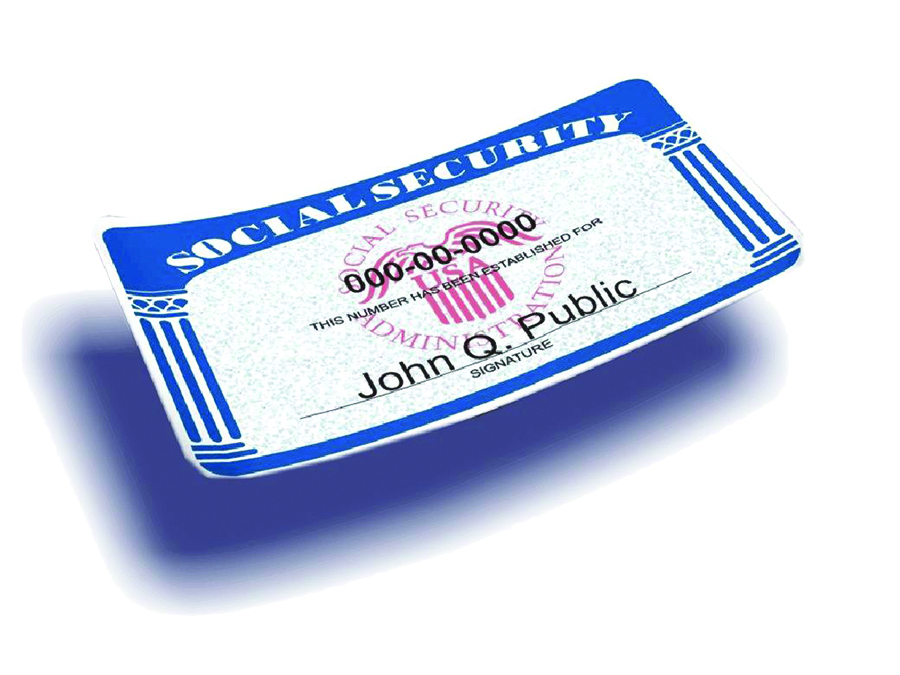
    Now that your Hawai‘i driver’s license does not have your Social Security number on it, you may need to get an original or replacement card to use as a separate piece of identification. Getting or replacing your Social Security card is a free service.

    You can use a my Social Security account to request a replacement Social Security card online if you:

    • Are a U.S. citizen age 18 years or older with a U.S. mailing address;
    • Are not requesting a name change or any other change to your card; and
    • Have a driver’s license or a state-issued ID card from one of the many participating states.

    If you cannot apply for a card online, you will need to present required documents at your local Social Security office. Documents vary based on your citizenship and the type of card you are requesting.

    Visit www.ssa.gov and click on Learn What Documents You Need. Also fill out and print an Application for a Social Security Card; then, deliver or mail your application and documents to your local Social Security office.


    For questions, online applications or to make an appointment to visit a SSA office, call 7am–5pm, Mon–Fri:
    800-772-1213 (toll free) | www.socialsecurity.gov

    Now that your Hawai‘i driver’s license does not have your Social Security number on it, you may need to get an original or replacement card to use as a separate piece of identification. Getting or replacing your Social Security card is a free service. You can use a my Social Security account to request a…

  • Your Hawai‘i State Office of Veterans Affairs

    The State Office of Veterans’ Services’ (OVS) motto is “proud to serve those who served their country.” We accomplish our mission by reaching out to eligible veterans and helping them file service-connected disability claims for benefits and entitlements they’ve earned through military service. We have offices on Kaua‘i, Maui, Kona, Hilo, Tripler Army Medical Center and Diamond Head. We travel to Moloka‘i monthly and Lāna‘i quarterly. OVS-accredited counselors work very hard to assist all veterans who are separating or retiring from active service.

    We help prepare appeal documents, if needed; we review prospects for progression upgrades and assist with end-of-life issues. We also partner with the respective counties to operate seven state veterans cemeteries on Kaua‘i, Maui, Moloka‘i, Lāna‘i and Hawai‘i island. The Hawai‘i State Veterans Cemetery on O‘ahu is fully operated by the state.

    OVS also provides support and assistance for week-long events like the 50th Anniversary of the Vietnam War Commemoration, the WWI Centennial Program, the 2019 State Veterans Summit and the upcoming 75th Commemoration of the End of World War II, set for Aug. 29 through Sept. 3. In addition to federal Veterans Affairs entitlements and benefits, the State of Hawai‘i has benefits for eligible veterans: specialty veterans’ license plates, real property tax exemption, state registration fee exemption for 100-percent disabled veterans and special adaptive housing for disabled veterans. Contact your local island office staff and counselor corps to see if you qualify.

    We understand that you have a unique deployment history and set of injuries or ailments. We respect you and the loved ones who accompany you to appointments. We seek to do more for our veterans and their families. But the first step is on you… open the door and allow OVS and other veteran partners to help. With so many federal, state, county veterans’ organizations and private groups supporting our warriors, there are many ways to help. Call our Central Line at Tripler OVS at 808-433-0420 for more information and begin the process.


    OFFICE OF VETERANS SERVICES
    Tripler Army Medical Center
    E Wing, Rm. 1-A103, Honolulu, HI 96819-1522
    808-433-0420 | ovs@ovs.hawaii.gov
    www.dod.hawaii.gov/ovs

    The State Office of Veterans’ Services’ (OVS) motto is “proud to serve those who served their country.” We accomplish our mission by reaching out to eligible veterans and helping them file service-connected disability claims for benefits and entitlements they’ve earned through military service. We have offices on Kaua‘i, Maui, Kona, Hilo, Tripler Army Medical Center…

  • SS Benefits Increase in 2020

    {Play}Each year, we announce the Social Security (SS) annual cost-of-living adjustment (COLA). In 2020, nearly 69 million Americans are receiving a 1.6 percent increase in their SS benefits and Supplemental Security Income (SSI) payments.

    Other changes this year reflect the increase in the national average wage index. For example, the maximum amount of earnings subject to SS payroll tax will increase from $132,900 to $137,700. The earnings limit for workers who are younger than full retirement age (age 66 for those born in 1943 through 1954) will increase to $18,240. (We deduct $1 from benefits for each $2 earned over $18,240.) The earnings limit for those turning 66 in 2020 will increase to $48,600. (We deduct $1 from benefits for each $3 earned over $48,600 until the month the worker turns age 66.) More information is available at www.ssa.gov/cola.

    Sign up for a “my Social Security” account today at www.socialsecurity.gov/myaccount. Retirement, survivors and disability beneficiaries who have a “my Social Security” account may view their benefit amounts and will receive future COLA notices securely online via its Message Center, a secure portal where you can conveniently receive sensitive communications that we don’t send through email or text. SS never sends personal information in its notifications.


    For questions, online applications or to make an appointment
    to visit a SSA office, call from 7am–5pm, Mon–Fri:
    800-772-1213  (toll free) | www.socialsecurity.gov

    Each year, we announce the Social Security (SS) annual cost-of-living adjustment (COLA). In 2020, nearly 69 million Americans are receiving a 1.6 percent increase in their SS benefits and Supplemental Security Income (SSI) payments.