Category: Articles

  • Safe Family Activities for the Holidays

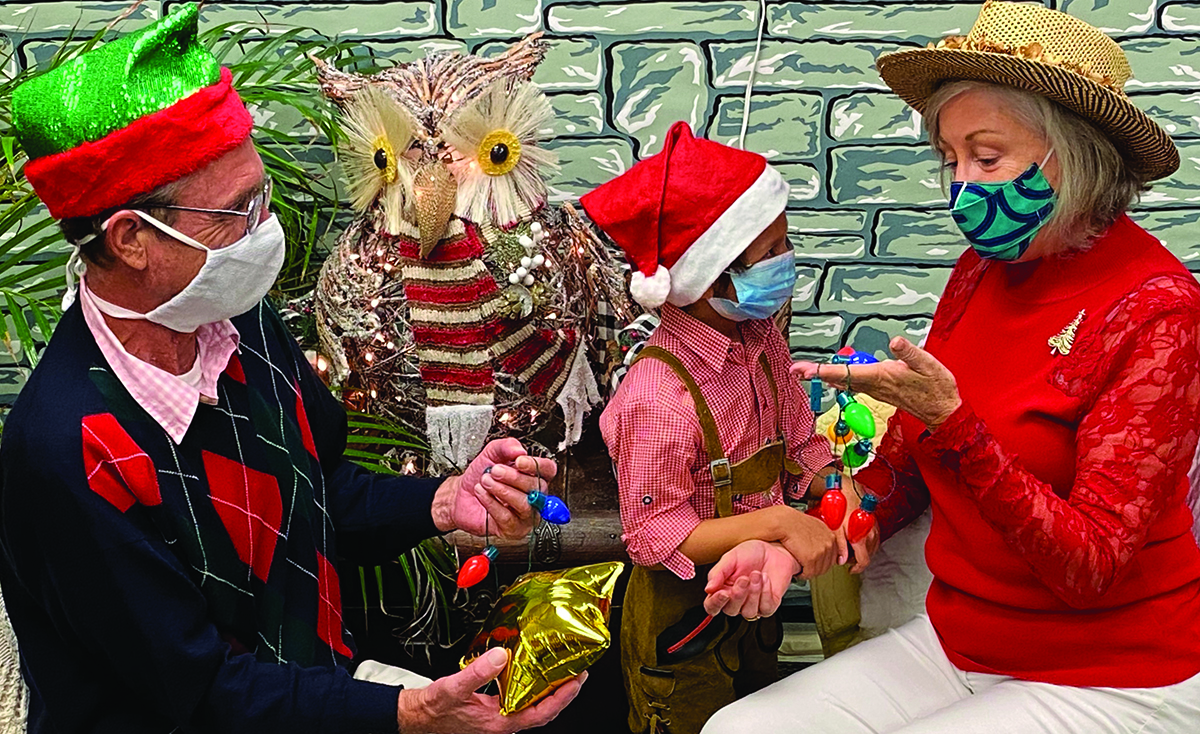
    Amid all the COVID-19 restrictions, there is a bright spot — the opportunity for families to celebrate the holidays together by engaging creatively in a way that’s enjoyable and safe for everyone.

    While younger members of the family are on the go and ready to run around the house, seniors (especially those with dementia) will prefer quieter, more structured activities. Family members with Alzheimer’s or dementia will not be able to tolerate crowds or loud noises that can lead to irritation and challenging behaviors. Therefore, it’s important to separate the two, so everyone has a good time. Here are some examples of things to do that seniors will enjoy:

    • Playing simple card and board games
    • Decorating stockings for members of the family
    • Crafts, like making a quilt or a holiday wreath
    • Baking holiday cookies together
    • Having a gift wrap party
    • Writing holiday cards together
    • Decorating the house together
    • Watching old movies with snacks on-hand
    • Listening to favorite music
    • Scrapbooking of family past activities

    Quilting is a good example of an activity that will get everyone involved. Seniors can assist with the selection of sentimental or personal fabrics. Sewing can be done by hand or machine. Suitable machines are available for under $100 these days. Once completed, the handcrafted quilt can be finished into a blanket or framed, becoming a personalized keepsake that will be treasured for many generations. This year’s holiday season will be challenging and some seniors may be missing the normal festivities with visitors from outside the household. Planned, tranquil activities and staggered extended family visits can make the holidays safer and more comfortable. Avoid large crowds at Grandma’s house this year by planning ahead and making sure everyone gets a chance to see her. The desire to be together can be accomplished in a different way if families work together and set up time slots. Here are some ideas on how to celebrate with Grandma during the holidays without spending the entire day with her.

    • Use an iPad and Zoom or FaceTime while singing a holiday song.
    • Create holiday cards using photos of the kids and drop them off at her home — but try to keep the visit short.
    • Instead of cooking at your senior’s home, make a festive meal or dessert ahead of time and if the weather is good, set up the table outside.
    • Create a sign-up log for extended family ahead of time in order to avoid a crowded home.
    • Dress up the doorway or entry and have friends and family drop gifts outside the home with a note of holiday cheer and well wishes.

    As with anyone coming in from outside the household, make sure you ask the questions needed to ensure your senior is safe over the holidays. Being together can be a wonderful experience — as long as families are responsible and creative with their holiday plans.


    ATTENTION PLUS CARE HOME HEALTHCARE
    Accredited by The Joint Commission
    1580 Makaloa St., Ste. 1060, Honolulu, HI 96814
    808-739-2811 | www.attentionplus.com
    AGING IN HAWAII EDUCATIONAL OUTREACH PROGRAM
    by Attention Plus Care — a program providing resources for seniors and their families, covering  different aging topics each month. For class information and upcoming topics, call 808-440-9356.

    Amid all the COVID-19 restrictions, there is a bright spot — the opportunity for families to celebrate the holidays together by engaging creatively in a way that’s enjoyable and safe for everyone. While younger members of the family are on the go and ready to run around the house, seniors (especially those with dementia) will…

  • Overcoming Insurmountable Odds

    In life, we have sunshine and rainbows and clouds and storms,” says Liane K. Chong on her website. It is a apt introduction to her inspirational autobiography, Hope Inspires Strength: How One Woman Overcame Insurmountable Odds. She tells readers how she faced challenges with courage, the right mindset and by finding hope where none seemed to exist. It’s a moving, powerful story about strength, focus, perseverance and determination.

    Liane and her husband and daughter were living an enviable life in Hawai‘i. Hardships began.

    She suddenly lost her father at the young age of 54. Soon after, her mother developed a debilitating disease that left her paralyzed and in need of constant care. So at age, 31, Liane took over the daunting task of caring for her mother. Then, a few months later,  they found out that their newborn baby boy had cortical blindness, cerebral palsy, autism, and might never walk or talk.

    Liane chose not to give up. She chose to succeed. Not only did she survive, she thrived, becoming a successful entrepreneur.

    The author’s story will surely refocus anyone feeling like life has become too overwhelming. Her legacy of hope is bound to help you find your strength.


    For more information and to order the book:
    www.lianekchong.com | lianekchong@gmail.com
    A 30-minute interview with Liane: https://youtu.be/C85ga3F5Y7s

    In life, we have sunshine and rainbows and clouds and storms,” says Liane K. Chong on her website. It is a apt introduction to her inspirational autobiography, Hope Inspires Strength: How One Woman Overcame Insurmountable Odds. She tells readers how she faced challenges with courage, the right mindset and by finding hope where none seemed…

  • Have More Fun Aging With Cool Devices

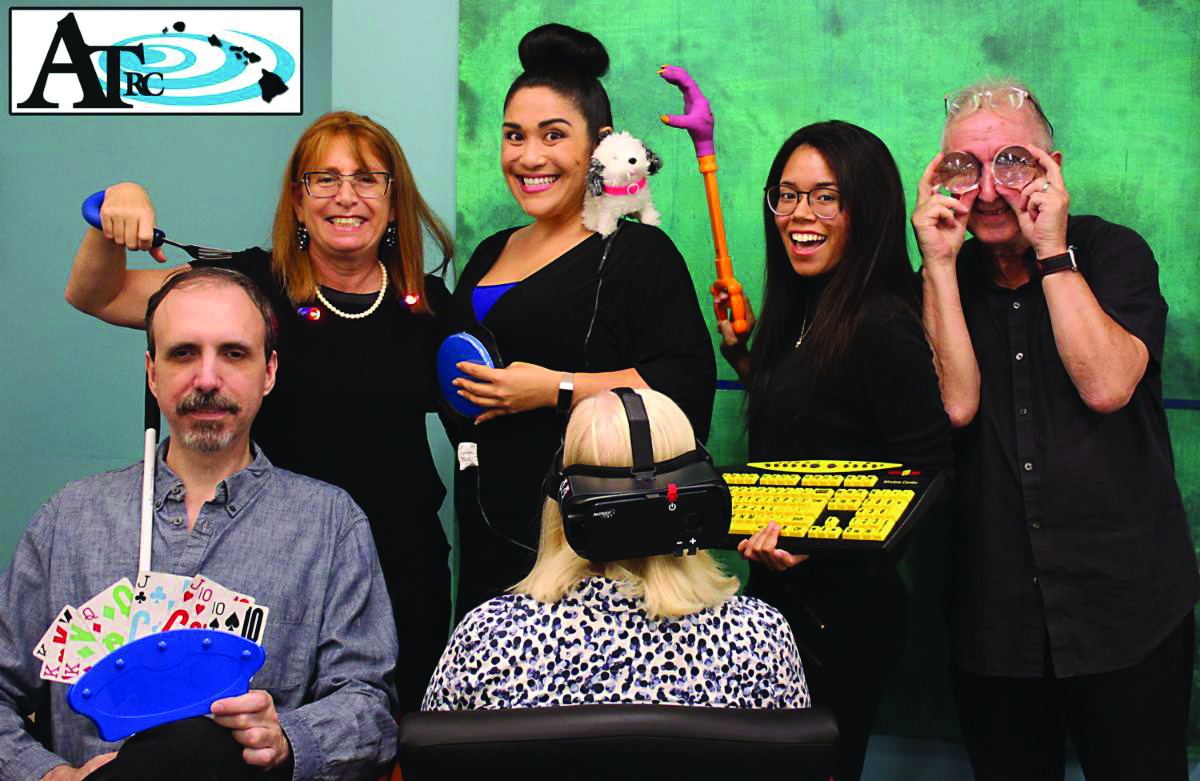
    The gang’s all here to help you adapt to aging with some cool devices: (L–R, front) Monty Anderson-Nitahara, Barbara Fischlowitz-Leong, (back) Katie Friedman, Hannah Diaz, Janelle Feliciano and Harvey Gordon
    The gang’s all here to help you adapt to aging with some cool devices: (L–R, front) Monty Anderson-Nitahara, Barbara Fischlowitz-Leong, (back) Katie Friedman, Hannah Diaz, Janelle Feliciano and Harvey Gordon

    As we mature, our bodies may no longer work the way they once did — our eyes and ears are not quite as sharp; our hands not quite as steady. We may find ourselves straining to see the TV; we may no longer be able to read our favorite publications; we may need to ask people to speak up or repeat themselves.

    Fortunately, technology can help us regain
    what was lost due to aging. These tools fall into two different categories: durable medical equipment (DME), which includes wheelchairs, walkers and walking sticks; and assistive technology (AT), which includes magnifiers, talking computers, audible books and document readers.

    Ask a professional to help you find what works best for you. At ATRC, we specialize in helping you identify the exact device and model that fits you — at no cost. Call us for more information.


    ASSISTIVE TECHNOLOGY RESOURCE CENTERS OF HAWAI‘I (501(c) 3 nonprofit)
    200 N. Vineyard Blvd., Ste. 430, Honolulu, HI 96817
    808-532-7111 | monty@atrc.org | www.atrc.org

    As we mature, our bodies may no longer work the way they once did — our eyes and ears are not quite as sharp; our hands not quite as steady. We may find ourselves straining to see the TV; we may no longer be able to read our favorite publications; we may need to ask…

  • Auntie M’s Family-Favorite Spare Ribs

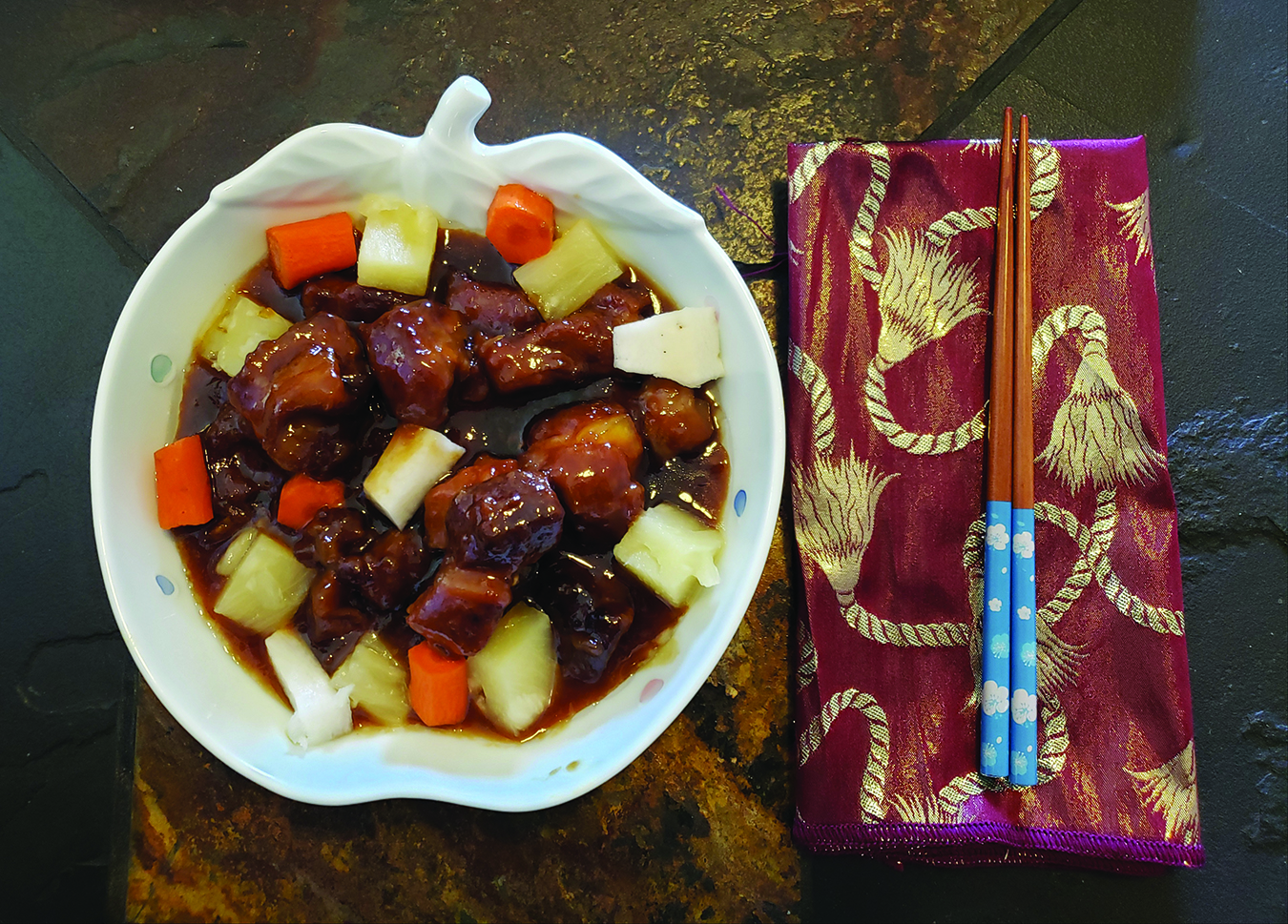
    When I was a newlywed, I was given this very special recipe from Aunty Matsue (Inouye) Omori, Sen. Daniel Inouye’s aunt. Aunty is remembered for her special recipes and her dedication as a third grade teacher at Pu‘unēnē School.

    Ingredients:
    2 lbs. soft-bone pork spare ribs (precut in cubes or regular)
    1 cup vinegar
    2 cups brown sugar
    2 cloves garlic (pounded)
    1 small piece ginger (pounded)
    2 tsp. Chinese thick soy sauce
    2 tsp. shoyu
    1 tsp. salt
    1 can pineapple chunks
    1 each turnip & carrot
    1/2 cup stock (taken from boiling ribs)

    Directions:
    Preparing the ribs: If not precut, cut the ribs in small, 1-inch, bite-sized cubes. Rinse the ribs in a medium pot by pouring boiling water over them, then drain. Add enough water to cover the ribs. Boil for 2 minutes, drain the water into a separate container and keep it to be added as stock.

    Mixing ribs and sauce: Mix all of the ingredients, including the stock, with the ribs. Let the ribs soak and marinate in the sauce for 4 hours or even overnight in the refrigerator.

    Cooking the ribs: Take the ribs out of the sauce and place them in a separate container. (Reserve the marinade.) Dredge the ribs with all-purpose flour. In a separate pot, brown the ribs in cooking oil (olive oil is okay), then drain the excess oil. Pour the sauce back in with the ribs (option: add 1 tsp. red wine or to taste).

    Cook on medium heat for about 30 minutes until tender. Add 1 tsp. cornstarch to thicken sauce; add more to desired thickness.

    Garnish with pineapple chunks or small cubes, or thin-cut white turnips and carrots.


    Do you have a favorite recipe and story to share? For consideration in the next issue of Generations Magazine, mail your story and recipe to Generations Food & Story, PO Box 4213, Honolulu, HI 96812, or email them to wilson@generations808.com.

    When I was a newlywed, I was given this very special recipe from Aunty Matsue (Inouye) Omori, Sen. Daniel Inouye’s aunt. Aunty is remembered for her special recipes and her dedication as a third grade teacher at Pu‘unēnē School.

  • A Woman on a Journey of Well-Being

    How did I get to be 65 and retired?  And what happens now? Those were two questions I was asking myself this past April as my birthday and retirement occurred without much fanfare due to the COVID-19 pandemic. But, I had been planning this for over five years. So, let’s go back a few years…

    Like most people, my life journey has had its ups and downs, but in my 30s and 40s, I started to take notice of how stress was impacting my health, and began my quest to find the resources and tools that could support my wellness. There were several signposts along the way that signaled I needed to stop and take a wellness inventory. And, there were two major life events that changed the course for me. They both involved the health of my youngest child, who at the age of 5 was hit by a car and was in a body cast for three months. When he was 19, he was diagnosed with a brain tumor. Jacob Michael passed away three years later.

    In both cases, while I took on an intense caregiver role, I was also made keenly aware of how I needed to find ways for self-care. I went on to work in a caregiving capacity through my role with the American Cancer Society.

    But I continued to see signs and impacts of stress in my life and those around me, so I extended my search for resources and tools that I could use and share with others. I found simple tools that I could easily deploy on a daily basis.

    A short, guided meditation. Breathing is an essential part of any meditation — slow and controlled at a natural pace.

    “Begin by sitting in a comfortable position with nothing in your lap. It can be in a chair or on a cushion on the floor or against a wall for support. Just don’t lie down. Close your eyes. Begin to breathe slowly and rhythmically. Relax your head and shoulders. Feel the tension drain from your face. Breathe. Relax your chest and arms. Feel the tension melt away. Breathe. Relax your belly, hips and buttocks. Let go completely. Breathe. Relax your legs and feet, letting all the tension just drip away. Breathe.

    Use of essential oils. The sense of smell can be very powerful. It can invigorate you or slow you down. It has the potential to place you in an emotional state — preferably, calm and happy.

    I like to do exercises that fit my abilities. I know I’m personally not aiming for any triathlon. Enjoyment aligned with abilities is key.

    Eating healthier — not dieting, was something I sought to  change entirely.

    When I turned 60, I decided to focus my energy toward sharing these ideas with various caregivers and others who may need my help — work I started before my son got sick. I focused on wellness and helping others through life’s transitions by connecting them to resources for health, wellness and self-care.

    The journey continues…


    ALAKAI‘I ASSOCIATES LLC, Kaneohe
    808-554-2081 | lani_almanza@alakaiassociates.com
    www.alakaiassociates.com

    How did I get to be 65 and retired?  And what happens now? Those were two questions I was asking myself this past April as my birthday and retirement occurred without much fanfare due to the COVID-19 pandemic. But, I had been planning this for over five years. So, let’s go back a few years…

  • Aloha Fried Rice

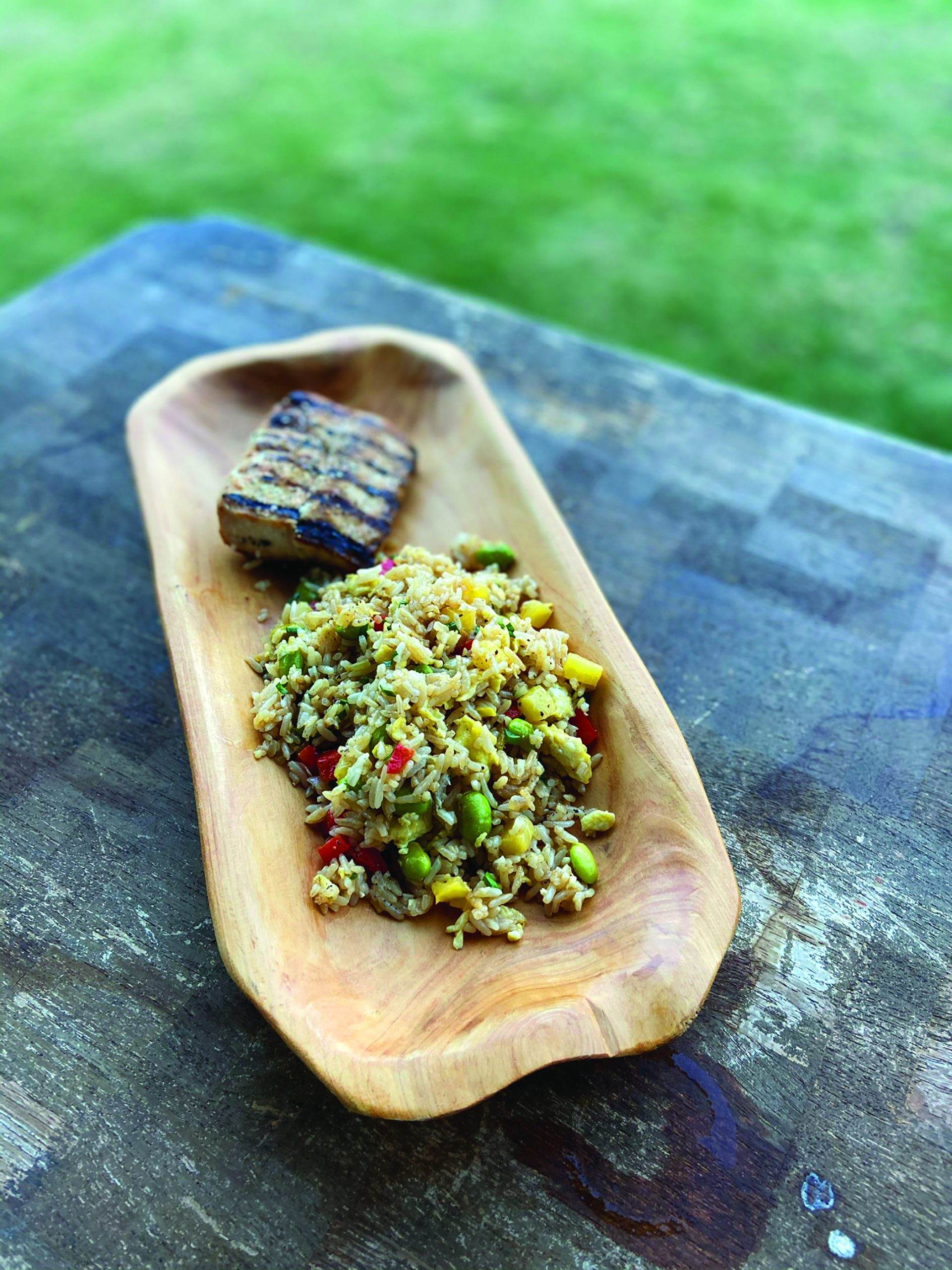
    Fried rice has long been a comfort food throughout the islands. Not only is this recipe a savvy way to repurpose leftover rice, it’s easy to dress up with vegetables and fresh pineapple. Serve it alongside meat or a hunk of grilled fish caught by one of our local fishermen, and you’ve got a Hawaiian Regional classic. Here’s the recipe.

    Ingredients:
    4 cups cooked and chilled rice
    3 eggs lightly beaten with a dash of salt and pepper
    2 cups chopped pineapple
    1 small onion (chopped)
    3 cloves garlic (minced)
    1 red bell pepper (chopped)
    1 cup frozen shelled edamame
    3 Tbsp. oil
    3 Tbsp. butter (divided)
    2 tsp. sambal (chili garlic paste)
    1/4 cup soy sauce (use tamari for a gluten-free option)
    Salt and Pepper

    Directions:
    1. Preheat a large, nonstick skillet on medium heat. Add oil and 2 Tbsp. of butter into the pan. Once the butter has melted, add the onions and sambal and cook until tender. Then add the red bell pepper, edamame and garlic. Season with salt and pepper. Cook until fragrant and take care not to burn the garlic.
    2. Turn the heat up slightly and add the cold rice. Cook for about 3 to 4 minutes until the rice has separated and softened. Then add the pineapple. Drizzle the soy sauce and fold it into the rice mixture and cook for another 3 minutes.
    3. Push the rice mixture to one side and melt 1 Tbsp. of butter on the other side and add the eggs and scramble constantly until slightly set.
    4. Fold everything together; season if needed. Cook until rice mixture is hot, then serve.

    Optional accompaniment: grilled meat or seafood.

    Prep time: 15 minutes | Cook time: 15 minutes
    Serves: 4


    CHEF KRISTIN MICHAELS
    info@ChefKristin.com | www.ChefKristin.com
    Facebook & Instagram: @ChefKristinMichaels

    Fried rice has long been a comfort food throughout the islands. Not only is this recipe a savvy way to repurpose leftover rice, it’s easy to dress up with vegetables and fresh pineapple. Serve it alongside meat or a hunk of grilled fish caught by one of our local fishermen, and you’ve got a Hawaiian…

  • Live Longer, Better, in the Blue Zone

    Six cultures around the world seem to have uncovered the secrets of longevity. For more than a decade, Dan Buettner, author of The Blue Zones Solution, worked to identify these hot spots of long life. Dan found places that not only had high concentrations of individuals over 100 years old, but also clusters of people who had grown old without health problems like obesity, cancer and diabetes.

    Dan found that diet is one of the factors contributing to their longevity. He distilled simple guidelines from his studies that reflect what the world’s longest-lived people ate. Dan suggests that the average American could live an extra 12 years if they optimize their lifestyle by eating a diet similar to the Blue Zones Diet. He says that by adopting some of the healthy eating principles into your life, you, too, can Live Longer, Better®.

    Blue Zones Diet Starter Kit
    • Eat 2 oz. or less of meat 5 times per month; 95% of your food should be plant-based.
    • Reduce dairy.
    • Consume only 7 tsps. of added sugar daily.
    • Eat no more than 3 eggs per week.
    • Eat less than 3 oz. of fish up to 3 times weekly.
    • Eat about 1 to 2 handsful of nuts a day.
    • Drink about 7 glasses of water per day.
    • Eat a half-cup of beans daily.
    • Don’t eat highly processed food.
    • Eat your largest meal at breakfast.
    • Cook the majority of your meals at home

    Healthy living is a lifestyle, not an activity

    The Blue Zones Diet is a guideline of what to eat for a long, healthy life. It’s not a short-term diet plan. None of the 100-plus-year-old people Dan interviewed participated in diet or even exercise programs. The world’s longest-lived people don’t pump iron, run marathons or join gyms. Instead, they are immersed in an environment designed to help them make the healthiest decisions. COVID-19 has indeed helped us to focus on eating most of our meals at home. In addition, our shopping environment can help make healthy choices easier for you and your family. Find the Blue Zones Meal Planner at https://meals.bluezones.com.

    Blue Zone-Approved Grocers in Hawai‘i
    HAWAI‘I ISLAND
    Foodland
    – Kamuela: Parker Ranch Center, #109
    – Kea‘au: 16-586 Old Volcano Road
    – Waimea: 66-1330 Mauna Lani Drive
    KTA
    – Kailua-Kona: 74-4494 Palani Road
    – Kamuela: 65-1158 Ma¯malahoa Highway
    – Keahou: 78-6831 Ali‘i Drive
    – Kealakekua: Konawaena School Road
    – Hilo: 321 Keawe St.
    – Hilo: 50 E. Puainako St.
    – Waikoloa: 68-3916 Paniolo Ave.
    Sack N Save
    – Hilo: 250 Kino‘ole St.
    – Hilo: 2100 Kanoelehua Ave., Ste. 101
    – Kailua-Kona: 75-5595 Palani Road
    MAUI
    Foodland
    – Kahului: 90 Kane St.
    – Wailuku: 370 Kehalani Village Drive
    Sack N Save
    – Wailuku: 790 Eha St.
    O‘AHU
    Down to Earth
    – Honolulu: 2525 South King St.
    – Kailua: 201 Hamakua Drive
    Foodland
    – Kailua: 108 Hekili St.
    – Kaneohe: 45-480 Kaneohe Bay Drive
    – Wahiawa: 823 California Ave.
    Whole Foods Market
    – Kailua: 629 Kailua Road, Ste. 100 n

    Six cultures around the world seem to have uncovered the secrets of longevity. For more than a decade, Dan Buettner, author of The Blue Zones Solution, worked to identify these hot spots of long life. Dan found places that not only had high concentrations of individuals over 100 years old, but also clusters of people…

  • ‘Last Will’ for Your Digital & Online Assets

    What happens when you pass away or there’s an emergency that leaves you incapacitated, and family members need to access your mobile devices, computers, emails and social media accounts? Have you documented this important information?

    Here are some tips:
    • List all the devices you own and include your username and password for each.
    • For all online accounts, including email, banking, shopping and social media, list the email address you used, and your username, password and the answers to your “secret” questions.
    • Write it all down in a hardcopy document or notebook. Or you can also create a text file and burn it to CD or DVD. I don’t recommend storing the document on a USB thumbdrive. Those devices are not designed for archival purposes.
    • Keep the document, notebook or device in a safe place, such as a safety deposit box, and inform your family members about the document.
    • Another option is having a trusted family member, friend or your attorney hold it for you.
    • Write up instructions as to what you want done with your digital assets. Do you want them to be deleted or cancelled? Do you want someone to take over your account? Whatever you decide, document it in writing.

    As accounts are added and deleted, and passwords change, keep updating your document.


    Contact me with questions about online security.
    Christopher Duque | aikea808@gmail.com

    What happens when you pass away or there’s an emergency that leaves you incapacitated, and family members need to access your mobile devices, computers, emails and social media accounts? Have you documented this important information? Here are some tips:

  • Aging Gracefully With Your Body

    As we get older, more than a few seniors have seen their body change into a shape they had hoped it never would. I was hoping mine would actually shrink, but of course that didn’t happen. After working a high stress job, gaining 25 pounds and losing lots of sleep, I decided to get off that roller coaster. I’m now semi-retired.

    Fortunately for me, I am rarely sick and do not take any medication. So, I’m healthy despite weighing more than I should. I play pickleball every day, ride my bike to the beach and walk to get my daily 10,000 steps whenever possible. Did any of that weight come off? Down a few one day, up a few the next — an everyday cycle of hopefulness and disappointment. I then realized that I needed to change not only what I was eating but also my perspective about my body!

    If you are experiencing similar frustrations as I had, my advice to you is first to continue enjoying your favorite foods and beverages, but start out by making small changes. According to the USDA Choose My Plate website (www.choosemyplate.gov/browse-by-audience/view-all-audiences/adults), the following are things you can do to help retain (or get back to) the healthy weight you want and the shape you once had.

    • Add flavor to foods with spices and herbs instead of salt and look for low-sodium packaged foods.
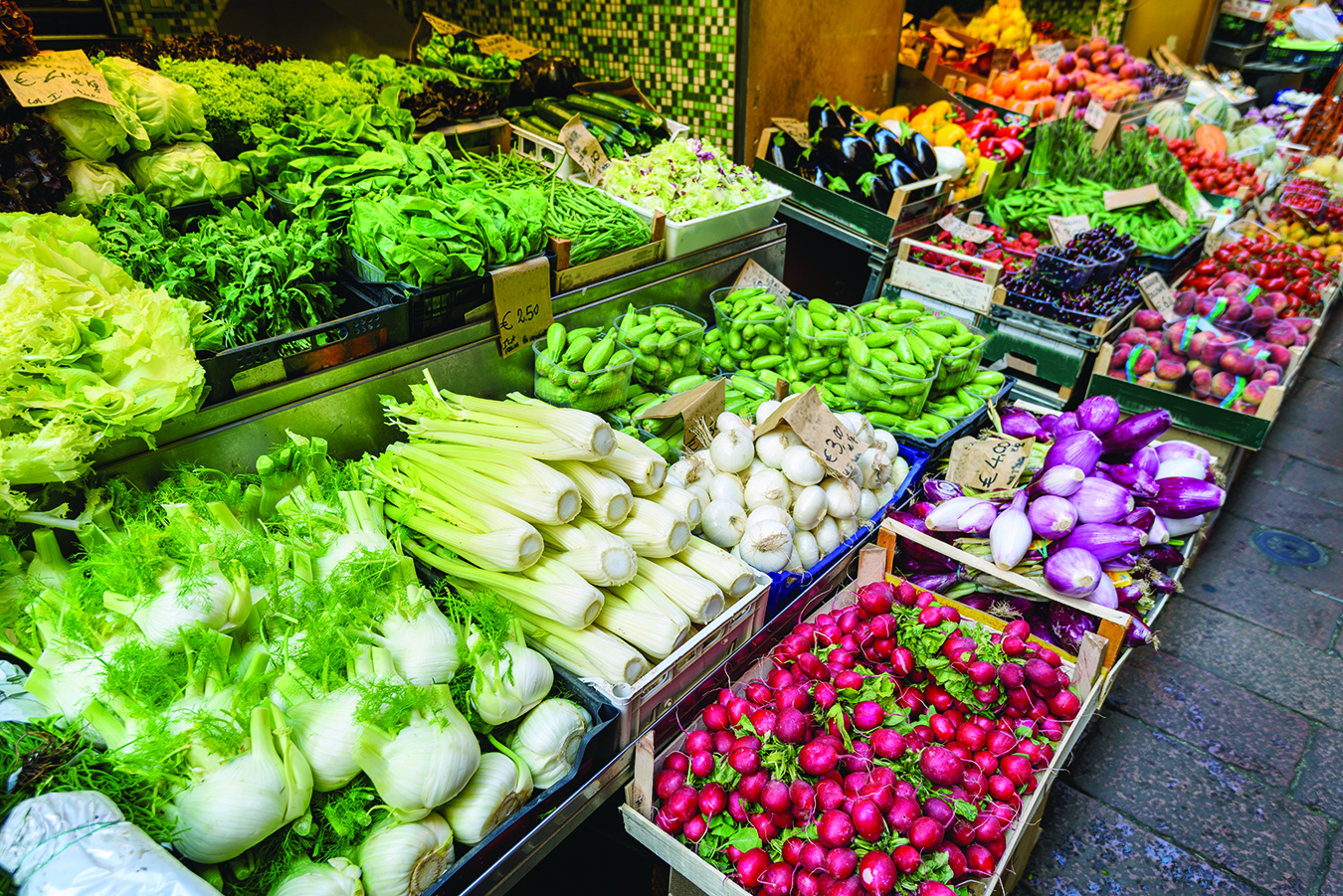
    • Add sliced fruits and vegetable (pre-sliced, if slicing/chopping is a challenge) to your meals and snacks.
    • Ask your doctor for other options if your medications affect your appetite.
    • Drink three cups of fat-free or low-fat milk throughout the day. Or try small amounts of yogurt, buttermilk, hard cheese or lactose-free foods. Drink water instead of sugary drinks.
    • Consume foods fortified with vitamin B12, such as fortified cereals.

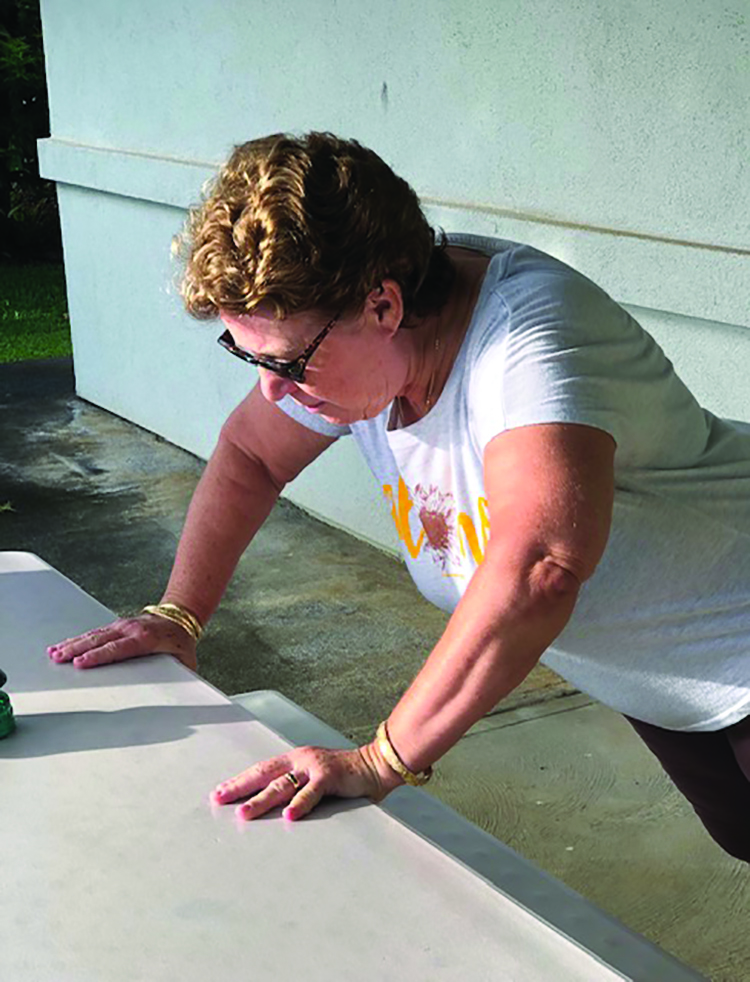
    According to the website, the second best thing you can do for yourself is to be active in whatever way you physically can. Just starting with baby steps will help your bones, your flexibility — and your mind. But please consult your doctor before beginning any kind of physical activity you are not used to… except the baby steps. Simply taking a walk outside while enjoying good weather or just around the house is a start.

    And, lastly, the world we grew up in (and still, somewhat, the same today) was all about your body image. You were either too thin, too fat, too big-boned or too muscular, etc. It’s been my experience that if you’ve had a good life and have friends and family who love you, it really doesn’t matter what shape you have now. Embrace your body; it got you where you are today. Make those small adjustments (food and baby steps) to extend the joyfulness in your life, because that is what is most important, not your shape!


    Here are some other pages at ChooseMyPlate.gov:
    https://www.choosemyplate.gov/eathealthy/budget
    https://www.choosemyplate.gov/coronavirus

    As we get older, more than a few seniors have seen their body change into a shape they had hoped it never would. I was hoping mine would actually shrink, but of course that didn’t happen. After working a high stress job, gaining 25 pounds and losing lots of sleep, I decided to get off…

  • Turn Inward for Your Best Year Yet

    As you look back on 2020, take a moment and ask yourself some important questions:

    “How much of my focus was spent being affected by news, events, personal problems and situations around me? How did that make me feel?” And most importantly, “Do I want to spend the next year feeling the same way or do I want to feel better?”

    If you want to thrive in the New Year, start by making a choice. If you said yes to the last question, make a decision, be willing to look at your life objectively and accept change. If you say things like, “I’ll try,” “I want to,” or “I’ll do it someday,” your habits will slow you down or keep you stuck. Decide. Declare it. Write it down. Feel it. Your body and brain have to be in agreement. Otherwise overthinking and default behaviors take over.

    Start by noticing your emotions and observing your thoughts. Ask yourself if you want to feel that way. If the answer is no, the easiest way to shift your focus is to do something physical like clap your hands. This puts you in the driver’s seat of your emotions. Then, affirm goodness by turning your focus to gratitude. Immerse yourself in that feeling for as long as you can.

    Daily practice will help you make 2021 your best year yet.


    KAIMUKI BODY & BRAIN
    3569 Harding Ave., #B, Honolulu, HI 96816
    808-738-5522 | www.bodynbrain.com/kaimuki

    As you look back on 2020, take a moment and ask yourself some important questions: “How much of my focus was spent being affected by news, events, personal problems and situations around me? How did that make me feel?” And most importantly, “Do I want to spend the next year feeling the same way or…

  • Social Isolation in the ‘New Normal’

    Social isolation and loneliness are toxic to everyone’s health, but especially older adults. Given COVID-19 mandates to limit face-to-face contact for the foreseeable future, these feelings are certain to increase, accompanied by threats to health and well-being.

    Uncertainty surrounding the “new normal” may cast doubt on the efficacy of past solutions to isolation. Consider the notion of “third place,” neither home nor workplace, but a congenial public gathering spot, the guiding principle of Starbucks, the coffee giant. The COVID- 19-related constraints of social distancing and limited seating capacity now challenge the very concept of neighborhood coffee shops or hang outs.(1) Changing customer behavior has forced the iconic company to reconfigure its physical spaces and its entire style of product delivery. Four-hundred stores closed in North America alone; carryout and pickup only locations, such as Starbucks Now stores in China, are rapidly proliferating.

    The concept of “third place” has served as a guiding principle for older adult services, such as senior centers and Memory Cafes. Ibasho Cafés, initiated in Japan, represent an empowering type of “third place.” Ibasho’s older participants run the site, choosing activities that reflect their priorities and address community needs, such as community gardening. Engaged as community resources (rather than service recipients) by participating in meaningful roles within the site reduces likelihood of social isolation. Ibasho sites are successful in Asia and may represent a future solution to social isolation for older adults in the Hawaiian Islands.

    Just as major businesses are responding to pandemic-induced changes in customers’ behaviors and choices, older adult services may also need to adapt to the “new normal” of a pandemic-transformed world, supplementing face-to-face interactions with safer virtual online encounters.

    Online communities for older adults have provided peer-based sources of information and support for years.(2) Traditional daycare centers and senior centers will no doubt continue to offer much-needed post-lockdown supports. Online communities, especially Ibasho-type sites that empower older adults to contribute solutions to the issues of the day, may offer a welcome complement to traditional service provision.


    CENTER ON AGING — University of Hawai‘i at Mānoa
    2430 Campus Road, Gartley Hall, 201B, Honolulu, 96822
    808-956-5001 | map3@hawaii.edu
    www.hawaii.edu/aging
    1 Frommer, D. (2020). Rethinking the Starbucks “third place,” https://newconsumer.com/2020/06/starbucksreopening-pickup-third-place/.
    2 Perkinson, MA. (2002). Cyberspace ethnography: Group processes in an online community of  dementia caregivers, www.researchgate.net/publication/258937226_Cyberspace_ethnography_Group_processes_in_an_online_community_of_dementia_caregivers

    Social isolation and loneliness are toxic to everyone’s health, but especially older adults. Given COVID-19 mandates to limit face-to-face contact for the foreseeable future, these feelings are certain to increase, accompanied by threats to health and well-being.

  • SS Benefits Get a Bump in 2021

    It’s about time for some good news: Social Security (SS) and Supplemental Security Income (SSI) benefits for approximately 70 million Americans will increase 1.3 percent in 2021.

    The 1.3 percent cost-of-living adjustment (COLA) will pay benefits to more than 64 million SS beneficiaries in January 2021. Increased payments to more than 8 million SSI beneficiaries will begin Dec. 31, 2020. The Social Security Act ties the annual COLA to the increase in the Consumer Price Index (CPI-W).

    Other adjustments that take effect every January are based on the increase in average wages. Based on that increase, the maximum amount of earnings subject to the SS tax (taxable maximum) will increase to $142,800 from $137,700.

    SS and SSI beneficiaries are normally notified by mail starting in early December about their new benefit amount. Most people who receive SS payments will be able to view their COLA notice online through their personal my Social Security account. Create or access your my Social Security account online at www.socialsecurity.gov/myaccount.

    Information about Medicare changes for 2021 will be available at www.medicare.gov. For SS beneficiaries receiving Medicare, SS will not be able to compute their new benefit amount until after the Medicare premium amounts are announced. Final 2021 benefit amounts will be communicated to beneficiaries in December through the mailed COLA notice and my Social Security’s Message Center. For more information, visit www.socialsecurity.gov/cola.

    It’s about time for some good news: Social Security (SS) and Supplemental Security Income (SSI) benefits for approximately 70 million Americans will increase 1.3 percent in 2021.