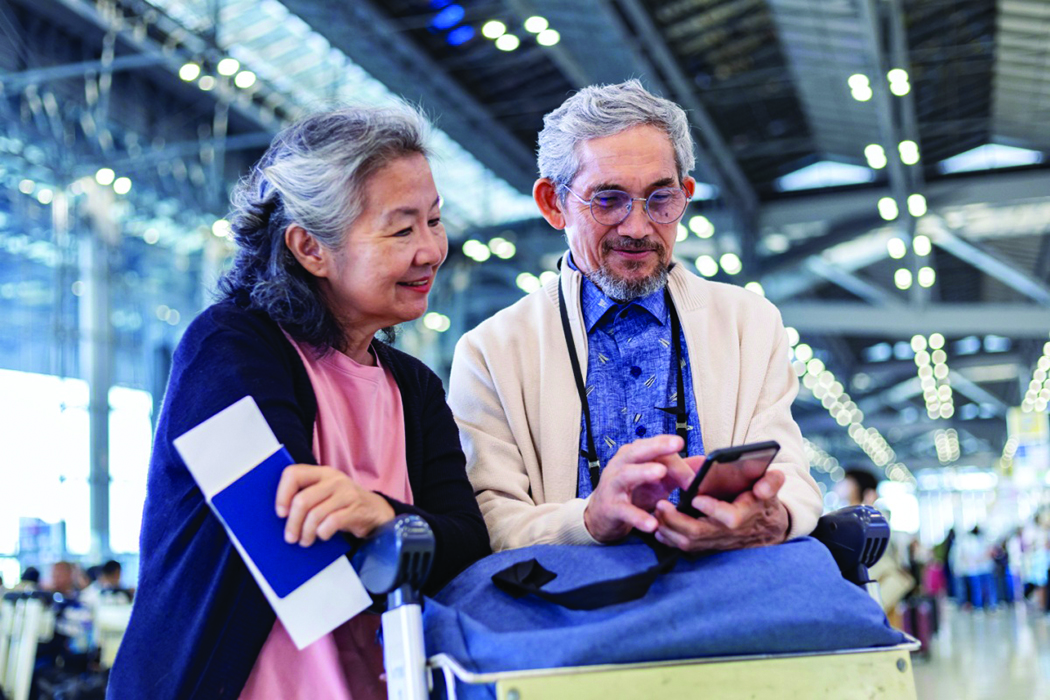
As we age, the desire to explore new destinations and enjoy life’s adventures often grows stronger. For kūpuna in Hawai‘i, traveling overseas offers the opportunity to experience different cultures, visit loved ones or simply relax in a new environment. While planning these trips, it’s crucial to consider potential risks and ensure you’re adequately protected. One of the most important steps you can take is purchasing travel insurance, which can safeguard you against unexpected trip cancellations.
Travel plans can change unexpectedly due to a variety of reasons, including personal health issues, family emergencies or unforeseen global events like natural disasters or pandemics. Without travel insurance, a canceled trip could result in significant financial loss, as airlines, hotels and tour operators may not provide full refunds.
Travel insurance often includes trip cancellation coverage, which reimburses you for prepaid, nonrefundable expenses if you need to cancel your trip for a qualified reason. This can include anything from a sudden illness to severe weather conditions, giving you the flexibility to cancel your trip without the stress of financial loss.
Travel insurance is especially important for seniors, since Medicare doesn’t cover medical expenses abroad. If you fall ill or have an accident while traveling overseas, you could be responsible for the full cost of your medical treatment. A simple medical consultation in Asia or on a cruise could set you back several hundred dollars. If you require hospitalization or emergency surgery, expenses could run into thousands or tens of thousands of dollars. Travel insurance with comprehensive medical coverage ensures these costs are covered.
When selecting travel insurance, it’s important to choose a policy that meets your specific needs. Consider factors such as your age, health condition and the destination you’re traveling to. Many insurance providers offer plans tailored to seniors, with additional coverage options that address the unique needs of older travelers.
Read the policy details, paying attention to coverage limits, exclusions and any requirements for pre-existing conditions. It’s also a good idea to compare policies from different providers to find the best coverage at a reasonable price.
Traveling overseas can be a rewarding and enriching experience, especially for kūpuna who have the time and freedom to explore the world. However, it’s essential to be prepared for the unexpected. Travel insurance can protect you from potential financial burdens related to medical emergencies and trip cancellations, allowing you to travel with confidence and peace of mind.
FINANCIAL BENEFITS INSURANCE, INC. Hawaii National Bank Building 1311 Kapiolani Blvd., Ste. 504, Honolulu, HI 96814 808-792-5194 | tmotosue@fbihi.com fbihi.com
As we age, the desire to explore new destinations and enjoy life’s adventures often grows stronger. For kūpuna in Hawai‘i, traveling overseas offers the opportunity to experience different cultures, visit loved ones or simply relax in a new environment. While planning these trips, it’s crucial to consider potential risks and ensure you’re adequately protected. One…
Holiday shopping has shifted dramatically from in-person to online in recent years. Although this change gives us new opportunities for finding unique gifts while supporting small businesses — it also comes with risks.
With 33.2 million small businesses now able to showcase their products online, you have infinite options at your fingertips. However, the rise of e-commerce has also attracted fraudsters who create fake websites in order to steal your money and personal information.
To shop safely online while supporting local businesses, follow these tips:
Do your homework. Look for a physical address and phone number on the website. If you can’t find this information, it’s best to shop elsewhere.
Check for customer reviews on independent sites like BBB.org and Google. Be wary of businesses with no reviews or those sounding repetitive.
Use a safe payment type. Pay with a credit card; avoid using pre-paid cards, payment apps or crypto.
Keep your guard up when shopping online and utilize these steps to help protect yourself while supporting legitimate small businesses for a happy holiday season for all!
Holiday shopping has shifted dramatically from in-person to online in recent years. Although this change gives us new opportunities for finding unique gifts while supporting small businesses — it also comes with risks. With 33.2 million small businesses now able to showcase their products online, you have infinite options at your fingertips. However, the rise…
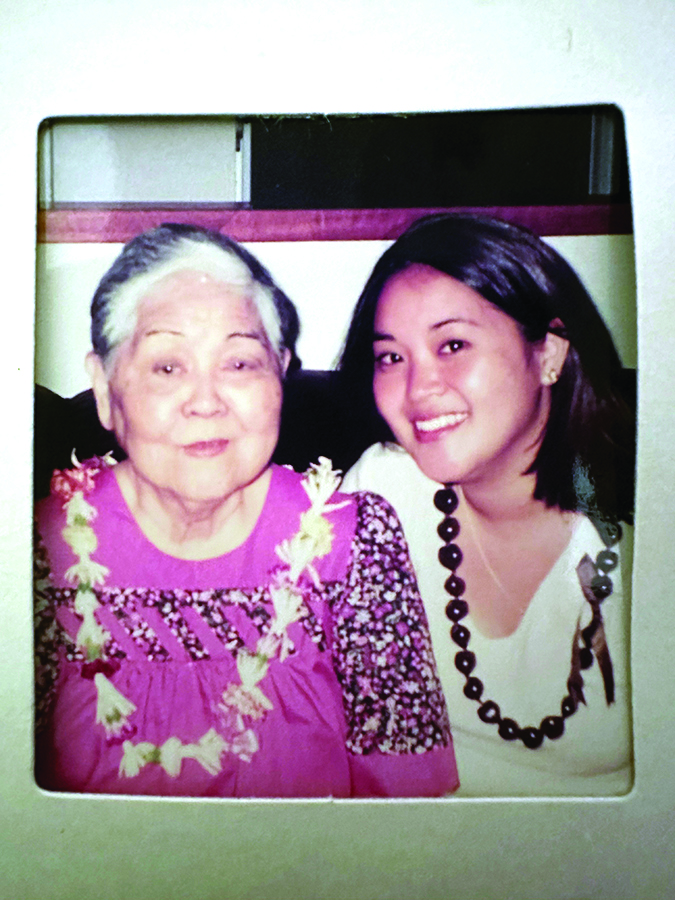
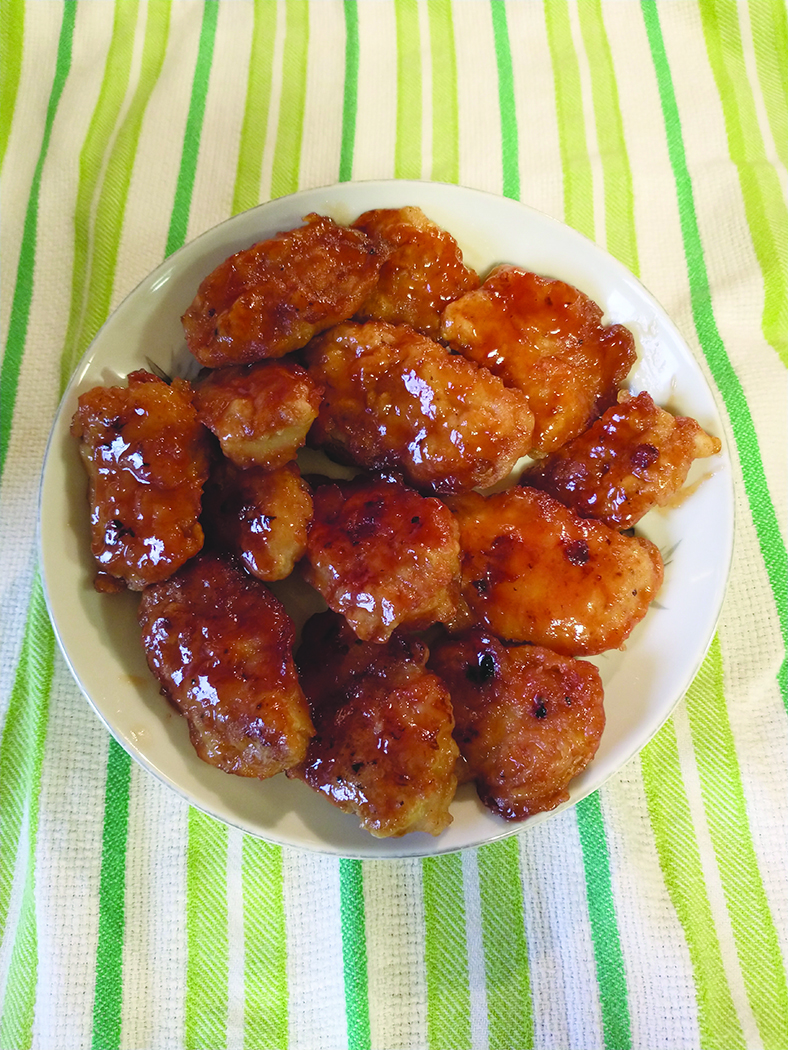
This is one of my Grandma Goya’s recipes and one that my dad requests for Father’s Day or his birthday — it’s one of his favorite meals. My family loves eating this dish, as well. It is a labor of love because it takes a long time to make, but it sure is worth the time and effort.
Chicken Ingredients: 2 lbs. boneless chicken pieces 1 cup potato starch 1 tsp. seasoned salt 1 tsp. garlic salt 2 eggs, beaten 3 Tbsp. vegetable oil for frying
Sweet & Sour Sauce Ingredients: ½ cup Japanese rice vinegar ¾ cup white sugar ¼ cup water 3 Tbsp. ketchup ½ tsp. salt 2 tsp. shoyu ¼ cup pineapple juice
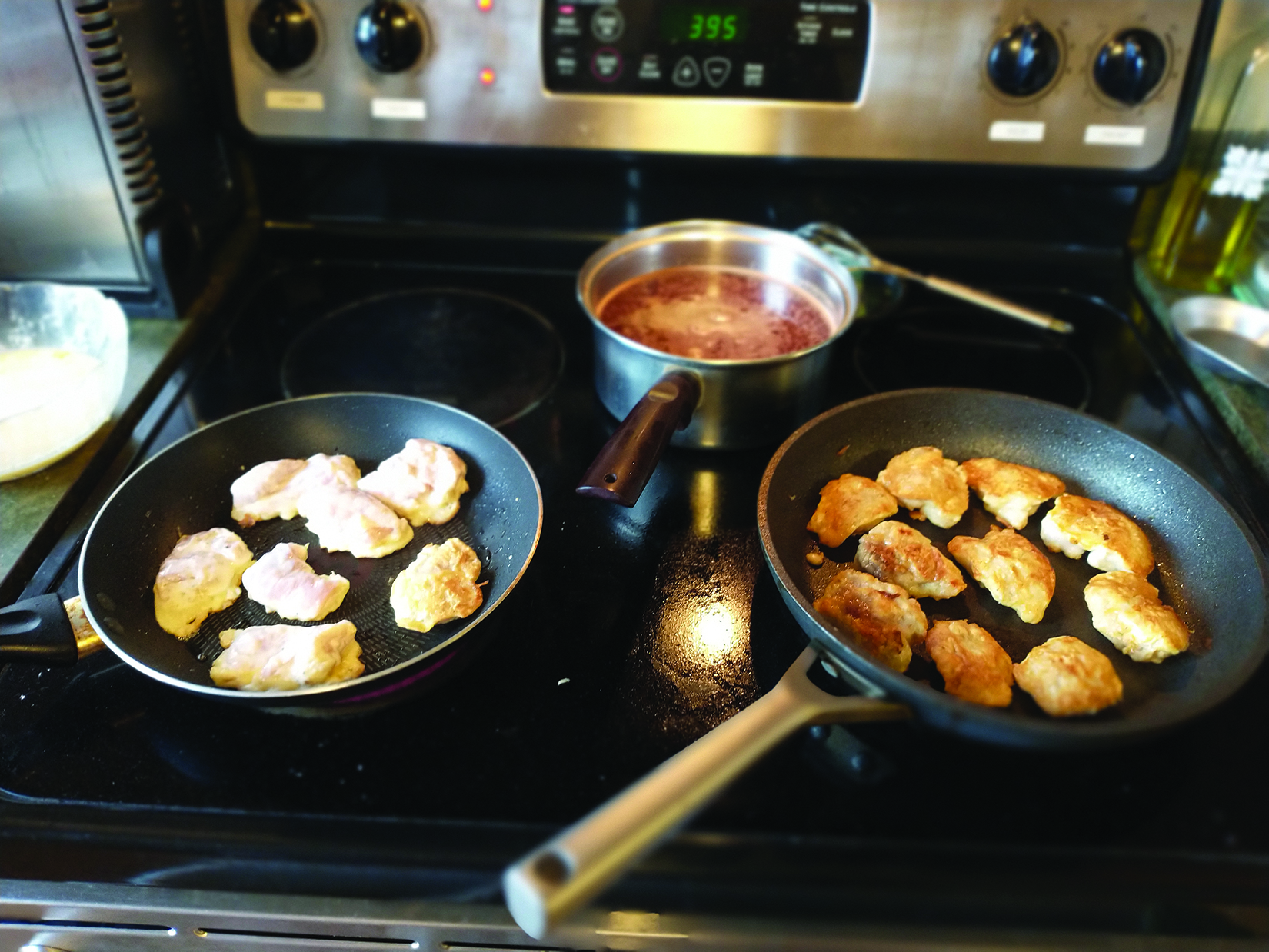
Directions: Prepare the chicken: Put chicken in a bag with potato starch and seasonings. Dip pieces in egg mixture. Fry in vegetable oil until golden brown.
Create the sauce: Combine sweet and sour ingredients and cook in a sauce pan until the sugar is dissolved.
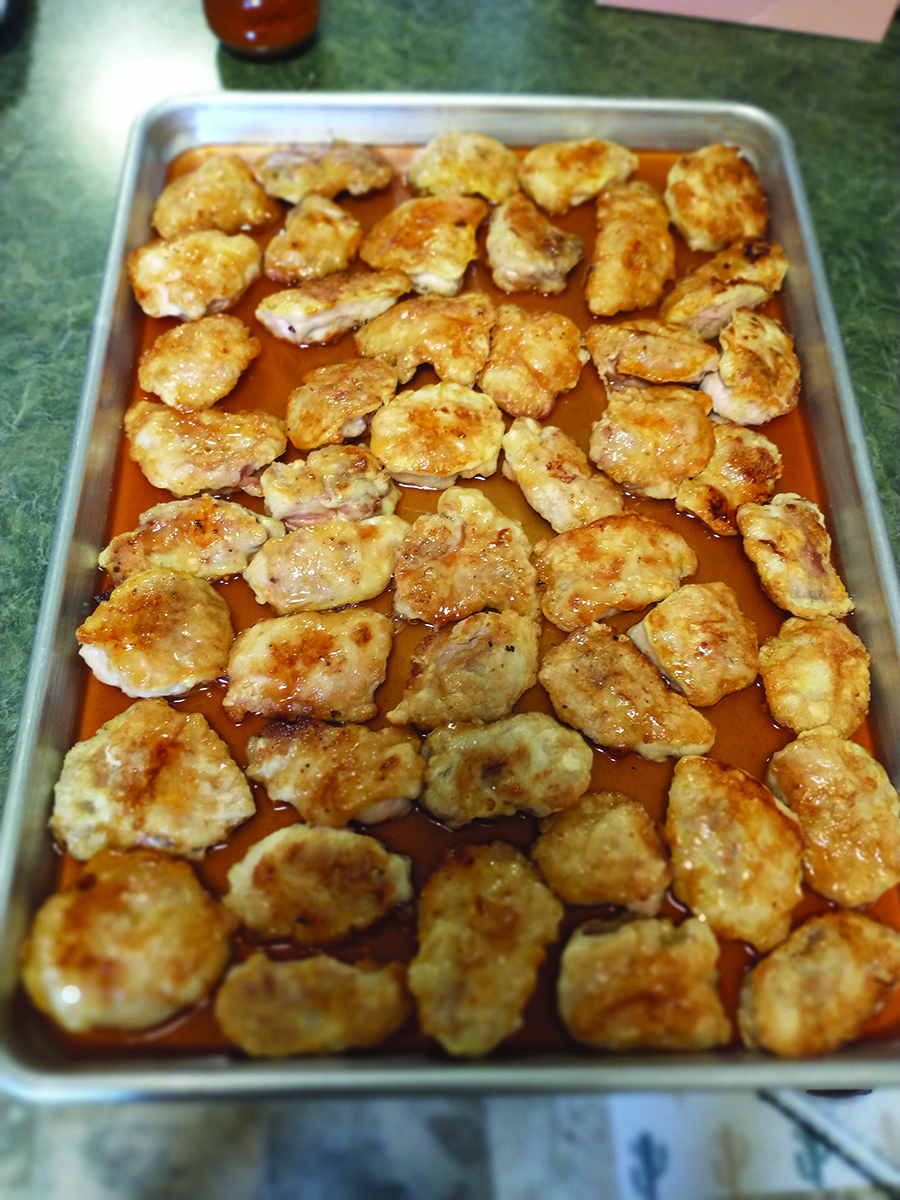
Lay cooked chicken in a 9-by-13-inch baking pan. Pour sauce over the chicken. Bake uncovered at 350 degrees for 40 to 50 minutes. When sauce thickens and becomes like a glaze, turn the chicken to baste it with sauce.
Prep time: 90 minutes | Serves: 4
Do you have a favorite recipe and story to share? For consideration in the next issue, include a photo and mail them to Generations Recipe, PO Box 4213, Honolulu, HI 96812, or email them to Cynthia@generations808.com.
This is one of my Grandma Goya’s recipes and one that my dad requests for Father’s Day or his birthday — it’s one of his favorite meals. My family loves eating this dish, as well. It is a labor of love because it takes a long time to make, but it sure is worth the…
I’m not the first to fall in love with Mauna Kea. Sarah Lyman — a missionary who came to Hawai‘i from New England in 1832 — wrote in her journal about the beauty of Mauna Kea when the clouds and rains cleared. You can hear readings of several journal entries in one of the exhibits at the Lyman Museum, not far from the old Hilo waterfront.
The museum has two major galleries. The entrance to the Earth Heritage Gallery on the first floor is a lava tube. Following the yellow footprints on the floor takes you around the gallery, beginning with the formation of the Hawaiian Islands, followed by the arrival of life by wind, waves and wings, and then you journey through the habitats from mauka (mountain) to makai (sea).
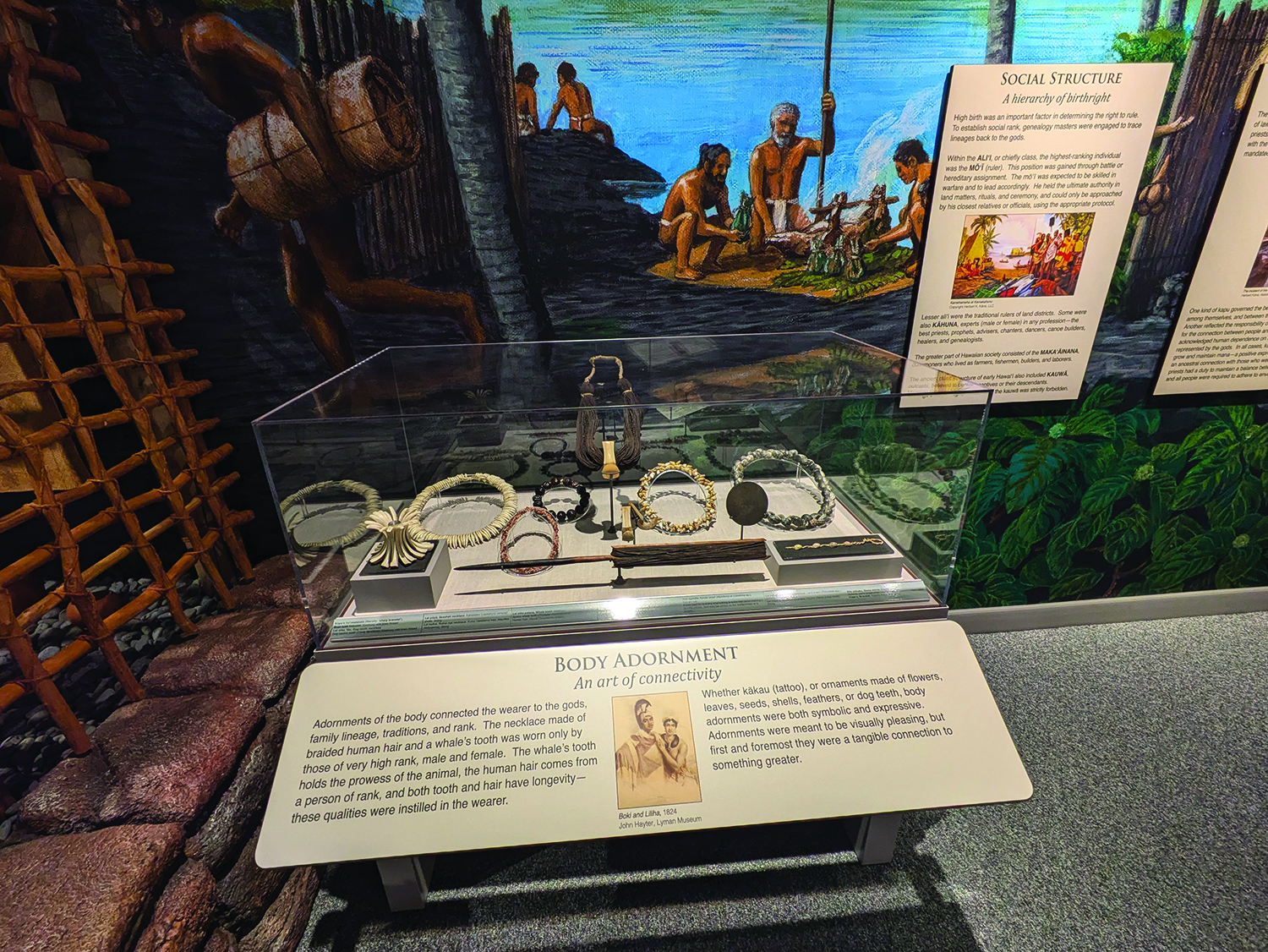
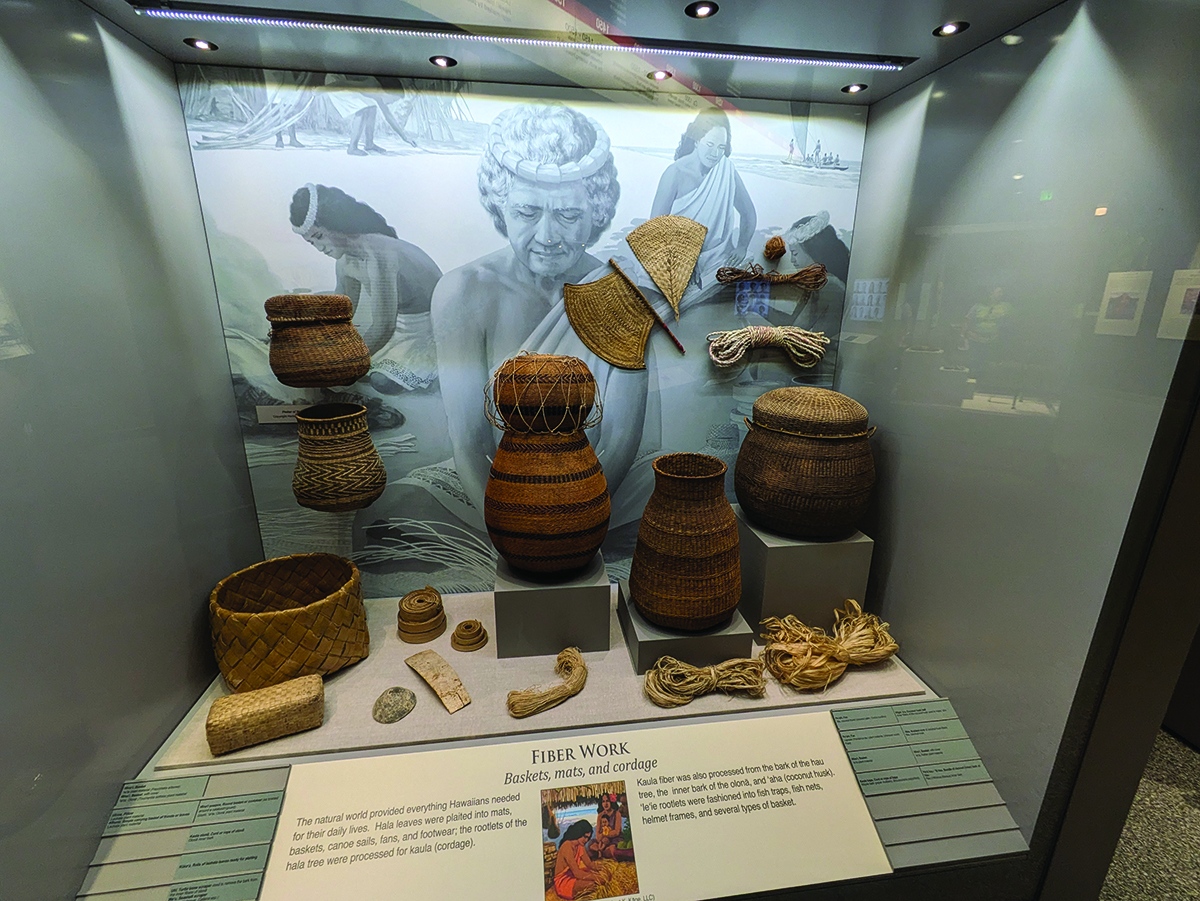
The upstairs Island Heritage Gallery is also self-guided and starts with the arrival of the first Polynesian settlers. It is rich with exhibit cases displaying Hawaiian cultural items like stonework, kapa, feather work and drums.
There are exhibits about European explorers, whalers, missionaries, plantations, the monarchy and statehood, and some contemporary oral history recordings. My favorite spot was the music nook, which has recordings from different eras.
Accessibility and cost
Wheelchairs, walking frames and mobility scooters are all allowed, but strollers aren’t. Just carry that mo‘opuna in your arms!
A staff member or docent will happily transport you in a freight elevator if you can’t do stairs. Being taken in that elevator to the restrooms in the basement gets you the added bonus of seeing the archivist at work!
All the entrance fees are less than $10. As a kama‘āina senior, I paid just $3 and spent a wonderful two hours there.
This museum is top-notch — the Smithsonian has accredited Lyman’s gem collection in the top 10 in the nation. And, honestly, I found it far less daunting than the Bishop in Honolulu, but with the same amount of scholarship behind it.
Tip: Call ahead to make a reservation to visit so that you don’t arrive at the same time as a tour group or a school field trip.
I’m not the first to fall in love with Mauna Kea. Sarah Lyman — a missionary who came to Hawai‘i from New England in 1832 — wrote in her journal about the beauty of Mauna Kea when the clouds and rains cleared. You can hear readings of several journal entries in one of the exhibits…
Like birthdays and anniversaries, holidays are filled with loving memories of special times celebrated with family and friends.
But when you have experienced the loss of a loved one and are grieving, it is sometimes difficult to authentically participate with others during the holidays.
Your world has changed, often in profound and very personal ways. Emotions are often complex and hard to share with others.
So how can you manage these feelings? Here are some ideas and resources that may be helpful to you this holiday season.
♥ Give yourself permission and space to feel what you are feeling now. Realize you won’t always feel like you do now. Reduce the expectations that you place on yourself. We each grieve in our own unique way with our own timing. These feelings can be unpredictable — much like riding a roller coaster. ♥ Create a new holiday custom in their memory. Consider setting a place at the holiday table for your loved one who died, lighting a candle in their honor, giving to a charity they liked or sharing loving stories which include them. Remember, love and grief go hand in hand. ♥ Try sharing with others what you need. Others want to help but don’t necessarily know what you need or what might be helpful for you or your family. ♥ Don’t feel obligated to participate socially with others. It’s okay. When invited, you can say, “Let me check my calendar and get back to you.” Or say, “I can stop by for a couple of minutes.” That way, you can stay or leave the event depending on how you feel once you are there. ♥ Seek the kind of people who will provide you opportunities for healing. There are others who can be a source of compassion, love and healing during your journey.
Like birthdays and anniversaries, holidays are filled with loving memories of special times celebrated with family and friends. But when you have experienced the loss of a loved one and are grieving, it is sometimes difficult to authentically participate with others during the holidays. Your world has changed, often in profound and very personal ways.…
Falls are a significant concern for our kūpuna, often leading to serious injuries and diminished quality of life. However, proactive measures can help prevent falls.
First, maintaining physical strength and balance is crucial. Gentle exercises like tai chi, yoga or strength training enhance stability. Simple daily activities like walking or using a stationary bike can also contribute to better balance.
Despite their best efforts to remain strong and balanced, seniors sometimes need assistance with physical tasks, such as getting in and out of a vehicle. Transfer seats are specially designed to help a senior or person with a disability move from a wheelchair or scooter into a vehicle’s driver or passenger seat instead of driving or riding while seated in their wheelchair.
A transfer seat extends outside of the vehicles and lowers, making vehicle entry and exiting easier. A heavy scooter can be loaded into a car with trunk-mounted lift. These products can reduce the risk of falls and also protect the wellbeing of both the senior and the caregiver.
By using a transfer seat, kūpuna can significantly reduce their risk of falling, maintain their independence, stay active and safe, and ensure a more secure lifestyle. An evaluation with a mobility consultant can help determine whether a transfer seat is right for you.
Falls are a significant concern for our kūpuna, often leading to serious injuries and diminished quality of life. However, proactive measures can help prevent falls. First, maintaining physical strength and balance is crucial. Gentle exercises like tai chi, yoga or strength training enhance stability. Simple daily activities like walking or using a stationary bike can…
Having a very strict father was the key to the life of Jeanette S. Akamine because she has always been very independent. She said that his teachings were always with a positive attitude.
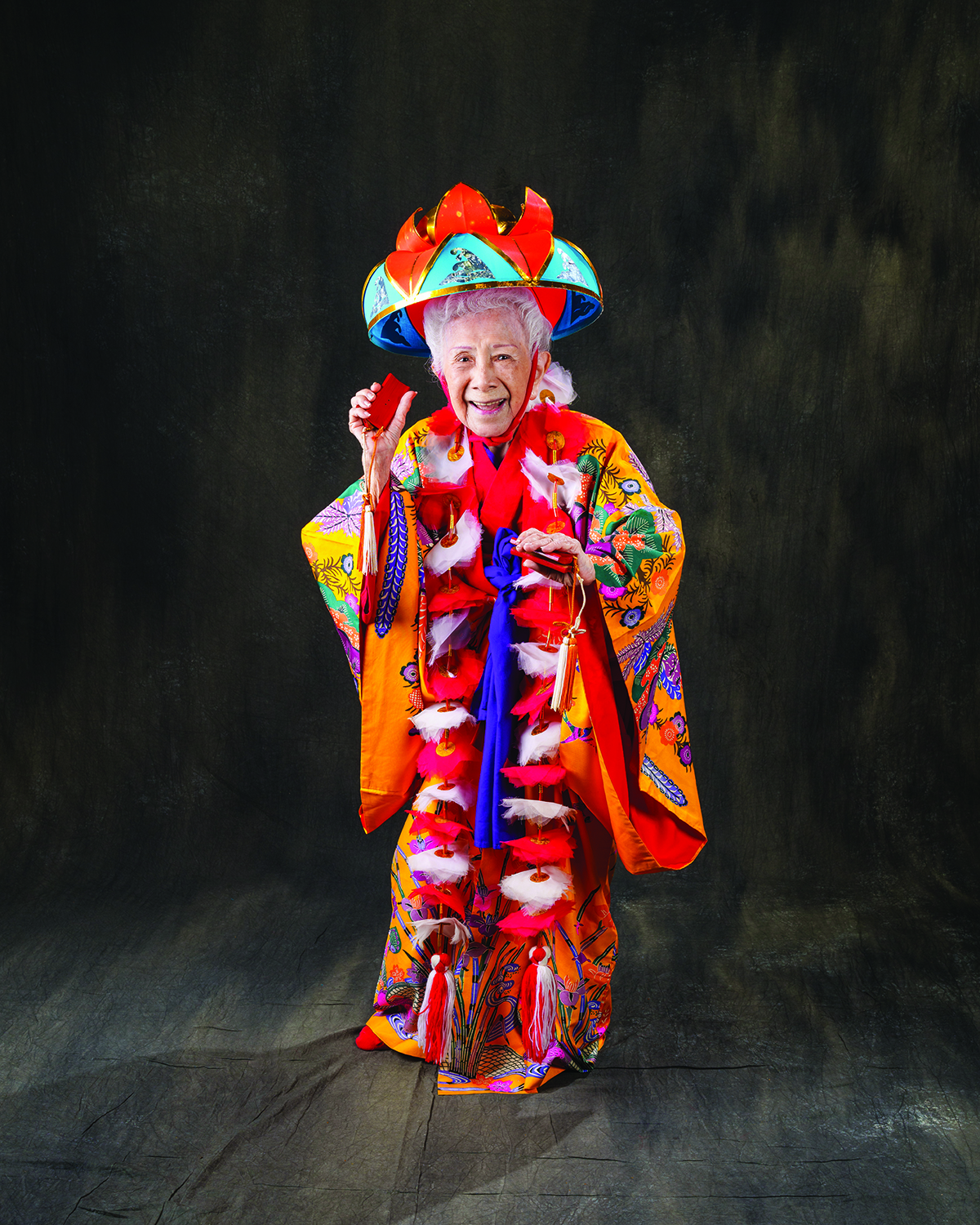
Jeanette models a colorful traditional costume at this year’s Okinawan Festival. PC: One Moment in Time Photography
She graduated from St. Francis Convent, then helped support the family’s Nu‘uanu Avenue Myogaya Restaurant in the kitchen. Jeanette completed beauty school at the age of 40, with night classes on fashion at the UH, then opened her own beauty shop called “J’s Waikiki Beauty Salon.” In order for her clients to use the only parking stall, Jeanette walked three miles to and from home. As of today, Jeanette still cuts hair for the family and keeps her license active.
Turning 100 on Nov. 19, 2024, Jeanette being the oldest of 10 children, seven still surviving today, attributes her longevity to a caring and loving family, plus eating fruits and vegetables.
A typical day in Jeanette’s life is to wake up about 6am, exercise, meditate and have breakfast as she reads the newspaper. She still prepares her own food for lunch and dinner too. Karaoke is every Friday at the Lanakila Multi-Purpose Center and Hanafuda on Thursday at the Windward Mall. I want to be like this vibrant “crackerjack.”
Having a very strict father was the key to the life of Jeanette S. Akamine because she has always been very independent. She said that his teachings were always with a positive attitude. She graduated from St. Francis Convent, then helped support the family’s Nu‘uanu Avenue Myogaya Restaurant in the kitchen. Jeanette completed beauty school…
To see Jacqui and Chuck Probst smiling on the pickleball court as they battle their opponents, one may never guess they experienced an actual war at a young age. Both volunteered for service in the Army during the Vietnam War in the late 1960s. They enlisted separately, as they had not met — yet.
Jacqui enlists
Jacqui was born and raised in Waimea on the Big Island. After earning a BS in nursing at UH, she enlisted in June 1968. She graduated from the basic Army nurse course at Ft. Sam Houston, then volunteered to go to Okinawa and served in the neurological-orthopedic ward of a US military hospital caring for evacuees from Vietnam for a year. Then she volunteered to go to Vietnam.
“When she got to Vietnam, she was assigned to what was basically a nonexistent unit,” says her husband Chuck. “In 1969, they set up a Quonset hut surgical hospital in An Khê in the Central Highlands from scratch.”
Recall a scene from the TV series “MASH” and you will get a good idea what the 17th Field Hospital was like.
Jacqui and her colleagues took care of soldiers and civilians evacuated from the battlefield around them. She worked 12-hour days, every day. “They were frequently under rocket attack from the Viet Cong,” says Chuck.
Close call
Jacqui went to take a shower one night and realized she had forgotten her soap. Just as she headed back to her quarters, all hell broke loose. The shower she had occupied seconds before was reduced to matchsticks. Her room was completely destroyed. She received fragment wounds and was deaf for several weeks due to the blast. The ear damage she incurred affects her hearing to this day. She was awarded a Purple Heart for injuries sustained in combat.
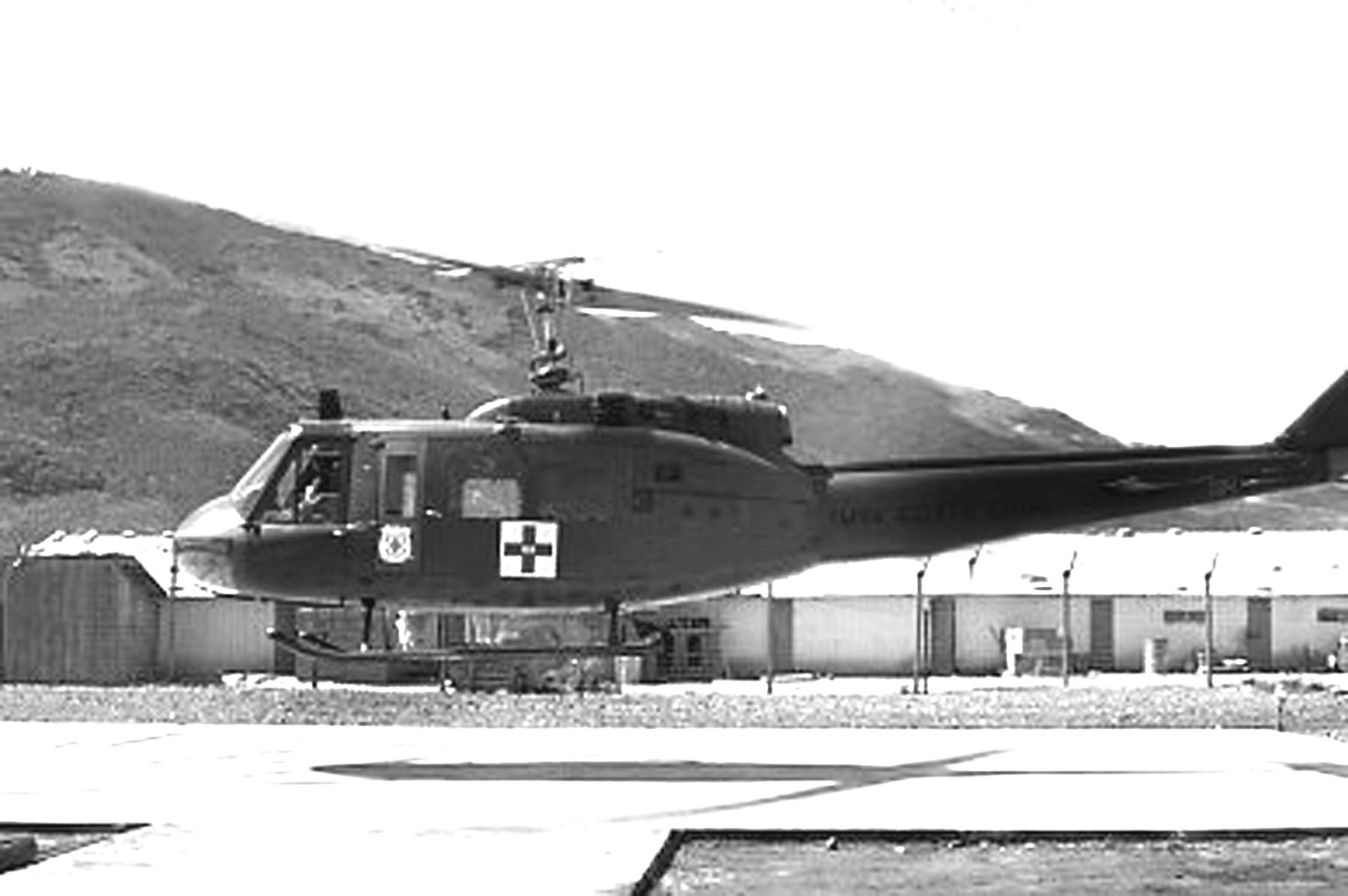
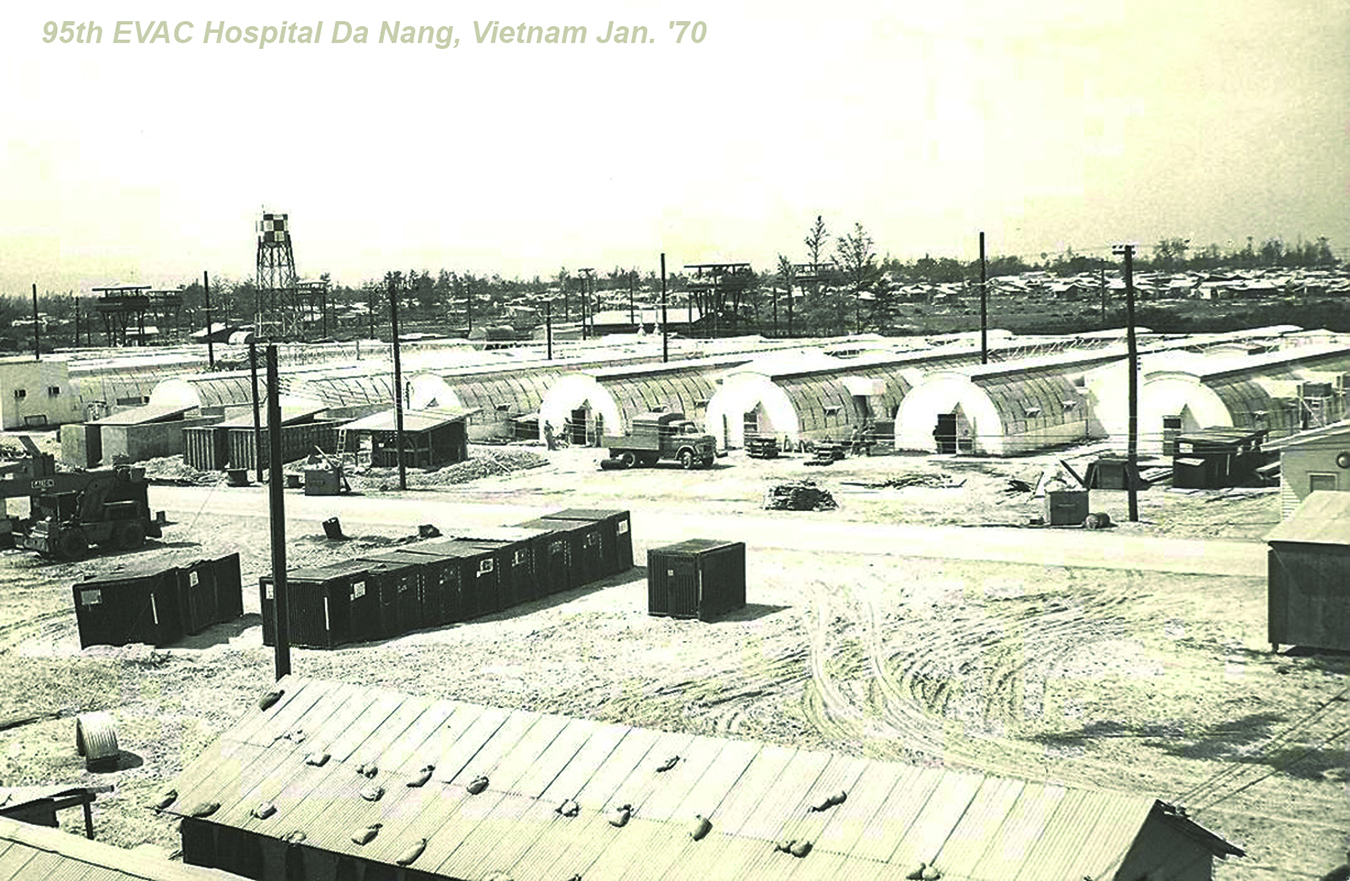
So Jacqui, now an Army captain, transferred to the 95th Evacuation Hospital where she served as the head ER nurse. The coastal hospital was safer from enemy attack. But it was another scene from “MASH” when helicopters would come in laden with casualties. However, the helicopters headed to the 95th were much larger, carrying anywhere from 20 to 35 wounded. Jacqui and her staff were sometimes suddenly overwhelmed with the influx of casualties. Jacqui’s job was to triage them — determine the urgency of their need for and nature of treatment — and prep the injured for the operating room. She kept them alive until they could be treated surgically. In addition, she also taught and worked with medics and new incoming nurses at the 95th Evacuation Hospital.
Chuck signs up
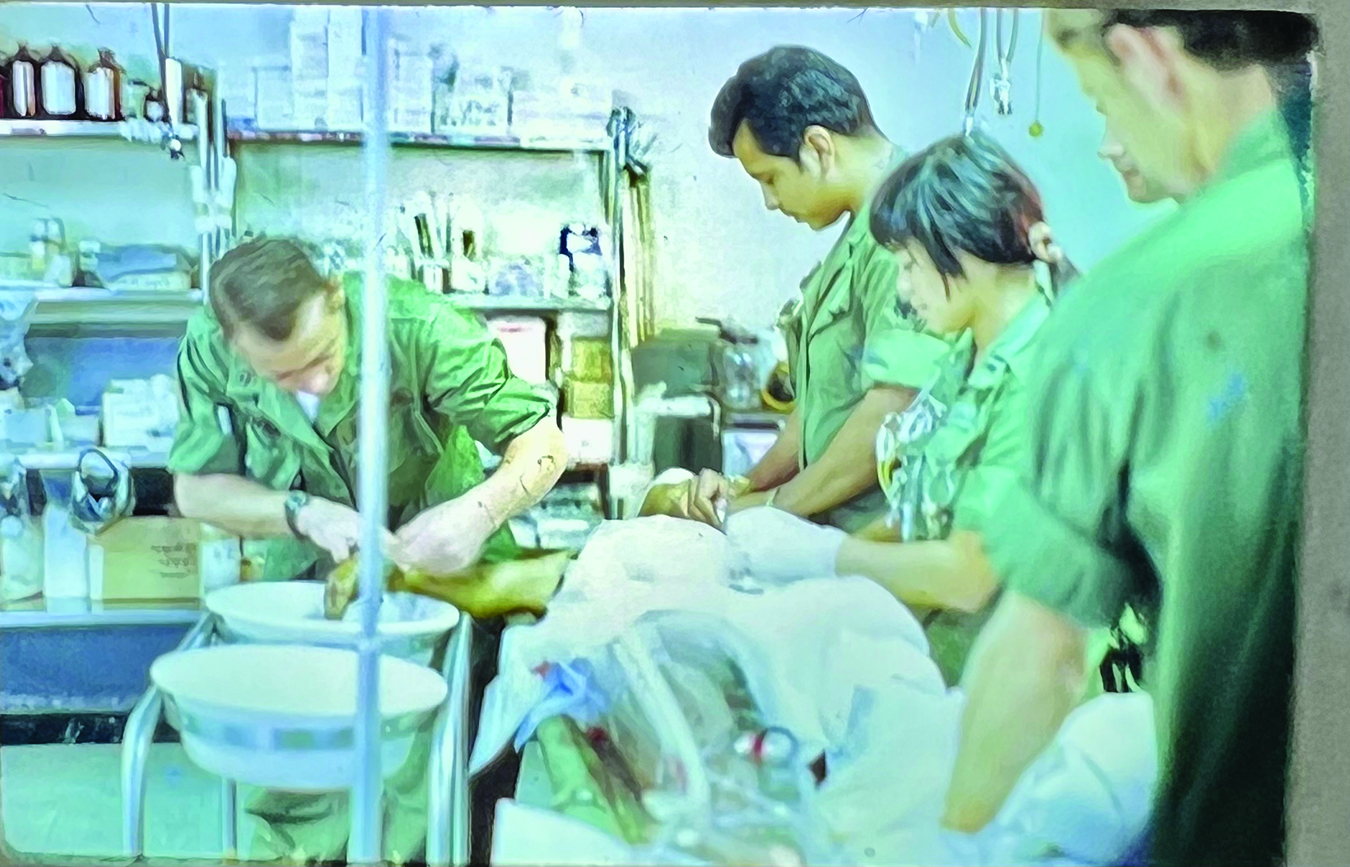
The 17th Field Hospital in An Khê in the Central Highlands of Vietnam.
Chuck signed up for the military in the summer of 1968. Once he completed his internship at a Philadelphia hospital, he volunteered for Army Special Forces (SF) to become a member of the elite Green Berets. He first went to jump school (parachuting training), then it was up to Ft. Bragg in North Carolina, where he was assigned to the 7th Special Forces Group in 1969. Then an Army Ranger School slot opened up. “Ranger School is the toughest training school the Army has,” says Chuck. Not very many physicians went to Ranger School, but his Special Forces commanding officer was confident in his choice.
The 95th Evacuation Hospital in Da Nang, January PC: Gaylen Blosse
In April 1970, Chuck completed his three-month Ranger training and was shipped off to Vietnam, where he was assigned to the 5th Special Forces Group in I Corps, adjacent to North Vietnam. He ran a 100-bed hospital for indigenous troops. Wounded Montagnard troops would be scooped up by helicopters and taken to Jacqui’s hospital, treated and then sent to the Vietnamese hospital in Da Nang. Chuck says, “I would go there once a week and try and find these fellows.” Then they would be transported to the SF-run hospital in Da Nang for treatment. “I would also sometimes go over and help out at the 95th Evacuation Hospital.”
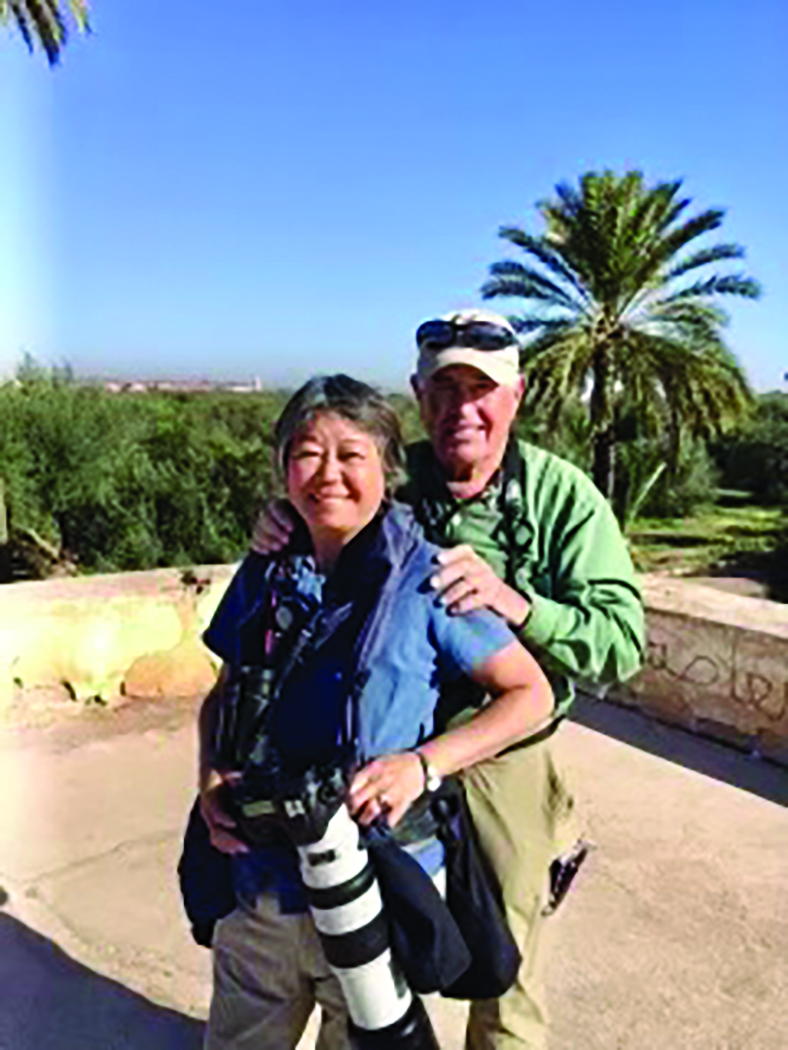
Chuck and Jacqui’s photos may have faded, but not their love for each other and their country.
Serendipity
“In the 95th Evac ER one day, I met this cute little nurse. I asked her out. She turned me down.” Jacqui giggles in the background. “I asked her again and this time she accepted. The rest is history,” Chuck says, laughing.
Chuck came home in December 1970, they married in Hilo, then he returned to Vietnam for the last three months of his tour. He returned and they moved to Philadelphia, where Chuck spent his early years. Jacqui taught nursing at the 3,000-bed Philadelphia General Hospital for four years, utilizing her training and experience in Vietnam. Chuck went into a four-year residency program in orthopedic surgery in Philadelphia. Chuck worked nights at emergency rooms in the city to “make a couple extra bucks.” When they finished in July 1975, they moved to Maui and Chuck set up his private practice. Chuck also served in the Army Reserve, retiring as a colonel. Since retirement, they have travelled to almost 200 countries. These world travelers will be married 54 years this December.
Jacqui in Receiving and Pre-op at the 95th Evacuation Hospital in Da Nang.
Chuck and Jacqui don’t think of themselves as heroes. They view their service pragmatically and consider themselves to be fortunate. “So many people served,” says Chuck. “Many did not come back. They paid the ultimate price over there.”
Although our county’s involvement in the Vietnam War ended over 50 years ago, time does not heal all wounds or erase all memories. It takes courage to endure echoes of the past. But you can’t always determine courage at a glance. Take the couple smiling at you from the other side of the pickleball court. They just may be heroes who helped change the world through their bravery, humanity and dedication.
To see Jacqui and Chuck Probst smiling on the pickleball court as they battle their opponents, one may never guess they experienced an actual war at a young age. Both volunteered for service in the Army during the Vietnam War in the late 1960s. They enlisted separately, as they had not met — yet. Jacqui…
I cannot believe that the holidays are already upon us, so let me step back and take a moment to reflect and thank each of my clients for allowing me to be part of their life. Please know that each of you have had and continue to have a tremendous impact on my life.
As an estate planning attorney, I have the unique privilege of being invited into each of my clients’ lives. Some clients I have known for decades, while others I have only known for a short period of time. Wherever they are in their lives, I do my best to meet them there.
The stories and experiences clients share are varied and colorful. Some clients have experienced immense and unspeakable tragedy, while others have reaped success and accomplishments. I learn so much about myself from each of you. I especially value the life lessons and wisdom you impart. Thank you for reminding me how resilient and compassionate people are, and how important it is to give people grace.
To all my clients and future clients, thank you for trusting me and allowing me the privilege to walk alongside you. It is because of you that I go to sleep thankful and wake up grateful. I wish you all the happiest of holidays.
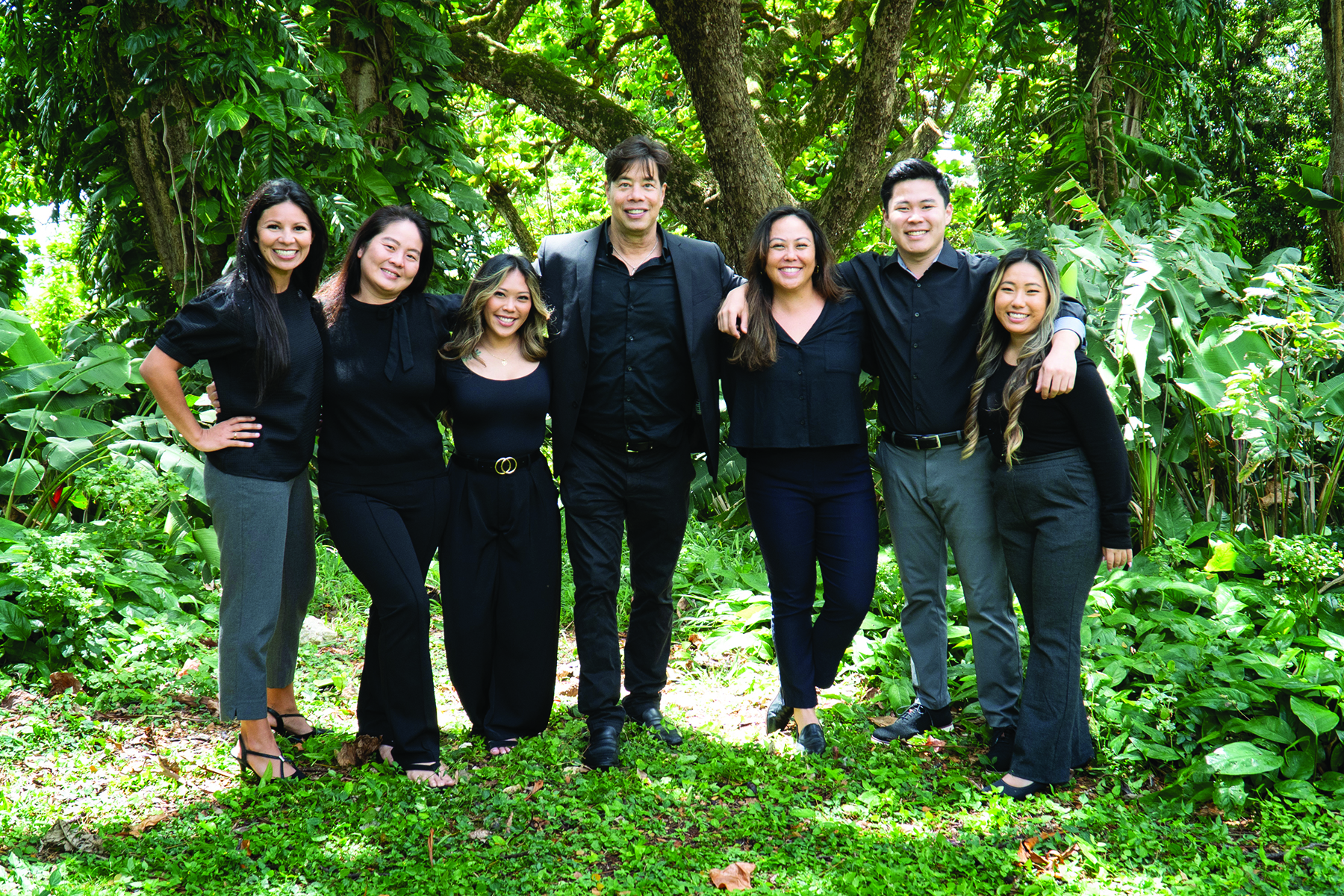
Stephen Yim and Monica Yempuku are attorneys at law specializing in estate planning, drafting wills and trusts, providing supplemental needs-planning for the disabled, navigating estate and gift taxes, and administering estates.
I cannot believe that the holidays are already upon us, so let me step back and take a moment to reflect and thank each of my clients for allowing me to be part of their life. Please know that each of you have had and continue to have a tremendous impact on my life. As…
When we say “‘ohana” in Hawai‘i, we are talking about our parents, siblings, children, grandchildren and our extended family of friends, colleagues, team members, etc. My family has a “tennis ‘ohana” that goes as far back as 40-plus years. Yes, we met playing tennis in Kalihi, then on Sub-Base, and now in ‘Aiea. The oldest member is78 years old, with the youngest at 2 months old.
This special ‘ohana has been together through weddings, births and deaths, being very supportive through it all. I recently counted that our 12 families have 22 adults, 35 young adults and those young adults produced 22 more tennis ‘ohana members. That totals 79 individuals which became 80 when one of our ‘ohana got married this October. So many memories are in the making by so many people!
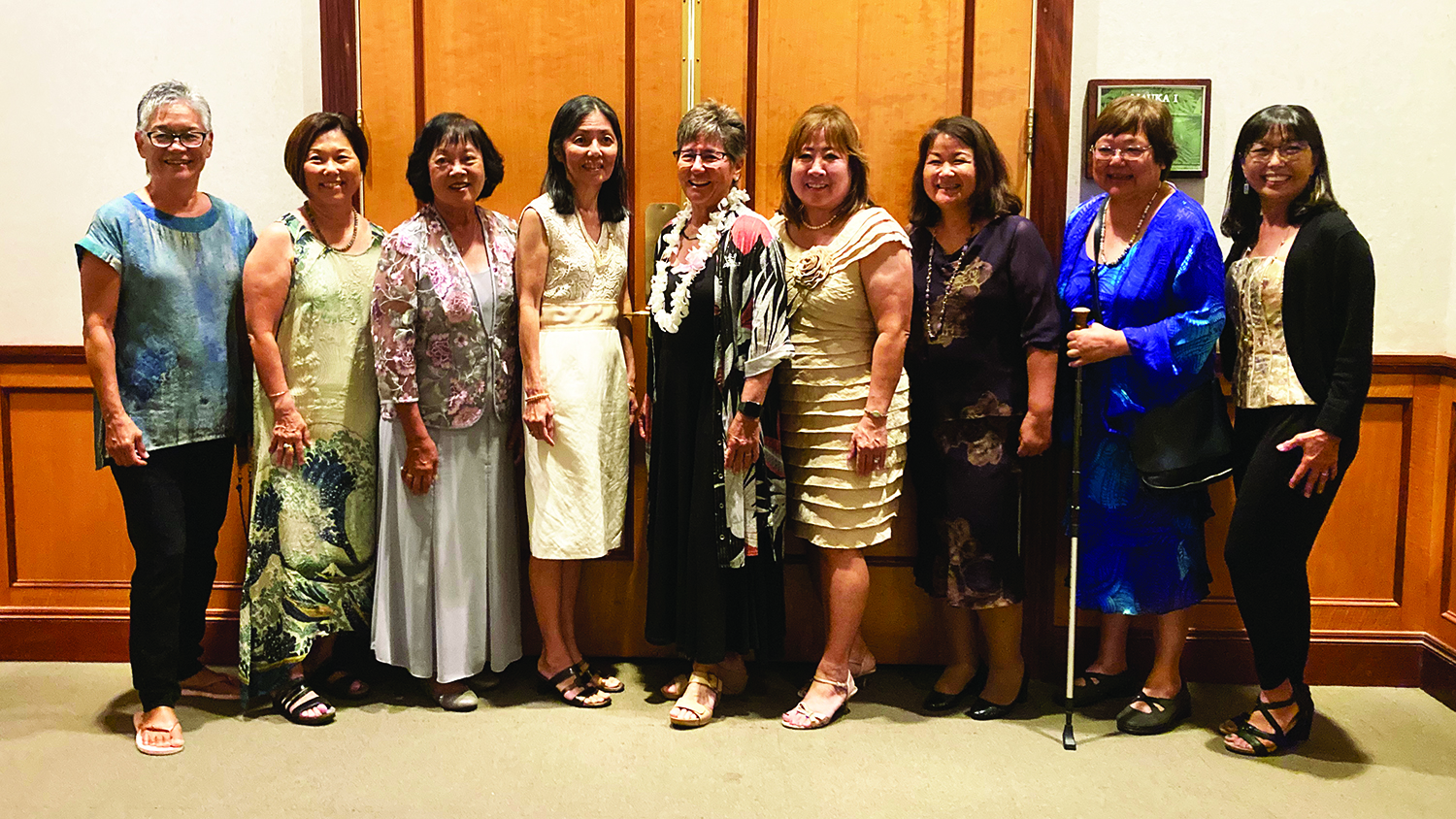
I found a picture of the tennis ‘ohana women to share with you in this article. It was taken at the wedding reception of one of our young adults last July. When the women were together for the bridal shower, one of them thought it would be nice for us to take out our previously worn mother-of-the-bride-or-groom outfits and wear them to this wedding. What a good idea, since I had three gowns that were worn only once.
What does your ‘ohana look like? I hope you continue to make happy memories with them.
When we say “‘ohana” in Hawai‘i, we are talking about our parents, siblings, children, grandchildren and our extended family of friends, colleagues, team members, etc. My family has a “tennis ‘ohana” that goes as far back as 40-plus years. Yes, we met playing tennis in Kalihi, then on Sub-Base, and now in ‘Aiea. The oldest…
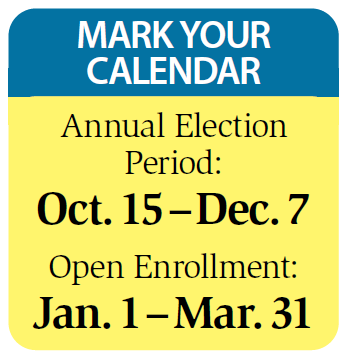
During the Medicare Annual Election Period (AEP), Oct. 15 through Dec. 7, eligible Medicare beneficiaries can:
Enroll in Medicare health benefits such as a Medicare Advantage plan, with or without prescription drug coverage
Switch from one Medicare Advantage plan to another
Enroll in a stand-alone Prescription Drug Plan (PDP)
Benefit packages change every year so review the Annual Notice of Change from your Medicare health plan to see if the benefits still suit your needs. All Medicare Advantage plans are focused on simplifying the healthcare experience. They offer a wide variety of products to meet the members where they are and empower them to take charge of their health. All Medicare Advantage plans offer a variety of benefit packages to ensure there a good fit for each beneficiary.
If you have questions, need help understanding your benefits or want to switch health plans, call your licensed broker.
WELLCARE BY ‘OHANA HEALTH PLAN Wellcare By ‘Ohana Medicare Plans: 1-844-917-0175 (TTY 711) Wellcare By ‘Ohana Prescription Drug Plans: 1-866-859-9084 (TTY 711) Monday–Friday, 8am–8pm wellcare.com/hawaii
During the Medicare Annual Election Period (AEP), Oct. 15 through Dec. 7, eligible Medicare beneficiaries can: Benefit packages change every year so review the Annual Notice of Change from your Medicare health plan to see if the benefits still suit your needs. All Medicare Advantage plans are focused on simplifying the healthcare experience. They offer…
Enjoying a successful career or owning a profitable business can enable a person to give some wealth back to the community where it was generated. If this describes you, consider the following pointers:
■ NEVER SELL APPRECIATED ASSETS IN ORDER TO MAKE CASH GIFTS If you sell an asset in order to generate cash to make a charitable gift, you may rob the charity of a bigger gift and yourself of a bigger income tax deduction. There is a better way.
Let’s say you own property worth $100,000 that you inherited back in the ’70s when it was worth next to nothing. If you sell the property now because you want to make a big gift to your favorite charity, you may have to recognize a capital gain of $100,000 and pay $22,500 or so in tax on that gain. This will leave you with $77,500 to donate to the charity, for which you will get a deduction of $77,500.
While the tax deduction is nice and the gift is generous, what if you gave the property to your favorite charity and then the charity sold it? In that case, the charity would receive the $100,000 sales proceeds, and you would get a charitable deduction of $100,000. That’s a great deal for your favorite charity and for you.
There is an annual limit on how much you can deduct each year for gifts to charity, but you can carry forward the excess of what you gave over the amount you could deduct for up to five years. Even with the carry forward, if your gift is very generous, you might not be able to deduct the full amount of your gift.
■ YOUR TRADITIONAL IRA MIGHT BE A CHARITABLE GIFT CASH MACHINE Once you reach a certain age (currently, 73, but this number may go up in the future), you have to take Required Minimum Distributions (RMDs) from your IRA so the IRS can collect some tax.
However, if you direct your IRA trustee to send your RMD directly to one or more charities, you will not have to pay tax on the RMD, up to $100,000 worth of charitable gifts per year.
Unfortunately, you will not get a deduction for your gift, but when you crunch the numbers, not having to recognize the RMD as income is usually a far better deal for you than being able to deduct your gift.
As pointed out above, there is a limit on how much of your RMD can go to charity without you being taxed on it. Moreover, you cannot apply future years’ RMDs against a current gift of IRA assets in excess of $100,000.
■ TALK WITH YOUR TRUSTED ADVISORS Meet with your trusted advisors to discuss the best way to benefit your favorite charities that will also reduce your income tax.
There are lots of complicated rules to navigate, but making enhanced gifts to charity while reducing your income tax liability just might make the effort worthwhile.
And please remember that there are many more ways to make charitable gifts. Your trusted advisors can help you to explore them.
Enjoying a successful career or owning a profitable business can enable a person to give some wealth back to the community where it was generated. If this describes you, consider the following pointers: ■ NEVER SELL APPRECIATED ASSETS IN ORDER TO MAKE CASH GIFTSIf you sell an asset in order to generate cash to make…