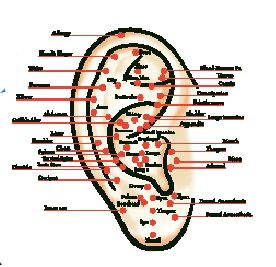
Auricular medicine is a highly developed, independent system of medicine recently rediscovered and revived as a major modality in the Chinese healthcare system. Thousands of years ago, it was discovered that the ears themselves contain nerve and acupuncture points corresponding to many areas and regions of the body. By stimulating these points, positive changes in the corresponding area can be created.
In China over the past 2,000 years, the ears have been used to treat and diagnose diseases. However, the art of auricular medicine goes far beyond improving one’s health. The ears — when examined closely by a trained practitioner — can yield tremendous insights into the nature of a person’s body and constitutional type.
This, in turn, gives the practitioner insights into the potential conditions, patterns and dysfunctions in the client’s body before symptoms may manifest. Over 400 points in the ear correlate to almost every system and functional process in the body. Treatment with auricular medicine is simple and painless. It can be used to assist with almost any chronic condition as a helpful adjunct therapy to any other modality.
As an expanding body of knowledge, auricular medicine uses modern medical technologies, such as micro current, magnetic fields and electrical detection. This builds upon the ancient foundational knowledge and advances the understanding of how body systems work in an integrated, holistic way to promote better health.
Auricular medicine is a highly developed, independent system of medicine recently rediscovered and revived as a major modality in the Chinese healthcare system. Thousands of years ago, it was discovered that the ears themselves contain nerve and acupuncture points corresponding to many areas and regions of the body. By stimulating these points, positive changes in…
What would happen if cybercriminals took control of your email account? They would have access to all the services and people you communicate with.
These criminals will be able to impersonate you, drain your financial nest egg and ruin your life!
To protect yourself, I encourage you to have more than one email account.
Before I go any further, take the time to look at your email’s inbox. Note who you are communicating with: Family members, financial institutions, physicians, Social Security Administration, social groups, Medicare, etc.
Do you have secure, strong passwords for your email account? I talked about this in the last issue of Generations Magazine (October/November 2017).
As important as it is to have strong passwords, you have to have more than one email account to avoid putting your eggs in one basket.
Having separate email accounts for different purposes will prevent you from losing everything if your email account has been compromised.
I strongly recommend at least one separate email account for the following tasks:
◆
To communicate with family and close friends.
◆
As a member of professional groups, civic and business organizations (Rotary clubs, etc.)
◆
Online banking, transferring funds, automatic deposits and payments.
◆
Online shopping and credit card purchases (PayPal, CitiCard, VISA, MasterCard and
Amazon, etc.)
◆
Social media (Facebook and
Instagram).
◆
A public email account that you don’t mind sharing with others. Use this when visiting websites that require an email account.
Don’t be tempted to use your online banking email account for online shopping, as shopping accounts tend to receive more spam (unsolicited email) and are targeted by online scammers. Your biggest challenge is to strictly adhere to one email account for its designated use.
THE DEPARTMENT OF THE PROSECUTING ATTORNEY
1060 Richards St., Honolulu HI 96813
What would happen if cybercriminals took control of your email account? They would have access to all the services and people you communicate with. These criminals will be able to impersonate you, drain your financial nest egg and ruin your life! To protect yourself, I encourage you to have more than one email account. Before…
Larry Gearing was riding his bicycle up a hill toward his home in 2006 when he felt chest pains. A doctor’s test revealed that, six months prior, he most likely had a silent heart attack causing a blocked artery. After undergoing cardiac rehabilitation, Larry and his wife, Charlene, decided to get fit and healthy.
Using the online fitness program, “Training Peaks,” the Gearings worked with virtual coaches to create weekly exercise and diet plans. Their dedication soon paid off. Larry ran his first 5K race and 100-mile bike ride. Charlene shed 30 pounds and completed a 5K race.
Their next goal? Triathlons!
At first, Larry joined Charlene at triathlons — but only from the sidelines. “He was my sherpa,” she jokes.
Inspired by his wife’s grit, Larry began training with her. “I felt guilty driving around in a car that had event stickers on it, for [sporting] events I hadn’t participated in,” he recalls.
Since then, the Ko Olina couple has trained for dozens of races and events. Charlene completed her first triathlon in 2009 at age 57, represented Team USA in the 2014 International Triathlon World Championship in Canada, and finished a Half Ironman in 2016, among her many outstanding accomplishments.
Larry completed his first triathlon in 2012, at age 62. That, plus the 8-mile Great Aloha Run, 60-mile bike rides, two Hapalua Half-Marathons and the 10K XTERRA.
They’ve hit roadblocks along the way. Charlene’s first 5K run ended in a pulled hamstring muscle, plantar fasciitis and physical therapy. The swim portion of Larry’s second triathlon in 2013 sent him to the emergency room with a flash pulmonary edema and bypass surgery. His heart is stronger now, thanks to an implanted defibrillator in his chest.
“All of these things have not stopped Larry from being a good runner,” Charlene says with pride.
Charlene and Larry’s Fit Tips:
Fill your daily diet with whole grains and colorful fruits and vegetables; avoid processed foods.
For nutrition tips, learn about the HMSA Blue Zones Project® (www.hawaii.bluezonesproject.com)
If personal training is not affordable, hire a
virtual coach on “Training Peaks” to reach fitness
and nutrition goals. Track your progress on a smartwatch, mobile device or computer.
Combine weekly exercises with weight training, flexibility and balance, and cardio-endurance, such as running, swimming, walking or biking.
Inspire others to be healthy and active; set fitness goals, and surround yourself with supportive, positive people.
Larry Gearing was riding his bicycle up a hill toward his home in 2006 when he felt chest pains. A doctor’s test revealed that, six months prior, he most likely had a silent heart attack causing a blocked artery. After undergoing cardiac rehabilitation, Larry and his wife, Charlene, decided to get fit and healthy. Using…
Do you know any kūpuna women who are skilled in hula and lei-making, love the Hawaiian culture and live the spirit of aloha? If so, encourage them to apply for 2018 Lei Queen.
The City’s Department of Parks and Recreation, which organizes the program, selects court members from different age groups to celebrate phases of life.
The 2018 court will feature Nā Kūpuna (the Elders) and reflect the theme, “Alohi Kea — the brilliant white lei, the platinum of kūpuna.”
There is no age limit, but applicants must be at least 61 years young by Saturday, March 3, 2018.
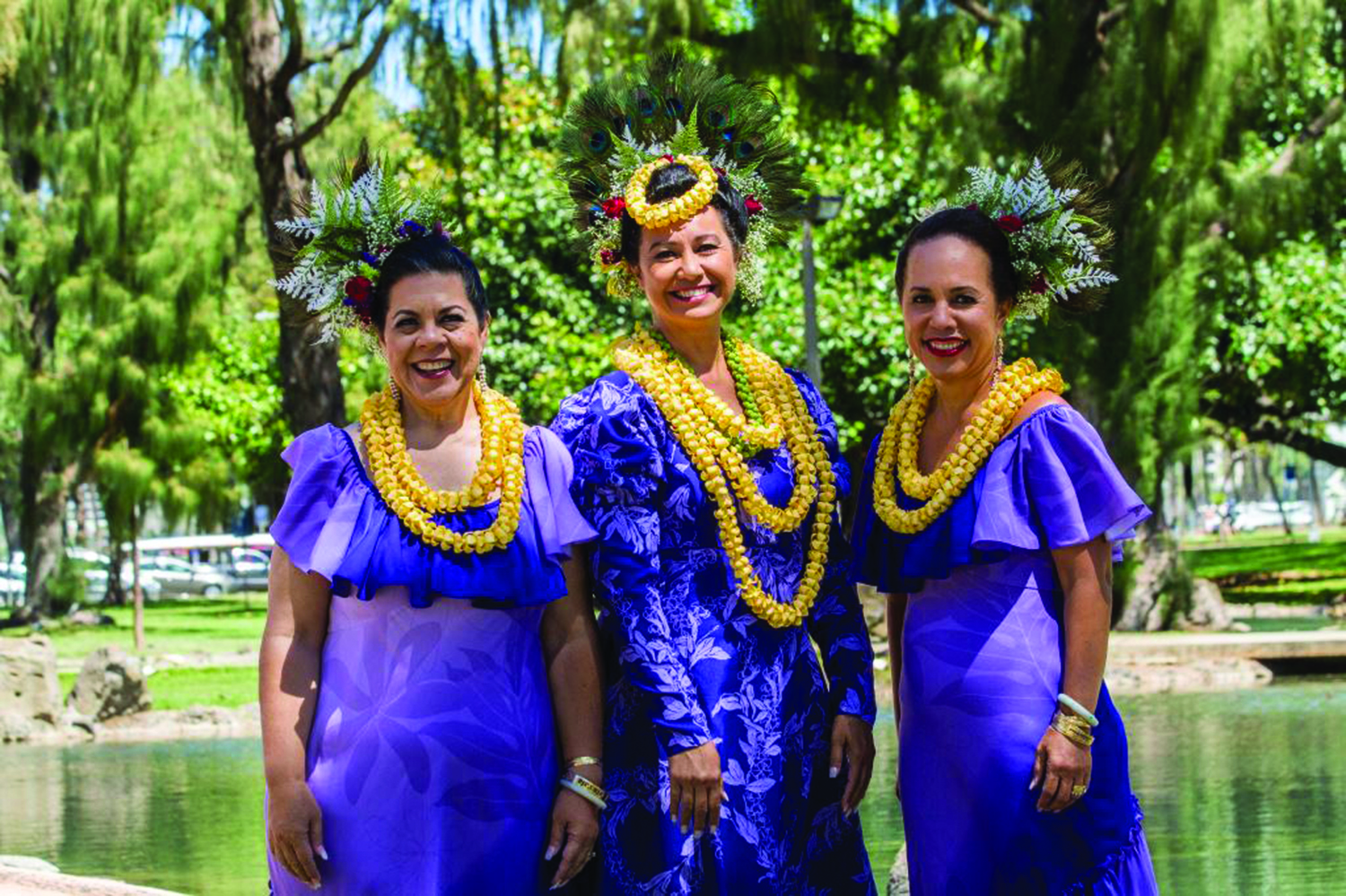
The 2017 Lei Queen and Court (from left): First Princess Pauline Leinā‘ala Robello, Queen Perle Puamōhala Kaholokula and Princess Ada Kalikokalehua Cooke. Photo by Dave Miyamoto
2018 LEI QUEEN
Application deadline:
Friday, Jan. 5, 2018
Court selection event:
Saturday, March 3, 2018; McCoy Pavilion, Ala Moana Regional Park; free event
91st Annual Lei Day
Celebration:
Tuesday, May 1,
Kapi‘olani Park
Do you know any kūpuna women who are skilled in hula and lei-making, love the Hawaiian culture and live the spirit of aloha? If so, encourage them to apply for 2018 Lei Queen. The City’s Department of Parks and Recreation, which organizes the program, selects court members from different age groups to celebrate phases of…
It’s hard to imagine how the holidays could be anything but joyous. Yet, for many, this time of year can trigger the holiday blues — temporary feelings of sadness or anxiety. Feeling blue is completely normal, though there are a few easy way you can boost your mood.
Be selective. Increased outings can cause unnecessary stress. Be selective about the events you attend so that you can enjoy each holiday gathering to its fullest.
Simple activities can prevent burnout during the holidays.
Manage expectations. Alleviate the pressure of the holidays by finding ways to celebrate with-
out burning yourself out. For example, prepare a special dish instead of undertaking the entire holiday meal.
Create new memories. Balance old memories by creating new ones. Starting a new holiday tradition is a great way to positively build up anticipation for the season.
Find good company. Pick up the phone and call a family member. Visit with an old friend. Invite your neighbor over for lunch. Sometimes, just
being in good company is enough to improve your mood.
Schedule downtime. For every activity you plan, pencil in some downtime. Looking after your health will keep you feeling refreshed and energetic all-season long.
It’s hard to imagine how the holidays could be anything but joyous. Yet, for many, this time of year can trigger the holiday blues — temporary feelings of sadness or anxiety. Feeling blue is completely normal, though there are a few easy way you can boost your mood. Be selective. Increased outings can cause unnecessary stress. Be…
The average person, especially kūpuna, spends 90 percent of his or her time indoors. Therefore, a clean, safe indoor environment is paramount.
Uncirculated air and tightly constructed buildings can trigger allergies, asthma and illnesses.
Traditional housecleaning methods do not cut it anymore. Some cleaners contain harmful toxins like ammonia, phenol, ethanol, formaldehyde, butane and propane.
Lately, there is a movement toward “chemical-free cleaning” in facilities serving the elderly population. Here are some good cleaning practices for your own home.
Use microfiber cloths and flat mops. The ultra-fine materials trap dirt, debris and moisture better than paper towels and rags. Traditional string mops drag dirt around floors and contaminate water-filled buckets.
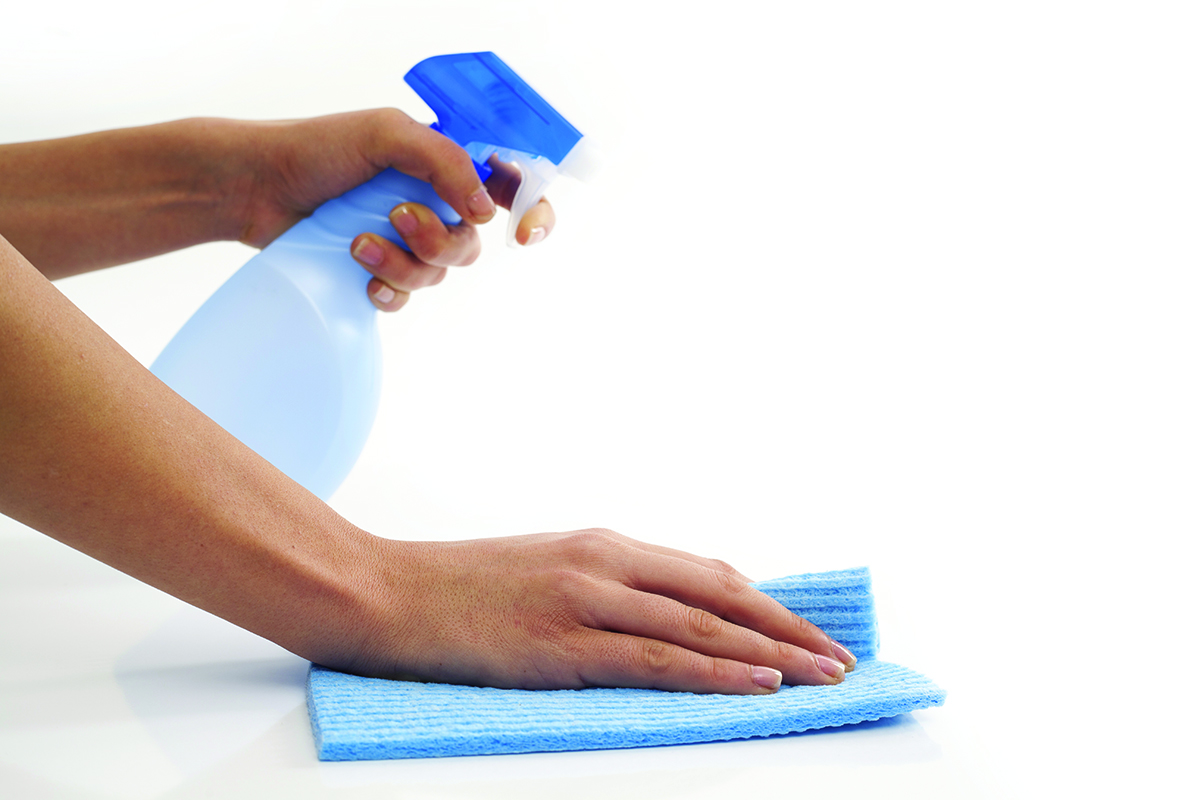
Use a spray bottle with a twist nozzle and “streaming” feature similar to a water gun.
Or, soak the cloth in a chemical-free cleanser before wiping.
Prior to wiping, fold the cloth eight times. Unfold as you wipe, using a different section for each surface to prevent cross-contamination.
CLEAN PLUS SYSTEMS II
Provides cleaning services and education for care homes, hospitals, hotels, schools and more.
The average person, especially kūpuna, spends 90 percent of his or her time indoors. Therefore, a clean, safe indoor environment is paramount. Uncirculated air and tightly constructed buildings can trigger allergies, asthma and illnesses. Traditional housecleaning methods do not cut it anymore. Some cleaners contain harmful toxins like ammonia, phenol, ethanol, formaldehyde, butane and propane.…
Working longer and later in life is not optional for many of us and is preferred by those of us who understand that work, in some capacity, is a gift of our longer lifetimes. It is a gift to be treasured.
Consider this: One in four of us in Hawai’i is 60 or older. As the longest-living state in the nation, our average life expectancy at birth is 82 years. At age 65, you may add 20 more years to your life expectancy. Now, look ahead a few years to 2025. Your grandchildren are expected to enjoy average life expectancies of 90 years and older. Hawaiians may add an average of 30 years at age 65.
Working after 50, 60 and beyond
The lightning bolt of reality is ready to strike those of us over 50, as we come to grips with the gift of longer lifetimes. Ask yourself: What are the implications to your emotional, financial and physical health if work isn’t part of your life?
Note that I say, “some form of work.” All of your contributions qualify as work, whether you are full-time, part-time, some-of-the-time, on-call, for money or for the good of community.
Jobs are not the only way of working.
Mature workers have many options for work. Here are some ideas:
Adjunct Faculty. If you have been a teacher or professor, adjunct work is one of the fastest-growing ways of working in colleges and universities.
Barterers. Bartering, trading and sharing are the ideas behind “collaborative consumption,” which TIME magazine called one of the “10 ideas that will change the world.”
Docents and Guides. Believe it or not, maturity is an advantage.
Freelancers. Whether you call it temping or project work, freelance jobs are booming for all ages. One
in three workers is a freelancer today, and this movement is growing exponentially.
House Sitters. Many people in our beautiful state of Hawai’i frequently travel to their homelands. Leaving houses empty, and pets uncared for, is a bad idea.
Portfolio Jugglers. Think of portfolio work as if you were managing a stock portfolio. One aspect of your portfolio is work in exchange for money. Another aspect is your investment in longer-term opportunities. A third piece of the portfolio might be dedicated to your community.
I will leave you with a final question: Do you know how to plan and prepare for your future while overcoming age biases? I will discuss this in the February/March 2018 issue of Generations Magazine.
Working longer and later in life is not optional for many of us and is preferred by those of us who understand that work, in some capacity, is a gift of our longer lifetimes. It is a gift to be treasured. Consider this: One in four of us in Hawai’i is 60 or older. As…
A storm of aging is raging in America: Waves of retiring baby boomers on a tide of super seniors in need of ever-increasing care; a torrent of requests swamping eldercare agencies and charities; and financial gales battering seniors and their families as they try to shelter in place.
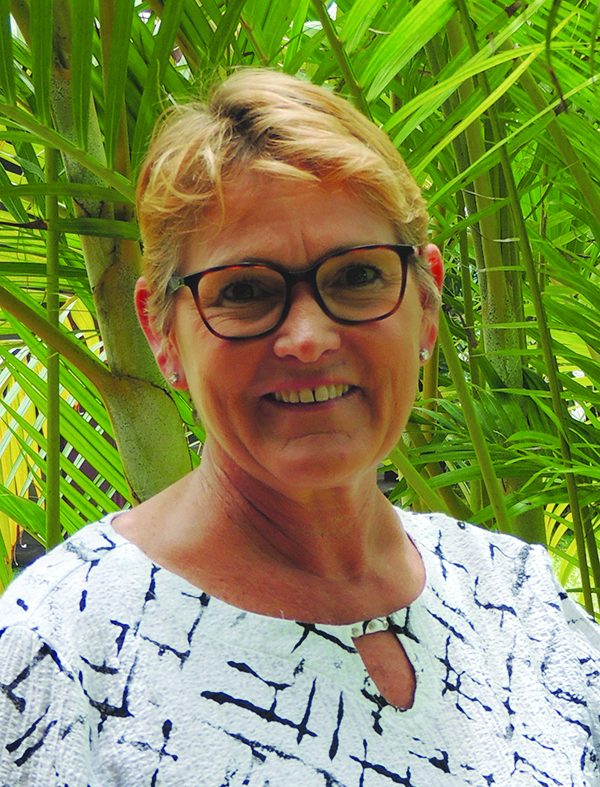
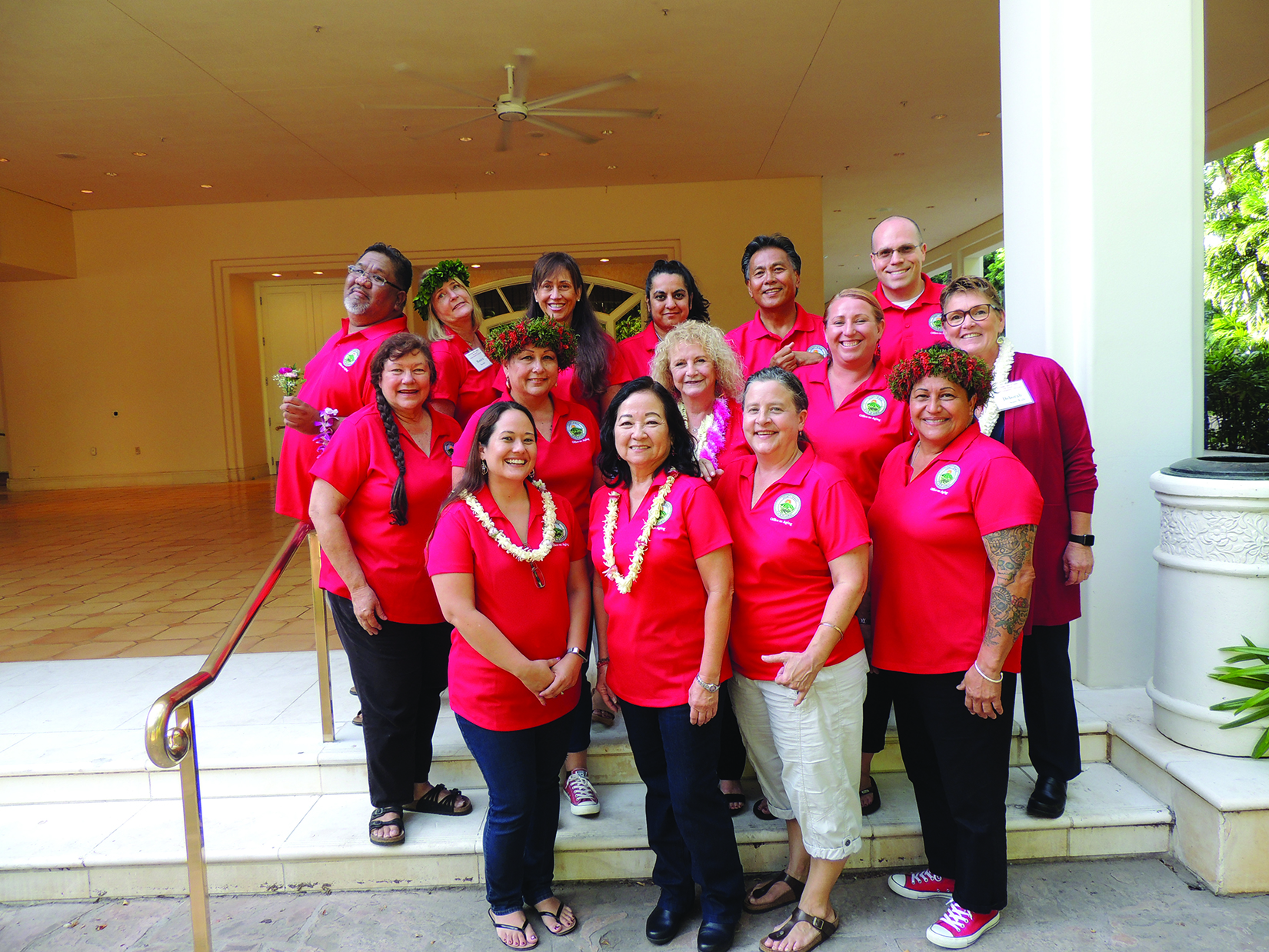
Deborah Stone-Walls (above) and the MCOA staff (below) optimizes support for seniors and shares their recipe for success.
Deborah Stone-Walls, Maui County Office on Aging (MCOA) executive, is optimistic as she “sails through the perfect storm.” Her peers throughout the United States recently elected her as first vice president of the National Association of Area Agencies in Aging, aka “n4a.”
On Maui, Deborah and her crew successfully optimize programs for active seniors, frail super seniors and family caregivers. They coordinate with nonprofits, county and state programs through a virtual electronic ADRC (Hawai’i Aging and Disability Resource Center) with an 800 number to intake seniors in need.
“The County of Maui allowed me to almost double the ADRC staff,” she says. “Soon, my staff came to me with new opportunities to help seniors. I never said ‘No’ but looked for a way to move forward and fill the needs.
“Traveling to a central location is difficult for Maui seniors. Our programs and services have to reach out to kūpuna. We took EnhanceFitness™ results-oriented exercise program to places where seniors gather — churches, assisted living facilities and clubs — and partnered with them. It worked, and seniors are getting stronger.
“Like all caregivers, Maui families need support when loved ones come home from the hospital. My staff loved the Care Transitions Intervention (CTI) program, but flying in trainers to certify local coaches was too expensive. We invested $5,000 to certify a Maui CTI trainer who can train as many coaches as we need.”
Innovation continued. Deborah’s staff figured out a way to assist rural seniors and their families who live beyond the reach of home care agencies. Once strict eligibility requirements and assessment standards are met, a Community Living Program (CLP) coach helps the family chart a plan. It may be as simple as installing a dog door and run for a homebound senior, or a walk-in tub. Again, the answer is listening, never saying ‘no,’ and delivering exactly what people need.
In the future, Deborah says aging professionals will have to promote an easy, attractive process for staying healthy, teach chronic disease self-management and believe that people can get stronger at any age. She encourages seniors to stay healthy and use their assets to pay for their own healthcare, as a way of blessing their children. Around the corner, Deborah sees new products like debit cards that give seniors nontechnical access to Uber and Lyft, and renal or diabetic diet meals, shipped directly to your door.
Healthcare innovator, eVillages, recently selected Flint, Mich., and Maui as two pilot communities in the U.S. Doctors at these sites will be connected via internet to extensive medical information and consultation by eminent physicians at over 300 locations around the world.
Deborah Stone-Walls is in line to lead n4a. She shares her “never say no” recipe for success on the national level and brings fresh ideas back to Hawai‘i. She charts a course, collaborating with peers, county and state government, ADRC staff and thousands of volunteers. We all benefit from their work. As the storm rages, we rest assured with Deborah Stone-Walls at the helm.
A storm of aging is raging in America: Waves of retiring baby boomers on a tide of super seniors in need of ever-increasing care; a torrent of requests swamping eldercare agencies and charities; and financial gales battering seniors and their families as they try to shelter in place. Deborah Stone-Walls, Maui County Office on Aging…
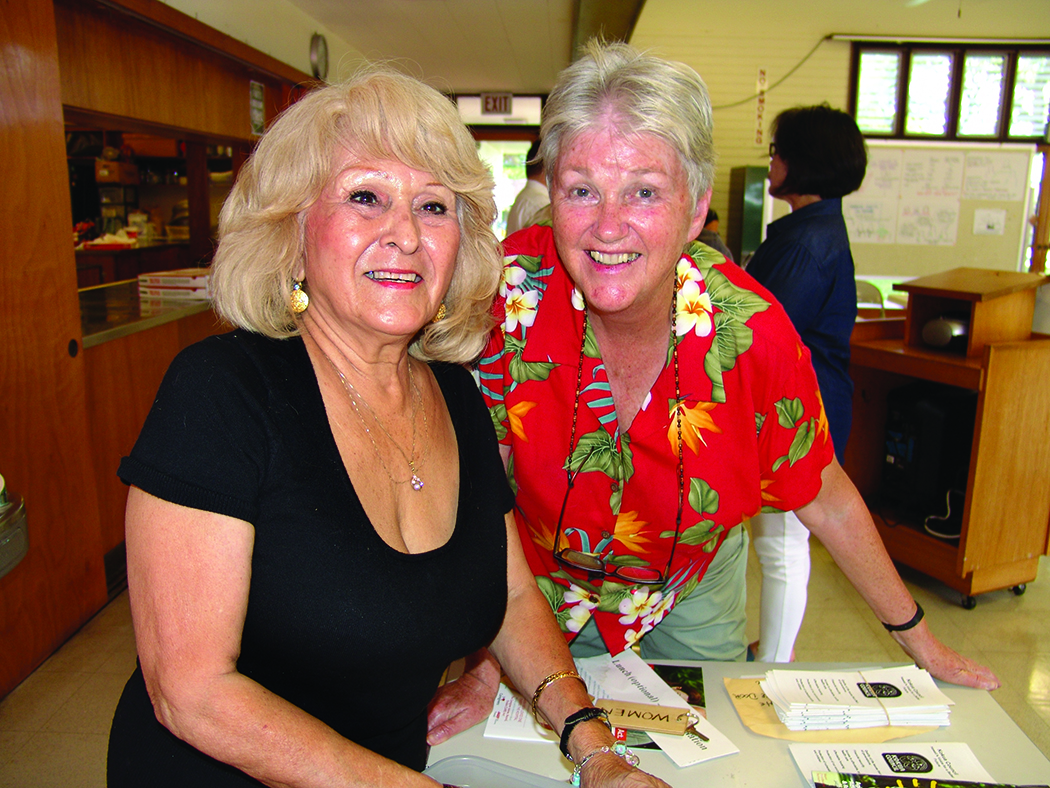
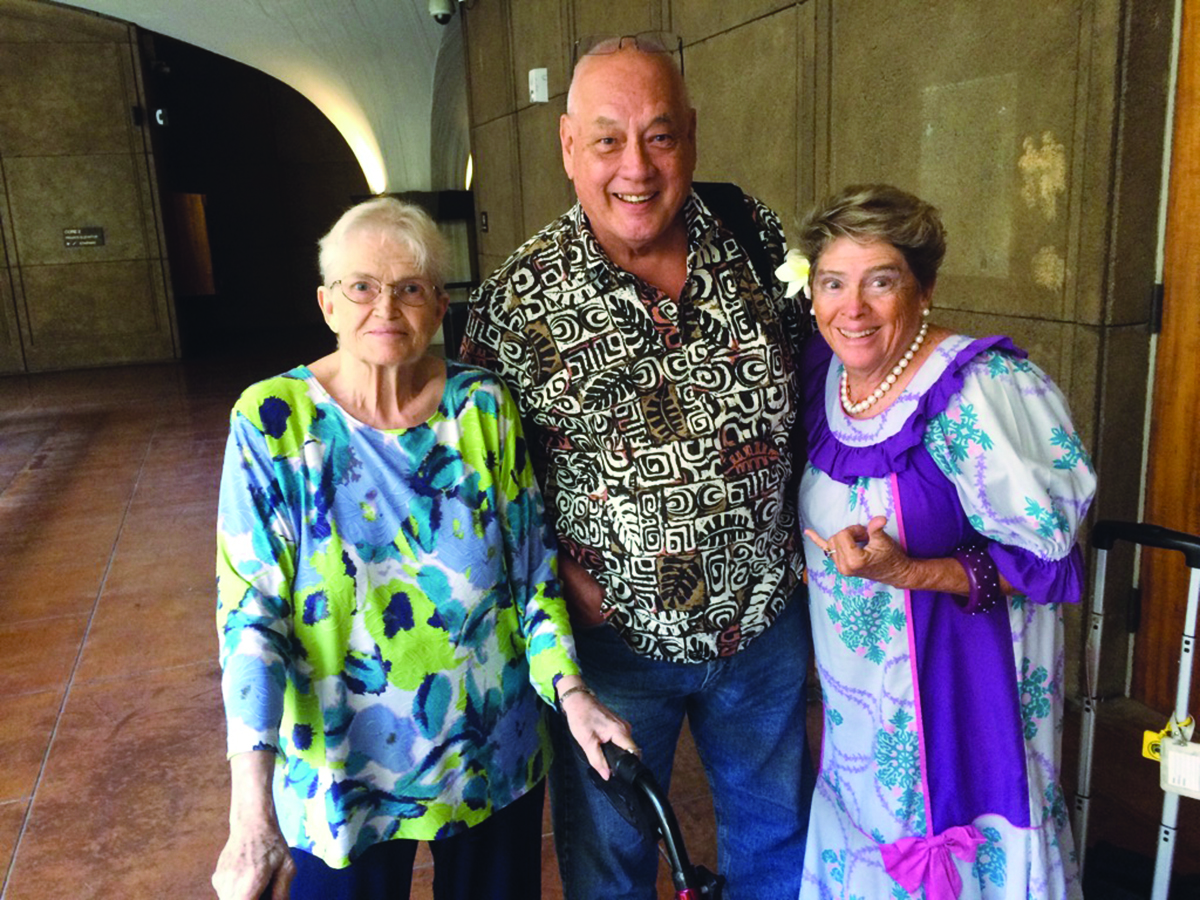
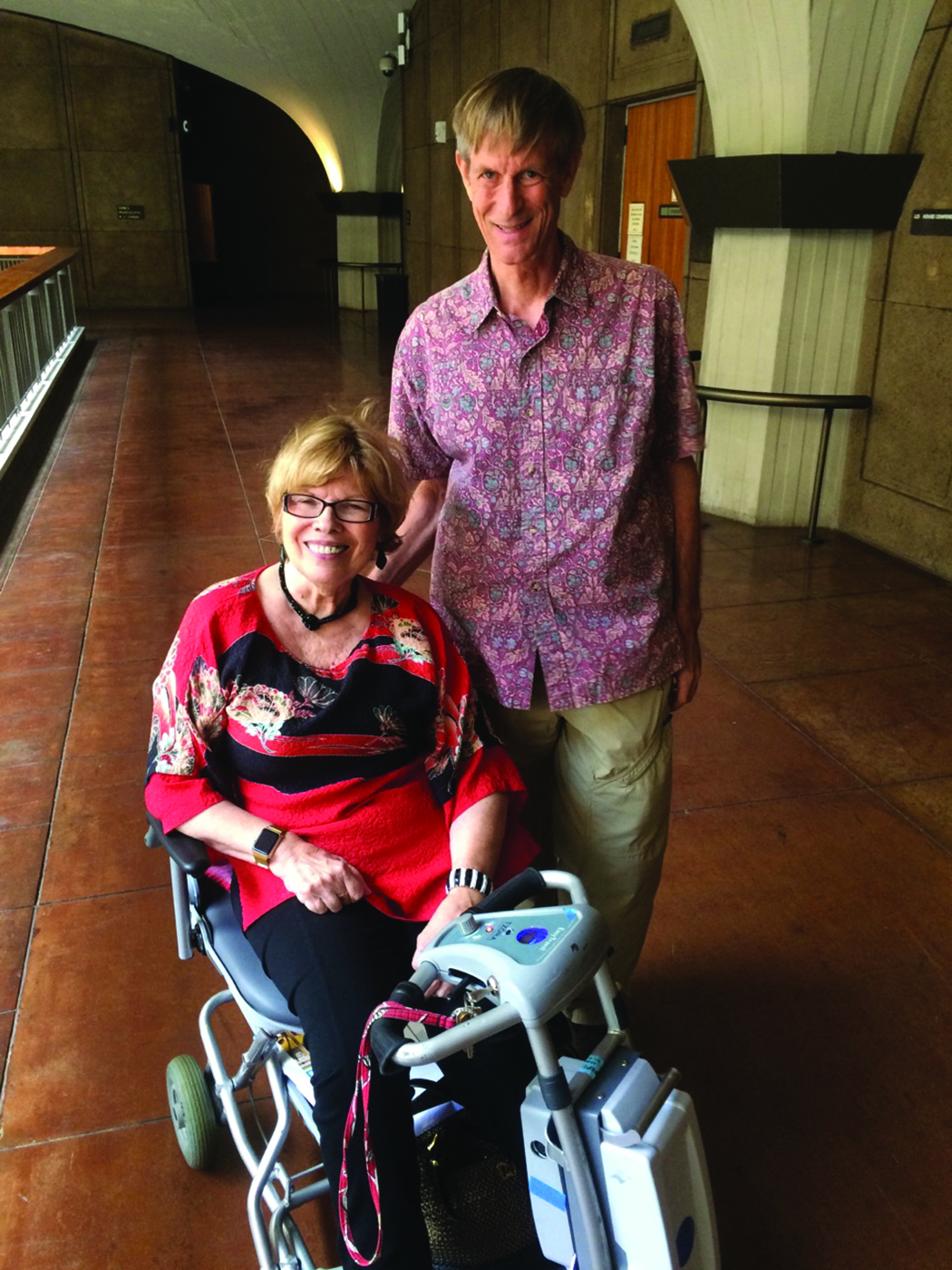
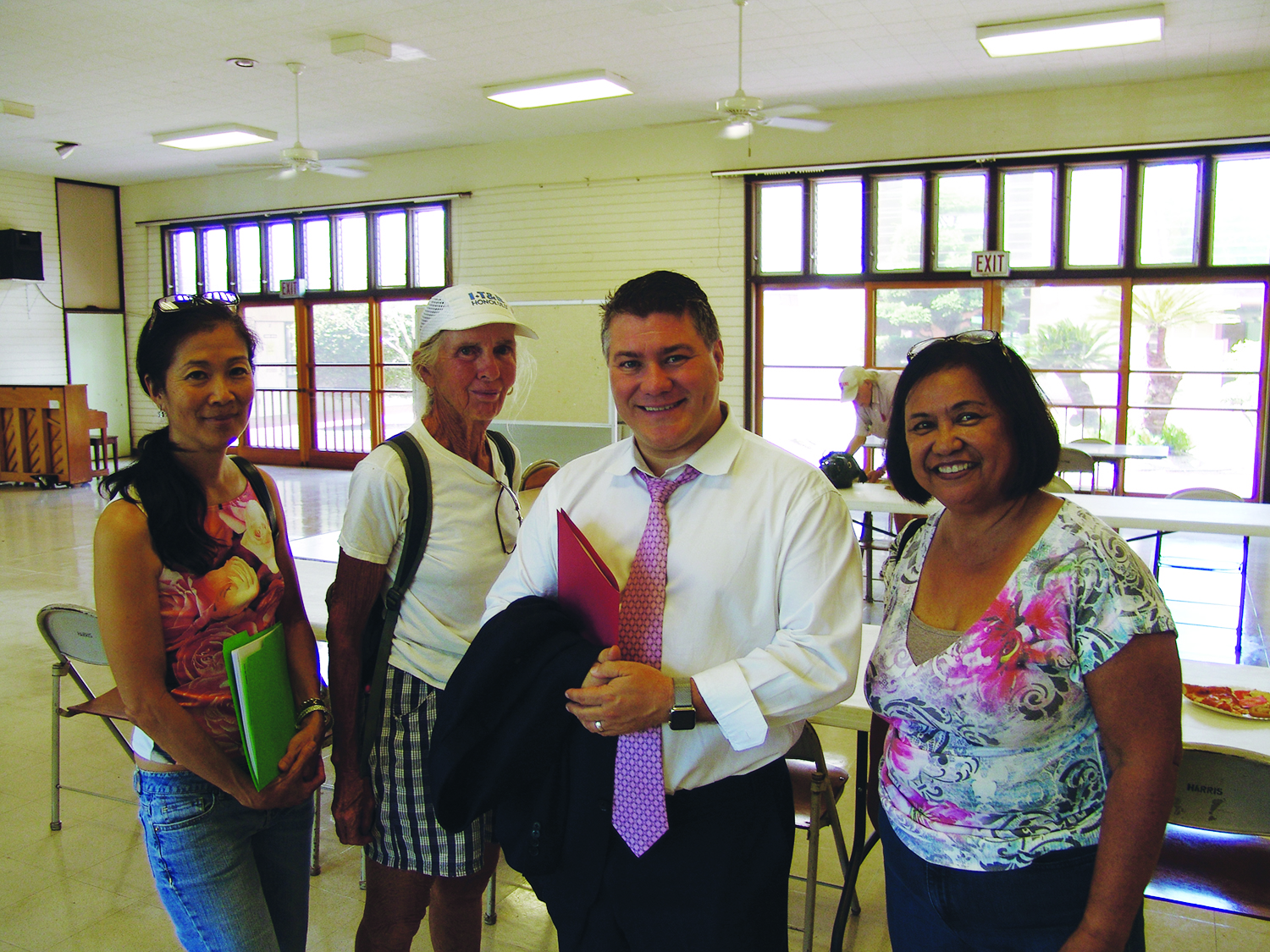
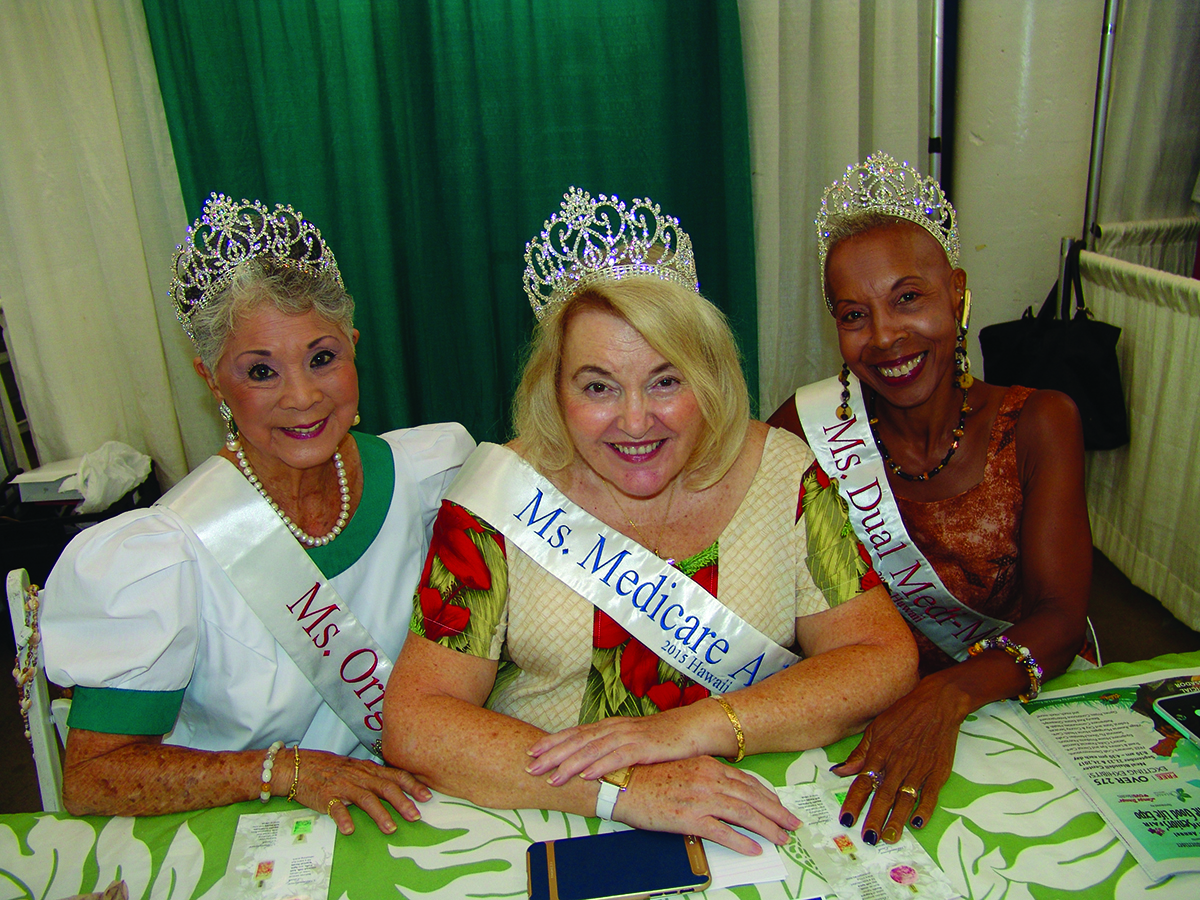
WELCOME CREW: Helen Wagner (left) and Barbara Service are among the friendly faces at monthly Kokua Council meetings.FREQUENT FLYERS: (From left) Jeani Withington from Hilo, Jim Cisler from Kailua-Kona, and Adele Rugg from Kahului attend Kūpuna Caucus meetings in Honolulu.SENIOR ADVOCATES: Patricia Morrissey and David Leake, of the Center on Disability Studies at the University of Hawai’i at Ma¯noa, spread awareness about the Hawaii Visitable Housing Coalition at www.cds.hawaii.edu/projects/hvc/.FIGHT FOR RIGHTS: At the Aug. 28 Kokua Council meeting, (from left) Dianne Stevens-Poire, Kate Paine, State Rep. Matthew S. Lopresti (D-Ewa) and Lourdes Scheibert discussed condo owners’ issues.MODELS OF HEALTH: Ms. Medicare titleholders (from left) Laurie Bachran, Fay Rawles Schoch and Terri Rainey graced the annual “Good Life Expo” from Sept. 22–24 in the Neal Blaisdell Exhibition Hall.
KOKUA COUNCIL MEETINGS: Downtown Honolulu 11:30 am–1 pm, fourth Monday Harris United Methodist Church 20 S. Vineyard Blvd. Kāne‘ohe 11:30 am–1:30 pm, second Thurs. Pohai Nani, Club Room 45-090 Namoku St. Call Larry Geller: 808-540-1928 Jim Shon: jshon@hawaii.edu KŪPUNA CAUCUS MEETINGS: Hawai’i State Capitol 1:30 pm, every first Friday 415 S. Beretania St., Room 325 Call Sen. Les Ihara’s office:…
According to the Hawaii’s Executive Office on Aging – statistics show many of us will need long-term care at some point in our lives, especially as we get older. The costs associated with long-term care are staggering and will only go up. Generations Magazine is beginning our Blog section with one of the hottest topics on most older adults and that is of caregiving. The first line of defense of long term care is family caregiving.
Who will take care of you when you can’t take care of yourself?
Let us know by leaving a comment, question or opinion!
Who will take care of you when you can’t take care of yourself? Join the conversation by leaving a comment, question or personal opinion!
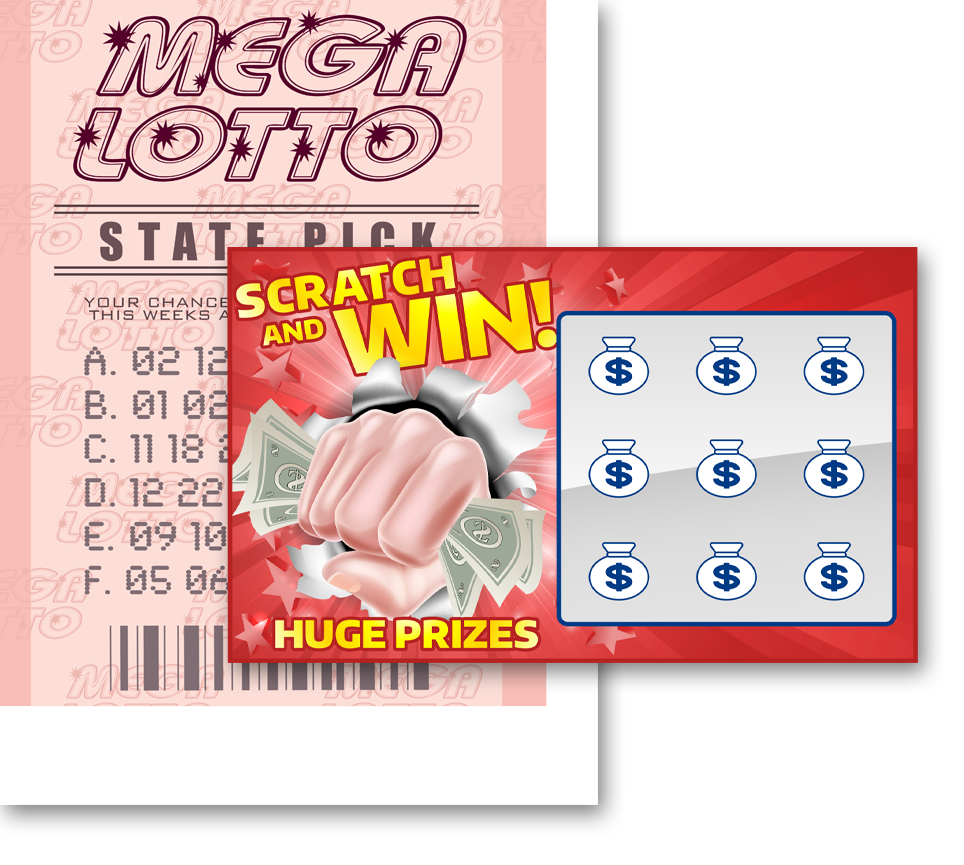
Over the years, I have spoken to countless people who believed they had won the lottery. They told me on the phone that they knew it was the real thing or they stopped by my office to show me letters, emails, credit cards or business checks proving they had struck it rich and beat the odds.
The chance of winning the lottery is 296 million to one.
They were confident about their soon-to-be riches, but their families advised them to meet with me because these “winners” had already spent thousands of dollars on alleged taxes and fees to support the purported prize.
In past issues of Generations Magazine, I have highlighted these scams, identifying earmarks proving the non-existence of lotteries, sweepstakes, government grant money giveaways and insurance bonus payments.
Those telltale signs included:
◆ Instructions to keep a secret that they won money (so no one could verify the truth)
◆ Instructions to act very soon or the money would be lost (to create a sense of urgency)
◆ Advance payment (for alleged taxes or fees) before they received money
When I explained these signs, many seniors politely nodded their heads, but they still believe they had won. They went through the motions of listening only to placate the person who brought them into my office. After hearing the shtick from the con men who informed them of their lottery winnings, they believed they were of that .000006 percent of the public who wins.
My approach to these victims changed when I met “Edith.” Over the course of six months, she had sent $135,000 to someone claiming to represent a mainland lottery. Edith was very guarded and skeptical that our discussion applied to her.
She had developed a relationship with the alleged lottery worker and trusted him enough to follow his instructions. Edith believed that despite all the warning signs I pointed out to her, she was extremely lucky to have won a lottery in Hawai‘i.
Talking to Edith gave me an idea: What if I could prove she didn’t win the lottery instead of telling her she was a scam victim? As a trial attorney, isn’t my job to convince people, using the law and objective facts? I thought that I could undo scam artists’ brain washings using this logic. And I made a case to Edith to prove she had a zero percent chance of winning a lottery.
In the Dec/Jan 2018 issue of Generations, I will cover the legal arguments that prove that winning the lottery in Hawai‘i is impossible.
To report suspected elder abuse,contact the Elder Abuse Unit at 808-768-7536 | ElderAbuse@honolulu.gov
Over the years, I have spoken to countless people who believed they had won the lottery. They told me on the phone that they knew it was the real thing or they stopped by my office to show me letters, emails, credit cards or business checks proving they had struck it rich and beat the…
Estate-planning attorneys offer three types of estate plans: the one-size-fits-all, default “state plan;” the standard “black and white” plan; or the “meaningful” estate plan.
If you do nothing, the State of Hawai‘i has the Guardianship and Probate Court, which is a plan for each Hawai‘i resident upon incapacity and death. The state also has the Table of Consanguinity, listing your beneficiaries — to decide who will be in charge of handling your estate.
The standard “black and white” estate plan carefully crafts legal documents, while focusing on avoiding probate and minimizing taxes. Most often, these plans resemble every other estate plan, with the lawyers focused mainly on the “form” of the plan.
People may believe that because they consulted a lawyer, everything is complete and will not cause undue stress or conflict when they die.
But the sad fact is that there is more trust litigation occurring now than ever before and fractures in family relationships appear to be on the rise.
The simple reason? When we provide the foundation of the estate plan, we focus on the “how to” and diminish the “why,” meaning our intentions, feelings and hopes for our loved ones. In other words, our “voice.”
The “meaningful” estate plan incorporates the client’s own voice in the foundation of the estate plan. Statistics show that not only are the client’s choices honored and respected, family relationships are stronger and family fights are fewer.
It’s not too late to start a plan that reflects your “whys”— for you and your loved ones.
Stephen B. Yim, Attorney at Law
2054 S. Beretania St., Honolulu HI 96826
Estate-planning attorneys offer three types of estate plans: the one-size-fits-all, default “state plan;” the standard “black and white” plan; or the “meaningful” estate plan. If you do nothing, the State of Hawai‘i has the Guardianship and Probate Court, which is a plan for each Hawai‘i resident upon incapacity and death. The state also has the…

 Auricular medicine is a highly developed, independent system of medicine recently rediscovered and revived as a major modality in the Chinese healthcare system. Thousands of years ago, it was discovered that the ears themselves contain nerve and acupuncture points corresponding to many areas and regions of the body. By stimulating these points, positive changes in the corresponding area can be created.