Category: Living Life

  • Talk It Out at the Mediation Center

    Mediation and family conferencing help families talk through difficult issues and create plans to support their Kupuna.

    “I’m so frustrated. I’m spending more and more time trying to help my mom and dad, and now I feel like I’m neglecting my own family. Of course my brother and sister are absolutely no help at all. I’m so angry at them. And my parents don’t even seem to understand that I’m trying to help them. They keep telling me they can take care of themselves. They can’t!”
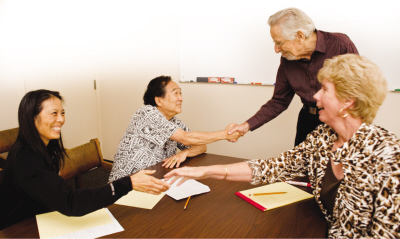
    Mediation - Generations Magazine - August - September 2012Comments like these are becoming all too familiar as family members struggle to support the needs of their aging parents while trying to juggle their own personal responsibilities. Emotions run high, patience grows thin and family relationships are torn apart, at times, permanently. Each family member has their own life, home, work and immediate family issues to contend with on a daily basis. When an elder family member suddenly needs support, families often react without considering all of the implications of their actions on individual family members, including the elder person.

    Mediation and family conferences are processes designed to help families talk through issues and sort through emotions to create well thought out plans to support elder family members. With the assistance of an impartial third person, a mediator or facilitator, every family member has an opportunity to express their needs, perspectives, fears and concerns, before decisions are made. For example, the interest of the elder person to remain independent can be factored in with the children’s concerns about the elder family member’s safety. The importance of having every family member take an active role in developing the plan as well as implementing the plan to care for the needs of the elder member, are also addressed.

    Facilitators and mediators are trained listeners who ask powerful questions that help families look at each situation from a broader perspective and gather information and resources to make thoughtful decisions and plans that support the elder family member. By talking through sensitive issues and creating family plans in mediation and family conferences, families strengthen communication, preserve their relationships and maintain the dignity of the elder family member.

    The next time you hear “my siblings just aren’t helping me to support mom and dad,” suggest mediation or family conferencing. It’s a cost effective approach to helping families have powerful conversations and prevent potential conflicts
    from escalating.


    Tracey S. Wiltgen is the Executive Director of the Mediation Center of the Pacific, a not-for-profit corporation that assists more than 5,000 people annually.

    The Mediation Center of the Pacific, Inc.
    245 N. Kukui Street, Suite 206, Honolulu, HI 96817
    Tel: 521-6767 Fax: 538-1454 www.mediatehawaii.org
    Mediation and family conferencing help families talk through difficult issues and create plans to support their Kupuna. “I’m so frustrated. I’m spending more and more time trying to help my mom and dad, and now I feel like I’m neglecting my own family. Of course my brother and sister are absolutely no help at all.…

  • Now & Then: A Way of Harmony

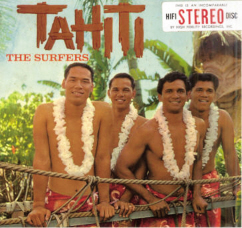
    The Surfers Tahiti - Generations Magazine - August - September 2012In 1957, brothers Al and Clayton Naluai attended Glendale Junior College in California where they befriended two other Native Hawaiians, Bernie Ching and Pat Sylva. They started to compile Hawaiian tunes together for the choir director and came up with a signature harmonizing style. They did concerts up and down the West Coast. While singing in a backyard luau, a friend tape recorded them for fun. One thing led to another and they were discovered by Hi Fi Records. The group was named “The Surfers,” and they cut their first album, “The Surfers on the Rocks.” It became a local best seller.
    The quartet embarked on a sensational career that took them through the next 26 years!

    At age 43, Clayton learned that his father was diagnosed with Alzheimer. Up to that point, his life had been defined by show biz, but it was time to do something else. In 1980, he left the business and turned his focus toward family.

    Over the years Clayton had studied Shin Shin Toitsu Aikido under the late Master Koichi Tohei. The master taught the principles of unifying mind and body and its application to daily life.

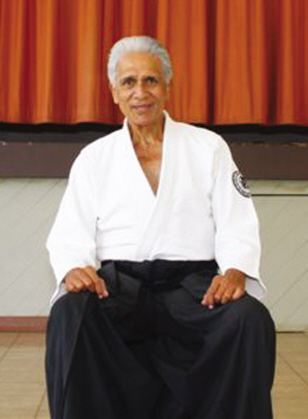
    Clayton Aikido - Generations Magazine - August - September 2012Fifty years later, Clayton is a 6th Dan Black Belt and a founder of Lokahi Ki Society, where he serves as its senior advisor. He has dedicated his life to creating programs for people to experience the power they naturally have through unification of mind and body.

    Clayton is particularly passionate about keeping seniors active. So, I asked Clayton is it ever too late for a senior to consider training through Shin Shin Toitsu Aikido’s mind and body unification? He replied, “It’s never too late.”

    I have been attending Clayton’s classes for the past two years. The exercises have greatly improved my physical flexibility, balance, strength and fluidity. It helps me stay in a calm and focused state of mind. Practicing the same state of mind outside of the dojo I can now deal with life’s challenges one at a time — more calmly, more clearly, more focused. Most importantly, it has improved my outlook on life, diet, exercise and hope for mankind. I’ve dropped 25 pounds, lowered my blood pressure and put off my diabetes.

    You may also experience many benefits through practicing, studying and experiencing this form of Aikido. For more info, contact Lokahi Ki Society:

    phone(s): 808-372-7724, 489-5255, 258-6814
    email: lokahiki@me.com
    www.lokahiki.com/Lokahi_Ki_Society/Welcome.html

    In 1957, brothers Al and Clayton Naluai attended Glendale Junior College in California where they befriended two other Native Hawaiians, Bernie Ching and Pat Sylva. They started to compile Hawaiian tunes together for the choir director and came up with a signature harmonizing style. They did concerts up and down the West Coast. While singing in…

  • AARP Hawaii: Driving to Fight Senior Hunger

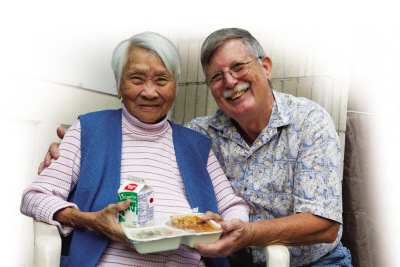
    AARP Hawai‘i has launched an initiative to raise awareness and help non-profits meet the growing demand for food among Hawai‘i’s frail elderly population. The initiative, part of the national AARP Foundation Drive to End Hunger, supports the efforts of Lanakila Meals on Wheels and Hawai‘i Meals on Wheels — organizations that provide home-delivered meals to seniors unable to cook or shop for themselves.

    Drive to End Hunger focuses on a specific challenge the two organizations face in meeting the growing demand for services for Hawai‘i’s aging population: the shortage of volunteer drivers. Drivers are a critical link to the elder community, not only because of the meals they deliver but also due to the contact they have with many seniors who are otherwise isolated.

    Without volunteer drivers, Hawai‘i’s Meals on Wheels organizations can’t keep up with the growing demand for their services. “We have a wait list of 400 residents who’ve requested meal service that we’re not able to provide at current volunteer staffing and funding levels,” said Lanakila Meals on Wheels Director Lyn Moku. Hawai‘i Meals on Wheels Executive Director Claire Shimabukuro faces a similar predicament. “We would like to deliver more meals to seniors in need, but our ability to increase the number of existing routes is tied to the number of available drivers,” she said.

    Victoria Howarth and Les Miller - Generations Magazine - August - September 2012
    Victoria Howarth and Les Miller

    Both Hawai‘i Meals on Wheels and Lanakila Meals on Wheels host monthly orientation sessions where individuals can ask questions and get a feel for what it takes to volunteer. In general, volunteer drivers need to be patient, reliable and friendly. They should have a car with valid insurance and safety sticker and be available for up to three hours, every other week. According to research commissioned by AARP Foundation in 2011, Hawai‘i ranked 25th in the country in the number of adults age 50 and older who were food insecure (6.68 percent of older residents affected). Food insecurity is also associated with numerous negative health outcomes among the elderly — including poorer health and higher probability of being hospitalized.

    Drive to End Hunger is part of a nation-wide AARP Foundation assault on the hunger problem among Americans 50+. We’re taking steps to feed those who are hungry now, while developing long-term, sustainable answers that address the root causes of hunger among those 50+.

    For more information & volunteer, call:

    LANAKILA MEALS ON WHEELS
    531-0555 | www.lanakilapacific.org

    HAWAI‘I MEALS ON WHEELS
    988-6747 | www.hmow.org

    aarp.org/hi | facebook.com/AARPHawaii | twitter.com/AARPHawaii

    AARP Hawai‘i has launched an initiative to raise awareness and help non-profits meet the growing demand for food among Hawai‘i’s frail elderly population. The initiative, part of the national AARP Foundation Drive to End Hunger, supports the efforts of Lanakila Meals on Wheels and Hawai‘i Meals on Wheels — organizations that provide home-delivered meals to seniors unable…

  • Retirement: Start Again

    When one thing ends, another begins.

    There is something about retirement – the word retirement, the thought of retirement, the actual process of retirement – that brings mixed emotions. For some folks the word retirement causes excitement, for others terror. And, there are those who vacillate from one to the other. We retirees experience all of these emotions at one time or another. I know … I’m 75 years old, and have been retired for 32 years.

    So what is the primary cause of terror? Fear! Fear of the unknown. Most of us are not prepared for retirement and being unprepared affects every area of our lives: spiritually, mentally, physically, emotionally, relationally and financially.

    The literal definition of retirement alone is frightening.

    1. The act of retiring. (That’s not so bad.)
    2. Removal from service. (Now we go into denial. ‘I’m alright. That’s not going to happen for many more years.’)
    3. Withdrawal into privacy or seclusion. (Now things begin to get heavy.) Removal, withdrawal, seclusion.

    In this light, can you think of anything positive about retirement?

    To top it off, our society and government doesn’t paint a pretty picture of retirement. The federal government predicts that the average person will be dead, busted or broke by the age of 65. And common statements such as ‘a person gets weaker as he or she gets older’ and ‘older people don’t contribute; they drain our resources’ don’t seem harmful when we’re younger, but as we get closer to retirement age, they begin to chisel away at our mental well being. Our self-esteem begins to waiver. Our self-image begins to slide downward. We begin to lose our sense of dignity and hope, our sense of being alive. Whether we are financially well off or not, it doesn’t matter. We fade off into seclusion mentally and physically, a place where self-destruction begins … “the beginning of the end.”

    Bleak as the picture may seem for us retirees, there is hope. We can create for ourselves a new beginning.

    All we need to do is draw a line in the sand and take the following four steps:

    • Declare: I’m a child of God, created for greatness and have something significant yet to do. This signifies purpose.
    • Dream: Imagine for a moment that you are living your final 24 hours. How would you approach the next few hours?
    • Decide: To act as if it is your last day.
    • Association: Hang out with like-minded people. People with common dreams, common goals, going in the same direction, supporting one another in a new beginning.

    The key to a new beginning? Begin! Begin now!

    When one thing ends, another begins. There is something about retirement – the word retirement, the thought of retirement, the actual process of retirement – that brings mixed emotions. For some folks the word retirement causes excitement, for others terror. And, there are those who vacillate from one to the other. We retirees experience all…

  • Crunchi ‘Ahi Toast

    Crunchi Ahi Toast - Generations Magazine - June - July 2012This is a great appetizer because of its big, two-level crunch. First, the happy pop of the tobikko, and then the satisfying crunch of the crostini.
    Ingredients:

    ‘Ahi spread

    • 2 lbs. ‘ahi, ¼-inch or less, diced
    • 1/2 cup tobikko fish eggs
    • 1/2 cup green onion, thinly sliced
    • 2 Tbsp. sesame oil
    • 1 Tbsp. light soy sauce
    • 1/4 tsp. wasabi paste or wasabi oil
    • 1/2 tsp. kosher salt, fresh ground
    • Black pepper, to taste

    Crostini

    • 1 baguette, sliced into rounds 1/4” thick
    • Extra-virgin olive oil
    • Garlic salt

    Directions (Serves 10):

    In a bowl, combine all of the ‘ahi spread ingredients and keep well chilled until ready to serve.

    To make the crostini (you can also purchase prepared crostini), brush each slice of bread with a little olive oil, and bake at 400ºF for 10 minutes or until crispy. Remove from the oven and sprinkle with garlic salt or an herbed salt blend. Top each crostini with a rounded teaspoon of the ‘ahi spread and serve.

    Total time: 30 minutes

    For a copy of this recipe and more information, please visit www.cookingfreshforyou.com.


    As a “casual gourmet” cook for more than 12, years, Chef Michi founded ‘Cooking Fresh For You’ in 2007. Her recipes center on healthy yet easy to prepare flavor-packed dishes. Visit www.cookingfreshforyou.com or contact Michi at cookingfreshforyou@gmail.com or (808) 286-6484.

    This is a great appetizer because of its big, two-level crunch. First, the happy pop of the tobikko, and then the satisfying crunch of the crostini. Ingredients: ‘Ahi spread 2 lbs. ‘ahi, ¼-inch or less, diced 1/2 cup tobikko fish eggs 1/2 cup green onion, thinly sliced 2 Tbsp. sesame oil 1 Tbsp. light soy…

  • Book Review: MOSAIC MOON

    Unique caregivers book helps ease the burden of Alzheimer’s

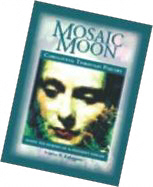
    Mosaic Moon - Generations Magazine - June - July 2012Mosaic Moon: Caregiving Through Poetry is a unique resource for caregivers by noted poet and educator Frances H. Kakugawa. Mosaic Moon, which grew out of poetry workshops conducted by the author for the Alzheimer’s Association Aloha Chapter, is both an extraordinary collection of poems and a how-to guide to help individuals and groups create their own poetry support groups.

    Besides offering hands-on writing and organizational tools, the book includes inspirational poetry by the author and five graduates of her workshops, reflecting both the trials and small triumphs of caring for loved ones with Alzheimer’s disease. Mosaic Moon traces the lives of six Alzheimer’s patients, their struggles with the disease and their evolving relationships with their caregivers – the poets Kakugawa, Irene Asato, Lynne Halevi, Lani Kaaihue, Jody Mishan and Setsuko Yoshida.

    This culturally diverse group of caregivers — women in their 40s, 50s, 60s and 70s – spans the Protestant, Catholic, Jewish and Buddhist faiths and a rainbow of ethnicities: Japanese and Hawaiian to Russian and Polish among them. In Mosaic Moon, they learn to express their hope, helplessness, humor and despair, as they strive to recapture the dignity and human spirit often lost amid the day-to-day rigors of caregiving.

    Kakugawa, an award-winning author, has also written two children’s books that help keiki cope with aging elders – Wordsworth the Poet and Wordsworth Dances the Waltz. Both books feature a little Hawaiian mouse named Wordsworth who loves poetry and finds comfort in writing poems that express his confusion over the changes in his beloved grandparent and the fond memories he has of her more vibrant days.

    All three books are available in bookstores, from Amazon.com or directly from the publisher at www.bookshawaii.net. Or call toll-free at 1-866-900-BOOK. $16.95, softcover.

    A portion of the book’s proceeds supports research for Alzheimer’s disease and related disorders.


    “I’m better prepared to care for my mother after reading your book, knowing what you went through truly helps. You’ve prepared me for caregiving.”

    ~ Kay Yonemori (Hilo, Hawai‘i)


    “Years from now when Alzheimer’s is finally conquered, this book will stand as a testament to bravery and to love.”

    ~ Maxine Hong Kingston, author of The Woman Warrior (Berkeley, California)

    Unique caregivers book helps ease the burden of Alzheimer’s Mosaic Moon: Caregiving Through Poetry is a unique resource for caregivers by noted poet and educator Frances H. Kakugawa. Mosaic Moon, which grew out of poetry workshops conducted by the author for the Alzheimer’s Association Aloha Chapter, is both an extraordinary collection of poems and a…

  • What’s Your Secret?

    Fevelyn is a senior at Moanalua High School who is currently taking a Senior Project class where students learn about a topic of their choice – she chose the topic of longevity. She’s been interested in learning about the elderly and the things they do to stay healthy and to live longer. She has done a research paper for her topic and her product is a booklet containing questions about what makes people live longer.


    Kathleen Kawaihao - Generations Magazine - June - July 2012Kathleen Kawaihao, 62
    Q: What do you do to keep your mind active?
    A: I volunteer to keep my mind active. I read the bible and inspirational books.


    Veronica Edwards - Generations Magazine - June - July 2012Veronica Edwards, 72
    Q: What would you recommend others in order for them to live healthily?
    A: Take care of yourself, your body, mind, and spirit. Because if you take care of those things, you’re taking care of everything you need.

    Fevelyn is a senior at Moanalua High School who is currently taking a Senior Project class where students learn about a topic of their choice – she chose the topic of longevity. She’s been interested in learning about the elderly and the things they do to stay healthy and to live longer. She has done…

  • Nothing Beats a Good Friend

    Research shows that the happiest people have deep friendships

    Friends - Generations Magazine - June - July 2012The private school graduate is no happier than the high school dropout! Can you believe that? Private school graduates tend to make more money, but income doesn’t raise happiness levels. Third, your IQ has no affect on your level of happiness. The genius is no happier than the average Joe. So, what makes a person happy?
    The researchers concluded that the No. 1 predictor of happiness is the quality of your friendships. The happiest people have the deepest friendships. That’s what the Bible has continually proclaimed. Friendship with God and friendship with one another is the key to happiness.

    At our church we focus on enjoying friendships. Following any get together, our Senior Fellowship Group always leaves feeling uplifted, lighthearted and joyful. Mostly in their 70s or 80s and some even 90+ years young, this amazing group of seniors gets together every week for their Sunday school class. They come to learn, laugh and enjoy coffee and snacks together. They also meet in a small group of 20 twice a month. During the meetings, they share lives, caring hearts and delicious lunches. On a recent excursion about 35 people went by charter bus to visit the Arizona Memorial and then enjoyed a lunch at Zippy’s. It seems that they always enjoy eating together. As I’ve personally interacted with our Senior Fellowship Group, I wholeheartedly agree with the researchers that say friendship is the key to happiness.

    So don’t neglect your friends, as they will bring you much joy. If you’d like to make more friends, check out community churches, as many have fellowship groups. Ralph Waldo Emerson once said, “God evidently does not intend us all to be rich, or powerful or great, but He does intend us all to be friends.” So take time to enjoy your friendships. They will bring you more joy than watching Korean shows on TV.


    Honolulu Christian Church, 2207 O‘ahu Avenue, Honolulu
    808-973-4345
    English Sunday services: 7:45am & 10:45am
    Sunday School (all ages): 9:30am
    Japanese Sunday services: 8:00am & 9:20am

    We have a wonderful Senior Fellowship group, come and visit with us!

    Research shows that the happiest people have deep friendships The private school graduate is no happier than the high school dropout! Can you believe that? Private school graduates tend to make more money, but income doesn’t raise happiness levels. Third, your IQ has no affect on your level of happiness. The genius is no happier…

  • Genealogy is for Generations

    Why is a hobby that revolves around dead people so popular?

    Genealogy is derived from the Greek word genea, “generation” and “knowledge.” It is the study of families and the tracing of their lineages and history.

    Oftentimes, family histories are passed down in the desire to preserve the past for future generations.

    Hobbyist genealogists try to understand not just where and when people lived, but also their lifestyles, biographies and motivations. This often requires - or leads to – knowledge of antiquated laws, political boundaries, migration trends and socioeconomic or religious conditions.

    Generations come and go. Who will know them? Who will keep track? Oftentimes, the sense of responsibility falls on the “senior generation,” as they hold most of the information, photos and papers. However, regardless of your age or generation, getting involved in your family genealogy and watching your tree grow with new an old faces can take you to unexpected places.

    Genealogy - Generations Magazine - June - July 2012Genealogy and You

    Who do you think you are? Your lineage? Do you want to know?

    Apparently Americans do want to know who they are. Millions tune in each week to watch the T.V shows, Who Do You Think You Are? and Finding Your Roots. Shows that deal with investigating the genealogy of celebrities.

    These shows, each in their own compelling way, take a different celebrity on a journey into his or her family history. Viewers are taken on an emotional, personal and often mysterious quest as these celebrities discover their ancestors - many of whom had to overcome huge obstacles while struggling for freedom and opportunity.

    Why is a hobby that revolves around dead people so popular? Genealogy has become the fastest growing hobby in North America. It has even surpassed scrap booking and gardening in popularity. According to Kim Farah, spokesperson for the Family History Library (LDS), it is because genealogy touches on a fundamental need. “It’s universal; it crosses all faiths and cultures. The benefits of knowing our heritage, of the sacrifices others have made for us, give us a sense of responsibility and self-esteem.”

    Genealogy has also taken a giant scientific step forward. DNA can now to be organized into haplogroups that give insight into the broader scopes of racial makeup and ancestral migration patterns.

    Most people know little of their ancestry. So, who were they – our unknown ancestors? Will we find pirates, smugglers, criminals? Perhaps we’ll discover we are descendents of queens, kings and noblemen? We each have our own stories: the black sheep, the Civil War hero, the ancestors who fled to the United States, or the lost family fortune. Now is the time to get out your faded pictures, start asking your oldest relations about what they know, and discover your own family history.

    Local Genealogical Society

    Honolulu County Genealogical Society meets on the second Saturday of each month. You may find more information online at www.honolulu-countygenealogicalsociety.blogspot.com. Or at www.rootsweb.ancestry.com/~hihcgs.

    Other resources are www.ancestry.comwww.rootsweb.ancestry.com, and .

    Why is a hobby that revolves around dead people so popular? Genealogy is derived from the Greek word genea, “generation” and “knowledge.” It is the study of families and the tracing of their lineages and history. Oftentimes, family histories are passed down in the desire to preserve the past for future generations. Hobbyist genealogists try…

  • Got Game? Show it with this Recipe: Mini BBQ Chicken & Carmelized Onion Sandwiches

    Mini BBQ Chicken Sandwiches - Generations Magazine - April - May 2012Perfect for game time. Set it up in your crock pot and you won’t even miss a pitch.
    Ingredients

    Pre-roasted chicken is best for this recipe — you can’t beat it for the convenience and flavor. This is an easy recipe to make using your crock pot, or you can slowly cook it on your stovetop. All it requires is gentle simmering. If you have some coleslaw handy, it goes great in the sandwiches!

    • 2 large onions, sliced thick
    • 1 Tbs. olive oil
    • 4-5 cups roasted chicken, shredded
    • 1 cup prepared BBQ sauce
    • Salt & ground black pepper, to taste
    • Dinner rolls

    Directions (Serves 6 to 8)

    In a large saucepan with the olive oil, cook the onions until they are fully browned and caramelized – they will have lost most of their moisture and turned a beautiful golden-brown color. Mix in the chicken, BBQ sauce and season. Then cover and cook on low heat for 40 minutes (or put into a crock pot on high and walk away!). Check back to stir occasionally, if the liquid seems to be evaporating too quickly, add a little water. When ready to serve, cut each dinner roll and scoop about a 1/4 cup of the mixture on each roll.


    Chef Michi’s recipes center on healthy yet easy to prepare flavor-packed dishes. Visit www.cookingfreshforyou.com or contact Michi at cookingfreshforyou@gmail.com or (808) 286-6484.

    Perfect for game time. Set it up in your crock pot and you won’t even miss a pitch. Ingredients Pre-roasted chicken is best for this recipe — you can’t beat it for the convenience and flavor. This is an easy recipe to make using your crock pot, or you can slowly cook it on your stovetop. All…

  • It’s Never Too Late . . . To Grow Young

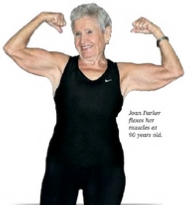
    Joan Packer - Generations Magazine - April - May 2012Joan Packer did not start working out until age 77. She had been a smoker for 20 years and never exercised. When she first came in she couldn’t walk upstairs without holding on to the railing. Now at 90, she does the elliptical for 30 minutes without holding on to anything. Her goal was to lose weight and regain her health so she could stay independent.

    Poor balance and lack of strength are big issues as we age. Resistance exercise is a must to preserve muscle mass and body function. It’s also important to get enough protein, fruits and vegetables.

    Joan admits it was challenging at the beginning. “I could barely do a bicep curl with 2 lbs., now I use 15 lbs. Seeing Diane twice a week has changed my life. My strength and balance are much better and I have never been more flexible. My sciatica pain has also disappeared.”

    When Joan went to visit her daughter in Seattle, they went for a hike up Mt. Rainier. To her surprise she went up the path and left her daughter trailing behind.

    Joan’s last bone density exam showed she has the bones of someone in her thirties. She takes no medications, has no aches or pains, and still drives her car. Joan says she is in better shape now than 30 years ago. All from proper diet and exercise.

    Joan is a role model for all my clients, including 87-year-old Victor who works hard to keep up with her. Whenever I introduce a new movement, the first thing everyone asks is: “Does Joan do this?” She sets the bar for all of us.

    As a trainer, I’m constantly researching new movement patterns and approaches to connect the mind to the body. The more movements you learn, the more synapses you develop, and the sharper your mind stays.

    Working with seniors has changed the way I think about aging. Joan is living proof that it is never too late to grow young again, in mind, body and spirit!


    Diane Cadinha is a certified fitness trainer and lifestyle coach. She has been in the fitness industry for more than 25 years. She works out of two studios, in Mililani and Honolulu. Contact her at shapingup@hawaii.rr.com or call 221-3905.

    Joan Packer did not start working out until age 77. She had been a smoker for 20 years and never exercised. When she first came in she couldn’t walk upstairs without holding on to the railing. Now at 90, she does the elliptical for 30 minutes without holding on to anything. Her goal was to…

  • Enjoying Peace of Mind in Your Senior Years!

    My dad, James Kensei Higa, never had a headache in his life. When someone in our family had a headache he would ask, What does it feel like? Imagine living 84 years and never having a headache! My dad always slept soundly and seldom worried about anything. Dad went to heaven in 2005.

    My mom, Sue Sumiko Higa, on the other hand, worried enough for both of them. She worried when her grandson got sick, she worried about having enough money, and she worried that I would do poorly when I preached my Sunday sermons. She was always relieved when I didn’t mess up. Did my mom have headaches and sleepless nights? She had quite a few of them. My mom also lived 84 years and went to heaven in 2009.

    Is there a correlation between sleepless nights, worry and headaches? I’m not a doctor, but I believe there is. As a pastor my understanding about God is that He doesn’t want worry to be a part of your life. Instead, He wants you talk to him about your struggles. Worrying can be habit forming and that’s why some people become “worry warts.” Are you a “worry wart?” Talk to God about your problems, he loves you and he will help you not to worry as much.

    At one time all three of my sons were in their twenties and living on the Mainland. Instead of worrying about them, I would pray, Lord, please watch over my sons, help them to make wise decisions and bless them. Then, instead of worrying, and having sleepless nights, I would fall fast asleep, just like my dad.

    The next time worry tries to enter your mind turn to God and ask Him to help you. I believe that He will bring peace to your heart and mind. When you’re having a worry-filled and sleepless night, look to God. If that doesn’t work for you, then open the Bible and start reading. If you still can’t sleep, come to my church on Sunday … perhaps my sermon might put you sound asleep!


    Honolulu Christian Church, 2207 O‘ahu Avenue, Honolulu | 808-973-4345
    English Sunday services: 7:45am & 10:45am
    Sunday School (all ages): 9:30am
    Japanese Sunday services: 8:00am & 9:20am
    We have a wonderful Senior Fellowship group, come and visit with us!

    My dad, James Kensei Higa, never had a headache in his life. When someone in our family had a headache he would ask, What does it feel like? Imagine living 84 years and never having a headache! My dad always slept soundly and seldom worried about anything. Dad went to heaven in 2005. My mom,…