Category: Cover Story

  • Make Your Voice Count

    Make Your Voice Count

    Former broadcaster, Linda Coble, says all voices are meant to be heard.
    COVER-Make-Your-Voice-Count_image1
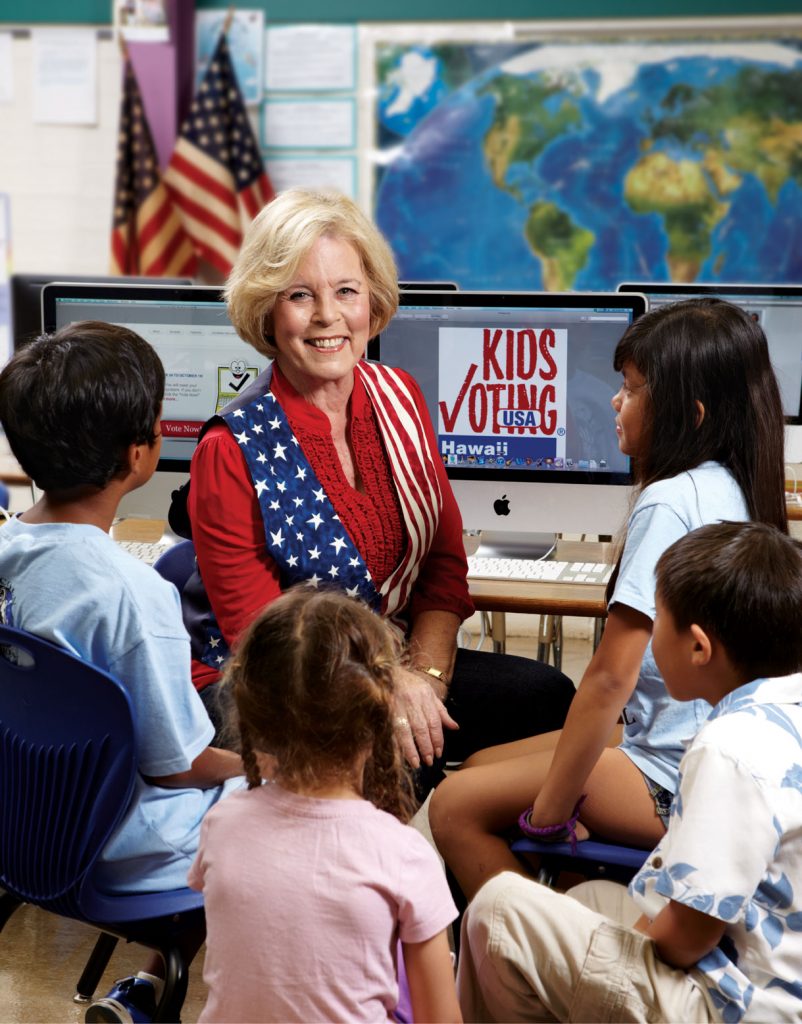
    Linda Coble and students of Abraham Lincoln Elementary, Honolulu

    As a budding broadcaster in the 1960s, Linda Coble struggled to have her voice heard in the news business.

    In those days, women were not on the air. Yet, Hawai‘i offered her something that the Mainland couldn’t — a foot in the door atLinda Coble as a newsroom secretary. She quickly moved from making coffee to reporting the news. In fact, she later became the first female TV news anchor in Hawai‘i.

    She worked at ABC’s Channel 4 for a couple of years before being lured to KGMB by Bob Sevey, where she reported the news for 15 years.

    By the mid-1980s, Coble was a well-established broadcast journalist and a household name in the Islands. She was invited to join the Rotary Club of Honolulu, which was newly opened to women due to a U.S. Supreme Court ruling in 1987. In 2000-2001, Coble became the statewide governor of Hawai‘i’s Rotary clubs, the first woman to 
hold the post.

    Soon thereafter, she left TV news for morning radio on KSSK to work with Michael Perry and Larry Price. Radio allowed her to comment on the news, rather than simply report on it. This gave her the freedom to promote community organizations such as Kids Voting Hawai‘i, which is supported by Rotary Clubs statewide.
    COVER-Make-Your-Voice-Count_image2Kids Voting Hawai‘i is a non-profit, nonpartisan, grassroots organization. Its mission is two-fold: to prepare schoolchildren for a lifetime of voting, and to encourage adult voter participation.

    Actually, Hawai‘i’s seniors set a great example for young voters. According to AARP Hawai‘i, 90 percent of local seniors said they voted in 2010, and seniors cast 1 out of every 3 ballots in state. They are a big force in voting. Since many seniors have been around since statehood, they take voting seriously. They know what there is to gain … and what is at risk.

    Coble, 65, has been a glass-ceiling breaker and community volunteer since arriving in Hawai‘i in 1969. This month, we talk with Coble about how she found her voice on the air and in the community.

    GM: We know that you moved out to the Islands in your 20s, but where did you grow up? What is your background?

    LC: I was 2 years old when my parents moved from urban New York to earthy Portland, Oregon. I’ve been told that I was terrified of grass … I was truly a city girl. I guess my dad missed the concrete jungle, because he walked out when I was 5 and my sister was a baby. I still remember holding the door for him. Mom held us together, working as a mural artist/interior designer with a woman, who eventually became our step-grandmother. I’m convinced mom’s example of determination made an enormous difference in the success of her girls.

    Later came my brother, and we moved to interracial Northeast Portland, where neighborhoods and schools were mixed. Our African-American neighbor (the principal of my grade school) built a fence when we moved in next door. I learned to get along with people of all races at an early age … an experience that was invaluable, especially once 
I was living in Hawai‘i and working in the media.

    GM: So, what brought you to Hawai‘i and kept you here?

    LC: When it was time to declare a major at the University of Oregon, I had to face the fact that I wasn’t a good speller, so I finally surrendered my journalistic fantasies and turned to broadcast journalism.

    I received an Oregon Association of Broadcasters scholarship that enabled me to continue studies and graduate with a degree that I proudly flashed during interviews at TV stations throughout Oregon.

    During one interview, a manager at the CBS affiliate in Portland told me, “Come back when you have had more experience, and a sex change operation.” I was devastated. My grandmother sympathetically sent me to Hawai‘i for a week to visit a girlfriend in Pearl City.

    While on Oahu, I tracked down Jim Manke, the president of the Hawai‘i Association of Broadcasters. Manke was also the news director at the ABC station. He gave me a job as the newsroom secretary in 1969 (on the same day we landed a man on the moon!)

    Hawai‘i became my new home. I was so happy when my sister, Cameron Maheras, soon followed and became a force in the fashion world here.

    Eventually, I was reporting stories and became the first female TV news anchor in Hawai‘i. Bob Sevey noticed and hired me away to KGMB a couple years later.
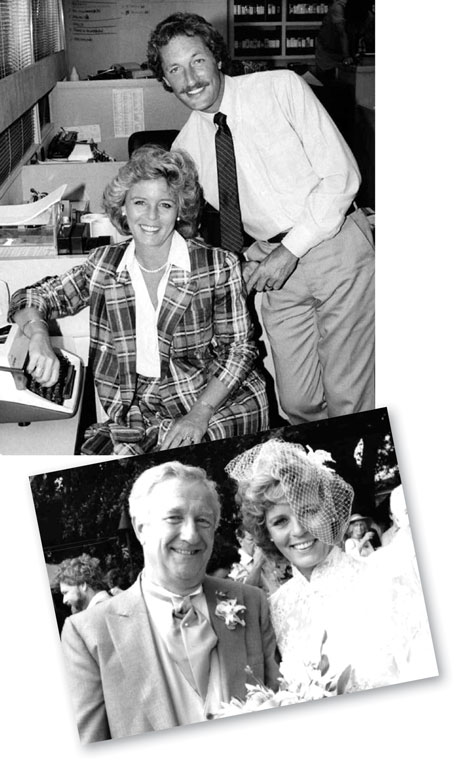
    COVER-Make-Your-Voice-Count_image3GM: Did you have a mentor in broadcasting?

    LC: I would say that every reporter and anchor at KGMB considered Bob Sevey as a mentor. What an ethical, accurate, fair newsman! And he genuinely cared about his team. I was at KGMB for 10 years, until my stepfather died in 1981. During that time, the CBS affiliate in Portland, KOIN TV, was recruiting for its first female anchor. Sevey generously said he would ‘hold the chair’ for me here, while I went to Portland to be with mom and apply at KOIN TV news. (Yes, the manager who had suggested a sex change operation was still there! I should have walked in and said in my deepest voice, I’m baaaaak.)

    When I arrived at KOIN, a man stopped me in the parking lot. He shared with me that the women reporters upstairs were upset because they wanted that job. He went on to share the culture of the newsroom, ballpark figures on how much my male co-anchor was earning, along with other insights. I asked, Why are you telling me all this? He joked that I was taking his job. (In fact, he was just filling the evening news chair until a female co-anchor was hired). For whatever reason, he was moved to give me the inside scoop before I went upstairs to sign-on. That was how I first met Kirk Matthews. The station had a January birthday party the next year, and Kirk and I discovered we were born on the same day—the same year. We fell in love.

    Ratings were great, but I was so homesick and longed for Hawai‘i. Engaged, Kirk and I moved back to the Islands.

    Sevey walked me down the aisle in 1984, during our double wedding ceremony with my sister Cammy and Bill Maheras. Sevey was not only a professional role model, he was like a dad to me.

    GM: What was your most favorite interview or story?

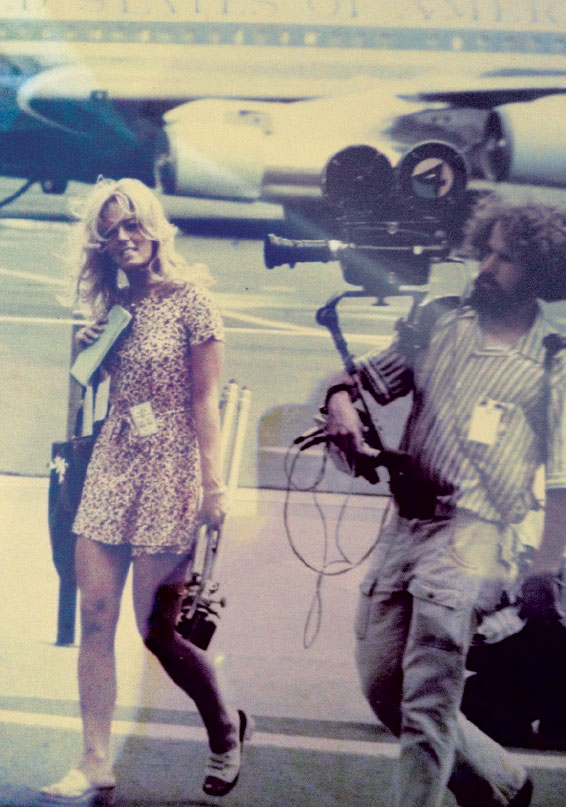
    LC: I was fortunate to cover entertainment icons and U.S. Presidential visits. When President Gerald Ford was here for a packed day of activities, ending with a Pearl Harbor ceremony, I was the only reporter who managed to talk my way into the motorcade. My cameraman and I scooped the others, every stop along the way. In fact, I was the only reporter who got an interview with the President.

    The interview was on the tarmac, just before he departed. I was hunched over trying to untangle the microphone cord and when I stood up, I nearly knocked the President’s teeth out with the top of my head. Microphone in hand, I asked Mr. Ford about his experience at the Arizona Memorial.

    When I returned to the station bursting with pride, Sevey admonished me for not following the ‘protocol’ and demanded that I share the film with the other stations. That was the first and last time my mentor and I didn’t see eye to eye.

    GM: If you had one wish to interview someone in this world, or cover an event, who or what topic would this be?

    LC: I would like to be with the world’s leaders when they announce that the crippling disease Polio has been eradicated. Rotarians around the globe have been fighting polio for three decades. We are nearing the finish line.
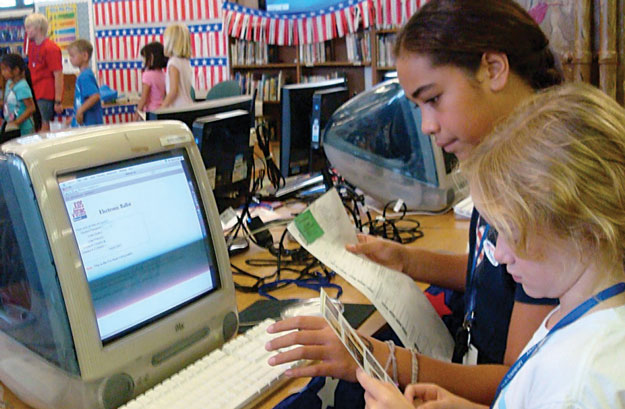
    COVER-Make-Your-Voice-Count_image4
    Students statewide, K-12, have the opportunity to log on, learn about the candidates and vote at www.kidsvotinghawaii.org.

    GM: What drives you to community service?

    LC: I love the advice John Wooden shared with his UCLA basketball team: Be more concerned about your character than your reputation, because your character is what you really are, while your reputation is merely what others think you are.

    I was in a profession where reputation — and ratings — ruled. At first, I joined boards and organizations because it was a good thing for the station to have my name on a letterhead. But over time, community service became more of a motivation than a motive.

    As a person (not a media personality), I care about the prevention of child abuse, the need for a Big Sisters organization, foster kids and the civic education of our youth.
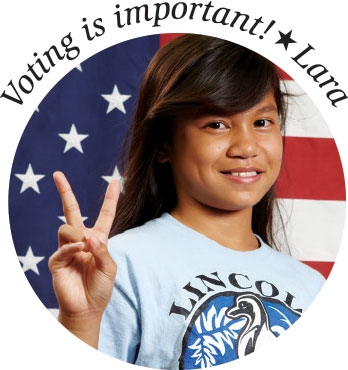
    COVER-Make-Your-Voice-Count_image6In 1987, when Rotary International raised the ‘testosterone curtain’ and allowed women to be inducted, I joined the Rotary Club of Honolulu. It was a year before leaving TV news to head to KSSK to work with Michael Perry and Larry Price every morning. With radio, I found an avenue for ‘service above self’— a way to make a difference with wonderful, dedicated businesses and community leaders.

    GM: Kids Voting Hawai‘i is one of your volunteer passions. Why is this organization very important to you?

    LC: Kids Voting Hawai‘i, an affiliate of Kids Voting USA, grooms our youth to be informed voters and civically engaged, responsible citizens. It prepares 
students to get into the habit of voting, and inspires the adults in their families to vote.
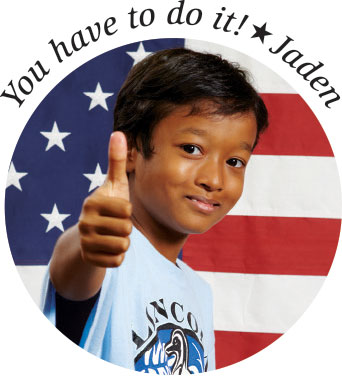
    COVER-Make-Your-Voice-Count_image7In 1995, when I was serving as the first woman President of the Rotary Club of Honolulu, Lyla Berg brought the Kids Voting idea to the club, and we ran with it. Rotarians statewide staffed the adult polling sites, where K-12 students went with their folks to cast their own paper ballots. By 2002, Kids Voting Hawai‘i shifted to cyberspace, and Hawai‘i students were the first in the nation to vote statewide by computer, thanks to the cutting-edge Internet technology of Commercial Data Systems.
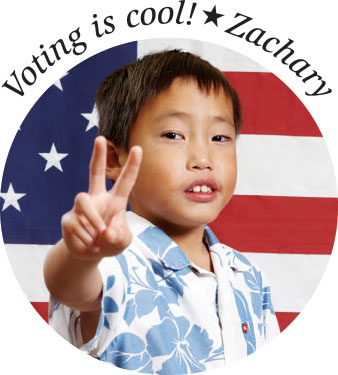
    COVER-Make-Your-Voice-Count_image8Kids Voting Hawai‘i continues to provide K-12 students with curriculum and classroom activities that address civic responsibility and compliment the Hawai‘i State Social Studies Standards. Our youth are inspired to explore the candidates and student issues, and engage their peers and parents in discussion. This hands-on experience in democracy is made possible by volunteers, including retired educators with Alpha Delta Kappa.

    In the last Presidential General Election, nearly 120,000 students cast their ballots online. From October 22 through November 6, students will have the opportunity to go online and cast ballots anywhere there is an Internet connection.
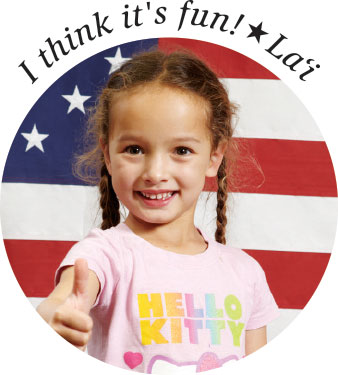
    COVER-Make-Your-Voice-Count_image9Everywhere I go, I invite folks my age, who are retired, talented and looking for meaningful ways to spend their time to find a need and fill it. Your experience is a gift. Your knowledge will rub off on younger generations. You will set an ideal example for your friends, who also may have some time on their hands that can be spent wisely.

    During my career, I never got closer to the movers and shakers than the length of my microphone cord. With Rotary membership, I have the opportunity to share weekly fellowship at meetings and roll up my sleeves to work side by side on community projects with wonderful friends who are making a difference in the community.

    Over time, community service became more of a motivation than a motive. ~Linda Coble


    Kids Voting Hawaii

    Students statewide, K12, have the opportunity to log on, learn about the candidates and vote atwww.kidsvotinghawaii.org.

    To vote from October 22 through November 6 (election night), students need:

    • Student password
    • Family’s precinct
    • District number

    This will gain students access to virtually the same ballots you adult voters will see at the polls. Ask your children or grandchildren if they are voting online. If they haven’t received a student password from their teacher, please encourage the school to provide the opportunity to their voice be heard and vote.


    You Snooze, You Lose

    The state Office of Elections and county clerks can register voters. You must re-register if you have changed your name or your address.

    To register you must be 18, a citizen of the United State and a legal resident of Hawai‘i.

    All election information, including polling places, can be found at www.hawaii.gov/elections.com.

    How to Register to Vote?

    • In Person: Visit the Office of the City or County Clerk where you reside to complete an Affidavit on Application for Voter Registration.

    • By Mail: Mail the completed Affidavit on Application for Voter Registration to the Office of the City or County Clerk where you reside. Voter Registration Forms are available at your:

    • Satellite City Hall
    • Public libraries
    • U.S. Post Offices
    • Phone Directory
    • State services agencies
    • University of Hawai‘i System
    • Office of Elections: www.hawaii.gov/elections
    • The major political parties also sponsor voter registration online at www.gophawaii.com and www.oahudemocrats.org.

    Questions?

    Office of Elections: 808-453-8683
    City & County of Honolulu: 808-768-3800
    County of Hawai‘i: 808-961-8277
    County of Maui: 808-270-7749
    County of Kauai: 808-241-4800

    Upcoming Important Events

    Oct. 30: General election absentee applications must be received by the City/County Clerk where you reside no later than 4:30 p.m.

    Nov. 6: General Election (Polling place hours: 7 a.m.– 6 p.m.)

    Voter Turnouts

    Hawai‘i general election turnout has been dramatically slipping. It has gone from a high in 1959 of 93.6 percent (or 78.1 percent a little more than 20 years ago in 1990) to a low 52.7 percent in 2006.
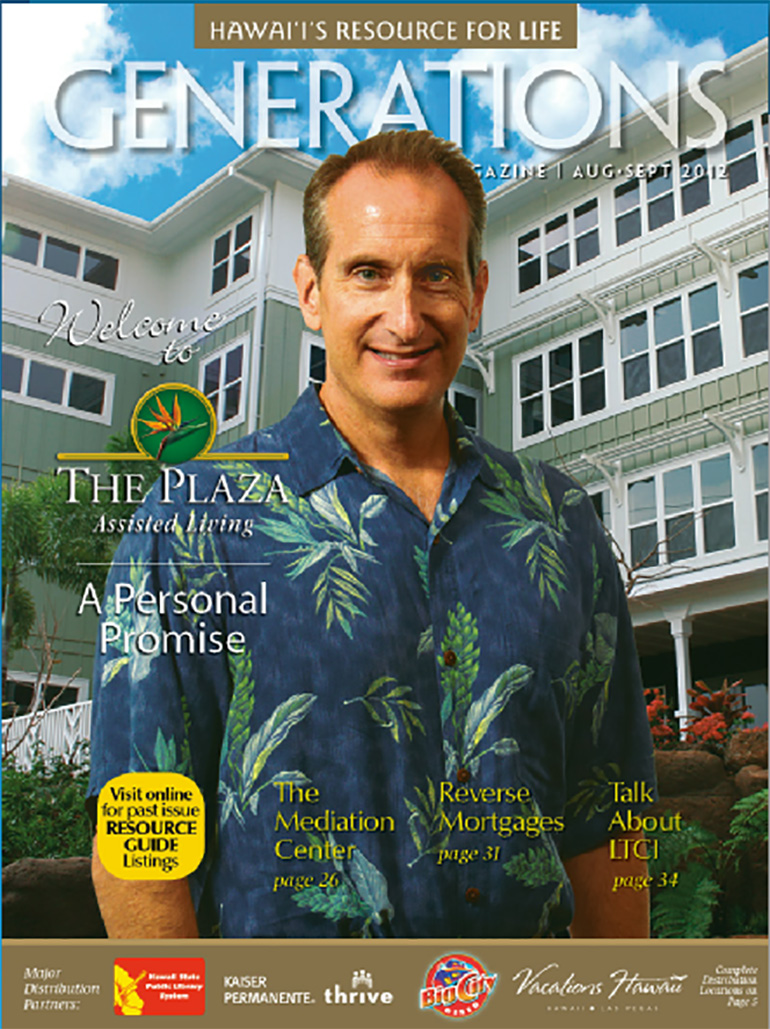
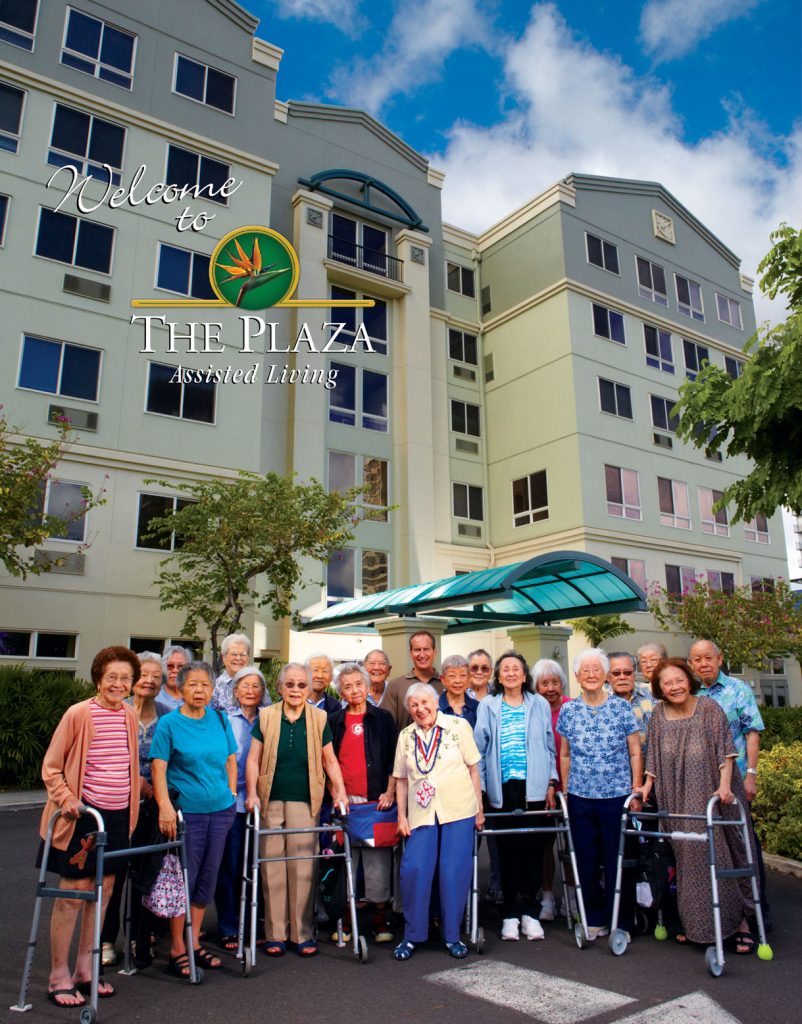
    As a budding broadcaster in the 1960s, Linda Coble struggled to have her voice heard in the news business. In those days, women were not on the air. Yet, Hawai‘i offered her something that the Mainland couldn’t — a foot in the door…

  • Welcome to The Plaza Assisted Living

    Welcome to The Plaza Assisted Living

    A personal promise creates new, affordable homes for hundreds local seniors

    COVER Welcome-to-The-Plaza_image1In the early 1990s, local businessman Steve Metter searched for a safe and affordable place for his aging father to live. Faced with limited options, it became his mission to build a quality community for the people of Hawai‘i who faced the same situation. Steve’s determination was the foundation for The Plaza Assisted Living.
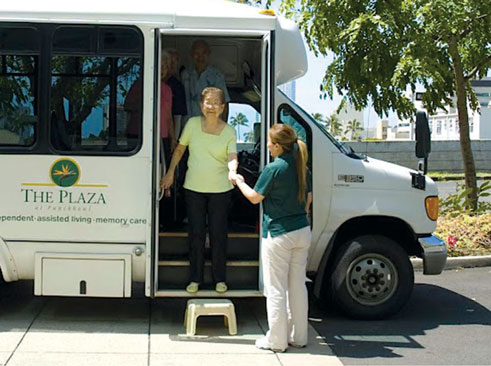
    Today, The Plaza is planning to open its third property — The Plaza at Moanalua. Construction is moving quickly and plans are to open the doors to new residents by October of this year. Generations Magazine recently sat down with Steve to learn more about Hawai‘i’s senior housing challenges, and hear about how The Plaza’s newest community may help local families.

    GM: What prompted the idea of starting an assisted living property in Hawai‘i?

    SM: In the early 1990s, my development partner Mike Wood and I recognized the need for a new type of senior housing in Hawai‘i. We both had middle-class parents in assisted living communities on the Mainland. After my mom passed away, my wife and I wanted to bring my dad to Hawai‘i to be closer to the rest of our family. After looking around we were unable to find a senior housing rental that provided a high quality experience and affordable care. We were disappointed that the quality assisted living communities in Honolulu required high buy-in fees and long-term commitments that make them out of reach for many middle-class families. We believed that the local community deserved a rental assisted living option that could provide the same level of care expected from the most exclusive communities. We made a promise to our parents that we would develop and operate high quality, affordable assisted living in Hawai‘i.

    COVER Welcome-to-The-Plaza_image2
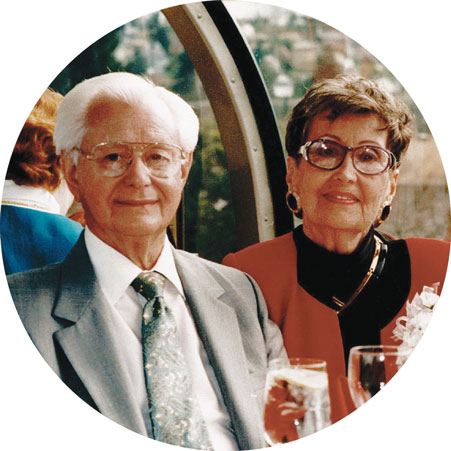
    Steve Metter’s parents.

    GM: Transitioning from a caregiver for your parent to building an assisted living community is quite a leap, without experience in this area of expertise. How was the process moved forward?

    SM: We knew we needed to find a good business partner. We started our search by attending assisted living conferences and visiting communities on the Mainland. Our search eventually put us in touch with Sound Health Management and Development, Inc., an assisted living management and development company out of Seattle, WA. Sound Health, led by Rick and Lisa Skelton, had been involved in the development of nearly 30 assisted living communities across the Western U.S. and is considered a leader in the assisted living industry. They, too, had noticed the lack of quality rental assisted living options in Hawai‘i and were concerned about the state’s looming senior care crisis. We had finally found a partner that had exceptional operational experience, a history of successful developments and had dedicated their lives to caring for seniors. The partnership was a natural fit as both firms were driven by the same values — integrity and commitment to quality.

    GM: Was there a bigger plan for the future since multiple properties are being built?

    SM: In the beginning, our focus was about fulfilling a promise to our parents to build affordable, high quality senior living rentals, which was The Plaza at Punchbowl. Once The Plaza opened, we all became motivated to expand and provide these services in multiple locations. We realized that we had the ability to help even more families. The Plaza at Punchbowl provided a rental location in town close to medical facilities, shopping, and, most importantly, the residents’ own families. Seniors want to live in their own neighborhoods or close to their families. This meant we needed to build more communities in different areas throughout the state.

    COVER Welcome-to-The-Plaza_image3GM: Where are your communities located?
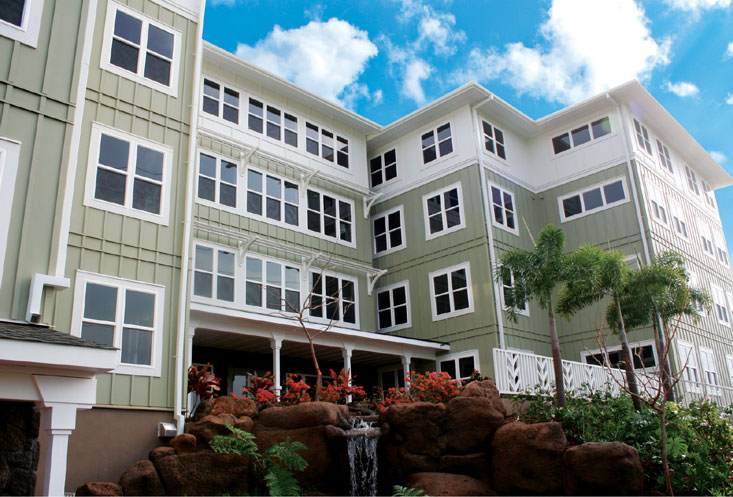
    SM: Our first project, The Plaza at Punchbowl, opened in 2004 and is located in Honolulu on Lunalilo Street near Ward Avenue. Our second project, The Plaza at Mililani, is located on Ukuwai Street in Mililani Mauka and opened in 2010. The Plaza at Moanalua, our third project, is currently under construction and will be opened later this year. It’s located on Moanalualani Place directly behind Kaiser Hospital.

    GM: Are there other locations that you are presently considering?

    SM: Currently we are in the entitlement and permitting process for sites in Waikı¯kı¯ and Pearl City. We are also looking for sites throughout O‘ahu. Seniors want to stay in their neighborhoods and familiar areas; they should have the opportunity to do so.

    COVER Welcome-to-The-Plaza_image4
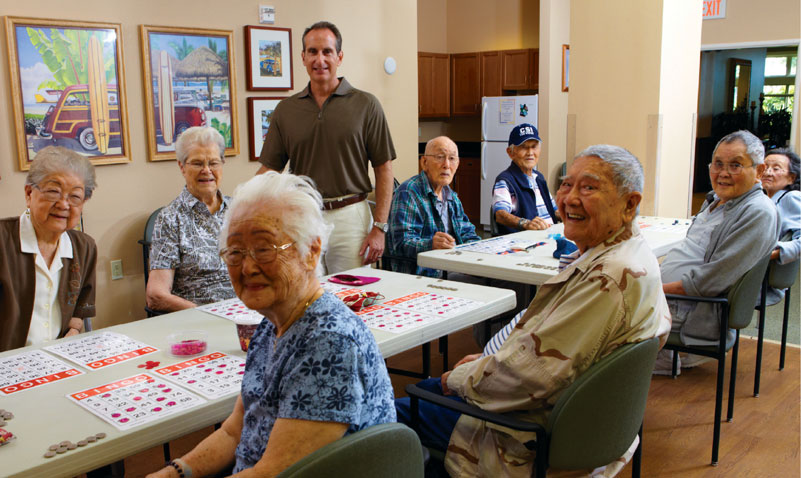
    Steve Metter visiting with the residences on BINGO MONDAY!

    GM: How have these assisted living properties had an impact on your life, personal and professional?

    SM: The Plaza communities have impacted my life in so many ways. These communities have allowed me to fulfill a promise to my parents, created diversification for MW Group, Ltd., provided a new successful platform for our limited partners, generated hundreds of new jobs and most importantly we’ve had the honor and privilege to care for many of my friends’ and our community’s loved ones.

    On a personal level, my children and their classmates have had the opportunity to visit, entertain and work in our Plaza communities. Recently we had a great time teaching my son’s class about the need and responsibilities in caring for our elders. Last holiday season my wife Susan and all three kids made bracelets for some of our residents and presented them on Christmas morning. My family and I enjoyed it so much … I think it will become an annual event.

    COVER Welcome-to-The-Plaza_image5
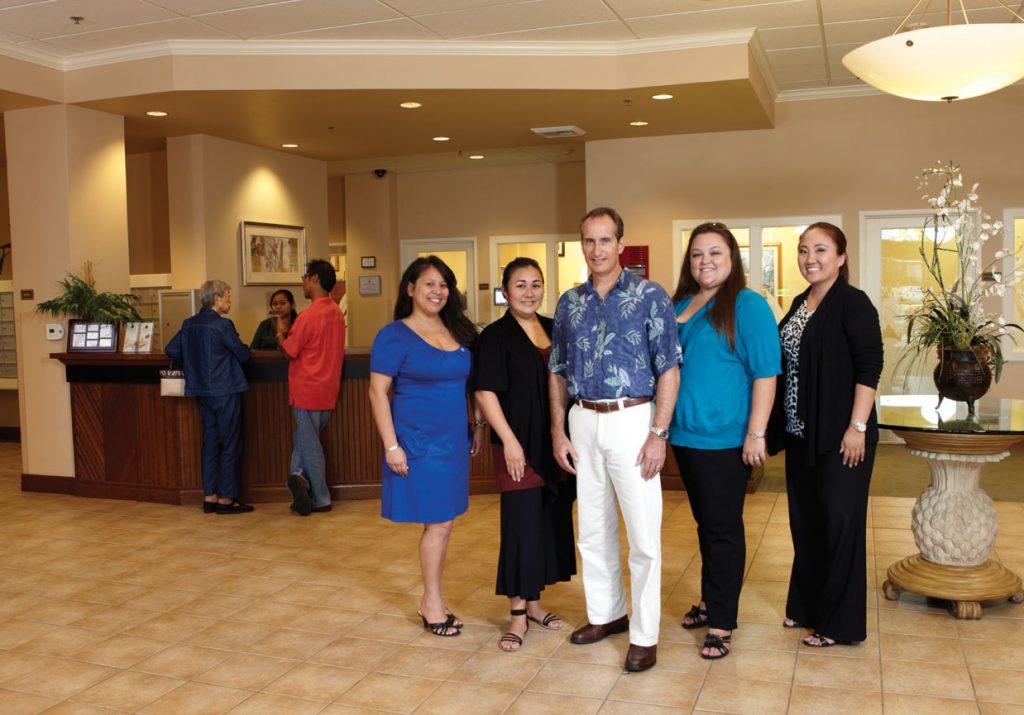
    The lobby entrance of The Plaza at Punchbowl (Lt–Rt) U’ilani Kapuaakuni, Business Office Manager; Ashley Yokoyama, Administrator; Steve Metter, Developer; Tricia Medeiros, Regional Director; Shannon Miyazaki, Administrator

    GM: What is the best part of caring for so many senior residents?

    SM: Having lived through caring for an aging parent, I have firsthand knowledge of what people go through and the difficulties you experience. Everyone just wants to make sure that his or her parent has the best life possible, especially during the last years. I talk to friends and business associates and so many have parents who are aging and experience the similar worries that I did. I am grateful and humbled to be a part of something that has, and will, help so many families in our community.

    GM: What are some of the staffs’ key traits that enable The Plaza to maintain a highly successful assisted living operation?

    SM: The most important trait in our staff is passion. Our team members must be passionate about our mission. They need to care about
    people of all ages because we touch the lives of not only the seniors but also their families, friends and other care givers. We can provide
    technical training and education, but they must genuinely be caring and compassionate in order to be successful.

    The Plaza was fortunate enough to hire Tricia Medeiros as the Administrator of The Plaza at Punchbowl. She later went on to become the
    Regional Director of the company and is responsible for operations across all of our properties. Her belief is to find genuine, caring and driven people, and help them advance as we open new communities. Currently, all of our administrators at the various Plaza locations have held previous management positions within our company and were able to grow and expand their knowledge of assisted living under her direction and later become leaders of their own properties.

    COVER Welcome-to-The-Plaza_image6
    Entrance of The Plaza at Mililani

    GM: What are some of the demographics of your residents? Age, level of mobility, prior occupation, financial history, where they lived prior, etc.

    SM: The average age of our residents is in the mid-80s, but ages range from 60 to 100. The majority either lived in the immediate area or
    has family who live near the community. Our residents are local people of all ethnicities and often will recognize former acquaintances from school or their neighborhood when they move in.

    GM: What do you see in the future of long-term care in Hawai‘i?

    SM: Hawai‘i’s senior population is one of the fastest growing groups in the country, and assisted living provides an option for seniors to live in an environment that fosters their independence. Services for seniors will need to continue to expand.

    COVER Welcome-to-The-Plaza_image7
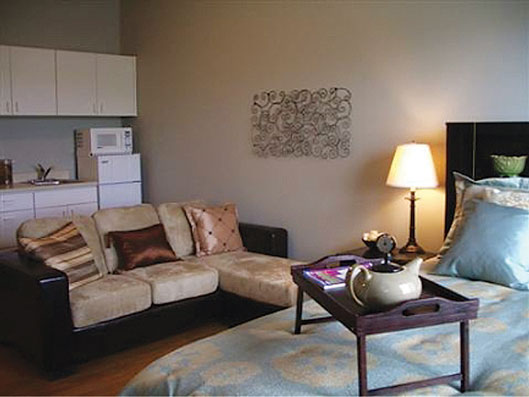
    Bedroom at The Plaza at Mililani

    GM: What is your best advice/tip for children of aging parents?

    SM: Have the conversation with your parents early and do your research. Unfortunately, many of our residents move into our community after some kind of incident, and then it becomes a big rush to find an available apartment. In these circumstances, people often are forced to make a decision based on availability and not preference. I encourage people to go out and visit communities and learn about their differences. Families should make a well-informed decision. In addition, I think families will be surprised to see what state-of-the-art assisted living facilities offer. Prior to moving in, families should have a thorough understanding of the community’s dining experience, activities, staffing expertise, resources and overall social dynamics.

    GM: In large housing facilities, how do you care for people with special needs such as dementia?

    SM: Each one of our communities has a Memory Care Program. These are specially designated floors that create an environment for those residents with Alzheimer’s disease and other related dementias. The program floor is secured and allows residents to wander freely throughout the floor. In addition, the staff is trained to care for these residents’ special needs. The Plaza works very closely with the Alzheimer’s Association. The Plaza and the staff work hard to support the association because of all the services they provide our residents, staff and families. We hold support groups for the families in our communities, utilize the training they provide and continually
    try to improve the residential experience.

    GM: What are the benefits of living in an assisted living community?

    SM: Most seniors want to reside in their homes as they age — we support that desire. But there may come a time that someone can no longer live alone in their home and need supportive services. Assisted Living provides an option for those who need services but want to live in an environment that fosters their independence. We’ve noticed that residents who were living alone in their own homes have improved health after moving into the community. This usually occurs due to improved nutrition, socialization, better exercise, health monitoring and medication management.

    GM: What advice can you give if your aging parent is resistant to change?

    SM: First, encourage them to visit the communities. Most find it surprisingly pleasant … like a very nice apartment complex or hotel. Next,
    would be to experience it with a respite or short-term stay. When it comes to residents with dementia, reasoning with your parent may be difficult. Sometimes safety becomes a primary issue and nudging your parents may be necessary. The good news is that our staff has helped so many families through this transition with success.

    I am grateful to be a part of The Plaza assisted living team. Our communities are filled with great people who have so much love, experience, memories, and wisdom to share with all of us.

    The Plaza at Mililani
    95-1050 Ukuwai Street, Mililani | 626-8807
    • Five story building • 128 beds
    Sweeping mountain views east and west.

    The Plaza at Punchbowl
    918 Lunalilo Street, Honolulu | 792-8800
    • Six story building • 137 beds
    Conveniently situated in the heart of Honolulu
    with ocean views and near shopping, medical
    facilities, and much more.

    The Plaza at Moanalua
    1280 Moanalualani Place, Honolulu | 833-8880
    • Six story building• 160 beds
    Unobstructed mountain and ocean views.

    In the early 1990s, local businessman Steve Metter searched for a safe and affordable place for his aging father to live. Faced with limited options, it became his mission to build a quality community for the people of Hawai‘i who faced the same situation.

  • Kimokeo Kapahulehua: A Modern Hawaiian, in Love with a Bold Mission

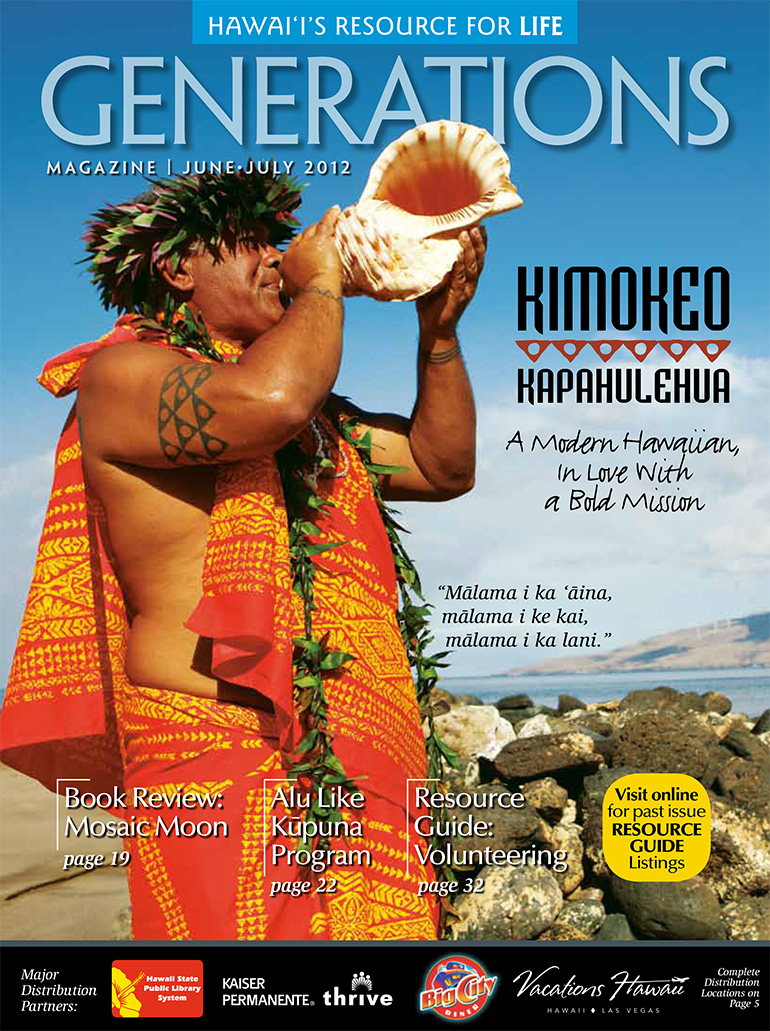
    Kimokeo Kapahulehua: A Modern Hawaiian, in Love with a Bold Mission

    Following his inner guiding star, Kimokeo skillfully navigates the subterranean waters of his own inner world and kuleana.

    COVER-Kimokeo-Kapahulehua_image1A
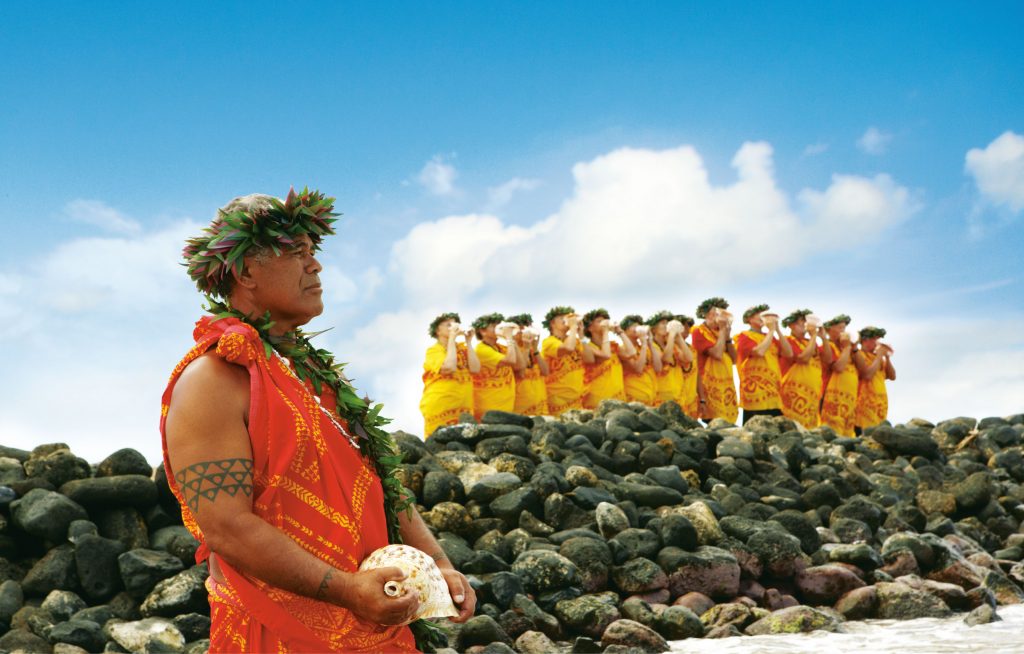
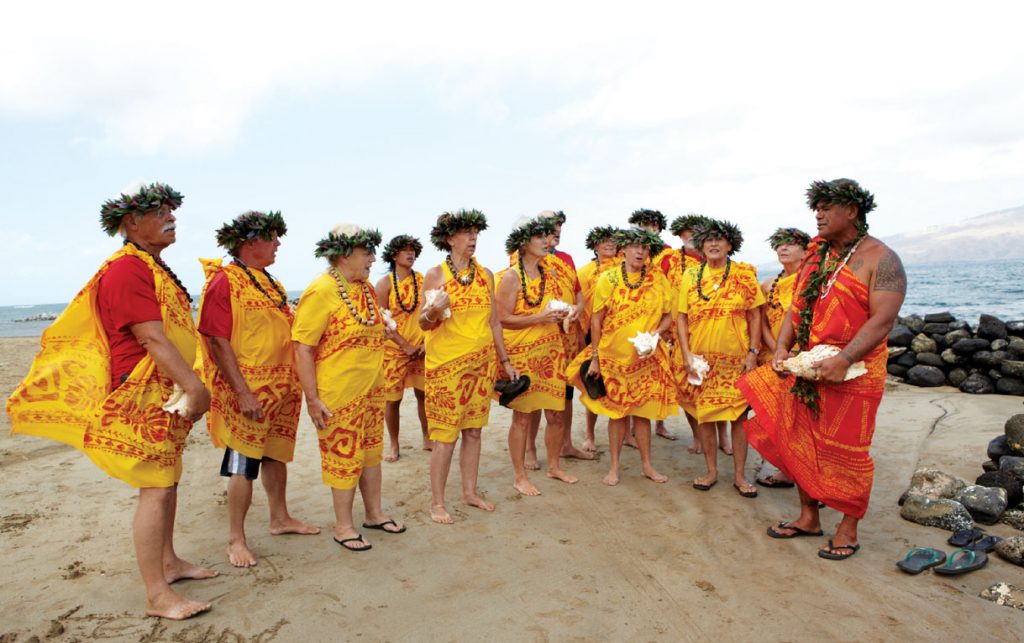
    Maui Nui O Kama: (L–R) Kathy Holland, Adele Rugg, Natalie Stanfield, Dorinda Giles, Dottie Nykaza, Gail Dornstreich, Vicki Trail, Vanessa Kalanikau, Ed Mathay, Mike Shindler, Bud Nykaza, Rick Trail and Dan Holland.

    In the Hawaiian tradition, the purpose of life —the meaning of our being here on Earth — is to fulfill a unique responsibility, our kuleana. This traditional way of looking at human existence addresses the age-old questions about the meaning of life, while grounding it in everyday practically. It invites each of us to reflect upon what our purpose may be — and how best to offer our gifts, talents and strengths to the world, intentionally and powerfully, for the enrichment of all beings.

    Living among us in these modern times are Hawaiian elders whose kuleana is to share Native Hawaiian core values with future generations. 
In doing so, they ensure that traditional beliefs, such as kuleana, find new relevance in our modern-day world.

    Kimokeo Kapahulehua, 64, is one of Hawai‘i’s wisdom keepers. (His surname refers to the sound of lehua branches rubbing against each other in the wind.) He is a kūpuna (elder) with extraordinary knowledge of the land and its people. As a pillar in the Maui community, he makes an incredible effort to address a vast number of issues — from engaging youth groups and restoring ancient fishponds, to tirelessly working toward land preservation and the eradication of invasive species.

    Yet, Kimokeo didn’t always know his kuleana. Like most of us, he discovered it along his life’s journey.

    As a precocious child he was a fast learner and a bit of a daredevil. He was very much a “doer” … much to the consternation of his parents, who often feared for his safety.

    With the boundless mana (energy) of his robust nature, he was branded with the nickname “Bully,” as his parents viewed their super-active, chubby child as a kind of free-ranging bull. He was an intensely focused fireball of a child, typically engaged in the unrestrained pursuit of whatever claimed his attention.

    Stories abound of how the clever boy managed to stow away on late night fishing forays that only adults were permitted to join and sought out his own superior, fishing spots. Even his grandfather, then chief of police, could not reel him in.

    In his adolescence, he became the “King Kong” of Kaua‘i beaches, challenging the biggest waves — the more dangerous the better — on his primitive, wooden surfboard. At the age of 12, he discovered outrigger canoe paddling and participated in his first canoe race at age 14.

    As an instinctive waterman, Kimokeo related to Kanaloa, the Hawaiian god of the ocean. He connected with idea that a fully lived life as a Hawaiian demands experience in and of the water. To become a complete person, he knew he must commune, profoundly and passionately, with the sea.

    His bond to the ocean followed him into adulthood and later became a defining element of his kuleana.

    Passion Finds A Practical Focus

    COVER Kimokeo-Kapahulehua_image2
    Voyage of the wa‘a towards Kure Atoll.

    As he matured, an awareness of his life mission, or kuleana, began to crystallize. Something quite different lay ahead for him. His penchant for taking on risky challenges, separating from others and “winning” began to morph into a new, more benevolent kind of passion. He began to choose to give generously from his deep well of aloha (love energy) and serve as a mentor. He would become a dynamic, endlessly renewable source of kōkua (benevolent assistance) whose undeterred giving of his best self would shine forth into the world, personifying the Hawaiian principles of pono (doing what is right, in the fullest sense) and ma¯lama (taking good care of all that’s precious).

    In the pidgin expression, “If can, can; if no can, no can,” he would have emphatic use for the first half of that affirmation only: If can, CAN!

    COVER Kimokeo-Kapahulehua_image3His Uncle Kawika, who had sailed on the famed Hōkūle’a to Tahiti in 1976, challenged him to “connect all of the Hawaiian Islands like a flower lei.” Historically, this would be a re-enactment of King Kamehameha II’s feat, only this time it would be a deliberate mission of peace.
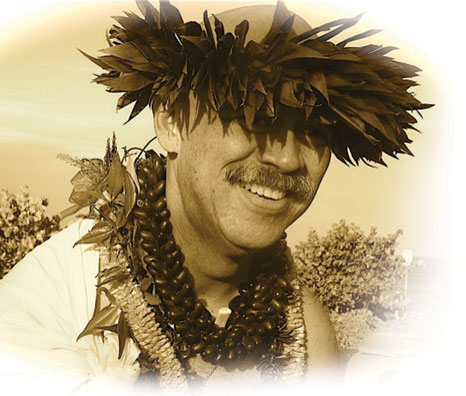
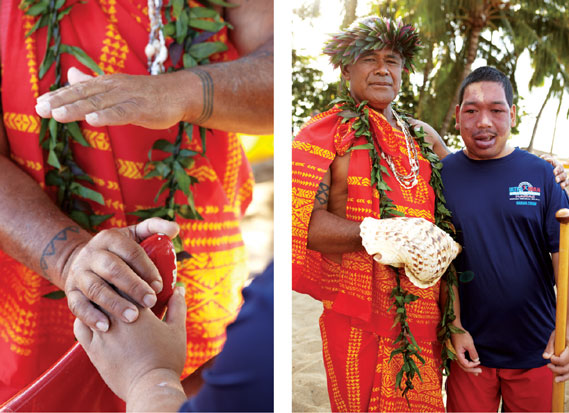
    Recognizing and accepting this as his responsibility (kuleana) to his family — and seeing it, too, as an extension of his commitment to perpetuate the Hawaiian culture — Kimokeo began a series of open-ocean canoe voyages in 2002 that traversed all the inter-island Hawaiian channels.

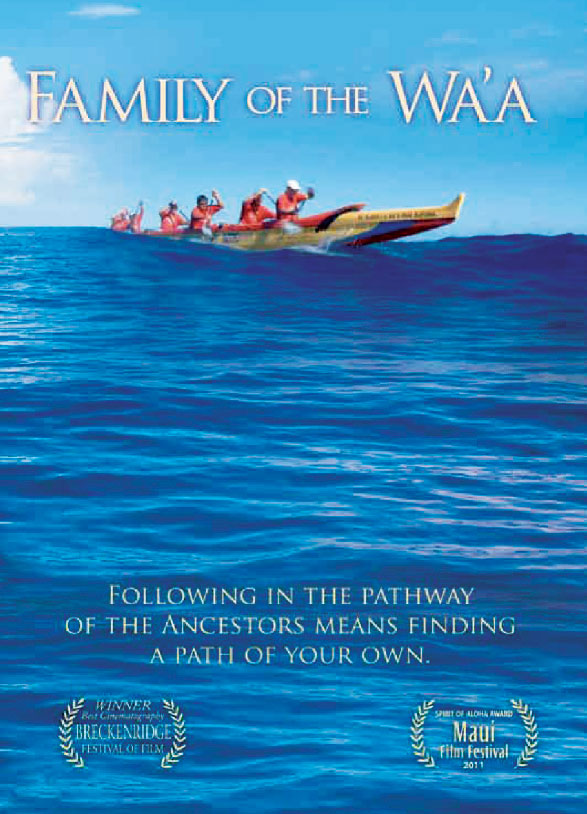
    On these journeys, he was mostly accompanied by rock-star-quality crews; but, true to his all-embracing nature, he also chose to include recreational novices in their 60s. The series of voyages culminated in 2008 in an epic, 400-mile paddle from Laysan to Kure Atoll in the Northwest Hawaiian Island chain. It became the subject of a recent film directed by Alyssa Fedele, “The Family of the Wa’a.” (familyofthewaa.com).

    COVER Kimokeo-Kapahulehua_image4
    Kumu Keli‘i Tau‘a. A renown cultural expert and spiritual leader, and an acknowledged master of Hawaiian music, hula and chants.

    The lei connecting the Islands was finally complete, and Uncle Kawika’s vision accomplished. The entire Hawaiian archipelago had been bridged. The Islands, considered by Hawaiians to be sentient, living beings, could now rejoice in the reappearance of canoes into their remote worlds. Even distant Kure had now “seen” the coming again of the wa‘a, the living canoe, upon her waters.

    By the mid-1990s, Kimokeo met Kumu Keli‘i Tau‘a, a modern Hawaiian like himself whose passion for Hawaiian culture, chant and protocol would raise his passion for canoe paddling to a higher octave. His life would be forever changed by the synergy and magic of that meeting.

    COVER Kimokeo-Kapahulehua_image6
    Kimokeo and Brandon from the Adaptive Paddling program for mentally and physically handicapped people.

    The coming together of these two great Hawaiian men — one a waterman, the other a kumu hula (teacher)—formed the perfect partnership. It would ignite them both and offer “Bully” a new name — Kimokeo. He also had an evolved and awakened view of his own calling… he would become an educator, a whirring hub of community action and goodwill, offering his unique mana to everyone who cared to receive it. Once “born to be wild,” he had now become“re-born, to willingly share.”

    In this newfound capacity as harmonizer, he blurred the boundaries between kanaka maole and haole. In Kimokeo’s view, native people and foreigners were “all one team.” Transcending prejudice, he spread his attention across all demographics — young and old, able-bodied and “adaptive,” native and newcomer.

    Assuming the Mantle of Cultural Leader — a Kahu

    In 2003, under the spiritual mentoring of Kumu Tau‘a, Kimokeo formed a cultural hālau, Maui Nui O Kama, and became its alaka‘i (leader). The hālau was an instrument in educating the public and in introducing Hawaiian ceremony to special occasions. The hālau became extraordinarily active in supporting families through rites of passage, such as the death of loved ones, and blessing homes, businesses, nature centers, roadways, hospitals, sports events and even film directors. Almost 10 years later, the hālau continues to be sought out and appreciated by many who’ve been touched by its ceremonies. Its members, predominantly non-Hawaiian, have become genuine practitioners of Hawaiian culture — with a legitimacy that only Kimokeo’s vision and attentive leadership could have bestowed.

    COVER Kimokeo-Kapahulehua_image5
    The halau chanting with Kimokeo: (Front row, L–R) Dan Holland, Rick Trail, Kathy Holland, Dottie Nykaza, Vicki Trail, Adele Rugg, Natalie Stanfield, Gail Dornstreich, Kimokeo Kapahulehua. (Back row, L–R) Vanessa Kalanikau, Mike Shindler, Dorinda Giles, Ed Mathay, Bud Nykaza.

    Kimokeo would also help restore lo‘i (taro fields) at Honokahau, Maui, and on land stewarded by Kawehi Ryder (brother of Hawaiian spiritual practitioner, Lei‘ohu Ryder) on La¯na‘i. He would direct the restoration of Ko‘ie‘ie, an ancient fishpond in the Ka‘ono‘ulu Ahupua‘a on Maui, by enlisting the help of the Native Hawaiian community, residents and visitors. His directive to all was simply to participate: “Carry at least one pōhaku (stone) into place.”

    Kimokeo would also inspire cancer survivors (the so-called Mana‘olana “Pink Paddlers”) to accomplish things they’d never dared to dream, leading them on life-affirming paddles across wild, open ocean. He would even introduce adaptive (physically and emotionally challenged) paddlers to canoe racing, super-charging their self-esteem.

    Forever a champion of the younger generation, Kimokeo was for several years director of the Kīhei Youth Center. And he continues to spearhead several fundraisers on its behalf. At a recent fundraiser to support teens participating in the 2012 World Sprints in Canada, he not only led the opening prayer and served as master of ceremonies, he also stepped up as an impromptu auctioneer to bump up the bid on an auction item that he felt was selling too low.

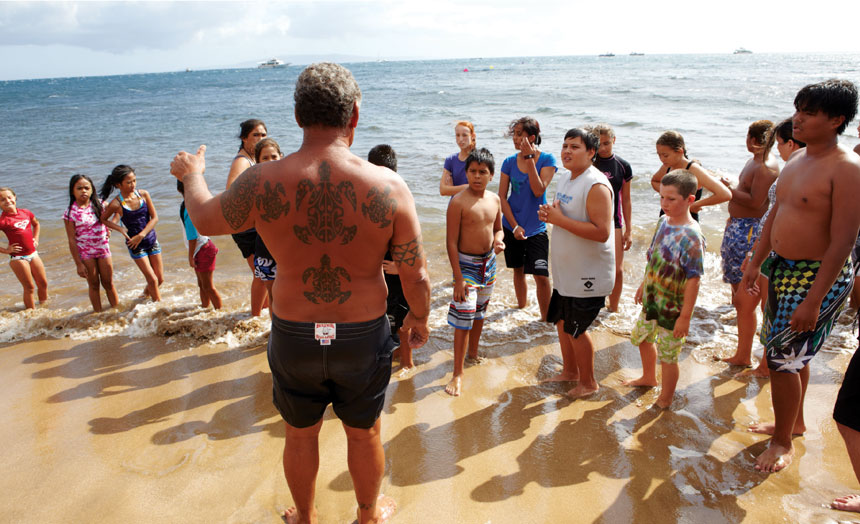
    Under Kimokeo’s tutelage, hundreds of youngsters have found a passion for canoe racing. Indeed, introducing the younger generation to a pono, drug-free lifestyle has always been one of his major initiatives.

    COVER Kimokeo-Kapahulehua_image7

    Hālau members Bud and Dottie Nykaza have had a special window on Kimokeo’s depth, versatility and seemingly boundless energy. Since the hālau’s inception, they have served—like a pair of extra heads and two pairs of extra arms and hands — as Kimokeo’s willing assistants, often on call day and night.

    Bud, a 60-something recreational paddler and ace steersman on inter-island voyages, sees the tenderness underlying Kimokeo’s actions: “He’s comfortable enough with himself to show emotions publicly … never ashamed to shed tears,” Bud says. “Ever since I met him, I’ve felt a connection with him, the way a son would feel toward his father. He’s always watching out for my safety. His way is no drama, no hesitation …just results!”

    Modern Hawaiians such as Kimokeo and Kumu Tau’a, who walk the walk — steadily and devotedly — and talk no more than necessary to get the job done are our mentors and wayshowers, our living examples of what’s truly pono.

    Kimokeo notes that as we age and mature, our kuleana may also change. In fact, a quality of ma¯lie (calmness and steadiness) typically increases as you age. Ma¯lie can sometimes make it possible for elders to achieve goals that eluded them when they were younger and more harried.

    Regardless of your age, it’s important to ask yourself, What is your kuleana? What is your responsibility, or role in life? What can you accomplish today that perhaps got away from you yesterday? And, how are you going to express your kuleana? What will it “look” like in practical, everyday life? And, perhaps most importantly, how will you share it and how may it benefit others?


    Following his inner guiding star, Kimokeo skillfully navigates the subterranean waters of his own inner world and kuleana. In the Hawaiian tradition, the purpose of life —the meaning of our being here on Earth — is to fulfill a unique responsibility, our kuleana. This traditional way of looking at human existence addresses the age-old questions about the meaning…

  • Les Murakami: The Heart of a Warrior Through & Through

    Les Murakami: The Heart of a Warrior Through & Through

    “Don’t give up… I still exercise six days a week.”

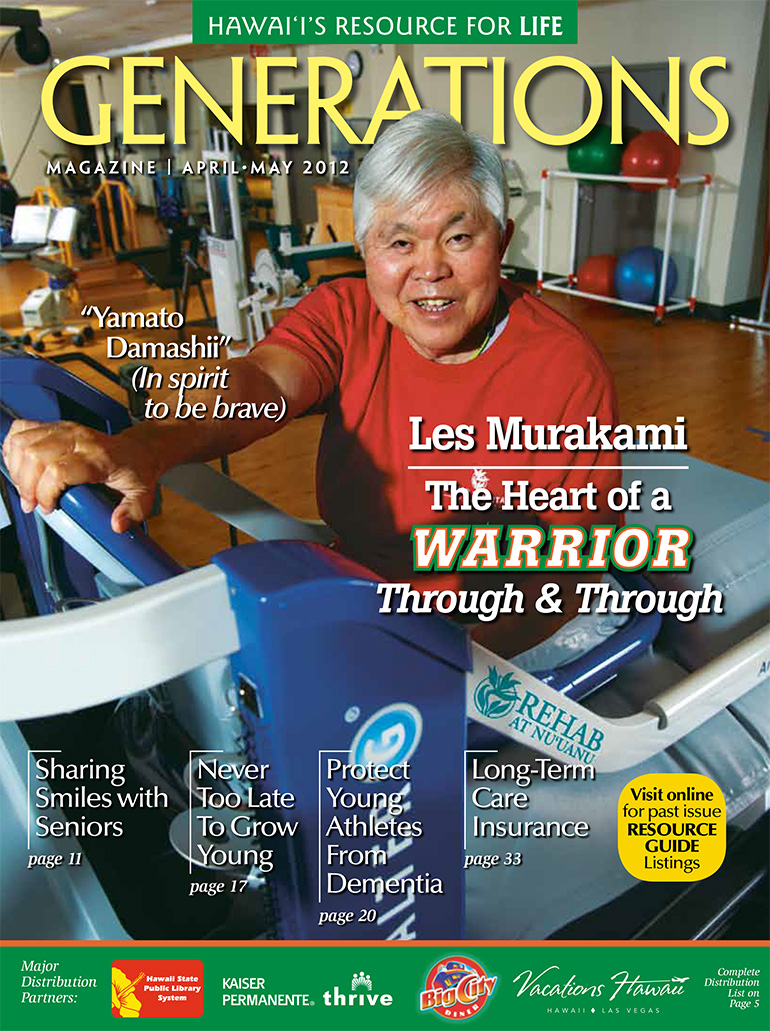
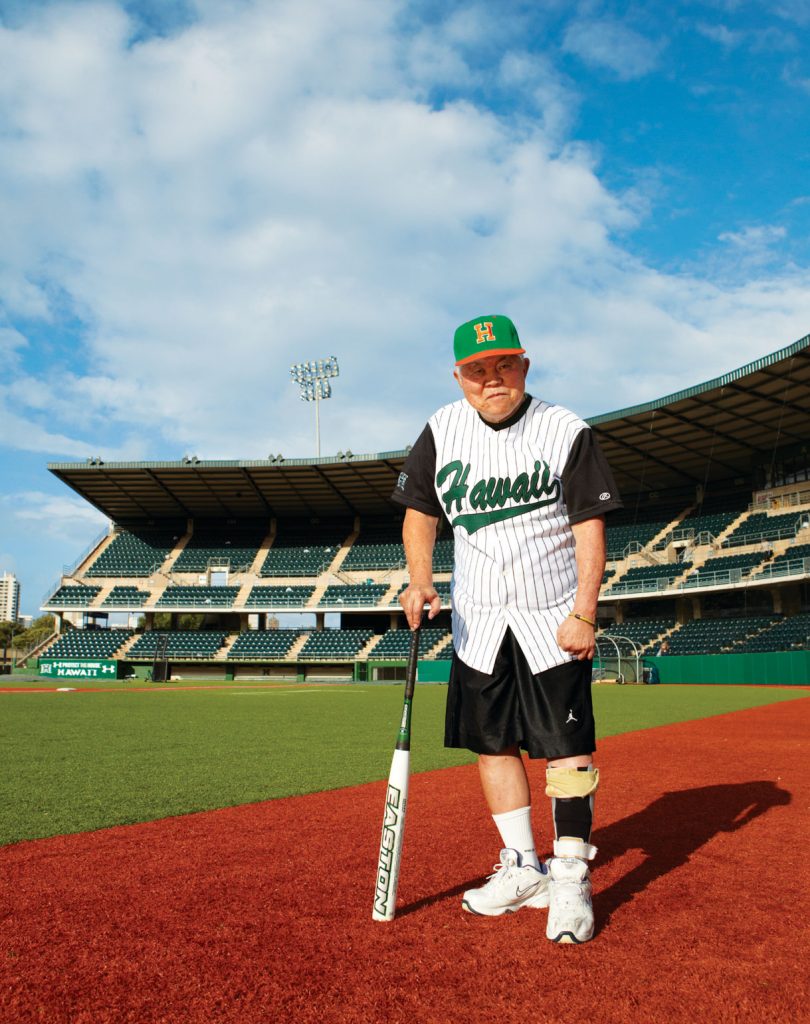
    COVER Les-Murakami_image1Former UH Coach Les Murakami had an award-winning baseball coaching career at the University of Hawai‘i. He coached more than 500 players in a victory-studded career that stretched from 1971 to his retirement in 2001. But his retirement didn’t come by choice. On Nov. 2, 2000, Murakami suffered a severe stroke. He underwent surgery to relieve pressure on his brain and remained in critical condition following the operation.
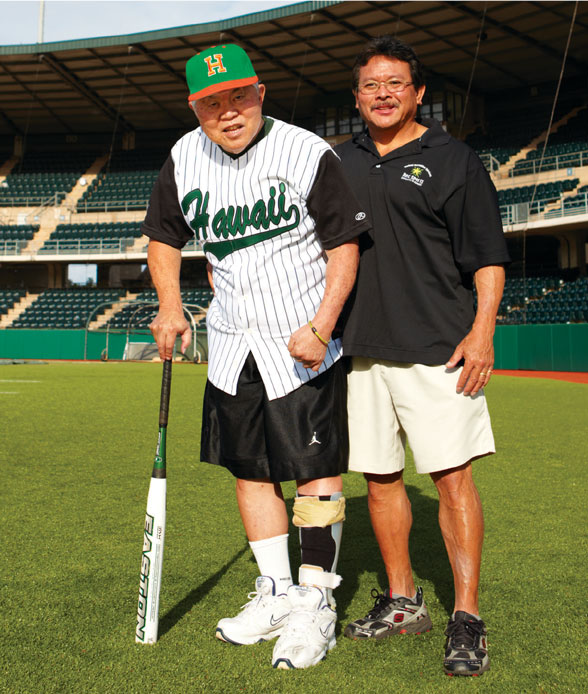

    For the past 12 years, Coach Murakami hasn’t given up on his recovery. He attends rehabilitation sessions several times a week to regain control of the left side of his body that was weakened by the stroke. His main goal is to be as independent as possible.

    Generations Magazine recently sat down with Coach to check on how he’s doing. We wanted to hear about the new stroke recovery technology he’s been using at the Rehabilitation Hospital of the Pacific … and to reminisce a little bit about playing ball.

    GM: For the fans who may not know, where did you grow up and can you tell us a little bit about your small-kid days?

    LM: I was born in Makaweli, Kaua‘i, and lived there until the age of I0. My family moved to O‘ahu in I947. I attended Queen Ka‘ahumanu Elementary School and then from the 7th grade I attended St. Louis, where I graduated in 1954.

    GM: Can you tell us some of your most memorable stories of the good old days growing up? Did you have any mentors or athletes that you idolized?

    LM: On Kaua‘i, I played war games in the forest, basketball in the gym and went fishing with friends in the Shinsato Reservoir. When my family moved to O‘ahu, I played football and baseball with friends at the Bodaiji Temple on Birch Street.

    At St. Louis High School my mentor was Coach Francis Funai — even though he cut me when I turned out for baseball in my sophomore year. I did eventually make the team, and in my senior year we won the state baseball title over Mid-Pacific Institute. I learned all of the fundamentals of baseball from Coach Funai. He was a very soft spoken man. Very strict, but very fair.

    I also admired Larry Yagi, a shortstop who played for Rural Redsocks of the Hawai‘i Baseball League. He made difficult plays look easy.

    GM: What kind of influence were your parents on you? Were you always involved with sports?

    LM: My parents, Henry and Shino Murakami, had a great influence on me, of course. I learned ‘academics before baseball’ and that honesty was the best policy. Today, my motto is still “my word is as good as gold.” My parents sacrificed a lot to send my brother and me to St. Louis High School, and later to Santa Clara University, which is a private California college. I was offered a baseball scholarship from Fresno and other schools, but my parents turned them down. They wanted me to focus on education first — not just play ball.

    My parents were my greatest fans. They attended all my games and went on all the road trips. When we hosted visiting teams, my mom cooked and made sandwiches for my team.

    My father owned Ace Appliance in Mo¯‘ili‘ili and he sponsored “The Cubs,” which was the first baseball team I coached in 1953 when I was I7 years old.

    GM: How did you actually get involved in starting UH baseball and why?

    LM: By the time I was approached by UH athletic director Paul Durham about coaching the UH baseball team, I was already winning championships as coach for two teams — the “Midas Muffler” softball team and the Japanese-American “Sheridan AC” baseball team. I turned Mr. Durham down three times, as there was no field and scholarships to give players, but he persisted. When he asked me the fourth time, I finally agreed. My family encouraged me, Take it. There’s nothing more for you to win.

    Mr. Durham dreamed big and pushed tirelessly to get UH baseball off the ground. He attended the yearly collegiate baseball conventions and asked if any of the Mainland teams would come play in Hawai‘i. Legendary Coach Rod Dedeaux with the University of Southern California was one of the first to bring his team out to play the Rainbows. The teams played … and UH lost all 6 games.

    GM: What were those early days like with no field and no scholarships?

    LM: Terrible! Thank goodness for my family and friends who believed in me.

    COVER Les-Murakami_image2
    Long time friend and assistant coach since 1980, Carl Furutani stands proudly with Coach Les Murakmi.

    GM: What was the UH stadium like in the ’70s?

    LM: In the ’70s, Mrs. Murakami (Dot) called it the “Aluminum Stadium” and when Derek Tatsuno pitched, the line to buy game tickets wrapped around the stadium. A special thanks goes to Rose Nishi who lead the volunteer crew, while Dot and other concession volunteers cooked and prepared extra food for the large crowds.

    GM: You are well known for being the first full-time UH head baseball coach. How did your wife and family deal with your passion for baseball?

    LM: My wife and children have been very supportive, and they all had their turn working the baseball concession in the early years. Dot and my friends fed the boys until the end. We were always a team. Dot was always there and always found ways to get the program going.

    GM: Reflecting for a second, any regrets in life or in baseball?

    COVER Les-Murakami_image3
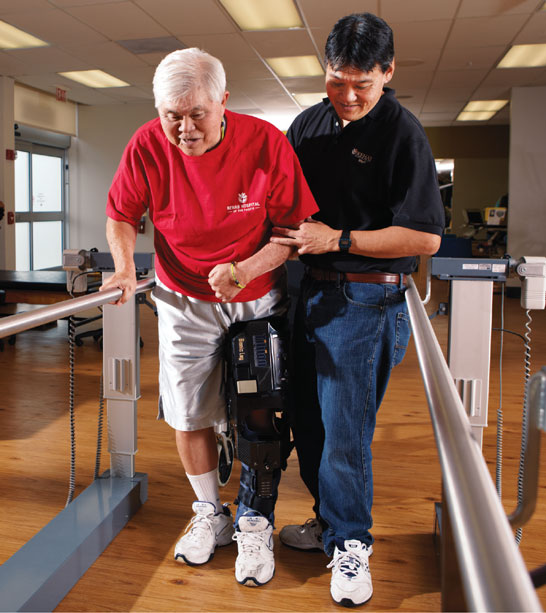
    Jerry Ono, Physical Therapist, helps Coach Les utilize the Tibion Bionic Leg at the Rehab Hospital.

    LM: Yes, my only regret is that I did not win the College World Series in 1980. I came in second against Arizona.

    GM: Do you think baseball has changed?

    LM: Baseball has not changed. The equipment has! Players are bigger, stronger and faster.

    A Game Changer

    GM: Since your stroke in 2000, how has life been for you?

    LM: Since the stroke, life has changed drastically for me. Unfortunately, I’m not as independent as l used to be, but I stay as active and social as possible with my family and others. I go out for a couple of hours daily.

    GM: What type of therapy are you receiving for the stroke?

    LM: I go to therapy at the Rehabilitation Hospital of the Pacific. They give me excellent care, and keep me focused on recovery. My walking continues to get better and my speech has improved to almost 100 percent.

    And, my physical therapist Jerry Ono “busts my ass” to work hard and get better. I can not thank him enough.

    GM: How has Rehab’s high-tech equipment come into play with your therapy?

    COVER Les-Murakami_image4
    AlterG’ differential air pressure technology provide precise unweighting in small increments to as low as 20 percent of the patient’s body weight. This precision gives patients the ability to set the exact point where exercise becomes pain free and provides clinicians a way to accurately measure a patient’s rehabilitation progress.

    LM: Luckily for me, Rehab offers a full rehabilitation program and leads the way in stroke therapy equipment. They use technology to do what’s never done before. I get to use the hospital’s AlterG’s Anti-gravity Treadmill. It’s the only one in Hawai‘i.

    During therapy, the treadmill and I are in a ‘bubble’ and I’m strapped in at the waist. The ‘bubble’ fills with air, and the adjusted air pressure takes the weight of my legs. It feels like I’m walking on the moon, with little gravity. The treadmill lets me practice walking, get some exercise and keep my weight under control.

    GM: You have had a caregiver five days a week for 10 years now. How are you affording this extra cost?

    LM: My wife Dot made me buy long-term care insurance after our experience with my mother’s Alzheimer’s disease. I didn’t want to buy insurance at the time, but Dot convinced me.

    GM: Do recommend long-term care insurance?

    LM: Oh, yeah. I couldn’t be where I am today without it. As Dot says, “Your life is more important then your house. She loves me, but no one can be with someone for 24 hours a day. She needs a break and time for herself, too.

    COVER Les-Murakami_image5
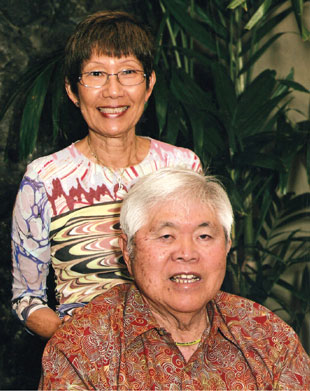
    Wife, Dot, and Les Murkami.

    GM: What do you do to keep active in life?

    LM: Monday through Friday I exercise at different facilities. I meet and talk to people all the time at the mall or wherever we go to say, “Hi.”

    Sunday is family day. We go to church, and then maybe we go to the movies, watch my grandkids’ games, go to a UH football or baseball game or watch special sporting events on T.V., invite friends over to the house — stay connected.

    GM: What’s life like as a grandparent?

    COVER Les-Murakami_image6
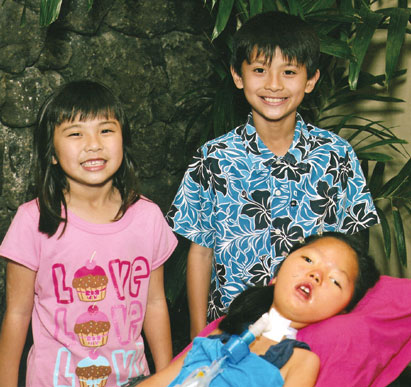
    The grandchildren (Lt–Rt) Madixx, Maxx, and Erin.

    LM: At times, it’s frustrating because l cannot physically demonstrate to my 10-year-old grandson, Maxx Muramoto, the fundamentals of pitching, fielding and hitting. His 6-year-old sister Madixx is playing her first season of baseball, too. They keep me busy and active. I love them very much.

    When I’m in rehab, Dot spends time with our grandchildren, especially our 7-year-old granddaughter Erin Murakami. She has spinal muscular atrophy. She uses her eyes, ears, and little movements in her hands and feet to communicate. She is smart. She is my inspiration. She’s a very strong spirit and she never gives up. The doctors gave her a few years to live. She’s going to be 8 years old in June.

    I wouldn’t trade my family for all the tea in China or for all the gold in Fort Knox.

    GM: What would you say to other stroke victims in dealing with their rehab?

    LM: Don’t give up and don’t stay home. After all this time, I still exercise six days a week. People can’t believe the good shape I’m in, especially at the age of 75 and as a stroke survivor.


    Stroke Prevention Guidelines

    Know blood pressure (hypertension): Have blood pressure checked yearly by a doctor or at health fairs, a local pharmacy or supermarket or with an automatic blood pressure machine.

    Identify atrial fibrillation (Afib): Afib is an abnormal heartbeat that can increase stroke risk by 500%. Afib can cause blood to pool in the heart and may form a clot and cause a stroke. A doctor must diagnose and treat Afib.

    Stop smoking: Smoking doubles the risk of stroke. It damages blood vessel walls, speeds up artery clogging, raises blood pressure and makes the heart work harder.

    Control alcohol use: Drink only in moderation –no more than two drinks each day.

    Know cholesterol levels: Cholesterol is a fatty substance in blood that is made by the body. It also comes in food. High cholesterol levels can clog arteries and cause a stroke.

    Control diabetes: Many people with diabetes have health problems that are also stroke risk factors. A doctor and dietician can help manage diabetes.

    Manage exercise/diet: Excess weight strains the circulatory system. Exercise five times a week. Maintain a diet low in calories, salt, saturated and trans fats and cholesterol. Eat five servings of fruits and vegetables daily.

    Transient Ischemic Attack (TIA): A TIA is a temporary episode of stroke-like symptoms that can last a few minutes to 24 hours but usually causes no permanent damage or disability. TIA and stroke symptoms are the same. Recognizing and treating a TIA can reduce stroke risk. Up to 40 percent of people who experience a TIA may have a stroke. Courtesy of the National Stroke Association’s Stroke Prevention Advisory Board, www.stroke.org.


    “Don’t give up… I still exercise six days a week.” Former UH Coach Les Murakami had an award-winning baseball coaching career at the University of Hawai‘i. He coached more than 500 players in a victory-studded career that stretched from 1971 to his retirement in 2001. But his retirement didn’t come by choice. On Nov. 2,…

  • Governor Abercrombie: a New Day for Hawai‘i’s Seniors

    Governor Abercrombie: a New Day for Hawai‘i’s Seniors

    “We need to face our challenges together, and build a Hawai‘i for all ages.”

    COVER-Governor-Abercrombie_image1

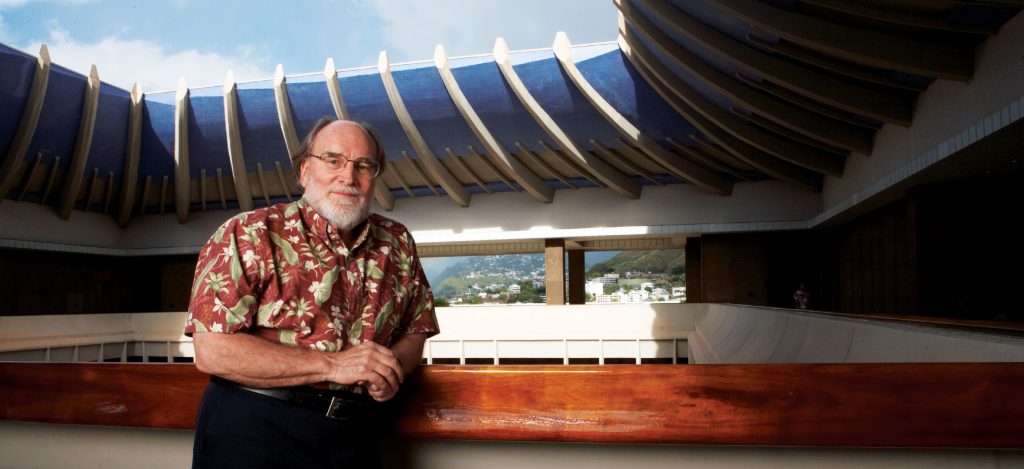
    As Neil Abercrombie marched into the governorship of Hawai‘i, he carried with him a manifesto — A New Day In Hawai‘i. One of the plan’s key points was to enhance the quality of life for older adults — even to ambitiously turn age into an asset.

    Now that it’s been just about 365 “new” days (or one year), since Abercrombie assumed office, Generations Magazine sat down with the governor to see whether, indeed, a new day is dawning for seniors in Hawai‘i.

    GM: What is the fire in your belly that motivates you to want to help seniors and make it a significant part of your administration’s goals?

    NA: I grew up during the Depression in Buffalo, New York, a city with many ethnic and religious divides. I often got into fights to defend me and others for having the “wrong” background. It was also during a time when women faced open discrimination. I witnessed the injustice of working women, such as my mother Vera, who received lower pay and benefits simply because of their gender. Through this and other childhood incidents, my mother taught me the importance of fairness, equality and of standing up for what was right. I was taught that big kids shouldn’t pick on little ones, I believed it and believe it now.

    When I was first elected to public office, my mother reminded me of how she was treated unfairly and to always fight for those who can’t fight for themselves. In these times, the most vulnerable are often our seniors.

    Prior to the 2010 elections, I knew we were facing the most trying time in the history of the State of Hawai‘i. I felt the responsible thing to do was to utilize my relationships in Congress and the White House and my decades of legislative experience to address important social issues, such as aging, in these difficult times as Governor.

    GM: Set the stage for us …what is the status of our retirees and elders in Hawai‘i?

    NA: First off, I want to say nearly ninety-five percent of people over 60 are active, engaged and want to contribute. In that way, our ku¯puna are a tremendous economic and social asset. However, we often view aging through a deficit or sick-care lens. My administration is changing that viewpoint. We’re partnering with senior advocacy groups to redefine social attitudes about aging.

    For example, this year our Executive Office on Aging joined the United States Administration on Aging in proclaiming the month of May as “Older Americans Month” in Hawai‘i. The recognition celebrates the role older Americans play in steering the course of our history and recognizes them for their valuable insights and wisdom. We honored seniors by showcasing them as “treasured resources,” united by historical experiences and strengthened by diversity.

    We understand that older Americans are now living healthier, longer and richer lives. We look forward to the many accomplishments they will offer our local communities in the future.

    GM: Besides creating awareness, what are you doing to help seniors stay integrated into the whole of society?

    NA: Seniors who want to work or volunteer, should be able to. It is part of government’s job to make sure that they have a chance to do so. It’s part of our plan to create a “silver wave” of opportunities for active older adults. Through incentives and partnerships we are encouraging non-profits and businesses to create flexible paid and volunteer opportunities for seniors. We also recognize model employers who bring in retirees to serve as mentors and trainers.

    Senior Corps is one great example of the“silver wave” at work. The program taps the skills, talents and experience of individuals age 55 and better to meet a wide range of community needs through three programs: RSVP, Foster Grandparents and Senior Companions.

    RSVP connects volunteers with service opportunities in their communities that match their skills and availability. Volunteers conduct safety patrols for local police departments, participate in environmental projects, provide intensive educational services to children and adults and respond to natural disasters, among other activities. Foster Grandparents serve one-on-one as tutors and mentors to young people with special needs. Senior Companions help homebound seniors and other adults maintain independence in their own homes. I encourage seniors to inquire about these volunteer opportunities at the Hawai‘i Aging and Disability Resource Center (643-2372). For an update on the RSVP Program, click here.

    Also, Kapi‘olani Community College’s Kūpuna Education Center offers assistance in comprehensive life planning and upgrading skills, including lifelong and/or intergenerational learning opportunities for older adults.

    GM: For seniors who are less active, or need more assistance, how is your administration helping?

    NA: One of the most important public challenges of our time is to ensure that our rapidly aging population of retirees and elders can live productive and dignified lives.

    Currently, the state helps the most frail and vulnerable older adults through Medicaid’s QUEST Expanded Access Program (QExA). The program covers health services for nearly 39,000 Hawai‘i resident who are aged, blind and disabled (ABD). However, Hawai‘i’s Medicaid plans are plagued with rising health care costs and a growing senior population. Medicaid is on a path to exceed our ability to pay and is at risk of failing those who need it the most.

    In view of that, I will continue to lobby the federal government for federal matching provisions to support the Medicaid program. My administration is also planning to attack the skyrocketing costs of health care statewide, including a greater focus on prevention, quality and on programs that demonstrate their cost savings.

    The silver lining in all of this is that states all across the country are encountering similar fiscal challenges, and the Obama Administration and Congress are aware of this and looking for ways to help. With my strong ties to the White House and to Congress, I am working to move Hawai‘i to the front of the line for these opportunities.

    GM: Will existing services for seniors, especially through Ku¯puna Care funding, be increased to support the growing number of seniors?

    NA: For seniors who are not eligible for Medicaid, our administration will continue to provide Kūpuna Care, which is a publicly-funded service that provides services such as meals, bathing, companion and assisted transportation to people needing help with daily living.

    More importantly, however, is that state and county governments are currently transforming our service delivery system. We want families to have better access to and assistance with navigating our long-term supports and services.

    For example, through the Aging and Disability Resource Centers in each county, we will provide information and referrals in a very person-centered manner. We hope to empower families and caregivers to make informed decisions about their options. The goal is to streamline access to the public and privately funded services and support, such as counseling, case management and programs such as the before mentioned Ku¯puna Care and QUEST Expanded Access.

    GM: As you know, many adult children take care on their aging parents. Although most wouldn’t have it any other way, caring for our elderly parents and grandparents can be difficult. How does the state support those who embrace it as their duty?

    NA: I understand how difficult caregiving can be. My mother-in-law was incapacitated for almost seven years. I saw every variety of care facility and workforce caliber. Only the professional dedication of health care personnel enabled my wife and me to get through the ordeal with her.

    Despite government’s best efforts over the years to provide all of our kūpuna care, our efforts are falling way short of the mark. Too many older adults and their families are without the support and resources they need, forcing them to turn to more expensive and less desirable living situations. For seniors who are alone and impoverished, the situation is even worse.

    Out of this crisis, we have found opportunities. Hawai‘i is a very adaptable and resourceful place. As such, Hawai‘i is the nation’s leader in intergenerational households. Grandparents are routinely involved in raising grandchildren. And adult children oftentimes care for their aging parents. These family caregivers are the backbone of our system of support and services for older adults. They care for our kūpuna in a way the government can’t — emotionally and fiscally.

    Family caregivers allow people to grow older in their own homes and communities, without requiring a huge and expensive new government program. In fact, the estimated economic value that family caregivers provide is about $2 billion, which is more than government can afford to spend on care and why it’s so important to help family caregivers in areas such as respite, care coordination, and education and training.

    GM: Do you have a ‘A New Day In Hawai‘i’ legacy that you would like to leave behind?

    NA: For the senior and aging component of A New Day In Hawai‘i, I hope to develop a Hawai‘i Center of Excellence on Aging. This is something that can continue to grow in years to come after I leave office.

    I’d like to see our university system, community colleges, the private business sector and non-profits come together to obtain funding for major research and cutting-edge projects around the subject of aging. We already have outstanding experts and programs at Kapi‘olani Community College, the University of Hawai‘i at Mānoa and community-based programs throughout the Islands. These can be coordinated to develop training programs, career paths in gerontology, and new advancements that can benefit people in Hawai‘i and can be exported around the world, particularly in China, Japan and Korea, which are rapidly aging. There is no reason why Hawai‘i cannot be a world leader in this field.

    COVER-Governor-Abercrombie_image2GM: This was just year one of your governorship … you have three more years to see your plan come to fruition. Do you have a parting message for our readers?
    NA: Well, last but not least, I do believe government has a responsibility to build a streamlined system of supports and services for families. I note, however, that the care of Hawai‘i’s kūpuna is a shared responsibility. No one entity can do this alone. From philanthropic organizations to the for-profit sector, from government to non-profits, from individuals and families to clubs and associations, we all have resources — monetary, in-kind, volunteer, ideas, time — to contribute to care for our kūpuna and to create the society that we want to live in.

    We need to face our challenges together, and build a Hawai‘i for all ages.

    Every place on Earth, whether it be a large metropolitan city in Asia or an isolated Island community like Hawai‘i, has a culture that was created over time by the inhabitants of that place. That’s why all of us who live in these Islands must never forget that we owe much to the generations who came before and to the older people in our community. They helped to educate us, form our ideas about brotherhood and establish the spirit of Aloha that pervades our home. I extend to all of our seniors my most heartfelt appreciation for their past contributions and wish them all the very best.

    GM: What do you have planned for retirement once your term is over?

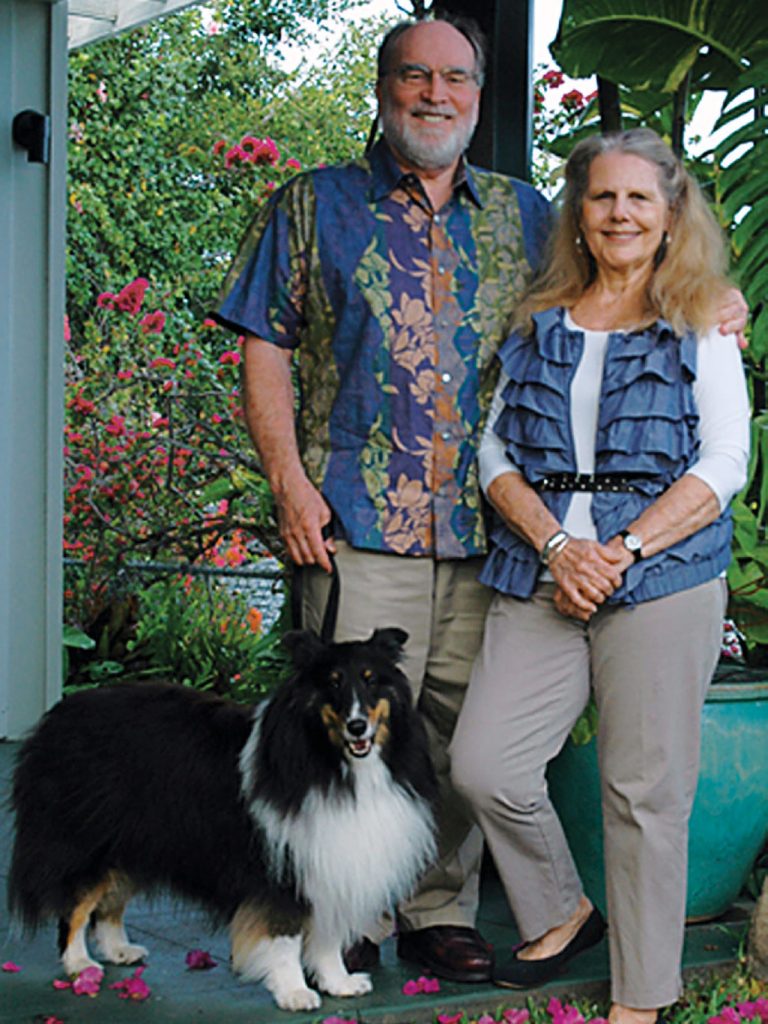
    NA: I’ll help wherever and whenever I can, but I’m not looking for any other job. This run for Governor was the culmination of a lifetime of public service. This is the last public office I will hold. In retirement I plan to walk my dog Kanoa every day, read and spend more time with my wife, Dr. Nancie Caraway.


    “We need to face our challenges together, and build a Hawai‘i for all ages.” As Neil Abercrombie marched into the governorship of Hawai‘i, he carried with him a manifesto — A New Day In Hawai‘i. One of the plan’s key points was to enhance the quality of life for older adults — even to ambitiously turn age into an…

  • Uchinanchu: Hawai‘i-Okinawans — A Generation of Roots… Engraved.

    Uchinanchu: Hawai‘i-Okinawans — A Generation of Roots… Engraved.

    Cover & Feature Story Photography by Brian Suda

    “We believe that the future of HUOA is dependent upon our youth.” — Jane Serikaku

    Jane Serikaku, HUOA Executive Director Norman Nakasone, HUOA President
    Jane Serikaku, HUOA Executive Director
    Norman Nakasone, HUOA President

    When we first meet someone new in Hawai‘i, we often ask, “Where you wen’ grad?”, as it gives us an idea of where they grew up and a lot of times we know someone in common.

    Likewise, Okinawans ask, “Are you Uchinanchu”? If yes, then the next question is, “What club do you belong to?”

    Today, there are 49 active Okinawan clubs that make up The Hawai‘i United Okinawa Association (HUOA), a non-profit organization whose mission is to promote, perpetuate and preserve Okinawan culture. Its combined membership exceeds 40,000 people. The club to which someone belongs is often based on from which Okinawan city, town or village his/her family originated. Okinawan immigrants who settled in Hawai‘i recreated their village communities using names like shi (city), cho (town), son (village) and aza (ward/neighborhood). Today the clubs are known more by Shijinkai, Chojinkai, Sonjinkai and Azajinkai. The term jinkai literally means “peoples club or organization.”

    Okinawans started immigrating to Hawai‘i in 1899. The then governor, Shigeru Narahara, allowed civil rights leader Kyuzo Toyama to recruit 26 men to work on Hawai‘i’s ‘Ewa plantations.

    From 1900 –1907, open immigration brought thousands of workers who were hoping for a better life to the plantations. Plantation work was hard and demeaning — 10-hour days, 6 days a week under the brutal sun. Okinawans also endured double discrimination from both the local population and their fellow Japanese workers who treated them as second-class citizens. At the peak, some 1,700 Okinawan immigrants had settled in Hawai‘i.

    COVER Uchinanchu-Hawaii-Okinawans_image3
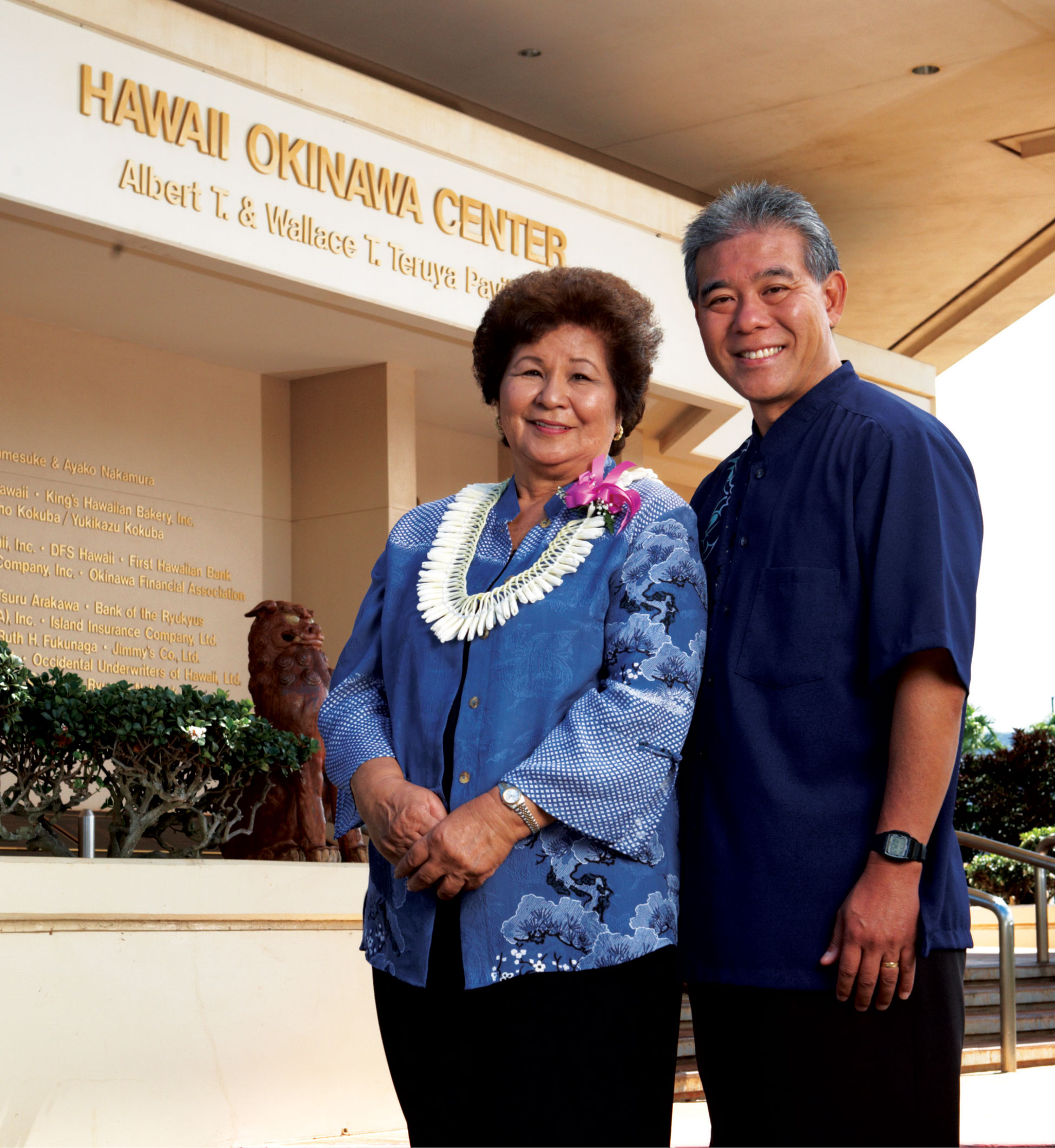
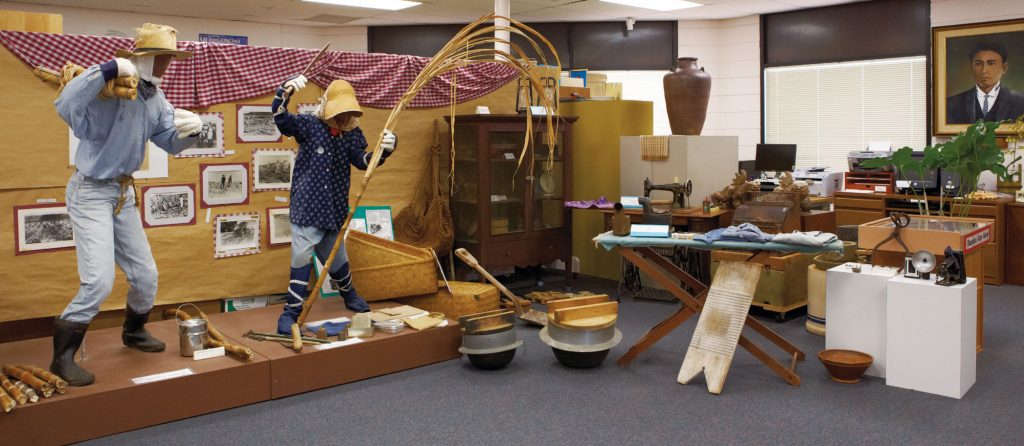
    The Hawai‘i Okinawa Center (HOC) Gallery is situated at the Yeiko and Kameko Higa Building at the HOC. Visitors and researchers are welcomed to browse at the displays of traditional Okinawan crafts: lacquer ware, pottery, doll-making and unique fabrics; as well as artifacts from the early-immigrant plantation days, and a collection of rocks bearing names of cities, towns and villages in Okinawa from where they were sent. Resource and reference materials, written in Japanese and English, are also available for use at the gallery. For information, call 676-5400 
or visit online at huoa.org.

    Chimu’ubii, or remembrance, is an important value within the Okinawan community. With each passing decade, the paths on which Okinawans in Hawai‘i traveled become increasingly distant. The homeland and villages are far away. And many customs and traditions have faded. Yet, these are the cultural traits that helped the Okinawan’s adopt Hawai‘i as home, assimi-late to American society and provide for their families. Hawai‘i’s vibrant Okinawan clubs play an important role in preserving Okinawan culture and its unique attributes.

    In 1951, the clubs united to form the Hawai‘i Okinawa-Jin Rengo-Kai (United Okinawan Association of Hawai‘i) in order to provide relief for Okinawa after WWII. Through this local community effort, HUOA (name changed in 1995) became a major partner in the local Okinawan community. It focused on improvements in agriculture, public health, medical services, education and leadership training.

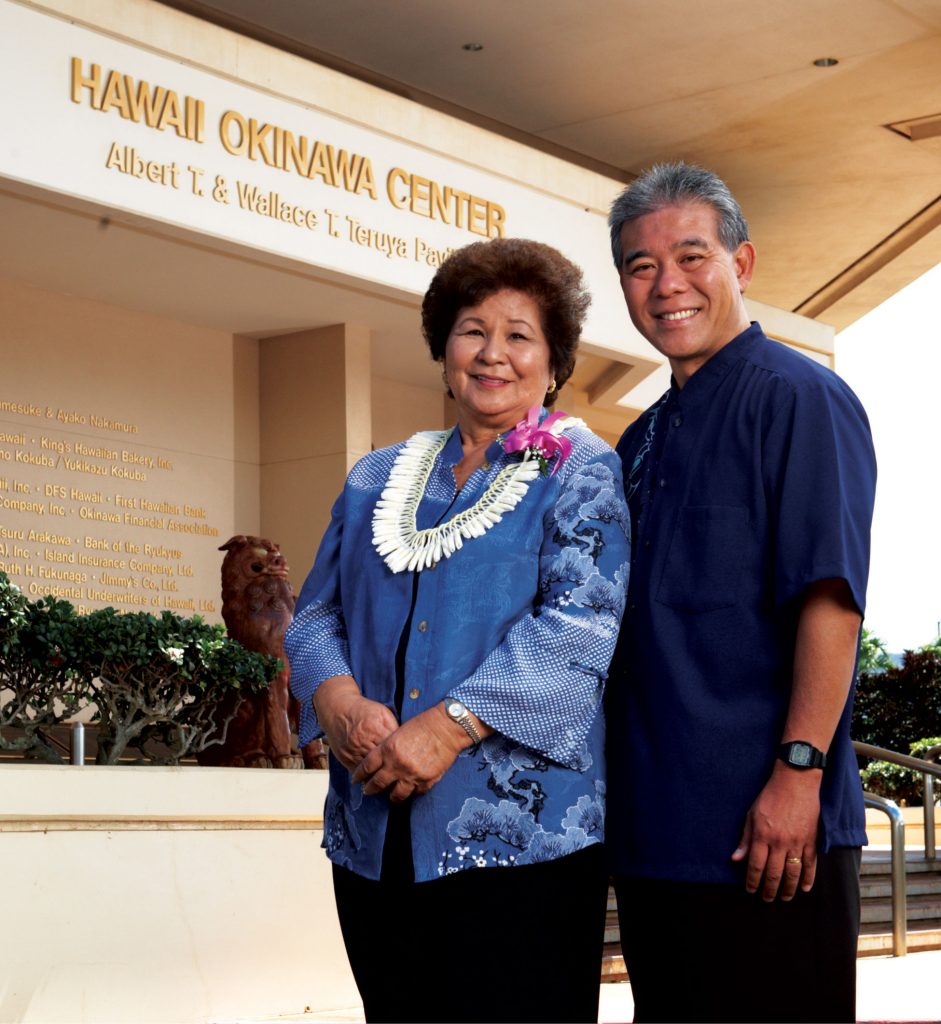
    Nearly 30 years later, the HUOA built the Hawai‘i Okinawa Center in honor of its hard-working Issei (first generation forefathers), who persevered for the sake of future generations. The Center perpetuates the “Uchinanchu spirit.” It hosts regular performing art events and various cultural classes. But perhaps most importantly, it provides children and young adults opportunities to learn about their culture and to be part of the Okinawan community.

    “We believe that the future of HUOA is dependent upon our youth,” says Jane Serikaku, HUOA Executive Director. As a retired educator of 30 years, she wanted to give young adults the chance to become totally immersed in the Okinawan culture, history and its people. As such, she created a Young Leadership Study Tour to Okinawa, which was patterned after the 1980 Leadership Tour offered by the Okinawan Government. Many participants returned excited and became leaders of their own club and/or became leaders of HUOA.

    Jane has also been the HUOA coordinator for the Okinawa-Hawai‘i High School Student Exchange program for the past 21 years. “In the Exchange Program, 25 Okinawan students arrive in Hawai‘i in March and experience a two-week home stay with families and attend school with our students,” Jane explains. “In exchange, our Hawai‘i students engage in a two-week home stay experience in Okinawa in June.”

    As a nonprofit, the Hawai‘i Okinawa Center has a very small staff. Its activities, events and services are mostly supported by volunteers.“We are extremely appreciative of the many volunteers who spend their days at our Center working to keep our Takakura Garden and Issei Garden well manicured and beautiful,” Jane says.

    She notes that additional volunteers maintain the library of treasured books, offer translation services, help with family history research, assist in the office or fundraise at craft fairs. “We hope that this love for the Hawai‘i Okinawa Center will continue in the years to come,” Jane says, “and that more people will volunteer to take good care of their ‘home away from home.’”

    In the near future, the HUOA is looking to expand. “We have our eyes set on the land just across the street,” Jane says. “We’d like to build a Hawai‘i Okinawa Plaza as a means of financially supporting the Hawai‘i Okinawa Center for future generations.”

    Special thanks HUOA member club Hui O Laulima for use of its book, Chimugukuru, as reference source for this article.

    The Local Okinawa Families That Built Hawai‘i

    Herbert Shimabukuro and son Chris
    Herbert Shimabukuro and son Chris

    From Kaua‘i to the Court House

    Choyu Shimabukuro grew up in Haneji, Okinawa, an area outside of Nago. He later immigrated to Wahiawa¯, Kaua‘i. Choyu, which means long courage, passed on the Okinawan values of hard work to his son Herbert. As such, Herbert moved to O‘ahu and attended Farrington High School and The University of Hawai‘i. He later attended law school at George Washington University in Washington D.C. His career in law and as a judge spanned some 40-plus years.

    Herbert’s belonged to the Haneji Club for more than 50 years. He served as President for one year in 1987 and then for a second term from 2001-2010. Over the years, the club has offered Herbert and his family wonderful fellowship.

    His son, Chris, has fond memories of attending many of the club’s activities, including the Annual Picnic, volunteering at the Okinawan festival, and playing on softball and volleyball leagues. Chris says that he appreciates how the club has given him a sense of identity.

    Chris is now a Vice President of the HUOA and has chaired the organization’s homeless Community Outreach Picnic and co-chaired the Aloha Aina Earth Day recycling event. He is also the Development Director at ‘Iolani School, one of the finest private institutions in the nation.

    Cyrus Tamashiro and his mother Louise
    Cyrus Tamashiro and his mother Louise

    From Hilo to Kalihi

    In 1941, immigrants Chogen and Yoshiko Tamashiro opened the first Tamashiro Market in Hilo, Hawai‘i. It was a small store specializing in fresh pork from livestock farmed by the Tamashiro family. On April 1, 1946, a tsunami struck and demolished most of Hilo’s business district, including the family’s store. Chogen move the business to O‘ahu to its current location on North King Street.

    The Tamashiro’s older son, Walter Hajime, took over the operation in 1954. He built the business by specializing in seafood. He started with a few pieces of ‘opelu, then a whole aku (skipjack tuna). The few pieces of fish grew to tubs of fish, larger fish and dozens of varieties. Brother Johnny Tamashiro and brother-in-law Larry Konishi joined Walter in 1962, and together they expanded the Market’s reputation as the home of the finest seafood. In fact, Tamashiro Market was one of the first retailers to sell poke on a large scale and has offered more than 30 preparations since the 1970s. Today, Walter’s sons Cyrus, Guy and Sean continue the family business.

    The Tamashiro family has been involved with their Okinawan Nago Club many years, as well as fundraising of the Okinawan Cultural Center. In 2012, Cyrus will become the President of the Hawai‘i United Okinawan Association.

    Goro Arakawa and son David
    Goro Arakawa and son David

    Arakawa Store

    In 1904, Goro Arakawa was one of the earliest plantation workers’ to work on Hawai‘i’s Ewa plain. During The Great Strike of 1909, he empathized with the workers demands for higher wages and better standard of living. To help the community, he partnered with Mr. Tamanaha to open the Arakawa Store in 1912.

    Goro was one of 9 children—5 boys and 4 girls—who worked at the family store. Goro was chosen to attend New York University to study retailing and marketing. Seeing that his siblings worked long, hard hours at the store, he was pressed to study hard for the family. When Goro returned to Hawai‘i, he made the Arakawa Store one of the first retailers to accept credit cards in the state of Hawai‘i.

    In the late 1980s, Goro became involved with the Hawai‘i United Okinawan Association when the Arakawa family was approached about fundraising for the Okinawan Cultural Center.

    Goro was also the spark plug for the founding of the Waipahu Plantation Village, an outdoor replica of a Hawai‘i sugar plantation village.

    Goro’s son, David, carries on the family Okinawan tradition of giving back to the community. As a past HUOA President and former Prosecuting Attorney, David is now the President of the United Japanese Society of Hawai‘i, the umbrella of all the Japanese associations.


    Cover & Feature Story Photography by Brian Suda “We believe that the future of HUOA is dependent upon our youth.” — Jane Serikaku When we first meet someone new in Hawai‘i, we often ask, “Where you wen’ grad?”, as it gives us an idea of where they grew up and a lot of times we know…

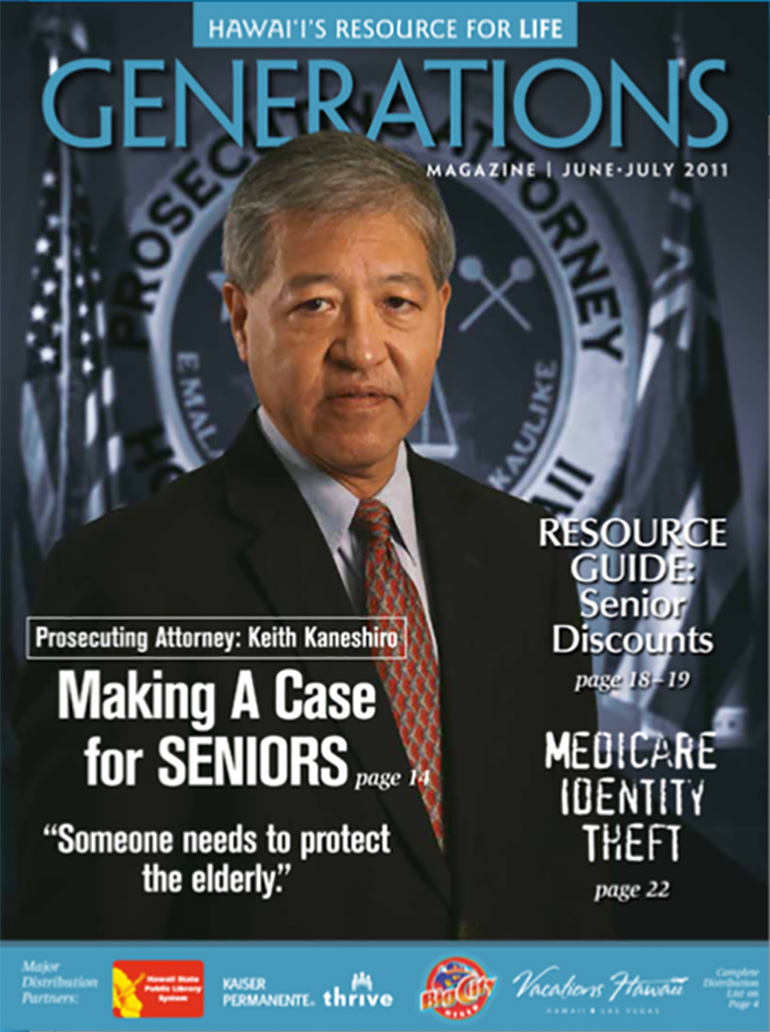
  • Making a Case for Seniors — Prosecuting Attorney: Keith Kaneshiro

    Making a Case for Seniors — Prosecuting Attorney: Keith Kaneshiro

    A lifetime dedicated to the safety and security of our community

    “I… became aware of people who take advantage of the elderly,… “

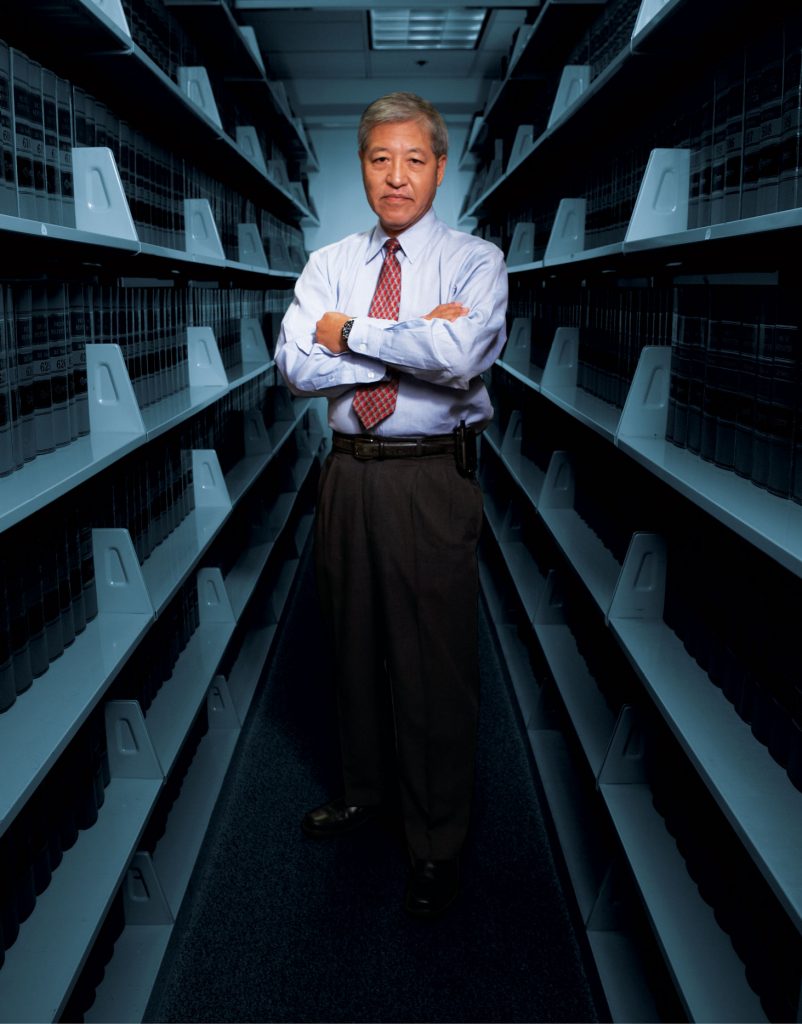
    COVER Making-a-Case-for-Seniors_image1 With more than 30 years of experience in the criminal justice field, Prosecuting Attorney Keith Kaneshiro has dedicated his life to the safety and security of our community. Recognized globally as an innovative crime fighter, Keith has a proven record of reducing crime in our neighborhoods and attacking the source of the problem.
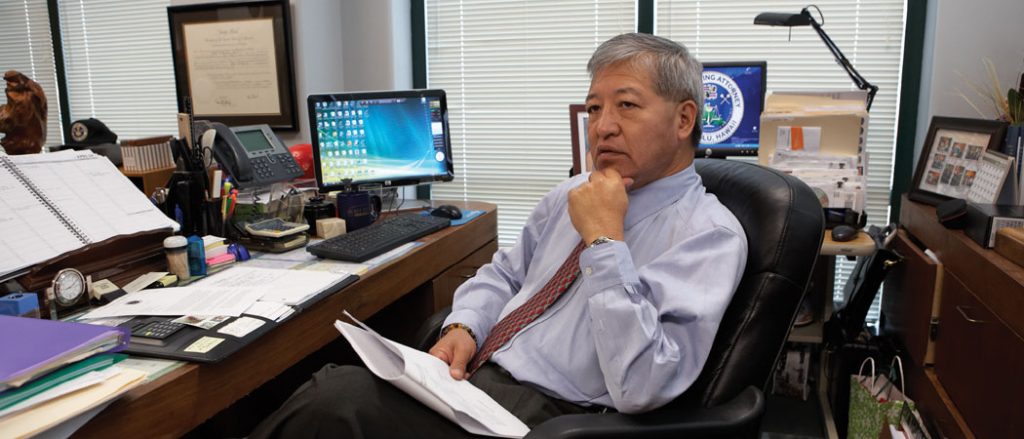
    As the only Prosecuting Attorney for Hawai‘i to return for a second term, he has new items on his agenda, including senior security and elder abuse. Here, we catch up with Keith to see what changes have been made to secure protection and justice for seniors.

    GM: As we all grow up, our parents make impressions on us that help determine who we are today. How did your parents influence you?

    KK: My parents had a very strong influence in my life. My mother, Karole Kaneshiro, was very influential in instilling values such as hard work, integrity and the importance of family. In fact, when I was in 8th grade she told me that I should become a lawyer because of my interest in student government. That’s when I first knew that I wanted to become a lawyer. In student government I learned that laws play a big part in shaping our society and lives. In order to make an impact on making Hawai‘i a better place, I knew that I had to learn the law in order to make change.

    Luckily my mother attended high school with the late Patsy Mink, who welcomed me to work in her campaigns. My mother was also very instrumental in getting me elected as Prosecuting Attorney for my first term (1988-1996). She got a lot of her friends to work in my campaign and to vote for me.

    My dad, Wilfred Kaneshiro, was always there to support me. He attended all my sporting activities, including practices, and taught my brother and me the finer points of a sport.

    GM: You are the first second term Prosecuting Attorney for Hawai‘i. What made you decide to come back for another term in 2010?

    KK: I decided to return to the Prosecuting Attorney’s Office because I saw that there were many unaddressed problems facing our community—drug and financial crimes, elder abuse, sexual and domestic violence and animal cruelty. I felt that the Prosecuting Attorney’s Office needed to take a leadership role in tackling crime and not just process cases.

    One of the largest problems that has lingered on since my first term in the ’80s is drug abuse. Sadly, after my first term ended, many of the programs and laws that I established were curtailed or not developed. But with more than 30 years of fighting drug crimes, I continue to argue that we should focus on the source of drugs—domestically and internationally — not the drug users. We need to go after the source of the drugs, with the cooperation with Asia and other countries. We should prosecute the dealers, distributors and organizations. And we should offer addicts treatment.

    Another crime that is often ignored is animal cruelty. Animals cannot fend for themselves. The Prosecutor’s Office needs to help the vulnerable. We know that people who are cruel to animals are also often cruel to people. Identifying people with abusive behavior is one step toward preventing future, more violent crimes.

    GM: Are the crimes different 15 years later, and why?

    KK: Today, many crimes are technology based or involve sophisticated identity theft and financial wrongdoings. Because of the poor economic condition of our community, these crimes are more prevalent yet we have less money to fight them.

    GM: In this term, you increased the Elder Abuse Justice Unit. Why is this an important issue to you?

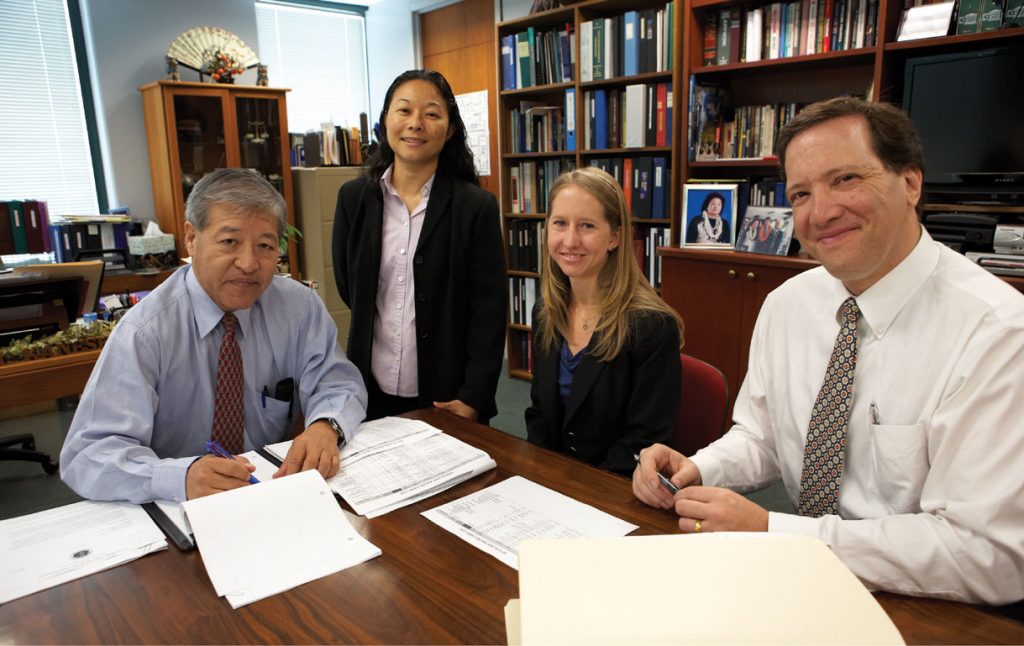
    The Elder Abuse Justice Unit reviewing cases. (left to right) Keith Kaneshiro, Dawnie Ichimura, Kimberly Korte, and Lead Attorney Scott Spallina.
    The Elder Abuse Justice Unit reviewing cases. (left to right) Keith Kaneshiro, Dawnie Ichimura, Kimberly Korte, and Lead Attorney Scott Spallina.

    KK: Elder abuse is certainly one of my priorities. When I was in private practice, I cared for my mom and dad. In the process, I became aware of the plight of elder health care. I also became aware of people who take advantage of the elderly, along with cases that were reported but never investigated or prosecuted. Someone needs to protect the elderly.

    Because of that, I’ve doubled the size Elder Abuse Justice Unit. We have a very good captain in Scott Spallina, and I’ve charged him with taking a proactive approach in our community to prevent elder abuse. The elder abuse unit will educate the community with presentations and community meetings on how to protect elders from neglect and exploitation.

    There are many different forms of elder abuse. The most recognizable form is physical abuse by caretakers, strangers, and even family members. Another form is financial abuse, where elders have their monies taken by strangers through telephone solicitations or door-to-door salesmen or unlicensed contractors.Some elders are having their monies taken by family members or other people who they depend on.

    GM: What is the Elder Abuse Justice Unit, and what are your goals for this specialized group?

    KK: The Elder Abuse Justice Unit is a team of prosecutors and paralegals who work with the police and social services agencies to prosecute people who physically abuse the elderly or steal money from them. We are going to add two investigators to the unit, one of whom will be a financial investigator. The goal is to continue to increase the amount and types of cases that we prosecute.

    So far, it’s been working. For the past two years, the Prosecutor’s Office has seen increasing numbers of elder abuse cases. In 2008 — when the elder abuse unit was created — it only had 37 cases; in 2010 it had 102. By the first half of February 2011, the unit had 22 cases, putting it on track to double last year’s caseload.

    GM: Elder abuse often goes unreported … why is this and what can families do to change this?

    KK: Every year, thousands of elderly Americans are abused in their own homes, in relatives’ homes, and even in facilities responsible for their care.

    Many victims are reluctant to report abuse. They might feel ashamed or embarrassed, particularly if a family member is the abuser. Or, they might be afraid the abuser will get in trouble, the abuse will get worse or they may be of being thrown out. And some are simply unable to speak out due to dementia or other impairments.

    Families should get to know the other caretakers or staff. Each time you visit your loved one, pay special attention to his/her condition and how he/she interacts with others.

    If you suspect that an elderly person is being harmed physically or emotionally or being preyed upon financially, report it immediately to the Honolulu Police at 911 or state Adult Protective Services at 832-5115. For questions, call the Senior Helpline at 768-7700.

    COVER Making-a-Case-for-Seniors_image2

    GM: Who are your new partners with fighting against crime?

    KK: In the past, the Prosecutor’s Office only relied on police to pursue investigations and did not work closely with other agencies. But now we are working more closely with the state Department of Human Services. It has a unit that investigates elder abuse and we make sure that the investigations are followed up on.

    GM: If you could step back into time, what historical event would you want to witness?

    KK: It might be unusual to say this, but I would want to be there when Sen. Robert Kennedy was assassinated. I truly believe the country would have benefited from his presidency and I would use my experience in security to do anything I could to help save his life. From a law enforcement perspective, I was inspired by his efforts to combat organized crime in the United States.

    GM: On a personal note, do you have any aspirations for higher office?

    KK: I have no aspirations of seeking any other elective office. I enjoy my job as Prosecuting Attorney.


    Helpful numbers to remember:

    Elder Abuse Unit: 808-768-7536 | ElderAbuse@honolulu.gov
    Senior Helpline & Caregiver Support: 808-768-7700
    Adult Protective Services: 808-832-5115


    A lifetime dedicated to the safety and security of our community “I… became aware of people who take advantage of the elderly,… “ With more than 30 years of experience in the criminal justice field, Prosecuting Attorney Keith Kaneshiro has dedicated his life to the safety and security of our community. Recognized globally as an…