Category: Cover Story

  • The Royal Hawaiian Band

    The Royal Hawaiian Band

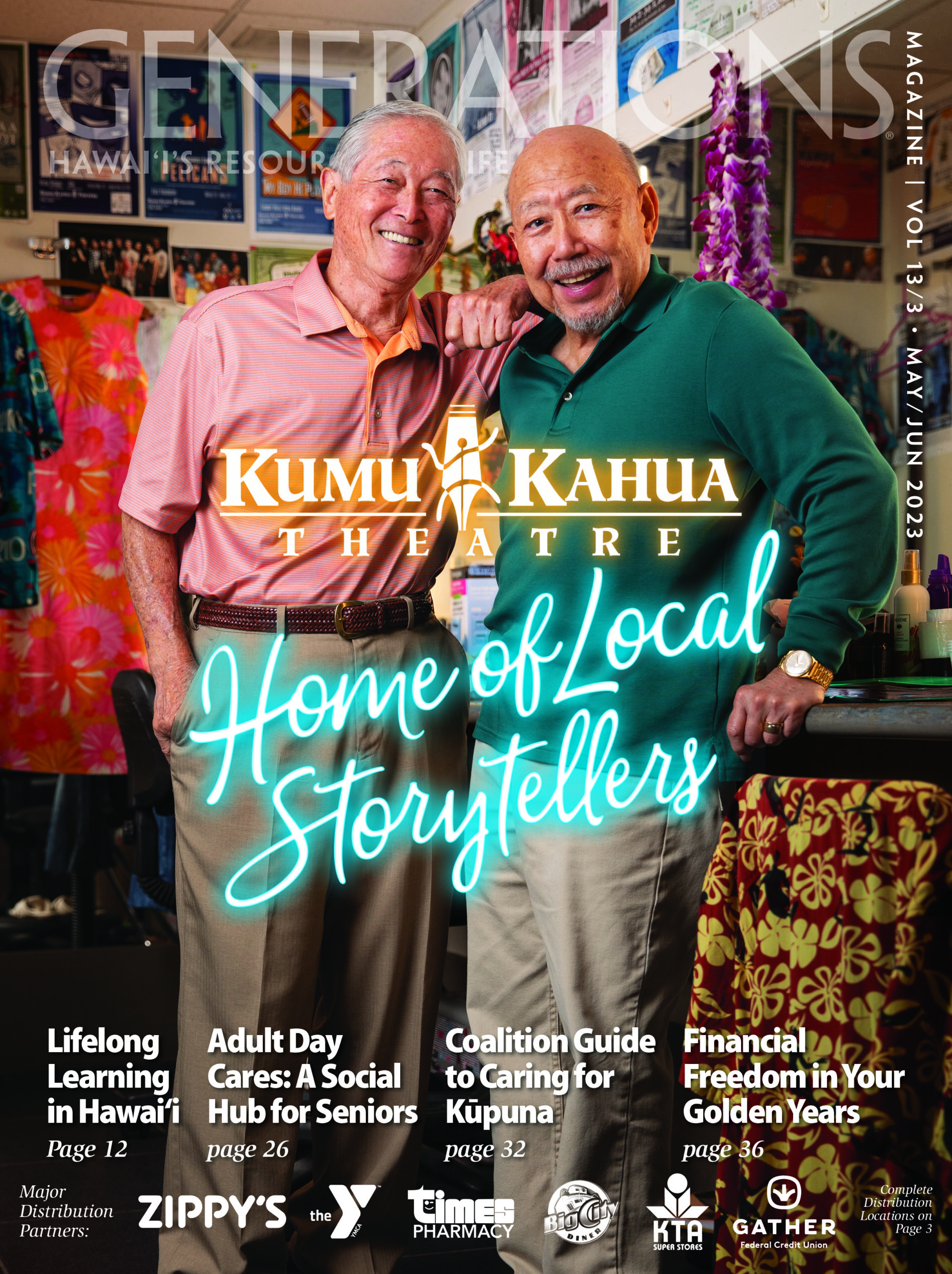
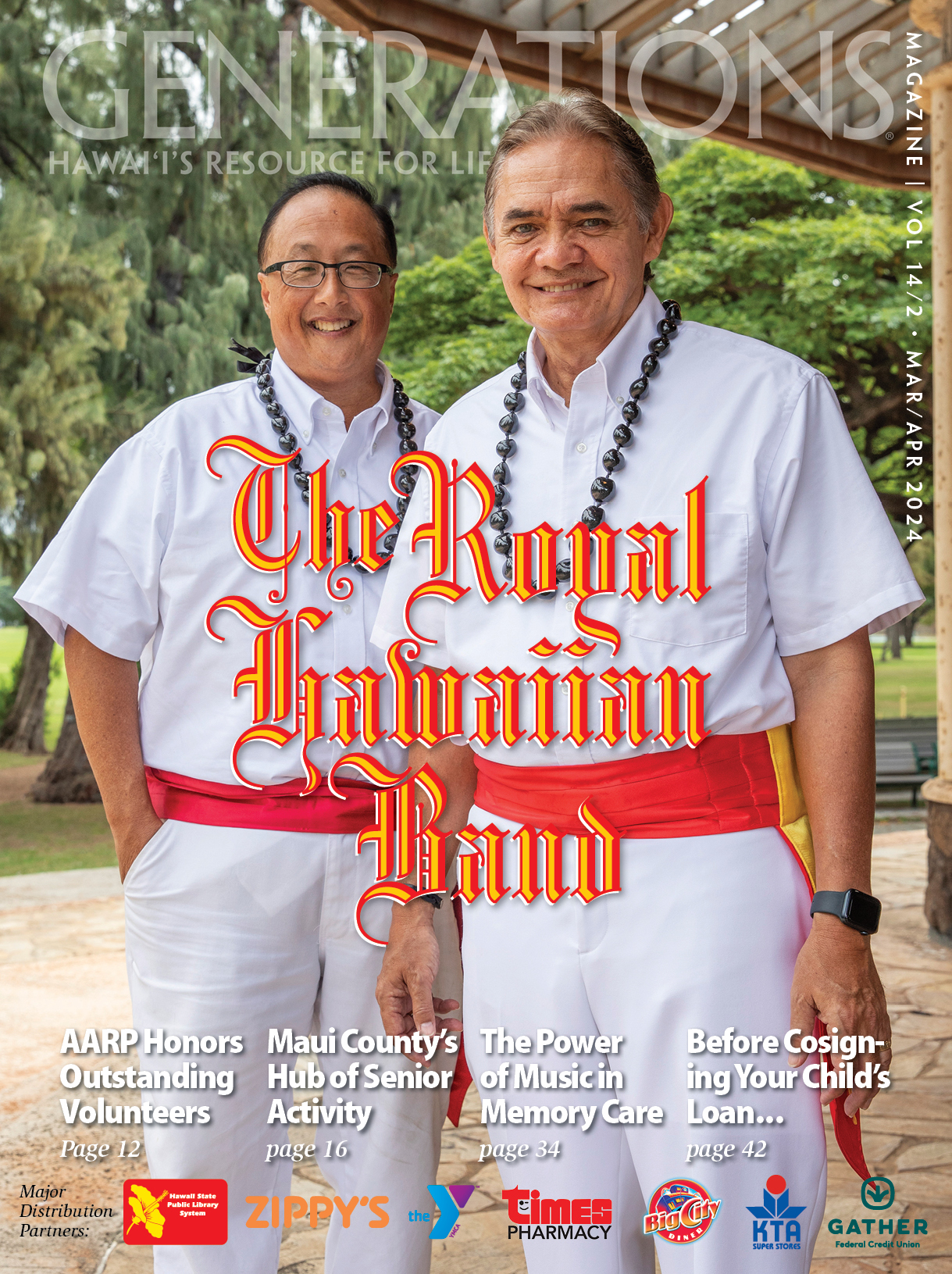
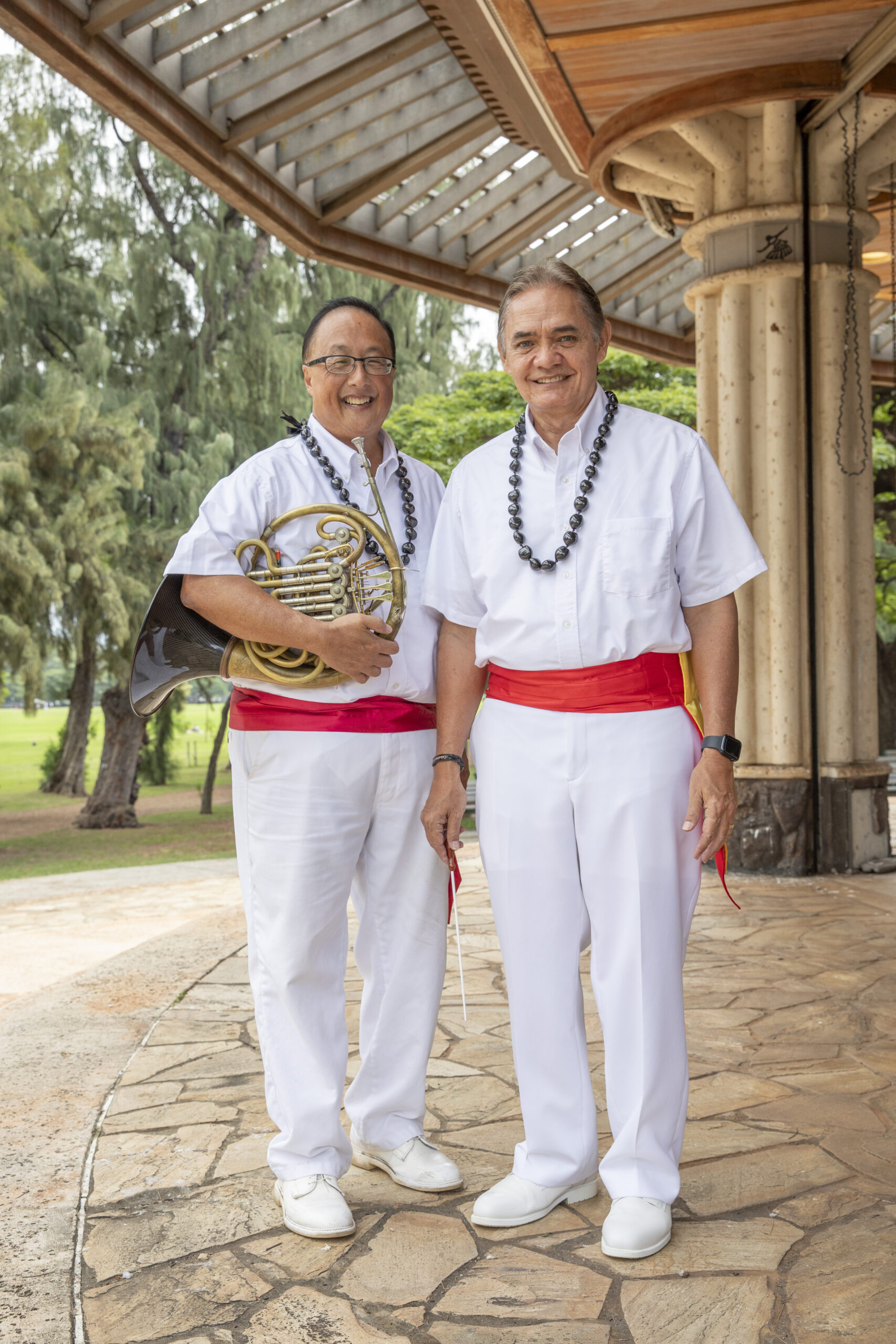
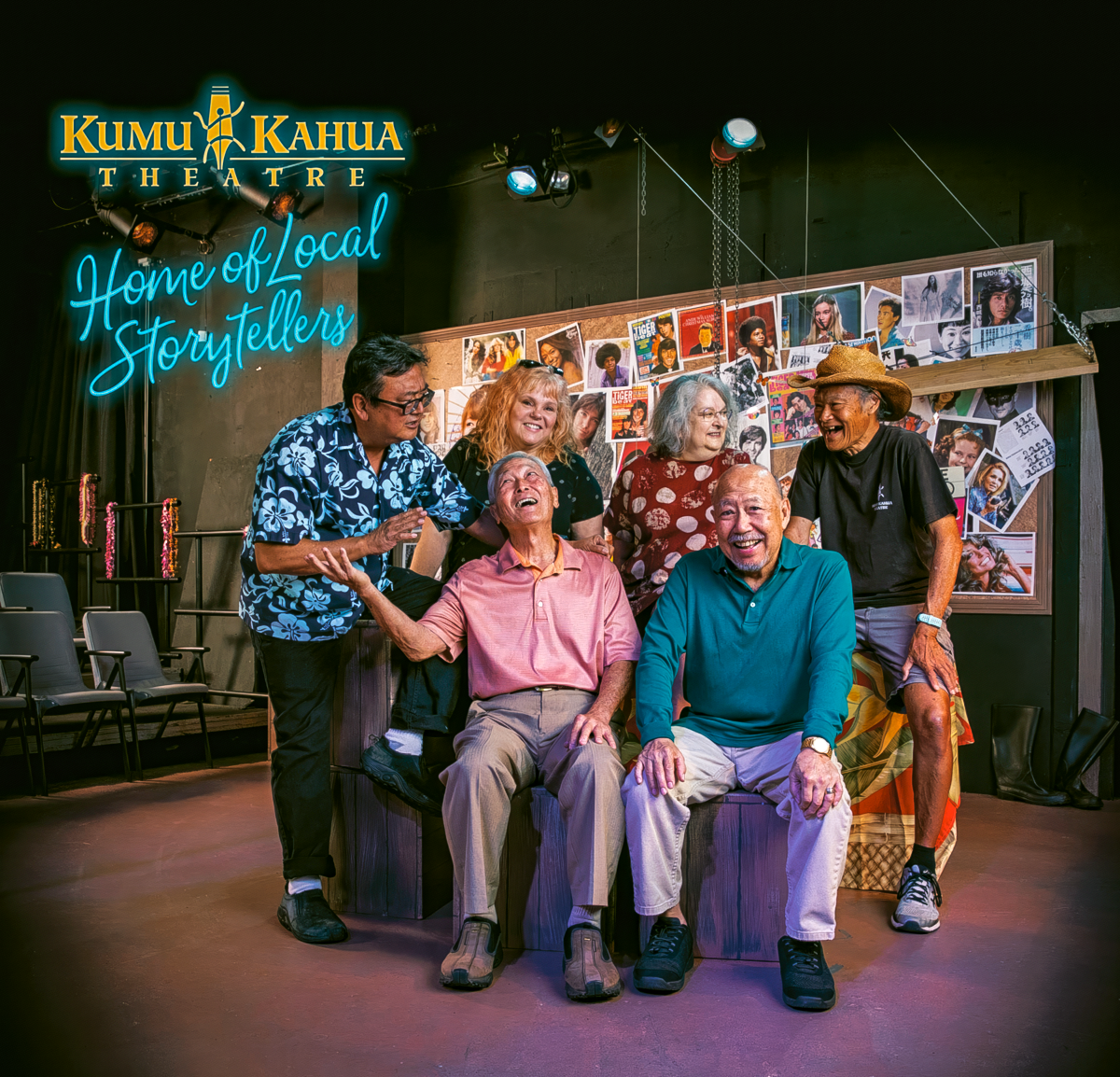
    This is the masthead for our cover story on the Royal Hawaiian Band“To promote and foster music, preserve the Hawaiian musical culture, inspire young musicians and enrich the lives of the people of Hawai‘i” is their  mission. As the only full-time municipal band in the United States — and the only one with a royal legacy — the Royal Hawaiian Band has touched and continues to move the hearts of people young and old for almost two centuries, beginning with their founding in 1836 by King Kamehameha III, Kauikeaouli. On top of weekly concerts at ‘Iolani Palace and Kapi‘olani Park, the band plays at over 300 events every year. They are led by Bandmaster Clarke Bright, who has conducted the Royal Hawaiian Band since 2011. Next to Clarke is Eric Kop, the assistant administrator and principal horn of the band. Together with other members of their staff, the Royal Hawaiian Band successfully and with great pride serves the people of Hawai‘i and encourages everyone to participate in the universal language of music.

    The History

    Clarke Bright was appointed bandmaster by then-Mayor Peter Carlisle; the Royal Hawaiian Band is an agency of the City and County of Honolulu. The history of the band is available on their website, but Bandmaster Bright breathes life into the facts through his passionate storytelling.

    The Royal Hawaiian Band has always existed under the leadership of the current ruling party. “The Hawaiian culture had lost its voice when they lost the last reigning queen, and it was important to keep that going in some format because we had lost leadership — we lost our kingdom,” says Clarke. “We were then under the rule of a territorial-type government and the Hawaiians knew it was important to preserve their voice.”

    Prince Kuhio knew it. “He went to Washington, DC, as a delegate to Congress — he had no voting position, but he did whatever he could to make it known to the American government that the culture needed to continue to be part of who we are. He then came back and he realized that the best way to keep Hawai‘i’s voice going was to have a government, like a city entity, that would be voted on by the people of Hawai‘i. He reengaged the Royal Society — the Royal Order of Kamehameha — to give their voice more prominence. He engaged the Hawaiian Civic Clubs and continued to work for land acquisition in and amongst the Hawaiian area — all of those things he did to continue to give Hawaiians more of a voice.”

    Clarke feels that one of the most important things Prince Kuhio did was tag the band onto city leadership. With the band under the auspices of the city, the band’s musical voice, its historical voice, its hula and its prominence in culture would continue to give Hawaiians a voice under a ruling government. “And that’s where we are today,” says Clarke. “From day one, the Royal Hawaiian Band has been part of the city. And we continue, I believe, to give a  prominent Hawaiian voice to the culture of Hawai‘i.”

    For 188 years, the Royal Hawaiian Band has played for audiences locally and internationally a plethora of musical arrangements — from contemporary and traditional Hawaiian music to Broadway and symphonic compositions. The band also plays music composed by Na Lani ‘Eha — the Royal Four — and pieces of Hawaiian music stylized by former bandmaster Henry Berger to evoke various European musical forms such as marches, polkas and waltzes.

    Among the pieces the Royal Hawaiian Band plays that are composed by Hawaiian royalty, the most famous, “Aloha ‘Oe,” was composed by Queen Lili‘uokalani. The heartfelt, moving classic closes every single Royal Hawaiian Band concert. In the early 1900s, the Royal Hawaiian Band adopted many hapa-haole (Hawaiian music with English words) pieces into its repository. These pieces, such as “Waikiki,” “Sophisticated Hula” and “Hukilau” can still be heard today at their concerts.

    But, Hawaiian music is not all that they play. The Royal Hawaiian Band also performs and arranges many pieces from the US and across the globe, traversing time and space to bring audiences the wonder and beauty inherent in music. Their concerts today include marches, orchestral transcriptions, standard band repertoire, pop music arrangements, Broadway musicals, movie soundtracks and television show theme songs. The band also is well-versed and takes pride in their extensive catalog of ethnic folk songs when taking part in many of the cultural festivals in Honolulu.

    Perhaps one of the most intriguing things about the Royal Hawaiian Band staff, too, is that they have staff arrangers who, at the assignment of the bandmaster, create arrangements of these ethnic folk songs for the band and for the audience’s enjoyment. Eric Kop, assistant administrator and principal horn of the Royal Hawaiian Band, articulates some of the work that is put into these arrangements:

    “When we go to the Palolo Chinese Home, we have a library of Chinese folk songs that we’ll play,” says Eric. “Depending on the communities that we are playing for, we will actually tailor the program for the particular ethnicities that are represented there. Most of the arrangements we play are made especially for the Royal Hawaiian Band; no other music entity has those arrangements, so I think that’s a very unique part. Really, when I see the reaction of the audience, whether it’s kūpuna or the youth, I know that we are accomplishing our mission — enhancing life. And just to see the smiles… you know we’re doing what we set out to do, and that’s a great thing.”
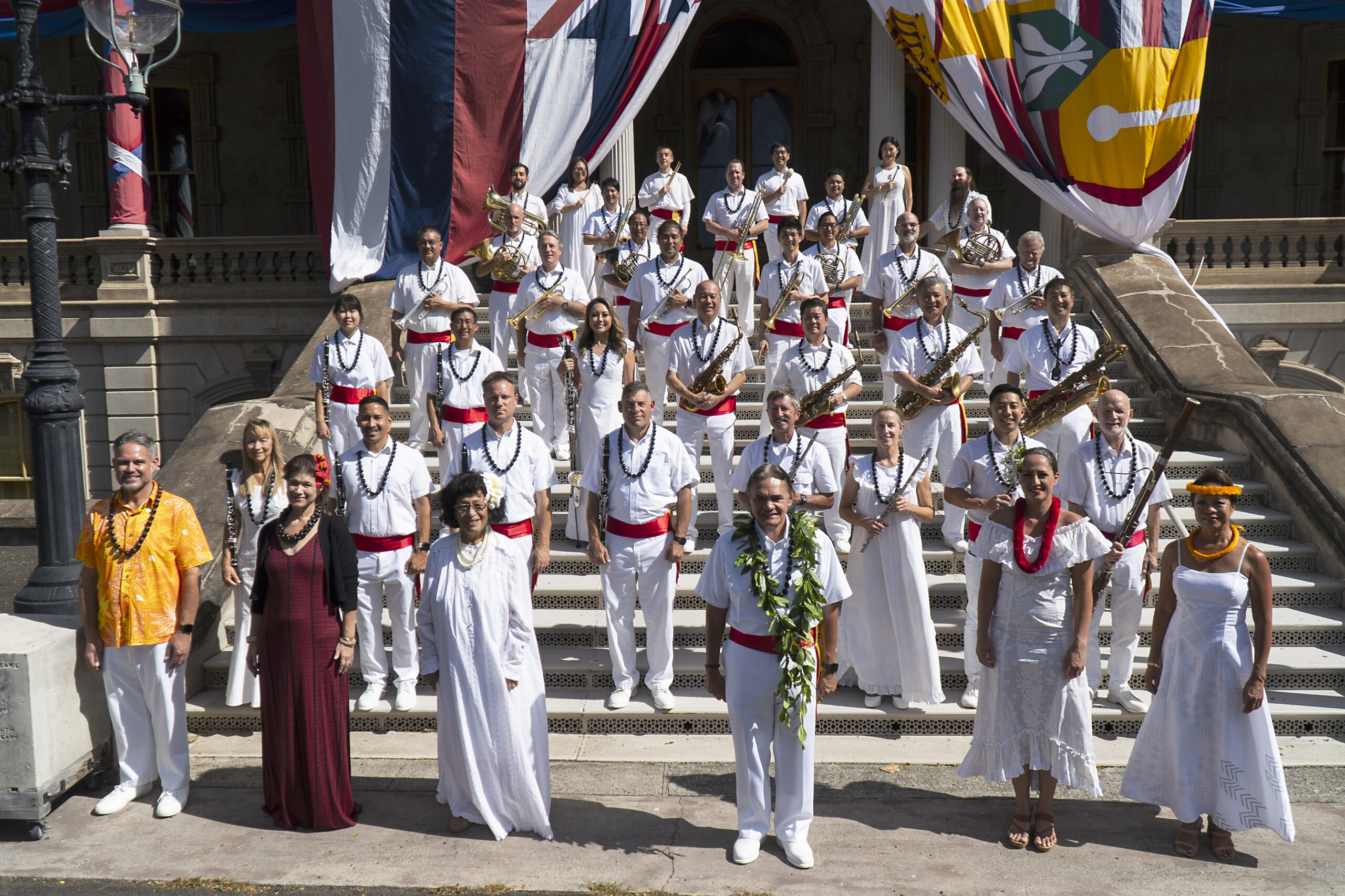
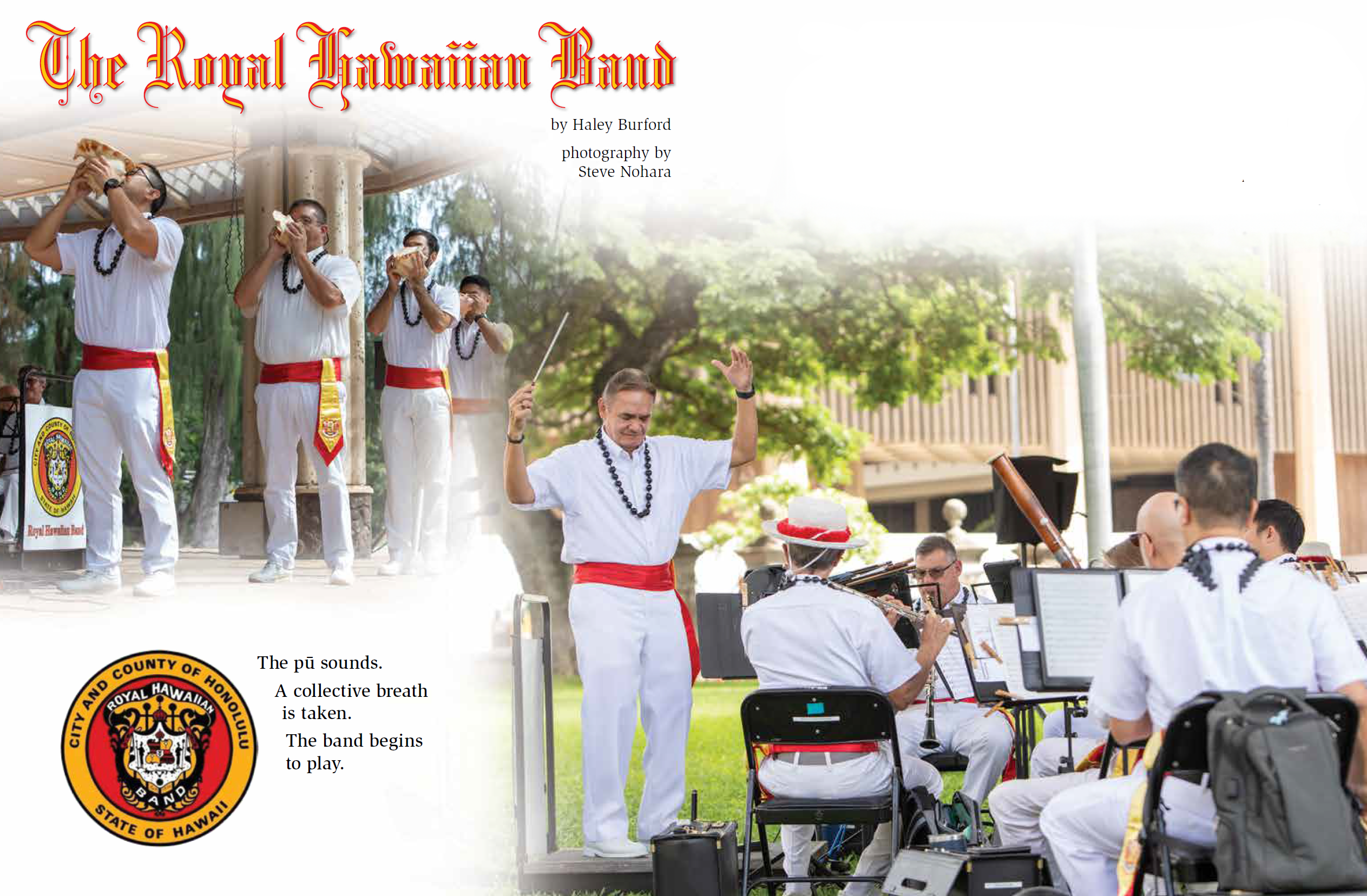
    The Royal Hawaiian Band standing on the steps of Iolani Palace in HonoluluThe Music

    With such an abundance of music to choose from, a lot goes into preparations for their hundreds of annual concerts. According to Clarke, “It really starts with the request from the entity that wants us there. Once the schedule is there, I take a look at what might be appropriate. We create a program and hand it out to our members at least a week before the concert. Then, we meet and decide what’s the best way to serve that concert.”

    Clarke and Eric go on-site about an hour-and-a-half prior to downbeat. They lay out markers for the design of the band. They unload the equipment from their truck an hour before, set up and the band members warm up a half-hour later. Announcements are made 15 minutes before, and the tuning note sounds five minutes before starting the 45-minute to one-hour concert.

    “We usually have an opening involving the pū , or conch, and an ‘oli to welcome the audience,” says Clarke. “And then, depending on where we’re at, we may focus more on contemporary or traditional Hawaiian music. We’ll usually play something that’s good or challenging for the band, like a symphonic piece or a band standalone. We play modern, easy-to-listen-to music, like Broadway or contemporary hits for the audience.”

    The Royal Hawaiian Band also performs weekly concerts on top of being available for request. About these routinely scheduled performances, Clarke says, “We have some standing weekly concerts at ‘Iolani Palace on Fridays and at Kapi‘olani Park on Sundays. But other than that, the majority of concerts are requested either by educational institutions, nonprofit organizations, community events or government events of that nature.” The band also reaches out to be a part of other important concerts, including anything that the mayor — or the governor — initiates, as well as meaningful Hawaiian-related events.

    “I want to make sure we’re at things like birthdays of kings or queens, celebrations of lei draping, those kinds of things,” says Clarke. “Part of our purpose is to also serve the people who are of early age and those who are more in the latter part of their lives.” From elementary school-type educational concerts to performances for seniors in living and care centers, the Royal Hawaiian Band is eager to reach out to such organizations every single year.
    The Leader of the Band

    Clarke is the most recent torch-bearer in a legacy of bandmasters for the Royal Hawaiian Band. He grew up in a music-oriented family, helping with his father’s theatrical musical productions growing up then majoring and graduating with a bachelor’s degree in secondary music education from the University of Hawai‘i. He was the band director at Waimanalo Intermediate School for four years, then at Kamehameha Schools for 13½ years, teaching all grade levels, until he was appointed bandmaster of the Royal Hawaiian Band in 2011.

    A great leader is one who empowers others. The conviction with which Clarke describes the bandmaster’s responsibilities communicates his ability to move others, not with force, but through and for the love of Hawaiian culture and music. He emphasizes that he finds it important to remember that his main responsibility is service — to the band, to the city and to the people.

    “I have to, of course, conduct the band, but I choose the music and we rehearse the organization,” says Clarke. “I’m responsible for the vision and leadership of the organization, as well.” As part of the city’s cabinet, he attends mayoral cabinet events and administrative meetings.

    Clarke also makes a point of partaking in the culture that surrounds the band and their music. “The Hawaiian culture is so special… Being Native Hawaiian myself, I think it’s important for the Hawaiian people to know that we are serving them as best as we possibly can. It’s a big responsibility — to show up at all these events, to meet with them, to befriend them and to ensure they know that they can trust that their band can serve them as needed. The community has to see their bandmaster as somebody who wants to serve them — who wants to bring music out to the people. I think that’s important, too. So, the main thing is service. It’s a very diverse position. It really requires many different facets of a person, but it is a position I am honored to participate in.”

    The Backbone of the Band

    Clarke does not shoulder the responsibilities of maintaining the Royal Hawaiian Band alone — the band has a staff of 10, all of whom play their respective instruments. Another vital position is that of the assistant administrator, covered by Eric Kop, who is also the principal horn.

    Eric began with the Royal Hawaiian Band in 1988 at the age of 21. Through his years in music and passionately advocating for music education, he has previously taught horn for the University of Hawai‘i at Mānoa, the Hawai‘i Youth Symphony’s Pacific Music Institute, Mid-Pacific Institute and in his own private instruction studio. Eric has also backed legendary musicians in his time as a freelance musician, including Frank Sinatra, Liza Minnelli, Charlotte Church and others.

    As the band’s assistant administrator, Eric works closely with the bandmaster, handling logistics and ensuring the band and their performances run smoothly. “During the concert, I am playing the principal or first horn part. So, I perform as a musician. In the office, I do a lot of the work for the auditions.” He also works with departments outside of the Royal Hawaiian Band regarding fiscal matters, human resources and anything interdepartmental within the city.

    At this, the bandmaster speaks up. “Eric basically said what’s supposed to be said on paper, but in addition to all of that, he is directly responsible for our link to the city — probably one of the most important positions in the band,” says Clarke. Clarke stresses how instrumental the assistant administrator is in that Eric communicates with the city to ensure that “this very un-city-like entity,” the Royal Hawaiian Band, is seen by the city how it is supposed to be. Such a position involves quick thinking, and Eric’s masterful way of translating musical to municipal and vice versa is something that Clarke feels really keeps the band on track.

    The Business of Music

    As part of the band staff working under the city, both Clarke and Eric underline some of the challenges that come with being an arts organization under city jurisdiction. Though they are a city agency, the city does not organize for the band. Eric says, “In order to incorporate city work policies and what employees in other departments do within our arts organization, we have to convert it. When you’re dealing with artists who are not used to a regular 9-to-5 schedule, that’s sometimes a challenge because we work such an odd schedule — it’s all over the place…” A lot of work is put into translation, and when information has to be circulated through different checkpoints and departments, communication is key to the Royal Hawaiian Band’s success.

    Though this work of translation can be tough, Eric takes great pride in handling the challenge: “To bridge the translation gap presents a unique challenge.” Clarke adds, “And he does it really well. We take pride in the fact that the city and state understand the importance of perpetuating our culture through music, dance and hula — that they deem it appropriate to have a full-time organization sponsored by city support for the perpetuation of Hawaiian music.”

    The Band for Kūpuna

    The Royal Hawaiian Band boasts 40 members, with seniors making up about 25% of its roster. Out of over 300 every year, their proudest concerts are for seniors, whether at community centers, housing or at public performances. According to Clarke, “We’re really proud of many things that we do, but that service to the seniors is a very important aspect of who we are. The biggest thing is the genuine appreciation that they have for what we bring. In every single senior environment — because most of the music that we do for them, they know — they’ve either sung to it or danced to it at some point in their lives. The music hits in a certain way that other things cannot.

    “Music is so powerful in that aspect,” says Clarke. “It’ll bring back a memory; a season in their life; a time. It’ll do things to your heart that are very hard to describe or quantify in government processes, but the aesthetic value that we bring in our music, singing and hula is special.”

    The Royal Hawaiian Band goes out to the people. “The appreciation we get from seeing their faces is really wonderful to us.”

    Clarke recounts a story that holds a particularly special place in his heart. “Early in my tenure, we went to one of the senior centers. A lady was walking right in front of the band from one side of the stage to the other with her walker — right before we were going to start. As she labored with her walker, I just waited. I waited and I waited… for maybe four or five minutes. She sat; we started.

    “In the concert, we played a song that I believe struck something in her na‘au — her heart or her spirit — and she remembered, I think. She got up from her chair, she moved her walker aside and danced the hula to that song we were playing. I couldn’t believe it. I turned around. It actually made me emotional. Then, she labors back down with her walker into her chair. At that point, I just thought, that’s the power of music. How else will somebody feel a certain part of their past, resurrect it and perform, other than through music of their era or their generation? It’s so important for us to serve that part of the community that needs to be served in the best way possible. I’ll never forget that.”

    All throughout history, the human love for music has continued to withstand the test of time. People of all ages can understand and bond over music. “Music is such an emotional language, right?” says Eric. “It represents history; it represents culture; it represents the people. And, like Clarke said, we’ve seen so many of our audiences get very emotional during the performances.” For Clarke and Eric, playing music with the Royal Hawaiian Band is a gift given to the community that also gives back to the band. As a universal language, one without words, music moves us — to a dance or to a memory.

    The Legacy of the Band

    The Royal Hawaiian Band is meaningful to the community and its members because of the music that they play for others, but the band is precious and an integral part of the individual members and Hawai‘i state pride, too, because of the sentimental value it holds across its history. Eric never tires of growing with the band. “Over the course of 35 years — now at the other side of it — I’ve really cherished and valued how we affect the audience members and for me, personally, that sense of duty. As one of the senior members, I feel a duty to be part of the stewardship of the band and to make sure that its legacy continues.”

    Clarke also feels such a responsibility to build the band up to be the best it can be while also maintaining its long-standing reputation as Hawai‘i’s band. “My number one mission is to preserve this organization into perpetuity, and I do that by ensuring we are hitting the mark. If we are being requested by a government agency, hit the mark; a community agency, hit the mark; with the culture, Hawaiian culture especially, or anything to the seniors and young students, hit the mark. Make sure we’re serving them well.

    “It’s also to serve the members,” says Clarke. “If I’m thinking of serving them, I’m ensuring they get whatever they need to be successful. We are serving the members who then serve, through their music, the audiences that we play to.”
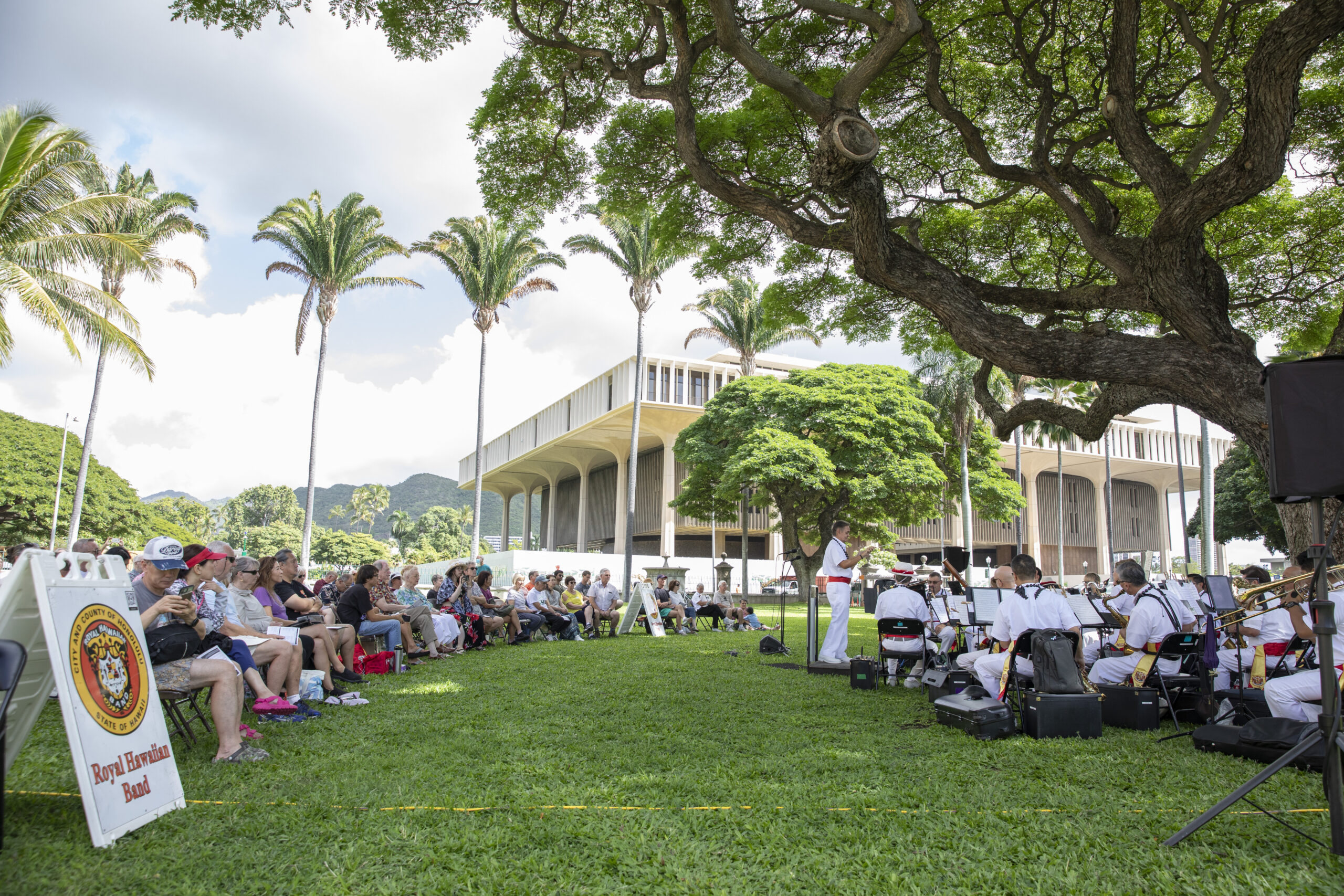
    The Royal Hawaiian Band performing on the lawn of the Hawaii State Capitol in HonoluluThe Passion for Music

    These professional responsibilities are a major part of working with the Royal Hawaiian Band, but what the work also encourages, fosters and requires is a genuine love of music. Both gentlemen found their passion for music very early on in their lives. When asked what fuels their love for music, both Clarke and Eric recall their upbringing fondly.

    For Eric, his earliest influence was his mother. “She would always be playing the record player. So, as a young child, I grew up listening to a lot of classic Broadway and light classical music.” As he grew older, what continued to motivate Eric as a brass instrument player — a French horn player, specifically — is the physicality and sound of the horn. “I remember first recognizing what a French horn sounded like when I was watching Star Wars, and that really hooked me into that sound.” As far as music goes, he listens to everything “from Tchaikovsky to K-Pop.” To him, “good music is good music, no matter what the genre is.” He feels that being a part of music production is a thrill that contributes to and strengthens his lifelong love for music.

    Clarke tells the story of being told by his parents that he could keep a beat on a pair of bongos gifted to him by his father when he was only 6 months old. His father was a musician and musical theater director, so music was very much present in his home growing up. Through assisting his father with his productions, Clarke saw what the arts — not just music — can do to and for people. Though he wasn’t aware of his bongo-playing at such an early age, Clarke is sure that music has been his life’s calling since the beginning, drawing much inspiration from his father. “I was immersed in all of this music and he, being Hawaiian, played piano and knew a lot of Hawaiian songs. He played often with various Hawaiian singers and would also bring me along, his drummer son, to assist in all of his events or concerts or shows. And when I think back on that rearing, I think I was meant to serve musically, in some capacity, the community at large. That fuels my love for music.”

    As he grew older, the simple love for music transformed into scholarly study, learning the names and theories and backgrounds of different transitions, keys and chords. Clarke credits his father for encouraging him to conduct one of the shows. “He had faith in me and kept believing in me, so I did it.” He went on to formally study and teach music, leading up to his work with the Royal Hawaiian Band as the bandmaster. “That passion, the genuine love of music — not only for music itself, but what it can do to serve others — really moves me. That really gets me going. I love to listen to it, I love to perform it, I love to conduct it, but it’s when it serves others that it really fuels me and keeps me going.”

    The Community’s Band

    The Royal Hawaiian Band loves to serve all the various agencies and communities, but, most of all, they want everyone to know that the Royal Hawaiian Band is their organization. “We want them to feel like they can ask for us to be there whenever they want,” says Eric. “Never be afraid to ask — we are there to serve them.”

    “It really is Hawai‘i’s band, because there’s so much of Hawaiian history built into the music that we play,” says Clarke. “When audience members come to hear the band and they listen to the introduction of how a lot of these songs are weaved into Hawaiian history, it really ties into our mission to perpetuate the music and educate people. We hope to get that mission and message out to as many people as we can.”

    Aloha ‘Oe

    Music knows no age; it knows no boundaries. As the Royal Hawaiian Band continues to play and serve the people of Hawai‘i, they also fulfill their mission statement, going above and beyond  to communicate their love for music and performing their arrangements. To promote and foster music, the  bandmaster and assistant administrator/first horn Clarke Bright and Eric Kop, together with all the other members of the Royal Hawaiian Band, play their music for the people in Hawai‘i and across the world, from the beginning to now and into the future.

    To preserve the Hawaiian musical culture, the band upholds Hawaiian traditions and maintains the legacy of Hawaiian music through passionate performances. To inspire musicians, young and old, and enrich the lives of the people of Hawai‘i, the Royal Hawaiian Band proudly continues to perform at over 300 events annually, giving it their all at every single concert. With the opening notes to Queen Lili‘uokalani’s “Aloha ‘Oe,” the Royal Hawaiian Band’s performance ends with a gesture of love to Hawai‘i and its people. At the very end, a clear promise is made to their audience: Until we meet again.

    RELATED STORY: The Language of Emotion by Haley Burford


    For more information regarding the Royal Hawaiian Band, the band members, contact information to request an appearance and a running schedule of their upcoming events, visit the Royal Hawaiian Band’s website at rhb-music.com.


    “To promote and foster music, preserve the Hawaiian musical culture, inspire young musicians and enrich the lives of the people of Hawai‘i” is their  mission. As the only full-time municipal band in the United States — and the only one with a royal legacy — the Royal Hawaiian Band has touched and continues to move…

  • Esther Chan: Cybercrime Fighter

    Esther Chan: Cybercrime Fighter

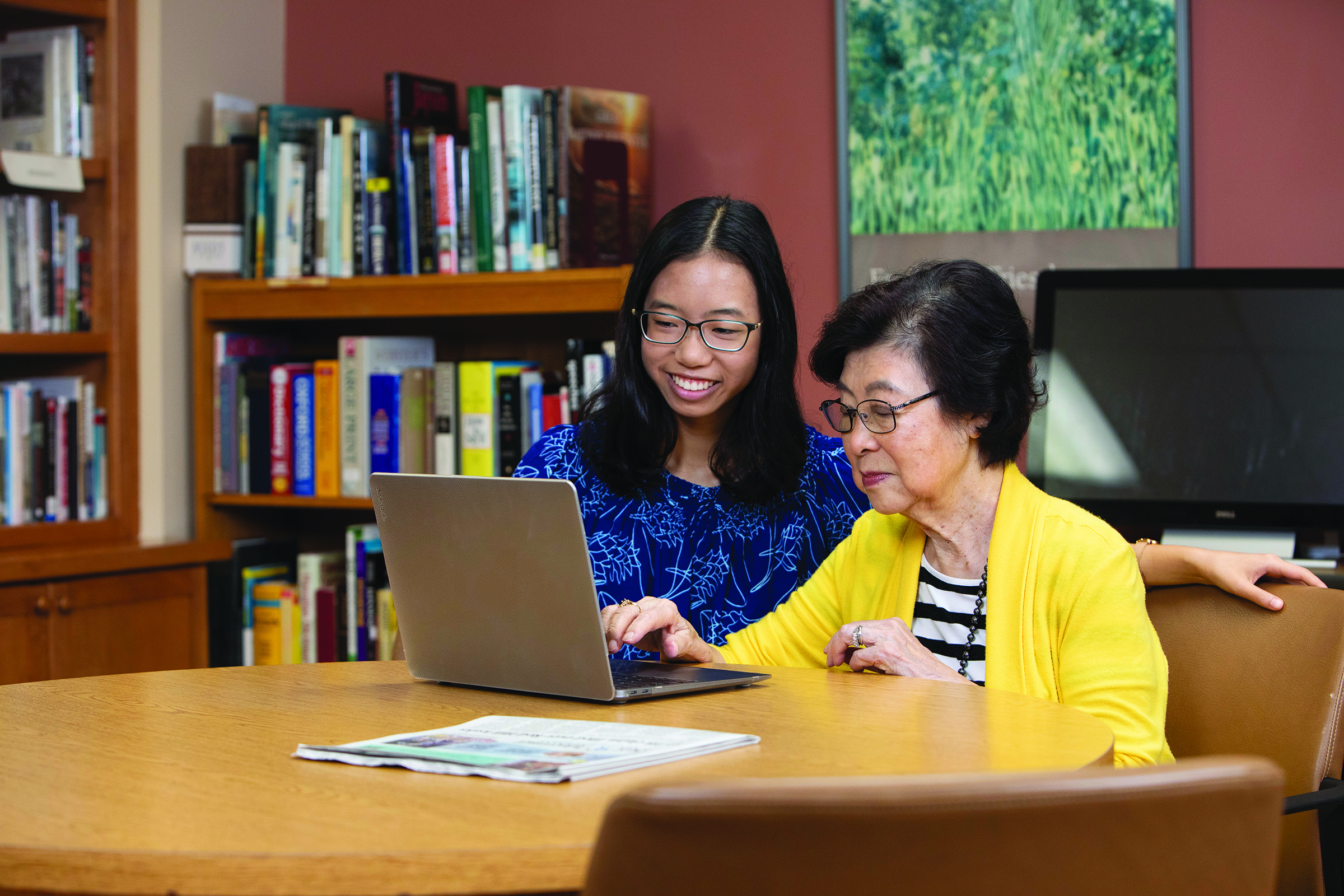
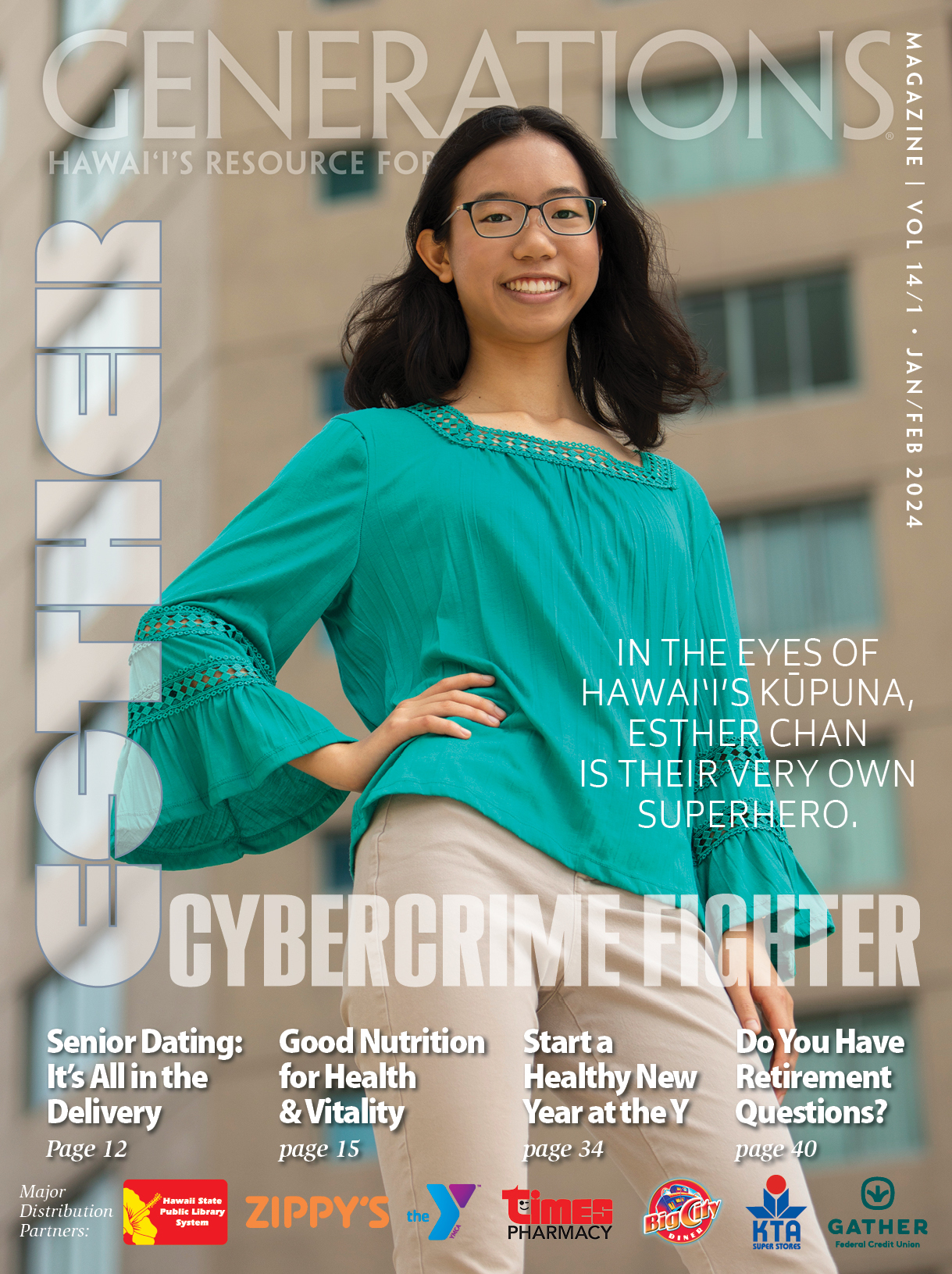
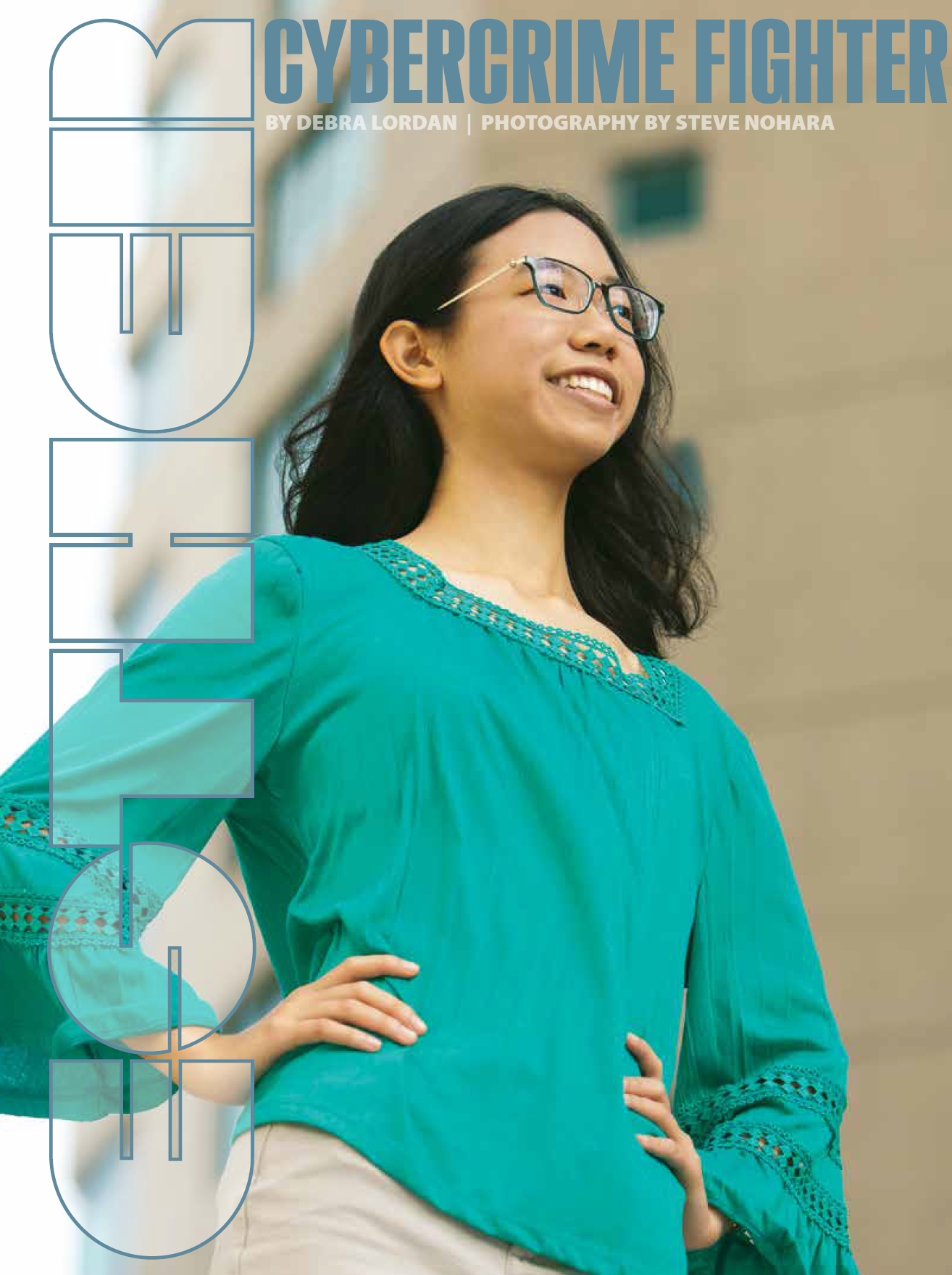
    She may not wear a mask or a cape, but in the eyes of Hawai‘i’s kūpuna, Esther Chan is their very own superhero as she continues her battle against online crime in cyberspace — one workshop at a time — wielding only her mighty curriculum and stalwart spirit.

    If criminals stole money from your dear grandmother using online trickery and treachery, what would you do about it? When she was a Punahou High School sophomore, Esther took matters into her own hands to protect her grandmother and other unsuspecting elders like her from cyber scams. For Esther, the call to action was not a question of “should I do it” but “how can I do it.”

    And so her crusade against cybercrime began.

    “In 2021 during the pandemic, my grandma received a pop-up on her computer screen,” recalls Esther. A pop-up is a window that suddenly appears on a website screen or browser that contains advertisements or other information that the user likely did not request. The pop-up asked her to call a phone number. Unsuspecting, she thought is was just a harmless antivirus helpline, so she made the call.

    “She was on the phone with them for quite a while, and ended up giving them her bank account numbers and other personal information,” says Esther. “Unfortunately, it was not a legitimate pop-up and they went into her bank account and withdrew money.” After she realized it was a scam, Esther’s father was able to help her grandmother change all of her passwords to mitigate further damage.

    “A few hundred dollars was lost, but luckily, nothing super terrible happened,” says Esther. “But it really affected us. It was really scary to have that happen and to realize that similar things are happening to many people across the nation and globally. That realization was really shocking to me.”

    With our increased dependence on technology comes an increased risk of cybersecurity attacks. This year, $8 trillion is predicted to be lost to cybercrime. According to Forbes, global cybercrime costs are estimated to increase to $10.5 trillion annually by 2025. It is also reported that 95% of cybersecurity breaches are a result of human error, which highlights the importance of cybersecurity education in minimizing successful cyberattacks. According to a recent cybercrime report, victims of elder fraud reported losses totaling almost $1.7 billion in 2021, up 74% from 2020. These statistics highlight the need for widespread cybersecurity education for seniors.

    “Eight trillion is a massive number!” says Esther. “I don’t think people realize how big of an issue these cyberattacks are. That’s really what inspired me to start this whole organization because I saw how easy it was for these scammers to get onto devices and use a tactic called ‘social engineering’ to get people to fall for their scams. I really wanted to be able to help kūpuna, in particular, be able to defend themselves against these sorts of cyberattacks.”

    Seniors have become targets for many cybercriminals who utilize trust as their scamming mechanism. Studies have shown that our willingness to trust other human beings increases as we age.

    “In general, kūpuna are more vulnerable because they are more trusting,” says Esther. “They may also be less familiar with technology or less aware of cybercrime and may not have anyone to teach them about it.”

    Another part of the problem is that scammers are highly adaptable and quite sophisticated in mimicking legitimate communications from tech support staff, government agencies, potential romantic partners and even relatives. Seniors with healthy financial savings, good credit scores and a trusting nature are attractive and often lucrative targets for scammers, bringing elders to the frontline of these cyber assaults.

    “I believe that helping kūpuna to defend themselves against cybercrime should be a priority in this increasingly digital age and that they deserve more than the dull and obscure cybersecurity curricula that currently exist,” says Esther. “That’s really what inspired me to start the Cyber Safe Seniors organization, seeing the effects of cyberattacks on kūpuna like my own grandmother. What we try to do at Cyber Safe Seniors (gocybersafe.org) is equip kūpuna with the knowledge, tools and resources they need to defend themselves against these attacks.”

    VARIATIONS ON SCAMS ARE ENDLESS

    The best way to avoid losing money or confidential information to a scammer is by learning to recognize the different types of fraud. Below are a few of the most common scams, however, there are variations of each. Scam artists are devious and will change their tactics in order to steal from you. (Visit gocybersafe.org/resources on Esther’s website).

    • IMPERSONATION SCAMS happen when one person pretends to be another — a government official, a caregiver or even a grandchild — and tricks you into giving them what they want.
    • ONLINE DATING FRAUD accounted for $304 million lost in 2020 alone. Half of these scams reportedly started through social media.
    • UNEXPECTED MONEY SCAMMERS know that most of us would love to receive a large sum of money at the drop of a hat — that’s why these scams are often effective in getting your money.
    • LOTTERY SCAMS are one of the most common ways of extracting money from seniors. If you receive a phone call, letter, pop-up message or email saying you’ve won money or an expensive item, be wary. Too good to be true?
    • FAKE CHARITY SCHEMES occur most often around the time of a disaster.
    • FAKE PRODUCT SCAMS try to convince you that your life will be better with a certain product or service. You then pay for the product or service, but you never receive it.
    • DEBT RELIEF SCAMS try make you believe that your debt can be reduced. Scammers will often charge a large upfront fee to help you lower your debt-repayment responsibility, only to disappear after you’ve sent them the money.
    • TECH SUPPORT SCAMS often send a pop-up on your computer saying you have a virus or other issue. They will include a phone number for you to call and pressure you into sending them money to fix the fake problem.

    That is what happened to Esther’s 85-year-old grandmother, Sophia, when Esther was 16. Concerned about protecting her grandmother and others from the dangers of cybercrime, Esther proceeded to create a curriculum comprised of a series of video lessons to educate kūpuna on how to shield themselves from online scams.

    CYBERSAFETY 101 IS BORN

    “The attack was definitely one of the components that spurred me on to create the CyberSafety 101 curriculum,” says Esther.

    At about the same time her grandmother became a victim of cybercrime, Esther discovered a class through Girl Scouts called “CompuGirls Hawaii” that focused on educating high school girls in STEM, cybersecurity, scams and information technology (IT). Prior to attending the program in 2021, she hadn’t realized how serious of an issue cyberattacks were.

    In addition to the attack on her grandmother and the CompuGirls Hawaii course, the chance to pursue a Girl Scout Gold Award project further inspired Esther to equip kūpuna with the knowledge and resources they need to stay safe from cybercrime. “This was a great opportunity to work on something I was really passionate about,” she says. So she started creating scripts and producing video lessons for her Girl Scouts project, Cyber Safe Seniors, beginning with a free, self-paced course called “CyberSafety 101.”

    The project drew her to the first-ever Prudential Emerging Visionaries. The national recognition program awards young people for their innovative solutions to financial and societal challenges in their communities. An Emerging Visionary is a changemaker — a young person with a bold vision for impact and a project to make it happen.

    She applied to the program and was one of 25 recipients nationwide to receive a $5,000 award. She was also invited to attend a three-day summit at Prudential headquarters in New Jersey, where she met with other youth changemakers for networking sessions and workshops.

    “It was really great to meet all the amazing changemakers,” says Esther. “What really made an impact on me personally was that I was able to see what everyone else was doing. All of my peers at the summit were very incredible. They all created their own organizations related to finance and various other social structures. Being able to observe that and be a part of it had a great impact on my project. It was super inspiring. I took a lot of lessons I had learned at the summit back home.”

    The young changemakers received coaching sessions with a Prudential representative. She was able to work with Colleen Grimsley, director of New Business Case Management at The Prudential Insurance Company of America. “She gave me some great advice for the project.

    ”WHAT IS CYBER SAFE SENIORS?

    Cyber Safe Seniors, which hosts the CyberSafety 101 curriculum, is an organization and a website (gocybersafe.org) with a mission to keep seniors cyber safe by providing them with access to effective, high-quality cybersecurity education that is as engaging as it is informative.

    “This course is the culmination of work by so many people — so many hands,” she says. “I am really grateful to Jodi Ito, who is the chief information security officer of the University of Hawai‘i System, for helping me to verify the accuracy of the information I was giving.”

    Dr. Dorothy Hirata, the instructional design manager with the University of Hawai‘i System’s Online Innovation Center, was especially helpful with the second iteration of her course.

    “I started in 2021 with an idea of a curriculum,” she says. “I empathized with the kūpuna and tried to figure out what their needs were through research and talking with Jodi about needs — and, of course, my grandmother.”

    From there, she worked quite hard on the curriculum. She completed hundreds of hours of research, wrote scripts from scratch, filmed and edited video footage, added activities and compiled all the information for the course.

    BETA TESTING

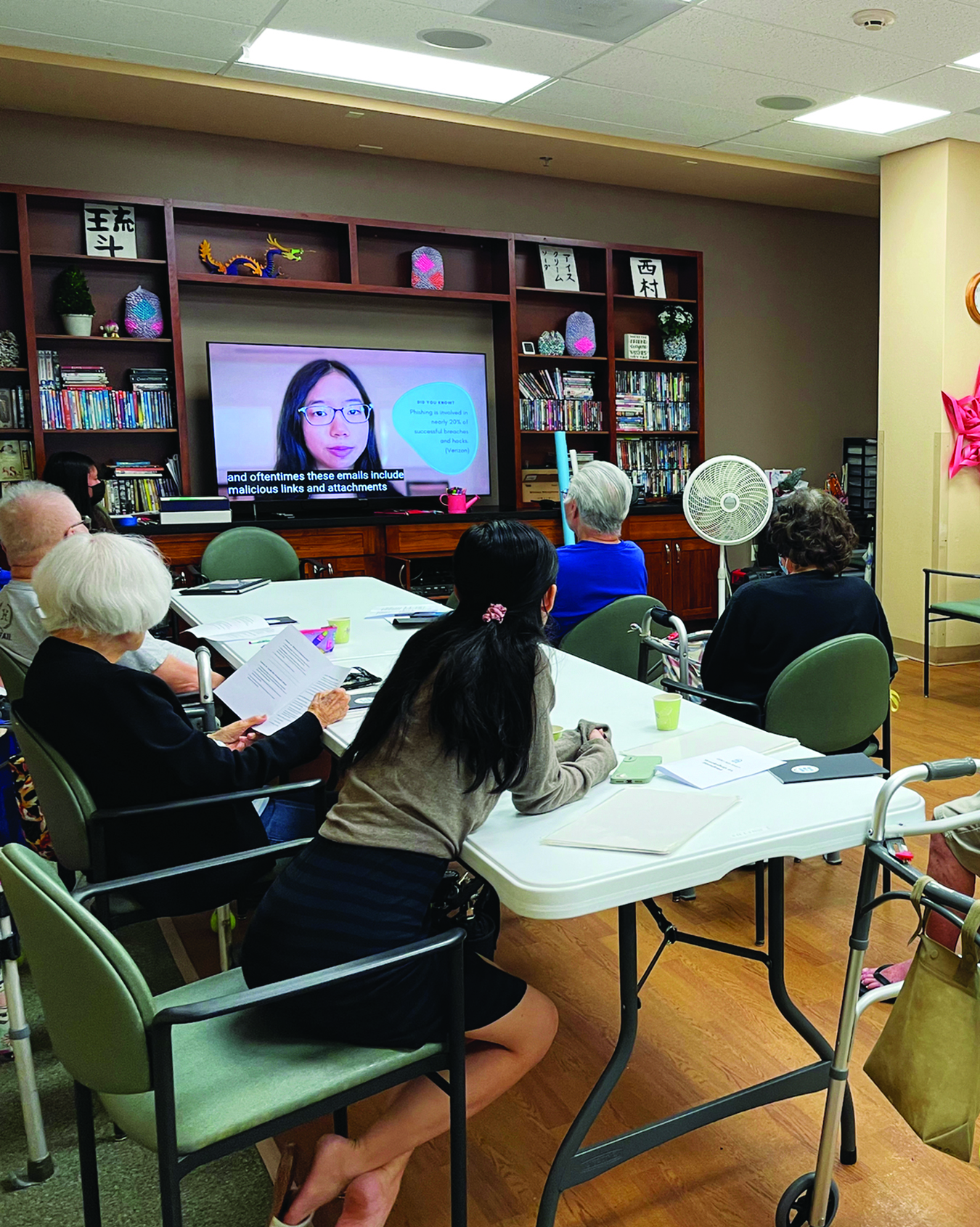
    To test and assess the new curriculum and figure out what was working well and what could be improved, she took the program to One Kalakaua Senior Living and The Plaza at Waikiki, another living community. Out of respect for the visitor restrictions that were instituted during the COVID-19 pandemic, these workshops were hosted using the pre-recorded videos that Esther had created. In return for completing a questionnaire about the curriculum, the residents were entered into a gift card drawing.

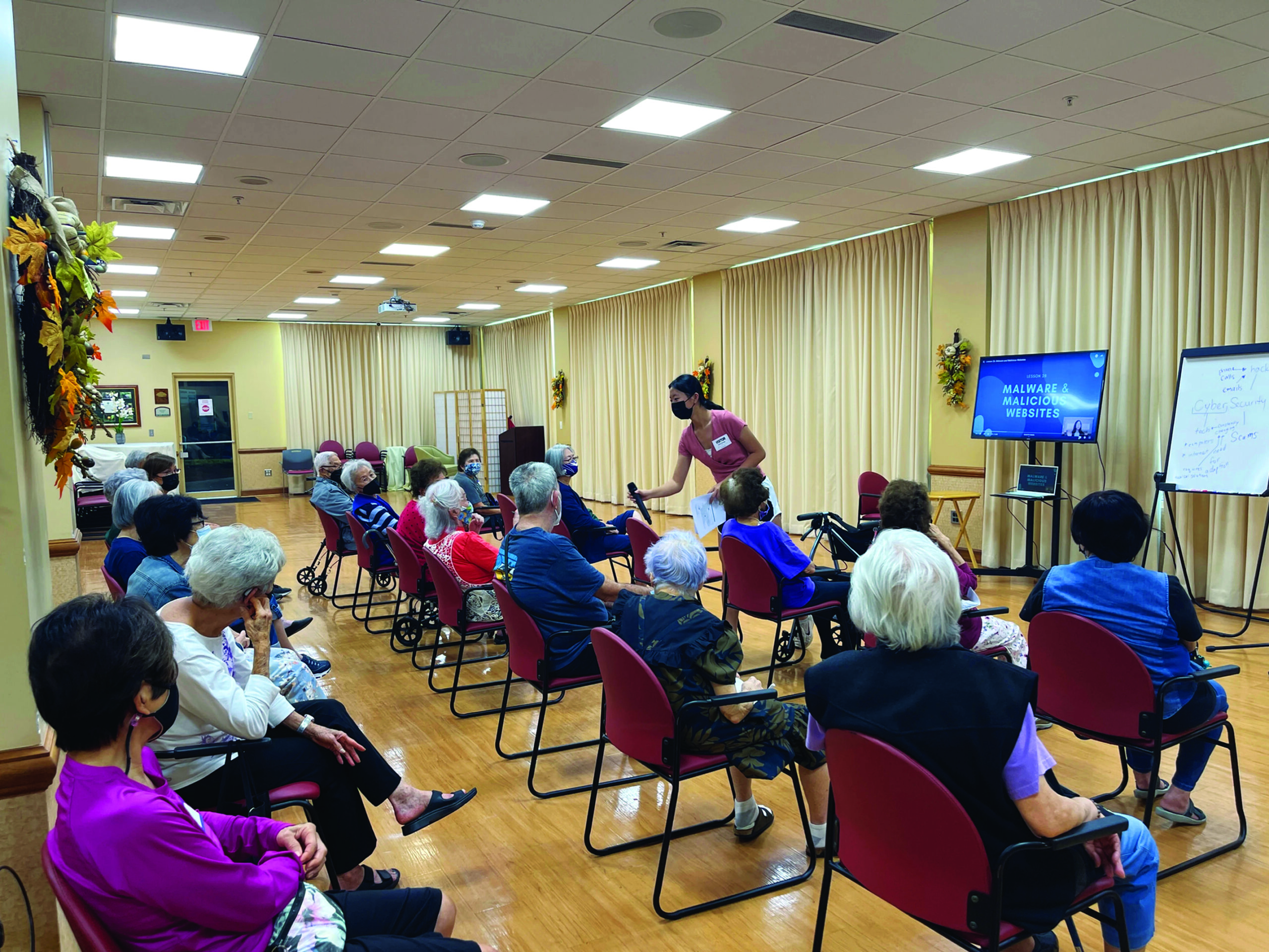
    “It was well-accepted, and then Esther spent a lot of time improving the program so that it would benefit more seniors,” says One Kalakaua resident Sophia, Esther’s grandmother. “She revised and improved her videos by increasing the sound and adding subtitles to benefit those who are hard of hearing. She also improved her presentation, assembling a team of schoolmates so that they could be more efficient and thorough. When she was invited back a second time, she brought her team along to teach the new and improved course.” For example, team members supplied one-on-one, in-person phone support to show residents how to block spam calls and to answer other questions pertinent to each of the many types of mobile phones now available.

    The second presentation after the fine-tuning based on feedback was even more popular, Sophia said. “More residents attended than show up to our most popular exercise classes. They all ended up loving it and learning a lot. Everybody was very happy. It was very successful.”

    “Their feedback was very valuable and I am very grateful,” says Esther.

    During the pandemic, she also presented her program at other senior homes in Honolulu, and later, AARP Hawaii accepted her project.

    “We also got some feedback from members of AARP Hawaii which was quite helpful,” says Esther. “I took all that feedback and implemented it into the second iteration of the curriculum. For instance, I learned that participants found the practical tips helpful. I took all that feedback and incorporated it into the second iteration — the one I worked with Dorothy on — the one that is being used now. Again, we tested and optimized the second version.”

    THE CYBERSAFETY 101 COURSE

    CyberSafety 101 (gocybersafe.org/the-course) is free, convenient and easy to use. The curriculum is self-paced and you can return to the course whenever you need a refresher. It covers cybersecurity basics, from phishing, to malware, to digital footprints and more.

    “This course was created because we believe that everyone — regardless of economic status — deserves access to quality cybersecurity education,” Esther says on her website.

    The first thing you do is enroll for the class through a series of fill-in boxes and answer a short questionnaire that assesses your level of cybersecurity knowledge. You are then sent an email that lets you enter the virtual classroom. The videos used to relay the lessons are colorful and clear. The sound is crisp and the information presented by a smiling and articulate Esther is well-paced and easily understood. The information and insights you will receive, along with the amount of money you may save by avoiding an expensive scam, are well worth the short time you will invest in the training — it only takes about an hour.

    CYBER-SAFETY 101 EXPANDS

    To spread word of her program, Esther contacted media outlets, such as the Honolulu Star-Advertiser.

    She also connected directly to senior centers through email and through personal connections. Esther has since shared the project with the Lanakila Multi-Purpose Senior Center and aims to partner with more organizations and care homes to continue to spread awareness.

    Recently, in addition to her online program, Esther has been offering workshops for kūpuna based on her online curriculum, reaching out to care homes directly and coordinating from there.

    “We pride ourselves in working with kūpuna side-by-side during workshops and are currently designing a training program to empower others across the nation to do so as well,” says Esther.

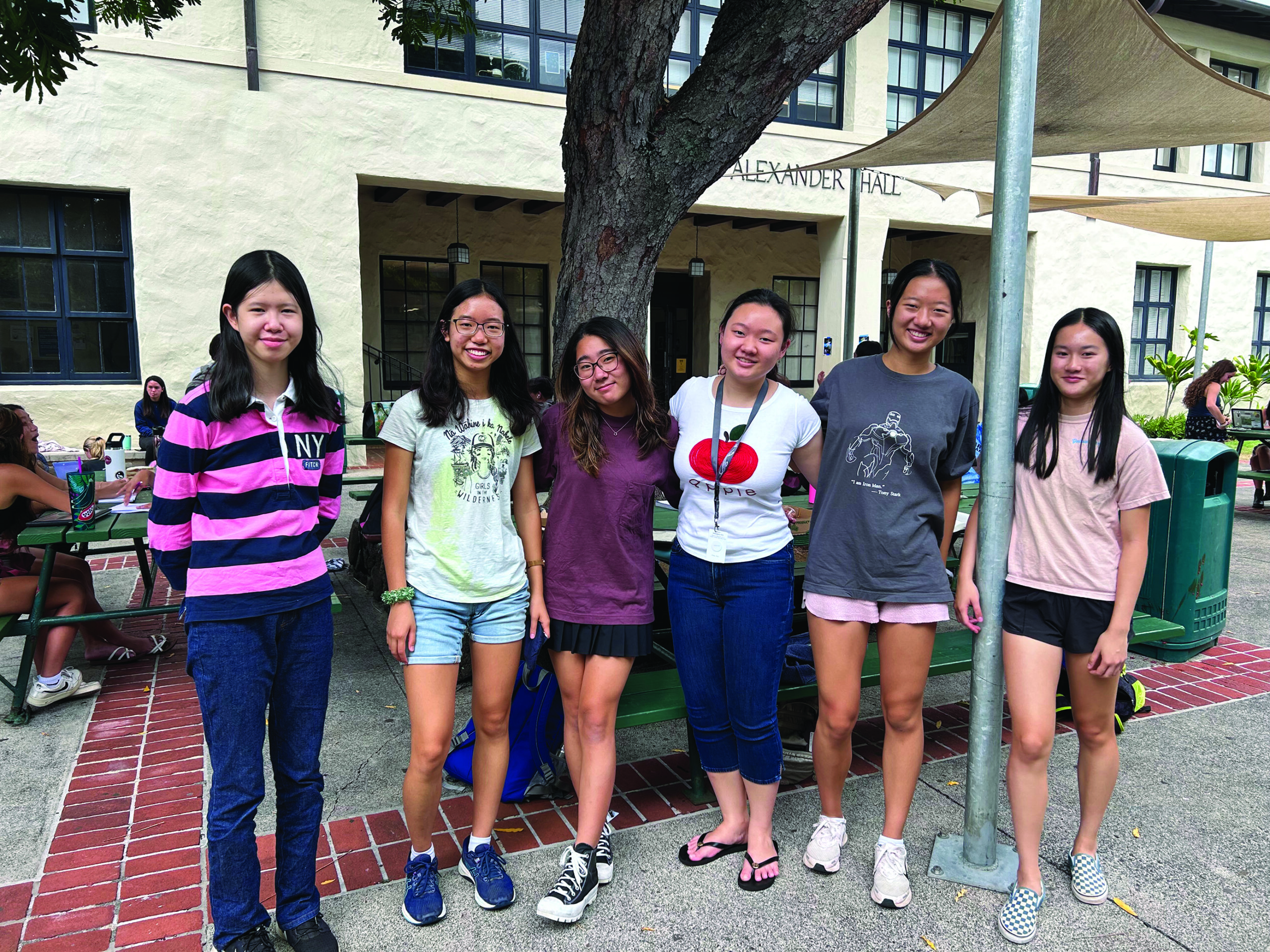
    She has not been doing it alone, but with the help of her “wonderful board members” who have been working with her for the past year or so. They help organize the workshops and sometimes lead them. “They are all such incredible young women,” she says of her eight peers. “It is definitely a group effort.”

    Her handpicked eight-member board have commonalities in addition to being interested in STEM, information technology and cybersecurity. They all have a special place in their heart for their elders. “I think each of them has their own motivation for getting involved with Cyber Safe Seniors (CSS), but in general, they all want to help them,” says Esther.

    EVOLVING LEADERSHIP

    Through CSS, Esther’s enthusiasm and good will spread to her peers. One of her eight CSS volunteer directors, Irene Zhong, met Esther about three years ago in an accelerated summer chemistry honors course. Irene was impressed by Esther’s curiosity. “I listened to Esther ask our teacher questions after the entire class had left, and I was baffled by their breadth and depth. She inspired me to dig deeper in my own learning and to be unafraid to ask questions.”

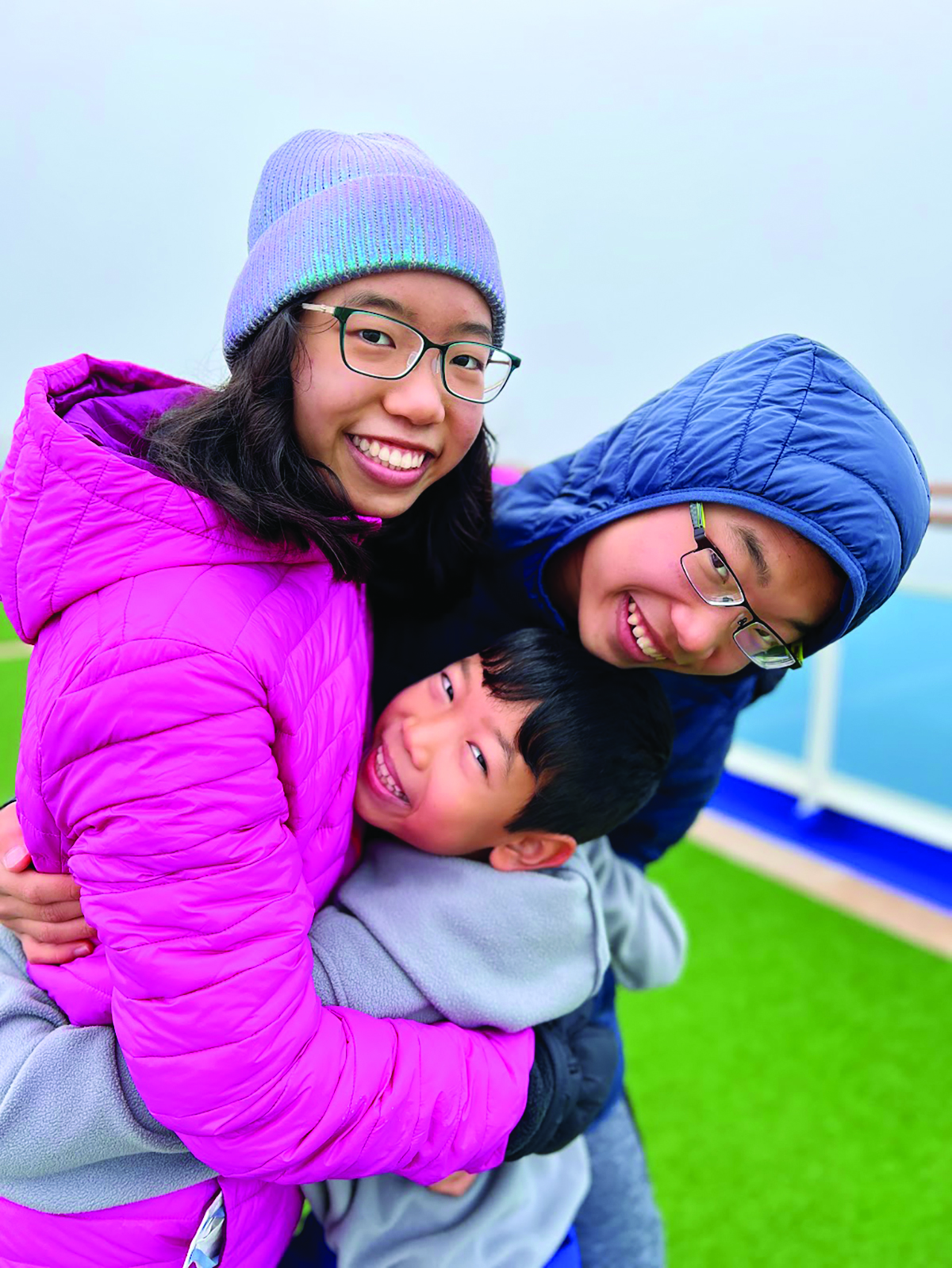
    She got involved with CSS shortly thereafter. “I wanted to join the board of directors because I live with my grandparents who use technology prolifically,” says Irene. “They are immigrants from China and can’t speak English, so it was even more important for me to work with cyber safety because their risk for attack is higher.”

    “Esther is the epitome of a great leader,” says Irene. “She has a great capacity for empathy not only for the elders but for her board members, as well. I appreciate that she does not hover over her board members, but instead gives us autonomy to be creative and make original contributions. For example, Esther gave me full reign to design Cyber Safe Senior’s volunteer shirt.”

    “Esther’s greatest traits are her timeliness and work ethic,” says Irene. “She has never been late to an event and never missed a deadline. She also curated, created, and revised the entire Cyber Safe Seniors curriculum on her own, which is a great feat considering the amount of work that goes into script writing, graphic design, recording and editing.”

    Her involvement with CSS has deepened her passion for service work, says Irene. “I feel a greater connection to the community and kūpuna, and through Esther, have connected with many of my peers — most of whom I would not have been friends with without Esther’s organization,” says Irene. “CSS has also given me experience with leadership and oversight. I am now more confident in organizing and managing volunteers, and coordinating with different branches of the organization.”

    “Before I leave for college, my goal is to create a community of cyber safe volunteers who are passionate about this work,” says Irene.

    ESTHER’S TIME TO SHINE

    Esther’s experiences with CSS helped her to overcome her innate shyness, learn how to take risks and reach outside of her comfort zone to become one of Hawai‘i’s unsung heroes. Along the way, she has garnered much recognition and many accolades.

    Of course, Esther earned her coveted Girl Scouts USA Gold Award Scholarship and was featured on the national GSUSA website. After she received the Prudential award in 2022, Esther was recognized by the Hawai‘i State Legislature during Hawai‘i Education Week. She is a Coca-Cola Scholarship Semifinalist, National Merit Semi-Finalist, and was one of four Carson Scholars nationwide who received the Michael Hollins Foundation Award for exceptional humanitarianism. She also received the Violet Richardson Soroptimist Award, George HW Bush Point of Light Award, a Punahou Distinction in Student Entrepreneurship and the President’s Gold Volunteer Service Award in recognition of 129 hours of service to the nation. Inscribed at the bottom of the award: “The country is counting on you.”

    METAMORPHOSIS

    “The whole project was a risk for me,” says Esther. “I learned so much about sticking with it and putting up with challenges and working through them.”

    “I’ve always been a driven person and I am passionate about a lot of things,” says Esther. “I feel that this organization really stemmed from that. I didn’t lay out a plan to do this; it developed organically out of a passion for helping others, especially seniors. From there it just blossomed.”

    “This project has definitely contributed to my personal growth — more than anything else I have done. It has been an incredible experience and I have learned countless lessons. Cyber Safe Seniors has been very meaningful to me, and I feel that I have poured out my heart into this organization in a lot of ways. I have been blessed to have been able to gain so much from it in terms of skills I’ve learned and relationships I’ve built. It’s been incredible.”

    “Two years ago, I would not have envisioned myself where I am today in terms of this organization. I am incredibly grateful for everyone who was there to support me — God, my parents and my mentors and peers at Prudential. In terms of the organizational aspect of the project, my mom has been a really great role model for me because she is very driven and likes to take initiative. She leads a prayer group and is on the board of our church. She is really involved, so I drew a lot from her example.”

    THE CRUSADE AGAINST CYBERCRIME

    Given that Esther launched her career path at 16, where does she plan to go from here? “In terms of where this program is going to go next, I think the plan right now is to pass the program on to younger students and get them to become leaders and head this project throughout the state.” Esther will continue to support the Hawai‘i branch of the organization from afar and perhaps start a new chapter of Cyber Safe Seniors wherever she attends college.

    “It would be really cool if I could start another branch where I go to college and continue to expand it. I’m not sure what the future holds but I am excited for where this can go seeing how it has blossomed so far. I think it has a lot of potential to expand statewide, nationally and even internationally.”

    To that end, Esther and her team have developed a self-contained teaching package that can be easily distributed to care homes anywhere. The single package includes the curriculum, notes on how to run the workshop and frequently asked questions.

    “The main thing I’ve learned from this project is how to be a good leader. I am not a perfect leader, but this project has taught me that being a leader is really about empowering other people to be able to create their own vision for a project and take their own initiative. It is about empowering others to become leaders themselves. Before this, I never really thought of myself as a leader, but through CSS, I have really been able to grow into that role and I’ve been able to learn much more about what being a leader actually entails.”

    “I love helping others and aspire to become a good role model for future generations — someone who brings peace and hope to this chaotic world and whose character inspires others,” says Esther.

    A DIFFERENT KIND OF TEENAGER

    “The family’s way of life is totally different and she is a different kind of teenager,” says Sophia. Esther is intelligent, curious and hardworking. She’s an explorer and an achiever who always does her best. Anything that is difficult, she will try it out. She was taught to do her best to excel in whatever studies or activities she is participating in. “I‘m really proud of her.”

    “I am very thankful that God protected me and that He can change something so bad — the scam — into a very good thing — something that benefits me, my friends here and so many seniors in Hawai‘i and in other states,” says Sophia. “It is all because of the way Esther was brought up by very good, God-centered parents, my son Stephen, a cardiologist at Kaiser Permanente, and my daughter-in-law Monica, who is also a detail-oriented achiever.”

    Both parents are Harvard graduates. It follows that education along with healthy eating and exercise are important in their family dynamic.

    Esther and her two younger brothers were raised to not follow popular culture — they do not spend time on social media, and don’t have a TV in their home —“but to follow the Lord’s command to honor God, be kind and compassionate to others,” says Sophia.

    When she was a freshman, she started holding a food drive every year in their apartment building. “Nobody asked her to do that,” says Sophia.

    Esther is not really interested in things like fashion and trends, the lifeblood of many her age. “We encourage every member of every generation of our family to fly high,” says Sophia. Instead, Esther is very busy adhering to the unwritten family motto: “You do not complain. You overcome.”

    Many forces of good fuel Esther’s superpowers — her humble nature, maturity, discipline, innate compassion and kindness, and her family legacy of fortitude, faith and respect for education. The self-sacrificing Punahou senior manifested her super-abilities by rising to the call in times of trauma and need.

    Her disguise — her secret identity — is transparent now. No longer the shy, introverted teenager she once was, she has grown wings and metamorphosed into an intrepid force that any CEO would envy, as her talents and abilities have been recognized by all who meet her as significantly beyond those of “normal” people.

    The world needs more superheroes like Esther and her team to help combat cybercrime — mask and cape not required.

    The best way to contact Esther Chan is via email at: emailcybersafe@gmail.com.


    She may not wear a mask or a cape, but in the eyes of Hawai‘i’s kūpuna, Esther Chan is their very own superhero as she continues her battle against online crime in cyberspace — one workshop at a time — wielding only her mighty curriculum and stalwart spirit. If criminals stole money from your dear…

  • Champions at Heart

    Champions at Heart

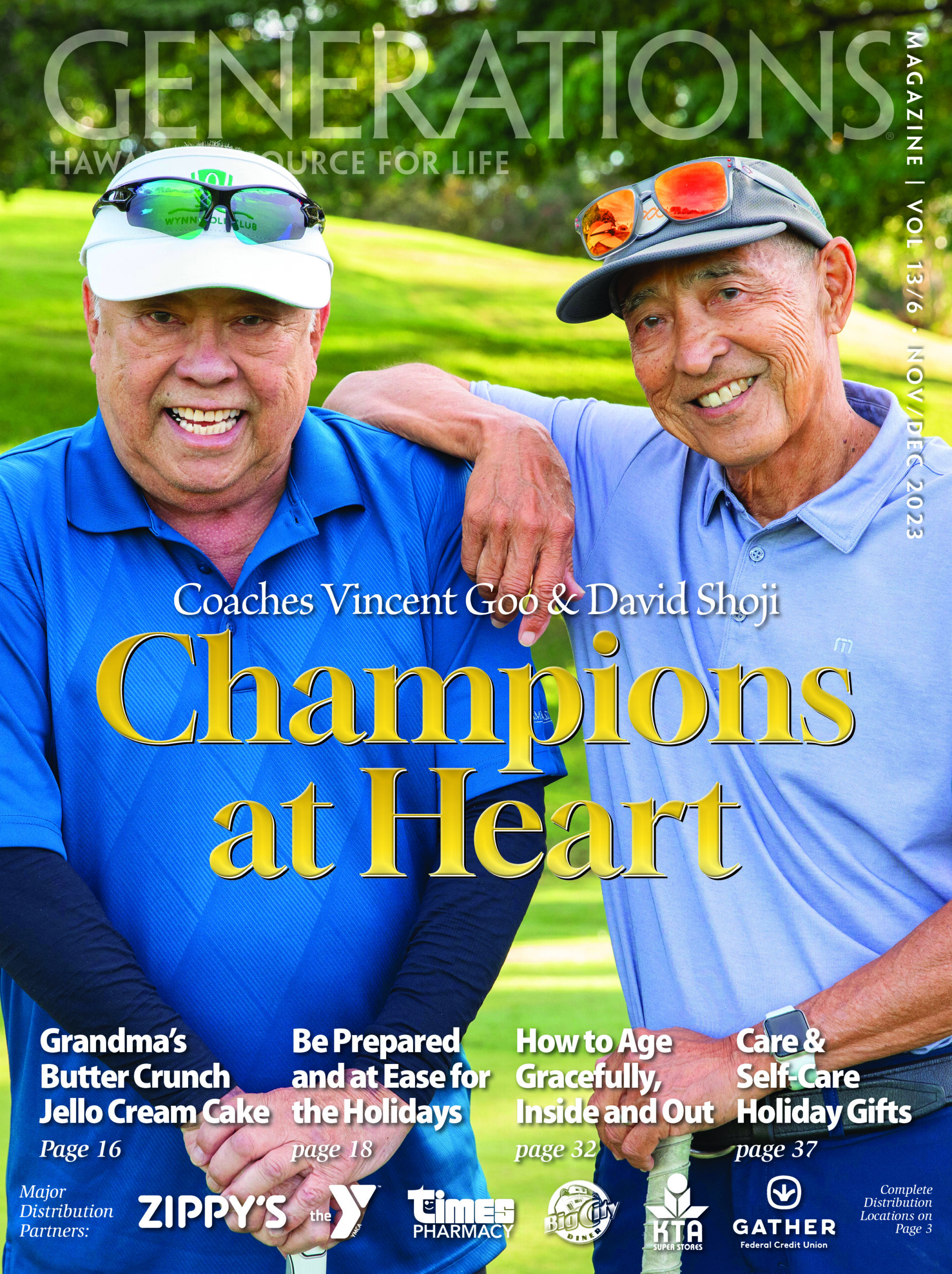
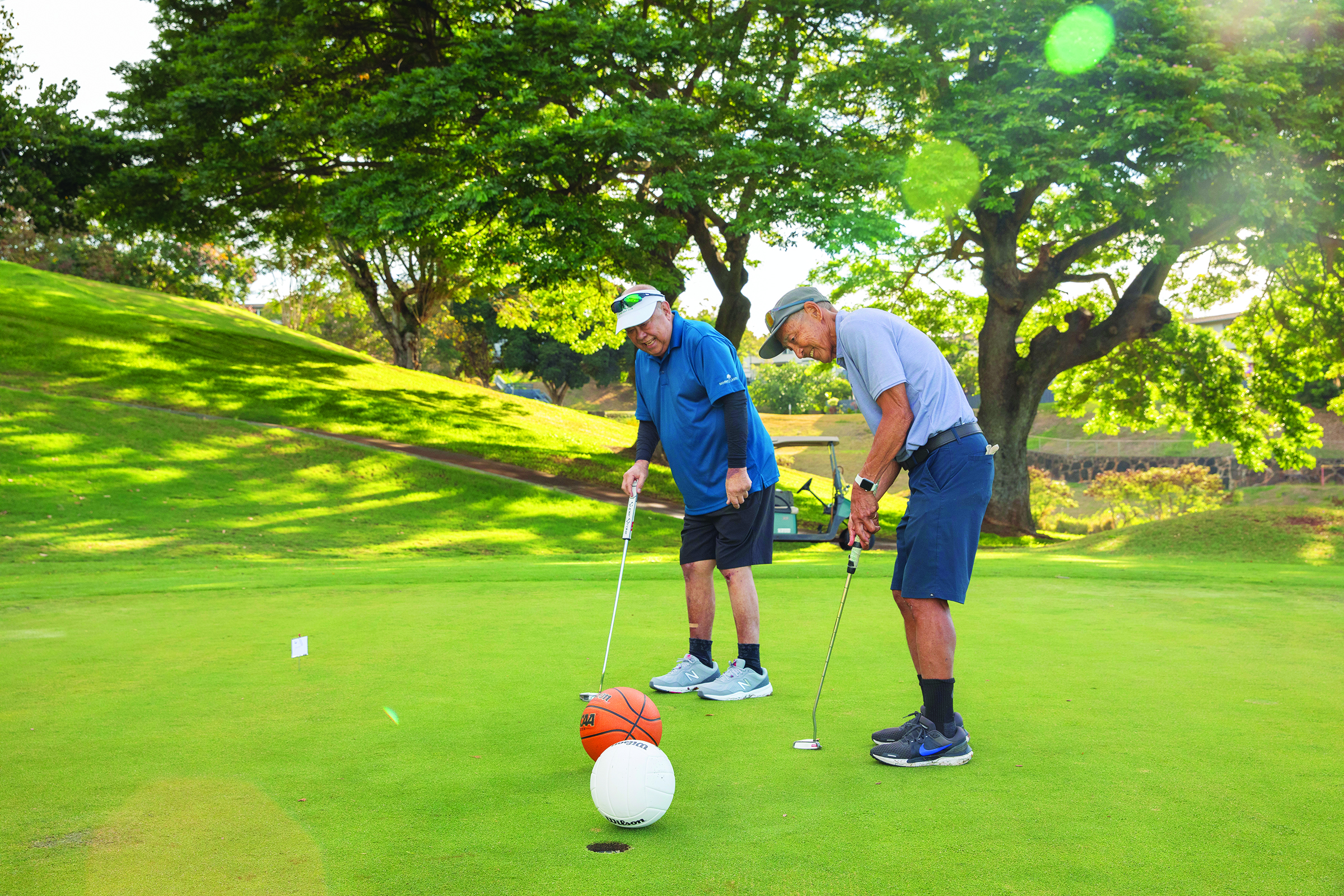
    Chances are that you’ve heard of Dave Shoji and Vince Goo, two of Hawai‘i’s most beloved coaches. Known far and wide for their stellar coaching careers at the University of Hawai‘i at Mānoa (UHM), these individuals boast hundreds of wins and have earned the titles of the winningest coaches for their respective programs — for Shoji, volleyball, and for Goo, basketball. Today, the coaches stay active in their respective sports, along with playing rounds of golf, surfing and advocating for Hawai‘i’s kūpuna through their work with Hawaii SHIP (State Health Insurance Assistance Program).

    For Coach Goo, the most vivid memories of his coaching career — “my most happiest times” — are not the victories or the championship wins. He and his assistant coaches put a lot of work into the academics for their players, encouraging them to graduate. In terms of their grade point average (GPA), the Rainbow Wahine women’s basketball program was the top team out of all the UH sports for a number of years. Although Vince Goo is no longer on the court, his dedication to community and to guiding, not only the youth but all those around him, still shines through in what he does today.

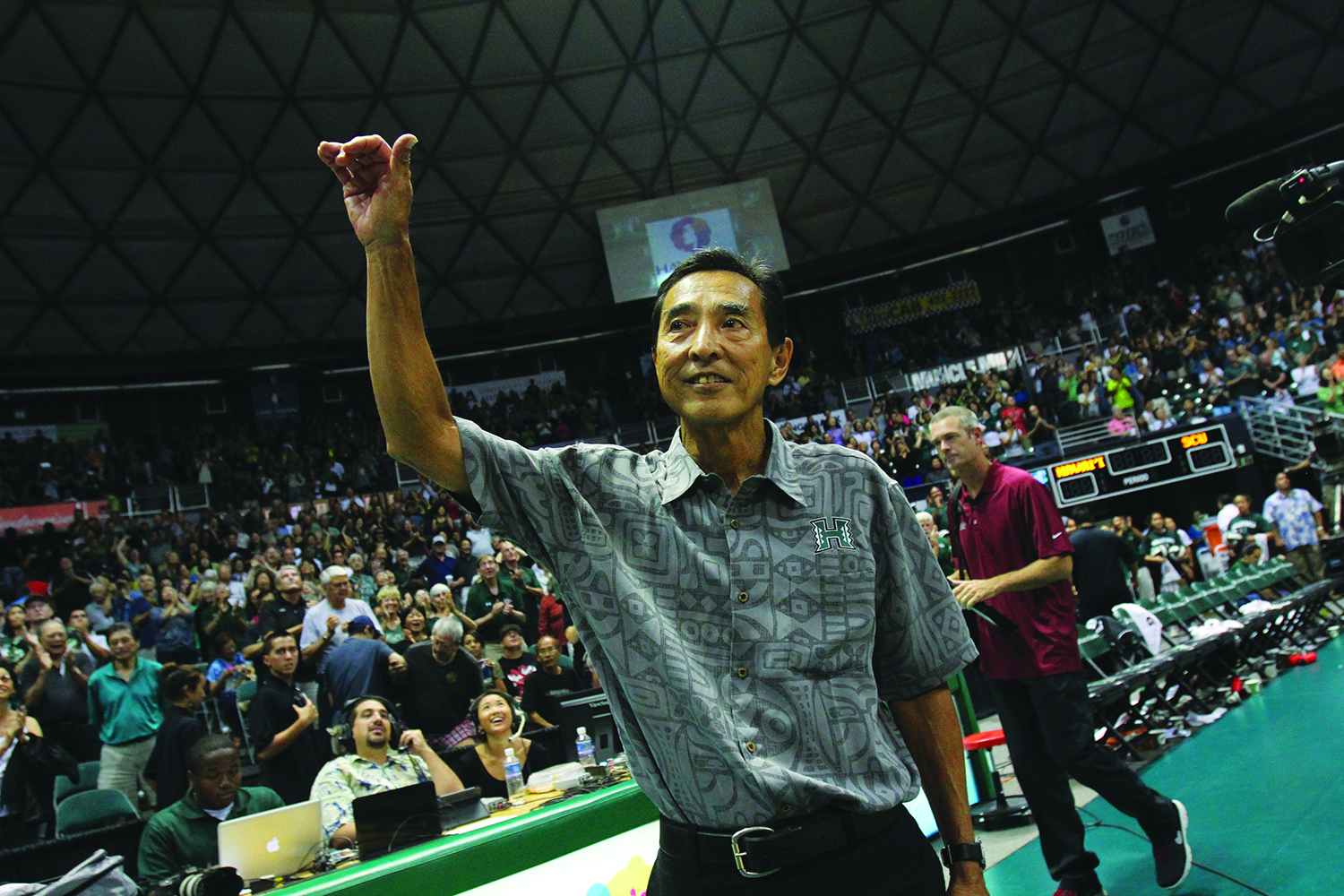
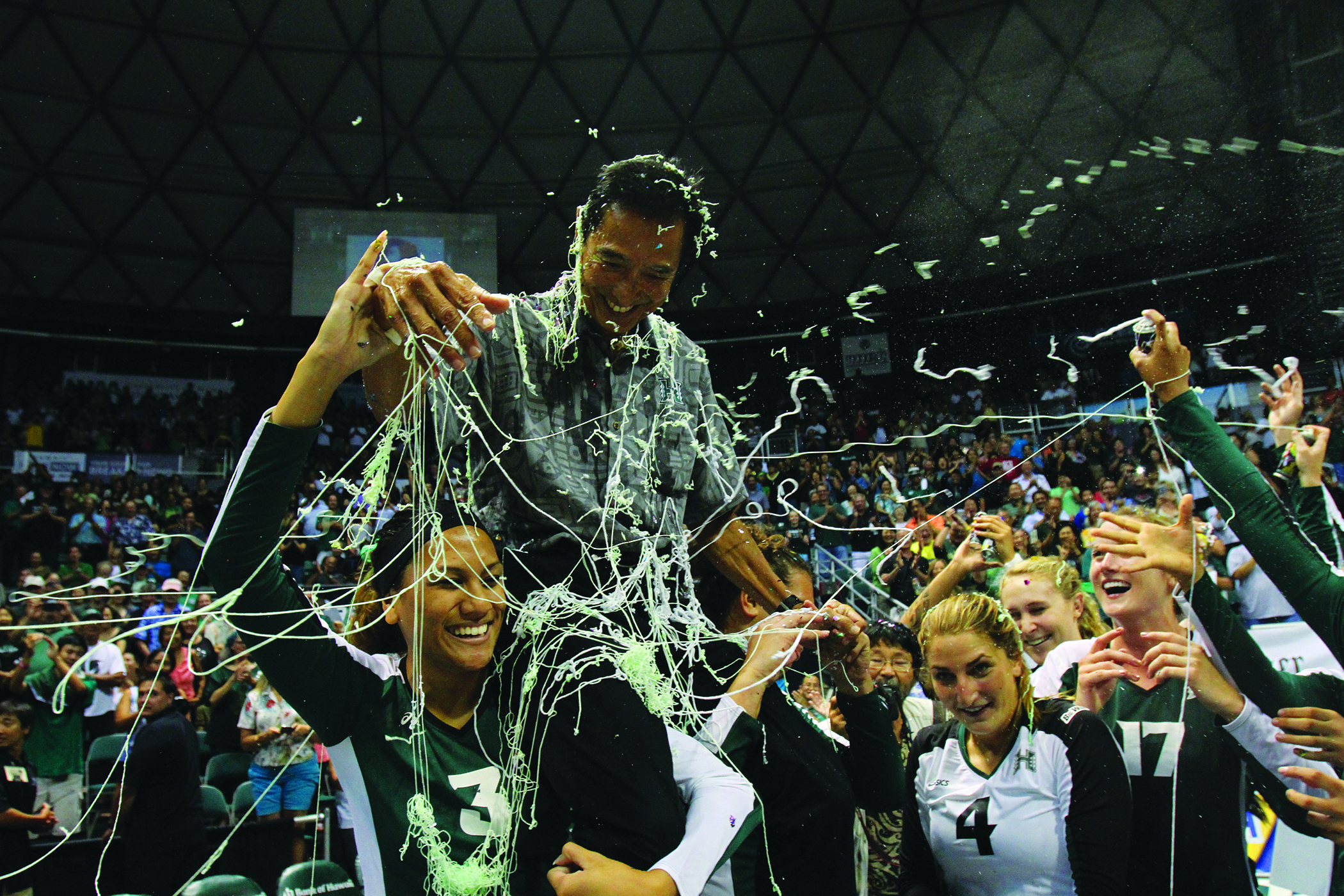
    Coach Shoji retired in 2017, after a 42-year career that included both highs and lows. From the time he first became their coach, Dave Shoji has been avidly supportive of the Rainbow Wahine women’s volleyball team and is a strong advocate for other women’s athletics programs. He was the first fulltime coach of any women’s program at UH, and his hard work helped “put them on the map.” Dave still dedicates himself wholly to guiding and helping others, most recently through his community service and encouragement of healthy living for kūpuna. He puts his all into everything he’s involved with, rooting for everyone around him.

    VINCENT GOO

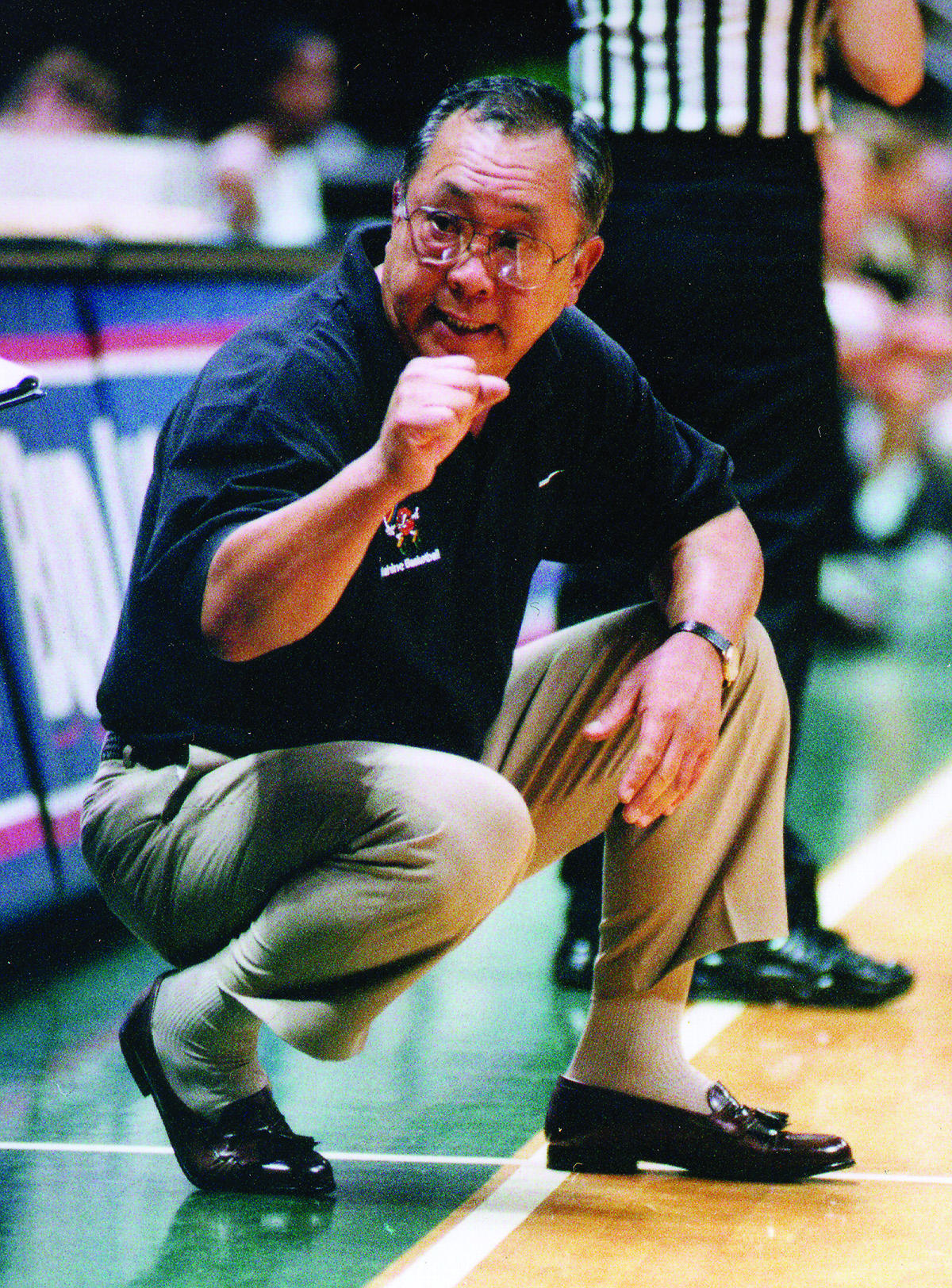
    Known by many here as simply “Coach Goo,” Vincent Goo had a 20-year coaching career with UH Mānoa’s Rainbow Wahine basketball team, during which he earned the title of winningest coach in the program’s history. Coach Goo retired in 2004, but continues to care for and mentor the people of Hawai‘i through his dedication to the community in various acts of service.

    Born on O‘ahu in 1947, Vince was raised here and attended Kalani High, moving on to Southern Oregon State University (SOSU), where he received his degree in physical education in pursuit of becoming a PE teacher. “That was my best class. And the easiest class!” After graduating from SOSU with a bachelor’s in physical ed, Vince came back to Hawai‘i to teach at Castle High School in 1969, and he would continue on at Castle for seven years before teaching at Kaiser High School for another eight.

    Vince’s introduction to a legendary coaching career seemed small: He started as a part-time assistant at UHM, where he met Bill Nepfel, another well-known figure in Hawai‘i sports, who was the women’s basketball coach at the time. The two quickly became friends, regularly playing pick-up ball together and hanging out. Several weeks later, Vince got the call.

    “You’re gonna like it!”

    “So, he calls me out of the blue one day and he goes, ‘Hey, I want you to be my assistant coach.’ I said, ‘Bill, what are you doing?’ That year, they went to the Final Four. I’d never seen the UH women’s team play — I was just coaching boys’ basketball. He said, ‘Oh, you’re gonna like it, you’re gonna like it! Come up to the gym, Gym 2, we play pick-up every day.’ So, I went up there and I was really impressed — they were shooting jump shots from free throws. Bill only had one position aside from himself, and that was part-time assistant coach and he would have to get someone who had a full-time job. I was still teaching at Kaiser, so when he offered me the position, I said, ‘Ah, OK, I’ll give it a try.’ I jumped in with him and I was there for three years. I was lucky I got the job here, at the University of Hawai‘i. Everything kind of fell into place.”

    Coach Goo became the winningest coach in program history, boasting a 334–116 win rate. He was assistant coach for three years and head coach for 17, totaling a 20-year career with the Rainbow Wahine. For Goo, however, it was always more than just basketball. The renowned coach had three rules his players had to follow, and they’re as simple as ABC: Academics, Basketball, and  citizenship. Putting academics first was no coincidence. Coach Goo has pride in knowing that all but one of his players were able to graduate with their degree.

    Wins on and off the court

    “I thought, when I took over at UH, ‘How can we be the best in something? We’re not gonna win every game, we’re not gonna make every free throw. We’re gonna lose games, we’re gonna miss free
    throws. But what if we graduate everybody?’ So, that’s what we set out to do. We ended up being the top GPA team out of all the sports for a number of years. I think we set the bar for all the other teams. All our athletes maintained a 3.0 or better, so that was a pretty good accomplishment.”

    Goo’s most memorable moments in his career as Rainbow Wahine basketball coach have little to do with the games themselves. They relate to something as simple as his ABC rules: Commencement Day. Specifically, presenting lei to the graduating student-athletes. “We had a tradition that, when a player graduated, we would take their photograph — their mugshot, just in their jersey — and put it up on my office wall. It was only when they graduated that they’d come and put their picture up there. It never had anything but their jersey number, the years that they played, and their major. It never had anything else about basketball, about how many points, or how many rebounds, or whatever.”

    Coach Goo retired in 2004, but even today, he still involves himself with sports via a community-driven approach. “Well, I don’t go to a lot of the games, but I support the teams and I’ll call a coach and give some words of encouragement. I try to keep up with the sports and, obviously, women’s basketball. I’ll give them a shout on the voicemail after games — if they played well.” With a laugh, he adds, “If they didn’t, I try not to say it on TV.” Though he doesn’t attend all sports games, he never misses a Rainbow Wahine basketball game. Goo co-hosts game-time interviews and analyses with UHM radio and TV play-by-play announcer Scott Robbs and Nani Cockett, who played for Coach Goo at UHM. At one of the games he announced for, Scott asked Vince how many kids he had. “I said, ‘Four.’ And Nani says, ‘Oh, don’t worry. Coach didn’t raise them. Mrs. Goo did. He was too busy trying to raise us.’”

    It’s obvious that Goo enjoys so many aspects of this activity — from the co-hosting, the immersion, and, overall, the fun. Goo carries his passion for basketball and teaching with him today.

    Work and play in retirement

    Aside from still being engaged with the sports scene, Vince cherishes newfound hobbies and passions coming up in his retirement. His hobbies include: “Sweeping and mopping the house. But don’t talk to my wife, ’cause she’ll deny that! I play a lot of golf. And people are always asking me, ‘Hey, how’s retirement?’ I tell them it gets better every week. ‘Don’t you lose track of the days?’ No, you just wake up in the morning, go get your paper on the driveway — if the paper is thick, you know it’s Sunday.” And “Coach Goo” continues to advise and educate his community. He is especially proud of the work he and “Coach Shoji” participate in with Hawaii SHIP.

    “With Dave and Jim Leahey, we did three commercials together. Since Jim passed, Dave and I have done two commercials. SHIP is a volunteer group and they’re wonderful, really wonderful. One day, I guess the commercial was on, and my grandson comes running downstairs, going, ‘Hawaii SHIP today!’ I happened to be sitting there, thinking, ‘What am I gonna do about this bill I got?’ Wait a minute! Maybe I should call them. I called them the next day and they called back 20 minutes later with information. That was terrific! I’ve called them a few times since. If you call Medicare, you’ll get all the prompts, you know, call this number, press 1, press 2, press 3, and even then, your category never comes up, right? So, who do you talk to? It’s tough.”

    As for why he and his friends chose to work with Hawaii SHIP, Vince says, “They called us. They thought, ‘Hey, let’s get these old fuddy duddies, all three guys are retired.’ We might have a good connection with older people. From what I hear, we hit it off pretty good.”

    Coach Goo recalls with fondness his friends, family, and the players he devoted many years of his life to. While proud of his achievements, he takes every opportunity to give credit to the community that took care of him and that he cares for. This legacy of care and mentorship, that he continues to hone, is something everyone can aspire to, no matter their age.

    Shoji on Goo: We grew up fairly close to each other and were friends in grade school. So, we go way back. We went separate ways for a while, but then reunited at UH: two local boys who grew up in the sports world, ended up coaching at a major college in major sports. I really respected Vince as a coach, and we both were proud of where we came from and how we got the programs to be respectable.

    David Shoji

    Coach David Shoji is the now-retired coach of the UH Rainbow Wahine volleyball team. His incredible star-studded career spanned 42 years wherein he earned the title of the winningest coach in the program’s history. Today, Dave can be found playing some rounds on the golf course, catching waves and serving his community in several ways.

    Dave Shoji was born in California in 1946, moving to Hawai‘i at the age of three, where his father, Kobe Shoji became a well-known expert in sugar cane production. Though he was born in the Golden State, Shoji’s upbringing was embedded in aloha. He attended public school here until the ninth grade, then the family moved back to Southern California when his father had to go overseas for work. Dave graduated from Upland High School, balancing academics with participation in three sports — baseball, football, and basketball.

    The University of California at Santa Barbara (UCSB) is where the legendary coach first learned how to play volleyball. A naturally gifted athlete, Shoji earned All-American honors as a volleyball player in 1968 and ’69 while completing a degree in physical education. After graduation, he joined the army, serving for two years before returning to Hawai‘i to further his education at UHM in hopes of becoming a physical education instructor.

    He had no clue that this decision would change his — and countless others’ — life forever: “I was just trying to be a teacher. I was hired to coach the UH women’s volleyball team — it was a parttime job. It wasn’t really something I intended to do for a long time. It was just kind of a job to keep me financially going and then it turned out to be, after a few years, a full-time job. I happened to stay for 42 years!”

    From the ground up

    Coach Shoji would go on to cultivate an iconic program in Hawai‘i sports and a legendary coaching career: over 1,000 wins, multiple national titles, 22 combined awards of conference and region Coach of the Year and much more. He has been named to the list of All-Time Great Coaches by USA Volleyball and the Hawaii Sports Hall of Fame. Like Goo, it was always more than just the wins for Coach Shoji. “Back when we started coaching, women’s athletics were just an afterthought for the University of Hawai‘i. It wasn’t like it is today; it was pretty spartan. We didn’t have much, but we love the sport. Both Vince and I love to coach and love the sport, so that’s why we did it — out of love for the sport.”

    He looks back on these memories fondly. The most fulfilling part of coaching and mentoring his players for so many years is recounted with as much reverence and passion today as he felt when the events occurred. “There are so many highlights, it’s hard to pick one. But I think the first big event was winning the national championship in 1979, where we had been close — we’d been runner up and third place up until then — and in 1979, we finally won the national championship.” That win “kind of put us on the map, so to speak, and people here in the state started to identify with us. We would fill Klum Gym back in the day and they started to televise our matches which made us even more popular. So, that part was exciting — to be on the ground floor, on television, and people were actually coming to see us play. When the arena opened in 1994, we started attracting real big crowds of eight to ten thousand. Our program turned out to be a money-making sport for UH, which was pretty rare in college athletics — that a women’s program would actually make money for their school. That was exciting to be around.”

    Preserving family, health, and community

    David Shoji’s reputation precedes him. When people hear his name, few wouldn’t recognize the legendary Rainbow Wahine volleyball coach. Though Dave is no longer on the court, his life now is still just as colorful and busy. He manages to stay active not only in terms of his physical health and community, but he also is very much engaged in his family life.

    “My wife and I, we both love sports. Our two boys played volleyball in high school here locally and went on to play collegiately at Stanford. They won a national championship at Stanford, which was really exciting for everybody. They went on to play professionally, and both sons made the 2016 and 2020 Olympic teams for the USA. Kawika, the older one, has just retired from professional  volleyball and Erik, the younger son, is still playing. Our daughter, Cobey, married a football coach — he coaches at Alabama — so a lot of our life now is just following their teams. We’re also into being grandfather and grandmother! We have four and one on the way.”

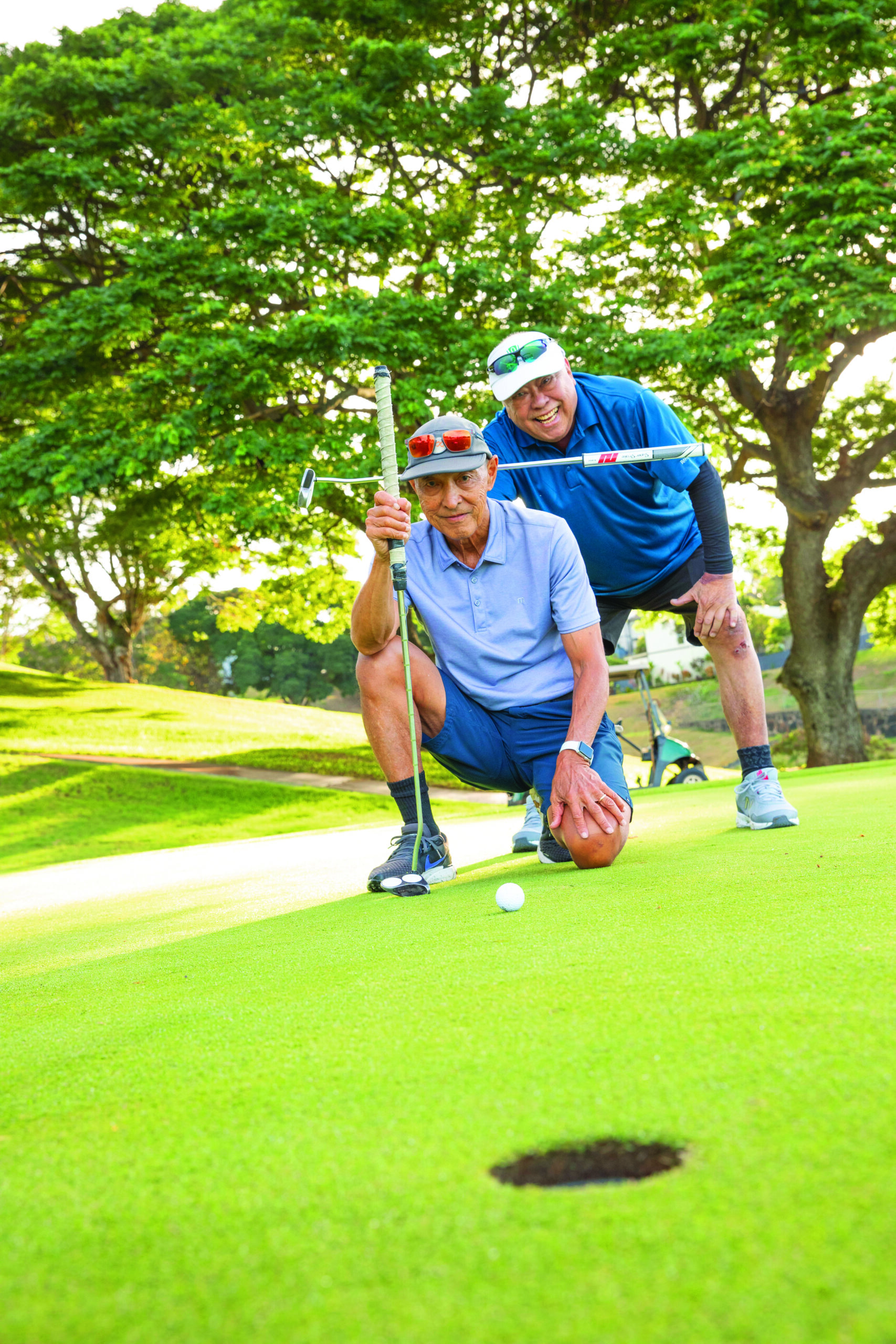
    Dave enjoys the relaxed pace of retirement, but he’s far from idle. “I’ve always golfed, so that’s still in the picture, but I took up surfing later in life. I’m probably surfing two or three times a week. The other things that old guys do are, you know, we garden, we cook, we babysit the grandkids. I still am a little active in coaching. I do some private small-group lessons, so I stay connected. We still go to a lot of UH sporting events. Cheering on the men and women’s teams at UH is still a big part of our lives. And we travel a lot, mainly to see games.”

    Here at home, the attention and passion Dave invests in his community includes advocating a balanced lifestyle for kūpuna, urging them to stay active and take care of their health. “Whenever I have a chance, I just like to encourage our generation to be healthy and stay active and exercise and eat well. I try to lead by example. When people see that I can still surf, and I’m golfing, and I’m exercising, maybe that will help get them off the couch.”

    For the sake of helping others

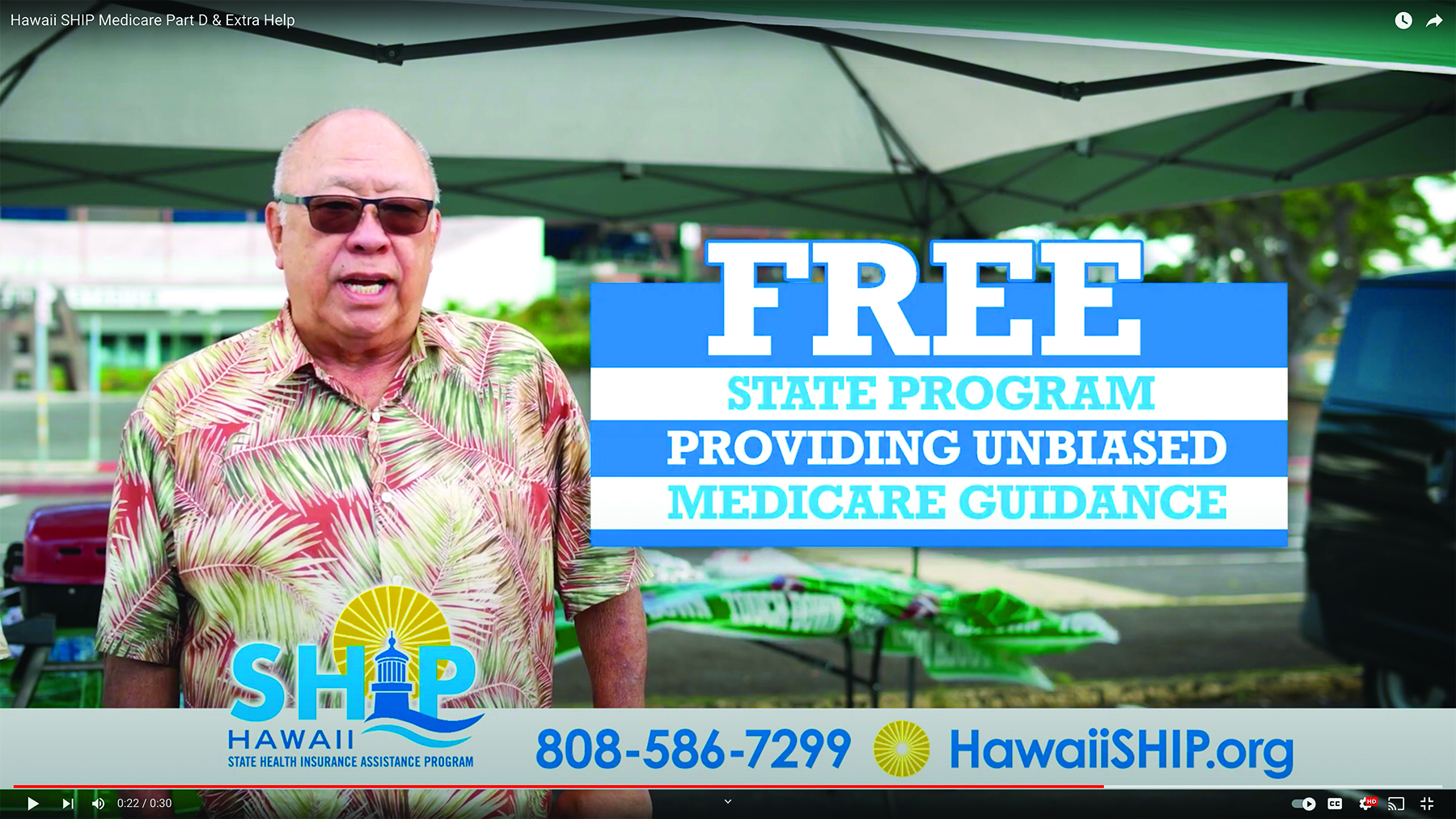
    Most of us have probably seen the Hawaii SHIP public service announcements (PSAs) while watching college sports on OC16. Dave sees it as a way to mentor a new age group: those in need of help navigating Medicare. “Vince mentioned he didn’t know a lot about what’s available and what help is out there, but I didn’t understand all of it either until I started  taking these public service ads. I just think people like us, we gotta be kind of held by the hand now that almost everything is computerized and online. For some of us, it’s not easy. We didn’t grow up in this era,
    so that’s one way that Vince and I have been able to help people.”

    The two coaches became spokespeople chosen by Hawaii SHIP because of their reputations and familiar faces. “They had a very appealing proposition for Vince and I and Jim Leahey. We were all friends, we were all about the same age, and that made it attractive for us. Vince is probably the most humorous person I know, and they wanted something light and just pleasant to watch, not too serious.” Another part of the appeal was that “we were gonna be out at the stadium, or we were gonna be in the arena, or at some form of athletics we were known for.”

    Goo on Shoji: He’s a year older than me, but that’s because he’s born in December and I’m January, so for a month, I can say, “OK, he’s older than me.” He can’t wait till that month goes by. He goes, “How old are you now?” Dave’s a cornerstone of our athletic department as far as wins are concerned, highlights, national championships. But, you know, he’s kind of on the serious side, yeah?

    Shining a light for SHIP

    Both Dave Shoji and Vince Goo have remained active in terms of their physical health and their community for most of their lives. Today, the now-retired coaches can still be found participating in their respective sports, coaching private lessons or commentating for in-game analyses. Both of them treasure their “local boys” roots, as Dave puts it. He expresses his pride in growing up here, which is something both Dave and Vince share. Among other things, Dave and Vince also advocate for helping “their generation,” our kūpuna.

    While they stress the importance of maintaining physical health as individuals age, they also encourage older folks to know what benefits they are eligible for and acknowledge the difficulties that come with navigating Medicare — especially for those who are not particularly tech-savvy. In our rapidly technologically advancing society, more help than ever is needed for those who face challenges in traversing websites, phone call prompts and more.

    Medicare is one of multiple services where access to services can be hindered by complicated tech. Dave and Vince’s work with Hawaii SHIP has become an integral part of their activities in retirement, and the fun PSAs have proven to be quite a hit. “People go, ‘Oh, yeah, we saw your commercial!’ We had one that was animated but had our voices, and friends of mine went, ‘Oh, that’s the one you look best in,’” says Vince with a laugh. “But it has recognition, yeah? So, it’s serving its purpose.”

    A different kind of game plan

    In 2019, Lani Sakamoto, the supervisor for Hawaii SHIP, proposed to connect with Goo, Shoji, and Jim Leahey because all three individuals were Medicare beneficiaries by then. Sakamoto thought that a collaboration between Hawaii SHIP and the three men would prove incredibly valuable. Not only were they Medicare beneficiaries and utilizing the many services Hawaii SHIP provides, but the public’s recognition of three legends in the realm of UH sports would likely garner an overwhelmingly positive response.

    Sakamoto then proposed the idea for some PSAs to the Spectrum cable company and to Kernel, a production company that had contact with the coaches because of the Spectrum’s channel, OC16.

    Kernel took a low-key approach, “cobbling up” some scripts to guide the performance, but also letting the three friends act spontaneously and “play around” on camera. The key to each PSA’s appeal is how it conveys their natural sense of fun, while still addressing something important for audiences to know. Along with other helpful videos in several languages, the dynamic duo’s Spectrum PSAs can be viewed on the Hawaii SHIP YouTube channel here: youtube.com/@hawaiiship3802/videos

    Braving unknown territory can be a daunting endeavor. In navigating the world of Medicare, the waters can prove to be especially rough and challenging. It also doesn’t help that there are some people and companies that would gladly take advantage of Medicare beneficiaries in need of healthcare services. With the right crew at your disposal, navigating Medicare can be smooth sailing — Hawaii SHIP (State Health Insurance Assistance Program) is here to guide you.

    Hawaii SHIP is federally funded by the Administration for Community Living (ACL) and administered by the State Department of Health, Executive Office on Aging (EOA). Its mission is to empower, educate and assist Medicare-eligible individuals, their families, caregivers and soon-to-be retirees. Its volunteer-based program uses objective outreach, counseling and training to help those on Medicare make informed health insurance decisions that optimize their access to care and benefits.

    Hawai‘i’s Medicare population is approaching 300,000, and Hawaii SHIP has counseled 2,765 clients and assisted folks numbering 6,465 through their outreach presentations and fairs.

    For those who have difficulties with mobility or have vision impairment, their website also offers virtual presentations and resources in the form of podcasts/CDs as well as the option to request their resources in Braille.

    Once you contact Hawaii SHIP, you will be assigned to a certified volunteer counselor who will provide one-on-one guidance tailored to your specific situation and needs. These counselors help with understanding healthcare choices, matters of enrollment, plan comparisons, coverage and costs, prescriptions, troubleshooting billing issues, submitting appeals and referral to other possible resources. With your permission, Hawaii SHIP works directly with Medicare to resolve any issues on your behalf. Their SHIPMates are local community members who have undergone screening, training, and certification as Medicare experts. Hawaii SHIP has more than 80 SHIPMates. Recruitment for volunteers begins after Medicare’s Open Enrollment Period closes on Dec. 7.

    The benefits of volunteering with Hawaii SHIP include the joy derived from helping Medicare beneficiaries; learning about local support, services and resources; designing your own schedule and being able to choose a role suitable for you:

    Presenters educate community and employer groups about Medicare and other health plan options.
    Counselors provide assistance to beneficiaries, their families, caregivers and soon-to-be retirees.
    Exhibitors distribute educational materials at fairs and event booths.
    Administrative helpers support SHIP staff with various clerical duties such as data entry, making informational packets and translating materials into other languages.
    Information distributors transport brochures and newsletters about Hawaii SHIP and Medicare to sites where Medicare-eligible individuals gather (libraries, nonprofit agencies, community centers)

    To become a SHIPMate or request help in your own journey, look to the lighthouse, a beacon in the dark — contact Hawaii SHIP today!


    HAWAII SHIP
    Free, local, one-on-one Medicare counseling is provided by the Hawai‘i State Health Insurance Assistance Program.
    250 South Hotel St., Ste. 406, Honolulu, HI 96813
    Oahu: 808-586-7299 | Toll free: 888-875-9229
    hawaiiship.org/services | hawaiiship.org/volunteer

    Chances are that you’ve heard of Dave Shoji and Vince Goo, two of Hawai‘i’s most beloved coaches. Known far and wide for their stellar coaching careers at the University of Hawai‘i at Mānoa (UHM), these individuals boast hundreds of wins and have earned the titles of the winningest coaches for their respective programs — for…

  • Pickleball: A Hole Different Ball Game

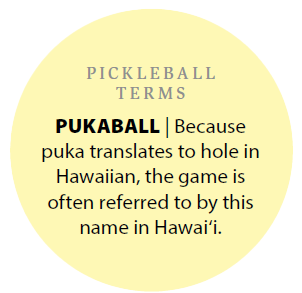
    Pickleball: A Hole Different Ball Game

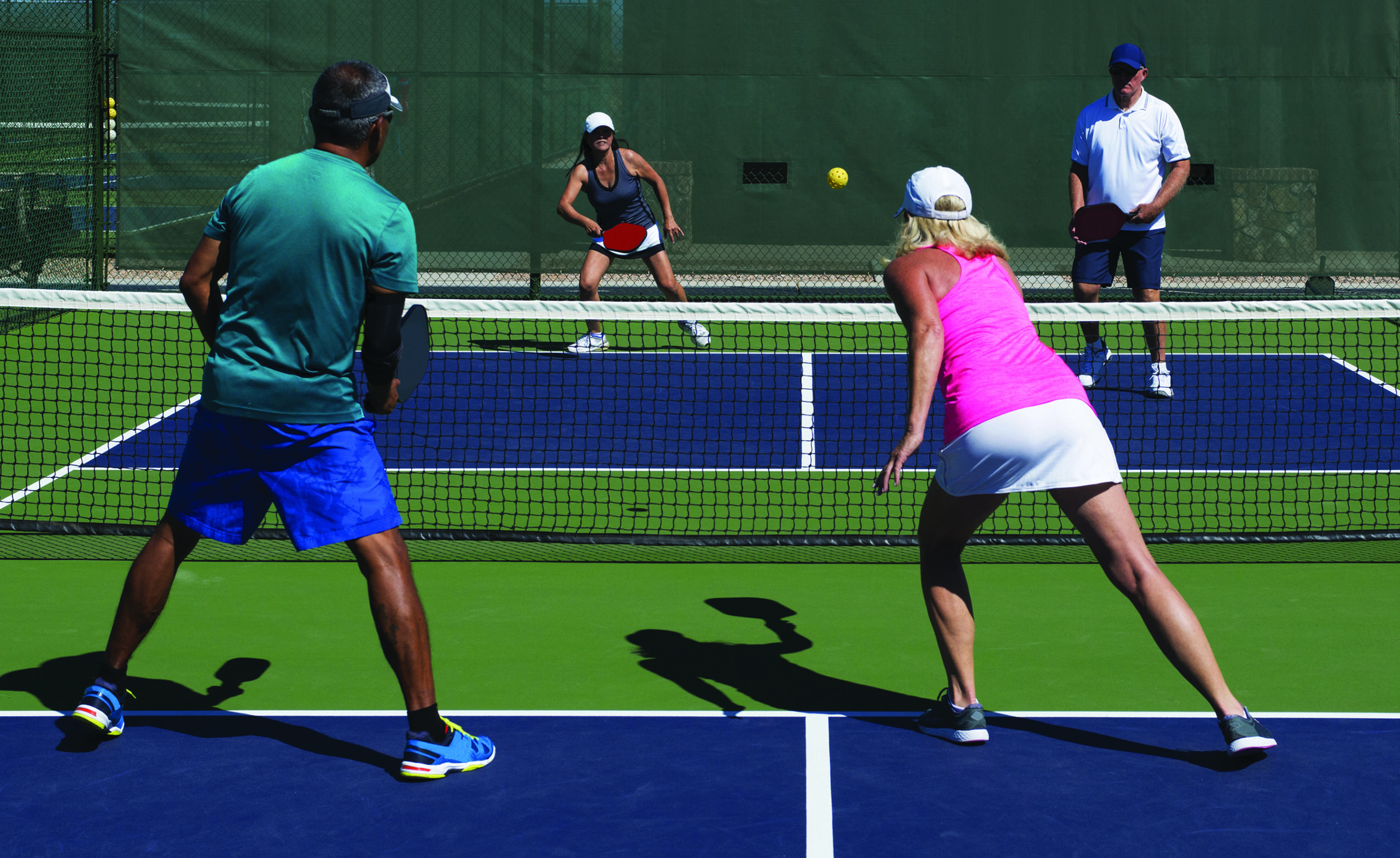
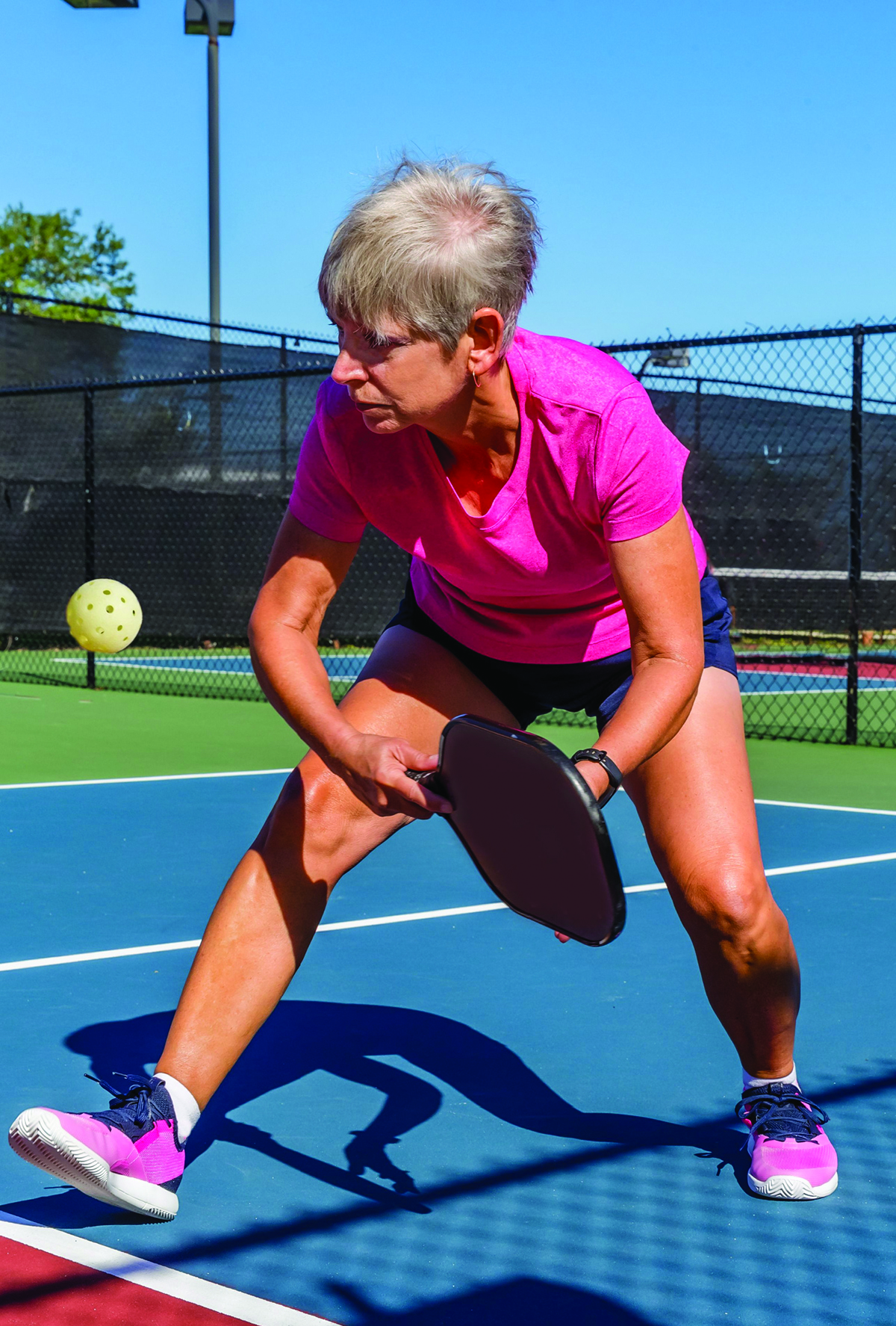
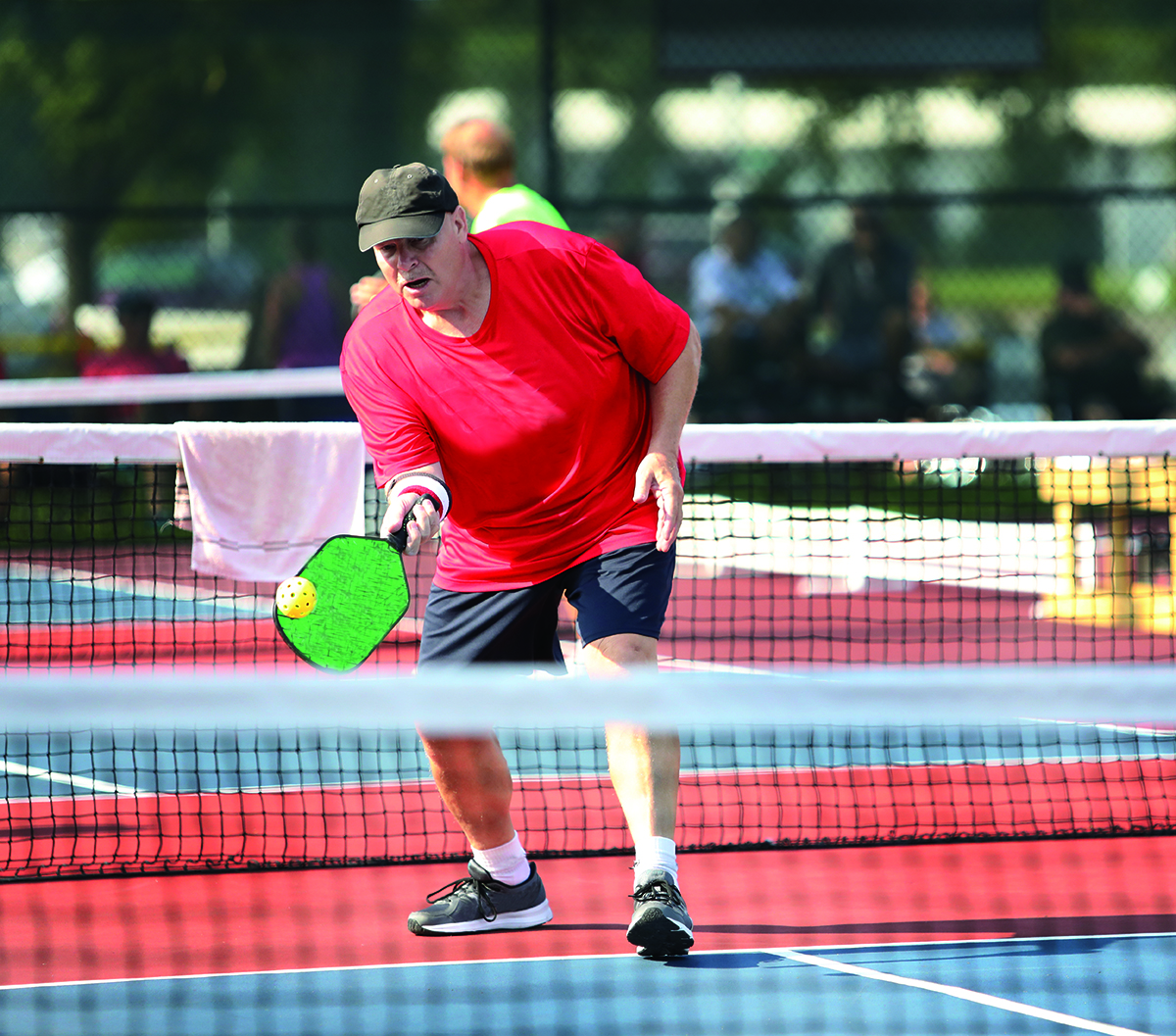
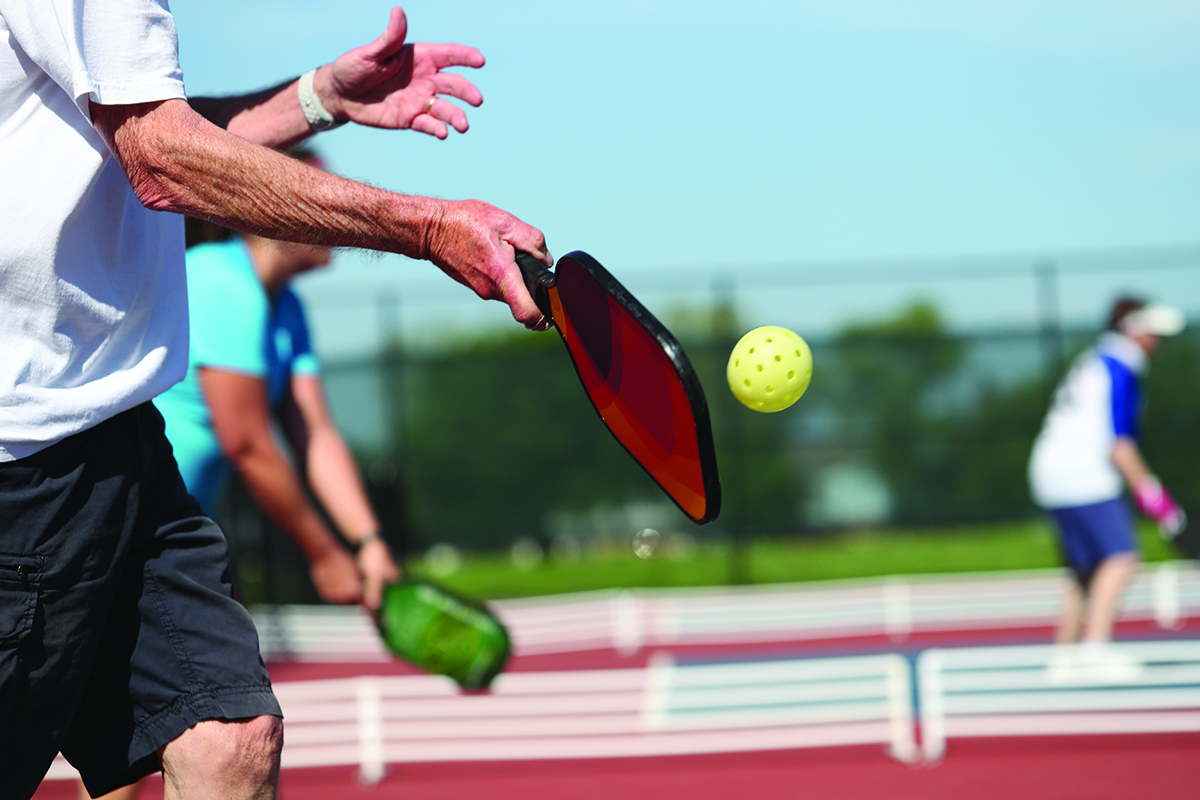
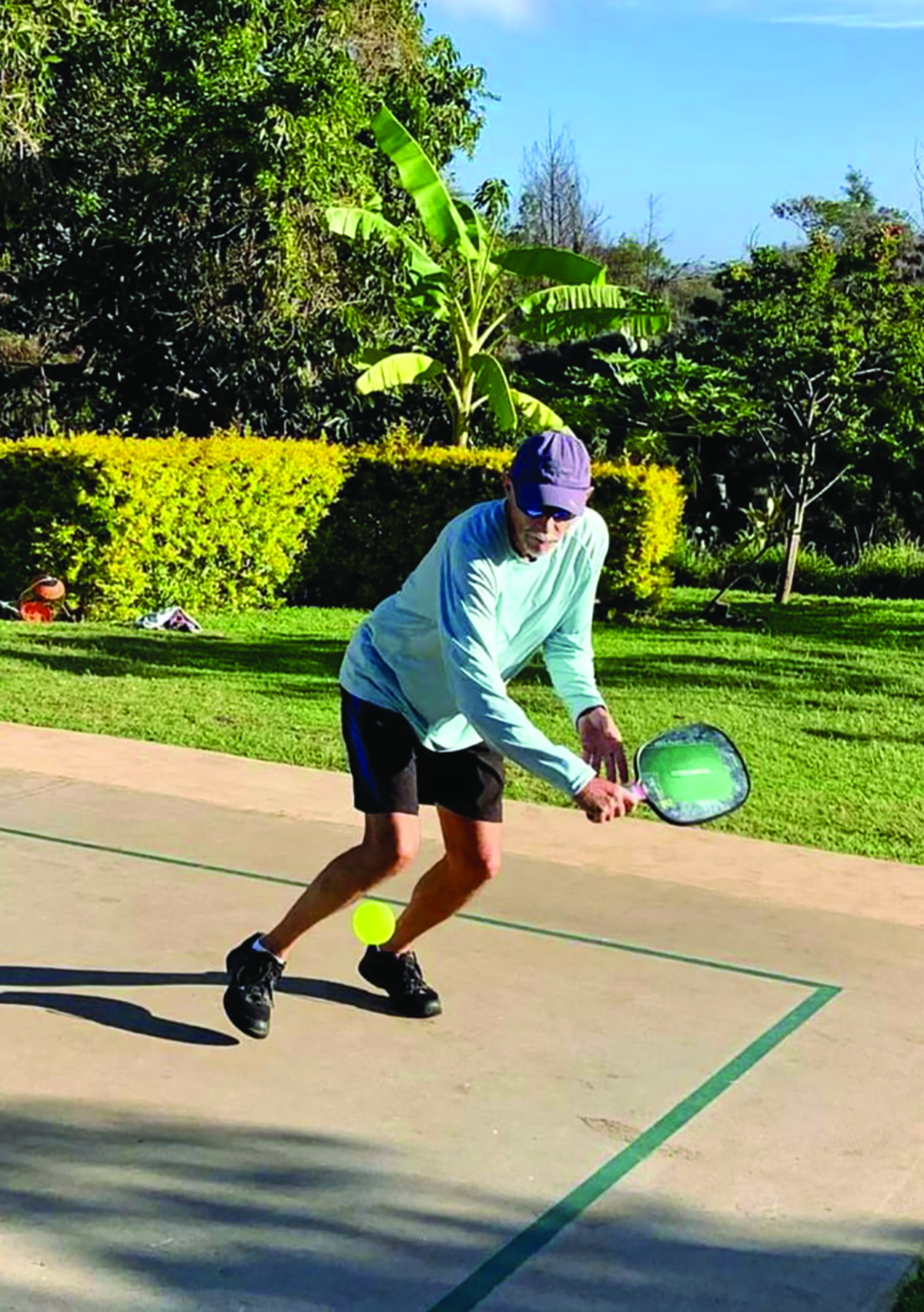
    photo of Pickleball - Mixed Doubles Action of Colorful CourtFew places can outshine Hawai‘i when it comes to healthy outdoor activities. The weather and the environment provide countless opportunities for exercise, whatever your fitness level. Canoe paddling challenges the physically fit, just as a short walk in a park or on a beach might challenge someone who has mobility issues. One sport that welcomes all fitness levels is pickleball.

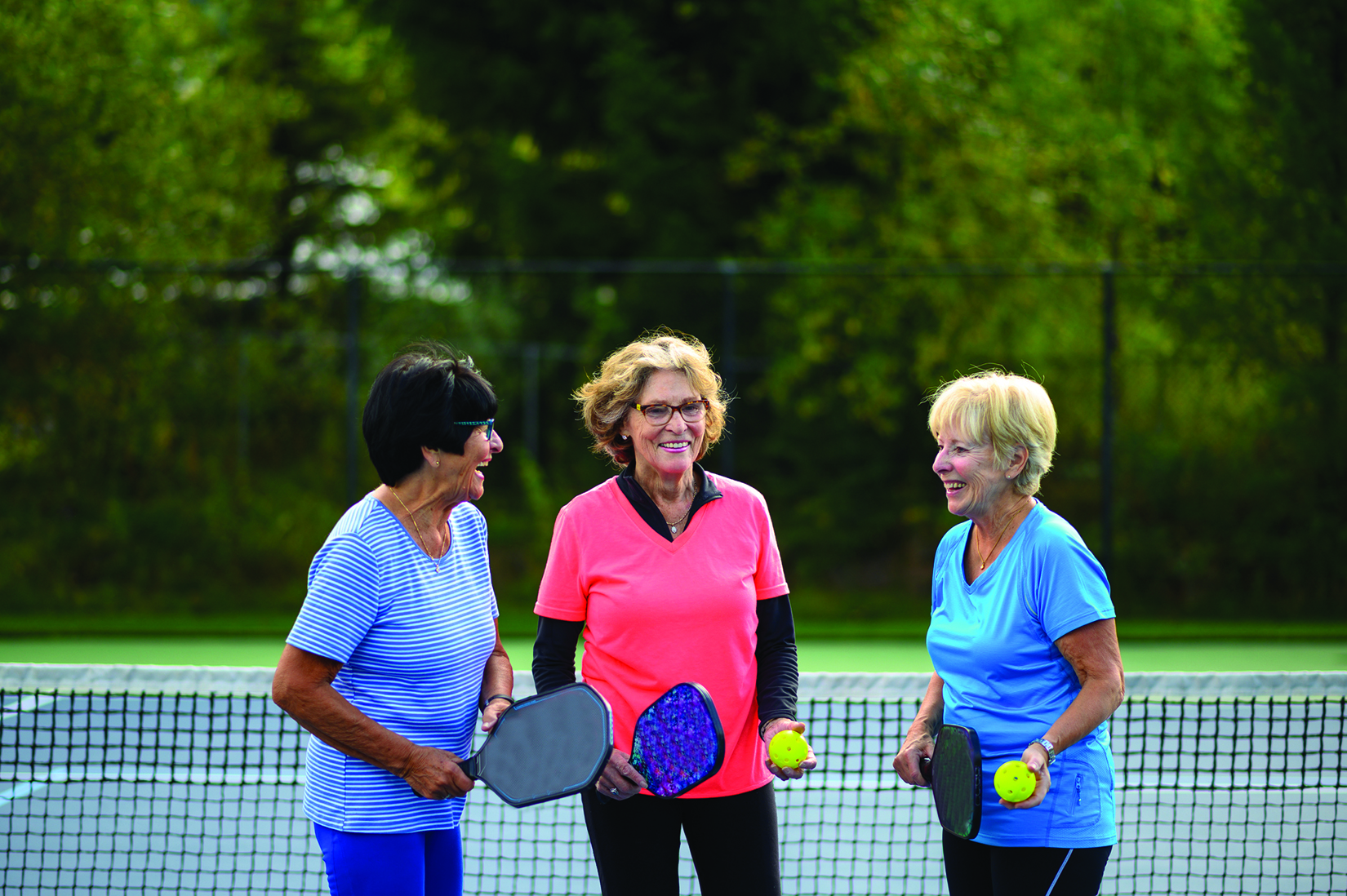
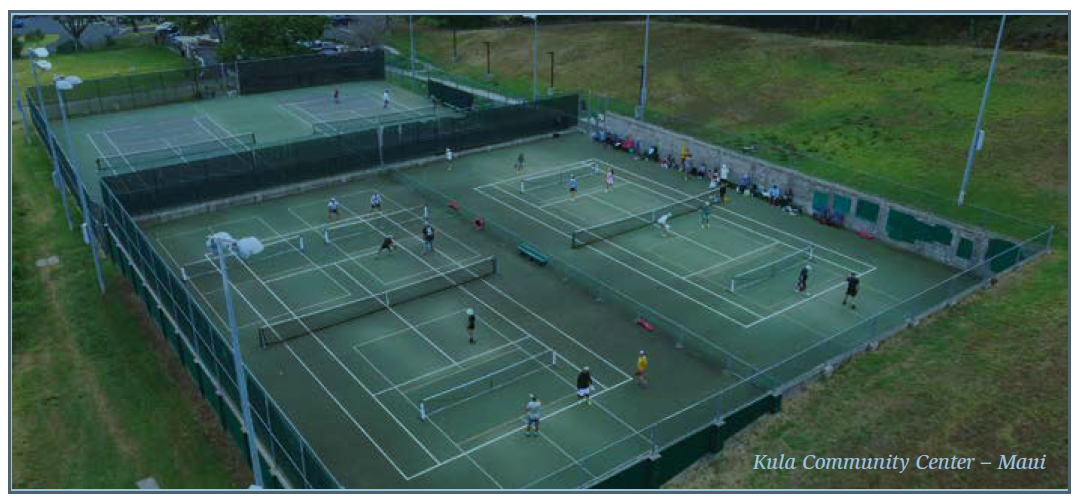
    Pickleball has been booming in popularity in the islands for the past decade. Its growth has largely been a grassroots effort by players volunteering their time and effort to ensure that all levels of ability and commitment to the sport are accommodated. For some players, the social aspect is their motivator; for others it is a chance to test their skills in competitive and tournament play. The game is especially suitable for seniors, not just for the physical health benefits it provides but also for the opportunity to socialize and the mental exercise involved in keeping focused and in keeping score. If you’re curious about the game, please join me in finding out more about it.

    How pickleball was created

    When you ask people why they play pickleball, the answer always includes the word: Fun! Those three letters embody the spirit in which the game was created back in 1965 on Bainbridge Island in Washington state. The island is a favorite for family summer vacations but the weather isn’t always suitable for the beach. One cold damp day, neighbors Bill Bell and Joe Pritchard took their kids to the Pritchards’ small backyard badminton court with some ping pong paddles and a plastic wiffleball, and made up a game for them all to play. The kids loved the new game, and so did the adults! Another neighbor, Barney McCallum, joined in and the three friends made up the rules of the game on the fly.

    Pickleball — perhaps named for a family dog called Pickle — was strictly a family recreation until summer ended and everyone went back home to Seattle. Barney McCallum created a pickleball court on the street where he lived; Joe Pritchard incorporated a game of pickleball at his campaign rallies when he was running for Congress; and Father Fitterer, another visitor to the island and then president of Seattle University, started a pickleball night at the university’s new gym when it opened in 1969. As word of the game spread and people discovered how much fun it was, the demand for the plywood pickleball paddles Barney was making became so great that he incorporated a business to handle it in 1972. Pickle-Ball Inc. is still a major supplier of pickleball equipment, which has changed considerably over the past 50-plus years.

    Getting started

    Pickleball is the fastest-growing sport in the US according to a randomized research survey done by YouGov in August 2022. They found that 14% of the 2,500 adults aged 18 and over that they surveyed had played the game at least once in the previous 12 months. That figure extrapolates to 36.5 million people nationwide. So it’s not surprising that a plethora of businesses have sprung up around the sport. Many cater to tournament players — there is even a professional league only
    for players aged 50 and over.

    But you don’t have to buy the high-end equipment the professionals use. Paddles can be found for less than $30 online. More expensive options may include a net, two paddles, two outdoor and two indoor pickleballs. Outdoor pickleballs have smaller holes to offset the effects of the wind — definitely a game “hazard” in Hawai‘i! Besides the larger holes, indoor pickleballs are usually a bit softer and a different color, making them easier to see in a gym environment.

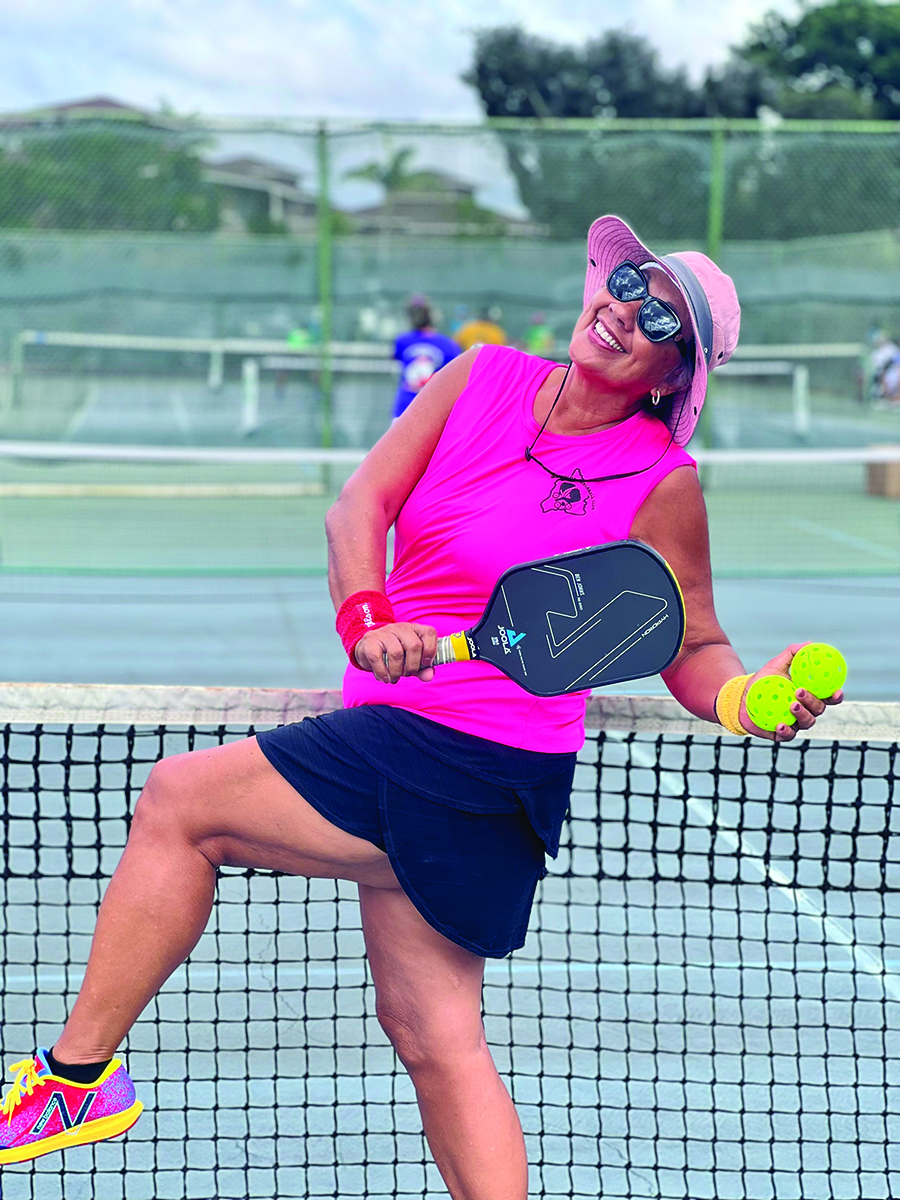
    The only other equipment needed to get started is a pair of sports shoes suitable for wear on an outdoor court, such as tennis shoes. (Running, walking and crosstraining shoes are not suitable for pickleball because they are designed for movement in one direction only.) If you intend to play indoors, the shoes you buy should be designed for play on hardwood or smooth composite surfaces. For both indoor and outdoor play, safety glasses made for pickleball are recommended. Add in a sun hat, visor or cap, a large bottle for water to keep you hydrated, some snacks to keep up your energy and you’re all set!

    Prepping for play

    As with all new activities you want to add to your health routines, you should check first with your healthcare team whether pickleball is suitable for you. It does come with some risk of injury, especially for those new to exercise or racquet sports. Travis Lytle, physical therapist at IMUA PT on Maui, recommends “5 to 10 minutes of stretching the calves and hamstrings to help minimize the chances of a pulled hammy or developing plantar fasciitis (foot/heel pain).” He also recommends “working on light gripping (a sponge or small ball) for 2 to 3 minutes a few times a day to help improve forearm strength for those not used to holding onto a racquet for 45 to 60 minutes.” He adds that “The quickest way to develop ‘tennis elbow’ is not prepping the muscles for repetitive use during pickleball or tennis.” And, as with starting any new sport or gym routine, he highly recommends “easing into the new activity slowly as it will decrease your chance of injury.”

    Where do I find a game?

    Pickleball is played outdoorsIt would also be a good idea to go watch some games, as speaking with players at your local court can give you a better sense of what’s involved. Most pickleball courts — both indoor and out — are maintained by your local county’s parks and recreation department, and a quick call to them can help you find places and times that pickleball is being played. USA PIckle Ball, the nonprofit national governing body for the sport, has local players volunteer to update an easily searchable website called Places2Play: places2play.org. Each location is tagged with information about hours and whether it is free to play or has a drop-in or membership fee. Other tags to look out for are “Beginners Welcome,” “Recreational Focused” and “Senior Crowd.” There will often also be a contact number to connect you with a local player who can give you more specific details.

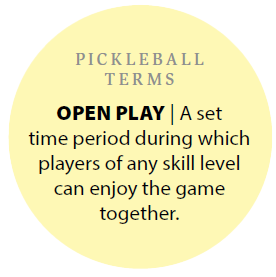
    One thing to ask about is “Open Play.” In keeping with pickleball’s origins as a family and neighborhood activity promoting friendship and fun, Open Play is a way of welcoming everyone to play, no matter their age or skill level. It might be done via a sign-in sheet or by having players place their paddle (with their name on the handle) in a stack with up to three other paddles. As a court becomes available, the next four players in line get their turn.

    A game usually lasts about 15 to 25 minutes, so it is quite a quick turnaround of players. It’s not unusual for players to stay for several games, socializing and maybe sharing a potluck while waiting for their next turn on the court. Numerous research studies have shown that being out among people enjoying a good time together is very beneficial for your health.

    Gameplay

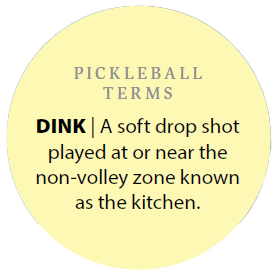
    Pickleball is a game of focus, quick reflexes, and strategy, but doesn’t rely so much on strength and extreme agility. In fact, many players who have come to the game after playing another court sport — such as tennis or volleyball — are surprised to find themselves beaten by players far less athletic than they are. A short person, overweight and maybe even wearing a knee brace can best a tall, fast-moving player simply by knowing where to position themselves and by keeping relatively still but placing the ball strategically so that their opponent has to reach down to return it. Adjusting to the small dimensions of the court can be a challenge for some players used to ranging over the larger area of a tennis court.

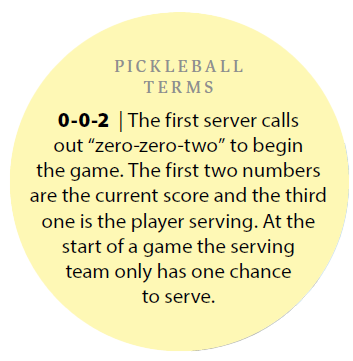
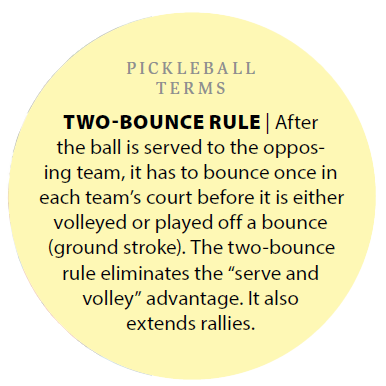
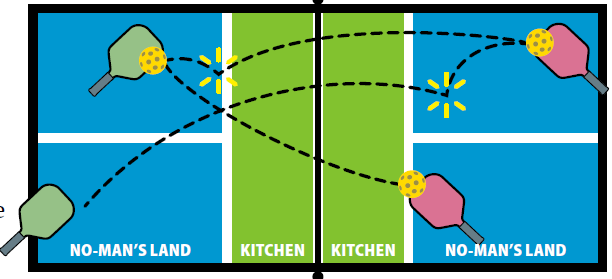
    The game begins by deciding which player or team has first choice of the side of the court they’ll be playing on and whether they will serve or receive. The first serve is always made diagonally from behind the back line of the right side of the court and it follows the two-bounce rule. The receiving team must let the ball bounce before returning it and the serving team must then also let it bounce before returning it. The aim of this rule is to extend rallies by eliminating an opening volley that may be impossible to return. After this opening play, both teams can either play the ball off a bounce (ground stroke) or volley it.

    Tennis vs. pickleball

    Many pickleball players also play tennis or did so in their younger days, but the two games are quite different. Tennis favors using a long backward sweep of the arm (backstroke) in order to give power to the ball’s return. Pickleball favors a smaller backswing because the court is so much smaller, requiring quick returns. The net is also lower: 36 inches at the sideline and 34 inches in the middle. (When the game was first created on a badminton court, the net’s new height was measured by one of the parents putting it at the height of their hip.) The dimensions of a pickleball court are 44 feet by 20 feet, the same as a badminton court.

    You can never hit a volley from within 7 feet of the net, or even have your body’s momentum carry you into that non-volley zone (aka “the kitchen”) after your volley. Again, this rule dates from the time the game was invented as a family game. Standing close to the net makes volleying too easy, putting the defender at an unfair disadvantage and ruining the fun of the game. A summary of the most important rules can be found on the USA Pickleball website: usapickleball.org/what-is-pickleball/official-rules/rules-summary/.

    Tennis uses an overhand serve but pickleball serves are always underhand and the contact point of the ball on the paddle must be below your waist, with the highest
    point of the paddle being below your wrist. You only get one chance to get your serve into play, whereas in tennis you get two chances. Only the serving team can score points, and the two players in the serving team switch sides of the court after each point is won.

    Senior women at a tennis court. Active seniors living a healthy lifestyle. Staying active in retirement.Upping your game

    The Pickleheads website has a succinct, illustrated page showing how to play the game here: pickleheads.com/blog/how-to-play-pickleball. There are also hundreds of videos on YouTube showing you how to up your game skills, but the better option is to attend a coaching clinic. What works for someone else might not work for you in terms of technique and avoiding injury. Clinics may be offered by your local county Parks & Recreation Department (often for free) or by a local pickleball club for a fee. For example, the O‘ahu Pickleball Association (OPA) has weekly group lessons for Newbies (nets, balls and paddles included), Beginners, Advanced Beginners and Intermediate. You can find the details about all these clinics on the OPA website: oahupickleballassociation.org/learn-pickleball/classes-clinics-workshops/.

    Many of the common mistakes made by beginners occur because the smaller dimensions of a pickleball court call for strategies that go against what you instinctively want to do.

    The “no man’s land” between the kitchen line and the baseline may seem like a good place to stand but playing from there can make it easier for your opponent to return your shot. If they place their shot behind you, there’s also a risk that you will stumble and fall as you run back to try to return it.

    While it’s tempting to return a shot coming at you at head or shoulder height, the ball is more than likely going to go out-of-bounds, so you should just let it go by.

    It is also very easy to step into “the kitchen” when following through on a shot, which will incur a fault.

    As a beginner, you are still developing an understanding of the game and developing your own individual style of play. It’s a good time to practice a variety of shots so that you have the element of surprise on your side, rather than playing predictably. Remember to keep your eye on the ball and to be mindful of where it is relative to your paddle so that you can anticipate making the best return shot. Communicate with your partner, especially when a return shot could be taken by either of you. Don’t poach a shot from them by jumping over the center line into their side of the court — at the very least, you are leaving your side of the court wide open and undefended for your opponent’s return shot.

    DIY pickleball

    Once you’ve learned the game, you might like to return to its Bainbridge Island roots by creating a pickleball court in your yard or chalking one up on the street—if it’s a quiet one! But even if you don’t have the desire to get fully immersed in the game, investing in a paddle and some balls is a good health choice to make. A 12-year-long statistical study done by researchers at the National Cancer Institute and the National Institute on Aging, published in 2022, found that of all the activities older people can do to minimize the risk of early mortality, racquet sports are one of the most beneficial. That is because they require synchronized action from many muscles for correct form, hand-eye coordination, and intermittent bursts of very high intensity. These benefits, combined with the social element and mental exercise, are what make pickleball clubs eligible for affiliation with the Blue Zones Project, which promotes healthy lifestyles.

    A final word

    The final word is still: Fun! A prime reason for pickleball’s popularity is that the players love the game and want to share that enthusiasm with others and inspire them to feel the same way. A more experienced player is expected to play more “gently” with someone who is still learning. Just because you can win doesn’t always mean you should if it’s at the expense of someone else still developing their skills. Pickleball is intended to be a game of fair play and good sportsmanship that promotes a culture of fun and friendly competition.


    NATIONWIDE
    USA Pickleball (National Governing Body) usapickleball.org
    usapickleball.org/about-us/contactus/
    facebook.com/usapickleballassociation
    • Places to Play: places2play.org/state/hawaii

    O‘AHU
    Oahu Pickleball Association (Club) oahupickleballassociation.org
    oahupickleballassociation.org/contact/
    instagram.com/oahupickleballassociation/
    • Where to play: bit.ly/OPA-PickleballCourtsMap meetup.com/Oahu-Pickleball-Association

    Japan Hawaii Pickleball Association (Club)
    japanhawaiipickleballassociation.org/
    aloha@japanhawaiipickleballassociation.org
    facebook.com/aloha.jhpa
    • Places to Play: japanhawaiipickleballassociation.org/hawaii

    Kailua Pukaball Ohana (Club)
    facebook.com/pilahi.gregg.3

    City and County of Honolulu (Dept. of Parks & Rec.) honolulu.gov/parks
    808-768-3003 | parks@honolulu.gov
    facebook.com/honolulu.parks
    instagram.com/honolulu_parks/
    • Where to play: bit.ly/honolulu-gov-pickle-ball-courts

    MAUI
    County of Maui (Dept. of Parks & Rec.) mauicounty.gov/119/Parks-Recreation
    808-270-7230 | parks.dept@mauicounty.gov
    • Where to play: Call for locations

    Aloha Pickleball Complex (Future Facility) Maui Research & Technology Park, Kihei, Maui
    alohapickleball.com

    BIG ISLAND
    Kona Pickleball Hui (Club) konapickleballhui.weebly.com
    konapickleballhui@gmail.com
    • Where to play: bit.ly/KPH-PickleballCourtsMap
    Old Kona Airport, 75-5530 Kuakini Hwy., Kailua-Kona

    Big Island Rogue Pickleball Hui (Club) bigislandroguepickleballhui.com
    bigislandrph@gmail.com
    facebook.com/groups/bigislandroguepickleballhui
    instagram.com/bigislandroguepickleballhui/
    • Where to play: Details online

    Holua Racquet & Paddle (Facility) holuaracquetandpaddle.com
    808-989-4611 | holuaracquetandpaddle@gmail.com
    • Where to play: 78-7190 Kaleiopapa St, Kailua-Kona

    KAUA‘I
    Pickleball Association Kauai (Club)
    pakauai.org
    facebook.com/PAKauai
    instagram.com/pakauai808/
    • Where to play: pakauai.org/court-locations

    County of Kaua‘i (Dept. of Parks & Rec.) kauai.gov/Parks
    808-241-4460 | parks@kauai.gov
    • Where to play: Call for locations


    PICKLEBALL PROFILES

    Lani Larrua
    When her husband of 38 years passed away, Lani found that her social life changed. Six years ago, she started playing pickleball on the private courts at Waikoloa Village, where she lives on the Big Island. A pastor and sworn chaplain for the Hawai‘i Police Department, Lani observes that for some people, playing pickleball has “almost taken the place of going to church” as a way of finding new social networks among kind and accepting people. She describes the game as a cross between ping pong, badminton and tennis and attributes the “weird” rules to the game’s origins as a family game. Family play is growing on the Big Island and it’s a great way for kids to “see a whole other side of their parents — having fun, laughing, not always winning. Pickleball is healthy, good, fun behavior. It keeps the body moving. A body in motion is a body alive.” And “killing the ball” gets rid of stressors!

    Todd Richter
    Todd was first introduced to pickleball in the mid-1980s. A friend he played tennis with invited him to play at the court her parents had built in their backyard. He liked the game and played it almost weekly, but the parents sold the property a year later and it wasn’t until 2016 that Todd became heavily involved with it. By then, he was working for the County of Maui Department of Parks & Recreation and a visitor called to inquire about places to play pickleball, offering to give free lessons. It soon became obvious the county needed to cater to a growing demand for places to play and Todd helped facilitate that. He retired in 2020, and enjoyed playing pickleball competitively in tournaments. “Over the past couple years, I’ve felt my urge to play tournaments kind of disappear. What keeps me playing now is for fresh air and exercise, and for fun. Because pickleball is fun to play.”

    Nolan Ahn
    Nolan Ahn is the founding president of the Pickleball Association Kauai (PAK). In his March 2023 President’s Report on the PAK website, he gives an account of the “demise of my hiking days” on account of his two replacement hips and having “unsure feet.” Neither of those two byproducts of aging have kept him from pickleball. Nolan enjoys the competitive side of the game and is looking forward to competing nationally as a “super senior” in the age 75-79 bracket. “Everybody has health issues as they age, so the playing field levels out.” He has already gold medaled in state tournaments in younger brackets. Age brackets put a positive spin on getting older. “Just hang in there… soon you’ll be the youngest in a new bracket.” He is also proud that PAK is a participating Blue Zones organization “supporting healthy lifestyles as we age.”

    Margie Katras
    Margie was a tennis player and coach but found that she wasn’t learning any more and that injuries were making the game less pleasurable as she aged. She was watching some other people play pickleball at the tennis courts one day and decided to try it. “Just one game and I was hooked! It was like beginning a new life just as my tennis life was coming to an end. It’s easy to learn and you meet a lot of people from different backgrounds.” She now coaches pickleball and describes the gameplay as “cat and mouse,” requiring players to stay focused. Margie admits that tennis is still her No. 1 love, and looks forward to the day when there are more courts dedicated to pickleball so the two sports don’t have to compete for space and time. “It’s like the difference between skiers and snowboarders,” she says. Ski field operators soon realized they had to provide dedicated runs for the new sport.

    Few places can outshine Hawai‘i when it comes to healthy outdoor activities. The weather and the environment provide countless opportunities for exercise, whatever your fitness level. Canoe paddling challenges the physically fit, just as a short walk in a park or on a beach might challenge someone who has mobility issues. One sport that welcomes…

  • Kumu Kahua Theatre – Home of Local Storytellers

    Kumu Kahua Theatre – Home of Local Storytellers

    (L–R, front) Allan Okubo, actor; Dann Seki, actor, board member, crew; (back) Harry Wong III, artistic director; Donna Blanchard, managing director; Elizabeth Wichmann-Walczak, director, original member; John Wat, playwright, actor, board member.

    Permanently housed in a black box venue in the historic Kamehameha V Post Office Building at the corner of Bethel and Merchant streets in Honolulu, the theatre known to locals as “Kumu” has a special place in the hearts of many theatre lovers in the state.

    That’s because it’s the only theatre on the island focused exclusively on stories that involve the experience of locals in Hawai‘i.

    Other theatres, like Diamond Head Theatre or Manoa Valley Theatre, more often stage shows written off island, bringing works including Broadway musicals, well-known Shakespearian plays and contemporary favorites to O‘ahu. These are key niches, albeit different from the locally-oriented mission of Kumu Kahua Theatre.

    Allan Okubo and Dann Seki have performed on stages across O’ahu. But they’ve been a part of Kumu Kahua since before it found this permanent home, back  then it was more of a fledgling troupe performing anywhere its players could find a stage — and an audience.

    At times, these two local actors seem to embody the longtime mission of Kumu Kahua: To create local theatre to tell truthful local stories, written and performed on stage by local people for an audience of Hawai‘i residents. The stories are selected each season by artistic director Harry Wong III to celebrate or challenge the community — sometimes both, he says.

    But the characters are always rooted in Hawai’i, in the experiences of those who have deep ties to the Pacific.

    “It’s fun to do because you’re often really doing what you did anyway,” Dann says, smiling. “The character is somebody that you know. Either you were that person or you know somebody who is like that person.”

    There’s a reason why it’s easy for actors and audiences alike to relate to the stories performed at 46 Merchant Street.

    Nearly every play at Kumu Kahua is written by a playwright who has strong ties to Hawai‘i — like Ed Sakamoto, a prolific writer who grew up in Hawai‘i and was in 1997 the recipient of the Hawai‘i Award for Literature, the state’s highest award for a writer. While Sakamoto lived in Los Angeles for decades after graduating from UH Mānoa, his work is grounded in his island upbringing.

    Other popular writers whose work is often performed at Kumu Kahua include former newspaper columnist Lee Cataluna, whose humorous yet insightful shows include Da Mayah and Folks You Meet In Longs, the latter of which will run from May 25 – June 25 to close this season at Kumu Kahua. This is the 52nd season of shows performed by the theatre.

    Victoria Nalani Kneubuhl

    Victoria Nalani Kneubuhl, who grew up in Mānoa Valley and is both Hawaiian and Samoan, saw the first play she penned performed on stage at Kumu Kahua
    in 1986. Although her uncle was also a playwright, her foray into theatre happened a bit by accident when she was a mother of two recently returning to university life. Looking one semester for a creative writing course, she happened upon an open spot in a playwriting course. After seeing her work on stage — and performing in a few shows herself — she took additional writing courses, joined the board of Kumu Kahua Theatre, and went on to win the 1994 Hawai’i Award for Literature.

    “When I started writing I really felt like I wanted to write about who I was and where I came from,” the 73-year-old writer said. “I wasn’t interested in going to New York or anything like that, not at all. I was interested in local Hawaiian history and culture.”

    Victoria is known for plays that feature mystical imagery, mesmerizing dialogue, and inspired weaving of contemporary and historical themes. She often mixes storytelling methods and thus can leave audiences deeply impacted by the complexity and artistry of her works.

    One of her recently written plays, Aitu Fafine, will be included in Kumu Kahua’s 53rd season. The title means Ghost Woman in Samoan, and is one of several plays in her forthcoming book, Navigating Islands: Plays from the Pacific. It will be published by UH Press.

    Seeing her plays performed on stage, coupled with realizing that she is part of a cadre of storytellers crafting stories set in the Pacific has inspired Victoria to keep writing. Over the years, she’s seen developments she never thought possible, from entire college courses focused on Pacific Literature to whole plays performed in ‘ōlelo Hawai‘i. “It’s wonderfully astounding.”

    “When I started writing in the ’80s, if you had told me that was going to happen, I never would have believed you,” she said.

    Staging plays written for and about life in the Pacific is also made easier by easy access to actors who can speak not only ‘ōlelo Hawai‘i but also pidgin English — like Dann Seki and Allan Okubo.

    “Eh, dos buggahs look familya”

    You know you’ve seen them before, but you’re not sure where. There’s an air of familiarity, but you just can’t place them. It’s almost familial. If these two guys aren’t your uncle, they’ve probably played him on TV.

    Coulda been in a movie, too. Or maybe somewhere on stage, at that show you saw last year.

    Yes, that’s where you know them from. But with his warm smile and sparkling eyes, you might first recognize Dann Seki as a sushi chef — he played one in a local TV ad in the 1990s, furiously chopping fish and dishing out sushi on a conveyor belt moving hilariously fast. You may also know him as a local doctor from Five-O. Or was it Magnum P.I. where you saw him? It also could’ve been on Doogie Kamealoha. Or, hang on, wasn’t he the Old Man in Baywatch Hawai’i?

    Yes, he’s played all those guys. A youthful 77 years old, he’s also appeared on stage around Honolulu in more than 40 plays.

    “A lot of times after a show, audience members will come up and say something to me like, ‘Hey! You remind me of my Uncle Teddy, he was just like that guy you played,” Dann chuckles. “I always think, ‘That’s so nice,’ and say thanks. Then I think to myself, ‘I sure hope Uncle Teddy is gonna be OK with that!’”

    One of Dann’s longtime pals, Allan Okubo, can relate. Now 75, the retired local attorney has been appearing on Hawai‘i-based television shows since the Vietnam era. With a winning grin and an amazingly expressive face, he got his start in acting working as an extra on the set of the original Hawai‘i 5-0 to make pocket  money while studying political science at UH Mānoa. Much of the time, he was simply told to bring his white ambulance driver and come to the set.

    “Back then you just call up the studio and say, ‘Can I be an extra?’ And they just sign you up, take your picture,” he said. “That was my part-time job my last year-and-a-half of college because I was working every other week pretty much.”

    You might also recognize Allan as the friendly grandfather from television commercials advertising anything from Foodland to Aulani-Disney Hotel & Resort and Hawaiian Telcom.

    Both graduates of Hawai’i public high schools, Dann and Allan met each other as undergraduates at UH Mānoa during ROTC training. Back then, they were acquaintances; they didn’t know they’d later appear frequently on stage together, most frequently at Kumu Kahua Theatre.

    Neither was involved in theatre during high school nor did they focus their collegiate studies on acting. Rather, both were focused on staying enrolled as students — and staying out of the draft.

    After graduation, the two men each embarked on their own career; Dann was an audiologist who started his family while stationed at Fort Knox during military  service and Allan settled down with a wife and children while busy with his law practice in Hawai’i.

    Now septuagenarians, Dann and Allan have also acted in more than 75 plays on O’ahu. They’ve starred opposite each other in several popular local plays — like Aloha Las Vegas, one of the most popular plays in Kumu Kahua history — numerous times over the years. By now, they say, playing off each other is a breeze.

    “Dann and I, we’ve been working together for so long it’s like riding a bicycle,” Allan says. “It’s just really comfortable. I can play off of him and he can play off of me. It’s just like we can do it without acting, just being us.”

    Theatre work doesn’t pay them — all theatres in Honolulu operate with volunteer actors — but both these Japanese American locals say they love the opportunity theatre affords them to pretend to be someone else for a little while. To consider other points of view, other life experiences.

    “For two or three hours you get to be somebody else. It allows you to do some stuff you might not otherwise do,” Dann said. “That’s fun.”

    Then there’s the instantaneous feedback of live theatre. Those pearls of live laughter. Collective gasps. Focused contemplative silences filling the theatre.

    Both men acted in their first live play with Kumu Kahua Theatre, though not at the same time — and not at the same place. Prior to 1994, the troupe was known as an itinerant theatre; it performed wherever there was space to set up a play and a few audience seats.

    Dann and Allan have been performing Aloha Las Vegas together since 2002.

    Going Live

    More than two decades later, both men can clearly recall the magic of performing in a live theatre, facing a local audience after weeks of practicing intensely after work. Neither of the two men performed in front of a live audience until they were married fathers with careers.

    “It was a total learning experience,” Dann Seki remembers of his first show, Mānoa Valley, in 1989. He played Tosh Kamiya, one of the lead characters in this middle episode of Ed Sakimoto’s Hawai‘i No Ka Oi trilogy. He auditioned for the role after seeing a call for auditions in the newspaper.

    “The experience was everything I wanted it to be. I’d always wanted to try theatre, since high school, but I never got the chance. It was kind of scary, because the role of Tosh is actually one of the lead roles in the play. It was scary to step into your first play in a fairly large role; I would’ve been happy just to be a butler bringing coffee out on stage.

    2004 Gone Feeshing

    “So it was scary but I would say it was liberating. I think all the shows I’ve done since then are the same.”

    Dann’s first show was performed at a school cafeteria, where members of the cast were also charged with moving cafeteria tables and setting up the play’s set each evening before the performance. After the play finished and the audience left, the actors would convert the room back to a cafeteria.

    “In retrospect, that was a hellofa lot of work. But that was my first experience in theatre. I thought, ‘This was how it is.’”

    Allan Okubo’s first play, another show written by Sakamoto, also saw him in a major role — and with a unique window into the world of playwriting and directing.

    The play, called Pilgrimage, featured a few scenes involving complex karate movements. This was perfect for Allan, a karate instructor himself. He played the role of a junior student, opposite an actor cast as a senior instructor. But this older actor lacked karate skills, creating a challenge for the production team.

    2013 All That Remains

    Director Jim Nakamoto spoke to Allan; the two came up with a solution. They phoned Sakamoto, the writer, and asked him to rework the scenes so that the senior instructor would advise Allan’s character as he performed the kata. This allowed the senior actor to focus on his role without the burden of performing complex karate movements. That task fell, happily, to Allan.

    The result was a successful production that showcased Allan’s talents — and highlighted the importance of local actors with deep ties to the myriad cultures present in Hawai‘i.

    “Jim comes to me and says, ‘Can you teach him that?’” Allan remembers. “I said it would take me two months to get him to look like he can even know what he’s supposed to do and then a year before he looks like he’s an instructor.”

    2016 Buffalo’d

    For more than 20 years, both Allan and Dann have remained deeply committed to performing shows with Kumu Kahua — even as they’ve continued with television, radio and movie work. Each also performs at other theatres around O‘ahu.

    Kumu Kahua occupies a unique space not only in the local artistic milieu but also nationwide. It is one of only a few — if perhaps the only — theatre dedicated entirely to place-based theater.

    Keeping Kumu Kahua Going

    The actors who perform at Kumu Kahua, all unpaid, are also locals. Some playwrights and  performers have years of experience; others are new to the theatre. All are welcome.

    2014 Shoyu On Rice

    “Everyone has a story within them and the stories within the people of Hawai‘i are very important. That is why we exist,” says Donna Blanchard, longtime managing director at Kumu Kahua.

    “Year after year we have full seasons of shows devoted to the people who are of the place where our theatre is located,” she noted. Blanchard has worked with artistic director Harry Wong III since she began working at Kumu Kahua in 2012.

    “This is what I always wanted to do, work in a theatre solely devoted to the people within its geographic footprint.”

    2017 Living Pidgin

    Donna, originally from Northwest Indiana, moved to Hawai‘i in late 2011 to help develop the theatre’s board of directors. The board was originally comprised of mainly creative professionals and academics — including the theatre’s founder, Dennis Carroll — who were always bursting with artistic energy. Slowly, the board has progressed to one with greater business acumen, experienced in the day-to-day financial management of a professional theatre.

    “As any arts organization matures, ideally that board will evolve into more of a business board with people who are able to help support the organization and also people who are able to help support the creative directors of the organization,” she said.

    Donna, who managed a theatre in Valparaiso, Indiana, is herself an award-winning actor who was searching for an opportunity to work at a theatre telling local stories.

    “I wanted to work with a brick-and-mortar theatre that practices ‘theatre of place,’” she said. “No other theatre in the United States was doing whole seasons of this kind of work, at least not at that time.”

    2017 Wild Birds

    Even before Blanchard’s arrival, Kumu Kahua was holding both playwriting and acting classes, charging nominal fees. The theatre also worked with Bamboo Ridge Press to hold monthly writing contests, challenging anyone with a Hawai’i story to submit snippets of work written for the stage.

    Victoria herself has taught some of the writing classes, as has Cataluna. The most recent course was taught by Lee Tonouchi, a local writer whose show Gone Feeshing was performed this season.

    “I’m so amazed at some of the younger people in my class,” Kneubuhl said. “Oftentimes the things that concern them are things that are super thoughtful. To see what younger people are thinking about and doing is so valuable and touching.”

    While Kumu Kahua has long held these regular classes and workshops, Donna said, these classes have recently become free to join. That’s thanks to COVID-19 — sort of.

    2018 Pakalolo Sweet

    The theatre was able to secure a COVID-19 Economic Injury Disaster Loan, or EIDL, that became the basis for shoring up Kumu Kahua’s educational mission.

    “We’ve determined that by educating our artists, that’s how we can help grow our programs and our future,” Donna said.

    For information about upcoming classes, visit the theatre’s website.

    Intro To Kumu Kahua

    Kumu Kahua has always been about growth — both of individual artists and the Hawai‘i theatre scene.

    It started in the spring of 1971, the brainchild of the UH Mānoa professor Dennis Carroll and a cadre of committed graduate students. Hailing from Australia, Dennis recognized the influences of colonialism and other unique threads of Hawai‘i’s societal fabric and launched the theatre along with eight graduate students.

    2019 Fa’alavalava

    “He had an incredible amount of energy,” Victoria remembers. “He was incredibly smart. I took my second playwriting class from him. He had so much passion and love for the theatre it was infectious. “He was so dynamic.”

    Dennis was known to be edgy in the classroom and out of it. The theatre troupe he formed always focused not only on place-based theatre but also the avant-garde. Dennis, who went on to eventually head the theatre department at UH Mānoa, was always interested in stories rife with social awareness and themes that could prompt social change. He remained involved with Kumu Kahua until his death in November 2021.

    “Kumu wouldn’t exist without Dennis Carroll,” said Elizabeth Wichmann-Walczak, herself a retired UH theatre professor and director.

    “Maybe something like it would, but I don’t know. In the history of Kumu there’s a large swath where we didn’t have funding or that black box theatre. We couldn’t rely on either of those things. But Dennis just held it together and kept creating. He drew people in to work on it.”

    2020 Way of a God

    Work was a big part of keeping Kumu Kahua Theatre afloat in its early days. Early board members and other volunteers, including Elizabeth, remember doing  everything from taking ticket orders off an answering machine kept in the garage of another board member’s home. There were props to find, costumes to source, sets to be designed, actors to be recruited. The work never really ended.

    Plays were performed wherever there was space, including temporary World War II structures on the campus of UH Mānoa. The show would always go on, somehow.

    Stories Within Them

    The writers and actors who have long been a part of Kumu Kahua Theatre have taken different paths to get there.

    Allan Okubo took his first acting class during his last year as a political science major at UH Mānoa — because the course description stated clearly: No exams, no papers.

    2023 Wild Meat & the Bully Burgers

    “I called them up and I said, ‘Is this true? No exams and no papers? He says yes. So I said, ‘OK, sign me up.”

    Everything was going according to plan until the professor, Glen Cannon, assigned all the students to return to the second class prepared to sing a song. Allan thought, ‘Oh, my gosh. Can I quit now? What do I do?’

    He spent a week leafing through records until he found a song called Little Curly Hair in a High Chair, originally recorded by Fats Waller. He came to class and sang it in a humorous rendition of a warbled toddler’s voice. When he finished, he looked over and saw the professor laughing.

    “I said, “OK, maybe I survived.”

    Allan, who today mentors younger actors, says he loves acting because it gives him a chance to take on another persona. On his own, he says, he’s always been very shy and quiet. Once upon a time, during mandatory ROTC training back in his days at McKinley High School, he recalls, he got so nervous he forgot his own name when he was meant to stand at attention and salute.

    “I stood there saluting, and I was supposed to say my name. I thought, ‘Oh no, I had a name when I came in here. What is my name,’” he chuckles.

    Allan’s trick to get rid of the anxieties that can come along with public speaking is to simply stay in character. That way, he notes, it’s never him who is making a fool of himself — it’s his character.

    Considering the experiences of different kinds of people — different characters — had kept Allan young and open-minded. The same is true of his pal Dann Seki.

    Dann’s aptitude in science originally kept him away from acting until he was a busy working parent — despite a longtime curiosity about theatre. He even spoke to his college guidance counselor about theatre after his sophomore year at UH Mānoa. The two sat down to see about helping Dann come up with a major.

    “We talked for a while and he said what are you into? I said I’m interested in speech and drama. He looked at me like, ‘What the hell are you gonna do with that? Teach drama in high school?’”

    The counselor looked over Dann’s aptitude test, which indicated he’d do well in the sciences. Dann told him that the biology courses he’d taken at UH hadn’t really sparked his interest. So the counselor leafed through the catalog. After a while, he said he noticed a department called Speech Pathology.

    “He told me, ‘I don’t know much about it, maybe you go talk to that department and see what they can give you.”

    Two years later, Dann found himself with a degree in audiology and a job as an audiologist with the army.

    “I went back to see my advisor and said, “Just so you know, Speech Pathology is mostly science, right? It’s like, physiology. Vocal systems of the mouth. Nothing to do with drama.’ He just looked at me and said ‘Oh ok, good to know good to know.’”

    An Evolving Story

    As longtime actors in Hawai‘i, Dann Seki and Allan Okubo have experienced the joy and camaraderie of the local theater community firsthand. They are also keenly aware of the challenges facing older actors — like fewer roles — so they and others have taken it upon themselves to advocate for more roles for people their age.

    With humor and persistence, they have been urging local playwrights to consider adding an extra grandfather or older man into their new stories.

    Theatre provides the duo opportunities to learn new things off-stage, too. Dann, for example, is a board member at Kumu Kahua, and also recently became involved in sourcing props. The theatre is always looking for behind-the-scenes volunteers.

    “Theatre is the place for us to exercise our shared humanity,” Donna Blanchard said. “We want to bring everyone in the community closer to the work we are doing, to help everyone recognize the importance of their voice. We’re a place to exercise that voice.”

    Get Involved

    If auditioning for a play seems daunting, don’t forget that enjoying theatre can be as simple as attending a play itself.

    “Leave your home, shut off your phone, sit next to strangers and experience something together,” Henry Wong III said. “This is a place people can come and see themselves represented, their struggles and their stories — maybe represented in new ways.”


    KUMU KAHUA THEATRE (501(c) 3 nonprofit)
    46 Merchant Street, Honolulu, HI 96813
    Box Office: 808-536-4441 | Admin. Office: 808-536-4222
    officemanager@kumukahua.org
    facebook.com/kumukahuatheatre | @KumuKahua
    kumukahua.org


    Permanently housed in a black box venue in the historic Kamehameha V Post Office Building at the corner of Bethel and Merchant streets in Honolulu, the theatre known to locals as “Kumu” has a special place in the hearts of many theatre lovers in the state.

  • Creating Resilience

    Creating Resilience

    cover photo for the March-April issue of Generations MagazineThe Institute for Human Services (IHS) has come a long way from its humble beginnings as a ministry distributing peanut butter sandwiches to those sleeping on the streets of Chinatown in the late 1970s. The team Connie Mitchell put together after joining IHS in 2006 can be justly proud of how the nonprofit tackles the many challenges faced by the unhoused.

    “We need to remember that there’s a story behind each person,” Connie reminds us. “At the very least, each person is someone’s son or daughter. At IHS, so many of our staff have lived that experience and are here to give back. Together, we’re a living testament to the power of community to heal and inspire.”

    When Father Claude DuTeil and his wife Roberta (lovingly known as “Tutu Bert”) began handing out peanut butter sandwiches to people sleeping on the streets of Chinatown back in 1978, residents of Honolulu had mixed reactions. Shopkeepers and local residents thought that free food and the newly established Smith Street drop-in center would draw yet more unwanted “street people” to the area. Others praised the Peanut Butter Ministry and their belief in second chances. After all, the core value of what would become the Institute for Human Services in 1982 was that it should be a charity that helped anyone in crisis to stabilize and receive assistance.

    Today’s IHS still adheres to that core value. Its stated mission is “to create and offer tailored solutions for those in crisis…,” and its vision is to participate in creating “a community where homeless people are empowered with hope, dignity and confidence to quickly access and sustain a safe, decent and affordable home.” Its long track record of achieving positive outcomes and its status as a four-star charity is in no small part due to the leadership of Connie Mitchell and the management team she put together after joining IHS as director nearly 17 years ago. From just one drop-in center, IHS has grown, and now includes three emergency shelters, several specialty shelters, street outreach, case management, health teams, family support, permanent housing support and employment services. With the help of  community volunteers, IHS also serves delicious meals.

    A Love of Pastoral Care

    Connie Mitchell, now 66, the second-born of four children of immigrant Chinese parents, grew up close to Chinatown not far from where her IHS office is now. She graduated from McKinley High School, but also attended Mun Lun Chinese language school because her parents wanted her to maintain her culture. Her father initially worked in Chinatown, then partnered with friends to open a small Chinese restaurant in Kapālama, which became a family business that put all the kids through school. Connie did her part by waiting on tables. Because she is the last of her siblings living in Hawai‘i, Connie now looks after her widowed mother who is in her early 90s. “She’s my inspiration,” says Connie, “because she’s just a super-giving person. She still takes care of her yard and cooks for herself. She’s a very strong, independent woman and I’ve learned a lot from her over the years.”

    The career path of Connie’s life is a tapestry. She’s a proud alumnus of the University of Hawai‘i at Mānoa, where she earned both her bachelor’s and master’s degrees in nursing. The Spiritual Direction classes she took at San Francisco Theological Seminary inspired her work as a pastoral associate, as she aspired to blend her work as a nurse therapist with church ministry.

    “Long before I came to IHS, I began my career as a hospital nurse and then managed a doctor’s office for about five years,” Connie explains. “What I saw in my healthcare experiences was that a lot of people’s overall health was impacted by what they were experiencing emotionally, psychologically and relationally. That insight about the mind-body connection led me into psychiatric nursing.”

    After completing her graduate degree in mental health nursing, Connie found herself very active in the church and felt called to blend the two into “a healing ministry for body, mind and spirit.” For almost eight years, she worked as a pastoral associate for Kailua Christian Church.

    “It was a great blend!” Connie says. “At the same time, I also worked at the Hawai‘i State Hospital [HSH] as a clinical nurse specialist and eventually became the  director of nursing. I would see a lot of people who were referred there on court orders. A lot of what we did was restore people’s fitness to stand trial, because a lot of them suffered from serious mental illness.” It was there that more life threads came together. “I was so impressed by the healing that could come from good psychiatric treatment. From the beginning of my time at HSH, the hospital was being overseen by the US Department of Justice for not providing adequate treatment. Over the years, we began creating programs that prepared people to be integrated back out into the community. We released a lot of people; but it was with a system of care that was built up over time, in the community.” By the time she left, HSH was finally released from oversight.

    Rising to the Challenge

    After leaving the HSH, Connie was looking for a new challenge and thought IHS’s mission sounded like something she could contribute to. At the interview with the IHS board, she was asked how long she would stay and replied, “I don’t know. All I know is that when I make a commitment, I really want to do the best that I can.” Connie laughs, “Here I am, 16-and-a-half years later!” And challenged she was. Two years after Connie joined IHS came the Great Recession of 2008. The extreme economic downturn decimated the community mental health system and “we really have taken a long time to recover. Sadly, I see people that I’ve known from the hospital out in the community and not getting the care that they need. They’re now living homeless on the street.”

    “When I first started [at IHS], I don’t think I had any idea how complex this work was going to be,” Connie adds. “People would say, ‘All you gotta do is have housing for people.’ I’m thinking, ‘It’s not that simple!’ There are so many different subpopulations that have different reasons for being homeless — veterans, families with children, people touched by substance abuse or mental illness, and people who get hospitalized and lose their housing. And when you have people who have multiple problems layered onto each other, it makes it even more difficult. What I really believe is key to success — if there is one answer — is people having a community that embraces them.” If we don’t have a sense of connectedness with other people, Connie believes we just don’t thrive. “We end up losing a lot of the social support — social capital that really helps us maintain our lives.”

    When the Peanut Butter Ministry first started, only 20% of the people it assisted were locals — most had come from the mainland in search of paradise, but soon found that to be a myth and ended up living on the streets. During the ’80s and ’90s, the proportion of local people seeking IHS assistance quickly grew to over 70% as a cycle of federal welfare cuts, economic disasters like Black Monday in 1987 and a focus on tourism-related rather than residential building took hold. On March 9, 2022, volunteers and member agencies of Partners in Care, O‘ahu’s Continuum of Care, conducted the federally mandated Point-in-Time (PIT) count of the numbers of homeless people either sleeping on the street or in a shelter. The total one-day count for Honolulu was 3,951. Of these, 60% were unsheltered and 40% sheltered, and an aggregate 61% self-reported either loss of a job, inability to pay rent or loss of money as the primary reason for their change in circumstances.
    The survey questionnaire does not ask about place of origin, but the report does show that 276 (8%) of the adults counted were 60 years of age or older. The comprehensive report is available at bit.ly/2022PITCountReport.

    Kūpuna Adrift

    “What I’m seeing now,” Connie says, “are a lot of people who are in the later part of their lives who are becoming homeless for the first time in their lives — which is tragic — having worked all your life and then being slowly priced out of your apartment if you never bought a place. It’s really difficult for me to watch that. It’s a very harsh reality for them to be mixed in with people who might have been on the street for a long time.”

    Over the years, Connie has overseen the creation of different kinds of shelters so that the experience is not as traumatic. “When people become homeless, they’ve lost a lot. It’s usually pretty gradual. Usually, you have friends who will take you in and you have a nest egg you can draw from so that you don’t become homeless at the beginning. But when that erodes, if you’re older and can’t make income, that makes it even more difficult. Social Security doesn’t go very far these days. So, it’s really about piecing together an affordable plan for the people we assist when they come to us.”

    The number of kūpuna coming through IHS’s doors has doubled over the past 10 years.

    “Even if you own your own home, it’s hard to manage the home after others in the household leave,” says Connie, pointing out that “if your children have moved to the continent, that makes it really difficult.” “Nearly 20% of our shelter guests last year were kūpuna. We likely get more than our share of seniors because we get a lot of referrals from hospitals. They have medical complexities and chronic health conditions.” Vision problems can make taking medication difficult, and just one fall can result in mobility issues, making it difficult to get around or to do daily tasks of living, like cooking meals, affecting nutrition.

    Tutu Bert’s Medical Respite Homes are one solution IHS has developed for those discharged from hospitals with no home to go to, but it is only a temporary solution and IHS works with the guest to find suitable permanent accommodations.

    Another group of homeless whose numbers are growing is people suffering from cognitive impairment, such as dementia or traumatic brain injury. “So, we’ve had to equip our staff to recognize these things better,” Connie says. “When people are victims of trauma, we really need to be able to recognize the effects of the trauma and work on building the person’s resilience to reduce the impact of past trauma.”

    One of IHS’ key strengths is the initial triage that happens at intake — learning more about the person’s background and the key reasons the person has ended up in crisis in order to guide them toward the most appropriate system or program they need to get connected up with.

    As Connie explains, “If we can make a match, we’re probably going to help that person make progress a lot faster. We really want to focus on their strengths and potential as they make those moves toward permanent housing again.”

    Being able to place people in an IHS shelter that caters to their particular demographic allows a more focused approach. For example, the Veterans Engaged in Transition (V.E.T.) House in Kalihi Valley provides a safe home environment with nutritious meals and case management in partnership with the US Department of Veterans Affairs.

    The stable environment and individualized guidance it offers helps rekindle the guests’ independence and boost their confidence to pursue the life goals that matter most to them.

    Collaboration is Key

    “We cast a wide net to make sure that we engage all the resources needed to help an individual get back to where they need to be,” says Connie. “We tap any housing program that might be available through the state and city, as well as other programs run by other organizations. Over the years, IHS has had really good relationships with both the city and the state,” Connie explains. Different administrations have had different levels of interest in partnering to develop new programs, “but IHS has a track record of being willing to innovate solutions to end homelessness. That’s something I’m pretty proud of: IHS’s ability to scan the environment, see who’s coming in the door to our shelters, identify gaps in our service systems and deliver new programs in response.”

    IHS is proud of its participation in developing Kahauiki Village (KV). Built with the support of Gov. David Ige’s 2016 emergency proclamation regarding homelessness in Hawai‘i, this plantation-style village of tiny homes on state land near Sand Island offers permanent rental housing to families who have faced homelessness. KV developed from the vision of businessman Duane Kurisu, who turned to IHS for help in planning social services there. The first families moved in five years ago in January 2018. In April 2022, IHS took over the management of KV. “We have been working with families, trying to establish an experience of community there and helping them with financial management so they’re able to raise a generation of children that will break the cycle of homelessness,” Connie explains. “One of our key indicators is whether the keiki grow up, graduate from high school and get into the workforce in different ways or go to college. They would be portraits of success.”

    When IHS launched their first medical respite house, it turned to another nonprofit for assistance. HomeAid Hawaii helped IHS create the first medical respite house by renovating one of the houses IHS had leased. As Connie says, “So many people take it for granted that they will get home care when they get out of the hospital, but if you don’t have a home, there’s nowhere to receive home care.”

    Today, there are four Tutu Bert Medical Respite Homes where staff are available around the clock. Medical home care during the day, meals and supplies to aid recovery are provided. One of the houses has a second level that IHS operates as bridge housing.

    Kūpuna Volunteers

    Connie is really energized and encouraging when she speaks about the difference kūpuna can make as volunteers. “We have retired schoolteachers that have been helping our keiki with the reading program over at Kahauiki Village. Retired teachers can also help tutor in our program here at the Women’s and Family Shelter.” Retired tradespeople with skills in carpentry and plumbing who can help with simple projects are also welcomed. “If you’re in the healthcare field and retired — like a nurse or a doctor — and you’re interested in helping, we could use your help as volunteers. A lot of people think about going overseas to volunteer, but we have needs right here in our community.”

    Connie adds that people who are active in their faith communities can “rally around to help the folks we are placing into permanent housing that need ongoing support. Sometimes, for people who’ve been homeless for a long time, settling into an apartment can be lonely and daunting. Some of them might need to relearn how to do things like meal planning, grocery shopping and cooking. Being a volunteer coach or visitor can bolster the person’s chances of making a successful transition.”

    Some may also be depressed and having difficulty getting going in the morning. “If they know somebody’s coming over, somebody’s going to help them or just simply keep them company, that makes getting up much easier. When people have other people in their lives, life’s just more stimulating and interesting. Socialization helps keep us sharper, it helps us feel good about ourselves, knowing that somebody in our life cares,” Connie explains. “It doesn’t have to be a lot. Maybe you go visit or call someone once a week. Ultimately, it’s supportive connections that keep us from falling into that pit of depression. It’s about people being there for us when we need someone in a crisis or when we just need some help finding resources. Brief encounters can be very significant.” (Volunteer opportunities below.)

    Our Shared Humanity

    Making a sustainable difference in another person’s life by encouraging resilience is the true value of the work IHS does. But numbers are impressive, too. In the middle of the COVID pandemic in 2021, 1,628 clients were housed, 1,258 people were sheltered and 301,684 meals were served. The individuals who were served through the Outreach Program (894), Case Management Program (1345), Employment Services (796) and the 700 keiki served through the Family Program is testament to how IHS fulfills its mission to empower people with hope, dignity and confidence. The IHS website features several success stories that broaden our understanding of homelessness.

    INSTITUTE FOR HUMAN SERVICES (501(c) 3 nonprofit)
    546 Kaaahi St., Honolulu, HI 96817
    info@ihshawaii.org | volunteer@ihshawaii.org
    ihshawaii.org | facebook.com/ihshawaii
    Statewide Homeless Help line:
    808-586-0193 | email: gov.homelessness@hawaii.gov


    How You Can Help Support the IHS Mission

    When you show up as a volunteer, you’re bringing not just your skills and your time, but also your energy and your ability to bring hope to people who are in a tough situation. It really shows our guests that there are more people in the community who are rooting for them and who care about their success. It gives them hope to know they haven’t been forgotten.” — Jill Wright, Director of Philanthropy & Community Relations at the Institute for Human Services.

    Volunteering

    You don’t need to have any particular skills to volunteer your time to support IHS’ mission. Help with simple office and administrative tasks, like filing at the business office, is often needed. Clothing donations need sorting and volunteers to staff the front desk and answer the phone are welcome at the shelters, too. Providing fellowship to guests who are in shelters, or who are recently housed, can make a world of difference to their day.

    ● To sign up for general task volunteering:

    ihshawaii.org/volunteer
    volunteer@ihshawaii.org

    If you are part of a faith community, a service club, professional association or have a small business and would like to engage your employees in community support, there is a place for you to serve, as well. You are welcome to sign your group up to serve meals at any of the shelters! You could also host a goods drive to gather and donate essential supplies to IHS.

    ● Goods drive: ihshawaii.org/host-a-drive/

    Donating

    IHS is always in need of hygiene supplies, linens, men’s shoes, socks and clothing. It’s helpful to contact IHS beforehand to see what’s needed at that particular time, but even a glance at its wish list will reveal a wide variety of needs. Monetary donations go into a general fund for areas with the most need, but you can also specify that your donation goes to a particular program or service.

    ● Wishlist donation: ihshawaii.org/wishlist/
    ● Monetary donation: ihshawaii.org/donate/

    Enhancing Job Skills

    If you’re looking for an opportunity to help advance an IHS client’s skillset and job-readiness, New Leaf is a program that provides landscaping and other yard services, janitorial and handyman services. They also offer monthly cleaning and Kūpuna Specials. The fee you pay for these services allows IHS to pay the participants a stipend while they are learning valuable skills to help them get back to work and back into the community — like Uncle John, pictured with Connie Mitchell on the cover, who graduated from that program and is now employed as lead landscaper at Kahauiki Village.

    ● New Leaf program:
    808-219-3952 | NewLeaf@ihshawaii.org
    ihshawaii.org/newleaf/


    The Institute for Human Services (IHS) has come a long way from its humble beginnings as a ministry distributing peanut butter sandwiches to those sleeping on the streets of Chinatown in the late 1970s. The team Connie Mitchell put together after joining IHS in 2006 can be justly proud of how the nonprofit tackles the…

  • A Sweet Life

    A Sweet Life

    Many claim they are leaving a legacy, yet Henry Kapono Ka‘aihue lives his every day, instilling pure aloha into everything he does. In his alleged “Golden Years,” when most are retired or slowing down, this remarkable music man has no intention of doing any of that any time soon.

    “I get to pick up my guitar and play every day — play for people and I stay happy,” says the Grammy-nominated Hawai‘i singer/songwriter. “I think retirement sometimes takes the ‘oomph’ out of life. What now, unless, you have a solid Plan B? I love staying in Plan A. It’s working.”

    “Retirement” is not in his vocabulary and he doesn’t believe any artist should stop creating. “Every day is exciting to figure out who you are and what you are doing, and how you can be even better.”

    The 74-year-old is happy, healthy and grateful for his “Sweet Life,” as his new song by the same name professes. He has no desire to pump the brakes on performing, and Henry will always be about sharing the stage with good friends, making music and giving back to the community, culture and the arts through kindness, commitment and unwavering passion.

    “That was Plan A. And it’s been working, so we’re sticking to it,” Henry shares, with his famous smile. “I am grateful for the love and support I have had through the years and even more grateful I can give back to Hawai‘i and future generations. I’m truly blessed!”

    The Essential Henry Kapono

    Henry Kapono is an ambassador of aloha. He is a household name across the isles. He is a respected vocalist, guitarist, songwriter, composer, performer, actor, author and family man, and a friend to many around the world. Fans have followed Henry from Pakalolo to The Rough Riders (a collaboration of Brother Noland, John Cruz and Henry) to his best-selling solo days. Most recognize him as half of Cecilio & Kapono (C&K), the trailblazing band that will be forever connected to the history of Hawaiian music.

    “If the music could just get beyond the reef, I knew it would cause something,” says Henry of the C&K heydays to his groundbreaking “Wild Hawaiian” solo album.

    Henry is a Grammy-nominated singer/songwriter with 21 Nā Hōkū Hanohano Awards, a Grammy Museum honoree — the State of Hawai‘i even gave him his own day — June 3.

    He’s earned accolades for his music, children’s book, performing and philanthropy. Henry is always energized and recently quite busy keeping up with his bustling gig schedule.

    At the end of the day, though, he’s focused on his family, community, music and those sharing his journey, with a commitment to the future of music in Hawai‘i. He still thinks of himself as the dedicated athlete and free-spirited local boy born and raised in small town Kapahulu, just outside of Waikīkī, who must have a guitar in his hands and positive vibes surrounding him every day.

    Reflections arise often, lately, he admits. He’s found a deeper appreciation for early inspiration and exploring moments that shaped his life. On the other hand, he’s writing songs with zeal, creating contemporary music and forever motivated. “Kapono,” his middle name and part of his stage name, means “righteous or good” in Hawaiian. He strives to embody that throughout his life in everything he does, especially music.

    “Our kuleana is helping others navigate their musical paths and provide guidance,” he says.

    The Road Not Taken

    Henry was a “pure jock” who excelled in wrestling, track and most specifically, baseball and football. He received a baseball scholarship to Punahou Academy (the Honolulu college prep school is former President Barack Obama’s alma mater) and a football scholarship to the University of Hawai‘i (UH).

    “Baseball was a very special time for me, mainly the Little League days when I made some really good friends who taught me a lot about teamwork,” says Henry. “I still carry those lessons with me to this day.”

    “Today, my son has picked up a passion for football, and I am excited to support him and see where he takes it.”

    Henry grew up surfing Waikīkī Beach, minutes from his family’s house. “That was my playground, but I’m not catching waves there anymore. It was a little less crowded in my day.”

    “I have a good life, had a good life and still have a good life,” says Henry, with his ever-present, luminous grin.

    Henry’s name could have been inscribed in sports halls of fame rather than musical history books. “My goal was to play in the NFL,” says Henry, a gifted defensive end. “I put 100 percent into every play and that got me far.”

    Henry experienced a knee injury that eventually healed. Yet a sonic path chose him after a fateful musical tour in Vietnam.

    He recalls when one of his coaches and lifelong mentor, Charlie Ane, pulled him aside and shared words of wisdom quite contrary to popular advice: “Sometimes you gotta do what your mind tells you and not what your heart tells you.”

    He also has fond memories of his former UH football coach, Larry Price. “He taught me so much… so many life lessons,” Henry says. “My coaches taught me a lot — not just about sports, but about life.”

    “There was a sign in the Punahou locker room that read, ‘A winner never quits and a quitter never wins.’ This is what I live my life by,” Henry says.

    “I always wanted to write a song for my dad and ‘Sailing’ is it.” (Kala Kaaihue, above)

    Family & Friends

    It’s no surprise Henry comes from a large, loving Hawaiian family. He’s blessed to say they were his biggest mentors in music growing up. “I was very fortunate to have my family support and inspire me in everything I did.”

    Henry is one of eight siblings, with five sisters who kept him kind, in line and on his toes. “I was always amazed by my one sister, Nona, who could pick up anything and play it.”

    Henry found choir at an early age, then learned guitar and ‘ukulele by listening. “My dad would come home from work every day and play his ‘ukulele and fall asleep in his chair, but every once in a while, he would teach me a song or two.”

    Now, the world is teaching each other Henry Kapono songs as his music continues to transcend generations.

    He’s also been reminiscing about early friendships and experiences. His father always said he would be lucky to count his good friends on one hand. “I’ve been thinking about it lately and realizing how many great friends I made, and how much they taught me about friendship. You always remember them. Those are good days,” says Henry.

    “I make friends every day, but it made sense after a while… Think about the friends that really back you up and are there. I realized what he meant.”

    “Henry Kapono is the absolute best,” says Keola Beamer, a Ki Ho‘alu Master celebrated for fusing Hawaiian roots with contemporary music, as one of the Beamer Brothers and the composer of “Honolulu City Lights.”

    Keola and Henry are both dearly loved by Hawai‘i’s music community. They tour together as the show Legends and remain dear friends over the years. Henry admits it’s quite a thrill to realize they’re both still out there making music and spreading the goodness of aloha.

    Amy Hānaiali‘i, Maui’s award-winning wahine with a famous falsetto, remains a close friend with Henry and his family; their keiki have been friends since birth. She often shares the stage with Henry and continues to be in awe of his inspiration. She knows he’ll be a part of the soundtrack of Hawai‘i — always.

    “Henry is an icon with an amazing career still to this day,” says Amy, a six-time Grammy Award winner. “He’s kind, loving and loves his home and family.”

    Moanalani & Keola Beamer at the Home In the Islands concert. (PC: Alden Fukushima)
    Moanalani & Keola Beamer at the Home In the Islands concert. (PC: Alden Fukushima)

    Initial Influences & Collaboration

    Back in the late ’60s, Henry experienced one of his guitar heroes — Jimi Hendrix — live on O‘ahu during one of his few trips to the Aloha State.

    Henry giddily recalls, “He came and played one night, and played about three songs, then stopped and said, ‘Keep your ticket stubs and come back Sunday.’ I guess the sound wasn’t happening or he was too stoned, but he came back and he played intensely for three hours Sunday… it totally blew me away!”

    The 17-year-old Henry wouldn’t have believed it if he had not seen Hendrix “actually making those sounds” from his guitar. He definitely absorbed some raw Hendrix energy.

    “In the ’70s, every artist had their own sound, their own vibe and thing they were putting out there — Jimi, Carlos Santana, Chicago, Janis Joplin, Linda Ronstadt, The Eagles… My favorites include The Young Rascals and Grand Funk,” Henry reminisces. “Those artists back then had magic, they gave it their all onstage and they inspired us all.”

    Amy Hānaiali'i at the Home In the Islands concert. (PC: Alden Fukushima)
    Amy Hānaiali’i at the Home In the Islands concert. (PC: Alden Fukushima)

    Guitarist Cecilio Rodriguez was in the band Unicorn when Henry noticed his playing and energy. They had dinner together in 1972 and C&K was born that very night. “It was meant to be,” says Henry. “The first song we played — it was like we rehearsed. A light switched on. We looked at each other and went ‘whoa.’ By the third song, we agreed we needed to start something and that was it.”

    In a matter of one day, they learned 30 songs together.

    Their first performance was in Haleiwa on North Shore O‘ahu opening for a rock group. The following year, that same rock group was their opener at the Waikīkī Shell.

    C&K hit fast fame opening for Boz Scaggs, Santana, America and Peter Frampton, to name a few. They were often compared to the legendary duo, Simon & Garfunkel. Henry grins the most, though, while sharing a story about the night C&K opened for Frank Zappa in 1973 at the Old Civic Auditorium. “I think it was our biggest stepping stone.”

    “We did our 15 minutes and got off stage… people were roaring,” recalls Henry.

    They left the stage quickly and were starting to pack up to go work when they were stopped by Zappa himself. “Where are you guys going?”

    Frank said. “Well, they’re still cheering for you, so get back up there.” “Artists of that caliber never do that,” says Henry.

    C&K soared during their hana hou, then headed to their club, Rainbow Villa, which had a line around the block. “The club was empty the first three months we were open… that night changed everything.”

    This experience stayed with him throughout his career and he vowed to always share the stage with up-and-coming artists.

    “Zappa’s exterior can be rough, but he is very intelligent and kind,” says Henry. “His music is way out there, but that’s who he is. I love that about music. Be you.”

    Playing in Vietnam and Thailand at age 19 for two years, Henry (front) learned a lot about life.
    Playing in Vietnam and Thailand at age 19 for two years, Henry (front) learned a lot about life.

    History, Influence & Inspiration

    C&K were leaders in forging a fresh sound of the ’70s in Hawai‘i, melding rock, pop and blues like never before. Yet, as the ‘ukulele, lap steel guitar and classic Don Ho covers were resonating throughout Waikīkī, C&K was sharing new guitar sounds with an island twist that shook the music industry from Hawai‘i to Hollywood.

    He didn’t realize at the time what Cecilio and he were cultivating — a sound so powerful and a part of so many lives. “It just happened,” he admits. “I knew of Cecilio
    before I left for Vietnam, but when I came back, our mutual dear friend, Johnny Isara, suggested we should get together. That dinner changed both of our lives.”

    That dinner of destiny almost didn’t happen. Prior to it, Henry had embarked on six-week tour in Asia in the late ’60s that turned into a two-year ordeal he luckily survived.

    The 19-year-old Henry traveled with his power trio, Pakalolo, to Thailand with Chicago duo Twin Sisters for a month. “Then, just as we got to Vietnam, our management company closed up… it’s a long story, but ultimately, we were stuck.”

    “It was spooky — war going on with cannons going off, blasts… the military is running around,” Henry recalls with an exhale. “We lived on rations, got paid $20 a month… but then we learned how to spend. We learned about life.”

    “I played my guitar eight hours a day — slept with it, ate with it… it helped me survive,” Henry says. There were a lot of close calls. “I felt a close relationship with God then… it was scary and made me realize how vulnerable we are.”

    He played for the troops for a year in Vietnam and ended up back in Thailand for another year before earning enough to return to Hawai‘i. He came back with a whole new vision, drive and purpose. He committed to music his way and the universe delivered him a creative partner in Cecilio.

    Henry and Cecilio billed themselves as Cecilio & Kapono, aka C&K. Within their first year together, Columbia Records signed the new duo to a three-album deal, a historic business deal for a Hawaiian group.

    Before the duo parted ways, the collaboration would produce a total of eight albums, making an indelible mark in the history of Hawaiian music.

    Henry keeps the spirit alive by performing The Songs of C&K shows, which O‘ahu and Maui fans enjoyed in December. “It’s fun to pay tribute to the songs people grew up with and loved and passed onto their children. Generations are still listening to it,” says Henry. “They’re still playing on the radio. Amazing.”

    “I often tell Henry when I’m on stage with him that when it comes to the songs of C&K, one knows what perfume they were wearing and who their first love was,” shared Amy.

    After C&K, Henry enjoyed solo fame with “Kapono: Stand in the Light” in 1981 and produced more than a dozen albums, including favorites such as “Duke’s On Sunday” and “Wild Hawaiian.”

    The latter is the most critically acclaimed and was nominated for a Grammy  in 2006, which sent Henry on another wave of stardom. He reminisces about his Hendrix experience and admits it was channeled into this album.
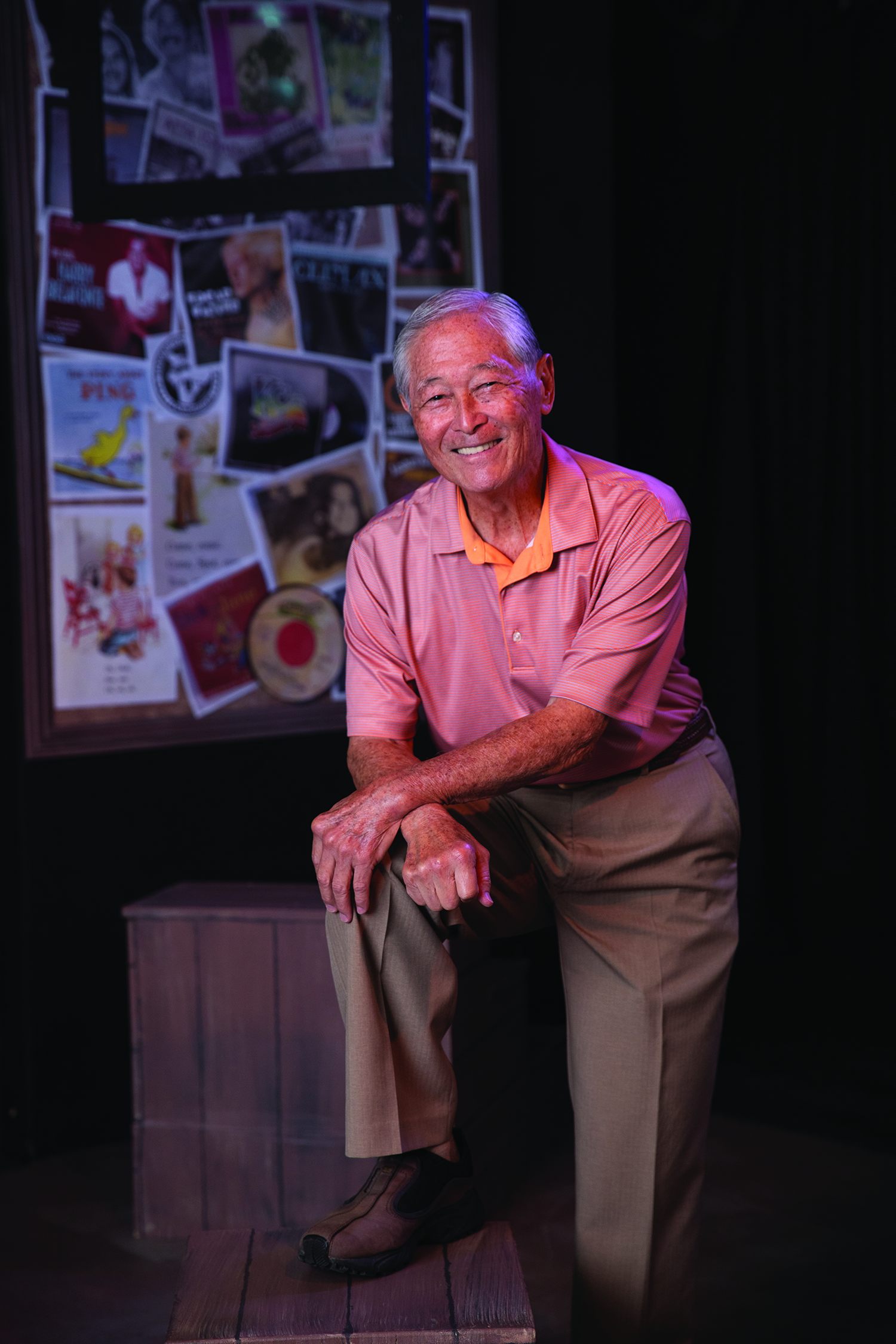
    As a pure Hawaiian, Henry has been frequently asked why he doesn’t do a Hawaiian album. “I wasn’t raised in the Hawaiian language as many Hawaiian artists have been since,” shares Henry. “There are so many great Hawaiian musicians who live and breathe the Hawaiian language, and do such an amazing job with the music and culture. So when I decided to do a Hawaiian album, I decided I was going to do it my way. The ‘Wild Hawaiian’ name came about during a rehearsal, as we were jamming hard. My drummer exclaimed, ‘That’s wild!’ The rest is history.”
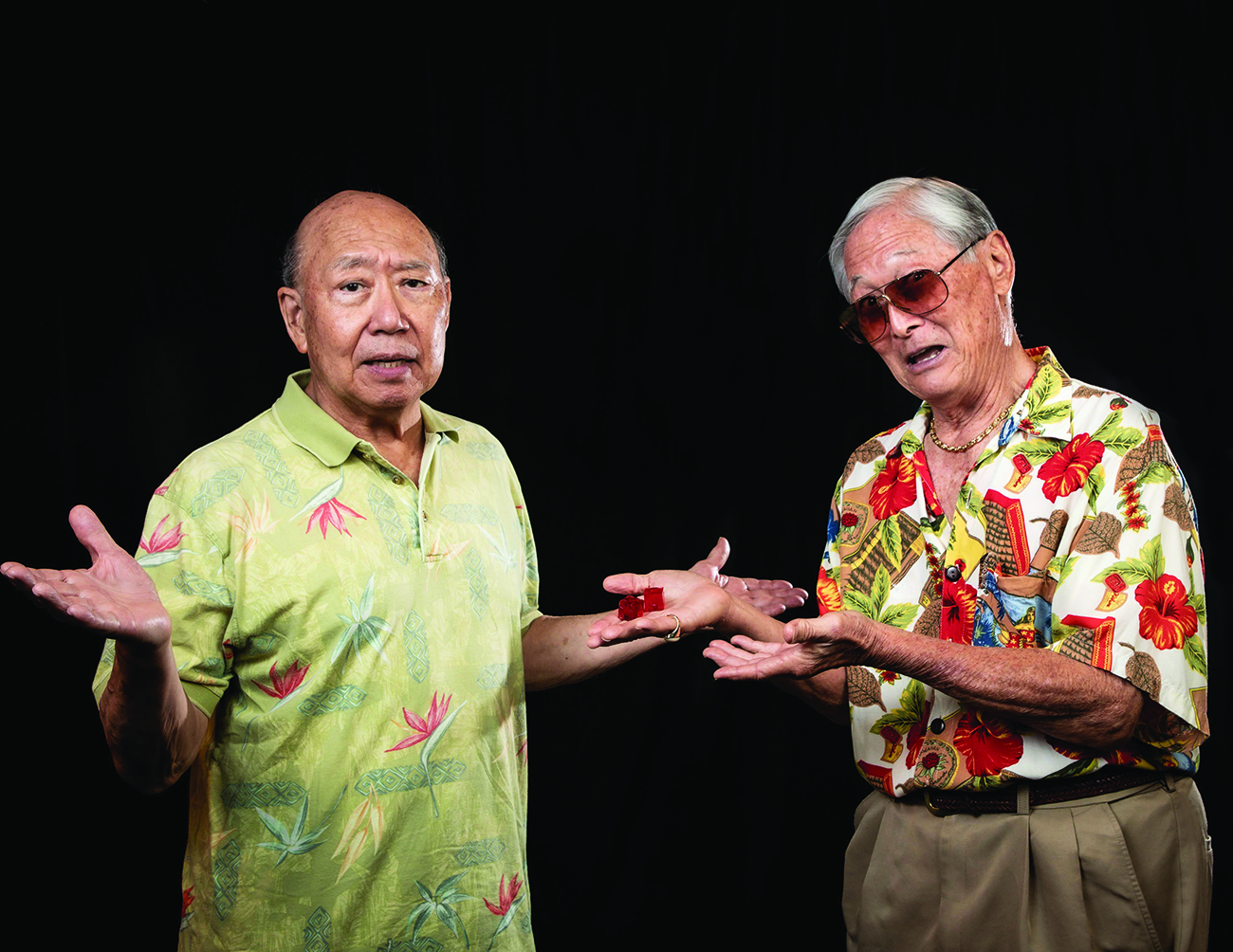
    Henry’s extraordinary prowess and versatility has guided generations of the impactful and courageous artists of Hawai‘i, including the late, great Willie K (Kahaiali‘i) of Maui and Tavana, the renowned one-man band from O‘ahu.

    “Henry Kapono has had a tremendous impact on me as a musician,” Tavana says. “His kindness and acceptance of me and many other musicians has inspired me to be a better player and human.”

    Henry is a hero, but also a comrade to many fantastic singer-songwriters.

    “Henry has influenced every contemporary Hawaiian musician/singer, either directly or indirectly,” says John Cruz, beloved Grammy Award-winning artist and former bandmate of Henry’s. “For my generation, his songs were part of the soundtrack of our lives. What makes him particularly special for me is he continues to create beautiful songs that resonate today!”

    “I appreciate them and love all of them,” says Henry. “I’m glad to be an inspiration and they are inspiring to me. They have a lot to give to music and they do with passion.”

    Paving a Road for Future Generations

    For a super star, his fans really appreciate Henry’s team attitude. The camaraderie and support of fellow creatives is something Henry is really proud of here in Hawai‘i. “There is no other place like this in the world.”

    Henry continues to create paths which ensure future artists have support along the way. In 2018, the Henry Kapono Foundation (HKF) was founded by Henry and his wife, Lezlee, as an opportunity to give back and perpetuate his lifelong passions across his “Home in the Islands.” Henry is dedicated to keeping Hawai‘i’s music and culture thriving by providing education and assistance to the music community. HKF understands the challenges of the working artist, and strives to foster and guide Hawai‘i musicians with business education, digital resources, grants, scholarships and financial aid opportunities.

    “The plan is to keep the music industry thriving here in Hawai’i by creating programs and resources to empower everybody,” says Henry.

    “There is not an artist in Hawaiian music who doesn’t have immense respect for Henry Kapono,” says Kimié Miner, a celebrated singer-songwriter and loving wahine in the next generation of leaders.

    As a native Hawaiian singer/songwriter/artist, she observes that “he demonstrates a high, yet humble standard for how to uphold our powerful, collective mele, while simultaneously upholding support and service to the community” through such programs as HKF.

    “Together with his wife, Lezlee Ka‘aihue, they champion the importance of staying connected to the origins of our culture, language and lineage through music” she continues. “Henry is synonymous with kindness; he is a one of a kind… and a true friend.”

    HKF shifted focus to musicians during the peak of the pandemic. HKF was able to gift $200,000 worth of Foodland cards to nearly 400 families of artists affected through HKF’s We Are Friends… COVID-19 Relief Program, in partnership with the Kawakami Family.

    Lezlee and he crafted this benevolent idea, feeling empathy for the community. “She does all of the bookings and had to wipe those calendars clear,” Henry says. “We got the $500 gifts cards out immediately, as everyone was in shock in the music industry. We wanted to help them eat, support their families; make positive moves forward.”

    HKF (www.henrykaponofoundation.org) continues to support the music community after the stages started reopening with We Are Friends 2.0 and other programs, grants and scholarships. It’s exciting to ponder the possibilities this foundation will have on future generations.

    During the COVID shutdown, Henry served up regular doses of personal aloha with over 200 YouTube episodes of “Henry’s Positive World.” He would share virtue cards with positive messages and sing a song related to each. “It reached so many globally, helping a lot through a tough time. People are still coming up to my wife and I expressing gratitude. It feels amazing to be there for others.”

    “I wouldn’t be able to do what I do without her,” says Henry. “I have a really good team that keeps me in touch and connected. Teamwork definitely makes the dreams work.”

    There’s No Place Like Home

    His grueling schedule kept him traveling for years, with six months of touring and two weeks home — repeat. While back in Hawai‘i on a break in 1977, he took a drive and soaked in an oceanside moment. He was overcome with the beauty of his home and felt calm for the first time in a while. He had an overwhelming sense to be here more. He thought, “What am I doing out there?! I’m coming home.”

    He let his management know that he was going to base himself in Hawai‘i and would hit the road as needed from here. Henry sought to craft an extraordinary life, helping the world truly understand the meaning of aloha and supporting the music of Hawai‘i for many generations. That was over four decades and it’s all going to plan.

    Coming back home and being in the spotlight here has always “been enough,” but Henry understands the plight of a local artist and those luminous dreams of stardom. “LA wasn’t for me.”
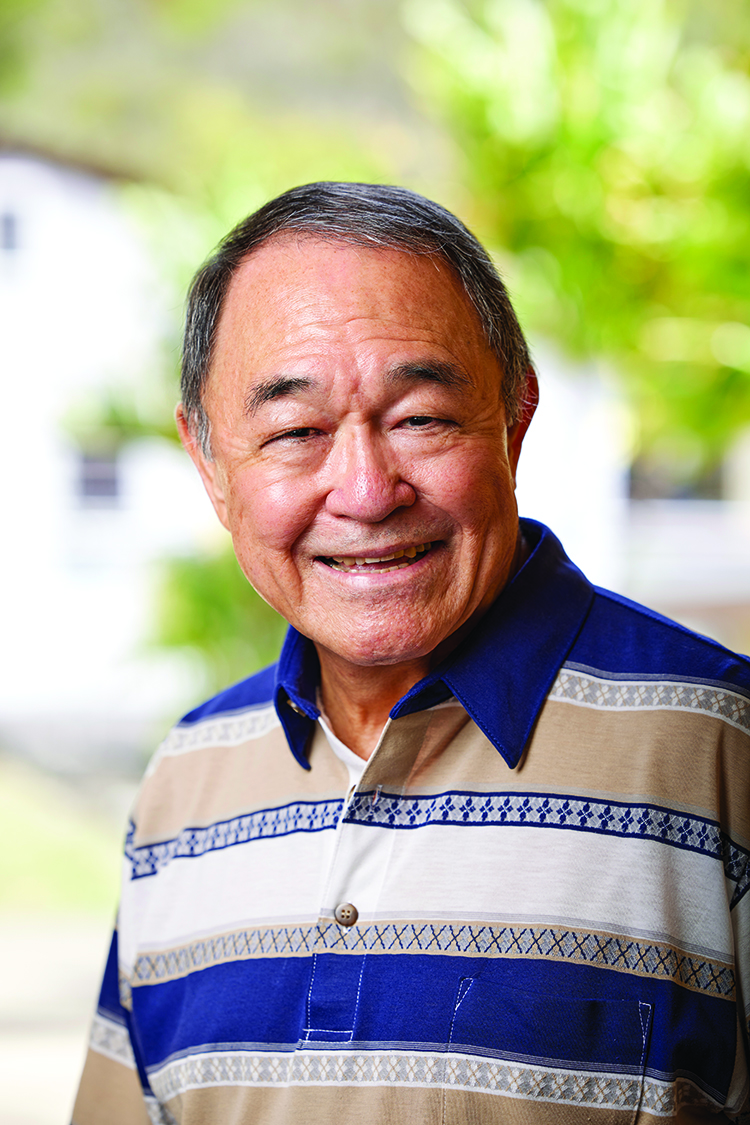
    “We all grew up with those dreams and an idea of what we want in this life,” says Henry. “My advice is to be grateful for what you have right now. Talent only takes you so far. Work hard and understand good things will come if you really put in 100 percent of your heart and soul. There’s no less than that. Anything less, you’re not ready.”

    While signed to Colombia Records, a manager shared this with him: “The music business is 80 percent business and 20 percent talent.” That was hard for him to swallow then. He soon realized business is the vehicle that helps you move forward so you can continue to stoke the fire.

    The award-winning compilation album “The Songs of C&K”(2018) features some of Hawai'i's most talented and successful young artists.
    The award-winning compilation album “The Songs of C&K”(2018) features some of Hawai’i’s most talented and successful young artists.

    When he met his second wife, Lezlee, those realizations resurfaced. He was thrilled she offered to be his management.

    “Behind every good man, there’s a great woman” and Henry realizes how blessed he was to meet his “White Rose,” as the anniversary song he wrote for her professes.

    “How hard could it be?” she said about taking on managing a musician. “About a month later, she realized she didn’t like the business,” Henry shares with giggle. “Luckily, she stayed with it and understood it, and now we are a great team. We are connected and we make things happen. We know what we want out of what we do, and it’s a great partnership. A great life!”
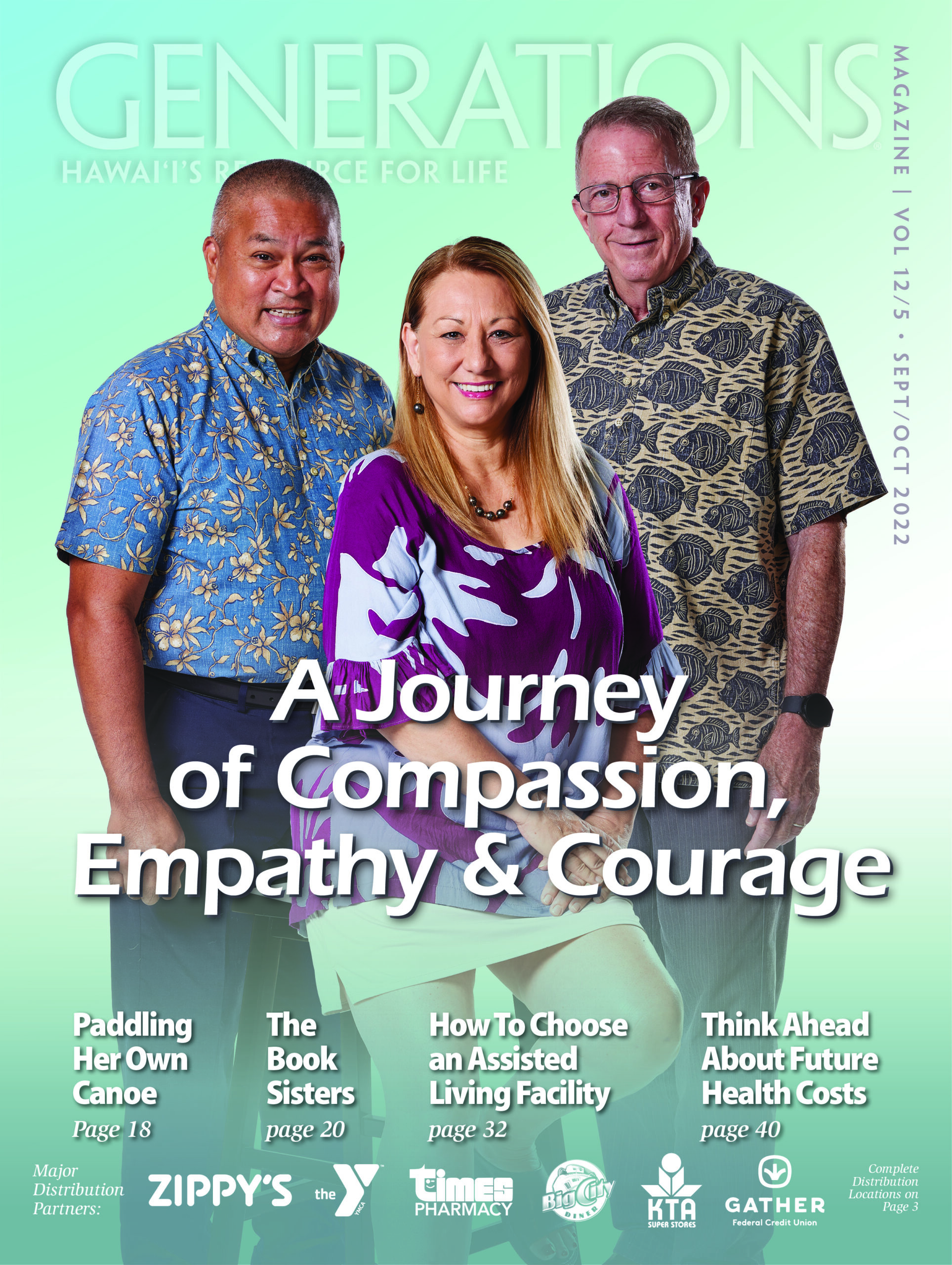
    He continues, “Our goal is to reach all levels… we are doing the best we can for not only us, but for everyone. We truly care about the music industry and the people in it. Our vision and goals  all focus to keep the music thriving.”

    The Home in the Islands: A Henry Kapono & Friends Concert of iconic and emerging artists last summer was a huge boost, especially after stages had been dark throughout the pandemic.

    “I think everyone was ready for something and we were ready to give it to them,” says Henry. “We highlighted musicians from the ’70s who mean a lot to Hawai‘i. Their music has transcended generations.”

    Henry enjoys making music with special friends at Island Sound Studios in Honolulu.
    Henry enjoys making music with special friends at Island Sound Studios in Honolulu.

    Kalapana, Robert Cazimero, Ledward Kaapana, Mākaha Sons and Jerry Santos were among the iconic stars featured. “It was a big treat for us that we put it together and for the artists,” says Henry. “It was so nice have them be recognized for who they are and what they have accomplished for the love of their islands.”

    His favorite part of the night was when “everyone was backstage having a good time and there was a whole concert before we had a chance to even get onstage… kanikapila style.”

    “No egos… It’s a beautiful thing. You don’t see much of this at big concerts. They were all happy to be together, sharing such positive energy.”

    Camaraderie is a main theme for Henry. “We all started as nobody and just trying to learn our talent or figure out if we had talents. We knew each other and hung out, but we didn’t realize at the time how far we’d come and that we’d still be sharing the stage today some 50 years later.”

    The gig he feels most at home is Duke’s on Sunday, a landmark gathering of Henry Kapono and friends, coming up on 30 years. “Thanks to founder Rob Thibaut (TS Restaurants) who took me to lunch to share his vision… to be a part of the Duke’s family,” Henry says. “He had a vision of me playing in Waikīkī with Diamond Head in the background and folks traveling from across the world to experience it.”

    Henry left for a tour after that lunch and seriously pondered what his vision was offering — a permanent place at home where he could be with fans regularly.

    “When I returned from that particular tour, I realized this is where I should be,” says Henry. “I gave it a chance and 29 years later, I’m still there every Sunday, enjoying every minute of it.”

    “Music really is the key to everything and the best way to communicate to the world powerfully.”

    Gratitude

    Henry, with two daughters from a previous marriage, is now back to raising teenagers with Lezlee. They have twins; a boy and a girl. “I’m so proud of all of my children. Raising kids is amazing… They’re fascinating. You learn a lot and grow up yourself again in some ways.”

    “My twins love me as a father. They don’t see a ‘big performer.’ The good part is I don’t push music onto them or push anything onto them,” says Henry. “We allow them to pursue and do what they want to do.”

    With guitars strewn about their Honolulu home, it was only a matter of time before one of them got bitten by the music bug.

    “Lately, they have been playing guitar in their room, I could hear them and was waiting for them to come out and express themselves,” says Henry with a chuckle. “No one has asked for a lesson yet.”

    He’s thrilled they’re ripping chords from his days, paying homage to music which will never go out of style, like Led Zeppelin and The Beatles, plus an array of new songs. “I’m really enjoying it and they just blow my mind.”

    Henry admits he is very competitive, but only with himself and doesn’t plan on getting out of the game.

    “I have a lot to be grateful for, including still being a part of the music industry” says Henry. “I always challenge myself. I’m my biggest competitor. I’m all about always trying to keep in touch with everything, with the industry and the musicians, and getting an understanding of how everything moves forward and understanding how I move forward and keep positive.”

    “Seeing how people react and respond to your music is really important,” says Henry. “You make that connection and people hold onto to you and you just give them the good stuff.”

    “I wrote ‘Sweet Life’ for my wife; it’s about being found by love after losing everything. But it really applies to life in general. Through all the bumps, twists and turns of living life, I realized that it was a test toward being a stronger person or giving up.”“Sweet Life:” a newly released single.
    “I wrote ‘Sweet Life’ for my wife; it’s about being found by love after losing everything. But it really applies to life in general. Through all the bumps, twists and turns of living life, I realized that it was a test toward being a stronger person or giving up.” “Sweet Life:” a newly released single.

    The Hoku awards (aka “Hawai‘i’s Grammys”) from recent years are quite meaningful. In 2021, he was named “Favorite Entertainer of the Year” and won Contemporary Album of the Year” at the ceremony. His anthology album was honored in 2022. “It feels good to still be so loved, and fun to be honored for being contemporary and for an anthology. I still got something.”

    The Rearview Mirror & Road Ahead

    Spending time with Henry, you would never guess he’s approaching 75. He’s sharp, funny and cool in conversation. His signature wavy mane is still sprinkled with sea salt, and good conversations, music and humor grace his days. He regularly exercises physically, mentally and spiritually to stay in the game of life. “I think it’s so important to exercise in all these ways.”

    In his home outside of Honolulu, he’s created an office space outdoors where he can hear the birds sing and finds this is the only way to work from home.

    “I just don’t believe in thinking of being old… It’s just a number.”

    He plans to be around to see the twins graduate college, hold his grandkids and be there for them in all ways. “I want to wake up every morning and feel good.”

    Henry’s words of wisdom to aspiring artists is the hope they believe and trust in themselves, but heed feedback. “Listening to criticism, taking it as a lesson, whether it’s good or bad, and not discouraging yourself with all the noise that surrounds you,” he says. “Believe in yourself and trust that you know what you do. Really be passionate about it and be grateful you have that opportunity to live in a musical world.”

    His father always told him to “be careful, but enjoy it,” when it came to any task or journey in life. As a young man, Henry didn’t fully understand. He does today.

    Henry has added to this wisdom with advice he shares with artists, including dropping the ego and “focusing energy on making a difference for others, your family and generations to come. That’s where joy comes from.”

    “My mom taught me to give selflessly, and by  giving without expecting anything back, eventually something comes back… maybe not in what you gave, but in other forms,” he fondly recalls. “I believe in that. Something we should all do. Give from your heart and let it be.”

    “I wrote the song ‘Sweet Life’ for my wife; it’s about being found by love after losing everything,” says Henry. “But it really applies to life in general. Through all the bumps, twists and turns of living life, I realized that it’s a test of either being a stronger person or giving up. A strong family, good friends and the opportunity to continue my musical passion while making people happy, is what I’m all about. I am grateful for it all. It’s a “Sweet Life.”


    HENRY KAPONO FOUNDATION (501(c) 3 nonprofit)
    To Support and Empower Hawai’i’s Music Industry to Thrive Through Programs, Grants, Education & Resources
    www.henrykaponofoundation.org
    www.henrykaponofoundation.org/donate

    [/et_pb_text][/et_pb_column][/et_pb_row][/et_pb_section]

    Many claim they are leaving a legacy, yet Henry Kapono Ka‘aihue lives his every day, instilling pure aloha into everything he does. In his alleged “Golden Years,” when most are retired or slowing down, this remarkable music man has no intention of doing any of that any time soon.

  • A Gift from the Heart

    A Gift from the Heart

    Blood cannot be produced in a lab or anywhere else. It only has one source — volunteer donors. In Hawai‘i alone, 200 donors are needed every single day, yet only 2 percent of Hawai‘i’s population are donors. You can help save lives by learning how easy it is to donate blood and host a blood drive.

    The Need Never Decreases

    The mission of Blood Bank of Hawaii (BBH) is to provide a safe and adequate blood supply for all the civilian hospitals throughout the state to meet patients’ needs.  Each and every day patients count on volunteer donors. One in seven people entering the hospital will need blood.

    BBH Donor Services Director Fred McFadden has been in the blood banking field for over 17 years, starting as an account manager.

    BBH is open daily, because 150 to 200 blood donors are needed every day. Because blood is perishable, says Fred, every donation contributes to our community’s ongoing needs. The need for donations never decreases; at certain times of the year, it actually increases.

    There are seasonal dips in donations, says Fred. “Roughly 12 to 13 percent of the blood we collect annually comes in from high school blood drives. Combined with colleges, that’s about 20 percent of the blood we collect every year. During the pandemic, these students were not on campus, where the drives are usually conducted. That is also why we see dips in donations during the summer months and during the holidays.”

    People are also distracted during the holiday season and often travel during the summer months, and not prioritizing blood donation.

    “This put a strain on the blood supply during those times,” says Fred. “That is why January has been designated as National Blood Donor Month — a time to recognize the importance of giving blood and honor the donors who make BBH’s life-saving mission possible.”

    Safety Factor

    The blood supply is the safest it’s ever been due to multiple layers of safety nets built into the process.

    “We do everything we can to keep both the donor and the recipient safe,” says Fred.

    BBH follows strict US Food and Drug Administration (FDA) and Association for the Advancement of Blood & Biotherapies (AABB) donation procedures. State-of-the-art blood bags are used for collections and adequate iron levels are verified through technology. BBH uses physical distancing protocols and requires that donors and staff wear masks.

    The eligibility requirements themselves help keep donors safe, including the donor history questionnaire, which is part of the screening process. But volunteer blood donation is key to keeping our blood supply safe, as there is no motivation to hide information. The questionnaire screens out people who may be in the higher risk category.

    Then, of course, all blood products go through extensive testing, including screening it for HIV and other diseases that can be transferred through transfusion, prior to it being distributed to hospital partners. Blood that is positive for any of these diseases is destroyed and by law, the blood donor is notified that there is something of concern that they should know about.

    Fear Factor

    A recent study by Ohio University psychologists has discovered a key reason that people are fearful about donating blood. It’s not the needles. It’s not the pain. It’s not even the sight of blood. It’s a fear of fainting.

    The reality of people fainting before a donation is less than 4 percent; less than 1 percent faint during or after a donation. Better public education could dispel these and other fears.

    “If, through education, we can show them what their donation actually does, that knowledge can override an aversion to needles, a fraction of a second of a pin prick and other fears potential donors might have,” says Fred.

    Although fainting rarely happens at blood donation, there are some preventative measures that ensure you will be in top condition to donate. Donors can best prepare by eating iron-rich foods, such as lean meat and dark-green vegetables. “Of course, this is important at all times for good health, but certainly in the weeks and days leading up to your appointment,” says Fred.

    Fred says, simple steps can lessen the chance of any type of negative reaction.

    “First, we require folks to have had a very good meal prior to donation,” says Fred. “That is key. We do not want someone to donate on an empty stomach. We  also want you to be fully hydrated. Drink 8 to 10 glasses of water before donating. And part of that is avoiding caffeine prior to your donation. Also, get a good night’s sleep the day before your appointment.”

    The human body circulates between six and 12 pints of blood, depending on body size. The standard 500ml donation (about one pint) removes a significant volume, so after donating, BBH recommends donors resting for about 15 minutes, and consuming a drink and snack before leaving. The meal and hydration are also important post-donation actions.

    Time Factor

    Another reason why people say they don’t donate is the time factor. But the entire process for a whole blood donation only takes about 1 hour. The actual collection of a typical donation takes only 5 to 8 minutes.

    And that is the reason BBH has convenient fixed sites in dense population areas as well as regularly scheduled blood mobile pop-ups in Windward, Waikele and other areas. “Part of the convenience is going to where people gather,” says Fred. “And what is more convenient than where they work?”

    A minimum number of donors is needed in order for business leaders to become BBH partners and host a drive. BBH works with a “champion” on-site — anyone at any level of an organization with a heart to serve their community and save lives through blood donation — who forms committees to gather eligible participants, and get them to sign up and make an appointment. BBH has an online appointment calendar donors can use or the committee can make appointments for their volunteers.

    “So instead of coming to the blood bank, if you have a large enough group and a committed committee of people to make it a success, we can work with them and host a drive on site,” says Fred.

    Pre-pandemic, a larger percent came in through these mobile blood drives. During the pandemic, a greater number of people come to the centers or pop-up locations. “But we still need those mobile blood drives because that is where the vast majority of new blood donors come from,” says Fred.

    Yet even beyond the fear and time factors, the No. 1 reason people don’t donate is that they’ve never been asked. Mentioning your donation lifestyle to a friend or family member and inviting them to join in the life-saving mission is imperative to keeping a healthy and robust blood supply.

    Donor Benefits

    In addition to knowing you have saved lives with your donation, there are additional benefits. The donor starts by filling out a questionnaire, then a phlebotomist reviews the responses and conducts a mini-physical, which includes checking blood pressure, temperature and hemoglobin levels to ensure donors are in good health and can safely donate blood.

    For the safety of the bank, post donation reports describe the condition of the blood, determining whether it is usable by the bank. For example, one of the main causes of deferral is low hemoglobin.

    Your red blood cells contain hemoglobin, a molecule comprised of protein and iron, which carries oxygen to the body tissue and gives blood its red color. Giving a pint of blood requires starting at a high-normal hemoglobin level so that your blood count will remain in the normal range after you have donated.

    The most frequent cause of low hemoglobin is an iron-poor diet maintained over an extended period of time. Low hemoglobin doesn’t necessarily mean you’re sick
    or anemic, but in rare cases where hemoglobin count is abnormally low, donors are advised to consult their doctor.

    You can help build your hemoglobin level by eating a consistent diet of foods that contain iron. Download BBH’s brochure (www.bbh.org/wp-content/uploads/2020/04/AGuideToHemoglobin_112016.pdf) to find out about foods that will keep your blood in donor-ready condition.

    Who Needs Blood, How Much?

    “So many of the things in our hospitals that we think of as routine now — from baby’s being born through C-section, to organ transplants, colonoscopies and heart surgery — all rely on blood being available at the time the procedure is done,” says Fred. “Many physicians will not start a procedure unless blood is ready and waiting in the operating room just in case it’s needed.”

    “I think we take it for granted because blood banks do their jobs to make sure an adequate supply is available, but of course, we could not do it without blood donors and the organizations that hold blood drives,” says Fred.

    A whole blood donation is about 1 pint or 1 pound of blood. Your one pint donation can save three lives. If whole blood is broken down into three components — red blood cells, plasma and platelets — each component could go to three different individuals.

    You can spare 1 pint easily. Your body has an amazing capacity to replace all the cells and fluids that have been lost. Your body will replace the blood volume (plasma) within 48 hours. It will take four to eight weeks for your body to completely replace the red blood cells you donated

    Duration, Types & Frequency of Donations

    “Ideally, donors give the blood products needed the most based on their blood type, body type, hospital need and eligibility,” says Fred.

    Donors can give whole blood, which contains red blood cells, plasma and platelets. Processing after the donation extracts specific blood components. Whole blood can be donated once every 56 days (about two months). Platelets can be donated once every two weeks (on O‘ahu, only at the Young Street Center).

    During automated collections called MAX donations, specific blood components are collected via a machine with a built-in centrifuge and remaining components are returned back to the donor (similar to dialysis). These donors have some additional height and weight requirements, and the process takes a bit longer.

    With the MAX program, you are giving specific components.

    “With whole blood, we are taking almost a pint of what flows out of your body,” says Fred. “During a MAX donation, we are taking only certain components. If we are just taking 2 units of red cells, then instead of being eligible to donate whole blood in 56 days, it extends that to 112 days before you can donate again. For example,
    O-minus — the universal donor — is such a small percentage of the population and even a smaller percentage of them donate.

    The ABCs & Os of Blood Typing

    Blood is a living tissue that circulates through arteries and veins, delivering oxygen to every part of the body. Your blood type is inherited. Blood typing is universal. Donating blood is one of the ways people find out their blood type. Blood typing is always conducted before a patient receives a blood infusion.

    Although all blood is made of the same basic elements, not all blood is alike. There are four major human blood groups A, B, AB and O, which are determined by the presence or absence of two chemical markers, or antigens “A” and “B” on the surface of red blood cells. This classification of human blood types is known as the ABO Blood Group System.

    There is another surface antigen called D or Rh, the presence or absence of which makes a blood group positive (+) or negative (–). These are known as sub-types or sub-groups.

     About 6 percent of the population on the mainland has A¯ type blood. In Hawai‘i, Rh-negative blood types are half as common, with A¯ making up only 2.6 percent of Hawai‘i’s donor population.

     A+ is the second most common blood type both in Hawai‘i and the mainland.

     This type makes up only 0.8 percent of Hawaii’s donor population.

     This blood type is much more common among Asian populations. So it makes sense it’s prevalent here. Even here with lots of B+ donors, sudden high usage of B+ results in unexpected shortages.

     As a universal donor, anyone can receive your blood. In an emergency when there’s no time to match the blood type, you save the day. On the mainland, 7 to 8 percent of the population has O¯ blood; in Hawai‘i, only 3 percent. As the universal red blood cell donor, you can help everyone, but only O¯ donors can help you. Which is also why those with O¯ blood types are always needed! Also, your red blood cells are safest for newborn infants with under-developed immune systems.

     This is the most common blood type in Hawai‘i and is always in high demand. Because your red cells can be given to anyone with a positive blood type, your red cells are more impactful than your platelets or plasma. For O+donors, the need for your blood changes with patients’ needs. Depending on the day you come in, you may be asked to donate platelets and/or plasma. You want as many O+ donors also donating so there is blood on the shelves should you need it. As an O+donor, you can only receive O type blood.

     In Hawai‘i, Rh-negative blood types are half as common. AB¯ makes up only 0.4 percent of our donor population.

     In Hawai‘i, we are lucky to have a higher percentage of AB+ donors. Although it may be small in percentage, it is mighty for patients with uncontrolled bleeding, liver disease and trauma. As the universal plasma donor, your plasma can be given to anyone regardless of their blood type.

    Hawai‘i is also known for its rare blood types, in particular for Jk3¯, due to our unique population mix. Jk3¯ blood is found more in Polynesians, East Asians and Southeast Asians than in any other ethnic group in the world. Hawai‘i’s diverse racial population includes about 10,000 who carry this rare blood type, but only 110 have been identified by BBH. Of these, 18 actively donate.

    “So there is a real need for an ethnically diverse blood donor base.” says Fred. “Chronically transfused — patients with Thalassemia or sickle cell anemia, for example — will develop antibodies to the antigens on blood cells. So it’s important that we try to find matches that are as close to them as possible. Sometimes that is found within the same ethnicity — but not always. We don’t see all of our ethnic groups equally committed and involved in donating blood.”

    If you are wondering why you should donate blood if there are not many people with your blood type, remember, it only takes one person in need with your blood type to make it the most important. Lots of people with your blood type means your blood type is the most needed. All donations are welcome.

    Donor Superstars

    There is no age limit for donors. “In fact, our most frequent donors are seniors,” says Fred.

    John Flanagan of Kane‘ohe, age 90 on his next birthday, is a retired Kapi‘olani Community College professor. He has made 436 donations, potentially saving over 1,300 lives.

    He first began donating when he was in the military in his 20s. “In American Samoa, they had no way of storing blood, so when they needed blood, they had to get a donor immediately and I would always answer the call,” says John.

    His own firsthand experience helped shape a lifetime of giving. When John was 8 years old, was hit by a car and “badly damaged.” His uncle, who was the same blood type, was patched directly to John, saving his life.

    When he and his wife moved to Hawai‘i, he donated his O+ blood regularly. Soon he started donating platelets as a MAX donor at the Young Street facility. One particular phlebotomist used flattery to ensure his continued donations.

    “Oh, you have very nice veins,” she said. John laughed at the recollection. Then she proceeded to explain the MAX equipment and process “in a very thorough and knowledgeable way.”

    “Everybody was so happy that I was there and treated me so well that I just kept doing it.” Every time he hit a donation benchmark, 100 or 200 donations, “they
    would make a big deal out of it,” John recalls. “It is a rewarding experience.”

    Pauline Mitchell, turning 80 on her next birthday, lives in the Salt Lake area. One of BBH’s top female donors, she has given her A+ blood 305 times, potentially saving 915 lives. She had been donating sporadically for a long time, then regularly for about 35 years, beginning when her father was badly injured.

    “Thankfully, there was blood when my father needed it.”

    Later, one of her classmates had heart surgery when Pauline was giving whole blood. A coworker’s baby needed a transfusion in-utero when she was giving platelets. “I like to think that my donations helped,” says Pauline.

    “Someone saved my father’s life. Someone saved my classmate’s life. Someone saved my coworker’s baby. I am grateful to them, and I know I saved lives, as well. Donating blood is a way to thank them — by giving blood to save somebody else. It takes an hour out of my life about four to six times a year. How hard is that?”

    Her son has just passed the 106-unit mark at age 37. “Between us, we have given about 11 to 12 gallons of blood. “It’s become a way of life.”

    Barry Suda, 77, of Kuliouou, a Vietnam combat veteran, has donated blood since he returned from the war in the early ’70s. He began donating blood when he got a job near the blood bank when it was located at The Queen’s Hospital and eventually moved to Dillingham, then the Young Street facility. In the early days, he says, Primo Brewing would donate to the blood bank, providing a bottle of beer to each donor.

    He has lost track, he says, but has given his O+ whole blood over 100 times, potentially saving over 300 lives. As the most common blood type in Hawai‘i, O+ is  always in high demand.

    “Blood can only come from another person,” says Barry. “You can’t make it in a lab. I’m thankful that I can donate. I just decided it’s the right thing to do. It doesn’t hurt and it doesn’t take long to donate. You feel good about it!”

    Blood Drives: How, Where & When?

    Whether you want to compete with these superstars, or just make a first-time donation to see for yourself how easy it is, go to “Become a Donor”  (bbh.org/become-donor) and scroll down the list of topics that will address most eligibility questions. To calm your qualms about donating, view “What is it Like to Give Blood?” (youtu.be/tudK55JlrfA). Then make an appointment by calling 808-848-4770.

    Blood is collected at fixed sites, along with bloodmobiles that travel to O‘ahu’s neighborhoods providing convenience for donors (bbh.org/about/location).

    To find other blood drives being held in November and December, go to bbh.org/#blooddrive and make an appointment.

    In addition to fixed sites and pop-up locations, BBH account managers work in the community organizing blood drives with businesses, places of worship, service clubs, and high schools and universities to create Community Lifesaver Clubs. There is a real need for these sponsored mobile drives. To start a blood drive, go to bbh.org/get-involved.

    Time to Roll Up Your Sleeves!

    Blood is needed 24/7/365. You just never know who will need it or when, but the need never ends. With only 2 percent of the population giving blood to save the lives of everybody else, even one donation can make a difference.

    “It’s the blood on the shelf that saves lives now,” says Fred. “You can pick any tragedy in our nation’s history and you’ll see people in those or nearby communities line up to donate blood. The thing to remember is blood has an expiration date and it is constantly in need — not only in times of tragedy. We also need you for the organ transplants, C-sections, trauma cases, heart surgeries, cancer patients and the chronically transfused that happen every day.”

    For many, the most important blood type is the one that’s needed when your loved one ends up at the hospital. So we all have a part to play. Not everyone is eligible, but even if you can’t donate, encourage someone else. Share this article.


    BLOOD BANK OF HAWAII (501(c) 3 nonprofit)
    1907 Young Street, Honolulu, HI 96826
    808-848-4770 | bbh.org
    Facebook: facebook.com/bloodbankhawaii
    Twitter: @bloodbankhawaii
    Instagram: bloodbankhawaii

    The mission of Blood Bank of Hawaii is to provide a safe and adequate blood supply for all the civilian hospitals throughout the state to meet patients’ needs. Each and every day patients count on volunteer donors. One in seven people entering the hospital will need blood. Blood cannot be produced in a lab or…

  • A Journey of Compassion, Empathy & Courage

    A Journey of Compassion, Empathy & Courage

    A common thread runs through a tapestry of three stories. Having experienced the caregiving role themselves, Savina Makalena, Gary Simon and Gary Powell all saw the need to support individual caregivers and the various entities involved in providing that support. And seeing that need, they all decided to help fulfill it, each in their own way.

    Savina Makalena nurtured and protected her mother since childhood by helping her learn English and assisting with the many formal and informal interactions of daily life. So, when her mom began showing signs of dementia, Savy naturally stepped into the role of primary caregiver. Gary Simon and wife Akemi were just about to start their own family when his mother-in-law’s almost imperceptible transition into dementia meant learning what to expect, and how to achieve a workable living and caregiving environment. Gary Powell was thrust into his caregiving role helping to tend to his grandfather, who suffered a series of strokes when Gary was a teenager.

    Chances are high that we all know someone in our circle of acquaintances, friends and family who have had a similar  experience: the sibling who is empathetic, nurturing and blessed with patience who becomes the natural choice to be a parent’s caregiver — a friend who shares with you their struggle to prepare for their caregiving role as a loved one’s health deteriorates. And then there are those who suddenly find themselves caring for a family member following a serious medical event like a heart attack or stroke.

    You may even be a family caregiver yourself, but feel unsure whether or not you have the compassion, empathy and  courage to continue on what may be a very difficult journey.

    Each of the people featured stresses that emotional wellness is a key coping strategy. For Gary Simon, that was achieved by accepting what couldn’t be changed and seeing caregiving as a final gift for his mother-in-law in acknowledgement of the gift she and her husband gave him — his beloved wife, Akemi. Gary Powell’s remembrance of the look in his grandfather’s eyes the first time he had to be helped with personal hygiene blossomed into the awareness that dignifying a care recipient parent by not treating them as a child helps maintain emotional balance. For Savy Makalena, the key to emotional wellness is being able to freely share what you’re going through with compassionate others who have had similar experiences and aren’t going to judge you.

    COMPONENTS OF CAREGIVING

    Gary Powell spent his childhood surrounded by his extended family at Sunset Beach on the North Shore of O‘ahu, where he was born.

    “My parents, my aunt, my grandparents — everyone lived here. When I was about 13, my grandfather had a pretty severe stroke. When he came home from hospital, he was having trouble walking. I was given the task of taking him down to the beach, which was close to their house, and walking in the sand to try to strengthen his legs, and get him more mobile and safer on his feet. So, I would come home from school, take Grandpa walking on the beach, bring Grandpa back; do anything my grandparents needed doing at their house. Sometimes I would eat with them; sometimes not, but after everyone was settled for the rest of the day, I would go home and do my 13-year-old things.

    “I did this for quite a long time, but Grandpa did reach a point where walking was not something he could do. One day when I was at my aunt’s house, she said, ‘Your grandpa needs your help cleaning up in his bathroom.’ I was not prepared for that. However, I did it. It was OK. I helped him get a bath, but what I remember most is the expression in his eyes. It wasn’t embarrassment as much as it was ‘my  grandson will never see me the same.’ That look in his eyes has kind of haunted me. Through the rest of my life, I’ve been involved in caregiving in some aspect in literally every position; every life incident that I’ve ever been in. There has always been a component of caregiving, either for an older individual or an individual with physical or mental disabilities.”

    The Caregiver Foundation

    Although he didn’t equate what he was doing with “caregiving” at the time, the jigsaw puzzle pieces of Gary’s many life experiences eventually assembled themselves into a clear vision of how he could use his professional skills to support family caregivers and their care recipients.

    He established The Caregiver Foundation (TCF) in 2008, on a mission to provide practical and emotional support to seniors, disabled adults, and their caregivers. The services that TCF provides “preserve dignity, enable independence, and promote acceptance in all facets of life” and are designed to help caregivers, adults planning for or seeking caregiving, and the families of care recipients.

    The foundation has clients on O‘ahu, Kaua‘i, Maui, Moloka‘i and the Big Island.

    “We do not give legal advice. We do not give financial advice,” Gary explains. “Although we have the capacities in both of those areas, that’s not what we do. We partner with professionals in the community. We’re able to bridge between the individual and their attorney or their CPA to make sure that the client is really understanding what they’re doing.” TCF also partners with other caregiving organizations.

    ‘Let’s Help It Roll’

    Gary was part of the group that established the Hawai‘i Family Caregivers Coalition (HFCC), which started when Hawai‘i participated in a project designed to create coalitions at the state and local level. Funding for the 2004 project was provided by the US Administration on Aging and it was conducted by the AARP Foundation. The coalition was created following a two-day training period, in which 27 organizations participated. Then followed a couple of years when, Gary says, the coalition was “casting about for exactly what do we do and how do we do it. Participating in the creation of the HFCC  broadened my understanding of what other organizations were already doing.”

    The big takeaway for Gary was that “we’re all trying to accomplish the same thing.” When he later founded TCF, Gary saw the best way to help clients was to partner with existing organizations. “If we find an organization that has the capacity to do something for our client, we’re going to try and tie into that. It saves the client money and it helps another organization fulfill its purpose. We don’t want to reinvent the wheel. If it’s rolling, let’s help it roll.” You don’t have to be a fee-for-service client to access the foundation’s educational resources, which also make full use of those partnerships.

    On the third Tuesday evening of every month, TCF hosts free online webinars as a service to the community. The June  webinar featured Catholic Charities Hawaii, which is celebrating its 75th anniversary this year. The “Learn More” webpage on TCF’s website provides links to information about topics such as aging, caregiving and how to finance care costs.

    “Right now, we have 71 different workshops available to the community. Those are never charged for. We’re working on turning them into a Virtual College of Caregiving, but they’re also standalones on a wide, wide range of topics. We’re happy to send that list to anybody who wants to look at it.”

    Meeting Practical Needs

    For its fee-paying clients, TCF focuses on two major areas. “When we started the first caregiver support group, I noticed right away that the questions people had were more into my business background than into my caregiving background. The two areas they were not prepared for were the legal aspects and the other was their emotional health in caregiving. The practical areas are so essential and so neglected that caregivers who have waited too long end up having to go to court to address them, to get a legal rendering by a judge, because the individual receiving care is now incapacitated and cannot sign a power of attorney [POA], cannot sign anything, legally.”

    Client services include, for example, daily money management, guardianship, trusteeship and power of attorney. Gary acts as the agent for medical POAs, sometimes having to make very difficult decisions regarding end-of-life issues.

    He explains that “You have to have been able to communicate so you know what they would want. If that wasn’t possible, then you have to make decisions based on the best information you can find to determine what they would have decided. If nobody knows, then you’re doing what’s called ‘substituted judgment’ and you’re doing things in that person’s best interest.”

    A Better Perspective

    Gary addresses caregivers’ emotional health by suggesting they adopt a change in perspective. “When we’re caregivers for  seniors, we’re in the process of saying goodbye to that person. They’re not going to get better. You can’t cure aging. If we understand that, the work is still going to be same but it’s a way of saying goodbye. I have seen that perspective change make a huge difference in the stress level of family caregivers. It makes it emotionally much easier.”

    He is also adamant that family caregivers shouldn’t approach their role as if they’ve become their parent’s parent. “No you have not! You’ve become their caregiver, yes, you may have become their bookkeeper, you may have become their cook, their housecleaner and everything else, but never their parent. Even if they cannot understand you, they don’t know you and everything is absolutely nuts — you are still the child and they are the parent. Somewhere back in that damaged brain there’s a realization of what’s happening. If you make it where a person feels they have lost their position in your life, that’s a pretty painful path for them.” That is the pain he saw in his grandfather’s eyes all those years ago.

    THE ROCKY ROAD OF CAREGIVING 

    Gary Simon became closely acquainted with how courageous caregivers are when he was the executive director of St. Francis Hospice. He speaks of seeing “the sacrifices they made to give the best to their loved ones, to give their care recipients a last gift. And I’ve also seen the ugly side, where caregivers just didn’t have the resources to support their care recipient. They’ve said, ‘OK, I’ve got to choose between family and food, and being a caregiver.’ I saw that struggle, where there are multiple demands upon a caregiver.” A combination of his professional and personal experiences led to a lifetime of participating at a board level in Hawai‘i’s network of caregiving support agencies advocating for better resources for caregivers.

    The Long, Rough Patch

    Gary and his wife, Akemi, were married in 1993 and built a house on Akemi’s mother’s property, ready to start married life and raise a family. Within their first year there, however, they began to see that all was not right with beloved Okaasan.

    “She was a terrific cook — ‘ono, ‘ono food. But her dishes began to taste odd, like cardboard and paper.” Repeating questions, erratic sleeping and eating, and forgetfulness surfaced as other telltale signs of the onset of dementia.

    “There were many things and they were beginning to become more frequent. The big one was constantly forgetting her purse somewhere. Once okay, twice okay, the third time, enough! It precipitated my wife being forced into retirement. I use that word ‘forced’ because if she hadn’t, the situation would have gone south really fast. My mother-in-law had become a mentally vulnerable adult.”

    Step by step, the young couple transitioned into her house in order to provide round-the-clock watchfulness and care.

    Speaking of his personal experiences at a caregivers symposium put on by the Alzheimer’s Association in June, Gary shared that “The mileage can be rough. Our mileage was rough, and it was a long road — 26 years. But the journey was worth it for what it did for me — to see how I want to be treated; therefore, how I should treat others. Wisdom, patience, tolerance — don’t judge. You don’t know what people are carrying. Do you go to Safeway and notice people just don’t look happy? Maybe they’re caregivers, too. They may be going through that long, rough patch.”

    Shikata Ga Nai

    Gary also shared how the deeply cultural Japanese phrase “shikata ga nai” (“it can’t be helped” or “nothing you can do about it”) helped him through the rough patches.

    “For many years, I used to get upset, perturbed or resentful about the way life was turning out for all of us, especially my mother-in-law.” Some of her repetitive questions, such as, “When are you leaving?” would take on a life of their own. “I was thinking, ‘Mom, you’re ungrateful. I’m here helping you!’” It took him a lot of time to learn that he was making a problem out of something that was just a result of her illness. “That’s not the her that she was.” Shikata ga nai. Gary sees the rough patches as “part of making us better humans. The journey is rough, the mileage is rough, but in the end, it makes us all better.”

    “Being a caregiver for my mother-in-law was one of the ways I could honor my wife and both her parents. Her father had passed away before we married. This is kind of flippant, but they did right by me. They gave me Akemi and I wanted to do all I could by giving her mother good love.”

    Gary and Akemi’s beloved Okaasan passed away peacefully in the home they all shared in 2019.

    Advocating for Kūpuna

    Accepting the inevitable effects of a loved one’s illness, however, did not mean that Gary was willing to accept that difficulties arising from public policy — or a lack of it — could not be remedied. Along with the advocacy he was able to incorporate into his 30-year career with St. Francis Healthcare System, Gary contributed his time and skills to the advocacy efforts of many task forces and nonprofit groups. He is the past president of the Hawai‘i Family Caregiver Coalition, the
    current AARP Hawai‘i volunteer state president, and was a member of the Statewide Task Force on Alzheimer’s Disease and Related Dementias. His term as member and chair of the State of Hawai‘i Policy Advisory Board for Elder Affairs (PABEA) ended in June. Gary is also a member of the boards of The Arc in Hawaii, Kokua Council and Palolo Chinese Home.

    Thanks to the efforts of several advocacy groups, undertaken at both the legislative and departmental level, in 2017, a program aimed at keeping caregivers in the workforce was signed into law. “It was meant for people like my wife — for people to maintain employment so that they don’t compromise their day-to-day income or their retirement benefits,” Gary explains.

    Enabling caregivers to remain in the workforce ensures that their work skills and experience are still available to benefit the community as a whole, Gary adds.

    A Coalition of Care

    Each year, a joint report on aging and disability issues is published by the Hawai‘i Family Caregiver Coalition (HFCC). The report is intended as a guide for legislators, organizations and citizens, and it calls attention to priority issues. It is a joint project of the HFCC, the Policy Advisory Board for Elder Affairs, the Executive Office on Aging, the Hawai‘i Pacific Gerontological Society, the Maui County Office on Aging and St. Francis Healthcare System of Hawaii. Gary describes his various roles with most of those organizations as “having my feet in multiple pools of water.”

    He also explains that it is not difficult to find enthusiastic board members for the HFCC, of which he was president for seven  years until 2021. “We’re fortunate to have both providers in there, and people who are experienced in advocacy and program development. The current president, Kathy Wyatt, operates adult day care centers. We’ve always had a seat at the table for Maui County Office on Aging. The board covers the breadth of government, private and nonprofit.”

    Outreach and Education

    Gary became volunteer state president for AARP Hawai‘i in 2019, just before he retired from St. Francis Healthcare. He sees outreach and education as an important part of that role. In June, he moderated four sessions about disaster preparedness for AARP members and made sure to include information specific to caregivers.

    “The designated shelters in Hawai‘i are not caregiver/care-recipient friendly. In all likelihood, if there’s a disaster, you’re going to have to shelter at home with your care recipient. What if your loved one is on an oxygen concentrator? There are ways out, like getting a generator, but on the whole, education for caregivers about disaster preparedness is what we need to think about.”

    The AARP website has links to the many local and national resources available for caregivers. As the website says, “Caregiving may be one of the most important and challenging roles you’ll ever take on. No matter where you are in your caregiving journey — starting to plan; taking care of a family member in your home, in a facility, or from a distance; or managing end-of-life caregiving responsibilities — having resources at your fingertips will make the process easier.”

    BORN INTO CAREGIVING

    Savina (Savy) Makalena began caring for her mother as a small child.

    “I was the one who had to take care of her. She grew up very sheltered. Even as a young child, I was her caretaker and her protector. She was from Japan, so she didn’t speak English well, or read or write it. So I taught her what I learned in school. But she still wasn’t quite very good at it. I had to translate everything. I translated recipes. I read magazines and newspapers to her.

    “Later, I became a mother and then a grandmother. I ended up going full circle, taking care of my mother again. Both my father and mother needed my care. I took care of my father for the last seven years, until he passed. Now my mother is in her final stages of dementia and in hospice care. I also help care for my mother-in-law. She’s actually very good on her own and lives with us. And now the love of my life is managing a rare blood cancer.”

    Keeper of the Lore

    Born and raised in Hawai‘i, Savy cherishes how she grew up in a community.

    “If I misbehaved, a slippah could come flying out of any direction from any aunty. They would correct me. I also grew up with the understanding that there was always one person who was selected to receive the honorific position to be the caregiver of the kupuna. It became an honor because the lore then was passed to you if you were the one selected. The entire family rallied behind that person to make sure they were given every support they needed in order to receive the lore and care for the kupuna.”

    Although she is keenly aware that society has changed, Savy is adamant: “We still need to recognize that one person ends up becoming the one to care for that kupuna. So as a society, as a community, as a family, we have to support that person in some way or another.”

    A Nonprofit is Born

    Coping with the day-to-day tasks needed to care for their loved one often leaves the caregiver feeling exhausted, isolated and depressed. Having experienced all that herself, Savy decided to find a way to help caregivers overcome these problems.

    “I realized how difficult it is to be a caregiver and to get resources and to get support, so I decided to start a nonprofit and brought in a few of my acquaintances — my business partner friends—who were going through the same thing. We started Gimme a Break. We decided that we were going to provide resources and support, and some sort of respite for caregivers when we could.” Their aim is to restore the joy of caregiving.

    The mission of Gimme a Break, a nonprofit, is “to care for caregivers by giving an emotional and physical break as well as resources for continued well-being.” Its advisory board members range in age from their 30s to their 60s — all have experience as caregivers. Gimme a Break had barely started when the pandemic hit. But in 2021, it began a physical presence at ‘Ohana Hale Marketplace. This year, it moved to Windward Mall.

    “We’re now discovering a whole new community on the Kane‘ohe side. There are a lot of caregivers who normally wouldn’t come into town, but we’re now able to reach them. We have people walk in all the time, every day. We’re there Tuesdays through Saturdays. They come in and we sit down with them. Lots of tears. A lot of hugs. But also, a lot of help and a lot of support.”

    The resource center has a supply of community partners’ flyers and rack cards, and Gimme a Break holds regular mini resource fairs so that caregivers can learn directly from those partners.

    Help Accessing Resources

    Savy’s personal caregiving experience with the difficulty of accessing resources is one of the driving forces of Gimme a Break’s mission.

    “I called so many places and no one answered me back,” she says. “No caregiver has time for that. No one does. Now I have people who will answer me back and we have resources that we can connect people to. That’s something big. We also have a community of support and we’ve seen the difference that makes to caregivers as we’ve grown. We see it in our caregivers when they come in with their shoulders down and they leave with their shoulders high again, with smiles on their faces and gratitude in their hearts.”

    Face-to-face interaction was impossible when the pandemic hit, so “in that time, we were working online on social media, mostly Facebook. We’re now on every platform for every age group: Facebook, Instagram, LinkedIn and Tik-Tok —  anywhere that we can reach caregivers.”

    During National Family Caregivers Month in November, Gimme a Break will hold a Caregiver of the Year contest on  Facebook to create awareness of of caregivers’ stories. Then, on Dec. 3 at the Elks Lodge in Waikīkī, it will hold its Caregiver of the Year Awards Gala to recognize all caregivers and the Caregiver of the Year.

    Advocacy and Education

    Savy is the vice president of the Hawai‘i Family Caregiver Coalition, seeing it as a way to advocate for caregivers and get very involved with what’s going on in the field of caregiving. Although advocacy is not the focus of Gimme a Break, she explains, “I personally focus on advocacy because it’s necessary and it goes hand-in-hand with our passion for what we do — passion for the mission of supporting caregivers.” Part of that mission is education, especially in terms of helping people anticipate what they will encounter on their caregiving journey.

    Gimme a Break offers a series of support sessions that cover the steps that you need to take and the things you need to have in order.

    “We have resources that help them discuss that. We do it with no agenda. It’s a user-friendly environment for a caregiver. We’re here to provide them with knowledge to help them bring back the joy of caregiving. We’ll do that through resources. We’ll do that through support. We’ll do that through community.”


    All three of our featured caregivers use their particular skill set and personal experience regarding what was difficult in their caregiving journey to ease the way for others.

    Gary Powell’s financial and legal skills enable him to run a nonprofit foundation that shoulders the weight of those burdens for both caregivers and care recipients. Gary Simon’s administrative background is a good fit with organizations like the AARP and the Hawai‘i Family Caregiver Coalition that focus on education and advocacy. Savy Makalena’s experience in social media marketing enables her to create a vibrant community of caregivers, and both an online and physical space in which to learn, share and care for each other.

    All three are keenly aware that they cannot do this alone. By providing referrals to other organizations that specialize in particular fields of caregiving and links to online resources, they guide caregivers on their journey.


    THE CAREGIVER FOUNDATION
    thecaregiverfoundation.org
    AARP
    states.aarp.org/hawaii/caregiver-resources
    GIMME A BREAK
    gab808.org
    Facebook: www.facebook.com/gab808
    Instagram: @gimmeabreak808hi
    ALZHEIMER’S ASSOCIATION
    alz.org/help-support/caregiving
    HAWAII FAMILY CAREGIVER COALITION
    hfccoalition.org/index.php/education-resources


    A common thread runs through a tapestry of three stories in the September-October 2022 issue of GENERATIONS MAGAZINE. Having experienced the caregiving role themselves, Savina Makalena, Gary Simon and Gary Powell all saw the need to support individual caregivers and the various entities involved in providing that support. And seeing that need, they all decided…

  • A Pioneer in Neurosurgery

    A Pioneer in Neurosurgery

    Becoming a doctor remains one of the most challenging career paths one can embark upon. It requires extensive and expensive schooling followed by intensive residency training. One may go into the field of medicine anticipating that all the hard work will pay off — not only financially, but also in terms of job satisfaction. Then there’s the immeasurable personal benefits of helping people and saving lives. And in terms of respect and prestige, few occupations rank as high.

    But there are few professions that involve higher stakes or more serious responsibilities than the field of medicine. The consequences of a doctor’s decisions can be immense, leading to either remarkable or dire results — life or death. Becoming a doctor requires the discipline and determination to stay the course, and live a life true to oneself and one’s priorities.

    An Ambitious Career is Born

    Bill’s grandfather was part of a group of Chinese laborers who emigrated from China to California near the end of the gold rush to find a better world with greater opportunities. Since their hopes for fortune weren’t “panning out,” they headed for the Kingdom of Hawai‘i.

    Bill’s parents were born here in Hawai‘i and raised their family in Kula on Maui before moving to O‘ahu. The youngest of 12 children, Bill was ambitious. Although his parents didn’t encourage him due to the Great Depression of the 1930s, he was determined to excel in the field of medicine and saw a way to become a standout by becoming a pioneer in the emerging field of neurosurgery.

    Chasing the Dream

    Bill graduated from President Theodore Roosevelt High School in 1949, setting a course to attain his dream.

    “I was always a good student,” says Dr. Won. “I had the highest grade point average in high school and also won the Harvard Prize Book as a junior. It was my ticket to Harvard, but ultimately, I chose to attend Columbia University in New York instead of Harvard in Boston.”

    The Harvard Prize Book, awarded to Bill in 1948, is given to an outstanding high school student who “displays excellence in scholarship and high character, combined with achievements in other fields.” Its goal was to attract the attention of talented young students.

    Although he had been given this opportunity to attend Harvard University, money for room and board would still be necessary. He had no connections or accommodations in Boston, so one of his teachers suggested Columbia. Since he had two older siblings who lived in  Manhattan, he could live with them during his early college years. Other expenses that were unmet by the scholarship were covered by Dr. Won’s siblings. As the youngest, he had 11 who could help him.

    He first attended the University of Hawai‘i for two years as an undergraduate, then transferred to Columbia College in Manhattan.

    “I knew that neuroradiology was an emerging field but I didn’t know very much about it,” says Dr. Won. “But I wanted to make a good living as an adult. Neurosurgery was not very popular because of its long residency — seven years. Most medical residencies were three or four years after internship. Not many people went into that specialty because it was so difficult — so unknown. I had no idea just how special  Neuroradiology was — but I soon found out.”

    “Columbia later became the birthplace of the specialty of neuroradiology, which was non-existent at the time I started,” says Dr. Won. “Modern neuroradiology uses radiation to diagnose and treat disorders of the nervous system. But there were no X-ray scans of the brain at that time.”

    After finishing his undergraduate years in 1953, he was admitted to the State University of New York Downstate College of Medicine in Brooklyn, New York, graduating in 1957.

    He entered into a surgical internship at the Kings County Hospital in Brooklyn, New York, finishing in 1958. His neurosurgery residency program did not start until 1960 at the Neurological Institute of New York’s Columbia Presbyterian Medical Center, so in the interim, he was called into the US Congress’ Berry Plan military doctor draft. After completing two years of active military service in Japan as a general medical officer in the Air Force, he returned to New York City in 1960 to start his residency in neurosurgery at the Neurological Institute of the Columbia Presbyterian Medical Center in Manhattan, completing his training in 1964.

    All told, he had been away from Hawai‘i for 14 years while engaged in college, medical school, internship and residency training, and active military service overseas.

    He began his private neurosurgery practice in Honolulu in 1965 — one of a handful of experts in the field in the state.

    The Early Days of Brain Surgery

    Even a cursory outline of the history of neurosurgery in Hawai‘i would not be complete without the names of the doctors who laid its  foundation here. From its humble beginnings in the early 20th century to the present day, neurosurgery has a rich and fascinating history in the state and has experienced rapid growth. This history is particularly unique, given Hawai‘i’s remote location, indigenous population and military presence. However, the information available is relatively sparse before the state’s first full time neurosurgeon settled here in the late 20th century.

    The field and its limited neurosurgical care became available during this period in the form of transient traveling surgeons, notably, Dr. Frederick Reichert. Dr. Reichert trained at Johns Hopkins before moving to Stanford University, where he became chief in 1926. From California, he would make annual trips to the Hawaiian Islands to provide care for the local population.

    Dr. Ralph B. Cloward, Hawai‘i’s first full-time neurosurgeon, was arguably the most influential neurosurgeon in the state. The legendary physician made extensive contributions to neurosurgical clinical knowledge, pioneering multiple surgical techniques and operative instrumentation.

    In ’38, at age 30, Dr. Cloward began to practice neurology and neurosurgery in Hawai‘i at “the Clinic” (Straub) where his father had worked. Throughout the ’40s, he provided unique contributions to the Kalaupapa community, relieving pain and returning function to leprosy patients. During the attacks on Pearl Harbor, Dr. Cloward literally worked under fire at Tripler Army Hospital at Fort Shafter, which filled with numerous head traumas within an hour of the initial bombing.

    The ’40s saw the arrival of additional neurosurgeons, including Dr. Thomas Bennet and Dr. John Lowrey. Drs. Cloward, Bennet and Lowrey worked together to provide neurosurgical care on O‘ahu for the next decade. They practiced at Queen’s Hospital, St. Francis Hospital and Children’s Hospital.

    The ’50s saw continued expansion of the field in Hawai‘i. Dr. Cloward continued to practice in the ’60s and beyond, developing and  subsequently refining his anterior cervical spine approach. This technique, which is used for the correction of cervical disk herniation, was ultimately termed the “Cloward Procedure,” in honor of its creator.

    The Doctor Returns Home

    The year of Dr. Won’s return as a neurosurgeon  was the same year that the new University of Hawai‘i medical school opened its doors as the John A. Burns School of Medicine (JABSOM). Early in 1965, Dr. Won went into private neurosurgical practice and his wife went to work for Kaiser Permanente–Hawai‘i as an internist practicing primary care medicine.

    “In the early ’60s, all surgeons in the state had to obtain operating privileges at each separate hospital, except for Kaiser hospital, which was a fairly new kind of health maintenance organization,” says Dr. Won. Medical insurance was in its infancy. “The Queen’s Medical Center was the most important hospital in town. Once you were accepted at Queen’s, you could work at the other hospitals — St. Francis and Kuakini Medical Center — called the Japanese Charity Hospital until Pearl Harbor was attacked. We worked at all the hospitals, but we all started at Queen’s.”

    “In the mid-’60s, when I started in private practice, there were no physicians’ offices at hospitals,” says Dr. Won. “We all had to have our own
    private consultation offices somewhere nearby.”

    There were no trained emergency room (ER) physicians in the ’60s and early ’70s in the US. Recently graduated interns and residents mainly staffed the ERs.

    Dr. Won reported that he seemed to inherit the lion’s share of pediatric neurosurgical cases in Hawai‘i at that time. However, his practice included all age groups. He performed aneurysm clippings, trauma surgery, pediatric subdural taps, placings of shunts for hydrocephalous, myelomeningocele repairs, brain tumor removals and many diagnostic tests.

    CAT and MRI scans were barely even in the concept stage back in 1966.

    A Challenge for Doctors and Patients Alike

    Before the invention of the MRI and CAT scans, it was quite challenging to diagnose brain illnesses and injuries.

    “Whenever patients with any type of head injury came in, a neurosurgeon was always called in to evaluate the injury, no matter how minor,” says Dr. Won. “Because there were no CAT or MRI scans available, we had to do specific neurological examinations and depend on what we found in physical examinations of the patient. We had to rely upon our own clinical physical exam and neurological exams that we learned to do in medical school. We had to work from scratch, because at that time, they couldn’t see through the skull. They could just take plain X-rays that only showed the outside of the skull. It was very difficult.”

    “Much of our training and residencies were spent performing diagnostic exams to find out what the problem was,” says Dr. Won. “We had to do a lot of spinal taps. In order to do a really thorough test, we drained all of the spinal fluid out of the body and replaced it with air. Air shows up on an X-ray as black, so it outlined the brain and it’s convolutions — the grooves (sulci) and the folds (gyri). The pneumoencephalogram procedure gave patients a pretty bad headache.

    Having been trained at the Neurological Institute in New York, Dr. Won was accustomed to the use of the pneumoencephalogram chair, which could invert the patient upside down.

    “Air rises, so if you wanted an image of the bottom of the brain, you had to turn the patient upside down,” says Dr. Won.

    It was Dr. Won who brought the chair idea to Hawai‘i. “I was able to get the biomedical staff in St. Francis Hospital’s radiology department to build a rotating pneumoencephalogram chair adapted from an actual dental chair,” says Dr. Won. His chair was equipped to safely turn the patient upside down. “I was the only one who was able to use the chair due to my experience at Columbia. And it was quite useful, especially when doing that diagnostic test in the pediatric age group under general anesthesia.”

    This was one of the best ways to study the internal anatomy of the brain and detect lesions of the nervous system before CAT and MRI scanning became available. Dr. Won’s chair was the only such device in Hawai‘i at the time.

    “The chair was always in use because that was the only way to see inside the brain,” says Dr. Won. Neurosurgical residents conducted all the X-ray tests because there was no neuroradiology specialty at that time. (The angiogram or arteriogram — injecting dye into an artery — was another way of imaging the brain.)

    A Welcomed Obsolescence

    But Dr. Won didn’t have to use the pneumoencephalogram chair very long, because the CAT scan was developed a few years later, which made diagnosis easier “and the chair immediately obsolete” adds Dr. Won. “And all the tests that we were trained to perform were eliminated.”

    Computerized axial tomography (CAT, CT) uses a combination of X-rays and computer technology to provide comprehensive images that help detect a number of neurological conditions. The MRI (magnetic resonance imaging) scan, which came later, was able to reveal even more than a CAT scan could. MRI scanning, using radio waves and a strong magnetic field to provide very clear images without ionizing radiation, is best for diagnosing and monitoring many neurological conditions affecting the brain.

    A Day in the Life of a Brain Surgeon

    “Neck and back surgery was also a large part of neurosurgery practice,” says Dr. Won. “Anterior cervical fusion for cervical spine injuries and cervical disc degenerative disease was a ‘popular’ operation. Lumbar spine surgery was also more common during those days
    than it is now.”

    Most major procedures were craniotomies for brain tumors, aneurysms and severe brain trauma — especially posterior fossa craniectomies — a surgical procedure to make an opening in the back of the head to gain access to the brain. Special head frames with bone pins were used.

    “Head trauma made up the bulk of my neurosurgery work in those early days,” says Dr. Won. “I worked 24/7, until the hospitals began to staff ERs with specialists who were fully trained MDs. Also, the availability of CAT and MRI scans replaced the necessity of having to do emergency carotid angiograms in the middle of the night. That was a great relief!”

    “I did much of the pediatric work, for example, subdural punctures via anterior fontanelle, ventriculoperitoneal shunts for hydrocephalus; repair of myelomeningoceles; and rarely, posterior fossa tumors. With the now current knowledge of the important role of folic acid in the prenatal period, the occurrence of many of these pediatric abnormalities has subsided.”

    In the late ’80s, Dr. Won moved from his St. Francis Hospital campus office to Queen’s, where he practiced until he retired.

    Neuroradiology: The Evolution of Brain Surgery

    Neurosurgery was still in a relatively primitive state in the ’60s and early ’70s, until the CAT scan became clinically available.

    The first CAT scan machine was installed at Queen’s in the mid-’70s. It radically changed all of neurosurgical practice and firmly established the specialty of neuroradiology.

    “The surgical microscope for neurosurgery was not available at St. Francis Hospital, where I did the major portion of my hospital practice in the early ’60s,” says Dr. Won. “It was not until the ’70s that we were able to get some training for its use in treating aneurysms and skull base tumors. Individual neurosurgeons in private practice had to get special training in new procedures while attending our annual American Association of Neurological Surgeons and the Congress of Neurological Surgeons meetings on the mainland.”

    “In cases of extremely rare tumors or arteriovenous malformations, and in skull base and midline tumors, I would refer patients to the major medical centers on the mainland or to my neurosurgery training program in New York.”

    15 Minutes of Fame

    In 1981, Dr. Won became a reluctant expert witness in an infamous court case that became a major media sensation. A circuit court judge was the target of a large public protest and was criticized by state officials when he overturned a 1979 jury verdict that found a drug dealer guilty of killing and then dismembering another drug dealer, saying discrepancies in testimony by key prosecution witnesses raised serious doubts. The judge said the jury was wrong and the verdict was wrong.

    Many attorneys thought the judge was correct, according to Dr. Won.

    The following day, the judge was found semiconscious from a head injury. Police said he had tried to commit suicide by falling or jumping off a table.

    Although Dr. Won hoped not to be involved, the case came to St. Francis Hospital where he worked because the facility had the new CAT scanner. A CAT scan revealed bilateral skull fractures and a subdural hematoma. Bilateral skull fractures usually occur from two direct impact sites. The eyes and neck were also bruised and one of his collarbones was broken.

    “If you fall down on one side, it will only fracture one side of the head, because of the big suture in the middle of the skull (fibrous tissue connects the bones of the skull),” says Dr. Won. “A fall on one side won’t affect the other side. But the judge had a fracture on both sides of his skull, so he couldn’t have just fallen. It was my opinion that the patient received several blows to the head while he was asleep.”

    Dr. Won performed emergency lifesaving surgery on the judge and was called to testify in court regarding his opinion of the cause of the judge’s suspicious head injury. “But the police department was not interested in my opinion regarding the judge’s head injuries,” he recalls.

    The court case gave Dr. Won much more than 15-minutes of fame — including articles in The New York Times. “It was a very sensational case.”

    Current State of Neurosurgery in Hawai‘i

    A hundred years ago, the only way to positively diagnose many neurological disorders was through an autopsy. Today, modern medical imaging has allowed physicians and scientists to see the structure of the brain and changes in brain activity as they occur. Some of the most significant improvements in imaging have occurred over the past 20 years, providing sharper images and more detailed functional information.

    Using X-ray, MRI and CAT technologies, radiology has become an important part of the diagnostic process within neuroscience. Modern neuroradiologists focus on interpreting scans of the central nervous system, which includes the brain, spine and spinal cord, face and neck, and peripheral nerves.

    Neurosurgery has continued to develop in Hawai‘i. JABSOM has a Division of Neurosurgery consisting of seven clinical faculty. The faculty operate at hospitals throughout Hawai‘i and the Pacific, including Queen’s and Straub. The faculty teach residents in the general surgery and orthopedic surgery residency programs, as well as medical students. Several from the latter group have gone on to neurosurgical residencies.

    There are typically 13 to 14 neurosurgeons at any given time based at nine hospitals in Hawai‘i. The majority of neurosurgical care is provided in Honolulu. However, neurosurgical services have also been available on Maui for the past several years. The most complex procedures are performed at Queen’s, which has been home to a neuroscience institute since 1996, participating in numerous clinical trials and research projects.

    Neurosurgeons are able to function with relative independence from mainland institutions. However, collaborations do exist. A recent  partnership between Queen’s and the M.D. Anderson Cancer Center in Texas has sought to expand the scope and quality of care available in the Pacific.

    Neurosurgery has continued to grow at UH and its associated training sites, making the state one of the Pacific’s premier destinations for such services.

    Nurturing a New Generation

    Dr. Won’s interest in collecting Chinese antiquities began during his college and medical school  days. He is a longtime member of the Society of Asian Art of Hawai‘i. During his free time at neurosurgical conferences, he visited antique shops. Over the years, he acquired a collection of Chinese antiques, which he later auctioned off. That auction was an important milestone for the Wons, enabling them to create a financial aid fund for Punahou students in need of tuition assistance.

    “We know the importance of education,” said Dr. Won. “Now we can offer some help to others.”

    Punahou has served as a pillar in the Won family foundation since their only son started kindergarten there more than 40 years ago. He graduated in 1984; all of his children also attended. “We come from humble beginnings,” said Dr. Margaret Lai, Dr. Won’s wife, “and we realize a lot of people need financial aid, so it’s wonderful to be able to offer that.”

    Family Life

    After he retired in 1996, Dr. Won continued to serve as the physician member of Hawai‘i’s Medical Claims Conciliation Panel (MCCP) — now known as the Medical Inquiry and Conciliation Panel.

    In 2006, the Won’s son and his wife and two daughters moved back to live with them.

    “Because they are busy working parents — our son is a professor of accounting at the UH Department of Business and our daughter-in-law is a professor of geriatrics at JABSOM — we were very busy grandparenting,” say the Wons.

    Up to a few years ago, “Yeh-Yeh,” as his grandchildren call him, was on the Punahou campus daily, providing afternoon chauffeuring, picking them up and delivering them to a variety of afterschool activities. Margaret — “Nai-Nai” — cooked dinner for their extended family of eight, then six, when both granddaughters left for college. Now, their son and daughter-in-law have taken charge of nearly all of these activities.

    After retirement, Bill and Margaret helped make deliveries for Hawai‘i Meals on Wheels for over 15 years. The Wons also attend Kaimuki Christian Church and Bible studies, and contribute to Christian organizations and missionary doctors. They enjoy gardening. and meals with friends and family, and enjoy a regular walking routine.

    “We give glory and thanks to God for all His blessings,” they say.

    Just Listen…

    Dr. Won and Dr. Lai offer this simple guidance for future and current doctors: “Really listen to your patients and their families. Their descriptions of symptoms are an invaluable tool. When you listen carefully, patients know you care.”

    _______________________________
    History of Hawaii Neurosurgery, Robinson M.D., Bernard (www.amazon.com)
    SOURCES
    Columbia Neurosurgery History:
    https://www.neurosurgery.columbia.edu
    The Development of Neurosurgery in the State of Hawaii: 2021meeting.cns.org
    Swinney C, Obana W, The History of Neurosurgery in the Hawaiian Islands, World Neurosurgery (2017), doi: 10.1016/j.wneu.2017.10.065:
    https://iranarze.ir/wp-content/uploads/2018/09/E9610-IranArze.pdf
    WHAT IS NEURORADIOLOGY:
    https://www.radiology.ca/article/what-neuroradiology

    Dr. William “Bill” Won, one of Honolulu’s foremost brain surgeons, was the first Hawai‘i-born Chinese American neurosurgeon in the state and only the second person born in the state to become a neurosurgeon. Dr. Won, now age 90, practiced from 1965 to 1996. After a stellar career, the quiet and humble retired brain surgeon continues…

  • My Heart’s Song

    My Heart’s Song

    The cover of Generations Magazine for May-June, 2022 featuring Ginny Tiu. Story by Rosa Barker. Photography by Brian Suda.
    The cover of Generations Magazine for May-June, 2022 featuring Ginny Tiu. Story by Rosa Barker. Photography by Brian Suda.

    The compassion at the heart of Ginny Tiu’s advocacy for those who have no voice is a great source of joy in her life. Her God-given talent as a piano prodigy at age 5 gave her the opportunity to travel the world, where she witnessed heartbreaking poverty and harsh inequities, calling her caring nature to action during a lifetime of humanitarian and animal welfare efforts.

    Ginny speaks ardently about the poverty she saw during her travels, particularly in Asia. “When you’re a child of 4 or 5 years old, you just think this is the way it is,” Ginny reflects. “Some people live this way; some people live that way. But when I grew older, seeing the disparity bothered me so much.”

    Along with the support she gives to Ronald Mc-Donald House and the YWCA, Ginny’s empathy is also expressed through her presence on several nonprofit boards. She presently serves on the board of the Hawai‘i Symphony Orchestra (HSO), the University of Hawai‘i Foundation (UHF) Board of Trustees and the Animal Legal Defense Fund (ALDF), a national animal advocacy and protection organization. “I believe in and am committed to the mission and work of these  organizations,” says Ginny.

    Striking a Chord

    “I support our symphony because music has made such an impact in my own life,” says Ginny. “I know the joy it brings, and its power to bring people together, something that is so needed, especially now. We have a world-class symphony
    that we should be very proud of and support.”

    She is also very enthusiastic about the Hawaii Youth Symphony (HYS). “They do a fantastic job!,” she says. “I’m always so inspired when I see and hear them.” Ginny feels that music has such a positive effect on young people. “When you’re young, you’re so impressionable. You’ve got a vacuum and if you don’t fill it with positive things, it will be filled with the wrong things.”

    Ginny’s commitment to the mission of the UH Foundation is based on her belief that education has a greater importance beyond what it can do for an individual. Even more importantly, she feels education gives that person the tools to help them reach their full potential so that “they can in turn contribute to society, in whatever is their passion.” Unsurprisingly, Ginny is not impressed by talent alone or by a person’s wealth. She believes those are gifts from God. “It’s what they give back that tells me about them, and either impresses or depresses me.”

    In 2014, Maryknoll School recognized Ginny’s spirit of giving back with the Monsignor Charles A. Kekumano Noblesse Oblige Service Award, which recognizes those who devote their time and talent to the service of others. She was a reluctant honoree when she was first asked, feeling that she was only doing what “I can’t not do,” but agreed to accept it as a way to bring the causes she supports to the public’s attention. In 2017, Ginny was named Outstanding Philanthropist of the Year by the Association of Fundraising Professionals and the following year was a YWCA O‘ahu Leader Luncheon honoree.

    But all the laurels in the world pale into insignificance when compared to the joy Ginny derives from actively pursuing her personal mission. “I have to believe in the mission — the cause — and then I’m in 110 percent. The greater good is what I’m looking for. I support and want to be an advocate for the most vulnerable — our ku¯ puna, keiki and our animals.”

    A Symphony of Support for the Voiceless

    Ginny also serves on the board of the Hawaiian Humane Society (HHS). Its mission is to promote the human-animal bond and the humane treatment  of all animals. She feels blessed to be in a position where she can be a “voice for the  voiceless,” especially animals. She lights up when she talks about them, and about the mission and work of the HHS. Her passionate advocacy on their behalf during the organization’s 2012 capital campaign to expand and improve the current Mō‘ili‘ili campus helped raise $18 million. They recently raised $7 million of their $10 million target to complete their new West O‘ahu campus.

    Mayor Rick Blangiardi and his wife, Karen Chang, joined Ginny for the opening of her namesake clinic.
    Mayor Rick Blangiardi and his wife, Karen Chang, joined Ginny for the opening of her namesake clinic.

    The HHS takes in about 50 animals every day, no matter what condition they’re in. They give them the medical and behavioral care they need, before putting them up for adoption. They found homes for more than 6,000 animals last year. Ginny has twice been the organization’s board chair. She testifies before the legislature at committee hearings about animal cruelty laws, believing that all animals deserve to be treated humanely, not only pets.

    “If they suffer, I suffer,” she says. “It should bother us. Mahatma Gandhi wisely said that the greatness of a nation and its moral progress can be judged by how it treats its animals. That’s why I am totally committed to doing everything I can with my time and financial resources, to be their advocate. It bothers me whenever I hear someone say, ‘It’s just an animal,’ as if they have no value. I believe that person is either ignorant, heartless, or both, and is not someone I can relate to.”

    One day, when she was visiting the HHS, their rescue team brought in 184 dogs and Ginny saw with awful clarity the scope of the problem and the great need for fostering. Rescue dogs are sometimes in a traumatized state from being badly mistreated. That vulnerability makes them unsuitable for adoption straight away, so foster families — who are trained in the kind of special care that’s needed — step in to help rehabilitate them. Foster pets might also be simply underweight and in need of daily medical care, which the foster parent is also trained to give.

    Having spent much of her life living in hotel rooms, Ginny felt right at home with condo living, but it came with a limit of only two small pets. So, when she saw the great need and made the commitment to caring for more than the two dogs she already had, she moved to a house with a big backyard. Ginny now has 10 rescue dogs and fosters others, especially senior dogs and those with special medical needs. She jokes that “I’m an old soul — when I was born, I was already 20 years old. Now I’ve got my dogs and I behave like a kid!” As with music, having a pet brings happiness into a person’s life. “When people are either humming a tune or hugging a pet, they’re smiling,” Ginny adds.

    Community Concertmaster

    Ginny was instrumental in the establishing of the Ginny Tiu Community Spay/Neuter Center at the present Mō‘ili‘ili campus. She didn’t hesitate when discussion came  up about the need for a spay/neuter center to serve the community,
    and she made a pledge to ensure that it would be built. She knows it is one of the most effective ways to humanely control
    animal overpopulation.

    Artist’s rendering of the Community Spay and Neuter Center, Admissions Area and the Education and Outreach Center at the new West O‘ahu campus.
    Artist’s rendering of the Community Spay and Neuter Center, Admissions Area and the Education and Outreach Center at the new West O‘ahu campus.

    Low-cost spay/neuter services have been offered at the Hawaiian Humane Society’s Mō‘ili‘ili campus since 2018. The facility celebrated its 10,000th surgery last year. In February this year, it was renamed the Ginny Tiu Community Spay/Neuter Center in honor of her commitment to O‘ahu’s animals in need and her many generous contributions to the organization.

    The center participates in the City and County of Honolulu’s Neuter Now program, as part of its efforts to increase the availability of affordable cat and dog spay/neuter services. Pre-surgery exam, surgery anesthesia, sterilization surgery and removal of stitches (if needed) at affordable prices are provided at the center. Call 808-356-2255 or visit  https://hawaiianhumane.org/spay-neuterowned-pets to make an appointment.

    Groundbreaking and blessing ceremony of the new West O‘ahu campus on May 5, 2021.
    Groundbreaking and blessing ceremony of the new West O‘ahu campus on May 5, 2021.

    The City and County of Honolulu also has a Feline Fix program. It waives all sterilization and microchipping fees for free-roaming cats (https://hawaiianhumane.org/free-roaming-cats). Spay/neuter procedures for free-roaming cats include anesthesia, surgery, microchip, ear notch, FVRCP vaccine and post-operative pain medication. Appointments for these services at the Spay/Neuter Center should be made through https://hawaiianhumane.org/spay-neuter-frc.

    Sterilizing free-roaming cats and returning them to the colonies where they make their home is a humane and effective way to reduce this population over time. The Hawaiian Humane Society supports the use of a community-based Trap-Neuter-Return-Manage (TNRM) strategy. They provide traps for rent to transport the cats to and from the clinic. Some helpful tips on humanely deterring cats roaming your property are available at https://hawaiianhumane.org/humane-deterrents.

    A New Verse

    Ginny is co-chair of the Capital Campaign Committee raising funds to build a second campus for the HHS to serve the needs of West, North and Central O‘ahu. Construction on the 5-acre Old Fort Weaver Road site in Ewa began in February and is on target to open in early 2023. The property is a generous 2015 gift from D.R. Horton.

    Surveys and studies conducted since 2011 have revealed that about 63 percent of residents in the area have pets and about 50 percent of the services provided at HHS’s Mo¯‘ili‘ili campus are used by residents from that area. One of the main goals of the new facility is to provide a new generation of shelter care by optimizing the HHS’s response to the needs of the animals and the people who visit them — seven days a week.

    Plans include a sheltered, open-air space for adoption services, six adoption pavilions and acquaintance areas for potential adopters. A 1-acre off-leash dog park will serve the needs of the shelter pets housed at the center while waiting for adoption or to be reunited with their owners. When the park it is not being used by the center, it will be open to the public and their pets.

    The main building will include an Animal Admissions Center, an Animal Fostering Office and a classroom for educational programs, orientation for volunteers, and community events that fit the HHS’s vision of “People for animals. Animals for people.” A variety of veterinary services will also be available. For more information, go to https://hawaiianhumane.org/capital-campaign.

    How a Lifelong Love Song Began

    Ginny was hailed as “the Chinese Shirley Temple” and as a child prodigy pianist. By the time she was 5, she had been on Ed Sullivan, Perry Como and all the major TV shows. Ginny and her mom and dad initially came to the US so she could appear on a radio show in March, 1959. They were still in the states at Christmas. Ginny remembers her mom being miserable: “She wouldn’t let my dad play any Christmas songs and would cry because her other six children were absent. Then my dad realized we weren’t going to go home again. The following March, he asked my grandmother and my aunty to bring the other six children to this country.”

    In 1962, at the age of 8, she performed for President John F. Kennedy. Ginny and her sister Vicky were seen by  moviegoers everywhere in the very popular Elvis Presley movie “Girls! Girls! Girls!” Colonel Tom Parker’s invitation to perform in another movie with Elvis conflicted with Ginny’s full schedule, so her sister, Vicky, played the part of Sue-Lin in “It Happened at the World’s Fair,” another big hit.

    That same year, Whitman Publishing released a Ginny Tiu paper doll book with cut-outs of her favorite costumes. There was even a 15-inch porcelain celebrity doll of Ginny in a costume she wore in “Girls! Girls! Girls!” and a 12-inch porcelain doll of her in a costume she wore when doing worldwide live performances with her two younger sisters, Vicky and Liz, and an older brother, Al. She also performed at Carnegie Hall.

    “Out of eight siblings, three joined me on stage — my sisters Vicky [Cayetano], Liz [Morisada] and brother Al Tiu. We became best friends. We traveled the world together performing, with our dad, William, as the business manager and mom, Pat, taking care of all our personal needs.” Siblings who weren’t in “The Ginny Tiu Show” were cared for by  Grandma and other family members.

    Because her show was called “The Ginny Tiu Show,” she took it very seriously. “I was strict. At 6, 7 years old! Vicky was 5, Liz was 4 and I was telling them ‘No! There’s no time to play. We have to practice.’ I was very disciplined. They were more afraid of me than of our parents. And my parents were strict!”

    “To this day, I am very close to my siblings. We do Zoom calls and text each other regularly,” Ginny says.

    With commitment and tenacity belying her age, Ginny practiced piano four hours a day, even though she longed to go outside and play after the first hour.

    As impressive as this is, when Ginny looks back on those early days, it isn’t the celebrity status that she speaks of most fondly. Instead, she talks about her family and how they inspired in her a lifelong commitment to compassionate causes.

    Family Harmony

    Ginny’s grandmother and grandfather and their young family moved from China at a time when there was much starvation and hardship there. They immigrated to the Philippines in search of a better life. Grandma Tiu, who was born in the era of bound feet and young picture brides, raised 10 children with her husband. When he died in his 50s, the youngest child was just 2 years old. She was left to raise her family alone and, although it was a daunting prospect, her quiet strength and strong faith provided a secure and loving environment that enabled all the children to be successful in their life ventures.

    (L–R) Ginny poses with family members: Al, Liz (Morisada), Dany, Mom, Dad, Vicky (Cayetano), Joe, Ester (Schumacher) and Tony (in front of Joe). Grandma (seated) is from her paternal side. Her youngest brother, Donny, is not shown.
    (L–R) Ginny poses with family members: Al, Liz (Morisada), Dany, Mom, Dad, Vicky (Cayetano), Joe, Ester (Schumacher) and Tony (in front of Joe). Grandma (seated) is from her paternal side. Her youngest brother, Donny, is not shown.

    Grandma and Aunty Dionesia stayed with the six other children in 1959, when 5-year-old Ginny and her mom and dad came to the US. Ginny’s initial appearances on radio and television led to more offers. When Ginny’s father realized he had to bring the other children to join them, Grandma came with them, and Ginny’s family and other relatives cared for her in her old age. It is within this caring environment that Ginny developed her compassion for those who have none of the support and opportunities that a secure family life can give them.

    Her large, extended family is a source of great joy for Ginny. Her father was one of 10 children, her mother one of seven and Ginny herself is the middle child in a family of nine. She jokes that it makes her a “balanced person” having four siblings on either side of her. “We are a very close family — something that I treasure and never take for granted,” Ginny says.

    Ginny is especially close to her sister, Vicky Cayetano, an entrepreneur, businesswoman, and former First Lady of Hawai‘i, as the wife of former Gov. Ben Cayetano. Vicky is now a candidate for governor herself.

    Ginny says that Vicky shares both her father’s business acumen and his caring heart. She started United Laundry Services 34 years ago with a staff of 25. Vicky and the team she put in place grew the company — which services the hospitality sector and all O‘ahu’s hospitals except for Tripler — to a staff of 1,200 throughout the state, pre-pandemic. They process 500,000 pieces of laundry a day, for over 100 customers. Because of the pandemic, Vicky had to lay off
    about 75 percent of her staff, which was heartbreaking for someone with her compassion, Ginny says.

    In February, Vicky packed up her office so that she can devote full time to her gubernatorial campaign. “She has never been one to sit on the side and complain, but is very solution-oriented. I totally support Vicky, not because she’s my sister, but because I know what she’s capable of doing. You can trust Vicky to always do the right thing, even when no one is watching. She’s so rare. Truly inspirational.”

    Vicky moved to Hawai‘i in 1982 with her first husband and started a family. Ginny and her parents would visit from San Francisco, where they were living at the time and where Ginny was performing and volunteering for Meals on Wheels. A few years later, her parents moved to Hawai‘i to live and in 1987, Ginny moved here as well for a one-year engagement to perform at the newly renovated Hilton Village. She never left.

    Because Vicky was busy with her business and Ginny was free in the afternoons, she would often pick up her sister’s children from school. One time, her niece’s school friend saw Ginny arrive and said, “Your mommy’s here.” “No, that’s my Aunty Mommy,” her niece, Marissa, replied. Ginny speaks with much fondness and great joy about how much the children and grandchildren of her eight siblings mean to her. They call her Aunty Boo. “The reason for that is that ‘queboo,’ in our dialect, means godmother. And I was godmother to almost all my nieces and nephews. They didn’t know how to say ‘que boo’ at two or three years old so they’d just call me ‘Boo.’ To this day. They’re 40, 50 years old and they call me ‘Aunty Boo,’ and now their children call me that as well. I love it because they say it with so much love, and they know how much I love them.”

    The Tug at Her Heartstrings

    When a reporter asked her what she wanted to be when she grew up, Ginny replied that she wanted to be a missionary nurse — much to the surprise of her father, who wondered where that had come from.

    But he needed to look no further than himself for the answer to that question. “Dad had the mind, the heart and the commitment to help others,” Ginny says, and shares that her mother was also “very gracious and caring, someone who had a lot of empathy for others.” They brought their children up in the Christian faith and impressed upon them that whatever talent they had was a gift from God, and that it was meant to be shared with humility with anyone of any faith and station in life.

    William quietly shared the resources that his talent for business management brought him. At his celebration of life service in 2005, relatives flew in from all over the world, not only to pay their respects, but to share their stories about all that he did for them and their families — things that even his wife and children were surprised to learn for the first time.

    “He did things quietly; with no expectations” says Ginny. “The joy of being able to help was reward in itself.”

    The Final Note

    Ginny’s dad had a stroke in his late 70s. Because he felt that Ginny knew him better than anyone, he asked her to be his caregiver. Her mom and other family members were involved as well, of course, but for three years until his passing at age 82, Ginny willingly took on the role of primary caregiver.

    “He was my biggest fan,” she says. “He was a strong man, a decision-maker who made things happen. And then to see him in a wheelchair, unable to do anything for himself — it broke my heart. I would wonder, ‘What must he be feeling?’ When I told him how bad I felt that there wasn’t anything I could do to change his situation, he reassured me, saying ‘I’ve never been more at peace. When I was younger, I was busy providing for our family. Now I have more time to spend with God and I have so much joy and peace, so please don’t be sad for me.’”

    When he said to Ginny, “I’m sorry. I’m a burden. I don’t want to be a burden,” she had a heartfelt reply. “Dad, when you had to take care of me all those years, did you think I was a burden?” Ginny always made it clear to him, saying, “Please, Dad, it’s an honor and a privilege to be able to give back a little bit for all that you’ve given to me. I’m the person I am  because of you and Mom. You not only provided for me and my siblings, more importantly, you gave me my values. That’s why now I have so much joy, because I understand the joy of giving back.” Ginny was also the primary caregiver for their mother, whom she also adores and misses every day.

    A Chorus of Compassion

    Despite the legacy of wonderful memories people all over the world have of Ginny Tiu, the performer, her greatest wish is “to be remembered as a champion for animals, someone who cares deeply for those who are truly vulnerable and for doing as much as I can to make things better for as many as I can. I feel strongly about the need to give back and to use what we have been blessed with to help others.”

    Join the Chorus

    “If we believe in the mission and work of an organization, we can’t just applaud them — we have to support them if we want them to be able to continue,” says Ginny.


    The compassion at the heart of Ginny Tiu’s advocacy for those who have no voice is a great source of joy in her life. Her God-given talent as a piano prodigy at age 5 gave her the opportunity to travel the world, where she witnessed heartbreaking poverty and harsh inequities, calling her caring nature to…

  • Quest for a Cancer Cure

    Quest for a Cancer Cure

    Here in Hawai‘i, we’re lucky to live on beautiful islands with multigenerational families in multicultural communities. We have city life, country life, sunshine every day and some of the best food in the world. But our lifestyle, diet and even our genes can put us at risk for cancer. Yes, even here in paradise.

    Cancer is a big problem. But it isn’t just one problem. It isn’t even one disease. It’s hundreds of diseases that touch millions of lives. There were an estimated 18.1 million cancer cases around the world in 2020. Of these, 9.3 million cases were in men and 8.8 million in women.

    According to the American Cancer Society (ACS), one in two men and one in three women in the US will be diagnosed with cancer in their lifetime and cancer will cause the death of one in five Americans.

    In Hawai‘i, it is estimated that there will be 7,730 new cases of cancer and 2,590 cancer deaths this year. Today, tomorrow and each day of the year, 20 people will be diagnosed with cancer; seven people will die from it. Sadly, these nameless, faceless statistics may hit close to home.

    In this article, we’ll introduce you to people who are on a cancer journey and others who are working to help them in different ways. We’ll focus on folks here in Hawai‘i, with an emphasis on men. And we’ll highlight actions we can all take to reduce our risk for cancer and improve our lives. This article endeavors to relay accurate, helpful information with an eye toward a hopeful future. Because the future does look hopeful. At present, a lot more people are living with cancer than dying from it. There are nearly 17 million cancer survivors in the US and more than 62,000 people are living with cancer in Hawai‘i.

    Over the last 30 years, cancer deaths have decreased by 29 percent due to lifesaving cancer research, increased screening, enhanced diagnostics, improved care and less tobacco use.

    While cancer deaths are on the decline, cancer  incidence is on the rise. As the global population grows and life expectancy increases, cancer is projected to increase to 30 million new cases worldwide in 2040. In other words, the “big problem” is projected to get even bigger.

    RESEARCH IN HAWAI‘I

    Looking for the cure for cancer can be like opening a box only to find another box. But researchers are thinking outside these boxes to unlock the mysteries of this enigmatic disease.

    In Hawai‘i, more than 600 local families (2,266 people) are participating in the Hawai‘i Colorectal Cancer Family Registry Cohort, an international research project that’s studying the impact of genetics and lifestyle factors on the risk of colorectal cancer which is the third most frequently diagnosed cancer in the state of Hawai‘i.

    People diagnosed with colorectal cancer, as well as family members who are affected and unaffected, will help doctors better predict the risk for colorectal cancers and find new ways to prevent them. The study revealed that some family members were at risk for colorectal cancer — but didn’t know it — and received additional testing paid for by the research study.

    “Data from the registry identified new genetic mutations that had not been categorized as causing colon cancer,” says Dr. Loïc Le Marchand, PhD, the associate director for ethnic diversity at the University of Hawai‘i Cancer Center (UHCC). “These findings are significant and clinically relevant to the study of cancer risk — especially for different racial/ethnic groups.”

    WHO IS AT RISK FOR DEVELOPING CANCER IN HAWAI‘I

    What determines who will get cancer and who won’t? Are lifestyle, diet and race/ethnicity factors? To better understand the roles that lifestyle, diet and genetics play in cancer and other chronic diseases, researchers at the UH Cancer Center and the Keck School of Medicine of the University of Southern California began collecting data from 215,000 men and women aged 45 to 75 in Hawai’i and California in five racial/ethnic groups: Japanese American, Native Hawaiian, African American, Latino and white.

    The Multiethnic Cohort (MEC) Study, which began in 1993, continues today with about half its participants still living. The large number of participants and long span of the research have generated an invaluable body of data from the most ethnically diverse study of its kind.

    A key part of the study was the collection of blood and urine samples from 75,000 participants in the early 2000s. Investigators have used the samples to take measurements “that may be predictive of the occurrence of cancer — not only to better understand who will develop cancer, but to understand the mechanisms,” says Dr. Le Marchand, the principal investigator.

    The MEC Study, funded by the National Cancer Institute (NCI), has brought $150 million to Hawai‘i through federal research funding. To date, more than 850 scientific articles have been published using its data to advance the understanding of cancer risk, reduce health disparities and discover new and more effective ways to prevent cancer among all people.

    Multiethnic Cohort (MEC) Study Findings

    Native Hawaiians and Japanese Americans are at higher risk of pancreatic cancer.

    Among all ethnic/racial groups in Hawai‘i, Native Hawaiians and Japanese Americans have a higher risk of developing pancreatic cancer. Previous studies have shown that African Americans are at increased risk as well. But the MEC Study gives scientists data to evaluate risk, incidence and mortality rates compared to lifestyle, diet and genetics among additional ethnic/racial groups in Hawai‘i.

    Native Hawaiians and Japanese Americans have a higher risk of liver fat.

    Native Hawaiians and Japanese Americans are known to be at greater risk for liver fat and conditions associated with it. A new investigation found a genetic link between liver fat and a variant on chromosome six, which is found in Japanese Americans and Native Hawaiians, and legumes are high-quality foods that were assigned higher dietary data scores in the study. Red and processed meat, alcohol, refined grains, sodium and sugar-sweetened beverages (e.g., sodas) are foods that the study recommends we eat less of.

    There are racial/ethnic differences in ovarian cancer risk.

    A recent study using data from the MEC showed large differences in ovarian cancer risk between racial/ethnic groups. Compared to white women, the risk for Native Hawaiians was 36 percent higher. For Japanese Americans and Latinas, the risk was 21 percent and 26 percent lower. For African Americans, the risk was similar to that in whites.

    Diet relates to the risk of colorectal cancer.

    A high-quality diet was related to a reduction of colorectal cancer in men (from 16 percent to 31 percent) and women (from 4 percent to 18 percent). Fruits, vegetables, whole grains, nuts and lower level of body fatness in Japanese Americans than other ethnic groups. Visceral (VAT) and liver fat, adjusted for total adiposity, differs by race and is highest among Japanese Americans and lowest among African Americans. A better understanding of the causes of these risk factors may lead to new methods of prevention and treatment. And ongoing research to develop blood markers of visceral and liver fat may help to identify high risk individuals.

    Processed and grilled meats are linked to an increase in cancer incidence.

    People who consume the greatest amount of processed meats, such as hot dogs and sausages, had a 67 percent higher risk of developing cancer over those with the lowest consumption. A diet rich in pork and red meat may increase pancreatic cancer risk. One key takeaway is that a healthy diet includes a variety of foods in moderation.

    Race/ethnicity is a risk factor for obesity-related cancers and metabolic diseases.

    Body mass index (BMI) carries different risks for cancer across ethnic groups. Its effect on breast cancer risk is stronger and observed at a not in African Americans, European Americans or Latinos. Identifying genetic variants for liver fat will help in the development of new strategies for prevention and early detection of liver disease and related outcomes.

    Additional findings:

    Alcohol consumption, even in low amounts, increases breast cancer risk. Smoking also increases the risk of breast cancer. Lung cancer risk due to smoking is greater in Native Hawaiians and African Americans. Smokers with newly discovered genetic markers have a higher lung cancer risk.

    Ka‘ana Like Mana‘o: KĀNE VS CANCER

    Native Hawaiian men (kāne) have the highest death rate from colon cancer among all ethnic groups in Hawai‘i. Yet, 90 percent of colon cancer can be prevented by early and regular screening. Early screening can detect cancer at an earlier stage, lead to effective treatment and result in a better outcome. But low screening rates among Native Hawaiian men can place them at risk for late stage diagnoses and death.

    “Native Hawaiian men are not diagnosed as much with colorectal cancer. But they die more often,” says Kevin Cassel, doctor of public health and principal investigator of “No Ke Ola Pono o Nā Kāne” (for the good health of men), a research study at the UHCC.

    Using culturally grounded approaches based on Native Hawaiian traditional practices of hale mua (men’s house) and community hui kūkākūkā (discussion groups), the study investigated why nearly 60 percent of Native Hawaiian men over age 50 had never been screened and 30 percent had not discussed colon health or screening with their doctors — in spite of disproportionately higher rates of cancer, diabetes, cardiovascular diseases and obesity among Native Hawaiians.

    The study was designed to promote healthy behaviors among 378 kāne, with an emphasis on colon cancer prevention strategies such as the fecal immunochemical test (FIT). By the end of the study, 92 percent of the kāne had improved their knowledge about colon health, 91 percent said they liked the approach and benefited from it and 76 percent agreed to complete a FIT.

    “We did find a couple of men who screened positive,” says Dr. Cassel, noting that everyone who needed care received it.

    Attributing to the study’s success was the fact that only men were included in the groups, and even the community volunteers who conducted peer-led conversations were Native Hawaiian kāne. Another key that led to the success of the study and its program was bringing in cultural practitioners and kūpuna (elders) who shared knowledge about traditional practices.

    Another topic the men covered in the hale mua was ‘ai pono — the traditional Hawaiian diet based on fish and root vegetables, with participants discussing the relevance of those foods today. Other conversations in the hui kūkākūkā centered around pule and the importance of prayer and maintaining spiritual health.

    Each community hui kūkākūkā discussion included a physician who was present to field questions. The informal setting appealed to participants who normally only see doctors during office visits.

    Nancy La Joy, executive director of the Pacific Cancer Foundation and Peter Kafka of the men’s online support group, Men’s Talk Story, recognizes alternative Hawaiian medicines such as the Noni fruit. Photo by Hideharu Yoshikawa
    Nancy La Joy, executive director of the Pacific Cancer Foundation and Peter Kafka of the men’s online support group, Men’s Talk Story, recognizes alternative Hawaiian medicines such as the Noni fruit. Photo by Hideharu Yoshikawa

    “Once the questions started, we’d just go wherever it went,” says Nathan Wong, MD, a study kauka (physician). Dr. Wong was one of five Native Hawaiians in the first class enrolled at the John A. Burns School of Medicine on O‘ahu. Now retired from family medicine, Dr. Wong, a member of the Native Hawaiian Community Advisory Board at the UHCC, is deeply  concerned about disparities that challenge Native Hawaiian men today. “There’s something going on there,” he says. “We need to see what we could do with alleviating that significant differentiation between Native Hawaiian men and others.  There’s no doubt that you have significant issues with and susceptibility to many cancers.”

    Expanding on issues that affect Native Hawaiian men, Dr. Wong says, “Kāne don’t go to their doctor. Perhaps they don’t trust the physician; perhaps they’re too busy. And maybe they just don’t have enough information.”

    He adds that women are more accustomed to going to the doctor for themselves and their children. So this discrepancy is more than cultural or socioeconomic; it’s also gender-based. “That’s why we focused on kāne. Only guys. That’s the whole point of the hale mua.”

    Dr. Wong is proud to see the community hui kūkākūkā for kāne work as “a way of bringing them together in  something that’s culturally familiar — to some extent, very much Hawaiian.” And, we got more men to do their FIT tests,”  he’s proud to say. Introducing FIT to kāne through community hui kūkākūkā may improve outcomes and reduce deaths. “And to me, that’s the main thing — realizing the power of groups of kāne that can discuss health in a way that is comfortable for them.”

    Kākoo: KĀNE SUPPORT SERVICES

    “Men are a little bit different,” says Peter Kafka, who lives on Maui and runs support groups for men. “Our minds — our emotions — work differently.” And when it comes to taking care of their own health, he says, “You know, we treat our bodies kind of like our automobile.” While describing his 1998 Toyota truck with 200,000 miles on it, Peter explains, “We’re looking to fix things. You know, when something goes awry, we get on the internet and search.” And that’s what Peter did when he was told that he had an aggressive form of prostate cancer.

    Peter’s search for information and advice from people who had walked the path before him led to a support group for cancer patients. But eight years ago, the only support groups he found on Maui were filled with women with breast cancer who talked about hairstyles and recipes, he said.

    Peter’s search for a support group that he could connect with led him to the Maui-based Pacific Cancer Foundation (PCF) and a national organization called AnCan (Answer Cancer) that supported him in pioneering a movement when he began hosting an online support group for men called Men’s Talk Story. The group is still active and meets online regularly for men who are dealing with every stage of every type of cancer that want to connect and talk about their diagnosis, treatments, health insurance, relationships and more.

    “We also have a group specifically for men under 60,” Peter explains. “We have an emotional support group called ‘Speaking Freely’ for just guys to talk about cancer in general and how it’s impacted their life and relationships, their work — everything. This is not just a male affliction. It strikes at the heart of a relationship. So we talk very honestly and open about things. To create a trustworthy group of guys you can connect with is really life-changing.”

    And now that he’s retired as the maintenance supervisor at Haleakalā National Park, Peter has more time to talk story. “A lot of guys are uncomfortable doing Zoom meetings,” he says. “So I make myself available on the phone.” If you’d like to talk story with Peter, call 808-298-1655.

    Ho‘okele: NAVIGATING A CANCER JOURNEY

    What happens when your life’s journey is detoured by cancer and you come to a crossroads where you must start making choices right away? You meet new doctors. You hear about surgery, chemotherapy, radiation. You spend hours sifting through information on the internet.

    For many people, navigating the healthcare system can be overwhelming. And having to make choices can be beyond overwhelming.

    And while you have to take this journey, you don’t have to do it alone.

    Patient navigators are health professionals who focus on providing education, guidance and assistance to help patients find their way through the healthcare system and to ensure that their healthcare needs are met. The PCF offers free patient navigation services for people on Maui, Lāna‘i and Moloka‘i.

    “Everybody’s cancer journey is different,” says PCF Executive Director Nancy La Joy, who describes a patient navigator as “a lot like a social worker and a community health worker who really walks the journey with each person, one by one, hand in hand.”

    Personalized care can make all the difference for a patient’s outcome.

    “The patient navigator’s job is to eliminate any barriers to healthcare,” says Nancy, “Those could be educational, advocacy,  understanding your diagnosis, understanding your treatment plan, understanding your medical team, and what the role is of each of the players.”

    Transportation is one of the biggest barriers to healthcare, says Nancy. “A lot of times, during the course of treatment, people will get to the point where they don’t feel well enough to drive themselves. Or maybe they need to go to O‘ahu or the mainland for specialized treatment. We help with all of that — ground transportation, air transportation, and sometimes lodging.” When travel is necessary, the PCF will work with patients, insurance companies and service providers, including airlines and hotels, to find solutions.

    PCF’s goal is, “to help people get through treatment without any trouble or missed appointments, missed opportunities for care — feeling better and doing better and getting on with your life,” says Nancy, noting that navigators also help people learn to live with cancer for months and years. Throughout the pandemic, the PCF has continued to provide free services through support groups, meditation classes, nutritional support, and its largest program — patient navigation.

    Hale o Ka Mana‘olana: BUILDING HOPE

    The American Cancer Society is built on hope. Its mission is to save lives, celebrate lives and lead the fight for a world without cancer. And one way the organization does that is by providing a free place for patients and caregivers to stay when they need to travel for cancer treatment — because often, the best hope for effective treatment is far from home.

    There are more than 30 places in the US known as Hope Lodge.

    The Clarence T.C. Ching Hope Lodge Hawai‘i in Honolulu opened in 2016 as the first and only Hope Lodge in the western US.

    For nearly 1,000 cancer patients and their caregivers who’ve traveled from Hawai‘i Island, Maui, Lana‘i, Moloka‘i, Kaua‘i, Guam, American Samoa, and other Pacific Islands for cancer care on O‘ahu, Hope Lodge Hawai‘i has been a safe, caring, comfortable home away from home.

    An average stay at Hope Lodge Hawai‘i is 14 nights. And by offering more than 5,000 nights of accommodations each year — free-of-charge — the ACS provides an annual benefit to cancer patients in Hawai‘i and the Pacific totaling more than $1.2 million. That’s a big help and a big comfort in a place built on hope.

    Nā Mea No‘ono‘o Hana: LATEST INNOVATIONS FOR LIFE

    Through innovations in cancer care in Hawai‘i, doctors have access to better tools that are giving patients better outcomes.

    PET/CT (positron emission tomography/computed tomography) scans are key in detecting, staging and monitoring for recurrence of cancer.

    Advanced medical imaging technology is now available in Hawai‘i, offering increased speed and quality for doctors, and enhanced comfort and safety for patients.

    “Accurate diagnostic data can provide a roadmap for the treating physician to best assess a treatment protocol,” says Insight Imaging President Massimiliano “Max” Clini.

    “Better scans lead to better data which lead to better care.”

    The latest innovations in digital PET/CT scanners reduce the amount of radiation exposure to patients by up to 50 percent while reducing scan times by up to 90 percent. “Older technology would require patients to lie down on the scanner for upwards of 45 minutes,” explains Max. And that was the case just a few years ago. Today, cutting-edge diagnostic scans can be completed in less than 10 minutes.

    State-of-the-art digital imaging can also benefit patient care. “The opportunity to detect smaller lesions can lead to earlier detection of cancers,” says Max, showing how innovative advancements in diagnostic tools can improve the success rate of
    cancer treatments.

    E Ho‘oikaika Imua: STRIVING FOR A BRIGHT FUTURE

    The UH Cancer Center just celebrated 50 years of progress through cancer research, education and community outreach, as well as 25 years of continuous designation by the NCI.

    “This is Hawai‘i’s cancer center,” says UHCC Interim Director Joe W. Ramos, PhD. “We focus on: How can we help Hawai‘i? How do we reduce the burden of cancer here? How can we better identify their causes here and use that knowledge to prevent cancers?” And just as urgently, Dr. Ramos adds, “How can we use that knowledge to attack cancers with these new therapeutics and new diagnostics?”

    “We’re trying to figure out what makes different cancers form, grow, and move and metastasize,” explains Dr. Ramos. “If you can catch the cancer early, you have more options for successful treatment and a cure — if it’s early enough. But the problem is, if you catch it later, it may have already spread to other locations. So we’re working hard to better prevent, diagnose and treat cancer.”

    To address these issues,” Dr. Ramos says, “We have great faculty and staff working specifically for Hawai‘i and the USAPI.” He describes the UHCC faculty as among the top in the country. And they’re bolstered by strong partnerships with local hospitals and healthcare groups, support from the state legislature and funding through grants that acknowledge the center’s high-quality faculty and top-level ranking as a world-class research institute.

    What will success look like for the UHCC in the future? It will be as diverse as the populations it serves, with cutting-edge technologies, innovative research, expanded access to clinical trials here in Hawai‘i, an Early Phase Clinical Research Center, and a high-tech Organoid Generation Facility that will help ensure that Hawai’i continues to have one of the leading cancer research institutions in the nation and the world for the next 50 years.

    Filled with hope, ACS Hawai‘i Board Chair Shane Morita, MD, also sees the promise of new technologies and innovations.

    “I think the future is really bright,” he says. “We’re looking at different ways of treating cancer with immunotherapy and targeted therapy. There are breakthroughs being made every day.”

    As medical director for surgical oncology at The Queen’s Medical Center, Dr. Morita draws inspiration from personal experience — his father died of cancer and his mother became a caregiver. And through professional experience, he sees a
    path to a cure through clinical trials.

    “They pave the way to find the next standard of care — the gold standard of how we treat patients,” adds Dr. Morita. “When I was training at the National Institutes of Health, a lot of the clinical trials that I was involved in were proven to be effective and have become the standard of care.”

    Komo i Ka Noi‘i: JOIN A STUDY OR CLINICAL TRIAL

    Would you like to help to advance scientific knowledge and have an impact on the fight against cancer? If you participate in a research study or clinical trial at the UHCC, you might play a role in the discovery of new ways to detect, diagnose, and treat cancer and other diseases, and reduce the chance of developing them in the first place. Volunteers of all ages and ethnicities are needed, and recruitment opens up for different projects at different times. To learn more, call the UHCC at 808-586-2979.

    Clinical Trials Actively Recruiting Participants

    Cyanotoxin Trial

    There’s an urgent need to investigate cyanobacteria (blue-green algae) because men and women in Hawai‘i and Guam have some of the highest rates of liver cancer in the US; Native Hawaiian men and CHamoru men have the highest risk of liver cancer. The UHCC is recruiting 400 adults — especially Native Hawaiian men — aged 40 to 70 with no prior cancer.

    Mediterranean Diet Trial

    Researchers at the UHCC are looking for 240 Asian, Native Hawaiian/Pacific Islander and white people in Hawai‘i to go on a Mediterranean diet (seafood, vegetables, fruits, whole grains, beans, nuts and olive oil) or an intermittent energy restriction diet for six months for weight loss.

    Breast Screening Study

    Women 45 to 74 who are planning to get a mammogram are invited to join a research study and help improve future breast screening. The TMIST Breast Screening Study will compare 2-D and 3-D mammography and build a tissue bank for research that can help personalize screening based on personal risk factors and genetics.

    Caregiver Study

    Eligible caregivers, family members or friends of newly-diagnosed colorectal cancer patients may be eligible to receive a tablet with educational materials. Participants may keep the tablet when the study concludes. Researchers want to learn whether providing an educational curriculum in this way can improve quality of life for patients and their caregivers.

    Noho Ana Maika‘i a Hau‘oli: LIVING WELL WITH CANCER

    Brad Lum says he’s glad that he learned he had Stage 4 prostate and bone cancer eight years ago. If he hadn’t been told that then, he wouldn’t be living his best life now.

    “Cancer isn’t the most important thing in my life,” insists Brad. “It is there. I acknowledge it. That’s about it.”

    Active and fit, Brad enjoys hiking, surfing and going to the gym. He’s becoming vegan. And he encourages people to eat foods like kalo, ‘ulu, and ‘ōlena (turmeric) that were cultivated in Hawai‘i. Brad also strives to balance Western medicine with traditional Hawaiian la‘au lapa‘au. “You can do both,” he says. “Make it balanced.”

    Kumu Brad keeps his balance through chant and prayer. Around the time of his cancer diagnosis, he realized, “I started to see clearly.” And that’s when he became a Buddhist.

    The kumu hula and retired teacher is also glad to be making plans for his 70th birthday. “I’m gonna have two parties,” he says. “And I’m gonna jump out of a plane.”

    For all his positivity, Kumu Brad keeps it real and he keeps it balanced. “I just wanna enjoy life,” he says. “Just enjoy, period.”

    Cancer is a big problem. And our lifestyle, our diet, and even our genes can put us at risk to be among the one in two men or one in three women who will be diagnosed with cancer in our lifetime.

    So take actions that will reduce your risk. Go for a walk. Smell the flowers. Keep informed. Eat more vegetables. Lose weight. Use sunscreen. Stop smoking. Join a research study. Enjoy the views. Keep in touch with friends and family. Stay balanced. And just enjoy life, period.


    UNIVERSITY OF HAWAI‘I CANCER CENTER (UHCC)
    701 Ilalo St., Honolulu, HI 96813
    808-586-3010 | info@cc.hawaii.edu
    www.uhcancercenter.org
    UH CANCER CENTER CLINICAL TRIALS OFFICE
    808-586-2979 | CTOAdmin@cc.hawaiil.edu
    AMERICAN CANCER SOCIETY – HAWAII
    Cancer Helpline: 800-227-2345
    https://www.cancer.org/about-us/local/hawaii.html
    CLARENCE T.C. CHING HOPE LODGE HAWAI‘I
    251 South Vineyard Street , Honolulu, HI 96813
    808-566-8430
    PACIFIC CANCER FOUNDATION
    95 Mahalani St., Ste. 8, Wailuku, HI 96793
    808-242-7661 | admin@pacificcancerfoundation.org
    www.pacificcancerfoundation.org
    MEN’S TALK STORY SUPPORT GROUP
    Peter Kafka, 808-298-1655
    www.ancan.org/maui-mens-group
    www.pacificcancerfoundation.org/mens-talk-story
    ANCAN
    (The home of peer-to-peer virtual support groups)
    415-505-0924 | info@ancan.org
    www.ancan.org


    Here in Hawai‘i, we’re lucky to live on beautiful islands with multigenerational families in multicultural communities. We have city life, country life, sunshine every day and some of the best food in the world. But our lifestyle, diet and even our genes can put us at risk for cancer. Yes, even here in paradise.