Category: Column

  • Veterans Helping Veterans

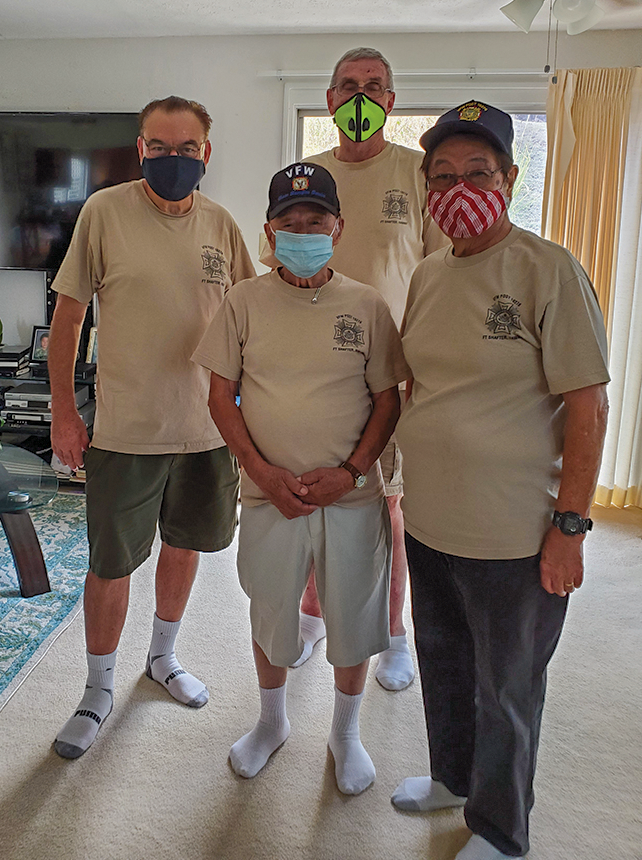
    photo of Cmdr. Mortimer, past post Cmdrs. Cal Sagara and Bob Breitscheider, and National Councilmember Stan Fernandez, all members of the Fort Shafter Post on O‘ahu.
    Jim’s bathroom work crew included (above, L–R) Cmdr. Mortimer, past post Cmdrs. Cal Sagara and Bob Breitscheider, and National Councilmember Stan Fernandez, all members of the Fort Shafter Post on O‘ahu.

    The call came in. “Help! Papa needs an ADA compliant bathroom.” According to Adele, his granddaughter, “Papa refuses to come downstairs to shower because he says he already has a blankly-blank shower upstairs.” Jim “Papa” Raynor is a 98½-year-old WWII veteran.

    Upon receipt of the call, four members of VFW Post 10276 went to the house, made a list of equipment needed, measured, went to the hardware store and were back on the job within two hours with their tools and supplies.

    Four hours later, the grab bars and the rest of the equipment were installed and their comrade took an inaugural shower to break it in.

    Joining the work crew downstairs in the kitchen, Jim thanked them for their efforts and then cussed them out for working so fast. “I wanted to spend a few more hours talking story about the old days that only veterans would understand.” So
    post Cmdr. Steve Mortimer called the post chaplain, who scheduled weekly wellness calls.


    VFW DEPARTMENT OF HAWAII
    438 Hobron Lane, Ste. 407, Honolulu, HI 96815
    808-946-7250 | adj@vfw-dept-hi.org
    www.vfw-dept-hi.org/

    The call came in. “Help! Papa needs an ADA-compliant bathroom.” According to Adele, his granddaughter, “Papa refuses to come downstairs to shower because he says he already has a blankly-blank shower upstairs.” Jim “Papa” Raynor is a 98½-year-old WWII veteran.

  • Ransomware

    Ransomware Malware Attack. Business Computer Hacked. Files EncryptedMajor corporations, government agencies, healthcare organizations, small businesses and private individuals are all being targeted by ransomware. The law enforcement and cybersecurity communities believe many of the cybercriminals behind these attacks are connected to organized crime, anti-US entities or even terrorist groups. It is an ongoing challenge to identify hackers and bring them to justice.

    Ransomware is a form of malware that encrypts the data on your computer and makes your computer inoperable until a “ransom” is paid to the hackers. Some versions of ransomware not only lock up your computer and data, but also make
    copies of data that hackers can harvest and sell.

    Payment demanded by the hackers is usually in the form of bitcoins (cryptocurrency). Some low-level hackers may even demand payment in the form of gift cards. Tracing the flow of the ransom is tedious, time-consuming and oftentimes, futile.

    A computer gets infected with ransomware mainly due to user error, by clicking on a malicious link in an email or a message while using social media. Your computer can also get contaminated by opening an “infected” attachment in your email — a document, video or sound file.

    Prevention Tips:

    ■ Be careful what you click on.
    ■ Back up your data. Backing up the entire hard drive is best. Use an external hard drive (not a USB thumb drive) that has its own power source and is connected with a USB cable.
    ■ Use a cloud service. This option may come with a fee depending on the size of the backup file.
    ■ Update your computer’s operating system and security software with the most current patches.
    ■ Install security software and make sure it is running before checking email or going online.
    ■ Be very suspicious when clicking on links when surfing the Web, those in your emails and when opening attachments. This also applies to messages from “friends” when using social media.

    What to do if your computer becomes infected.

    ■ Turn off your computer and unplug it.
    ■ Contact a computer repair service. Explain that your computer has been infected but you have a backup they can use to restore your data.
    ■ Contact law enforcement and report the incident. Whether they may be able to open an investigation and track down the hackers will depend on what information you can provide them and their available resources. (Law enforcement will not restore your data. Their job is to investigate.)

    The bottom line is the burden of keeping yourself safe is using safe computing habits and being wary of what you click on. 


    Contact me with questions about online security:
    Christopher Duque | aikea808@gmail.com

    Major corporations, government agencies, healthcare organizations, small businesses and private individuals are all being targeted by ransomware. The law enforcement and cybersecurity communities believe many of the cybercriminals behind these attacks are connected to organized crime, anti-US entities or even terrorist groups. It is an ongoing challenge to identify hackers and bring them to justice.

  • Longevity Benefits of Working Longer

    In 2010, I wrote a booklet for Career Partners International, a leading outplacement counseling firm, in which I compared the 20th century workplace with the 21st century workplace. In simple terms, I made the case that the once-upon-a-time dominant workplace of regular, full-time workers was fast becoming a workplace of workers who work part-time, some of the time, for free or for a fixed fee.

    And here we are in 2021 and the change has happened — not because of the pandemic, as most would like us to believe, but because of economic, societal, technological, ergonomic and other obvious changes that were staring us in the face long before this pandemic.

    If we work later in life some of the time, our mental and physical health will benefit.

    As change is our new reality, the flexible options are specifically suited to older workers because…

    • Cognitive decline is preventable for many of us by working in some capacity. Look up the advances active brain activity is having in staving off some forms of dementia. Many studies confirm that using your brain at part-time work helps to maintain your resiliency. A flexible work schedule is of particular benefit for mature workers because it allows more time for all aspects of health renewal.

    • Mental health can be maintained by working flexibly for community or other socially interactive nonprofits. As Nina Vasan, MD, of the Stanford Lab for Mental Health, said, “Mental health is the bedrock of community and, vice versa, community is the bedrock of mental health.” In brief, doing good work is good for you, too.

    Where can you find this work that will help maintain your mental and emotional fitness? The key is finding something that is meaningful to both you and your community.

    • Consider businesses that deliver meals and groceries, offer video-based fitness, or repurpose clothing and household goods.

    • Review other contributors to Generations Magazine. They are your network. The authors know where new opportunities are emerging.

    • Read my last month’s article on new places to work — especially in a flexible way.

    For more about the longevity benefits of working longer and later in life, search the Brooking Institute as well as the Harvard Institute. Be a workforce not a workhorse. Your brain will thank you.


    NEW WORKFORCE HAWAII
    Carleen MacKay
    916-626-7222 | carleenmackayhi@gmail.com
    www.newworkforcehawaii.com

    In 2010, I wrote a booklet for Career Partners International, a leading outplacement counseling firm, in which I compared the 20th century workplace with the 21st century workplace. In simple terms, I made the case that the once-upon-a-time dominant workplace of regular, full-time workers was fast becoming a workplace of workers who work part-time, some…

  • Tried-and-True Coping Skills

    It is always difficult and  painful to loose a loved one, even as memories of them remain in our heart to comfort us. I’d like to share a few tried-and-true coping skills to help deal with a loss.

    It takes time, but a bereaved person will eventually process their grief, work through the sadness and adjust to a life without their loved one. It helps to allow yourself to experience the pain and other emotions and not let others tell you how you should feel. Whatever comes is where you should start…

    Patience is a virtue. Don’t suffer from stress caused by your expectations. Accept your current experience, pain and emotions without judging or being judged. Don’t compare yourself with others. We all mourn in our own way; at our own pace.

    Acknowledge your feelings — even the ones you don’t like. Cry if that’s how you feel.

    Ask others for the help you need. Get support from friends and/or professionals. Express you sadness; talk about your loss and your memories.

    Joining a bereavement group enables others to encourage, guide and comfort you. They can also offer practical advice and information, and help you feel less alone. Online groups are available.

    Try to maintain your routine and lifestyle. Avoid making life changes and major decisions. Limit stressors and maintain a sense of security.

    Give yourself a break from grief and take care of yourself. Relax through distractions — watch TV, have dinner with a friend, read a good book, enjoy your favorite music, take a hike or go to the beach. Enjoy life despite the sorrow. Eat well, exercise, sleep and nurture yourself. Get a massage to release your tension. Avoid excessive use of alcohol or other substances, which could harm your body, confuse your emotions and slow your recovery.

    Forgiveness is a blessing. Forgive yourself for all the things you wish you’d said or done differently. Forgive others, as well.

    Prepare, plan and honor. Be prepared for holidays, birthdays and anniversaries, when feelings of grief may return. Plan how you want to spend your time and with whom. Do something in honor of the memory of your loved one. Decide what traditions to keep or create new ones.

    Create. When you feel ready, do something creative. Write a letter to the person who passed and say everything you wish you could still tell them. Start keeping a journal. Make a scrapbook. Paint or draw. Plant flowers or trees. Involve yourself in a cause or
    activity that you and your loved one enjoyed doing.

    Your Generations Magazine family is always here to help our Hawai‘i ‘ohana feel supported.


    RICK TABOR
    GM Community Development Director
    808-285-5936 | Rick@Generations808.com

    It is always difficult and  painful to loose a loved one, even as memories of them remain in our heart to comfort us. I’d like to share a few tried-and-true coping skills to help deal with a loss.

  • Staying Safe When Using Social Media

    Social media is a great way for all of us to keep in touch with family and friends, and our kūpuna are no exception. The use of social media among senior citizens has been a growing trend. Almost 74 percent of all adults aged 50 and over use social media on a regular basis. They primarily use Facebook, followed by YouTube, Instagram and LinkedIn. Older Americans most often sign on to social networks on smartphones (55 percent), followed by computers (47 percent) and tablets (41 percent).

    However, social media presents some extra  risks for older people. Research has shown that seniors lose tens of billions of dollars each year due to financial scams, leaving almost a million seniors each year in financial hardship.

    They are targeted by scammers and identity thieves who know that the older generation tends to be polite and trusting, so they’re more likely to be conned by an urgent-sounding message or persuasive solicitation.

    Here are two important tips to consider in order to reduce your risk of being victimized:

    1) Who are you sharing your posts with?  Are they actual family members and friends? Remember, anyone can be impersonated online! Only accept friend requests from those you have actually met or who can be vouched for by someone you know who can verify their identity. Or you can contact them by phone to ask them if they sent you a friend request.

    Also, check your privacy settings to regulate who will be allowed to see a particular post. You may not want to share every post with all your friends and family.

    2) What are you sharing online? Is it a written post, a photo or a video? And what information is being shared? Obviously, you don’t want to post any sensitive financial information like bank account numbers, PIN numbers or passwords. Sharing home addresses and personal telephone numbers is also very risky. Also, refrain from mentioning the dates you be away on a trip. Burglars may take advantage of that information.

    Also, don’t post about recent financial gains, such as receiving a large dividend check from an investment or an annuity. The same applies for posting photos of the valuables in your home.

    There is a lot to think about to keep from being a victim when using social media. The key is not to overshare and to always consider who you are sharing that information with. This is just another occasion when too much can be bad for you.


    Contact me with questions about online security.
    Christopher Duque | aikea808@gmail.com

    Social media is a great way for all of us to keep in touch with family and friends, and our kūpuna are no exception. The use of social media among senior citizens has been a growing trend. However, social media presents some extra  risks for older people.

  • New Ways to Live & Work

    As we begin to put the harshest effects of COVID behind us, large numbers of us are developing ways to live and work that create positive outcomes from negative change.

    The emerging opportunities featured in this post are associated with fast-growing careers throughout Hawai‘i.

    The suggested options offer flexible pay for the good of community as well as benefits for your own health and wellness over your ever-longer lifetime expectancy. What do I mean by that? Well, as you know, Hawai‘i is the longest-living state in the US —  currently, our average is 82.5. And research suggests that by engaging in healthful habits, we might even add five or more years.

    Think… what could be better than health and wellness habits that improve the quality of day-today life and increase longevity? The following examples are food for thought and a call to action!

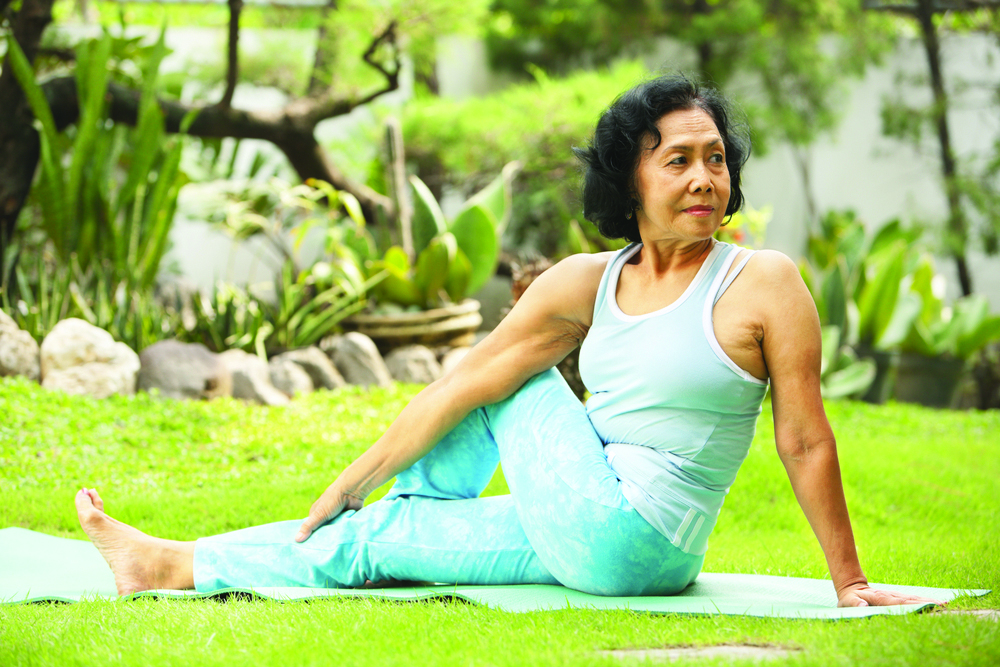
    Photo of an Asian senior woman practicing yoga at gardenYOGA. Yoga is much more than bending and stretching. It is a practice for body, mind and spirit. All ages can benefit — many an 80-year-old is actively engaging in the practice. A teaching credential is a matter of earning it. Learn more about credentialing by searching online for a school or studio near you.

    DIET AND NUTRITION. It has been a long haul for all of us who seek to overcome the effects of the COVID pandemic. Many of us are now promoting a good nutrient baseline on our road to the future. They are positively impacting food choices for themselves and their families. Have you noticed the nutritional changes in your local supermarket? Do you appreciate the connection between wellness and the foods that place a growing emphasis on eating phytonutrients? Might this be an area for you to explore both for your own physical and financial benefit as well as that of others? If so, visit www.hawaiibusiness.com/change-health-wellness-2.

    HEALTH COACHING. Search online for information on health and life coaching certification programs and services. Research and explore well-known organizations that offer coaching advice by their counselors. Call them up and ask them about the qualifications they seek.

    HEALTH & WELLNESS. Online job sites are a great source for exploring health and wellness opportunities. Startups abound. So, if you have a product or service to promote, study the winners in this emerging area. Its revenue growth over the past several years will astound you and might encourage you to start your own business or find a buyer for your unique offering.

    Ask yourself: “Am I creating the meaningful longer lifetime I deserve? Will some form of work in health and wellness help me achieve this goal?” These options can help you and help others while adding to your income and quality of life.


    NEW WORKFORCE HAWAII
    Carleen MacKay
    916-316-0143 | carleenmackayhi@gmail.com
    www.linkedin.com/in/carleenmackay

    As we begin to put the harshest effects of COVID behind us, large numbers of us are developing ways to live and work that create positive outcomes from negative change. The emerging opportunities featured in this post are associated with fast-growing careers throughout Hawai‘i.

  • Adapting to a Changing Job Market

    This past year has has served as a glaring stoplight for many people who assessed their slim chances of ever working again. The truth is that the changes we have experienced — those due to COVID-19 and more — have opportunities embedded within their threats. As previously promised, here is a straightforward, basic planning model for future work. It’s a guiding light to follow as you plan to continue to work in one of several ways in the foreseeable future.

    Forget endless chronology and look instead at your unique interests, gifts and verifiable  accomplishments. Write  them down. What do you want to highlight in any work you do in the future? For example, you may have been working in a company full-time as an accountant. You loved some — but not all — of the work. The work you loved are the highlights you are selling to a future employer, client or customer. Ask former teammates for their strongest impressions regarding your contributions. Think about new areas of interest and how your strengths might be an asset. Ask yourself how the work you will do in your older years will contribute to achieving your goal of living a purposeful and even longer life?

    Keeping your interests in the forefront of your mind as you check the market. Where are the strongest opportunities that meet your interests? Be sure to check options beyond the fulltime job market because you may find that one of the strongest opportunities for mature workers is in the flexible workforce.

    The flexible workforce option is growing at warp-speed and is a treasured opportunity for many of us facing the need to continue to earn, learn and to be a part of a larger community.

    Yes, you may need to enhance your skills by learning how to use a laptop, the internet and social media. Fear alone, not competency, makes this hard for many seniors. Be aware that the answers to most of your questions about your future work are at your fingertips.

    Put this in perspective! Do you still drive in the crazy traffic on most of our islands? If so, learning to use the basic technology at your fingertips will seem simple by comparison.

    Where might you learn and/or improve your knowledge? Any adult school, the community colleges, the universities and vocational schools across all islands are here to help now.

    Finally, for today, ask yourself life’s central questions — “Am I creating the meaningful, longer lifetime I desire and deserve? What form of work, beyond the old-world of jobs, will help me achieve this goal?”

    In the next issue, I will address flexible opportunities in the field of health and wellness; options that are exploding for older workers.


    NEW WORKFORCE HAWAII
    Carleen MacKay
    916-316-0143 | carleenmackayhi@gmail.com
    www.linkedin.com/in/carleenmackay

    This past year has has served as a glaring stoplight for many people who assessed their slim chances of ever working again. The truth is that the changes we have experienced — those due to COVID-19 and more — have opportunities embedded within their threats. As previously promised, here is a straightforward, basic planning model…

  • Prepare Yourself to Sleep Better

    Have you ever examined your bedtime routine? You probably take care of basic bodily needs like brushing your teeth, but what about the rest of you? Where does your mind go? What about the stress and tension you’ve carried all day? Do you do anything to show your body and brain you really care about them?

    If you want to age well, getting proper rest is essential for your health, happiness and relationships. Quality of sleep is just as important as quantity when it comes to focusing and functioning well during the day. If you go to bed with stressful thoughts, you will probably not sleep well. If you do manage some shut eye, you may end up feeling tired in the morning.

    So how can you help yourself find better rest? Start by turning off the TV and putting your phone out of reach when you get in bed. Then, raise your feet and do some ankle rotations. Use your arms and hands to gently stretch your legs, hips and lower back as you inhale through your nose, and exhale long, slow breaths through your mouth.

    Say, “Thank you, body. Today has ended. Anything unfinished will still be there tomorrow. Rest now.” Release your thoughts and reassure your mind and body that all is well. Try it for a week. Your body and mind will thank you.


    KAIMUKI BODY & BRAIN
    3569 Harding Ave., #B, Honolulu, HI 96816
    808-738-5522 | www.bodynbrain.com/kaimuki

    Have you ever examined your bedtime routine? You probably take care of basic bodily needs like brushing your teeth, but what about the rest of you? Where does your mind go? What about the stress and tension you’ve carried all day?

  • Beware of COVID-19 Scams

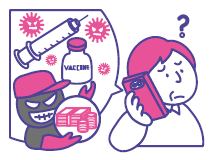
    Now that COVID-19 vaccination is in full swing along with economic relief packages from the federal government, scammers are using phishing emails and texts, bogus social media posts, robocalls,  impostor schemes and more to prey on the public. Federal and state agencies are reporting a flood of vaccine scams, with phony websites and email campaigns promising easy and early access to coronavirus shots. They also anticipate a rise in financial stimulus scams targeting relief payments, unemployment benefits and small business loans.

    From the earliest beginnings of the COVID pandemic, fraudsters have been luring consumers with fake remedies; now they’re using the vaccine rollout as bait to lure unsuspecting consumers.

    The Hawai‘i Department of Health and Human Services says consumers should be on the lookout for the following signs of vaccine scams:

    • Requests that you to pay out-of-pocket to receive a shot or get on a vaccine waiting list
    • Ads for vaccines via websites, social media posts, emails or phone calls
    • Marketers offering to sell or ship doses of COVID-19 vaccines

    The FBI says con artists are still advertising fake COVID-19 antibody tests to mine personal  information to be used in identity theft or health insurance scams. This includes fake unemployment filings and even stealing one’s stimulus check.

    Other scammers claim to be selling or offering supplies such as masks, test kits and sanitizers, often in robocalls, texts or social media ads.

    Scammers are also impersonating banks and money lenders, offering bogus help with bills, credit card debt or student loan forgiveness.

    Beware of calls, texts or emails, and social media posts originating from what appear to be  government agencies that instruct you to click a link, pay a fee or confirm personal data (your Social Security number) to secure your stimulus check.

    The FTC and the Justice Department also issued an alert about phishing texts and phone calls that are supposedly from contact tracers, warning you that you’ve been exposed to someone with COVID-19. If you click the text message link, malware downloads to your device. These messages will appear to be from actual businesses or government agencies, but clicking on links or downloading attached files could enable the theft of personal information and your identity. Messages from actual contact tracers will not include a link, or ask you for money or personal data.

    Also use care when conducting an internet search for coronavirus information. Are you going to the actual CDC or WHO website, or to a scam portal created by a cybercriminal?


    Christopher Duque | aikea808@gmail.com

    Now that COVID-19 vaccination is in full swing along with economic relief packages from the federal government, scammers are using phishing emails and texts, bogus social media posts, robocalls,  impostor schemes and more to prey on the public.

  • Finding Freedom Once More

    COVID-19 impacted this industry greatly — it may never be the same again. We had to stop large gatherings, monthly meetings and communal dining, restrict visitors, volunteers and even family members who uplifted our community on a daily basis, and social distance ourselves when hugs and closeness were once shared.

    Many administrators like myself had to take swift action to attain the balance of retaining the simple freedoms of our residents and fighting to keep our communities safe.

    Over a year later, the pandemic continues to defer our freedom — the freedom to do what we please, visit with others at any time and travel anywhere in the world to live our best life.

    Independence Day 2021 will be a period of reflection on our own personal freedoms and our nation’s. Don’t give up hope; we are turning a new leaf. It will take courage to gain back our freedom and a sense of peace.


    ROSELANI PLACE (501(c) 3 nonprofit)
    88 South Papa Ave., Kahului, Maui, HI 96732
    808-871-7720 | Toll Free: 800-554-9853
    info@roselaniplace.com | www.roselaniplace.com

    The overall mission for senior living communities is to provide socialization, wellness, a sense of community and independence. As the general manager for Roselani Place, my mission is to enrich the lives of our kūpuna and manifest my passion to enable them to live their lives to the fullest each and every day.

  • Dealing With Our Feelings

    No problem has ever been resolved through emotional upheaval.

    As I mentioned in my April/May column (“Nine Coping Skills For Managing Stress”), to find our way to productive solutions, we’ll first want to deal with our feelings.

    Feelings are important because they can tell us what we need to do. To deal with our feelings, we must name them, realize it’s ok to feel them and express them in a safe way. Then we can decide what to do to feel better.

    It’s ok to have negative feelings. But owning our feelings rather than blaming others for them is the key to a sustainable resolution.

    Using the “I feel” sentence is helpful, for example, “I feel lonely because I’m social distancing for my safety.” Remember, life is 10 percent what happens and 90 percent how we respond. No one makes us do or feel anything. We are responsible for our feelings or responses. So if we own our feelings and actions, we’ll be on our way to more reasonable outcomes.

    To change or break a negative response pattern, note these few physiological facts:

    • Our brain needs oxygen to think clearly.
    • Negative feelings like anger and fear trigger adrenaline, shifting oxygen from our brain to our air passages to provide our muscles with the oxygen needed for flight-or-fight responses.
    • Without oxygen, our brain focuses on familiar reactive, defensive response patterns rather than proactive, solution-oriented, productive outcomes.

    To relearn and find helpful stopgaps to break patterns, we’ll first need to agree there’s an issue we’d like to change. Once motivated to change, we’ll face the realization that change is a challenging process. But with patience, persistence and practice, anyone committed to change can break the habit of engrained negative response patterns.

    The simplest tool used to manage a stressful event is the STOP sign acronym technique: Stop, Think, Options, Plan.

    If we stop our undesirable emotions before they escalate, we’ll automatically think of options and create a more reasonable plan. By stopping, we’ll breathe, calm down and reach a better plan than if we fly out of control driven by emotions.

    Because we are all human, we all experience negative emotions. But it’s what we do with them that defines us. Working toward eliminating personal attacks or put-downs will enhance the quality of our relationships with ourselves and others. Learning to manage stressors also improves our physical and mental health.

    Accept imperfection, practice forgiveness, and give yourself and loved ones a break.


    RICK TABOR
    GM Community Development Director
    808-285-5936 | Rick@Generations808.com

    Feelings are important because they can tell us what we need to do. To deal with our feelings, we must name them, realize it’s ok to feel them and express them in a safe way. Then we can decide what to do to feel better. It’s ok to have negative feelings. But owning our feelings…

  • Silver Lining of a COVID Cloud

    When we all closed our doors, fluffed our couch pillows and settled in for what we thought was only going to be a two-week lockdown, no one could have imagined where we would be in 2021. We’re here now and life has a breeze of normalcy amid the chaos. Zoom family celebrations or business meetings are regularly scheduled in our calendars, delivery drivers know our routines and we’ve become more okay with staying in.

    Supply and restaurant delivery are some of the conveniences the disabled and aged communities have needed for so long. Yet, seemingly overnight, these options are now available. Farmers markets are doing drive-by delivery, offices switched entirely to remote work and schools became “anywhere,” using distance learning.

    And along the way, members of the disabled and senior communities have found that they can get a break from sheltering in place and stay safe by taking a drive, using their auto adaptive equipment. During their solo drive, they can avoid the virus. Their vehicle becomes a safe haven, an escape and a silver lining in this dark pandemic cloud. So taking care of your vehicle is more important than ever to stay safe and healthy in 2021.


    SODERHOLM MOBILITY, INC.
    2044 Dillingham Blvd., Honolulu, HI 96819
    P: 808-834-1417 | F: 808-834-1070
    www.soderholmbus.com
    Soderholm Sales and Leasing Inc.
    PO Box 19010, Honolulu, HI 96817

    When we all closed our doors, fluffed our couch pillows and settled in for what we thought was only going to be a two-week lockdown, no one could have imagined where we would be in 2021. We’re here now and life has a breeze of normalcy amid the chaos. Zoom family celebrations or business meetings…