
Centuries ago in China, tai chi was a form of martial arts. It was practiced as an internal force, not brute strength. Certain hand movements and footwork were taught as techniques of tai chi. Techniques of pushing hands were an important part of tai chi and this technique was to maintain combat efficiency. Currently, tai chi is a sports activity in some parts of China, enjoyed by many athletes.
“Tai chi has made a great, positive impact on my life,” says Elizabeth Thu Hai Pham, the current tai chi instructor at the YMCA Kaimuki Wai‘alae Branch. “I teach kūpuna tai chi, mainly the prevention of falling and the hand movements and footwork if the kūpuna should find himself or herself in a situation of unexpectedly falling. Tai chi consists of slow movements, and consequently, it is easy for a kūpuna to learn. Because it is slow, kūpuna gradually become graceful and acquire balance in everyday life.”
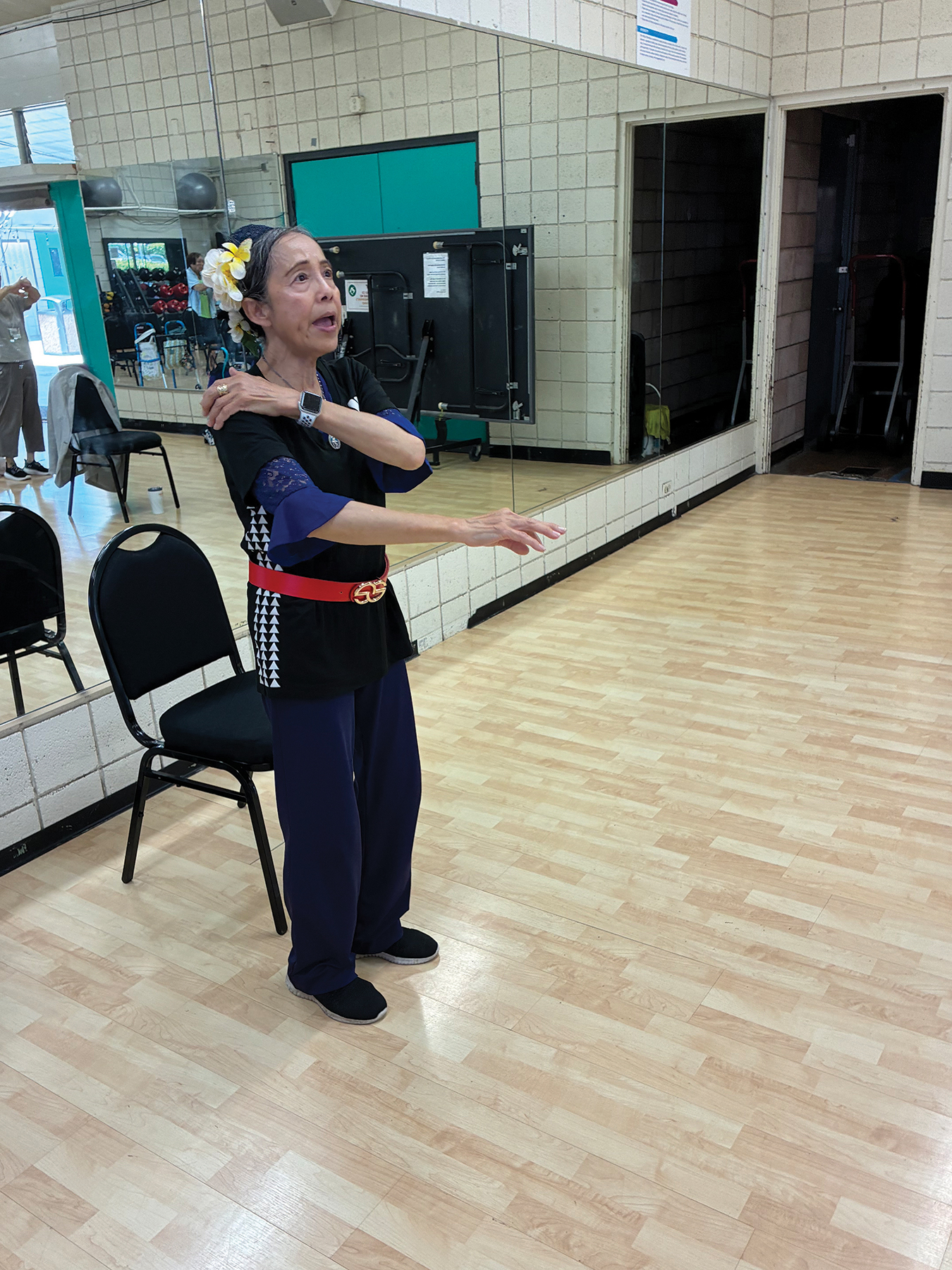
Elizabeth was born in Vietnam. In the final days of the Vietnam War in 1975, she fled, leaving her family possessions behind. She traveled to New Jersey, where her brother-in-law resided.
In America, she cried to God, “‘Why me?’ My father was weak. He didn’t have enough to eat. But I learned whatever happens makes us stronger. Every Saturday, Vietnamese refugees came to our small apartment for a bowl of soup from my grandmother. Our family didn’t have enough to eat, but when you have little, I was taught to share what little you have with someone who has nothing.”
Tai Chi Master Dr. Paul Lam taught her not only the tai chi forms, but also her strengths and weaknesses, because “by learning such conditions, you look within yourself,” Elizabeth says. “You learn about yourself, how to focus, how to breathe properly and how to move your energy deliberately without rushing, with calmness of the mind, now called ‘mindfulness.’ My master said I must honor myself.” Dr. Lam is recognized throughout the world as a Tai Chi Grand Master.
Elizabeth, who I will now call “sensei” (Japanese for teacher or highly respected person), has been awarded a tai chi certificate for her completion of training in tai chi education and skills. She is certified to teach the remedy for arthritis and the prevention of falling of all levels, more particularly for kūpuna. Pham Sensei says, “Myself and the kūpuna who attend my classes are in a support group. There is no denying that, in their own way, the kūpuna support me and I do my best to support them. We honor, respect and practice tai chi for the benefit of our health, to reduce arthritis and to prevent falling.”
Pham Sensei continues by saying, “Proper breathing has an important connection with the brain. Unless you can relax and have peace of mind, it adversely affects the waves in your brain, which results in poor health.”
She also emphasizes drinking water: “Our body requires water, because our blood needs water. I encourage everyone to drink at least 17 fluid ounces of water each day.”
Pham Sensei rises at 3am daily, does her tai chi exercises and attends church where she prays for everyone and finds spiritual peace. In the early morning she has time to think, she says. As her Tai Chi Master recommended, she enjoys her life the best she can, particularly since her early years had been a time of suffering.
Her enduring advice for everyone, not only kūpuna, is to be slow and gentle in all aspects of life. Practice tai chi every day to maintain your health, peace of mind and happiness.
“Tai chi has made a great difference in my life, good health, clear thinking, lots of friends and happiness,” Pham Sensei says. “If you practice tai chi every day, slow and gentle, a certain spirituality will emerge in your life.”

Leave a Reply