
Our islands form the only US state to celebrate their monarchical history. To honor his grandfather, King Kamehameha V inaugurated King Kamehameha I Day on June 11, 1872. The legacy of the sovereign nicknamed “Kamehameha the Great” is that of a powerful warrior and beloved ruler who successfully united the Hawaiian
archipelago in 1810, ending a decades-long pattern of inter-island conflict. This year’s festivities on June 11 will mark the 109th King Kamehameha Day. This year’s theme, E kū, e ho‘ololi, means stand upright and change unpleasant conditions.
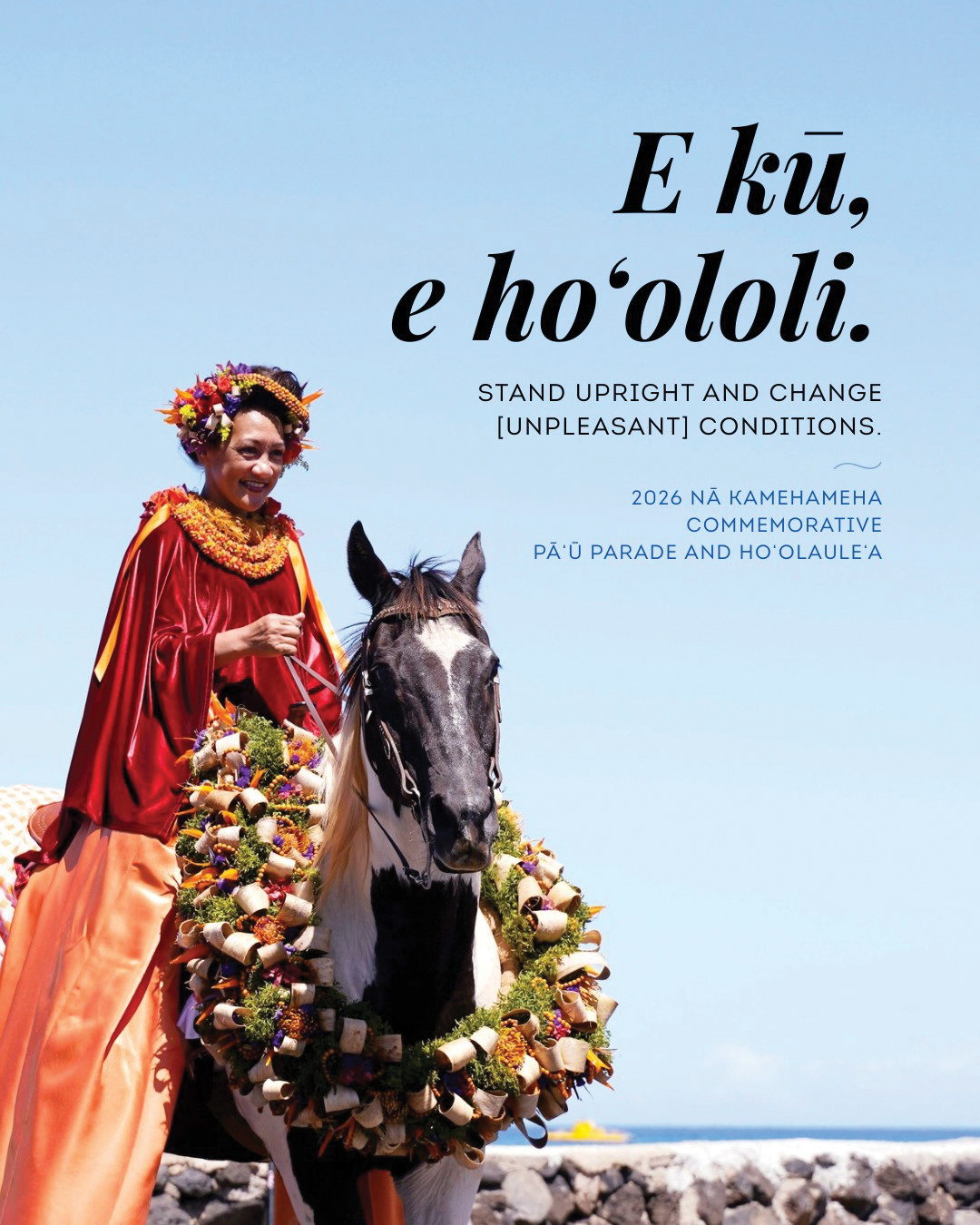
Festivities usually include a procession by the Hawaiian Royal Societies, an organization commissioned by Kamehameha V, whose purpose is protecting, preserving and perpetuating the Hawaiian culture. Floral parades feature floats and pā‘ū riders on horseback. Pā‘ū riders wear long, flowing skirts (pā‘ū ) representing the different islands with specific colors and flowers. Ho‘olaule‘a, a festival that celebrates Hawai‘i’s culture, include local food, Hawaiian music and more.
Traditionally, each year, a statue of Kamehameha I is adorned during the lei-draping ceremony that attracts large crowds of locals and tourist alike. Each island’s Hawai‘i Civic Society prepares nearly 100 20- to 30-foot plumeria lei for the ceremony.
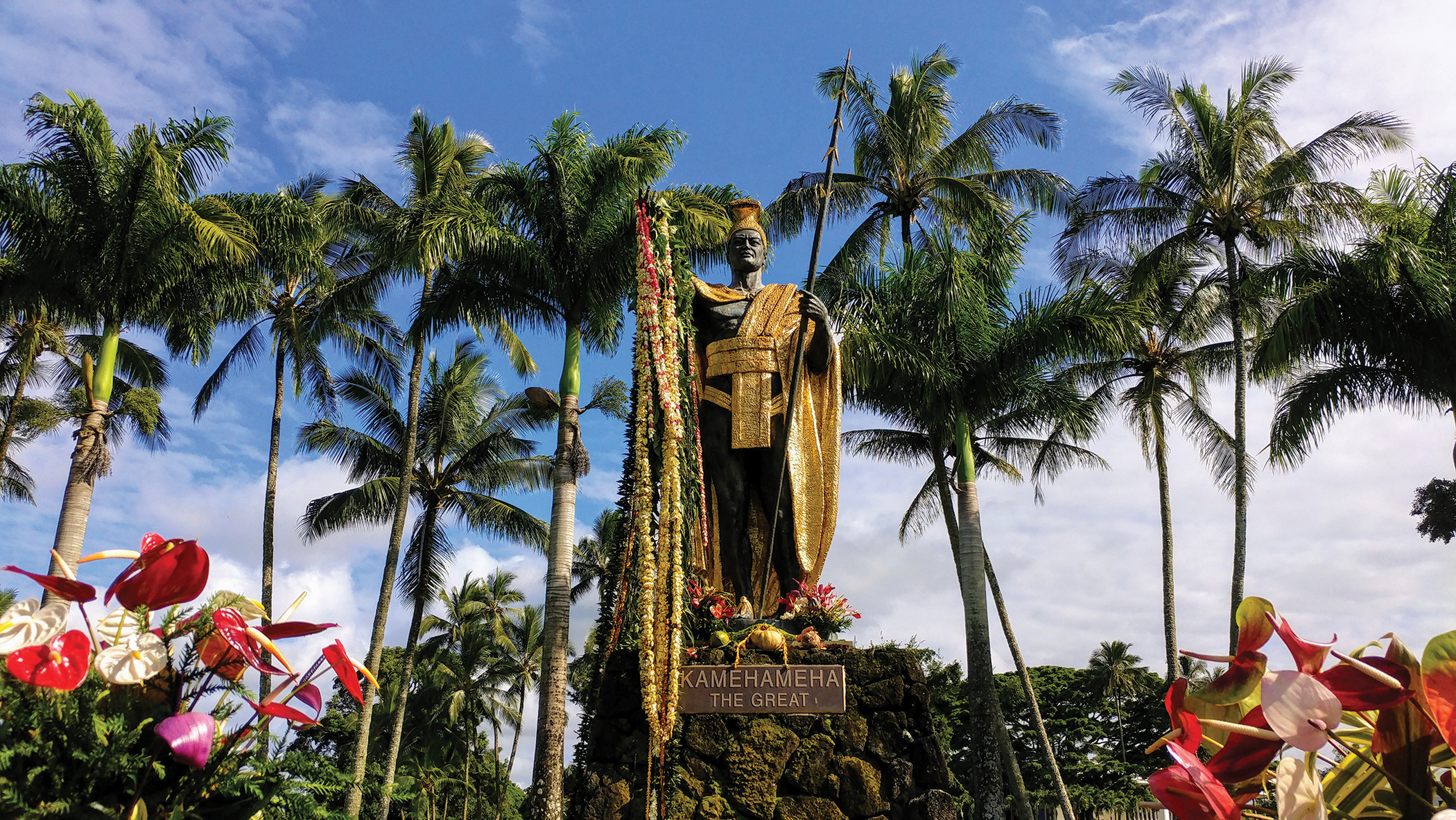
Thomas Gould had been commissioned to sculpt the first statue of Kamehameha I. In 1883, upon completion of the 8.5-foot statue, it was sent via ship from Europe to the judiciary building in Honolulu. Although thought to be lost after the boat was shipwrecked near the Falkland Islands, it was recovered later that year. With a replacement statue already unveiled in Honolulu, this statue was relocated to the district of Kohala on the Big Island, where Kamehameha I was born.
The 18-foot King Kamehameha replacement statue stands in front of Ali‘iōlani Hale in Waikīkī, the main stage for the festivities on O‘ahu. As with all statues of His Majesty, the spear clutched in Kamehameha’s right hand symbolizes his ability to protect his people. His left hand is outstretched as a sign of welcome and peace.
In 1997, a 14-foot statue of Kamehameha I was erected in Hilo. Commissioned by the Princeville Corporation on Kaua‘i and built by Italian sculptor R. Sandrin in 1963, it was originally intended to be erected on island; however, residents pushed back on these plans as Kaua‘i and neighboring Ni‘ihau were the only islands not conquered by force by Kamehameha I during his campaign to unify the islands.
The County of Maui traditionally hosted Nā Kamehameha Commemorative Pā‘ū Parade on Front Street and a ho‘olaule‘a at Banyan Tree Park in Lahaina. The one-time capital of the Kingdom of Hawai‘i is still recovering from the devastating 2023 Lahaina wildfires and celebrations have since been relocated to Kahului in Central Maui. The June 20 parade will start at Baldwin High School and end at Queen Ka‘ahumanu Center and will be followed by a ho‘olaule‘a.
Visit the Hawai‘i State Foundation on Culture and the Arts’ website at sfca.hawaii.gov/resources/king-kamehameha-celebration-commission for more information and updates on how you can join these celebrations.

Leave a Reply