
Tag: U.S. Administration on Aging

  • Payments, Lost Pensions and Free Legal Help

    Like many retirees and widows, Margaret has been relying on a fixed income. Suddenly, she receives a letter from the pension company stating that her monthly pension of $800 was an error and will be reduced to pay back a $4,000 overpayment.

    The pension is Margaret’s only income and already doesn’t cover basic living expenses. She recently moved in with her elderly father, has no medical insurance, is a month behind on her car payment, and visits food closets for groceries.

    Unable to afford an attorney, Margaret turns to the Western States Pension Assistance Project (WSPAP), a federally funded program that provides free pension assistance by phone to people who live or have worked in Hawaii, California, Arizona or Nevada. The counseling project, one of seven nationwide funded by the U.S. Administration on Aging, serves all ages and income levels.

    “Pension law is complicated, and many retirees, surviving spouses and their family members are not able to afford to hire an attorney when a problem occurs,” said attorney Parisa Ijadi-Maghsoodi, who directs the project. “We provide vital legal assistance to hundreds of workers and their families, many of whom would otherwise have little or no access to expert advice regarding their retirement benefits. Since the project started in 2007, we have helped retirees and surviving spouses access more than $10 million in retirement benefits that they earned.”

    In Margaret’s case, WSPAP successfully represented the senior before the pension plan, defending against the recovery of the overpayment. The company agreed to waive the overpayment and restore Margaret’s monthly benefit.

    Many people contact WSPAP after trying unsuccessfully to track down pension benefits from a company that no longer exists, whether due to a bankruptcy, a merger or a sale.

    “We do a lot of detective work,” Ijadi-Maghsoodi said. “In order to find lost pensions, we conduct extensive research, review pension plan documents, file FOIA requests, write letters and make many phone calls.”

    Language access can make it difficult for clients with limited English proficiency to receive the pension that they or a spouse earned. A 76-year-old widow called WSPAP after trying unsuccessfully for three months to get her small survivor benefit started. The woman, who was living on a small Social Security check, spoke very limited English. Before passing away, the widow’s husband had hand-written a letter for her to sign and submit to the plan in the event of his death to ensure that she would receive her survivor annuity. Her husband died in September but by late January, the plan had still not started her benefit — or even told her when it might start.

    Attorney Ijadi-Maghsoodi intervened, asserting the client’s right to the survivor annuity and informing the plan that ignoring the widow’s claim for survivor benefits violated federal law. Within two weeks, the plan distributed a retroactive payment for the payments she should have received. In addition, she will receive a survivor annuity for the rest of her life.

    After assisting hundreds of people with pension problems, the Western States Pension Assistance Project attorneys have a few tips:

    • Keep all documents related to your pension or retirement savings account.
    • Never destroy old tax records.
    • Think carefully before taking a lump sum instead of a monthly pension.
    • Do not give up your right to a survivor benefit through your spouse’s pension plan unless you have enough retirement income of your own to live comfortably after your spouse’s death.

    For more tips and fact sheets, visit the Pension Rights Center online at www.pensionrights.org. For help with your pension, please contact the Western States Pension Assistance Project toll free at 866-413-4911.
    Like many retirees and widows, Margaret has been relying on a fixed income. Suddenly, she receives a letter from the pension company stating that her monthly pension of $800 was an error and will be reduced to pay back a $4,000 overpayment. The pension is Margaret’s only income and already doesn’t cover basic living expenses.…

  • Never Too Old for Sex-Ed

    Worrying about aging wasn’t a concern for anyone with AIDS in 1981, when the CDC reported the first five cases. In those days before any treatments were available, many who contracted the disease died within a few months.

    Now, in 2011, older adults increasingly risk contracting HIV, and with 30 years of progress in research and treatment, most people with HIV/AIDS now live for many years after diagnosis and deal with aging concerns as well.

    Older adults who are at risk of contracting HIV are those sexually active well into their 70s and 80s, and some use alcohol or drugs. Elders don’t worry about birth control, and often believe they won’t get sexually transmitted diseases, so they usually don’t take precautions to protect themselves from infection.

    Tom Sheehan and Queens Medical Center - Generations Magazine - August - September 2011
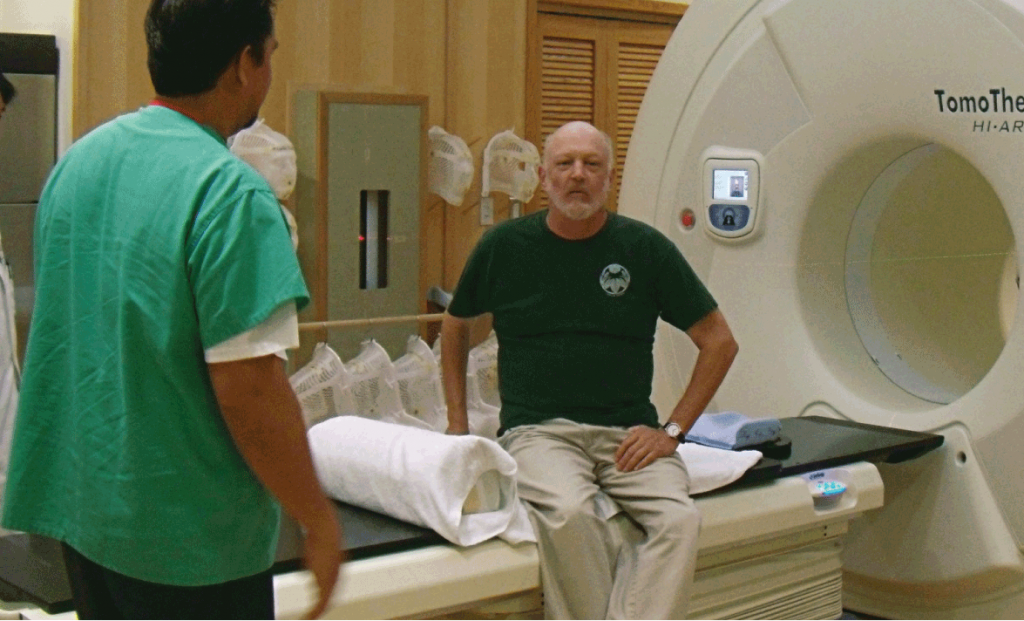
    AIDS patients often experience health conditions common in older adults. Here, the author prepares for radiation treatment for throat cancer at Queen’s Medical Center.

    HIV prevention messages are not targeted toward older adults, and many doctors don’t think (or are too embarrassed) to ask about sexual activity in their older patients.

    The symptoms of HIV disease may appear differently in older adults, or may be mistaken for other age-related conditions, so detection and treatment are often delayed. While the majority of those with HIV/AIDS today are under age 50, the trend is clear: 30 years of AIDS requires greater awareness to protect older adults.

    In Hawai‘i, more older adults, women and members of the Hawaiian and Asian-American communities are now contracting HIV than in the early years of the epidemic. The Life Foundation recently reported that a 60-year-old woman tested HIV-positive.

    According to the U.S. Administration on Aging, in 2005, people over age 50 accounted for:

    • 15 percent of new HIV/AIDS cases
    • 24 percent of people living with HIV/AIDS
    • 35 percent of all deaths of people with AIDS

    These numbers are growing; more people now living with HIV/AIDS will experience health problems relating to both aging and HIV disease.

    The Hawai‘i HIV/AIDS and Aging Coalition will bring greater public attention to this issue by observing National HIV/AIDS and Aging Awareness Day on September 18. The Coalition will also have a booth at the Blaisdell Senior Fair (Ewa Tabletop C) on September 23-25 to share information and resources with the community.

    For more information:

    National HIV/AIDS and Aging Awareness Day: www.theaidsinstitute.org/programs/education/national-hivaids-and-aging-awareness-nhaaa

    The Body: AIDS and Aging information www.thebody.com/index/whatis/older.html

    O‘ahu: Life Foundation 521-2437, www.lifefoundation.org

    Hawai‘i: Hawai’i Island HIV/AIDS Foundation 331-8177 (Kona), 982-8800 (Hilo), www.hihaf.org

    Maui: Maui AIDS Foundation 242-4900, www.mauiaids.org

    Kaua‘i: Malama Pono 246-9577, www.malama-pono.org

    Worrying about aging wasn’t a concern for anyone with AIDS in 1981, when the CDC reported the first five cases. In those days before any treatments were available, many who contracted the disease died within a few months. Now, in 2011, older adults increasingly risk contracting HIV, and with 30 years of progress in research…