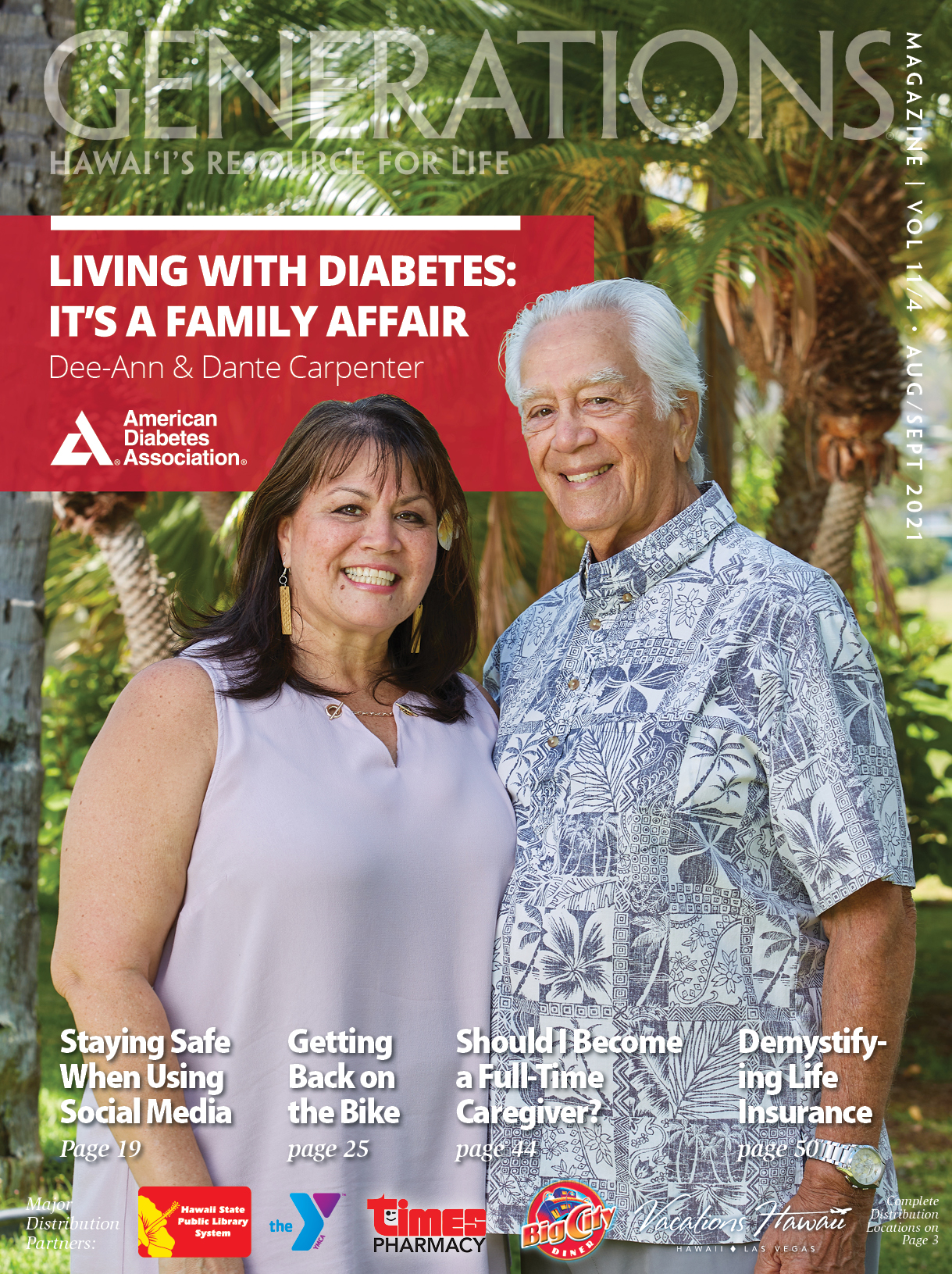
 Family plays a key role in the well-being of a loved one diagnosed with diabetes or prediabetes. While such a diagnosis might seem overwhelming, it is the small things we do daily that determine how the condition will progress. Family members can help and encourage their loved one by becoming part of their healthcare team.
Twenty-five years ago, when Dante Carpenter’s wife, Olan, learned her husband had been diagnosed with diabetes, she threw out every food in the house that might tempt him and worsen his condition. Her concerns and actions helped set Dante on the path to managing his diabetes through lifestyle changes.
Dante has been actively involved with the American Diabetes Association Hawaii (ADA Hawaii) for many years. That relationship led to him twice being a conference speaker for Taking Control of Your Diabetes, a nonprofit that works to educate and motivate people with diabetes to take a more active role in their condition. It is a perfect fit with the ADA’s own goals. Dante and Olan’s daughter, Dr. Dee-Ann Carpenter, MD, associate professor at the John A. Burns School of Medicine, is also c committed to sharing knowledge that helps people manage their diabetes through the nonprofit University Health Partners of Hawai‘i. She also is the immediate past president of the ADA Hawaii Community Leadership Board.
 What is diabetes?
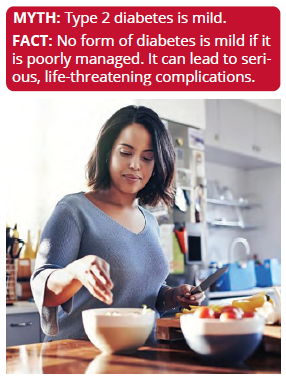
The food and drinks that provide your body with energy contain varying amounts of glucose (sugar) that enter your bloodstream. Insulin, a hormone produced by the pancreas, helps this blood sugar get into your body’s cells, where it can be used for energy. In Type 1 diabetes (T1), which affects mainly children and young adults, the pancreas doesn’t make any insulin at all. In Type 2 diabetes (T2) and prediabetes — which together affect half of Hawai‘i’s adults — the glucose stays in your blood and doesn’t reach your cells. That happens because your body either doesn’t make enough insulin or doesn’t use it well.
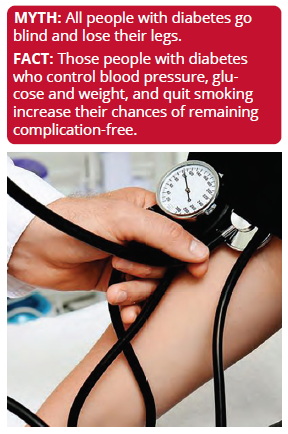
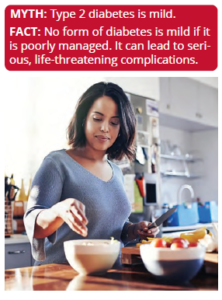
Diabetes and prediabetes have serious health consequences. Diabetic comas are a dramatic example, but the everyday effects of the disease include problems with eye and dental health, heart and kidney problems, and the loss of blood flow to infected or injured body tissue, which may result in gangrene and amputation.
It’s all about choices
One of the predictors determining who is at risk for diabetes is family medical history. You have absolutely no choice in that, of course, but how you choose to react to a diabetes diagnosis is a huge factor in how little or how much your own health will be affected by the disease.
Dante’s mother had T2 diabetes, predisposing him to it. His brother, Monte, was also diagnosed with T2, but found it difficult to make the lifestyle changes necessary to control its effects.
“He never shared his ailments,” Dante says, “He just kind of lived with it.”
Because Monte lived on the mainland, Dee-Ann adds, her family didn’t find out how serious his health problems were until near the end of his life.
“He had kidney disease and had been on dialysis,” she said. He had lost his vision because of diabetes and had several amputations. Monte’s wife was a dialysis nurse and tried to steer him toward healthier choices. But Monte was “pa‘akikī — hardheaded,” Dante says, and wouldn’t give up the chocolates and other sugary treats he loved.
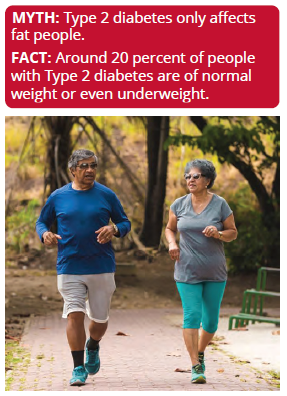
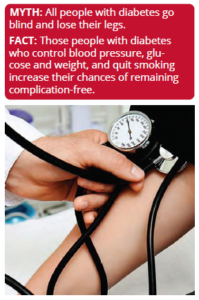
Dialysis, eyesight loss and limb loss are common complications of diabetes, but typically don’t occur until 10 or 20 years down the road. By making healthy choices, Dante has staved off those complications for 25 years plus the years prior to that when he had undiagnosed prediabetes. Because the early symptoms of diabetes can go unnoticed, the sooner you start making healthy choices, the better. That is why the ADA strongly emphasizes prevention.
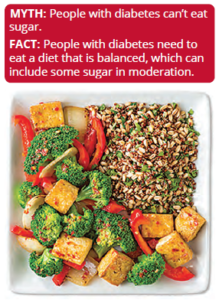 Find out your risk early
The ADA offers a free Risk Test to all its corporate sponsors via QR codes on flyers that are posted in lunchrooms and also through outreach to the general public at, for example, community health centers and community events. The list on pg. 35 has a link to the online version of the test.
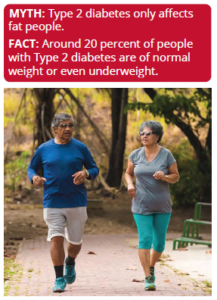
“When you do the test, you receive a low or high score along with a list of resources available in your area,” says ADA Hawaii Executive Director Lorraine Leslie. “Being overweight or obese, inactivity, family history, ethnicity and age are a few of the risk factors.”
Native Hawaiians, Pacific Islanders, Filipinos and others of Asian descent are particularly susceptible to developing diabetes. In response, some of ADA Hawaii’s resources have been translated into 13 languages as public service announcements.
The questions asked in the test — which take only a minute to complete — are based on those risk factors. What is your age? Your gender? (Women are asked if they have had gestational diabetes — diabetes while pregnant.) Family history? Do you have high blood pressure? Are you physically active? What race or ethnicity best describes you? What is your body mass index (BMI), which is calculated by entering your height and weight?
The ADA belongs to a coalition created by the National Council of Asian Pacific Islander Physicians (NCAPIP) to promote a healthcare initiative called “Screen at 23.” BMI is a measure of body fat. A BMI score of 25 is usually the point at which healthcare providers refer their patients for diabetes or prediabetes screening. Since Asian Americans are at high risk of having those conditions but tend to have less body fat, it is recommended that they be screened at a BMI of 23.
It is easy to see, just from the Risk Test questions themselves, that there are areas in which we can all be proactive in preventing diabetes, even if we get a low score on the risk test. We can’t change our age, gender or ethnicity, but we can do something about avoiding high blood pressure, exercising regularly and keeping our weight down in order to lower our BMI. And, since “family history” includes the environmental and lifestyle factors that family members share, we can do something about those, too.
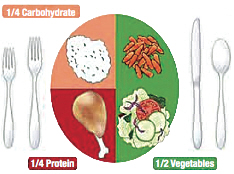
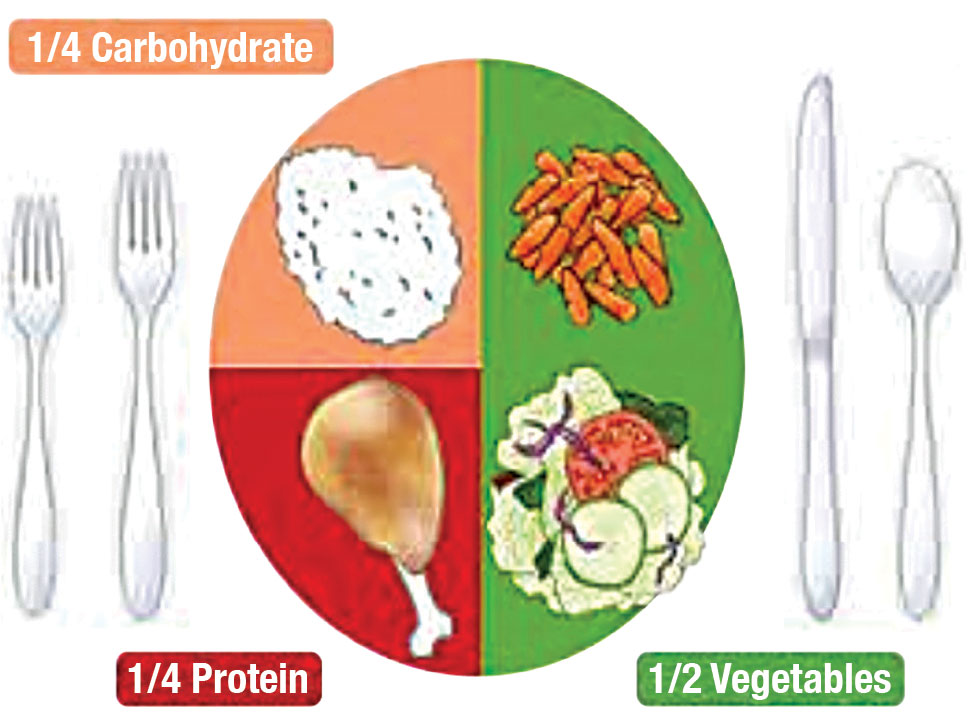
 Gain access to good nutrition
Nanosecond by nanosecond, 24 hours a day, a multitude of different types of cells in your body are busy enabling all the functions you take for granted in day-to-day living. Without good, balanced nutrition, some bodily processes falter and may even shut down altogether.
But we’re busy, too, right? Preparing healthy, nutritious meals can be time-consuming and, especially in Hawai‘i, the ingredients are often expensive. Dr. Dee-Ann notes the many fast food restaurants lining the road to Wai‘anae and the West Side of O‘ahu, which has a high proportion of Native Hawaiian residents.
“You’ve just finished work at your second job,” she says. “You’re just going to get something quick and easy because you’re tired and it’s cheaper than going to MA‘O Farms to get the fresh food that you really want to feed your family. It’s hard… it’s really hard.”
The ADA understands these economic pressures. In March, May and June 2021, they partnered with the Native Hawaiian healthcare organization Ke Ola Mamo to distribute 300 boxes of healthy foods to those who pre-registered, and met income and other requirements. The event was “definitely created out of a need when COVID hit,” explains Lorraine. They already have additional food distributions planned for the balance of the year.
The food box distribution was also an opportunity for the ADA to create awareness regarding other resources that are available to them. As cars were waiting in line to receive boxes of food, ADA volunteers approached them holding signs saying “Take the test. Scan here.” Those who scanned the QR code and took the Risk Test received their scores instantly and those with high scores (over 5) were advised to take them to their healthcare provider for follow-up. Or they could discuss them
 Share your diabetes diagnosis
Sharing your diabetes diagnosis with family, work associates and classmates is of vital importance, Lorraine explains, “because you never know when you’re going to have a sugar high or a sugar low.” Sharing also helps avoid any misunderstandings about why you are injecting yourself. As part of its advocacy role, ADA Hawaii worked with a young man to assist with reinstating his job. A co-worker had seen him self-injecting and reported it to their supervisor, who fired the young man on the spot because he thought he was a drug user. Had the young man told his employer about his medical needs after he was hired, the misunderstanding would not have occurred. And if the co-worker and supervisor had been more aware of what self-treatment for diabetes might entail, they might not have acted so hastily.
The ADA has been advocating at a national level for a zero-dollar co-pay for insulin during the COVID-19 emergency and pushing state and federal efforts to ensure insulin is affordable and accessible. Since COVID, says Lorraine, the No. 1 reason for people calling ADA has been to find out about resources, especially for help with paying for medications and food. She recommends using Community Connection because it narrows the search down by ZIP Code and includes resources specific to your locality.
Dr. Dee-Ann also suggests asking your healthcare provider for assistance in applying for free medications if the pharmaceutical company making your medicine provides that option and you qualify based on income. Some stores, such as Walmart, allow for lower costs of medication if you are uninsured. Medicare covers the cost of lab tests if your doctor determines you’re at risk, and some Medicare Advantage Plans participate in a senior savings plan that limits the cost of a month’s supply of insulin to $35 if you meet the criteria.
For the children
Family is at the heart of everything we are as individuals. It is a source of our values, our joys, our sorrows, and can be the wellspring of our motivation to do better — not just for ourselves, but for other family members and the wider community we live in.
Your keiki can be an important part of your healthcare team. One of the major healthy living motivators for elders with diabetes is to continue sharing the joy of interacting with their grandchildren.
A story Dante shares at Taking Control of Your Diabetes events is how his grandkids scold him when he slips up. When he does, they say “We’ll pull the plug on your wheelchair!” When he first got his diabetes diagnosis, Dante asked Olan why she was throwing out all his favorite foods, she replied: “Look, I am not going to push you in a wheelchair!” His mo‘opuna say that to him, too, when he strays. Dante then replies that he will get an electric one, then. That’s when they threaten to pull the plug…
Dr. Dee-Ann adds that kūpuna can also model healthy lifestyle choices for their grandkids. About 17 percent of children and adolescents in the US are obese, exposing them to having an increased risk of developing T2 diabetes. So instead of giving them candies, she says, share an apple with them. Take them along when you go to exercise in the pool or go for a walk. Have a fun day with them at the beach.
For children who have received a diabetes diagnosis, the ADA offers two virtual programs. Project Power, for kids ages 5 to 12, is a free at-home virtual after-school experience that takes place for an hour twice a week. It will begin again in October. The ADA’s virtual summer camp is held in June and July each year.
 Understanding & moderation
“Understanding” is a word that has many meanings. As we each consider the role that diabetes might play or is currently playing in our lives, all of its nuances come into play. By taking the Risk Test, we come to understand what risk factors we need to address. Even if our score on the test is low, it is wise to take preventive measures. Make the effort to understand what your healthcare provider is asking of you in order to attain a healthy lifestyle. Pay attention to what is going on with your health on a daily basis, so that you can help your doctor understand how best to address your healthcare needs. Share your diabetes journey with loved ones so that you can come to an understanding — mutual agreement — about what changes need to be made in order to achieve your healthcare goals.
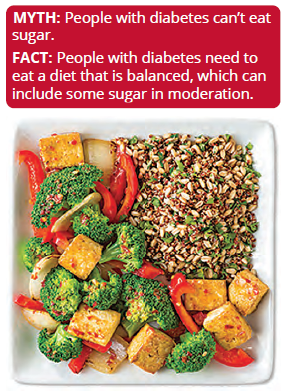
But also be understanding — accepting of yourself and others. As a person with diabetes or prediabetes, don’t blame yourself if you occasionally have slip-ups. If you are caring for or know a person with diabetes or prediabetes, don’t blame them for their condition. Encourage and help them in any way you can. Be patient with yourself and others. Stress is one of the factors that can worsen the health of those with diabetes, so it’s best to come to terms with it instead of becoming anxious. As Lorraine says, “You can have diabetes and still have an active, healthy life. The key is moderation.”
The work of ADA Hawaii is critical with over 442,000 adults in Hawaii affected by prediabetes or diabetes. ADA Hawaii provides access to a hotline, assistance acquiring insulin and many other resources.
ADA RESOURCES
Hotline 1-800-DIABETES (1-800-342-2383)
COVID-19 Website
www.diabetes.org/coronavirus
Assistance Accessing Insulin
www.insulinhelp.org
Community Connection
www.adacommunityconnection.org
Diabetes Risk Test
www.diabetes.org/risk-test
Living with Type 2 Diabetes
https://bit.ly/LivingWithType2
Diabetes Food Hub
www.diabetesfoodhub.org
Diabetes Plate Method
https://bit.ly/DiabetesPlateMethod
Fitness
https://www.diabetes.org/healthy-living/fitness
Heart Disease and Stroke
https://www.knowdiabetesbyheart.org
Ask the Experts
https://diabetes.org/ask-the-experts
Project Power
www.diabetes.org/community/project-power
Diabetes Camp
www.diabetes.org/community/camp
Safe at School
https://bit.ly/DiabetesRightsAtSchool
Advocacy
www.diabetes.org/advocacy
OTHER RESOURCES
Taking Control of Your Diabetes https://tcoyd.org
Ke Ola Mamo www.keolamamo.org/ada
Screen at 23 https://screenat23.org
Medicare Diabetes Screening Coverage
www.medicare.gov/coverage/diabetes-screenings
Timeline of Insulin Discovery
https://bit.ly/Insulin100TheDiscovery
AMERICAN DIABETES ASSOCIATION
800-342-2383 | www.diabetes.org
P.O. Box 7023, Merrifield, VA 22116-7023
Hawaii Local Office
ADAHawaii@diabetes.org
808-947-5979 | Facebook: @ADAHawaii

 In the US, a staggering 34.2 million grapple with diabetes, marking a critical public health concern, particularly for older adults. This chronic condition impacting blood sugar levels significantly threatens seniors’ eye health. Elevated blood sugar can damage delicate retinal blood vessels, leading to diabetic retinopathy—a condition that, if left untreated, can result in vision impairment and possible blindness.