Tag: Assisted Living

  • Making Tough Care Decisions

    Making long-term care decisions for aging parents can be emotional, stressful and complicated. The biggest challenge is navigating differences without damaging family relationships.

    Different views are normal: Each sibling brings a unique perspective. One may prioritize safety, another independence and another cost/logistics. Different priorities don’t mean someone is wrong—they reflect different experiences and concerns.

     There’s no perfect answer: When it comes to long-term care, there is rarely a single “right” solution. In-home care, assisted living, memory care and nursing facilities all involve trade-offs, so focus on what reasonably meets your parent’s safety, dignity and quality-of-life needs.

     Help exists: Geriatric care managers, eldercare attorneys, social workers, patient advocates and support groups can help guide difficult decisions. Kupuna Pono also offers family conferencing and mediation to help resolve kupuna care disagreements.

     Keep relationships first: Aim for 80% agreement on the plan, then commit 100% to supporting it. Protecting family relationships matters more than being right. Disagreements happen, but remember that help is available and families can move forward together with the right support and perspective.


    YIM & YEMPUKU, LLLC–Estate Planning Attorneys
    2054 S. Beretania St., Honolulu, HI 96826
    808-524-0251 | yimandyempukulaw.com

    Making long-term care decisions for aging parents can be emotional, stressful and complicated. The biggest challenge is navigating differences without damaging family relationships.  Different views are normal: Each sibling brings a unique perspective. One may prioritize safety, another independence and another cost/logistics. Different priorities don’t mean someone is wrong—they reflect different experiences and concerns.…

  • The Importance of Senior Living

    Seniors may feel hesitant about making the move to a senior living community and believe the transition will come with a decrease in independence and quality of life.

    But that couldn’t be further from the truth.

    Senior living communities help older adults lead healthier, happier lives thanks to quality care and services.

    If you are considering a move to senior living, here are some things to consider.

    • Does the environment feel welcoming?
    • What are the apartment and community amenities?
    • Are there common areas where you can connect with fellow residents?
    • Will there be help with housekeeping and maintenance?
    • Are there meal options?
    • Is transportation offered?
    • Are there recreational, spiritual and entertainment options available?

    Senior living communities should be a place of kindness, openness, empowerment, love and respect. Staff members should be available to provide support when needed. There should also be emotional, social and spiritual wellness opportunities.

    Choose a senior living community that fits your wants and needs and allows you more time to focus on the things you desire.


    GOOD SAMARITAN SOCIETY—POHAI NANI
    45-090 Namoku St., Kaneohe, HI 96744
    808-247-6211 | good-sam.com

    Seniors may feel hesitant about making the move to a senior living community and believe the transition will come with a decrease in independence and quality of life. But that couldn’t be further from the truth.

  • Home is Where the Heart Is

    Throughout our lives, we can call a variety of places home. For me, one of those places was my grandmother’s house. I’ve been going  in and out of her house since I was a baby. I knew every inch of my grandmother’s house, like which rooms had the best hiding spots or which drawers held my grandma’s fancy scarves.

    Despite living in Waipahu, I attended the schools in Pearl City, which was where my grandmother’s home was. Every morning, my sister and I would be dropped off at my grandma’s and be driven to school by one of my grandparents. We’d often play board games together, like cribbage or Chinese checkers, while awaiting the ride to school. In my intermediate and high school years, I walked to and from school from my grandmother’s house with my sister and cousins. After school, there would always be popsicles in the freezer and my grandma would be waiting for  us while enjoying one of her 1,000-piece puzzles. If we were lucky, her homemade cucumber kimchi was waiting for us, too.

    Then in November 2014, my grandmother was diagnosed with Parkinson’s disease. Parkinson’s disease is a  neurodegenerative disorder that affects a person’s motor skills and the production of dopamine in the brain. The initial years following her diagnosis were relatively normal. But after my grandfather passed away, my grandmother lived alone and her Parkinson’s slowly got worse. After several incidents of my grandma falling while alone at home, my family decided to get caregivers to help watch over her during the day. However, as her Parkinson’s progressed, it became clear that my grandmother needed 24-hour care. Keeping up her home was becoming a stressor for her and my family, as well.

    After many discussions with my grandmother, the decision was made to move her into a care home. So, last October, my grandmother and I said goodbye to the house that she had lived in for 56 years. For the last time, she sat outside and looked out at her neighborhood like she had done everyday. It was sad to see her being driven away from the place that I had always thought she’d be. It was strange to think about another family playing in the yard and using the scarf drawer for something else.

    My grandmother hadn’t outwardly expressed any sadness about the move, but sometimes due to her Parkinson’s-related dementia, she still forgets that she cannot go back to her old home. It’s hard to remind her why, but in the end, it was her decision, because she trusted the family to do what was best for her.

    While there is something so sad about losing a place you called home, truly, it was my grandmother who made that house special. My grandmother is still around to make more memories and to carry that home with her wherever she lives. In a way, we never lost that place we called home because it’s really true, that home is where the heart is.


    Throughout our lives, we can call a variety of places home. For me, one of those places was my grandmother’s house. I’ve been going  in and out of her house since I was a baby. I knew every inch of my grandmother’s house, like which rooms had the best hiding spots or which drawers held…

  • Adult Day Care Supports Aging in Place

    Adult day care services offer professional care for seniors and adults living with dementia and other disabilities. They receive therapeutic, social and health services during the day. Adult day care is also a great solution if the senior needs supervision for safety reasons, is expressing depression or isolation, needs socialization and engaging activities, or if the caregiver simply needs respite. Adult day care gives caregivers the opportunity to work while their loved one is safe.

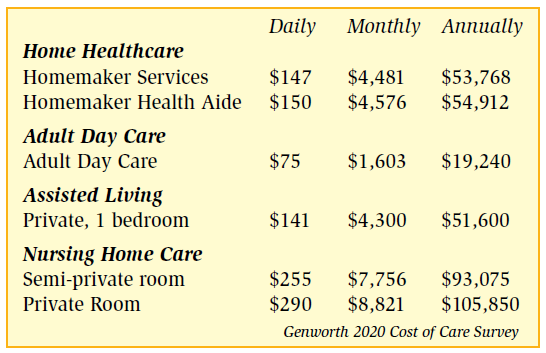
    If Mom and Dad want to age in place at home, adult day care offers an affordable solution for working caregivers (see table). The figures are based on national averages — Hawai‘i’s figures are generally higher.

    Adult day services information can be found at adultdaycentershawaii.org.


    HALE HAU’OLI HAWAII (501(c) 3 nonprofit)
    98-1247 Kaahumanu St., Ste. 207, Aiea, HI 96701
    808-798-8706 | Kwyatt01@aol.com
    www.halehauolihawaii.org

    Adult day care services offer professional care for seniors and adults living with dementia and other disabilities.

  • To Place or Not to Place, That is the Question

    The decision to move to senior living involves a variety of factors based on several circumstances, including finances.

    Professionals across the country have different answers to the question of whether “to place or not to place” a loved one in senior living. Some feel that older adults should stay in their home with paid caregivers. Others think that older adults would receive enhanced care and retain a higher quality of life if they were with others their own age, with more activities and socialization.

    The dilemma of why someone should move into assisted living can be mutually exclusive to making the actual decision in the first place. Family members can have all the reasons in the world their loved one should make a move, but that doesn’t mean they make the decision to place their loved one. Family members must find a balance between safety, finances, and common sense to make the decision that is right for them.

    FOUR STYLES

    One study concluded that there were four distinct decision-making styles when it comes to deciding to place a loved one. These categories included Scramblers, Reluctant Consenters, Wake-Up Callers, and Advance Planners.

    Families who utilize the expertise of a placement agent usually populate the Scramblers and Reluctant Consenters category types.

    ■ Scramblers are usually in a crisis situation resulting from a serious injury or a quick onset of an illness or disease. A sudden fall, stroke, or worsening of a pre-existing condition, along with the added pressure of a pending hospital discharge, can make the family feel the need to quickly find a senior living environment.

    ■ Reluctant Consenters are older adults who are “pushed” to make the decisions due to a noticed decline in their ability to function independently — perhaps because of a health condition. These older adults may not have been victim to an acute onset of issues, but a more constant decline of functioning from conditions like emphysema, heart conditions, dementia, or Alzheimer’s disease The family and the older adult may have noticed the decline for some time before any intervention was discussed.

    ■ Wake-Up Callers are usually victims of a “near-miss” situation. A severe fall may have kept the older adult on the floor  for hours, even without a fracture, for example. He or she may have suffered from dehydration or mild confusion resulting from the fall itself. This group tends to wait until several “wake-up calls” are received before making the final decision to move into senior living. This group is usually the target group for in-home caregiving services.

    ■ Advance Planners are those who have researched long-term care options for many years while they were very healthy. They have strategies for “if ” scenarios and are ready and committed to making the needed changes on the fly.

    MORE CHOOSE GROUP LIVING

    It is essential to know how today’s older adults feel about where they prefer to live as they age. A 2019 Harris Poll  concluded that attitudes have changed regarding senior housing over the years. Back then, an AARP study (2012) revealed that nine out of 10 older adults wanted to stay in their own home as they age. The recent Harris Poll showed that the percentage feeling the same way now about aging in place has dropped significantly.

    Twenty-four percent of those polled reported that they prefer to move into an assisted living community at some point, rather than continue living in their own home. A startling finding was that only 5 percent indicated wanting to live with a family member. The lowest findings (1 percent) preferred a nursing home or the services of an adult daycare center.

    Fifty-eight percent of respondents reported the reason for choosing assisted living was due to the professional care services offered. Other reasons published included not being a burden on families, wanting a familiar, consistent surrounding and the affordability of the care received.

    Understanding the differences in decision-makers and older adults’ preferences is essential. Finances living due to medical reasons require at least eight to 24 hours of supervised or hands-on care daily.

    FINANCES

    At eight hours of private duty services at $25 to $28 per hour, families can expect to pay $200 to $250 per day, or about $6,000 to $7,500 monthly, to maintain a safe and somewhat independent environment at home. The 2019 Genworth Assisted Living Cost study (2019) showed that the average cost of assisted living nationwide was $4,051 per month. In-home caregiving services can cost 33 percent higher in cases that need more hours of supervision.

    While some older adults have long-term care insurance that pays for private-duty caregiving services, many of these  policies have lifetime caps. This means that once the capitation lifetime rate is achieved, the long-term care insurance coverage stops, and actual private pay begins. It’s also true that depending where the older adult lives, care can cost much more than the insurance policy covers from the get-go. A policy may cover as little as a third of costs.

    WHEN TO MOVE

    Understanding the finances behind senior living compared to staying at home is important when comparing dollars; the next dilemma is considering when a move makes sense. The most common reasons to make a move to senior living rather than staying at home with a paid caregiver are:

    • Living alone and needing supervision and hands-on assistance with everyday activities, like showering, getting dressed, personal care and housekeeping.
    • Meal preparation and proper nutrition is crucial to maintain an older adult’s health. When someone has difficulty cooking, preparing, or making healthy choices when it comes to nutrition, it could be a wake-up call.
    • Medication management is vital, especially the more medications an older adult takes. Older adults who are hypertensive, diabetic or have other conditions can have serious health complications if their medications are forgotten or not taken on a timely basis.
    • Loneliness and depression should be taken seriously. The recent death of a spouse can cause loneliness, depression and a need for companionship. Even if a spouse passed away years ago, depression could be caused by regretting plans that never happened. Assisted living holds with it the opportunity for a variety of activities and socialization.
    • Health-related issues are the reasons for a move for Scramblers and Reluctant Consenters. Arthritis, failing eyesight, and a whole host of health-related deficits can make living at home a potential crisis.\

    Referral and placement agents with the CSA® and CPRS credentials are overwhelmingly qualified to help families during their decision-making process. Their knowledge of local community care options makes their expert guidance invaluable. Referral and placement agents work with no cost to family members and are available nationwide. Families, as well as professionals, can find qualified and certified agents at www.CSA.us and www.NPRAlliance.org.

    In conclusion, the question “to place or not to place” is a significant decision for families and older adults to make. In a perfect world, families have time and will include their loved ones on all decision-making. However, life doesn’t always go as planned. Knowing the signs that extended care is needed, as well as the cost, can make the journey of long-term care easier. Getting advice from a qualified placement agent with professional credentials can make the transition into senior living a safer and easier route to take.


    This article has been provided courtesy of the
    SOCIETY OF CERTIFIED SENIOR ADVISORS®
    800-653-1785 | Society@csa.us
    www.csa.us

    The decision to move to senior living involves a variety of factors based on several circumstances, including finances. Professionals across the country have different answers to the question of whether “to place or not to place” a loved one in senior living. Some feel that older adults should stay in their home with paid caregivers.…

  • Assisted Living Facilities Strive to Adapt

    An interview with Tricia Medeiros, Chief Operating Officer of The Plaza Assisted Living

    What brought you into the caregiving field?

    I took a job as a business office manager at an assisted living community while I was in college. My major was accounting and I fully intended to become a CPA. But by the time I graduated, I knew I wanted to be an  administrator at an assisted living community. I felt good about what we did and loved the residents. There was no way I could leave.

    Has the perspective on residing in an assisted living community changed over the years?

    There was a time when there was a stigma attached to moving into an assisted living community. Residents were labeled as “old;” adult “drop-off,” similar to a childcare facility, was implied. Now, the derogatory labels are far from true. Moving into a senior community is now looked at as a way to live independently, not depending solely on family or others. The lifestyle is an opportunity to enjoy yourself and not be burdened with household chores. It is a much favored option these days.

    What are the most common reasons a senior moves or is moved to assisted living?

    Assisted living is the perfect combination of living in an independent apartment while receiving the assistance to allow that to happen. Assisted living also provides an opportunity to socialize with peers. Residents can have dinner guests or enjoy a cup of coffee with a friend any time. Peers are readily available for exercising, playing mahjong or creating arts and crafts projects together.

    Do residents move to assisted on their own or are they placed there by their families?

    Ultimately, everyone moving into assisted living agrees with the transition. Oftentimes, adult children help and research options, but in the final analysis, every resident has to make the choice to move in or not. The only exception is residents with memory issues. In those cases, a family member or loved one will need to facilitate the process.

    What challenges do facilities face?

    The most recent challenge for assisted living is COVID-19. The pandemic underscored the vulnerability of the senior population and the importance
    of the role an assisted living facility must provide to ensure the safely of its residents.

    Most assisted living communities moved quickly and put protocols in place to protect residents. Staff was screened and equipped with personal protective equipment (PPE). Residents were being carefully monitored.

    It is important that residents, families and team members know that most assisted living facilities have become a safer environment than some of the alternatives at home.

    What precautions should assisted living facilities put in place to protect their kūpuna?

    Senior living facilities should protect their kūpuna during the pandemic. This is certainly a time to put safety first. They have the responsibility of screening everyone that enters the community to ensure that no one is sick, has a fever, recently traveled or has been in contact with anyone with COVID-19. Steps should be taken to include the resident in a cohort to minimize spreading of the virus. The facility must also be equipped in case the virus does enter the community. The facility must have plans already in place in order to care for infected residents and minimize the spread.

    How is the industry preparing for the future?

    The industry is preparing for the “new norm.” The previous focus on hospitality must shift to safety. Protocols and screening will remain in place for visitors and staff alike. Safety will be prioritized and assisted living facilities will continue to be the safest places for seniors to live.

    I took a job as a business office manager at an assisted living community while I was in college. My major was accounting and I fully intended to become a CPA. But by the time I graduated, I knew I wanted to be an  administrator at an assisted living community.

  • The Right Senior Living Community for You

    {Play}First, you and your loved ones will deal with the emotions of a changing lifestyle. Family and friends may feel guilt and apprehension, even when moving is clearly for the benefit, safety and happiness of a loved one who needs special care.

    Spectrum of Support. Check the senior living community’s reputation by accessing social media postings—better yet, by getting referrals from current residents, family and friends. The best communities focus on both healthcare and hospitality services. Find out if there is a supportive transition plan to Memory Care units available for early-stage dementia patients.

    Body & Mind. The connection between physical and mental well-being is well documented. Make sure the community offers physical activities that can be tailored to keep your loved one vital.

    Nutritional Needs. Providing a variety of nutritious meals and fresh produce options support the brain’s health. Senior meals should be reviewed by a licensed dietitian for balance and nutrition, calories and enjoyment. Upscale communities have regular “menu chat” sessions, when residents meet with the dining services director and executive chef to evaluate menu items.

    Care with Compassion. In addition to quality training and good staff-to-resident ratios, the  management should be committed to delivering service with integrity, dignity and compassion. Great senior living care engages kūpuna, gives them space to be active and offers a complete program of physical and emotional support.


    ILIMA AT LEIHANO SENIOR LIVING
    739 Leihano St., Kapolei, HI 96707
    808-674-8022 | www.kiscoseniorliving.com/hawaii/

    Is it the right fit? Will the community support your wants, needs and desires? When you or a loved one consider senior living, questions and options can become overwhelming.

  • Consider Memory Care Options

    Generations Magazine - April-May 2016 - Consider Memory Care Options - image 01Independence is a matter of choice and circumstances. And as we age, we naturally become more dependent on others. Living “independently” may mean that you own a home with a yard or a condo, you rent an apartment, or you rent a room in a senior living community. Most people who live a long life can expect to move from one level of independent living to another as yard work, driving and housekeeping become impossible tasks. The newest senior living communities now offer several options in one living complex: independent living, assisted living, short-term respite care for rehabilitation, a memory care neighborhood, and skilled nursing facility. This broad array of services allows clients to easily transition to a higher level of assistance and care within their new home.

    Many seniors worry about how they might be cared for if they lose their memory or develop dementia. Memory care prescribes a specialized program of personal care and services designed for individuals with Alzheimer’s disease or other forms of dementia. Some individuals with memory loss continue to live at home with their families, under the care of their family doctor and supported by adult day care for socialization. Other individuals with dementia live in memory care communities staffed with aides who are uniquely qualified to provide comfort, safety and support for residents, and to provide opportunity for social interaction.

    Memory care “neighborhoods” designed for dementia and other memory impairments, blend a home-like environment with holistic-centered programs and services under the supervision of highly-trained compassionate care managers. A team of professional care specialists deliver an individualized care program for each resident, based on confidential assessments or his/her cognitive abilities. Regularly scheduled follow up assessments and ongoing monitoring ensure that each resident is properly treated and supported through every stage of his/her disease.

    It’s inevitable that aging seniors will need care and assistance at some time. Instead of worrying about it, educate yourself on all the options and plan ahead.


    KALĀKAUA GARDENS — 
A Senior Assisted Living Community
    1723 Kalakaua Ave. Honolulu HI 96826
    808-518-2273  |  www.kalakauagardens.com

    Independence is a matter of choice and circumstances. And as we age, we naturally become more dependent on others. Living “independently” may mean that you own a home with a yard or a condo, you rent an apartment, or you rent a room in a senior living community. Most people who live a long life…

  • Senior Housing – Can I Afford It?

    There are a lot of housing options available for seniors in Hawai‘i, but they all have their own rules, costs, types of services and levels of care. The most common housing options are retirement communities, assisted living, nursing homes, CCRCs and ARCHs. It can get a bit confusing and time consuming to visit all of these facilities; therefore, you may want to narrow your search before tackling site visits.

    After a little bit of research, you will soon learn about the exorbitant costs of long-term care and senior housing. Most people realize they do in fact need a financial plan. The three most common ways to pay for senior housing and/or long-term care is, personal monies, Medicaid/SSI and long-term care insurance. Educating yourself on senior housing options and planning are the two most important ways you can prepare for a comfortable move and be able to afford it.

    For more information on senior housing options, Medicaid, Medicare, long-term care insurance, and other topics related to seniors and real estate, consider attending a free seminar hosted by LIST Sotheby’s Senior Concierge:

    August 29, 2015Medical & Healthcare Options WorkshopHealthcare Laws, Medicare, Medicaid & Long-Term Care

    October 24, 2015Senior Housing Options & Case ManagementRetirement Communities, Assisted Living, Nursing Homes, CCRC & ARCH

    For more information, registration and a 2015 schedule of free senior seminars, please call 808-282-1399.


    List Sotheby’s International Realty
    808-282-1399 | Seniors@LaneyRE.com
    www.laneyre.com

    There are a lot of housing options available for seniors in Hawai‘i, but they all have their own rules, costs, types of services and levels of care. The most common housing options are retirement communities, assisted living, nursing homes, CCRCs and ARCHs. It can get a bit confusing and time consuming to visit all of…