Tag: AARP

  • 2013 Legislature Sends Mixed Signals

    As the 2013 legislative session came to a close, volunteer advocates welcomed the passage of legislation tied to AARP Hawai‘i’s long-term care priorities — but cautioned that more must be done to address a growing elder-care challenge that threatens to overwhelm individuals and families.

    “AARP welcomes funding commitments for Kūpuna Care and Aging and Disability Resource Centers,” said AARP Hawai‘i State President Gerry Silva. “At the same time we believe state government should be more proactive in preparing older residents and their families to cope with the rising cost of care eldercare, which threatens their retirement security.”

    Funds were provided for one of the Commission’s recommendations — an actuarial and feasibility study of a mandatory public insurance program for Hawai‘i’s working population. But another critical component — the need for public education to help residents understand the risks associated with long-term care — went unfunded.

    “Education is time-sensitive. Planning takes time and time is running out for many who will soon need care,” Silva said. “Unless we provide Hawai‘i residents with basic information about long-term care, including the different types of care services available, how much they cost, and the risk of needing some form of care in the future, many older residents and their families are in for a rude awakening as they realize how limited their options are.”

    The Long-Term Care Commission was established by the Legislature in 2008 (Act 224) to conduct a comprehensive assessment of Hawai‘i’s long-term care system and recommend changes. Its report identified a convergence of forces that spell trouble for Hawai‘i’s future if not acted upon, including 1) a rapidly aging population, 2) a lack of public funding to support the medical needs of its seniors, and 3) a population that isn’t planning and is largely unprepared to pay for its own care.

    Many studies support the Commission’s assessment that eldercare is beyond the reach of most Hawai‘i residents. In a 2012 AARP survey of Hawai‘i residents age 50+ nearly two-thirds (64 percent) said they are not confident they can afford to pay for even one year in a nursing home. A separate national survey last year pegged the annual cost of one year in a private nursing home in Hawai‘i at $125,000.

    “We’re asking the state to sound the alarm — just as it does in the face of natural disasters such as hurricanes and tsunamis,” Silva said. “Sound the alarm for the ‘silver tsunami’ so that people can prepare for what may be a devastating blow for our elders and their families.”

    For an overview of AARP’s priority outcomes for the 2013 session, go online to http://states.aarp.org/legislature-funds-long-term-care-priorities-selectively/.


    Contact AARP Hawai‘i for more information:
    State Office: 808-545-6024 | Toll-Free: 866-295-7282
    hiaarp@aarp.org | www.aarp.org/states/hi
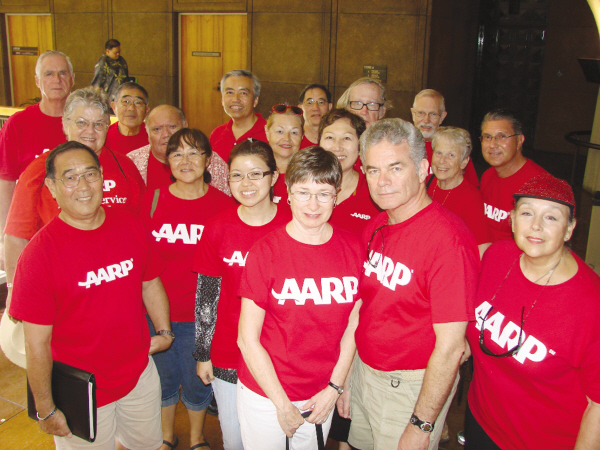
    As the 2013 legislative session came to a close, volunteer advocates welcomed the passage of legislation tied to AARP Hawai‘i’s long-term care priorities — but cautioned that more must be done to address a growing elder-care challenge that threatens to overwhelm individuals and families. “AARP welcomes funding commitments for Kūpuna Care and Aging and Disability Resource Centers,”…

  • AARP: Entrepreneurship for People Age 50+

    April is Encore Entrepreneur Mentor Month and AARP Hawaii, the Filipino Community Center and the U.S. Small Business Administration (SBA) are teaming up to help Hawai‘i residents age 50+ interested in starting their own small business or expanding an existing business.

    Entrepreneur Mentor Day will be held at the Filipino Community Center in Waipahu from 9 –11 a.m. The event features a panel of seasoned entrepreneurs and business experts who will share their experience and offer advice on such topics as writing a business plan, seeking start-up capital and finding helpful resources from the SBA and other organizations. To register, go to aarp.cvent.com/encoreentrepreneur or call toll-free 1-877-926-8300.

    Many Hawai‘i residents are rethinking their retirement goals — either for financial reasons or to stay active and engaged in their senior years. Some are testing the entrepreneurial waters to follow through on a business idea they’re passionate about but never acted upon.

    “Many new entrepreneurs are saving their best acts for their encore performance,” said AARP Hawai‘i State President Gerry Silva. “They’re using their decades of expertise and their connections to start new businesses and to finally pursue that venture that has been stirring their dreams for all these years. Encore Entrepreneur Mentor Day will link Hawai‘i entrepreneurs with experienced business owners who can help transform these dreams into a reality.”

    New research has found that one in four Americans between the ages 44 and 70 are interested in starting their own business or nonprofit venture in the next five to 10 years. Nearly half of these aspiring entrepreneurs have reported a desire to start a business with a positive social impact.

    Encore Entrepreneur Mentor Day is part of a larger national effort by SBA and AARP to counsel more than 100,000 entrepreneurs and small business owners over the age of 50. During the month of April, events will help connect encore entrepreneurs with mentors such as those from SBA’s network of Small Business Development Centers, Women’s Business Centers, and SCORE chapters who can help throughout the life of an entrepreneur’s business.

    In addition, AARP has launched a dedicated webpage containing a wealth of advice for new and existing older entrepreneurs with links to a 50+ toolkit that includes free online courses targeted at helping encore entrepreneurs start or grow their business. For this and other resources available for entrepreneurs over the age of 50, visit www.aarp.org/startabusiness or call 1-888-OUR-AARP.

    April is Encore Entrepreneur Mentor Month and AARP Hawaii, the Filipino Community Center and the U.S. Small Business Administration (SBA) are teaming up to help Hawai‘i residents age 50+ interested in starting their own small business or expanding an existing business. Entrepreneur Mentor Day will be held at the Filipino Community Center in Waipahu from…

  • AARP: Long-Term Care Awareness

    AARP Hawai’i’s Top Legislative Priority in 2013

    In a state with a high cost of living — where one in five residents will be 65 or older by 2032 — island residents are worried about paying for long-term care. In Hawai‘i, costs range from $17,500 for one year of adult day care to about $126,000 for private nursing home care — more than twice the median household income.

    In a recent AARP survey, most members expressed little confidence they could afford the cost of nursing home care, and half doubted they could even afford less expensive care in their own homes. That could mean additional pressure on family caregivers in the future, the number of whom is projected to decline as the number of residents requiring some form of care increases over the next 20 years.

    To address these concerns, AARP Hawai‘i is making long-term care a priority issue in the 2013 legislative session. Our goals include:

    • Support for Kupuna Care — AARP supports an appropriation of $9 million for Kupuna Care from the base budget. Kupuna Care is a state-funded program designed to meet the needs of frail older adults who cannot live at home without help from family or formal services.
    • Support for the Aging and Disability Resource Center (ADRC) — AARP supports an appropriation of $1.8 million for continued implementation and state-wide expansion of ADRCs. ADRCs are designed to help eliminate confusion by providing a “one-stop shop” for residents looking for long-term care services. A recent AARP report ranked Hawai‘i 41st in the nation in the ability to access long-term care through an ADRC.
    • Investigate the Cost of a Public Long-Term Care Insurance Program — AARP supports the study of the cost and feasibility of a limited mandatory public long-term care program, as recommended by the Hawai‘i Long-Term Care Commission. The study would identify eligibility requirements, benefit amounts, benefit period, and premium payments.

    To find out more about the long-term care challenges facing Hawai‘i, or to get involved as a volunteer advocate, call 808-545-6005.

    AARP Pension Tax Posse - Generations Magazine - February-March 2013
    Pension Tax Posse II

    AARP Hawai’i’s Top Legislative Priority in 2013 In a state with a high cost of living — where one in five residents will be 65 or older by 2032 — island residents are worried about paying for long-term care. In Hawai‘i, costs range from $17,500 for one year of adult day care to about $126,000 for private nursing home…

  • AARP: Voter Resources

    Straight Talk: Social Security & Medicare

    How long will Hawai‘i residents be able to work as they age? How much should seniors pay for health care? What will future retirees need, and what as a nation can we afford? These are some of the issues at stake this election season as the future of Social Security and Medicare becomes the focus of campaign ads on TV, radio, in print and online.

    But confusion is running high among Hawai‘i residents, as are concerns over the future of programs vital to many seniors and their families. In response, AARP Hawai‘i is offering information about the challenges facing Social Security and Medicare so that everyone can have a voice in the debate over their future.

    “You’ve Earned a Say” (www.earnedasay.org) offers Hawai‘I residents a one-stop resource with straight talk about key election issues. The website outlines the positions of candidates in the presidential, U.S. Senate and House races — in their own words — on Social Security, Medicare and financial security. The site also provides the views of Hawai‘i candidates for the state legislature on issues related to health care, long-term care, the state budget and tax reform — areas of particular concern to older voters heading to the polls in 2012.

    AARP You've Earned a Say - Generations Magazine - October-November 2012

    The “You’ve Earned a Say” website provides voters with balanced information about Medicare and Social Security proposals that are being debated on the campaign trail— the pros and cons— so they can have a voice in the future of these program. In addition, “You’ve Earned a Say” events are being scheduled at locations across the state.

    AARP is a nonpartisan organization for people age 50 and older with nearly 150,000 members in Hawai‘i. It does not support or oppose political candidates, nor contribute money to political action committees, campaigns or super PACs. AARP champions access to affordable, quality health care for all generations, provides the tools needed to save for retirement, and serves as a reliable information source on issues critical to older Americans.

    For details and information on “You’ve Earned a Say” events, please call 808-545-6005 or visit www.earnedasay.org.

    Straight Talk: Social Security & Medicare How long will Hawai‘i residents be able to work as they age? How much should seniors pay for health care? What will future retirees need, and what as a nation can we afford? These are some of the issues at stake this election season as the future of Social…

  • AARP Hawaii: Driving to Fight Senior Hunger

    AARP Hawai‘i has launched an initiative to raise awareness and help non-profits meet the growing demand for food among Hawai‘i’s frail elderly population. The initiative, part of the national AARP Foundation Drive to End Hunger, supports the efforts of Lanakila Meals on Wheels and Hawai‘i Meals on Wheels — organizations that provide home-delivered meals to seniors unable to cook or shop for themselves.

    Drive to End Hunger focuses on a specific challenge the two organizations face in meeting the growing demand for services for Hawai‘i’s aging population: the shortage of volunteer drivers. Drivers are a critical link to the elder community, not only because of the meals they deliver but also due to the contact they have with many seniors who are otherwise isolated.

    Without volunteer drivers, Hawai‘i’s Meals on Wheels organizations can’t keep up with the growing demand for their services. “We have a wait list of 400 residents who’ve requested meal service that we’re not able to provide at current volunteer staffing and funding levels,” said Lanakila Meals on Wheels Director Lyn Moku. Hawai‘i Meals on Wheels Executive Director Claire Shimabukuro faces a similar predicament. “We would like to deliver more meals to seniors in need, but our ability to increase the number of existing routes is tied to the number of available drivers,” she said.

    Victoria Howarth and Les Miller - Generations Magazine - August - September 2012
    Victoria Howarth and Les Miller

    Both Hawai‘i Meals on Wheels and Lanakila Meals on Wheels host monthly orientation sessions where individuals can ask questions and get a feel for what it takes to volunteer. In general, volunteer drivers need to be patient, reliable and friendly. They should have a car with valid insurance and safety sticker and be available for up to three hours, every other week. According to research commissioned by AARP Foundation in 2011, Hawai‘i ranked 25th in the country in the number of adults age 50 and older who were food insecure (6.68 percent of older residents affected). Food insecurity is also associated with numerous negative health outcomes among the elderly — including poorer health and higher probability of being hospitalized.

    Drive to End Hunger is part of a nation-wide AARP Foundation assault on the hunger problem among Americans 50+. We’re taking steps to feed those who are hungry now, while developing long-term, sustainable answers that address the root causes of hunger among those 50+.

    For more information & volunteer, call:

    LANAKILA MEALS ON WHEELS
    531-0555 | www.lanakilapacific.org

    HAWAI‘I MEALS ON WHEELS
    988-6747 | www.hmow.org

    aarp.org/hi | facebook.com/AARPHawaii | twitter.com/AARPHawaii

    AARP Hawai‘i has launched an initiative to raise awareness and help non-profits meet the growing demand for food among Hawai‘i’s frail elderly population. The initiative, part of the national AARP Foundation Drive to End Hunger, supports the efforts of Lanakila Meals on Wheels and Hawai‘i Meals on Wheels — organizations that provide home-delivered meals to seniors unable…

  • Are You a Planner?

    The end of your life begins now

    While more Americans are living longer, they will inevitably cope with one or more chronic conditions and disability. Recent statistics reveal that more than 70 percent of individuals in their 80s have some degree of dementia or diminished capacity. In order to ensure that your wishes are followed, that you are properly cared for, and that you and your family do not experience undue stress or conflict—planning is no longer just a good idea, it is imperative. And, there’s no time like the present, as the Chinese proverb so poetically suggests. Many families wait until it is too late to engage in proper planning. This leaves them and their families in a crisis, often with family members (brothers/sisters) fighting with each other, causing unnecessary stress and leaving the family member (father/mother) without proper care.

    Research is also revealing that traditional planning — estate plan, durable general power of attorney, advance healthcare directive and a trust — is sometimes not as effective as one had planned.

    There are many reasons for this, including:

    • after signing estate plans, people do not fully understand what they completed or the decisions that will have to be made in the future
    • the documents that make up an estate plan do not usually provide much guidance in and of themelves
    • our goals and preferences may change, and few people review their plans from time to time to accommodate these changes
    • the appointed agents, representatives and trustees seldom understand the maker’s wishes
    • the maker’s wishes are not entirely known, and thus not fully honored

    I suggest that we change our view so that signing one’s estate planning documents does not signify the completion of planning — rather, it represents the beginning of the planning process.

    Estate planning should be less of an “transactional model” (the making and signing of our documents) and more of a “communications model” (the start of a conversation with our family, agents, trustees and care providers, who are the central role in this estate planning process).

    “Only 29 percent of people create a living will or power of attorney for health care.”

    ~ 2007 AARP poll

    The Communications Model to estate planning involves a 5-step approach:

    1. Reflect on your personal experiences, values, desires and preferences
    2. Talk to the person you are considering appointing to make medical or financial decisions for you should you become incapacitated
    3. Appoint the person to speak for you when you are no longer able to speak. Work with a qualified estate planning attorney to create, review and tailor your advance health care directive, durable general power of attorney and trust
    4. Share your ideas, wishes and decisions regarding your financial and health care preferences with family, friends, agents, trustees, health care providers
    5. Review your estate plan from time to time to accommodate change (adding properties, changing beneficiaries, etc.).


    Stephen B. Yim, Attorney at Law

    2054 S. Beretania Street, Honolulu, HI 96826

    (808) 524-0251 | stephenyimestateplanning.com

    The end of your life begins now While more Americans are living longer, they will inevitably cope with one or more chronic conditions and disability. Recent statistics reveal that more than 70 percent of individuals in their 80s have some degree of dementia or diminished capacity. In order to ensure that your wishes are followed,…

  • Having ‘The Talk’ with Your Loved Ones

    Where do they want to be cared for and how?

    Recently, I reached my 50s, along with millions of other aging baby boomers. I can still remember when I was in my 20s and I thought 50 was old—really old! But, baby boomers are revolutionizing how we think about age … and, also about how we care for our post-war, baby-making parents.

    Our parents—the Greatest Generation—are living well into their 80s and 90s. As such, boomers are challenged with making caregiving decisions more than any other previous generation.

    Every week I have conversations with fellow boomers about caring for our parents. Comments run from I can’t keep taking time off from work to take my mom to the hospital and I’m tired of rushing home to fix dinner for dad to I am exhausted by the evening caregiving chores and I’m staying over nights because Dad has breathing issues and needs 24-hour care. These scenarios are typical for many families in Hawai‘i, where caregiving of some form or fashion happens in 1 in 4 households.

    Regardless of how well your parents are aging, every family needs to have to “the talk.” I suggest that adult children and parents be proactive about this. Have a plan before you are faced with a major health issue.

    If you are the adult child, ask your parents about who they’d like to take care of them, where they’ll be cared for, and how to pay for services in the case that family cannot provide adequate care.

    Women have a 79% chance of needing care, and men you are not far behind at 69%.

    ~ According to AARP

    • Do they have long-term care insurance?
    • Where are their legal papers?
    • Where are their bank accounts?
    • Do they have an attorney?

    If you are a parent, please make time to discuss caregiving with your spouse and children. Planning will ensure that you receive the care you want and deserve. If you do not plan with your children, they may have to make decisions for you … decisions that you may not agree with.

    Where do they want to be cared for and how? Recently, I reached my 50s, along with millions of other aging baby boomers. I can still remember when I was in my 20s and I thought 50 was old—really old! But, baby boomers are revolutionizing how we think about age … and, also about how…

  • The City’s Complete Streets

    New law paves way for safer streets for pedestrians, cyclists and the disabled

    Pedestrian and bicycle safety advocates celebrated in May as the Honolulu City Council unanimously passed an ordinance that paves the way for the development of a multi-modal mobility infrastructure, making it safer and easier for residents of all ages and physical abilities to get around.

    The passage of Bill 26 is the culmination of nearly six years of work at the state and county levels of government by advocates concerned that Honolulu’s roadways are predominantly designed for use by automobiles and provide dangerous conditions for those who don’t drive. Bill 26 requires that Honolulu’s roadways accommodate access and mobility for all users of public highways, including pedestrians, bicyclists, transit users, motorists and persons of all abilities. The new law is a significant milestone in the fight to ensure that city transportation planning and design takes into account Hawai‘i’s aging population.

    “This law is the beginning of a culture shift in Honolulu transportation planning,” said AARP Hawai‘i Director of Community Outreach Jackie Boland. “Hawai‘i has the highest fatality rate in the country among pedestrians age 60 and older, and that has to change. Our city streets belong to everyone — pedestrians, bicyclists, drivers, young and old, the able and the disabled.”

    Bill 26 sets the stage for the implementation of Complete Streets in Honolulu. It describes Complete Streets features and principles, provides for the interdepartmental coordination and transparency necessary to ensure that city streets are made more accessible for all users.

    Examples of Complete Streets features include such things as sidewalks, crosswalks, accessible curb ramps, curb extensions, raised medians, refuge islands, roundabouts or mini-circles, traffic signals and accessible pedestrian signals, shared-use paths, bicycle lanes, paved shoulders, street trees, planting strips, signs, multi-modal pavement marking and striping, street furniture, bicycle parking facilities, public transportation stops and facilities, including streetscapes, dedicated transit lanes, and transit priority signalization.

    AARP is a membership organization for people age 50 and older with nearly 150,000 members in Hawai‘i. We champion access to affordable, quality health care for all generations, provide the tools needed to save for retirement, and serve as a reliable information source on issues critical to older Americans.

    For more information, please visit www.aarp.org/hi, www.facebook.com/AARPHawaii or www.twitter.com/AARPHawaii.

    New law paves way for safer streets for pedestrians, cyclists and the disabled Pedestrian and bicycle safety advocates celebrated in May as the Honolulu City Council unanimously passed an ordinance that paves the way for the development of a multi-modal mobility infrastructure, making it safer and easier for residents of all ages and physical abilities…

  • What’s in the Health Care Law for You – Today

    Many families across Hawai‘i already know how the new health care law, the Affordable Care Act, is helping them. They’ve been able to maintain health care coverage for their college-age children, or buy health insurance after being previously labeled “uninsurable.” Many more have obtained discounts on expensive prescription drugs.

    Still, you may be wondering, What’s in the new health care law for me?

    AARP’s Health Law Guide, www.aarp.org/healthlawguide, can create a personalized report that tells you how the law will help you. If you are uninsured, your report will identify coverage you may be eligible to receive.

    Because different parts of the law will go into effect over a number of years, it’s a good idea to learn about the changes that are in store for you this year. In addition to providing your personalized report, the AARP Health Law Guide can help you stay on top of the law as it is implemented.

    A few changes you may appreciate right now:

    1. If you’re at risk of reaching the Medicare Part D doughnut hole—the threshold at which you’re responsible for a higher portion of your drug costs — you will receive a 50 percent discount on brand-name drugs and a 14 percent discount on generic drugs while you’re in the coverage gap.
    2. If you have Medicare, you can receive preventive care services such as mammograms, immunizations and screenings for cancer and diabetes, as well as an annual wellness visit, at no cost to you. If private insurers consider you “high-risk” due to prior or current health problems, and if you have been uninsured for at least six months, you may buy insurance through the Pre-Existing Condition Insurance Plan (PHIP). For more information go to http://aarp.us/wPdv2k.
    3. If you have an uninsured adult child under age 26, you may be able to add him/her to your family’s existing insurance plan.
    4. If you get sick, you will not lose your coverage as long as you continue to pay the premiums.

    Whether you currently have health coverage or not, it’s important to get the facts about how the law could impact your situation. In less than five minutes, AARP’s Health Law Guide can help you figure out how the new law benefits you and your family, how the law works with your current coverage, and what other health coverage may be available.

    Many families across Hawai‘i already know how the new health care law, the Affordable Care Act, is helping them. They’ve been able to maintain health care coverage for their college-age children, or buy health insurance after being previously labeled “uninsurable.” Many more have obtained discounts on expensive prescription drugs. Still, you may be wondering, What’s…

  • AARP: Hawai`i’s Not Ready for Care Needs

    In 2008, the state Legislature established the Long-Term Care Commission to assess Hawai‘i’s system of care for the elderly and recommend improvements. Nearly four years later, the Commission is ready to share its findings with lawmakers - and the report is not encouraging.

    Describing the state’s long-term care system as “broken,” the Commission concludes that neither the state nor most of its residents are prepared to deal with the high cost and complexity of care. The report says that lack of public awareness and fragmented state oversight of programs and providers make for an increasingly dangerous combination as Hawai‘i ages.

    “Hawai‘i’s people have not put aside sufficient savings to deal with the risks of aging, and that’s something that could come back to haunt all of us,” said Long-Term Care Commission Chair Stuart Ho, who also serves as State President of AARP Hawai‘i. “Most of our residents are both unaware of and unprepared for the looming financial costs associated with long-term care. The problem is compounded by state government’s fragmented management of the current system, which leaves families confused about the services available to them.”

    The Commission finds that most residents - and state government itself - are unprepared to cope with the increased demand for long-term care services. As the need for services increases, many families are shocked to learn that Hawai‘i nursing home costs are among the highest in the country and are already at full capacity.

    Meanwhile, Hawai‘i is home to one of the fastest aging populations in the United States. Between 2007 and 2030, the number of residents age 85 and older will increase by almost two thirds (from 29,000 to about 48,000). As our population ages, the Commission says that either government will need to spend substantially more for long-term care or other sources of funding will have to be found.

    The Commission report, ready for delivery to the Legislature in January, includes eight recommendations for consideration. Three are listed below.

    • Launching a long-term care public awareness campaign
    • Establishing a mandatory public insurance program
    • Consolidating state departments responsible for long-term care into a single agency for greater efficiency and coordination

    To read the report and the complete list of recommendations, visit the University of Hawai‘i Public Policy Center online at publicpolicycenter.hawaii.edu/ltcc.

    In 2008, the state Legislature established the Long-Term Care Commission to assess Hawai‘i’s system of care for the elderly and recommend improvements. Nearly four years later, the Commission is ready to share its findings with lawmakers - and the report is not encouraging. Describing the state’s long-term care system as “broken,” the Commission concludes that neither the…

  • AARP: Saving Money on Prescriptions – Ask for Generic Drugs

    Usually when a doctor prescribes a medication during an appointment, we take the prescription slip and head for the door. But a savings-savvy patient will pause and ask, Is there a generic version? This simple question may save you hundreds, even thousands, of dollars a year.

    Take Zocor, a popular drug that treats high cholesterol, for example. According to the Consumer Reports Best Buy Drug report at www.aarp.org/drugsavings, an average monthly cost for 10 mg of Zocor is $106. But, Simvastatin, the generic version of Zocor, costs only $36, saving you $70!

    Even if you have health insurance with drug coverage, generics can save you money. A generic drug has the same active ingredients as the brand-name version and works just as well for nearly all patients. A generic drug can look different from its brand-name counterpart, but the Food and Drug Administration will only approve generic drugs that have the same strength, effectiveness and quality as their brand-name equivalents.

    Here are some tips to take advantage of lower cost generics:

    For a new prescription:

    • Ask your doctor if there is a generic drug option.
    • Request that your doctor writes, “dispense generic” on your prescription.
    • Double-check with your pharmacist that you have received the generic drug when you get your prescription filled.
    • Keep an updated list of your medications so your doctor can check for interactions. If you do not have a medication list, download a form from www.aarp.org/medicationrecord and start yours today.

    For an existing prescription:

    • Visit the Drug Savings Tool at www.aarp.org/drugsavings to find information about the safety, effectiveness and price of your prescription drugs, directly from the Consumer Reports Health Best Buy Drug database.
    • If you have Medicare, use the Doughnut Hole Calculator at www.aarp.org/doughnuthole to learn how to avoid the coverage gap, or doughnut hole, where you have to pay all your prescription costs. Print a letter and give it to you doctor for each medi-cation option that may save you money. Also, because of the Affordable Care Act, Medicare Part D recipients who reach the coverage gap will now get a 50 percent discount on brand-name prescription drugs and a 7 percent discount on the lower cost generic medications.
    • Be on the lookout for more generic drug choices. Over the next 14 months, seven of the 20 best-selling drugs, such as cholesterol medication Lipitor, and blood thinner Plavix, will have generics for the first time. Be ready to discuss your options with your doctor.

    Usually when a doctor prescribes a medication during an appointment, we take the prescription slip and head for the door. But a savings-savvy patient will pause and ask, Is there a generic version? This simple question may save you hundreds, even thousands, of dollars a year. Take Zocor, a popular drug that treats high cholesterol,…