Category: Nov – Dec 2025

  • Music Therapy for Continuing Wellness

    Sounding Joy Music Therapy, Hawai‘i’s first and only nonprofit music therapy organization, was established in 2002 by board-certified music therapist Keiko Kajiwara to serve diverse local communities that value music as a cultural resource for healing and empowerment. Its mission is to improve well-being and quality of life through music therapy, especially in underserved communities. Services include music therapy for people with disabilities, medical/mental health challenges and those in at-risk circumstances, in collaboration with hospitals, rehabilitation and long-term care centers, senior programs, shelters, schools and other community sites. Public education and advocacy services include research, training and charitable events.

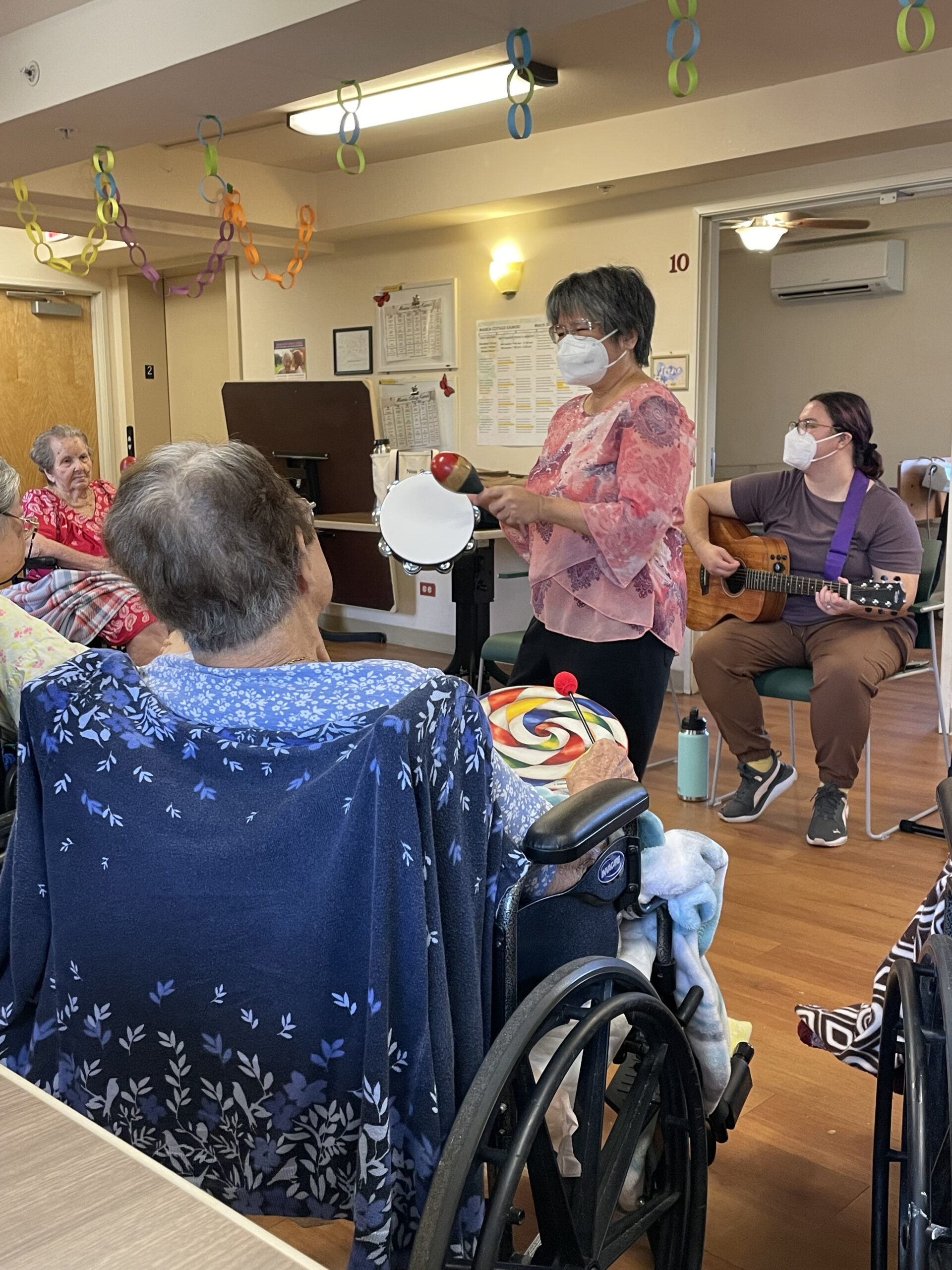
    Music therapy participants engage in singing, movement and improvisation on a variety of instruments. The purpose of this therapy is creative self-expression and community-building, so no prior musical experience is required. Participants’ diverse musical preferences and cultural traditions are embraced in group music-making, honoring the wealth of knowledge and life experience of Sounding Joy’s older adult participants.

    The federal government has recommended music therapy as a mandatory service for senior programs, as it supports active engagement, rehabilitation and palliative care. It is also accessible for those with limited verbal communication.

    Because music stimulates and integrates the functioning of different areas of the brain, it can address a variety of therapeutic goals—motor functioning, memory, communication, emotional expression and socialization. Research demonstrates beneficial music therapy outcomes for a wide range of conditions, including autism, dementia, developmental disabilities, movement disorders, chronic pain and trauma. The program has partnered with the Hawai‘i Parkinson Association and others to offer music therapy to Parkinson’s patients and their caregivers.

    While Sounding Joy works with clients of all ages, the state’s fast-growing population of seniors constitutes the largest age group. But there are less than 12 board-certified music therapists practicing in Hawai‘i. To help make music therapy available to those in need, support Sounding Joy’s Holiday Giving campaign using the donation link below.


    SOUNDING JOY MUSIC THERAPY, INC. (nonprofit)
    Serving people of Hawai‘i since 2002
    1314 South King St., Ste. #963, Honolulu, HI 96814
    808-593-2620 | nguerrero@soundingjoymt.org | soundingjoymt.org
    Donate: tinyurl.com/Donate-SoundingJoyMusic

    Sounding Joy Music Therapy, Hawai‘i’s first and only nonprofit music therapy organization, was established in 2002 by board-certified music therapist Keiko Kajiwara to serve diverse local communities that value music as a cultural resource for healing and empowerment. Its mission is to improve well-being and quality of life through music therapy, especially in underserved communities.…

  • Spinning a Yo-Yo, One Trick at a Time

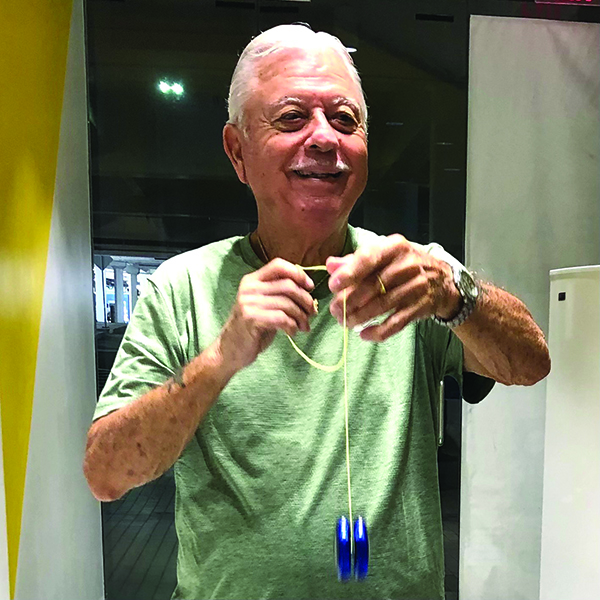
    You might remember the yo-yo craze of the 1950s—kids rushing to grab the latest models and daring each other to master every spin, loop and flip.

    Amid the frenzy, young Richard Lee of Honolulu discovered a passion that would shape his life. He spent countless hours practicing at the Ben Franklin store in Kaimuki and in local parks, refining his tricks under the watchful eyes of friends and competitors. However, Lee’s family didn’t always understand his obsession with the toy. That lack of support only strengthened his resolve, driving him to mastering the yo-yo.

    By 1951, Richard’s commitment paid off: He claimed his first national championship at the Duncan Yo-Yo Tournament, followed by consecutive victories in 1952 and 1953. Audiences were captivated by his precision and flair, particularly his Flying Trapeze trick, which became the hallmark of his performances.

    Long before it became popular, the yo-yo traveled from the Philippines, where it was called a “come-come” and used for hunting and skillful play. By the time it reached Honolulu, it had evolved into a test of dexterity and style—a challenge he embraced wholeheartedly. For him, mastery wasn’t just about applause or awards; it became a way to give back. He discovered fulfillment in teaching, guiding players as they learned the tricks and discipline that shaped his own journey.

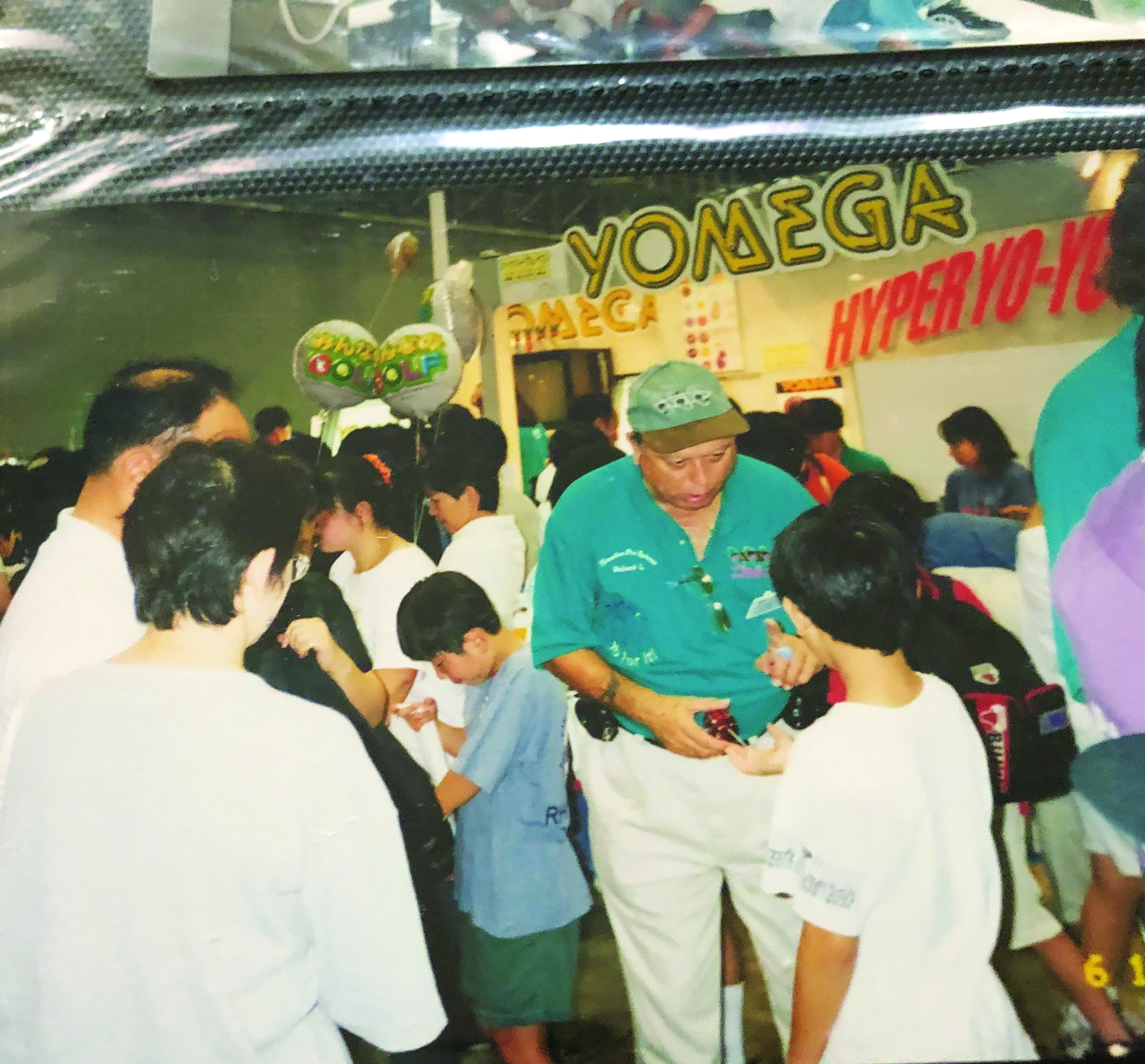
    After his championship years, Richard turned to mentoring the next generation. In the 1980s and 1990s, he performed at community events, including family nights at Nehelani, alongside the students he trained. They demonstrated tricks like Walk the Dog and Rock the Baby, encouraging attendees to try them. Weekends became informal classrooms, where children learned everything from basic spins to advanced flips. Through patience and precision, Lee’s lessons went far beyond the yo-yo, helping kids build confidence, resilience and pride.

    Richard can still be found demonstrating tricks, mentoring young enthusiasts and keeping the yo-yo alive on weekends at Ala Moana and Kāhala Mall. Known affectionately as “Yo-Yo Man” and “Big Daddy,” his legacy extends beyond trophies—it lives in the hands of every child who learns to loop, flip and spin. Richard Lee’s influence continues to spread across the islands, one yo-yo at a time.

    You might remember the yo-yo craze of the 1950s—kids rushing to grab the latest models and daring each other to master every spin, loop and flip. Amid the frenzy, young Richard Lee of Honolulu discovered a passion that would shape his life. He spent countless hours practicing at the Ben Franklin store in Kaimuki and…

  • Dinuguan (Pork Blood Stew)

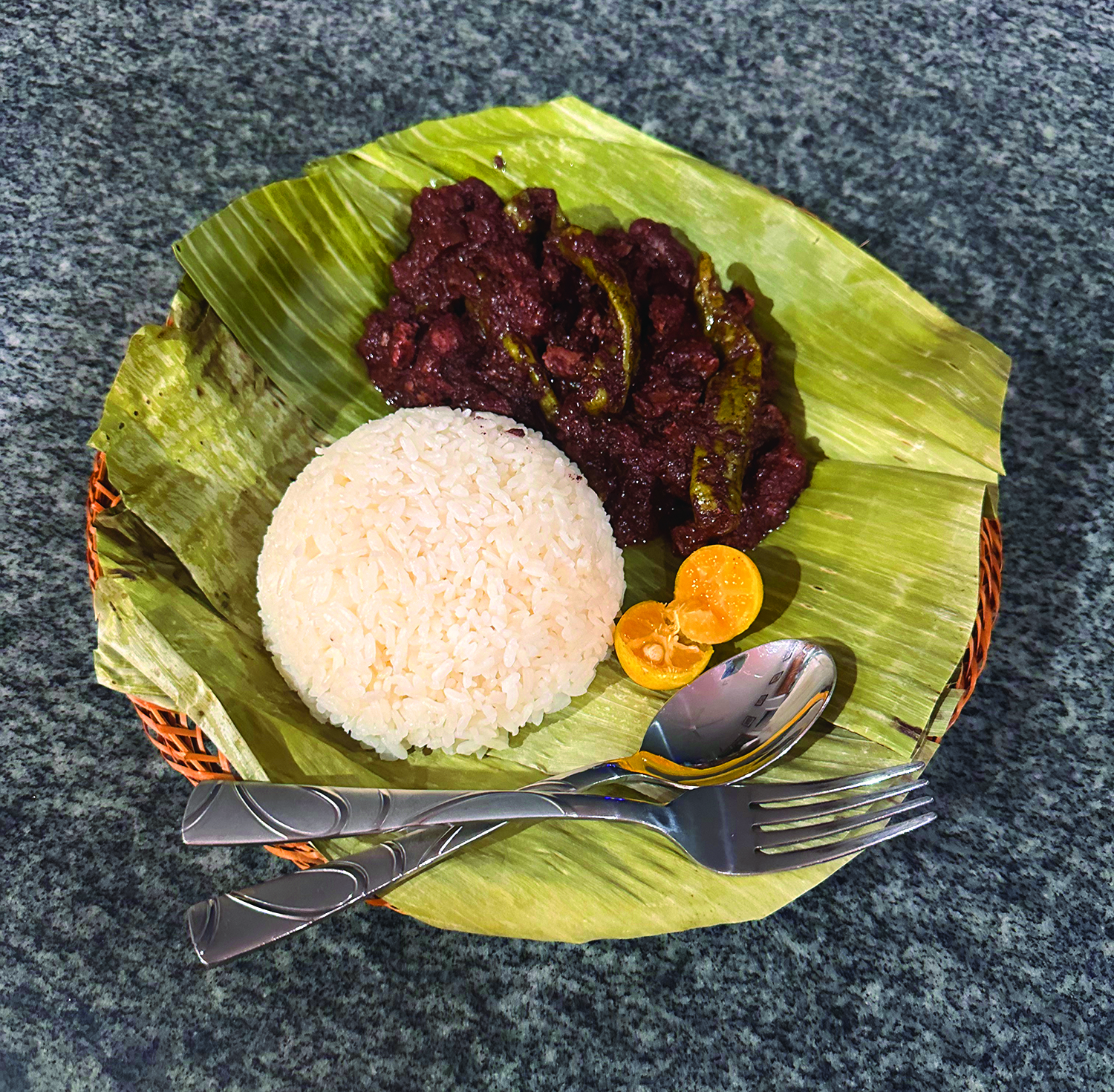
    The “blood” in the name of this dish may sound unpleasant to some, but I assure you that dinuguan is well-loved among Hawai‘i locals, who have nicknamed it “chocolate meat.” It’s a traditional dish in Filipino culture, but each region of the Philippines has its own variations when it comes to spices and consistency. The north likes it dry; the south likes it more soupy. I use my own variation of ingredients, including lemongrass for aroma and coconut milk for a Visayan flair. Pork blood may be bought at any Asian store or local market.

    Ingredients:

    3 lbs. pork (belly & lean meat)
    3 stalks lemongrass
    1/4 lb. sweet chili peppers
    1/2 cup shallot onions (s l i ced)
    2 tbsp. fresh garlic (diced)
    1 cup fresh pork blood
    5 cups water
    1/2 cup coconut milk
    2 tbsp. fish sauce (any brand)
    2 tbsp. vinegar (any type)
    5 leaves bay leaf (whol e)
    1 tbsp. peppercorns (crushed)
    1/8 tsp. salt (to ta st e)
    1 calamansi (Philippine lime)

    Prep & cook time: 1 hour
    Serves: 7–10

    Preparation:
    Cut the two types of pork meat (belly and lean) into 3/4-inch cubes and put them in a bowl.

    Crush the whole lemongrass stalks, then fold them in half and tie them into a bundle using one of the lemongrass leaves.

    Dice the fresh garlic (about 2 or 3 cloves), slice the shallots and crush the peppercorns into large granules. (Note: crushed peppercorns are preferred over ground pepper.)

    All the other ingredients may be prepped ahead
    of time or done during cooking.

    Cooking directions:
    1) Use a wok (preferred) or a deep frying pan with a lid. Brown the pork belly on medium heat. No oil is used, so stir the meat constantly to prevent it from sticking to the pan.

    2) After the pork belly has rendered some fat, add the garlic, shallots and lean meat. Stir while cooking the lean meat halfway through—for about one minute.

    3) Add the bay leaves, crushed peppercorn and salt (to taste) and sauté for 2 minutes.

    4) Add 5 cups of water, the fish sauce and lemongrass bundle. Boil for 1 minute. Lower the heat. Cover and simmer the mixture for 25 minutes.

    5) Add the sweet chili peppers. Simmer for about 5 minutes. Add more salt if needed. Remove the bundled lemongrass. Continue to simmer.

    6) Dribble the vinegar evenly. Do not stir. Simmer for 1 minute, then stir to mix all of the ingredients. Pour in the coconut milk and stir again.

    8) Add 1 cup of pork blood, stirring constantly until the blood turns to a chocolate color, indicating the blood had been cooked. Stir and simmer to the desired consistency. Add more vinegar to your taste.

    Serve with a slice of calamansi for squeezing over the dish. Enjoy with steamed rice or puto (steamed rice cake) or simply as a pulutan (appetizer) with your favorite beverage.


    Do you have a favorite recipe and story to share? For consideration, include a photo and mail to Generations Recipe, PO Box 4213, Honolulu, HI 96812, or
    email them to Cynthia@generations808.com.

    The “blood” in the name of this dish may sound unpleasant to some, but I assure you that dinuguan is well-loved among Hawai‘i locals, who have nicknamed it “chocolate meat.” It’s a traditional dish in Filipino culture, but each region of the Philippines has its own variations when it comes to spices and consistency. The…

  • Celebrating the Filipino Culture

    Since more than 1,500 years ago, Kānaka Maoli (Native Hawaiians) have welcomed immigrants from every corner of the globe, cultivating and perpetuating a tapestry of diverse cultures. In the sixth article in this ongoing series on the many cultures that comprise Hawai‘i, we will focus on the Filipino, how the people arrived in the Hawaiian Islands, their culture and celebrations such as the Barrio Fiesta and Flores de Mayo.

    Filipino Arrival in Hawai‘i

    In the mid-1800s, the first few Filipinos (called “Manila men”) settled in Hawai‘i, finding work as cooks and musicians in the Royal Hawaiian Band. These men were some of the first sakadas (overseas migrant workers).

    In the early to mid-1900s, an estimated 125,000 Filipino workers immigrated to Hawai‘i from the Ilocos and Visayas regions of the Philippines. Many of these workers were recruited to work on sugar plantations due to their agricultural knowledge, where they worked long hours under intense heat for little pay. In the beginning, most sakadas were single males, but as time went on, more workers brought their families with them. Today, people of Filipino descent make up the second largest ethnic group in Hawai‘i at 25.1% of the population.

    Culture and Tradition

    The Filipino culture is heavily family-oriented, emphasizing respect for elders, hospitality and bayanihan, or a spirit of communal unity. Filipinos in Hawai‘i often pack and send balikbayan boxes (care packages) full of clothes and snacks for family in the Philippines, and bring pasalubong (souvenir gifts) from Hawai‘i.

    Perhaps the most pervasive feature of Filipino culture in Hawai‘i is the cuisine. Go to any family gathering or graduation party, and more often than not, you’ll see at least one of the following: lumpia, pork or chicken adobo, pancit and halo-halo. And who can forget about ube (purple yam)—in lattes, pastries, ice cream—sweetening up our lives?

    Flores de Mayo & Filipino Fiesta

    The culture is heavily influenced by Catholicism, introduced during Spanish colonization. Filipinos celebrate many Catholic holidays with several events held throughout the Hawaiian Islands. This past May, the 56th annual Barrio Fiesta was held on Maui with cultural performances, food and a pageant. Next May, the Filipino Community (FilCom) Center will host the Flores de Mayo & Filipino Fiesta, the largest celebration of Filipino culture on O‘ahu. Traditionally celebrated as a devotion to the Blessed Virgin Mary, the upcoming celebration will feature a balut eating (fertilized duck egg) contest, a cultural clothing market, tinikling (bamboo dance) and more.

    For more information, see the FilCom Center’s website (filcom.org) as well as Generations Magazine’s Facebook page (facebook.com/genmag808) and calendar (generations808.com/calendar) for community events and opportunities.


    The next article in this series will feature the influences of Samoan culture in Hawai‘i.

    Since more than 1,500 years ago, Kānaka Maoli (Native Hawaiians) have welcomed immigrants from every corner of the globe, cultivating and perpetuating a tapestry of diverse cultures. In the sixth article in this ongoing series on the many cultures that comprise Hawai‘i, we will focus on the Filipino, how the people arrived in the Hawaiian…

  • The Risks of Using Artificial Intelligence, Part II

    While AI has the potential to greatly benefit seniors (see the Sept.–Oct. issue), it also presents certain risks:

    PRIVACY CONCERNS
    Data Security: AI systems often collect and store personal data, which can lead to privacy breaches. Seniors may be particularly vulnerable to data theft or misuse.
    Surveillance: Increased use of AI in monitoring systems (home security cameras) can lead to concerns about loss of personal privacy.

    DEPENDENCE ON TECHNOLOGY
    Over-reliance: Seniors may become overly dependent on AI technologies, which could diminish their ability to perform daily tasks tasks independently if the technology fails or is unavailable.
    Skill erosion: Relying on AI for cognitive tasks like remembering appointments may lead to a decline in memory and problem-solving skills.

    ACCESSIBILITY ISSUES
    Digital divide: Not all seniors are comfortable with or have access to technology. This can create disparities in who benefits from AI.
    Complexity: Some AI systems may be too complex for seniors to use effectively, leading to frustration and disengagement.

    BIAS AND INACCURACY
    Algorithmic bias: AI systems can reflect biases present in their training data, leading to inaccurate or unfair outcomes. For example, health recommendations may not be suitable for all demographics, including seniors.
    Misinformation: AI-driven platforms may inadvertently provide incorrect information, which could lead to poor decision-making.

    SOCIAL ISOLATION
    Reduced human interaction: While AI can provide companionship, it may replace direct interactions with family/friends, causing isolation.
    Emotional disconnect: AI lacks the genuine empathy and emotional understanding that are important to seniors seeking human contact.

    HEALTH RISKS
    Miscommunication: AI systems may misinterpret a senior’s needs or conditions, leading to unfit or missed care.
    Inadequate support: If seniors rely solely on AI for health management, they may neglect to seek necessary human medical advice or intervention.

    FINANCIAL EXPLOITATION
    Cost of technology: The financial burden of acquiring and maintaining AI technologies can be a concern for seniors on fixed incomes.
    Scams and fraud: Seniors may be targeted by scams that exploit AI technologies (phishing attacks/fraudulent services that appear legitimate).

    PHISHING ATTACKS
    Automated phishing: AI can generate convincing emails or messages that mimic legitimate organizations, tricking seniors into providing personal information, such as passwords or financial details.
    Voice phishing (vishing): AI-generated voice calls can impersonate trusted entities to extract sensitive information from seniors.

    DEEPFAKE TECHNOLOGY
    Impersonation: Scammers can use deepfake technology to create realistic videos or audio recordings of trusted individuals such as family members, making the scam more believable.
    Fake news and misinformation: AI can generate false news stories or social media posts that manipulate seniors into making hasty decisions.

    CHATBOTS & VIRTUAL ASSISTANTS
    Fraudulent chatbots: Scammers can deploy AI chatbots that engage seniors in conversation, providing false information or persuading them to share personal details or make payments.
    Social engineering: AI can analyze social media profiles to craft personalized messages that persuade seniors to fall for a scam.

    TARGETED ADVERTISING
    Data mining: Scammers use AI to analyze data from social media and online activities to target seniors with tailored ads for products/services.
    Manipulative marketing: AI can create marketing messages that exploit seniors’ fears or desires, making them buy or invest impulsively.

    INVESTMENT SCAMS
    Automated trading bots: Scammers may use AI-driven trading platforms to lure seniors into fraudulent investment schemes.
    Fake investment opportunities: AI can generate convincing promotional materials for fake/non-existent investment opportunities.

    SOCIAL MEDIA SCAMS
    Fake profiles: Scammers can create fake profiles using AI-generated images and information to befriend seniors on social media, eventually leading to requests for money or personal information.
    Romance scams: AI can help scammers craft romantic messages that appeal to seniors, building trust before asking for financial assistance.

    RANSOMWARE & MALWARE
    Automated attacks: AI can automate the distribution of ransomware or malware, targeting devices to lock seniors out or steal information.
    Phishing links: AI can generate convincing links that lead to malicious websites designed to harvest personal information or install harmful software.

    EDUCATION
    Learn about common scams: Familiarize themselves with common scams that target seniors.
    Understand AI technology: Gain a basic understanding of how AI works.

    BE CAUTIOUS WITH INFORMATION
    Limit sharing: Avoid sharing personal information unless absolutely necessary.
    Verify requests: Always verify requests for personal information by contacting the organization.

    USE TRUSTED SOURCES
    Stick to reputable platforms: Use trusted websites/applications for online activities.
    Check reviews: Before engaging with new services or products, ensure they are legitimate.

    ENABLE SECURITY FEATURES
    Strong passwords: Change them regularly. Consider using a password manager.
    Two-factor authentication: Enable two-factor authentication (2FA) for an added layer of security.

    BE SKEPTICAL
    Question unexpected messages: Be cautious of unsolicited emails, phone calls or messages.
    Look for red flags: Watch for poor grammar and requests for money or information.

    USE TECHNOLOGY WISELY
    Privacy settings: Adjust privacy settings to limit personal information shared publicly.
    Educate on AI tools: Learn how to use AI tools safely and learn their privacy policies.

    STAY CONNECTED
    Communicate: Talk with family/friends about online activities and suspicious interactions.
    Join community groups: Participate in local community groups or workshops focused on technology and online safety for seniors.

    REPORT SUSPICIOUS ACTIVITY
    Report scams: If they encounter a potential scam, seniors should report it to local authorities, consumer protection agencies or organizations like the Federal Trade Commission (FTC).
    Seek help: If they feel uncertain about a situation, they should seek help from trusted family members or friends before taking any action.

    Staying informed, cautious and connected can help reduce your risk of being scammed. Empowering yourself with knowledge and resources is key to navigating the digital landscape safely.


    CHRIS DUQUE, Hawai‘i’s premier “cyber cop,” is a retired Honolulu Police Department detective and nationally recognized expert on a variety of computer crimes. Email him at aikea808@gmail.com with your security questions.

    While AI has the potential to greatly benefit seniors (see the Sept.–Oct. issue), it also presents certain risks: ◆ PRIVACY CONCERNSData Security: AI systems often collect and store personal data, which can lead to privacy breaches. Seniors may be particularly vulnerable to data theft or misuse.Surveillance: Increased use of AI in monitoring systems (home security…

  • Take Action for Peace

    Sept. 2, 2025, marked 80 years since World War II ended. I was recently interviewed by Alasdair Baverstock with CGTN TV in order to share the WWII experience in Hawai‘i and recognize this anniversary. The documentary can be found by searching the internet for “Rise from Ashes: Pearl Harbor: A turning point of WWII” or at tinyurl.com/RiseFromAshesPearlHarbor. Most of the interviewees agreed war should be avoided. So how can we take action to promote peace?

    Local filmmaker Steve Sue’s mission is to take action for peace by sharing aloha and values through his nonprofit, ID8. “Shaka, A Story of Aloha,” his first film produced by ID8, won the 2024 Audience Choice Award for Best Documentary at the Hawai‘i International Film Festival. It explores the shaka’s origins, meaning and how it relates to creating and preserving paradise. Steve and Hawai‘i State Legislators helped the shaka become the first official hand gesture in the US.

    Steve’s second film, “The 100TH, Seeds of Aloha,” reveals the story of the 100th Infantry Battalion, the 442nd RCT and the 522nd FAB. The film goes beyond the battlefield to explore how Americans of Japanese ancestry rose above clouds of discrimination to redefine heroism and valor. The combined 100th and 442nd was one of the most decorated in WWII, achieving military excellence while sharing the aloha spirit. Post war, under the GI Bill, they became educated leaders, proving Americans come in all colors. President Harry Truman issued Executive Order 9981 in 1948, which desegregated the military, a significant civil rights event.

    Steve is passionate about making the world a better place, drawing no compensation for his film work. His generosity inspired the 100th Infantry Battalion Veterans–Club 100 to donate $25,000. His dedication also inspired me to make a personal donation, and to invest my time and funds to fly to Italy, France and Germany to aid in the film’s production by interviewing villagers I met on prior trips.

    The film is targeted to be shown in 2026 to honor the 250th anniversary of our country.

    Take action today through your donation to the film: 100thfilm.com/donate.


    100th INFANTRY BATTALION VETERANS
    520 Kamoku St. Honolulu, HI 96826
    For more information:
    info@100thbattalion.org | 808-946-0272

    Sept. 2, 2025, marked 80 years since World War II ended. I was recently interviewed by Alasdair Baverstock with CGTN TV in order to share the WWII experience in Hawai‘i and recognize this anniversary. The documentary can be found by searching the internet for “Rise from Ashes: Pearl Harbor: A turning point of WWII” or…

  • Grief & the Holidays

    As the holidays approach, we may wonder how we will handle the festivities and get-togethers without our loved ones who have passed away. It will be different each year. But what matters is how we take care of ourselves. Thich Nhat Hanh, spiritual leader and peace activist, once said, “Do whatever works and change it when it no longer works.”

    So how do we take care of ourselves during the holidays? Maybe we spend time in nature, taking walks in botanical gardens and parks. Maybe we respond to holiday invitations by saying, “Let me check my calendar and get back to you,” as you evaluate how to spend your time. Maybe we plan which tasks we want or do not want to do during the holidays. Maybe we practice breathing exercises, meditate, journal, sing, hum, garden, etc.

    Then, how do we honor our loved ones during the holiday season? Maybe we prepare a favorite dish that our loved ones enjoyed. Maybe we wear their favorite hat or shirt. Maybe we exchange poignant and/or funny stories about our departed loved ones. Maybe we donate our time and/or gifts to charity work. Maybe we revise or create new holiday rituals for the family to enjoy.

    Finding joy during difficult times can provide comfort and a sense of balance. And embracing joy helps foster resilience. Life is multifaceted and beauty can still exist amid sorrow.


    BEREAVEMENT NETWORK OF HAWAI‘I
    Facilitated by KŌKUA MAU (nonprofit)
    808-585-9977 | kokuamau.org

    As the holidays approach, we may wonder how we will handle the festivities and get-togethers without our loved ones who have passed away. It will be different each year. But what matters is how we take care of ourselves. Thich Nhat Hanh, spiritual leader and peace activist, once said, “Do whatever works and change it…

  • Medicare, Medicaid & ‘One Big Beautiful Bill’

    The One Big Beautiful Bill (OBBB) that was signed into law this summer is big; it’s complicated and hard to explain in a short article. But know this: Most of the changes don’t take effect until 2027, so there should be time to learn how it may affect you and figure out how those who need coverage can still get coverage.

    Medicare is federal health insurance for those 65 and older and Medicaid is a joint state and federal program for those of all ages with limited income and resources. In Hawai‘i, Medicaid is known as QUEST. Know also that AARP is fighting to protect Medicare and fight harmful changes to Medicaid. Articles at aarp.org go into detail about the bill and what AARP is doing.

    The bill has some impact on Medicare. It limits coverage to specific legal immigrant categories and drops coverage for those who don’t qualify. It weakens some aspects of Medicare drug price negotiations by expanding the orphan drug exemption, reducing the number of medications eligible for price negotiations. The bill could also trigger automatic Medicare spending cuts of up to 4% unless waived by Congress.

    Republicans and Democrats are saying different things about the OBBB, which is likely increasing confusion about it.

    Republicans say the new law will reduce Medicaid fraud and waste and Democrats say it creates unnecessary paperwork that will result in people losing coverage. Democrats also say it is a threat to rural hospitals and clinics.

    The nonpartisan Congressional Budget Office estimates some 10 million people may lose their Medicaid coverage over the next 10 years. The bill is also estimated to cut roughly $911 billion from Medicaid through 2034.

    The key phrase is “next 10 years.” The biggest changes don’t happen until 2027, after the 2026 mid-term elections.

    States need to start planning for the changes and are awaiting guidance from the federal government. So, despite the passage of the bill, it’s still largely unknown what people need to do to keep their coverage. It is likely that different states will implement the changes in different ways, adding complication.

    One good thing in the OBBB that AARP supported is a new $6,000 tax deduction taking effect in the 2025 tax year for those 65 and older whose modified adjusted gross income is less than $175,000. The details are complicated, so go to AARP’s website to find articles about it and you’ll hear more about it next year as tax season approaches.


    AARP HAWAI‘I (nonprofit)
    1001 Bishop St., Ste. 625, Honolulu, HI 96813
    866-295-7282 | hiaarp@aarp.org | aarp.org/hi
    facebook.com/aarphawaii

    The One Big Beautiful Bill (OBBB) that was signed into law this summer is big; it’s complicated and hard to explain in a short article. But know this: Most of the changes don’t take effect until 2027, so there should be time to learn how it may affect you and figure out how those who…

  • Kūpuna Caucus Promotes Aging Support

    Aging well means more than just living longer. It means staying connected, supported and empowered in our communities. Whether it’s access to affordable housing, healthcare or caregiving services, kūpuna face unique challenges that require thoughtful solutions.

    The Kūpuna Caucus is a group of state legislators focused on creating and advancing policies that improve the quality of life for Hawai‘i’s aging population. The caucus meets monthly on the first Friday of the month at 2pm. Meetings are held virtually via Zoom and are open to community members. During these sessions, lawmakers provide updates on bills related to housing, healthcare, caregiving and other kūpuna issues. The caucus also hosts guest speakers, including doctors, health experts and social service providers who share insights and answer questions. Members coordinate with community organizations to address ongoing challenges. All meetings are livestreamed and recorded on the Kūpuna Caucus YouTube channel (youtube.com/@kupunacaucus).

    These efforts align with the Hawai‘i State Plan on Aging 2023–2027, a strategic framework developed by the Executive Office on Aging that focuses on improving long-term care services, supporting caregivers and promoting programs such as the Kūpuna Care Program, which helps seniors live safely and independently in their homes and communities.

    During the 2025 legislative session, the Kūpuna Caucus advanced bills to support kūpuna:

    • HB 703 –Kūpuna Rent Supplement Program Extension extends the rent supplement program through June 30, 2028. It provides rental assistance to income-eligible kūpuna, ensuring statewide support for affordable housing.
    • HB 705 –Medi-Medi Project establishes a pilot program to coordinate benefits between Medicare and Medicaid. It streamlines enrollment and improves access to healthcare services and subsidies by reducing administrative barriers.

    Additional actions supported by the caucus include funding for long-term care ombudsman specialists, expansion of health insurance assistance programs and pilot projects addressing homelessness among kūpuna.

    Staying connected with the Kūpuna Caucus ensures kūpuna voices continue to be heard and their needs prioritized in Hawai‘i’s policymaking. Seniors can stay informed and play an active role in shaping the policies that affect their lives by participating in meetings and following legislative updates:

    • Join via Zoom
      Meeting ID: 977 2103 3988 | Passcode: 004105
    • Listen by phone
      Dial: 1-253-215-8782

    Aging well means more than just living longer. It means staying connected, supported and empowered in our communities. Whether it’s access to affordable housing, healthcare or caregiving services, kūpuna face unique challenges that require thoughtful solutions. The Kūpuna Caucus is a group of state legislators focused on creating and advancing policies that improve the quality…

  • Nov-Dec-2025

    Nov-Dec-2025

    WANT THIS ISSUE?

    Download your own personal copy of this issue in PDF format. Click the button below:

    DOWNLOAD IT NOW

    The November/December 2024 issue of Generations Magazine features a cover story on multigenerational travel adventures with Road Scholar, emphasizing the importance of shared experiences between grandparents and grandchildren. Other articles include discussions on the significance of travel insurance for seniors, effective case management in caregiving, and strategies for maintaining oral hygiene as one ages. We…

  • Jan-Feb-2026

    Jan-Feb-2026

    WANT THIS ISSUE?

    Download your own personal copy of this issue in PDF format. Click the button below:

    DOWNLOAD IT NOW

    The November/December 2024 issue of Generations Magazine features a cover story on multigenerational travel adventures with Road Scholar, emphasizing the importance of shared experiences between grandparents and grandchildren. Other articles include discussions on the significance of travel insurance for seniors, effective case management in caregiving, and strategies for maintaining oral hygiene as one ages. We…