Category: Sept – Oct 2022

  • Beware of ‘InstaScams’

    Ransomware Malware Attack. Business Computer Hacked. Files EncryptedThere are always two sides of the same coin. Social media has made it possible for everyone to stay more connected over the years and across the miles. It’s reconnected old friends and kept families close. Unfortunately, it’s also given scammers the ability to become more sophisticated and creative.

    From phishing emails to phone scams, there always seems to be a new tactic being used by people trying to get between you and your money. The latest hunting ground is Instagram. But the good news is that by staying alert, you can avoid many common social media scams, including those on Instagram.

    First, you must recognize a scam. Here are some common signs:

    • You receive messages from people or accounts asking you to claim a prize.
    • You receive a message from someone you don’t know requesting money.
    • You receive messages from unverified accounts of what seem like large companies or public figures. Verified accounts always have a blue badge with a checkmark near the name.
    • A direct message appears to come from a familiar account, but it asks you to click on a suspicious link.
    • You receive messages or posts that contain poor spelling and/or grammatical errors from users you don’t recognize.
    • Someone claiming to be from Instagram security asks for your private account information — usually under the guise of “securing your account.”
    • You receive a request to move your conversation off Instagram and continue it on a less public and less secure setting.

    If something feels suspicious, trust your gut. You should never give an unknown person or online account the benefit of the doubt.

    Here are a few easy ways to protect yourself:

    • Don’t click on suspicious links.
    • Make your account private.
    • Enable two-factor authentication.
    • Check your login activity.
    • Block suspicious accounts.
    • Research suspicious accounts.

    If you have any questions or think you may be a victim of fraud, contact your financial institution immediately.

    Most financial institutions have fraud prevention and protection measures in place that can help you minimize or eliminate the damage. Always stay informed, stay alert and remember that if it seems too good to be true, it is.


    GATHER FEDERAL CREDIT UNION
    (Kukui Grove, Līhu‘e, Kapa‘a, Kōloa, ‘Ele‘ele, Waimea)
    808-245-6791 | info@gatherfcu.org
    gatherfcu.org

    There are always two sides of the same coin. Social media has made it possible for everyone to stay more connected over the years and across the miles. It’s reconnected old friends and kept families close. Unfortunately, it’s also given scammers the ability to become more sophisticated and creative.

  • A Journey of Compassion, Empathy & Courage

    A Journey of Compassion, Empathy & Courage

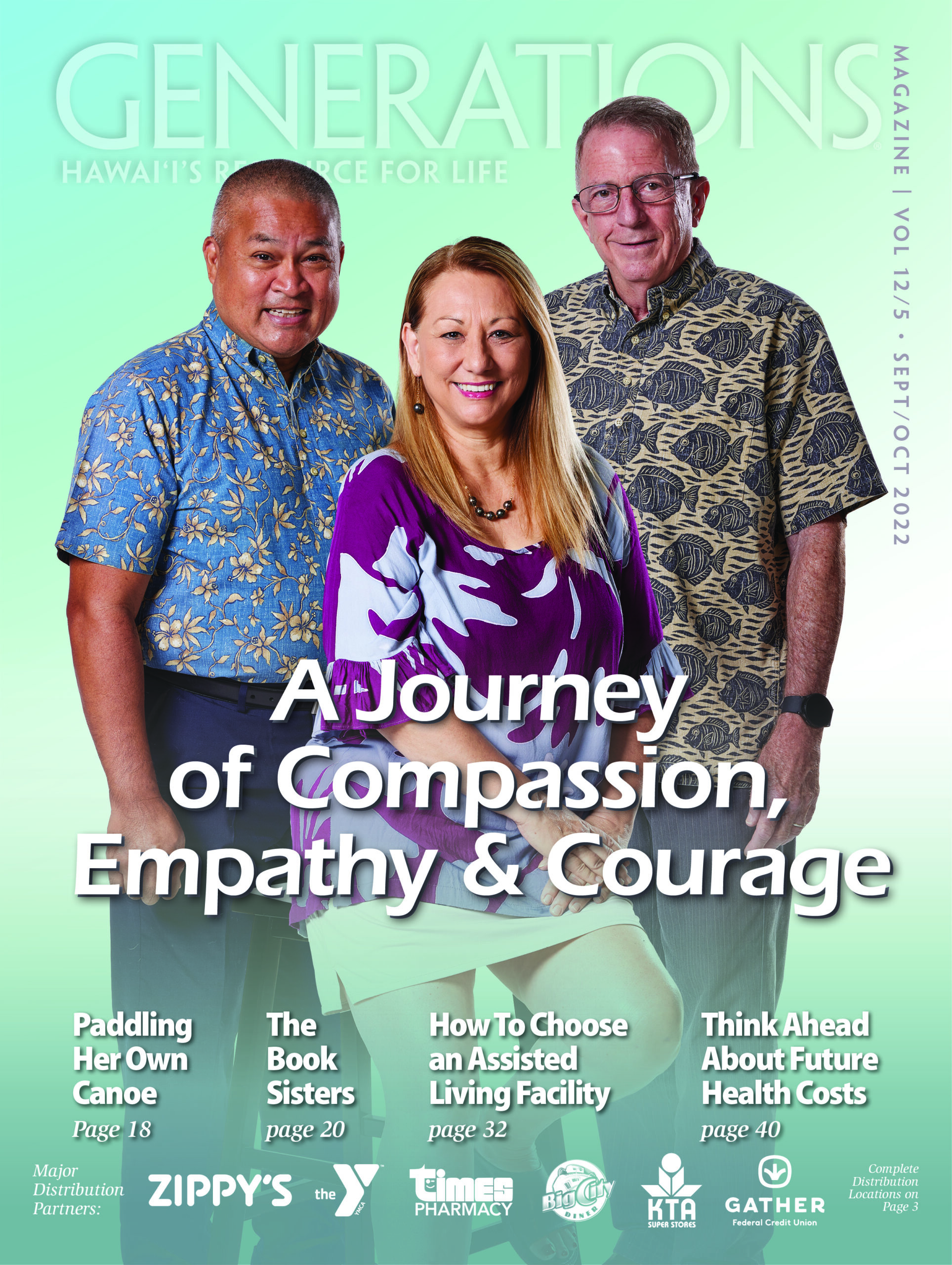
    A common thread runs through a tapestry of three stories. Having experienced the caregiving role themselves, Savina Makalena, Gary Simon and Gary Powell all saw the need to support individual caregivers and the various entities involved in providing that support. And seeing that need, they all decided to help fulfill it, each in their own way.

    Savina Makalena nurtured and protected her mother since childhood by helping her learn English and assisting with the many formal and informal interactions of daily life. So, when her mom began showing signs of dementia, Savy naturally stepped into the role of primary caregiver. Gary Simon and wife Akemi were just about to start their own family when his mother-in-law’s almost imperceptible transition into dementia meant learning what to expect, and how to achieve a workable living and caregiving environment. Gary Powell was thrust into his caregiving role helping to tend to his grandfather, who suffered a series of strokes when Gary was a teenager.

    Chances are high that we all know someone in our circle of acquaintances, friends and family who have had a similar  experience: the sibling who is empathetic, nurturing and blessed with patience who becomes the natural choice to be a parent’s caregiver — a friend who shares with you their struggle to prepare for their caregiving role as a loved one’s health deteriorates. And then there are those who suddenly find themselves caring for a family member following a serious medical event like a heart attack or stroke.

    You may even be a family caregiver yourself, but feel unsure whether or not you have the compassion, empathy and  courage to continue on what may be a very difficult journey.

    Each of the people featured stresses that emotional wellness is a key coping strategy. For Gary Simon, that was achieved by accepting what couldn’t be changed and seeing caregiving as a final gift for his mother-in-law in acknowledgement of the gift she and her husband gave him — his beloved wife, Akemi. Gary Powell’s remembrance of the look in his grandfather’s eyes the first time he had to be helped with personal hygiene blossomed into the awareness that dignifying a care recipient parent by not treating them as a child helps maintain emotional balance. For Savy Makalena, the key to emotional wellness is being able to freely share what you’re going through with compassionate others who have had similar experiences and aren’t going to judge you.

    COMPONENTS OF CAREGIVING

    Gary Powell spent his childhood surrounded by his extended family at Sunset Beach on the North Shore of O‘ahu, where he was born.

    “My parents, my aunt, my grandparents — everyone lived here. When I was about 13, my grandfather had a pretty severe stroke. When he came home from hospital, he was having trouble walking. I was given the task of taking him down to the beach, which was close to their house, and walking in the sand to try to strengthen his legs, and get him more mobile and safer on his feet. So, I would come home from school, take Grandpa walking on the beach, bring Grandpa back; do anything my grandparents needed doing at their house. Sometimes I would eat with them; sometimes not, but after everyone was settled for the rest of the day, I would go home and do my 13-year-old things.
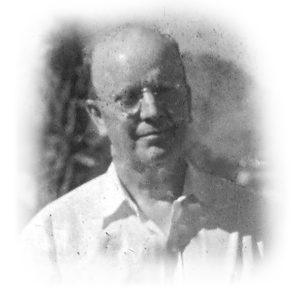
    “I did this for quite a long time, but Grandpa did reach a point where walking was not something he could do. One day when I was at my aunt’s house, she said, ‘Your grandpa needs your help cleaning up in his bathroom.’ I was not prepared for that. However, I did it. It was OK. I helped him get a bath, but what I remember most is the expression in his eyes. It wasn’t embarrassment as much as it was ‘my  grandson will never see me the same.’ That look in his eyes has kind of haunted me. Through the rest of my life, I’ve been involved in caregiving in some aspect in literally every position; every life incident that I’ve ever been in. There has always been a component of caregiving, either for an older individual or an individual with physical or mental disabilities.”

    The Caregiver Foundation

    Although he didn’t equate what he was doing with “caregiving” at the time, the jigsaw puzzle pieces of Gary’s many life experiences eventually assembled themselves into a clear vision of how he could use his professional skills to support family caregivers and their care recipients.

    He established The Caregiver Foundation (TCF) in 2008, on a mission to provide practical and emotional support to seniors, disabled adults, and their caregivers. The services that TCF provides “preserve dignity, enable independence, and promote acceptance in all facets of life” and are designed to help caregivers, adults planning for or seeking caregiving, and the families of care recipients.

    The foundation has clients on O‘ahu, Kaua‘i, Maui, Moloka‘i and the Big Island.

    “We do not give legal advice. We do not give financial advice,” Gary explains. “Although we have the capacities in both of those areas, that’s not what we do. We partner with professionals in the community. We’re able to bridge between the individual and their attorney or their CPA to make sure that the client is really understanding what they’re doing.” TCF also partners with other caregiving organizations.

    ‘Let’s Help It Roll’

    Gary was part of the group that established the Hawai‘i Family Caregivers Coalition (HFCC), which started when Hawai‘i participated in a project designed to create coalitions at the state and local level. Funding for the 2004 project was provided by the US Administration on Aging and it was conducted by the AARP Foundation. The coalition was created following a two-day training period, in which 27 organizations participated. Then followed a couple of years when, Gary says, the coalition was “casting about for exactly what do we do and how do we do it. Participating in the creation of the HFCC  broadened my understanding of what other organizations were already doing.”

    The big takeaway for Gary was that “we’re all trying to accomplish the same thing.” When he later founded TCF, Gary saw the best way to help clients was to partner with existing organizations. “If we find an organization that has the capacity to do something for our client, we’re going to try and tie into that. It saves the client money and it helps another organization fulfill its purpose. We don’t want to reinvent the wheel. If it’s rolling, let’s help it roll.” You don’t have to be a fee-for-service client to access the foundation’s educational resources, which also make full use of those partnerships.

    On the third Tuesday evening of every month, TCF hosts free online webinars as a service to the community. The June  webinar featured Catholic Charities Hawaii, which is celebrating its 75th anniversary this year. The “Learn More” webpage on TCF’s website provides links to information about topics such as aging, caregiving and how to finance care costs.

    “Right now, we have 71 different workshops available to the community. Those are never charged for. We’re working on turning them into a Virtual College of Caregiving, but they’re also standalones on a wide, wide range of topics. We’re happy to send that list to anybody who wants to look at it.”

    Meeting Practical Needs

    For its fee-paying clients, TCF focuses on two major areas. “When we started the first caregiver support group, I noticed right away that the questions people had were more into my business background than into my caregiving background. The two areas they were not prepared for were the legal aspects and the other was their emotional health in caregiving. The practical areas are so essential and so neglected that caregivers who have waited too long end up having to go to court to address them, to get a legal rendering by a judge, because the individual receiving care is now incapacitated and cannot sign a power of attorney [POA], cannot sign anything, legally.”

    Client services include, for example, daily money management, guardianship, trusteeship and power of attorney. Gary acts as the agent for medical POAs, sometimes having to make very difficult decisions regarding end-of-life issues.

    He explains that “You have to have been able to communicate so you know what they would want. If that wasn’t possible, then you have to make decisions based on the best information you can find to determine what they would have decided. If nobody knows, then you’re doing what’s called ‘substituted judgment’ and you’re doing things in that person’s best interest.”

    A Better Perspective

    Gary addresses caregivers’ emotional health by suggesting they adopt a change in perspective. “When we’re caregivers for  seniors, we’re in the process of saying goodbye to that person. They’re not going to get better. You can’t cure aging. If we understand that, the work is still going to be same but it’s a way of saying goodbye. I have seen that perspective change make a huge difference in the stress level of family caregivers. It makes it emotionally much easier.”

    He is also adamant that family caregivers shouldn’t approach their role as if they’ve become their parent’s parent. “No you have not! You’ve become their caregiver, yes, you may have become their bookkeeper, you may have become their cook, their housecleaner and everything else, but never their parent. Even if they cannot understand you, they don’t know you and everything is absolutely nuts — you are still the child and they are the parent. Somewhere back in that damaged brain there’s a realization of what’s happening. If you make it where a person feels they have lost their position in your life, that’s a pretty painful path for them.” That is the pain he saw in his grandfather’s eyes all those years ago.
    THE ROCKY ROAD OF CAREGIVING 

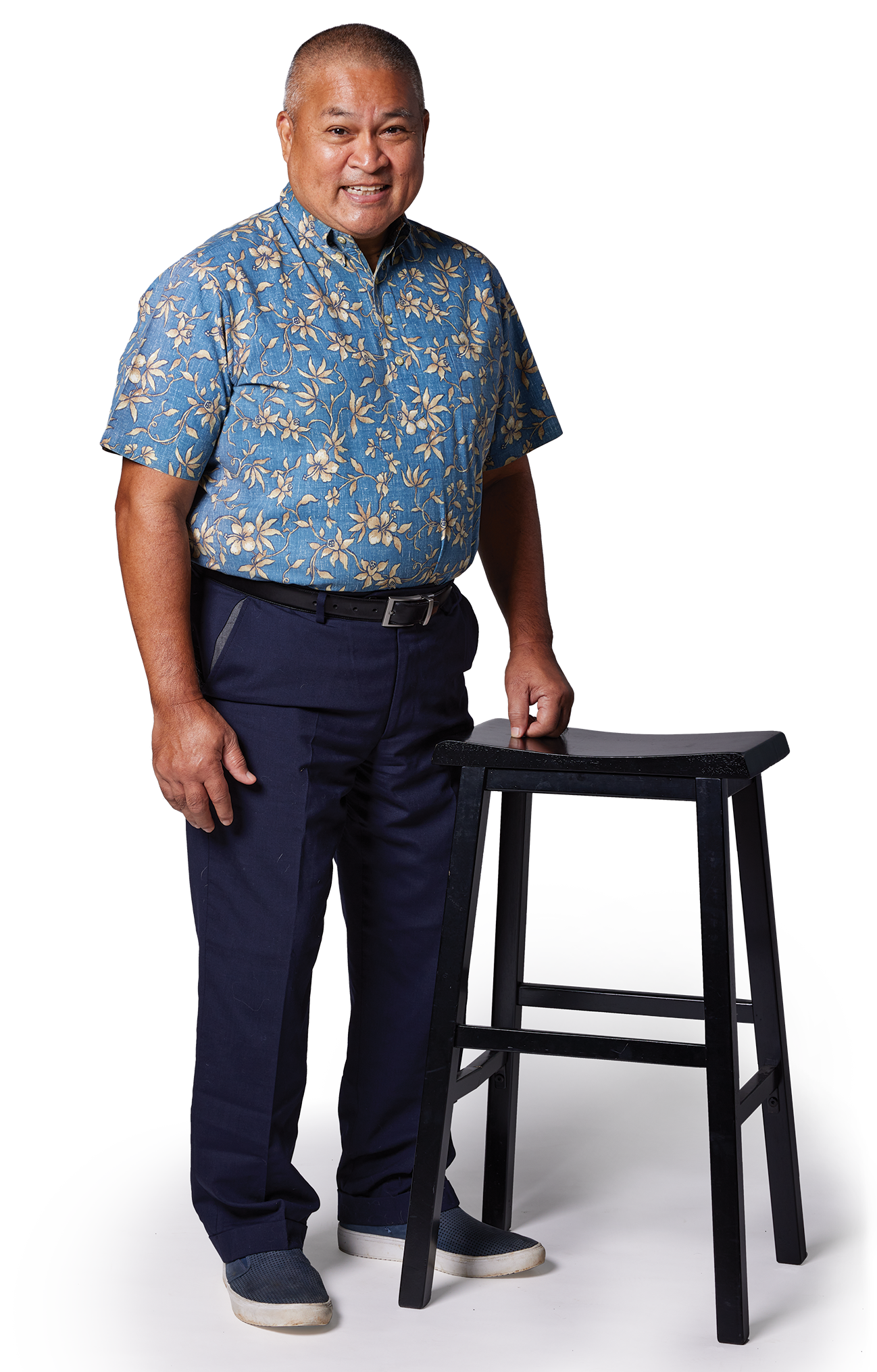
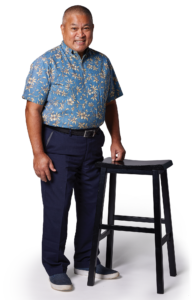
    Gary Simon became closely acquainted with how courageous caregivers are when he was the executive director of St. Francis Hospice. He speaks of seeing “the sacrifices they made to give the best to their loved ones, to give their care recipients a last gift. And I’ve also seen the ugly side, where caregivers just didn’t have the resources to support their care recipient. They’ve said, ‘OK, I’ve got to choose between family and food, and being a caregiver.’ I saw that struggle, where there are multiple demands upon a caregiver.” A combination of his professional and personal experiences led to a lifetime of participating at a board level in Hawai‘i’s network of caregiving support agencies advocating for better resources for caregivers.
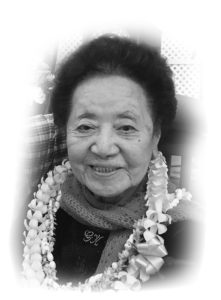
    The Long, Rough Patch

    Gary and his wife, Akemi, were married in 1993 and built a house on Akemi’s mother’s property, ready to start married life and raise a family. Within their first year there, however, they began to see that all was not right with beloved Okaasan.

    “She was a terrific cook — ‘ono, ‘ono food. But her dishes began to taste odd, like cardboard and paper.” Repeating questions, erratic sleeping and eating, and forgetfulness surfaced as other telltale signs of the onset of dementia.

    “There were many things and they were beginning to become more frequent. The big one was constantly forgetting her purse somewhere. Once okay, twice okay, the third time, enough! It precipitated my wife being forced into retirement. I use that word ‘forced’ because if she hadn’t, the situation would have gone south really fast. My mother-in-law had become a mentally vulnerable adult.”

    Step by step, the young couple transitioned into her house in order to provide round-the-clock watchfulness and care.

    Speaking of his personal experiences at a caregivers symposium put on by the Alzheimer’s Association in June, Gary shared that “The mileage can be rough. Our mileage was rough, and it was a long road — 26 years. But the journey was worth it for what it did for me — to see how I want to be treated; therefore, how I should treat others. Wisdom, patience, tolerance — don’t judge. You don’t know what people are carrying. Do you go to Safeway and notice people just don’t look happy? Maybe they’re caregivers, too. They may be going through that long, rough patch.”

    Shikata Ga Nai

    Gary also shared how the deeply cultural Japanese phrase “shikata ga nai” (“it can’t be helped” or “nothing you can do about it”) helped him through the rough patches.

    “For many years, I used to get upset, perturbed or resentful about the way life was turning out for all of us, especially my mother-in-law.” Some of her repetitive questions, such as, “When are you leaving?” would take on a life of their own. “I was thinking, ‘Mom, you’re ungrateful. I’m here helping you!’” It took him a lot of time to learn that he was making a problem out of something that was just a result of her illness. “That’s not the her that she was.” Shikata ga nai. Gary sees the rough patches as “part of making us better humans. The journey is rough, the mileage is rough, but in the end, it makes us all better.”

    “Being a caregiver for my mother-in-law was one of the ways I could honor my wife and both her parents. Her father had passed away before we married. This is kind of flippant, but they did right by me. They gave me Akemi and I wanted to do all I could by giving her mother good love.”

    Gary and Akemi’s beloved Okaasan passed away peacefully in the home they all shared in 2019.

    Advocating for Kūpuna

    Accepting the inevitable effects of a loved one’s illness, however, did not mean that Gary was willing to accept that difficulties arising from public policy — or a lack of it — could not be remedied. Along with the advocacy he was able to incorporate into his 30-year career with St. Francis Healthcare System, Gary contributed his time and skills to the advocacy efforts of many task forces and nonprofit groups. He is the past president of the Hawai‘i Family Caregiver Coalition, the
    current AARP Hawai‘i volunteer state president, and was a member of the Statewide Task Force on Alzheimer’s Disease and Related Dementias. His term as member and chair of the State of Hawai‘i Policy Advisory Board for Elder Affairs (PABEA) ended in June. Gary is also a member of the boards of The Arc in Hawaii, Kokua Council and Palolo Chinese Home.

    Thanks to the efforts of several advocacy groups, undertaken at both the legislative and departmental level, in 2017, a program aimed at keeping caregivers in the workforce was signed into law. “It was meant for people like my wife — for people to maintain employment so that they don’t compromise their day-to-day income or their retirement benefits,” Gary explains.

    Enabling caregivers to remain in the workforce ensures that their work skills and experience are still available to benefit the community as a whole, Gary adds.

    A Coalition of Care

    Each year, a joint report on aging and disability issues is published by the Hawai‘i Family Caregiver Coalition (HFCC). The report is intended as a guide for legislators, organizations and citizens, and it calls attention to priority issues. It is a joint project of the HFCC, the Policy Advisory Board for Elder Affairs, the Executive Office on Aging, the Hawai‘i Pacific Gerontological Society, the Maui County Office on Aging and St. Francis Healthcare System of Hawaii. Gary describes his various roles with most of those organizations as “having my feet in multiple pools of water.”

    He also explains that it is not difficult to find enthusiastic board members for the HFCC, of which he was president for seven  years until 2021. “We’re fortunate to have both providers in there, and people who are experienced in advocacy and program development. The current president, Kathy Wyatt, operates adult day care centers. We’ve always had a seat at the table for Maui County Office on Aging. The board covers the breadth of government, private and nonprofit.”

    Outreach and Education

    Gary became volunteer state president for AARP Hawai‘i in 2019, just before he retired from St. Francis Healthcare. He sees outreach and education as an important part of that role. In June, he moderated four sessions about disaster preparedness for AARP members and made sure to include information specific to caregivers.

    “The designated shelters in Hawai‘i are not caregiver/care-recipient friendly. In all likelihood, if there’s a disaster, you’re going to have to shelter at home with your care recipient. What if your loved one is on an oxygen concentrator? There are ways out, like getting a generator, but on the whole, education for caregivers about disaster preparedness is what we need to think about.”

    The AARP website has links to the many local and national resources available for caregivers. As the website says, “Caregiving may be one of the most important and challenging roles you’ll ever take on. No matter where you are in your caregiving journey — starting to plan; taking care of a family member in your home, in a facility, or from a distance; or managing end-of-life caregiving responsibilities — having resources at your fingertips will make the process easier.”

    BORN INTO CAREGIVING

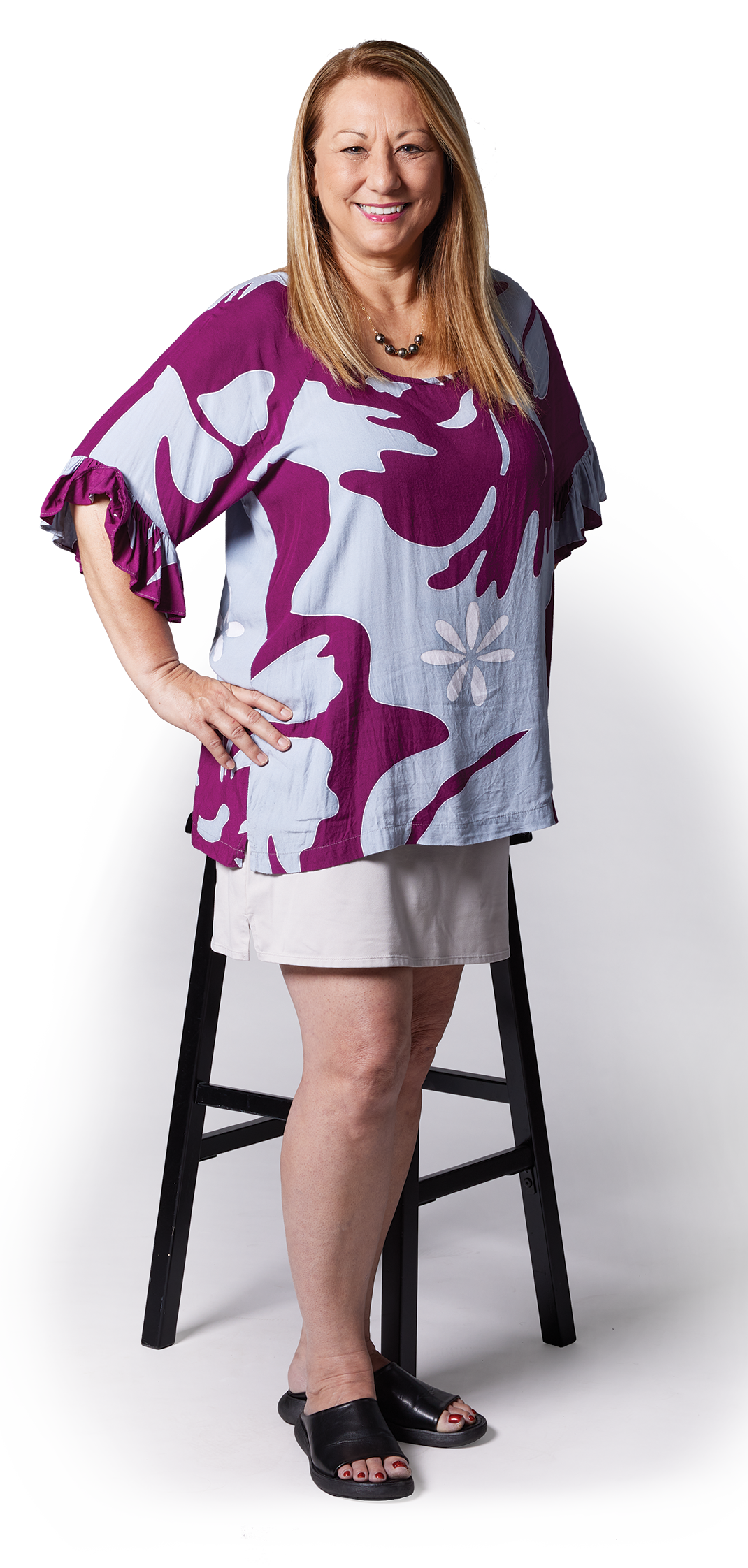
    Savina (Savy) Makalena began caring for her mother as a small child.

    “I was the one who had to take care of her. She grew up very sheltered. Even as a young child, I was her caretaker and her protector. She was from Japan, so she didn’t speak English well, or read or write it. So I taught her what I learned in school. But she still wasn’t quite very good at it. I had to translate everything. I translated recipes. I read magazines and newspapers to her.

    “Later, I became a mother and then a grandmother. I ended up going full circle, taking care of my mother again. Both my father and mother needed my care. I took care of my father for the last seven years, until he passed. Now my mother is in her final stages of dementia and in hospice care. I also help care for my mother-in-law. She’s actually very good on her own and lives with us. And now the love of my life is managing a rare blood cancer.”
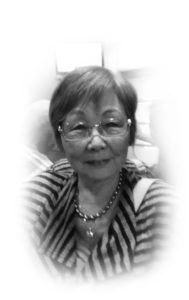
    Keeper of the Lore

    Born and raised in Hawai‘i, Savy cherishes how she grew up in a community.

    “If I misbehaved, a slippah could come flying out of any direction from any aunty. They would correct me. I also grew up with the understanding that there was always one person who was selected to receive the honorific position to be the caregiver of the kupuna. It became an honor because the lore then was passed to you if you were the one selected. The entire family rallied behind that person to make sure they were given every support they needed in order to receive the lore and care for the kupuna.”

    Although she is keenly aware that society has changed, Savy is adamant: “We still need to recognize that one person ends up becoming the one to care for that kupuna. So as a society, as a community, as a family, we have to support that person in some way or another.”

    A Nonprofit is Born

    Coping with the day-to-day tasks needed to care for their loved one often leaves the caregiver feeling exhausted, isolated and depressed. Having experienced all that herself, Savy decided to find a way to help caregivers overcome these problems.

    “I realized how difficult it is to be a caregiver and to get resources and to get support, so I decided to start a nonprofit and brought in a few of my acquaintances — my business partner friends—who were going through the same thing. We started Gimme a Break. We decided that we were going to provide resources and support, and some sort of respite for caregivers when we could.” Their aim is to restore the joy of caregiving.

    The mission of Gimme a Break, a nonprofit, is “to care for caregivers by giving an emotional and physical break as well as resources for continued well-being.” Its advisory board members range in age from their 30s to their 60s — all have experience as caregivers. Gimme a Break had barely started when the pandemic hit. But in 2021, it began a physical presence at ‘Ohana Hale Marketplace. This year, it moved to Windward Mall.

    “We’re now discovering a whole new community on the Kane‘ohe side. There are a lot of caregivers who normally wouldn’t come into town, but we’re now able to reach them. We have people walk in all the time, every day. We’re there Tuesdays through Saturdays. They come in and we sit down with them. Lots of tears. A lot of hugs. But also, a lot of help and a lot of support.”

    The resource center has a supply of community partners’ flyers and rack cards, and Gimme a Break holds regular mini resource fairs so that caregivers can learn directly from those partners.

    Help Accessing Resources

    Savy’s personal caregiving experience with the difficulty of accessing resources is one of the driving forces of Gimme a Break’s mission.

    “I called so many places and no one answered me back,” she says. “No caregiver has time for that. No one does. Now I have people who will answer me back and we have resources that we can connect people to. That’s something big. We also have a community of support and we’ve seen the difference that makes to caregivers as we’ve grown. We see it in our caregivers when they come in with their shoulders down and they leave with their shoulders high again, with smiles on their faces and gratitude in their hearts.”

    Face-to-face interaction was impossible when the pandemic hit, so “in that time, we were working online on social media, mostly Facebook. We’re now on every platform for every age group: Facebook, Instagram, LinkedIn and Tik-Tok —  anywhere that we can reach caregivers.”

    During National Family Caregivers Month in November, Gimme a Break will hold a Caregiver of the Year contest on  Facebook to create awareness of of caregivers’ stories. Then, on Dec. 3 at the Elks Lodge in Waikīkī, it will hold its Caregiver of the Year Awards Gala to recognize all caregivers and the Caregiver of the Year.

    Advocacy and Education

    Savy is the vice president of the Hawai‘i Family Caregiver Coalition, seeing it as a way to advocate for caregivers and get very involved with what’s going on in the field of caregiving. Although advocacy is not the focus of Gimme a Break, she explains, “I personally focus on advocacy because it’s necessary and it goes hand-in-hand with our passion for what we do — passion for the mission of supporting caregivers.” Part of that mission is education, especially in terms of helping people anticipate what they will encounter on their caregiving journey.

    Gimme a Break offers a series of support sessions that cover the steps that you need to take and the things you need to have in order.

    “We have resources that help them discuss that. We do it with no agenda. It’s a user-friendly environment for a caregiver. We’re here to provide them with knowledge to help them bring back the joy of caregiving. We’ll do that through resources. We’ll do that through support. We’ll do that through community.”


    All three of our featured caregivers use their particular skill set and personal experience regarding what was difficult in their caregiving journey to ease the way for others.

    Gary Powell’s financial and legal skills enable him to run a nonprofit foundation that shoulders the weight of those burdens for both caregivers and care recipients. Gary Simon’s administrative background is a good fit with organizations like the AARP and the Hawai‘i Family Caregiver Coalition that focus on education and advocacy. Savy Makalena’s experience in social media marketing enables her to create a vibrant community of caregivers, and both an online and physical space in which to learn, share and care for each other.

    All three are keenly aware that they cannot do this alone. By providing referrals to other organizations that specialize in particular fields of caregiving and links to online resources, they guide caregivers on their journey.


    THE CAREGIVER FOUNDATION
    thecaregiverfoundation.org
    AARP
    states.aarp.org/hawaii/caregiver-resources
    GIMME A BREAK
    gab808.org
    Facebook: www.facebook.com/gab808
    Instagram: @gimmeabreak808hi
    ALZHEIMER’S ASSOCIATION
    alz.org/help-support/caregiving
    HAWAII FAMILY CAREGIVER COALITION
    hfccoalition.org/index.php/education-resources

     

    A common thread runs through a tapestry of three stories in the September-October 2022 issue of GENERATIONS MAGAZINE. Having experienced the caregiving role themselves, Savina Makalena, Gary Simon and Gary Powell all saw the need to support individual caregivers and the various entities involved in providing that support. And seeing that need, they all decided…

  • The Book Sisters

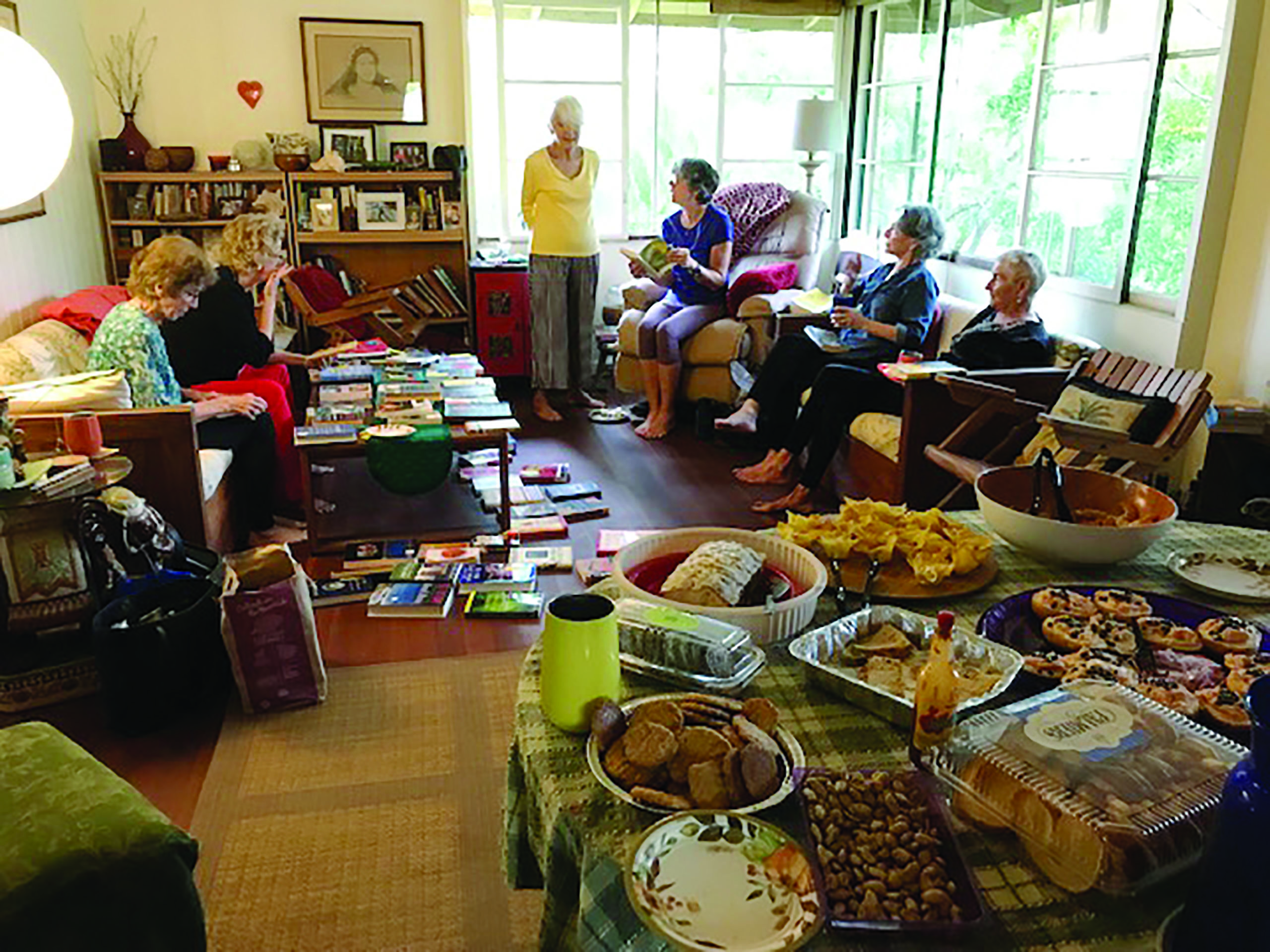
    It’s not your ordinary book club. This all-women book club has a long history, having begun around 1980, says Ginny Meade, who joined in mid-’81. “It’s an amazing group of women from all walks of life. It all started because of our love of books and reading.”

    When Ginny joined, she said, an artist, an attorney and a writer were the “ring leaders.” One by one, new members drifted in by the invitation of other members, including several doctors.

    “I had put off joining because I thought everybody else was smarter than me,” said Ginny. Unduly insecure about her membership in the group, Ginny became the club’s “faithful scribe,” sending out email invitations for each meeting.
    As a Kaimukī community leader, it was a natural evolution. And early on, she realized that she had a deep connection with this eclectic group.

    This intrepid group of accomplished women possesses important commonalities: a voracious intellectual appetite and a willingness to tackle the tough topics. At the end of the day, that was enough to sustain the group for over 40 years.

    There were rules that determined who could join the Women’s Literary Society of Greater Honolulu (WLSOGH) was growing at such a pace that it would soon overflow the host’s home.

    “We were uppity back then,” Ginny laughs. “So we made rules. First, you were allowed to invite a guest only once a month. The group would decide whether or not to accept the guest, giving the invitee the option to join if they liked us, too.”

    The meetings had a “semi-formal” structure. The person who suggested reading the book was usually the one to lead the discussion, posing discussion questions about the book.

    “The interesting thing is that the discussions weren’t strictly about the book,” says Ginny. “They became more about our feelings that arose from reading it. Most often, our discussions became really wide-ranging and comprehensive, reaching far beyond the contents of the book.”

    The group would also invite authors to their meetings, including the likes of former Honolulu Advertiser Publisher Thurston Twigg-Smith, author of “Hawaiian Sovereignty. Do the Facts Matter?” Authors from near and far were also invited, some traveling from the mainland to appear at this meeting of discerning women.

    But their appetites were not for the written word and intellectual discourse alone. The dining table was covered with culinary delights of all kinds, wine and fizzy beverages. The ambiance opened opinions, loosened lips and sparked creativity.

    Pūpū evolved into dinner, for a time, themed to the book. A book by Dostoevsky prompted the host to offer borscht. A  meeting discussing “A Brief History of Time” featured Chinese food, as they ascertained “that is what geeks eat.”

    Well really, sustenance was necessary; the club’s book list was not for the faint of heart. More often than not, they would “go deep.”

    Titles on the 2022 list include “The Chancellor: The Remarkable Odyssey of Angela Merkel” and “Confessions of an Economic Hit Man.” “They’re all across the board. That’s how we roll.”

    “We didn’t always agree on the books and we didn’t mince words,” says Ginny. “One meeting started with the opening comment, ‘I hated this book!’ It went on to be one of the longest meetings and most deeply discussed books we ever read.  So we realized we didn’t need to agree for a meeting to be successful.”

    This discovery lead them to “The Molly Principle.” First, calculate how many years you have left. Then calculate how many books you want to read. Then, if you pick up a book and you don’t like it, it’s ok to put it back down. Members could invoke The Molly Principle at any meeting, excusing them from reading or discussing the book of the month. They could still attend the meeting. The group has recently switched their focus to books about World War II and South Africa.

    The book list is always decided at the annual retreat. The book nomination and voting ritual was a serious, long-weekend affair, often accompanied by music, partying, hot-tubbing, beach walking, tap dancing and consumption of a cold creamy, blender cocktail with an X-rated name. That’s when the tap dancing ensues…

    But it is not all about unbridled drinking, dancing and merriment. A retreat that included a hike on Molokai inspired Ginny to pursue a degree in horticulture. “It has been quite a life-changer for most of us,” Ginny says about the group.

    Originally, many joined the club because it was simply “time to get back to reading” after families were raised and careers ended. Although their initial intention was to indulge in food for thought with like-minded ladies, by drilling even deeper than the topics offered in their books, the club facilitated lifelong bonds.

    “There’s about 40 of us who are still involved,” said Ginny. About half are local and the rest are on the mainland — most, former islanders.

    “It’s hard to put a label on what our book club was ever about,” says Ginny. “It’s a bit of everything. When we began, we were all in our 40s. Now we are in our 80s. We have become grandmas and widows and have seen a lot of change.”

    “But for as long as I can remember, we began our meetings by chatting about what each person has been doing in the last month,” says Ginny. “Eventually, someone says, ‘Lets get to the book.’”

    “Through the years, we became a close group of dear friends and confidants that has not only endured, but grown stronger and deeper. When life hands us tragedies and challenges, we are always and faithfully there to support each other. So that’s the most valuable aspect of this club — total support among 40 women over 40 years.”

    “It’s way beyond what’s between the covers of a book,” Ginny says. “We’re not just analyzing a book; we are analyzing everything in life.”

    It’s not your ordinary book club. This all-women book club has a long history, having begun around 1980, says Ginny Meade, who joined in mid-’81. “It’s an amazing group of women from all walks of life. It all started because of our love of books and reading.”

  • Grief and Bereavement — Part II

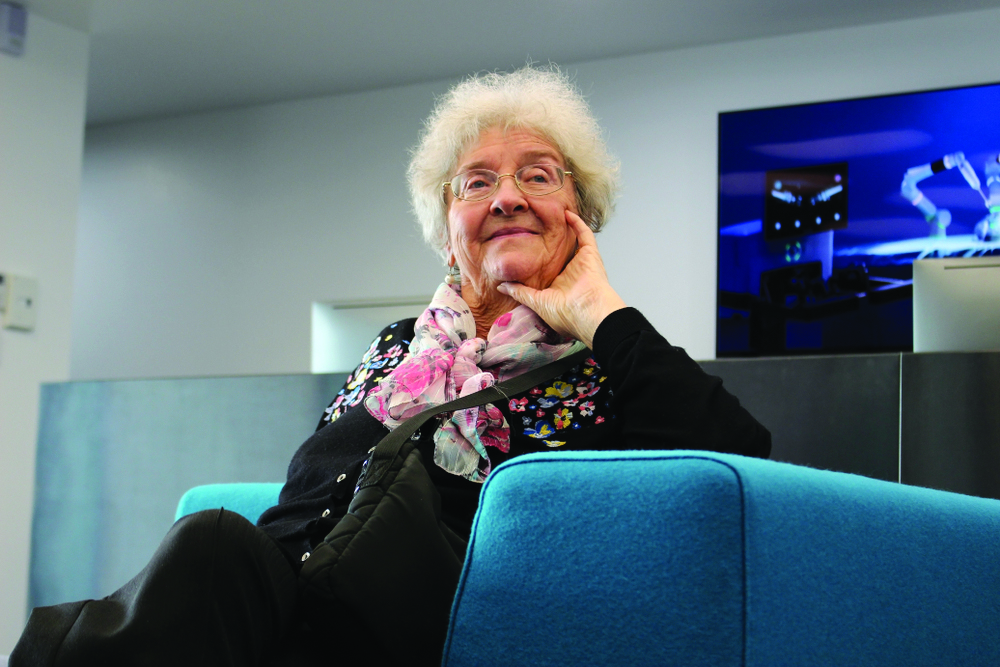
    A senior lady sits waiting in the reception area of a robotics company in Cambridge, a city renowned for being one of the top three technology hubs in the world.Continuing from my last article, I believe that clients really want the estate planning attorney to help them meet their needs so that they can reduce their fear, anxiety and anticipatory grief in light of their knowledge of their inevitable death.

    These needs include the desire 1) for the client to grow, develop and enjoy the most meaningful life possible; 2) not to burden friends and family; 3) to establish and build strong family/friend relationships, and to know these relationships will persevere after death; 4) to make the transition after death as easy as possible; and 5) to ensure that loved ones dependent on the client during their lifetime have security, sustenance and shelter.

    Avoiding probate and minimizing taxes are not ends in themselves, but doing these things helps the client minimize any burden placed on survivors and allows for more available resources for the surviving loved ones’ care. When we shift our perspective away from lineal matters, such as probate and taxes, and focus on the natural, often non-lineal, human emotions underlying the needs of each client when deciding to make an estate plan, we realize that we, as estate planning attorneys, must develop an additional skill set above and beyond technical tax and probate law, and utilize “the softer skills of counseling.”


    STEPHEN B. YIM, ATTORNEY AT LAW
    2054 S. Beretania St., Honolulu, HI 96826
    808-524-0251 | stephenyimestateplanning.com

    Continuing from my last article, I believe that clients really want the estate planning attorney to help them meet their needs so that they can reduce their fear, anxiety and anticipatory grief in light of their knowledge of their inevitable death.

  • Walk to End Alzheimer’s

    You probably know someone with Alzheimer’s, the most common type of dementia that’s currently affecting some 5.8 million Americans and growing so rapidly that as many as 14 million may be affected by 2060.

    Dementia is not a disease but the general term for the loss of memory and cognitive abilities, especially in people over 65. Alzheimer’s is a progressive disease that worsens over time and in its late stages, individuals lose the ability to carry on a conversation and generally succumb to the disease four to eight years after diagnosis.

    Current research, however, is showing progress in the removal of one of the main causes or hallmarks of Alzheimer’s disease in the brain, called “amyloid,” also known as plaques, with the potential to slow down the progression of the disease for those who are in the early stages of Alzheimer’s. While this is certainly nowhere near a cure, the science is leading us in the right direction toward better treatments and ultimately, a cure for this terrible disease that impacts so many families across our state.

    But research costs money — lots and lots of money. To help, the Alzheimer’s Association of Hawai‘i is joining other chapters across the country in holding the annual Walk to End Alzheimer’s — the largest event to raise awareness and funds for Alzheimer’s care, support and research. After a two-year pandemic gap, the Hawai‘i walks are once again taking place throughout the islands: in Hilo on Sept. 17, in Kapa‘a on Oct. 1, on Maui on Oct. 22 and in Honolulu on Nov. 5.

    Participants can register as teams or individuals, and businesses can put together groups. Children can also participate (bikes, skateboards or wheelie footwear are discouraged). Strollers are fine and it’s OK to take your well-behaved dog if it’s on a leash. It’s a fun day offering fresh air and exercise, while helping to raise the much-needed funds for research and awareness. On O‘ahu, this year’s goal is $335,000.

    There’s no registration fee, but participants are encouraged to make a personal donation and commit to raise funds in the fight against Alzheimer’s If you raise $100 or more before the event, you’ll receive a free T-shirt to wear during the walk. All donations are tax deductible.

    You can get complete details about this year’s Walk to End Alzheimer’s on its website as well as important information about the disease: what it is, how is it diagnosed, what are the symptoms, what are the stages of the disease and what treatments are available.


    WALK TO END ALZHEIMER’S (501(c) 3 nonprofit)
    808-518-6654 | Jmgeorge@alz.org
    alz.org/hawaii

    You probably know someone with Alzheimer’s, the most common type of dementia that’s currently affecting some 5.8 million Americans and growing so rapidly that as many as 14 million may be affected by 2060.

  • Paddling Her Own Canoe

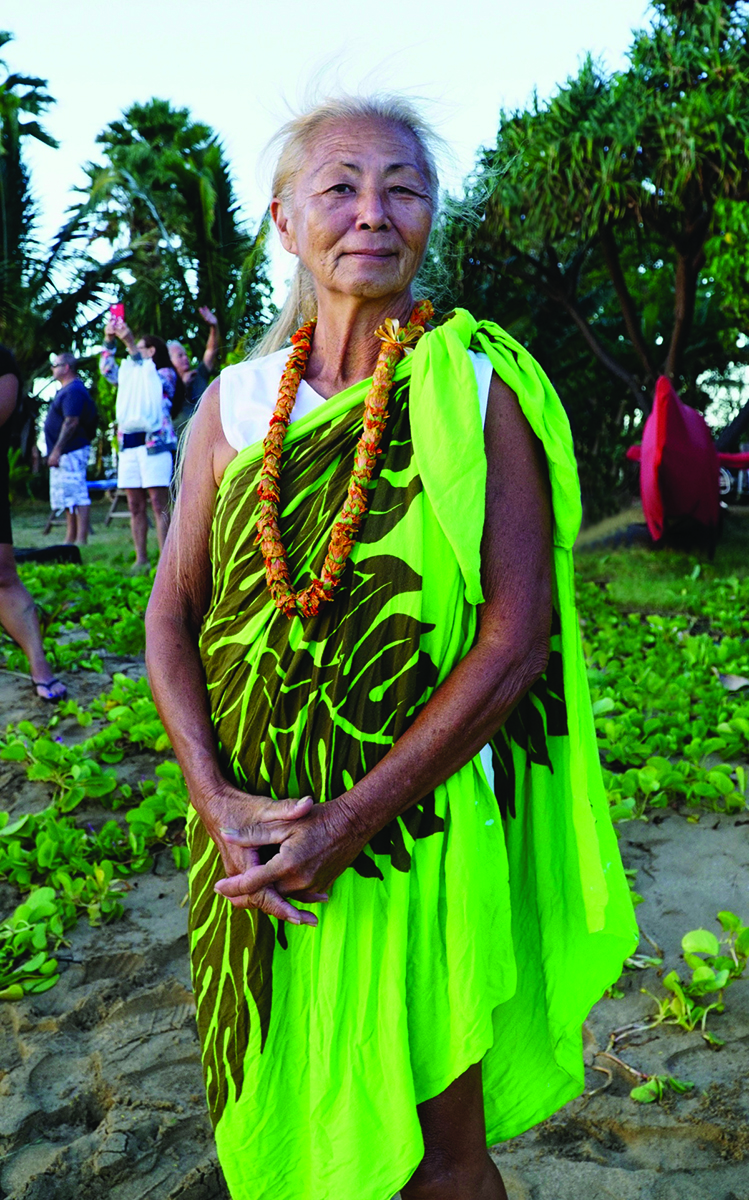
    Kīhei resident Franny Durham unknowingly serves as an inspiration to those around her through her indomitable spirit, positive attitude and boundless energy.

    When asked about her secret to her physical health and spiritual well-being, she replied, “Moderation is the key.”

    “When I was very young, my father told me that longevity runs in our family, so I learned to take care of my body at a young age because I wanted to live to be very old,” she laughed.

    Genetics may have given her an edge; she is of Okinawan and Japanese descent. She is confident her dad would still be alive if not for a fall that injured his spinal cord when he was in his mid-80s. “Til the day he died, he did pushups and took several walks a day. I know he would have lived at least another 15 years.”

    There are no magic ingredients in her recipe for longevity — only common sense. “I try to eat healthy, but I’m not rigid about diet. I believe in moderation. We eat fruits and vegetables, but we also love meat and everything else. But we don’t go overboard! We are not overweight. We stay active. There needs to be balance or you will sink.”

    Her husband of almost 30 years is 76, “but looks like he‘s 56,” says Frannie. He kite surfs and rides his Harley for exercise and recreation.

    Franny was in her 40s when she began taking hula lessons. Although she no longer belongs to a hālau, she occasionally performs at special events. Sometimes she dances on Mondays at the Coffee Attic in Wailuku. “That helps to keep you in shape and it’s very fun,” she says.

    “But it really comes down to my love of paddling,” says Franny about sustaining an active lifestyle. The long-time ocean canoe paddler started the sport later in life — and it changed her life.

    When she moved to Maui from O‘ahu in the early ’90s, she was invited to paddle with the Wailea Canoe Club (WCC). She went, and although the paddler who invited her did not show, she coincidentally ran into someone she knew from O‘ahu. The two of them needed a crew, so they struck up a conversation with a couple of young men running along the beach. They were boxers who were cross training. “‘Do you want to try it?’ my friend said. Three of us had never paddled before. So we went out. My friend steered us. I stroked the boat. We went out about a mile and then the wind came up. We had to paddle like hell back to shore! I fell in love with it immediately and have kept going ever since.”

    Now at age 70, she paddles six times a week with the WCC and the Hawaiian Outrigger Canoe Voyaging Society (HOCVS) in Kīhei.

    “With HOCVS, I have done long-distance paddling. We’ve paddled around Molokai, Maui and Lāna‘i. I also did a tribal  journey from Neah Bay to Lummi in Washington. It’s been great.”

    Along with her own paddling regime, she also coaches, teaching others, encouraging improvement and always endeavoring to bring out the best in her students. She says she has met many great people along the way.

    “I believe in leading a good life, treating people well and being considerate of others.”

    An extension of those long-held beliefs also brought her to caregiving.

    “I got into caregiving because I had a landlord at the time whose elderly mother needed help. I also have a son with a bit of a disability. I mentioned to someone that I was interested in learning more about it. She had a friend who taught caregiving at Maui Community College (now the University of Hawai‘i Maui College). “As it turns out, I got the last spot in the last caregiving class that was funded by a grant. Everything was paid for. It was meant to be. It was a blessing. I enjoyed it, then started caregiving after I got certified at graduation.”

    That was 13 years ago, and Franny has been a caregiver ever since. The agency that hired Franny sent her out on a variety of caregiving assignments. She retired from the agency at 67, but retained one private client who she still cares for. He is a few years younger than Franny and a quadriplegic.

    “He is somewhat independent but still needs a lot of help. And I can’t not help him.”

    But, Franny observes, “There is a lack of caregivers. In Hawai‘i, so many elders age in place, so they need someone to come into their home.” But based on her own past experience, a lot of agencies do not pay a living wage. “It’s a sad situation, because when you are a caregiver you are responsible for this person’s well-being — their life. There is so much involved.”

    Franny is also seamstress, making and giving away stylish masks for adults, and cartoon-and character-themed masks for keiki and teens during the height of the pandemic “so they would want to wear them.” Of course, she made paddling-themed masks. She was also commissioned by a local doctor who gave the masks to her patients, and also sent them to Germany and the Hopi Reservation. “I felt so good about that.”

    “When I moved to Maui, that is when everything really started for me. All of the important things that happened in my life were just meant to be. It all just dropped into my lap. Now I’m busier than I have ever been before I retired.”

    But Franny is not just drifting along in life. Recognizing the opportunities presented to you is a skill. Living in alignment with your purpose is an art. She is a paddler of her own boat. An unstoppable force by land and sea, Franny continues to serve as as a courageous caregiver, and an inspiration to her peers and students through her good will, strength and perseverance.

    Kīhei resident Franny Durham unknowingly serves as an inspiration to those around her through her indomitable spirit, positive attitude and boundless energy. When asked about her secret to her physical health and spiritual well-being, she replied, “Moderation is the key.”

  • Navigating Mental Illness

    One in five people are affected by mental health conditions each year. Since the pandemic, that number has been on the rise. NAMI Hawaii, the National Alliance on Mental Illness, is the state organization that supports our community’s mental health and gives them hope.

    NAMI is the nation’s largest grassroots mental health organization, with over 600 affiliates in the US and four affiliates in each county in the state. NAMI’s mission is to provide support, education, advocacy and awareness so that all  individuals and families can build better lives.

    NAMI provides free programs across the state on Zoom and in person. Family-to-Family is a free, eight-session educational program for family, significant others and friends of people with mental health conditions. NAMI provides support for families and caregivers..

    Peer-to-Peer is a free, eight-session educational program for adults with mental health conditions who are looking to better understand themselves and their recovery.

    NAMI also provides connection recovery support groups, a speakers’ bureau, crisis intervention team training and workshops for law enforcement, Ending the Silence for youth, and general help and information.

    In September, NAMI National will release its first book, called, “You Are Not Alone” (zandoprojects.com/books/). The book is the “NAMI Guide to Navigating Mental Health — With Advice from Experts and Wisdom from Real People and Families… resource for individuals and families seeking expert guidance on diagnosis, treatment and recovery, featuring true stories from real people from across the country — including the Aloha State.”

    On Dec. 10, attend NAMI Hawaii’s You Are Not Alone event. Enjoy a free breakfast with NAMI and hear National Medical Director Dr. Ken Duckworth, discuss the book’s amazing stories.


    NAMI HAWAII (501(c) 3 nonprofit)
    5240, 770 Kapiolani Blvd., # 613, Honolulu, HI 96813
    808-591-1297 | info@namihawaii.org
    namihawaii.org

    One in five people are affected by mental health conditions each year. Since the pandemic, that number has been on the rise. NAMI Hawaii, the National Alliance on Mental Illness, is the state organization that supports our community’s mental health and gives them hope.

  • 7 Reminders for the General Election

    Ahead of the 2022 General Election on Nov. 8, the Hawai‘i Office of Elections has a few key reminders for Hawai‘i’s kūpuna voters.

    Hawai‘i is a vote-by-mail state. As a registered voter, your General Election ballot will conveniently arrive in your mailbox. Gone are the days of carving out time to vote at your assigned polling place. Hawai‘i voters are automatically mailed a ballot for every election.

    Check that your voter registration is current. Visit elections.hawaii.gov or call 808-453-VOTE (8683) to verify that your voter registration is accurate. By law, ballots cannot be forwarded through the mail, so if you have moved or changed your mailing address, you must update your voter registration. This can be done online or by submitting a paper Voter  Registration Application.

    Vote your ballot. You can expect to receive your ballot by Oct. 21 for the General Election. Read the instructions, mark your ballot with a blue or black pen, seal it in your return envelope and sign the envelope.

    Sign your ballot return envelope. The return envelope must be signed for the ballot to be counted. The signature on your return envelope is compared to the signature on your voter registration record. If the signature matches, your ballot is accepted and recorded to ensure only one ballot is counted for you.

    Your ballot must be received by 7pm, Nov. 8. Voted ballots can be returned by mail or dropped off at a voter service center or ballot drop box within your county. Visit elections.hawaii.gov for location details. Ballots received after the deadline cannot be counted.

    Sign up for ballot alerts. Avoid missing the ballot return deadline by signing up for free ballot alerts. Visit  hawaii.ballottrax.net or call 808-453-VOTE (8683) for assistance with enrolling. Choose to receive text, email and voice alerts for when your ballot is on its way, and reminders to return your ballot as the deadline approaches.

    Assistance is available. If you’re in need of assistance with casting your ballot, consider the following accessible options:

    1) Visit a voter service center to cast your vote using accessible voting equipment.
    2) Request an electronic ballot and mark your ballot using your personal compatible device. Visit elections.hawaii.gov to learn more about accessible voting.


    CITY & COUNTY OF HONOLULU ELECTIONS DIVISION
    530 S. King St., Rm. 100, Honolulu, HI 96813
    For voter details, registration information and questions:
    elections.hawaii.gov | 808-453-VOTE (8683)
    Election officials are committed to making sure your vote counts and
    safeguarding Hawai‘i’s elections.

    Ahead of the 2022 General Election on Nov. 8, the Hawai‘i Office of Elections has a few key reminders for Hawai‘i’s kūpuna voters.

  • How to Reduce Your Investment Risk

    During times of market volatility like we’ve seen since the start of 2022, it’s natural to feel a bit skittish about the stock market. It’s a potent reminder that there are risks to stock ownership. Individual stocks are not guaranteed to grow and may lose value. The good news is that the stock market has historically delivered a higher rate of return than other forms of investment in the same timeframe. With this in mind, there are strategies you can deploy to help insulate your portfolio from the natural up-and-down swings of the market, while staying invested for the long term.

    Buy and hold. There will always be day-today fluctuations in the stock market. Plunging stocks can cause panic  selling. Rising stocks can inspire over {Play}ly optimistic purchasing. A buy-and-hold investment strategy takes a long-term view to investing. It discourages buying or selling stocks in response to market dips and surges. Over time, portfolios
    governed by this strategy tend to deliver more robust long-term results than ones guided by emotional decisions.

    Asset allocation. This strategy involves holding investments across different asset classes to meet your investment objectives. Asset classes include stocks, bonds, cash and alternatives. Each asset class has a different risk profile and upside potential. How much you assign to each asset class will depend on individual circumstances such as your time horizon, tolerance for risk, need for liquidity, tax situation and your financial goals. Investors with a longer time horizon usually can tolerate more risk, so will hold a larger percentage of stocks within their portfolio. Investors with a shorter time horizon may hold more bonds or similar instruments that offer greater security, with lower yields.

    Portfolio diversification. It is another strategy designed to help you spread risk across your portfolio. It involves selecting a variety of investments within each asset class to help minimize risk. For example, by putting your “growth stock” money into several companies that meet growth criteria, you are protected in the event one of those companies fails.

    Dollar-cost averaging. This investment strategy takes a disciplined approach to purchasing investments. The idea is to purchase more shares of stocks, bonds and/or mutual funds when prices are low and purchase fewer shares when prices are high. The principal here is to be systematic in your purchasing. Dollar-cost averaging over time usually
    results in lower average cost of shares in your portfolio, creating greater opportunity for profit as share values rise.

    Find an ally for smart investing. Talk with your financial advisor to learn how to implement these and other investment strategies to help grow your investment portfolio. As with all investments, past performance does not guarantee future results. No investment strategy is guaranteed to be profitable or help you avoid losses. Common sense and a balanced approach tend to win the day.


    MICHAEL W. K. YEE, CFP,® CFS,® CLTC, CRPC®
    1585 Kapiolani Blvd., Ste. 1100, Honolulu, HI 96814
    808-952-1240 | michael.w.yee@ampf.com
    ameripriseadvisors.com/michael.w.yee
    Michael W. K. Yee, CFP®, CFS®, CLTC, CRPC®, is a Private Wealth Advisor, Certified Financial Planner™ practitioner with Ameriprise Financial Services, LLC in Honolulu, HI. He specializes in fee-based financial planning and asset management strategies and has been in practice for 38 years.

    During times of market volatility like we’ve seen since the start of 2022, it’s natural to feel a bit skittish about the stock market. It’s a potent reminder that there are risks to stock ownership. Individual stocks are not guaranteed to grow and may lose value. The good news is that the stock market has…

  • How To Choose an Assisted Living Facility or Nursing Home

    Finding the right place for Mom or Dad is both an art and a science. You have to do your research and trust your gut.

    Assisted living facilities are widely available to help take care of older adults who need help with bathing, dressing or other daily activities. When that is no longer enough, a nursing home can provide 24/7 healthcare. Either way, it is important to research facilities to determine which one seems to give the best care.

    COST

    Before deciding on a live-in facility, make sure that is the option you want to pursue. Include the older adult when considering other care options. A major factor can be cost. In 2020, the Genworth Cost of Care Survey documented median annual costs for five options. (These numbers are not reflective of higher costs in more expensive areas.)

    • Nursing home (private room) $105,852
    • Nursing home (semi-private room) $93,072
    • Assisted living $51,600
    • Home health aide (full time) $54,912
    • Adult day care $19,236

    Check if your parent has long-term care insurance. Generally, it will cover assisted living, but most health insurance plans, including Medicare, do not. It may not cover the full cost of care, either. Read the policy carefully. Medicaid may be an option for those with limited assets or your state may offer some other assistance. Contact Hawai‘i’s Medicaid agency through medicaid.gov to find out more.

    Veterans may be able to get help through the Aid and Attendance benefit (va.gov/pension/aid-attendance-housebound). Check with Hawai‘i’s VA pension management center at benefits.va.gov/stpaul. Learn about VA pension benefits at va.gov/pension.

    SIZE

    Facilities may have just a few patients, or house more than a hundred residents. Each has benefits and drawbacks. A small group home can have a great staff-to-patient ratio where caregivers know every person’s preferences well. They are often located in neighborhoods.

    WHERE TO GET A LIST OF FACILITIES

    Trying to determine what your options are can be daunting. Here are options you can check out to locate facilities in your area:

    • Area Agency on Aging: usaging.org
    • Yellow Pages website: yellowpages.com
    • Aging Services Directory: leadingage.org/find-member
    • Find Senior Housing: directory.alfa.org
    • Ask neighbors, friends, doctors and other professionals for recommendations.

    SERVICES

    Larger facilities can offer more amenities such as libraries, music rooms, gyms, and swimming pools. They are sometimes set up to care for residents who start off in independent living and then transition to assisted living and/or memory care units that specialize in people with advanced dementia. They may also provide transport to stores or to obtain health care. Some may have doctors who make house calls and an in-house hair and nail salon.

    Basic services usually include housekeeping, laundry, medication management support, wellness programs and meals. Some facilities may even offer specialized care for those with health conditions.

    Consider your mother or father and what activities she or he may be interested in doing. Does the facility offer gardening, art programs, musical outlets, church services or reading material? What about activities for those with impaired sight or hearing? Is assistance available for those who need help eating? Is hospice care available?

    Also, check to make sure that the facility will provide additional help to your parent as their needs increase over time.

    THE FACILITY

    AARP has developed a comprehensive, printable checklist of what to look for in a care facility:(assets.aarp.org/external_sites/caregiving/checklists/checklist_assistedLiving.html). Here is a modified list of the basics to ask about and verify when you visit:

    • Cleanliness
    • An emergency generator or alternative power source in case of an outage
    • Enough common areas, such as living rooms
    • A floor plan that is logical and easy to follow
    • Rooms adequate for your loved one’s needs
    • Rooms/bathrooms with handrails, call buttons
    • Safety locks on doors and windows
    • Security and fire safety systems
    • Services such as banking, a beauty salon, a café
    • Well-lit stairs, hallways with well-marked exits

    You will want to visit prospective facilities several times before making a final decision. Visit on the weekend when it is likely to be busier. Join Mom/Dad for meals to see if they like the food. Do residents in the dining room appear happy?

    TIPS FROM A CAREGIVER

    A former caregiver recommends finding out the average salary of the certified nursing assistants (CNAs) and comparing it to other places you are considering. The higher the salary, the happier the help and the better care the residents receive. Ask how many residents are they usually caring for on a shift and if they like working for the facility. You may have to talk to CNAs without any supervisors around to get honest answers.

    THE CONTRACT

    Don’t sign anything without taking it home and giving the contract a close review. You can hire an elder law attorney (naela.org) to review it. Have other family members go over the document, as well. Check for an arbitration clause
    (consumerreports.org/elder-care/putting-the-assisted-living-facility-contract-under-a-microscope), which requires you to give up your right to sue.

    Do your research, visit, ask questions and make your decision based on the answers and your gut feeling. Do residents and staff seem happy? Does it smell good? What does your parent think? Can you afford it? The answers will help you find the best facility for your loved one.


    CSA (Society of Certified Senior Advisors)
    We support specialist in aging dedicated to improving lives of older adults.
    1-800-653-1875 | csa.us
    Blog posting provided by Society of Certified Senior Advisors, July 17, 2022

    Finding the right place for Mom or Dad is both an art and a science. You have to do your research and trust your gut. Assisted living facilities are widely available to help take care of older adults who need help with bathing, dressing or other daily activities. When that is no longer enough, a…

  • Think Ahead About Future Health Costs

    Thanks to ongoing advances in medical care, people are living longer than ever before. But that longevity comes with a cost.

    According to the US Department of Health and Human Services, roughly 70 percent of Americans over age 65 will require some type of long-term care services in their lives — costing potentially hundreds of thousands of dollars. And as healthcare costs continue to rise, unforeseen medical needs can easily derail a family’s retirement plans if there is not a smart financial planning strategy in place.

    Whether you’re planning for your parents or thinking about your own retirement, it’s important to consider how you’ll fund a post-retirement lifestyle — including paying for healthcare. How much will you need to save? How much should you be prepared to spend on insurance premiums and the care itself?

    To help manage healthcare expenses in retirement, many people consider options like these:

    Long-term care insurance (LTCI): This may be the logical choice for many older Americans, as the funds can be used in a variety of ways — from assistance with daily activities to skilled care provided by medical professionals. But with LTCI, premiums increase with age. And each year after age 60, it becomes less likely that you or a loved one will medically qualify for coverage. LTCI often works best when purchased in your mid-50s.

    A traditional home equity line of credit: While this popular option can provide access to funds as needed to help cover medical costs, it requires a minimum monthly payment on any funds taken — which in time could become burdensome.

    Reverse mortgage loan: This is an often-overlooked option. A reverse mortgage can give you access to a new source of funds without the time-sensitive restraints of long-term care insurance, or the limitations of a conventional home equity-based loan. It’s very similar to a traditional home equity loan or home equity line of credit, but it’s designed with the needs of older adults in mind and offers much more flexibility — read on to learn more.

    The benefits of a reverse mortgage line of credit

    A reverse mortgage can support your healthcare needs and much more. Similar to a traditional home equity loan or home equity line of credit, a reverse mortgage provides access to funds that can be used as needed to cover retirement healthcare costs:

    • Costly prescriptions
    • Care not covered by major medical insurance
    • Medical and non-medical in-home care, such as a physical therapist or home health aide
    • An alternative or supplement to your long-term care policy
    • Home modifications that can make your home safer and more comfortable

    Healthcare needs often arise from unexpected events, such as a heart attack or fall. A reverse mortgage line of credit can help you build a more comprehensive financial defense. One big advantage of a reverse mortgage is its flexible repayment feature: No principal and interest payments are required until the last surviving borrower passes away or moves out. However, you can opt to pay down your principal and interest if and when you choose; no prepayment penalties apply. As with any mortgage, you must meet your loan obligations, keeping current with property taxes, insurance and maintenance.


    REVERSE MORTGAGE FUNDING LLC
    1585 Kapiolani Blvd., #1100, Honolulu, HI 96814
    808-234-3117 | pihara@reversefunding.com
    reversefunding.com
    Borrowers who elect a fixed rate loan will receive a single disbursement lump sum payment. Other payment options are available only for adjustable rate mortgages. This material has not been reviewed, approved or issued by HUD, FHA or any government agency. The company is not affiliated with or acting on behalf of or at the direction of HUD/FHA or any other government agency. © 2019 Reverse Mortgage Funding LLC, 1455 Broad St., 2nd Floor, Bloomfield, NJ 07003, 1-888-494-0882. Company NMLS ID # 1019941. For licensing information, go to www.nmlsconsumeraccess.org. Not all products and options are available in all states. Terms subject to change without notice. Certain conditions and fees apply. This is not a loan commitment. All loans subject to approval.

    Thanks to ongoing advances in medical care, people are living longer than ever before. But that longevity comes with a cost. According to the US Department of Health and Human Services, roughly 70 percent of Americans over age 65 will require some type of long-term care services in their lives — costing potentially hundreds of…

  • Can Sugar Substitutes Harm Your Teeth?

    photo of creamer, sugar and spicesIf you’re watching your sugar intake, but need to satisfy a sweet tooth, using a sugar substitute can be less harmful to your teeth and body. Here’s a breakdown of substitutes and how they can affect your oral and overall health.

    Artificial sweeteners and sugar alcohols: These can be a hundred times sweeter than sugar and can include saccharin, aspartame and sucralose. They contain little to no sugar, so they don’t contribute to tooth decay. But they potentially trick the body into craving sweets on a regular basis, which exposes you to the risks of sugar intake again.

    Plant and fruit-based sweeteners: Stevia and monk fruit extract have no calories or carbohydrates. While these are generally safe, some studies have found that stevia disrupts your natural gut microbiome, which can disturb oral and overall health.

    Natural sugars: Honey, coconut sugar, agave, molasses and dates have anti-inflammatory and antioxidant benefits, but they still contain sucrose and can contribute to tooth decay.

    These substitutes should be consumed in moderation. Remember, drinking water immediately after eating is recommended to help wash sugars and acids from teeth.


    HAWAII DENTAL SERVICE (501(c) 4 nonprofit)
    Kahala Howser, Wellness & Events Manager
    808-521-1431 | khowser@hawaiidentalservice.com
    HawaiiDentalService.com


    If you’re watching your sugar intake, but need to satisfy a sweet tooth, using a sugar substitute can be less harmful to your teeth and body. Here’s a breakdown of substitutes and how they can affect your oral and overall health.