Technology has transformed our daily lives in so many ways — from the way we get our news, to the way we seek entertainment. Can technology also transform the way we take care of our elder loved ones? Here’s just a few ways technology is already doing so:
■ I’m worried I’m going to fall and won’t be found for hours :: Motion sensor systems placed in the home can discretely monitor activities without video and can detect when activities seem amiss and alert families via text, email or phone call. Accelerometer technology can be worn to detect a fall when a rapid change in positioning occurs and inform families without the senior needing to press any buttons.
■ Mom doesn’t remember to take her medications :: Medication management devices can dispense the correct medication at the correct dose at the correct time and even sound a reminder.
■ Dad doesn’t answer his phone because of his hearing :: Touchscreen technology specifically for seniors can make it easy to stay connected with family members without a senior needing to know how to use a computer. Phones can adjust to very high volumes; slow down messages and even light up when ringing.
■ Grandpa’s doctor wants him to watch his weight because of his heart condition :: Bluetooth monitoring devices like weight scales and blood pressure are used in the home and connect to databases to allow remote monitoring a senior from anywhere — work, the Mainland, while traveling, etc.
New technology is emerging every day to help cope with the aging tsunami. Many will improve quality and reduce the cost of caregiving for families and those who love them. Stay tuned.
Ho’okele Health Navigators — helping families navigate the complex health system including finding the right technology to meet your needs.
Technology has transformed our daily lives in so many ways — from the way we get our news, to the way we seek entertainment. Can technology also transform the way we take care of our elder loved ones?
On May 29, 2010 my husband and I were enjoying a vacation in the Pacific Northwest when we received a “frantic” call from my sister-in-law who was staying with my 92-year-old mother-in-law. We had ordered a refill of Mom’s medication through her Medicare Part D plan. The plan called to see if it was okay to put a $1,200 charge on my credit card. “But I thought Mom has Medicare Part D prescription drug coverage” my sister-in-law exclaimed.
Mom does have a Part D plan but she had reached the “donut hole” or coverage gap in the plan. How did this happen?
Under the basic plan (like the one Mom has), this year there is a $310 deductible, after that there is a $310–$2,830 co-share. The plan pays 75% and Mom pays 25% of the cost of the medication. Then, once she and the plan TOGETHER have paid $2,830, the Medicare plan stops paying for the next $3,610.
In November Mom will reach “catastrophic coverage” where she will have spent a total of $4,550 out of pocket for her medications ($310 deductible, $630 co-share (her 25%) and the $3,610 during the donut hole or coverage gap). At this point the Medicare plan will pay 95% of the costs for the rest of the year.
Anyone who reaches the “donut hole” will receive a $250 rebate check from Medicare approximately 2 months after hitting the donut hole. This check will automatically come to the address that Medicare and Social Security have on file. The Medicare beneficiary does not have to do anything to receive the payment. It is important that the Medicare community be aware of the potential for fraudulent scams to get personal information. They should be aware that neither Medicare nor Social Security will ask for personal information (like your bank account number) by phone and that the rebate is automatic.
Is there relief in sight? Yes, eventually, by 2020 the donut hole will completely disappear and Medicare Part D plans will have continuous coverage. In 2011, when Mom once again will probably hit the donut hole, she will have a 50% savings on her name brand drugs.
If you need more information on Medicare or Medicare Part D, you can call 1-800-Medicare (1-800-633-4227) or access their website at www.medicare.gov or you can call the Hawaii State Health Insurance Assistance Program (SHIP) — locally known as the Sage PLUS Program. It is a certified volunteer based program that provides unbiased counseling to individuals, their caregivers and family members on Medicare topics. Sage PLUS can be reached at 586-7299 and 1-888-875-9229, or online at www.hawaiiship.org. ■
About the writer: Pamela Cunningham is coordinator for Hawaii SHIP (Sage Plus Program), and may be reached at the links above.
On May 29, 2010 my husband and I were enjoying a vacation in the Pacific Northwest when we received a “frantic” call from my sister-in-law who was staying with my 92-year-old mother-in-law. We had ordered a refill of Mom’s medication through her Medicare Part D plan. The plan called to see if it was okay…
Social Security can get a bit tricky, so we’ve brought in some help — Jane Yamamoto-Burigsay, a Social Security Public Affairs Specialist in Hawaii. Below are answers to a few FAQs:
Q: When will I get my automatic Social Security Statement?
A: If you are at least 25 years old and not yet receiving benefits, you should receive your annual Social Security Statement about three months before your birthday. If your automatic Statement has not arrived and you are within one month before the month of your birth or if you need a Statement sooner, you can request one at any time by going to www.socialsecurity.gov/statement. You can learn more about the Social Security Statement and how to use it at www.socialsecurity.gov/mystatement.
Q: My neighbor, who is retired, told me that the income he receives from his part-time job at the local nursery gives him an increase in his Social Security benefits. If I go back to work will my benefits increase?
A: If you return to work after you start receiving benefits, you may be able to receive a higher benefit based on those earnings. This is because Social Security automatically recomputes the benefit after crediting the additional earnings to the individual’s earnings record. If those earnings are higher than one of the years of earnings we used to compute your current benefit, your benefit may be increased. Learn more about how we calculate your retirement benefit by reading the publication Your Retirement Benefit: How It Is Figured, available at www.socialsecurity.gov/pubs/10070.html. If you are not already receiving benefits, you also may want to test out how changes in wages and retirement ages will affect your future benefit by using the Retirement Estimator at www.socialsecurity.gov/estimator.
Q: Can I get both Supplemental Security Income (SSI) benefits and Social Security benefits at the same time?
A: Many people eligible for SSI may also be entitled to Social Security benefits. In fact, the application for SSI also is an application for Social Security benefits. Eligibility for SSI depends on your income and resources, so if you receive a large Social Security check, you won’t be eligible for SSI. However, if your Social Security payment is low and your overall income and resources are low, you might be eligible to receive an SSI payment to supplement your Social Security benefits. To learn more about SSI, read the publication You May Be Able To Receive SSI at www.socialsecurity.gov/pubs/11069.html.
Q: I lost my Social Security card, but I remember my number and I don’t plan to change careers anytime soon. Do I really need a new card?
A: The only time you may need the card is when you apply for a job and your prospective employer asks to see it. If you do decide to get a new card or your old one turns up, don’t carry it with you. Keep your card somewhere safe, with your other important papers. You are limited to three replacement cards in a year and 10 during your lifetime. Legal name changes and other exceptions do not count toward these limits. For example, changes in marital status that might require card updates do not count toward these limits. Also, you may not be affected by these limits if you can prove you need the card to prevent a significant hardship. Learn more at www.socialsecurity.gov/ssnumber.
Q: Why is there a five-month waiting period for Social Security disability benefits?
A: By law, Social Security disability benefits can be paid only after a worker has been disabled continuously throughout a period of five full calendar months. The first benefit paid is for the sixth month of disability and is paid in the seventh month. This waiting period ensures that we pay benefits only to persons with long-term disabilities and avoid duplicating other income protection plans (such as employer sick-pay plans) during the early months of disability. To learn more, read our online publication, Disability Benefits at www.socialsecurity.gov/pubs/10029.html.
Social Security can get a bit tricky, so we’ve brought in some help — Jane Yamamoto-Burigsay, a Social Security Public Affairs Specialist in Hawaii. Here are her answers to a few Frequently Asked Questions.
You may have heard the old joke, “where there’s a will … I want to be in it.” That may be true, but is estate planning really all about “who gets my stuff?” Who gets your stuff is important, but when you sift through the reasons for doing estate planning, you may find that identifying who gets your stuff takes a distant back seat to far more important considerations.
The primary concern most of us have about our estates is figuring out how to stay in control. Does it really matter who gets your stuff if you don’t get to enjoy it during your lifetime? So the foundation of your estate plan should be making sure you are in control of your stuff for as long as you are alive and well, and so your hand-picked decision makers will step in if you are unable to manage your stuff yourself. Choosing your successor fiduciaries is as important as any decision you will make about your estate plan.
Part of staying in control of your stuff involves protecting it from creditors, predators and plain old bad luck. Think of your estate plan as a castle. Imagine a large stone enclosure surrounded by a moat. In the old days, the moat would be stocked with alligators to discourage anyone from approaching the walls. With your present-day estate plan, you can stock the moat with a different kind of gator: litigators — attorneys paid for with insurance — to protect you from people who would like your stuff to be their stuff. Having adequate liability insurance is a critical element of your estate plan.
The walls of your castle represent various legal structures you can put in place to protect your home, business, rental properties and other assets. The legal structures might include trusts, limited liability companies, corporations, limited partnerships or a combination of entities. You can also consider using a special kind of ownership with your spouse called tenancy by the entirety to protect your stuff from claims against one spouse, and to make it so that both spouses must agree to any mortgage, sale, or other transfer of the tenancy by the entirety property.
Ultimately, you will want your estate plan to assure that your stuff goes to whom you want, when you want, the way you want, with the lowest overall cost, delay and loss of privacy. You may want to put special restrictions on a gift to one beneficiary without imposing the same restrictions on your other beneficiaries. You might have special assets or special situations (including a special needs loved one) that require careful planning. The only way to navigate the alternatives is with the help of experienced counsel who can educate you as to the available options and help you pick the ones that are right for you and your loved ones. Good counsel can help you build the castle that is just right for your situation.
Thinking of your estate plan as your castle helps you to zero in on your true values and objectives when it comes to making arrangements with your assets that will put you and your loved ones in the best possible position when something bad happens in the future.
SCOTT MAKUAKANE is a lawyer whose practice emphasizes estate planning and trust law. He is a graduate of Ka‘u High School, Duke University, and the University of Hawaii School of Law. Scott has practiced estate planning law since 1983. He is the principal of Est8Planning Counsel LLLC, a 6-lawyer firm with offices in Honolulu, Kihei (Maui) and Kalaheo (Kauai). Scott has chaired the Elder Law and the Probate & Estate Planning Sections of the Hawaii State Bar Association, has served as President of the Financial Planning Association of Hawaii, President of the Board of Trustees of the Foundation of the Rotary Club of Honolulu, and President of the Christian Legal Society of Hawaii
You may have heard the old joke, “where there’s a will … I want to be in it.” That may be true, but is estate planning really all about “who gets my stuff?” Who gets your stuff is important, but when you sift through the reasons for doing estate planning, you may find that identifying…
If you are closing in on retirement, planning for the day you leave the workforce is probably at the top of your mind. But retirement planning is critical at any age. It’s never too early to begin putting a retirement savings strategy in place.
Here are suggestions on how to plan for retirement based on the amount of time you have left to save and invest for your ultimate financial goal:
Stage 1 — Retirement is 10–20 or more years away
Don’t be fooled by the time-frame — even if retirement is 30 or 40 years away, you should think about putting a savings plan in place. If you are employed and a workplace retirement plan is available to you, it makes sense to start saving there. This is especially true if your employer makes matching contributions. Many younger people qualify, from an income standpoint, to make Roth IRA contributions as well.
From an investment perspective, take a long-term view. You should be in a position to ride out short-term market swings and maintain at least a moderately aggressive mix of investments in your retirement portfolio, seeking the greatest long-term return. The biggest advantage you have in your favor is time. The longer you can let your money work for you, the greater the opportunity to accumulate notable wealth from the dollars you’ve saved.
Stage 2 — The decade leading up to retirement
For many people, the final years before retirement are the peak income earning years. This also may be the time when financial commitments for goals such as paying for a child’s education are behind you. It is important to make large contributions to your retirement savings plans — through work, into an IRA or using other vehicles such as tax-deferred annuities. The emphasis now is to do all you can to prepare for the day when you will need to depend on your retirement savings to meet your lifestyle goals.
Note that those who are 50 or older are allowed to make what are referred to as “catch-up” contributions — additional sums above standard contribution limits that exist for workplace savings plans or IRAs. Take advantage of this special opportunity to maximize your savings.
Make sure you are prepared for unexpected events by having appropriate levels of insurance in place. Start thinking seriously about what age you plan to retire, and how other sources of income, such as Social Security or a company pension, will be affected by the timing of your retirement.
Stage 3 — Starting retirement
As you enter retirement, a lot of changes may occur. You need to determine how to generate current income from your existing savings while still trying to keep your money growing to meet your needs well into the future, when the cost of living is likely to be higher. You want to protect your assets from market volatility, but still be an active investor.
There are a number of other key issues to deal with as retirement begins, including:
Applying for Social Security — the longer you delay taking Social Security (up to age 70), the larger your monthly benefit will be.
Applying for Medicare — you need to do this when you reach age 65, whether or not you are taking Social Security. Also, to help cover expenses not paid for by Medicare, you will need a supplemental insurance policy.
Determining other sources of income — you need to arrange for payments from a company retirement plan, and determine how you will draw income from your own savings, if you need to.
Managing taxes — you want to take steps to help reduce the tax impact on any sources of income you receive.
Looking at retirement planning at three different stages of life can make it easier for you to keep a focus on achieving your ultimate financial goal. Consult a financial advisor to make sure you’re taking the right steps at the right time.
Michael W. K. Yee, CFP®, CFS, CRPC® Senior Financial Advisor Ameriprise Financial, Inc., 1585 Kapiolani Blvd., Ste. 1100, Honolulu, HI 96814, Tel: 808-952-1222 ext 1240
As you enter retirement, a lot of changes may occur. You need to determine how to generate current income from your existing savings while still trying to keep your money growing to meet your needs well into the future, when the cost of living is likely to be higher. You want to protect your assets…
As good as we have it in Hawaii, even in our golden years the grind can get to us. The best way to beat the blahs? A weekend of ease and indulgence without breaking the bank, close to home yet a world away: Waikiki. The new Waikiki, that is — fully restyled with fresh local appeal and new-millennium spirit. You’ll escape not only your daily routine, but also the chaos of the unfamiliar, the craze of airport commutes and the cost of a rental car. In fact, you don’t need a car at all. Plus, the fall season is filled with kamaaina and seniors hotel discounts, so you can afford an oceanfront room. Hele mai! Rediscover why there’s no place like home.
A Prescription for Paradise
FRIDAY :: Check in and settle on your balcony for full oceanview relaxing. Then ease into sunset bliss at the immortal waterfront lanai, House Without a Key, where savory pupu, cocktails and vintage Hawaiian melodies soothe the soul. Stay put or take the beach boardwalk to the Hilton Hawaiian Village for 7:45 p.m. fireworks and Lappert’s ice cream.
SATURDAY :: Begin with coffee on your balcony. For a bagel or strawberry waffles, try Honolulu Coffee Co. For an oceanfront breakfast, Hula Grill is an affordable gem. Grab homemade sandwiches from Panya to take back to your room, then laze away the day with a mid-morning nap, lunch on your balcony and a good book.
To sup in slippers, go Mexican-Carib at Cha Cha Cha or all-American at The Cheesecake Factory. Wrap with shopping on Kalakaua or a nightcap at the beachfront Mai Tai Bar. For fancy fare, Roy’s, Nobu and Azure are the new Waikiki dining dream team. The also-new Rumfire serves tapas and a tremendous selection of rums. The Manhattan-style jazz Lewers Lounge is decadence deluxe.
SUNDAY :: Enjoy an early-morning stroll to Kapiolani Park, where area residents walk their dogs. Relax with a classic Island breakfast at Hau Tree Lanai. Afterward, take a dip at Kaimana Beach, wander the Waikiki Aquarium or head back to your hotel for balcony time before checkout.
Leave your bags with the front desk so you’re free to roam. Trade lunch for leisurely afternoon tea service at The Veranda, a 100-year-old Moana tradition. End your weekend with pampering treatments at the Moana’s new spa, Moana Lani.
As good as we have it in Hawaii, even in our golden years the grind can get to us. The best way to beat the blahs? A weekend of ease and indulgence without breaking the bank, close to home yet a world away: Waikiki. The new Waikiki, that is — fully restyled with fresh local…
For some people, playing ball into your 60’s, 70’s or even your 80’s may seem like a stretch. Well, not for the active seniors at Kawananakoa Park in Nuuanu. Every Sunday morning you can find teams sweating in the warm morning sun, trying to beat each other … and these guys are serious.
The league runs eight months out of the year with six teams that sport players whose average age is 70.
For the last 50-plus years, this American Japanese American (AJA) community softball league has been at this park keeping avid ballplayers in shape and having the time of their lives. Actually, it’s unclear as to how long this league has been playing. You see, you have to be a minimum of 60 years old to be on the team, but none of today’s players were in the league 50 years ago (even though there are players in their 90’s still playing in the league).
For some former players just getting out to the park to cheer on the teams keeps them active and young, just like Takeo “Take” Shimabukuro, at 90 years of age.
And then there is rookie Dennis Koki at 60 years young. The opportunity to compete and play the game keeps him spry. And, for many of the seniors, the pupus after the games are the best part!
Every 10 seconds someone in the U.S. turns 62 years old. As our population grows older, we hope that the interest in senior sports and activities grows too — as this has certainly been the case with several of Hawaii’s softball leagues. Mostly recently, the state softball tournament was held on Maui. There were 49 teams, with five divisions of various skill levels and more than 750 players.
One of the more popular leagues is the statewide City and County parks and recreations senior league where on Oahu, they play every Wednesday morning at the beautiful Waipio complex. If you are interested in playing in the Kawanakoa league just come on down to the park and talk to the players as they are always looking to recruit new “young” men. For the city league you may call Les Lunasco 295-3962 as their minimum age is 55.
Good luck to all the players and see you soon at the park, as I am only 50.
For some people, playing ball into your 60’s, 70’s or even your 80’s may seem like a stretch. Well, not for the active seniors at Kawananakoa Park in Nuuanu. Every Sunday morning you can find teams sweating in the warm morning sun, trying to beat each other … and these guys are serious.
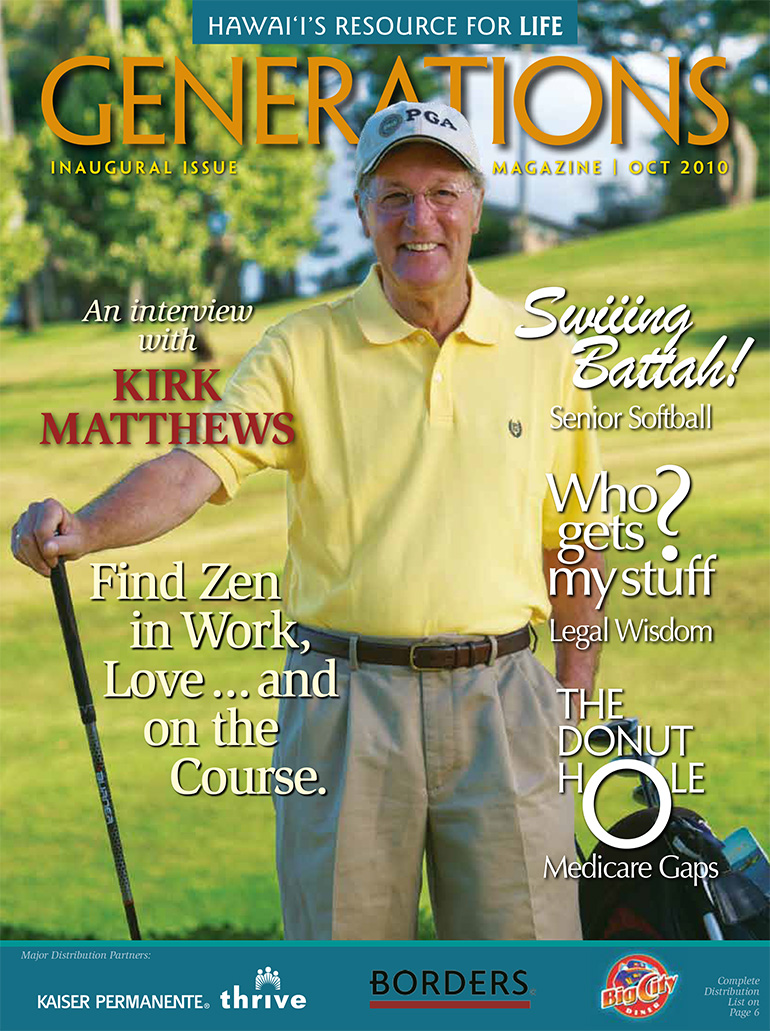
GM: Where did you grow up? In a big city? Or small-town America?
KM: I grew up in little towns all around Oregon. I went to high school on a former Indian reservation, Siletz. Graduating class of 12.
GM: What was your first job? Was it in media or in a different field?
KM: My first broadcasting job was in Coos Bay Oregon at a small radio station. I had the opportunity to do EVERYTHING. It was a great learning experience.
GM: What brought you to the Islands? Sand, sun and surf?
KM: [big smile] Love, actually. I first came here in 1981 to tape some shows for a Portland TV station. Later, I met my wife who came to Portland from Hawaii but was so homesick; she had to come back here in 1983. I followed her … gladly.
GM: Where did you meet “Mrs. Matthews?” — Linda Coble.
KM: I knew that she was coming to my station in 1981 in Portland to audition for the job as the first female anchor at the place. I was waiting in the parking lot to get a look at her. I fell in love at first sight. I wooed her and pursued her. She was highly successful on television in Portland but she was homesick for Hawaii. Every night, after the news, she would ride her stationery bike with headphones on listening to The Brothers Cazimero, tears streaming down her face. She came back to Hawaii in 1983 — I was hot on her heels. We were married in 1984.
GM: Tell us just one funny story about being married to Linda.
KM: [laughter] Oh, where to start! She doesn’t know her left from her right. If she’s driving, I have to point. If I’m driving, she has to point. A typical conversation in the car would go: Kirk: “Should I turn left?” Linda: “Right.” Kirk: “Okay, right.” Linda: “No, not right, left.” Kirk: “If it’s not right, what’s left?” Linda: “RIGHT…we missed the turn.” [laughter]
GM: Everyone knows you from KHON’s Hawaii’s Morning News. How do you get up so early every day? KM: I’ve been doing that at KHON for a long time. I have a very understanding wife who doesn’t mind when I go to bed early. I have a quiet alarm that goes off at 2:30 every morning. And I have a brain that says, “You’re a lucky man. Get up, dress up and show up.”
GM: The Elderhood Project is one of KHON’s feature shows. You host the program … can you tell us a little bit more about it?
KM: The Elderhood Project was conceived several years ago as a way of addressing the needs of seniors and their caregivers. I have been amazed at the number of programs, volunteers and others who have a deep interest in the subject. Someone once said, “at some point you will either be a caregiver or a care-getter.” I hope we can continue to delve into the subject for a long time to come.
GM: Over the years, you’ve had the opportunity to interview hundreds of people. What was your favorite interview or story?
KM: That is the hardest question to answer. I’ve had the opportunity to talk with major movie stars, national leaders, people who shape our lives with their decisions. My favorite interview is – the one that’s coming up next.
GM: Let me rephrase the previous question … if you could interview anyone in the world, who would it be?
KM: The obvious answer would be Barack Obama. A close second would be the chance to sit down with Quincy Jones or author James Lee Burke and talk about the creative process. It’s one of the few things that separates us from the rest of the creatures on the planet.
GM: Thinking back on your personal life and career, did you have a mentor growing up or on the job?
KM: [smiles] Oh, man. My dad, my mom. Mr. Lakes, an English teacher. Mr. Roth, who created a high school orchestra out of thin air. Bob Sevey. Almost everyone I meet every day has something of value to offer.
GM: When you’re off the clock and have time to relax, what’s the perfect day for you?
KM: The perfect day would go like this … Read stories to 1st graders in the morning. Lunch with seniors at noon. Golf with Linda and dinner downtown at Du Vin. Watch a suspense movie at home in the evening. Can you arrange that?
GM: [laughter] Sure. And an interview with Generations Magazine to top it all, right?
GM: Golf is big in Hawaii, obviously. You play golf too. How’s your game?
KM: I am not a very good golfer. I love to go to the golf course with Linda. If we get paired with another couple, it’s always fun. It’s five hours we have together where we focus on something else other than our everyday concerns. It’s Zen. That’s the only way I can explain it.
GM: With so many hours spent on the golf course, do you have any funny stories from the green? Out of control golf carts, stray balls …
KM: Two Japanese guys in a cart came back up the fairway toward us. “Did you find a sand wedge?” they asked. “No, sorry.” They looked at us suspiciously and said again, “Did you find a sand wedge?” “No, no we didn’t.” They zoomed off in disgust and pointed to the hot dogs in our hands. “All they wanted was a sandwich!” [laughter]
GM: If you weren’t in media or broadcasting, what would you be doing?
KM: We talked about this on the news. I would be a teacher. My father was a teacher and a coach and I remember the joy he experienced when one of his students “got it.” Dad referred to it as the light bulb over the head. I enjoy reading to the students in class when I have the opportunity.
GM: Can you talk about some of your other community involvements?
KM: Linda and I have been involved with Rotary since 1987. It’s a worldwide service organization. My friend Matt Levi runs a martial arts school and I help out with awards ceremonies and a Scrabble tournament several times a year. I read to youngsters in the schools and whenever friends ask, I try to help out with various non-profits.
GM: Along with your strong interest in the education of Hawaii’s young people … what are your other passions in life?
KM: Reading and music. I own 2 ukuleles, a trumpet, several flutes, harmonicas and a guitar. I play them all. I also own a set of golf clubs. I play those just about as well. [smiles]
GM: Since you’re getting up there in years, what are your retirement plans. With family on the Mainland, do you plan to retire in Hawaii?
KM: Good question. My mother is 83. She lives in Oregon. I have a daughter in Oregon and one in LA. The easy answer is, I don’t plan to retire. Right now, Linda and I feel like we have family in two places. We are at home here.
GM: After years of doing live TV, you must’ve had some unpredictable moments. Any funny stories to share about KHON2?
KM: On my lawyer’s advice, I am going to skip this question. [nudge and a wink]
GM: We heard that you are having some health problems now. Care to talk about it?
KM: Sure. I was diagnosed with skin cancer some time back. I am currently going through radiation therapy. My advice: Pay attention to everything! If something doesn’t look right or feel right, see your doctor. Plus get your regular exams, checkups, immunizations, etc.
GM: Thank you for sharing. Any words of wisdom for people going through maturity in life, whether it is personal or professional?
KM: I would refer back to my answer about getting up early to do the show … when the alarm rings, thank your lucky stars that you heard it. Get up, dress up and show up. If you don’t have a paying gig, find something that gives you joy. You can’t buy joy. But if you’re lucky, you can find it.
GM: I know there is a lot to love about the Islands, but what do you like most about Hawaii?
KM: There’s no question about that—the people. I could live almost anywhere. I picked here for the same reason Linda did. The people. When I walk through Safeway or Long’s and people feel comfortable enough to say howzit to me, that’s my reward. I want to do whatever I can to make this the best place possible. And with the people’s help, that will happen.
GM: You live a pretty healthy, active life … but do you have any favorite indulgences?
KM: Friday night movies at home. Pizza. Linda— not in that order.
GM: Although you spend much of your time in the public eye, is there still something people don’t know about you? KM: It’s a small island. Folks probably know everything about me. I know more lyrics to Broadway show tunes than most people should probably know.
GM: Do you have a favorite restaurant or bar in town?
KM: The one that brings free pupus.
GM: Well…let me show you the way.
Look for Kirk’s monthly column The Elderhood Project
GM: Where did you grow up? In a big city? Or small-town America? KM: I grew up in little towns all around Oregon. I went to high school on a former Indian reservation, Siletz. Graduating class of 12. GM: What was your first job? Was it in media or in a different field? KM: My…
Sharon Hayashi, Interior Designer What are some of the things that’s fulfilling in your life? I joined the Rotary Club of Metropolitan Honolulu in 1989 for its local and international projects. I have enjoyed renovation projects at Princess Kaiulani School, Hale Kipa Youth Housing, and Clubhouses for the Hawaii Adult Mental Health Hawaii Division. And I serve on the board of Friends of the Library of Hawaii.
David Behlke, Artist, KCC Koa Gallery Director, Instructor What inspires you at this time in your life? What brings me into the world each day is my passion for my work, my personal creative fire along with my desire to share my knowledge. We all wait for the teacher to appear and I try to make myself available for those who need a little creative nudge now and then, the teacher in me comes through, I just can’t help it.
Lisa McVay is our on-the-road reporter — talking story with friends and neighbors, and sharing her many Talk Story encounters. Mahalo to all that “Talk Story” with Lisa.
Sharon Hayashi, Interior Designer What are some of the things that’s fulfilling in your life? I joined the Rotary Club of Metropolitan Honolulu in 1989 for its local and international projects. I have enjoyed renovation projects at Princess Kaiulani School, Hale Kipa Youth Housing, and Clubhouses for the Hawaii Adult Mental Health Hawaii Division. And…
My mother just got her first cell phone. It doesn’t take pictures or play music — it just makes phone calls. It took her a while to get used to the idea — she would talk into the wrong end of the phone in the beginning. But she’s got the technology figured out and now she can call me any time. ANY TIME. But I’m glad about that.
Sometimes, we forget that technology is just a tool. If it gets in the way of what we’re trying to accomplish — communication, for example — then it’s no longer a tool. It becomes a *&$*/% waste of time and money.
The Elderhood Project will use whatever technology we have available to get important information to our kupuna and their caregivers. We broadcast our reports on television and put them on the internet. Now, Generations Magazine gives us another avenue to spread the word. We are grateful.
When our newsroom first started using computers some years back, a reporter friend of mine quit, saying he would never type his stories on “one of those things.” He is still working, of course, in another field. And using computers every day. Never say never. We are thrilled to be a part of Generations Magazine. It’s portable and doesn’t need batteries.
In the past month on the Elderhood Project, which airs on KHON2 every Thursday morning on the morning news and Thursday afternoon at the 5 p.m. segment, we have covered subjects such as cataract awareness with Dr. Jorge Camara, palliative care (dealing with pain), homeless seniors and tips on how to avoid medicare identity theft. Much more in the weeks ahead.
Gotta go. Mom’s on the phone.
My mother just got her first cell phone. It doesn’t take pictures or play music — it just makes phone calls. It took her a while to get used to the idea — she would talk into the wrong end of the phone in the beginning. But she’s got the technology figured out and now…
Our “can do!” island culture values resourcefulness and cooperation when faced with challenges. “We know a guy” and where to get things, and have honed skills tūtū taught us. We don’t expect anything in return for helping out. “If can, can; if no can, no can.” We put ourselves to the task.
PBS Hawai‘i (KHET or KMEB call letters in your guide) is our TV station. Our donations built it and it serves us. But don’t take it for granted. Paula Kerger, president of the Corporation of Public Broadcasting national nonprofit, recently applauded our “can do!” public television station: “This is truly, I would say, the most exceptional station in our country…
it understands what it means to be a part of the fabric of our community.”
“NOVA,” “Get Caught Reading,” “HIKI NŌ,” “PBS News Hour,” “Long Story Short with Leslie Wilcox”— we are fans! But how much do we know about our TV station?
Snuggle up. We turned the tables and interviewed PBS Hawai‘i President and CEO Leslie Wilcox. Be prepared for some learning moments! And into the bargain, Leslie shares memories about growing up on O‘ahu — another reason PBS Hawai‘i expresses the heart and soul of our islands.
Generations Magazine readers watch PBS, but they may not understand how it got started.
LW: Well, Hawai‘i public television goes back to 1965, when a University of Hawai‘i professor set up closed-circuit instruction on campus. With the Public Broadcasting Act of 1967, the UH initiative became a member of the new Public Broadcasting Service [PBS]. In 1969, they introduced “Sesame Street.” It was controversial in some states, but Hawai‘i welcomed the educational program.
We were first located in a vacant lower Mānoa corner of UH near some Quonset huts. Back then, the TV station was part of the state government. Later, in 1972, the State Legislature funded a two-story building on the site. From the start, our public television station racked up a number of Hawai‘i firsts — including the first local station to provide live satellite broadcasts.
Can everyone can get PBS on an HDTV?
LW: Yes, plus via cable, satellite or online. We serve most of the Hawai‘i community free via our KHET and KMEB over-the-air broadcast signals — including financially disadvantaged communities where it’s not profitable for commercial TV stations to direct their signal. For example, we recently strengthened free service to the under-resourced, rural southern end of the Big Island. Many people do not have digital access and we care about them. That’s why we broadcast educational programming 24 hours a day on two channels — our main channel and PBS KIDS 24/7.
When state funding ended in 2000 and we became a private, nonprofit, community-supported organization, we began leasing the space we had long occupied at UH Mānoa. I joined in 2007. Years later, due to UH space needs, we lost our lease and had to move all of our operations.
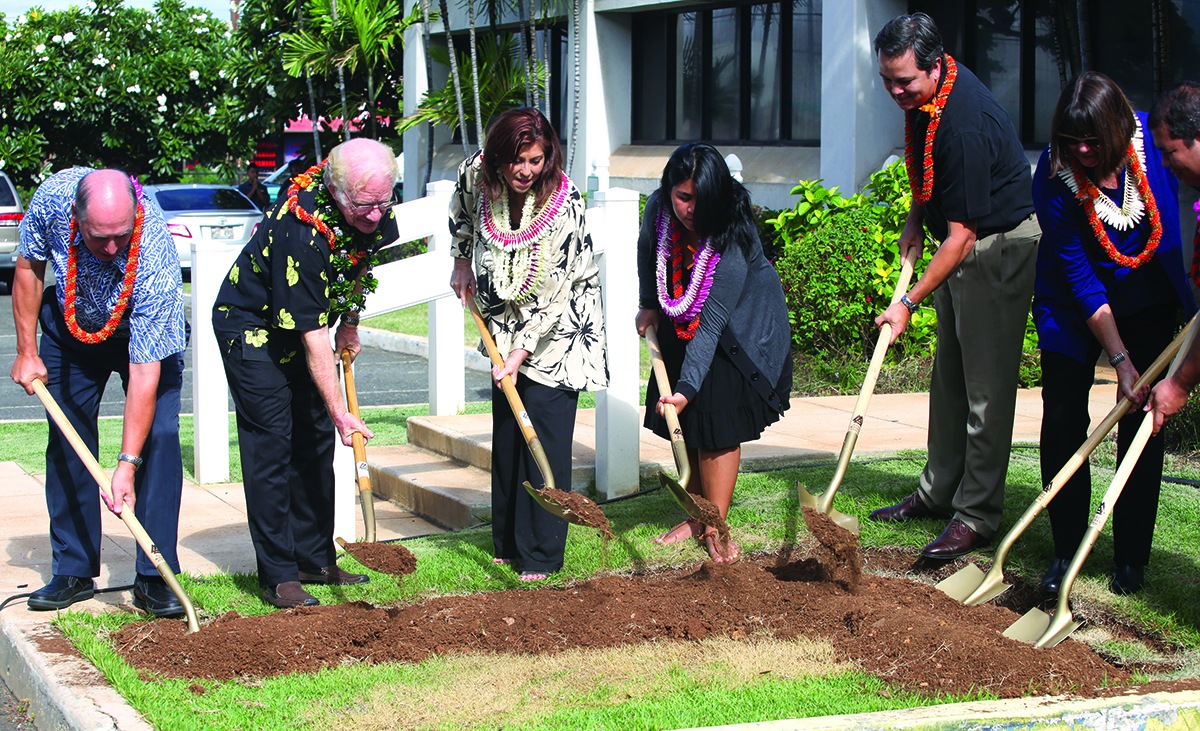
From the old to the new, groundbreaking in Nov. 2014: (LR) Neil Hannahs, former PBSH board chair; Robbie Alm, then-board chair of PBSH; Leslie Wilcox, president and CEO of PBSH; Victoria Cuba, student engineer at PBSH; Cameron Nekota, PBSH board member; Sheryl Seaman, architect, G70; and Justin Izumi, VP, Allied Builders System.
When did PBS Hawai‘i make the big move?
LW: We moved in 2016, but before that, we raised $30 million to build a big new facility across town. Relocation at first seemed like bad news and a tough blow, but like many changes, it worked out for the better. We had hopes, dreams, hard work and a “can do!” attitude. As always, “the village” of Hawai‘i nei offered support. And we had a strong staff committee headed by Karen Yamamoto managing the move.
In May 2016, we settled into our beautiful, future-facing multimedia building at the corner of Nimitz Highway and Sand Island Access Road in Kalihi Kai — the PBS Hawai‘i Clarence T.C. Ching Campus. It’s the best work environment I’ve ever had — open, cheerful, welcoming, functional to the max. Thanks to our terrific unpaid board of directors and funding by Hawai‘i individuals, businesses and charitable foundations, the facility and land are debt-free .
We’re delighted to be owners, not renters of the only locally-owned, statewide broadcasting company. All others are commercial businesses owned by large companies based elsewhere.
PBS consistently provides content and services to inform, educate and enlighten our fellow islanders. We gather feedback from stakeholders, viewers and our statewide independent community advisory board.
We want to inspire lifelong learning from childhood through active retirement and elder years. The PBS Hawai‘i mission, with its pillars of education and journalism, is a great fit with my personal philosophy. Education certainly lifted my prospects in life. And journalism increases a flow of new information. For more than three decades in journalism, I felt like I was being paid to learn.
At PBS Hawai‘i, our traditional values of integrity and fairness endure, but our methods and approaches have changed repeatedly over time with waves of new technology and with shifts in societal perspectives. Sometimes, even media professionals have difficulty dealing with change. As former Sony CEO Howard Stringer said, “We all have to remember not to hang on to the status quo long after the status has lost its quo.”
Also, PBS values adaptability and versatility. Our lean, dedicated staff has the energy, creativity and know-how to produce a significant amount of local content — weekly TV programs and frequent online offerings. We are “can do!” people.
Is it true that you are not funded by the state?
LW: Yes. We’re Hawai‘i’s sole member of the trusted private nonprofit Public Broadcasting Service. A related national entity is the private nonprofit Corporation for Public Broadcasting. It distributes federal funding to some 350 public TV and radio stations. These funds only make up 15 percent of our annual budget. We leverage PBS federal grant monies into many more private dollars, thanks to generous individual, business and foundation donors. For a number of reasons, it’s good to have different kinds of revenue streams. For example, if a funder seeks to control our editorial content, we need to stand strong — and we can, with other sources of funding.
We remember you reporting news on the air at KGMB-TV and KHON2. Did journalism bring you to Hawai‘i?
LW: Actually, I was born and raised on O‘ahu. My Portuguese forebears, Joao and Faustina Fraga Silveira, sailed here while Hawai‘i was still a monarchy. They had actually met on the ship, settled in Kalihi and had 16 children, 13 of whom survived childhood. One of the grandchildren was my mother, Blanche. During World War II, she met Paul Wilcox, a soldier stationed here. He fell in love with my mother and Hawai‘i. Dad had a great broadcast voice and became one of Hawai‘i’s early radio disc jockeys with a late-night show called the “Midnight Owl.” He later worked in radio sales. I’m in the middle of five siblings. I attended Holy Nativity School, Āina Haina Elementary, Niu Valley Intermediate and Kalani High before going to college.
Small-kid times were spent in what were once jokingly called “the boonies,” meaning Kuli‘ou‘ou Valley, with Quonset huts here and there, a farm market, and backyards where families grew veggies and flowers. Kuli‘ou‘ou was the last residential valley in East Honolulu. As a kid, I remember pink bulldozers tracking down Kalanianaole Highway to build Henry Kaiser’s huge new Hawaii Kai marina community around the ancient Hawaiian fishpond, Kuapā. Pink was Mrs. Kaiser’s favorite color. I can still remember the sparsely settled lands, dotted here and there with small farms.
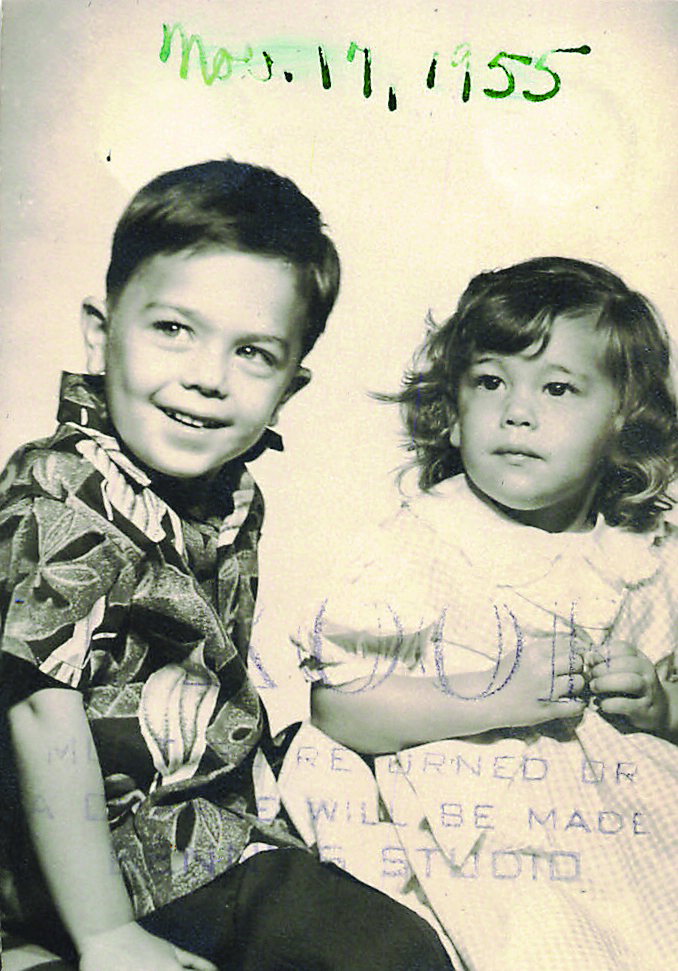
My older brother Pat and I would walk across the highway, wade out to a little islet and pretend to be island castaways.
When fishermen abandoned fresh aku heads there, we’d stage aku-head swordfights. And we played with sea cucumbers, which squirted seawater. Dumb kids. I wouldn’t do this today.
In high surf, waves rolled across the road into the fishpond. The backwash left mullet stranded on the land. We kids were there to pick them up and proudly take a “fresh catch” home for dinner!
Freedom and make-believe are treasures of a post-war Hawai‘i childhood.
LW: The world was certainly a safer place; baby boom children kept themselves occupied and were allowed to roam. On Saturdays, our mothers might say, “Just make sure you come home before dark. And don’t bother anyone or get into trouble.” No cellphones or bottles of water required.
When I was still in grade school, my family moved into the new Niu Valley subdivision, then considered a middle-class community. I was older and now our keiki explorations involved crawling around in mountain lava tubes, reef diving to look for eel holes and lots of skateboarding down steep streets. I have the scars to prove it.
I learned to surf with my friend David’s old homemade board and reveled in the freedom. We also surfed Kawaikui Beach. When we got thirsty, we dove down and drank fresh water flowing through pockets in the sand. Highway work
stopped the flow of artesian water. Niu pier is long gone, too. Great memories.
What was your first job after high school?
LW: Waitressing at the old Snack Shop on the grounds of the Royal Hawaiian Hotel. My pink uniform had a big bow in the back ironed with starch from Chinatown; it was hard as a board.
I won a journalism scholarship to USC, but just before high school graduation, my parents divorced and bankruptcy followed. I stayed home to help support the family. Fortunately, I was able to pay for and attend UH Mānoa after the Honolulu Star-Bulletin, then the largest newspaper in Hawai‘i, gave me an errand-person job. Amazingly, it turned into a full-time reporting position when I was barely 19. I’m forever grateful to my former Star-Bull colleagues, who at times teased but also generously helped an awkward rookie.
Were there other mentors along the way?
LW: I’ve had too many guides and mentors to mention, and they remain in my heart. Some offered guidance, others taught by example in a critical moment. I learned from “the village” that I came to know as a journalist — at many locations across the state and under stressful, sorrowful or even dangerous circumstances.
Also I learned from reading. Books open up history, context, new ideas, other worlds, flights of fancy and knowledge of how things work. I didn’t travel outside Hawai‘i until I was 16 (for a journalism competition), but through reading, I had already crossed continents, gone back in time and seen the future. Reading continues to inform my writing and expand my understanding.
Also, my extended family members are observant and curious. “I wonder why…” was a common beginning to a sentence. It wasn’t a gossipy or nosy interest. The question connects things to history, science or community. This curiosity cultivated my sense of wonder, too. When I was 15, I researched the purchase of a big parcel of land in our neighborhood — I wondered who bought it and how it might affect life in the area. Come to think of it, that was pretty niele [nosy]!
Sounds like you were cut out to be a reporter. How was the transition to television?
LW: The first thing I learned in TV is that perception is reality. My newspaper background taught me how to gather and write news. But I was pitiful presenting news on camera. If you report with a quivering voice, your viewers are going to think something is shaky about your report, too!
KGMB-TV news director and icon Bob Sevey had recruited me, knowing I had no television experience. I told him that my own mother thought I looked and sounded goofy and unsure, and asked him for his professional advice. His candid,
old-school response: “Wilcox, you’ll get there. You’d better — this is a sink-or-swim business.”
I didn’t grow up watching women role models on television news. Men dominated the business. Fortunately, three talented women were successfully navigating the newsroom — Linda Coble, Bambi Weil (who later became Judge Eden Hifo) and Carolyn Tanaka. Finally, I got it together by deciding simply to be myself. I pictured my dear no-nonsense auntie and my favorite math teacher, Mr. Charles Hirashiki, watching at home — and I delivered the news to them. It worked.
After mastering broadcasting, what spurred you to take the helm of PBS in 2007?
LW: The magnetic pull of PBS Hawai‘i was and is still this: it is locally owned and locally managed to serve fellow islanders. We enrich others by telling authentic Pacific stories and opening windows to the world. I wanted to be a part of this mission.
One misconception about public media is that the “public” stands for government. It actually stands for you and me, and our whole community. After 13 years, still I am amazed and inspired by people who send us money to keep doing what we’re doing.
I like working for a local organization with strong national and international alliances through public broadcasting. Yet, our volunteer board members and professional staff live in the islands. We are approachable and accountable.
Some of our sponsors choose to share with others something they deeply value. Your readers may not know that Maui grandparents Jim and Susan Bendon of Sprecklesville sponsor the lessons of Daniel Tiger [“Daniel Tiger’s Neighborhood”] for all of Hawai‘i’s children. Retired UH professor Belinda Aquino still provides education for all of us by underwriting broadcasts of “Nature” and “NOVA.” Rick Nakashima of Ruby Tuesday restaurants supports the “Get Caught Reading” literacy initiative. I can’t imagine a better job.
What were the most important changes you brought to PBS when you started?
LW: I came with a deep respect for what this station had already achieved, but media technology and capabilities were changing rapidly, so I encouraged a corporate culture that welcomed new skill sets. Then you need to react and respond quickly in these fast-changing times, so I adopted a “flat” organizational structure that allows information from different sources to move quickly through the organization.
That brings us to “Long Story Short with Leslie Wilcox.” How do you get your guests to reveal so much new information?
PBS creative media executive Robert Pennybacker developed “HIKI NŌ,” and “Hawai‘i’s New Wave Storytellers.” He began reaching out to teachers in public, private and charter schools, and mentoring them in journalism and video production. The teachers ably train their students to write and produce their own stories. The skills will be used again in school, life and work — from oral and written communication, media technology and critical thinking to teamwork, collaboration and perseverance. “HIKI NŌ,” video magazine presents student perspectives, conveyed through responsible and creative storytelling. “HIKI NŌ ,” airs at 7:30 pm Thursdays. During the COVID-19 school closures. students pivoted and continued reporting from home with stories about life in the shadow of the pandemic. Every story is conceived, written, reported, taped, edited and produced by students.
LW: When people know that you earnestly want to know them and their views, it’s usually easier for them to relax and express themselves. In my gut is always the “I wonder why or how” question, but active listening is what I mainly do I’m not thinking of my next question while the guest is answering the current question.
How about the wonderful forums and discussions? That’s more than listening.
LW: We’re here to ask the questions that people at home want answered. PBS Hawai‘i takes a “can do!” approach to convening diverse voices and maintaining a respectful discussion. We offer a safe, trusted space where community members with opposing opinions may be heard. “Insights on PBS Hawai‘i,” “KĀKOU: Hawai‘i’s Town Hall” and “What’s It Going to Take?” are discussion forums. Our moderators, Daryl Huff, Yunji DeNies and Lara Yamada, are comfortable being around people with conflicting opinions, and they know that if conversations can be kept civil and even respectful, there’s a better chance of people really hearing each other and finding common ground.
Shouting over others, name-calling and public shaming run counter to island values. At PBS Hawai‘i, we want to keep things real and at the same time respectful, non-partisan and fair.
* * *
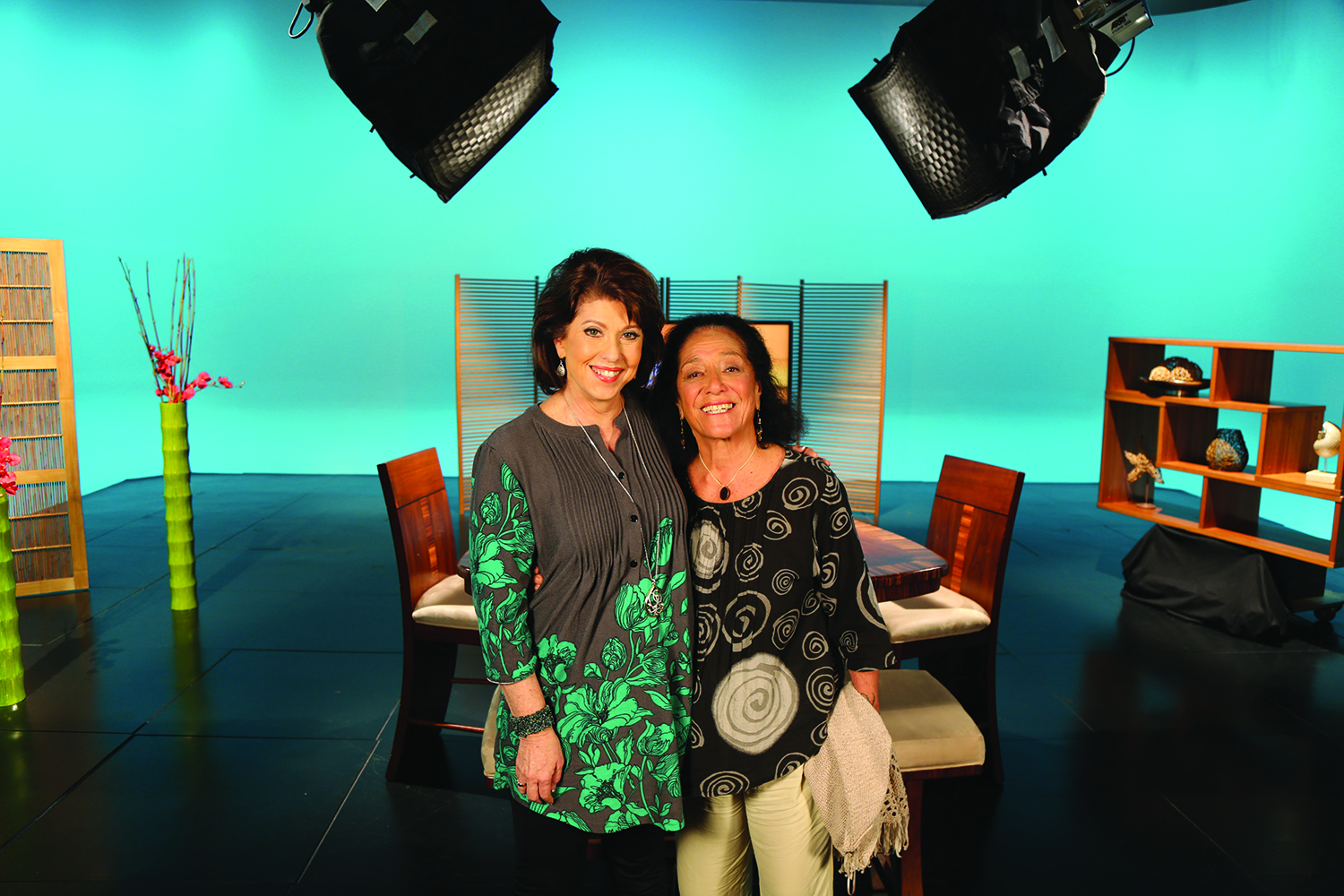
Leslie, we thank you, your dedicated board of directors and the entire PBS Hawai‘i family for sharing this inside look — and we are so very grateful for all they do. I learned a lot more about PBS Hawai‘i — and all the work that goes into creating and delivering us wonderful, high-quality programs. Going forward, I encourage our readers to join me and support PBS Hawai‘i however we can. After all, it’s our TV station! “Can do!”
To learn more about PBS Hawai‘i, visit www.PBSHawaii.org and www.wikipedia.org. We don’t have to wait to donate — online we can give a one-time gift or subscribe to make monthly donations all year long.
Photography by Brian Suda
Our “can do!” island culture values resourcefulness and cooperation when faced with challenges. “We know a guy” and where to get things, and have honed skills tūtū taught us. We don’t expect anything in return for helping out. “If can, can; if no can, no can.” We put ourselves to the task. PBS Hawai‘i (KHET…
It may be hard to believe, but during natural disasters such as hurricanes and earthquakes — and even the current COVID-19 pandemic — unscrupulous scammers set up fraudulent fundraising operations to take advantage of Good Samaritans who want to help.
Charity fraud is committed when a perpetrator creates a bogus fundraising operation, aiming to take advantage of our sympathies, goodwill and generosity. Charity fraud may also occur when a legitimate charity represents that funds will be used for one particular purpose, but the money is used for other purposes. There are many worthy causes, so don’t let the possibility of fraud dissuade you from donating. Here are tips to help ensure your donations are put to good use.
• Ask how your donation will be used. Make the caller be specific. If the answer is vague, be wary.
• Check registration. Every charity that solicits contribution in Hawai‘i must register with the Tax and Charities Division of the Department of the Attorney General. Search the AG registered charities database at www.ag.hawaii.gov/tax.
• Check the IRS website EO Select Check at www.irs.gov/charities-&-non-profits/exempt-organizations-select-check. Type in the charity name to see if its federal tax standing is valid.
• You may also check other charity watchdogs, such as Charity Watch (www.charitywatch.org), Better the Business Bureau’s Wise Giving Alliance (www.give.org), Charity Navigator (www.charitynavigator.org) or GuideStar www.guidestar.org).An internet search is also advised.
• Make sure you understand which organization is requesting your money. Some scammers use names that sound similar to legitimate charities.
• Ask what percentage of your donation goes toward admini {Play}strative costs versus the program itself. The acceptable percentage is up to you. To check the charity’s financial reports, go to www.ag.hawaii.gov/tax.
• Do not pay over the phone and scrutinize written material sent to you.
• Pay by check or credit card; never cash.
• Note that scammers can change their caller ID to make it appear as a local number.
• Call the organization to verify the caller’s name and request. Despite these safeguards, if you feel that you have been the victim of a scam:
• Call 9-1-1.
• Call the Department of the Attorney General, Tax and Charities Division, at 808-586-1480 or email ATGCharities@hawaii.gov.
• Call the Federal Bureau of Investigation at 808-566-4300.
• File a report on the Federal Trade Commission website: www.ftc.gov/complaint.
Follow these tips to help ensure your money is going to a worthwhile program.
It may be hard to believe, but during natural disasters such as hurricanes and earthquakes — and even the current COVID-19 pandemic — unscrupulous scammers set up fraudulent fundraising operations to take advantage of Good Samaritans who want to help.