Category: Date

  • Aging Gracefully With Your Body

    As we get older, more than a few seniors have seen their body change into a shape they had hoped it never would. I was hoping mine would actually shrink, but of course that didn’t happen. After working a high stress job, gaining 25 pounds and losing lots of sleep, I decided to get off that roller coaster. I’m now semi-retired.

    Fortunately for me, I am rarely sick and do not take any medication. So, I’m healthy despite weighing more than I should. I play pickleball every day, ride my bike to the beach and walk to get my daily 10,000 steps whenever possible. Did any of that weight come off? Down a few one day, up a few the next — an everyday cycle of hopefulness and disappointment. I then realized that I needed to change not only what I was eating but also my perspective about my body!

    If you are experiencing similar frustrations as I had, my advice to you is first to continue enjoying your favorite foods and beverages, but start out by making small changes. According to the USDA Choose My Plate website (www.choosemyplate.gov/browse-by-audience/view-all-audiences/adults), the following are things you can do to help retain (or get back to) the healthy weight you want and the shape you once had.

    • Add flavor to foods with spices and herbs instead of salt and look for low-sodium packaged foods.
    • Add sliced fruits and vegetable (pre-sliced, if slicing/chopping is a challenge) to your meals and snacks.
    • Ask your doctor for other options if your medications affect your appetite.
    • Drink three cups of fat-free or low-fat milk throughout the day. Or try small amounts of yogurt, buttermilk, hard cheese or lactose-free foods. Drink water instead of sugary drinks.
    • Consume foods fortified with vitamin B12, such as fortified cereals.

    According to the website, the second best thing you can do for yourself is to be active in whatever way you physically can. Just starting with baby steps will help your bones, your flexibility — and your mind. But please consult your doctor before beginning any kind of physical activity you are not used to… except the baby steps. Simply taking a walk outside while enjoying good weather or just around the house is a start.

    And, lastly, the world we grew up in (and still, somewhat, the same today) was all about your body image. You were either too thin, too fat, too big-boned or too muscular, etc. It’s been my experience that if you’ve had a good life and have friends and family who love you, it really doesn’t matter what shape you have now. Embrace your body; it got you where you are today. Make those small adjustments (food and baby steps) to extend the joyfulness in your life, because that is what is most important, not your shape!


    Here are some other pages at ChooseMyPlate.gov:
    https://www.choosemyplate.gov/eathealthy/budget
    https://www.choosemyplate.gov/coronavirus

    As we get older, more than a few seniors have seen their body change into a shape they had hoped it never would. I was hoping mine would actually shrink, but of course that didn’t happen. After working a high stress job, gaining 25 pounds and losing lots of sleep, I decided to get off…

  • Turn Inward for Your Best Year Yet

    As you look back on 2020, take a moment and ask yourself some important questions:

    “How much of my focus was spent being affected by news, events, personal problems and situations around me? How did that make me feel?” And most importantly, “Do I want to spend the next year feeling the same way or do I want to feel better?”

    If you want to thrive in the New Year, start by making a choice. If you said yes to the last question, make a decision, be willing to look at your life objectively and accept change. If you say things like, “I’ll try,” “I want to,” or “I’ll do it someday,” your habits will slow you down or keep you stuck. Decide. Declare it. Write it down. Feel it. Your body and brain have to be in agreement. Otherwise overthinking and default behaviors take over.

    Start by noticing your emotions and observing your thoughts. Ask yourself if you want to feel that way. If the answer is no, the easiest way to shift your focus is to do something physical like clap your hands. This puts you in the driver’s seat of your emotions. Then, affirm goodness by turning your focus to gratitude. Immerse yourself in that feeling for as long as you can.

    Daily practice will help you make 2021 your best year yet.


    KAIMUKI BODY & BRAIN
    3569 Harding Ave., #B, Honolulu, HI 96816
    808-738-5522 | www.bodynbrain.com/kaimuki

    As you look back on 2020, take a moment and ask yourself some important questions: “How much of my focus was spent being affected by news, events, personal problems and situations around me? How did that make me feel?” And most importantly, “Do I want to spend the next year feeling the same way or…

  • Social Isolation in the ‘New Normal’

    Social isolation and loneliness are toxic to everyone’s health, but especially older adults. Given COVID-19 mandates to limit face-to-face contact for the foreseeable future, these feelings are certain to increase, accompanied by threats to health and well-being.

    Uncertainty surrounding the “new normal” may cast doubt on the efficacy of past solutions to isolation. Consider the notion of “third place,” neither home nor workplace, but a congenial public gathering spot, the guiding principle of Starbucks, the coffee giant. The COVID- 19-related constraints of social distancing and limited seating capacity now challenge the very concept of neighborhood coffee shops or hang outs.(1) Changing customer behavior has forced the iconic company to reconfigure its physical spaces and its entire style of product delivery. Four-hundred stores closed in North America alone; carryout and pickup only locations, such as Starbucks Now stores in China, are rapidly proliferating.

    The concept of “third place” has served as a guiding principle for older adult services, such as senior centers and Memory Cafes. Ibasho Cafés, initiated in Japan, represent an empowering type of “third place.” Ibasho’s older participants run the site, choosing activities that reflect their priorities and address community needs, such as community gardening. Engaged as community resources (rather than service recipients) by participating in meaningful roles within the site reduces likelihood of social isolation. Ibasho sites are successful in Asia and may represent a future solution to social isolation for older adults in the Hawaiian Islands.

    Just as major businesses are responding to pandemic-induced changes in customers’ behaviors and choices, older adult services may also need to adapt to the “new normal” of a pandemic-transformed world, supplementing face-to-face interactions with safer virtual online encounters.

    Online communities for older adults have provided peer-based sources of information and support for years.(2) Traditional daycare centers and senior centers will no doubt continue to offer much-needed post-lockdown supports. Online communities, especially Ibasho-type sites that empower older adults to contribute solutions to the issues of the day, may offer a welcome complement to traditional service provision.


    CENTER ON AGING — University of Hawai‘i at Mānoa
    2430 Campus Road, Gartley Hall, 201B, Honolulu, 96822
    808-956-5001 | map3@hawaii.edu
    www.hawaii.edu/aging
    1 Frommer, D. (2020). Rethinking the Starbucks “third place,” https://newconsumer.com/2020/06/starbucksreopening-pickup-third-place/.
    2 Perkinson, MA. (2002). Cyberspace ethnography: Group processes in an online community of  dementia caregivers, www.researchgate.net/publication/258937226_Cyberspace_ethnography_Group_processes_in_an_online_community_of_dementia_caregivers

    Social isolation and loneliness are toxic to everyone’s health, but especially older adults. Given COVID-19 mandates to limit face-to-face contact for the foreseeable future, these feelings are certain to increase, accompanied by threats to health and well-being.

  • SS Benefits Get a Bump in 2021

    It’s about time for some good news: Social Security (SS) and Supplemental Security Income (SSI) benefits for approximately 70 million Americans will increase 1.3 percent in 2021.

    The 1.3 percent cost-of-living adjustment (COLA) will pay benefits to more than 64 million SS beneficiaries in January 2021. Increased payments to more than 8 million SSI beneficiaries will begin Dec. 31, 2020. The Social Security Act ties the annual COLA to the increase in the Consumer Price Index (CPI-W).

    Other adjustments that take effect every January are based on the increase in average wages. Based on that increase, the maximum amount of earnings subject to the SS tax (taxable maximum) will increase to $142,800 from $137,700.

    SS and SSI beneficiaries are normally notified by mail starting in early December about their new benefit amount. Most people who receive SS payments will be able to view their COLA notice online through their personal my Social Security account. Create or access your my Social Security account online at www.socialsecurity.gov/myaccount.

    Information about Medicare changes for 2021 will be available at www.medicare.gov. For SS beneficiaries receiving Medicare, SS will not be able to compute their new benefit amount until after the Medicare premium amounts are announced. Final 2021 benefit amounts will be communicated to beneficiaries in December through the mailed COLA notice and my Social Security’s Message Center. For more information, visit www.socialsecurity.gov/cola.

    It’s about time for some good news: Social Security (SS) and Supplemental Security Income (SSI) benefits for approximately 70 million Americans will increase 1.3 percent in 2021.

  • Transforming At-Home Care

    The COVID-19 pandemic has forced health systems to rethink how to effectively manage preventive care and chronic diseases when regular in-person visits are challenging, and patients are  apprehensive of conducting telehealth visits. With many adults across the county delaying preventive care, and with six in 10 having at least one chronic condition (heart disease, cancer, diabetes), regular health management is a matter of life and death, with added COVID-19 risks.

    The pandemic has shown how community health centers have stepped up to transform local healthcare and are moving toward a new, blended care delivery model that includes at home self-care integrated with telehealth visits. These steps have the potential to significantly improve the way preventive care and chronic diseases are managed during and beyond this pandemic.

    The National Association of Community Health Centers developed the Leading Change: Transforming At-Home Care, a pilot project to address the problem that community health centers face in providing services for a large population of high-risk patients who are more likely to suffer from a disproportionate array of chronic conditions.

    Clinic staff conducts virtual check-in with a patient via a secure video chat platform. Ola, the clinic’s mobile van, is used to expand the clinic’s outreach and delivery of healthcare services to high-risk patients.
    Clinic staff conducts virtual check-in with a patient via a secure video chat platform. Ola, the clinic’s mobile van, is used to expand the clinic’s outreach and delivery of healthcare services to high-risk patients.

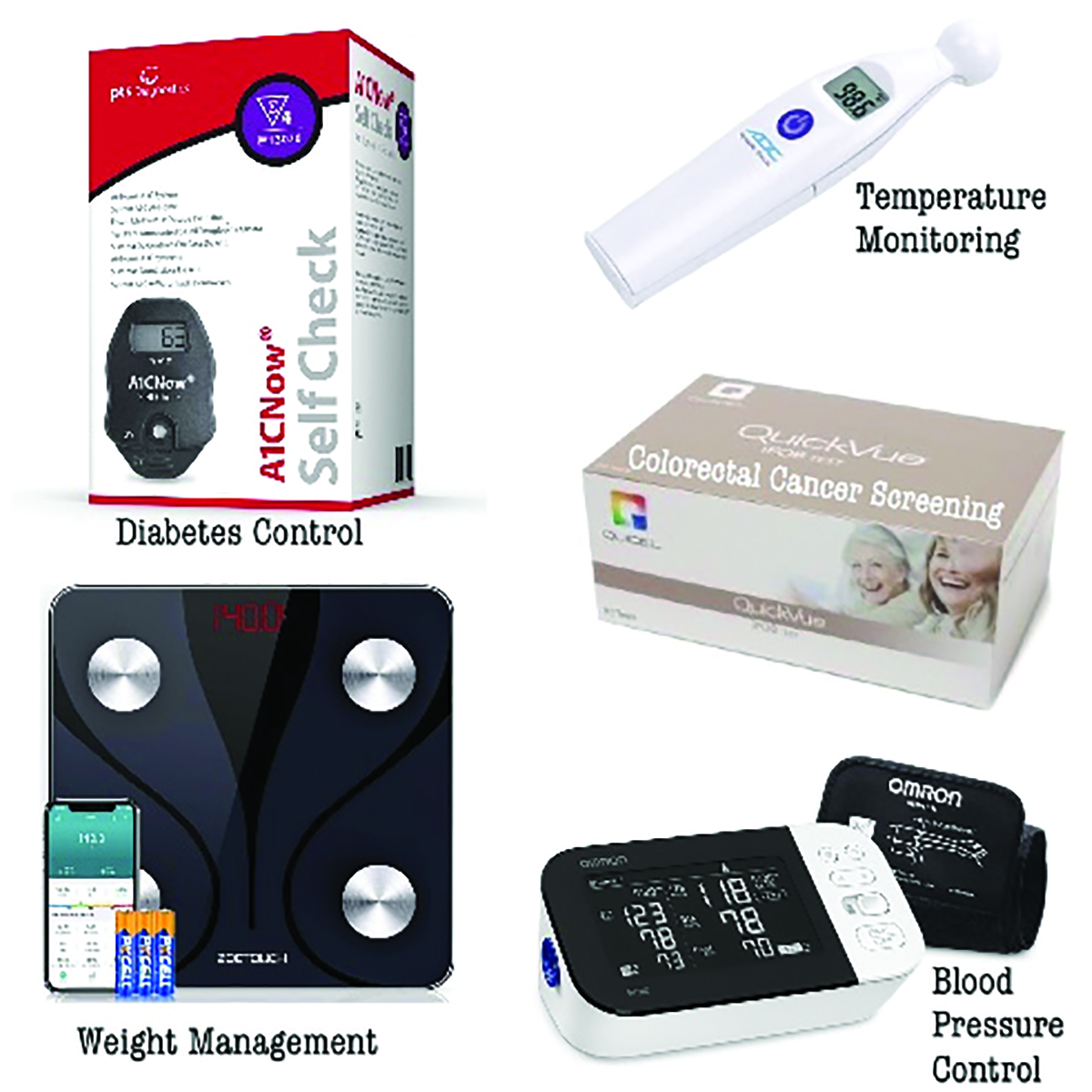
    The Wahiawā Center for Community Health (Wahiawā Health) is one of 20 health centers in 16 states around the country, and the only center in Hawai‘i, selected to participate in the cutting edge pilot project that provides high-risk patients with self-care tools and remote patient monitoring to prevent unnecessary health problems. High-risk patients are given a patient care kit that includes a home kit for colorectal cancer screening, a home A1C monitor for diabetes control, a blood pressure monitor for blood pressure control, a thermometer for temperature monitoring, and a scale for weight management. Patients also receive educational materials and in between the patients’ primary care visits, regular, virtual diabetes care, education and self-management visits from the clinic’s certified diabetes care and education specialist, and screening for social factors that affect health status by the clinic’s medical social worker.

    Wahiawā Health is a federally qualified health center serving Wahiawā, Mililani, Waialua, Schofield, Kunia and Central O‘ahu as a single point of access to comprehensive, culturally competent primary healthcare.


    WAHIAWĀ HEALTH
    302 California Ave., Ste. 106, Wahiawa, HI 96786
    808-622-1618 | wahiawahealth.org

    The COVID-19 pandemic has forced health systems to rethink how to effectively manage preventive care and chronic diseases when regular in-person visits are challenging, and patients are  apprehensive of conducting telehealth visits. With many adults across the county delaying preventive care, and with six in 10 having at least one chronic condition, regular health management…

  • Seniors Assess Lifelong Collections of Heirlooms & Valuables

    An interview with Craig Watanabe, Owner of Captain Cook Coin Company of Honolulu

    How have seniors changed their perspective on aging over the years?

    We seem to be working many more with seniors than ever before. As we get to know them, they share that they seem to be more involved than ever in helping their children financially, and also support their children and grandchildren by offering childcare.

    Have you observed changes in the way seniors are downsizing their possessions?

    Downsizing is really growing among seniors. As they move into retirement homes or their children’s homes, their living space becomes smaller, along with storage space. As the middle class shrinks, even with younger generations, living space is getting smaller and off-site storage space can be expensive.

    Are seniors continuing the tradition of passing their valued collections to future generations?

    Most seniors now say that their children are not interested in collections, so they are opting to liquidate their lifelong collections of coins, currency, jewelry, gold and silver items, Hawaiiana, tokens, medals and more, and just pick a few sentimental or especially valuable pieces to pass on as keepsakes.

    What is the best way to liquidate a collection of valuables?

    Go onto the internet and look up general prices to get an idea. But when you call your local coin dealer, don’t say, “I went on the internet or eBay and I found these prices.” Why? Because those prices are often asking prices, not the prices they sold for.

    Anyone can ask an unreasonable price — one that is much more than what something is worth. Also, saying that suggests that one knows everything about pricing their coins and warns the coin dealer to “watch out.”

    Grading is an art, not a science. A coin on the internet in the same grade as yours may have a total different eye appeal that equals to more or less money. Shop around for best prices, but be upfront and say so.

    And if you are an attorney representing a client, be prepared to pay for  appraisal services. It may cost you, but you’ll save a lot of time and receive an accurate evaluation that could mean thousands of dollars more for your client.

    Please keep in mind that even though  coins are an enjoyable hobby for most collectors, a dealer has overhead expenses.

    Ask around for information, but remember that your Uncle Joe or Aunt Minnie who has collected the coins is more than likely not in the know about current prices.

    Please be aware that the closer your coins are bullion-related (silver or gold), the more volatile their values. For example, the value of most silver dimes through half-dollars dated 1964 and before can fluctuate every few minutes during a day!

    How can you tell who is a reputable coin dealer?

    Obtain information from the Hawai‘i Better Business Bureau [BBB Northwest-Pacific, 808-536-6956, www.bbb.org] and listen to word-of-mouth reports. The coconut wireless can also be very helpful at times.

    You can also call coin dealer organizations and ask for any feedback on that dealer. However, no organization membership ensures credibility.

    What wisdom would you care to share based on your life experiences?

    Aging is an incredibly fascinating process.

    As an aunt who worked her whole life as a nurse said, “After a certain age, I guess the body just gives out slowly.” Always having an interest in physical fitness, I once asked my physical fitness mentor, the late Timmy Leong, what his definition of old age was. In a pensive pose, he replied, “Old age… it takes a long time to get there, but when I did, it went by too fast.”

    As I get older, I listen to my body more closely than ever before.

    We only go around once and I don’t want to squander God’s gift of life to me. I truly believe that being a Christian has and continues to help and guide me here on Earth to take whatever happens with an accepting heart and to not get down because of whatever.

    Our part is to take care of our bodies as best as we can. Accidents will happen, but we don’t want to be an accident waiting to happen.

    Do you have any  advice or guidelines for rudderless younger people?

    Often, advice comes across as more of a lecture about what the younger generations should and should not do. This is not always welcome. But I have found that using our own lives as examples and sharing our failures can be just as important as extolling our successes.

    As a supporter and partner of Generations Magazine from its inception in 2010, how has the magazine helped you?

    It’s great to know that we’re all in this aging process together, and that comes across loud and clear in Generations articles. It’s a great help to hear others share their expertise, as well as stories about older life in general… the good stuff, as well as the not so good.

    How have seniors changed their perspective on aging over the years? We seem to be working many more with seniors than ever before. As we get to know them, they share that they seem to be more involved than ever in helping their children financially, and also support their children and grandchildren by offering childcare.

  • October – November 2020

    October – November 2020

    [et_pb_section fb_built=”1″ custom_padding_last_edited=”on|desktop” _builder_version=”3.22.3″ background_color=”#f2f2f2″ custom_padding_tablet=”50px|0|50px|0″ custom_padding_phone=”” transparent_background=”off” padding_mobile=”off”][et_pb_row padding_mobile=”on” column_padding_mobile=”on” module_class=” et_pb_row_fullwidth” _builder_version=”3.25″ background_size=”initial” background_position=”top_left” background_repeat=”repeat” width=”89%” width_tablet=”80%” width_phone=”” width_last_edited=”on|desktop” max_width=”89%” max_width_tablet=”80%” max_width_phone=”” max_width_last_edited=”on|desktop” make_fullwidth=”on”][et_pb_column type=”4_4″ _builder_version=”3.25″ custom_padding=”|||” custom_padding__hover=”|||”][et_pb_image src=”https://generations808.com/wp-content/uploads/2020/10/GMweb_OctNov2020-Cvr_Kalani_rgb-scaled.jpg” alt=”Cover for October-November 2017 Issue” title_text=”GMweb_OctNov2020-Cvr_Kalani_rgb” url=”https://generations808.com/october-november-2020/” url_new_window=”on” align=”center” align_tablet=”center” align_phone=”” align_last_edited=”on|desktop” admin_label=”Image – Issue Cover October-November 2020″ _builder_version=”4.6.5″ z_index_tablet=”500″ use_border_color=”off”]


    [/et_pb_image][et_pb_cta title=”Want this issue?” button_url=”https://generations808.com/wp-content/uploads/2020/10/2020_OctNov-KalaniPea_ALLsprds.pdf” url_new_window=”on” button_text=”Download it now!” admin_label=”Call To Action – Download this issue” _builder_version=”4.6.5″ background_size=”initial” background_position=”top_left” background_repeat=”repeat” button_icon=”%%98%%” button_on_hover=”off” use_border_color=”off” button_text_size__hover_enabled=”off” button_text_size__hover=”null” button_one_text_size__hover_enabled=”off” button_one_text_size__hover=”null” button_two_text_size__hover_enabled=”off” button_two_text_size__hover=”null” button_text_color__hover_enabled=”off” button_text_color__hover=”null” button_one_text_color__hover_enabled=”off” button_one_text_color__hover=”null” button_two_text_color__hover_enabled=”off” button_two_text_color__hover=”null” button_border_width__hover_enabled=”off” button_border_width__hover=”null” button_one_border_width__hover_enabled=”off” button_one_border_width__hover=”null” button_two_border_width__hover_enabled=”off” button_two_border_width__hover=”null” button_border_color__hover_enabled=”off” button_border_color__hover=”null” button_one_border_color__hover_enabled=”off” button_one_border_color__hover=”null” button_two_border_color__hover_enabled=”off” button_two_border_color__hover=”null” button_border_radius__hover_enabled=”on” button_border_radius__hover=”0″ button_one_border_radius__hover_enabled=”off” button_one_border_radius__hover=”null” button_two_border_radius__hover_enabled=”off” button_two_border_radius__hover=”null” button_letter_spacing__hover_enabled=”on” button_letter_spacing__hover=”0″ button_one_letter_spacing__hover_enabled=”off” button_one_letter_spacing__hover=”null” button_two_letter_spacing__hover_enabled=”off” button_two_letter_spacing__hover=”null” button_bg_color__hover_enabled=”on” button_bg_color__hover=”#72c9db” button_one_bg_color__hover_enabled=”off” button_one_bg_color__hover=”null” button_two_bg_color__hover_enabled=”off” button_two_bg_color__hover=”null”]

    Download your own personal copy of this issue.
    Just click the button below.

    [/et_pb_cta][/et_pb_column][/et_pb_row][/et_pb_section][et_pb_section fb_built=”1″ admin_label=”section” _builder_version=”3.22.3″ collapsed=”on”][et_pb_row admin_label=”row” _builder_version=”3.25″ background_size=”initial” background_position=”top_left” background_repeat=”repeat”][/et_pb_row][/et_pb_section][et_pb_section fb_built=”1″ admin_label=”section” _builder_version=”3.22.3″ collapsed=”on”][et_pb_row admin_label=”row” _builder_version=”3.25″ background_size=”initial” background_position=”top_left” background_repeat=”repeat”][/et_pb_row][/et_pb_section]

    The October-November issue of Generations Magazine features the heartwarming story of popular Hawaii performer Kalani Pe’a’s grandmother and her progression into dementia from Alzheimerʻs. You’ll also read about help that’s available to kūpuna during the pandemic; a story on how the power of music helps those with dementia; we have some hearing tips for the…

  • Managing Complex Care at Home

    An increasing number of family caregivers are performing more complex medical care for their family members at home. According to Home Alone Revisited: Family Caregivers Providing Complex Care, a report prepared jointly by AARP and the United Hospital Fund, there is an increase in the number of family caregivers performing tasks that would, in the past, have been provided under the direct supervision of a medical professional. The report concludes that “… it is presumed that every home is a potential hospital and every service the person needs is provided by an unpaid family member…”

    Advanced home care ranges from managing complex medication routines, injections, tube feedings, peritoneal dialysis, wound care, incontinence care and using specialized medical equipment. When families are faced with bringing their loved one home from the hospital after a devastating health event, they are expected to learn and perform these kinds of tasks in addition to providing basic care.

    The reasons why family caregivers might feel obligated to take on this additional care include:

    ■ It allows them to feel like they are fully contributing to their loved one’s care.
    ■ A promise is made not to put their loved one in a nursing facility.
    ■ There was no other choice given at the time of discharge and insurance doesn’t cover the kind of care needed.

    Imagine providing complicated wound care for a loved one with the teaching provided to you on the day of discharge. Would you feel prepared to manage it all when you are alone at home? Would you have concerns about making a mistake and causing your loved one pain or even more complications? How can family caregivers make sure they are ready and have the support after discharge? Here are some findings that came out of the AARP report which you may want to consider:

    ■ Demand to be part of the care planning process and discharge meetings. This will ensure the discharge team understands your ability to manage the kind of care expected.
    ■ Ask the planning team what kind of support you will have at home in case you have questions or find yourself unsure of the procedures.
    ■ Ask for the instructions in writing.
    ■ Do not allow the team to assume you can manage the tasks at hand. Advise them that you are anxious about doing the care and ask for a referral for in-home support resources.

    When considering home care support, family members should make sure the provider is licensed to provide more complex care. Also, oversight by a licensed medical professional such as a registered nurse, will give family caregivers additional reassurance that care tasks are performed safely and with enough hands-on practice to prevent another hospitalization. With an increasing number of families facing this type of situation, there is a growing need for periodic — and sometimes ongoing — home care support.


    ATTENTION PLUS CARE HOME HEALTHCARE
    Accredited by The Joint Commission
    1580 Makaloa St., Ste. 1060, Honolulu, HI 96814
    808-739-2811 | www.attentionplus.com
    AGING IN HAWAII EDUCATIONAL OUTREACH PROGRAM
    by Attention Plus Care — a program providing resources for seniors and their families, covering different aging topics each month. For class information and upcoming topics, call 808-440-9356.

    An increasing number of family caregivers are performing more complex medical care for their family members at home. According to Home Alone Revisited: Family Caregivers Providing Complex Care, a report prepared jointly by AARP and the United Hospital Fund, there is an increase in the number of family caregivers performing tasks that would, in the…

  • Needs Planning During a Pandemic

    I recently received a call from a concerned parent of an adult special needs child. Her son was recently diagnosed with schizophrenia, refuses to take his medication and has been living on the street. Unable to physically care for her child and experiencing a health scare of her own, she decided it was time to get “her ducks in order” and contacted our office. Her main wish is to continue to provide financially for her son’s present and future care without disrupting his governmental disability benefits. My client’s situation is not unique. According to the CDC, a total of “61 million adults in the US live with a disability;” that’s 26 percent or one in four adults.

    Life during a pandemic is difficult enough. It forces us to look at our mortality as well as the mortality of our loved ones. The good news is that for families who have a disabled child or loved one who is receiving or qualifies to receive governmental benefits, it is an opportune time to plan. The SECURE Act recently adopted considerable changes regarding Inherited Retirement Accounts or IRAs. Those who wish to leave their IRAs to a disabled family member or loved one may chose to preserve the IRA for their benefit and stretch its distributions throughout the disabled loved one’s life.


    STEPHEN B. YIM, ATTORNEY AT LAW
    2054 S. Beretania St., Honolulu, HI 96826
    808-524-0251 | www.stephenyimestateplanning.com
    For more information online about the CDC and disability, go to https://www.cdc.gov/ncbddd/disabilityandhealth/infographic-disability-impacts-all.html

    I recently received a call from a concerned parent of an adult special needs child. Her son was recently diagnosed with schizophrenia, refuses to take his medication and has been living on the street. Unable to physically care for her child and experiencing a health scare of her own, she decided it was time to…

  • Cybercrime Claims

    One of the most common problem I encounter investigating a cybercrime is that the reporting person and/or victim fail to provide any records and/or documentation to support their claim that they had been victimized — more so in cases involving online fraud.

    One of the simplest and quickest methods of documentation is printing out the webpage offer, sale or service. The URL (or webpage address) and the date and time the printout was made will usually be found at the bottom of the page.

    Another good practice is to print out any confirmation of sale, receipt of funds and delivery notices, etc. Bookmarking the webpage is also a good record-keeping method.

    Solicitations and purchases done via email should follow the same practice. Print out the emails offering the sale of items and/or services. Likewise, print emails reflecting the receipt of funds and delivery notices, etc.

    In addition, all emails involving the transaction should not be deleted, but saved in a separate folder.

    And finally, obtaining any bank or credit card statements reflecting the transactions would greatly assist in the investigation.

    Again, prevention is the key. “If it’s too good to be true…”


    THE DEPARTMENT OF THE PROSECUTING ATTORNEY
    1060 Richards St., Honolulu, HI 96813
    808-768-7400 | Office hrs: Mon – Fri, 7:45 am – 4:30 pm
    www.honoluluprosecutor.org/contact-us/ 

    One of the most common problem I encounter investigating a cybercrime is that the reporting person and/or victim fail to provide any records and/or documentation to support their claim that they had been victimized — more so in cases involving online fraud. One of the simplest and quickest methods of documentation is printing out the…

  • Hiring a Caregiver is Tricky

    You may be tempted to treat a caregiver as a “private contractor” in order to avoid the humbug of tax withholding and buying the right insurance policies. You would do so at your peril. The IRS and the state will take the position that the caregiver is an  employee, that you are an employer and that all of the legal obligations that attach to those labels apply to your situation.

    IRS Publication 926 gives outstanding guidance about employment issues. One of the points raised is the need to verify and document that your prospective caregiver can legally work in the US. On that subject, you can find all of the information and forms you will need on the US Citizenship and Immigration Services website (www.uscis.gov). Or, it may make sense to avoid becoming an employer by working with an agency, which will be the caregiver’s employer and will deal with all of the legalities. What you pay for this kind of service may make the extra cost a bargain. Note that even if you work with an agency that carries worker’s compensation insurance, you should still ask your personal insurance professional whether there is anything else you should do to protect yourself through your homeowner’s and umbrella policies.

    Ask your trusted advisors for guidance and check out resources. You will be glad you did.


    SCOTT MAKUAKANE, Counselor at Law
    Focusing exclusively on estate planning and trust law.
    www.est8planning.com
    808-587-8227 | maku@est8planning.com

    You may be tempted to treat a caregiver as a “private contractor” in order to avoid the humbug of tax withholding and buying the right insurance policies. You would do so at your peril. The IRS and the state will take the position that the caregiver is an  employee, that you are an employer and…

  • Publishers Clearing House Scams

    In the last couple of months, I have had two people come to my office because they were not millionaires yet. You see, they each had won the Publishers Clearing House sweepstakes (PCH) and had not received their monies yet.

    The first case was a gentleman named “Clyde” (not his real name) who was notified by telephone that he won $2.2 million. All he had to do was pay taxes on this amount and the prize money would follow. He was instructed to purchase gift cards and also send cash. Clyde maxed out all his credit cards to purchase the gift cards and cleaned out his life savings to mail the cash. In total, he was out $64,000. He came to my office when the credit card companies started harassing him and wanting payments from him.

    The second case involved “Mary” (again, not her name), a retired school teacher who supposedly won $5 million (and two new cars) from PCH. Over the course of a year, with almost daily phone calls from strangers representing themselves as PCH employees, she gave them over $300,000 in cash and gift card numbers. When she was brought into my office by her son, she was still of the belief that she was a legitimate winner. Unfortunately, I had to break the news: My job was to educate her that she was not.

    It should first be noted that PCH is legitimate company that was founded in 1953 to sell magazines. In 1967, the company started its sweepstakes to garner publicity and now is known worldwide for its prize giveaways. Because PCH is so recognized for giving away money, many scams have used this company’s name and reputation and fooled thousands of people into believing they won the sweepstakes.

    If you have been told you have won, verify with PCH. Do not use the telephone number or email of the person who told you that you won, but speak directly to PCH at 1-800-392-4190. They will confirm if you won or if someone is lying to you.

    Lastly, never send money to collect prize money if it is for fees or taxes. It is illegal for any legitimate lottery or sweepstakes company to demand payments for prizes before the money has been given personally to the winner.


    If you suspect elder abuse, call these numbers:
    – Police: 911
    – Adult Protective Services: 808-832-5115
    – Elder Abuse Unit: 808-768-7536
    If you have questions about elder abuse, call or email:
    808-768-7536 | ElderAbuse@honolulu.gov

    In the last couple of months, I have had two people come to my office because they were not millionaires yet. You see, they each had won the Publishers Clearing House sweepstakes (PCH) and had not received their monies yet.