Category: Date

  • Gimme A Break! Care for Caregivers

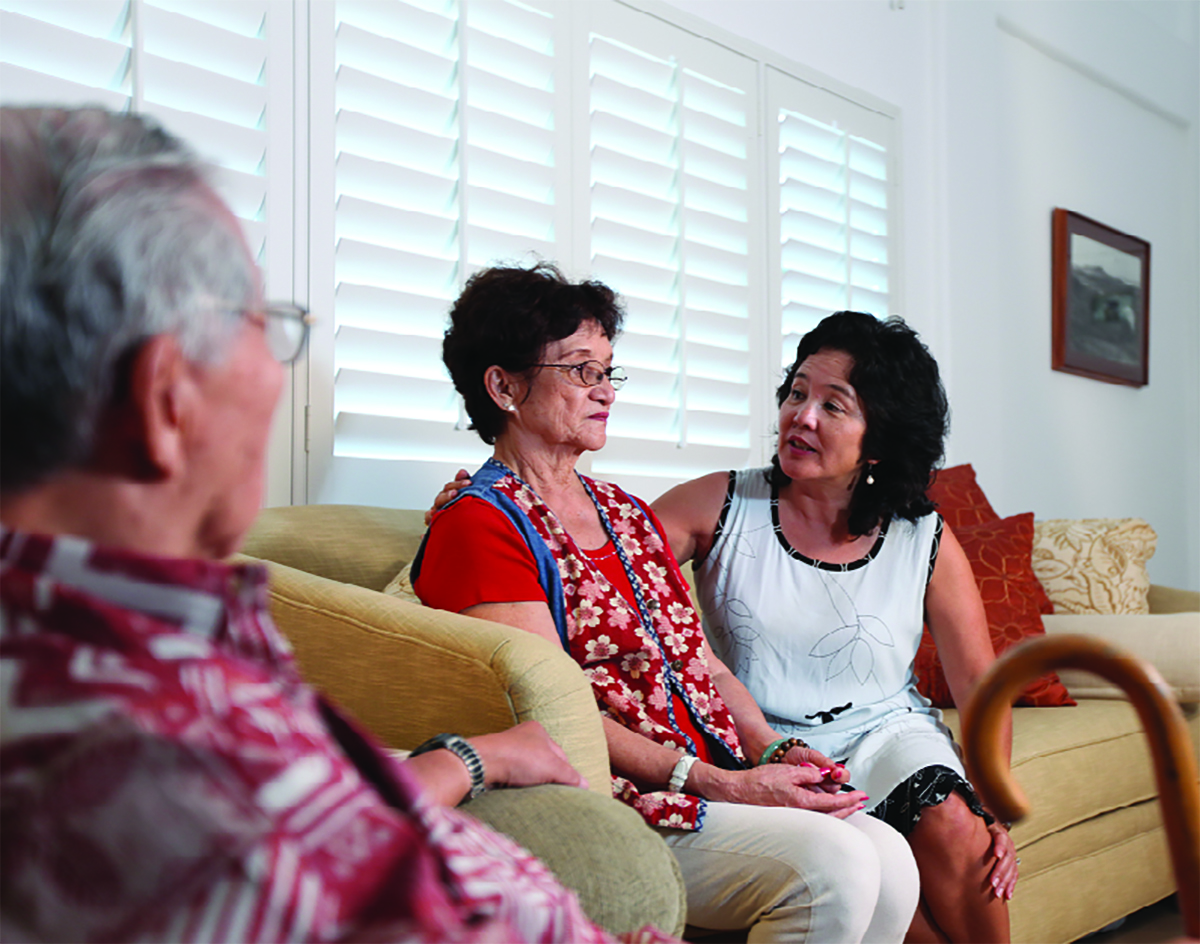
    The woman in line in front of me was tending to her father who apparently suffered from dementia. Suddenly, she completely lost it and was yelling at him. I thought she was going to hit him! He looked frightened, dazed and confused. When I tried to console the woman, she yelled back at me, ‘YOU DON’T KNOW WHAT I’M GOING THROUGH!’”

    It may be easy to find fault with this woman, who “came unglued” and mistreated her father. But there is a reason for this behavior. First, think about this moment in her caregiver’s journey: “You don’t know what I’m going through.”

    What is caregiver burnout?

    Caregiver burnout is a state of physical, emotional and mental exhaustion. Burnout can occur when caregivers don’t get the help or respite they need, or if they try to do more than they are able. Caregivers often are so busy caring for others that they tend to neglect their own emotional, physical and spiritual health, leading to fatigue, stress, anger, anxiety, depression and burnout.

    What can I do to prevent burnout?

    One way to prevent caregiver burnout is to take advantage of respite care services. Gimme A Break (GAB) does know what you are going through. GAB provides the support needed when a caregiver has had enough! The nonprofit cares for caregivers by giving them an emotional and physical break, as well as resources for continued well-being — all at no cost.

    GAB provide respite in various ways:

    ■ Support Sessions. Support sessions connect you with a community of caregivers to better assess and serve your needs. The weekly sessions offer education, shared knowledge and professional guest speakers.
    ■ Resources — Trusted Partners. GAB continues to provide “breaks” in the form of resources from its trusted partners that give you worry-free assistance with all things caregiving.
    ■ Physical “Break.” GAB provides respite — a physical “break” from your caregiving duties.As part of GAB’s community of caregivers, you will never feel alone or isolated again.

    NOTE: Taking care of yourself is not a luxury. It’s an absolute necessity for caregivers.


    GIMME A BREAK (501(c) 3 nonprofit)
    46-056 Kamehameha Hwy., Ste. F-09, Kaneohe, HI 96744
    808-754-3787 | www.gab808.com
    Every caregiver deserves our support. Your contribution will give them the break that they need. To give time: https://gab808.com/be-a-giver-of-time
    To give funds: https://gab808.com/be-a-giver-of-money To join their Gimme a Dollar $1,000,000 Campaign: https://gab808.com/dollar
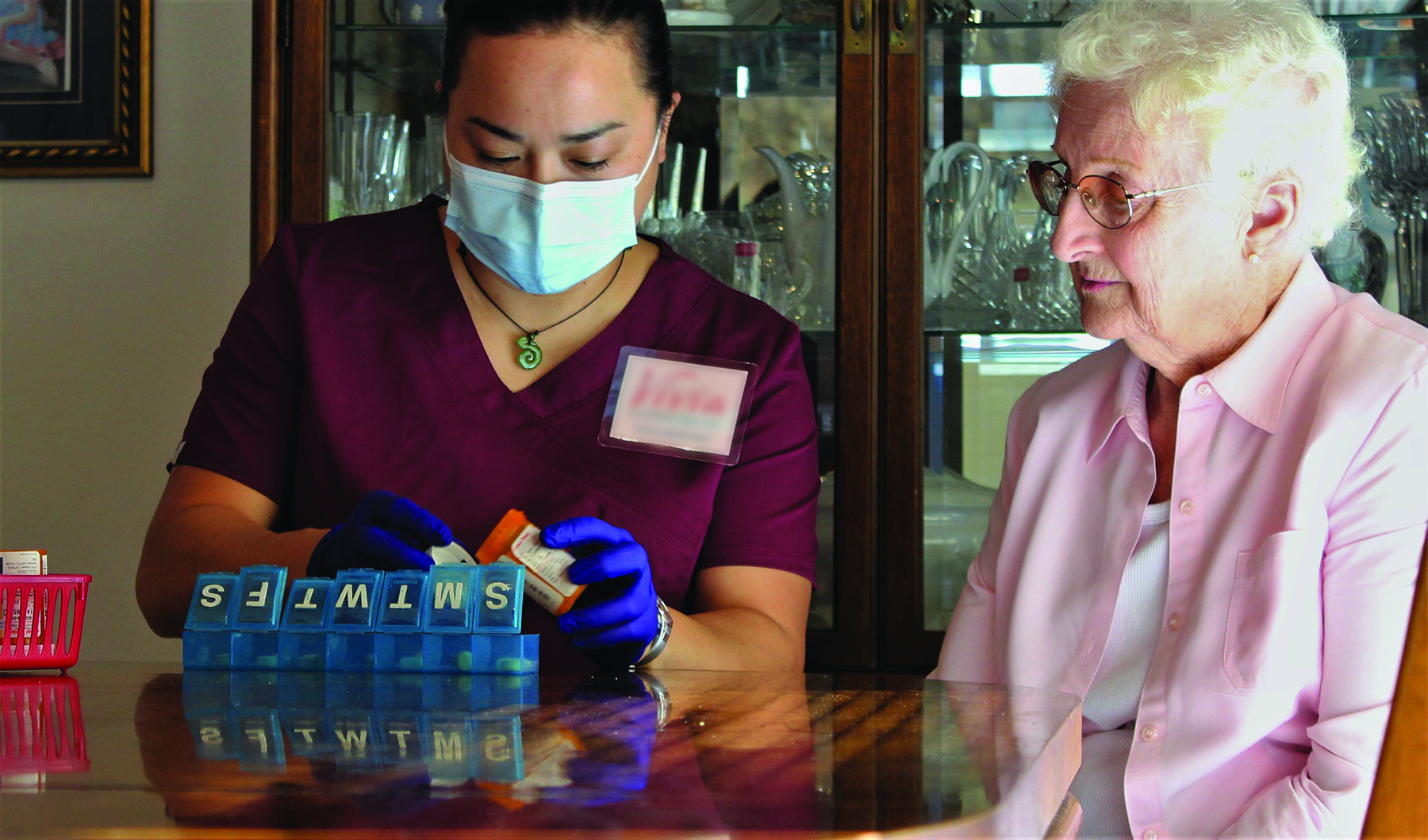
    The woman in line in front of me was tending to her father who apparently suffered from dementia. Suddenly, she completely lost it and was yelling at him. I thought she was going to hit him! He looked frightened, dazed and confused. When I tried to console the woman, she yelled back at me, ‘YOU…

  • Is Task-Based Home Care Right for Me?

    You may think that in-home assistance is only for people who are very old, very ill or recovering from a severe injury or surgery. But nowadays, capable and self-reliant seniors are employing a new kind of assistant to provide task-based in-home care. A task-based assistant can help you with those burdensome chores that are becoming challenging or that you just don’t like to do anymore.

    Most seniors say they don’t need the constant oversight of long visits and hands-on help that is hourly home care. However, some folks might appreciate assistance with duties such as carrying a heavy load of laundry or getting a friendly check-in visit for help with daily medications.

    These seniors can now call on task-based in-home assistance for occasional help with:

    • Light Housekeeping and Laundry
    • Meal Preparation
    • Medication Reminders
    • Transportation Set-Up
    • A Shower or Other Personal Care Assistance

    Long hours of in-home care are right for some, but for more independent and self-reliant seniors, task-based, personalized and affordable in-home assistance is a new option for an effective way to continue living at home independently.


    VIVIA BY HO‘OKELE HOME CARE
    820 Mililani St., Ste. 711, Honolulu, HI 96813
    808-784-3049 | info@viviacares.com
    www.viviacares.com

    You may think that in-home assistance is only for people who are very old, very ill or recovering from a severe injury or surgery. But nowadays, capable and self-reliant seniors are employing a new kind of assistant to provide task-based in-home care. A task-based assistant can help you with those burdensome chores that are becoming…

  • Dementia & Driving: The Warning Signs

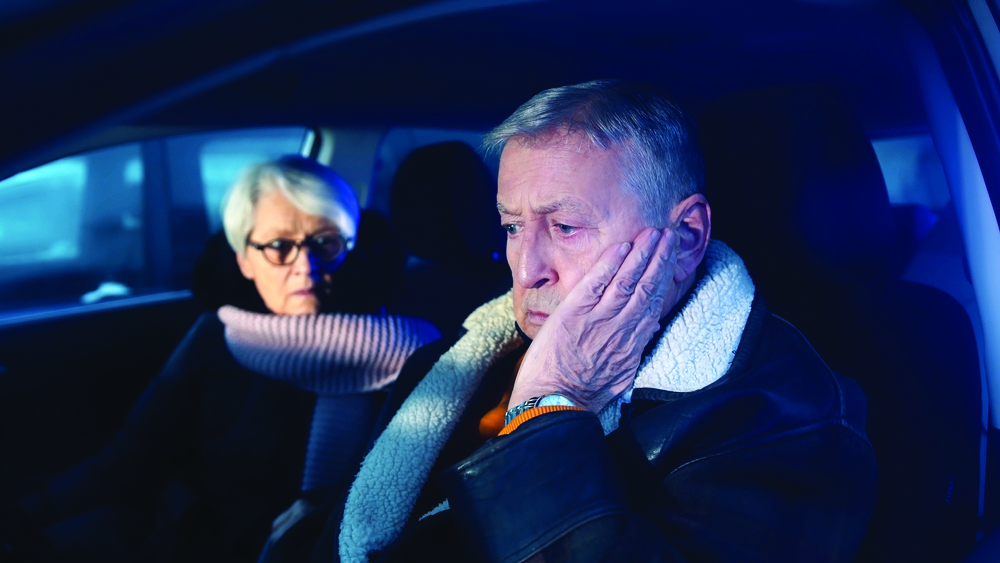
    Elderly couple in the car confused with flashing police lights. Speeding ticket. Man and woman having argument in the car.Most people feel a sense of control when they’re behind the wheel. So what happens when it’s time to retire the car keys? The decision to stop driving can be one of the most challenging topics families and people living with Alzheimer’s disease face.

    Aging may impact our ability to drive safely; however, a person living with Alzheimer’s disease will not be able to drive at some point, because cognitive changes in the brain will affect reaction times and focus.

    • SIGNS OF UNSAFE DRIVING: Sometimes, the first warning signs of Alzheimer’s disease show up in driving abilities — taking longer than usual to run quick errands, forgetting where they’re driving to or how to get there, making mistakes at intersections and frequently not remembering where the car was parked. Since no one has a perfect memory, it’s important to track these kinds. Log any new dents and scratches on the vehicle, tickets or episodes of unsafe driving. If you notice changes, it’s time to take action.
    • PLAN AHEAD: It’s important to make sure you have a options in place ahead of time, because taking away the keys can present problems for caregivers and loved ones alike. Start a routine so the person is still able to maintain an active lifestyle. Involve friends and family who are willing and able help out as unofficial taxi drivers.
    • APPEAL TO THEIR SENSE OF RESPONSIBILITY: Be prepared for resistance. Anger is a common reaction. Focus on showing your empathy to the person and plant the seeds for options you have in mind for the future. Remind them of the importance of safety on the road — both their own and other people’s. Try phrases like, “I know you don’t want to hurt anyone driving.” If needed, you can ask your doctor to speak with them or  design a “driving contract” that the person agrees to.
    • REMOVING DRIVING REMINDERS: Depending on the situation, removing the vehicle along with the temptation to drive it can be the most effective action. Letting a family or friend borrow the car for a few weeks can start the transition to no driving and at the same time, give the person the sense of helping another.

    There are plenty of ways to get creative in your approach. And your motivation is the safety of everyone on (and off) the road. If you are  experiencing driving challenges yourself, talk to someone. The road ahead is less difficult when you allow others to help you navigate.


    For additional resources, visit https://bit.ly/AADriving

    Most people feel a sense of control when they’re behind the wheel. So what happens when it’s time to retire the car keys? The decision to stop driving can be one of the most challenging topics families and people living with Alzheimer’s disease face.

  • The Long Goodbye

    Usually, events that necessitate a goodbye are seen as sad… or at least poignant. In our younger years, we expected these goodbyes to be temporary — we knew we were going to see them again! As we get older, we start to understand that a goodbye may mean moving so far away that visiting will be unlikely and the relationship we loved may be permanently changed. And then come the goodbyes we know are final — the farewells at the end of a life that leave us with only memories of a loved one.

    Waking each caregiving day and finding your loved one still breathing is another opportunity for you to cherish that life — an opportunity to set aside words spoken in frustration yesterday. Today is another opportunity to smooth the worried brow of a person unable to finish their days on Earth on their own terms. Today gives us another chance to learn better ways to say goodbye.

    Although caregivers can get easily get caught up in a myriad of daily details that need constant attention, they also need to remember that caregiving is often a long, slow goodbye. Help ensure this final goodbye is a sweet one by telling your loved one what they want to hear from you — reassurance that you love them, what they mean to you and positive memories of the wonderful times you’ve shared.


    THE CAREGIVER FOUNDATION (501(c) 3 nonprofit)
    926 3rd St., Pearl City, HI 96782
    808-625-3782 | info@thecaregiverfoundation.org
    www.thecaregiverfoundation.org

    Usually, events that necessitate a goodbye are seen as sad… or at least poignant. In our younger years, we expected these goodbyes to be temporary — we knew we were going to see them again! As we get older, we start to understand that a goodbye may mean moving so far away that visiting will…

  • Signs That Mom Needs More Help

    Family members must prepare now for the day their senior needs more help — the kind of help that may require them to reprioritize their lives. If only there were a date set aside for this change in everybody’s life. But we must keep in mind that a sudden fall or illness could change everything — and it could happen at any time.

    Our seniors can have active lives up until the day they don’t. Then, family members may have to change directions suddenly. This may involve taking time off work and moving other commitments to the back burner.

    However, we can look for signs that indicate our senior may soon be needing a bit more help. Here are a few to look out for:

    AGE: The older your senior is, the closer they will be to needing help, especially if they are slowing down physically.

    MEMORY: Forgetfulness could be a sign of illness affecting the brain or other systems. This symptom generates worry for family members who must leave their senior alone for long periods of time.

    DRIVING: If your senior is not driving anymore because it is not “safe” due to visual problems, mobility issues or cognitive concerns, this may be a sign that other tasks are not easy for them as well.

    WEIGHT LOSS OR DEHYDRATION: These are real concerns that indicate they are not eating or drinking enough. Frequent urinary tract infections may indicate not enough fluid intake or poor personal hygiene in the bathroom.

    UNPAID BILLS/UNOPENED MAIL: Our seniors like to have control over their finances until there comes a day when they stop opening their mail. This is a clue they are either forgetting to do it or its not a priority for them anymore.

    FREQUENT PHONE CALLS WHILE FAMILY IS AT WORK: If family members are receiving frequent calls from their senior during working hours, it may mean things are about to change. These frequent calls can indicate loneliness, forgetting that they just called or anxiety about something they have no control over.

    FALLS: This could be the “last straw,” especially if the fall results in an injury. Family members may have to find outside help to monitor their senior for safe mobility while they are away at work.

    Just like planning ahead for disasters, planning for the day your senior needs help should be a priority, so being aware of some of the scenarios above should be on your radar.

    Of course, your senior will deny they need help and may say something like, “I don’t want you to worry about me. I can take care of myself.” But if you feel that twinge in your gut telling you that what you are seeing is not consistent with what they are saying, don’t ignore it! Now may be the time to move into a different role for your senior or the time to seek outside help.


    ATTENTION PLUS CARE HOME HEALTHCARE
    Accredited by The Joint Commission
    1580 Makaloa St., Ste. 1060, Honolulu, HI 96814
    808-739-2811 | www.attentionplus.com
    AGING IN HAWAII EDUCATIONAL OUTREACH PROGRAM
    by Attention Plus Care — a program providing resources for seniors and their families, covering different aging topics each month. For class information and upcoming topics, call 808-440-9356.

    Family members must prepare now for the day their senior needs more help — the kind of help that may require them to reprioritize their lives. If only there were a date set aside for this change in everybody’s life. But we must keep in mind that a sudden fall or illness could change everything…

  • Diabetes and Hearing Loss

    Diabetes disproportionately affects older adults. Approximately 25 percent of Americans over the age of 60 years have diabetes. The aging of the US population is widely acknowledged as one of the drivers of the diabetes epidemic.

    Although the burden of diabetes is often described in terms of its impact on working-aged adults, the disease also affects longevity, functional status and risk of institutionalization for older patients.

    While diabetes can be managed effectively, living with the disease as you get older presents some unique challenges. Every day offers a new hurdle. And as you age, jumping over those hurdles can become a bit more challenging — but it’s not impossible. Although increased risk for specific complications increases with age, with diligence and care, you can properly mitigate those risks.

    More than 37 million people in the US have diabetes and an estimated 34.5 million have some type of hearing loss. Many are experiencing both concurrently.

    A recent study found that hearing loss is twice as common in people with diabetes as it is in those who don’t. Also, of the 133 million adults in the US who have prediabetes, the rate of hearing loss is 30 percent higher than in those with normal blood glucose (blood sugar).

    It is not understood exactly how diabetes is related to hearing loss. It’s possible that the high blood glucose levels associated with diabetes cause damage to the small blood vessels and nerves in the inner ear in the same way diabetes can damage the eyes and the kidneys. But more research needs to be done to discover why people with diabetes have a higher rate of hearing loss.

    Since it can happen very slowly, the symptoms of hearing loss can often be hard to notice. In fact, family members and friends sometimes notice the hearing loss before the person experiencing it does.

    Signs of hearing loss:

    • Frequently asking others to repeat themselves
    • Trouble following conversations that involve more than two people
    • Thinking that others are mumbling
    • Problems hearing in noisy places, such as busy restaurants
    • Trouble hearing the voices of women and small children
    • Turning up the TV or radio volume so that it becomes too loud for other people who are nearby
    • Being unable to understand conversations over the telephone

    Talk to your primary care doctor if you suspect hearing loss. You may then want to seek help from hearing specialist, such as an audiologist, a licensed hearing aid dispenser or a doctor who specializes in hearing problems. From a full hearing exam, you’ll learn more about your hearing loss and what can be done to treat it.

    The American Diabetes Association in Hawai‘i is here to help. Learn how to thrive with type 2 diabetes through the ADA’s year-long program. Sign up for free at www.diabetes.org/living.


    AMERICAN DIABETES ASSOCIATION — HAWAI‘I (501(c) 3 nonprofit)
    808-947-5979, ext. 7035 | Lleslie@diabetes.org
    ADAHawaii@diabetes.org
    www.diabetes.org/get-involved/community/local-offices/hawaii

    Diabetes disproportionately affects older adults. Approximately 25 percent of Americans over the age of 60 years have diabetes. The aging of the US population is widely acknowledged as one of the drivers of the diabetes epidemic. Although the burden of diabetes is often described in terms of its impact on working-aged adults, the disease also…

  • Nursing Homes Should Prioritize Oral Health

    Poor oral health can affect overall physical health at any age. Without treatment, poor oral health can lead to pain, infection, malnutrition and even serious illnesses. Therefore, it’s important to incorporate good oral health habits into all stages of life. So if you’re weighing options for a long-term care facility for yourself or a loved one, ask them how oral health practices are incorporated into their care program.

    More long-term care homes have expanded their nurse training to incorporate dental care. For example, the HDS Foundation created the Kupuna Smiles — Oral Health Training Program for nurses and other professionals who provide healthcare for seniors. Through this program, dental hygienists have conducted hands-on training for more  than 80 registered nurses, certified nurse assistants and the managerial nursing staff of The Clarence TC Ching Villas at St. Francis in Liliha. Hygienists instructed each staff member on how to properly brush and floss patients’ teeth and care for dentures, reach difficult spots in the mouth, work carefully around mouth sores and identify signs of decay.

    Long-term care facilities should prioritize oral health, especially if patients are unable to brush and floss on their own. The formula for good oral health is to brush, floss and see a dentist so you can live well and smile more!


    HAWAII DENTAL SERVICE (501(c) 4 nonprofit)
    Kahala Howser, Wellness & Events Manager
    808-521-1431 | khowser@hawaiidentalservice.com
    www.HawaiiDentalService.com

    Poor oral health can affect overall physical health at any age. Without treatment, poor oral health can lead to pain, infection, malnutrition and even serious illnesses. Therefore, it’s important to incorporate good oral health habits into all stages of life.

  • Swedish Massage Eases Aches & Pains

    As we age, it may become more difficult to get a full night’s rest. This is caused by many things: changes in your body’s internal clock, spending less time outdoors or moving and a decrease in the hormones that help aid in sleep. It is a common misconception that we need less sleep as we get older. Sleep is still very important. Adults over age 65 should strive to get seven to eight hours of sleep a night.

    Swedish massage, which should already be a part of your regular wellness routine, can also help you get a better night’s rest because it helps the body release serotonin and dopamine. These hormones help you relax and feel good, and can help your body achieve more restful sleep.

    Another fantastic benefit of Swedish massage is its ability to connect you with your body again. As we age, there is tendency toward less  movement. This can be because of injuries, or lack of balance or mobility. When we move less, we become less in tune with our bodies. A huge part of massage is to bring that awareness back.

    In addition, humans are social beings and need physical touch. When babies are born they crave being held. The simple act of being carried brings them comfort. We still need this physical connection as we age.

    Massage also helps us retain muscle tone. As we age, we naturally lose muscle strength. Swedish massage improves muscle tone by mechanically stimulating the reflexes within the muscle. Muscle tone/strength is important in maintaining balance, which helps in preventing falls, and also increases an overall sense of well-being and vitality. Your body also recovers from a fall faster if you have good muscle tone.

    To enhance sleep, reconnect to your body and retain muscle tone, schedule a massage on a weekly, biweekly or monthly basis. It really depends on your needs. Massage can be done wherever you feel comfortable — at a massage facility, in your own bed or even a recliner.

    Wherever you go, always communicate with your massage therapist. Let him or her know if you are feeling any discomfort from the pressure or the technique. Our goal is to help you feel relaxed and relieved from pain you may be experiencing. Regular massage can help you live a better, happier, more pain-free life.


    REJUVENATE WITH ARLENE
    Arlene Estrella, Licensed Massage Therapist, #11968
    808-888-8169 | FB/Instagram: @rejuvenatewitharlene
    www.rejuvenatewitharlene.com

    As we age, it may become more difficult to get a full night’s rest. This is caused by many things: changes in your body’s internal clock, spending less time outdoors or moving and a decrease in the hormones that help aid in sleep. It is a common misconception that we need less sleep as we…

  • Help for Aging Pets & Devoted Owners

    Illness and/or old age and its associated maladies are a fact of life for us all — even our pets. And grief over the loss of a beloved pet may be as intense and as lengthy as when a significant person in our life dies. Those who have lost a pet know the full extent of this agonizing pain.

    As much as we’d love our pets to live forever, what we can do is support their well-being and quality of life for as long as possible. Kailua-based Arms of Aloha (AoA) believes in relieving the stress pet owners feel when their furry friend starts to succumb to the effects of old age or unrelenting illness. And they minimize the pet’s anxiety by coming to your home to assess your pet in his or her natural environment.

    During an in-home consultation, an AoA veterinarian will transcend medical facts by supporting your pet’s physical, emotional and social well-being. The vet will teach you what changes to expect as your pet’s condition progresses, how to manage symptoms, explain treatment options (pros and cons of each) and projected costs, and educate you about what to do in an emergency. When needed, AoA will set you up with a “crisis kit” of medications and instructions in case of sudden pain or distress.

    The decision to euthanize a suffering pet can also be agonizing for the pet owner, leaving him or her riddled with feelings of doubt and guilt. Taking the life of a pet too early would be tragic; letting a pet suffer even one day needlessly, equally so. For most pet owners, it is hard to know what to do. Well-meaning friends and family may say, “He’ll let you know when it’s time,” or “She’ll give you a sign.” But what if that sign never comes, or what if you can’t recognize the signs indicating when the balance has tipped and the bad outweighs the good?

    AoA can give you the tools to evaluate your pet’s quality of life and help you make a sensible decision. When you schedule a consultation, an AoA doctor comes to your home to assess your pet. AoA guides owners of seriously ill pets through the end-of-life journey, transforming a stressful experience into a peaceful, gentle and memorable one. Your pet will be surrounded by loved ones in their favorite place — comfortable and unburdened by pain or fear.

    During this stressful time, you don’t have to go it alone. AoA will help you and give you confidence to know you’re doing everything possible for your companion’s comfort.


    ARMS OF ALOHA
    808-435-3006 | 808-460-3119
    info@armsofaloha.com
    www.armsofaloha.com

    Illness and/or old age and its associated maladies are a fact of life for us all — even our pets. And grief over the loss of a beloved pet may be as intense and as lengthy as when a significant person in our life dies. Those who have lost a pet know the full extent…

  • Protect Your Pets During Hurricane Season

    There is no time like the present to prepare for another hurricane season. As our emergency agencies remind us every year, it is a matter of when, not if… Not only should families have an evacuation and shelter plan… that goes for your little dog, too! Being prepared for a disaster means also having a plan in place for your pets. Dorothy and Toto were sadly unprepared. Don’t be like Dorothy and Toto. Your plan should include knowing where your nearest pet-friendly shelter is and having a prepacked emergency pet kit ready to grab without delay.

    Luckily, here in Hawai‘i, we have much more time to prepare for an impending hurricane than the folks in Tornado Alley, Kansas. A hurricane warning is issued 36 hours in advance of the anticipated onset of tropical storm-force winds. But there is no reason not to prepare way in advance in order to reduce stress.

    In order to keep our people and pets safe during such disasters, each island has designated pet-friendly evacuation shelters.

    “On O‘ahu, all of our evacuation shelters are pet-friendly,” says Jessica Tronoski, communications manager for the Hawaiian Humane Society (HHS). “There are HHS volunteers stationed at only a select few shelters to assist pet owners. We do not provide pet supplies. During hurricane season, especially, we try to educate the community to have their pet preparedness kit containing all the things you would need to take care of your pet prepacked and ready for evacuation at a moment’s notice.”

    1. Update your pet’s microchip now. Make sure it contains your current contact information. Dogs or cats can be microchipped at your private veterinarian or by appointment at the HHS (https://app.waitwhile.com/book/hhsadmissions/service).

    2. Listen to the news. In the event of an impending disaster, listen to radio and television broadcasts to find out if your nearest shelter will be open. Based on the nature of the storm and other factors, some shelter locations may be closed and other facilities may be utilized at the last minute.

    3. Do not leave your pets behind. If it’s not safe for you, it’s not safe for your pet. Pets left behind can be injured, lost or killed.

    Although all O‘ahu evacuation shelters are designated as pet-friendly, The Humane Society of the United States (www.humanesociety.org/resources/make-disaster-plan-your-pets) advises pet owners to never assume they will be allowed to bring their pets to an emergency shelter or that shelters nearby will be able to accommodate everyone, with or without pets.

    So before a disaster strikes, check the website of your local emergency management office to see if you will be allowed to evacuate with your pets and verify that there will be shelters in your area that take pets and their people.


    Hawaiian Humane Society supply list:
    https://hawaiianhumane.org/disaster-ready
    Hawaiian Humane Society’s disaster preparedness brochure:
    https://www.hawaiicounty.gov/departments/civil-defense/active-civil-defense-alerts-and-maps
    Hawai‘i County Emergency Management Agency:
    https://www.hawaiicounty.gov/departments/civil-defense/active-civil-defense-alerts-and-maps
    Kauai Emergency Management Agency:
    https://www.kauai.gov/kema
    Maui County Emergency Management Agency (Maui, Lāna‘i, Moloka‘i):
    https://www.mauicounty.gov/70/Emergency-Management-Agency


    There is no time like the present to prepare for another hurricane season. As our emergency agencies remind us every year, it is a matter of when, not if… Not only should families have an evacuation and shelter plan… that goes for your little dog, too! Being prepared for a disaster means also having a…

  • The Healing Power of Dogs Helps Kūpuna

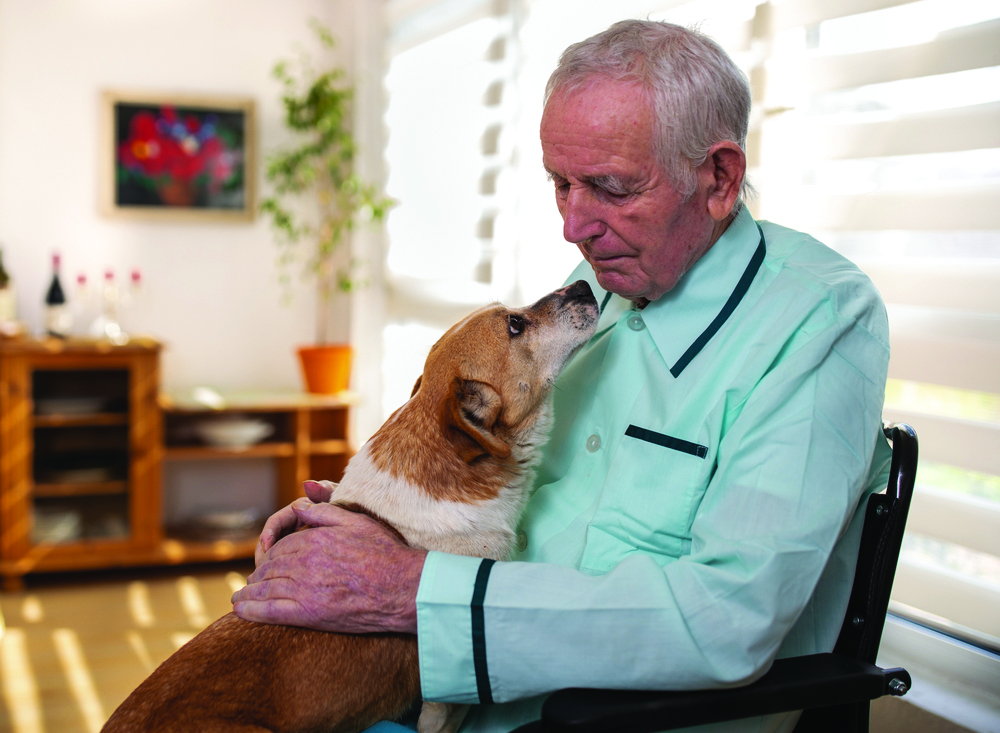
    Senior man with his dog sitting in chair beside window and sharing loveTherapy dogs and service dogs are invaluable to many people, especially kūpuna who suffer from physical disabilities, loneliness, depression or even dementia.

    What’s the difference between a therapy dog and a service dog?

    A service dog, as defined by the Americans With Disabilities Act (ADA), is a dog that is trained to perform specific tasks for people with disabilities who can’t do them for themselves. For example, a service dog might guide people who are visually or hearing-impaired or pull a wheelchair for a disabled person. They can even be trained to get life-saving medications if their owners become ill.

    A therapy dog is more of a companion, providing affection, emotional support, comfort and a sense of well-being to its owner or to many individuals. For example, a therapy dog might be employed by an assisted living facility or a hospital to help patients who are suffering from anxiety. The Queen’s Medical Center in Honolulu is one such facility that makes therapy dogs available to their patients. It has two therapy dogs: Yoda and Ipa, who are so popular that they’ve become stars among Queen’s staff and patients.

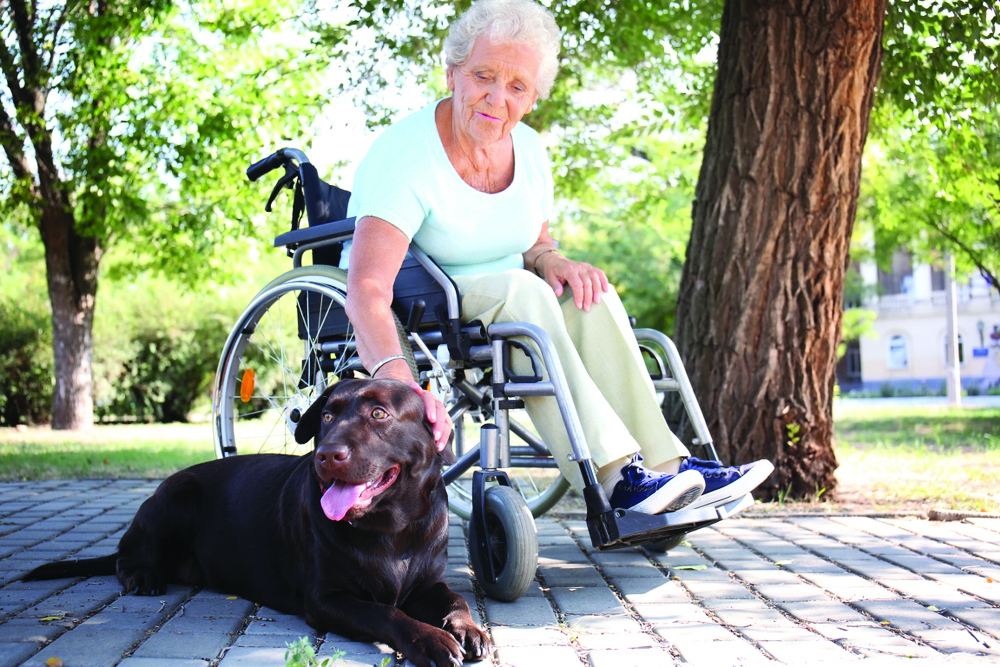
    Senior woman in wheelchair and her dog outdoorsWhat tasks can service dogs provide?

    Service dogs are able to perform tasks that are needed for a handler’s specific disabilities.
    Mobility service dogs are able to open and close doors, retrieve items, pull a manual wheelchair, find the phone, “brace” to balance the handler and turn light switches on and off.
    Psychiatric service dogs are trained to awaken handlers from PTSD nightmares and perform deep pressure therapy.
    Hearing service dogs respond to different sounds: knocking and doorbells, timers and alarm clocks, smoke alarms, telephones, baby cries and the handler’s name.
    Medical alert dogs are trained to alert the handler and others to conditions like seizures.

    What are the regulations regarding emotional support animals?

    An emotion support animal can be a dog, but could also be any other type of pet that an owner deems necessary for their well-being. Neither Hawai‘i law nor ADA regulations cover emotional support animals. Although they often have therapeutic benefits, they are not given the same rights as service and therapy dogs. Laws regarding emotional support dogs are tightening and it may no longer be possible to take your pet along on a trip — no matter how much support you say your furry friend brings.

    Service, therapy and emotional support dogs enhance quality of life, increase independence and offer therapeutic healing. If you’re considering a service dog, contact the qualified organizations listed below.


    ASSISTANCE DOGS OF HAWAII (501(c) 3 nonprofit)
    PO Box 1803, Makawao, HI 96768
    808-298-0167 | info@assistancedogshawaii.org
    www.assistancedogshawaii.org
    HAWAII FI-DO SERVICE DOGS (501(c) 3 nonprofit)
    PO Box 757, Kahuku, HI 96731
    808-638-0200 | info@hawaiifido.org
    www.hawaiifido.org

    Therapy dogs and service dogs are invaluable to many people, especially kūpuna who suffer from physical disabilities, loneliness, depression or even dementia. What’s the difference between a therapy dog and a service dog?

  • Get Out and Explore!

    Naturalist John Muir once said, “The mountains are calling and I must go.” The yearning to bask in the glory of nature is the same for those who can get up and walk as it is for someone who gets around by wheelchair.

    However, most of those places are much more accessible to those who are able-bodied. Parks, beaches and hiking trails present many barriers and challenges for someone who can’t get around easily. But being surrounded by nature has been proven to have immense health benefits, so we should help ensure that these wonders of the world are accessible to all.

    Increasing the number of wider, smoother trails, bringing bathrooms closer to the trail and destination, and having better signage and visibility are ways we can help make the world more accessible. Even with these improvements, just getting to these destinations can still be incredibly difficult.

    The degree of flexibility paratransit services provide their customers may vary considerably. Therefore, if you don’t have your own means of wheelchair-accessible transportation, you may be left out of these activities. But a wheelchair-accessible van available for your on-demand use can be life-changing. Find out more and get out and explore!


    SODERHOLM MOBILITY INC.
    2044 Dillingham Blvd., Honolulu, HI 96819
    808-834-1417 | www.SoderholmMobility.com
    Info@SoderholmBus.com
    Soderholm Sales and Leasing Inc.
    PO Box 19010, Honolulu, HI 96817

    Naturalist John Muir once said, “The mountains are calling and I must go.” The yearning to bask in the glory of nature is the same for those who can get up and walk as it is for someone who gets around by wheelchair.