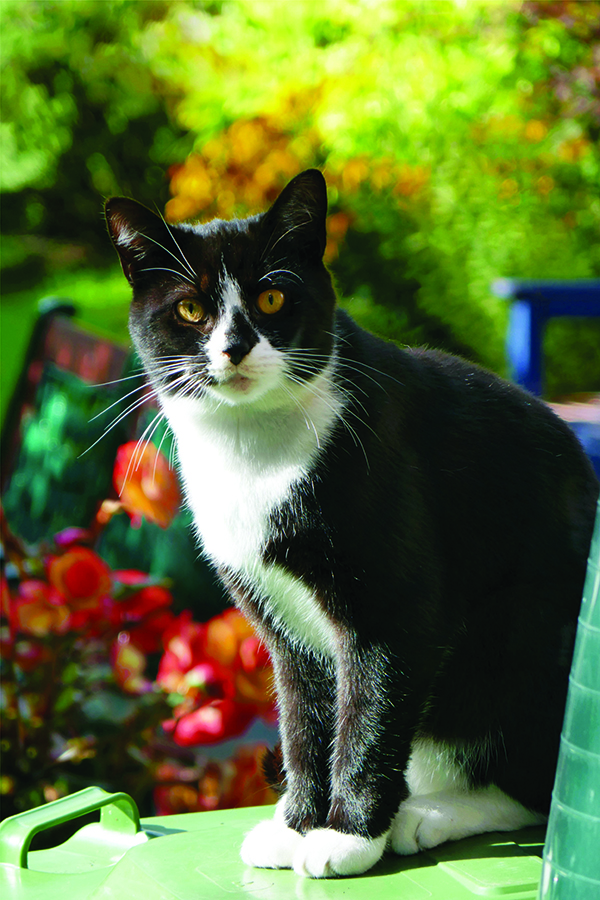
It’s always comforting to have a best friend to share in the journey of life every step of the way. For seniors, while the idea of caring for a furry friend can seem overwhelming, the benefits are highly rewarding; pets can provide a whole new experience of joy and purpose. Here are just five of the many benefits you can look forward to with a pet in your life:
❶ Companionship
Navigating new adventures in senior life can feel lonely. What better solution than to have the unconditional love from a pet to support you through it! You may even prefer the company of your pet over people!
❷ Routine
Caring for a pet can give new meaning to the same old routine. Caring for a pet requires responsibility that benefits you by creating and maintaining a solid routine. Never fear, Fido won’t let you forget breakfast, lunch or dinner (and a few fun snacks in between). What better way to organize and find purpose in each day than by spending time with your pet?
❸ Exercise
Just like humans, all pets need exercise to stay healthy and happy. Caring for a pet can provide great motivation to get up and move around, whether taking your pet for a stroll or simply walking around your house with them. The more active time you can spend with your pet, the better you will both feel.
❹ Socialization
Just like humans, pets need pet friends, too. Spending time with your pet, whether going for a walk around your neighborhood or even shopping for groceries, will give you both the chance to meet others and strike up fun interactions. You can even find local opportunities to go on group walks with your pets, giving you and your pal the chance to make more friends and enjoy all of life’s precious moments.
❺ Stress, Worry and Pain Reliever
When the stresses of everyday life reach an overwhelming level, having a pet you love can make all the difference. Scientific studies have shown that caring for a pet can lower one’s blood pressure, reduce stress and tension, and even help to alleviate chronic pain.
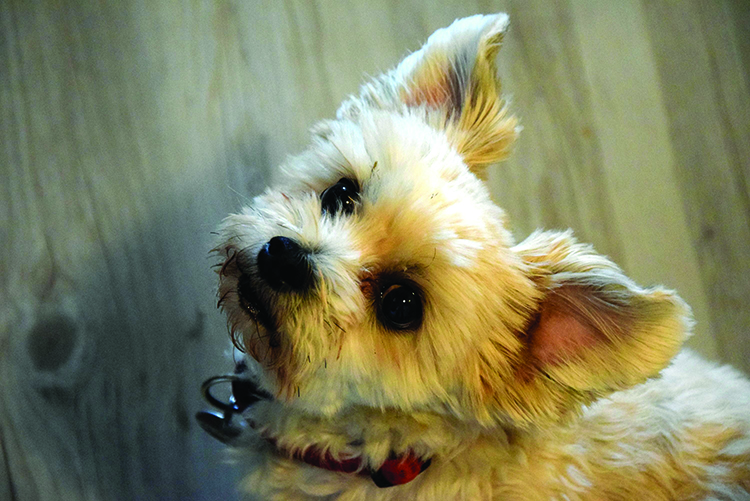
As seniors navigate new changes in their lives, deciding to bring a pet companion along for the journey can bring many benefits and happiness.
Not ready to commit to a pet, but want to try it out? Think about foster parenting.
The Hawaiian Humane Society’s Foster Care program is always looking for good foster parents to temporarily shelter animals in need. Go to www.hawaiianhumane.org/fostercare to find out more about the program.
It’s always comforting to have a best friend to share in the journey of life every step of the way. For seniors, while the idea of caring for a furry friend can seem overwhelming, the benefits are highly rewarding; pets can provide a whole new experience of joy and purpose.
Over 30 percent of the people who work don’t have full-time jobs. In a few years, that will increase to almost 50 percent.
Working even one day a week will provide psycho-social advantages to an engaged senior.
There are plenty of options. Here are just a few:
♦ Pet sitting. Learn more at www.Rover.com. This is a fast-growing business as residents travel and vacation on the mainland and elsewhere.
♦ Caretaking and caregiving of the old, the young and the challenged. Learn more at www.wilsoncare.com and by doing further research.
♦ Tourism and hospitality. There are options that do not require standing for eight hours a day. Some of these options may even include working from home; for example, proposal writing to prospective buyers and/or website maintenance.
♦ Grant writers. Grant writing is an in-demand skill and talent and a viable option if you are already a capable writer. Look for free, easy classes at a community college.
♦ Board members and paid/unpaid mentors.Membership and mentoring are sometimes seen as voluntary missions. But often, there are gratuities offered. Go to www.mentoring.com.
♦ Health and life coaches.These skill- and knowledge-based options are in high demand for struggling youth and older populations. The rewards may often be financial, but always meaningful. For ideas, go to www.flexjobs.com.
♦ Adjuncts and subject matter experts.More than half of U.S. university/college faculty are adjuncts. They are compensated and doing something that matters. Subject matter experts are adjuncts in the private, nonprofit and public sectors who offer unique value.
♦ Interim professionals. Organizations now engage interim professionals as an integral part of their staffing management plans as a key to maintaining a flexible and nimble workforce.
♦ Stipend workers are paid a flat sum for work done on behalf of an organization in any sector. There are strict rules governing stipend pay but they are worth exploring. Explore your options.
Over 30 percent of the people who work don’t have full-time jobs. In a few years, that will increase to almost 50 percent. Working even one day a week will provide psycho-social advantages to an engaged senior. There are plenty of options.
Yes, the journey of life continues even after we retire!
How long our journey on Earth will be is one of the unknowns we must live with. In my earlier article, entitled, “I’ve Never Been Old Before,” I wrote about how lost I was when I retired from my career in the federal government. It took me quite a while to find purpose and meaning during the empty days that kept coming at me. Thankfully, I realized how rewarding it is to give back in whatever way you can.
For the past 11 years, our church has offered a men’s class called “The Journey Continues.” We have witnessed how helpful it’s been for many working and retired men who attend this class.
The men of The Journey Continues. Steven Kawamura (R, top row) says he has been blessed to be a part of this great, supportive group of men.
While studying the Bible is what brings us all together each Sunday morning, we value building relationships and seek to encourage one another in whatever ways we can. It is not easy in today’s world to find balance in one’s life and sometimes just getting through a week can seem almost impossible. That’s been the value of having a weekly class where you can come and be refreshed and completely renewed.
My life experiences have shown me that many men are living very lonely lives. Unless they are able to address this early, they risk coming to the finish line without anyone cheering for them.
If you see yourself in this article, it’s not too late to bounce back. Just look around you to see if there is anything you can try right away. You’ll be amazed at how many doors will begin to open to you if you do this. That’s been my experience.
Another surprisingly easy thing to do is just ask people you interact with on a regular basis. You’ll be amazed at how helpful their responses will be. Then just go for it.
Some Thoughts to Think On
“If you aim for nothing, you will probably hit it.” So why not try aiming for something and see what happens.
“My whole life has been preparation for now.” So make the most of what’s ahead by using what you’ve gained so far.
A final thought: “Not all who wander are lost”
If you feel like you are wandering aimlessly, remember that it is not too late — there is still time to avoid becoming “lost.”
Yes, the journey of life continues even after we retire! How long our journey on Earth will be is one of the unknowns we must live with. In my earlier article, entitled, “I’ve Never Been Old Before,” I wrote about how lost I was when I retired from my career in the federal government. It…
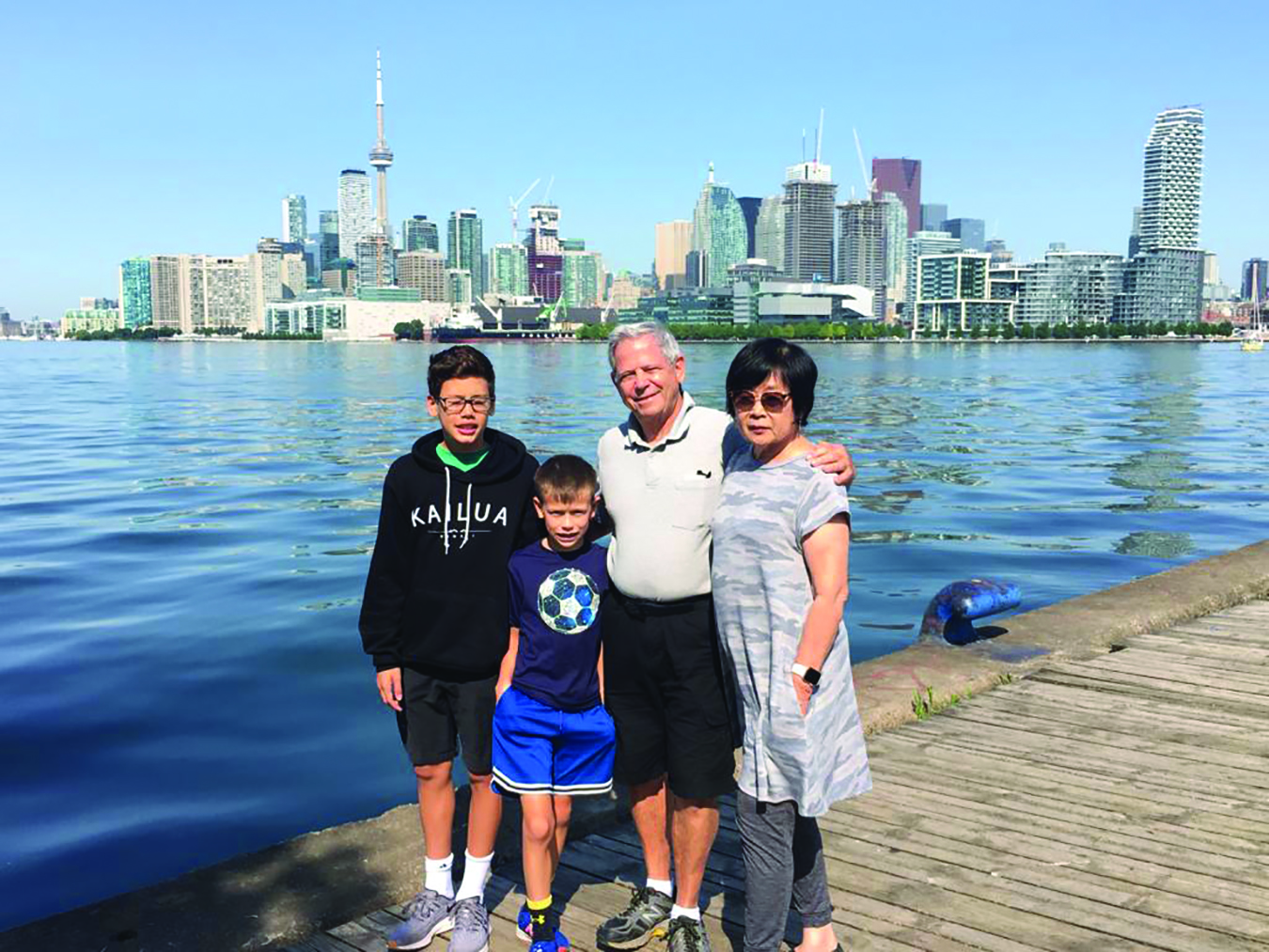
Mae and Gil Mendelson invited their grandchildren to join them on vacation, continuing a family tradition started by Mae’s grandparents.
The grandsons, ages 11 and 13, were in agreement: no museum visits on our week-long trip to Toronto and Niagara Falls. Sad words for a grandmother who spends her days as a docent. However, sharing the itinerary with the grandkids before we go is one of the lessons my husband and I learned. After expressing their concerns about being bored, they agreed to visit one natural history museum with us.
We started taking our grandkids on trips without their parents to create shared memories and to get to know each other in a more personal way. It is somewhat of a tradition in our family. My mother took our children to Japan without us. These trips remain cherished memories. In a way, we are continuing her legacy.
For the Toronto trip with our grandsons, we designed a shared agenda that included something for everyone — we saw a baseball game and went to an amusement park.
Traveling also means eating out. Even though I am just as addicted to my devices as my grandsons are, we created one rule for all of us: When we go out for dinner, the electronics stay home.
Taking our granddaughters to London taught us a different lesson: the value of being flexible. As planned, the girls visited the National Gallery, sketched in Trafalgar Square and went on a scavenger hunt. Our itinerary changed abruptly when the girls discovered that an online video festival was in town. So we skipped our planned trip to St. Paul’s Cathedral and joined a YouTube event in which thousands of young people were queuing for a meet-and-greet with their favorite YouTube celebrities. We had suddenly crossed a generational divide. It was awesome. Letting them lead the way was an extraordinary experience and taught us so much.
If you are thinking about traveling with your grandkids, it helps to purchase tickets online for your daily activities. And you always want to be prepared. The benefits can include quick entry, access to special exhibits, and discounts to gift shops and cafes. Bringing their passports, medical cards and written parental permission gives you the right to make decisions on their behalf.
Traveling with your grandkids can be a rewarding experience. Trust your judgement and theirs, and have fun making memories together
We started taking our grandkids on trips without their parents to create shared memories and to get to know each other in a more personal way. It is somewhat of a tradition in our family. My mother took our children to Japan without us. These trips remain cherished memories. In a way, we are continuing…
On Aug. 9, 1969, a surgical team headed by Dr. Livingston Wong performed the first kidney transplant at St. Francis Hospital. Since then, more than 2,300 lives in Hawai‘i have been saved and transformed by organ transplants. To celebrate this remarkable milestone and the man whose vision drove it forward, St. Francis Healthcare System hosted a special event on Aug. 7 at its Liliha Campus.
Guests from The Queen’s Medical Center, The Queen’s Transplant Center, Legacy of Life Hawai‘i and the National Kidney Foundation of Hawai‘i honored Dr. Wong for his service and vision. The event was also a homecoming for many who had worked with Dr. Wong and those whose lives he had helped to heal and save.
Following Dr. Wong’s first transplant surgery, St. Francis Medical Center opened its kidney transplant program, which served as Hawai‘i’s only transplant center for 40 years. Through the years, the transplant program expanded to include kidney, liver, pancreas and heart transplantation. In 1978, Dr. Wong headed a team of physicians and technicians who performed the first bonemarrow transplant in Hawai‘i. Dr. Wong later established Hawai‘i’s emergency management system and is credited with raising the level of the statewide system to become one of the best programs in the nation.
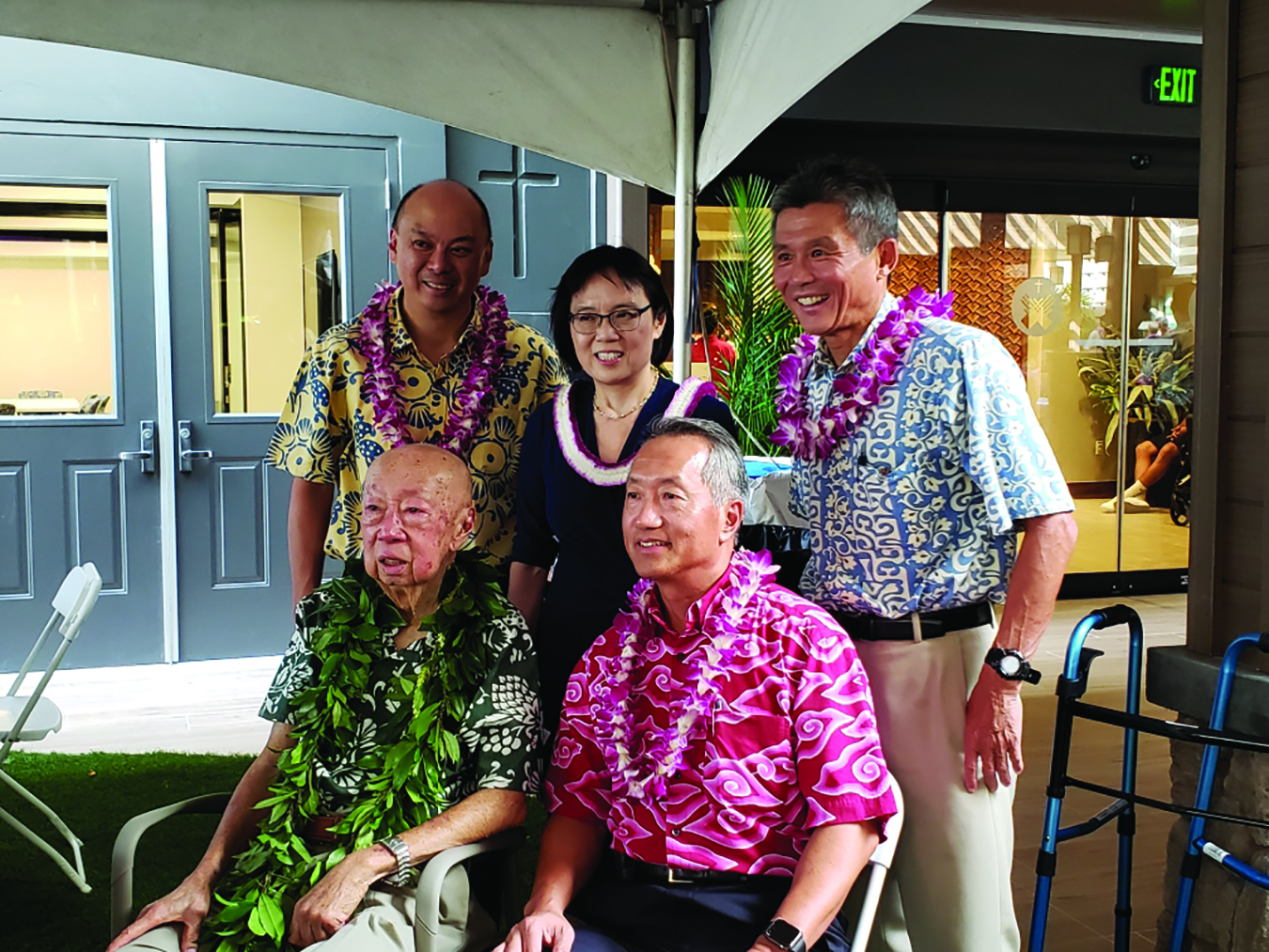
Dr. Wong with members from Surgical Associates Inc: (L–R, 1st row) Livingston M.F. Wong, MD, FASC; Dr. Alan Cheung, MD, FASC; (2nd row) Lyle Wong, director of administration (Livingston’s son); Linda L. Wong, MD (Livingston’s daughter who performed the first liver transplant in Hawai‘i); and Whitney Limm, MD.
Dr. Alan Cheung, director of the Queen’s Transplant Center, a transplant surgeon and close associate and friend of Dr. Wong, spoke to the more than 250 guests at the event. “Livi recognized the suffering and needs of patients with end-stage renal failure and quickly mastered the vascular access surgeries that were lifelines for these patients,” Dr. Cheung said. “He wanted to serve the needs of the people…”
Become a donor by registering at Legacy of Life Hawai‘i or at your local DMV.
On Aug. 9, 1969, a surgical team headed by Dr. Livingston Wong performed the first kidney transplant at St. Francis Hospital. Since then, more than 2,300 lives in Hawai‘i have been saved and transformed by organ transplants. To celebrate this remarkable milestone and the man whose vision drove it forward, St. Francis Healthcare System hosted…
Starting with the 2020 primaries, all statewide elections in Hawai‘i will be conducted by mail, pursuant to Act 136, Session Laws of Hawai‘i 2019 (HB1248, CD1). This will be a big change for some Hawai‘i voters, especially those who are not accustomed to voting by absentee ballot. For those who vote by absentee ballot, the all vote-by-mail system is nothing new.
However, for Hawai‘i voters who are used to standing in lines at polling places with family, friends and neighbors on Election Day to cast their vote, get ready to fill out your ballots in the comfort and privacy of your own home.
Vote-By-Mail requires that a ballot package be mailed to registered voters approximately three weeks before Election Day — either primary or general. Each ballot package shall include a ballot, a secrecy envelope, a business reply return envelope and voting instructions.
Registered voters will complete the ballots, insert them in the secrecy envelopes so that the completed ballots will be kept private and then place the secrecy envelopes with ballots in the business reply envelopes. Registered voters are required to sign the return the envelopes or the ballots will not be counted.
All ballots must be received by the Clerk’s Office by 7pm on Election Day. Do not mail your completed ballots the day of the election, because they will not be received in time and your ballots will not be counted. Mail your completed ballots to the Clerk’s Office at least three days before Election Day. The voter’s signature on the return envelope will be verified against the signature on file in your voter registration record.
If a mistake is made on the ballot, do not try to correct the ballot, which may result in a spoiled ballot. Instead, contact the County Clerk’s Office for a replacement ballot.
Additionally, once the ballot is received, the County Clerk’s Office may contact you to remedy any problems with the ballot. This may require visiting a Voter Service Center (VSC). The City and County of Honolulu has designated at least two VSCs — Honolulu Hale (530 S. King St.) and Kapolei Hale (1000 Uluohia St. in Kapolei). Note that the VSCs will replace traditional Election Day polling places.
VSCs will be open 10 business days (weekdays only) prior to and through each Election Day. At the VSCs, people may register to vote, including same-day voter registration, vote in-person, hand-deliver their ballots in-person or correct their ballots if they are summoned to do so.
Other jurisdictions that have implemented Vote- By-Mail (Colorado, Oregon and Washington) have some of the highest voter turnout rates in the nation, a median 15% higher turnout rate during the 2018 primaries than the remaining polling place states. Hawai‘i’s Vote-By-Mail will increase our voter engagement by giving our voters more ways and days to participate in our democratic process and reduce costs of operating traditional polling places. Common Cause Hawai‘i looks forward to more people voting in Hawai‘i!
Starting with the 2020 primaries, all statewide elections in Hawai‘i will be conducted by mail. This will be a big change for some Hawai‘i voters, especially those who are not accustomed to voting by absentee ballot. For those who vote by absentee ballot, the all vote-by-mail system is nothing new.
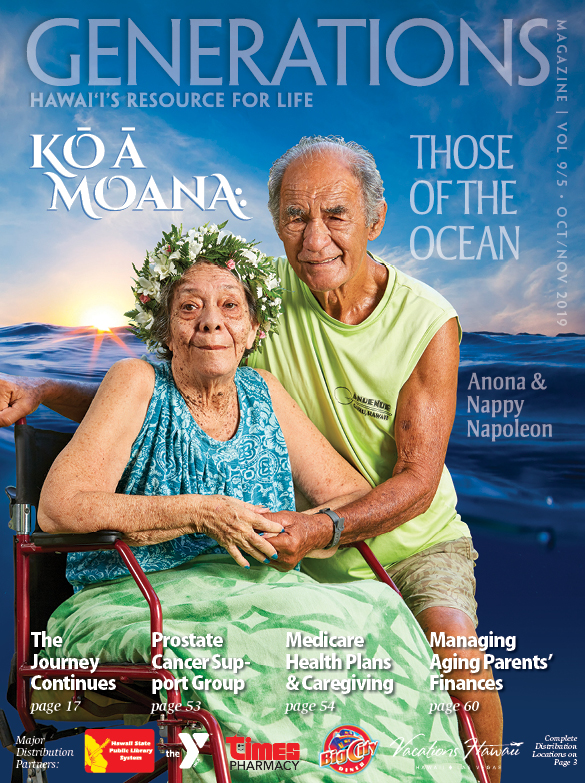
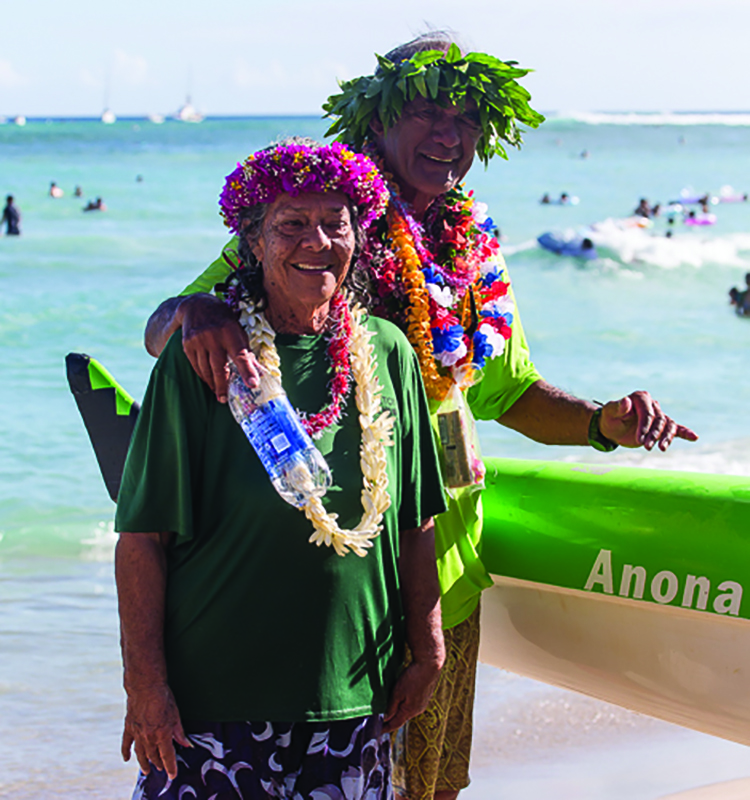
Anona and Joseph “Nappy” Napoleon love the sea. Their kuleana is to respect and care for the sea by practicing and perpetuating cultural traditions of their ancestors who lived on and near the ocean. We call them “watermen.” Kō ā moana may be men or women, surfers, fishermen, paddlers, sailors or divers. They know the power and majesty of the sea in every season and type of weather. They trust their ancestral skills and honed talents, and mentor the next generation to carry them on. It’s clear that that they are more comfortable and happier on the water than on land. With kō ā moana at the helm, dark swells become waterslides, rough seas promise exciting adventures and being alone on the open ocean brings calm and freedom.
“The ocean brought us together,” says Anona as she smiles at Nappy. “And it keeps us together, too.” For the last 55 years, the Napoleons raised five sons by the sea and taught many mo‘opuna the ways of the sea. Their love affair with each other and the ocean honors the family traditions of the Nāone ‘ohana of O‘ahu, and the Napoleon ‘ohana of Kaua‘i, Hawai‘i Island and O‘ahu. Their steadfastness ushers in new generations of kō ā moana, people of the ocean.
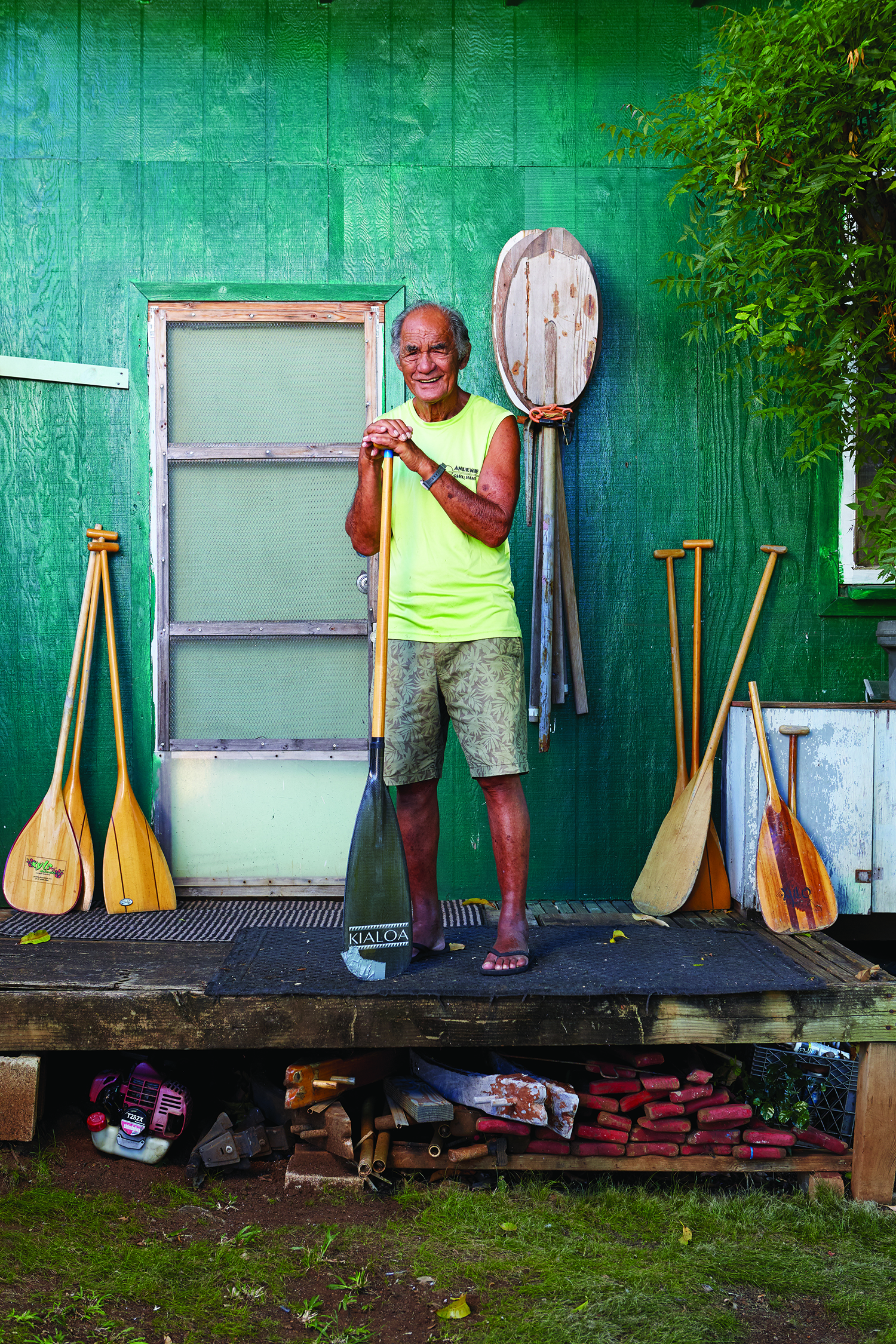
Joseph “Nappy” Napoleon, Champion Paddler and Steersman.
The Man Behind the Woman
Joseph “Nappy” Napoleon, Champion Paddler and Steersman. Hawaiian Waterman Hall of Fame Inductee, 2010.
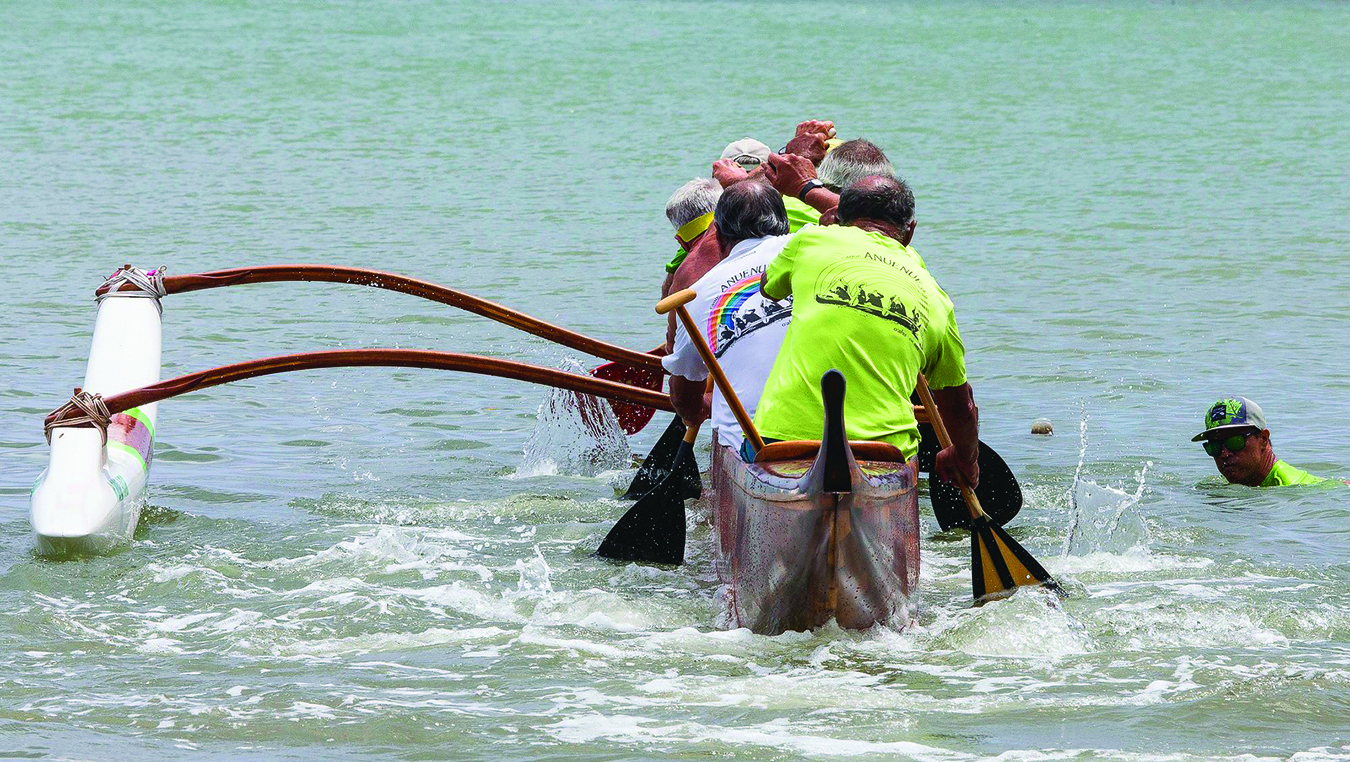
On Sunday, Oct. 13, Uncle “Nappy” Napoleon, Hawai‘i’s revered champion paddler, will don a green shirt to compete in his 62nd world paddling championship — the Moloka‘i Hoe. This race across the Ka‘iwi Channel starts at Hale o Lono Harbor on Moloka‘i’s west shore. After some five hours and 41 miles of paddling across the shallow Penguin Banks and then braving the “washing machine” of the deep churning Ka‘iwi Channel, paddlers make land at Duke Kahanamoku Beach in Waikīkī. Of the seven most dangerous channels in the world, Ka‘iwi outranks the English Channel for rough seas.
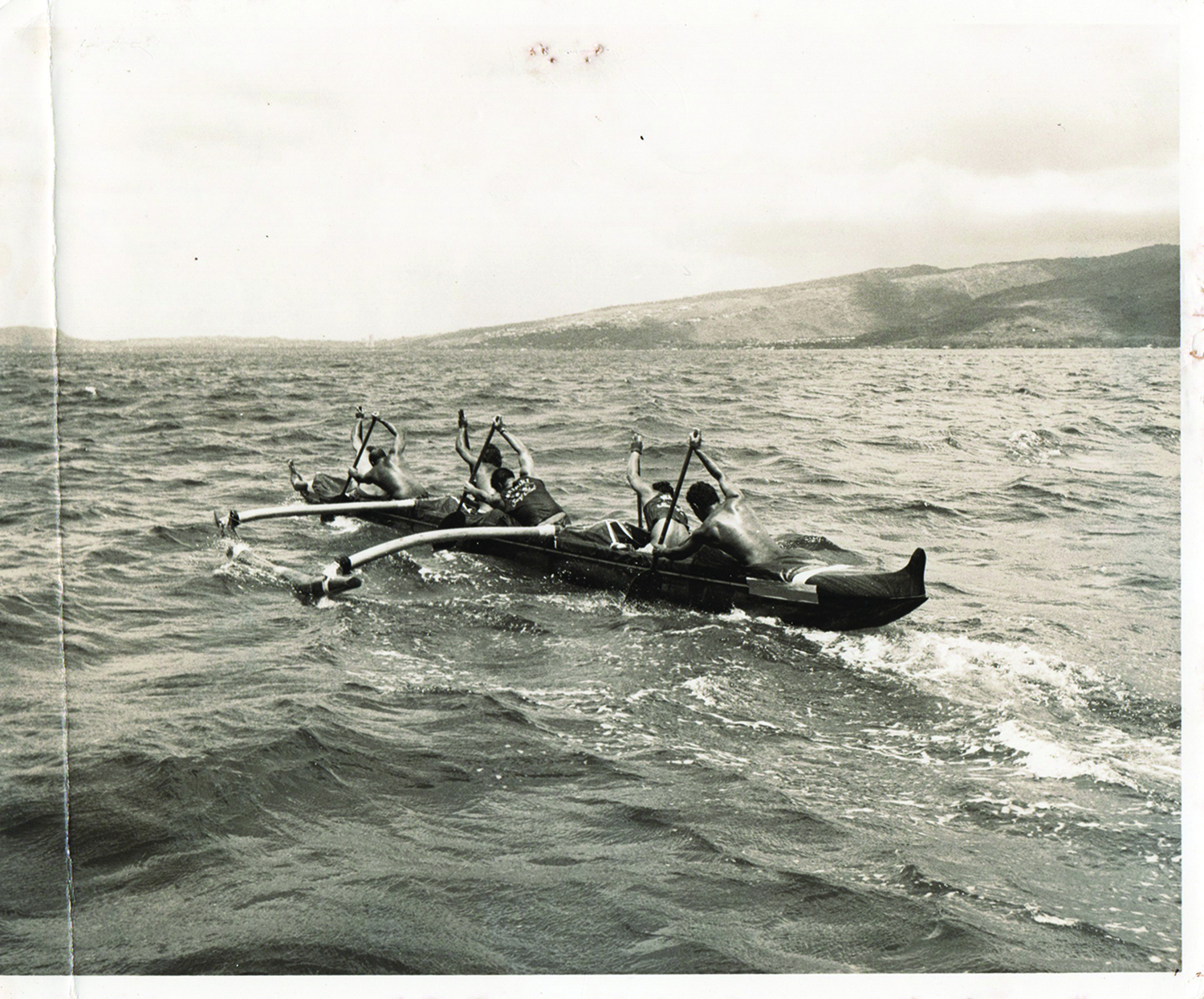
Nappy first paddled across this channel in 1957, and in 1958, he won the inaugural Moloka‘i Hoe official competition. Among his five additional wins was the 1966 event, when 40-knot winds and 20-foot swells in the channel savaged the race. Only six of 12 canoes finished. One crew lost their canoe. Nappy’s team prevailed, despite capsizing three times and losing the outrigger. Beating out all the international competition for wins in ’61, ’69, ’72 and ’73 was much easier than in ’66.
Although Nappy is a renowned expert steersman, he is a competitive paddler first — often helping his team paddle hard to make landfall.
“In the early days, I used to steer the canoe on a high line and surf down to Waikīkī. But nowadays, I pick lines depending on conditions,” says Nappy.
In 2001 and again in 2003, his “60s” team won their division. In the sixth seat, he is moving all the time — adjusting the trajectory of his canoe with every push of the currents, helping paddle up a bump or cutting a diagonal to the next swell. He is the king of riding swells — what the Napoleon ‘ohana calls “connecting the bumps.” This skill builds on a deep knowledge of the sea under all conditions and a “feel” for how the canoe responds to the most delicate tension on the steering paddle. Sometimes Nappy zigzags between swells coming from two directions. Other times, he’s surfing downwind. If you watch Nappy’s canoe turn around a regatta pilon, don’t blink — or you’ll miss it. If turning on a dime were easy, all the canoes would do it that way.
“Way back, Ben Finney came to me and asked me to help him figure out a paddling strategy for pulling Hōkūle‘a through the doldrums,” says Nappy. (The doldrums is a band of flat ocean near the equator where winds cease. Sailboats can get becalmed for days and weeks.)
Photo by Michael A Tongg
Nappy was not convinced that paddling a huge sailboat would work. Eventually, Hōkūle‘a carried a portable outboard motor with a long shaft to drive through the calms.
“I met Mau Pialug when he came here from Micronesia, but I decided not to go to Tahiti with Hōkūle‘a anyway because Herb Kane wanted full-blooded Hawaiian crew members. I stuck to paddling and racing.”
Two years ago was the first time Nappy Napoleon was racing Moloka‘i Hoe without his wife at his side. Team Napoleon’s channel beacon and anchor was at home, recovering from a stroke. Now Nappy’s life is much more than racing or coaching at Ānuenue Canoe Club. He is part of a family caregiving team supporting the love of his life.
The Woman Behind the Man: Anona Nāone Napoleon, PhD, Mākaha Surf Queen, Champion Paddler, Surfing Coach. Hawaiian Waterman Hall of Fame Inductee, 2014
The Woman Behind the Man
Anona Nāone Napoleon, PhD, Mākaha Surf Queen, Champion Paddler, Surfing Coach. Hawaiian Waterman Hall of Fame Inductee, 2014
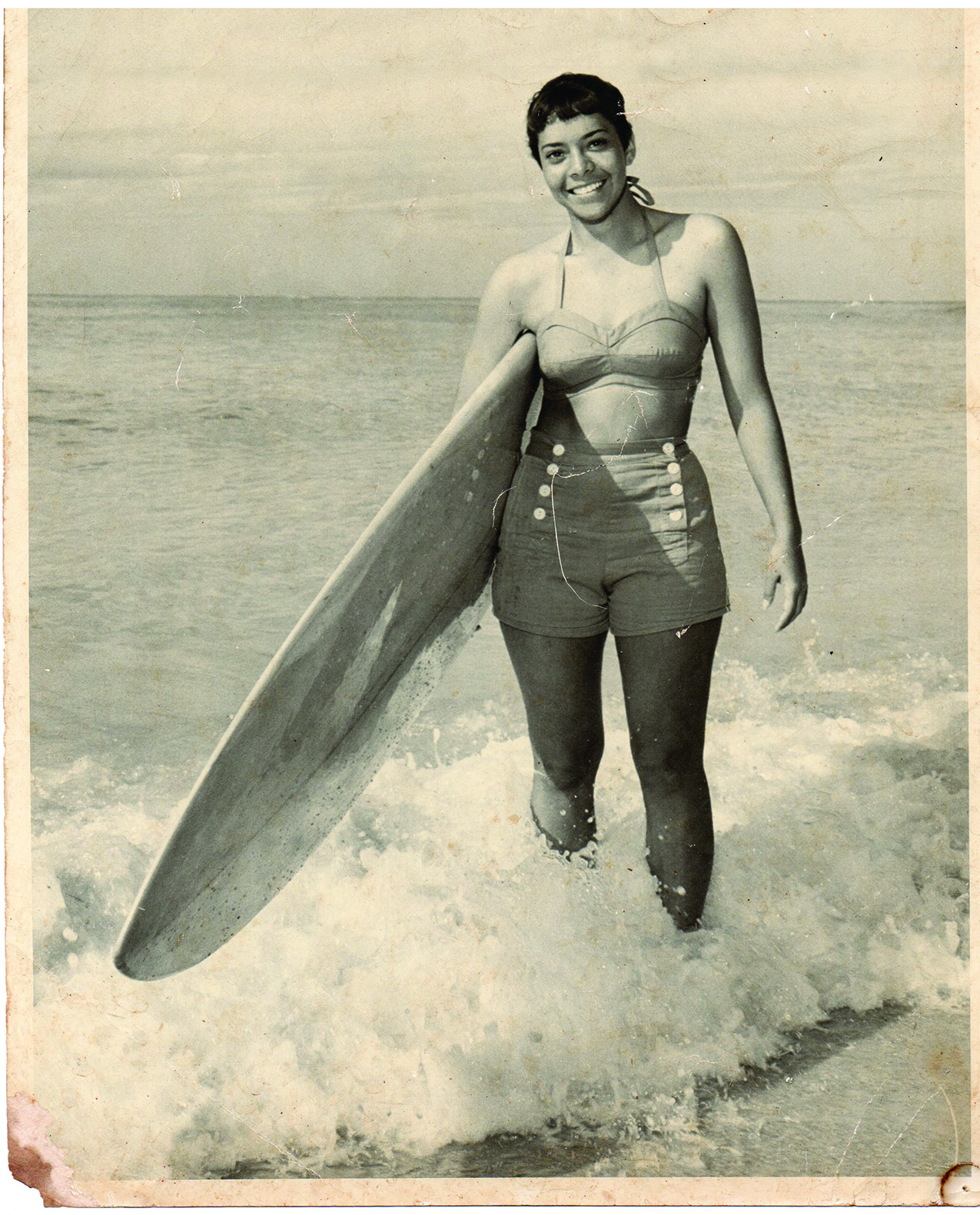
Anona Nāone came from a Kaimukī surfing and kayaking family and was one of the only girls surfing big waves at Waimea Bay in the late ’50s. She taught surfing and was sponsored to try out for the 1960 and 1964 Olympic kayaking teams. Tragedy struck in 1960, when she suffered a severe diving accident that left her temporarily paralyzed for nearly a year. Nevertheless, she recovered fully to compete in and win the 1961 International Mākaha Surfing Contest, claiming the coveted Mākaha Surf Queen title.
Anona was not only beautiful but also a brilliant student at Star of the Sea Catholic School. She went on to the University of Hawai‘i and returned to teach at Star of the Sea — the place that inspired her to follow a vocation in education.
A teaching career did not keep this woman of the ocean from pursuing competitive water sports. Anona eagerly joined ‘Onipa‘a, one of two women’s crews to first paddle across the Ka‘iwi Channel. For 20 years, women were not allowed to complete in paddle races across Ka‘iwi. But in 1975, the men of Waikīkī Surf Club agreed to coach a team of seasoned female athletes from Outrigger, Lanikai and Kailua canoe clubs for their first open ocean voyage. The Healani Canoe Club put up a second canoe and both teams completed the crossing.
When the first women’s world championship of paddling, Nā Wāhine o Ke Kai, was first held in 1979, Anona’s canoe crossed the Ka‘iwi with the best time. Her crews also won in ’87, ’88 and ’89. In 1998, Anona Napoleon came in first at the International Polynesian Canoe World Sprint Championships in Fiji.
Part of being a woman of the ocean is perpetuating the Hawaiian nohona — the Hawaiian ways of doing things. In 2003, Anona took on a new challenge to apply Hawaiian values and methods to her teaching profession.
Anona went back to college and earned her doctorate in education. Her thesis focused on developing culturally responsive primary education curricula based on the Hawaiian method of conflict resolution — ho‘oponopono. Like the successful culturally focused social and healthcare services explored by Mary Kawena Pūku‘i in the book Nānā I Ke Kumu, Anona’s work created objectives and lesson plans that would engage students using traditional Hawaiian learning styles and mentoring methods.
Waikīkī Beach Boy and the Mākaha Queen
Nappy was born in Kealakekua on Hawai‘i Island, where, as a small boy, he remembers paddling everywhere and racing canoe with his cousin. The family moved to Kapahulu, O‘ahu, and he remembers Waikīkī Beach when he was 10 years old. Nobody under 16 could race, but when the canoes were short a man, Nappy would be allowed to jump in on a training run. He was a natural who pulled hard and never got tired.
“I was lolo, you know. Not so good at schoolwork and only made it through the seventh grade,” Nappy says. “I was a hard worker, though, and a strong paddler — racing canoes with my cousin when I was little. I went to Ala Wai Trade School, paddled with Outrigger Canoe Club and worked at Waikīkī beach giving canoe rides to tourists for 75 cents, and surf lessons for four dollars an hour. Now, the lessons are expensive! I knew all the guys at Beach Boys concession: Sam ‘Steamboat’ Mokuahi, ‘Rabbit’ Kekai, ‘Chick’ Daniels, the Kahanamokus — I carried Duke’s board. After he retired, he came to the beach to talk story and I listened. I remember how much fun it was to cut the waves in ‘Ka Moi,’ his big koa canoe. It weighed more than 600 pounds.
“I had a lot of friends, but I didn’t like parties — didn’t go out much. I was friends with Anona’s brothers, who worked for Aloha Airlines, and went with them to dive Pāpi‘i, Kaunakakai-side, Moloka‘i. They all looked after Anona and I did, too. I was another big brother to her. One day in 1959, I got up the courage to tell her that I didn’t want to be her big brother anymore.”
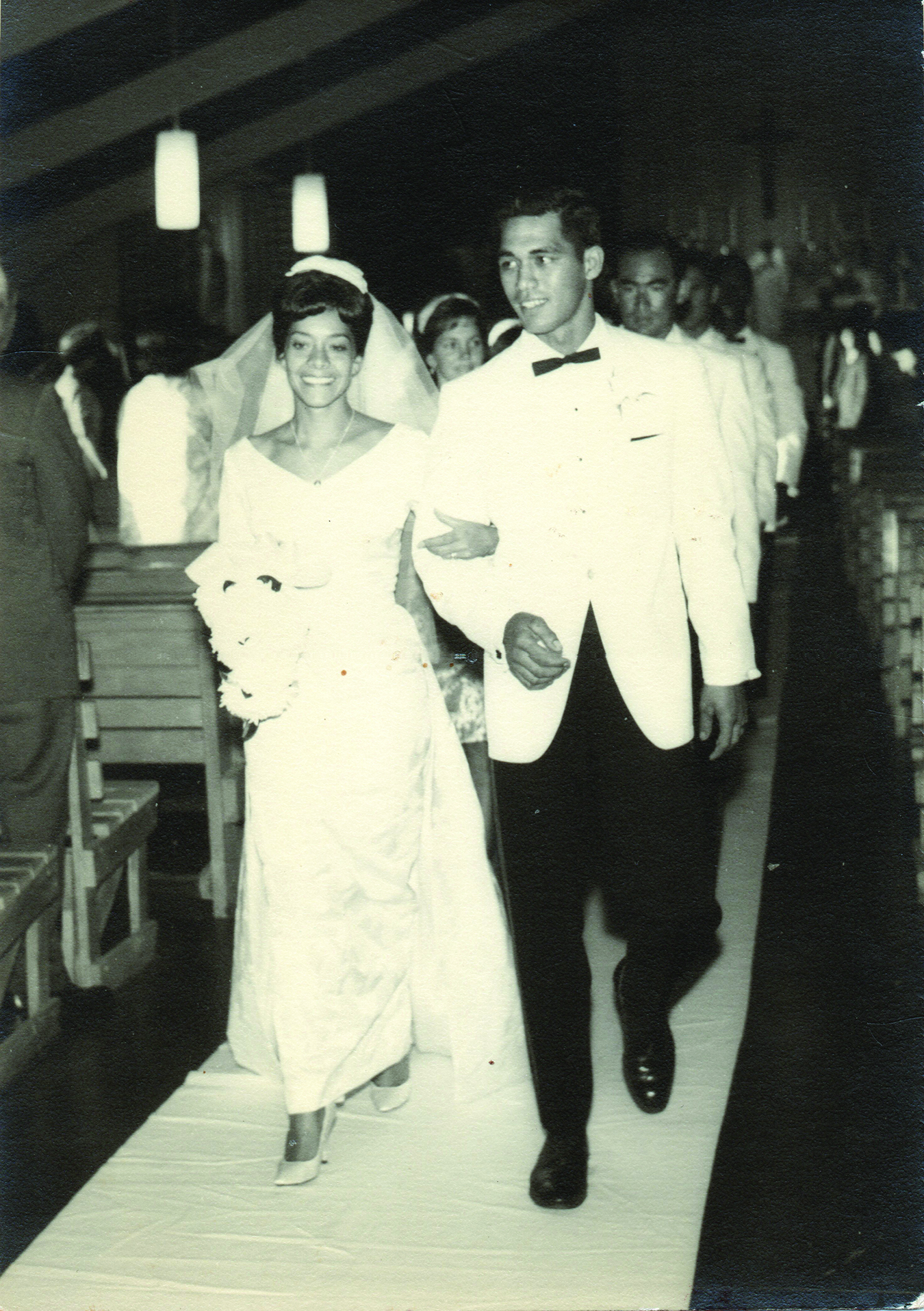
Nappy and Anona’s wedding in 1965
It worked. Nappy and Anona dated for six years, during which time she trained for the Olympics. Being a Beach Boy didn’t lend itself to raising a family, so Nappy landed a job making cement tiles. “I told ’em I can work hard. Just show me what to do.” Eventually, that job led to a career in construction.
The Sea Brings Us Together
Anona and Nappy wed in 1965. They were a handsome couple, brought together by their love of the sea. “Kō ā Moana,” those of the ocean, raise their kids by the sea, showing them how to respect the power and beauty of the sea in every kind of weather. A year later, Joseph (Joey) was born; two years later, twins Aaron and Darryn. Later on, David and Jonah. The Napoleon family spent every weekend and summer at the beach, morning ’til night. The kamali‘i came to trust their ability to ride the waves, currents and winds. They also learned to mālama the treasures of beach and reef.
Getting to know their island was part of the mentoring. Sometimes Nappy and Anona took the boys out of school so the family could surf a famous spot together. That is how seriously Anona and Nappy felt about passing on the knowledge of their kūpuna — water sports, surfing, paddling, swimming and always having fun as a family.
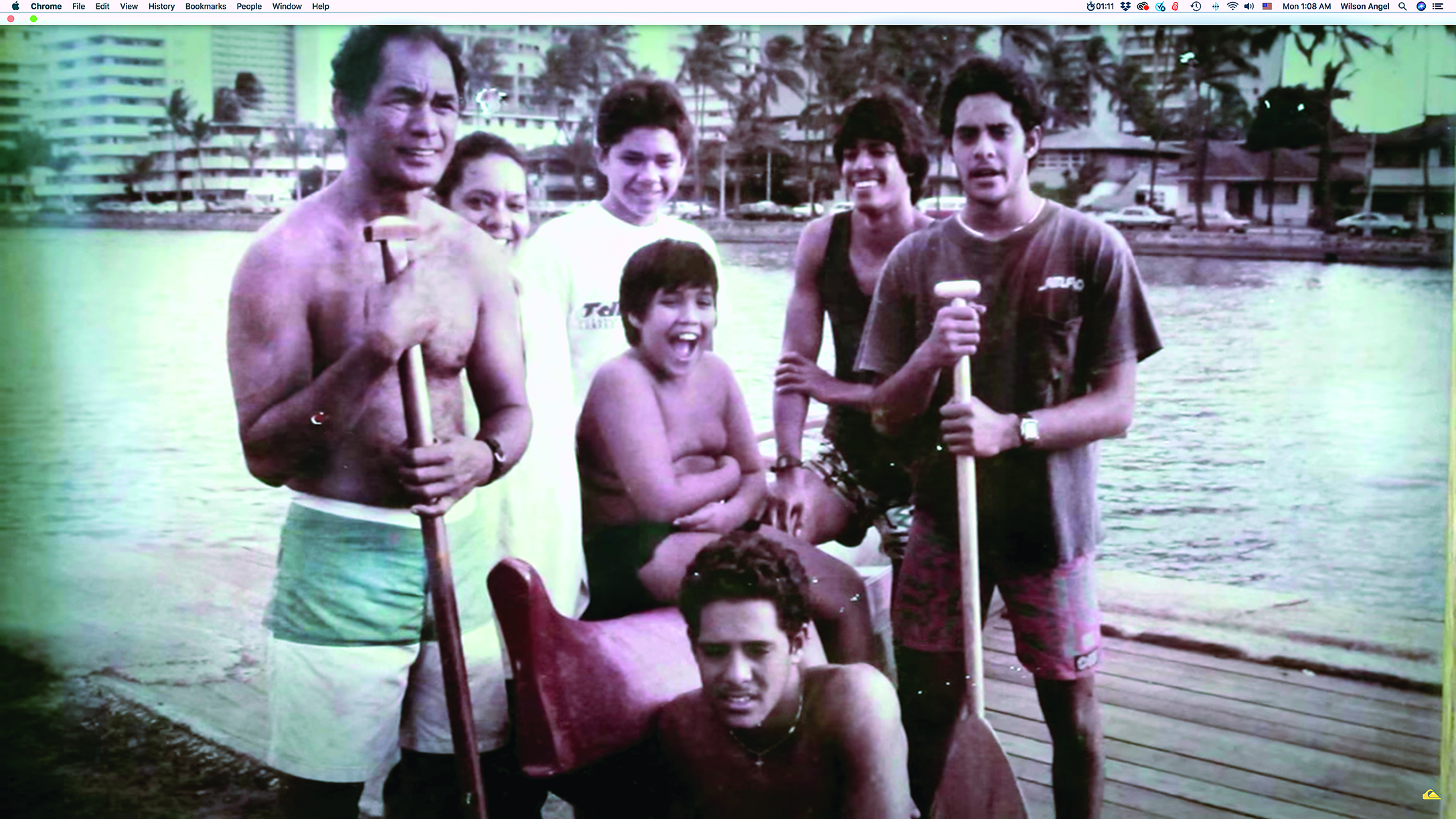
The Napoleon family (clockwise, L–R) Joseph “Nappy,” Anona, David, Jonah, Joey, Darryn and Aaron. The Napoleon boys grew up at the beach — every weekend, every summer. Besides fun and exercise, they came to know the ocean in every season, every kind of weather. Nappy and Anona mentored them in the skills and traditions of their ancestors — conservation, stewardship and confidence in their abilities to paddle, surf, fish, gather and look out for one another at all times.
Today, Napoleon mo‘opuna number 15 and great-grandchildren, 24. Grandson Riggs is a 20-year-old stand-up paddler who remembers being out in Grandpa’s canoe when he was 8 years old, with Nappy behind him, telling what to do. Nappy calls Riggs and his dad, Aaron, “naturals” because they instinctively knew how to do well in races. In 2012, when Riggs was 12, he rode his stand-up paddleboard across the Ka‘iwi solo in seven hours — the record for the youngest person to make that crossing.
“My boys and mo‘opuna are ocean people,” says Nappy. “One time, Anona and I took the boys by Publics reef break near the zoo and waves were pretty good. I went out with them, and when I looked back, those kids were doing 360s and surfing right into the wall! When I came out, Anona said, ‘I thought you were watching the boys?’ I told her, ‘Hey — no need. They know what they’re doing.’”
Preservation is not “knowing about” traditions but practicing them. Nappy and Anona also modeled their devotion to each other, deep respect for one another’s talents and the happiness that comes when a family sticks together. These were lessons well-learned; the boys are raising their own families, and 39 Napoleon mo‘opuna will carry on the legacy to be humble, share aloha and go after your passion. “You know, our boys helped build this house. Nappy taught them construction skills, too, and they could figure out the plan — even when the installers were stumped,” says Anona.
Since her stroke in 2018, Anona has been rehabbing at home in Pālolo Valley. Some days are easier than others, but the Napoleon family is also paddling this canoe with her. For 55 years, Nappy has said that he is “a lucky guy” and that he owes all his success to his wife. They love being together, and with Nappy at her side, Anona is safe and confident, surrounded by the love of her family. Anona requires care every day, so Christie (son Aaron’s wife’s friend’s sister) provides home care on weekdays. Nappy covers nights. Every weekend, a homecare agency comes in to help.
This summer, Nappy was able to teach a summer paddling program three mornings a week for 35 ‘Iolani School students at Ānuenue Canoe Club headquarters. After a couple of hours, he’s back with Anona doing chores or enjoying the shade under the mango tree in the yard.
“His mom was disabled,” says Anona. “He cooked and took care of the house for her. And before we got married, he helped me when I was laid up.”
Her sweet, melodic voice doesn’t match her resume — world-class athlete, PhD teacher, mother and grandmother. With the grace and dignity of her ancestors, Anona shares aloha, smiles and lets the love of her life do the talking.
“I hope I did not talk too much about paddling,” says Nappy. “You know I love to paddle, but my life is really about my wife.”
In one of life’s huli, Anona is the center of attention again. Her accomplishments raised the bar for women in water sports, while she was preparing thousands of Star of the Sea students for high schools and college and bringing up five sons.
At her induction into the Hawaiian Waterman Hall of Fame, Anona said, “The reason I stand before you tonight is because of the men in my life, including my husband, Nappy… Thank you for 50 wonderful years.”
From the nurturing of her family to the protection of her brothers and the unconditional support of her husband, the men in her life recognized her talents. With the encouragement of her academic peers and the love, respect and trust of her sons and their families, Anona is still the graceful, humble and smiling beacon. Her family takes this opportunity to fuss over her, paying back and forward the blessing of her deep and unfailing aloha.
The man behind the woman, who has for years said, “All I am comes through my wife,” applies his tireless energy to caring for her now. “It’s not a big deal,” says Nappy. “I love to do it and I have lots of help. We still love being together; we still happy.”
A Lesson from Paddling
Remarkably, aging in place requires some of the same skills as paddling. Caregiver training is minimal, and you just have to jump in and do it. Every day brings new swells, winds and weather. But you must be very good at keeping a steady pace to make headway. As a caregiver, you must follow the pattern of the swells to your advantage, staying just in front of the wave as long as you can. You learn to use its natural energy and less of yours.
At the end of a good ride down a wave comes a lull, where steady paddling is required to move forward to the next crest. Paddling up takes a bit more energy, but by keeping steady and on course, you will soon be off and gliding easily again.
An important Hawaiian point of view that Anona teaches her mo‘opuna and her students helps us in caregiving, too. It’s this: The ocean between us does not separate us, it connects us to each other. In aging, the time between today and our elder years connects all of us. We are all on the same voyage. The line we follow, the path we choose, may alter how long it takes to get there, or how difficult the going may be. Our skills to navigate rough seas and ride the waves can make the journey easier. As we fly our colors in the regatta of our elder years, it’s not about racing to the finish line — it’s about getting there and enjoying the ride with our family and friends.
As Anona Napoleon says, “It’s about aloha. Be humble, show your aloha freely to everyone, and above all, have fun.”
Nappy and Anona founded the Ānuenue Canoe Club in 1983 at the Hilton Hawaiian Village lagoon. For 36 years, Anona, Nappy and son Aaron, also an accomplished waterman, have taught thousands of Honolulu and visitor children to paddle, including kids from A¯nuenue Hawaiian Immersion School. Club members trained for races and regattas year round. Nappy is the head coach, and at 78, he competes with a “70s” Ānuenue crew. Join the healthy fun of paddling, visit www.AnuenueCanoeClub.org.
Anona and Joseph “Nappy” Napoleon love the sea. Their kuleana is to respect and care for the sea by practicing and perpetuating cultural traditions of their ancestors who lived on and near the ocean. We call them “watermen.” Kō ā moana may be men or women, surfers, fishermen, paddlers, sailors or divers.

 It’s always comforting to have a best friend to share in the journey of life every step of the way. For seniors, while the idea of caring for a furry friend can seem overwhelming, the benefits are highly rewarding; pets can provide a whole new experience of joy and purpose. Here are just five of the many benefits you can look forward to with a pet in your life:
 ❸ Exercise
  As seniors navigate new changes in their lives, deciding to bring a pet companion along for the journey can bring many benefits and happiness.