
Category: October – November 2016

  • The Sons & Daughters of the 442nd RCT

    OctNov2016 - thesonsdaughters_image1The Sons & Daughters was established in 1993 as a chapter of the 442nd Veterans Club, which is made up of Nisei veterans who fought two battles in World War II.

    “We will never forget the dedication, sacrifice and courage of our fathers,” the Sons & Daughers website states. “It is through their accomplishments that we are here today.”

    The nation’s highest award for combat valor, the Medal of Honor, was conferred upon 21 members of the 100th Infantry battalion of the 442nd Regimental Combat Team of World War II.

    On Oct. 5, 2010, the Congressional Gold Medal was awarded to the 442nd Regimental Combat Team and the 100th Infantry Battalion, as well as the 6,000 Japanese-Americans who served in the Military Intelligence Service during the war.

    In 2012, the surviving members of the 442nd RCT were made chevaliers of the French Légion d’Honneur for their actions contributing to the liberation of France during World War II and their heroic rescue of the Lost Battalion outside of Biffontaine, France.

    Sons & Daughters Honolulu club President Grace Fujii said that their work involves supporting Nisei veterans and helping preserve the history of the 442nd RCT, the most highly decorated unit in U.S. military history.

    This past year, they assisted at the 73rd annual banquet of the 442nd veterans and began planning for a memorial boulder at the National Memorial Cemetery of the Pacific at Punchbowl. They are now exploring the possibility of reinstating the docent program at Punchbowl and will participate in events this December for the 75th anniversary of the attack on Pearl Harbor.

    Regular membership is for all lineal descendants of a World War II soldier of the 442nd RCT and associate membership is available to those who are interested in the 442nd.

    “We welcome new members at any time,” said Grace. “It’s a great way to become involved in community activities, remember our veterans and learn about our World War II history.” To learn more, email or call the club.


    442ND VETERANS CLUB
    933 Wiliwili St., Honolulu HI 96826
    808-949-799  |  sons-daughters@442SD.org

    The Sons & Daughters of the 442nd RCT by Stephanie Kim, Generations Magazine Intern from the Oct-Nov 2016 issue of Generations Magazine, Hawai‘i’s Resource for Life

  • Secret Money for Veterans

    OctNov2016 - secretmoney_image1Many veterans believe that they have to have suffered an in-service disability to qualify for U.S. Department of Veterans Affairs’ monetary benefits. This is a common misconception.


    Depending on their health status, income and assets, many senior veterans and their dependents or surviving spouse can qualify for not only basic “Improved Pensions” based on low income, but also for supplemental benefits. The supplemental benefits are called “Housebound Benefits” and “Aid & Attendance Benefits.”

    PENSION BENEFITS

    To qualify for any of these pension benefits, the veteran (or surviving spouse, based on the veteran’s military service record) must satisfy the following general criteria:

    • The veteran must have served at least 90 days of active duty.

    • At least one of the 90 days of active duty must have been during wartime. Dates have been officially defined for the beginning and end of World War II, the Korean War and the Vietnam conflict. The Gulf War, which began Aug. 2, 1990, is not concluded yet.

    • The veteran must have received a discharge other than dishonorable.

    • The claimant and household must have limited income and assets.

    • The claimant must have a permanent and total disability at the time of application (note that a surviving spouse can qualify for a basic low-income pension without being disabled, but the veteran must be disabled — although the disability does not have to be related to wartime or military service).

    • The disability must have been caused without the willful misconduct of the claimant and must not have been due to alcohol or drug abuse.

    HOUSEBOUND & A&A BENEFITS

    As the name implies, Housebound Benefits are payable when the claimant is substantially confined to his or her home because of permanent disability. To qualify for Aid & Attendance Benefits, the claimant must:

    • Require the aid of another person in order to perform personal functions for everyday living 
(such as bathing, eating, dressing, toileting, transferring from bed to a wheelchair or dealing with incontinence), OR

    • Be bedridden, in that he or she must remain in bed apart from any prescribed course of convalescence or treatment, OR

    • Be a patient in a nursing home due to mental or physical incapacity, OR

    • Be blind or have very poor vision.

    Applying for these supplemental benefits is not a quick or simple process, and you may want to enlist the help of a veterans’ assistance organization or a specially-trained individual. Note that whoever assists with the application cannot charge a fee for that service. However, if the individual or organization performs other services, fees may be incurred.


    SCOTT MAKUAKANE, Counselor at Law
    Focusing exclusively on estate planning and trust law.
    www.est8planning.com
    O‘ahu: 808-587-8227  |  maku@est8planning.com

    Secret Money for Veterans by Scott A. Makuakane, Counselor at Law, Est8Planning Counsel LLLC from the Oct-Nov 2016 issue of Generations Magazine, Hawai‘i’s Resource for Life

  • Walking on an Underwater Treadmill

    OctNov2016 - walkingonunderwater_image1


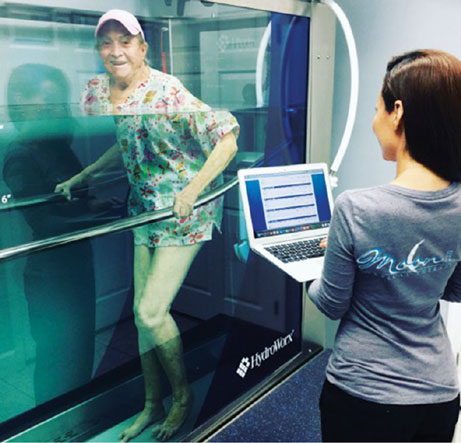
    Underwater treadmills (UTM) are revolutionizing physical therapy and fitness. Top athletes are utilizing UTM or treadmill pools for peak performance or speedy recovery after an injury. Underwater walking is very different from land-based walking, especially regarding shock absorption, energy expenditure and muscle activity.

    Those with chronic conditions like osteoarthritis (OA) often avoid walking for exercise due to increased pain. In a study at Utah State University, OA patients reported a 140 percent increase in pain during land treadmill exercise compared to pain experienced during UTM sessions.

    UTM users can exercise much longer against water resistance, increasing oxygen consumption and calorie burning.

    Muscle activity is also higher, leading to greater hip, leg and foot strength, as well as improvements in core muscle groups throughout the body.

    Many physical therapy clinics and athletic training rooms offer these systems — either self-propelled or motorized.


    MOON PHYSICAL THERAPY, LLC
    320 Ward Ave., Ste. 107, Honolulu HI 96814
    Aquatic, Land-based and Manual Therapy and 
Cardiopulmonary Rehab Programs
    808-597-1005  |  www.moonpt.com

    Walking on an Underwater Treadmill by Julie Moon, Physical Therapist from the Oct-Nov 2016 issue of Generations Magazine, Hawai‘i’s Resource for Life

  • Bindi: A Therapy Dog for Veterans

    OctNov2016 - bindi_image1
    Bindi and Rona marched with Vietnam Veterans of America on July 4th. Photo by George Barlet, VFW.

    Meet my nine-year-old American Champion Italian Greyhound, Blanerne Utoroonga, called “Bindi,” a therapy dog who visits wounded warriors at Tripler Army Medical Center (TAMC) in the Red Cross Human Animal Bond (HAB) program. She passed the AKC Canine Good Citizen® (CGC) test, a temperament evaluation by a military veterinarian, and evaluation by a senior HAB handler and her dog. She proudly wears her HAB bandana with patches and Bindi Adams ID card when working at TAMC. She’s a smart cookie, and fully certified to help patients with medical, mental and social problems.

    Patients love Bindi. She’s a cuddler and her sleek fur is smooth to the touch. She has sad eyes that bring out the best in people and she’s a very good listener. She politely accepts healthy snacks — but secretly prefers chicken nuggets.

    Bindi also belongs to Tails of Aloha (TOA), an all-volunteer, animal-assisted therapy organization that offers comfort and de-stressing in schools, hospitals and libraries. To volunteer with your pet, visit the websites below.


    RED CROSS HAB PROGRAM  |  www.redcross.org
    TAILS OF ALOHA  |  www.tailsofaloha.com

    Bindi: A Therapy Dog for Veterans by Rona Adams, RN, Vietnam Veteran, U.S. Army Nurse Corps from the Oct-Nov 2016 issue of Generations Magazine, Hawai‘i’s Resource for Life

  • Prepare for Retirement Milestones

    Aging investors face eight milestone decisions dictated by Social Security, Medicare and the IRS, that will likely impact their retirement savings and investment portfolio. Take steps now to prepare.

    OctNov2016 - prepareforretirement_image1Age 50: IRS rules for 2016 allow those 50 and older to increase their retirement savings by investing an additional $1,000 per year (for a maximum of $6,500) in each IRA, and another $6,000 per year (to a maximum of $24,000) in a workplace retirement plan such as a 401(k).

    Age 55: If you retire in the year you turn 55 or later, this is your first opportunity to take penalty-free withdrawals (income taxes still apply) from employer-based qualified retirement plans. While tapping into your retirement income may make sense for you, before taking action, consider the impact early withdrawals will have in later years.

    OctNov2016 - prepareforretirement_image2Age 59½: You may begin to take penalty-free distributions from IRAs and potentially from qualified work plans (check with human resources to see what rules apply to you). Again, early withdrawals from your nest egg put your long-term financial stability at risk. Taxes are due on distributions attributable to pre-tax contributions and earnings.

    Age 62: You may start receiving Social Security (SSA) benefits, or wait until a later age and receive a larger benefit. If you begin benefits at age 62 and are still employed, your SSA check may be reduced until you reach full retirement age (defined below).

    OctNov2016 - prepareforretirement_image3Age 65: You qualify for Medicare coverage. You’ll automatically be enrolled in Medicare Parts A and B if you’re receiving Social Security at this time. Otherwise, you need to apply for Medicare during the three months before or after your 65th birthday month. Medicare is complex, so take time to learn all your options.

    Age 66–67: Depending on your birth year, Social Security “full retirement age” is 66 or 67. Visit www.ssa.gov/planners/retire/retirechart to learn which age applies to you. If you waited until now to receive Social Security benefits, you’ll have more ways to structure your benefits. Married couples have many options, so be sure to coordinate your decisions with your spouse.

    OctNov2016 - prepareforretirement_image4Age 70: If you haven’t claimed Social Security yet, there is no advantage to waiting beyond age 70. You may consider donating your benefit amount if you have other investments that cover your expenses.

    Age 70½: By April 1 of the year after you turn 70½, you must take a Required Minimum Distribution (RMD) from your traditional IRA accounts and workplace retirement plans. Instructions for calculating your RMDs can be found in IRS Publication 590 at www.irs.gov. Distributions must be taken from every account subject to this rule, or penalties (50 percent of the amount of the RMD) will be incurred.

    To make these milestone decisions with confidence, consider hiring a financial advisor to look over your current financial position and retirement goals and help you navigate the best route.

    There’s never a better time than now.


    MICHAEL W. K. YEE, CFP
    1585 Kapiolani Blvd., Ste. 1100, Honolulu HI 96814
    808-952-1222, ext. 1240  |  michael.w.yee@ampf.com

    Michael W. K. Yee, CFP®, CFS®, CLTC, CRPC®, is a Financial Advisor, Certified Financial Planner ™ practitioner with Ameriprise Financial Services Inc. in Honolulu, Hawai‘i, with Na Ho‘okele Financial Advisory Team, a financial advisory practice of Ameriprise Financial Services Inc. He offers fee-based financial planning and asset management strategies and has been in practice for 29 years.Investment advisory products and services are made available through Ameriprise Financial Services Inc., a registered investment adviser. Ameriprise Financial Services Inc. Member FINRA and SIPC
    © 2016 Ameriprise Financial Inc. All rights reserved. File #1552807

    Prepare for Retirement Milestones by Michael W. K. Yee, Financial Advisor and Certified Financial Planner from the Oct-Nov 2016 issue of Generations Magazine, Hawai‘i’s Resource for Life

  • October – November 2016

    October – November 2016

    WANT THIS ISSUE?

    Download your own personal copy of this issue in PDF format. Click the button below:

    DOWNLOAD IT NOW

    Brothers in Arms