Category: May – June 2025

  • Navigating Hawai‘i’s Condo Laws, Part 2

    Part 2 of this two-part series continues navigation of the challenges that can be found in the complex world of condominium law and how to pave the way for reform.

    Governance Gone Wrong

    Several recent incidents illustrate the challenges facing Hawai‘i’s community associations. On Hawai‘i Island, a condominium board began repairing common area la¯nai structures but later reclassified them as limited common elements, shifting the financial burden onto individual owners. This unexpected decision left residents scrambling to cover significant costs they had not anticipated. An arbitrator later determined the board was wrong, which cost the association a significant amount of attorneys fees.

    In another case, a board amended rules to benefit a favored owner, leveraging access to voting data while excluding opposing voices. These actions created significant mistrust among residents and highlighted the potential for abuse of power within these associations.

    Unauthorized contracts are another recurring issue. For example, a board president signed a multimillion-dollar construction contract without consulting other board members, just before being removed from office. This unilateral decision resulted in financial and legal complications for the entire community.

    Additionally, critics of boards often face intimidation tactics, such as threats of legal fees, which discourage dissent and oversight. And unfortunately, many condominium attorneys who ought to know better than to engage in these bullying tactics nevertheless do so that they can remain as attorneys for the board.

    These practices highlight urgent need for reform to ensure accountability and transparency.

    Building a Better Future

    Addressing these governance issues requires a multifaceted approach. Transparency should be a top priority. Clear guidelines for executive sessions and stricter rules for voting processes can prevent abuse and restore trust. Boards should be required to disclose meeting minutes and document and justify decisions made in private sessions. Ensuring that votes are conducted fairly and without undue influence is equally important to maintain the integrity of governance.

    Financial responsibility must also be enforced more rigorously. Penalties for noncompliance with reserve fund requirements should be increased to deter negligence and protect owners from surprise assessments. Associations should be required to conduct regular, independent audits of their financial practices to ensure accountability and prevent mismanagement.

    Equity and inclusion are equally important. Gender disparities must be addressed through education and advocacy, fostering an environment where all residents feel respected and empowered to participate in governance. Initiatives such as leadership training programs for all board members, especially underrepresented groups, can help diversify boards and promote more equitable decision-making processes.

    By implementing these changes, Hawai‘i can establish a more efficient, equitable, and transparent system for managing its condominiums and community associations. These reforms will benefit residents and contribute to the long-term sustainability of these communities. In a state where shared housing plays such a vital role, creating fair and functional governance structures is essential for maintaining harmony and trust.

    Proactive measures will ensure that these communities thrive, not just as living spaces, but as integral parts of the Aloha State’s social and economic fabric.

    REVERE & ASSOCIATES
    970 Kealaolu Ave., Honolulu, HI 96816
    808-791-9550
    officemanager@revereandassociates.com
    revereandassociates.com

    Part 2 of this two-part series continues navigation of the challenges that can be found in the complex world of condominium law and how to pave the way for reform. Governance Gone Wrong Several recent incidents illustrate the challenges facing Hawai‘i’s community associations. On Hawai‘i Island, a condominium board began repairing common area la¯nai structures…

  • Having a Child

    Bringing a baby into this world is one of life’s greatest joys. Along with this joy comes responsibility and concern for the raising of this child. The preparation for having a child and raising a child is vast — finding a child seat for the car, diapers, interviewing pediatricians, childcare, safe-proofing the home and schooling, etc. And then late at night, the anxiety-inducing question comes up: “What if I’m not here for my child?”

    Guardianship: Should you pass when your child is a minor, the person who will take over raising your child is called the guardian. A guardian can be appointed in your last will and testament. This person serves as guardian until your child reaches the age of majority, which is 18 in Hawai‘i. The guardian would not be in direct control over money and assets; rather, the guardian’s main purpose is to assume the role of parent to raise the child.

    When choosing a guardian, you want to consider the following: Do you trust this person? Is this person available and able? Is this person willing? And is this person related to or married to someone who can negatively impact this person’s ability to raise your child?

    Choose carefully and thoughtfully.

    YIM & YEMPUKA LAW FIRM
    2054 S. Beretania St., Honolulu, HI 96826
    808-524-0251 | yimandyempukulaw.com

    Bringing a baby into this world is one of life’s greatest joys. Along with this joy comes responsibility and concern for the raising of this child. The preparation for having a child and raising a child is vast — finding a child seat for the car, diapers, interviewing pediatricians, childcare, safe-proofing the home and schooling,…

  • One Trust or Two?

    Should a married couple create one trust or two? To some extent, it comes down to a matter of preference. Some couples see their stuff as belonging to both of them, while others differentiate between one spouse’s stuff and the other’s. Differentiation might be important if one spouse has children from a prior marriage, and the preference is to have the stuff that one spouse brought into the marriage going to that spouse’s descendants. Another practical reason for using separate trusts is that the trust of the first spouse to die can be designed to provide heightened creditor protection for the surviving spouse.

    If both spouses want the survivor spouse to have unlimited control over their combined assets after one of them dies, one trust will work. However, unlimited control means that the survivor can leave their combined assets to his or her next spouse, or the next spouse’s children (to the exclusion of the original couple’s children). This is not rare. But special rules can be built into their rule books to make sure that their stuff can be used for the two of them for as long as both live, and then for the survivor for his or her lifetime, and then each spouse’s stuff goes where he or she wants, irrespective of the wishes of the survivor.

    Your trusted advisors can help you choose what will work best for you and your ‘ohana.

    EST8PLANNING COUNSEL LLLC
    Scott Makuakane, Counselor at Law
    808-587-8227 | maku@est8planning.com
    Est8planning.com

    Should a married couple create one trust or two? To some extent, it comes down to a matter of preference. Some couples see their stuff as belonging to both of them, while others differentiate between one spouse’s stuff and the other’s. Differentiation might be important if one spouse has children from a prior marriage, and…

  • Test Drive Your Retirement Plan

    Two emotions are common for those who are nearing retirement — excitement and fear. Leaving the working world behind can feel empowering; however, apprehension about entering a new life stage may also creep in. If you’re nearing retirement, you’ve likely taken steps to prepare financially for the future. But there’s one important thing you might not have considered adding to your pre-retirement checklist — a practice run. Test driving aspects of your plan before you’re actually in retirement can help provide a sense of security.

    What does your ideal retirement look like? Deciding how to spend your time (and your money) in retirement is not always an easy. As we age, our interests, hobbies and relationships change. What you may consider your “ideal” retirement when you’re 55 may not be the same as when you’re 65, which can make it hard to plan accurately for retirement. Consider sitting down with your spouse or family members to explore how aging and future milestones may alter your retirement. Your financial advisor can help you make a plan that aligns your ideal retirement with your financial situation.

    Test drive your retirement lifestyle. Many people pledge a significant amount of savings towards a particular lifestyle in retirement — a home in another part of the country or an annual trip abroad. Problems can arise if you have made a financial commitment to a certain lifestyle but change your mind later. It’s better to understand the potential implications of altering your plan before you actually retire. For example, if your retirement plan includes a big move to a new location, you may benefit from a practice run before making the relocation permanent. Be prudent and build some flexibility into your plan to avoid unintended consequences.

    Simulate your retirement expenses. The idea that your cash flow no longer comes from a reliable paycheck can come as a shock — even to those who are well prepared for this change.

    One idea to accomplish a sense of financial security is to run two accounts for a certain period of time. Through one account, manage all of your household and lifestyle expenses that you expect during retirement — food, clothing, shelter, utilities, taxes and insurance — as well as “nice-to-have” items like dining out and traveling, etc. You may have to estimate or inflate your lifestyle expenses for retirement as they could rise when you have more free time.

    Through the second account, manage all of your expenses that are expected to end in retirement — principal and interest on a mortgage payment (if your home will be paid off), car payments, college costs for your kids and contributions to retirement plans.

    The best way to get a handle on these expenses is to experience them while you’re still working. Take that trip to Europe before retirement. If the cost is different than expected, make adjustments to your financial projections to reflect reality.

    Perfecting life in retirement. A little practice can help ease emotional and financial concerns when making the jump into retirement. Consider working with a financial advisor who can help you determine a budget and a retirement income plan that fits your needs and desires.

    MICHAEL W. K. YEE, CFP,® CFS,® CLTC, CRPC®
    1585 Kapiolani Blvd., Ste. 1100, Honolulu, HI 96814
    808-952-1240 | michael.w.yee@ampf.com
    ameripriseadvisors.com/michael.w.yee

    Michael W. K. Yee, CFP®, CFS®, CLTC, CRPC®, is a Private Wealth Advisor with Ameriprise Financial Services, LLC. in Honolulu, Hawai‘i. He specializes in fee-based financial planning and asset management strategies and has been in practice for 41 years. Certified Financial Planner Board of Standards, Inc. (CFP Board) owns the CFP® certification mark, the CERTIFIED FINANCIAL PLANNER™ certification mark, and the CFP® certification mark (with plaque design) logo in the United States, which it authorizes use of by individuals who successfully complete CFP Board’s initial and ongoing certification requirements. Investment products are not insured by the FDIC, NCUA or any federal agency, are not deposits or obligations of, or guaranteed by any financial institution, and involve investment risks including possible loss of principal and fluctuation in value. Securities offered by Ameriprise Financial Services, LLC. Member FINRA and SIPC. ©2025 Ameriprise Financial, Inc. All rights reserved.

    Two emotions are common for those who are nearing retirement — excitement and fear. Leaving the working world behind can feel empowering; however, apprehension about entering a new life stage may also creep in. If you’re nearing retirement, you’ve likely taken steps to prepare financially for the future. But there’s one important thing you might…

  • A Lifeline for Tenants & Landlords

    Managing rental agreements can be challenging, especially when tenants face financial difficulties. When rent isn’t paid and communication breaks down, eviction often becomes the next step. However, there’s a way to address these issues before they escalate into legal proceedings. The Early Eviction Mediation (EEM) program is a neutral, solution-based approach whereby tenants and landlords can come together with the help of an impartial mediator to find mutually agreeable solutions that allow tenants to remain in their homes while enabling landlords to receive payment — without needing to go to court.

    What to Expect from EEM

    Mediation is straightforward and accessible. Sessions are conducted through Zoom. For those with no internet, The Mediation Center of the Pacific (MCP) provides in-person access at its office.

    Both parties are required to sign a confidentiality agreement to protect the privacy of the discussions. The mediation session typically lasts about 1.5 hours, during which the mediator helps facilitate communication. Participants can also meet with the mediator separately.

    In addition to the mediator’s guidance, participants can involve case managers, social workers or US Veterans Affairs Department case managers to ensure they have support and resources.

    Mediations are scheduled quickly, typically within 48 hours, and can be resolved in three to five business days, depending on the availability of the parties involved. This quick turnaround time is especially important for senior tenants facing eviction and senior landlords who rely on rental income for their livelihood.

    Benefits of EEM

    The mediation program boasts an impressive93% agreement rate. Agreements can include payment plans, giving tenants a chance to catch up on overdue rent, or mutually agreed-upon move-out dates that allow sufficient time for tenants to secure new housing. Such solutions help foster greater housing stability, allowing tenants to stay housed longer and landlords to avoid costly, uncertain legal proceedings.

    Mediation is cost-effective and efficient. It helps prevent the emotional and financial toll of eviction, improves communication, and strengthens trust between tenants and landlords. By addressing these issues early, both parties are empowered to find solutions that keep the housing market stable and reduce the risk of future disputes. Contact us for more information.

    THE MEDIATION CENTER OF THE PACIFIC
    1301 Young St., 2nd Floor, Honolulu, HI 96814
    808-521-6767 | Roberta@mediatehawaii.org
    Mediatehawaii.org/eem

    Managing rental agreements can be challenging, especially when tenants face financial difficulties. When rent isn’t paid and communication breaks down, eviction often becomes the next step. However, there’s a way to address these issues before they escalate into legal proceedings. The Early Eviction Mediation (EEM) program is a neutral, solution-based approach whereby tenants and landlords…

  • Nourishing Kūpuna: Body & Soul

    Lana grew up in Kalihi, where her exceptional voice was recognized early on. Her family often said, “You have a voice you can hear three blocks away!” This talent led her to study at the University of Hawai‘i and later at San Jose State University, where she earned a master’s degree in vocal performance and piano. Through the years, Lana became well-known for her operatic roles across California, New York, Canada and Hawai’i, enjoying a long career as a teacher, performer and music director.

    Many years after returning home to care for her mother, Lana faced unexpected challenges. Struggling with memory loss, she found it difficult to make ends meet, with many of her meals consisting of just bread, tuna and Vienna sausages. She reached out to Hawai’i Meals on Wheels and we delivered meals to her within a day.

    Lana and Keoki

    Because Lana is homebound, she really looks forward to visits from our meal delivery staff and volunteers. Recently, we made a special Saturday visit to Lana — bringing both lunch and music to share. We learned that she had once sung with the Royal Hawaiian Band. Even more remarkably, her meal delivery driver, Keoki, revealed that both he and his father had also performed in the band. It was a beautiful moment of connection!

    Lana cherishes these interactions. “Those who bring my meals are wonderful,” she says. “I look forward to their smiles, ‘good mornings’ and ‘how are yous.’ They are always uplifting. While I miss doing the things I used to do, the small interactions and time to talk story keep my most precious moments alive.”

    Home-delivered meals have brought Lana great relief, providing both nutritious food and a consistent source of comfort.

    “People ask, ‘Do you still cook?’ I say, ‘Are you kidding? I have Hawai’i Meals on Wheels!’ No need worry. I love the meals. They are perfect — healthy and just the right portions,” Lana said.

    Lana’s story is a testament to the power of community and connection. Through the simple act of delivering meals, Hawai’i Meals on Wheels ensures kūpuna like Lana are not only nourished but also reminded that they are cherished and never alone. These moments of shared humanity and care define what we do — and why it matters.

    For more information about the program, please contact Hawai‘i Meals on Wheels using the information provided below.

    HAWAI‘I MEALS ON WHEELS (501(c) 3 nonprofit)
    P.O. Box 236099, Honolulu, HI 96822
    808-988-6747 | hmow.org

    Lana grew up in Kalihi, where her exceptional voice was recognized early on. Her family often said, “You have a voice you can hear three blocks away!” This talent led her to study at the University of Hawai‘i and later at San Jose State University, where she earned a master’s degree in vocal performance and…

  • Independence & Senior Living

    Eleanor Katz used to drive to a gym for her exercise classes. When she wanted to dine with friends, she arranged it. When she volunteered (a passion since this New York native was living in Brooklyn), she left her home to do so. Now she does all those things at the senior living community where she resides on O‘ahu.

    So if you are hesitant about making the move to a senior living community because you fear it will decrease your independence, Eleanor says, don’t worry.

    “There are many things I like to do that I still do,” says Eleanor, an avid reader and walker. “I participate in exercise classes, for example. I volunteer at our thrift shop. I see my son and my daughter-in-law. I like to travel. I maintain my independence, but in a convenient way.” Her senior living community enables her to set aside time for the things she likes to do, like going out to visit friends and family.

    A senior living community can enhance your life by creating opportunities that support overall mind-body-spirit well-being and independence.

    “The entire staff — housekeeping, dining room and maintenance staff — all know us by name,” Eleanor says. “They’re all very professional, and they’re also very warm and caring.”

    GOOD SAMARITAN SOCIETY – POHAI NANI
    45-090 Namoku St., Kaneohe, HI 96744
    808-247-6211 | good-sam.com

    Eleanor Katz used to drive to a gym for her exercise classes. When she wanted to dine with friends, she arranged it. When she volunteered (a passion since this New York native was living in Brooklyn), she left her home to do so. Now she does all those things at the senior living community where…

  • Self-Care for Caregivers

    Caregivers are at a great risk of overwhelming stress and burnout due to the enormous responsibility put on them. But as the saying goes, “You can’t pour from an empty cup.” So what are some realistic ways to “refill your cup?”

    The first step is to create space and time to care for yourself. Think of hobbies you enjoy and make time for them. Staying active and getting quality sleep will also help you keep up the stamina you will need to continue providing good care to your loved ones. Your community can also offer tremendous support. Many support groups, both in person and online, can connect you with others going through the same struggles. They may provide resources like respite care, tips for caregiving and even counseling services.

    Lastly, be kind to yourself and give yourself grace. Caring for an aging parent can bring up a rainbow of emotions and letting yourself feel them without judgment can help you process them. The work you do is important and even if you feel alone, you are part of the roughly 154,000 caregivers in Hawai‘i. You are not alone in this. Don’t forget to fill your cup!

    MANOA COTTAGE KAIMUKI
    748 Olokele Ave., Honolulu, HI 96816
    808-800-4089 | info@manoacottage.com
    manoacottage.com
    University of Hawai‘i Center on Aging-Resources:
    manoa.hawaii.edu/aging/organizations
    Caregiver Connection of Hawai‘i:
    caregiverconnectionofhawaii.org/support-groups

    Caregivers are at a great risk of overwhelming stress and burnout due to the enormous responsibility put on them. But as the saying goes, “You can’t pour from an empty cup.” So what are some realistic ways to “refill your cup?” The first step is to create space and time to care for yourself. Think…

  • The Goodbye That Continues to Wave

    When I was growing up, it was a custom for my family to wave goodbye to those leaving after a visit. We waved at the door, the end of the driveway and the airport. We waved until we could no longer see them, their car or plane! With tears in our eyes, we waved. In our hearts we already longed to see them again!

    When we left for school or work, my mother would stand and wave until we were out of sight. There was something reassuring about seeing her, knowing she would be there when we returned. I guess that’s the power of the goodbye wave. It’s a physical confirmation of love.

    Now, in her final stage of dementia, my mother has been in and out of hospice four times. Each time was a goodbye and each time I waved goodbye — each time, with tears in my eyes. Each time, I relived the grief of losing her. Each time.

    Most days, I’m overcome with emotion, yet I cope, thanks to weekly support sessions. Please get the support you need and also remember that you are not alone.

    GIMME A BREAK
    808-754-3787 | gab808.org
    Online support sessions are held Tuesdays at 8pm:
    gab808.org/support-sessions

    When I was growing up, it was a custom for my family to wave goodbye to those leaving after a visit. We waved at the door, the end of the driveway and the airport. We waved until we could no longer see them, their car or plane! With tears in our eyes, we waved. In…

  • Make Oral Health a Family Tradition

    As we age, oral health becomes even more essential in order to maintain a healthy mouth, not just for ourselves, but also as an example for future generations. Passing down the tradition of good oral hygiene habits can have a lasting impact on your keiki and grandchildren.

    Just as traditions like family meals and shared stories strengthen bonds, teaching children the importance of brushing, flossing and regular dental visits help instill lifelong habits that help prevent serious oral health issues. These small yet powerful routines become part of who they are, ensuring their health for years to come.

    As role models, adults have the unique opportunity to demonstrate that oral care isn’t just a chore but a vital part of a healthy life. By brushing our teeth twice a day, flossing daily and regularly visiting the dentist as part of our routine, we show younger family members the importance of self-care and creating healthy habits.

    By embracing oral health as a tradition, we not only safeguard our own well-being but also pass down a legacy of care and self-respect. The example we set today will continue to shape the smiles and health of tomorrow. Let’s celebrate the simple act of oral care as a lasting gift for those we love!

    HAWAII DENTAL SERVICE
    Kahala Howser Pimentel, Wellness & Events Manager
    808-529-9391
    Kahala.Pimentel@HawaiiDentalService.com
    HawaiiDentalService.com

    As we age, oral health becomes even more essential in order to maintain a healthy mouth, not just for ourselves, but also as an example for future generations. Passing down the tradition of good oral hygiene habits can have a lasting impact on your keiki and grandchildren. Just as traditions like family meals and shared…

  • The YMCA: Your Second Home

    Many seniors first step into the Y because their doctor says they need to keep moving. Others stop in for a visit because their health plan includes a free membership. Some are nudged to give “the Y” a try by family members who want them to get out and stay engaged. But what happens next is something we see time and again — what starts as a single visit turns into a daily routine, a lifeline — a second home.

    It’s that first warm greeting when they check in — and every time after. It’s the welcoming class instructor, friendly potlucks, laughter over mahjong or the camaraderie of our Kupuna Food & Fun program, where seniors share meals, swap stories and enjoy activities. Some classes are staff-led, like crafting, bingo and gardening. Others are member-led, with seniors sharing skills in lei-making, cooking or ‘ukulele. Volunteers even teach seniors how to confidently and safely use iPhones and email.

    With seniors making up a third of Y members, there are endless opportunities to make new friends and reconnect with old ones. And it’s affordable — many health insurance plans include free Y memberships. We offer senior rates and financial aid. The Y isn’t just a gym. It’s a second home. It’s ‘ohana. Join today!

    YMCA OF HONOLULU (501(c) 3 nonprofit)
    1441 Pali Hwy., Honolulu, HI 96813
    808-678-4296 | info@ymcahonolulu.org
    ymcahonolulu.org

    Many seniors first step into the Y because their doctor says they need to keep moving. Others stop in for a visit because their health plan includes a free membership. Some are nudged to give “the Y” a try by family members who want them to get out and stay engaged. But what happens next…

  • 125th Anniversary of Okinawans in Hawai‘i

    This year, the Hawaii United Okinawa Association (HUOA) proudly celebrates the 125th anniversary of Okinawan immigration to Hawai‘i — a milestone that not only marks our history, but also acknowledges the resilience, achievements and cultural legacy of our ancestors. Since the arrival of the first 26 Okinawan immigrants in 1900, the community has grown into a vibrant and integral part of Hawai‘i’s diverse landscape. Through perseverance, hard work and an unbreakable spirit, generations of Uchinanchu have contributed to Hawai‘i’s society while preserving and sharing Okinawan culture. “Uchinanchu” is the term used by Okinawan immigrants and their descendants in Hawai‘i to identify themselves as an ethnic group distinct from the Yamatunchu of Japan’s four main islands. Okinawa is the southernmost and westernmost prefecture.

    Hawai‘i’s issei (first-generation immigrants) faced immense hardship, from discrimination to backbreaking labor on the plantations. Yet, they held fast to their identity, building families, businesses and communities that have thrived for over a century. Today, their legacy is evident in the Okinawan clubs, the annual Okinawan Festival and the cultural institutions that continue to educate and inspire new generations. The preservation of our language, music, dance and values speaks to the dedication of those who came before us and the commitment of those who carry the torch forward.

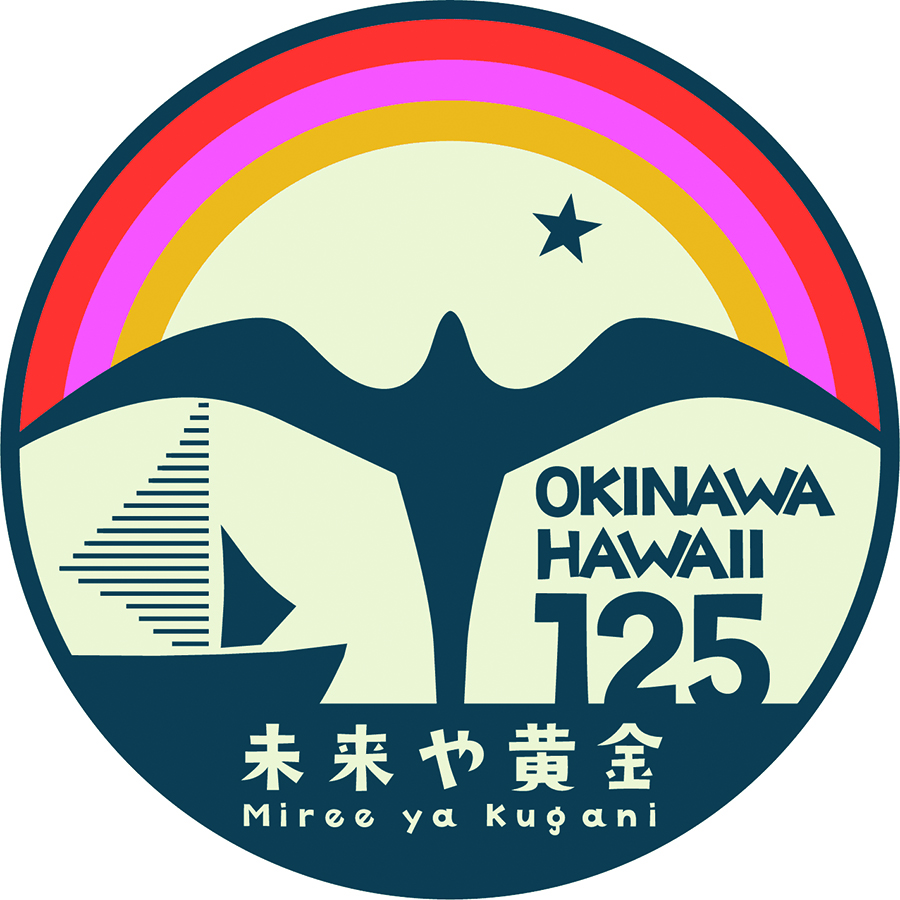
    Leading this year’s milestone celebration is HUOA President Frances Nakachi Kuba, whose theme, Miree Ya Kugani – Bright Hopeful Future, encourages us to honor our past while looking ahead with optimism. Under her leadership, HUOA continues to cultivate cultural programs, strengthen community connections and inspire the next generation of Okinawan leaders. Her vision recognizes that while we celebrate our heritage, we must also ensure its growth and relevance for future generations.

    As we reflect on this historic anniversary, we recognize that our community’s success is built upon the sacrifices and dreams of our ancestors. We honor them by continuing their work — preserving our culture, uplifting our people and embracing new opportunities. The journey of the Okinawan community in Hawai‘i is one of resilience and unity, and with Miree Ya Kugani as our guiding light, we look forward to a future as bright and hopeful as the one our ancestors envisioned. Ippee nifee deebiru — thank you to all who have contributed to this remarkable legacy.

    The celebration of 125 years of Okinawan immigration to Hawai‘i and emigration to the world is not a single event, but a yearlong series of commemorative activities and festivities. Each milestone and program reflects the legacy and enduring contributions of the Okinawan community in Hawai‘i. There will be many opportunities to celebrate this milestone year, and more information can be found at huoa.org/events.

    This year, the Hawaii United Okinawa Association (HUOA) proudly celebrates the 125th anniversary of Okinawan immigration to Hawai‘i — a milestone that not only marks our history, but also acknowledges the resilience, achievements and cultural legacy of our ancestors. Since the arrival of the first 26 Okinawan immigrants in 1900, the community has grown into…