Category: March – April 2024

  • The Gift of Whole-Body Donation

    Whole-body donation is a no-cost process and a profound act of generosity that allows individuals to contribute to the advancement of medical education, research and the improvement of healthcare practices. By donating your body to science, you make an enduring impact on the lives of future generations, enabling medical professionals to deepen their understanding of human anatomy, develop innovative medical procedures, and enhance the quality of patient care.

    Medical students, anatomists, surgeons and other healthcare professionals rely on donated bodies to study human anatomy in detail, providing a hands-on learning experience that textbooks alone cannot match. They gain a comprehensive understanding of anatomical structures, variations and disease processes, enabling them to develop more effective treatment strategies. In addition, researchers can study donated bodies to investigate the causes and progression of diseases, develop new medical technologies, and test novel treatment methods.

    Respect for the wishes of donors is of utmost importance. It is crucial that individuals who choose to donate to science understand the process involved, including the potential uses of their donation and the expected timeline for its utilization. Donor organizations uphold strict ethical guidelines, ensuring the utmost respect, dignity and reverence for donors’ contributions.

    The Donation Process

    Individuals must express their intention to donate and complete the necessary paperwork, including consent forms and medical history documentation. This paperwork can be completed during the life of the individual or following their death by the next of kin or agent. Upon passing, the body is transported to a storage facility. After the body has been utilized for educational or research purposes, it is cremated, and the remains are returned to the family or interred respectfully within 3 to 12 months.

    Whole-body donation serves as a gift to society, advancing medical education and promoting scientific progress. Donations embody the essence of altruism and leaves a lasting legacy, bridging the gap between medical knowledge and compassionate patient care. As we appreciate the selflessness of those who make this choice, we recognize the immeasurable impact they have on the future of healthcare and our collective well-being.


    KE OLA ‘UHANE
    P.O. Box 2831, Honolulu, HI 96803
    808-391-6041 | keolauhane@aeternitas.com
    844-330-7040 (24 hours/day)
    keolauhane.org

    Whole-body donation is a no-cost process and a profound act of generosity that allows individuals to contribute to the advancement of medical education, research and the improvement of healthcare practices.

  • Time for Spring Cleaning?

    The season of spring is often associated with a strong desire to do a deep, thorough cleaning of your home. It’s a global phenomenon practiced in big cities, rural communities and remote villages. Social scientists who have studied the annual ritual believe there are health benefits to decluttering, organizing and cleaning up your home. It seems people who adopt the annual habit experience more energy, a sense of accomplishment, contentment and sleep better.

    Why not extend this positive habit to organizing your health insurance paperwork? But where should you begin? Well, if you see your desk piled up with unopened mail, health cards, medical bills and health plan sale flyers, that’s a great place to start.

    First, sort through the clutter by separating insurance health cards, bills, letters and sales brochures. Look for any official government notices from Social Security or Medicare. Toward the end of each year, both agencies usually send notifications about increases in retirement benefits or changes to Medicare Part B premiums. If a letter looks suspicious or you are unsure about what to keep or what to throw away, call Medicare at 1-800-633-4227. Medicare takes calls 24/7, year-round, except for certain holidays.

    Next, discard old bills, and expired health cards and statements. It is very important to keep track of your current health cards and plan benefit documents. Contact your health plan provider to replace any lost or missing health, drug, dental and/or vision insurance cards. In an emergency, it is critical to have access to the information to avoid delays in care and uncovered claims.

    Lastly, take a moment to pay any outstanding healthcare bills and file them in your secured computer storage or other filing system.

    But if you have already selected a health plan for the year, there is no reason to hold on to sales solicitations. You will get a whole new bundle of sales material in the upcoming fall open enrollment season, so toss out the old as plans may change benefits and costs each year. It’s very easy to accumulate piles of mail during insurance year-end open enrollment periods. But rather than keeping unimportant, irrelevant documents, just shred and toss them (check with Medicare first if you need to).

    Finally, the key takeaway is you are likely to feel more secure, happy and have a sense of accomplishment if you do a little tidying up of your insurance paperwork. Once you are done, you just might enjoy the same benefits as those who practice the ritual of spring cleaning.


    GET2INSURANCE.COM FAMILY OFFICE
    1003 Bishop St., Ste. 2700, Honolulu, HI 96813
    800-226-3660 | martha@get2insurance.com
    Get2insurance.com

    The season of spring is often associated with a strong desire to do a deep, thorough cleaning of your home. It’s a global phenomenon practiced in big cities, rural communities and remote villages. Social scientists who have studied the annual ritual believe there are health benefits to decluttering, organizing and cleaning up your home. It…

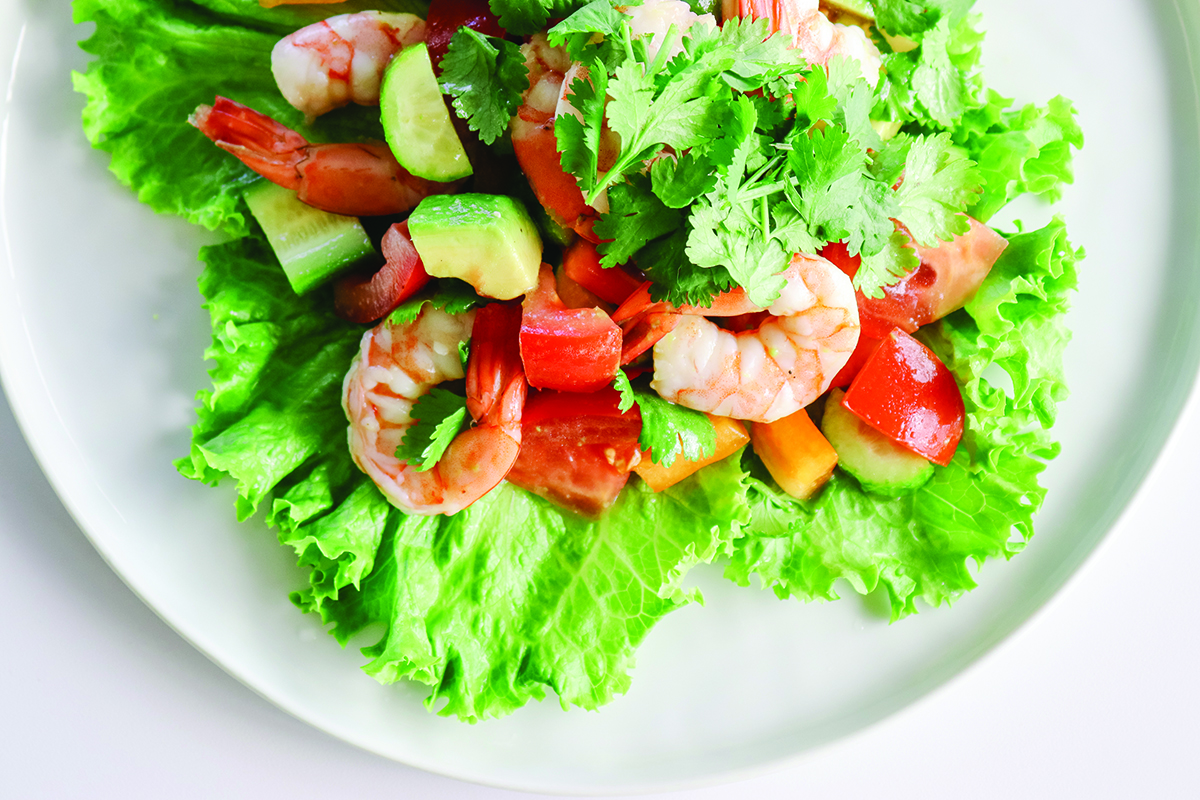
  • Shrimp, Cucumber & Avocado Salad

    A salad made with shrimp, cucumber and avocado is perfect for family gatherings because it’s delicious, hearty and makes even the pickiest of eaters smile. The types of foods we eat directly affect our teeth, so that’s why it’s best to always have a bowl of fresh vegetables on the table. The vegetables in this recipe have many health benefits, including crunchy cucumbers, which will help clean the surfaces of your teeth as you chew. Did you know cilantro has deodorizing properties that may help freshen your breath? Also, don’t forget the health benefits of making your own sugar-free salad dressing for fewer cavity-causing calories. I hope readers enjoy making this healthy, low-carb, high-fiber dish that will help them live well and smile more!

    Ingredients:
    1/2 lb. cooked, peeled shrimp (can be grilled, boiled or sauteed)
    3–4 cucumber, Japanese or Persian preferred
    2 avocados
    2 tomatoes
    1/2 red onion (and/or bell peppers)
    1 fresh lime, juiced
    3–4 cilantro, chopped
    1/4 cup olive oil
    1/4 cup sushi vinegar
    lettuce (Mānoa or butter)
    salt & pepper to taste

    Directions:
    1. Cube the avocados and sprinkle them with a bit of the lime juice. Set aside in large bowl.
    2. Cut the cucumber, tomato and onion into bite-sized pieces. Add to the cubed avocado.
    3. Add grilled, boiled or sauteed shrimp to the bowl of veggies. Cut them in half if preferred.
    4. Add chopped cilantro to taste.
    5. For the dressing, mix the olive oil, sushi vinegar and lime juice in a small bowl. Blend well. Add salt and pepper to taste.
    6. Pour desired amount over veggie and shrimp mix. Toss lightly.
    7. Serve the veggie-shrimp mixture over a bed of lettuce. Serves 2–4.


    Do you have a favorite recipe and story to share? For consideration in the next issue, include a photo and mail them to Generations Recipe, PO Box 4213, Honolulu, HI 96812, or email them to Cynthia@generations808.com.

    A salad made with shrimp, cucumber and avocado is perfect for family gatherings because it’s delicious, hearty and makes even the pickiest of eaters smile.

  • Before Purchasing a Subscription Service…

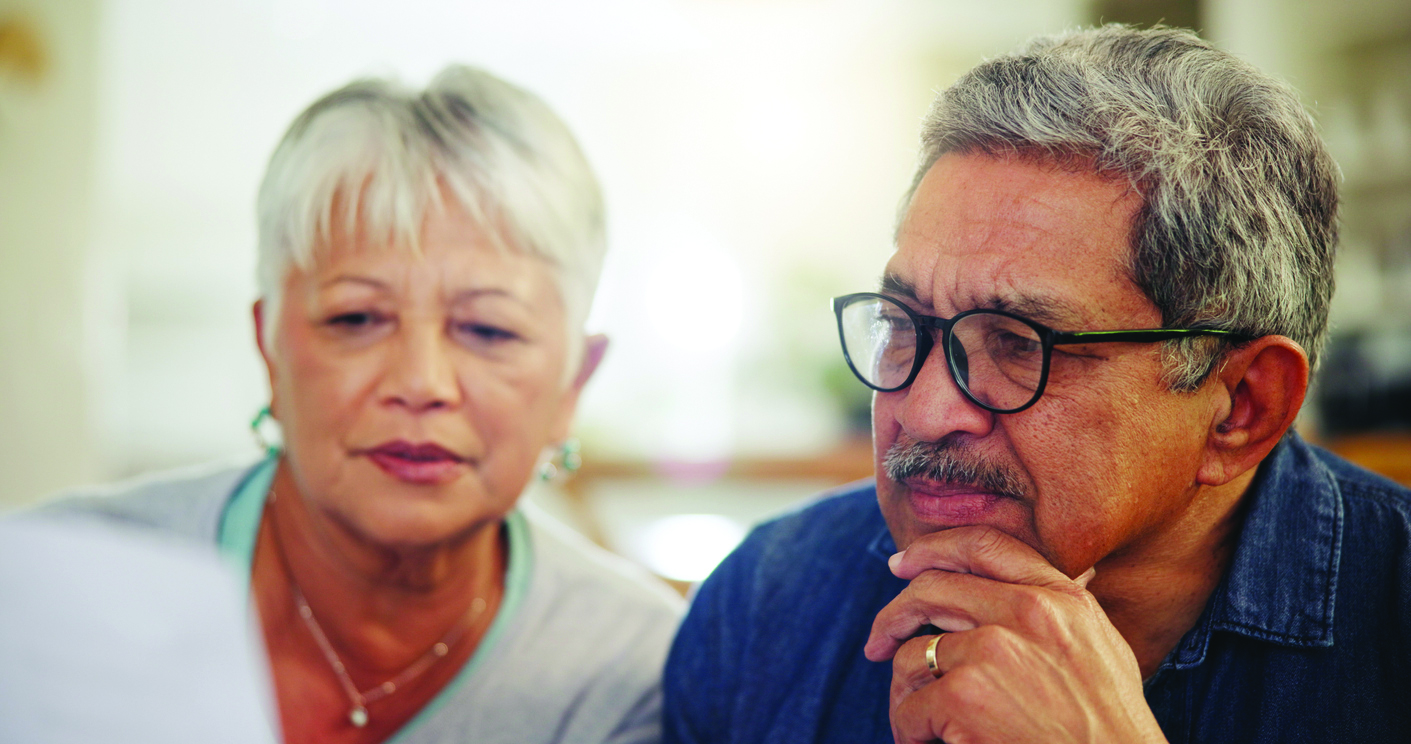
    Senior couple, bills and reading documents in home for budget, planning financial assets and investment. Face of man, woman and thinking of paperwork, taxes or retirement savings for insurance policyThere are a few things you need to know before purchasing a subscription service. Tips to ensure you’re making a wise investment:

    1. Do your research. Before signing up, research the company by checking their social media accounts, consumer reviews and business ratings on BBB.org. Look for complaints or scams.
    2. Investigate free trials. Find out how long the trial period lasts, read the terms of the agreement, and learn how and when to cancel.
    3. Understand auto-renewals. Companies must send you a renewal notice ahead of time, and you should always check your bank and credit card statements to ensure the cost is what you expect.
    4. Know how to stop a subscription. There are three ways to stop automatic payments from your bank account: contact the company to revoke payment authorization, contact your bank or credit union, or give your bank a stop payment order.
    5. Cancel unwanted subscriptions. By canceling early, you’ll avoid paying for an extra subscription term.
    6. Watch out for scams. Scammers may offer you free trials or deals hoping you’ll sign up with your credit card number. But if it seems too good to be true, it probably is.


    There are a few things you need to know before purchasing a subscription service. Tips to ensure you’re making a wise investment:

  • Grieving the Loss of a Pet

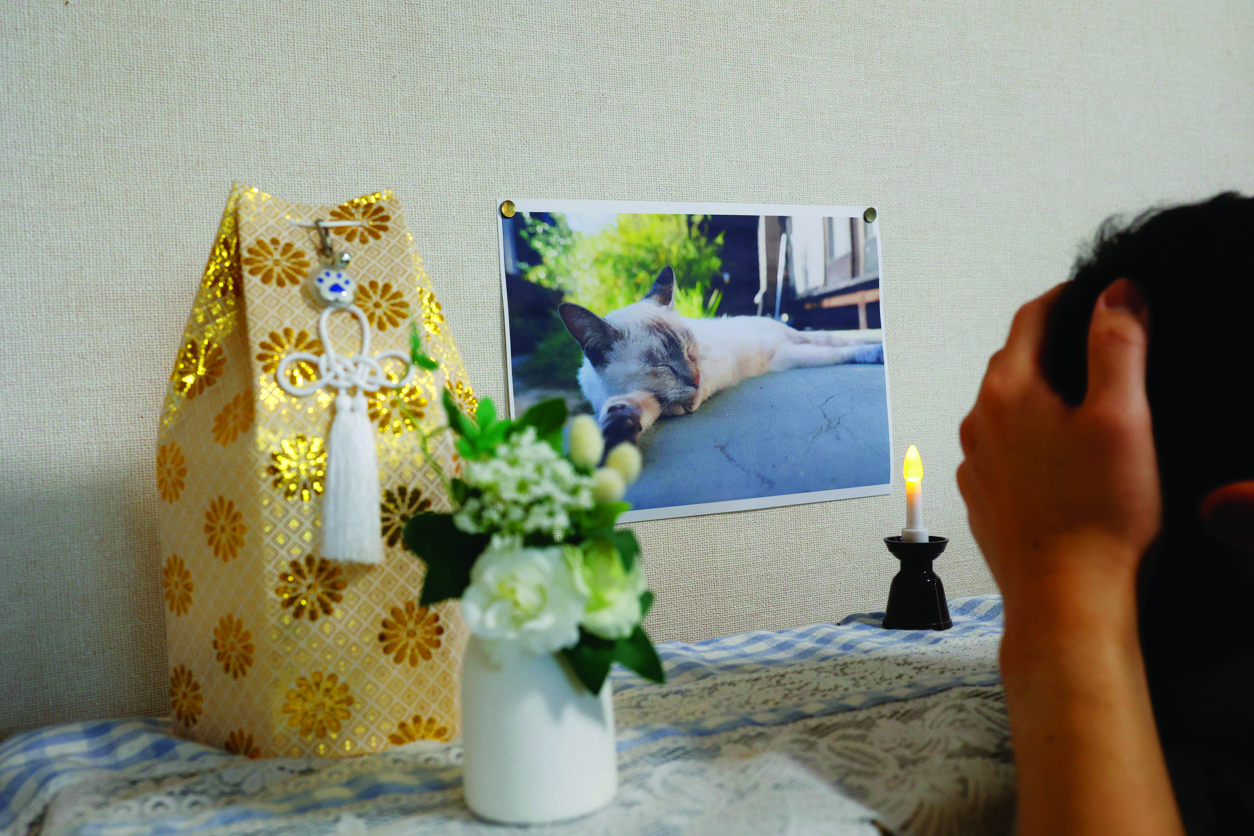
    Remains and photographs of a deceased domestic cat. Grief of losing a pet.If you had a beloved pet as a child, you may have been overwhelmed with feelings of sadness and grief after he or she passed away. For many of us, this was our first experience with death. And as we age, we will most likely experience additional losses of our furry friends. Each and every time is sad and difficult.

    Our pets bring us joy and laughter. They bring out the best in us, encouraging our playful side. They love us unconditionally and do not judge us or criticize what we say or do. They are always happy to see us and they are present in a way that most people are not. They love our affection and reciprocate in kind with purring sounds or wagging tails. We can be uninhibited around them and tell them our most private thoughts. Like our human children, they depend on us and fill our homes with an abundance of love.

    So, when our pet dies, a relationship that once brought us pure love and joy now causes us great sorrow. A precious part of us is now gone.

    The decision to prevent your pet from experiencing the pain of dying through euthanasia, giving them instead a gentle, peaceful goodbye, sometimes comes with feelings of guilt, adding to our misery. Did I wait long enough? Did I wait too long with too much suffering? Did I make this difficult decision for my pet or for myself?

    It is common that we don’t talk about losing our pet. We may think others won’t understand our deep sorrow and grief, so we don’t share. We may think it is socially unacceptable to grieve an animal so deeply. A name for this is “disenfranchised grief.” It is like other losses we don’t share with others — for example, the loss of an unborn child, a job or a divorce. So, we suffer privately — in silence.

    The loss of your pet is undeniably painful and the grief you feel is valid and unique to your own experience and your special relationship. But it is helpful to talk with others who understand and can help you along your journey as you grieve, while allowing you space for your sadness. It is healthy and normal to honor your relationship with your pet by expressing that special love — even through your tears.


    BEREAVEMENT NETWORK OF HAWAI‘I
    Facilitated by KOKUA MAU (Nonprofit)
    808-585-9977 | kokuamau.org
    kokuamau.org/grief-and-bereavement
    Learn more about grief and the healing process: Help For The Bereaved — The Healing Journey (https://kokuamau.org/wp-content/uploads/CtrOnAging-Booklet-5-REV_6-30-11.pdf).
    PET BEREAVEMENT RESOURCES:
    – Hawaiian Humane Society
    hawaiianhumane.org/pet-loss-support-group
    – Arms of Aloha
    armsofaloha.com/grief-support
    – Why everyone Should Talk About Pet Death, E.B. Bartels
    ted.com/talks/e_b_bartels_why_everyone_should_talk_about_pet_death
    – Pet Loss Grief Explained by Sarah Hoggan
    youtube.com/watch?v=TkJGhQANjZo
    – The Association for Pet Loss and Bereavement
    aplb.org

    If you had a beloved pet as a child, you may have been overwhelmed with feelings of sadness and grief after he or she passed away. For many of us, this was our first experience with death. And as we age, we will most likely experience additional losses of our furry friends. Each and every…

  • It’s Time to Have Some FUN!

    Think about it… you worked many, many years, sacrificing your desire to do something different; something creative; something for yourself. Now you are retired and it is go time! It’s time to do something fun! What could be more enjoyable than going back to school to express your creativity through art?

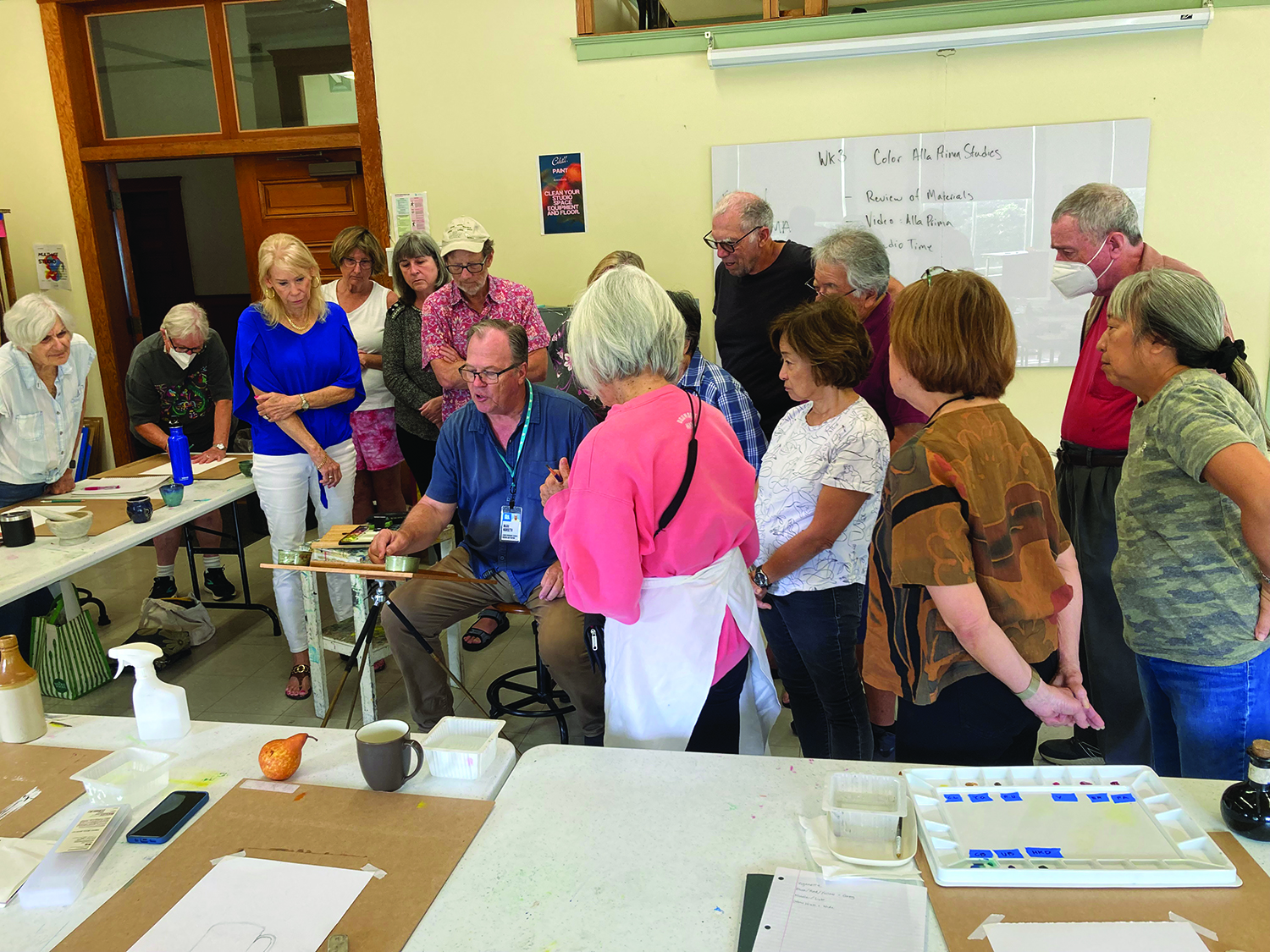
    Classes for individuals age 55-plus are being held at the Honolulu Museum of Art (HoMA) at 1111 Victoria St. for just a couple hours a week. HoMA’s website says, “Art for Life classes are designed to unleash your creativity and self-expression and offer opportunities for new connections.”

    I had the great pleasure of sitting in on the Art of Life: Watercolor class for beginners, observing the gathering of eager, energetic and talented students. I was very impressed as I walked around the room and saw pencil drawings of objects that students brought from home.

    Everyone seemed to enjoy immersing themselves in the creative process. And the instructor, Mark Norseth, made it all very fun and interactive.

    Other classes that HoMA has available for seniors in Art for Life:
    • Mixed Media and Collage (all levels)
    • Ceramic Handbuilding (all levels)
    • Shibori Creations (all levels)

    Don’t they sound inviting?

    Spring 2024 registration is open and will close at the beginning of April, so sign up soon! The eight-week classes start on April 19. Tuition includes free parking and museum admission.

    View a complete list of class offerings at honolulumuseum.org/art-for-life.

    Prospective students can register online or in person at the art school front desk between 9am and 6pm, Thursday through Saturday (see below).


    HONOLULU MUSEUM OF ART SCHOOL
    1111 Victoria St., Honolulu, HI 96814
    808-532-8741 | artschool@honolulumuseum.org
    honolulumuseum.org/adult-classes

    Think about it… you worked many, many years, sacrificing your desire to do something different; something creative; something for yourself. Now you are retired and it is go time! It’s time to do something fun! What could be more enjoyable than going back to school to express your creativity through art?

  • Playing Music for Fun & Friendship

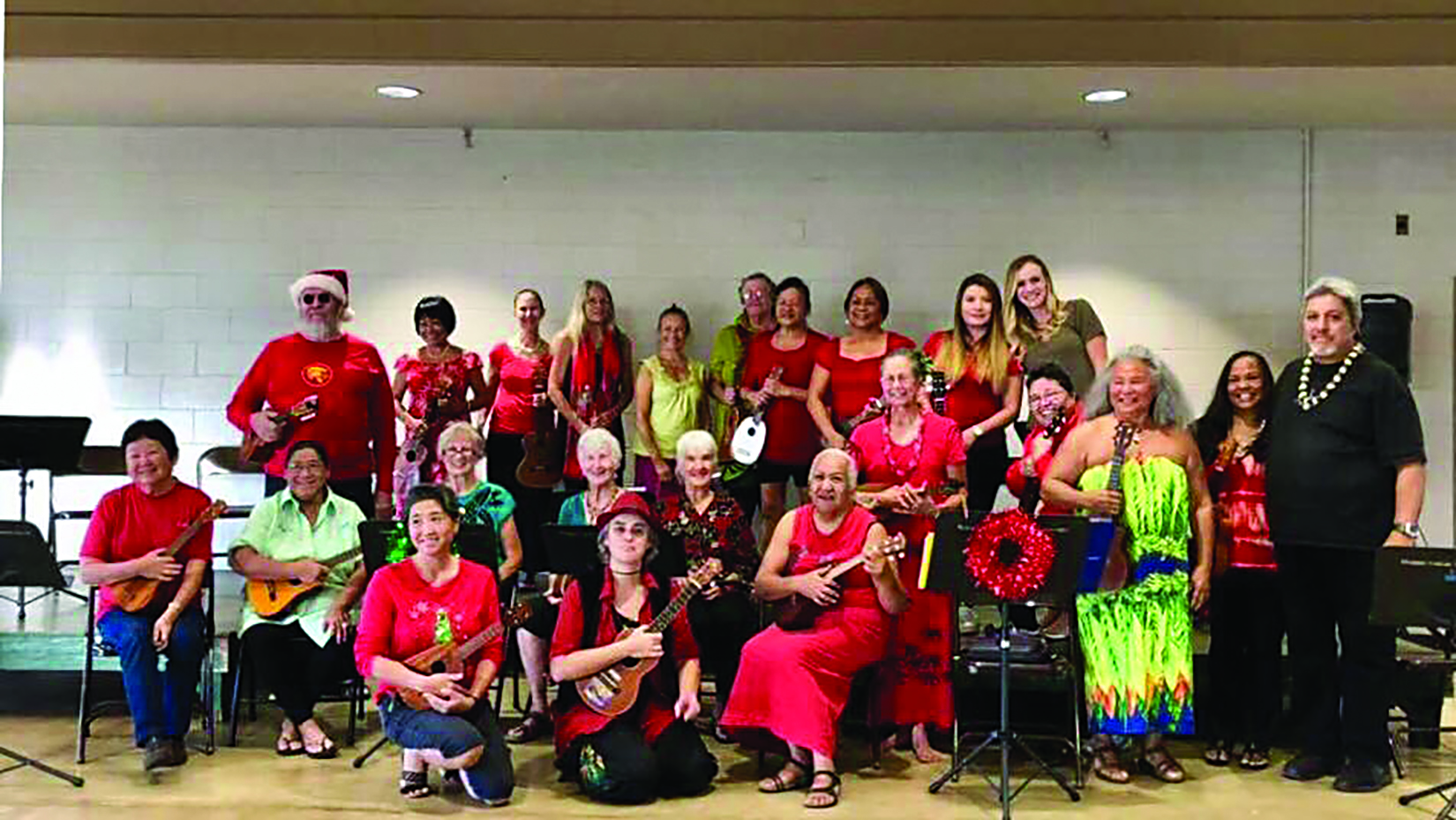
    2017 Maui County ‘ukulele classChristmas recital.
    2017 Maui County ‘ukulele class Christmas recital.

    Back in 2017, just after retiring to Moloka‘i, I stumbled upon a group of kūpuna having a lot of fun. Seated around tables at the Coffees of Hawaii plantation store, they were playing ‘ukulele and singing, much to the delight of onlookers. One gentleman in the audience on a group outing from the local retirement home leapt up and picked a partner before dancing to the tune.

    So, when the Maui County Department of Parks & Recreation began offering free ‘ukulele classes for kūpuna, I signed up. It was one of the best things I ever did! Although the county classes shut down at the beginning of the COVID lockdowns, our kumu, Kaleo Bishaw, continues to this day to offer lessons to various groups of kūpuna — big and small — across the island. Our most recent recital at Christmastime featured around 60 players, including some of his keiki students.

    These days, I’m in the advanced class at the Mālama Molokai Wellness Center. It’s a small space and a small class, which is something my fellow student, Annette English, really appreciates. “It’s good for learning new techniques and I like the challenge,” she says. Learning how lyrics and music fit together has given her the confidence to begin putting the poetry one of her girls writes to music. In class, we learn to tune our ears and wean ourselves off playing from song sheets so we can play any number we hear and like — maybe even join in an informal jam session, known in Hawai‘i as a kanikapila.

    2024 Friendsfrom Kanikapila Group Therapy jammin’
at home. (Courtesy Paula Scott)
    2024 Friends from Kanikapila Group Therapy jammin’ at home. (Courtesy Paula Scott)

    The Kanikapila Group Therapy players, who nowadays meet at the Kualapu‘u Recreation Center, are continuing those sessions I first saw back in 2017. Everyone is invited, even if they don’t play ‘ukulele. Beginners are welcome: “We bomb together, and we play well together. No judgment!” says Paula Scott. They play from song sheets provided by the group leader, but maintain the spirit of kanikapila, which is simply to have fun in enjoyable company.

    Research has shown that learning an instrument after the age of 60 has many benefits. Improved information retention is one Paula has noticed; for others, it might be manual dexterity. Playing ‘ukulele isn’t physically demanding and may even reduce stress and blood pressure. For everyone, making friends and socializing are proven to benefit emotional health and wellbeing.

    ‘Ukulele are easy to transport, easy to learn and they’re affordable. Plus, you’ll be participating in one of the aspects of Hawai‘i that makes living here special . Music brings us all together. So, what are you waiting for! County parks and recreation departments on all islands offer kūpuna ‘ukulele classes. They’re also usually offered at senior centers. Don’t miss out on the fun that performing with others can bring!


    Molokai Kanikapila Group Therapy:
    facebook.com/groups/1243839076541930
    Ukulele Underground’s play-along videos:
    youtube.com/@ukuleleunderground
    Ukulele Underground’s play-along for “Aloha ‘Oe:”
    youtube.com/watch?v=ONFMei_PpNQ

    Back in 2017, just after retiring to Moloka‘i, I stumbled upon a group of kūpuna having a lot of fun. Seated around tables at the Coffees of Hawaii plantation store, they were playing ‘ukulele and singing, much to the delight of onlookers. One gentleman in the audience on a group outing from the local retirement…

  • Maui County’s Hub of Senior Activity

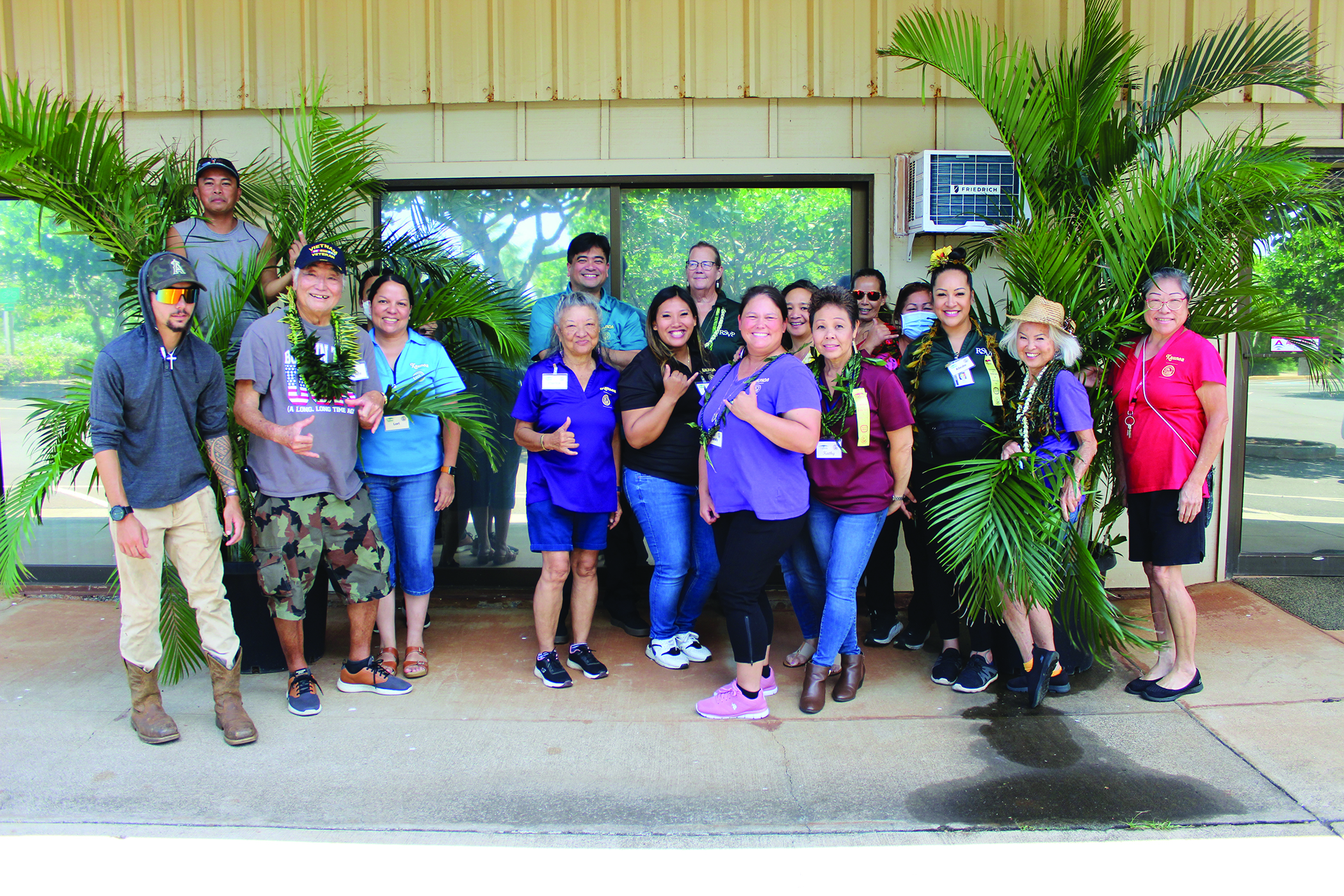
    A division of the County of Maui’s Department of Housing and Human Concerns, Kaunoa Senior Services provides a wide range of exciting and exceptional services, activities and programs in Maui County for a new generation of seniors with changing and diverse needs and interests.

    Kaunoa Senior Services provides a wide spectrum of programs and services for both independent, active seniors and the frail, homebound seniors of Maui County to enable and support them to remain in their homes as they age and experience their retirement years as their best years.

    Of the many services and organizations in Maui County, Kaunoa Senior Center in Pa‘ia serves as a central hub of activity for senior programs and activities. The center provides opportunities for seniors to learn and grow through five ongoing, countywide programs:

    • Leisure/Wellness Program
    • Retired & Senior Volunteer Program (RSVP)
    • Congregate Nutrition Program
    • Assisted Transportation Program
    • Meals on Wheels Program

    All five of Kaunoa’s programs are available on Lāna‘i and Molokai, as well as Maui.

    Leisure/Wellness Program

    This program offers classes and activities for everyone age 55 and better to learn new ideas, and master new skills that promote lifelong learning, healthy aging, whole-person wellness and personal growth. Many classes are available online and in-person.

    Kaunoa’s bimonthly newsletter includes class schedules and describes a varied selection of arts and crafts, cultural, exercise and wellness, performing arts, and other interesting classes and seminars.

    The newsletter is available via email or postal mail at mauicounty.gov/thebestyears or by calling 808-270-7308, opt. 3.

    Retired & Senior Volunteer Program

    The RSVP program provides opportunities that allow the community to continue to benefit from the retired senior volunteer’s expertise and services while offering
    avenues for individuals 55 and better to remain active in community life. RSVP strives to seek out volunteer opportunities at registered, nonprofit agencies and organizations based on volunteers’ personal interests and skills. RSVP is partially federally funded through AmeriCorps Seniors.

    A monthly newsletter with current and trending volunteer opportunities is offered to registered volunteers via email at KaunoaRSVP@mauicounty.gov or by calling 808-270-7986.

    Congregate Nutrition Program

    This dining program offers a nutritionally balanced meal in an atmosphere that encourages rewarding experiences and socialization for seniors ages 60 and up, and offers a variety of arts, crafts, health, wellness, exercise and nutrition education segments. Meal centers are located throughout Maui County, and are known as places where seniors can gather for “more than just a meal.”

    For a complete list of dining centers and more information, call 808-270-7306.

    Assisted Transportation Program

    This program provides one-on-one escorted transportation services for frail seniors who are age 60 and better with physical and/or mental limitations in order for them to be able to access essential daily living activities, such as medical appointments and other types of health-related visits, shopping for necessities, adult day care, adult day health, social services agencies, banking, etc. This allows frail elderly people to maintain their independent living capacity.

    For more information on qualifying criteria and service areas, call 808-270-7310.

    Meals on Wheels Program

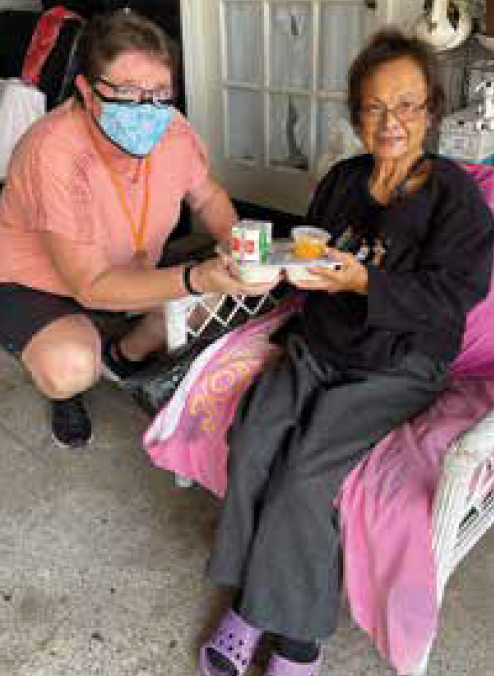
    Meals on Wheels delivers hot, nutritious, ready-to-eat midday meals to seniors who are age 60 and better, homebound and unable to manage their own meal preparation, helping them to continue living independently in their own homes. An important aspect of Meals on Wheels is the face-to-face safety check. These safety checks help put the family’s minds at ease.

    For more information on qualifying criteria and service areas, call 808-270-7321.


    KAUNOA SENIOR SERVICES
    A division of the County of Maui’s Department of Housing and Human Concerns
    KAUNOA SENIOR CENTER
    401 Alakapa Place, Paia, HI 96779
    808-270-7308, opt. 3
    Molokai Senior Services: 808-553-5402
    Lanai Senior C A enter: 808-565-6282


    A division of the County of Maui’s Department of Housing and Human Concerns, Kaunoa Senior Services provides a wide range of exciting and exceptional services, activities and programs in Maui County for a new generation of seniors with changing and diverse needs and interests.

  • Let the Games Begin!

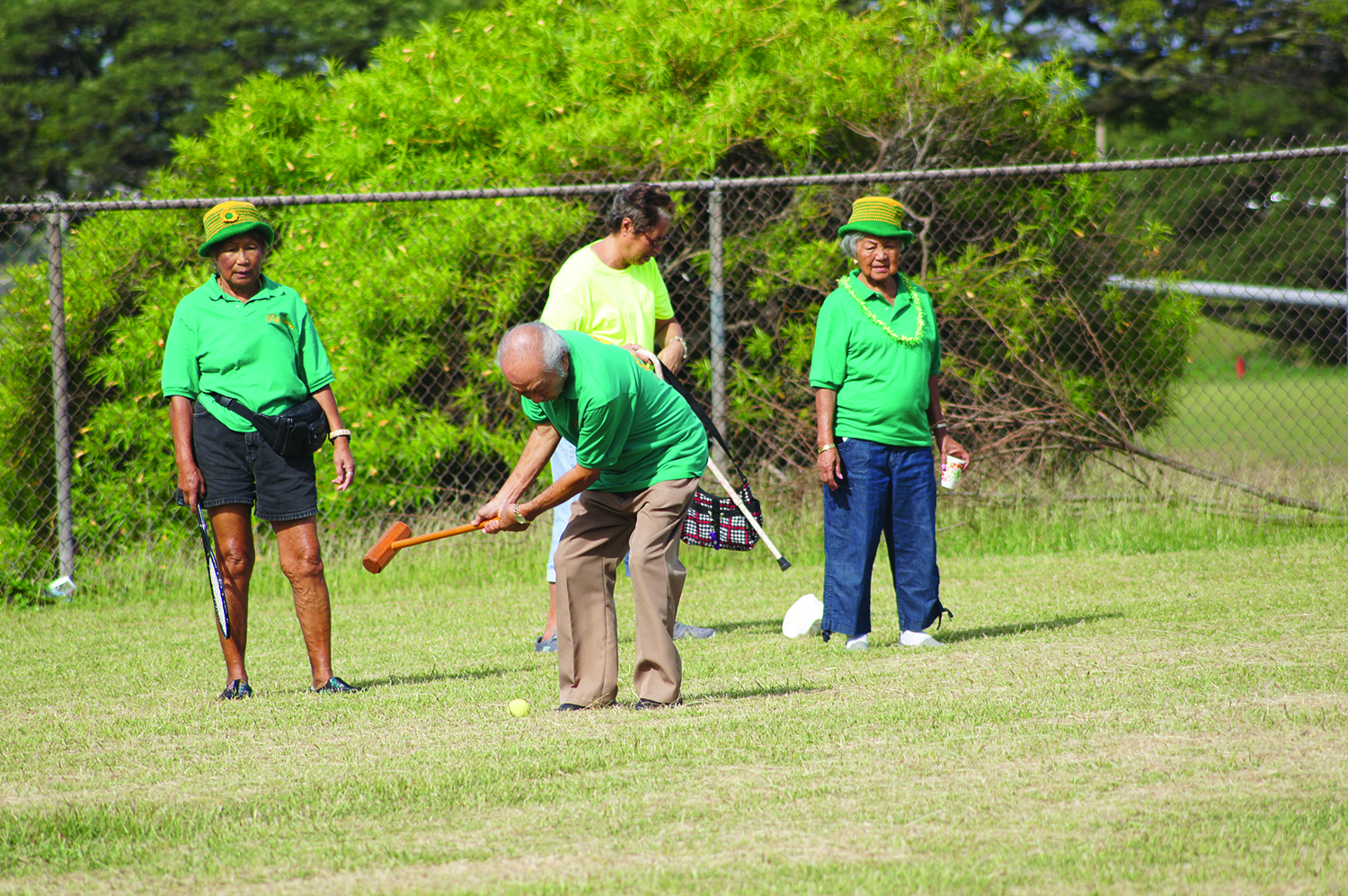
    Competition at the annual Senior Classic Games is pretty brisk between the 32 O‘ahu senior clubs that participate.
    Competition at the annual Senior Classic Games is pretty brisk between the 32 O‘ahu senior clubs that participate.

    Since the creation of the Senior Classic Games in 1980 by Herbert Yasuhara, the City and County of Honolulu Department of Parks and Recreation (DPR) senior clubs have held games in March at the Halawa District Park. The clubs practiced to compete in peg ball, lawn pin ball, nine gates and tunnel vision games. They have two age divisions: 69 and under, and the Masters Division, which is 70 and over. The Masters Division team entries, with approximately 200 to 275 participants, have doubled in the past few years. In addition to exercise, this event enables island-wide social interaction among seniors.

    In 2012, Generations Magazine became a major sponsor of the event by purchasing medals for the winners. The competition is pretty brisk between the 32 senior clubs that come from all parts of O‘ahu. The winners really love getting their medals in front of the whole crowd of participants.

    To join a senior club, individuals age 55-plus can go down to their local Honolulu City and County District Park or community park and inquire with the director.


    CITY & COUNTY OF HONOLULU, DEPT. OF PARKS & REC.
    1000 Ulu‘ōhi‘a St., Ste. 309, Kapolei, HI 96707
    808-768-3030 | ssantiago@honolulu.gov
    honolulu.gov/parks/program/senior-citizen-program

    Since the creation of the Senior Classic Games in 1980 by Herbert Yasuhara, the City and County of Honolulu Department of Parks and Recreation (DPR) senior clubs have held games in March at the Halawa District Park.

  • Savings Accounts for the Grandchildren

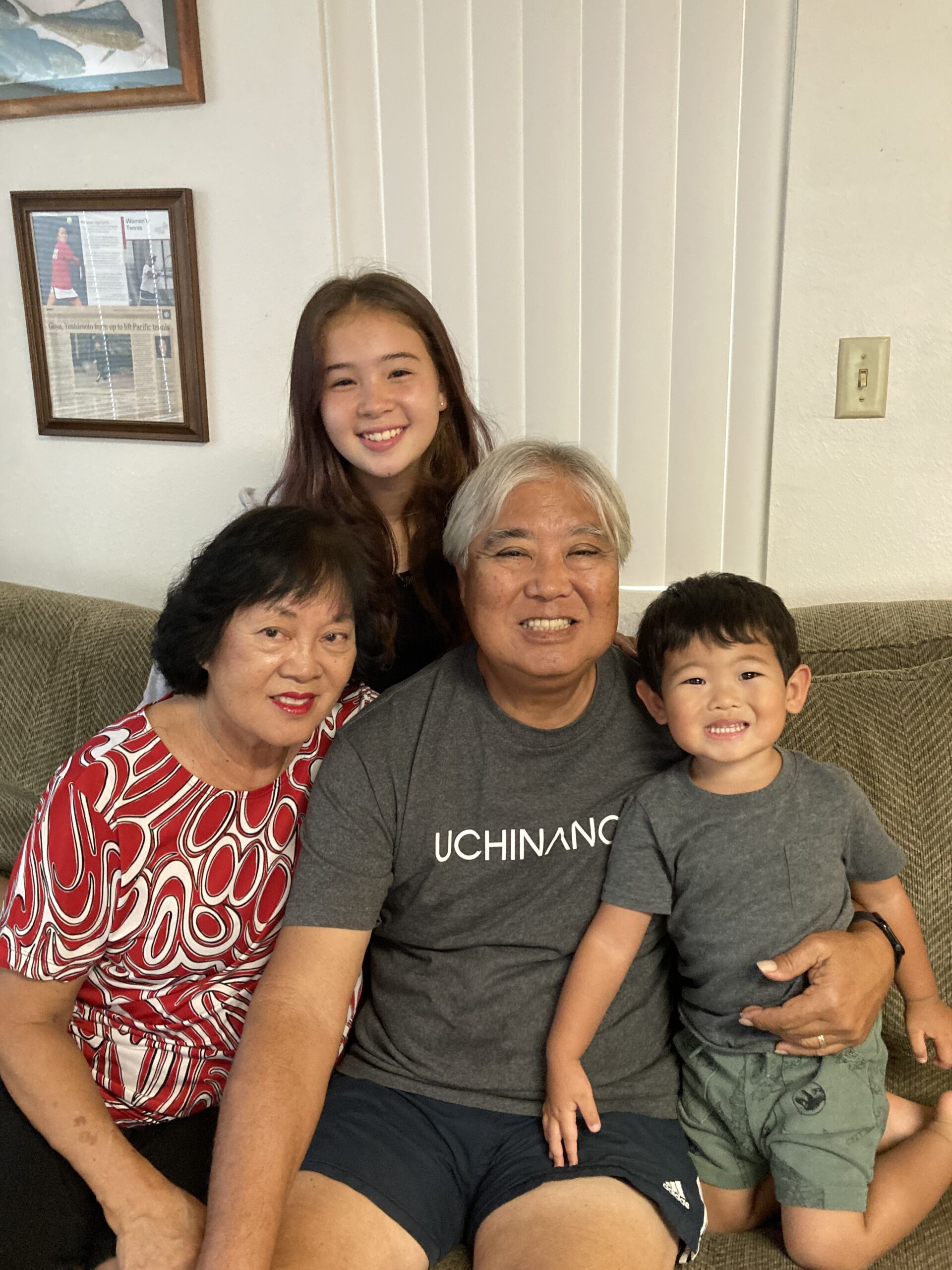
    Sherry & Cliff with grandchildren Alexis (12) and Tanner (3)
    Sherry & Cliff with grandchildren Alexis (12) and Tanner (3)

    I’m not a financial planner, banker or even good with my own finances, but I know that this simple gesture for our grandchildren will be our legacy. Like many Generations readers, I am a tutu and so fortunate to have a beautiful granddaughter and handsome grandson. I can remember each time that our two daughters announced their pregnancies to my husband Cliff and me. We were so happy that our first grandchild was to be a girl in 2011 and we were excited to be told that we would have a grandson in 2021.

    The first thing that I did after being told I was going to be a tutu was to go down to my bank to open a savings account and automatically have $100 deposited for our granddaughter. Our grandson’s savings account was also opened right after Cliff was gifted a baby teether on Father’s Day.

    It’s not a lot of money to leave for them, but since we’re not “real gamblers,” we know they will get 100% of our monies with a small amount of interest.

    Opening a savings account is something that I could never have done when I was younger. Who had money to put aside in a savings account when you have a mortgage and three children in private school? Not Cliff and me, for sure; however, in his retirement years (I’m not retiring soon), we have made it a point to put money aside for our grandchildren.


    If you have a story you’d like to share or know of someone celebrating their centenarian year, contact Sherry Goya at 808-722-8487 or email sgoyallc@aol.com.

    I’m not a financial planner, banker or even good with my own finances, but I know that this simple gesture for our grandchildren will be our legacy.

  • Sing Along With Sandy & Gordon

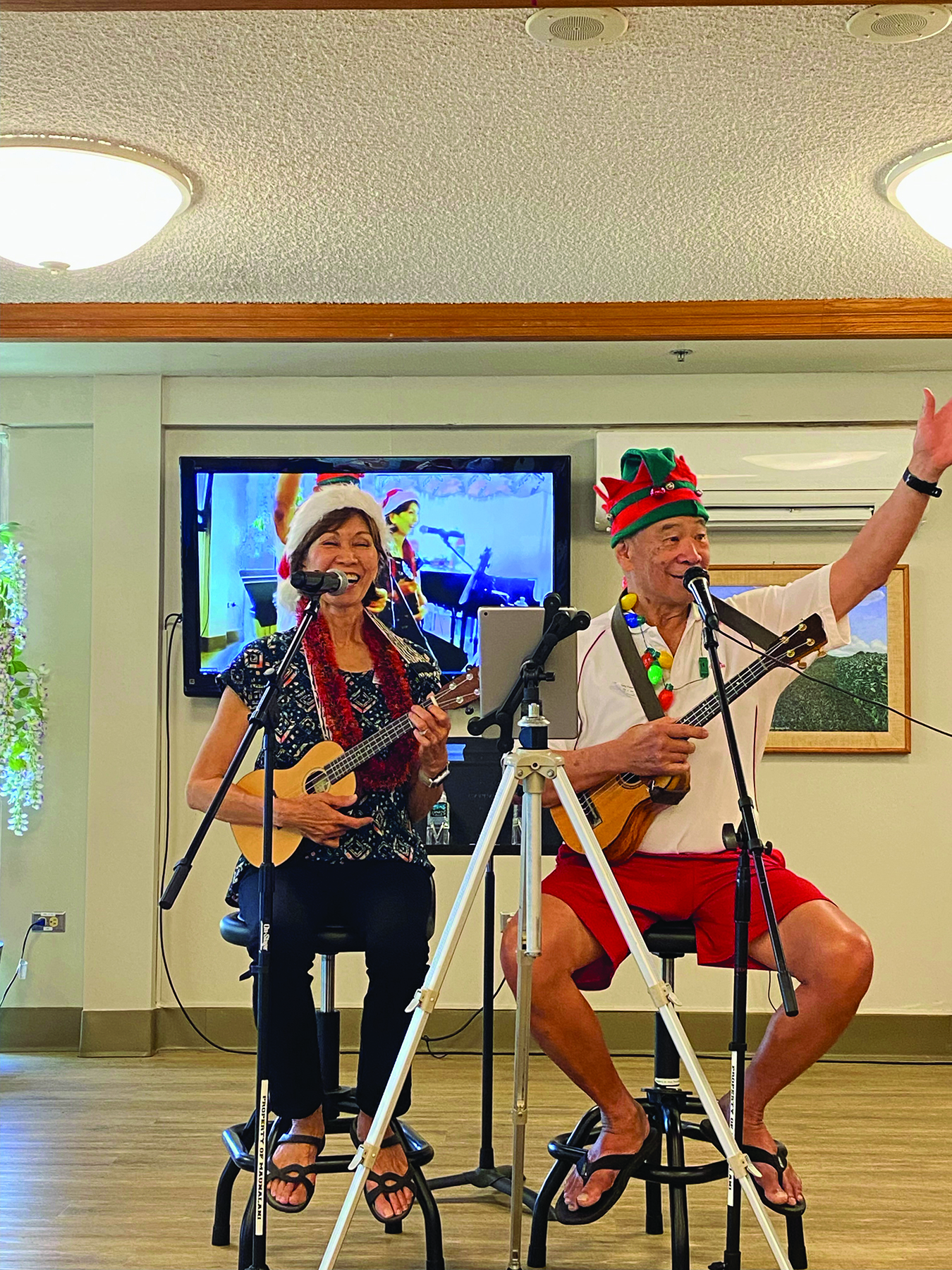
    All around the world, music surrounds us. In Hawai‘i, from small kid time, we gathered to play ‘ukulele and sing and listen to the songs of our multicultural community for entertainment and relaxation.

    Gordon and Sandy are two local musicians who enjoy sharing their passion for music. They are not professional musicians. “We are just amateurs,” Gordon says.

    They bring their music to care homes, assisted living facilities and nursing homes, and say they experience many touching moments with Hawai‘i’s elder community.

    When a daughter saw her kūpuna singing along with Gordon and Sandy in a care facility, she cried with joy to see how much her mother was enjoying the music.

    Moments like that inspire Gordon and Sandy to continue traveling to care facilities several days a week, week after week, to share their music with kūpuna for about an hour out of the day.

    Gordon and Sandy describe themselves as “just ordinary local people.” Gordon served our local community for 35 years as a Honolulu Police Department officer.  Sandy worked for 20 years as an accounting manager. They both attended ‘ukulele classes, and with what they learned, are now a traveling music duo with their ‘ukulele, music stands, microphones, sound system and repertoire of Hawaiian music classics.

    The dynamic couple also enhances the connection between the sound, lyrics and kūpuna by researching the roots of the songs they perform — their local history and origins. Singing songs about the manapua man, and towns and neighborhoods of the past while interjecting Hawaiian Pidgin words we don’t hear very often any longer connects a kupuna’s brain to the past, bringing about fond memories and producing a soothing feeling as relaxation kicks in, making space for sweet reminiscing of days gone by.

    As community volunteers, Gordon and Sandy say, “If we can do it, others can do it, too. Our lives are so enriched being with kūpuna. What we do is rewarding and easy.”

    So the next time you listen to music, think of Gordon and Sandy sharing their passion and talents, and consider becoming a volunteer and community steward in  mālama to others. Think of what you can do to brighten the day of your community’s kūpuna using your own talents, passions and special skill sets.


    Feel free to contact me with questions about caregiving.
    Calvin Hara | 916-812-5524 | cmhara@comcast.net


    All around the world, music surrounds us. In Hawai‘i, from small kid time, we gathered to play ‘ukulele and sing and listen to the songs of our multicultural community for entertainment and relaxation. Gordon and Sandy are two local musicians who enjoy sharing their passion for music. They are not professional musicians. “We are just…

  • AARP Honors Outstanding Volunteers

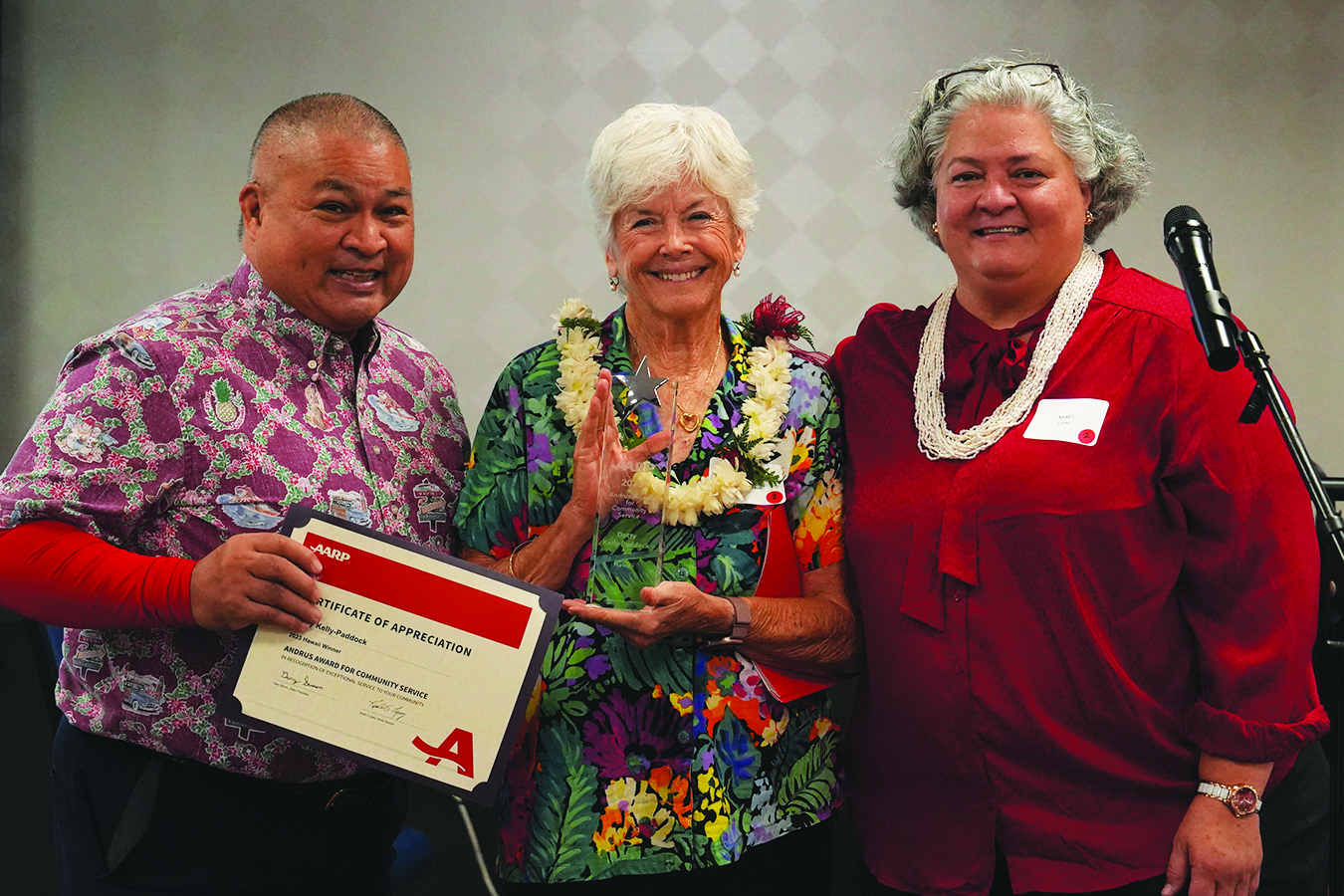
    (L–R) AARP Hawai‘i State President Gary Simon,Hui ‘O Hau‘ula President Dotty Kelly-Paddock and AARP Hawai‘i State Director Keali‘i Lopez. PC: Paul Nakatani/AARP Hawai`i
    (L–R) AARP Hawai‘i State President Gary Simon, Hui ‘O Hau‘ula President Dotty Kelly-Paddock and AARP Hawai‘i State Director Keali‘i Lopez. PC: Paul Nakatani/AARP Hawai`i

    AARP Founder Ethel Percy Andrus lived her life to serve others. In her work life, she served students and her community as a principal at Lincoln High School in California. She retired to take care of her mother and after her mother recovered, Ethel founded the National Retired Teachers Association at age 63 to advocate for the welfare of retired teachers. Her service soon evolved into advocating for all older Americans by starting AARP, the nonprofit organization for people 50 and older. “It is only in the giving of oneself to others that we truly live,” said Ethel.

    In the spirit of Ethel, AARP state offices recognize outstanding older volunteers across the country each year with its most prestigious state honor — the Andrus Award for Community Service.

    The Hawai‘i recipient is Dotty Kelly-Paddock, the volunteer executive director of Hui ‘O Hau‘ula and the president of Hau‘ula Community Association. Dotty began  volunteering at age 62 and that desire to serve her community also led to her election to the Ko‘olauloa Neighborhood Board.

    Instead of letting the vacant Hau‘ula Satellite City Hall building remain empty, Dotty petitioned the city to reopen it and created the Hui O Hau‘ula 501c3 nonprofit to run it. It’s now the Hau‘ula Community Center that serves residents of Ko‘olauloa District with classes for seniors and food distribution programs for the needy. The center also serves as a partnership hub for over 20 additional nonprofit programs that serve the Ko‘olauloa District community.

    When she learned there was no plan for Hau‘ula to survive a tsunami or major storm, Dotty organized her neighbors to create a plan to make Hau‘ula disaster resilient. She is leading the effort to find funding to build a shelter — a resilience hub on high ground in the back of the valley. It will be the only disaster shelter for 25 miles around the Windward North Shore — a crucial need since it is likely that Kamehameha Highway may be rendered impassable.

    “People who have a lifetime of experience should say what they know,” Dotty said. “Age is helpful. People will listen to a person who has a lot of experience because they know what they’re talking about.”

    Her work continues to reflect AARP’s vision and mission, and inspire other volunteers.


    AARP HAWAI‘I (Nonprofit)
    1001 Bishop St., Ste. 625, Honolulu, HI 96813
    808-545-6000 | hiaarp@aarp.org | aarp.org/hi
    facebook.com/aarphawaii

    AARP Founder Ethel Percy Andrus lived her life to serve others. In her work life, she served students and her community as a principal at Lincoln High School in California. She retired to take care of her mother and after her mother recovered, Ethel founded the National Retired Teachers Association at age 63 to advocate…