Older adults typically want to live in their own homes for as long as possible. A 2012 report from AARP showed that only 65 percent of persons aged 60-70 and only 43 percent of those aged 70 and older find it very easy to live independently. Besides making physical environments age-friendly, what needs to happen to enable older adults to safely age in place?
Optimize existing communities
Some communities with high concentrations of older adults were designed from scratch to address their needs. However, most age-dense neighborhoods or apartments/condominiums were not; residents have simply grown older and aged in place. The density of older residents in some could allow economies of scale and also ease the provision of in-home services for providers.
Natural helping networks
The strength of grassroots Aging in Place models or strategies relies on the potential for “natural helping networks” to develop and provide informal support to complement more formal health and social services. Informal support from peers typically entails help with “small services,” such as checking up on a neighbor, initiating a “buddy system,” keeping each other updated on local events, providing companionship, or even developing a volunteer corps of peers to address locally defined needs. Engaging in natural helping networks can transform an older adult from a “passive service recipient” to an active contributor to the wellbeing of neighbors and the community.
Natural support systems
For Aging in Place strategies to flourish, we need to develop ways to foster natural support systems in age-dense neighborhoods and apartments or condominiums, and to develop partnerships among the stakeholders of those settings. Such partnerships would include older residents, their peers, volunteers, family, friends, service providers, and building owners and managers. A number of residential managers of local public housing and condominiums in Hawai‘i are taking important first steps by attending brief workshops on various aspects of aging, thus learning to provide more supportive environments for their residents who are aging in place.
A little extra help is often all that is needed for an older resident to age in place. Aging in Place models advocate the use of local peer networks to provide that extra help, to be supplemented by more extensive formal in-home services as needed. Such a community-based approach could result in an affordable and client-based system to keep older persons in their homes and avoid costly and undesired relocations.
Grassroots social support models
Grassroots social models of support such as the Village Model, Cohousing, and Age-Friendly Cities and Communities represent some of the latest efforts to strengthen social environments to allow older adults to live in their homes for as long as desired.
Older adults typically want to live in their own homes for as long as possible. A 2012 report from AARP showed that only 65 percent of persons aged 60-70 and only 43 percent of those aged 70 and older find it very easy to live independently. Besides making physical environments age-friendly, what needs to happen…
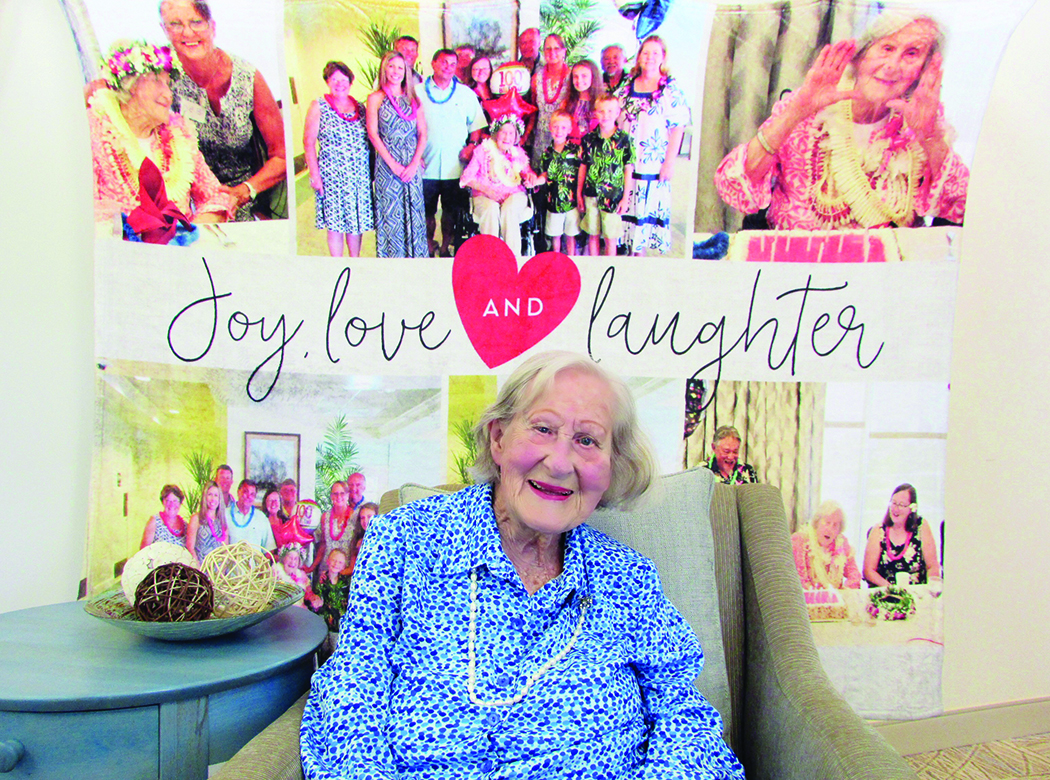
Turning 100 is no small feat, but Mrs. Lenora Cho made it look easy when she officially became a centenarian in 2017. Lenora, a small-town girl from back East, found ways to stay active early on in life: in high school, she played basketball and softball.
Upon graduating high school, Lenora took a beautician course, but joined the Army when she was in her 20s, becoming one of the 140,000 women who served and proved vital to the war efforts.
After another female soldier had to return to the mainland from Hawai‘i when they were en route to Japan, Lenora stayed to do clerical work at Fort Shafter. That is where she met her husband, David Cho, of whom she says with a smile, “He was my boss.” They were married at the Fort Shafter Chapel.
Lenora’s fondest memories are from serving in the military and the time she spent with her husband. Today, she enjoys staying active by doing regular exercise at her home at Arcadia, where she is honored every Veterans Day for her service to our country.
To celebrate her milestone 100th birthday last year, Lenora’s family came from the East Coast and now a blanket of photos from that wonderful occasion hangs proudly in her room.
Turning 100 is no small feat, but Mrs. Lenora Cho made it look easy when she officially became a centenarian in 2017. Lenora, a small-town girl from back East, found ways to stay active early on in life: in high school, she played basketball and softball.
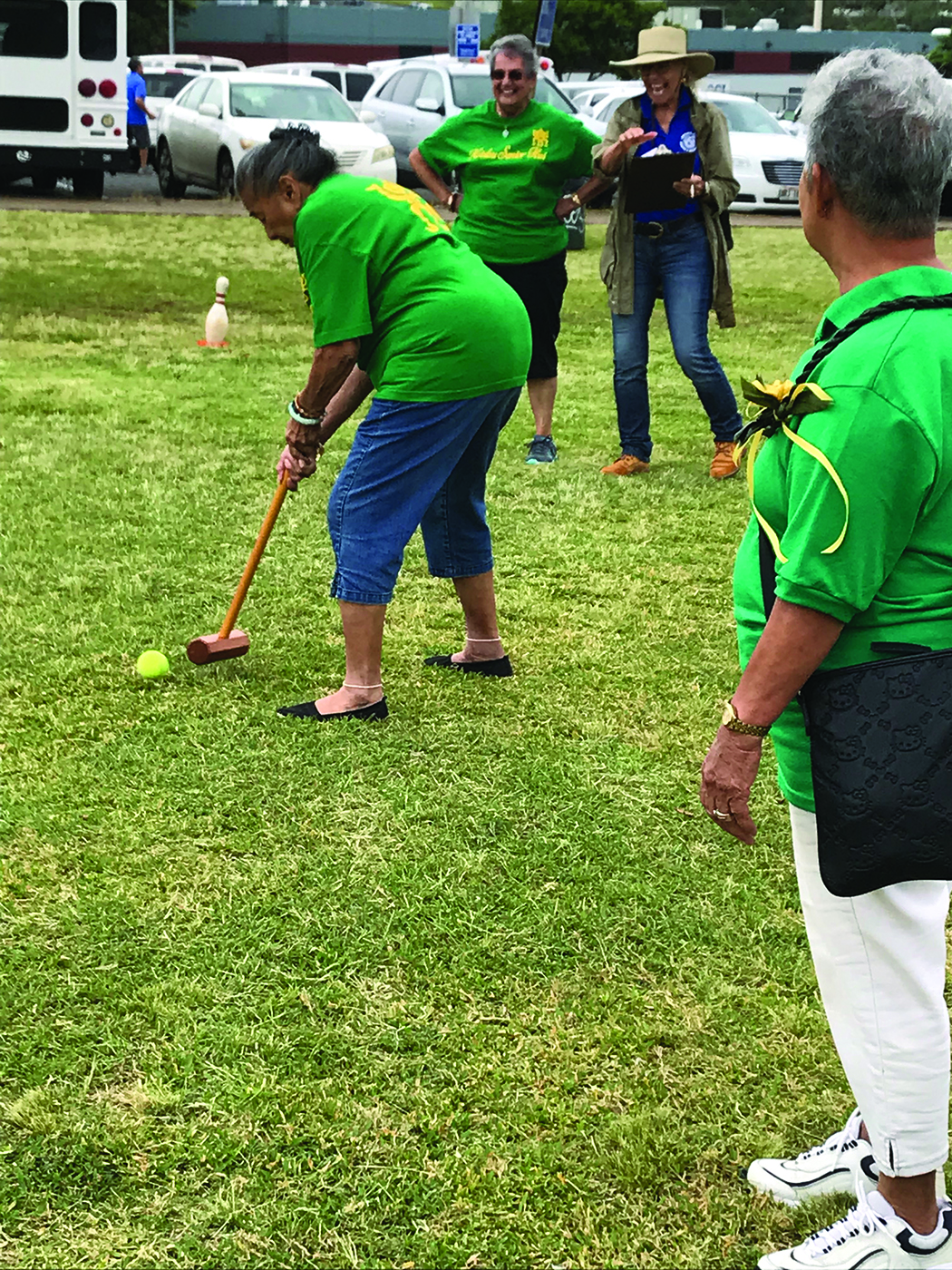
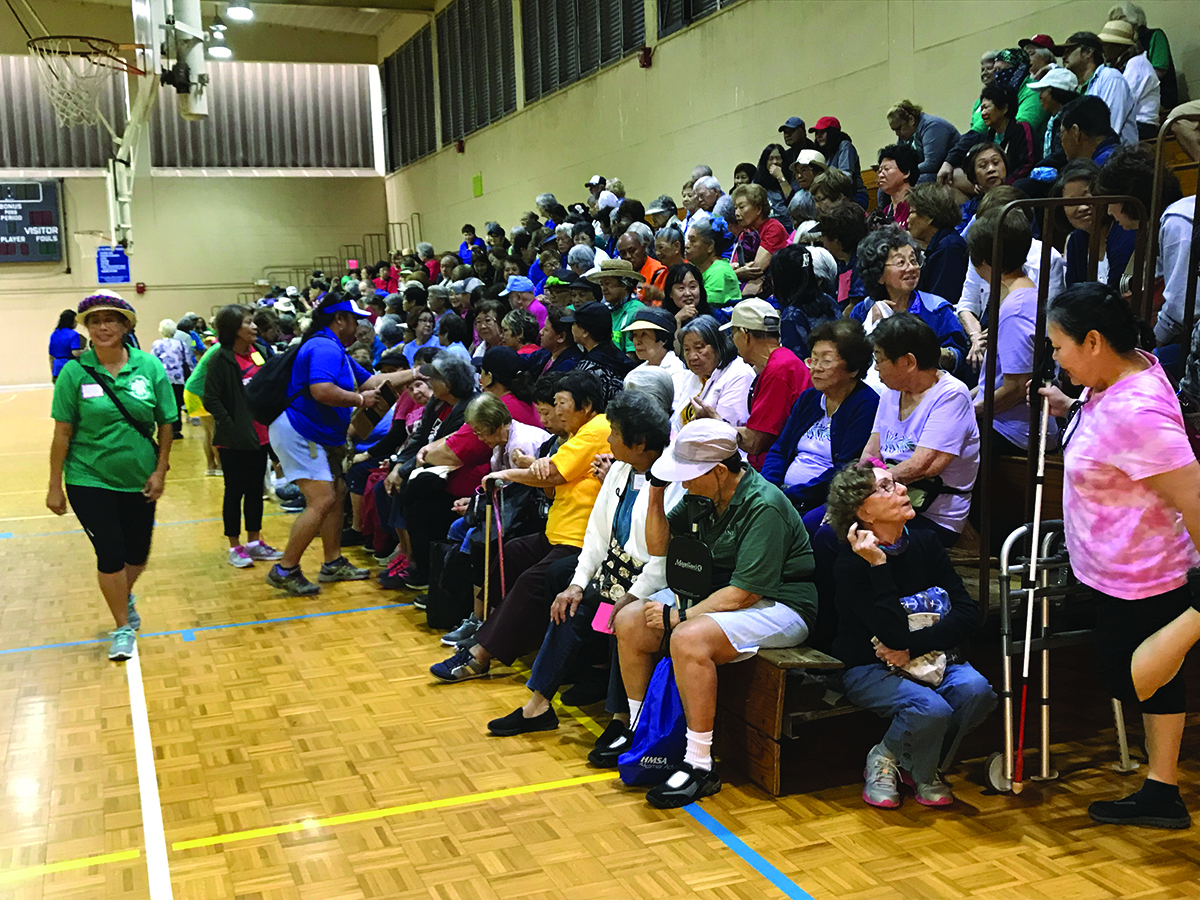
The City and County of Honolulu’s annual “Senior Classic Games” was held on March 22nd at the Hālawa Recreation Center, bringing together 30 senior clubs to compete in four games — Tunnel Vision, Pin Ball, Nine Gates and Peg Ball.
The day was a little cloudy, with soft winds — perfect for 87 teams of seniors ranging in age from 55 to 93 years old. After the competition, score cards were tallied, and medals were presented to 1st, 2nd, and 3rd place winners in the Senior (55 to 74) and Master (75 and over) divisions. For the past few years, Generations Magazine has paid for all the medals, which are always well received. First-place winners also received a soda-cap ribbon lei made by the founder of the Senior Classic Games, retired Hālawa complex supervisor Herbert Yasuhara.
Punahele Crowell, Sports Specialist for the City and County, said: “I’m just happy that the Senior Classic Games have grown to what it is now. I’m also really pleased that all the seniors came out to get some exercise, have a little friendly competition, and promote wellness. These games are all about them and witnessing how much fun they have and how much they enjoy each other’s company is really something special.”
The next event for senior clubs to compete in is the annual bowling bonanza taking place in October. And throughout the year, clubs are making crafts for their annual Mayor’s Craft and Country Fair in November, which Generations co-sponsors with HMSA. For information on joining a senior club on O‘ahu, please contact Senior Section Coordinator Randy Yasuhara at 808-768-3045.
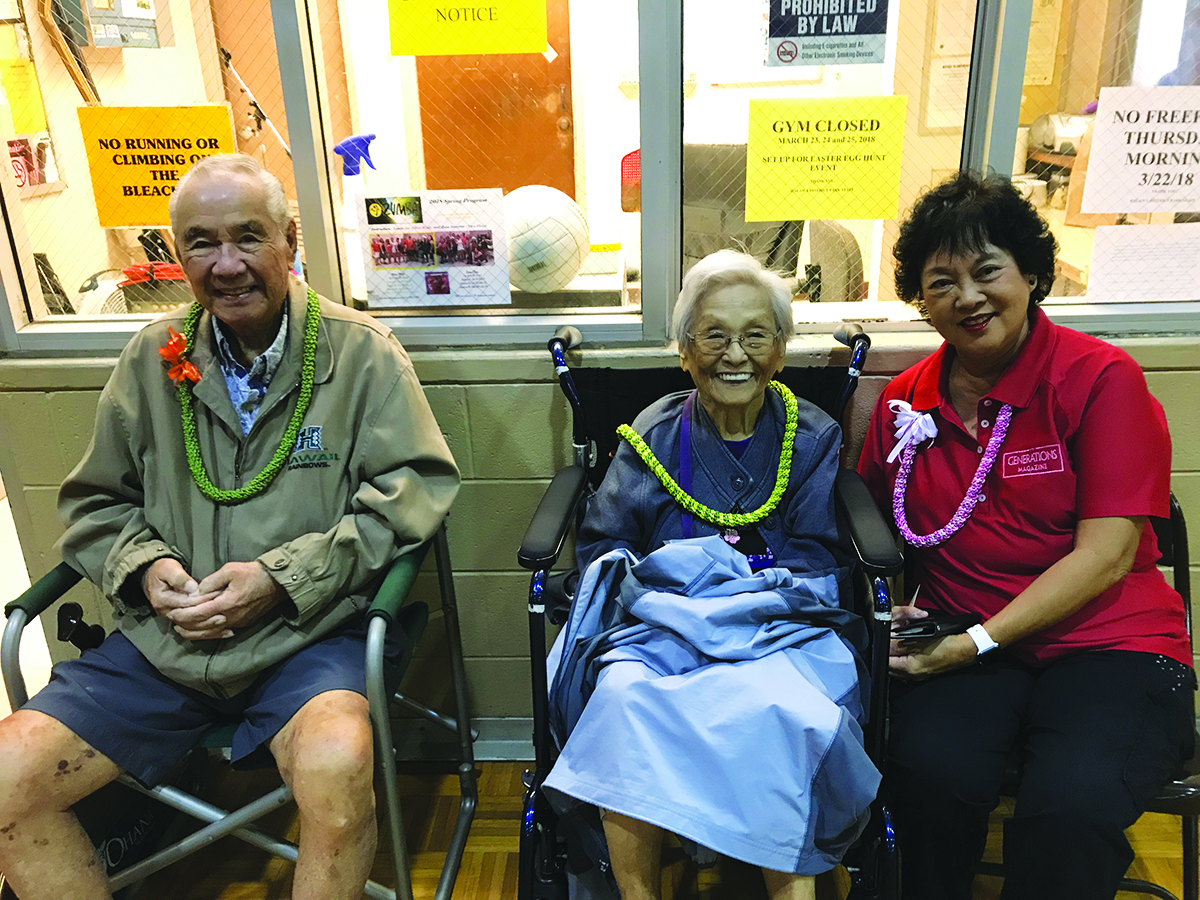
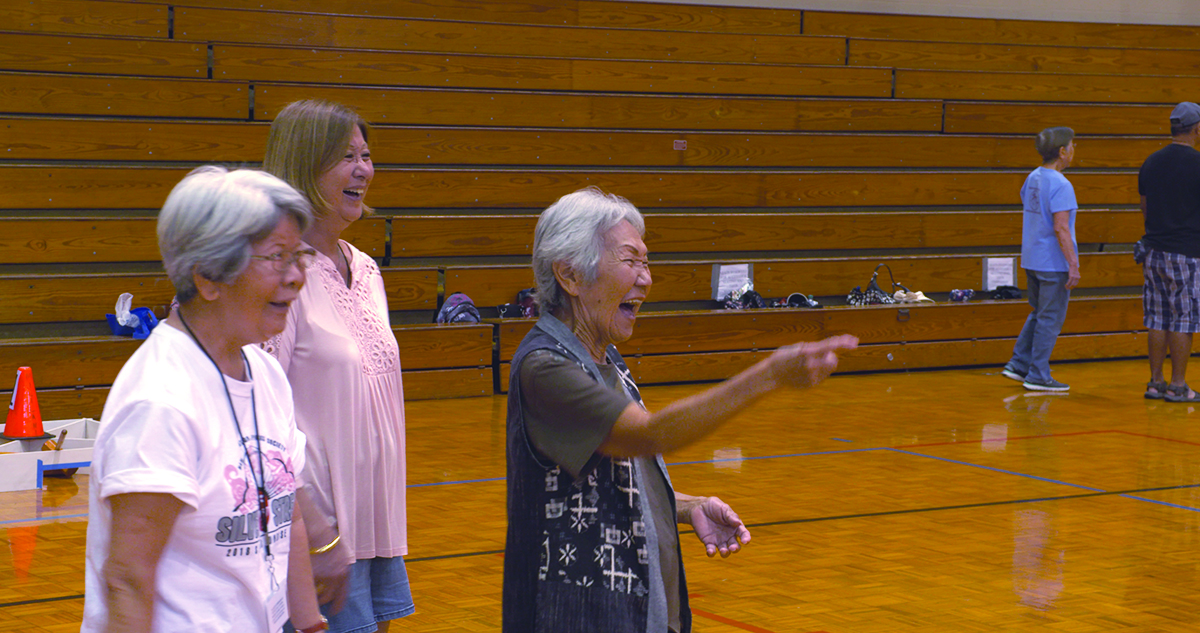
Above, I am pictured with Herbert and Martha Yasuhara, who never miss this wonderful annual event. The gymnasium was packed with excited active seniors; laughter could be heard from the rafters to the fields. Super fun day!
The day was a little cloudy, with soft winds — perfect for 87 teams of seniors ranging in age from 55 to 93 years old. After the competition, score cards were tallied and medals were presented to 1st, 2nd, and 3rd place winners in the Senior (55 to 74) and Master (75 and over) divisions. For the…
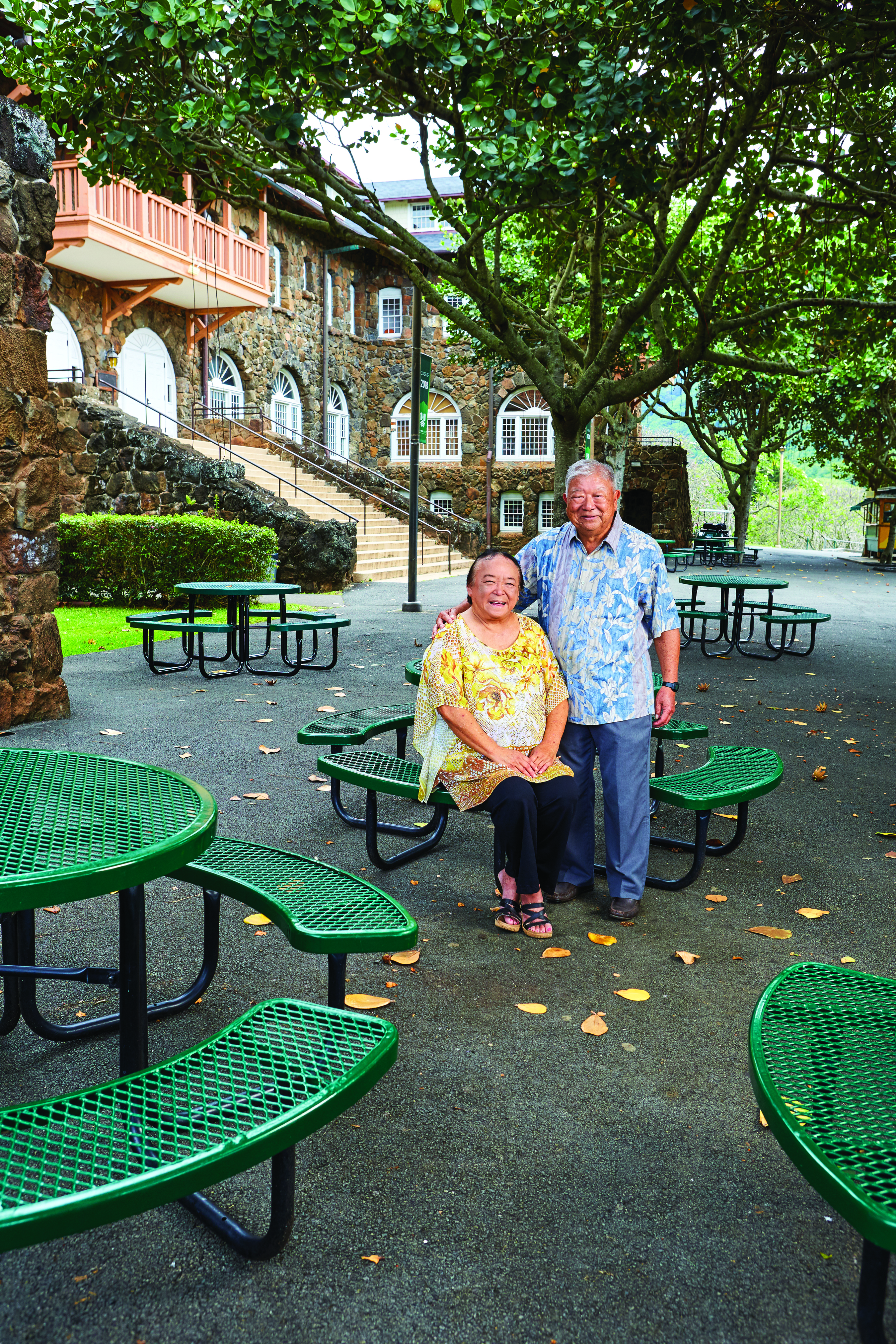
Dottie Crowell and Galen Narimatsu in the courtyard of historic Kawaiha‘o Hall. The Hall was built in 1908 when the Kawaiha‘o Seminary for girls and the Mills Institute for boys moved to their new joint campus in Mānoa, known as the Mid-Pacific Institute.
Giving back to your high school or college allows you not only to rekindle warm memories of school days but also to help the school prepare today’s students for a successful future.
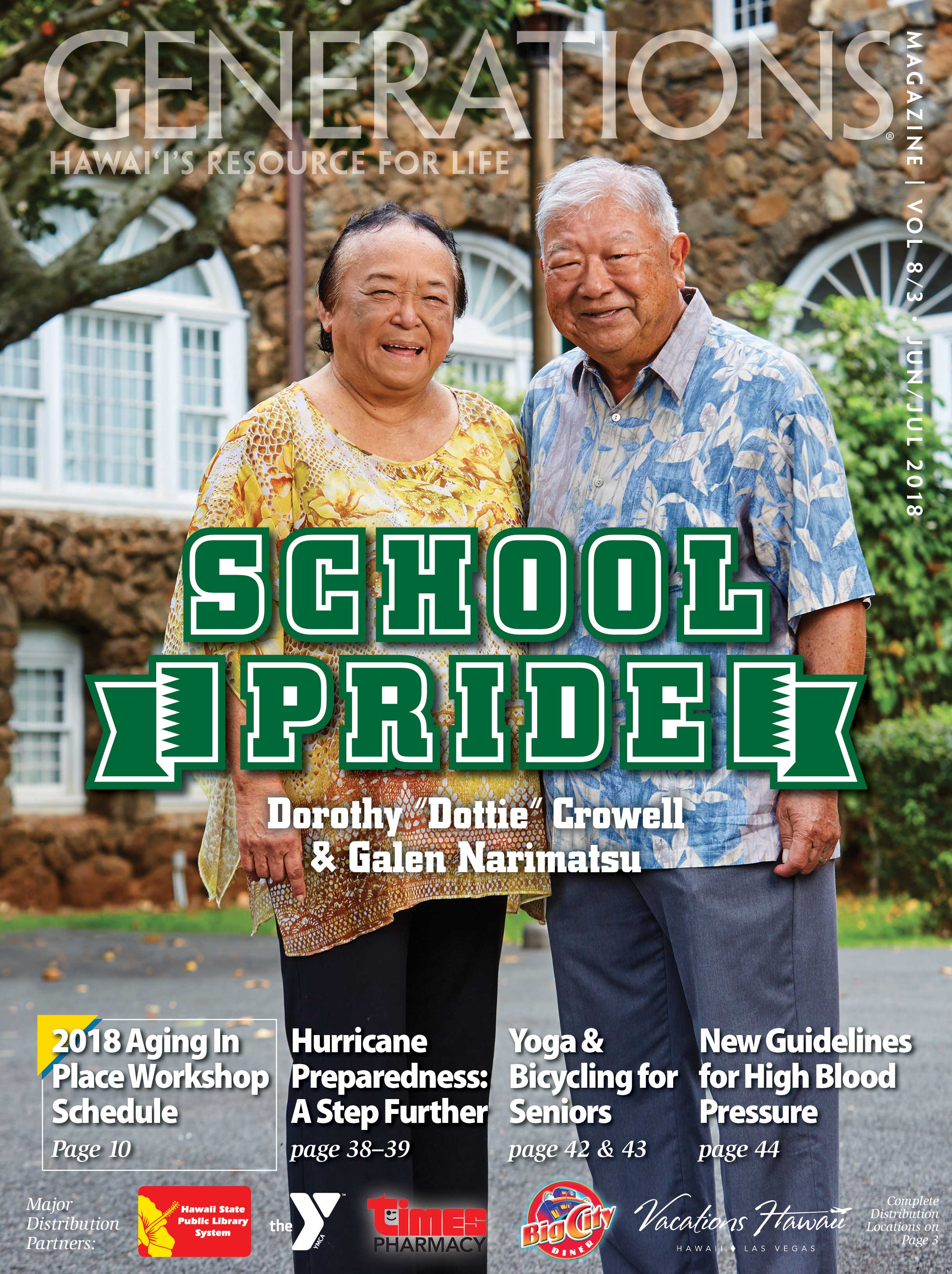
Generations Magazine celebrates “school pride” with the stories of two retirees who volunteer their time to support their school and its alumni family. If you grew up in Hawai‘i, you probably graduated with some of the same students that you first knew in elementary school. Neighborhoods were small, and families didn’t move around much. Classmates depended on one another like a baseball team: all practice the fundamentals, but in the game, each one has a position to cover. If one does not perform, the whole team suffers unless the others step up and pull out a win. Camaradarie and good performance builds trust in the clutches, and deep friendships that last a lifetime. So students all add to the ultimate success of their class.
As you might guess, expressing school pride is more than wearing school colors at the game, or sharing stories of back in the day. These are great fun, but the foundations, disciplines and fresh horizons shared with us by teachers, administrators and classmates — tools and habits that later served us well as adults — these are the gifts that make us proud to be called alumni.
Cousins Dottie Crowell and Galen Narimatsu graduated from Mid-Pacific Institute in 1955 and are still actively involved with supporting their alma mater. They are still friends with their roommates, classmates and team members. You will see them at home games, cheering on the Owls; on campus, helping on alumni projects; and working with alumni of all ages on student events and projects.
What is the source of this love and admiration for their school? As they tell their stories, you will hear the facts and history of Mid-Pacific Institute in the ’50s, but between the lines you will sense the gratitude Dottie and Galen have. They are not only thankful for what they learned, but for the process. The academic bar was set very high. They were eighth graders away from home for the first time — eager to please their parents, unsure of what the future would hold, and not quite sure if they had “the right stuff” for college.
But they were not alone or without suppport. And what they achieved in high school prepared them for meaningful, successful lives. This is a story retold many times in post-WWII America. May the stories of Dottie and Galen inspire you to remember your school days, look up classmates and express your gratitude and your school pride. We have much for which to be grateful.
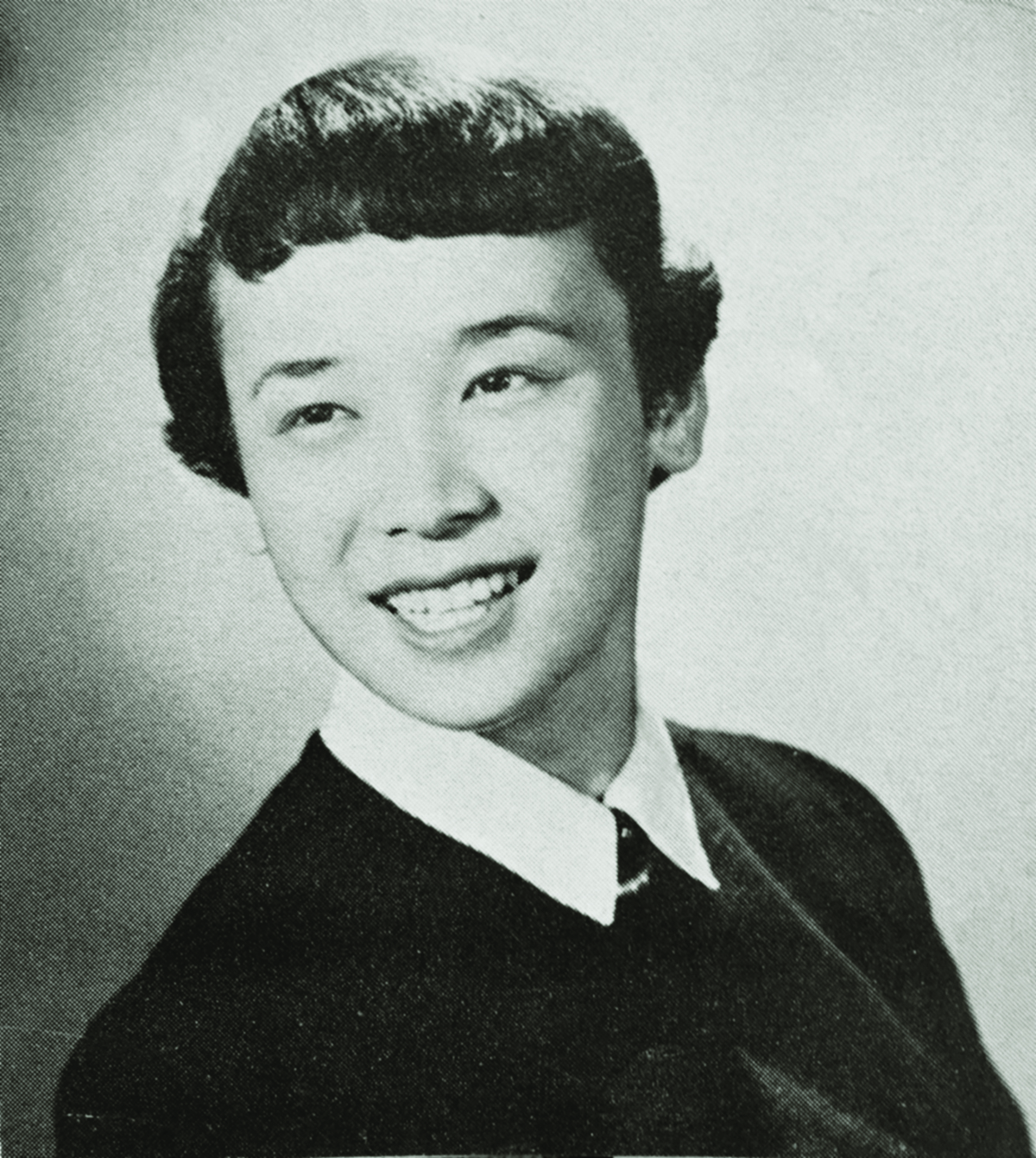
Dorothy “Dottie” Crowell, Former Director of Admissions, Mid-Pacific Institute, Class of ’55
Dorothy “Dottie” Crowell
Dottie Crowell graduated from MPI in 1955 and began working there in school administration. No one knows more Mid-Pacific alumni than Dottie because, for nearly 30 years, she and a committee of faculty and deans made decisions about which students would be accepted. She delights in connecting graduates to one another and the school. Graduates are always looking her up. Her devotion and pride for her school can be summed up as a big mahalo to her parents, teachers and principals who encouraged her to pursue higher education.
“I was a naïve, back-country eighth grader in Ha‘ikū, Maui, who had no idea how high school would be. My parents told me I was going to a high school in Honolulu, and I just accepted it. My class of 35 boys and girls grew to 65 by graduation. We were not sophisticated like the students of today, but we were all away from home, so we followed the rules and did well. On weekends, we saw the big city of Honolulu. I still keep up with my roommates, Lenora and Junette. A whole world opened up to us with class members from Japan, Korea and the Marshall Islands. Two years of foreign language were required: French or Latin. Today, MPI also offers Spanish, German, Japanese, Hawaiian and Mandarin Chinese,” says Dottie. But her favorite subjects were Mathematics and English because she liked the teachers.
Today, Dottie Crowell volunteers her time to work on the Alumni Archives Research Project. Growing public interest in family history and her own school pride spurred alumna Tomiko “Koco” Conner to reorganize the MPI school yearbooks and academic records for easy access. Archival records going back as far as 1904 had never found a permanent home while Mid-Pacific campus was growing. Now they are housed in a climate-controlled area, and two days a week, Dottie and alumna volunteer Bobbi Sakamoto manage the collection and fulfill requests for information from the families of graduates. Historical requests come from family members looking for pictures of their parents or ancestors — what activities they enjoyed in high school or who their friends were. “Sometimes it is alumni I knew. Mid-Pacific grads are close.
“While helping others, I discovered that my grandfather’s sister, Reba Hanamaika‘i, from Maui, attended school here in 1904 and 1905 when this campus was Kawaiha‘o Seminary for girls,” says Dottie. Mid-Pacific Institute was founded officially in 1908 when Mills Institute for boys, located in downtown Honolulu, moved to Mānoa. From that time, this small college preparatory boarding school slowly grew from less than 100 students to a current student body of more than 1,500. The boarding program was discontinued in 2003.
As we flipped through the yearbooks, Dottie showed us the roots of her school pride. One was the MPI headmaster who recruited Dottie in 1951, Joseph Bakken. He taught Dottie’s parents English at Maui High School, so her parents trusted his decision that Dottie was college material, and they sent her by boat to high school in Honolulu.
Mid-Pacific Institute was structured to protect and support every student and assure his or her success. An upperclassman “brother” or “sister” helped them get accustomed to dormitory life and the scholastic rigor of a college preparatory curriculum. Dorothy remembers that the dormitory had a live-in nurse, two “dorm mothers” to supervise activities and two senior class “Senators,” who acted as counselors, tutors and representatives of the student government. Teachers lived in cottages next to the dormitories and were available 24/7 in emergencies. The entire school staff encouraged students to become one close family and assist one another.
“One time I was walking to the dining hall, and Mr. Bakken caught up alongside me and asked how I was doing. I told him that I was homesick. He didn’t say anything more to me, but that evening, my aunty from Honolulu showed up at my door because Mr. Bakken had called and asked her to come and see me. The school was that caring for my classmates, and me,” says Dottie.
The MPI mandatory 2.5-hour study hall every evening helped students make the grade; even after study hall, when the lights went out, they continued their studies with flashlights under their blankets. Hard work was a given; everyone was college-bound. Students were only allowed off campus on Saturday and Sunday and were responsible for keeping their dorm rooms clean at all times. If they failed room inspection, they were assigned “penalty work” chores. The discipline of dorm life paid off in later life too.
Today, Dottie is proud to be helping alumni and supporting students. She attends as many “Owls” games as she can, and delights at greeting returning graduates. “We are all one ‘ohana,” says Dottie — with always a fond memory.
Galen Narimatsu, MPI Alumni Association Board Member and Past President, Class of ’55
Galen Narimatsu
Galen Narimatsu also remembers being interviewed by Mr. Bakken. He is Dottie’s cousin, and grew up in Hale‘iwa and Honolulu. The sugar and pineapple plantations were still the main employers in Hawai‘i. After graduating from the ROTC program at Mid-Pacific in 1955, he studied Public Administration at University of Hawai‘i at Mānoa and worked at Mid-Pacific as a dormitory supervisor. His pay was room and board. He also worked at the university bookstore. After graduating from UH, he began his career as an officer in the United States Army and did two tours in Vietnam. After Galen retired from the military, he started volunteering with the Mid-Pacific Institute Alumni Association, became a board member, and has served five terms as its president. Galen served on the MPI Board of Counselors and, in 2015, won the prestigious Volunteer in Philanthropy Award from the Association of Fundraising Professionals, Aloha Chapter.
Galen remembers being interviewed by Joe Bakken in 1951. “He used to travel around to all the public schools in Hawai‘i interviewing and recruiting good students. I didn’t know who this man was and he was asking touchy-feely questions like ‘What kind of a person are you?’ I must have done OK because he asked my parents to enroll me. My dad was a schoolteacher and had a side business selling silverware to Japanese families in the camps. He especially wanted me to further my education so that I would have opportunities beyond the plantations,” says Galen.
“When I got to Mid-Pacific, I was happy to find that some of my Waialua classmates had been selected too,” says Galen. He was able to room with two of them — another way the school helped freshmen transition to boarding school life. It was a big change from home, where kids were free to swim, fish and play after chores were done. At Mid-Pacific, everything was regimented. Galen says the discipline and restrictions provided structure and a level playing field that helped him succeed.
All Mid-Pacific alums agree that scholastics were at a higher level than the public schools they left. They also regard mandatory study hall as necessary for their academic achievements. Academic discipline is a cornerstone of their attachment to Mid-Pacific and a reason they want to help today’s students be successful. They know how Mid-Pacific prepared them for the real world challenges they faced after graduation. “We learned
academics, teamwork, citizenship and leadership — which helped us succeed in all our endeavors,” says Galen. “And the friendships we made here have lasted the tests of fickle fortune.”
Galen is a great fan of MPI Baseball, and you will often see him in the stands. He was on the baseball team, under Coach Harry Kitamura, but didn’t get to play center field much, “because we had such great players in my time — still do.” Galen also ran the quarter mile for MPI Track Team. School athletics were a source of fun and teamwork. But Galen’s favorite subject was History.
“In my senior year,” says Galen, “I was a Senator. We were strict and it was for the good of the students. We looked out for the younger students and maintained discipline, but we also hooked them up with a tutor when they needed academic help. I saw the military as a good career option. Because of the draft system in the 1950s, every family had someone who served in the military. Dorm life at MPI prepared me for military training too. Serving my country was my way of giving back. It worries me today that the younger generations don’t think about what they are going to give back and young men don’t even consider serving their country.”
The MPI Alumni Association offers graduates many ways to support the school, express their gratitude and demonstrate school pride. “We support community events throughout the year. Tuition only pays for about 80 percent of what it costs the school to educate a student for one year. We try to bridge that gap by raising funds with the annual Chicken Sale and a golf tournament. Graduates love getting together, and all the events are times to share and catch up.
“Every July we hold our annual reunion, called ‘The Pā‘ina,’ and help out at the Ho‘olaule‘a Festival and Graduation. We award grants for student projects, and organize our MPI class reunion, which alternates between California and Las Vegas every other year. Every event, from ball games to fancy affairs makes us proud to be helping the students, the same way we were helped years ago. I guess the best thing about school pride is that it brings all the alumni together. Regardless of how old or young we are, we all share the Mid-Pacific experience and take pride in the successes we achieved with the gifts our teachers, alumni and classmates gave us.”
Generations encourages our readers to reach out to your schools and volunteer or find a program to donate to. Put your school pride to work and help prepare today’s students for success.
Generations Magazine celebrates “school pride” with the stories of two retirees who volunteer their time to support their school and its alumni family. If you grew up in Hawai‘i, you probably graduated with some of the same students that you first knew in elementary school.
Generations Magazine celebrates “school pride” with the stories of two retirees who volunteer their time to support their school and its alumni family.