Category: June-July 2017

  • Before Retiring, Prepare with an ‘Exit Plan’

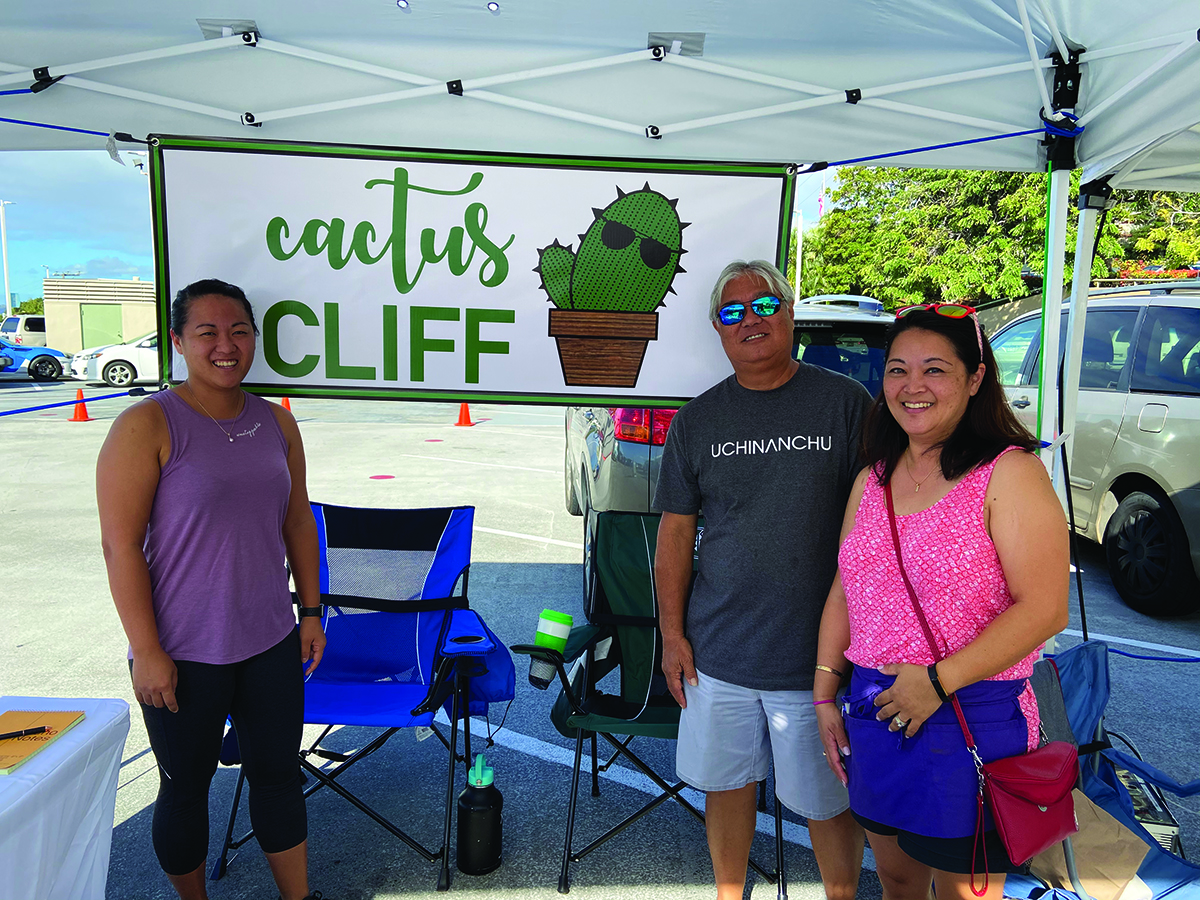
    Cliff and his daughters, Cathlene and Cynthia, sell plants at the Pearlridge Saturday Market. Cliff just loves sharing his cactus and succulent expertise with new and repeat customers.
    Cliff and his daughters, Cathlene and Cynthia, sell plants at the Pearlridge Saturday Market. Cliff just loves sharing his cactus and succulent expertise with new and repeat customers.

    When my husband told me in early 2019 that he wanted to retire, my first reaction was, “No, you’re still young and can work until you’re 70.” When we had a serious conversation a few months later, I agreed with his desire to retire, but said, “You need to have an exit plan because I have a home office and don’t want to see you sitting on the couch watching TV.”

    Wow, written out, that sounds mean (hahaha); however, he had a little (a lot of) help from his two daughters — thus, the creation of a small business called “Cactus Cliff.” My husband, Cliff, as you probably  figured out, has been an outdoor/yard person since we purchased our Kane‘ohe home almost 35 years ago. Right away, he planted a mock orange hedge (now a croton hedge) and a Meyer lemon tree, to name a few. For the past 25 years, Cliff has taken an interest in cactus and succulents. Fast-forward to spring 2019, when our youngest daughter asked and received 300 potted cactus and succulents for her December wedding favors.

    Cactus Cliff began in January 2020 with a variety of pots, cups and bowls, etc., filled with an assortment of cactus and succulents. Cliff continues to make decorative arrangements and centerpieces, and cultivates a wide variety of plants from seeds and cuttings. His daughters found ways to feature these products for retail and at open-market venues — something they all enjoy doing together.

    My advise to anyone looking to retire is to be prepared so that you can have many years of pleasure. Make a checklist, not a honey-do list, of what you want to do after retirement in order to have control of your life. That list is never set in stone because it is your life and you can change anything any time you like. As for my husband and me, we moved a desk into our guest room and made it into Cliff’s office.

    Our house now has two offices — everything is going well in this household!


    CACTUS CLIFF
    808-722-1520 | cactuscliff96744@gmail.com

    When my husband told me in early 2019 that he wanted to retire, my first reaction was, “No, you’re still young and can work until you’re 70.” When we had a serious conversation a few months later, I agreed with his desire to retire, but said, “You need to have an exit plan because I…

  • Help a Loved One with Social Security

    by Jane Yamamoto-Burigsay, Social Security Public Affairs Specialist in Hawai‘i

    According to the U.S. Census Bureau, there are nearly 57 million people living with disabilities. Thirty percent of America’s adults help provide care for a sick or disabled family member. Providing physical and emotional support is a demanding job with stresses and rewards, but it can also be a labor of love.

    The Social Security Administration (SSA) is committed to helping secure today and tomorrow for every American. This is especially true for people who need help managing their benefits. SSA works closely with caregivers through its representative payee program. A representative payee is someone who receives and oversees SS or Supplemental Security Income (SSI) benefits for anyone who cannot manage them on their own —child or adult.

    A representative payee is usually a trusted family member or friend, but when they are not available, SSA looks for qualified individuals or organizations to represent the beneficiary. Learn more about becoming a representative payee by watching a new series of videos at www.socialsecurity.gov/payee.

    The videos will enable you to help those who are unable to help themselves.

    For questions, online applications or to make an appointment to visit a SSA office, call from 7am–7pm, Mon–Fri:

    1-800-772-1213 (toll free)  |  1-800-325-0778 (TTY)
    www.socialsecurity.gov


    by Jane Yamamoto-Burigsay, Social Security Public Affairs Specialist in Hawai‘i According to the U.S. Census Bureau, there are nearly 57 million people living with disabilities. Thirty percent of America’s adults help provide care for a sick or disabled family member. Providing physical and emotional support is a demanding job with stresses and rewards, but it…

  • Retired & Senior Volunteers Give Back…

    by Lenny Fabro, Project Director, RSVP Oahu Volunteer Program

    The Retired & Senior Volunteer Program (RSVP), one of the largest senior volunteer networks in the U.S., is one of three Senior Corps programs funded by the Corporation for National and Community Service, a federal agency that supports service and volunteering.

    The mission of the Oahu RSVP is to enhance the lives of older adults and help prevent senior homelessness by meeting the community’s needs through volunteerism, and partnerships with nonprofit organizations and public agencies — including schools.

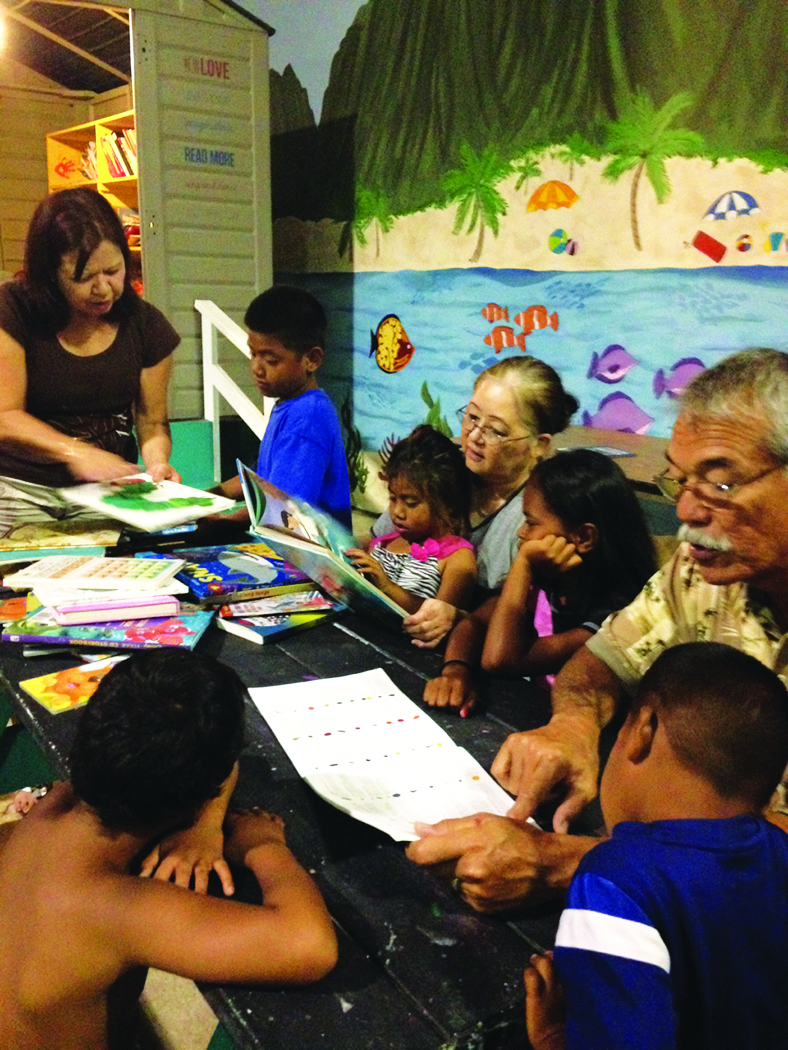
    Volunteers encourage children by reading at the Next Step Shelter.
    Volunteers encourage children by reading at the Next Step Shelter.

    RSVP also addresses the mission of the Elderly Affairs Division of the City and County of Honolulu to strengthen the community by improving the quality of life for its citizens in need through delivery of essential, supportive services.

    Program volunteers help provide health and nutrition services, and also provide tutoring for children and literacy programs for adults.

    RSVP volunteers contribute to public safety and help provide advocacy for seniors. They also help promote and sustain local culture and assist with environmental restoration.

    The benefits of RSVP are many. Isolated seniors feel less lonely as they develop close ties to volunteers; companionship is just a phone call away through RSVP. Many seniors are able to continue living in their own homes with the support they receive from RSVP volunteers. Seniors can receive nutritious meals through Meals on Wheels food delivery, or may even be able to do their own grocery shopping and errands with the help of RSVP volunteers. Transportation is also provided for trips to and from medical appointments.

    More importantly, through RSVP, seniors have the opportunity to be linked with other services they may need.

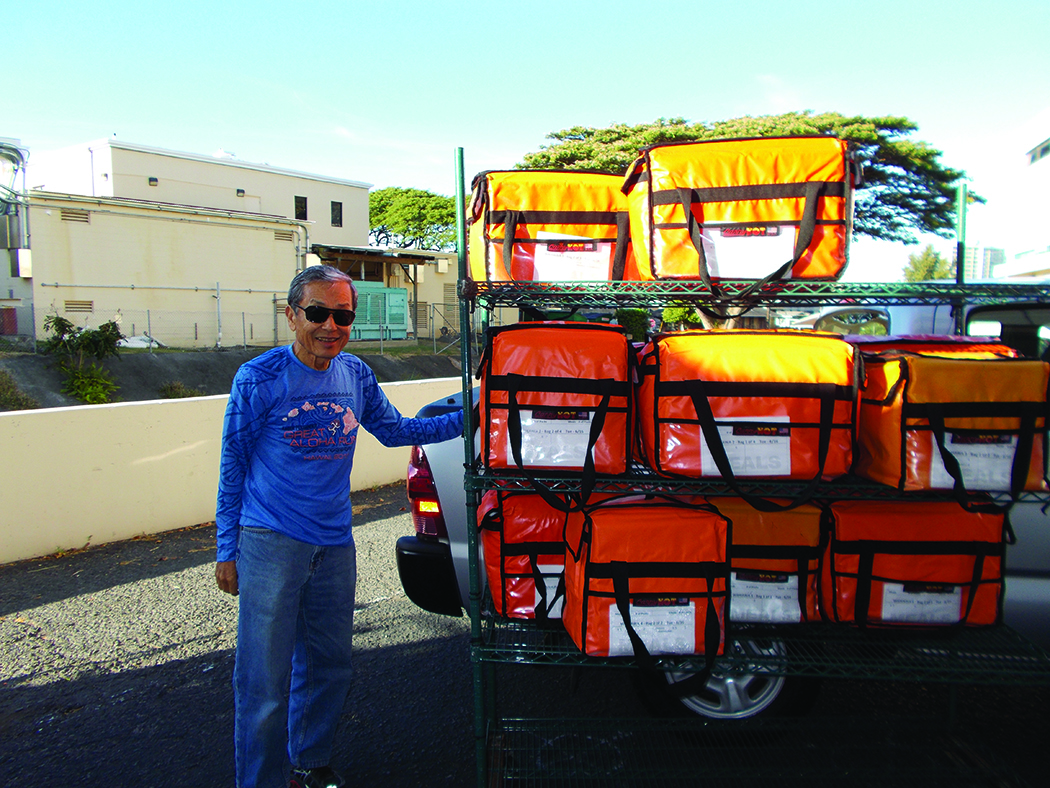
    A Lanakila Meals on Wheels volunteer delivers food... and a smile.
    A Lanakila Meals on Wheels volunteer delivers food… and a smile.

    RSVP provides services to other family members, including respite for caregivers.

    The program also serves underprivileged children by providing them lunch, and serves veterans and their families, as well as young military families.

    The Volunteer Experience

    Oahu RSVP strives to provide a high-quality volunteer experience in order to facilitate the program’s expansion.

    Volunteers 55 and older are assessed, recruited and linked with opportunities that match their interests, and make use of their wisdom, skills and life experience to help social service agencies meet needs.

    Volunteers are placed in nonprofits and public agencies, also known as “Volunteer Stations,” throughout the community.

    The program offers prospective volunteers a wide array of placement choices from 38 nonprofit organizations, public agencies, schools and support services.

    The RSVP program can be accessed at City & County of Honolulu Customer Services Departments. Or contact the Oahu RSVP using the information below to either become a volunteer or to enlist some of its many valuable services for yourself or a loved one.  n

    RSVP OAHU VOLUNTEER PROGRAM
    City & County of Honolulu DCS/Elderly Affairs Division
    715 S. King St. Rm. 211, Honolulu HI 96813

    The Retired & Senior Volunteer Program (RSVP), one of the largest senior volunteer networks in the U.S., is one of three Senior Corps programs funded by the Corporation for National and Community Service, a federal agency that supports service and volunteering.

  • Living in a Community of Caring

    by Kelika Ishol, Director of Sales and Marketing & Resource Development

    Ever think about growing old? Even when we become caregivers for aging loved ones, or start to feel pain in our joints, or experience the “where did I leave my keys?” and “what was I gonna say?” moments, we may still not attribute them to aging.

    But it’s inevitable. What we see our aging loved ones go through is a process that we all will eventually experience. When I think back about taking care of my grandmother who had Alzheimer’s disease, I reflect on one of the most challenging times in my life. My grandmother, a vibrant and beautiful woman who went beyond the call to care for everyone, now needed care. Her incontinence issues, assistance with bathing, meal prep, elopement situations and medication management were ongoing parts of my life 1998. While caring for my grandmother, I was also raising four young daughters. They called me “the sandwich generation.”

    A community of caring
    As a resident of a retirement community, you are a part of an ‘ohana, where together, you can discover the fun of aging, and feel safe and secure.

    My beautiful and loving grandmother passed away in 2001 from a hemorrhagic stroke while she was living in an Alzheimer’s unit on the Leeward side of O’ahu. Placing her in that facility was at the same time the hardest and the easiest thing for me to do… Make sense? Of course it does. The guilt of placing my grandmother in an Alzheimer’s unit was hurtful and difficult, but the relief of placing her there surpassed the guilt. It truly was the best decision I made—for me, my family and most importantly, for her.

    If I knew then, what I know about retirement communities now, I would have definitely educated my grandparents early enough so that they could have enjoyed their retirement years. And no one in our family would have to experience the guilt, pain or mixed emotions of placing a loved one in a care home or retirement community.

    What You Can Expect

    Retirement communities provide that peace of mind by providing meal options, socialization opportunities, 24-hour oversight, emergency call systems, transportation services and much more. It’s really a community where residents take the time to care for each other and share in the aging process.

    So the next time you see a senior, think about your life. Do you want your children caring for you as I cared for my grandmother? Or do you want to enjoy your retirement years with others who share your interests, professionals that care for you, and having the opportunity for your family and friends to visit and enjoy your new life?

    Retirement communities in Hawai‘i start at about $3,100 per month and include all your utilities, maintenance, housekeeping, landscaping, meals, transportation to medical appointments and shopping, social events, fitness centers and much more.


    GOOD SAMARITAN SOCIETY POHAI NANI
    45-090 Namoku St., Kaneohe HI  96744

    808-247-6211  |  www.good-sam.com/pohainani

    Ever think about growing old? Even when we become caregivers for aging loved ones, or start to feel pain in our joints, or experience the “where did I leave my keys?” and “what was I gonna say?” moments, we may still not attribute them to aging.

  • National Patient Safety Goals

    by Eileen Phillips, RN, Attention Plus Care GIVING CARE

    Most seniors I meet say they prefer to age in place and live at home for as long as they can. Who wouldn’t want that, right? But living out your life safely at home may require a bit of help and experience. Home healthcare is particularly suited here; clients can manage their care with medical professionals to help make safer and more informed decisions.

    Nursing supervisors specializing in home healthcare partner with individuals and family members to ensure that safety and quality care are achieved in the home as a primary goal. “When families need care for an aging loved one, regardless of the level of care, the discussions usually involve getting individuals from here to there and everywhere in between safely. A nursing supervisor can review your medications and care management, fall risks and other factors impacting a client’s ability to safely do their daily activities,” said Marjorie Gentilella, a Honolulu home healthcare nurse.

    “Families want to know their loved one is being cared for in their home with safety as a top priority, and that providers have a solid track record in mitigating safety risks and hazards,” added Marjorie.

    An overarching goal in providing home healthcare is to help individuals regain or maintain independence, and be as self-sufficient as possible, and to slow the advance of health-related problems so individuals may continue to live at home safely.

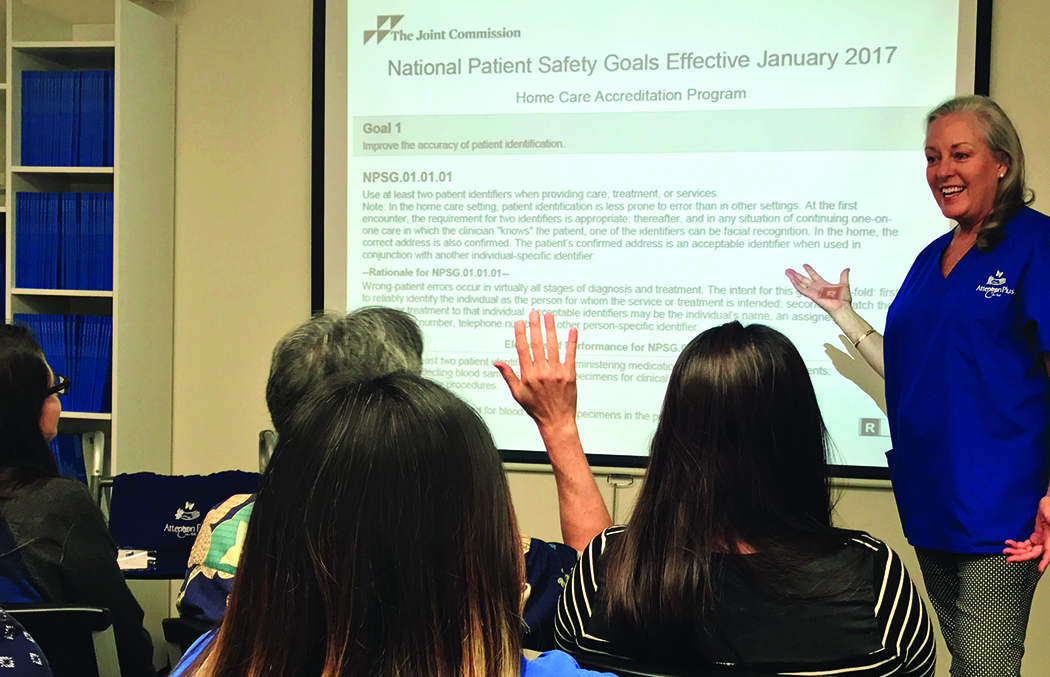
    The Joint Commission, the standards-setting and accrediting body in healthcare, is considered the gold standard in accomplishing and evidencing these ideals. A home healthcare agency that is Joint Commission accredited uses National Patient Safety Goals set by the commission as a higher standard for safety and client care.

    As with major hospitals in Hawai‘i, Joint Commission-accredited home healthcare agencies must establish and meet National Patient Safety Goals on an annual basis. To verify that these safety goals are established and met, trained medical professionals conduct on-site surveys of the agency on safety, including how well staff:

    • Provides a safe environment for your loved one
    • Educates you about the risks and options for your diagnosis and treatment
    • Protects your rights as a patient, including your privacy rights
    • Evaluates your condition, before, during and after diagnosis and treatment
    • Protects you against infections and ways to control infection
    • Plans for emergency situations

    Individuals and families are almost always overwhelmed with the task of searching for and choosing a home healthcare agency for a loved one. But knowing an agency is Joint Commission accredited and committed to safety and quality can make the task easier. An agency held to National Patient Safety Goals is required to evidence, and continuously improve upon safety and quality care for all clients. And this means better care outcomes for our beloved kupuna.

    ATTENTION PLUS CARE
    Accredited by The Joint Commission

    1580 Makaloa St., Ste. 1060, Honolulu HI 96814
    808-739-2811  |  www.attentionplus.com

    AGING IN HAWAII EDUCATIONAL OUTREACH PROGRAM
    by Attention Plus Care — a program to provide resources for seniors and their families, instructed by a registered nurse, who covers a different aging process each month. For class information on Parkinson’s disease and upcoming topics, call 808-440-9356.

    Most seniors I meet say they prefer to age in place and live at home for as long as they can. Who wouldn’t want that, right? But living out your life safely at home may require a bit of help and experience. Home healthcare is particularly suited here; clients can manage their care with medical…

  • Are Your Affairs in Order?

    Does someone know where you keep your important documents? Do your loved ones know what your last wishes are should something happen to you? Do you know what to do when a loved one is faced with an emergency?

    There are many sad stories about people passing unexpectedly with no one knowing what that person’s wishes were or anything about their paperwork. Was there a will? Where might it be? What about a life insurance policy?

    You can have peace of mind knowing you have protected your family and loved ones by taking the time to do a few important things.

    What is appropriate for you? A will, a living trust or nothing? A will, at minimum, can name someone you trust to carry out your wishes. You can name a guardian for your underage children. A living trust does the same things as a will, but provides options for tax planning and avoids probate. In either case, consulting an attorney who specializes in estate planning will help you.

    Everyone should have an Advance Health Care Directive, which informs your doctors and family about the medical treatments and life-prolonging procedures you want. This will help your family during a very difficult time and relieve them of the burden of guessing…

    A Guide to Getting Affairs in Order organizes paperwork and makes wishes known.

    GETTING AFFAIRS IN ORDER

    808-782-3879  |  Karen@gettingaffairsinorder.com
    www.gettingaffairsinorder.com

    Does someone know where you keep your important documents? Do your loved ones know what your last wishes are should something happen to you? Do you know what to do when a loved one is faced with an emergency?

  • Gregory Pai at Manoa Gallery

    by Dr. Barbara Thompson, Art Historian

    Tucked in a quiet corner in Manoa Valley, Manoa Gallery is a neighborhood gem where fine arts and crafts by senior Hawai‘i artists Gregory Pai, Russell Lowrey, Cora Yee, Richard A Cooke III, Dennis Morton and Barbara Thompson reveal that inspiration and creativity never get old.

    Sunset over Kualoa, oil on canvas, by Gregory Pai
    “Sunset over Kualoa,” oil on canvas, by Gregory Pai

    Winner of national art awards, Gregory (born in 1945) was trained as an architect before becoming the chief economist for First Hawaiian Bank and the special assistant for Economic and Policy Affairs under two governors. Inspired by the spiritual beauty of the islands, jazz musician Gregory turned his serious attention to drawing and painting around 2000, when studying at the Honolulu Academy of Arts and the Grand Central Academy of Art in New York.

    Now on view at Manoa Gallery, Gregory’s paintings capture the sublime quality of the Hawaiian skies at dusk and dawn, the embrace of mist across volcanic highlands and serene reflections in sacred Hawaiian ponds.

    MANOA GALLERY
    2964 East Manoa Rd., Ste. 1, Honolulu HI 96822

    808-468-2428  |  info@manoagallery.com
    www.manoagallery.com

    Tucked in a quiet corner in Manoa Valley, Manoa Gallery is a neighborhood gem where fine arts and crafts by senior Hawai‘i artists Gregory Pai, Russell Lowrey, Cora Yee, Richard A Cooke III, Dennis Morton and Barbara Thompson reveal that inspiration and creativity never get old.

  • A New Cave for the Hawai‘i Men’s Shed

    by Jerome S Taniyama, Secretary, Hawai‘i Men’s Shed Association

    Back in late 2015 at a Rotary club meeting, I learned about the “men’s shed” program. To me, that term conjured up an image of an old workshop or storage building next to a residence. I was corrected by a fellow Rotarian who described the Men’s Shed as a club made up of senior men drawn by fellowship, and the desire to work on personal and group projects. In fact, over 10 years ago, the concept began in Australia through Rotary clubs that helped charter Men’s Shed to provide an opportunity for senior age men. There are now over 1,200 Men’s Sheds in Australia. The Australian government documented positive results in the mental and physical health of Men’s Shed members, and now provides funding subsidies to ensure their sustainability.

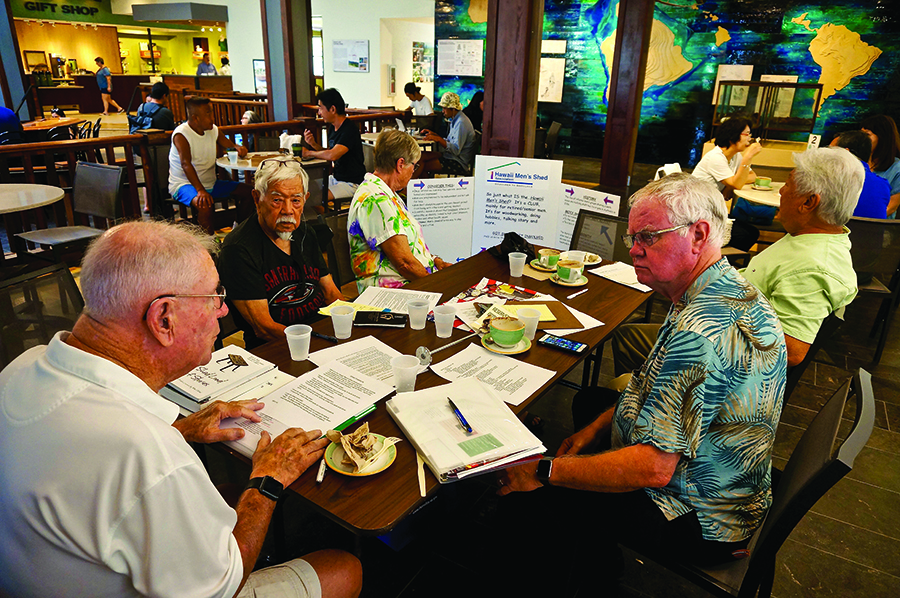
    Men’s Shed members met to discuss the new location and a bike refurbishing project.

    The Hawai‘i Men’s Shed Association officially chartered its shed on March 1, 2016, and filed legal paperwork with the state DCCA, tax office and IRS as a nonprofit. We saw no similar program or organization that would serve the social needs of senior men. Our Hawai‘i Men’s Shed is modeled after the Australian Men’s Sheds in regards to safety, daily operations and self governance. We run on a minimal budget with funds supplied by member donations and have no paid staff.

    In January 2017, the Rotary Club of Honolulu Sunset adopted the Hawai‘i Men’s Shed as one of its community service projects. Our shed has also received recognition from and the support of Sen. Brickwood Galuteria, an advocate for ku¯puna services. We have also engaged in talks with Marlene Sai (at Na Ku¯puna Makamae Senior Center), the Waikiki Community Center and Kupu Hawaii regarding additional sites and programs.

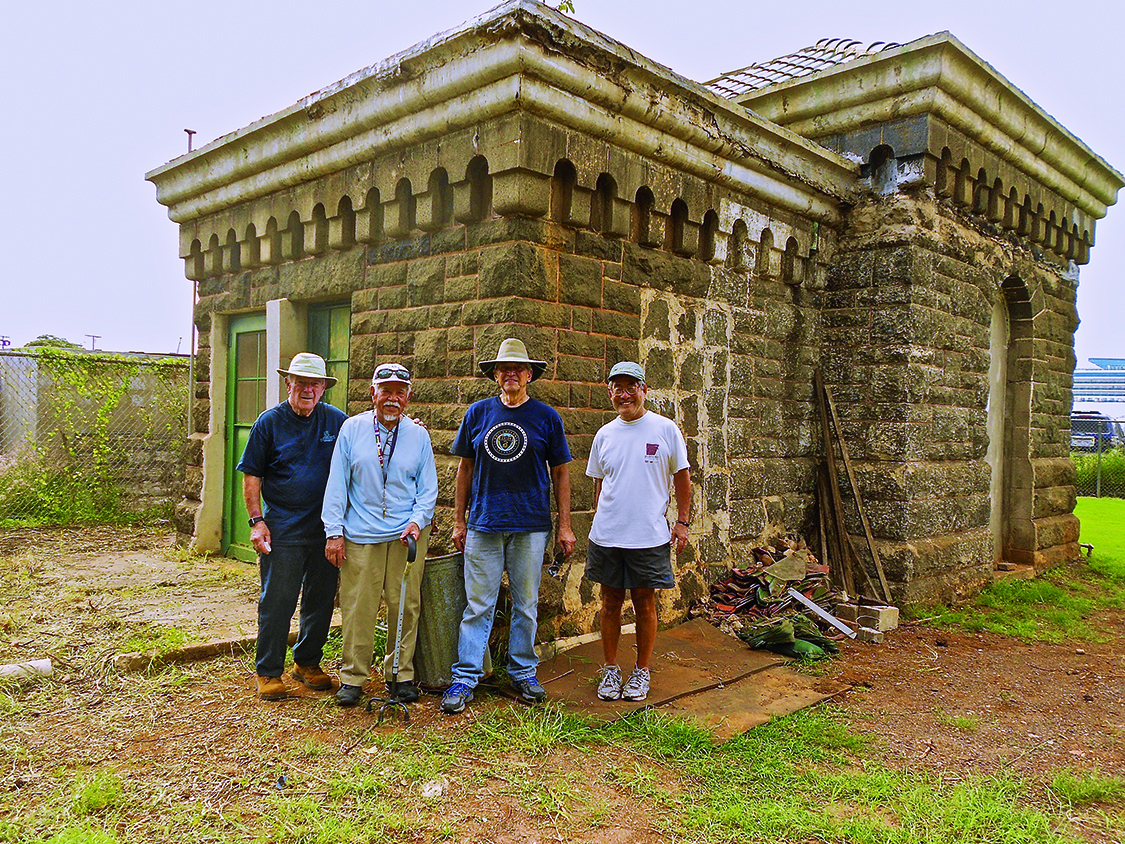
    A workday project at the Na Kupuna Makamae Senior Center.
    A workday project at the Na Kupuna Makamae Senior Center.

    Our first shed location was at the Makua Alii Senior Center. Due to unforeseen circumstances, we vacated that site. But on Feb. 28, 2017, we rolled out a new shed site located in a DOT-Harbors warehouse at 5 Sand Island Access Road, where we plan to restore 35 used bicycles for disadvantaged youth. We are also looking toward building benches and bookshelves for our neighboring schools.

    Our advisory board is made up of very qualified individuals from banking, healthcare, engineering, education, insurance, retail and wholesale businesses, as well as radio media. They have laid out a doable growth plan that includes additional shed locations, doubling our membership, community support and capital improvement fundraising for a permanent location.

    We are affiliated with the Men’s Sheds in Australia, Ireland, New Zealand and the mainland, and network with them about how we can improve safety, and make our sheds more fun and viable in our community.  n

    HAWAI‘I MEN’S SHED ASSOCIATION

    Glenn Sears 808-373-6140  |  hawaiimensshed.org

    Back in late 2015 at a Rotary club meeting, I learned about the “men’s shed” program. To me, that term conjured up an image of an old workshop or storage building next to a residence. I was corrected by a fellow Rotarian who described the Men’s Shed as a club made up of senior men…

  • Part II: Beware of Pretty Packages

    by Scott Spallina, Senior Deputy Prosecuting Attorney

    In the last issue, I covered the lessons my mother-in-law, “Mary,” taught me through her encounters with various scam artists she has met over the years. Unfortunately, those incidents were only the tip of the iceberg.

    Shortly after Mary’s run-in with the Y2K hucksters, she met a charismatic man who advertised seminars that would “make money for attendees.” His scheme was simple — don’t pay your taxes. He claimed paying taxes was optional; nowhere in the tax code did it say you had to pay. Despite my advice, she supported this man, went to his criminal trial in federal court when he was indicted and was there when he was eventually sentenced to prison. Naturally, he claimed his conviction was the government’s attempt to stop him from “exposing the truth.” The only truth he did expose, however, was that people will believe anything — if its packaged well.

    After this man’s incarceration, my wife and I discovered that we were expecting a baby. Mary wanted to insure financial stability for my growing family. She did this by investing in a local company that was going to create a website bigger than Ebay or Amazon — according to the owner. She was encouraged to bring in more people wanting to invest thousands of dollars to get in on the ground floor of this no-lose, get-rich opportunity. The contract they had her sign obligated her to pay monthly fees for their “trainings.” Although nothing else was promised in writing, verbal promises made by the owner during his speeches were plentiful. Articulate, passionate and good looking, he had hotel ballrooms filled with people applauding his high-energy speeches. Then, the government came and closed him down for illegal business practices. I suspect this was all some sort of pyramid scheme disguised as an investment opportunity. It was probably around this time I first heard the phrase, “A pretty package can hide toxic contents.”

    Another time, my in-laws were fixing up a rental property and hired a cash-only repairman. They knew a friend of a friend who was unlicensed but known to do side jobs. They gave him money; he did not do the work (no contract was written up). When they hunted him down (literally) for the return of the money, he made excuses as to why he didn’t do the job but couldn’t return the cash. Because of his relationship with the family, tangential as it was, the breach of trust was more painful than that from the slick-talking con artists previously encountered.

    It was this experience that led me to join a working group with the state Department of Commerce and Consumer Affairs (DCCA) to write legislation making it a felony crime for an unlicensed contractor to accept money for work.

    In the next issue, I will conclude this series by sharing Mary’s encounter with a domestic terrorist group and how she invited a con artist into her home — literally.

    _______________

    To report suspected elder abuse, contact the Elder Abuse Unit at 808-768-7536  |  ElderAbuse@honolulu.gov

    In the last issue, I covered the lessons my mother-in-law, “Mary,” taught me through her encounters with various scam artists she has met over the years. Unfortunately, those incidents were only the tip of the iceberg.

  • Reflecting on What is Important

    by Stephen B. Yim, Attorney at Law

    I had been preparing to write about the importance of conversation in estate planning while watching a documentary on HBO called Cries From Syria. In the midst of this heart-wrenching story about the Syrian situation—a girl, who could not have been older than 8 or 9—facing death from starvation and preparing her will. It had nothing to do with money. Her will expressed the basic foundational needs each of us as human beings share — love and caring of family, food and shelter. This experience moved me to share her will with you.
    A girl living in a Syrian refugee camp.
    A girl living in a Syrian refugee camp.

    For me, as much as I felt a deep sadness over the plight of the Syrian people, I could not help but feel gratitude for all that I have, and guilt for ever feeling a “need” for more. I hope this will from a young Syrian girl moves you as it did me.

    “I felt that I was going to die. Because of that, I wrote my will. This is my will. I ask you, my mother, to remember me. Prepare my bed every night and remember my continuous smiles. And you, my sister, tell my friends that I died from starvation. And you, my brother, remember when you and I were hungry. Oh angel of death, go ahead and catch my soul so that I can eat in paradise. Don’t worry family, I will eat for you in paradise as much as I can.”  N

    Stephen B. Yim, Attorney at Law
    2054 S. Beretania St., Honolulu HI 96826

    808-524-0251  |  stephenyimestateplanning.com

    I had been preparing to write about the importance of conversation in estate planning while watching a documentary on HBO called Cries From Syria. In the midst of this heart-wrenching story about the Syrian situation—a girl, who could not have been older than 8 or 9—facing death from starvation and preparing her will. It had…

  • Essential Dialogue About Family Wealth

    by Michael W. K. Yee, Financial Advisor and Certified Financial Planner

    According to the Family Wealth Checkup study by Ameriprise Financial, there’s a correlation between financial confidence and communication. While many families are discussing financial issues, they tend to shy away from topics like inheritance and estate planning, leaving some with unrealistic expectations. But family conversations about finances lay the foundation for a more secure financial future for the people closest to you.

    Tips for Family Discussions About Finances

    Don’t wait for a tragedy to bring up the topic. Nine in 10 adult children say a life-altering event triggered a financial talk with their parents. It’s best to have these conversations when all the important players in your estate plan can participate and communicate. With time on your side, you can cover topics thoroughly and have leeway to get the proper documents in place.

    Families who have opened this dialogue report that it went much smoother than anticipated — conversations were straightforward and relaxed as opposed to awkward or difficult.

    Schedule the conversation; make it a priority. Rather than just hope a conversation will happen, let each family member know ahead of time that you want to talk. Complex estates may require multiple discussions, so schedule a date to continue as needed. After your initial discussion, keep family members up-to-date about changes.

    Share your agenda ahead of time. Consider starting the conversation by sharing your financial goals and values. Other topics on the agenda may include managing current finances, healthcare costs and legacy planning.

    Manage expectations. It’s important to disclose enough detail so that your family can set appropriate expectations. If part of your legacy plan includes leaving an inheritance, consider letting your family know whether it’s an amount large enough to help fund your grandchildren’s education or closer to a down payment on a car. Only 21 percent of parents have told their kids how much they can expect to receive.

    Create or update your estate plan. Pair your conversations with a comprehensive estate plan to prevent rifts that can happen when financial wishes are not clearly documented. Your estate encompasses anything you own. Creating a plan that determines what happens to these assets and accounts — no matter the size of your estate.

    If you already have a plan in place, update it to mirror the blueprint you’ve shared with your family and consider providing instructions in a healthcare directive in the event that you cannot act on your own behalf in the future.

    Disclose locations of important documents. Prevent headaches that can slow down the settlement of your estate by providing instructions —
    where you’ve stored the safety deposit key, bank accounts, stock certificates and digital assets, etc. Ensure that your family has contact information of the professionals (lawyer, estate planner, tax, financial advisor) who are helping you plan.

    Work with a financial professional. If you experience conflict in your family discussions or want some help navigating difficult topics, consider working with a neutral third party, such as a financial advisor. A financial professional can help family members understand your collective financial picture and can facilitate the transition of wealth from one generation to the next.

    Ongoing dialogue about estate topics with family members can bring you closer together and pave the way for a smooth transfer of wealth —
    when the day comes.

    According to the Family Wealth Checkup study by Ameriprise Financial, there’s a correlation between financial confidence and communication. While many families are discussing financial issues, they tend to shy away from topics like inheritance and estate planning, leaving some with unrealistic expectations.

  • The Aloha State: A Model for Kūpuna Care

    by Margaret A. Perkinson, Ph.D., Center on Aging Director – University of Hawai‘I 

    Never in the history of humankind have so many people lived so long. Anthropologists estimate that on average, Neanderthals lived little more than 20 years; only a small percent reached 40. In 15th century Europe, the average life expectancy reached a scant 35 years. Around the turn of the 20th century, however, advances in public health (clean water, waste disposal, vaccinations) decreased infectious diseases, greatly reducing infant and child mortality and increasing life expectancy. Since WWII, global average life expectancy increased from 45 to 69.6 years. By 2040, the number of people expected to reach age 65 is projected to reach 79.7 million. The number of seniors expected to reach age 80 is projected to increase 233 percent by 2040.

    As a species, we have made greater gains in average life expectancy in the past 100 years than in the previous 200,000 years! To put it another way, half of all humans who ever reached age 65 are still alive today!ever in the history of humankind have so many people lived so long. Anthropologists estimate that on average, Neanderthals lived little more than 20 years; only a small percent reached 40. In 15th century Europe, the average life expectancy reached a scant 35 years. Around the turn of the 20th century, however, advances in public health (clean water, waste disposal, vaccinations) decreased infectious diseases, greatly reducing infant and child mortality and increasing life expectancy. Since WWII, global average life expectancy increased from 45 to 69.6 years. By 2040, the number of people expected to reach age 65 is projected to reach 79.7 million. The number of seniors expected to reach age 80
    is projected to increase 233 percent by 2040.

    Recent global declines in birth rates contributed to populations’ increased percentages of old compared to young. In the near future, persons aged 65 and over will outnumber children under age 5 for the first time in history.

    These population changes will have a great impact on both individual life experiences and social institutions. As the average size and composition of families change, with multiple generations and fewer members in each succeeding generation, fewer caregivers will be tending to more older adults, in addition to raising their own children!

    Older populations confront long-term, sometimes incurable health challenges, such as cardiovascular disease, cancer and dementia. Chronic conditions demand reformulated forms of health-care — community-based long-term care, in-home care and support systems to enable continued independence and quality of life.

    With its aloha spirit and extensive network of ‘ohana dedicated to elder well-being, Hawai‘i is the perfect place to assume a leadership role in developing service models to address the health and social challenges of aging in the modern world by providing optimal kupuna care.

    CENTER ON AGING — University of Hawai‘i at Mānoa
    2430 Campus Rd., Gartley Hall, 201B, Honolulu HI 96822

    808-956-6124  |  map3@hawaii.edu
    www.hawaii.edu/aging/

    Never in the history of humankind have so many people lived so long. Anthropologists estimate that on average, Neanderthals lived little more than 20 years; only a small percent reached 40. In 15th century Europe, the average life expectancy reached a scant 35 years. Around the turn of the 20th century, however, advances in public…