Category: June – July 2016

  • Busy Doing Good

    Generations Magazine - Busy Doing Good_image1
    Spenner and the UH Foundation are grateful for support from donors.

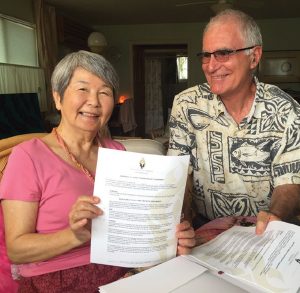
    Keeping busy is important in retirement. For me, doing something meaningful is key to an enjoyable life. Before I retired, I worked in philanthropy, helping to raise funds for a highly regarded private school. I felt good assisting the school with its mission, enabling donors to do “good” for the school and helping people “achieve their heart’s desire.” My specialty is estate and gift planning — working with donors as they ponder their own mortality and decide how they can make a difference with the wealth they have accumulated. If you don’t make plans for your estate, others (including the government) will make those decisions for you after you pass. I help empower people to make bequests that can help their heirs and charities they love.

    When I first retired, I lived an idyllic life. I walked along beaches, swam in the surf, trekked over mountain trails, cooked delicious meals, got a library card and read dozens of books, and napped in the afternoon. I even walked around the entire Island of O‘ahu. What’s not to love about this lifestyle? I had the money to be unemployed and self-indulgent, but I wanted to do more. I volunteered for local fundraising efforts and got quite involved with my faith community. Then one day, I received an unsolicited email from either LinkedIn or a search firm, saying, “Here’s a job that you might like.” It described exactly what I had been doing for the past 10 years. I can do this, I thought. I applied and was hired.

    The work environment at the University of Hawai‘i Foundation is very enjoyable and I’m thrilled to be a part of it. The UH System, with its 10 campuses, is the only public university in the state. The future of Hawai‘i depends on us offering greater educational opportunities for students at every academic level, career aspiration and economic strata.

    Now, a year later, my work has stopped being a hobby-job; it is a mission. I want to help young students pull themselves out of poverty through education, and help the brightest academic scholars continue their research and post-graduate studies at UH instead of going to the mainland. I want to show generous Hawai‘i residents that their current major gifts and planned estate gifts to the UH Foundation are living investments in the future of Hawai‘i. There is nothing more personally rewarding than when a grateful donor thanks me for helping make a profound difference in his or her life and the lives of students by crafting their legacy gift.

    This is why I chose to work after retirement at a job that has become a life’s work for me.


    UNIVERSITY OF HAWAI‘I FOUNDATION
, P.O. Box 11270, Honolulu, HI 96828-0270
    1-866-846-4262  |  www.uhfoundation.org
    Busy Doing Good by Dale Spenner, University of Hawai‘i Foundation for the June-July 2016 issue of Generations Magazine, Hawai‘i’s Resource For Life

  • Stop Being an Easy Victim

    I don’t like to work. I have said this for years in presentations around the island. People laugh, thinking I am joking. I am not.

    I am on-call 24 hours a day, seven days a week. When a crime occurs and the victim is 60 years of age or older, the police page me and I drive down to the station to review the evidence. It is not fun there. They don’t have doughnuts and the detectives aren’t as funny as those on “Barney Miller.”

    I have spent more than one holiday sitting at a gray metal desk reading police reports and eating old Halloween candy. But perhaps the biggest reason I don’t like being at the police station is that often, the crimes I am reviewing could have been easily avoided.

    For example, a great percentage of the stolen car cases our office prosecutes are a result of seniors leaving the keys in the vehicle, or leaving the car running as they pop back into the house for something they forgot, or running into a store for a quick errand, only to find their car gone when they return.

    Speaking of cars, please stop leaving credit cards and checkbooks in them. A drug addict’s favorite place to go shopping is in a parking lot. A left-behind wallet, purse or checkbook is a big payday for someone feeding a habit.

    Also, lock the doors to your home. You don’t live in Mayberry with Aunt Bee. Many burglaries have been committed by persons who just open an unlocked door. Frequently, the criminal will not care whether or not someone is home or what time of the day or night it is. Simply securing your house deters unwanted strangers.

    Speaking of strangers, don’t let them in! Many identity thefts, burglaries and assaults start with a homeowner letting in a person they don’t know. The man who says he is from the utility company and needs to check something — do you really know where he is from? Direct anyone needing to use your restroom to the nearest public facility.

    My cautions may sound harsh; I have heard that because we live on a small island, aloha is a way of life. If that were true for everyone, tell me why crimes affecting the elderly have increased over 300 percent since I started the Elder Abuse Unit? If you don’t want to take simple steps to prevent yourself from being a victim of a crime, do it for me. I am tired of eating stale candy.


    To report suspected elder abuse, contact the Elder Abuse Unit:
    808-768-7536  |  ElderAbuse@honolulu.gov  |  
www.honoluluprosecutor.org

    Stop Being an Easy Victim by Scott Spallina, Senior Deputy Prosecuting Attorney from the June-May 2016 issue of Generations Magazine, Hawai‘i’s Resource for Life

  • Hawai‘i Alzheimer’s Disease Initiative

    Families may be unaware of many services available for loved ones with Alzheimer’s disease or a related dementia. And in Hawai‘i, a large proportion (70 percent) of dementia care is provided at home.

    Generations Magazine - HawaiiAlzheimers_image1
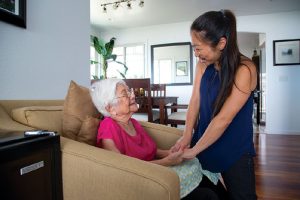
    Nova Erickson assists her grandmother, Jane Nagareda, at home.

    In September 2015, the University of Hawai‘i Center on Aging was awarded a three-year federal grant from the Administration for Community Living for the Hawai‘i Alzheimer’s Disease Initiative (HADI). HADI aims to build “dementia capability” within the state by creating and improving services for patients and their caregivers and by providing training for physicians and health professionals.

    HADI complements the work of other notable organizations, including the Alzheimer’s Association Aloha Chapter. As principal investigator for the HADI team, I work with Co-Principal Investigator Ritabelle Fernandes, MD, MPH, and Project Consultant Jody Mishan.

    There are several exciting initiatives in process:

    • HADI is developing a new website (www.hawaii.edu/aging/hadi) that will become a one-stop site for resources and tools for brain health, memory loss, and dementia, and dementia care.

    • Recently, HADI trained over 100 professionals and volunteers as Hawai‘i’s first Memory Care Navigators, who will help persons with memory loss or dementia and their caregivers understand their needs and connect them with appropriate services. Visit: www.hawaii.edu/aging/hadi.

    • Soon, Savvy Caregiver, a new program, will give family caregivers knowledge and skills to handle the challenges of caring for a family member. The training program is conducted over six group sessions by HADI, in partnership with several other organizations.

    HADI also intends to train professionals in dementia care, modeled after the national Dementia-Friendly America collaborative. Recently, Dr. Terry and Michelle Barclay’s held workshops that trained case managers on best practices in care coordination for persons with memory loss and dementia. Clinicians and primary care providers were updated about how to conduct a comprehensive dementia workup. Additional training programs will be offered in the future.

    HADI is also championing Dementia Friendly Communities (www.dfamerica.org). View a special presentation via ‘Ōlelo Community Media’s On Demand; enter the keywords “Dementia Friendly Communities.”

    For more information and to see a full list of our community partners, call the UH Center on Aging or visit the UHCOA website.


    UNIVERSITY OF HAWAI‘I CENTER ON AGING
    
1960 East West Road, Bio Medical Sciences T-705B, 
Honolulu, Hawai‘i 96822
    808-956-5001  |  uhcoa@hawaii.edu

    Hawai‘i Alzheimer’s Disease Initiative by Christy Nishita, Ph.D., Interim Director and Researcher, UH Center on Aging from the June-May 2016 issue of Generations Magazine, Hawai‘i’s Resource for Life

  • Lumbar Stenosis Misdiagnosis

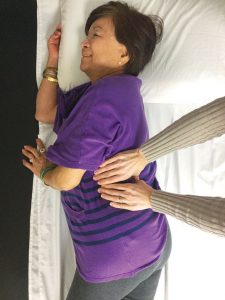
    Generations Magazine - Lumbar Stenosis_image1Degenerative lumbar spinal stenosis (DLSS) is a leading cause of pain, disability and loss of independence in older adults. This chronic, age-related degenerative narrowing of the spinal canal commonly leads to compression of the nerves in the lower back. DLSS is often diagnosed incorrectly because even though it originates in the spine, symptoms may not include back pain. Patients can experience numbness or tingling, cramps and weakness in the lower limbs with or without pain. Symptoms worsen while upright, inhibiting the ability to walk and stand; sitting and bending forward alleviate symptoms.
    Sometimes, DLSS symptoms can be effectively managed with nonoperative options:
    • Pain relief medications
    • Epidural injections
    • Activity modification Sit in a recliner instead of a straight chair; use a recumbent bicycle rather than walk; lean forward on a grocery cart while shopping.
    • Physical therapy Aquatic or land-based exercises to stabilize the spine, lumbar traction and manual therapy.

    Although DLSS is a natural result of aging and we don’t know how to prevent it, its impact on your life can be reduced and its progression slowed by maintaining proper posture and a healthy weight, using supportive chairs and mattresses and, exercising regularly.


    Moon Physical Therapy, LLC, 
320 Ward Avenue, Suite 107, Honolulu, HI 96814
    Aquatic, Land-based and Manual Therapy and 
Cardiopulmonary Rehab Programs
    808-597-1005  |  www.moonpt.com

    Lumbar Stenosis Misdiagnosis by Julie Moon, Physical Therapist from the June-May 2016 issue of Generations Magazine, Hawai‘i’s Resource for Life

  • Animal Assisted Therapy

    Generations Magazine - Animal Assisted Therapy_image1
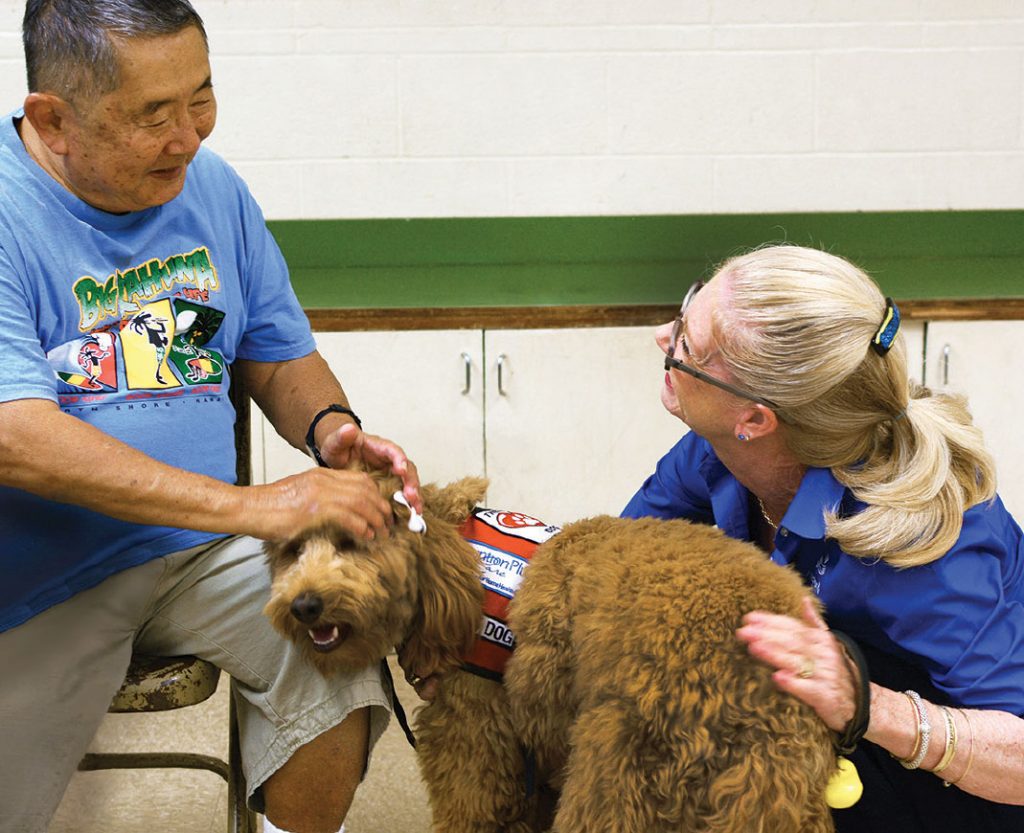
    One of our most beloved caregivers sports a fur coat to work each day.


    Her coat is stylish and doesn’t affect her walking on all fours. In fact, she couldn’t be happier visiting her patients in the hospital or their homes. And like most professionals, she delights when rewarded with a scratch behind her ears. Well, as you might have guessed, she is a therapy dog; her name is Ruby.

    Ruby, a highly trained labradoodle, is recognized by the American Kennel Club (AKC) as a certified therapy dog. She volunteers most of her time visiting children and adults in the hospital or their homes.

    “Ruby truly enjoys being with her clients,” said her handler, Carol Samples, RN and CEO of Attention Plus Care. “She can connect and help people in a way where other treatments cannot.

    Ruby is the product of her breed and the special training she has received. Her talent for boosting morale can be life-changing for some clients.

    Pet therapy, also called animal-assisted therapy (AAT), has been observed as having a positive effect on seniors. A one-year study of approximately 1,300 adults aged 65 or older (published in the Journal of the American Geriatrics Society) found that companion animals had a positive effect on their activities of daily living (ADLs). Older adults without pets experienced a decline in ADLs compared to similar groups with pets, the study revealed.

    A study in the Journal of Gerontology also found that a therapy dog had a positive effect on residents at long-term care facilities. Residents engaged with a therapy dog experienced less loneliness after the end of the six-week study. The study also found that one 30-minute session a week with a therapy dog significantly reduced participant loneliness.

    “We notice a decrease in blood pressures and increase in smiles when Ruby visits our medically fragile patients,” said Samples. “The effects are profound and bring a sense of joy to those who can’t have a pet in their life.”

    AAT for seniors has also been shown to help Sundowner’s Syndrome, evening periods of agitation and confusion in those with Alzheimer’s disease and dementia. Touching and being touched by a therapy dog provides tactile and cognitive stimulation for patients and improves their sense of well-being.

    Dr. Michael McCulloch, a Portland psychiatrist, studies why pets are therapeutic. His research reveals that the therapeutic effect is linked to one basic human need.

    “Touch is one of our primary needs when we’re born and one of our last needs to go.”

    — Dr. McCulloch

    Ruby just thinks it’s good, furry fun.


    ATTENTION PLUS CARE Accredited by The Joint Commission
    1580 Makaloa St., Ste. #1060, Honolulu, HI 96814
808-739-2811  |  www.attentionplus.com
    Available monthly:
    Aging in Hawaii Educational Outreach Program
by Attention Plus Care – a program to provide resources for seniors and their families, instructed by a registered nurse, who covers a different aging topic each month.
    For more information on Animal Assisted Therapy and 
free community workshops on Aging in Hawai‘i hosted by Attention Plus Care, call 808-440-9372.

    Animal Assisted Therapy by Eileen Phillips, RN, Attention Plus Care from the June-May 2016 issue of Generations Magazine, Hawai‘i’s Resource for Life

  • SSA News for Same-Sex Couples

    Last year, the Supreme Court issued a decision in Obergefell v. Hodges, holding that same-sex couples have a constitutional right to marry in all states. As a result, the Social Security Administration (SSA) recognizes more same-sex couples as married for purposes of determining entitlement to Social Security benefits or eligibility for Supplemental Security Income (SSI) payments. We recently updated employee instructions for processing claims and appeals when a determination of marital status is necessary.

    As part of the new instructions, we have:

    • Removed from our policy any mention or consideration of the dates when states first recognized same-sex marriages from other states. These dates are no longer relevant.

    • Added the dates when some foreign jurisdictions allowed same-sex marriage, eliminating the need for a case-specific legal review in many international same-sex marriage claims.

    • Updated and simplified our procedures for processing claims involving a transgendered or intersex person, allowing these individuals to self-identify as members of a same- or opposite-sex marriage.

    • Streamlined and clarified policy instructions, addressing advocate and employee questions. We encourage those who believe they may be eligible for benefits to apply now. Learn more at www.socialsecurity.gov/same-sexcouples.


    For questions, online applications or to make an appointment to visit a SSA office, call from 7am–7pm, Mon–Fri:
    1-800-772-1213 (toll free)  |  1-800-325-0778 (TTY)
  |  www.socialsecurity.gov

    SSA News for Same-Sex Couples by Jane Yamamoto-Burigsay, Social Security Public Affairs Specialist in Hawai‘i from the June-May 2016 issue of Generations Magazine, Hawai‘i’s Resource for Life

  • June – July 2016

    WANT THIS ISSUE?

    Download your own personal copy of this issue in PDF format. Click the button below:

    DOWNLOAD IT NOW

    Aloha ia ‘oe: A Marlene Sai Legacy