Category: February – March 2019

  • A Decade of Service to Veterans

    The only state veterans home in Hawai‘i, Yukio Okutsu State Veterans Home, celebrated its 10th anniversary of serving veterans from across our nation in 2018.

    From celebrating our seniors’ accomplishments to bringing the community to our residents, we know the importance of ‘ohana. We hold several events throughout the year to help bring the community together, including our popular car shows, farmers markets and bake sales, as well as activities for holidays throughout the year.

    Located in Hilo, Yukio Okutsu serves all veterans, regardless of the location of your service or if your unit was not in Hawai‘i. We have a passion to serve our veterans to the best of our abilities every single day, and our comprehensive senior care services include 24-hour skilled nursing, adult day health care, a pharmacy, rehabilitation therapy, hospice services and more.

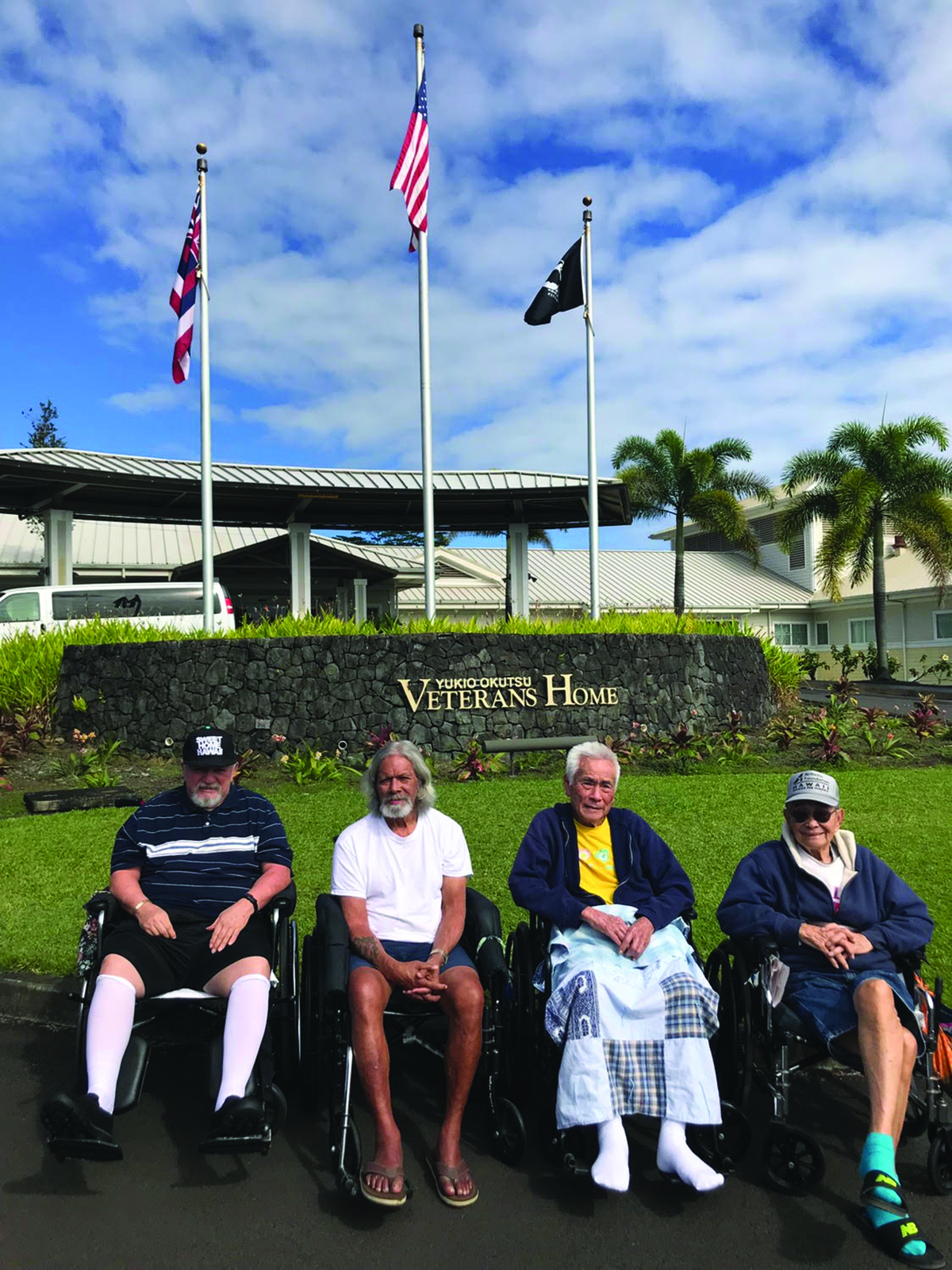
    L-R: Franklin Baptiste, Buddy Kamehaiku, Iwao Nagata, Masao Kuniyoshi
    L-R: Franklin Baptiste, Buddy Kamehaiku, Iwao Nagata, Masao Kuniyoshi

    ———————

    YUKIO OKUTSU STATE VETERANS HOME
    1180 Waianuenue Ave., Hilo HI 96720
    808-961-1500  |  www.avalonhealthcare.com/hilo
    Facebook: hawaiisveterans

    The only state veterans home in Hawai‘i, Yukio Okutsu State Veterans Home, celebrated its 10th anniversary of serving veterans from across our nation in 2018. From celebrating our seniors’ accomplishments to bringing the community to our residents, we know the importance of ‘ohana.

  • Dementia and Vision Changes

    Human beings use five ways to take in data: sight, touch, smell, taste and sound. From the time we are born, we prefer to take in data first by what we see, then hear and finally through touch. Vision, our primary source for processing new information, is controlled by an area in the back of our brain called the occipital lobe. Dementia attacks and damages the occipital lobe resulting in skewed vision, poor depth perception and diminished peripheral vision. Peripheral vision loss is a normal part of aging but with dementia, it worsens to where sight becomes “binocular” and, in the later stages, “monocular.”

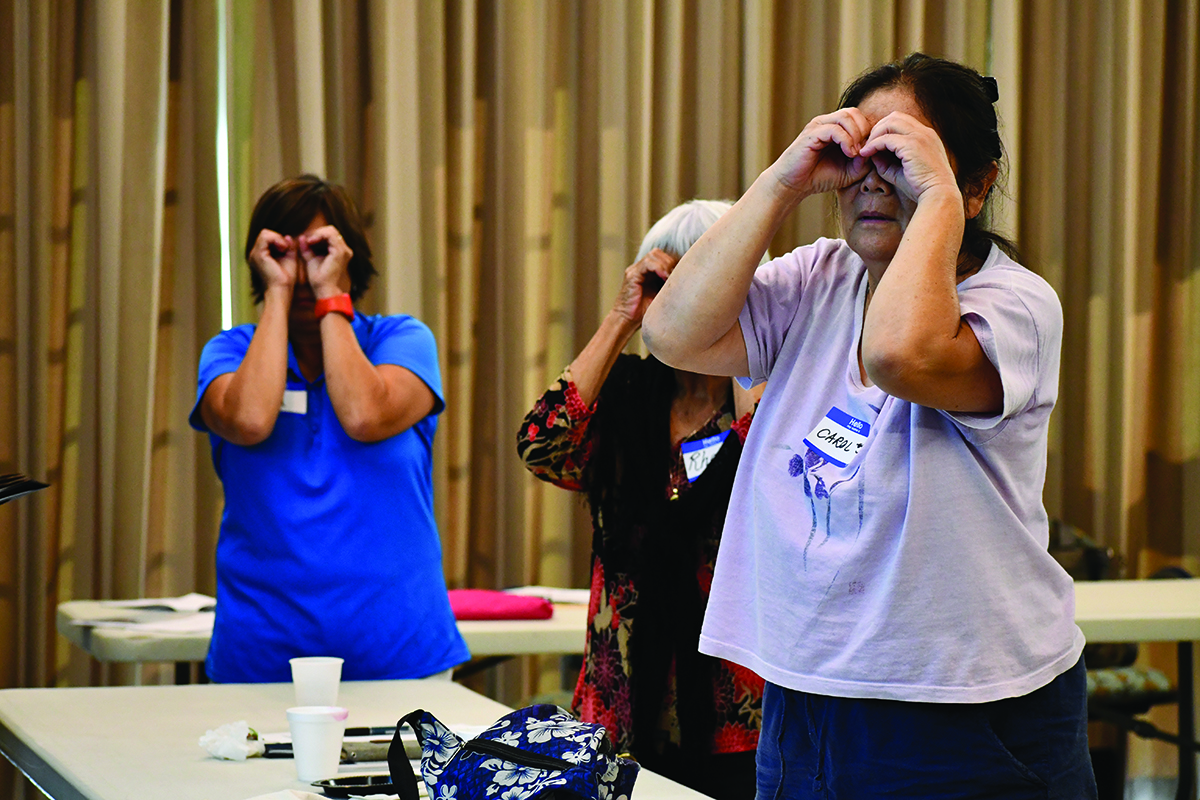
    People testing for monocular visionTeepa Snow, a dementia expert, occupational therapist and Positive Approach™ to Care founder, suggests we can experience how limited a view this is by forming makeshift binoculars. Move both your hands up to your eyes, then loosely circle your fingers around your eyes to make two binocular-like tunnels. Take a look around you — notice that you need to move your entire head in order to look to up, down and to your sides. How might this hinder a person’s abilities?

    Now hold your arms straight out in front of you about shoulder width apart and look only down that one “tunnel.” A person living with dementia (PLWD) in the later stages of vision loss has a field of vision of about 12 inches in diameter in all directions. This means they cannot see something unless it is directly in front of them at just about eye level — monocular vision.

    This shrinking field of peripheral vision presents many challenges besides making a person easily startled when approached from the rear, tripping over obstacles in their path or misjudging how far away an object is when they reach for it.   For example, road safety would be a major concern for the PLWD who has binocular vision.

    HELPFUL CARE PARTNER TIPS

    • Be mindful of your loved one’s safety and in-dependence — think five steps ahead to remove obstacles in walking paths.
    • Always approach the PLWD from the front so they can see you coming and to avoid negative reactions like anger, fear and/or surprise.
    • Pair visual cues with verbal cues when asking your PLWD to do something — show them how.
    • Find support groups in your area.

    ——————-

    PAC HUI HAWAII
    808-469-5330  |  PAChawaii4@gmail.com
    www.PacHuiHawaii.com

    PAC HUI HAWAII is a caregiver training organization utilizing the Positive Approach™ to Care philosophy developed by Teepa Snow. To know more of the organization and current workshops and other events, please visit us online.

    Human beings use five ways to take in data: sight, touch, smell, taste and sound. From the time we are born, we prefer to take in data first by what we see, then hear and finally through touch. Vision, our primary source for processing new information, is controlled by an area in the back of…

  • Don’t Take Breathing for Granted

    Breathing is something most of us take for granted. But for those folks with respiratory issues like asthma, breathing can be a struggle. Studies show that a healthy adult will take an average of 12–15 breaths per minute. For those with respiratory issues like asthma, it may be higher.

    Breathing issues can happen at any time but are usually triggered by things like temperature, humidity, pollen and pollution. Some of the things we can do to stay one step ahead of an asthma attack are:

    • Take medications as directed
    • Stay out of air-polluted areas
    • Be cautious of dust, pollen, dander, etc.

    Photo of woman struggling for breathColds and the flu are also major triggers of asthma. So, be sure to take extra precautions like washing your hands and limiting your exposure to others who are ill.

    Breathing exercises are an important way to help your lungs breathe better. Also, try to always breathe through your nose, as the tiny hairs in your nose act as a filter while warming the air as it enters the lungs.

    Now that you have a few tips on asthma preparedness, here’s something to make you giggle: “Why did the doctor suspect that Dracula had a breathing problem? Because of his coffin!”

    —————

    CARE CENTER OF HONOLULU
    1900 Bachelot Street, Honolulu HI 96817
    808-531-5302  |  www.ccoh.us

    Breathing is something most of us take for granted. But for those folks with respiratory issues like asthma, breathing can be a struggle. Studies show that a healthy adult will take an average of 12–15 breaths per minute. For those with respiratory issues like asthma, it may be higher. Breathing issues can happen at any…

  • Memory Loss & Aging

    At some point we’ve all had times of forgetfulness or misplacing things. Our keys get  lost or we draw a blank trying to remember where the car is parked or what we just ate for breakfast. We can usually sort it out and remember things with some time and patience. But when is forgetfulness or memory loss of concern?

    Serious memory problems can be disabling and make it hard to accomplish routine tasks without help. This is different from the occasional forgetfulness that comes with aging. Memory loss that disrupts routines and activities of daily living is concerning, and caregivers should know it may signal a change in a person’s condition.

    If you are worried about memory loss, that is reason enough to see your doctor. Seeing a primary care physician, or PCP, who already knows you is a good place to start. Signs that it may be time to see a doctor may include:

             Trouble speaking, or misusing common words

             Confusion about time, people and places

             Feeling lost in familiar areas or residence

             Not caring for oneself or others as usual

             Unexplained changes in behavior and mood

             Not realizing unsafe or dangerous situations

             Repeating the same questions over and over

             Returning common items to unusual places

             Trouble following plans or routine tasks

    Alzheimer’s disease is the most common cause of dementia and memory loss in older adults. If you are worried that changes in your memory may be related to dementia, you should talk with your doctor about it.
    There are medications that can temporarily ease some of the symptoms of dementia. Caregivers should also know that memory loss doesn’t automatically mean someone has Alzheimer’s or dementia. Other health problems can also affect memory, including stroke and Parkinson’s disease, and many conditions that can affect our ability to be alert and access memory. Caregivers should be observant of changes in memory or memory loss that can come from medication side effects and know how to intervene.

    Caregivers can also encourage individuals to do things that may help with memory such as:

             Doing mentally stimulating puzzles and games

             Socializing and connecting with others

             Exercising mind and body together

             Stopping or limiting alcohol intake

             Reducing over the counter medications

             Eating a healthy diet and keeping hydrated

             Staying organized with a “to-do list”

             Sleeping well for better alertness and recall

             Doing new fun things and pursuing interests

    ———————

    ATTENTION PLUS CARE HOME HEALTHCARE
    Accredited by The Joint Commission

    1580 Makaloa St., Ste. 1060, Honolulu HI 96814
    808-739-2811  |  www.attentionplus.com

    AGING IN HAWAII EDUCATIONAL OUTREACH PROGRAM by Attention Plus Care — a program to provide resources for seniors and their families, instructed by a registered nurse, who covers a different aging topic each month. For more information on Transitional Care and free community workshops on Aging in Hawai‘i hosted by Attention Plus Care, call 808-440-9356.

     

    At some point we’ve all had times of forgetfulness or misplacing things. Our keys get lost or we draw a blank trying to remember where the car is parked or what we just ate for breakfast. We can usually sort it out and remember things with some time and patience. But when is forgetfulness or…

  • Well-being Starts with a Healthy Kitchen

    Kitchens are awesome places as great food is cooked and eaten there! But they can also be home to dangerous microbes. Did you know that kitchens are more heavily contaminated than bathrooms? Ordinary cleaning practices do little to reduce the microbial load, so kitchen sanitizing is a higher and more frequently needed level of cleanliness. For example, you should clean sponges daily: microwave them for one minute or put them in a dishwasher with a drying cycle.

    Two good reasons for kitchen sanitation

    Reducing germ counts to an acceptable level is the main purpose of kitchen sanitation. In addition, sanitizing procedures help to prevent food spoilage and can prevent micro-organisms interfering with various cooking processes.

    Best practices for a healthy kitchen

    • Proper personal hygiene, including frequent hand and arm washing and covering cuts
    • Proper cleaning and sanitizing of all food contact surfaces
    • Proper cleaning and sanitizing of utensils and equipment
    • Store food at safe temperatures and throw it out at the proper time

    The proper cleaning method is to wash with detergent and hot water, rinse with clear hot water, and then use a sanitizer approved for use on food contact surfaces.

    ————————

    CLEAN PLUS SYSTEMS II
    808-678-8021 | www.rosegalera.com

    Kitchens are awesome places as great food is cooked and eaten there! But they can also be home to dangerous microbes. Did you know that kitchens are more heavily contaminated than bathrooms? Ordinary cleaning practices do little to reduce the microbial load, so kitchen sanitizing is a higher and more frequently needed level of cleanliness.

  • Benefits of Exercise for Our Kūpuna

    Regular exercise and physical activity can help to prevent disease, improve mental health, increase energy, reduce the risk of falling and much more. Here’s how!

    Disease prevention

    Exercise improves overall immune function. Even light exercise for 30 minutes a day is beneficial.

    Photo courtesy of Pohai Nani
    Photo courtesy of Pohai Nani

    Improved mental health and cognitive function

    Exercise relieves stress by producing endorphins —  those “feel good” hormones — and has also been shown to lower the risk of developing dementia.

    Improved sleeping patterns

    Exercise helps establish good sleeping patterns, which is especially important for older adults.

    Decreased risk of falls

    Exercise improves strength, agility and flexibility, which in turn will improve balance and coordination, reducing the risk of falls.

    Social engagement

    Strong social ties are important at any age. Turn exercise into a fun social activity by joining a group exercise class, walking group or even a gardening club.

    ———————-

    POHAI NANI
    Sonja Guy  |  808-236-7807 www.pohainani.org

    Regular exercise and physical activity can help to prevent disease, improve mental health, increase energy, reduce the risk of falling and much more. Here’s how!

  • Aging and the Impact of Hearing Loss

    By age 75, approximately fifty percent of us will have a significant degree of correctable hearing loss. Fortunately, most hearing loss can be treated and is correctable. New technology enables us to hear and understand at or near normal levels. It is always a good idea not to procrastinate and seek professional help sooner rather than later.

    Effects of untreated hearing loss

    Hearing loss isn’t just an ear issue. Untreated hearing loss can have serious and wide-ranging consequences for both you and those around you:

    • Increased mental fatigue/stress
    • Poorer memory
    • Difficulty focusing
    • Poorer mental health
    • Social withdrawal
    • Depression

    If you or a loved one are not hearing as well as you once did, help is available. Modern technology can correct hearing loss as well as improve your hearing. Don’t let hearing loss rob you of the enjoyment of your golden years. Join the thousands of people who have overcome hearing loss and increased their quality of life by seeking professional help.

    You will be glad you did.

    ———————–

    OHANA HEARING CARE
    1296 S Beretania St #102 Honolulu, HI 96814
    808-593-2137 | www.ohanahearingcare.com


    By age 75, approximately fifty percent of us will have a significant degree of correctable hearing loss. Fortunately, most hearing loss can be treated and is correctable. New technology enables us to hear and understand at or near normal levels. It is always a good idea not to procrastinate and seek professional help sooner rather…

  • A Pain-Free New Year

    With a new year comes new goals to better ourselves. Whether you have been exercising for years or are just starting out, be especially careful to avoid injury. Loss of flexibility and of bone and muscle mass increases the risk of injury and slows down recovery.

             Consult with a professional — Do not start a program without first checking with your doctor or your physical therapist. Your PT will provide expert assessment and personalized recommendations for your health and fitness. They will ensure your workout program accommodates your physical capabilities and any pre-existing conditions you might have.

             Warm up / cool down — Cold muscles are prone to injury so add a few minutes of light exercise and stretches to improve blood flow and reduce stiffness. Slowly increasing / decreasing your heart rate also minimizes stress on your heart.

             Know your limitations — Never work out to the point of pain. Exercising through pain can actually prolong healing. Listen to your body, slow it down, or consult with a PT on how to proceed carefully and safely.

             Vary your workout — Alternating programs, such as swimming or dancing, work different muscle groups, prevent boredom, and give your body a chance to recover between sessions.

    ———————-

    MOON PHYSICAL THERAPY, LLC
    320 Ward Ave., Ste. 107, Honolulu HI 96814 95-1057 Ainamakua Dr. F-11, Mililani HI 96789
    808-597-1005 | www.moonpt.com

    With a new year comes new goals to better ourselves. Whether you have been exercising for years or are just starting out, be especially careful to avoid injury. Loss of flexibility and of bone and muscle mass increases the risk of injury and slows down recovery.

  • Understanding the Two Types of Pain

    There are two main classifications of pain: the common type that arises from damaged tissue (nociceptive pain), and the more exotic kind that comes from damage to the system that reports and interprets damage, the nervous system (neuropathic pain).

    NOCICEPTIVE PAIN

    Tissue damage caused by injury to bone, soft tissue,  or organs. This can be caused by cancer or physi-cal injury such as a cut or a broken bone. The pain may be an ache, a sharp stabbing, or a throbbing. It could come and go, or it could be constant. You may feel the pain worsen when you move or laugh. Sometimes, breathing deeply can intensify it.

    NEUROPATHIC PAIN

    Nerves function like electric cables transmitting signals to and from the brain. Nerve damage can interfere with the way those signals are transmitted, causing abnormal pain signals, such as burning, prickling, electrical shock, tingling or a stabbing sensation. Hypersensitivity to temperature or touch may also indicate nerve damage.

    Understanding the two types of pain will help you understand the solutions your physician or pain specialist suggest for easing it.

    ————————

    NOVEL MEDICAL SOLUTIONS
    support@novelmedicalsolutions.com
    808-528-1111 | www.novelmedicalsolutions.com

    There are two main classifications of pain: the common type that arises from damaged tissue, and the more exotic kind that comes from damage to the system that reports and interprets damage, the nervous system. Understanding the two types of pain will help you understand the solutions your physician or pain specialist suggest for easing…

  • Know Stroke Warnings and Call 911

    Stroke remains Hawai‘i’s third leading cause of death and a leading cause of major disability. However, 80 percent of strokes are preventable. And those that do occur, in many cases, are treatable if symptoms are quickly recognized and treatment is quickly sought.

    Hawai‘i Emergency Medical Services (EMS) data shows, however, that almost 50 percent of Hawai‘i stroke patients aren’t being delivered to hospitals by EMS ambulances. That can result in treatment delays upon hospital arrival or, in some cases, patients arriving at a hospital that is not prepared to immediately provide treatment. In addition, approximately 70 percent of Hawai‘i stroke patients arrive at a hospital at least 24 hours after first stroke symptoms, outside of the treatment times for therapies that can be used to minimize, and sometimes reverse, stroke effects.

    “Stroke patients have the best chance of recovery when 9-1-1 is called immediately,” says Kazuma Nakagawa, M.D., neurologist and American Heart Association (AHA) Hawaii Division Board member.  “For every minute of treatment delay, almost two million brain cells are permanently lost and the risk of permanent disability or death increases. Hawai‘i’s EMS paramedics are trained to diagnose the type of stroke and begin treatment en route to the hospital. They can also alert hospital stroke teams in advance so that treatment can begin immediately upon arrival. Recognizing stroke signs and taking immediate action can mean the difference between a patient walking out of a hospital or being wheeled out.”

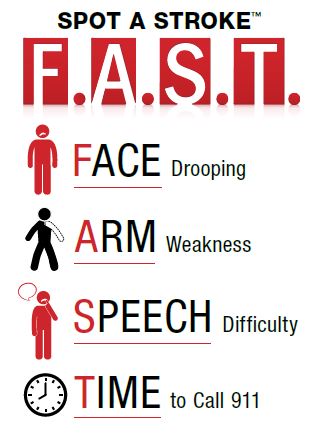
    The AHA developed the acronym F-A-S-T to help the public recognize stroke signs and quickly call 9-1-1. “F” stands for face drooping, especially on one side. “A” stands for arm weakness or numbness. “S” stands for speech difficulty or slurring. And “T” stands for time to call 9-1-1.

    Stroke, in most cases, is preventable through simple lifestyle changes. They include controlling blood pressure, blood sugar and cholesterol levels, maintaining a healthy weight, exercising, improving diet, and not smoking. To learn more about how you can prevent your risk for stroke, go to www.StrokeAssociation.org, or call the AHA Hawaii Division office in Honolulu at the number below.

    Follow us on Facebook or Instagram or visit our website to see what’s happening locally.

    ————————-

    AMERICAN HEART ASSOCIATION HAWAII DIVISION
    677 Ala Moana Blvd, Suite 600, Honolulu HI 96813
    808-377-6630  |  www.heart.org/Hawaii
    Facebook & Instagram: HeartHawaii

    Stroke remains Hawai‘i’s third leading cause of death and a leading cause of major disability. However, 80 percent of strokes are preventable. And those that do occur, in many cases, are treatable if symptoms are quickly recognized and treatment is quickly sought. Hawai‘i EMS data shows, however, that almost 50 percent of Hawai‘i stroke patients…

  • A Life Shared is a Life Well-Lived

    Most of life’s memorable experiences are memorable because they’re shared. What if there were an easy way to not only write down your memories for family and friends but to also give them the opportunity to reminisce with you about them?

    There is! Developed by a team right here in Hawai‘i — led by local entrepreneur Beth N. Carvin — JamBios is an easy-to-use memoir writing platform that lets you write one story at a time while also keeping you organized. Nobody can see, comment on, or add to your memoir unless you invite them to. And if any of those you’ve invited add something to it, you are notified.

    It may sound a lot like Facebook, but there are several important differences based on JamBios’ specific focus on a memoir format, such as:

    • Pre-defined chapters
    • 1000s of memory prompts
    • The option to create a keepsake book with a few clicks

    No professional writing skills are required and you are guided through the process of creating the pages and chapters of your memoir. You can write as much or as little as you wish, and add photos, audio and video links. There is no cost to create your JamBio, but you will have to sign up on the website to get started. Before signing up, you can check out example galleries of pages created by users who have opted to have them showcased.

    There is no time like the present to remember and share the past!

    ————————

    JAMBIOS
    hello@jambios.com  |  www.jambios.com

    Most of life’s memorable experiences are memorable because they’re shared. What if there were an easy way to not only write down your memories for family and friends but to also give them the opportunity to reminisce with you about them? There is! Developed by a team right here in Hawai‘i — led by local…

  • What’s Pickleball?

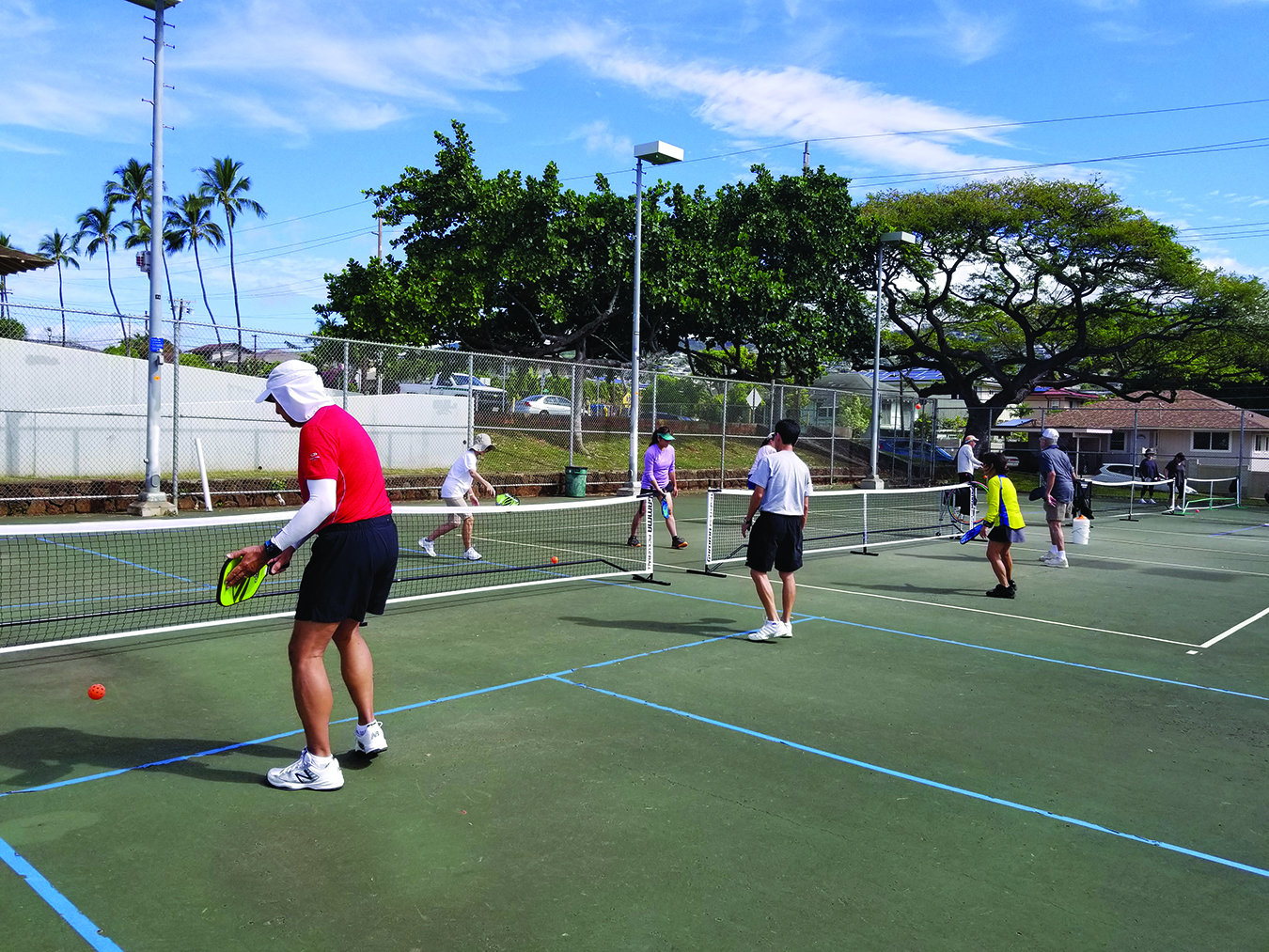
    Pickleball combines elements of tennis, badminton, and table tennis and is played either indoors or outdoors on a 20×44-foot court. Players use a paddle, perforated ball similar to a whiffle ball, and a 3-foot-high net. Pickleball can be played as singles or doubles and it’s like playing ping pong on the ground.

    Because the serve is underhand, and players cannot hit the ball within 7 feet of the net without letting it bounce first, it is less a game of power and more one of finesse and placement. Hence, younger players do not have as much advantage as they might in other sports, like tennis, where power plays a greater role.

    Making friends and building community while getting healthy

    Rather than playing with the same partner for multiple games, players during open-play typically change partners and opponents after every game, which creates a highly social environment where many new friendships are made. Sports with a social component may improve physical, mental and emotional well-being, and longevity more than non-social sports.

    Pickleball helps to increase fitness, create inter-generational social opportunities, and build community ties. It is easy to learn; most people can gain an understanding of the basic rules and can start playing games after a single lesson.

    Where can I learn and play?

    The Oahu Pickleball Association hosts community events, clinics and tournaments. It’s not un-likely to find a very diverse group of approximately 20-40 people showing up to the free open-play sessions at various sites across the island. Pickleball players set up nets in public parks — usually on volleyball or basketball courts.

    The Oahu Pickleball Association is a nonprofit and its passion, mission and purpose is to pro-mote, inform, instruct and organize pickleball on O‘ahu. Other pickleball groups throughout Hawai‘i are listed below. The sport is governed by the USA Pickleball Association, and you can search for the nearly 6,000 places to play in the United States on its website www.usapa.org

    ————————–

    OAHU PICKLEBALL ASSOCIATION
    808-351-1567
    www.meetup.com/Oahu-Pickleball-Association/Facebook: @OahuPickleballAssociation

    KAUA‘I
    www.kauaipickleball.shutterfly.com/

    MAUI
    808-250-1766  |  www.pickleballmaui.com

    HAWAI‘I
    808-331-2255  |  Facebook: KonaPickleballHui

    Pickleball combines elements of tennis, badminton, and table tennis and is played either indoors or outdoors on a 20×44-foot court. Players use a paddle, perforated ball similar to a whiffle ball, and a 3-foot-high net. Pickleball can be played as singles or doubles and it’s like playing ping pong on the ground.