As we grow and mature through the years, we learn about different kinds of love. As children, we received love from our parents and learned about the love we felt for our friends and peers.
Our 20s was an important time. We learned to love ourselves. Loving who we are prepared us to love others. It was an exciting time, followed by intimate relationships, having children or pets and, later in life, connecting with the community and the world by traveling or volunteering.
Dr. John Gray, author of Men Are From Mars Women Are From Venus, has written that full, adult maturity happens around age 56. As humans,
we have so many stages of life to experience that it takes us a long time to master the many varieties of love. By the time we are in our 50s, we have developed a greater capacity. Often, the quality of our relationships improves when we have developed the understanding, acceptance and compassion for the people we share our lives with. We realize how precious love is.
Let me share an example of how we can live a love-filled life. Sheila came to see me because her husband had died from cancer right after her second daughter got married. Sheila had planned to travel and retire with her husband, but now she was left alone. She had friends, but she didn’t want to bother them with her sadness. Her daughters were busy with their careers and husbands. She wanted to date, but she wasn’t attracted to the men that she met. She thought they all seemed “too old” for her even though they were around her age.
Everything in her life was a problem. She continually focused on what she didn’t have. As we worked on her “Circle of Life” (from my book), she realized that her life was really good. She had her health. She could still play tennis and loved mahjong, so she called up some friends to play. Her daughters both had babies. She would babysit for them and feel the closeness of their families. She didn’t sleep well, so she’d listen to podcasts so she wouldn’t be so lonely at night.
Slowly over time, she began to feel more hopeful. Friends invited her for dinner, and she had things to talk about. She began to feel like she could go on in her life. She has been able to build her life in a direction that feels hopeful for her. Her life is an example of how maturity allowed her to shift her love from the loss of her husband to the other people that were in her life.
Love changes throughout our life span. If we allow ourselves to love and be loved, we will have love through all the stages of our lives.
Our 20s was an important time. We learned to love ourselves. Loving who we are prepared us to love others. It was an exciting time, followed by intimate relationships, having children or pets and, later in life, connecting with the community and the world by traveling or volunteering.
Recently, I was having dinner with a number of close girlfriends and their daughters. Afterwards and on the road home, my daughter commented that I was the only woman at the event who was not widowed. My friends are all in the early to mid-60s. Of course, I knew this about each friend. As a gerontologist, I also know the statistics about widowhood.
Still, my daughter’s comment shook me. I know that in 2015, roughly one in four, or 25 percent of people 65 and older, was widowed. Of the nearly 14 million widows and widowers in the U.S., 11 million of the widowed are women. The percentage of those widowed dramatically rises with age, for both sexes, but more so for women.
These numbers sadden me. The thought of losing my husband is something I dread. But widowhood is a statistically ‘‘normal’’ experience for older persons, especially older women. While widowhood is considered one of the most distressing transitions experienced by older adults, we are reminded of other older women — and men — who never have been married or are divorced. Meeting one’s needs for love and intimacy varies substantially by many individual preferences and factors, such as one’s orientation, financial status, disability and even feelings of disapproval by younger family members and society.
But, for most people, and regardless of age’s life transitions and challenges, we crave intimacy, friendships and love from our partners, our families, our friends and others in our lives. Here are some thoughts to consider.
First, we acknowledge that there are many ways to meet emotional and intimacy needs. For an interesting book to read, I recommend Aging Thoughtfully: Conversations about Retirement, Romance, Wrinkles, and Regret by Martha C. Nussbaum and Saul Levmore, Oxford University Press.
Second, it is time to debunk all of those denigrating myths about older adults, especially those around older women, that announce that aging women must graciously renounce sexual love, leaving it to the young. Recent research tells us mature love is both sexual and personal and that sexuality in older adults is highly personal, based upon memory, humor and shared history. For that reason, it can have a depth that youthful love can’t have. So, we need more knowledge and healthy attitudes about meeting emotional and sexual needs and feelings of older adults living in the community or in long-term care settings.
Finally, let’s remember that we are talking about grown-ups here. How you handle this issue should be completely up to you. Don’t let others tell you what you want or don’t want, or what you can do or not do. Between consenting adults, there is no right or wrong way to do this.
Love doesn’t always endure. We need more women, and men, to move away from stereotypes and to explore their own truths. But that is another story.
MYRON B. THOMPSON SCHOOL OF SOCIAL WORK
UNIVERSITY OF HAWAI‘I
2430 Campus Rd., Gartley Hall, Honolulu, HI 96822
Recently, I was having dinner with a number of close girlfriends and their daughters. Afterwards and on the road home, my daughter commented that I was the only woman at the event who was not widowed. My friends are all in the early to mid-60s. Of course, I knew this about each friend. As a gerontologist,…
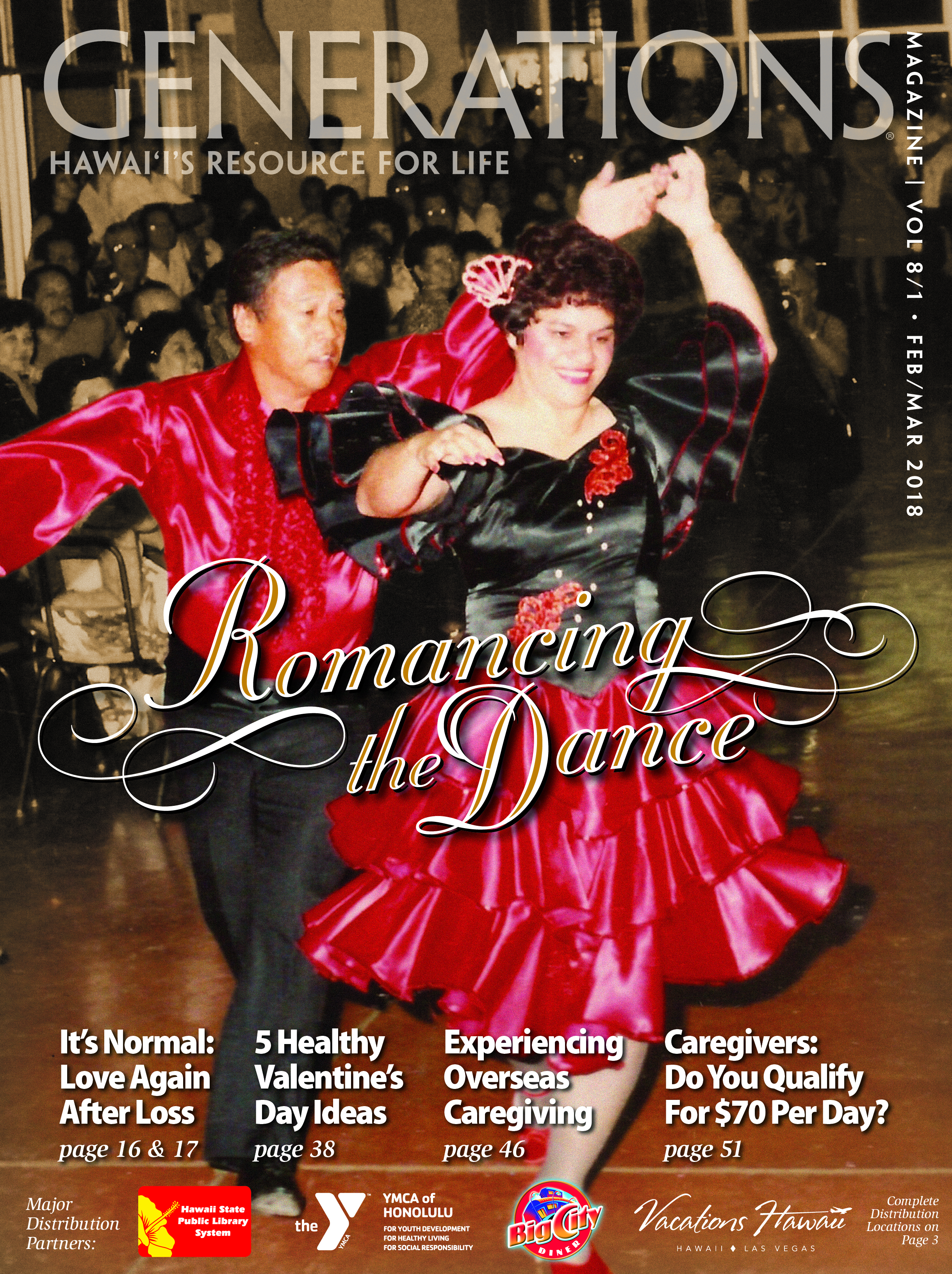
Faith and Benny Agbayani celebrated their 49th wedding anniversary this year, and both agree that the success of their partnership is doing things together. Maintaining a close relationship is more than saying, “I love you;” it’s taking on challenges as a team, mastering new skills and learning together. Overcoming obstacles in life requires commitment, sacrifice and a willingness to cooperate. The Agbayanis do all these things well, but simply call it “sticking together.”
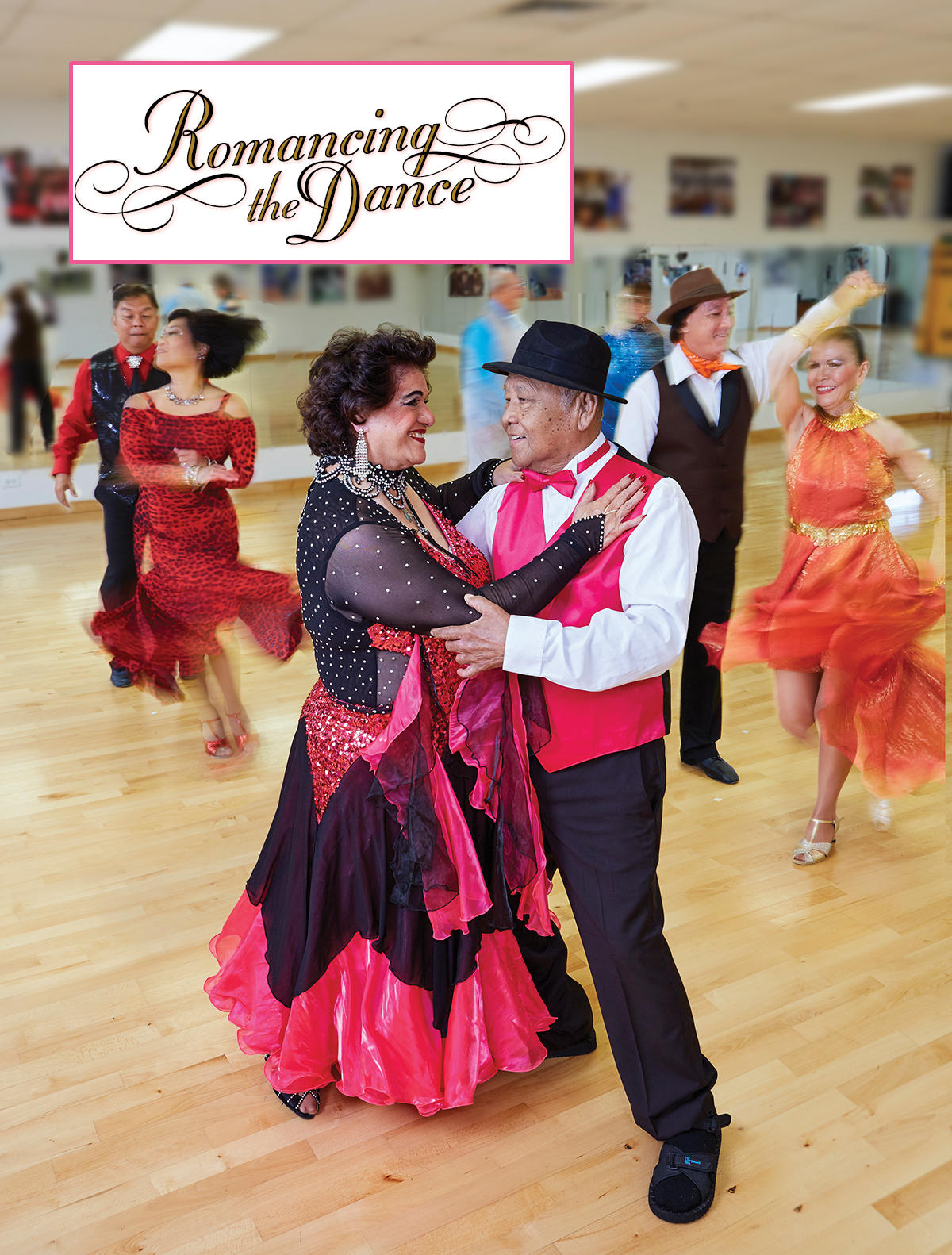
The Agbayanis serve as Dance Director and Associate Dance Director of the Hawaii Ballroom Dance Association (HBDA), which has chapters throughout Hawai‘i where people may learn ballroom dances and participate at social dances at their Dance Studio or Balls at the Ala Wai Golf Course Palladium in Honolulu. Faith and Benny began at the HBDA Pearlridge Chapter. Then they became dance instructors with Arthur Murray Dance Studio in ‘Aiea, and competed in ballroom dancing competitions in Las Vegas. Later, they returned to HBDA as Rotating Instructors — demonstrating new dances to all the HBDA chapters. Now, they direct 53 volunteer Telemark instructors, who encourage ballroom dancing students throughout Hawai‘i to reach for the stars.
“Telemark” is the name of a fundamental turn used in Waltz double-reverse turns and Foxtrot reverse turns. Mastery of the telemark is so essential to ballroom dancing that HBDA uses “telemark” to brand its Telemark Corps of Instructors, annual Telemark Ball and Telemark Queen.
HBDA students normally start with the Foxtrot and Waltz, but before long, they step up to a full repertoire — Merengue, Rumba, Paso Doble, Argentine Tango, Mambo and West Coast Swing — to name a few.
The Agbayanis successfully waltzed through many projects and challenges before they knew anything about ballroom dancing. Says Faith, “I think it’s the power of love and partnership that makes our marriage strong and helped us raise our family.”
Benny agrees. “When you make sticking together a priority, you are going to stay together and enjoy a nice life,” he says.
Ballroom dancing is partnership — an activity that can only be done perfectly when both partners work together, focus on every step and synchronize to the beat of the music. One leads, and the other follows. Both roles must be performed expertly. Mastery means learning the steps, working out the kinks, and lots of practice.
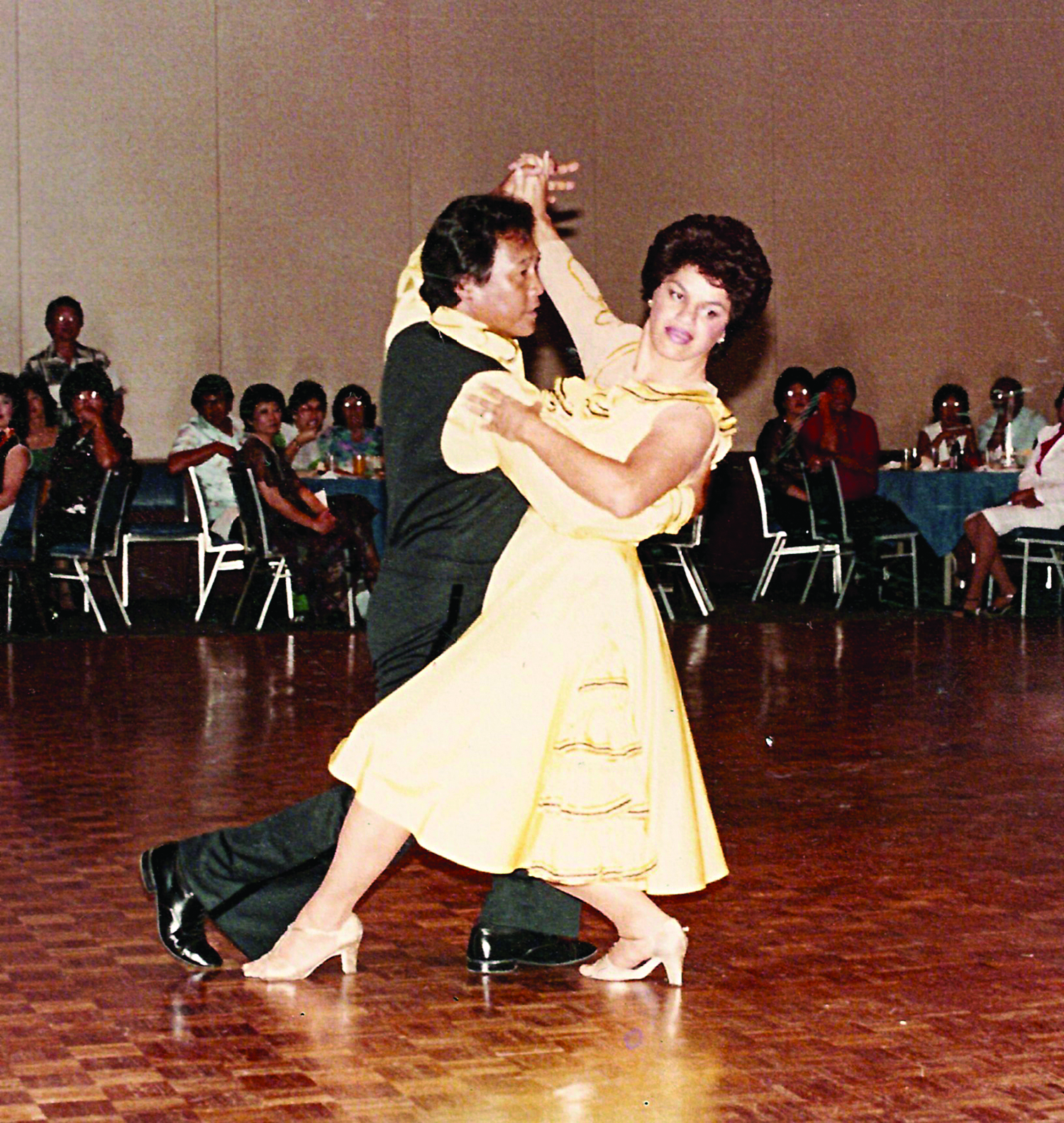
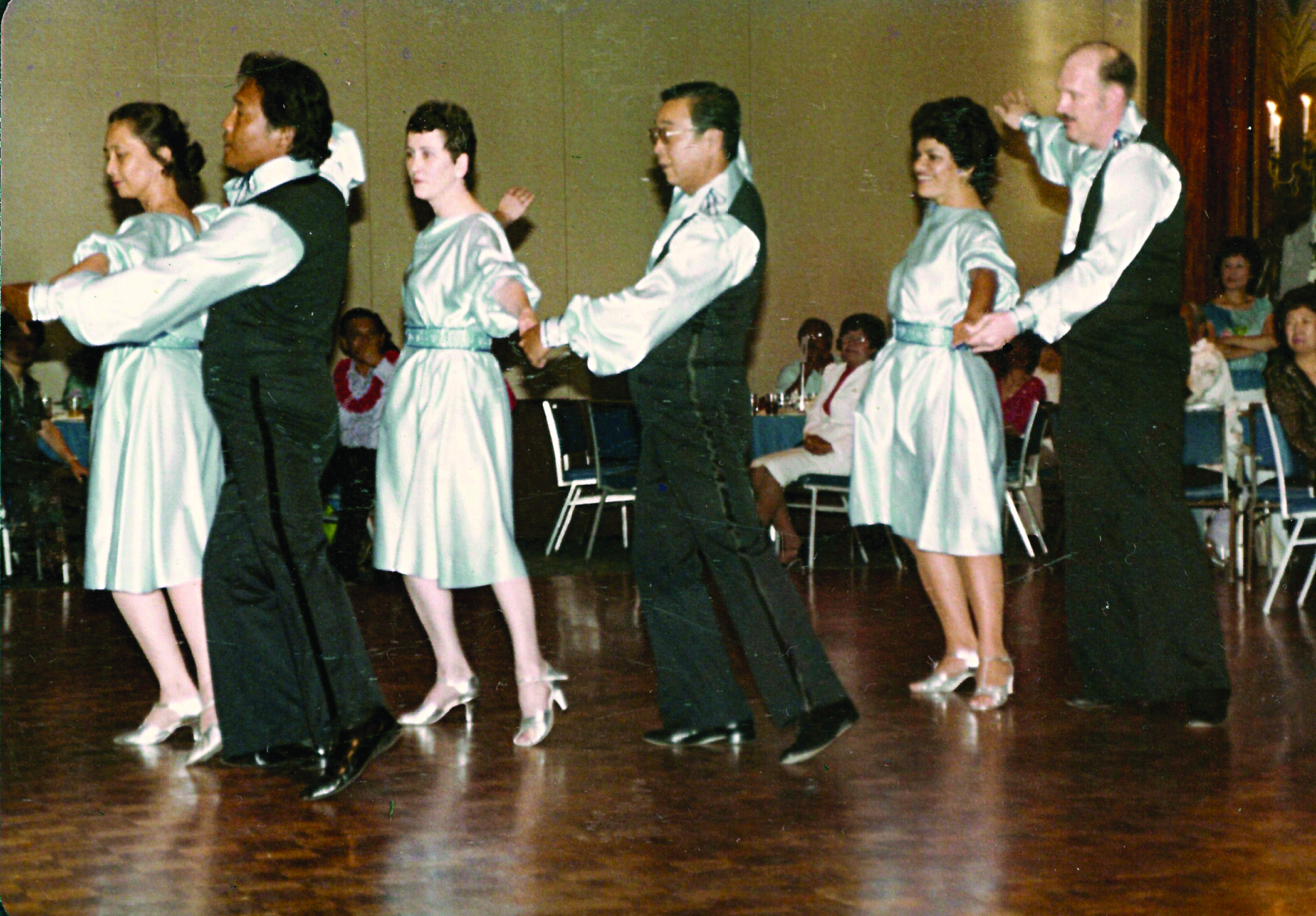
Benny and Faith at the Arthur Murray Showcase 1983, at Princess Kaiulani Hotel
How did Faith and Benny first get involved in dancing? We might imagine them coming from society families who danced at grand parties and taught their children to dance. Not so.
They both came from big working families. Faith is part Portuguese, German, Samoan, Chinese and part what Benny calls “poi.” Benny’s family is Filipino and Spanish. They learned the necessity for hard work, teamwork, cooperation, and helping with family chores.
Benny grew up on an animal farm in Wahiawā and never even attended his high school prom. Farm work prevented him from participating in sports after school. At 17, he joined the U.S. Marine Corp Reserves and tried his hand at non-farm jobs — gas station attendant, fry cook. In 1967, he became the manager of Heights Drive Inn and Coffee Shop (now The Alley at Aiea Bowl). One of his first hires was a counter girl named Faith. She was a good worker. Benny took up bowling and softball in his off hours and found out that he was pretty good at athletics.
Faith and Benny had a good work relationship based on mutual respect. One day, Benny asked, “Eh, can you count money?” Soon Faith was doing the daily accounting as well as serving food in the coffee shop and drive-in.
Benny left the coffee shop for a maintenance mechanic job with the U.S. Coast Guard but kept coming back to visit Faith. On their first date in 1968, a drive-in movie and dinner, Faith asked Benny to swing by her home to meet her father.
“I was a little nervous; then her dad showed up at the door with a pipe wrench in his hand! It kind of spooked me,” says Benny.
Faith’s dad had been trying to unclog the kitchen sink, and Benny offered his assistance. “Faith’s mom liked me right away, and I was OK with her. I hoped he would like me too,” says Benny.
Before long, he and Faith were making plans for the future. “I remember telling Faith that with my Coast Guard job we would be ‘all set.’” They were engaged in 1968 and married at Kawaihao Church on April 3, 1971.
In the ’70s, Benny organized a bowling league at Aiea Bowling Center with guys from the U.S. Coast Guard. Faith was secretary for the Monday night “Tired Weekenders” league, which grew from 10 to 24 teams. Organizing groups became the first step for this couple’s dance through life.
Faith and Benny choreographed the HBDA Pearlridge Chapter Rumba Group Formation Dancers, Anniversary Ball, Sheraton Waikiki.
One day in 1979, Faith told Benny that she knew of a fun activity that they could do together. Sticking together was their way of doing things, so Benny asked, “Yes, Honey. What is it?”
Faith said, “Ballroom dancing.”
“Whoa!” said Benny, “Dancing is not for me!” He was fine with any athletic sport or game, but not dancing. Despite his protest, he attended the first class.
“I still didn’t think much of it until I saw a Telemark Instructor demonstrate professional dancing and all I wanted to do was learn how to do that. So I kept going to class and began to figure it out. We joined the Hawaii Ballroom Dance Association (HBDA) classes, directed by Eugene Ichinose. He and his wife Harriet founded the association in 1959. Ichinose was a serious man, a shogun, an able director and a perfectionist. I could relate to that. Sports take precision and mastery. You have to practice to learn how to cook, pitch, bowl, even how to run fast. Dancing took a lot of energy too, and I got into it.”
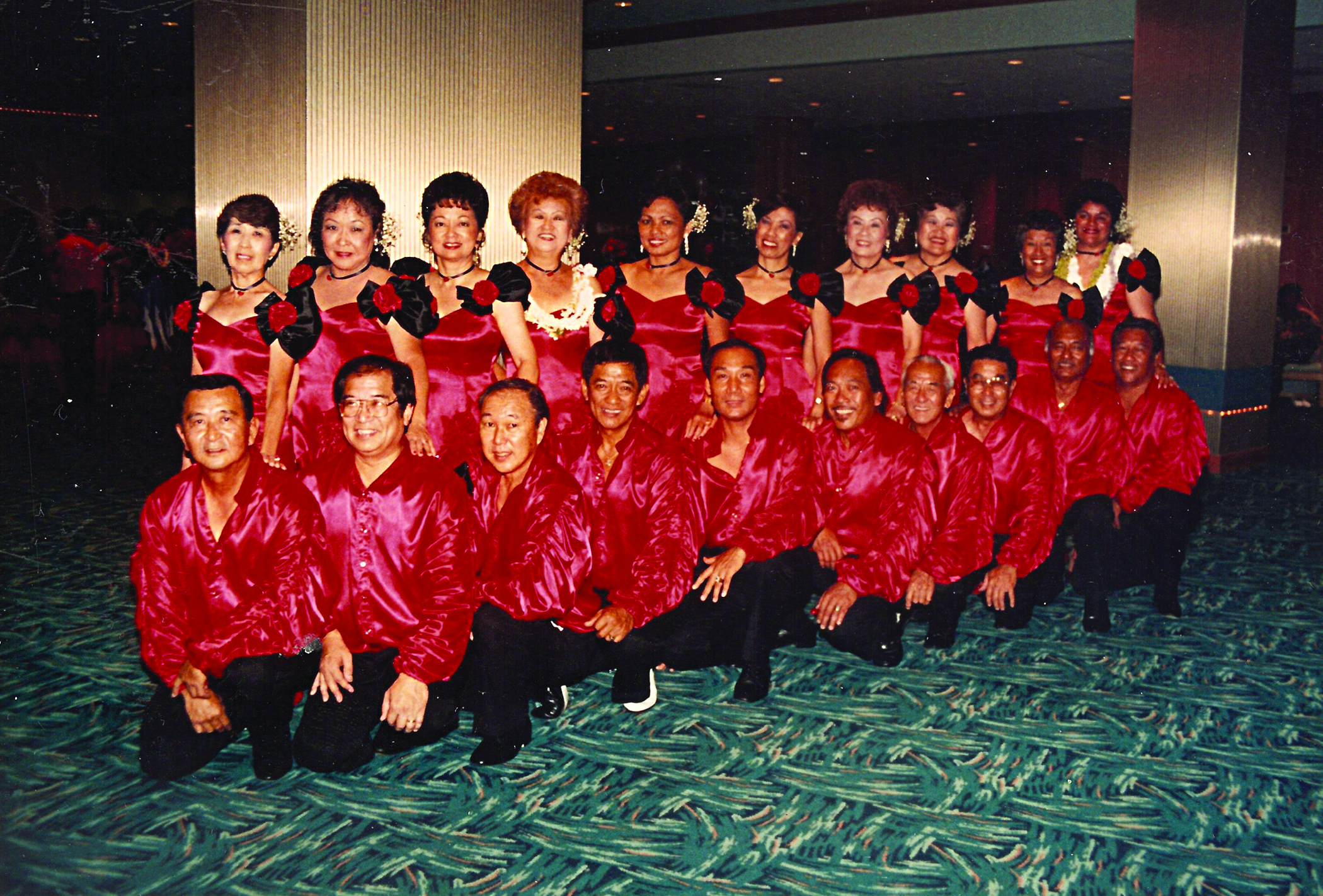
Arthur Murray Showcase 1984, Waltz/Tango Formation, Princess Kaiulani Hotel.
Faith and Benny had been a team for a decade: working out plans, negotiating roles and responsibilities, and reaching their goals with perfect synchronization. Benny was leading, Faith was following, and outcomes required both of them to perform. But this time, Faith chose the game.
When the boys came along, Benny and Faith encouraged them to play the team sports that Dad was never able to play when he was young.
Faith was all in. “My boys were active rascals; they loved releasing energy on the ball field.”
Aiea National Little League games became social events for all the parents. Benny says, “It was a pleasant family atmosphere in those days, and we bonded over potlucks at the field after the games. The men enjoyed a couple of beers at the park before going home. Can’t do that anymore.”
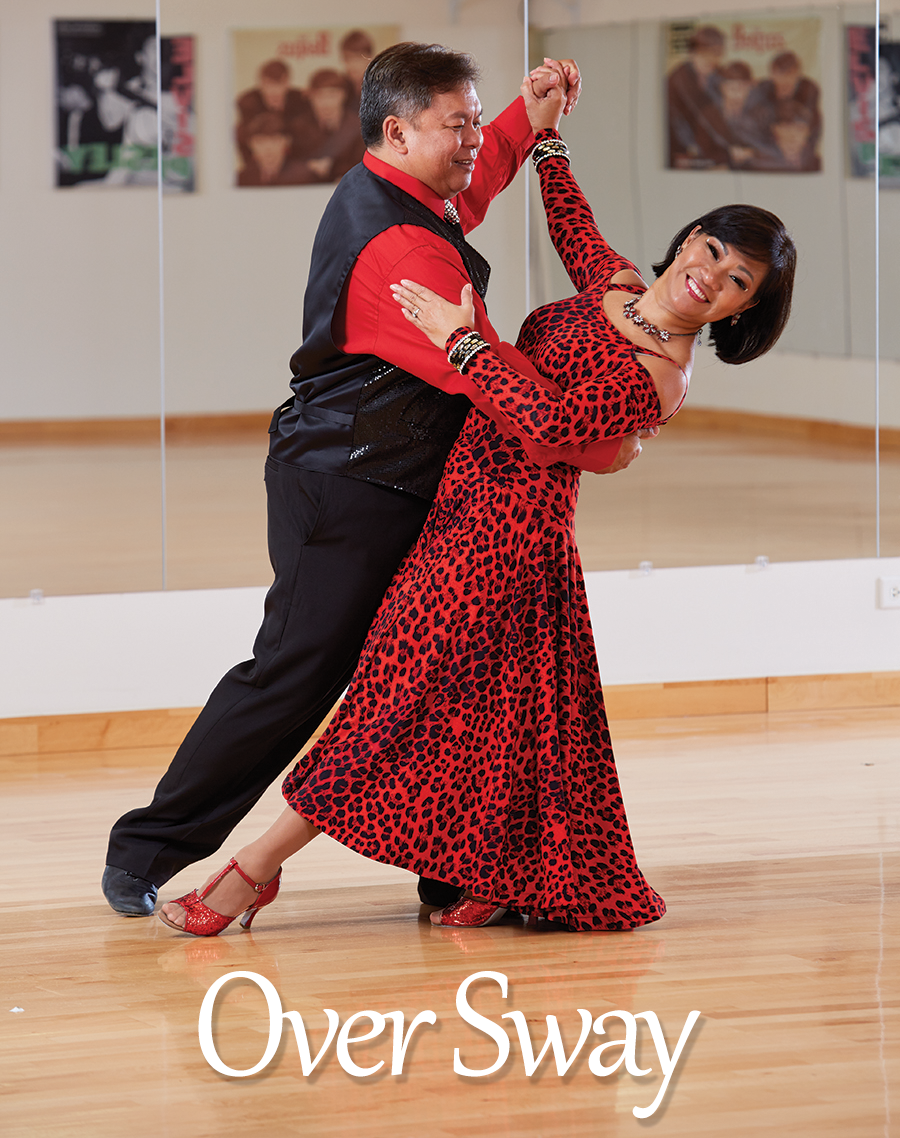
Support and Assistance – In every relationship some circumstances of life cause one partner to pause. It may be a setback, a change in responsibilities, or a time of preparation for a promotion, move or retirement. At these times, the other partner lends support and assistance to keep the relationship healthy. Circumstances are neutral, but how we react to them can make them negative or positive. Support from our partner can allow us to find comfort, joy and assurance in the pauses and low spots of life. Here we see a pause step in the waltz called an “Over Sway.” HBDA Assistant Dance Director Mark DelaCruz supports his wife Patty, Rotating Instructor, for a dramatic pause in the dance. With Mark’s assistance, Patty can relax into the dip and enjoy the freedom of movement.
The Agbayanis’ organizational skills came into play again when the boys got interested in baseball and soccer, where Benny coached in the Aiea National Little League, AYSO and HYSA; Faith was the Business Manager and team mother. When Benny Jr. and Brendyn were at Saint Louis School, Benny coached intermediate baseball and Faith became the Saint Louis Division Mother for the Class of 1993. This is a family sticking together.
During the years when son Benny played major league baseball for the New York Mets was a valuable clutch hitter in the 2000 National League Division Series and World Series, Faith and Benny and the family became proud cheerleaders.
Ballroom dancing only looks easy because the couples practice hard to make it look that way. Every graceful movement represents focused learning and endless rehearsal with the music. Togetherness and respect have to be strong enough to survive the hard work of learning and executing each step perfectly. On the dance floor, your partner’s moves are your moves.
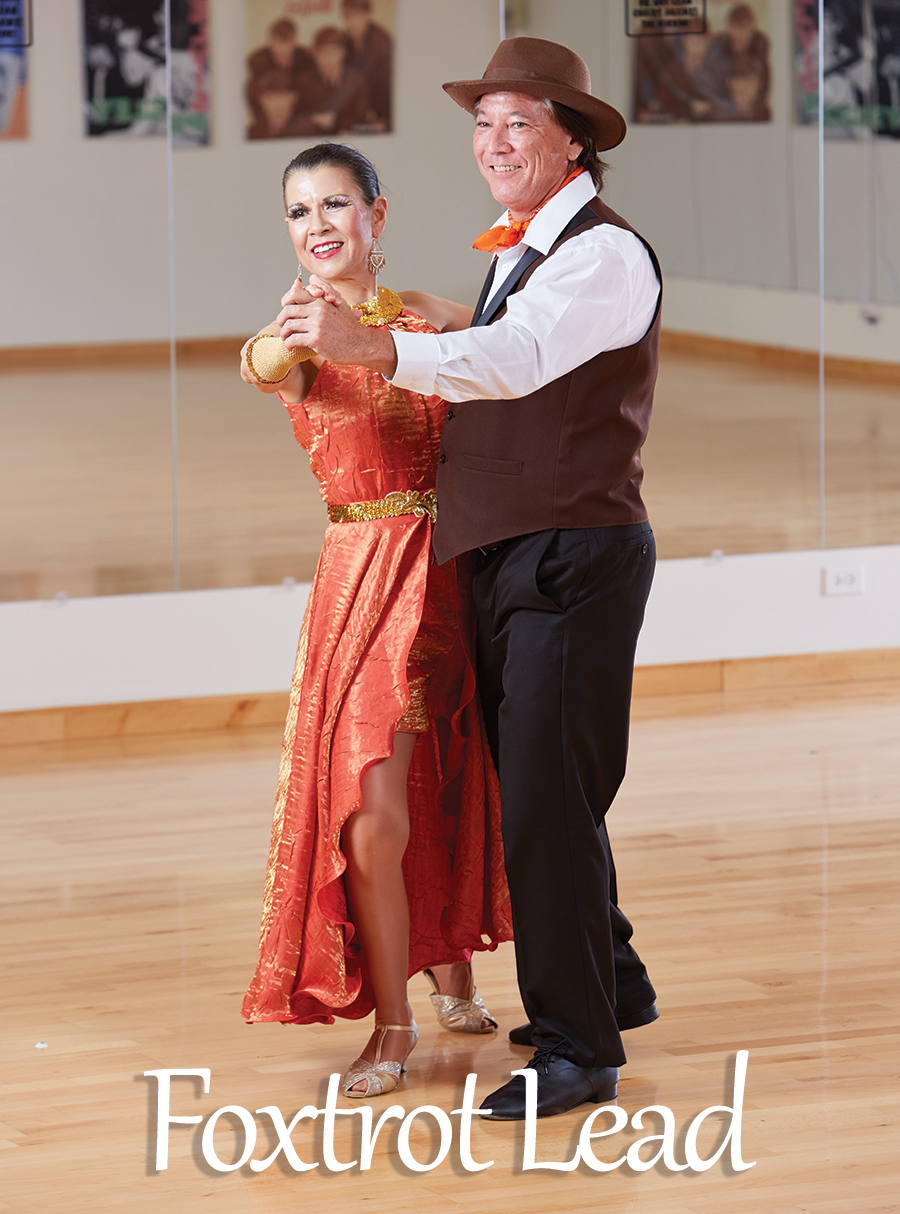
Leadership – Good partnerships rely on leadership. The role of leader may alternate from partner to partner, based on the challenges ahead or the skill sets of each partner. In ballroom dancing, the partners spend time rehearsing their steps together and ironing out cues and clues they will use to communicate their intended actions. We can take a lesson from ballroom dancing, particularly when issues require us to change direction. As HBDA Senior Instructors Martin and Leona Powell dance the Foxtrot, they move to an open promenade position. Martin expertly communicates to Leona through body movements; Leona follows his physical lead and other visual cues to maintain perfect rhythm.
Soon after joining the Hawaii Ballroom Dance Association, the Agbayanis were instructing other students. “Eugene Ichinose asked us to be Rotating Instructors, teaching at all the O‘ahu chapters. We declined because Faith and I both felt that we should first learn more dance skills, traditional dance terminology and steps. So we joined an Arthur Murray dance class and paid for lessons for the next eight years.”
Their Arthur Murray instructors encouraged them to compete in a national ballroom dancing competition at Las Vegas, Nevada. “In 1980, we won several medals, gold, silver and bronze! In 1982, we came back with gold, silver, bronze again!” says Benny.
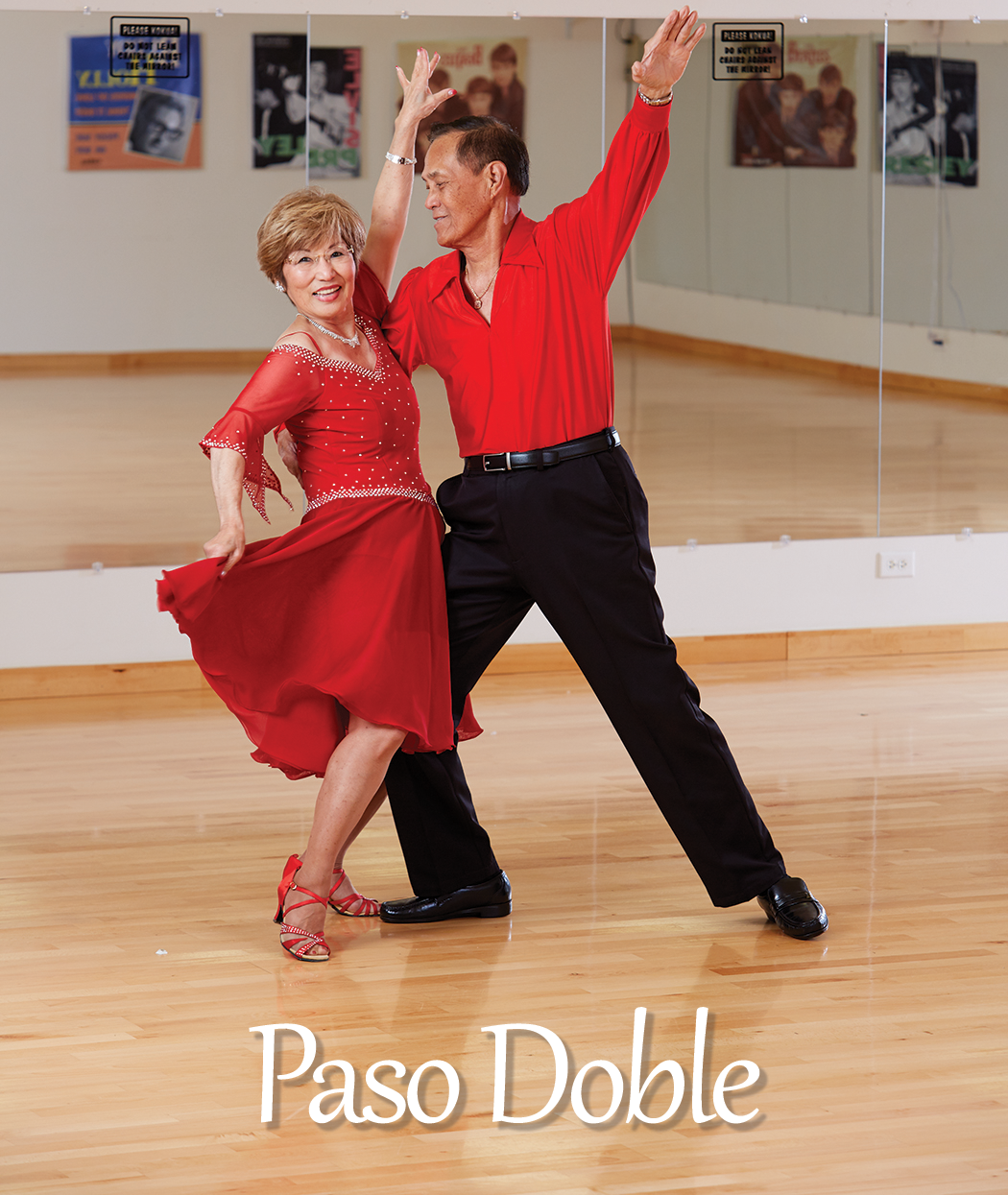
Independence – Opposites attract, so partners have to find ways to work together for mutual benefit. Often, playing different roles helps us accomplish more. The “double time” music played at Portuguese and Spanish bullfights is the inspiration for a ballroom dance called the Paso Doble, where the man plays the matador and the woman, his cape. While the partners each have completely different roles, they must execute their steps and positions flawlessly and quickly to keep up with the lively beat. Here HBDA Assistant Dance Director Melvin Camut “unfurls his cape,” Rotating Instructor Susan Masumoto, who “drapes” on his arm with a flutter of her skirt. The matador and cape play independent roles, but they flow together with precision.
In the ’90s, “Mr. Ben and Miss Faith” were Arthur Murray instructors in ‘Aiea, and when the studio moved to Florida, they returned to HBDA, with full credentials. Eugene Ichinose was happy to have the Agbayanis back, now with the confidence to share their knowledge with others. His only advice to Benny was to be a “little less agreeable.” He said, “Benny, as director, you have to have a thick skin and cannot say yes all the time.”
There isn’t much Benny could do about his amiable temperament, but with help from Faith he found a way to be more firm. “When disputes arise, Faith talks to the people and finds out what the problem is. She understands Hawai‘i cultures, personalities and how things work. After she and I discuss the issue quietly, I can kindly say no if I have to. Working together is what we do best,” says Benny.
HBDA has eight chapters throughout the State. Its mission is to provide dance experience for the people of Hawai‘i that is fun, affordable and promotes healthy minds and bodies. The association’s performance venue is the Palladium, an 11,000 square-foot polished eucalyptus dance floor upstairs at the Ala Wai Golf Course clubhouse. Each month, on the 1st Saturday, HBDA has a dinner dance event at the Palladium. Monday through Thursday, from 7 pm to 9 pm, Basic Bronze I/II, Bronze II/Silver intermediate and advanced students gather at the Dance Studio to practice an extensive repertoire of dances including Tango, Swing, Samba, Rumba and Merengue. Classes for Novice Beginner students are held at The Dance Studio in ‘Aiea Saturday mornings, from 8 am to 10 am. Line Dance/fitness/Hot Hula takes place at The Dance Studio Saturday, from 10 am to Noon.
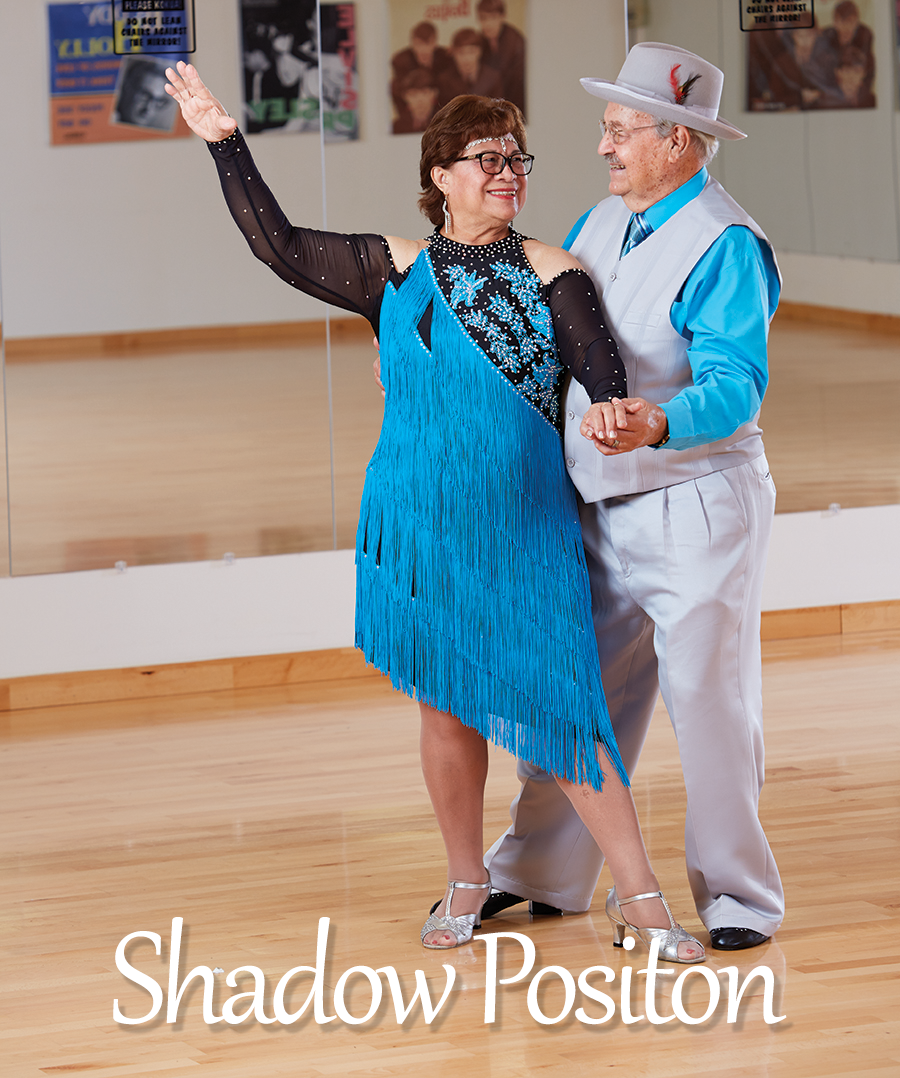
Showmanship and Promotion – Love often urges us to put the spotlight on our partner; a common goal may require us to promote our partner’s skills. Togetherness takes a different shape when we must lead from behind, or face the public on behalf of our partner in the wings. The “Shadow Position” seen in many ballroom dances and in couples figure skating, represents this kind of relationship. The man dances behind the woman for several measures of music. The couple holds hands as a way of keeping balance and communicating. Senior Instructors David and Lea Twigg demonstrate the “Shadow Position” as David shows off Lea and they both express a deep enjoyment of the dance and each other.
For seniors, ballroom dancing has many benefits: aerobic exercise, mental exercise and socialization all improve and sustain good health. Learning new dances and keeping to the rhythm of the music are proven to support thinking and mood. And dancing is fun — laughter is a powerful medicine!
Every November, HBDA holds the Telemark Ball, a fundraiser that supports the HBDA’s Telemark corps of non-salaried volunteer instructors. Proceeds from event ticket sales will fund annual membership dues for the instructors. This gala event qualifies as a “three-shirt” event for the men, counts as low-impact aerobic exercise. The reigning Telemark Queen of 2017–18 is Rotating Telemark Instructor Elsa Navares. She and her escort, Romeo Navares, thrilled the guests by dancing the Viennese Waltz.
If you are thinking, “I want to dance like that,” the Telemark instructors
at HBDA will act as mentors, instruct you, and give you an opportunity
to practice so that you and your dance partner may develop confidence and experience the joy of dancing.
Benny recently celebrated his 75th birthday, and looks forward to seeing the grandchildren graduate. At HBDA, Benny and Faith are proud of the students and grateful for the instructors, who are his backbone, and the legacy of Eugene and Harriet Ichinose. Sticking together leads to success and happiness. The Agbayani secret is out!
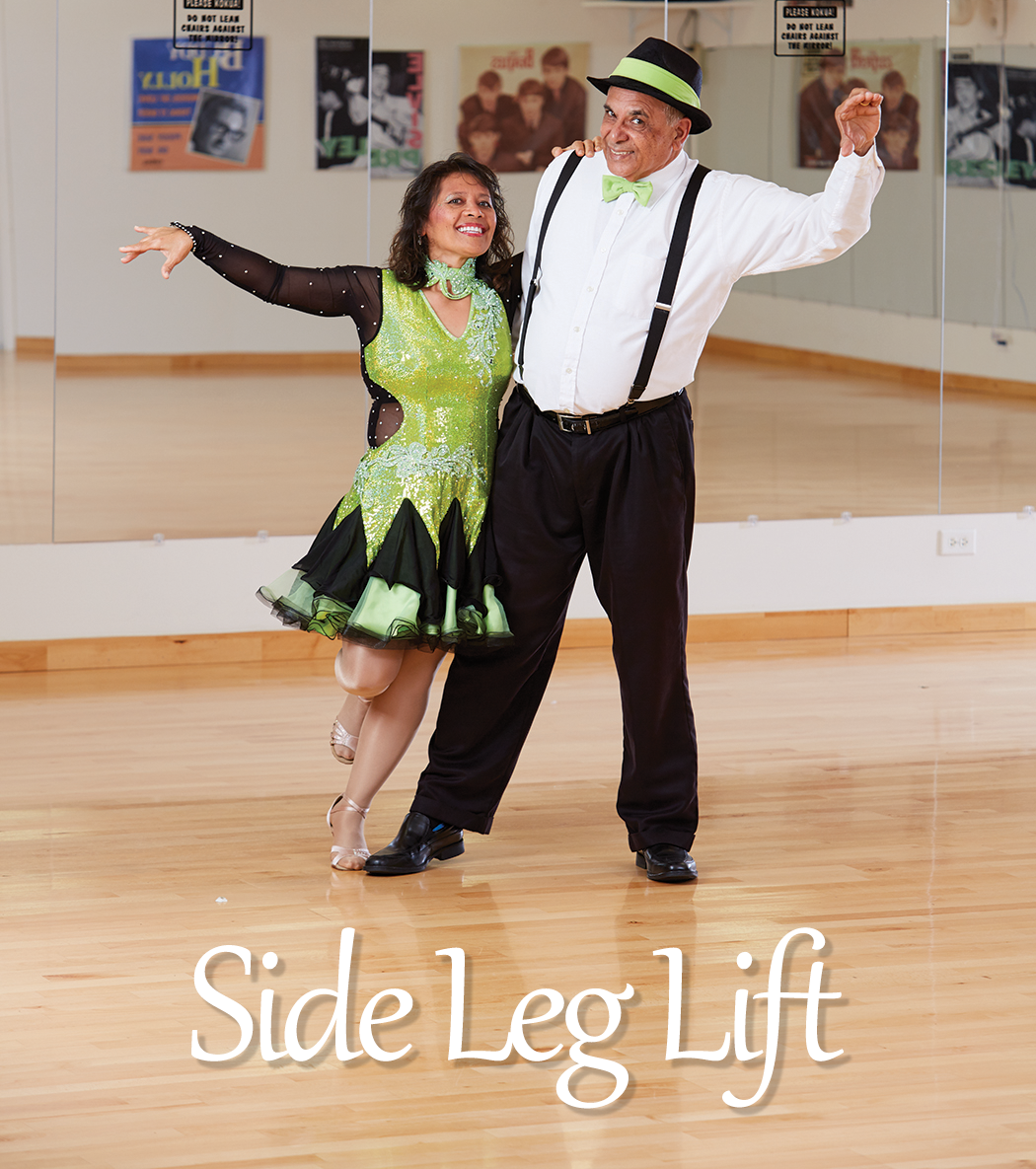
Trust and Confidence – Knowing each other over a long period of time and under challenging circumstances develops trust. As couples take on small challenges they learn more about one another’s temperaments, strengths and weaknesses. As they learn to communicate, they are able to tackle bigger goals, build confidence and reliance. HBDA members Chris and Becky Prendergast know each others’ skills well. Here they demonstrate a Side Leg Lift where Becky shifts her weight to one foot and bends her outside knee as Chris pulls her into his hip in a modified lift. Becky leans in full confidence that Chris will gracefully maintain her balance and lead her to the next step. Lifts and successful landings are common in Jazz Dancing, and in successful partnerships.
Faith and Benny Agbayani celebrated their 49th wedding anniversary this year, and both agree that the success of their partnership is doing things together. Maintaining a close relationship is more than saying, “I love you;” it’s taking on challenges as a team, mastering new skills and learning together. Overcoming obstacles in life requires commitment, sacrifice…
In 1979, 11 visionary pioneers founded a non-profit organization dedicated to helping people die with dignity in Hawai‘i. Since then, Hospice Hawai‘i’s remarkable team has been committed to enhancing the quality of life of patients and their families through an interdisciplinary approach to care. The care provided allows individuals to remain at home or in their chosen setting in order to live life to the fullest.
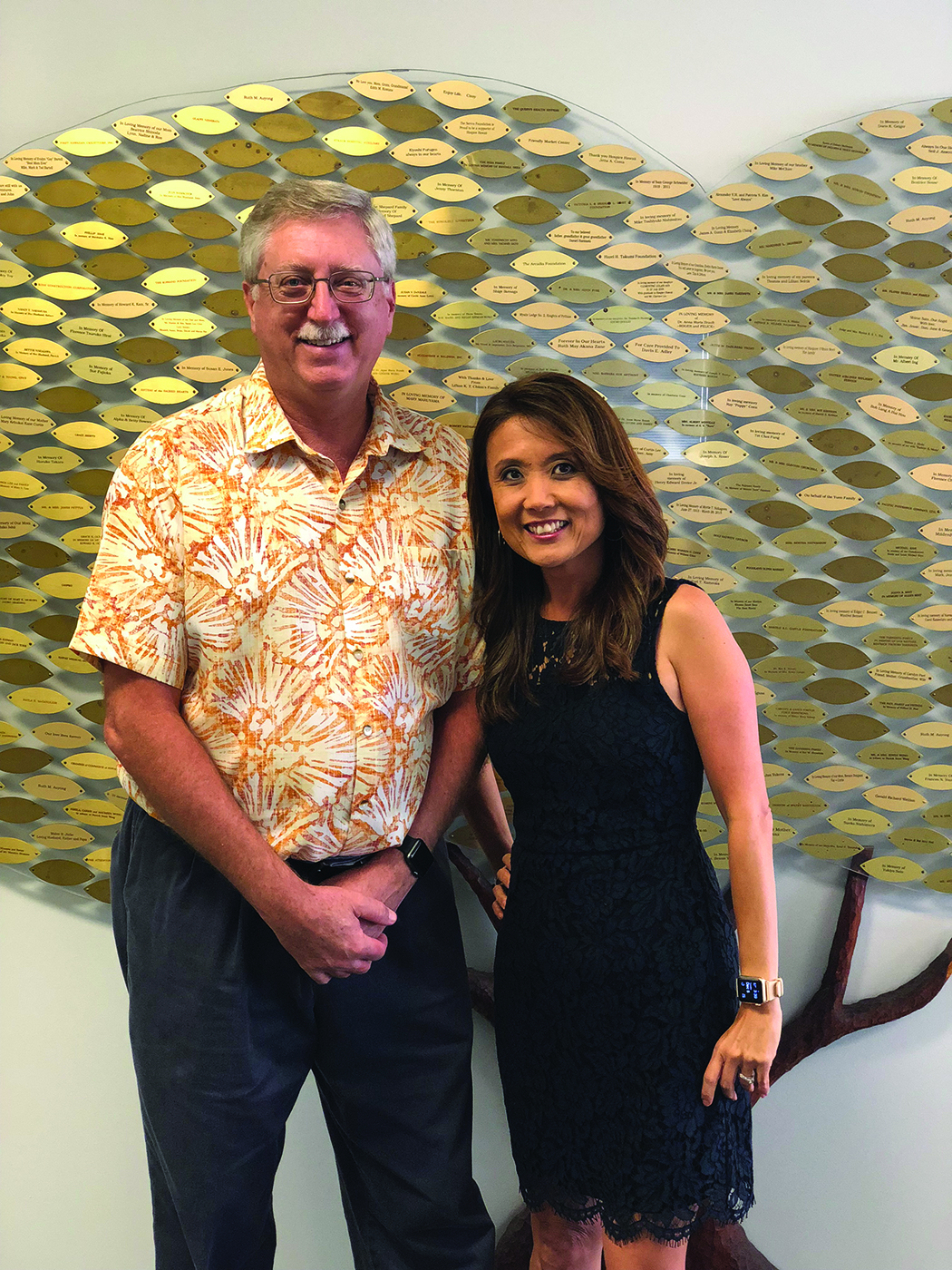
Ken Zeri and Tori Abe Carapehlo
Hospice Hawai‘i recently welcomed a new president/CEO, Tori Abe Carapelho. She replaces Ken Zeri, who retired after 31 years of service in hospice care. Carapelho looks forward to building upon Zeri’s legacy of shaping community values toward hospice and palliative care, collaborating with other healthcare professions and expanding Hospice Hawai‘i’s services to continue providing high-quality care to patients and their families.
Carapelho joined Hospice Hawai‘i in 2008 and served as chief strategy officer, overseeing marketing and fundraising, admissions, leadership, special projects and strategy development. Carapelho aims to perpetuate Hospice Hawai‘i’s mission “to bring hope, reduce fears and impact lives,” and dispel certain myths about hospice care.
“I’ve got big shoes to fill, and it’s important to me to be strategic and thoughtful as we look at future opportunities,” Carapelho says. “It is my hope that people will eventually be comfortable enough to discuss hospice freely.”
In 1979, 11 visionary pioneers founded a non-profit organization dedicated to helping people die with dignity in Hawai‘i. Since then, Hospice Hawai‘i’s remarkable team has been committed to enhancing the quality of life of patients and their families through an interdisciplinary approach to care. The care provided allows individuals to remain at home or in…
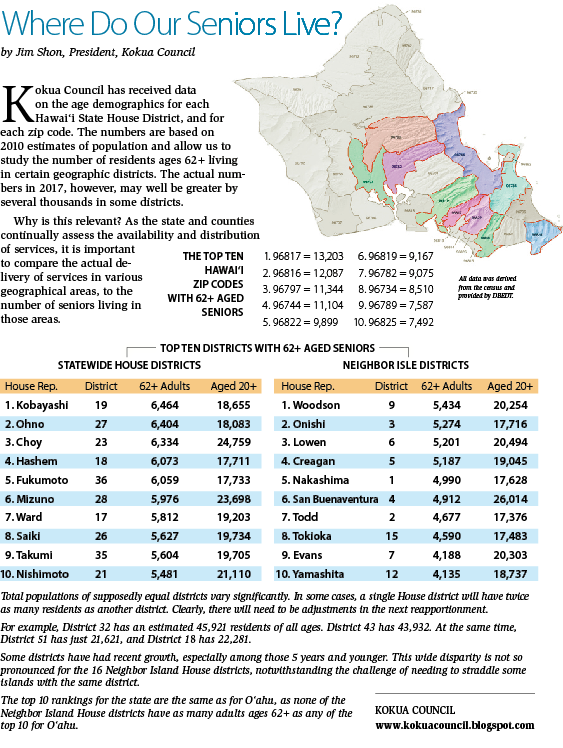
Kokua Council has received data on the age demographics for each Hawai‘i State House District, and for each zip code. The numbers are based on 2010 estimates of population and allow us to study the number of residents ages 62+ living in certain geographic districts. The actual numbers in 2017, however, may well be greater by several thousands in some districts.
Why is this relevant? As the state and counties continually assess the availability and distribution of services, it is important to compare the actual delivery of services in various geographical areas, to the number of seniors living in those areas.
Kokua Council has received data on the age demographics for each Hawai‘i State House District, and for each zip code. The numbers are based on 2010 estimates of population and allow us to study the number of residents ages 62+ living in certain geographic districts.
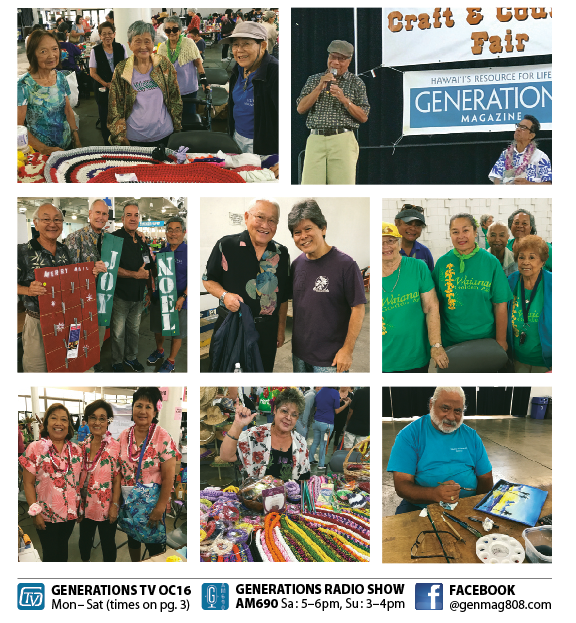
Who says there’s hardly any fun at a county fair? Seniors attended the Mayor’s Annual Craft & County Fair, held Nov. 18 at the Neal S. Blaisdell Center Exhibition Hall. Craftspeople sold beautiful handmade items and Uncle sold his paintings. Singing? Can’t go without that.
Mr. Ed Angel participated in a karaoke contest singing it his way, MC’d by Jeff Apaka. Generations Magazine partnered in the City and County’s Honolulu Department of Parks and Recreation event.
Lots of smiles and laughter at these events, so be sure not to miss this year’s fair in November.
Who says there’s hardly any fun at a county fair? Seniors attended the Mayor’s Annual Craft & County Fair, held Nov. 18 at the Neal S. Blaisdell Center Exhibition Hall. Craftspeople sold beautiful handmade items and Uncle sold his paintings. Singing? Can’t go without that. Mr. Ed Angel participated in a karaoke contest singing it…
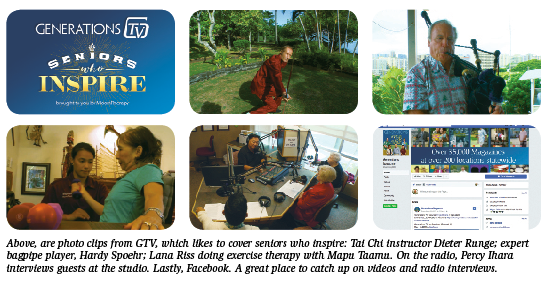
As Generations Magazine’s goal is to provide our senior community with important information on aging, we have tailored our other media to meet that same goal. We feel our resources are so important to the aging population that we have now expanded into television, radio, the world wide web and social media. We continue to be present and accessible in your daily lives. We move with the times and with your years.
With television, we continue to address critical issues that matter most to seniors and their families: finances, legal topics, caregiving, government programs and services, healthy living and more. Inspirational stories about Hawaii’s seniors will be a regular highlight of the show. So dial in to channel 12 on Spectrum OC16.
If you’re on the move, we can be there right with you on the radio on KHNR AM690. Guest experts share sound advice, as well as regular individuals like you and me sharing their daily experiences and wisdoms.
Likewise, those who have embraced the computer, you can find us at generations808.com. There you’ll find links to our Facebook page and Twitter feed. You can catch up on recent or past topics, videos or radio episodes. Facebook is your and our community, sharing and looking out for one another. Come and join us.
As Generations Magazine’s goal is to provide our senior community with important information on aging, we have tailored our other media to meet that same goal. We feel our resources are so important to the aging population that we have now expanded into television, radio, the world wide web and social media. We continue to…

 Dr. John Gray, author of Men Are From Mars Women Are From Venus, has written that full, adult maturity happens around age 56. As humans,